Abstract
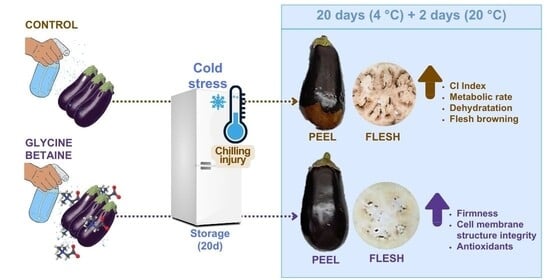
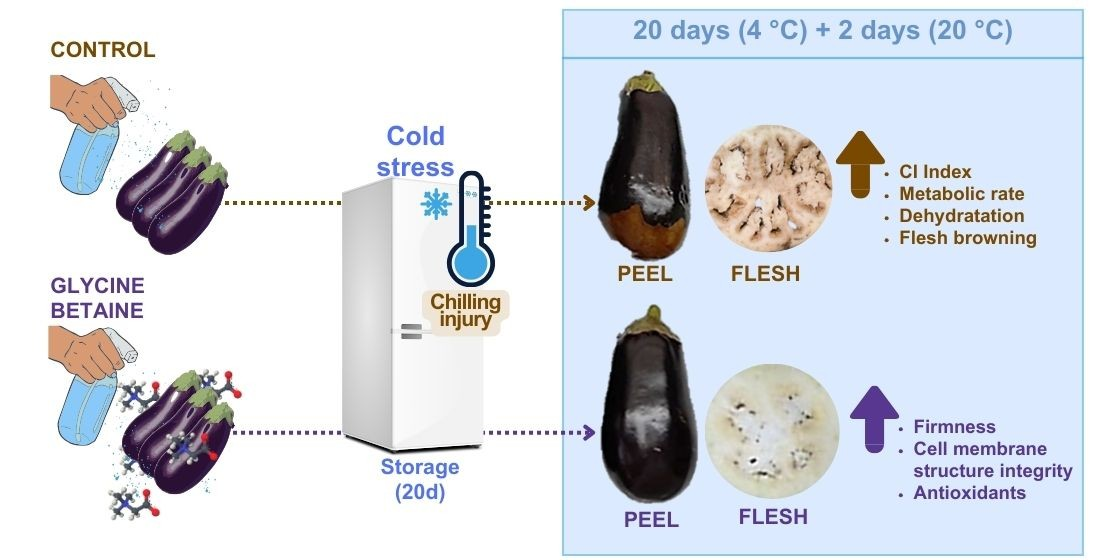
Eggplant is highly susceptible to chilling injury (CI) when stored at temperatures below 10 °C. This study evaluated the efficacy of glycine betaine (GB) as a pre-storage treatment to enhance chilling tolerance in eggplant, focusing on tissue-specific responses in the peel and flesh. GB concentrations of 0, 5, and 10 mM were tested, with 10 mM identified as the most effective in mitigating CI symptoms and weight loss. Subsequently, eggplants treated with 10 mM GB were stored for 21 days at 4 °C, followed by 2 days at 20 °C, to assess their physiological and biochemical properties. At the end of the storage period, GB treatment significantly reduced all CI-related indicators, including the CI index, weight loss, respiration rate, softening, flesh browning, electrolyte leakage, and malondialdehyde content, thereby extending shelf life by five days compared with untreated fruit. Principal component analysis revealed that severe CI in control fruit was associated with elevated levels of proline, endogenous GB, and unsaturated fatty acids (UFAs) in the peel, indicating that this outer tissue is the primary site of cold-stress responses in eggplant. Conversely, GB-treated fruit exhibited enhanced chilling tolerance characterized by reduced softening, greater antioxidant retention in both tissues, and maintenance of UFA levels in the flesh, while peel proline, GB, and fatty acid contents remained stable. Overall, our findings provide the first evidence that GB confers cold protection by modulating tissue-specific metabolic responses in eggplant peel and flesh, offering a simple and cost-effective strategy to extend shelf life.
1. Introduction
Eggplant (Solanum melongena L.) is an important fruit vegetable widely cultivated in subtropical and tropical regions worldwide [1]. According to FAO statistics, global eggplant production reached 59.3 million tons in 2022, with approximately 1.8 million hectares under cultivation [2], ranking it as the third most important Solanaceous crop after tomato and pepper [3]. Eggplant is a non-climacteric fruit typically harvested at an immature stage, characterized by a high respiration rate and susceptibility to dehydration, which results in a short shelf life at ambient temperature [4]. Cold storage is the most effective method for preserving the quality of fresh produce, as it slows metabolic rate, suppresses degradative processes, and delays senescence [5,6]. However, commercial eggplants are highly susceptible to chilling injury (CI) when stored below 10 °C, a physiological disorder that severely compromises their visual quality, nutritional value, and marketable life [7].
CI symptoms in eggplant have been extensively described and display tissue specificity: the peel typically develops surface pitting and wet brown scalds, whereas the flesh exhibits browning and seed discoloration [7,8,9]. In the early stages of CI, external symptoms are subtle; however, internal browning becomes evident upon cutting the fruit, and these changes intensify after exposure to higher temperatures [10]. At the cellular level, CI disrupts membrane integrity, promotes lipid peroxidation and excessive accumulation of reactive oxygen species (ROS), alters energy homeostasis, and ultimately leads to cell death and tissue collapse [11,12,13].
Several postharvest strategies, including temperature conditioning, thermal treatments [3], melatonin [14], hydrogen, sulfur, and phenylalanine [15], 1-methylcyclopropene [16], jasmonates [17], and brassinosteroids [18], have been evaluated to mitigate CI in eggplant, with varying levels of success. More recently, naturally occurring signaling molecules such as γ-aminobutyric acid, hydrogen sulfide, and glycine betaine have gained attention as low-residue, environmentally friendly pre-storage treatments for protecting cold-sensitive commodities [5,6,19]. Glycine betaine (N,N,N-trimethyl glycine, GB) is a water-soluble, non-toxic osmoregulator synthesized in chloroplasts that contributes to maintaining cellular homeostasis by stabilizing photosynthetic pigments and membranes while limiting ROS damage [20]. Exogenous pre-storage applications of GB have been reported to effectively alleviate CI in several commodities, including banana, peach, pomegranate, papaya, pear, orange, green bell pepper, and zucchini [19]. Although the underlying protective mechanisms are not fully understood, GB acts at multiple metabolic levels. In fruit tissues, GB helps maintain membrane lipid homeostasis by modulating the unsaturated-to-saturated fatty acid ratio and suppressing lipoxygenase activity, thereby reducing electrolyte leakage and tissue softening under low-temperature stress [21,22,23]. Additionally, GB mitigates oxidative stress by enhancing the ascorbate–glutathione cycle and upregulating key antioxidant enzymes, including superoxide dismutase, catalase, and ascorbate peroxidase, leading to lower malondialdehyde accumulation and reduced ROS production [24,25]. GB has also been associated with improved energy metabolism, as treated fruits maintain higher ATP content and energy charge during storage, delaying tissue collapse and symptom development [5]. Collectively, these findings highlight GB as an effective strategy for mitigating CI in cold-sensitive fruits; however, its potential role in eggplant remains unexplored.
Given the distinct manifestation of CI symptoms in eggplant peel and flesh, we hypothesized that the biochemical responses of these tissues to cold stress and GB treatment differ substantially. Clarifying these tissue-specific responses is essential to understanding how GB confers chilling tolerance and to optimizing targeted postharvest interventions. Therefore, this study assessed glycine betaine as a pre-storage treatment to improve eggplant chilling tolerance, focusing on peel- and flesh-specific biochemical responses. During cold storage, we analyzed its effects on overall quality and on changes in membrane fatty acid composition, antioxidant activity, and compatible solutes (GB and proline).
2. Materials and Methods
2.1. Plant Material, Treatment Selection, and Storage Conditions
Eggplants (Solanum melongena L.) cv. Monarca from a greenhouse in La Plata, Argentina (35°0′28.5″ S, 58°1′47″ W) were harvested at commercial maturity (16.4 ± 1.21 cm length), transported to the laboratory, selected one hundred and twenty fruits, sanitized with sodium hypochlorite (200 mg L−1), and air-dried. All fruits underwent the same dipping procedure: controls were immersed for 10 min in distilled water with Tween 20 (0.1%), and treated fruits in aqueous GB solutions (trimethyl glycine, Sigma B2629, St. Louis, MO, USA). After air-drying, samples were placed in plastic trays, covered with perforated PVC film, and stored at 4 °C (90% RH), followed by 2 days at 20 °C to simulate commercial conditions. In the treatment-selection experiment, fruits were treated with 0, 5, or 10 mM GB and stored for 0, 14, and 21 days (plus 2 days at 20 °C), and the optimal concentration was identified based on chilling injury (CI) index and weight loss (WL).
In the storage experiment, one hundred and twenty fruits were treated following the same protocol using the selected concentration (10 mM) and stored for 20 days. Samples were taken at 0, 8, 15, and 20 days (each followed by 2 days at 20 °C). At each sampling point, whole-fruit quality was evaluated, and peel and flesh tissues were frozen in liquid nitrogen and stored at −80 °C for biochemical analyses.
2.2. Effect of GB Treatment on Eggplant Quality, CI Symptoms, and Physiological Traits
2.2.1. Chilling Injury Index
External CI symptoms (surface pitting and scalds, dehydration, and fruit softening) were observed and analyzed with a hedonic scale of five points according to Concellón et al. [8]: 1 = absence, 2 = incipient, 3 = low, 4 = moderate, and 5 = severe. The CI index was calculated using the equation:
where i is the level of damage observed, ni is the number of fruits defined with the level “i”, and N is the total number of the group of fruits analyzed. Fourteen fruits were evaluated for each treatment and storage time.
CI index = ∑(i × ni)/N
2.2.2. Weight Loss (WL)
Samples were weighed individually at the beginning of the experiment and during the storage period. WL was calculated using the equation:
WL (%) = 100 × (Wi − Wf)/Wi
Wi is the initial fruit weight, and Wf is the final fruit weight. Results were expressed as a percentage of WL. Fourteen fruits were evaluated for each treatment and storage time.
2.2.3. Respiration Rate
Carbon dioxide production was measured according to Zaro et al. [7] by incubating one eggplant in a hermetic jar using an IR sensor (Alnor Compu-Flow CO2, Model 8650, TSI Incorporated, Shoreview, MN, USA). Measures were taken at the initial time and after fifteen minutes. Four fruits were analyzed for each treatment and storage day. The results were expressed in mg kg−1 h−1.
2.2.4. Fruit Firmness
Samples were analyzed using texture equipment (TA.XT2, Stable Micro Systems Ltd., Godalming, UK) and a 3 mm probe. Eggplant fruits were compressed for an 8 mm distance at the equatorial position at a 1 mm s−1 rate [7]. Six fruits of each treatment and storage day were used, and four measurements were taken on opposite sides of each fruit. Results were expressed in Newtons (N).
2.3. Effect of GB Treatment on Flesh Browning and Cell Membrane Stability
2.3.1. Browning Index (BI)
The BI was determined in the internal flesh tissue using a colorimeter (Konica Minolta, CR-400, Tokyo, Japan). A 0.5 cm wide cross-section was removed, and two measurements were taken from different points of the central section immediately. Twenty-four fruits of each treatment and storage time were analyzed. The BI was calculated from L*, a*, and b* (CIELAB color system) values according to Ebrahimi [26] by the following equation:
where x = ((a* + 1.75L*))/((5.645L* + a* − 3.012b*))
BI = [(x − 0.31)]/0.17
2.3.2. Electrolyte Leakage (EL)
Eggplant sample slices were taken from the equatorial region. From each slice, six disks (10 mm × 10 mm) from the flesh tissue were obtained. The disks were incubated in distilled water for five min, and the initial conductivity reading (Ci) was taken using a conductivity meter. After 30 min at room temperature, the final conductivity (Cf) was taken. The disks were in ebullition for 15 min and then cooled for 30 min at 4 °C to obtain total conductivity (Ct) [8]. Measurements were performed on four fruits for each treatment and storage time. EL was expressed in percentage and calculated as follows:
EL (%) = 100 × (Cf − Ci)/Ct.
2.3.3. Malondialdehyde Content (MDA)
Frozen eggplant flesh powder (3 g) from at least four fruits was homogenized in 10 mL of 5% (w/v) trichloroacetic acid (TCA), vortexed, and centrifuged (4000× g) at 4 °C for 15 min. After, the supernatant (0.5 mL) was mixed with 1 mL of the reagent mixture of 0.5% (w/v) thiobarbituric acid (TBA), 15% (w/v) TCA, and 0.01% (w/v) BHT. The reaction mixture solution was boiled in a water bath for 30 min at 95 °C and then was immediately cooled. The supernatant was measured at 600, 532, and 450 nm [27] using a spectrophotometer (U-1900, Hitachi, Tokyo, Japan). Samples were extracted and measured in triplicate. The results were expressed as μmol kg−1 fresh weight (FW) and calculated using the equation:
where Vt is the total extract volume, Vs is the sample aliquot volume, and m is the sample mass in the extract.
MDA= ⦍6.45 × (OD532 − OD600) − 0.56 × OD450⦎ × Vt/(Vs × m)
2.4. Effect of GB Treatment on Peel and Flesh Cell Membrane Fatty Acid Content
Fatty Acids Profile
Lipids of frozen peel and flesh tissue from at least four fruits were homogenized into 20 mL CHCl3-MeOH (2:1) and stored in the dark at 4 °C for 2 h [28]. Then it was centrifuged (10 min/4 °C/1000× g) and filtered. 2 mL of H20 Mili-Q distilled water was added, and the solution was stirred in a vortex and centrifuged (5 min/4 °C/1000× g) to separate the organic phase and evaporate it in a rotavapor (200 mmHg/40 °C). For the fractionation, the samples were reconstituted in 2 mL HCl in methanol (5% v/v) and homogenized vigorously for 1 min. Next, the mix was ebulliated for 10 min and immediately cooled. Fatty acid methyl esters (FAME) were extracted with hexane and separated by GC (Agilent Technologies, Santa Clara, CA, USA) with flame ionization detectors, using a capillary column (DB-23, 30 m × 0.25 mm × 250 µm film). The injector temperature was set at 250 °C, and the detector was set to 280 °C. The initial temperature of the oven was 50 °C for 1 min, then raised to 175 °C at 25 °C/min, and then raised to 230 °C at 4 °C/min, and finally held this temperature for 15 min. The FAME peaks were identified by comparison against the FAME standard (Supelco 37 component FAME MIX), and the samples were analyzed in triplicate. The obtained fatty acid composition was used to calculate the percentages of individual fatty acids (%FA) and unsaturated fatty acids (%UFA), the ratio of unsaturated to saturated fatty acids (UFA/SFA), and the double bond index (DBI). These parameters were calculated according to Ge et al. [29] as follows:
UFA/SFA = (C18:1 + C18:2 + C18:3)/(C16:0 + C18:0)
DBI = (C18:1 × 1 + C18:2 × 2 + C18:3 × 3)/(C16:0 + C18:0)
2.5. Effect of GB Treatment on Peel and Flesh Antioxidants and Compatible Solutes
2.5.1. Antioxidant Capacity
Peel or flesh tissue from at least four fruits was frozen with liquid N2 and ground in a mill, and 1 g of powder was weighed and extracted with 10 mL of ethanol. The suspension was vortexed and centrifuged (17,000× g/10 min/4 °C). The supernatant was collected and stored at −80 °C. The ABTS assay was performed according to Zaro et al. [7], adding 50 µL of extract to 1 mL of ABTS•* radical solution (absorbance 0.700 ± 0.03 at 734 nm), incubating for 6 min, and measuring the absorbance at 734 nm. Samples were extracted and measured in triplicate. Trolox was used as a standard, and the results were expressed as Trolox equivalent antioxidant capacity (TEAC) in mg kg−1 of fresh weight (FW).
2.5.2. GB Content
The endogenous GB content was evaluated according to Valadez-Bustos et al. [30] in peel and flesh using 1 g of tissue pulverized completely into 8 mL of 2N H2SO4. The mix was shaken vigorously for 6 min and was heated up in a water bath to 60 °C for 10 min. After, the solution was centrifuged at 3700× g for 30 min at 0 °C, and the supernatant was transferred to another tube and reserved in the refrigerator. In the darkness, 50 µL of cold KI-I2 was added to 125 µL of supernatant and stirred slowly with a vortex for 10 s. Finally, the mix was stored at 4 °C overnight. Next, it was centrifuged at 0 °C/500× g for 30 min, and the supernatant was removed to obtain the crystals. The precipitate was diluted into 1.4 mL of 1,2-dichloroethane, stirred vigorously, and reserved for 2.5 h in darkness at 4 °C. Then the absorbance was read at 365 nm. Samples were extracted and measured in triplicate. The results of endogenous GB were expressed as mg kg−1 FW.
2.5.3. Proline Content
The proline content was obtained using the method of Bates et al. [31]. Frozen eggplant flesh powder (3 g) was homogenized with 4 mL of sulfosalicylic acid (3% w/v) in a vortex for 3 min and centrifuged at 3720× g (4 °C) for 15 min. After 4 mL of sulfosalicylic acid (3% w/v) was added, the mixture was homogenized and centrifuged in the conditions described previously. The supernatant (1 mL) was mixed with glacial acetic acid (1 mL) and acid ninhydrin reagent (1 mL). The ninhydrin reagent was prepared with ninhydrin (1.25 g), glacial acetic acid (30 mL), and phosphoric acid 6 M (20 mL). The mixture was boiled for an hour. After cooling, 2 mL of toluene was added and then homogenized and centrifuged at 3720× g for 5 min at room temperature. The absorbance of the organic phase was measured at 520 nm. Samples were extracted and measured in triplicate. The content of proline was calculated according to a standard curve and expressed as mg kg−1 FW.
2.6. Statistical Analysis
The experiments were realized according to a factorial design. The results were analyzed using ANOVA (InfoStat, version 2020), and the means were compared with the LSD Fisher test (p < 0.05). A principal component analysis (PCA) was applied to describe the influence of GB treatment on quality and biochemical parameters to identify the components responsible for the main variations in the dataset. All analyses were performed using the SIMCA software package, version 13 (MKS Umetrics, Andover, MA, USA).
3. Results and Discussion
3.1. Glycine Betaine Treatment Selection
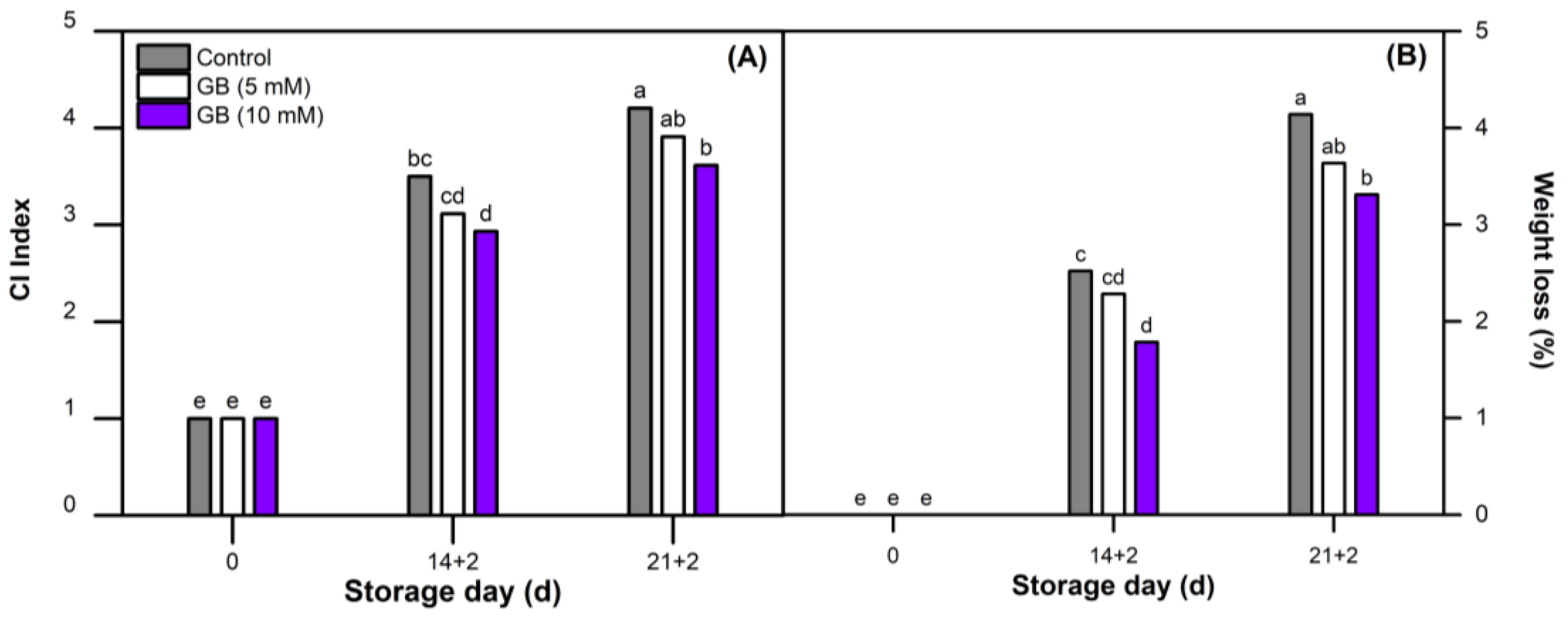
In purple eggplant, external CI symptoms typically appear as peel pitting and scalding, accompanied by fruit softening and dehydration, which significantly reduce marketability [7,9]. Initially, the effectiveness of pre-storage GB treatment (0, 5, or 10 mM) on eggplant CI tolerance was evaluated based on CI index and weight loss (WL). The CI index increased progressively during storage in all groups; however, fruit treated with 10 mM GB exhibited 30% and 20% lower CI than the control after 14 d + 2 and 21 d + 2, respectively (Figure 1A). At the end of storage, GB-treated eggplants showed only incipient pitting and maintained a noticeably fresher appearance. In addition, their final WL was 20% lower than that of the control (Figure 1B). On the other hand, the 5 mM GB treatment showed moderate effects, with no significant difference from the control (Figure 1A,B). Similar results have been reported in several commodities, such as loquat [32], peach [33], zucchini [34], and button mushrooms [23], where 10 mM GB elicited a hormetic pattern that maximized chilling-injury tolerance, even compared with higher doses [23,35]. Therefore, the 10 mM concentration was selected for subsequent analyses of the physiological and biochemical responses of cold-stored eggplants.
Figure 1.
(A) Chilling injury (CI) index and (B) weight loss of eggplants treated with 0 (control), 5 mM, or 10 mM glycine betaine (GB) and stored for 0, 14, and 21 days at 4 °C plus 2 days at 20 °C (0, 14 + 2, and 21 + 2). Different letters indicate significant differences between treatments (p < 0.05).
3.2. Effect of GB on Eggplant External CI Symptoms and Physiological Traits
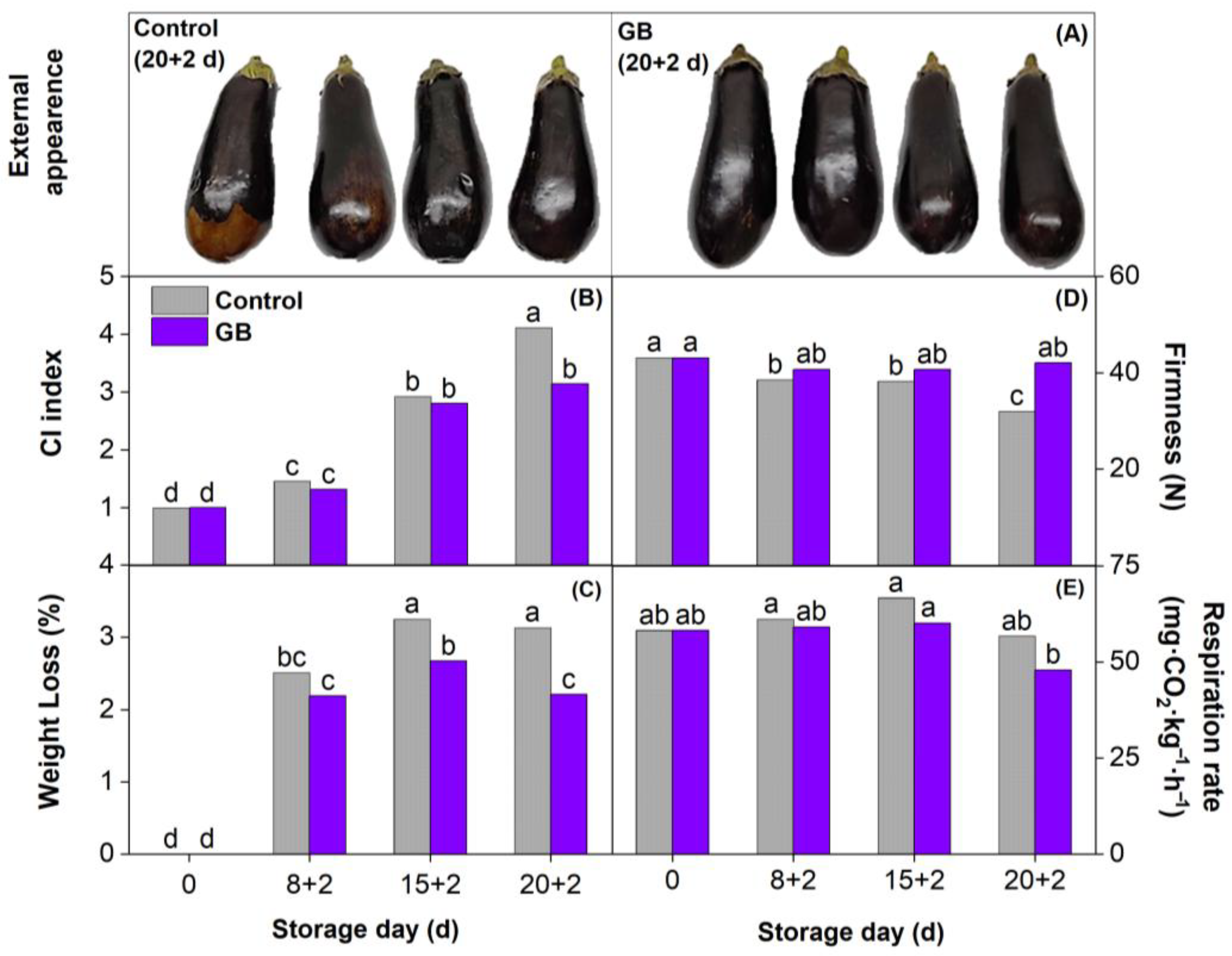
In the storage experiment, external CI symptoms appeared after 15 d + 2, mainly as slight surface pitting on the eggplant peel. At this stage, the overall appearance was still considered acceptable (CI = 3), without differences between treated and control fruits (Figure 2A,B). By the end of storage (20 d + 2), GB-treated eggplants maintained their visual quality (CI = 3.13), whereas control fruits exhibited a significant 40% increase in damage (CI = 4.11), characterized by extensive wet brown scalds on the bottom site of the fruit, rendering them unmarketable (Figure 2A,B). These results are consistent with findings in other immature vegetables, such as pepper [24] and zucchini [34], where GB treatment reduced the CI index by 36% and 50%, respectively.
Figure 2.
(A) External appearance of control and glycine betaine (GB)-treated eggplants at the end of storage (20 + 2d). (B) CI index, (C) weight loss, (D) firmness, and (E) respiration rate of control and 10 mM GB-treated eggplants stored for 0, 8, 15, and 20 days at 4 °C plus 2 days at 20 °C (0, 8 + 2, 15 + 2, and 20 + 2). Different letters indicate significant differences between treatments (p < 0.05).
The GB improvement in eggplant appearance was accompanied by positive effects on physiological traits, including lower weight and firmness loss and respiration rates (Figure 2C–E). Weight loss increased over time in both groups; however, at 15 d + 2 and 20d + 2, treated eggplants showed 20% and 30% less dehydration than controls, respectively (Figure 2C). WL control by the treatment has been reported for other cold-sensitive fruits, including zucchini [34], pears [36], and plums [37]. As a natural osmoregulator, GB likely reduces water loss by regulating osmotic pressure, maintaining turgor, and preventing plasmolysis [37,38]. Collectively, these effects help maintain cell integrity and moisture balance, thereby mitigating fruit dehydration [39].
Firmness was better preserved in GB-treated fruits, remaining close to harvest values during all storage time, whereas controls softened by 25% (Figure 2D). Similar GB effects on softening prevention have been shown in mangoes [40], pears [36], tangor citrus [41], and strawberries [39]. Postharvest softening is mainly linked to the loss of cell turgor and the degradation of cell wall polysaccharides [42]. Consistently, it has been reported that GB-treated jujubes maintained higher turgor and cell wall polysaccharide content while showing lower activity of cell wall–degrading enzymes, resulting in improved firmness [43]. Nevertheless, further studies are required to clarify the specific role of GB in stabilizing the microstructure of eggplant.
In cold-sensitive vegetables, increases in respiration rate driven by stress-related metabolic responses may precede visible CI symptoms [4]. In this study, eggplant respiration remained relatively stable, with a slight decrease in CO2 production observed in GB-treated fruits at 20 d + 2. Although this was not significantly different from controls (Figure 2E), it aligns with previous reports showing that GB reduces respiration rates in button mushrooms during long-term storage [44], suggesting more efficient acclimation to cold in treated fruits.
3.3. Effect of GB on Eggplant Internal CI Symptoms and Cell Membrane Stability
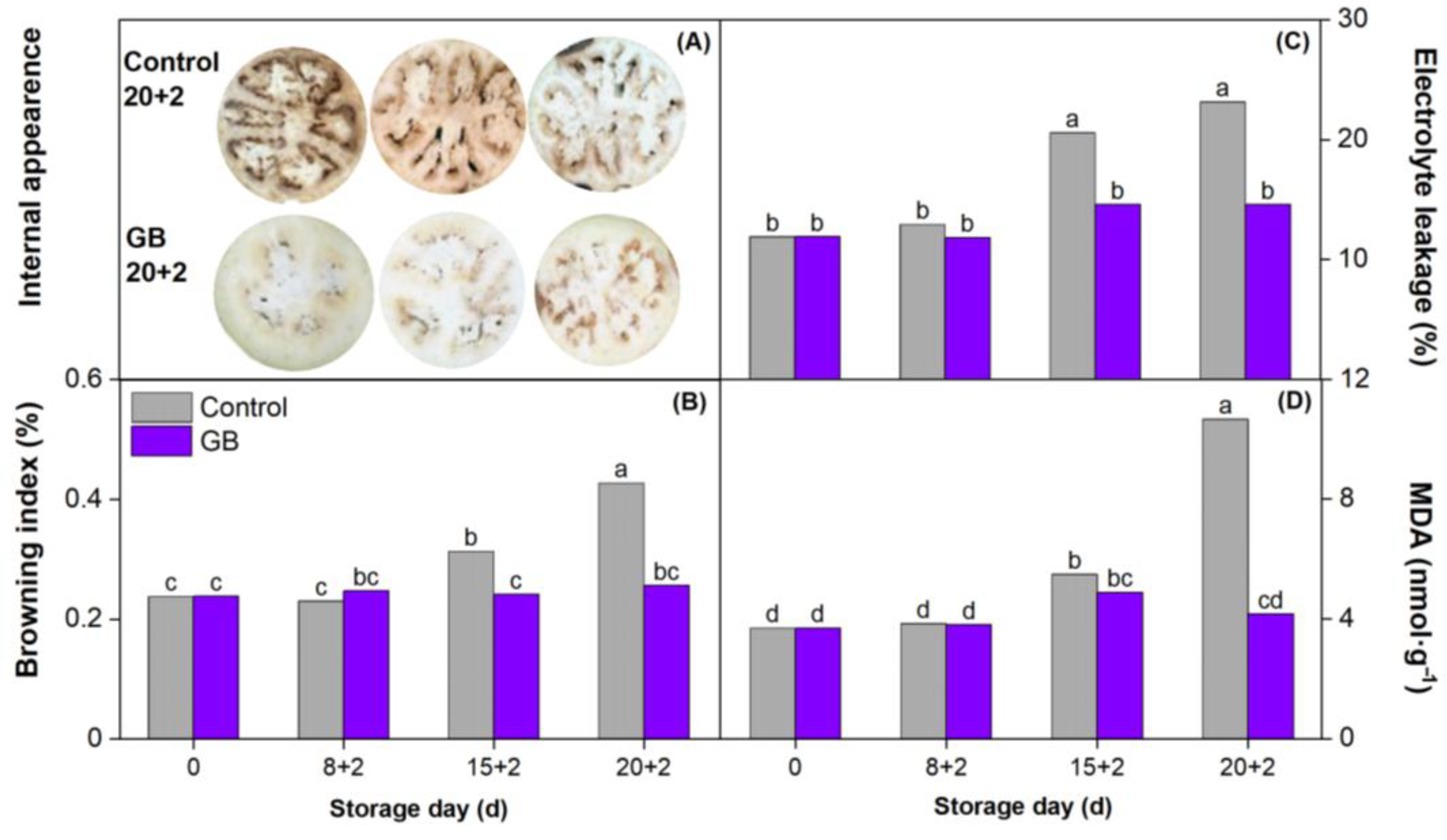
Internal symptoms of CI in eggplants become evident upon slicing, appearing as darkening of the seeds and flesh [45]. This color change results from loss of cell membrane integrity, which allows polyphenol oxidases to oxidize phenolic compounds into brown pigments, thereby negatively affecting both internal appearance and nutritional quality [26]. Notably, GB-treated eggplants showed no change in slice color during storage, indicating effective prevention of flesh browning (BI = 0.24) (Figure 3A,B). In contrast, the internal appearance of control fruits progressively deteriorated, ultimately resulting in complete darkening of the slices (Figure 3A). Correspondingly, the browning index (BI) of control eggplants increased by 30% after 15 d + 2 and by 90% at the end of storage (BI = 0.43) (Figure 3B).
Figure 3.
(A) Internal appearance of control and glycine betaine (GB)-treated eggplants at the end of storage (20 + 2 d). (B) Browning index, (C) electrolyte leakage, and (D) malondialdehyde (MDA) of control and 10 mM GB-treated eggplants stored for 0, 8, 15, and 20 days at 4 °C plus 2 d at 20 °C (0, 8 + 2, 15 + 2, and 20 + 2). Different letters indicate significant differences between treatments (p < 0.05).
Electrolyte leakage (EL) and malondialdehyde (MDA) content, indicators of cell membrane damage and membrane lipid peroxidation, respectively [4], were evaluated to determine the impact of cold and treatment on membrane stability. In GB-treated fruits, EL remained stable and comparable to harvest levels throughout the storage period (Figure 3C). In contrast, untreated fruits showed a 65% increase at 15 d + 2 and a 90% increase by 20 d + 2 (Figure 3C), coinciding with the onset of flesh browning (Figure 3A). Similarly, MDA content remained unchanged in GB-treated fruits, whereas control fruits exhibited a 20% increase at 15 d + 2 days and a 120% increase by 20 d + 2 (Figure 3D). These results highlight that GB effectively preserves cell membrane integrity and functionality, which is essential for mitigating CI [46]. Consistently, GB treatment has been reported to reduce BI, EL, and MDA in cold-stressed pears by preserving membrane integrity and activating the enzymatic antioxidant system [36].
In summary, although the external appearance of untreated chilled eggplants remained acceptable until 15 d + 2 (Figure 2A), their physiological metabolism and internal quality had already declined significantly, rendering the fruits unmarketable. In contrast, GB treatment at 10 mM concentration effectively preserved eggplant overall quality, extending shelf life by at least five days (Figure 2 and Figure 3).
3.4. Effect of GB Treatment on Eggplant Peel and Flesh Membrane Fatty Acids
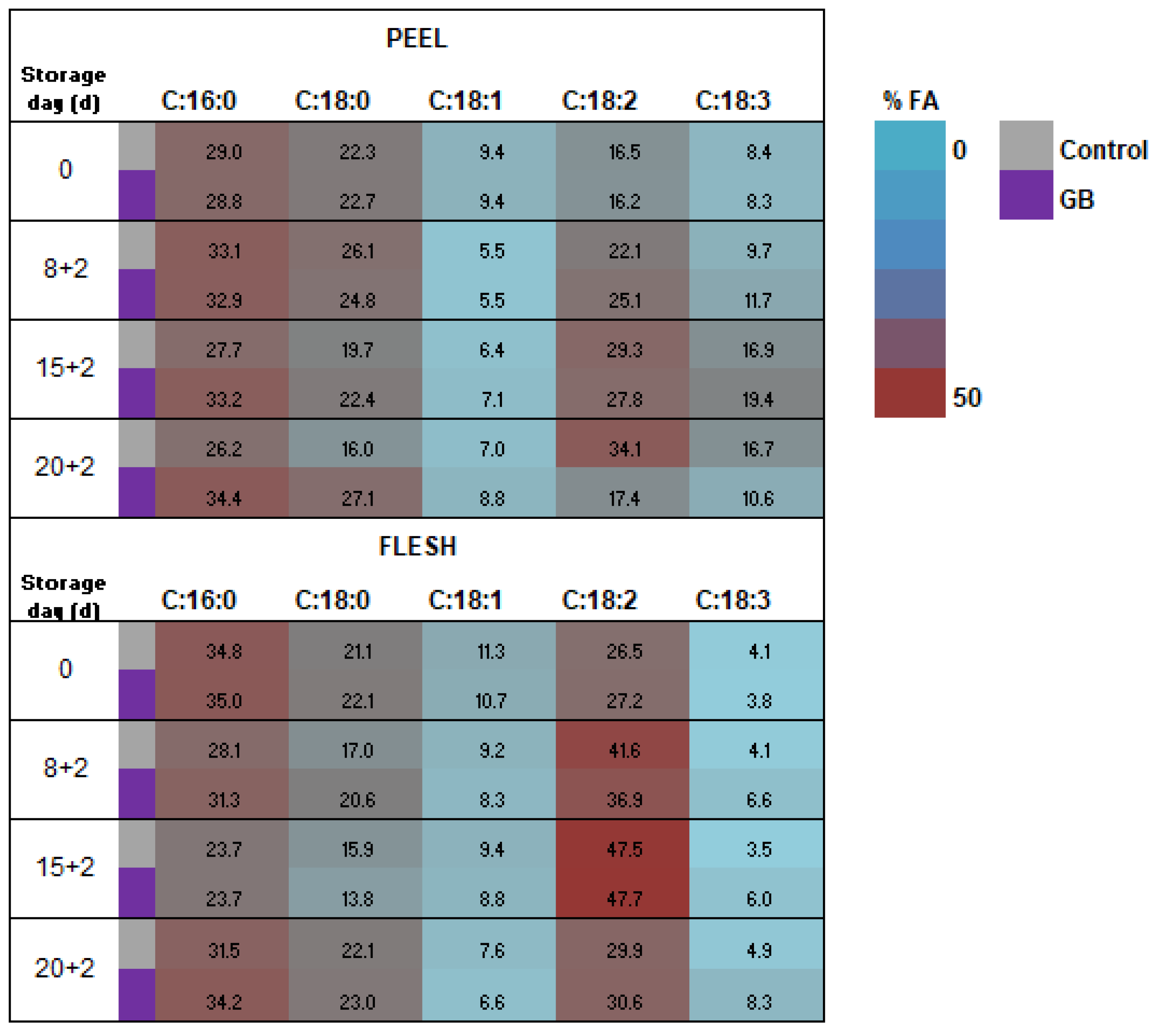
To clarify the mechanisms associated with CI development and the protective effects of GB, the membrane fatty acid (FA) profiles of peel and flesh tissues were analyzed separately. This approach was based on the distinct external and internal chilling symptoms observed during eggplant cold storage, which likely reflect tissue-specific metabolic responses. Five major FAs were identified in both tissues: the saturated fatty acids (SFAs) palmitic (C16:0) and stearic (C18:0), and the unsaturated fatty acids (UFAs) oleic (C18:1), linoleic (C18:2), and linolenic acid (C18:3) (Figure 4). As has been shown in the heat map, the tissues already differed in FA abundance, with the flesh exhibiting a higher SFA proportion and the peel enriched in UFAs, particularly linolenic acid (Figure 4). Additionally, it is worth noting that in both tissues and regardless of treatment, the storage at low temperature induced an increase in the unsaturation.
Figure 4.
Fatty acid composition (%) of peel and flesh of control and glycine betaine (GB)-treated eggplants stored for 0, 8, 15, and 20 days at 4 °C plus 2 d at 20 °C (0, 8 + 2, 15 + 2, and 20 + 2).
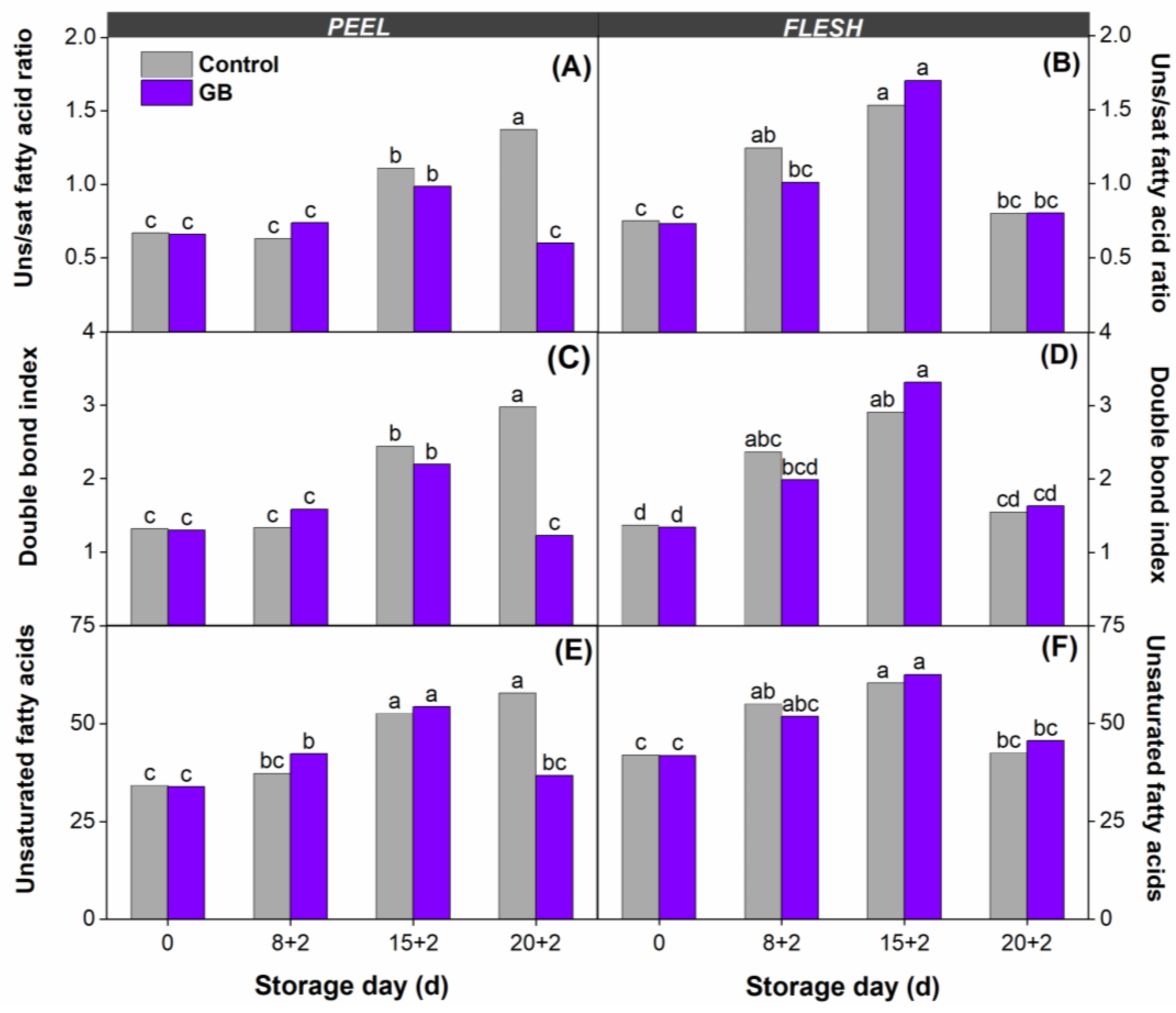
To further assess FA remodeling as a first-line indicator of membrane alterations during storage, the UFA/SFA ratio, double bond index (DBI), and total UFA content were evaluated, all of which showed comparable trends (Figure 5). Fatty acid unsaturation increased progressively up to 15 d + 2, reaching approximately 50% in the peel and 40% in the flesh (Figure 5E,F). This pattern aligns with the well-described cold acclimation mechanism in which enhanced desaturase activity helps maintain membrane fluidity under low-temperature stress [46]. After this point, UFA levels in the flesh declined toward values similar to those at harvest, with no significant differences between treatments (Figure 5F). A similar decline was also observed in the peel of GB-treated fruit (Figure 5E). In contrast, the peel of control fruit continued to accumulate UFAs until the end of storage, accompanied by a marked reduction in SFAs (Figure 5E). Consequently, the total UFA content in the control was 55% higher than in the GB-treated peel at the final sampling point. This sustained desaturation likely reflects a stress-induced compensatory response aimed at preserving membrane stability under prolonged cold exposure. A comparable response has been reported in bell peppers stored at 4 °C, where chilling triggered strong desaturation, whereas non-injured fruit stored at 10 °C showed slower and less pronounced fatty acid modifications [29].
Figure 5.
Peel (A,C,E) and flesh (B,D,F) determinations: (A,B) UFA/SFA ratio, (C,D) double bond index, and (E,F) UFA content of control and 10 mM GB-treated eggplants stored for 0, 8, 15, and 20 days at 4 °C plus 2 days at 20 °C (0, 8 + 2, 15 + 2, and 20 + 2). Different letters indicate significant differences between treatments (p < 0.05).
Overall, the initial compositional differences and the divergent evolution of UFA/SFA ratios indicate that peel and flesh adopt distinct adaptive strategies to cope with chilling stress. The stronger desaturation response observed in the peel of untreated fruit highlights the greater sensitivity of the outer tissue and its primary role in mediating cold stress responses. In contrast, the peel of GB-treated fruit did not exhibit CI symptoms even after extended storage, suggesting that mechanisms other than FA desaturation contributed to maintaining membrane functionality and overall fruit quality. Thus, in several species, the main protective action of GB has been attributed to the inhibition of lipid-degrading enzymes such as lipase, phospholipase D, and lipoxygenase, rather than to increases in UFA content alone [24,34,47]. Future studies evaluating other lipid-related parameters, such as phospholipid fractions, sterol profiles, and the activity of lipid-degrading enzymes, are needed to achieve a complete characterization of GB-mediated eggplant membrane stabilization. In addition, GB has been reported to activate different metabolic pathways that contribute to membrane integrity, including the biosynthesis of polyamines and osmolytes, enhanced antioxidant systems, and the modulation of sugar metabolism [19].
3.5. Effect of GB on Eggplant Peel and Flesh Antioxidants and Compatible Solutes
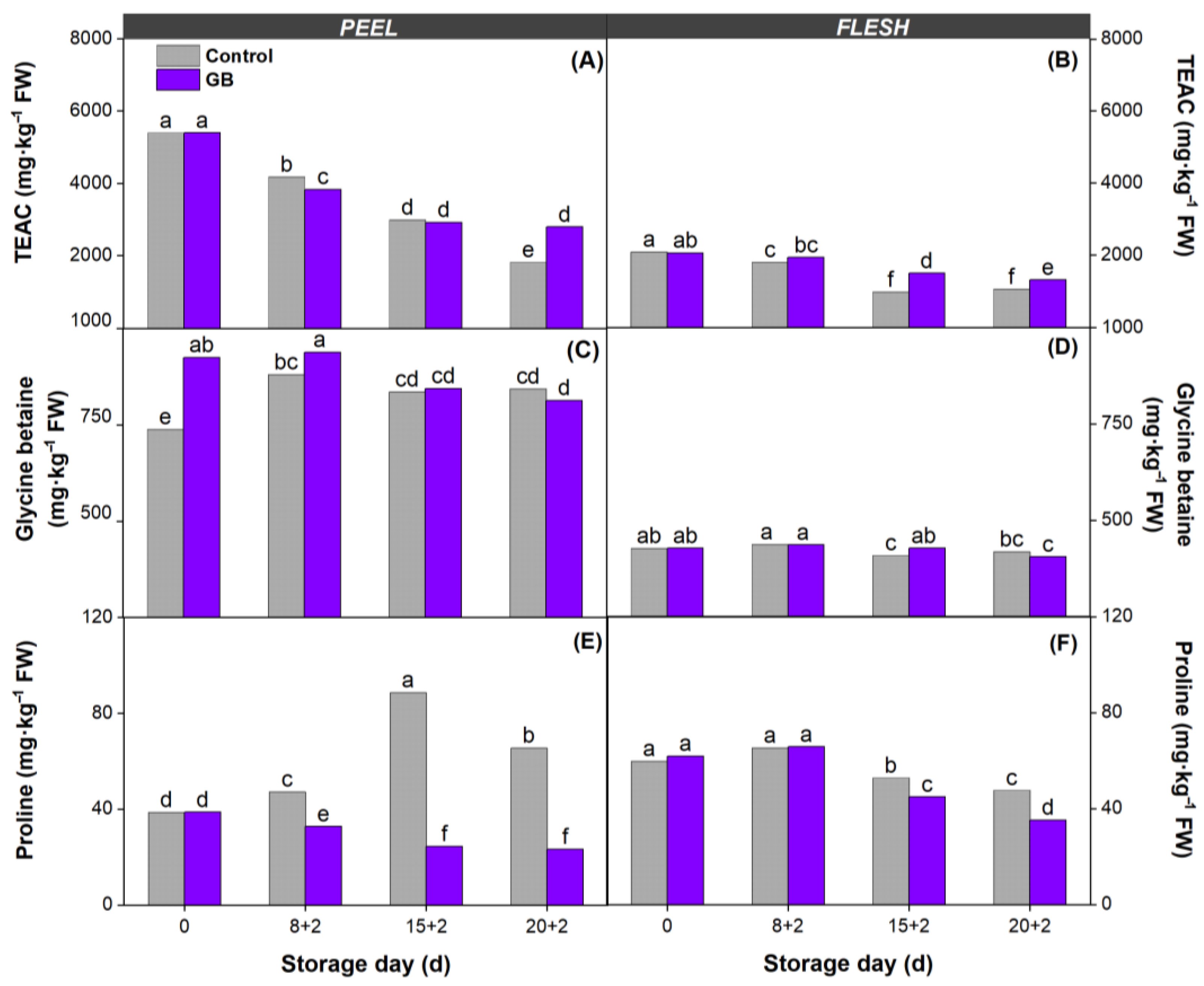
Eggplant is well known for its high antioxidant content, largely attributed to its rich phenolic composition. The peel contains anthocyanins and phenolic acids, whereas chlorogenic acid predominates in the flesh. Consistent with previous findings [7], the antioxidant capacity (AC) was approximately threefold higher in the peel than in the flesh (Figure 6A,B). In the peel of GB-treated fruits, AC gradually declined up to 15 d + 2 but remained stable thereafter, while it continued to decrease in the controls, ultimately resulting in 35% lower antioxidant levels (Figure 6A). In the flesh, AC also declined over time; however, control fruits exhibited further reductions of 35% and 20% relative to GB-treated fruits after 15 d + 2 and 20 d + 2, respectively (Figure 6B). These results agree with the lower incidence of external CI symptoms (Figure 2A) and reduced browning index (Figure 3A) in treated fruits, indicating that GB effectively preserved tissue integrity and limited phenolic oxidation during storage.
Figure 6.
Peel (A,C,E) and flesh (B,D,F) determinations: (A,B) Trolox equivalent antioxidant capacity-TEAC, (C,D) glycine betaine content, and (E,F) proline content of control and 10 mM GB-treated eggplants stored for 0, 8, 15, and 20 days at 4 °C plus 2 days at 20 °C (0, 8 + 2, 15 + 2, and 20 + 2). Different letters indicate significant differences between treatments (p < 0.05).
Endogenous GB and proline typically increase in cold-stored vegetables in response to CI, contributing to membrane stabilization and ROS scavenging [37,48]. To our knowledge, this is the first study to differentially assess these osmolytes in the external and internal tissues of eggplant. Notably, GB concentration was significantly higher in the peel than in the flesh, being nearly threefold greater in the outer tissue (Figure 6C,D). As expected, exogenous GB application increased initial GB content in the peel of treated fruits, followed by a gradual decline of about 9% after 15 d + 2 (Figure 6C). In control fruits, peel GB increased by 16% after 8 d+2 and then stabilized, eventually reaching levels comparable to those of treated fruits. In contrast, GB content in the flesh remained relatively stable throughout storage and did not differ significantly between treatments (Figure 6D). The earlier availability of GB in treated fruits likely provided immediate protection, reducing oxidative and structural damage during storage. Overall, exogenous GB not only supplements endogenous pools but also enhances the tissue’s capacity to maintain homeostasis under chilling conditions.
Initially, proline content was 40% higher in the flesh than in the peel of eggplants (Figure 6E,F). In the peel of GB-treated fruits, proline levels decreased during storage, reaching a 40% final reduction (Figure 6E). Conversely, in the peel of control fruits, proline increased up to 15 d + 2, showing a significant rise of 56%, and then moderately declined by 26%. In the flesh, both treatments displayed a similar pattern, with a slight increase up to 8 d + 2 followed by a gradual decline toward the end of storage (Figure 6F). However, flesh from control fruits contained 15% and 26% more proline than GB-treated fruits after 15 d + 2 and 20 d + 2, respectively (Figure 6F). These results contrast with findings in the loquat [32] and zucchini [34], where GB treatments increased proline during storage. In eggplant, some treatments, such as hydrogen sulfide and phenylalanine, also induce proline synthesis as part of the protective chilling effect [15]. However, the opposite pattern observed here suggests that GB may attenuate early stress signals that normally promote proline accumulation. The lower proline content in GB-treated fruit was consistent with their reduced weight loss (Figure 2C) and decreased electrolyte leakage and MDA levels (Figure 3C,D), supporting the role of GB on eggplant membrane stability. This view is in line with reports indicating that, in some species, excessive proline accumulation reflects cellular injury rather than enhanced tolerance and is often associated with elevated MDA or oxidative stress markers [49,50].
In summary, both GB and proline accumulated to higher levels in the peel of control eggplants, together with increased FA unsaturation and reduced AC. These results indicate that the external tissue is the main site of metabolic responses to CI in eggplant and suggest that the availability of exogenous GB at the onset of storage stabilizes peel cell membranes, reducing stress expression and ultimately contributing to improved fruit quality during long-term cold storage.
3.6. Principal Component Analysis at Long-Term Storage
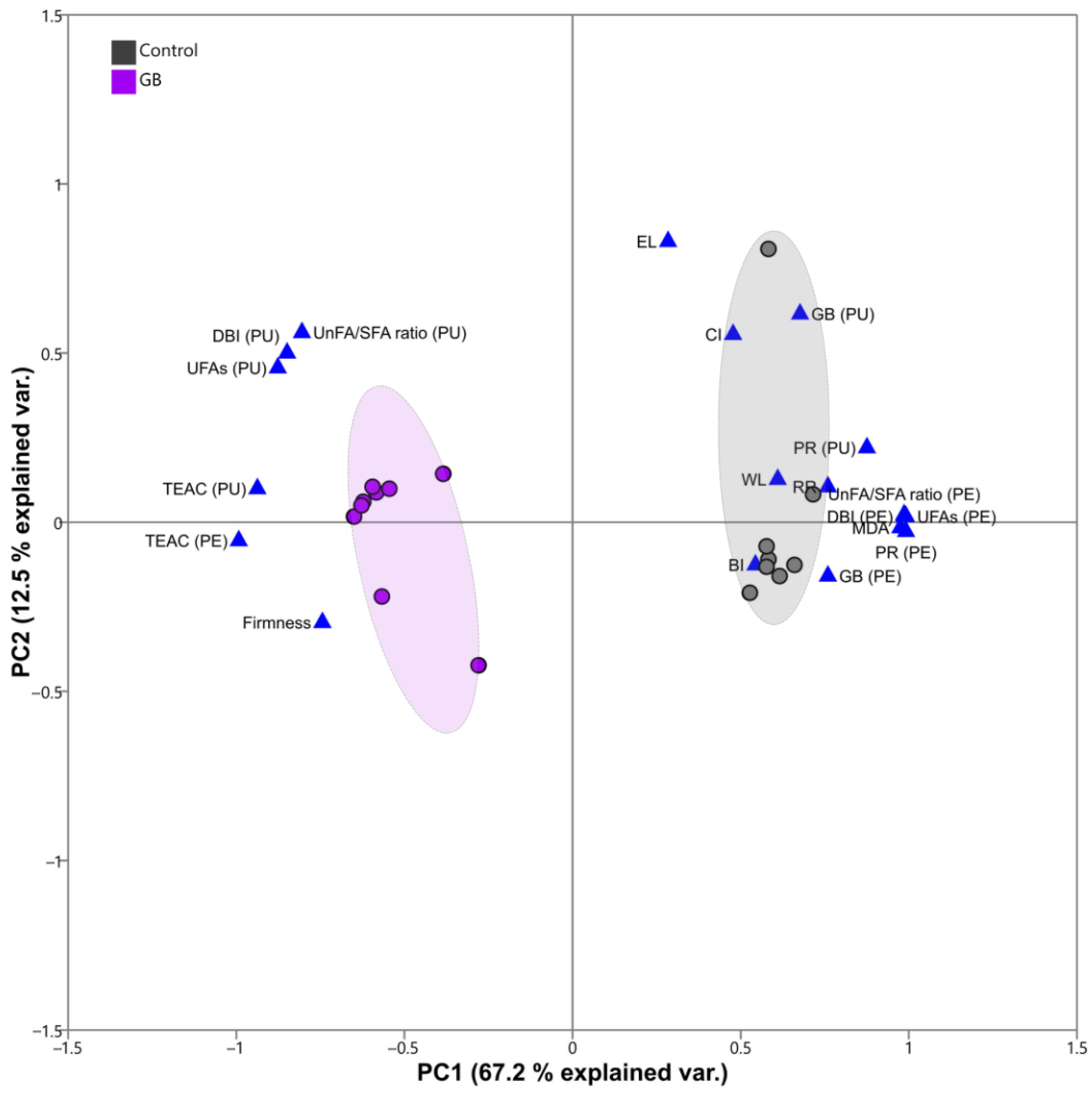
Principal component analysis (PCA) was performed at long-term cold storage (20 d + 2 days at 4 °C), when the eggplant quality differences were more evident, to obtain an overview of the correlation among physiological and biochemical parameters of the peel and flesh of control and GB-treated eggplants (Figure 7). The first two principal components (PC1 and PC2) covered 79.7% of the total variance, and the score plot demonstrates a clear discrimination between treatments. Control fruit was separated along the first principal component (PC1) axis, which accounted for 67.2% of the total score. Thus, untreated eggplants loadings were positively correlated with a higher expression of the CI physiological indicators (CI index, BI, WL, EL, and MDA) together with the increased content of compatible solutes (GB and proline) and unsaturated fatty acids in the peel of fruits (Figure 7). On the other hand, GB-treated eggplants loadings were positively linked with fruit firmness, antioxidant activity of the whole fruit, and UFA content in the flesh, factors that determined an increased eggplant CI tolerance (Figure 7).
Figure 7.
Principal component analysis performed on physiological (CI = chilling injury index, firmness, WL = weight loss, BI = browning index) and biochemical parameters (EL = electrolyte leakage, MDA = malondialdehyde content, UFA/SFA ratio = unsaturated/saturated fatty acids ratio, DBI = double bond index, TEAC = Trolox equivalent antioxidant capacity, GB = glycine betaine content, PR = proline content), all in blue, of the peel (PE) and flesh (PU) of control and 10 mM GB-treated eggplants stored for 20 days at 4 °C plus 2 days at 20 °C (20 d + 2). Circles represent GB-treated (pink) and Control (grey) loadings.
4. Conclusions
GB treatment at 10 mM significantly decreased all eggplant CI indicators, including the CI index, respiration rate, softening, weight loss, flesh browning, cell membrane permeability, and MDA content. These results determined an extension of the eggplant shelf life by at least five days compared to untreated fruit. Additionally, we found that eggplant tissues showed a specific metabolic response to CI and treatment, the peel being more reactive than the flesh. A PCA showed that GB increased eggplant CI tolerance by inhibiting fruit softening, increasing antioxidant activity retention, and lowering peel UFAs/SFAs ratio and proline content. Conversely, in untreated eggplant, the highest rates of cold damage were associated with the accumulation of compatible solutes (endogenous GB and proline) and high levels of UFAs in the peel, revealing that external tissue was the main site of metabolic response to CI in eggplant. Thus, we concluded that the availability of exogenous GB before storage ameliorates peel cell membrane stability, fruit microstructure, and antioxidant defense, thereby improving eggplant CI tolerance.
Author Contributions
Conceptualization, M.J.Z. and A.C.; methodology, M.G., M.D., L.C., A.C., and M.J.Z.; software, M.G.; validation, M.G., A.C., and M.J.Z.; formal analysis, M.G., A.C., and M.J.Z.; investigation, M.G., A.C., and M.J.Z.; resources, A.C. and M.J.Z.; data curation, M.G., A.C., and M.J.Z.; writing—original draft preparation, M.G. and M.J.Z.; writing—review and editing, M.J.Z.; supervision, M.J.Z.; project administration, M.J.Z. and A.C.; funding acquisition, M.J.Z. and A.C. All authors have read and agreed to the published version of the manuscript.
Funding
This research was funded by the grant PICT-D-2018-3898 (Dir: A. Concellón) from the Agencia Nacional de Promoción Científica y Tecnológica (ANPCyT) and the grants I+D 11x778 (Dir: A. Concellón) and PPID 11x064 (Dir: M.J. Zaro) from the National University of La Plata (UNLP), all from Argentina. LC and MG-F are fellows of the Argentine National Council of Scientific and Technical Research (CONICET). MD, MJZ, and AC are research members of CONICET. All from Argentina.
Data Availability Statement
The datasets presented in this article are not readily available because the data are part of an ongoing study. Requests to access the datasets should be directed to maria.zaro@agro.unlp.edu.ar.
Acknowledgments
The authors thank the Agencia Nacional de Promoción Científica y Tecnológica and the National University of La Plata for the funding.
Conflicts of Interest
The authors declare no conflicts of interest.
Abbreviations
The following abbreviations are used in this manuscript:
| ABTS | 2,2′-azino-bis(3-ethylbenzothiazoline-6-sulfonic acid) |
| AC | Antioxidant capacity |
| BI | Browning index |
| BHT | Butylated hydroxytoluene |
| CI | Chilling injury |
| Ct | Total conductivity |
| Cf | Final conductivity |
| Ci | Initial conductivity |
| DBI | Double bond index |
| DW | Distilled water |
| EL | Electrolyte leakage |
| FA | Fatty acid |
| FAME | Fatty acid methyl ester |
| FW | Fresh weight |
| GB | Glycine betaine |
| GC | Gas chromatography |
| IR | Infrared |
| KI–I2 | Potassium iodide–iodine reagent |
| MDA | Malondialdehyde |
| PCA | Principal component analysis |
| PVC | Polyvinyl chloride |
| ROS | Reactive oxygen species |
| SFA | Saturated fatty acids |
| TBA | Thiobarbituric acid |
| TCA | Trichloroacetic acid |
| TEAC | Trolox equivalent antioxidant capacity |
| UFA | Unsaturated fatty acids |
| UFA/SFA | Ratio of unsaturated to saturated fatty acids |
| WL | Weight loss |
References
- Zaro, M.J.; Ortiz, L.C.; Keunchkarian, S.; Chaves, A.R.; Vicente, A.R.; Concellón, A. Chlorogenic Acid Retention in White and Purple Eggplant after Processing and Cooking. LWT—Food Sci. Technol. 2015, 64, 802–808. [Google Scholar] [CrossRef]
- Agricultural Production Statistics 2010–2023. Available online: https://www.fao.org/statistics/highlights-archive/highlights-detail/agricultural-production-statistics-2010-2023/en (accessed on 16 November 2025).
- Darré, M.; Valerga, L.; Zaro, M.J.; Lemoine, M.L.; Concellón, A.; Vicente, A.R. Low Temperature Conditioning Improves American Eggplant (Solanum melongena L.) Storage Compatibility. J. Hortic. Sci. Biotechnol. 2022, 97, 773–784. [Google Scholar] [CrossRef]
- Valenzuela, J.L.; Manzano, S.; Palma, F.; Carvajal, F.; Garrido, D.; Jamilena, M. Oxidative Stress Associated with Chilling Injury in Immature Fruit: Postharvest Technological and Biotechnological Solutions. Int. J. Mol. Sci. 2017, 18, 1467. [Google Scholar] [CrossRef] [PubMed]
- Shan, Y.; Zhang, D.; Luo, Z.; Li, T.; Qu, H.; Duan, X.; Jiang, Y. Advances in Chilling Injury of Postharvest Fruit and Vegetable: Extracellular ATP Aspects. Compr. Rev. Food Sci. Food Saf. 2022, 21, 4251–4273. [Google Scholar] [CrossRef]
- Zhang, W.; Jiang, H.; Cao, J.; Jiang, W. Advances in Biochemical Mechanisms and Control Technologies to Treat Chilling Injury in Postharvest Fruits and Vegetables. Trends Food Sci. Technol. 2021, 113, 355–365. [Google Scholar] [CrossRef]
- Zaro, M.J.; Keunchkarian, S.; Chaves, A.R.; Vicente, A.R.; Concellón, A. Changes in Bioactive Compounds and Response to Postharvest Storage Conditions in Purple Eggplants as Affected by Fruit Developmental Stage. Postharvest Biol. Technol. 2014, 96, 110–117. [Google Scholar] [CrossRef]
- Concellón, A.; Zaro, M.J.; Chaves, A.R.; Vicente, A.R. Changes in Quality and Phenolic Antioxidants in Dark Purple American Eggplant (Solanum melongena L. Cv. Lucía) as Affected by Storage at 0 °C and 10 °C. Postharvest Biol. Technol. 2012, 66, 35–41. [Google Scholar] [CrossRef]
- Concellón, A.; Añón, M.C.; Chaves, A.R. Effect of Low Temperature Storage on Physical and Physiological Characteristics of Eggplant Fruit (Solanum melongena L.). LWT-Food Sci. Technol. 2007, 40, 389–396. [Google Scholar] [CrossRef]
- Tsouvaltzis, P.; Babellahi, F.; Amodio, M.L.; Colelli, G. Early Detection of Eggplant Fruit Stored at Chilling Temperature Using Different Non-Destructive Optical Techniques and Supervised Classification Algorithms. Postharvest Biol. Technol. 2020, 159, 111001. [Google Scholar] [CrossRef]
- Patel, B.; Tandel, Y.; Patel, A.; Patel, B. Chilling injury in tropical and subtropical fruits: A cold storage problem and its remedies: A review. Int. J. Sci. Environ. Technol. 1882–1887 2016, 5, 1882–1887. [Google Scholar]
- Zhu, Y.; Wang, K.; Wu, C.; Hao, Y.; Zhang, B.; Grierson, D.; Chen, K.; Xu, C. DNA Hypermethylation Associated with the Development of Temperature-Dependent Postharvest Chilling Injury in Peach Fruit. Postharvest Biol. Technol. 2021, 181, 111645. [Google Scholar] [CrossRef]
- Wu, J.; Tang, R.; Fan, K. Recent Advances in Postharvest Technologies for Reducing Chilling Injury Symptoms of Fruits and Vegetables: A Review. Food Chem. X 2024, 21, 101080. [Google Scholar] [CrossRef] [PubMed]
- Song, L.; Zhang, W.; Li, Q.; Jiang, Z.; Wang, Y.; Xuan, S.; Zhao, J.; Luo, S.; Shen, S.; Chen, X. Melatonin Alleviates Chilling Injury and Maintains Postharvest Quality by Enhancing Antioxidant Capacity and Inhibiting Cell Wall Degradation in Cold-Stored Eggplant Fruit. Postharvest Biol. Technol. 2022, 194, 112092. [Google Scholar] [CrossRef]
- Barzegar, T.; Najafi, R.; Razavi, F.; Ghahremani, Z. Hydrogen Sulfide and Phenylalanine Alleviate Chilling Injury in Eggplant Fruits during Cold Storage by Enhancing Antioxidant Activities and Membrane Stability. J. Food Process. Preserv. 2021, 45, e15933. [Google Scholar] [CrossRef]
- Massolo, J.F.; Concellón, A.; Chaves, A.R.; Vicente, A.R. 1-Methylcyclopropene (1-MCP) Delays Senescence, Maintains Quality and Reduces Browning of Non-Climacteric Eggplant (Solanum melongena L.) Fruit. Postharvest Biol. Technol. 2011, 59, 10–15. [Google Scholar] [CrossRef]
- Shi, J.; Zuo, J.; Xu, D.; Gao, L.; Wang, Q. Effect of Low-Temperature Conditioning Combined with Methyl Jasmonate Treatment on the Chilling Resistance of Eggplant (Solanum melongena L.) Fruit. J. Food Sci. Technol. 2019, 56, 4658–4666. [Google Scholar] [CrossRef]
- Gao, H.; Kang, L.; Liu, Q.; Cheng, N.; Wang, B.; Cao, W. Effect of 24-Epibrassinolide Treatment on the Metabolism of Eggplant Fruits in Relation to Development of Pulp Browning under Chilling Stress. J. Food Sci. Technol. 2015, 52, 3394–3401. [Google Scholar] [CrossRef]
- Ye, D.; Wang, X.; Guo, J.; Ren, J.; Li, B.; Li, Q.; Chen, Y.; Wang, X.; Ntakatsane, M.; Chen, P. The Underpinning Mechanisms and Applications of Glycine Betaine on Chilling Injury in Fruit and Vegetables. Microchem. J. 2025, 212, 113290. [Google Scholar] [CrossRef]
- Basit, F.; Alyafei, M.; Hayat, F.; Al-Zayadneh, W.; El-Keblawy, A.; Sulieman, S.; Sheteiwy, M.S. Deciphering the Role of Glycine Betaine in Enhancing Plant Performance and Defense Mechanisms against Environmental Stresses. Front. Plant Sci. 2025, 16, 1582332. [Google Scholar] [CrossRef]
- Sun, H.; Luo, M.; Zhou, X.; Zhou, Q.; Sun, Y.; Ge, W.; Wei, B.; Cheng, S.; Ji, S. Exogenous Glycine Betaine Treatment Alleviates Low Temperature-Induced Pericarp Browning of ‘Nanguo’ Pears by Regulating Antioxidant Enzymes and Proline Metabolism. Food Chem. 2020, 306, 125626. [Google Scholar] [CrossRef]
- Chen, L.-L.; Shan, W.; Cai, D.-L.; Chen, J.-Y.; Lu, W.-J.; Su, X.-G.; Kuang, J.-F. Postharvest Application of Glycine Betaine Ameliorates Chilling Injury in Cold-Stored Banana Fruit by Enhancing Antioxidant System. Sci. Hortic. 2021, 287, 110264. [Google Scholar] [CrossRef]
- Malekzadeh, P.; Kamrani, A.; Abbasi, Z.; Sadeghi, M. Glycine Betaine Treatment Extends the Shelf Life and Retards Cap Browning of Button Mushrooms. Sci. Rep. 2025, 15, 20796. [Google Scholar] [CrossRef] [PubMed]
- Wang, Q.; Ding, T.; Zuo, J.; Gao, L.; Fan, L. Amelioration of Postharvest Chilling Injury in Sweet Pepper by Glycine Betaine. Postharvest Biol. Technol. 2016, 112, 114–120. [Google Scholar] [CrossRef]
- Wang, Y.; Hou, Y.; Ma, Y.; Zhu, X.; Zheng, Y.; Jin, P. Effect of Glycine Betaine Treatment on Chilling Injury and Ascorbic Acid-Glutathione Cycle Metabolism in Peach Fruit. Food Sci. 2021, 42, 158–165. [Google Scholar] [CrossRef]
- Ebrahimi, P.; Nicoletto, C.; Sambo, P.; Tinello, F.; Mihaylova, D.; Lante, A. Impact of Agronomic Treatments on the Enzymatic Browning of Eggplants (Solanum melongena L.). Antioxidants 2023, 12, 410. [Google Scholar] [CrossRef]
- Wang, Y.; Luo, Z.; Du, R.; Liu, Y.; Ying, T.; Mao, L. Effect of Nitric Oxide on Antioxidative Response and Proline Metabolism in Banana during Cold Storage. J. Agric. Food Chem. 2013, 61, 8880–8887. [Google Scholar] [CrossRef]
- Folch, J.; Lees, M.; Stanley, G.H.S. A Simple Method for the Isolation and Purification of Total Lipides from Animal Tissues. J. Biol. Chem. 1957, 226, 497–509. [Google Scholar] [CrossRef]
- Ge, W.; Kong, X.; Zhao, Y.; Wei, B.; Zhou, Q.; Ji, S. Insights into the Metabolism of Membrane Lipid Fatty Acids Associated with Chilling Injury in Post-Harvest Bell Peppers. Food Chem. 2019, 295, 26–35. [Google Scholar] [CrossRef]
- Valadez-Bustos, M.G.; Aguado-Santacruz, G.A.; Tiessen-Favier, A.; Robledo-Paz, A.; Muñoz-Orozco, A.; Rascón-Cruz, Q.; Santacruz-Varela, A. A Reliable Method for Spectrophotometric Determination of Glycine Betaine in Cell Suspension and Other Systems. Anal. Biochem. 2016, 498, 47–52. [Google Scholar] [CrossRef]
- Bates, L.S.; Waldren, R.P.; Teare, I.D. Rapid Determination of Free Proline for Water-Stress Studies. Plant Soil 1973, 39, 205–207. [Google Scholar] [CrossRef]
- Zhang, Y.; Jin, P.; Huang, Y.; Shan, T.; Wang, L.; Li, Y.; Zheng, Y. Effect of Hot Water Combined with Glycine Betaine Alleviates Chilling Injury in Cold-Stored Loquat Fruit. Postharvest Biol. Technol. 2016, 118, 141–147. [Google Scholar] [CrossRef]
- Wang, L.; Shan, T.; Xie, B.; Ling, C.; Shao, S.; Jin, P.; Zheng, Y. Glycine Betaine Reduces Chilling Injury in Peach Fruit by Enhancing Phenolic and Sugar Metabolisms. Food Chem. 2019, 272, 530–538. [Google Scholar] [CrossRef] [PubMed]
- Yao, W.; Xu, T.; Farooq, S.U.; Jin, P.; Zheng, Y. Glycine Betaine Treatment Alleviates Chilling Injury in Zucchini Fruit (Cucurbita pepo L.) by Modulating Antioxidant Enzymes and Membrane Fatty Acid Metabolism. Postharvest Biol. Technol. 2018, 144, 20–28. [Google Scholar] [CrossRef]
- Shan, T.; Jin, P.; Zhang, Y.; Huang, Y.; Wang, X.; Zheng, Y. Exogenous Glycine Betaine Treatment Enhances Chilling Tolerance of Peach Fruit during Cold Storage. Postharvest Biol. Technol. 2016, 114, 104–110. [Google Scholar] [CrossRef]
- Wang, J.; Lv, M.; He, H.; Jiang, Y.; Yang, J.; Ji, S. Glycine Betaine Alleviated Peel Browning in Cold-Stored ‘Nanguo’ Pears during Shelf Life by Regulating Phenylpropanoid and Soluble Sugar Metabolisms. Sci. Hortic. 2020, 262, 109100. [Google Scholar] [CrossRef]
- Mahmoudi, R.; Razavi, F.; Rabiei, V.; Gohari, G.; Palou, L. Application of Glycine Betaine Coated Chitosan Nanoparticles Alleviate Chilling Injury and Maintain Quality of Plum (Prunus domestica L.) Fruit. Int. J. Biol. Macromol. 2022, 207, 965–977. [Google Scholar] [CrossRef]
- Annunziata, M.G.; Ciarmiello, L.F.; Woodrow, P.; Dell’Aversana, E.; Carillo, P. Spatial and Temporal Profile of Glycine Betaine Accumulation in Plants Under Abiotic Stresses. Front. Plant Sci. 2019, 10, 230. [Google Scholar] [CrossRef]
- Bahmani, R.; Razavi, F.; Mortazavi, S.N.; Gohari, G.; Juárez-Maldonado, A. Enhancing Postharvest Quality and Shelf Life of Strawberries through Advanced Coating Technologies: A Comprehensive Investigation of Chitosan and Glycine Betaine Nanoparticle Treatments. Plants 2024, 13, 1136. [Google Scholar] [CrossRef]
- Awad, M.A.; Al-Qurashi, A.D.; El-Dengawy, E.-R.F.A.; Elsayed, M.I. Quality and Biochemical Changes of ‘Hindi-Besennara’ Mangoes during Shelf Life as Affected by Chitosan, Trans-Resveratrol and Glycine Betaine Postharvest Dipping. Sci. Hortic. 2017, 217, 156–163. [Google Scholar] [CrossRef]
- Zheng, Z.; Wang, T.; Liu, M.; Xu, X.; Wang, J.; Sun, G.; He, S.; Liao, L.; Xiong, B.; Wang, X.; et al. Effects of Exogenous Application of Glycine Betaine Treatment on ‘Huangguoggan’ Fruit during Postharvest Storage. Int. J. Mol. Sci. 2023, 24, 14316. [Google Scholar] [CrossRef]
- Tucker, G.; Yin, X.; Zhang, A.; Wang, M.; Zhu, Q.; Liu, X.; Xie, X.; Chen, K.; Grierson, D. Ethylene† and Fruit Softening. Food Qual. Saf. 2017, 1, 253–267. [Google Scholar] [CrossRef]
- Zhang, J.; Wang, C.; Chen, C.; Zhang, S.; Zhao, X.; Wu, C.; Kou, X.; Xue, Z. Glycine Betaine Inhibits Postharvest Softening and Quality Decline of Winter Jujube Fruit by Regulating Energy and Antioxidant Metabolism. Food Chem. 2023, 410, 135445. [Google Scholar] [CrossRef] [PubMed]
- Wang, Z.; Chen, L.; Yang, H.; Wang, A. Effect of Exogenous Glycine Betaine on Qualities of Button Mushrooms (Agaricus bisporus) during Postharvest Storage. Eur. Food Res. Technol. 2015, 240, 41–48. [Google Scholar] [CrossRef]
- Huang, Q.; Qian, X.; Jiang, T.; Zheng, X. Effect of Eugenol Fumigation Treatment on Chilling Injury and CBF Gene Expression in Eggplant Fruit during Cold Storage. Food Chem. 2019, 292, 143–150. [Google Scholar] [CrossRef] [PubMed]
- Xu, D.; Yuan, S.; Chen, B.; Shi, J.; Sui, Y.; Gao, L.; Geng, S.; Zuo, J.; Wang, Q. A Comparative Proteomic and Metabolomic Analysis of the Low-Temperature Response of a Chilling-Injury Sensitive and a Chilling-Injury Tolerant Cultivar of Green Bell Pepper. Sci. Hortic. 2023, 318, 112092. [Google Scholar] [CrossRef]
- Wang, L.; Bokhary, S.U.F.; Xie, B.; Hu, S.; Jin, P.; Zheng, Y. Biochemical and Molecular Effects of Glycine Betaine Treatment on Membrane Fatty Acid Metabolism in Cold Stored Peaches. Postharvest Biol. Technol. 2019, 154, 58–69. [Google Scholar] [CrossRef]
- Kong, X.; Wei, B.; Gao, Z.; Zhou, Y.; Shi, F.; Zhou, X.; Zhou, Q.; Ji, S. Changes in Membrane Lipid Composition and Function Accompanying Chilling Injury in Bell Peppers. Plant Cell Physiol. 2018, 59, 167–178. [Google Scholar] [CrossRef]
- Meena, M.; Divyanshu, K.; Kumar, S.; Swapnil, P.; Zehra, A.; Shukla, V.; Yadav, M.; Upadhyay, R.S. Regulation of L-Proline Biosynthesis, Signal Transduction, Transport, Accumulation and Its Vital Role in Plants during Variable Environmental Conditions. Heliyon 2019, 5, e02952. [Google Scholar] [CrossRef]
- Rokebul Anower, M.; Peel, M.D.; Mott, I.W.; Wu, Y. Physiological Processes Associated with Salinity Tolerance in an Alfalfa Half-Sib Family. J. Agron. Crop Sci. 2017, 203, 506–518. [Google Scholar] [CrossRef]
Disclaimer/Publisher’s Note: The statements, opinions and data contained in all publications are solely those of the individual author(s) and contributor(s) and not of MDPI and/or the editor(s). MDPI and/or the editor(s) disclaim responsibility for any injury to people or property resulting from any ideas, methods, instructions or products referred to in the content. |
© 2025 by the authors. Licensee MDPI, Basel, Switzerland. This article is an open access article distributed under the terms and conditions of the Creative Commons Attribution (CC BY) license (https://creativecommons.org/licenses/by/4.0/).