


Abstract
Climate change is advancing ripening and can impair phenolic maturity in grapes, compromising anthocyanins and stilbenes that affect the wine color and stability. We tested whether exogenous abscisic acid (ABA) mitigates warming-induced shifts in the phenylpropanoid pathway in the ’Malbec’ red wine grape variety. A factorial field experiment compared control temperature (−T) and elevated temperature (+T, +2.5 °C), with and without ABA sprays (three applications after veraison). Berry skin gene expression (ten flavonoid and stilbene genes) was monitored across ripening and summarized using time-course and AUC-based clustering. Anthocyanins were quantified in berry skins at harvest and in the corresponding wines, and stilbenes were quantified in wines. Warming reduced MYBA1 early in ripening and decreased anthocyanins and stilbenes overall. Meanwhile, ABA reinforced a late anthocyanin program under −T (MYBA1, UFGT, MYBC2-L3, F3′5′H), consistent with a shift toward the 3′,5′-hydroxylated/malvidin-type branch. Conversely, stilbenes remained suppressed under +T, with limited recovery under +T/+ABA. Time-integrated expression patterns and Spearman correlations consistently linked CHS2, F3′5′H, UFGT, MYBC2-L3, with variation in berry skin anthocyanins across treatments, while STS AUC tracked wine stilbenes. Overall, ABA partially buffered warming effects on ‘Malbec’ color by reinforcing late anthocyanin regulation but did not prevent warming-driven declines in wine stilbenes.
1. Introduction
In recent decades, climate change has emerged as a major challenge to grape production. This is particularly important in warm viticultural regions, where increased temperatures accelerate ripening and disrupt the balance between technological ripeness and phenolic maturity [1,2]. Argentina, a major wine-producing country globally, is especially vulnerable to these changes due to the semi-arid conditions of most of its viticultural areas. Vitis vinifera L. cv. ‘Malbec’ wine, emblematic of Argentine viticulture, is highly valued for its intense color and polyphenolic richness, particularly anthocyanins and stilbenes.
Among these polyphenols, anthocyanins are a group of water-soluble flavonoid pigments. They are responsible for the red, purple, and blue colors, playing a central role in determining the quality of berries and wine. Additionally, stilbenes such as resveratrol form another class of polyphenols found in V. vinifera cultivars. These plant secondary metabolites participate in many physiological responses, such as abiotic and biotic stress [3]. Besides their role within the plant, both groups of polyphenols are also recognized for their protective effects on human health. In general, anthocyanins exhibit antioxidant properties linked to protection against degenerative diseases [4], while trans-resveratrol has been widely studied for its cardioprotective, hypoglycemic, and neuroprotective effects [5,6].
However, anthocyanin synthesis is highly sensitive to temperature. Studies conducted in Mendoza (Argentina), a world-famous region for premium ’Malbec’ wines, have shown that elevated temperatures can negatively affect berry quality in this and other red cultivars. These effects include reduced anthocyanin accumulation, changes in their profile, and alterations in metabolic and developmental processes [1,4,7,8,9]. Temperature effects on wine phenolics can arise both during ripening in the vineyard and during fermentation; here, we address the vineyard (berry) component. This anthocyanin shift, along with the change in other polyphenols such as stilbenes, induced by elevated temperature, is partially attributed to alterations in the expression of key genes in the flavonoid biosynthetic pathway [10,11,12]. For instance, in a field experiment conducted under our local conditions, de Rosas et al. (2017) [13] demonstrated that high-temperature regimes in ’Malbec’ berry skins reduced the transcript levels of UFGT (UDP-glucose:flavonoid 3-O-glucosyltransferase), a key late enzyme required for anthocyanin stabilization, and its transcription factor MYBA1. This happened particularly at veraison and mid-ripeness, coinciding with a decrease in total anthocyanin content. In contrast, Vv3AT (anthocyanin acyltransferase gene) expression was upregulated in berries under high temperature at veraison, associated with a later increase in the accumulation of acylated anthocyanins, and it was further upregulated at harvest [13]. In another study in which berries of cv. ‘Pione’ (V. × labruscana) were incubated in a heating chamber, elevated temperature upregulated the transcription of MYB4, a transcription factor of UFGT [11]. Another example is the altered expression pattern of stilbene synthases (STSs), key enzymes in resveratrol biosynthesis, under high temperature. In an experiment with V. labruscana cv. ’Campbell Early’ harvested at veraison and placed in temperature-controlled chambers, Kim et al. (2018) [3] found that STS1 expression was induced by elevated temperatures, whereas STS11, STS12, and STS13 were suppressed at 35 °C.
Beyond temperature, the plant hormone abscisic acid (ABA) also plays a pivotal role in regulating anthocyanin and stilbene biosynthesis. Involved in abiotic stress responses and ripening [14], exogenous application of ABA has been shown to enhance anthocyanins and resveratrol content and alter their profiles [3,5,7,15,16,17,18]. The increase in anthocyanin accumulation can be attributed to the upregulation of structural genes, which encode enzymes directly involved in anthocyanin biosynthesis and accumulation. This hormone also induces regulatory genes, such as transcription factors, that bind to the promoters of structural genes to control their spatial and temporal expression along the biosynthetic pathway [17].
Examples of these upregulated genes include phenylalanine ammonia-lyase (PAL), chalcone synthase (CHS), chalcone isomerase (CHI), flavonoid 3′-hydroxylase (F3′H), flavonoid 3′,5′-hydroxylase (F3′5′H), dihydroflavonol 4-reductase (DFR), and flavonoid 3-O-glucosyltransferase (UFGT), as well as the transcription factors MYBA1 and MYBA2 [17,19,20,21,22]. Furthermore, exogenous ABA application has been shown to upregulate the expression of STS, 3-O-GT (3-O-beta-glycosyltransferase), and MYB14, the key transcription factor that regulates STS. These components are collectively pivotal to resveratrol biosynthesis [16]. This response is most evident under stress or defense-inducing conditions, where STS induction and stilbene accumulation are typically triggered [6]. Together, these findings indicate that the ABA-mediated regulation of flavonoid and stilbene biosynthesis underlies the consistent effects observed across different V. vinifera cultivars, including those under commercial vineyard conditions [5,23].
According to the Intergovernmental Panel on Climate Change (IPCC), under the SSP2-4.5 scenario, average temperatures in Mendoza (Argentina) are projected to rise between 1.5 °C and 2.5 °C by the end of the century [24]. This level of warming underscores the need to develop strategies that not only maintain wine quality but also preserve the distinctive character associated with Mendoza’s unique geography [25].
Despite the high capital investment and long-term nature of vineyard management, viticulture is considered a sector with relatively high adaptive capacity due to the economic value of wine grapes, which allows for specific and targeted responses to climate-related risks [26]. Given this economic relevance, the application of plant growth regulators such as ABA represents a feasible adaptation strategy that can be implemented quickly and without major structural changes, unlike more disruptive options such as changing cultivars or relocating vineyards. This approach is particularly relevant in regions like Argentina, where simulated warming experiments have demonstrated negative impacts on grape quality [1], and more extensive adaptations may be economically or logistically unfeasible.
However, the interaction between ABA and temperature under realistic field conditions remains poorly understood. Moreover, understanding the physiological and molecular responses of grapevines to these combined stimuli is essential for developing adaptation strategies that preserve berry quality under climate change scenarios.
In this study, we evaluate the individual and combined effects of exogenous ABA application and elevated temperature on anthocyanin and stilbenes accumulation and gene expression in Vitis vinifera cv. ’Malbec’. We aim to determine whether ABA can mitigate the negative impact of high temperatures on berry composition, particularly regarding the content of anthocyanins and stilbenes and the expression of key biosynthetic and regulatory genes. We hypothesized that exogenous ABA would mitigate the negative effects of elevated temperature on the phenylpropanoid pathway by sustaining the expression of key biosynthetic genes. To this end, we implemented an active heating system in the field that mimics the temperature rise projected under the SSP2-4.5 scenario [27]. Characterizing these responses under realistic vineyard conditions will provide insights to support adaptive viticultural management in a warming climate.
2. Materials and Methods
2.1. Plant Material and Experimental Site
The trial was conducted during the 2020–2021 season in an experimental vineyard located at the Faculty of Agricultural Sciences, National University of Cuyo, Mendoza, Argentina (33°00′29.85″ S, 68°52′21.09′′ W; 932 m a.s.l.). The vineyard consisted of 12-year-old own-rooted vines of various V. vinifera cultivars, including ‘Malbec’ clone INTA 2. In our field conditions, this clone is characterized by medium vigor and low-to-medium productivity [28]. Cultivars were not planted consecutively; instead, each row included two non-adjacent plants of the same cultivar, with the first and last plants used as buffers. Vines were trained to bilateral cordons on a vertical shoot positioning (VSP) trellis system, with 2.2 m × 1.2 m row × vine spacing. The vineyard was drip-irrigated (2.2 mm h−1) and protected from hail using the Grembiule system. Irrigation was scheduled to meet estimated crop evapotranspiration (ETc = ETo × Kc) and avoid water restriction throughout the season. The cumulative irrigation applied during the growing season was approximately 650 mm. The soil was classified as an Entisol with a loamy-clay texture. Pruning was performed in May, retaining six two-bud spurs per cordon arm (≈24 buds per vine), and no shoot trimming was conducted after budbreak.
2.2. Experimental Design
2.2.1. Elevated Temperature Treatment
Elevated temperature (+T) was applied using a closed-loop active heating system as described by Cirrincione et al. (2024) [27]. The system consisted of three 125 L electric water heaters (3000 W) located in a small utility shed adjacent to the vineyard (housing only the heaters and pump), circulating hot water (60 ± 1 °C) at 9.2 m/s through thermally insulated polypropylene pipes buried 30 cm underground. These pipes connected to polyethylene coils mounted on the VSP structure within the canopy, forming a serpentine arrangement that passively released thermal energy. This setup achieved an average increase of 2.5 ± 0.12 °C in canopy air temperature, consistent with the projected warming under the SSP2-4.5 scenario, regardless of ambient weather conditions. Heated rows were alternated with non-heated rows (−T), which served as ambient temperature controls. The heating system operated continuously (24 h day−1, 7 days week−1) from October to March, covering the period from budbreak to harvest (Figure S1, adapted from Ref. [27]).
2.2.2. Abscisic Acid Treatment
Exogenous ABA treatment (+ABA) was applied to all clusters, on two ’Malbec’ plants per row, across three rows per treatment. The two experimental vines per row were separated from neighboring cultivars by buffer vines, and replicate vines were spatially interspersed along the plot to avoid positional clustering of any treatment. Treatment assignment was balanced across the plot, minimizing potential edge or spatial-gradient effects. The clusters were sprayed to run-off with a 1 mM ABA aqueous solution (ProT one®, Valent BioSciences LLC, Libertyville, IL, USA), prepared using the same distilled water as in the control treatment (−ABA). Water-sprayed control clusters were treated with distilled water only. Three ABA applications were performed at 7, 22, and 37 days after veraison (DAV; 15-day intervals), spanning early to late ripening (veraison, E–L stage 35 [29]) and thus covering the main window of anthocyanin accumulation. Because warming advanced veraison (by ~10 days), these DAV-based applications occurred earlier on the calendar in +T than in −T. In all cases, ten berries per plant were randomly sampled from the upper, middle, and bottom portions; immediately frozen in liquid nitrogen; and stored at –80 °C for RNA analysis. Harvest was conducted when berries reached 22 °Brix, and the remaining fruit was vinified for further analysis.
2.2.3. Combined Treatments
In total, four treatment combinations were derived from the factorial combination of temperature and ABA treatments: +T/+ABA, +T/−ABA, −T/+ABA, and −T/−ABA. Figure 1 illustrates the field experimental set-up. More details about the functioning of the system can be found in our previous work [27].
Figure 1.
Field experimental design for elevated temperature and ABA applications in ‘Malbec’ grapevines. (A) Schematic representation, adapted from Cirrincione et al. (2024) [27], of the active warming system installed along the vine row, based on hot water circulation through buried and surface hoses to raise canopy temperature during ripening. The red arrow indicates the inlet of hot water from the heating tanks, whereas the blue arrow indicates the cooled return water flowing back to the tanks. (B) Layout of the factorial treatments in the vineyard. Green rows indicate non-heated control vines (−T), and red rows indicate heated vines (+T). Within each row, clusters were sprayed with either water (−ABA) or 1 mM ABA (+ABA), as indicated by the icons. The arrow shows the orientation (N). (C) Photograph of the experimental installation in the field showing the trellis and heating hoses along the row during winter [27] (CC BY 4.0).
2.3. Gene Expression Sampling and Analyses
Berry skins for gene expression were sampled at 7, 22, 37, and 64 (harvest) DAV, immediately before each ABA application to assess the effect of the preceding spray. Because of warming-advanced phenology, sampling dates differed between +T and −T vines.
For RT–qPCR, biological replicates were individual plants (n = 3 per treatment). At each date, skins from 10 berries per plant were pooled to obtain one composite sample per plant. Total RNA was extracted from ~400 mg of berry skin, frozen in liquid nitrogen, and ground to a fine powder with a mortar and pestle. RNA was isolated using the RNeasy Plant Mini Kit (QIAGEN, Hilden, Germany) following the manufacturer’s protocol. RNA quality and concentration were verified spectrophotometrically, and 1 µg of RNA was reverse-transcribed using oligo(dT) primers and M-MLV reverse transcriptase (Invitrogen; Thermo Fisher Scientific, Waltham, MA, USA).
Gene expression was analyzed via quantitative real-time PCR (RT-qPCR) using SYBR Green PCR Master Mix (Applied Biosystems, Thermo Fisher Scientific, Waltham, MA, USA) on a StepOne™ Real-Time PCR System (Applied Biosystems, Thermo Fisher Scientific, Waltham, USA). Reactions (13 µL in total) contained 7.5 µL of SYBR Green mix, 0.3 µM of each primer, and nuclease-free water. Thermal cycling conditions were 50 °C for 2 min, 95 °C for 10 min, followed by 40 cycles of 95 °C for 15 s and 60 °C for 60 s. Relative transcript abundance was calculated using the 2−ΔΔCt method [30], normalizing to actin. The analyzed genes were CHS2, F3′5′H, F3′H, MYBA1, MYBC2-L3, UFGT, AT3, peroxidase, MYB14, and STS. Primer sequences and references [20,31,32,33,34,35,36,37,38] are provided in Table S1. The mean ΔCt of the −T/−ABA group at each sampling date (within each qPCR run/plate) was used as the calibrator (set to 1). Minor deviations from 1 in the reported −T/−ABA means reflect rounding and/or back-transformation after statistical treatment. 2−ΔΔCt values were analyzed at each sampling date via two-way ANOVA (Temperature, ABA, and T × ABA). Data were ln-transformed when required to meet ANOVA assumptions, and significant effects were followed by the DGC multiple comparisons test (α = 0.05) in InfoStat v2.0 [39,40]. Because warming advanced phenology, comparisons across temperatures at a given DAV reflect comparable phenological stages rather than the same calendar date.
Cumulative transcript accumulation across berry development was estimated as the area under the curve (AUC) of 2−ΔΔCt values (using the trapezoidal rule). This calculation was implemented in R [41] using dplyr [42] and pracma [43]. AUC values were Z-score normalized [44] and hierarchically clustered (Euclidean distance and Ward’s minimum variance method), and visualized as a heatmap using pheatmap [45,46].
2.4. Berry Skin Anthocyanins Extraction, Quantification and Analyses
At harvest, ten berries per replicate were randomly selected and immediately frozen in liquid nitrogen. Samples were transported to the laboratory and stored at −80 °C until anthocyanin quantification. Anthocyanins were extracted following the procedure outlined by Wilson et al. (2024) [47], briefly as follows: berry skins were manually separated from frozen berries, then dried and cryo-ground. Phenolics were extracted from 150 mg of skin powder with acidified methanol (MeOH:HCl 99:1, v/v; 10 N HCl) for 24 h at 20 °C in the dark, followed by centrifugation (14,000 rpm, 20 min, 4 °C). A second extraction was performed on the residue; supernatants were combined (1:1), filtered (0.45 µm cellulose acetate), and stored at −20 °C until analysis. Anthocyanins were quantified by HPLC–DAD (Thermo Fisher Scientific UltiMate 3000, Waltham, MA, USA) on a C18 column (250 × 4.6 mm, 5 µm) using the solvent system described in [47], and individual anthocyanins were expressed as mg g−1 berry skin fresh weight. Further methodological details are provided in [47].
Spearman’s rank correlation coefficient (ρ) was used to evaluate relationships between cumulative gene expression and berry metabolite accumulation. For each gene, AUC values were matched to the corresponding anthocyanin by treatment and biological replication. Pairwise correlations were computed across all treatment conditions using cor.test in R (method = ‘spearman’; exact = FALSE), and p-values < 0.05 were considered statistically significant. Data visualization was performed in R using ggplot2 [48] with statistical annotations from ggpubr [49]. An integrative overview of these statistically significant correlations was visualized as a ‘traffic-light’ bubble plot, where bubble size represented |ρ| and bubble fill indicated three |ρ| intervals (0.60–0.66, 0.67–0.74, 0.75–0.90). Plots were generated in R using ggplot2, and statistical annotations (when applicable) were added with ggpubr. To make it easy to compare anthocyanin levels among the four treatment combinations (−T/−ABA, −T/+ABA, +T/−ABA, +T/+ABA), we built a heatmap in which columns correspond to treatments and rows correspond to individual anthocyanins in berries. For each anthocyanin, values were expressed as the percent change relative to the −T/−ABA condition. The heatmap was created in R using ggplot2 (geom_tile), with a purple color scale centered at 0% (no change).
In order to visualize the main effects of temperature and ABA on berry skin anthocyanins, a diverging (‘butterfly’) bar plot was constructed from the marginal means of each factor. For each anthocyanin and total anthocyanins, percentage change was calculated as (mean at +T − mean at −T)/mean−T × 100 for the temperature effect and (mean at + ABA − mean at −ABA)/mean at −ABA × 100 for the ABA effect, using the mean concentrations (mg g−1 FW) reported in the ANOVA main effects. The plot was generated in R (ggplot2).
Percent change values for each gene (AUC) and each anthocyanin-derived metabolite were also summarized by treatment (−T/−ABA, +T/+ABA, −T/+ABA, +T/−ABA). For each variable within each treatment, replicate values were averaged to obtain a single mean% change. Distributions were displayed as a violin plot. Data processing and plotting were performed in R (R Core Team, Vienna, Austria) using the packages dplyr, tidyr and stringr for data wrangling and ggplot2 for visualization.
For integrative visualization, a conceptual model design was constructed to visually summarize branch-level trends supported by the time-course expression data, AUC-based clustering, and wine phenolic outcomes. It is not intended to quantitatively predict individual compound abundances because the metabolite statistics were evaluated as main effects and treatment comparisons, whereas the figure is mechanistic and integrative in nature.
2.5. Winemaking Procedures and Quantification of Anthocyanins and Stilbenes
Micro-vinifications were designed to minimize technological variability and to ensure that differences in wine phenolic composition reflected vineyard treatments rather than vinification effects. The protocol was performed following a standard small-scale red-winemaking protocol based on Fanzone et al. (2022) [50], with minor modifications. In brief, all berries from each treated replicate plant were vinified separately (one 25 L food-grade plastic tank per plant; n = 2 independent micro-vinifications per treatment). Vinifications followed a standard red-wine protocol. The titratable acidity was adjusted to 7 g L−1 with tartaric acid prior to alcoholic fermentation. Alcoholic fermentation was conducted with Saccharomyces cerevisiae EC-1118® (Lallemand Inc., Montréal, QC, Canada) following the manufacturer’s recommendations at 24 °C with 12 days of skin maceration. Cap management consisted of two daily punch-downs, and fermentation progress and temperature were monitored daily. At the end of the fermentation, wines were racked, cold-stabilized (≈1–3 °C) for two weeks, and adjusted to 35 mg L−1 of free SO2 before bottling.
The anthocyanin concentration and profile were determined using HPLC–DAD. Wine anthocyanins were identified and quantified following the methodology described in [50]. Analyses were performed on a PerkinElmer Series 200 HPLC system equipped with a diode array detector using a reversed-phase Chromolith Performance C18 column (100 × 4.6 mm, 2 μm) with a guard cartridge maintained at 25 °C. The mobile phases were solvent A (water/formic acid, 90:10, v/v) and solvent B (acetonitrile), applied as a gradient elution. Wine samples (2 mL) were filtered through a 0.45 μm nylon membrane, and 50 μL was injected. DAD acquisition was performed from 210 to 600 nm, and quantification was based on peak areas at 520 nm using malvidin-3-glucoside chloride as an external calibration standard (R2 ≈ 0.99). For further methodological details, see [50].
Resveratrol and other stilbenes (piceid and viniferins) were analyzed using UHPLC/QqQ-MS/MS, following da Costa et al. (2022) [51], with modifications. Wine samples were centrifuged at 1000 rpm for 15 min at 4 °C, and the supernatant was diluted fivefold with Milli-Q water:ethanol:formic acid (80:19:1, v/v/v). Analyses were performed on a Shimadzu Nexera liquid chromatograph (Shimadzu Corporation, Kyoto, Japan) coupled with a 3200QTRAP triple quadrupole mass spectrometer (AB Sciex, Marlborough, MA, USA) equipped with equipped with a Turbo V™ electrospray ionization (ESI) source. Separation was achieved on a Waters AcQuity BEH C18 column (100 mm × 2.1 mm, 1.7 μm) with a VanGuard™ AcQuity BEH C18 pre-column (5 × 2.1 mm, 1.7 μm) (Waters, Milford, MA, USA). Two chromatographic methods were used to analyze (1) anthocyanins and (2) non-colored phenolic compounds. For anthocyanins, the mobile phases were 2% formic acid in water (A) and 2% formic acid in acetonitrile (B). For non-colored phenolics, the mobile phases were 0.1% formic acid in water (A) and 0.1% formic acid in acetonitrile (B), using the following gradient: 0–0.5 min, 1% B; 0.5–1.5 min, 1–8% B; 1.5–4 min, 8% B; 4–5 min, 8–12% B; 5–5.5 min, 12% B; 5.5–6 min, 12–14% B; 6–7 min, 14% B; 7–9 min, 14–22% B; 9–12 min, 22–30% B; 12–13.5 min, 30–90% B; 13.5–14.5 min, 90% B; 14.5–15 min, 90–1% B; 15–18 min, 1% B. Data were acquired in negative ion mode ([M–H]−) using Analyst® 1.6.2 (AB Sciex, Marlborough, MA, USA). Compounds were identified using retention times and spectra of externally injected standards; when standards were unavailable, identification relied on MRM transitions (precursor [M–H]−) and diagnostic fragmentation patterns reported in the literature. Quantification was performed using external calibration curves prepared from the corresponding commercial standards, and results are expressed as mg L−1 of wine.
Wine anthocyanins (individual compounds and total anthocyanins), resveratrol, and total stilbenes (i.e., resveratrol + piceid + viniferins) were analyzed using two-way ANOVA to test the effects of temperature, ABA, and their interaction. When appropriate, DGC post hoc tests were used for mean separation (α = 0.05) with InfoStat v. 2020.
To compare whether changes in anthocyanins observed in berry skins were reflected in wines, anthocyanin data from berry skins and wines were first averaged by treatment (−T/−ABA, −T/+ABA, +T/−ABA, +T/+ABA). For metabolites detected in both datasets, values were expressed as percent change relative to the −T/−ABA baseline for each matrix (skins and wine). The direction of change (increase or decrease) was then compared between skins and wine for each treatment and metabolite. Results were visualized as a tile plot in R using ggplot2, where each cell displays ‘Δ skins%/Δ wine%’, and tiles are colored to indicate whether skins and wine changed in the same direction (match) or in opposite directions (mismatch). To quantify the extent to which ABA mitigated warming-induced changes in wine anthocyanins, we calculated an ABA improvement index under warming for each compound. First, replicate concentrations (mg L−1) for each anthocyanin were averaged within each combined treatment. Treatment means were then expressed as percent change relative to the −T/−ABA control for each metabolite. The ABA improvement under warming was computed as the difference (in percentage points) between the percent change observed in +T/+ABA and that observed in +T/−ABA: Improvement (percentage points) = (% change in +T/+ABA) − (% change in +T/−ABA), both referenced to −T/−ABA. Positive values indicate that ABA shifted metabolite levels upward under warming compared with unsprayed warmed vines, whereas values near zero indicate little additional effect of ABA under elevated temperature. All calculations and graphics were performed in R using the dplyr and ggplot2 packages.
Wine stilbenes (resveratrol and total stilbenes; mg L−1) were summarized across the four combined temperature × ABA treatments (−T/−ABA, +T/+ABA, −T/+ABA, +T/−ABA). For each compound, values were expressed as percent change relative to the −T/−ABA control (set to 0%), using the control mean as the reference. Distributions by treatment were visualized in R (tidyverse: dplyr, tidyr; ggplot2) using violin plots overlaid with jittered replicate points.
To assess coordinated variation between stilbenes and gene expression dynamics, we computed Spearman correlations (ρ) between gene AUC values (CHS2, PRX31, STS, 3AT, MYB14) and wine resveratrol and total stilbenes (n = 12; p < 0.05). Results are summarized in a traffic light bubble plot generated using the same methodology as for the berry analysis.
For integrative visualization, we created a conceptual bottle-based color model to visually summarize wine anthocyanin trends derived from the anthocyanin profile and the factorial treatment structure. This representation is intended as an intuitive, branch- and composition-level visual aid (F3′H- vs. F3′5′H-type contributions, total anthocyanins as color intensity, and % acylation as a darkening overlay), rather than a quantitative predictor of sensory color or absolute pigment concentrations. Calculation details are provided in the Supplementary Material. Accordingly, the bottle graphic should be interpreted as a qualitative synthesis consistent with the statistically supported trends, rather than a quantitative outcome.
3. Results
3.1. Gene Expression
3.1.1. Gene Relative Expression
Transcript levels changed across ripening and showed a clear time-dependent response to warming and ABA (Figure 2; full statistics in Table S6). Early after veraison (7 DAV), treatment effects were limited to MYBA1 and PRX31 (MYBA1 decreased under +T, whereas PRX31 increased). From mid-ripening onwards (22–37 DAV), ABA under −T promoted the core anthocyanin regulatory module (MYBA1, MYBC2-L3, and downstream steps), and STS showed a stronger induction, whereas warming generally constrained the stilbene response and altered the balance of flavonoid-pathway transcripts. By harvest, the main effects of warming and ABA were still evident, with ABA favoring flavonoid hydroxylation and glycosylation steps, while warming was associated with lower expression of genes linked to acylation and stilbene-related transcripts. To summarize these temporal profiles across genes, we next integrated transcript dynamics using AUC-based clustering (heatmap).
Figure 2.
Simplified ‘Malbec’ anthocyanin and stilbene pathways and time course expression of key genes under temperature and ABA treatments. The schematic shows the phenylpropanoid pathway from phenylalanine into flavonoids and stilbenes, highlighting branch points leading to 3′-hydroxylated anthocyanins (cyanidin/peonidin; warm colors) and 3′,5′-hydroxylated anthocyanins (delphinidin/petunidin/malvidin; cool colors). Solid arrows indicate single enzymatic steps, dotted arrows indicate multiple steps, and ⟂ denotes repression. Insets show relative transcript abundance (2−ΔΔCt) across sampling dates (DAV) under the four treatment combinations: −T/−ABA, −T/+ABA, +T/−ABA, and +T/+ABA. The lower block summarizes the formation of major anthocyanin classes and derivatives; 3AT denotes acylation steps generating acetylated and coumaroylated forms.
3.1.2. AUC Clustering
Hierarchical clustering of gene expression AUC values revealed distinct regulation patterns among polyphenol pathway genes (Figure 3). The vertical dendrogram shows how genes group according to the similarity of their expression profiles across treatments. Two major clusters were identified: one containing F3′H and MYB14, and another comprising the remaining eight genes. Within this larger cluster, further subclustering was observed: UFGT and MYBC2-L3 formed a distinct pair, while three additional subgroups emerged. CHS2 clustered separately; MYBA1 grouped with F3′5′H; and PRX31, 3AT, and STS formed another subgroup. The horizontal dendrogram reflects the relationships among treatments and reveals two major clusters. A smaller cluster grouped −T/+ABA, +ABA, and −T, suggesting similar effects on gene expression patterns. Within the larger cluster, +T clustered with +T/+ABA, whereas −T/−ABA, +T/−ABA, and −ABA formed a distinct subgroup.
Figure 3.
Clustered heatmap of ‘Malbec’ gene expression AUC values. Data normalization was performed using Z-score transformation, and hierarchical clustering was applied with Euclidean distance and Ward.D2 linkage. The color key indicates standardized AUC values: intense red (high expression), white (mean expression), and intense blue (low expression).
3.2. Berry Skin Anthocyanin Analyses
Visual inspection of the gene–metabolite scatterplots indicated clear treatment-driven clustering among significant positive correlations (Figures S2–S6). Across panels, −T/+ABA samples tended to occupy the upper-right region (high gene AUC and high metabolite levels). Meanwhile, +T/−ABA samples clustered toward the lower-left region (low AUC and low metabolite levels), with −T/−ABA and +T/+ABA generally showing intermediate positions. Consistent with this pattern, the violin plot (Figure 4) summarizes percent changes relative to −T/−ABA. It shows predominantly positive metabolite responses under −T/+ABA, predominantly negative responses under +T/−ABA, and intermediate values under +T/+ABA. Overall, gene AUC responses were more variable and changed less on average than metabolites. Under warming, ABA partially reduced metabolite losses, shifting the mean response closer to the −T/−ABA control.
Figure 4.
Combined distribution of ‘Malbec’ gene expression (AUC) and anthocyanin-related metabolites across temperature and ABA treatments. Violin plots show the distribution of mean percent changes relative to the −T/−ABA control for gene expression (AUC; circles) and metabolites (triangles) under −T/−ABA, +T/+ABA, −T/+ABA and +T/−ABA. Yellow symbols with a thin black outline indicate treatment-level means for genes and metabolites.
For CHS2, F3′5′H, MYBC2-L3 and PRX31, higher AUC values were associated with higher total anthocyanins. These genes also correlated positively with malvidin-3-glucoside and its acylated forms, and in some cases with delphinidin-3-glucoside, petunidin-3-glucoside or peonidin-3-(6′′-p-coumaroyl)glucoside (Figure 5, Figures S2–S4 and S6). In contrast, MYB14 AUC correlated negatively with malvidin-3-(6′′-p-coumaroyl)glucoside and total anthocyanins (Figure 5 and Figure S5). Under −T/+ABA, vines combined low MYB14 AUC with high anthocyanin contents. All gene–metabolite correlation outputs, including non-significant associations, are provided in Table S6.
Figure 5.
Correlation ‘traffic-light’ bubble plot linking gene-expression AUC to ‘Malbec’ berry skin anthocyanins. Bubble size represents the absolute correlation magnitude (|ρ|), and bubble color fill indicates |ρ| intervals. The sign of the association is shown inside each bubble (+, positive; −, negative). Only significant correlations were used to construct the plot.
ANOVA (Table S6) showed that elevated temperature (+T) produced an overall reduction in berry skin anthocyanins, whereas exogenous ABA (+ABA) increased most pigments (Figure 6). There was no significant temperature × ABA interaction for any compound. Compared with the control (−T), +T decreased delphinidin-3-glucoside by 36%, cyanidin-3-glucoside by 64%, peonidin-3-glucoside by 43%, malvidin-3-(6′′-acetyl)glucoside by 33%, peonidin-3-(6′′-p-coumaroyl)glucoside by 42%, malvidin-3-(6′′-p-coumaroyl)glucoside by 41%, and total anthocyanins by 40% (Figure 6). Conversely, relative to −ABA, +ABA increased delphinidin-3-glucoside by 127%, cyanidin-3-glucoside by 69%, peonidin-3-glucoside by 117%, malvidin-3-glucoside by 110%, malvidin-3-(6′′-acetyl)glucoside by 121%, peonidin-3-(6′′-p-coumaroyl)glucoside by 74%, malvidin-3-(6′′-p-coumaroyl)glucoside by 130%, and total anthocyanins by 115% (Figure 6). Neither +T nor +ABA affected peonidin-3-(6′′-acetyl)glucoside.
Figure 6.
Butterfly chart of effects of elevated temperature and ABA spraying on ‘Malbec’ berry skin anthocyanins. Diverging bars show the percentage change in the concentration of each metabolite in berry skins for the main effects of temperature and ABA. Asterisks indicate significant main effects (p < 0.05) from ANOVA analysis (Table S6).
These main effects were reflected in the combined-treatment heatmap (Figure 7). Spraying with ABA application under controlled temperatures (−T/+ABA) markedly increased anthocyanin accumulation across all classes. Increases were especially pronounced for total anthocyanins and the major non-acylated and acylated derivatives. In contrast, elevated temperature without ABA (+T/−ABA) reduced most pigments, including total anthocyanins and several individual anthocyanins. Under +T/+ABA, ABA partially compensated for warming-associated losses, resulting in intermediate anthocyanin levels. Total anthocyanins and several compounds exceeded +T/−ABA and, in some cases, surpassed the −T/−ABA baseline, although recovery varied among anthocyanin classes.
Figure 7.
Heatmap of ‘Malbec’ berry skin anthocyanin changes across combined treatments. Berry skin anthocyanin concentrations were expressed as percent change relative to the −T/−ABA condition (set to 0%) for each compound. Cell color indicates the direction and magnitude of change (lighter = decrease; darker = increase relative to −T/−ABA), and the percent value is shown inside each tile.
Together, these results indicate that ABA partially restores warming-driven reductions in berry skin anthocyanins, motivating the evaluation of whether the same treatment ranking is preserved in the corresponding wines.
3.3. Anthocyanin and Stilbene Profile in Wine
3.3.1. Wine Anthocyanins
In wines, ABA spraying under warming (+T/+ABA) partially mitigated the temperature-driven reduction in anthocyanins, shifting several pigments and total anthocyanins toward control levels compared with +T/−ABA.
ANOVA of wine anthocyanins revealed significant main effects of temperature and ABA for multiple compounds (Table S6). Elevated temperature significantly reduced several non-acylated pigments and total anthocyanins, whereas ABA application increased them. No significant temperature × ABA interactions were detected, and acetylated or p-coumaroylated derivatives showed no consistent main effects responses (Table S6).
The combined-treatment heatmap (Figure 8) provides an integrated view of wine anthocyanin responses as percent change relative to the −T/−ABA control. As expected, warming without ABA (+T/−ABA) produced broad decreases across the anthocyanin profile, including total anthocyanins (−13%) and strong reductions in several individual pigments (e.g., delphinidin-3-glucoside −42% and petunidin-3-glucoside −45%). In contrast, ABA under control temperature (−T/+ABA) shifted most metabolites to positive values, consistent with an overall enhancement in anthocyanin-derived pigments in wine. Under the combined treatment (+T/+ABA), most metabolites showed intermediate responses between −T/−ABA and +T/−ABA, with some pigments above baseline (e.g., cyanidin-3-glucoside +12%; malvidin-3-glucoside +18%). Overall, these patterns are consistent with largely additive temperature and ABA effects, and the heatmap provides a compact view of compound-specific responses across the four treatments.
Figure 8.
Heatmap of ‘Malbec’ wine anthocyanin changes across combined temperature × ABA treatments. Wine anthocyanin concentrations (mg L−1) were expressed as percent change relative to the −T/−ABA control (set to 0%) for each compound. Cell color indicates the direction and magnitude of change, and the percent value is shown within each tile.
Effects in skins were generally mirrored in wine but attenuated during vinification (Figure S7). Across treatments, changes in berry skin anthocyanins were largely maintained in the corresponding wines, but with reduced magnitude, consistent with partial transfer of treatment effects from skins to the final product.
To quantify recovery under warming, we calculated an ABA improvement metric for wine anthocyanins (Figure 9). This metric captures the gain from ABA at +T (+T/+ABA vs. +T/−ABA), with values expressed relative to the −T/−ABA baseline. Across wine anthocyanins, ABA under warming (+T/+ABA) consistently shifted metabolite changes upward relative to warmed vines without ABA (+T/−ABA), resulting in positive improvement values across compounds. The strongest gains were observed for several non-acylated pigments, including peonidin-3-glucoside (+28.1 percentage points) and delphinidin-3-glucoside (+27.9 percentage points), with similarly large improvements for cyanidin- and petunidin-derived pigments. Importantly, total anthocyanins increased by +15.1 percentage points under +T when ABA was applied, supporting a clear ABA-driven partial mitigation of warming-associated losses in the wine anthocyanin pool. In contrast, some acylated derivatives responded more modestly (e.g., malvidin-3-(6′′-p-coumaroyl)glucoside: +4.6 percentage points), indicating that the magnitude of recovery differed among anthocyanin classes.
Figure 9.
ABA improvement under warming for ‘Malbec’ wine anthocyanins. Bars show the ABA-driven improvement (percentage points) for each anthocyanin under elevated temperature, calculated as (% change in +T/+ABA) − (% change in +T/−ABA), where percentage changes are referenced to the −T/−ABA control. Colors denote the anthocyanin branch: F3′H-derived pigments (reds; cyanidin- and peonidin-based) and F3′5′H-derived pigments (violets; delphinidin-, petunidin-, and malvidin-based); darker tones indicate acylated derivatives (acetylated or p-coumaroylated). Total anthocyanins are shown in gray.
3.3.2. Wine Stilbenes
Wine stilbenes exhibited a clear treatment-dependent pattern. When expressed as percent change relative to the −T/−ABA control, both resveratrol and total stilbenes were highest under −T/+ABA (Figure 10). Meanwhile, both warmed treatments (+T/−ABA and +T/+ABA) clustered at low levels.
Figure 10.
‘Malbec’ wine stilbenes across temperature × ABA treatments expressed as percent change vs. the −T/−ABA control. Violin plots show the distribution of replicate percent change values for resveratrol and total stilbenes under −T/−ABA, +T/+ABA, −T/+ABA, and +T/−ABA. Green points represent individual replicates, slightly offset horizontally to avoid overlap, and yellow symbols with a thin black outline indicate treatment means.
Consistent with this pattern, a two-way ANOVA confirmed a significant Temperature × ABA interaction for both variables (resveratrol: p = 0.0061; total stilbenes: p = 0.0067) (Table S6). Resveratrol and total stilbenes showed a clear treatment gradient. The −T/+ABA treatment yielded the highest values (resveratrol: 32.833 mg L−1 and total stilbenes: 33.723 mg L−1), followed by −T/−ABA (resveratrol: 17.549 mg L−1 and total stilbenes: 18.597 mg L−1). Under warming, both +T/−ABA (resveratrol: 3.168 mg L−1 and total stilbenes: 3.45 mg L−1) and +T/+ABA (resveratrol: 5.008 mg L−1 and total stilbenes: 5.406 mg L−1) remained low.
To link treatment-driven variation in wine stilbenes to transcriptional dynamics, several gene-expression AUC metrics were significantly associated with wine stilbenes (Figure 11). STS showed positive correlations with both resveratrol and total stilbenes (ρ = 0.76; p < 0.01). CHS2 and PRX31 were also strongly and significantly correlated with both wine stilbenes (ρ = 0.86 and 0.80, respectively; p < 0.01). Meanwhile, 3AT displayed a weaker but still significant positive association (ρ = 0.59; p < 0.05). In contrast, MYB14 tended to correlate negatively with resveratrol and total stilbenes, although these relationships were not significant (p > 0.05). Together, these results suggest that under warming, ABA application did not restore stilbene accumulation, as reflected in wine stilbene concentrations.
Figure 11.
Traffic light bubble plot linking gene-expression AUC to ‘Malbec’ wine stilbenes. Spearman correlations (ρ) were computed between AUC values for CHS2, PRX31, STS, 3AT, and MYB14 and wine resveratrol and total stilbenes. Bubble size represents |ρ|, and fill color indicates |ρ| interval. The sign of the association is shown inside each bubble (+, positive; −, negative). Non-significant MYB14 associations are labeled ‘ns’.
4. Discussion
Given the cultivar-specific nature of anthocyanin composition, we interpreted our results in the context of ‘Malbec’, a cultivar dominated by malvidin-derived pigments and known to be sensitive to elevated temperatures during ripening. In our field material (‘Malbec’ clone INTA 2), the baseline color potential is moderate [28], so treatment-driven modulation of the late anthocyanin module is especially important to preserve pigment accumulation under warming.
Our results indicated that a ~2.5 °C increase in temperature and exogenous ABA applied from veraison onward do not affect the phenylpropanoid pathway in a single, fixed manner. Instead, responses shifted across ripening, with different genes and branches favored at different stages. Across the season, warming consistently penalized final anthocyanin and stilbene accumulation, whereas ABA mainly reinforced anthocyanin-related capacity but could not buffer the stilbene branch under warming. Figure 12 summarizes a conceptual model linking temporal gene regulation in berry skins to berry phenolic outcomes across ripening.
Figure 12.
Conceptual model of how elevated temperature (+T) and exogenous ABA (+ABA) could reshape the phenylpropanoid network in ’Malbec’ berry skin cells. Each schematic cell integrates three levels of information: (1) key MYB regulators (MYBA1, MYBC2-L3, MYB14; nucleus); (2) main steps of the flavonoid pathway (CHS2, F3′H, F3′5′H, UFGT; cytoplasm); and (3) the stilbene/defense branch (STS, PRX31; apoplast). Vacuolar circles represent the relative total anthocyanin pool, and external green triangles represent relative resveratrol levels inferred from gene expression and wine stilbenes. Within the vacuole, red circles denote 3′-hydroxylated anthocyanins (cyanidin- and peonidin-derived), whereas purple circles denote 3′,5′-hydroxylated anthocyanins (delphinidin-, petunidin-, and malvidin-derived). A black outline indicates acylated derivatives. Gene label colors summarize relative expression tendencies based on the dominant direction of change observed across the time course (red, higher; black, intermediate; gray, lower), rather than a single time point. This schematic provides a coherent visual summary of the branch-level tendencies discussed in the text, rather than a quantitative reconstruction of compound abundances. Under non-heated conditions without ABA (−T/−ABA), the pathway shows an intermediate activation state with an intermediate anthocyanin activation state and inferred stilbene-branch output. Under non-heated conditions with ABA (−T/+ABA), a late anthocyanin module (MYBA1–F3′5′H–UFGT–MYBC2-L3) and the stilbene branch (STS–PRX31) show higher expression, consistent with a high anthocyanin pool and a high stilbene branch output. Under warming without ABA (+T/−ABA), both the anthocyanin pool and inferred stilbene branch output are reduced, consistent with lower expression of late anthocyanin and stilbene steps. Under +T/+ABA, ABA partially preserves late anthocyanin steps and berry anthocyanin accumulation under warming, whereas stilbene accumulation inferred from wines remains low, consistent with higher thermal sensitivity of the stilbene branch than the anthocyanin branch. Under warming, resource limitation (particularly reduced carbon supply due to heat-impaired photosynthesis [52]) can constrain ripening, while competition for phenylpropanoid precursors may further shape branch allocation. Consistent with our results, ABA may mainly sustain anthocyanin-related outputs, whereas stilbene accumulation remains restricted. This schematic supports the narrative developed in the text, emphasizing branch-level tendencies rather than quantitative compound abundances.
At seven DAV, the transcriptional response was narrow: warming reduced MYBA1 and increased PRX31 (Table S1 and Figure 2). Because MYBA1 is a central activator of the late anthocyanin program (including UFGT), an early MYBA1 decrease was consistent with a negative signal for pigment formation. Meanwhile, the upregulation of PRX31 pointed to an oxidative/stress response. This direction agreed with the broader literature showing that high temperature around veraison can suppress anthocyanin accumulation through transcriptional repression and enhanced degradation processes [10,37,53].
By mid-ripening (22 DAV), ABA emerged as the main driver of the anthocyanin ‘color module’ under non-heated conditions (Table S6; Figure 2). Accordingly, −T/+ABA maximized MYBA1 and MYBC2-L3 and increased F3′5′H expression, consistent with a shift toward the 3′,5′-hydroxylated branch and malvidin-type pigments. Given that ‘Malbec’ is typically dominated by 3′,5′-hydroxylated, malvidin-derived anthocyanins, this branch shift is especially relevant for interpreting cultivar-specific color outcomes. This tendency was also supported by the time-integrated pattern, where MYBA1 co-clustered with F3′5′H in the AUC heatmap, while F3′H grouped with MYB14 as a separate module (Figure 3), suggesting that ABA and warming favored distinct branch-associated programs. This aligned with previous studies reporting ABA-driven induction of regulatory and structural anthocyanin genes in grape berry skins [20,35,54]. In contrast, warming promoted a different balance: F3′H was induced under +T/−ABA, indicating relative reinforcement of the 3′-hydroxylated route. In addition, UFGT showed positive main effects of both warming and ABA, while MYBA1 decreased under warming (Table S6; Figure 2). This may imply that under +T, UFGT regulation is not explained by MYBA1 alone and may involve additional temperature- and/or ABA-responsive inputs. Anthocyanin accumulation is shaped not only by transcription but also by transport, enzyme activity, the balance between synthesis and degradation, and vacuolar sequestration [55,56]. Therefore, transcript levels may not track metabolite abundance in a one-to-one manner.
Later (37 DAV), −T/+ABA sustained upregulation of MYBA1, MYBC2-L3, and STS despite CHS2 and F3′H downregulation, indicating a partial decoupling at this time point in which CHS2 becomes a weaker proxy for pathway output at this ripening stage (Table S6; Figure 2). This did not conflict with the positive CHS2 AUC–total anthocyanin correlations, because time-integrated expression reflected broader seasonal treatment effects (Figure 4 and Figure 5). At this time point, warming effects were still apparent in branch regulation (F3′5′H showed a positive main effect of +T), while PRX31 decreased with warming but increased with ABA (Table S6; Figure 2). To place this time-point decoupling in a broader seasonal context, the AUC heatmap resolved coherent submodules (UFGT with MYBC2-L3; MYBA1 with F3′5′H), while PRX31 clustered with 3AT and STS (Figure 3). Together, this supported an association with a modular view in which ABA primarily reinforces late anthocyanin steps, whereas warming reshapes a separate temperature-sensitive module (F3′H–MYB14).
At harvest, gene regulation was broadly consistent with berry skin phenolic composition and was consistent with the direction of the final wine profile. Under non-heated conditions, ABA-sprayed vines (−T/+ABA) sustained both pathway entry and late stabilization capacity (higher CHS2 and UFGT), whereas warming penalized several key nodes (F3′H, 3AT, STS, MYB14) (Table S6; Figure 2). This was consistent with the berry skin HPLC results: +T reduced total anthocyanins (~40%), while +ABA increased them (~115%) (Table S3; Figure 6). This is consistent with reports that heat lowers anthocyanins via combined effects on biosynthesis and degradation [10,37,53]. Similarly, Mori et al. (2005) [57] reported that a high night temperature after veraison decreases berry skin anthocyanins and alters anthocyanin composition, whereas ABA can largely restore total anthocyanin accumulation under warm nights without fully reverting the profile. Because no Temperature × ABA interaction was detected for any anthocyanin (Table S6), the combined treatment (+T/+ABA) would be expected to reflect the sum of the two main effects—warming lowering, and ABA increasing anthocyanins—yielding intermediate levels. Accordingly, +T/+ABA typically sat above +T/−ABA and often above the −T/−ABA baseline, but below −T/+ABA across total anthocyanins and many individual pigments (Figure 5 and Figure 7).
Time-integrated expression (AUC) highlighted the genes that were most strongly associated with berry skin anthocyanin outcomes, and these berry-level rankings were broadly consistent with the final wine anthocyanin responses. Given the limited replication typical of field experiments (n = 3 vines per treatment), these correlations should be interpreted as supporting the internal consistency of treatment-driven co-variation patterns rather than causality. Accordingly, we describe them as treatment-associated linkages. This cross-matrix concordance is illustrated in Figure S7 (Δ skins%/Δ wine%), showing that most anthocyanins shifted in the same direction in berry skins and wines, albeit with attenuated magnitudes in wine. CHS2, F3′5′H, MYBC2-L3, and PRX31 AUC showed the strongest positive associations with total anthocyanins and malvidin-derived pigments (Figure 5). Across most significant Spearman correlations, treatments tended to separate consistently: −T/+ABA clustered in the upper-right (high AUC/high metabolites), +T/−ABA in the lower-left, and −T/−ABA was intermediate (Figure 4). Under warming, +T/+ABA typically shifted upward relative to +T/−ABA but did not reach the −T/+ABA cluster. This was consistent with partial buffering rather than full restoration under warming. The violin plot (Figure 4) summarized this pattern, with predominantly positive percent changes under −T/+ABA, predominantly negative shifts under +T/−ABA, and intermediate responses under +T/+ABA (see Figures S2–S4 and S6). This pattern aligned with ABA’s established role in promoting berry skin anthocyanin accumulation, largely via reinforcement of late biosynthetic steps [20,35,54].
Wine phenolics represent an integrated endpoint resulting from berry composition plus extraction and stabilization processes during vinification; therefore, treatment effects observed in wine reflect both vineyard-driven differences and winemaking integration. To strengthen the mechanistic link, we report berry skin anthocyanins and show that changes in skins and wines are directionally concordant (Figure S7).
We summarized the observed wine anthocyanin profiles using anthocyanin-derived indices (F3′H vs. F3′5′H balance, acylation, and TA-scaled intensity; see Supplementary Materials for calculations). At the compound level, the combined-treatment heatmap provided a compact overview of wine anthocyanin responses across the full profile (Figure 8). We visualize these combined-treatment summaries in Figure 13.
Figure 13.
Anthocyanin-derived wine color metrics in ‘Malbec’ across temperature × ABA treatments. Wine color-related properties were summarized using anthocyanin-based metrics calculated from the observed wine anthocyanin profile (mg L−1) for each combined treatment (−T/−ABA, −T/+ABA, +T/−ABA, +T/+ABA). Anthocyanins were grouped into F3′5′H-type (‘violet’) and F3′H-type (‘red’) pigments (including acylated forms) and expressed as percentages of total anthocyanins (TA). Acylation was visualized as a semi-transparent dark overlay (%Acyl; higher values = darker appearance). Color ‘intensity’ was expressed as TA relative to the maximum TA treatment (set to 100%). Calculation details are provided in the Supplementary Materials.
In contrast, the stilbene branch appeared more thermally sensitive. Although STS AUC tracked resveratrol and total stilbenes positively, +T/+ABA often remained as low as +T/−ABA for these metabolites in wine (Figure 10), indicating limited recovery under warming despite ABA application (Table S6; Figure 11). This asymmetry was consistent with reports that heat can constrain defense-related phenolics and that warming-driven shifts in synthesis versus degradation may be difficult to reverse [37,53]. In our dataset, MYB14 reinforced this interpretation: despite being a known activator of STS promoters [58], it did not align with higher stilbene pools (Figure 11). Instead, it showed significant negative associations with berry skin total anthocyanins and malvidin-3-(6′′-p-coumaroyl)glucoside derivatives (Figure S5), while warming reduced both MYB14 and STS at harvest (Table S6; Figure 2). Overall, stilbene accumulation under field warming was more closely coupled to STS transcript dynamics than to a typical MYB14-driven module. This may suggest that additional temperature- and/or ABA-responsive regulators constrain this branch under +T. Positive correlations of CHS2, 3AT, and PRX31 AUC with resveratrol/total stilbenes (Figure 11) were therefore best interpreted as co-regulation (shared treatment structure) rather than direct control of stilbene biosynthesis.
Finally, PRX31 deserved cautious interpretation. Although PRX31 has been proposed to contribute to heat-associated anthocyanin degradation [8,37], in our AUC correlations, higher PRX31 expression aligned with the high-anthocyanin treatment (−T/+ABA) rather than with the low-color warmed treatments (Figure 5). This pattern suggested that PRX31 reflects a broader stress-responsive program, rather than serving as a primary driver of pigment loss in our experiment. Thus, our data do not support a simplistic interpretation of PRX31 as a direct marker or driver of anthocyanin degradation in this field context.
Returning to the berry skin endpoint, compound-level analyses at harvest further clarified which anthocyanin classes drove the overall treatment effects. At the compound level (Table S3), except for peonidin-3-(6′′-acetyl)glucoside, ABA increased all tested pigments, with comparatively larger gains in 3′,5′-hydroxylated anthocyanins and their acylated derivatives (mean fold-change: +ABA 2.2 vs. −ABA 1.6-fold). In contrast, warming reduced total anthocyanins and several key compounds, including delphinidin-3-glucoside, cyanidin-3-glucoside, peonidin-3-glucoside, and acylated derivatives such as malvidin-3-(6′′-acetyl)glucoside, malvidin-3-(6′′-p-coumaroyl)glucoside, and peonidin-3-(6′′-p-coumaroyl)glucoside. Overall, these patterns were consistent with ABA-driven reinforcement of late anthocyanin biosynthetic steps in the MYBA1/UFGT module, whereas warming broadly constrains anthocyanin accumulation, including acylated forms. Similar results were reported for ’Malbec’ by de Rosas et al. (2017) [13], who showed that heat reduces total anthocyanins; however, they observed an overexpression of 3AT, whereas in our study, 3AT was downregulated at harvest.
In summary, these results show that ‘Malbec’ phenylpropanoid branches differ in their thermal sensitivity. Moderate warming (~ +2.5 °C) consistently constrained both anthocyanins and stilbenes, whereas exogenous ABA primarily reinforced the anthocyanin color module, favoring malvidin-rich profiles and partially buffering the heat penalty on wine anthocyanins. This interpretation is consistent with the ABA improvement index under warming in wines (Figure 9), indicating a consistent upward shift across compounds despite only partial recovery toward the −T/+ABA condition. However, ABA did not fully restore the −T/+ABA anthocyanin phenotype under warming and did not recover stilbenes, indicating higher thermal sensitivity of the stilbene branch in ’Malbec’. The 22–37 DAV window emerged as the most responsive period for ABA support of late color-related regulation, matching the strongest activation of the anthocyanin module and the clearest treatment separation at mid-ripening. Given projections of more frequent +2 °C warming during ripening in warm viticultural regions, ABA applications in ‘Malbec’ within this window may help preserve wine anthocyanin pigments linked to color and malvidin-rich profiles under moderate warming. Stilbene-related traits, however, may remain difficult to safeguard. Future studies should validate these responses across seasons, V. vinifera cultivars, and Malbec clonal selections, and integrate transcript, enzyme-activity, and turnover measurements to disentangle synthesis versus degradation under warming.
5. Conclusions
Under projected field warming (+2.5 °C), ’Malbec’ wines showed a marked decline in total anthocyanins and a pronounced reduction in stilbenes, confirming that moderate temperature elevation during ripening compromises phenolic maturity. Exogenous ABA applications from veraison onwards consistently increased total and malvidin-derived anthocyanins across temperatures, indicating a robust stimulatory effect on the late anthocyanin program. Anthocyanin patterns in wine mirrored those observed in berry skins across treatments, although effect sizes were proportionally smaller in the final wines. However, the absence of a significant temperature × ABA interaction for anthocyanins supported an additive pattern: ABA partially offsets, but does not fully reverse, the warming-driven pigment loss. Time-course and AUC-based analyses further suggest that 22–37 days after veraison window is the most responsive period for ABA, coinciding with stronger activation of a late anthocyanin module (including MYBA1-, UFGT- and MYBC2-L3-associated regulation) and a shift toward 3′,5′-hydroxylated, malvidin-rich profiles. In contrast, stilbene accumulation remained strongly heat-sensitive, with limited recovery under warming despite ABA, highlighting the higher thermal vulnerability of the stilbene branch under these conditions. Overall, ABA sprays constitute a practical, near-term adaptation option to help sustain ’Malbec’ wine anthocyanin pigments under moderate warming, while additional strategies will be required to preserve stilbene-related traits in a warmer climate.
Supplementary Materials
The following supporting information can be downloaded at: https://www.mdpi.com/article/10.3390/horticulturae12030341/s1, Figure S1: Mean in canopy air temperature (October–March, 2020–2021 season) in control (−T) and elevated (+T) temperature treatments; Figure S2: CHS2 expression is positively associated with different anthocyanins in ‘Malbec’ berry skins across warming and ABA treatments; Figure S3: F3′5′H expression is positively associated with different anthocyanins in ‘Malbec’ berry skins across warming and ABA treatments; Figure S4: MYBC2-L3 and UFGT expressions are positively associated with different anthocyanins in ‘Malbec’ berry skins across warming and ABA treatments; Figure S5: MYB14 expressions negatively associated with different anthocyanins in ‘Malbec’ berry skins across warming and ABA treatments; Figure S6: PRX31 (PEROXIDASE) expression is positively associated with different anthocyanins in ‘Malbec’ berry skins across warming and ABA treatments; Figure S7: Concordance of treatment effects between berry skins and wine anthocyanins. Calculation of color proxies from the wine anthocyanin profile (Figure 13); Table S1: Primers used for RT-qPCR; Table S2: Relative gene expression (2−ΔΔCt) of structural and regulatory genes at four sampling dates under temperature and ABA treatments. Values are mean ± SE of relative transcript abundance (2−ΔΔCt); Table S3: Spearman correlations between gene expression (AUC) and berry metabolites (n = 12 points per correlation); Table S4: Berry skin anthocyanin profile in response to temperature and ABA treatments. Values are means in mg g−1 fresh weight; Table S5: Wine anthocyanin profile in response to temperature and ABA treatments. Values are means in mg L−1; Table S6: Wine stilbene profile in wines in response to temperature and ABA treatments. Values are means in mg L−1.
Author Contributions
Conceptualization, C.A. and L.E.M.; methodology, C.A., C.B.A., L.E.M., D.L.E.D., S.S., M.V., M.Á.C. and M.F.; software, C.A., D.L.E.D. and E.M.; validation, C.A. and L.E.M.; formal analysis, C.A., D.L.E.D. and E.M.; investigation, C.A., L.E.M. and E.M.; resources, L.E.M., M.V., S.S., M.F. and M.A.W.; data curation, C.A., L.E.M., M.Á.C., D.L.E.D., S.S., M.F. and M.V.; writing—original draft preparation, C.A.; writing—review and editing, C.A., L.E.M., D.L.E.D., S.S., E.M., C.B.A., M.V. and M.F.; visualization, L.E.M. and C.A.; supervision, L.E.M. and C.B.A.; project administration, L.E.M. and M.A.W.; funding acquisition, L.E.M. and M.A.W. All authors have read and agreed to the published version of the manuscript.
Funding
This project was funded by SIIP UNCuyo (Project 06/A708: 2019–2022) and PICTO–COVIAR (No. 0130)-2017.
Data Availability Statement
The raw gene expression dataset generated and analyzed in this study has been deposited in the CONICET research data repository at http://hdl.handle.net/11336/282754 (accessed on 5 March 2026).
Acknowledgments
We are grateful to the M.A. Walker lab for providing facilities for gene expression analyses and to Costa B. and the ICVV Analytical Service and INTA EEA Mendoza for performing the phenolic compound analyses.
Conflicts of Interest
The authors declare no conflicts of interest, and the funders had no role in the design of the study; in the collection, analyses, or interpretation of data; in the writing of the manuscript; or in the decision to publish the results.
Abbreviations
The following abbreviations are used in this manuscript:
| ABA | Abscisic acid. |
| +T | Elevated temperature treatment. |
| −T | Control temperature treatment. |
| DAV | Days after veraison. |
References
- Dominguez, D.L.E.; Cirrincione, M.A.; Deis, L.; Martínez, L.E. Impacts of climate change-induced temperature rise on phenology, physiology, and yield in three red grape cultivars: Malbec, Bonarda, and Syrah. Plants 2024, 13, 3219. [Google Scholar] [CrossRef] [Scilit]
- van Leeuwen, C.; Destrac-Irvine, A.; Dubernet, M.; Duchêne, E.; Gowdy, M.; Marguerit, E.; Pieri, P.; Parker, A.; de Rességuier, L.; Ollat, N. An update on the impact of climate change in viticulture and potential adaptations. Agronomy 2019, 9, 514. [Google Scholar] [CrossRef] [Scilit]
- Kim, S.A.; Oh, S.-K.; Ahn, S.Y.; Yun, H.K. Expression of flavonoid and stilbene synthesis genes in grape berries is affected by high temperature. Hortic. Sci. Technol. 2018, 36, 607–618. [Google Scholar] [CrossRef] [Scilit]
- de Rosas, M.I.; Deis, L.; Martínez, L.; Durán, M.; Malovini, E.; Cavagnaro, J.B. Anthocyanins in nutrition: Biochemistry and health benefits. In Psychiatry and Neuroscience Update: From Translational Research to a Humanistic Approach—Volume III; Gargiulo, P.Á., Mesones Arroyo, H.L., Eds.; Springer: Cham, Switzerland, 2019; pp. 143–152. [Google Scholar]
- Malovini, E.; Arancibia, C.; Durán, M.; Fontana, A.; De Rosas, M.I.; Deis, L.; Gargantini, R.; Bottini, A.R.; Cavagnaro, J.B.; Martínez, L. Abscisic acid and methyl jasmonic acid module anthocyanins and trans-resveratrol accumulation in berry skin of five red Vitis vinifera cvs. in two contrasting viticultural regions of Mendoza-Argentina. Rev. Fac. Cienc. Agrar. UNCuyo 2019, 51, 451–460. [Google Scholar]
- Martínez, L.; Durán, M.; Malovini, E.; De Rosas, M.I.; Deis, L.; Cavagnaro, J.B. A very promising molecule: Resveratrol, induced synthesis, and health benefits. In Psychiatry and Neuroscience Update: From Translational Research to a Humanistic Approach—Volume III; Gargiulo, P.Á., Mesones Arroyo, H.L., Eds.; Springer: Cham, Switzerland, 2019; pp. 153–164. [Google Scholar]
- Deis, L.; de Rosas, M.I.; Cavagnaro, J.B. High temperature and abscisic acid modified the profile of anthocyanins in grape (Vitis vinifera L.). J. Life Sci. 2012, 6, 758–765. [Google Scholar]
- de Rosas, I.; Deis, L.; Baldo, Y.; Cavagnaro, J.B.; Cavagnaro, P.F. High temperature alters anthocyanin concentration and composition in grape berries of Malbec, Merlot, and Pinot Noir in a cultivar-dependent manner. Plants 2022, 11, 926. [Google Scholar] [CrossRef] [Scilit] [PubMed]
- Arancibia, C.; Malovini, E.; De Rosas, M.I.; Berli, F.; Cobos, D.; Sari, S.; Bottini, R.; Cavagnaro, J.B.; Deis, L. Adapting viticulture to climate change: A four-year field trial on the role of water restriction in mitigating temperature increases in Malbec and Bonarda. OENO One 2025, 59, 8350. [Google Scholar] [CrossRef] [Scilit]
- Mori, K.; Goto-Yamamoto, N.; Kitayama, M.; Hashizume, K. Loss of anthocyanins in red-wine grape under high temperature. J. Exp. Bot. 2007, 58, 1935–1945. [Google Scholar] [CrossRef] [Scilit]
- Azuma, A.; Yakushiji, H.; Koshita, Y.; Kobayashi, S. Flavonoid biosynthesis-related genes in grape skin are differentially regulated by temperature and light conditions. Planta 2012, 236, 1067–1080. [Google Scholar] [CrossRef] [Scilit]
- Carbonell-Bejerano, P.; Santa María, E.; Torres-Pérez, R.; Royo, C.; Lijavetzky, D.; Bravo, G.; Aguirreolea, J.; Sánchez-Díaz, M.; Antolín, M.C.; Martínez-Zapater, J.M. Thermotolerance responses in ripening berries of Vitis vinifera L. cv. Muscat Hamburg. Plant Cell Physiol. 2013, 54, 1200–1216. [Google Scholar] [CrossRef] [Scilit]
- de Rosas, I.; Ponce, M.T.; Malovini, E.; Deis, L.; Cavagnaro, B.; Cavagnaro, P. Loss of anthocyanins and modification of the anthocyanin profiles in grape berries of Malbec and Bonarda grown under high temperature conditions. Plant Sci. 2017, 258, 137–145. [Google Scholar] [CrossRef] [Scilit]
- Ferrandino, A.; Lovisolo, C. Abiotic stress effects on grapevine (Vitis vinifera L.): Focus on abscisic acid-mediated consequences on secondary metabolism and berry quality. Environ. Exp. Bot. 2014, 103, 138–147. [Google Scholar] [CrossRef] [Scilit]
- Berli, F.J.; Fanzone, M.; Piccoli, P.; Bottini, R. Solar UV-B and ABA are involved in phenol metabolism of Vitis vinifera L. increasing biosynthesis of berry skin polyphenols. J. Agric. Food Chem. 2011, 59, 4874–4884. [Google Scholar] [CrossRef] [Scilit]
- Wang, J.; Wang, S.; Liu, G.; Edwards, E.J.; Duan, W.; Li, S.; Wang, L. The synthesis and accumulation of resveratrol are associated with veraison and abscisic acid concentration in Beihong (Vitis vinifera × Vitis amurensis) berry skin. Front. Plant Sci. 2016, 7, 1605. [Google Scholar] [CrossRef] [Scilit]
- Sun, Y.; Liu, Q.; Xi, B.; Dai, H. Study on the regulation of anthocyanin biosynthesis by exogenous abscisic acid in grapevine. Sci. Hortic. 2019, 250, 294–301. [Google Scholar] [CrossRef] [Scilit]
- Guo, S.H.; Yang, B.H.; Wang, X.W.; Li, J.N.; Li, S.; Yang, X.; Ren, R.-H.; Fang, Y.-L.; Xu, T.-F.; Zhang, Z.-W.; et al. ABA signaling plays a key role in regulated deficit irrigation-driven anthocyanins accumulation in ‘Cabernet Sauvignon’ grape berries. Environ. Exp. Bot. 2021, 181, 104290. [Google Scholar] [CrossRef] [Scilit]
- Ban, T.; Ishimaru, M.; Kobayashi, S.; Goto-Yamamoto, N.; Horiuchi, S. Abscisic acid and 2,4-dichlorophenoxyacetic acid affect the expression of anthocyanin biosynthetic pathway genes in ‘Kyoho’ grape berries. J. Hortic. Sci. Biotechnol. 2003, 78, 586–589. [Google Scholar] [CrossRef] [Scilit]
- Jeong, S.T.; Goto-Yamamoto, N.; Kobayashi, S.; Esaka, M. Effects of plant hormones and shading on the accumulation of anthocyanins and the expression of anthocyanin biosynthetic genes in grape berry skins. Plant Sci. 2004, 167, 247–252. [Google Scholar] [CrossRef] [Scilit]
- Koyama, K.; Sadamatsu, K.; Goto-Yamamoto, N. Abscisic acid stimulated ripening and gene expression in berry skins of the Cabernet Sauvignon grape. Funct. Integr. Genom. 2010, 10, 367–381. [Google Scholar] [CrossRef] [Scilit]
- Villalobos-González, L.; Peña-Neira, A.; Ibáñez, F.; Pastenes, C. Long-term effects of abscisic acid (ABA) on the grape berry phenylpropanoid pathway: Gene expression and metabolite content. Plant Physiol. Biochem. 2016, 105, 213–223. [Google Scholar] [CrossRef] [Scilit]
- Shahab, M.; Roberto, S.R.; Ahmed, S.; Colombo, R.C.; Silvestre, J.P.; Koyama, R.; de Souza, R.T. Anthocyanin accumulation and color development of ‘Benitaka’ table grape subjected to exogenous abscisic acid application at different timings of ripening. Agronomy 2019, 9, 164. [Google Scholar] [CrossRef] [Scilit]
- IPCC. Climate Change 2022: Impacts, Adaptation, and Vulnerability. Contribution of Working Group II to the Sixth Assessment Report of the Intergovernmental Panel on Climate Change; Pörtner, H.-O., Roberts, D.C., Tignor, M., Poloczanska, E.S., Mintenbeck, K., Alegría, A., Craig, M., Langsdorf, S., Löschke, S., Möller, V., et al., Eds.; Cambridge University Press: Cambridge, UK, 2022. [Google Scholar]
- van Leeuwen, C.; Darriet, P. The impact of climate change on viticulture and wine quality. J. Wine Econ. 2016, 11, 150–167. [Google Scholar] [CrossRef] [Scilit]
- Mosedale, J.R.; Abernethy, K.E.; Smart, R.E.; Wilson, R.J.; Maclean, I.M.D. Climate change impacts and adaptive strategies: Lessons from the grapevine. Glob. Change Biol. 2016, 22, 3814–3828. [Google Scholar] [CrossRef] [Scilit] [PubMed]
- Cirrincione, M.Á.; Arancibia, C.; Dominguez, D.L.E.; Malovini, E.J.; Martínez, L.E. Design and evaluation of an active vineyard heating system to simulate temperature increase in the context of climate change. OENO One 2024, 58, 1–14. [Google Scholar] [CrossRef] [Scilit]
- Scarsi, H.A. Caracterización Vitícola y Enológica de 19 Clones de Malbec Argentinos Obtenidos por Selección Clonal y Sanitaria [Viticultural and Oenological Characterisation of 19 Argentine Malbec Clones Obtained by Clonal and Sanitary Selection]. Master’s Thesis, Universidad Nacional de Cuyo, Mendoza, Argentina, 2002; 92p. [Google Scholar]
- Coombe, B.G. Growth stages of the grapevine: Adoption of a system for identifying grapevine growth stages. Aust. J. Grape Wine Res. 1995, 1, 104–110. [Google Scholar] [CrossRef] [Scilit]
- Livak, K.J.; Schmittgen, T.D. Analysis of relative gene expression data using real-time quantitative PCR and the 2−ΔΔCT method. Methods 2001, 25, 402–408. [Google Scholar] [CrossRef] [Scilit]
- Vannozzi, A.; Dry, I.B.; Fasoli, M.; Zenoni, S.; Lucchin, M. Genome-wide analysis of the grapevine stilbene synthase multigenic family: Genomic organization and expression profiles upon biotic and abiotic stresses. BMC Plant Biol. 2012, 12, 130. [Google Scholar] [CrossRef] [Scilit]
- Durán, M.F. Análisis Transcriptómico y Metabólico de la Biosíntesis de Transresveratrol y Antocianas en Bayas de Vid de los Cultivares Malbec y Pixie Elicitados con Ácido Metil Jasmónico y Ácido Salicílico. Ph.D. Thesis, PROBIOL, Universidad Nacional de Cuyo, Mendoza, Argentina, 2019. [Google Scholar]
- Gutha, L.R.; Casassa, L.F.; Harbertson, J.F.; Naidu, R.A. Modulation of flavonoid biosynthetic pathway genes and anthocyanins due to virus infection in grapevine (Vitis vinifera L.) leaves. BMC Plant Biol. 2010, 10, 187. [Google Scholar] [CrossRef] [Scilit]
- Muñoz, C.; Fanzone, M.; Lijavetzky, D. Transcriptional regulation of the anthocyanin biosynthesis pathway in developing grapevine berries in cultivar ‘Malbec’ by putative R2R3 MYB negative regulators. Sci. Hortic. 2019, 257, 108663. [Google Scholar] [CrossRef] [Scilit]
- Castellarin, S.D.; Di Gaspero, G.; Marconi, R.; Nonis, A.; Peterlunger, E.; Paillard, S.; Adam-Blondon, A.-F.; Testolin, R. Color variation in red grapevines (Vitis vinifera L.): Genomic organisation, expression of flavonoid 3′-hydroxylase, flavonoid 3′,5′-hydroxylase genes and related metabolite profiling of red cyanidin-/blue delphinidin-based anthocyanins in berry skin. BMC Genom. 2006, 7, 12. [Google Scholar] [CrossRef] [Scilit] [PubMed]
- Rinaldo, A.R.; Cavallini, E.; Jia, Y.; Moss, S.M.; McDavid, D.A.; Hooper, L.C.; Robinson, S.P.; Tornielli, G.B.; Zenoni, S.; Ford, C.M.; et al. A grapevine anthocyanin acyltransferase, transcriptionally regulated by VvMYBA, can produce most acylated anthocyanins present in grape skins. Plant Physiol. 2015, 169, 1897–1916. [Google Scholar] [CrossRef] [Scilit]
- Movahed, N.; Pastore, C.; Cellini, A.; Allegro, G.; Valentini, G.; Zenoni, S.; Cavallini, E.; D’incà, E.; Tornielli, G.B.; Filippetti, I. The grapevine VviPrx31 peroxidase as a candidate gene involved in anthocyanin degradation in ripening berries under high temperature. J. Plant Res. 2016, 129, 513–526. [Google Scholar] [CrossRef] [Scilit]
- Jones, L.; Riaz, S.; Morales-Cruz, A.; Amrine, K.C.; McGuire, B.; Gubler, W.D.; Walker, M.A.; Cantu, D. Adaptive genomic structural variation in the grape powdery mildew pathogen, Erysiphe necator. BMC Genom. 2014, 15, 1081. [Google Scholar] [CrossRef] [Scilit]
- Di Rienzo, J.A.; Guzmán, A.W.; Casanoves, F. A multiple-comparisons method based on the distribution of the root node distance of a binary tree. J. Agric. Biol. Environ. Stat. 2002, 7, 129–142. [Google Scholar] [CrossRef] [Scilit]
- Di Rienzo, J.A.; Casanoves, F.; Balzarini, M.G.; Gonzalez, L.; Tablada, M.; Robledo, C.W. InfoStat, Versión 2020; Centro de Transferencia InfoStat, FCA, Universidad Nacional de Córdoba: Córdoba, Argentina, 2020. Available online: http://www.infostat.com.ar (accessed on 19 January 2026).
- R Core Team. R: A Language and Environment for Statistical Computing; R Foundation for Statistical Computing: Vienna, Austria, 2023. [Google Scholar]
- Wickham, H.; François, R.; Henry, L.; Müller, K.; Vaughan, D. dplyr: A Grammar of Data Manipulation (R Package Version 1.1.4). Available online: https://CRAN.R-project.org/package=dplyr (accessed on 19 January 2026).
- Borchers, H.W. pracma: Practical Numerical Math Functions (R Package Version 2.4.2). Available online: https://CRAN.R-project.org/package=pracma (accessed on 19 January 2026).
- Cheadle, C.; Vawter, M.P.; Freed, W.J.; Becker, K.G. Analysis of microarray data using Z-score transformation. J. Mol. Diagn. 2003, 5, 73–81. [Google Scholar] [CrossRef] [Scilit] [PubMed]
- Kolde, R. pheatmap: Pretty Heatmaps (R Package Version 1.0.12). Available online: https://CRAN.R-project.org/package=pheatmap (accessed on 19 January 2026).
- Ward, J.H. Hierarchical grouping to optimize an objective function. J. Am. Stat. Assoc. 1963, 58, 236–244. [Google Scholar] [CrossRef]
- Wilson, A.; Dizy, M.; Dominguez, D.L.E.; de Rosas, M.I.; Baldo, Y.; García, L.; Gargantini, R.; Deis, L.; Martínez, L. Overhead spray water treatment as a mitigation strategy to alleviate vine stress and safeguard grape quality during heatwaves. OENO One 2024, 58, 1–18. [Google Scholar] [CrossRef] [Scilit]
- Wickham, H. ggplot2: Elegant Graphics for Data Analysis; Springer: New York, NY, USA, 2016; Available online: https://ggplot2.tidyverse.org (accessed on 19 January 2026).
- Kassambara, A. ggpubr: ‘ggplot2’ Based Publication Ready Plots (R Package Version 0.6.0). Available online: https://CRAN.R-project.org/package=ggpubr (accessed on 19 January 2026).
- Fanzone, M.; Coronado, I.; Sari, S.; Catania, A.; Gil Cortiela, M.; Assof, M.; Jofré, V.; Ubeda, C.; Peña Neira, A. Microwave-assisted maceration and stems addition in Bonarda grapes: Effects on wine chemical composition over two vintages. Food Res. Int. 2022, 156, 111169. [Google Scholar] [CrossRef] [Scilit]
- da Costa, B.S.; Muro, G.S.; García, M.O.; Motilva, M.J. Winemaking by-products as a source of phenolic compounds: Comparative study of dehydration processes. LWT 2022, 165, 113774. [Google Scholar] [CrossRef] [Scilit]
- Greer, D.H.; Weston, C. Heat Stress Affects Flowering, Berry Growth, Sugar Accumulation and Photosynthesis of Vitis vinifera cv. Semillon Grapevines Grown in a Controlled Environment. Funct. Plant Biol. 2010, 37, 206–214. [Google Scholar] [CrossRef] [Scilit]
- Gouot, J.-C.; Smith, J.P.; Holzapfel, B.P.; Walker, A.R.; Barril, C. Grape berry flavonoids: A review of their biochemical responses to high and extreme high temperatures. J. Exp. Bot. 2019, 70, 397–423. [Google Scholar] [CrossRef] [Scilit]
- Koyama, R.; Roberto, S.R.; de Souza, R.T.; Borges, W.F.; Anderson, M.; Waterhouse, A.L.; Cantu, D.; Fidelibus, M.W.; Blanco-Ulate, B. Exogenous abscisic acid promotes anthocyanin biosynthesis and increased expression of flavonoid synthesis genes in Vitis vinifera × Vitis labrusca table grapes in a subtropical region. Front. Plant Sci. 2018, 9, 323. [Google Scholar] [CrossRef] [Scilit]
- Pastore, C.; Dal Santo, S.; Zenoni, S.; Movahed, N.; Allegro, G.; Valentini, G.; Filippetti, I.; Tornielli, G.B. Whole plant temperature manipulation affects flavonoid metabolism and the transcriptome of grapevine berries. Front. Plant Sci. 2017, 8, 929. [Google Scholar] [CrossRef] [Scilit] [PubMed]
- Francisco, R.M.; Regalado, A.; Ageorges, A.; Burla, B.J.; Bassin, B.; Eisenach, C.; Zarrouk, O.; Vialet, S.; Marlin, T.; Chaves, M.M.; et al. ABCC1, an ATP binding cassette protein from grape berry, transports anthocyanidin 3-O-glucosides. Plant Cell 2013, 25, 1840–1854. [Google Scholar] [CrossRef] [Scilit] [PubMed]
- Mori, K.; Saito, H.; Goto-Yamamoto, N.; Kitayama, M.; Kobayashi, S.; Sugaya, S.; Gemma, H.; Hashizume, K. Effects of abscisic acid treatment and night temperatures on anthocyanin composition in Pinot noir grapes. Vitis 2005, 44, 161–165. [Google Scholar]
- Höll, J.; Vannozzi, A.; Czemmel, S.; D’Onofrio, C.; Walker, A.R.; Rausch, T.; Lucchin, M.; Boss, P.K.; Dry, I.B.; Bogs, J. The R2R3-MYB transcription factors MYB14 and MYB15 regulate stilbene biosynthesis in Vitis vinifera. Plant Cell 2013, 25, 4135–4149. [Google Scholar] [CrossRef] [Scilit]
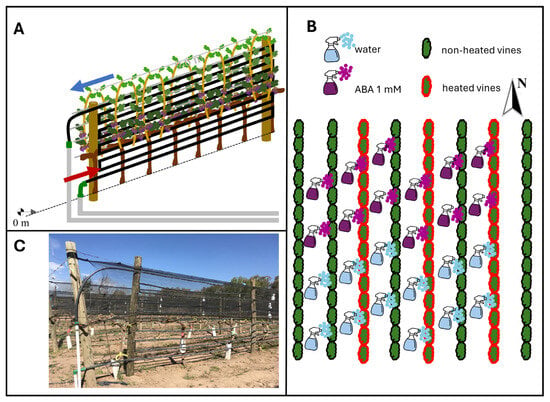
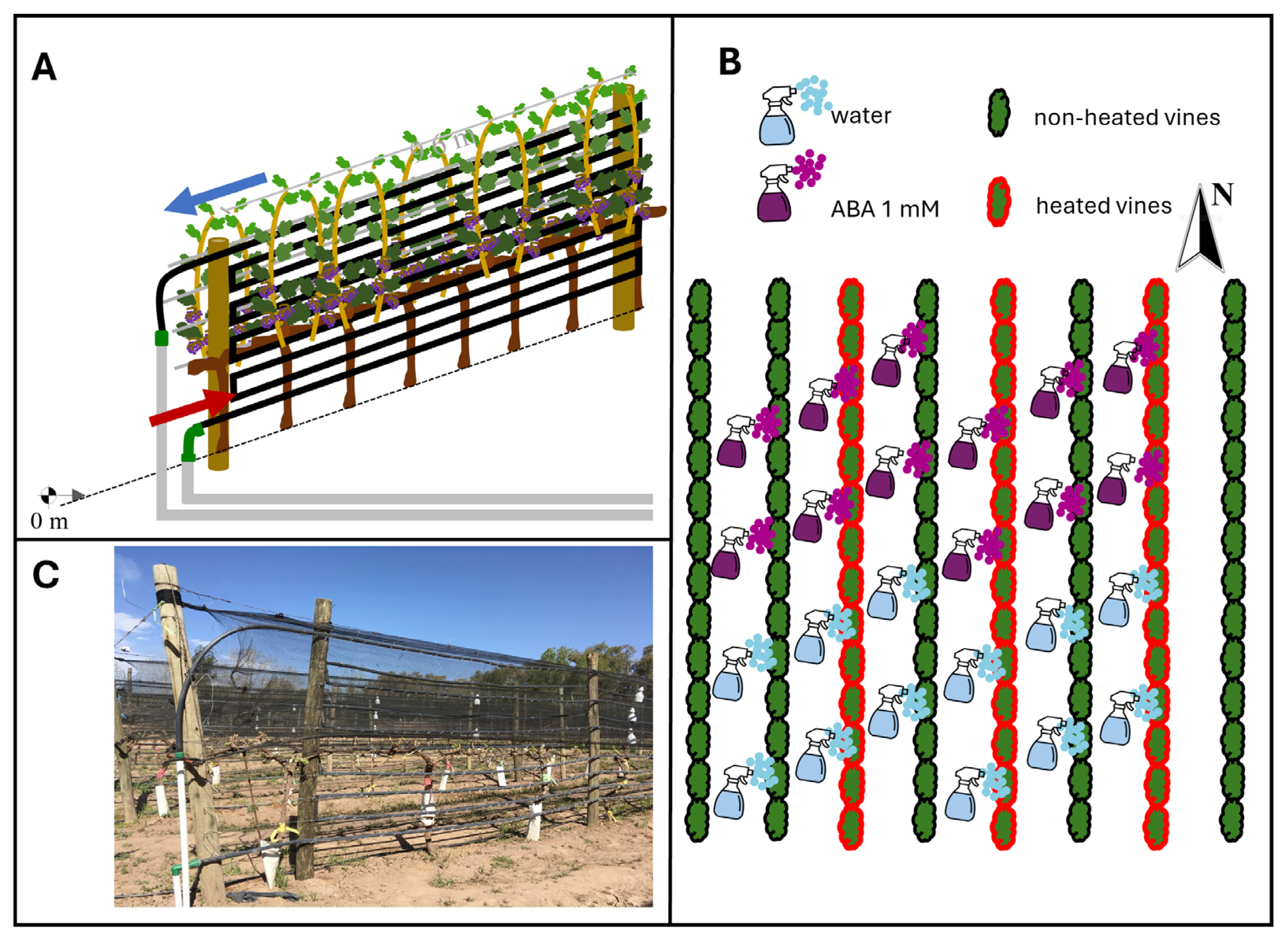
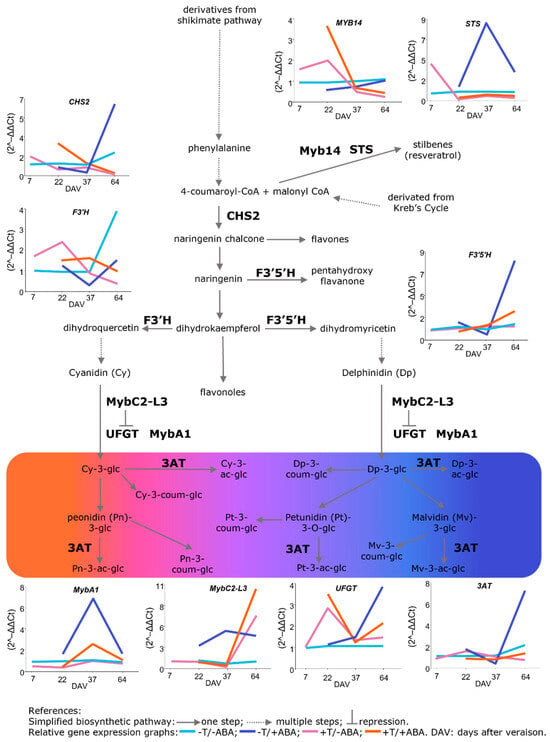
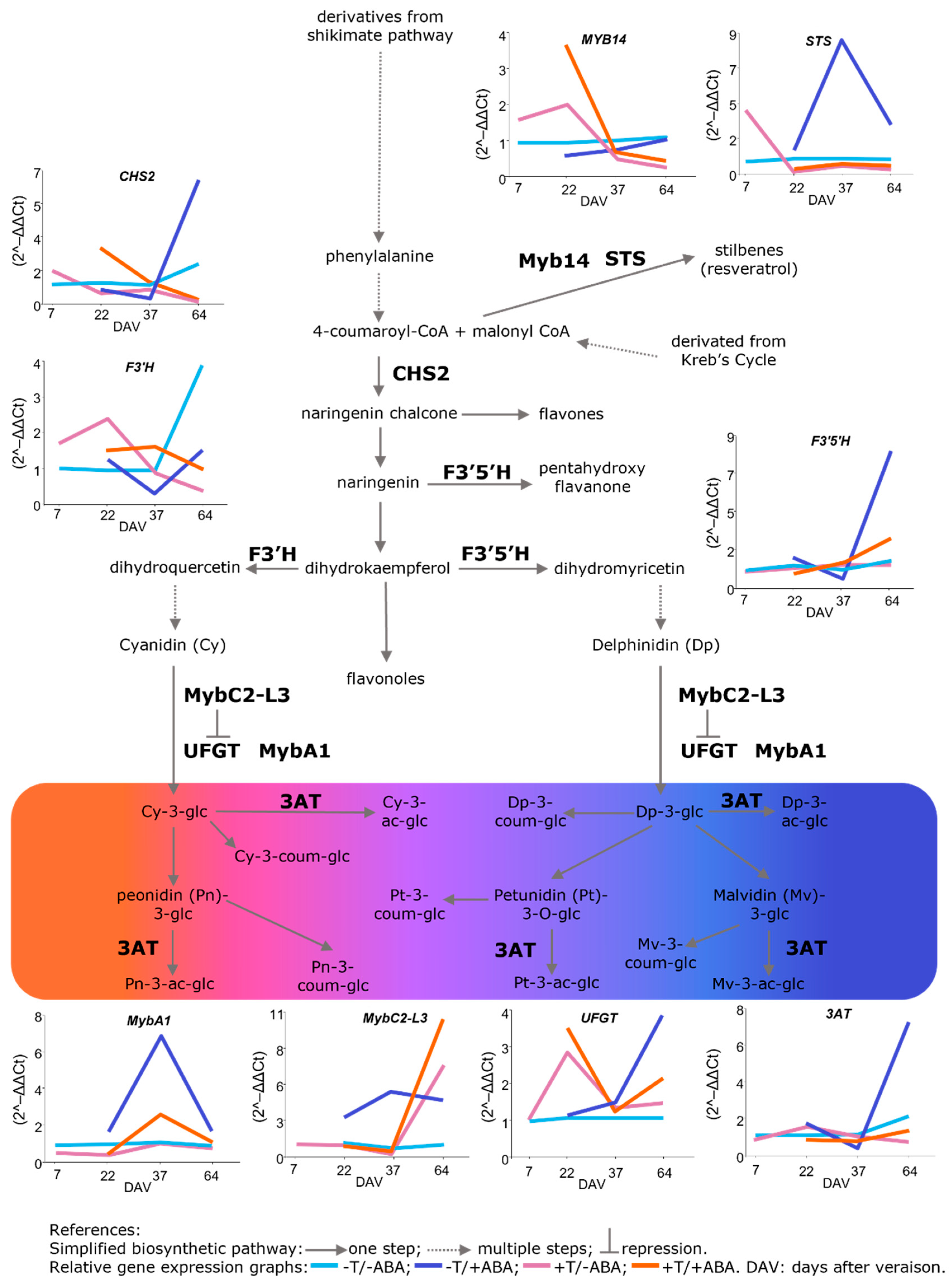
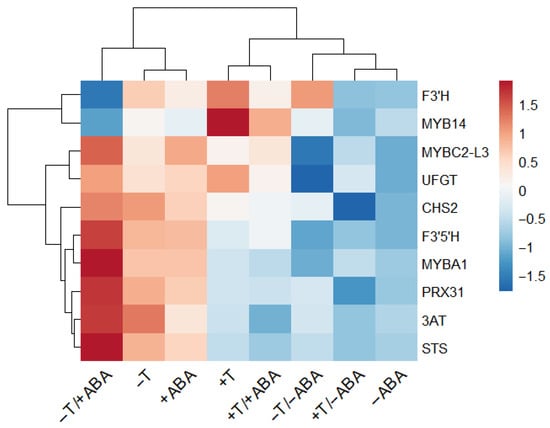
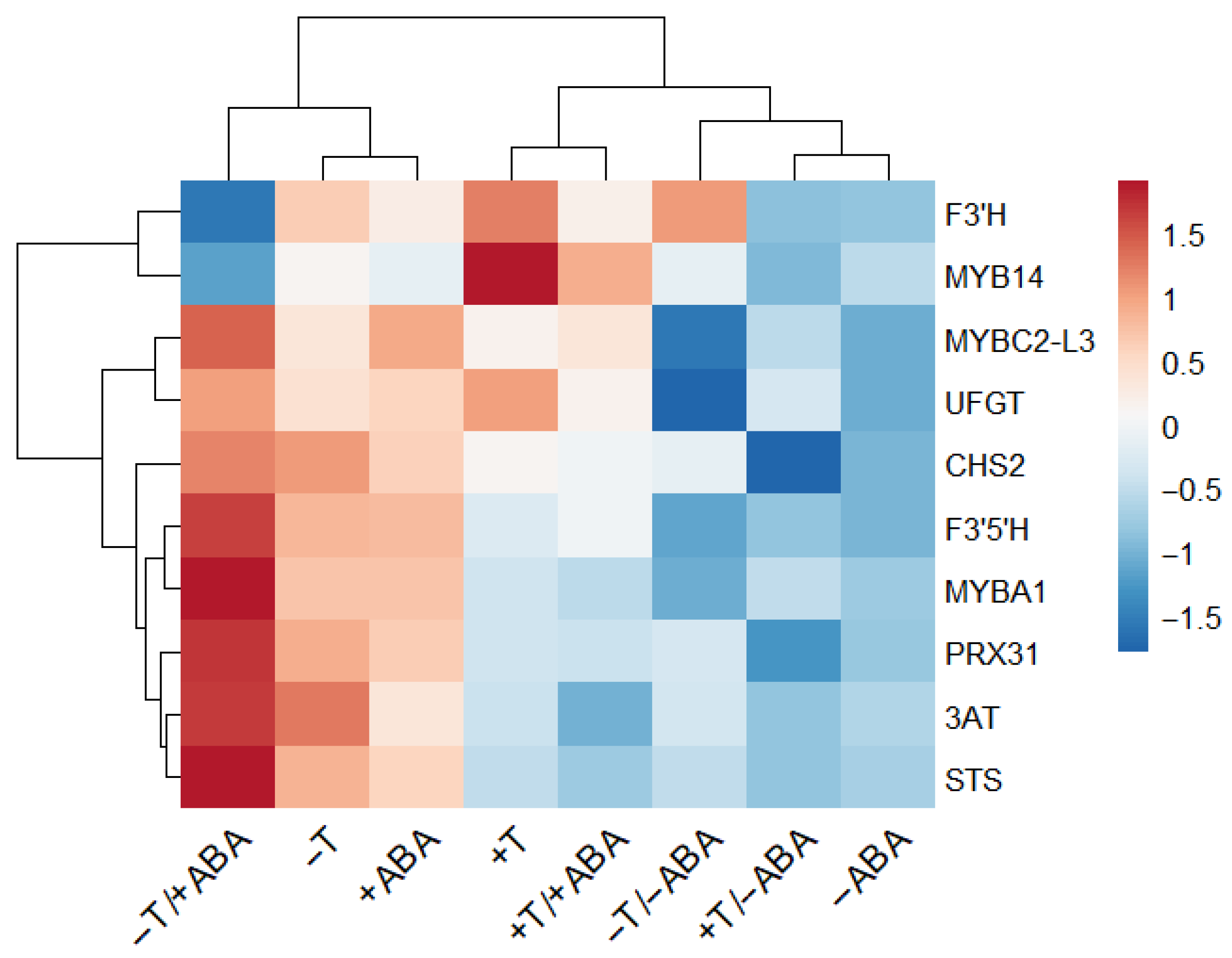
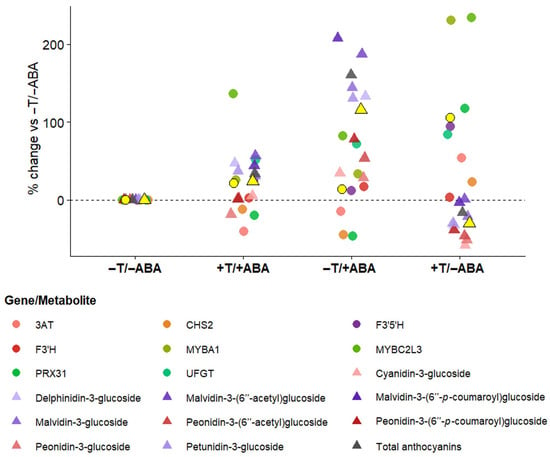
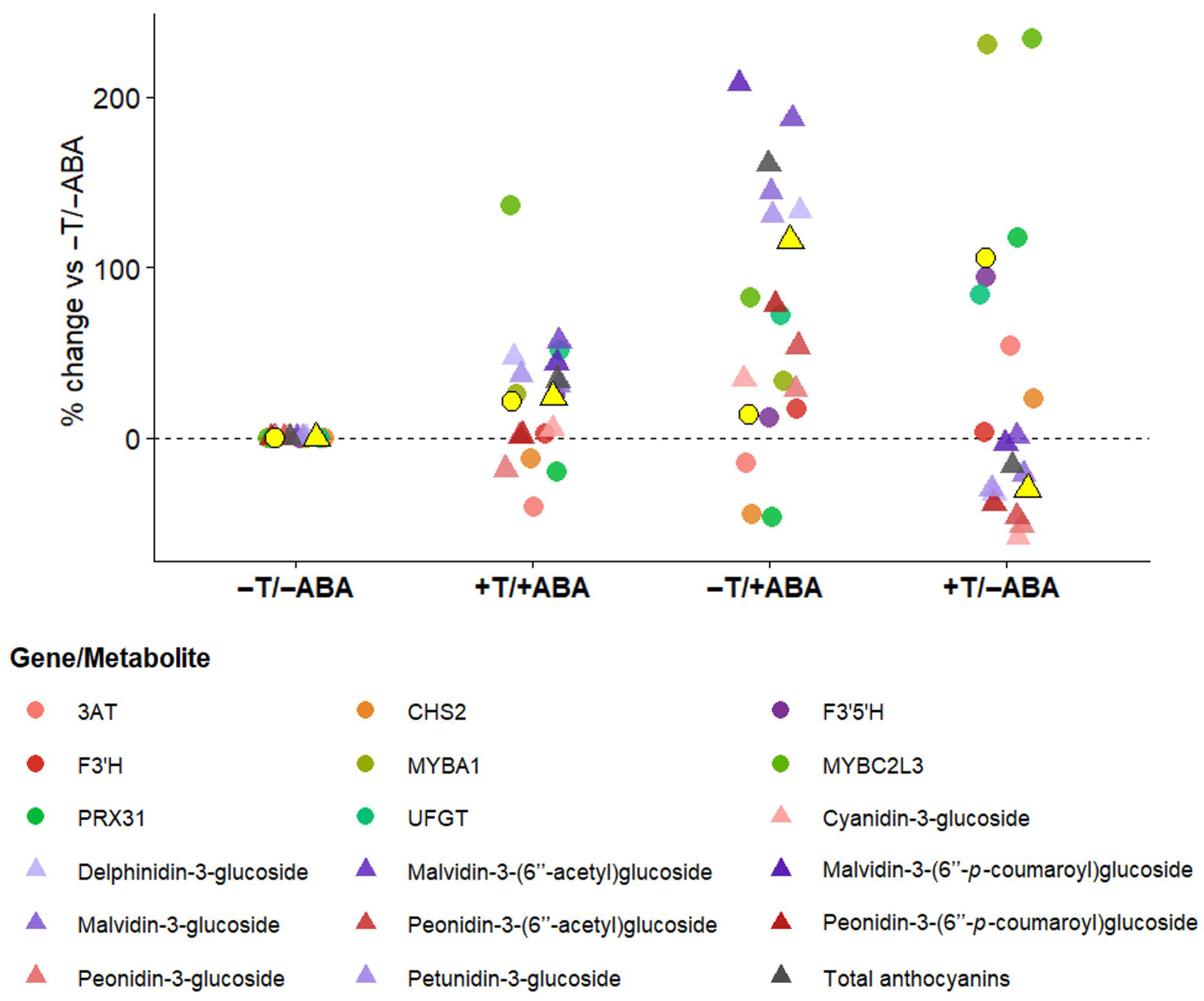
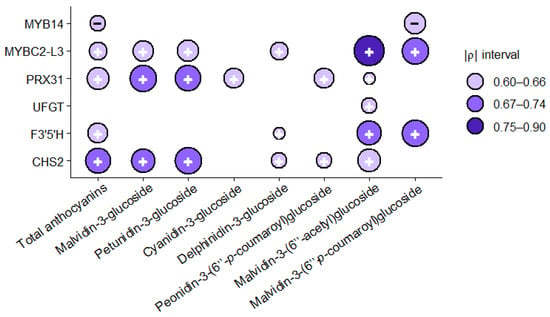
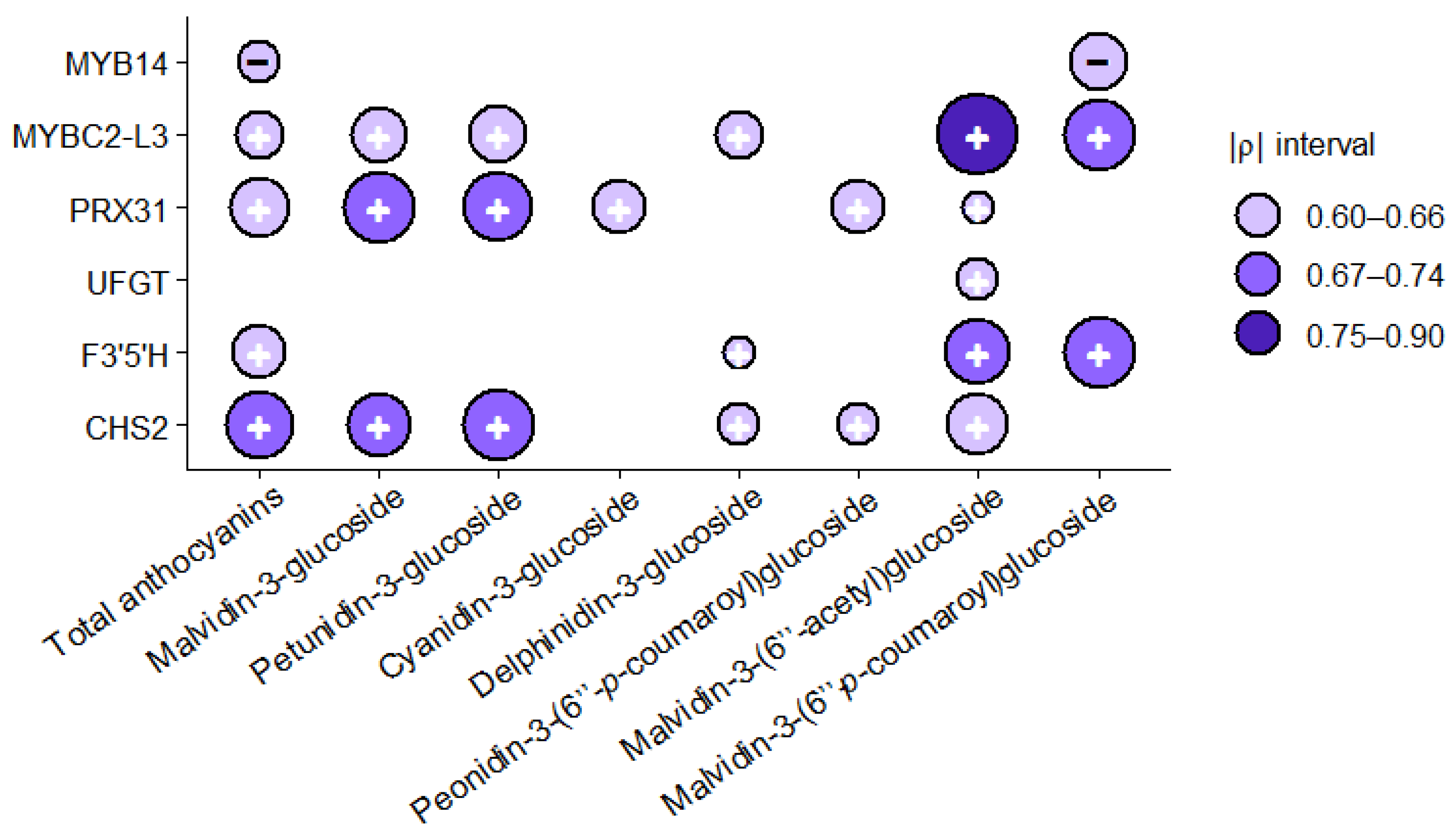
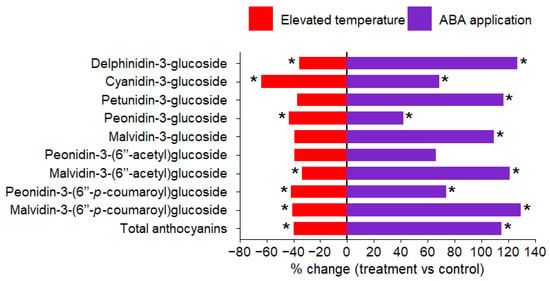
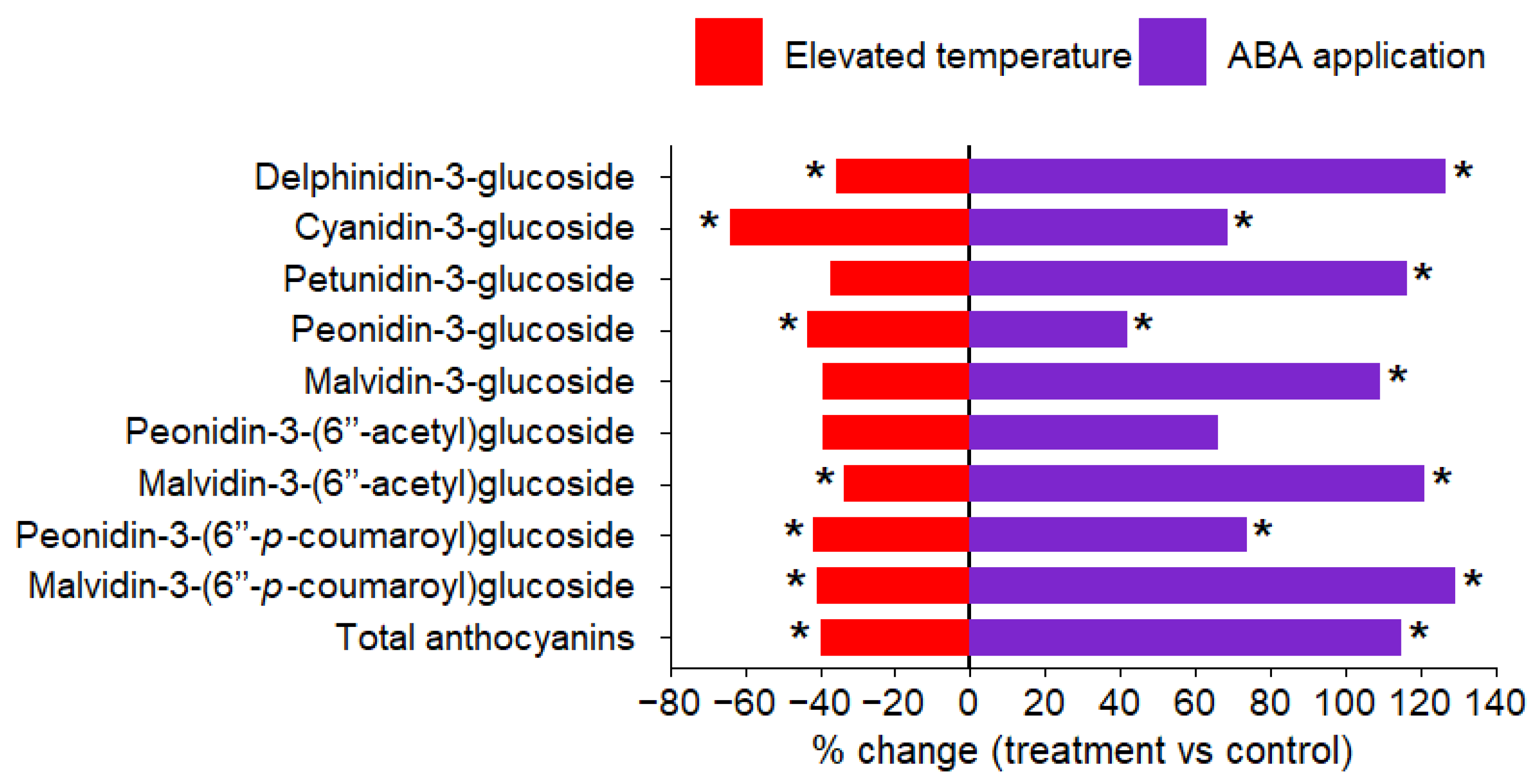
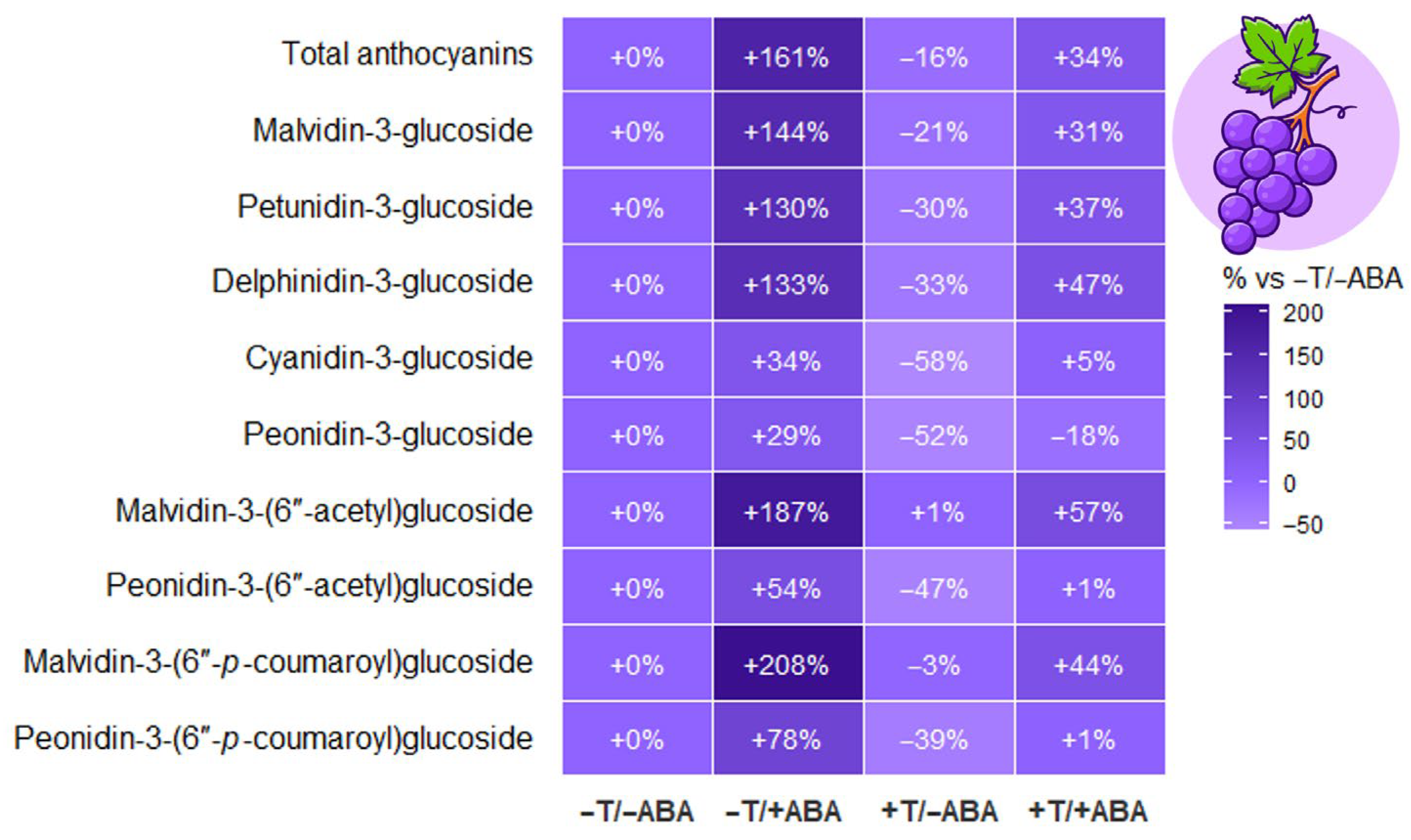
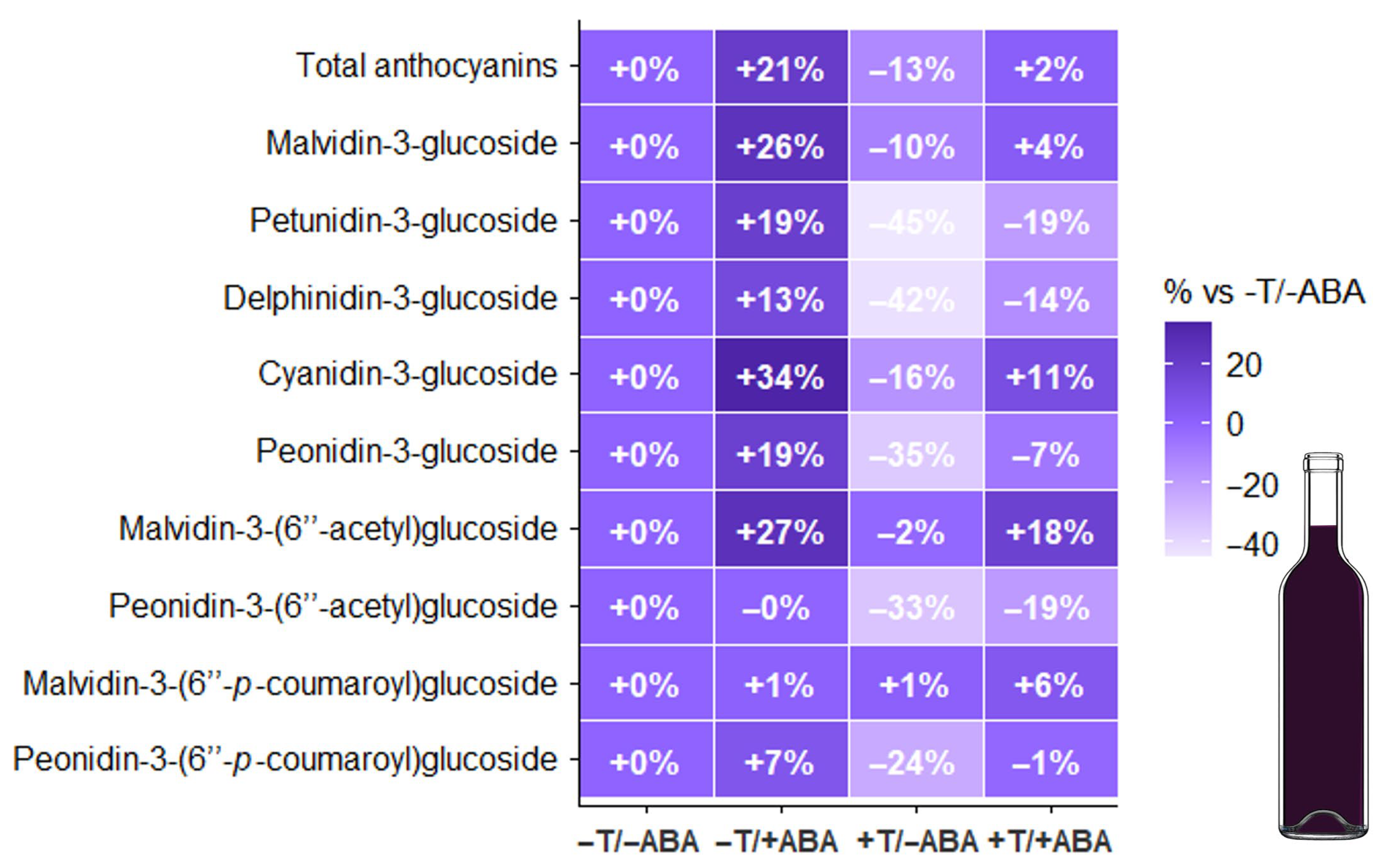
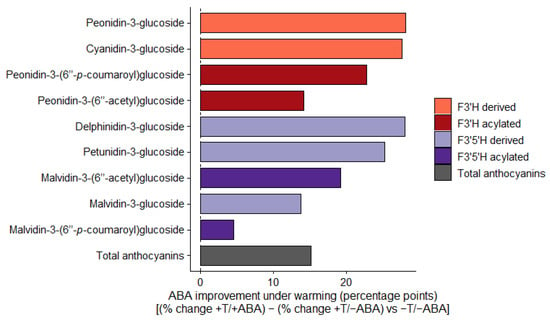
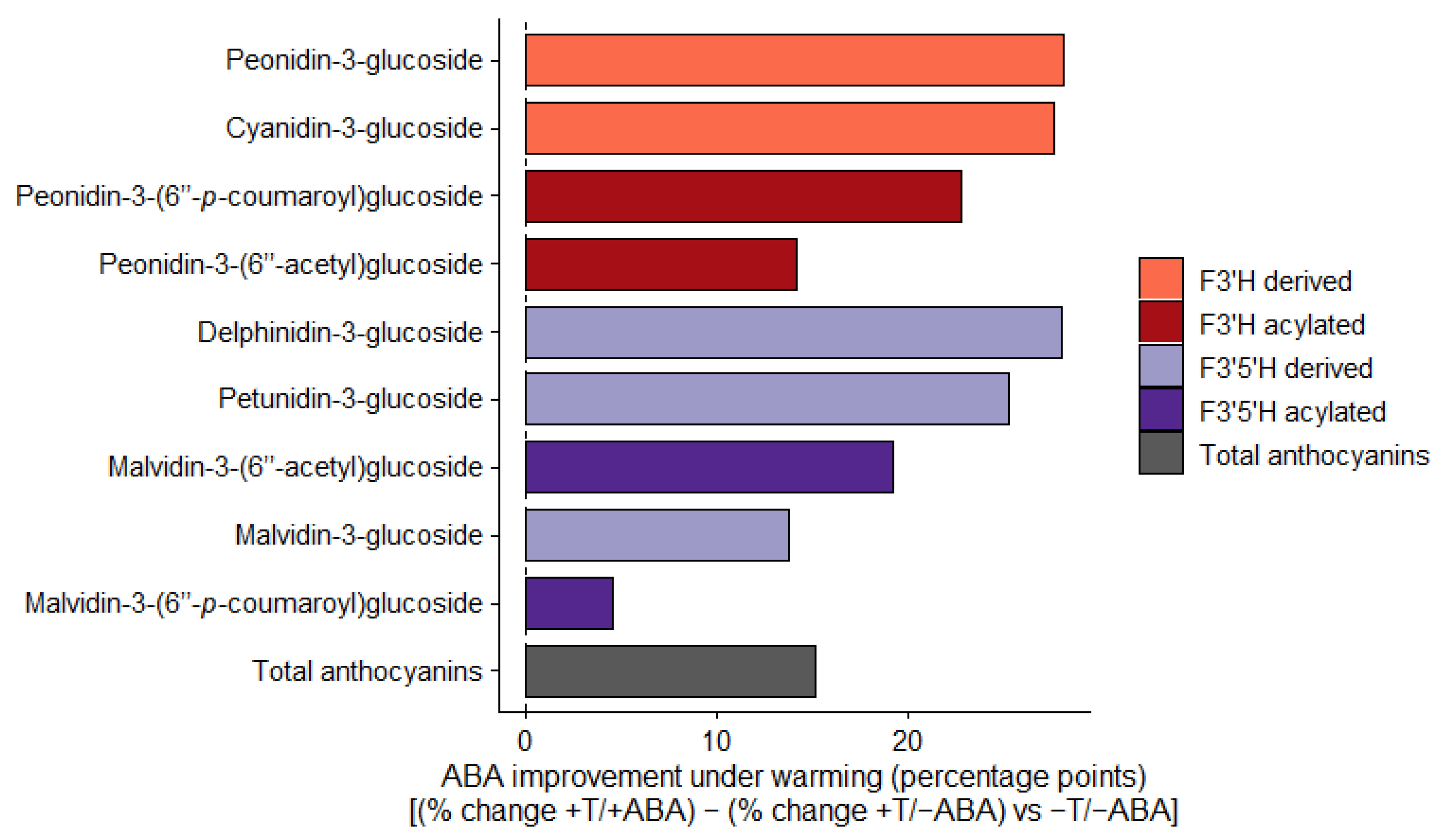
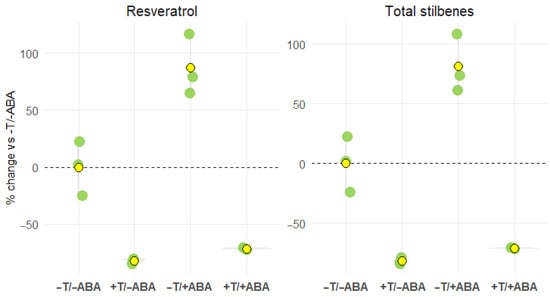
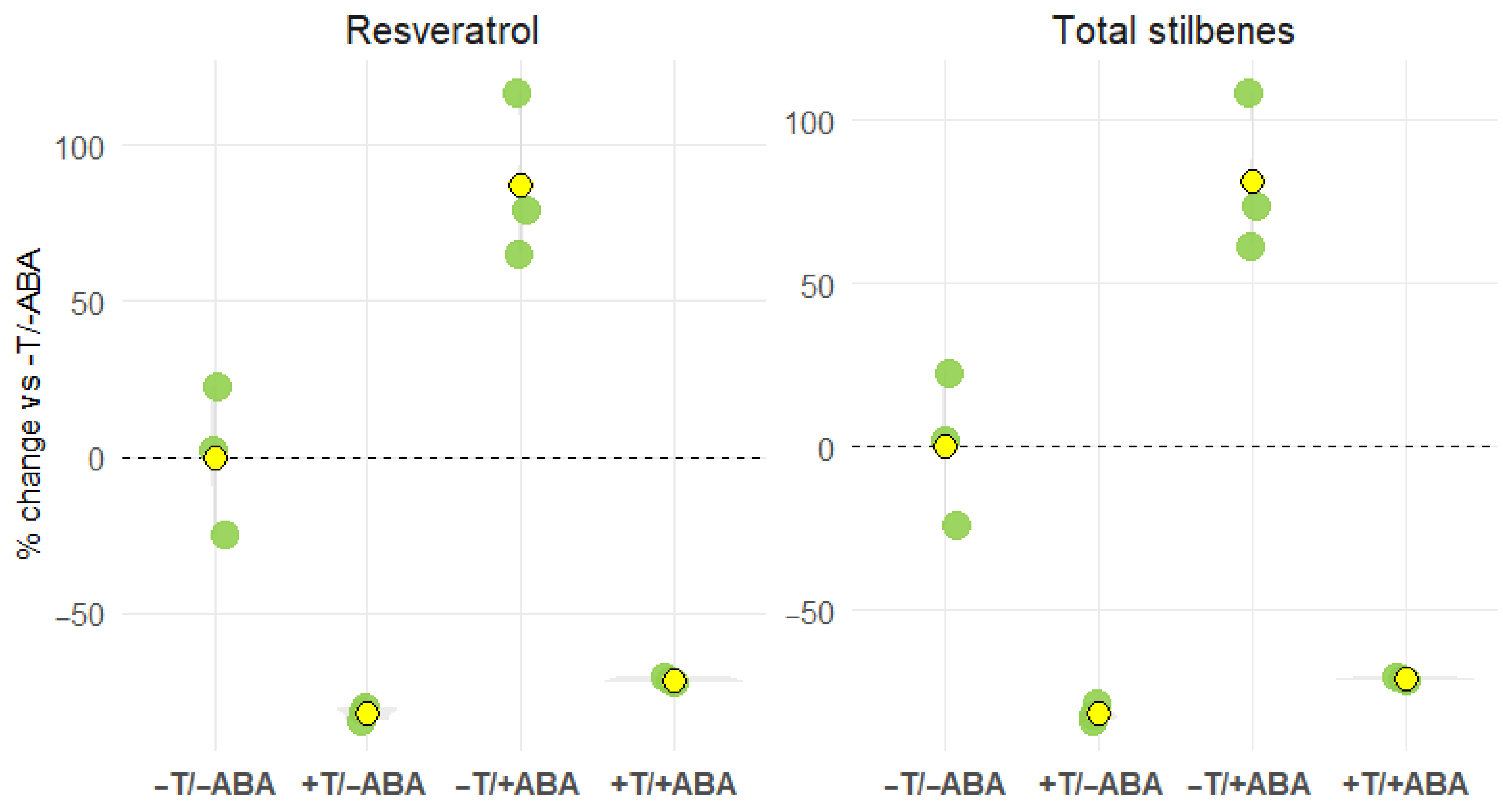
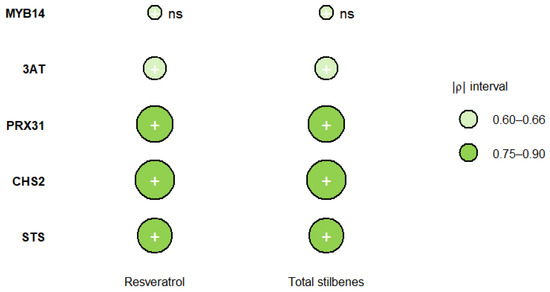
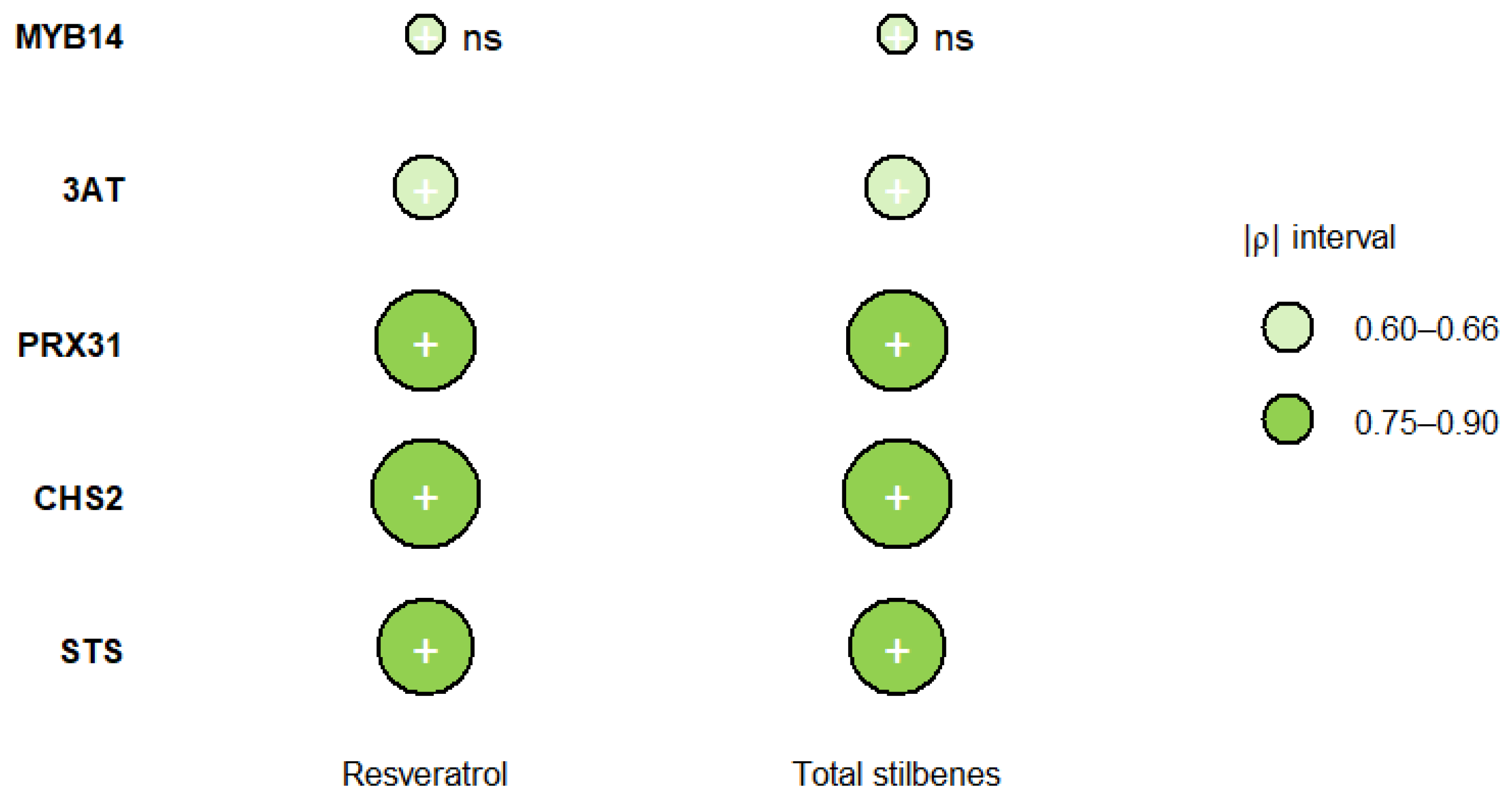
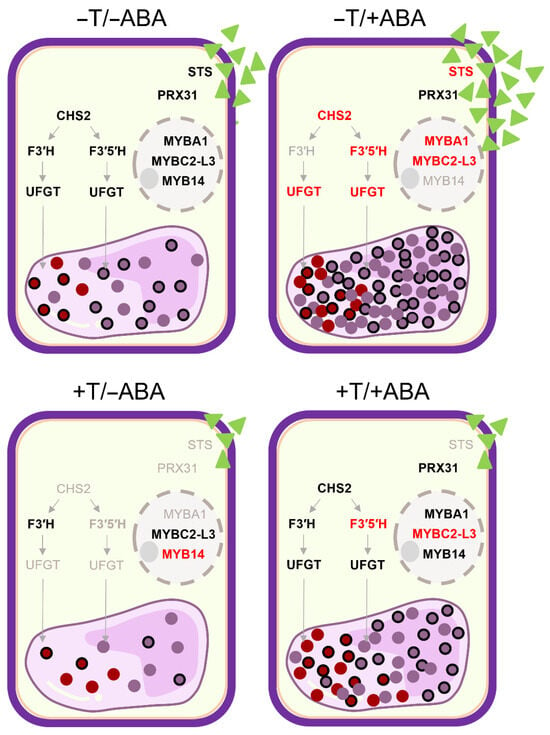
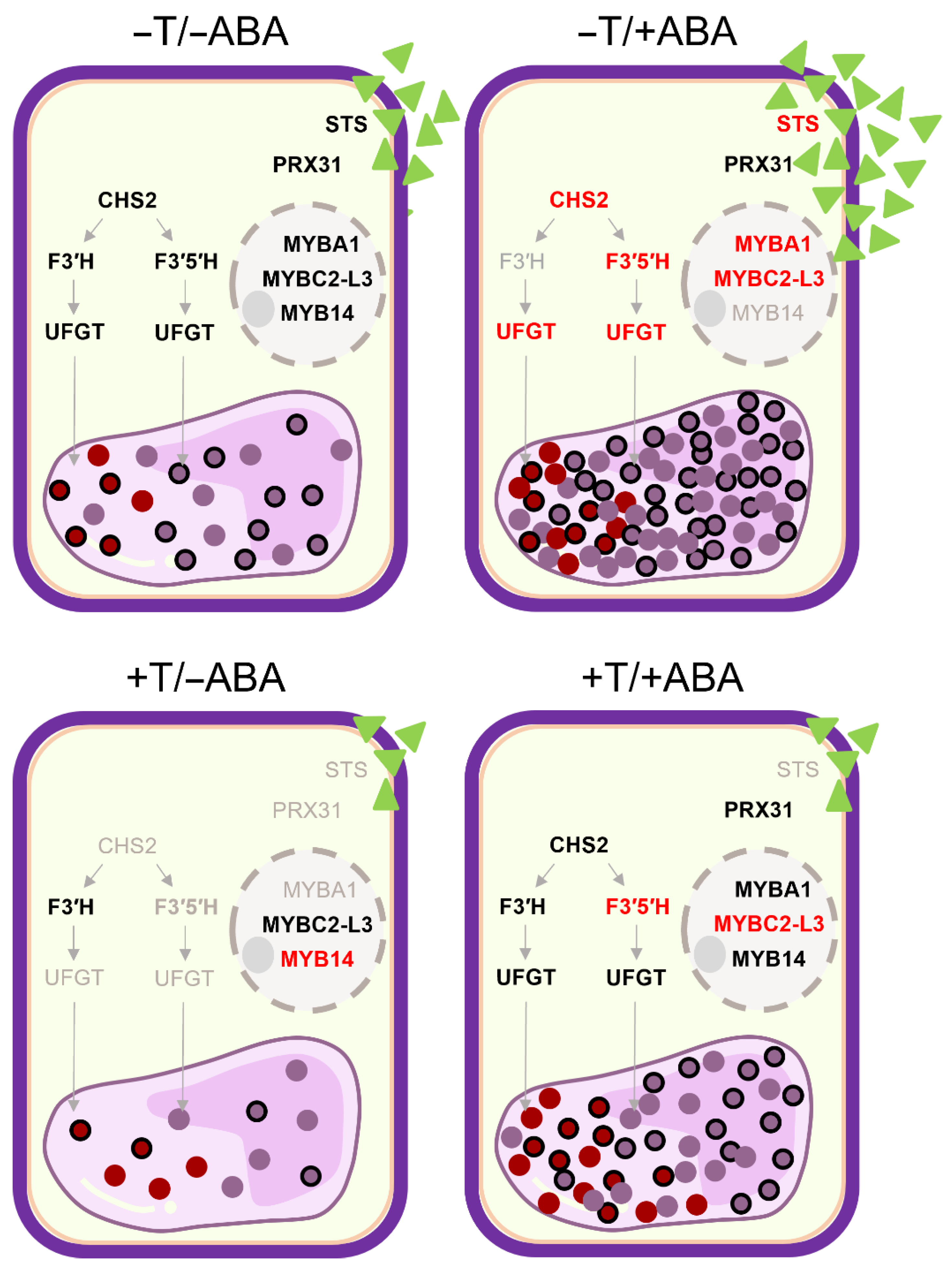
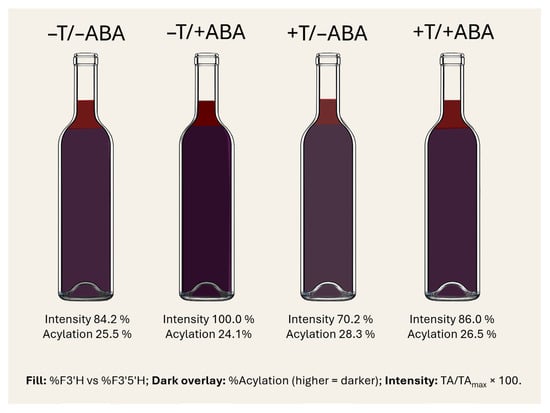
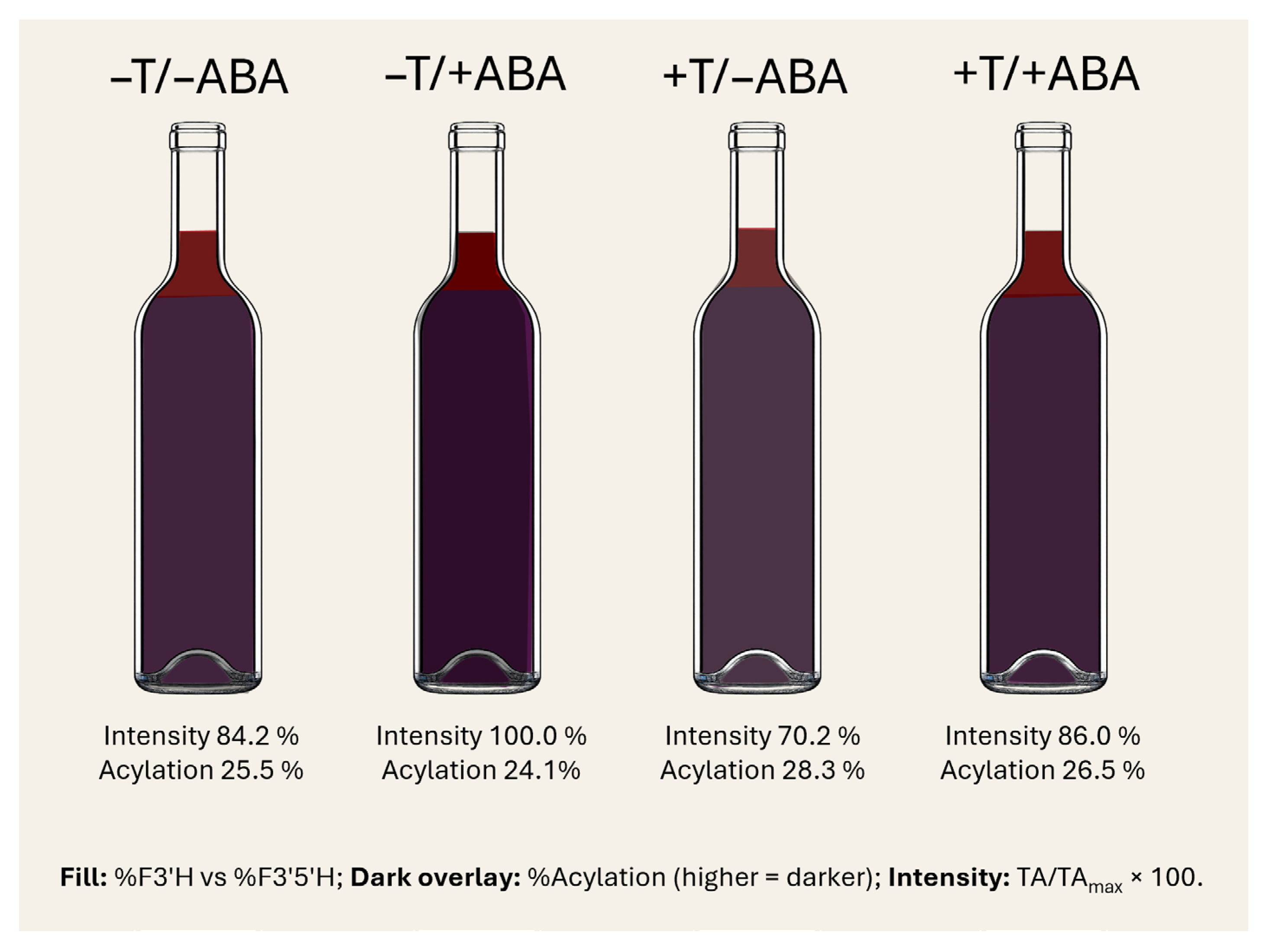
Disclaimer/Publisher’s Note: The statements, opinions and data contained in all publications are solely those of the individual author(s) and contributor(s) and not of MDPI and/or the editor(s). MDPI and/or the editor(s) disclaim responsibility for any injury to people or property resulting from any ideas, methods, instructions or products referred to in the content. |
© 2026 by the authors. Licensee MDPI, Basel, Switzerland. This article is an open access article distributed under the terms and conditions of the Creative Commons Attribution (CC BY) license.