Next Article in Journal
Exogenous Abscisic Acid Can Remodel the Phenylpropanoid Network Under Elevated Temperature to Partially Sustain Anthocyanin Accumulation in Field-Grown ‘Malbec’ Grapes
Previous Article in Journal
Impact of Environmental Factors, Farming Practices, and Genetic Diversity on Hop (Humulus lupulus L.) Yield and Quality
 
 
Due to scheduled maintenance work on our servers, there may be short service disruptions on this website between 11:00 and 12:00 CEST on March 28th.
Article

Combined Controlled-Release and Common Fertilizer Application Increases Apple Productivity by Optimizing Soil Nutrient and Microbial Communities


1
National Engineering Research Center for Efficient Utilization of Soil and Fertilizer Resources, College of Resources and Environment, Shandong Agricultural University, Tai’an 271018, China
2
State Key Laboratory of Wheat Improvement, Shandong Agricultural University, Tai’an 271018, China
*
Authors to whom correspondence should be addressed.
Horticulturae 2026, 12(3), 339; https://doi.org/10.3390/horticulturae12030339
Submission received: 6 February 2026 / Revised: 5 March 2026 / Accepted: 9 March 2026 / Published: 11 March 2026
(This article belongs to the Special Issue Sustainable Soil Fertility and Nutrient Management in Horticulture)

Abstract

Apples in China are planted mainly in nutrient-poor mountain soil, and a large amount of fertilizer input results in resource waste and a decrease in nutrient utilization efficiency. Controlled-release fertilizer (CRF) has been shown to be environmentally friendly and increase crop yield, but nutrient release cannot be precisely synchronized with apple demand. Here, a suitable secondary fertilization method was established by a two-year apple field experiment with CRF and common compound fertilizer (CF) at various ratios under a 25% reduction in application. The application of CF and CRF changes the temporal and spatial distributions of soil NPK nutrients, decreasing NPK losses and NH3 emissions. The NH3 emissions under CF and CRF decreased by 17.98–44.86%, as N loss decreased by 11.59–29.81% and by 4.45–8.19%, with respect to those under CF alone, while the soil pH and electrical conductivity increased by 8.28–17.12% and 10.73–18.29%, compared with those under CF alone. The increase in soil P and K also decreased losses by 8.28–17.12% and 10.73–18.29%. The combined application of CF and CRF can increase soil microbial diversity and functional taxa and nutrient cycling genes, resulting in efficient nutrient transformation and supply for apple trees. The regulation of nutrients and microbes by the secondary application of CF and CRF drives an increase in apple yield of 23.71–54.32%, resulting in high economic benefits. In total, the application ratio of CF and CRF at 3:7 in March and July was an effective way to balance apple productivity and the soil ecological environment, providing a sustainable solution for mountainous orchard ecosystems globally.

1. Introduction

The apple (Malus pumila Mill.) The planting area in China has increased to 1,996,632 hectares by 2023, accounting for 43% of the total global apple planting area [1]. The average N fertilizer usage in conventional Chinese apple orchards has reached 600–800 kg ha−1 to maintain high yields, exceeding growth needs [2]. In Shandong Jiaodong Peninsula, the use of annual amounts of 528 kg N ha−1, 252 kg P2O5 ha−1 and 528 kg K2O ha−1 has become a common nutrient management method, as apple trees grow in nutrient-poor mountainous and hilly soil [3,4]. More than 58% of N and 67% of P2O5 were not used, resulting in the nutrient uptake efficiency of apple trees being lower than that of wheat and maize [5,6,7,8].
Fertilizer volatilization [9], leaching [10], and runoff loss [11] and fixation [12] are the main ways to threaten the environment. The “Sustainable Development Goals (SDGs)” related to the environmental sustainability of the UN will be overcome [13]. This can also damage the soil microbial ecosystem, resulting in a decrease in microbial diversity and inhibition of the abundance of functional genes related to nutrient cycling, affecting crop nutrient uptake and productivity [14]. Optimizing fertilization can increase soil microbial taxa to optimize the soil ecological environment, resulting in interactions between nutrient supply and microbial function. Given, the Chinese government has proposed a series of policies to decrease fertilizer usage to accelerate clean production in apple orchards [15].
Controlled-release fertilizers (CRFs) can slowly release nutrients and have become a promising alternative to solve the above problems [16]. CRFs can increase crop yield and reduce the environmental pressures caused by fertilizer usage, while there are fixed nutrient release patterns during production. The nutrient needs of apple trees fluctuate with environmental changes such as temperature, rainfall, and soil moisture [17,18]. The use of the CRF cannot match the dynamic nutrient needs of apple trees, as they have a complex growth period that lasts for a year [19,20]. Optimizing the nutrient supply for apple trees by using CRF and common fertilizer (CF) is vital for achieving stable nutrient release and rapid supplementation to increase agronomic efficiency [21]. CRF can decrease N losses in orchard soil, whereas excessive CF can cause nutrient surpluses to increase the risk of environmental pollution [22]. How to coordinate the application of CRF and CF to meet the nutrient needs of apple trees during the budding and fruit expansion period, thereby decreasing environmental pressure, is a key issue during apple tree growth.

2. Materials and Methods

2.1. Experimental Site

A field experiment was performed at an apple orchard in Laishan Town, Laishan District, Yantai, Shandong, China (37°25′44″ N, 121°24′26″ E), from November 2020 to October 2022. The soil has a loamy texture and is classified as a Lithic Udic-Orthic Primosol on the basis of the Chinese Soil Resources system. The basic physicochemical properties of the soil were as follows: pH 6.65 with 1:5 soil/deionized water extract, 25.31 mg/kg NO3-N with 1 mol/L KCl solution extract, 13.54 mg/kg NH4+-N with 1 mol/L KCl solution extract, 21.27 mg/kg available P with 0.5 mol/L NaHCO3 solution extract, and 65.84 mg/kg available K with 1 mol/L NH4OAc solution extract. The field experiment site has a temperate monsoon climate, with an average annual rainfall of 690.2 mm and a temperature of 17.0 °C.
The Yanfu-3 apple trees grafted on Pingyi sweet tea (Malus hupehensis Rehd.) rootstocks that needed to grow for 7–8 years to begin fruiting were used in the field experiment, with a planting distance of 2 × 4 m. Apple trees were trained to grow radially around branches with vertical growth and weight gain bands. Tree vigor was controlled by pruning branches in spring and summer. Drip irrigation was adopted with 3–4 supplementary irrigations during the growing period to maintain the soil moisture content at 60–80% of the field water-holding capacity. Pest and disease control, including physical and low-toxicity chemical pesticides, was carried out, and artificial weeding was performed 2–3 times in fertilized trenches and interrow areas during the growing period. The experiment was conducted in the 9th year without fertilizer application in the 7th and 8th years.

2.2. Experimental Design

2.2.1. Fertilizer Preparation

In accordance with the local traditional fertilizer application amount, controlled-release fertilizer (CRF) and common fertilizer (CF) were used in the field experiment, with NPK application decreasing by 25% to 400 kg ha−1 (N), 200 kg ha−1 (P2O5) and 400 kg ha−1 (K2O). CRFs were prepared from a mixture of 63 kg of urea, 35.87 kg of diammonium phosphate ((NH4)2HPO4) and 66 kg of potassium sulfate (K2SO4) with a 4% coating of castor oil biobased material in the laboratory, achieving a 3-month nutrient release time (Figure S1). CF was prepared by blending 63 kg of urea, 35.87 kg of diammonium phosphate ((NH4)2HPO4) and 66 kg of potassium sulfate (K2SO4). Urea (46% N), (NH4)2HPO4 (18% N, 46% P2O5) and K2SO4 (50% K2O) were provided by Shandong Nongda Fertilizer Sci&Tech. Co., Ltd. (Tai’an, China).

2.2.2. Field Experimental Design

Seven fertilizer application treatments, each replicated three times with 10 trees per replicate, were arranged in a randomized design in the field (Table 1). The total planting area of the experimental site was 2016 m2. A total of 1.64 kg CRF or 1.58 kg CF was applied to each apple during the growth period. Four fertilization trenches (20 cm width × 20 cm depth) ran north–south and were positioned between the center of the trunk and the outer edge of the crown projection. The fertilizers were uniformly mixed with 0–20 cm surface soil, backfilled into the trenches and lightly compacted.

2.2.3. Nutrient Loss

The nutrient loss behavior of plants in response to the application of fertilizer in March and July was simulated and studied by the use of pots on the basis of the fertilization time in the field and high-yield treatments. No plants were grown in the pots to avoid plant-related effects with nutrient loss. Six treatments were repeated three times (Table 2), resulting in a total of 18 plastic pots. A total of 3.75 kg of air-dried orchard soil from the 0–20 cm topsoil of the unfertilized area in the field experiment site was added to a plastic pot for the top 35 cm × bottom 25 cm × height 15 cm, with a 2 mm hole at the bottom. Soil (1.25 kg) was then added after fertilizer was applied to 30CF70CRF, 50CF50CRF, 30CF70CF and 50CF50CF. The remaining fertilizer was added at the same location in the plastic pots as it was in the field.
The soil water content remained at 100% of the soil water holding capacity for one week. The leachate was collected by adding 5, 12, 21, 23, 52, 50, 29 and 12 mL of water with a dropper to carry out leaching on the basis of rainfall in the field from March to October. The concentrations of NO3-N, NH4+-N, P, and K in the leachates were determined by using flow analysis, Mo–Sb colorimetry and flame photometry. Leaching and measurements were carried out once a month from March to October. The concentrations of NO3-N, NH4+-N, P, and K were calculated as follows:
N O 3 - N   loss = V 1 × C i ( N O 3 - N ) m × C ( N ) × 100 %
N H 4 + - N   loss = V 1 × C i ( N H 4 + - N ) m × C ( N ) × 100 %
P   loss = V 1 × C i ( P ) m × C ( P ) × 100 %
K   loss = V 1 × C i ( K ) m × C ( K ) × 100 %
where V1, Ci( N O 3 -N), Ci( N H 4 + -N), Ci(P) and Ci(K) represent the concentrations of N O 3 -N, N H 4 + -N, P and K, in the leaching solution during the i-th month and m, C(N), C(P) and C(K) represent the contents of added CF and CRF, of N, P and K.
A continuous air-flow enclosure method was used to conduct an NH3 emission test that was consistent with the treatment of nutrient loss experiments [23]. The pot for testing nutrient leaching was placed in a transparent Plexiglas chamber with an inner diameter of 6.5 cm × height of 12.5 cm. NH3 emissions were collected in 200 mL of 2% boric acid solution prepared with methyl red, bromocresol, and ethanol as indicators. NH3 emissions were collected for 4 h at 8:00 a.m.–10:00 a.m. and 14:00 p.m.–16:00 p.m. once a month from March to October. The NH3 concentration was determined by titrating the ammonium captured in the boric acid solution with 0.01 mol/L H2SO4. The NH3 emissions were calculated as follows:
NH 3   emissions   ( kg   ha 1   d 1 ) = C N H 4 + - N × 10 6 × V × 10 4 π × r 2 × 24 t
where C N H 4 + - N , V, r2 and t represent the concentration of N H 4 + - N in the NH3 absorption liquid, the volume of the NH3 absorption liquid, the sealed room radius and the NH3 absorption time.

2.3. Sample Collection and Analysis

2.3.1. Soil Nutrients

Soil samples from 0–20 cm, 20–40 cm and 40–60 cm depth with a 10 cm diameter for 3 random sampling points in the radial fertilization trench area of each treatment in field experiments were collected in 2021 and 2022 on the basis of the apple harvest. Each sampling point had a volume of 200 cm3 per soil layer, with a total of 126 samples collected over two years. After being air dried, ground, and passed through 2 mm sieves, the soil samples were placed in paper bags. The soil pH, NO3-N, NH4+-N, available P and available K were subsequently measured by using the conductance method, flow analysis method, Mo–Sb colorimetry and flame photometry.

2.3.2. Apple Yield and Quality

All the apples from each fertilization treatment were harvested once in the optimal ripening period, and the total yield was measured for one year by using an electronic scale. Fifteen apples were randomly selected to determine quality from each replicate experiment site in the upper, middle and lower canopies, with a total of 45 apples analyzed per treatment. The single-fruit weight of the apples was determined by using a small electronic scale. Fruit hardness was determined by using a GY-1 fruit hardness tester. The fruit shape index was calculated as the length/diameter ratio of the apple. After extraction, 5.0 g of fresh apple pulp extract was reacted with anthrone reagent in a boiling water bath, after which it was centrifuged and filtered. The sugar content was analyzed by using a spectrophotometer to determine the absorbance at 620 nm with a glucose standard curve.

2.3.3. Economic Benefit

The economic benefits of the different fertilization treatments were evaluated on the basis of the annual apple yield and local market prices. The apple income, net apple income, and increased revenue compared with Unf were calculated as follows:
Apple income = Yield × Average price of apples
The average price of local apples during the experimental years (2021–2022) was 5.0 ¥/kg.
Net apple income = Apple income − Fertilizer Cost − Labor Cost
The labor cost (¥/ha) refers to the annual manual operation cost per hectare in the field, including that associated with fertilization, irrigation, pruning, weed control, and pest and disease control. It was calculated on the basis of the local actual labor price and total working hours during the apple tree growth period every year.
Increased revenue compared with Unf (103¥/ha) = Net apple income (Treatment) − Net apple income (Unf)
Increased   revenue   compared   to   Unf   ( % ) = N e t   a p p l e   i n c o m e   ( T r e a t m e n t ) N e t   a p p l e   i n c o m e   ( U n f ) N e t   a p p l e   i n c o m e   ( U n f ) × 100 %

2.4. Soil DNA Extraction and Sequencing of Bacteria and Fungi

A total of 0.5 g of rhizosphere soil from the apple trees in the fertilization area was collected and stored in a −80 °C freezer, after which DNA was extracted with a DNA Extraction Kit (Life Technologies, Carlsbad, CA, USA). Quantification was carried out by using a NanoDrop 2000 spectrophotometer (Thermo Fisher Scientific, Waltham, MA, USA) and 1 % agarose gel electrophoresis. The universal primers 338 F (5′-ACTCCTACGGGAGGCAGCAG-3′) and 806 R (5′-GGACTACHVGGGTWTCTAAT-3′) were used to amplify the V3–V4 region of the bacterial 16S rRNA gene. The primers ITS1F (5′-GGAAGTAAAAGTCGTAACAAGG-3′) and ITS2R (5′-GCTGCGTTCTTCATCGATGC-3′) were used to amplify the fungal ITS gene. Each sample underwent three independent PCR amplifications to decrease potential bias. The PCR products were extracted from a 2% agarose gel and purified by using a PCR Clean-Up Kit (YuHua, Shanghai, China) according to the manufacturer’s instructions and then quantified by a Qubit 4.0 (Thermo Fisher Scientific, Waltham, MA, USA). Each PCR product was normalized to equimolar concentrations and subjected to paired-end sequencing (2 × 300 bp) on the Illumina NextSeq 2000 platform (Illumina, San Diego, CA, USA). The 16S rRNA sequencing data were processed by the MOTHUR MiSeq pipeline.
The Chao1, Shannon, Simpson and Observed_species indices represent species change, evenness and abundance, and are used to reflect the response of microbial diversity to CRF. They were analyzed by using Mothur v1.30.1 to calculate alpha and β diversity indices on the basis of operational taxonomic unit (OTU) information. The differences in microbial communities under the CRF treatment were analyzed with nonmetric multidimensional scaling (NMDS) by using the “vegan” package in R software (4.4.0), which is based on Bray–Curtis dissimilarity. The stress value was used to represent the true pairwise dissimilarities between samples in the original high-dimensional data and was calculated by using the “vegan” package in R software.

2.5. Real-Time Fluorescence Quantitative PCR (qPCR)

Quantitative PCR was used to determine the absolute abundance of N- and P-cycling functional genes with the primer information listed in Table S1. The N cycling functional genes included narG, nasA, nirS2, nirK1, UreC, nosZ1, hzsA, amoA1, amoB, nxrA, napA, nirS1, nirS3, nirK2, gdh, nifH, niK3, nosZ2, hzo, hzsB, amoA2 and hao. The P cycling functional genes included cphy, phnK, ppk3, phoD, bpp, pqqC, ppx and phoX. Three replicates were established for all detections to ensure reproducibility, with the gene copy numbers calculated on the basis of Ct (threshold cycle) values.

2.6. Statistical Analyses

A partial least squares path model (PLS–PM) was applied to evaluate the relationships among treatments, bacteria, fungi, N cycle genes, P cycle genes, soil nutrient properties, nutrient loss, NH3 emissions and apple yield. A bootstrap method (1000 iterations) was used to validate the estimates of the path coefficients and the coefficients of determination (R2). The goodness-of-fit index was used to evaluate the overall predictive performance of the model. The statistical analysis was performed using the IBM SPSS Statistics 22.0 software for Windows (SPSS, Inc., Chicago, IL, USA). Mean comparisons were performed using one-way ANOVA, and post hoc tests were conducted when appropriate (LSD, p < 0.05). The figures were prepared using Origin 2022 (OriginLab, Northampton, MA, USA).

3. Results

3.1. Apple Yield and Economic Benefit

The combined application of CF and CRF increased apple yields and economic benefits, with differences among treatments and years (p < 0.05) (Table 3). The application of the CF in March and the CRF in July at a 3:7 ratio consistently resulted in the highest apple yield and net income for the two years, with yields increasing by 23.7% and 32.9%, compared with those resulting from the application of only the CF in March and July. Although the different CF and CRF treatments resulted in varying fertilizer costs, compared with Unf, J-30CF70CRF maintained the highest net revenue increase rates, which were 22.28% and 47.13%. The application of CRF in August can increase apple yield and revenue, but compared with July, there was no advantage. Compared with Unf, only CF application results in relatively low yield increases, with even a negative net income increase in 2020. Compared with Unf, CRF improved apple quality, resulting in a single-fruit weight increase of 1.21–64.02%, a fruit hardness increase of 9.79–27.22% and a soluble sugar content increase of 4.81–48.89%.

3.2. Soil Nutrient Content

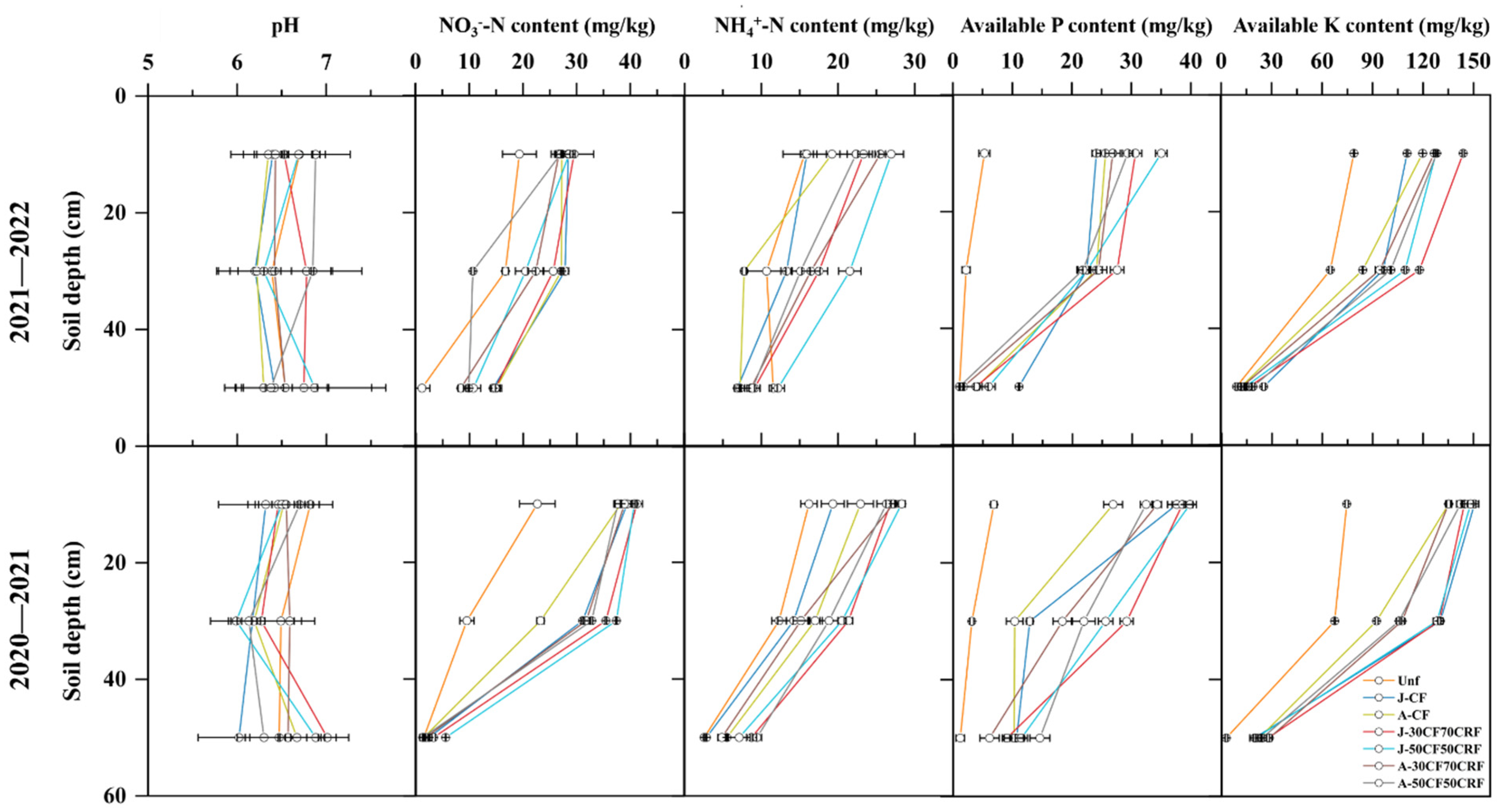
The soil NPK available nutrient content was vertically stratified across the two growth periods, with higher concentrations in the 0–20 cm topsoil than in the 20–40 cm and 40–60 cm subsoils (Figure 1). Compared with the application of only CF and Unf, the combined application of CF and CRF increased soil nutrient contents after the annual apple harvest. The soil pH tended to slightly increase from 5.99 to 7.01, which is suitable for apple growth. Although there were no differences between the treatments, compared with CRF, CF had a lower soil pH with an acidifying effect. Compared with Unf and CF, CRF can increase nutrient accumulation and regulate nutrient distribution, resulting in efficient utilization by apple trees and the potential for nutrient supply. Compared with Unf, J-30CF70CRF had the highest NO3-N content, with values of 29.53 and 41.19 mg/kg in the two years, increasing by 52.6% and 81.9%, in the 0–20 cm topsoil layer. J-30CF70CRF also maintained higher levels of available K content in the 0–20 cm topsoil, with an average of 144.27 mg/kg after two years. With respect to the NH4+-N and available P contents, J-50CF50CRF achieves higher levels than Unf and CF, with values of 27.61 and 37.37 mg/kg, in the experimental years. In the deeper layers, the NH4+-N and NO3-N contents were lower than those in the topsoil by 42.3–68.9%, whereas compared with those in the other layers, the NO3-N, available K, NH4+-N and available P contents were higher in the J-30CF70CRF and J-50CF50CRF soils.

3.3. Soil Nutrient Loss

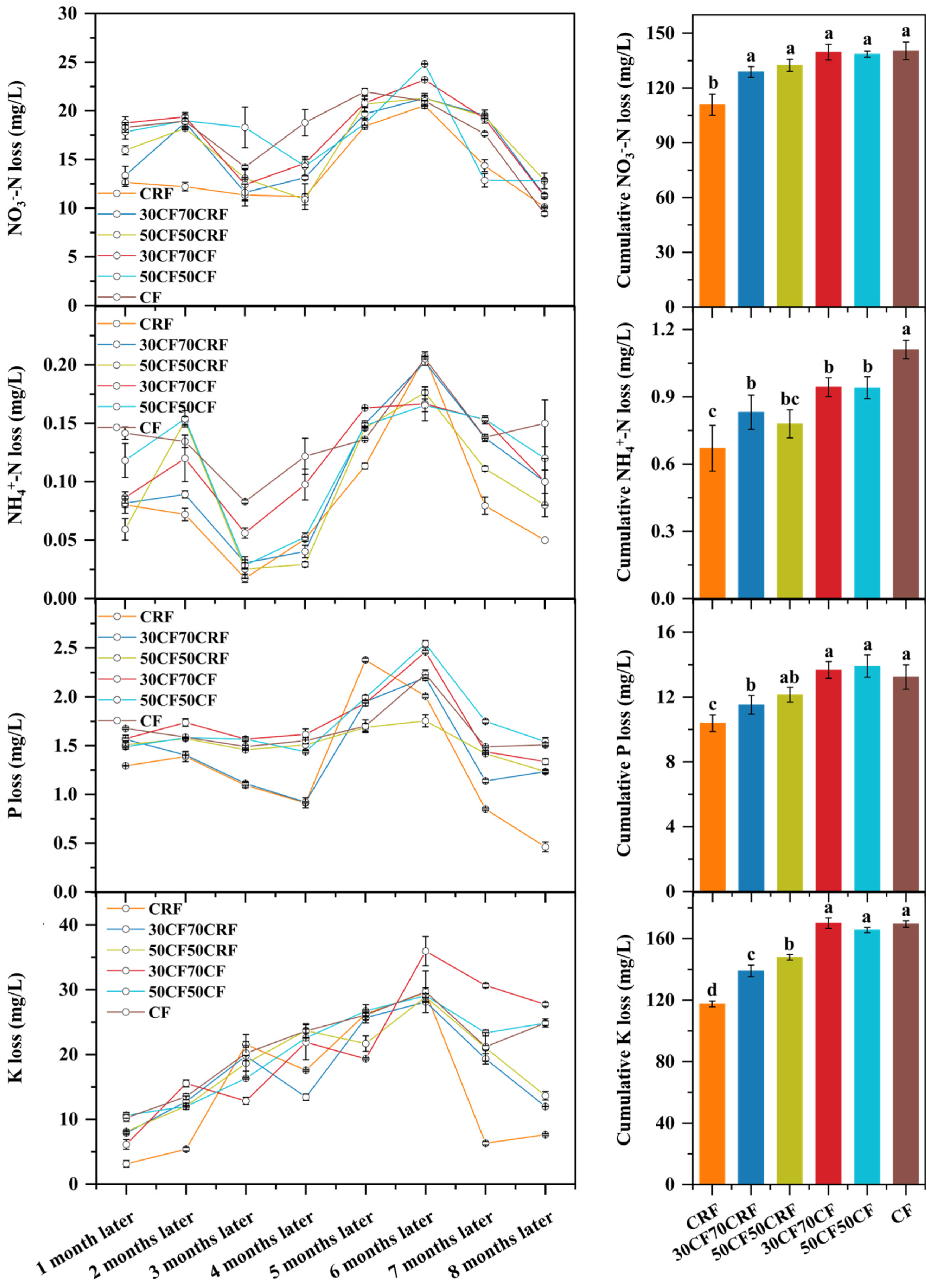
There was an increase in nutrient loss in the second month after the application of fertilizer, with the trend of the CF being greater than that of the CRF (Figure 2). The losses of NO3-N, NH4+-N, available P and available K in the CRF treatment were lower than those in the CF combined with CRF and only the CF treatment. During the apple growth period, NO3-N loss displayed a bimodal distribution, and compared with the CRF treatment, the CF treatment resulted in the greatest NO3-N loss, which was 18.94 mg/L and 21.96 mg/L at 2 and 5 months, which increased by 55.18% and 19.24%. Compared with that of the same period, the total loss of NO3-N in the 30CF70CRF treatment decreased by 7.74%. NO3-N loss increased by 3.58 mg/L as the CF application rate increased from 30% to 50%. Although NH4+-N loss also displayed a bimodal distribution, the leaching concentration was less than 0.21 mg/L. The loss of available P and available K displayed a highly unimodal distribution 6 months later, with obvious differences over the 8-month experimental period. The average P and K losses of 50CF50CF and 30CF70CF were 2.54 mg/L and 35.96 mg/L, the highest of which reached 13.91 mg/L and 170.13 mg/L. The application of CRF resulted in a lower loss content, decreasing the loss of available P and K by 17.12% and 18.29%, for 30CF70CRF. These results indicate that the combination of CF and CRF can optimize nutrient release while decreasing nutrient loss to minimize environmental pollution.

3.4. NH3 Emissions

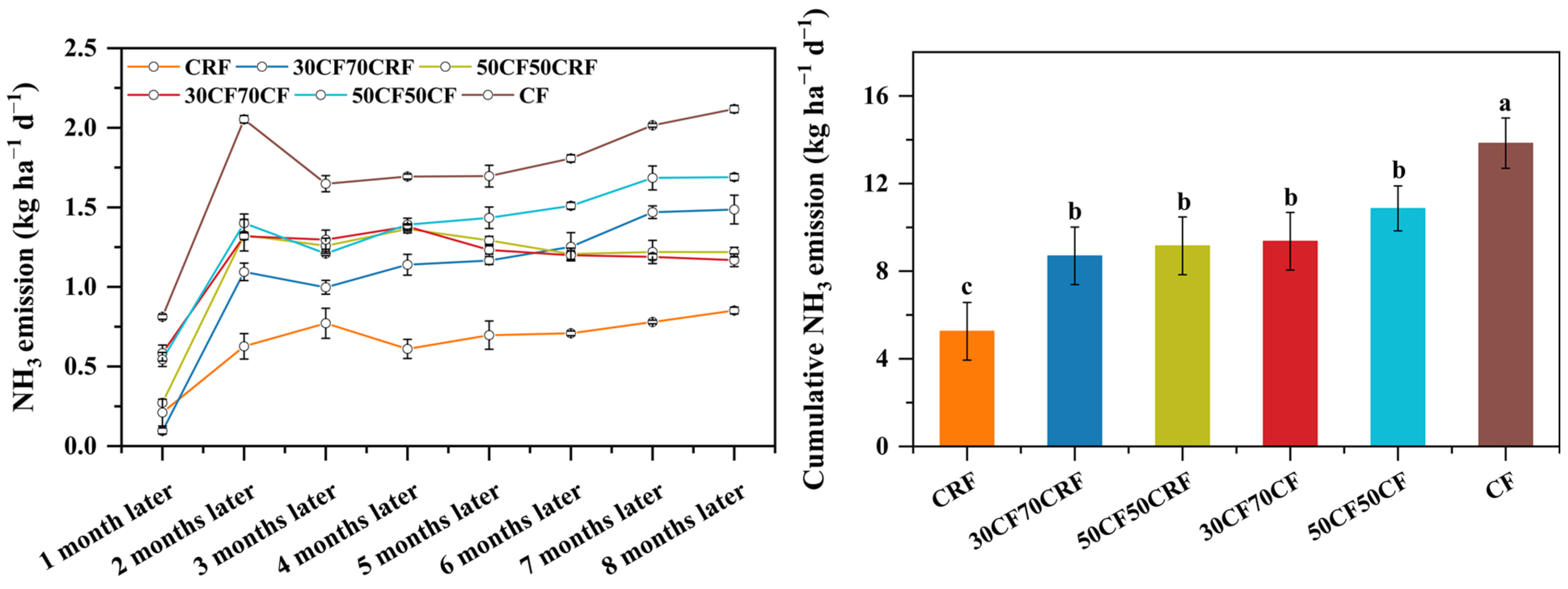
NH3 emissions in the CF were higher than those in the CRF, with an increase of 163.36% during the whole apple growth period (Figure 3), and 30CF70CRF decreased by 4.19% compared with 50CF50CRF. NH3 emissions peaked at 2 months after the application of fertilizer, and the concentration of CF reached 6.59 kg ha−1 d−1, which was higher than that of CRF, 30CF70CRF, 50CF50CRF, 30CF70CF and 50CF50CF by 3.16-, 1.60-, 1.39-, 1.57- and 1.46-fold. Although there were no differences when CF or CRF was applied twice, the NH3 emissions of CRF and 30CF70CRF were stable, with a low coefficient of variation of 18.3–22.5%. Overall, the combined application of CF and CRF can decrease NH3 emissions while balancing loss reduction and practicality, offering a sustainable strategy for minimizing N loss in apple orchards.

3.5. Microbial Diversity Under CRF Fertilization

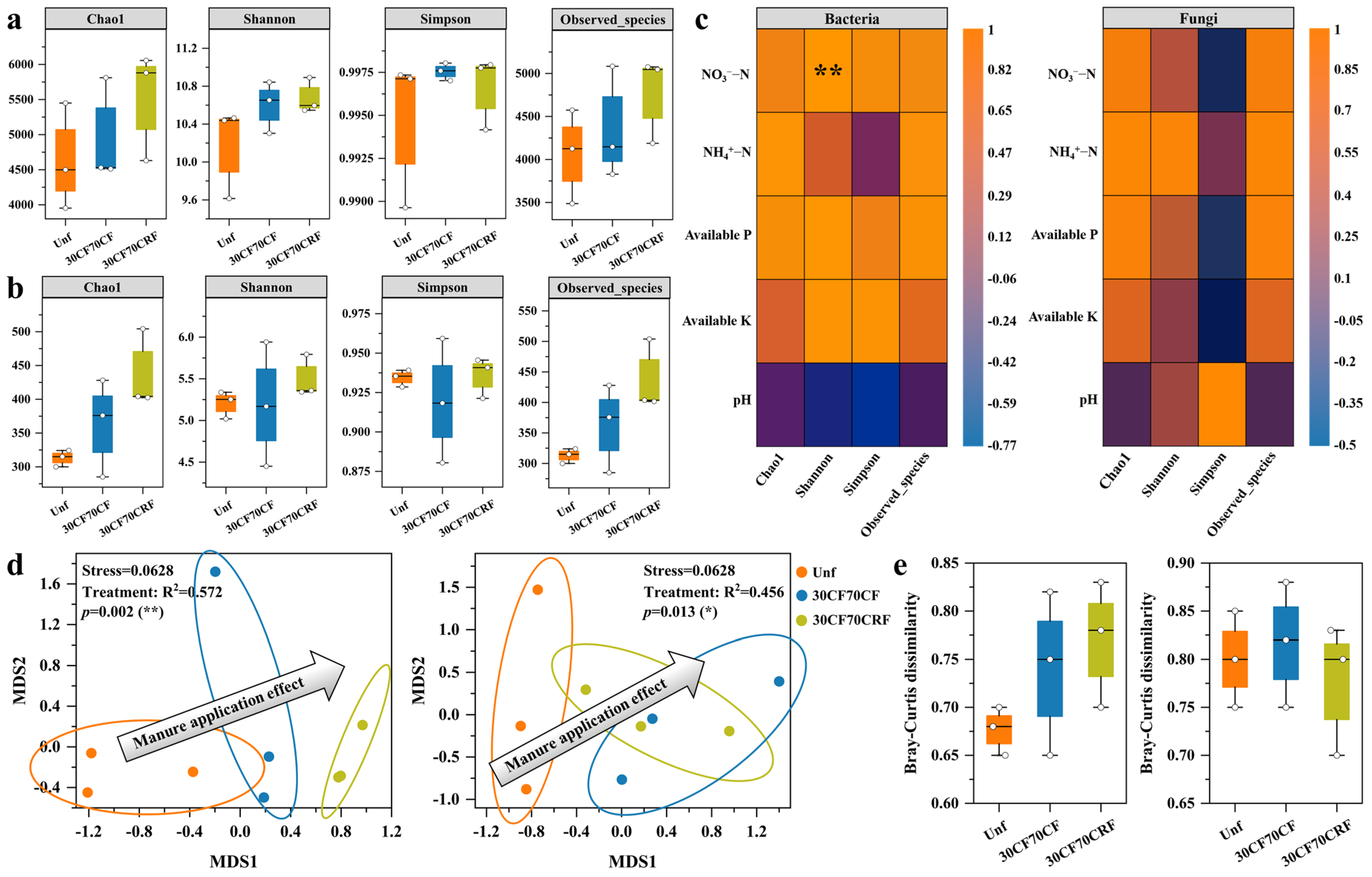
Compared with Unf, the combined application of CF and CRF increased the bacterial and fungal Chao1, Shannon and Observed_species indices (p < 0.05), while there was no effect on the Simpson index (Figure 4a,b). The Chao1 indices of bacteria and fungi also increased (p < 0.05) with the application of CRF compared with those with the application of only CF, and the observed species index increased for fungi. Soil NO3-N, available K and pH were the key factors driving microbial diversity, and the bacterial Shannon index increased in soils with high NO3-N contents (p < 0.01) (Figure 4c). There was no obvious effect of soil nutrient content on fungal diversity (p > 0.05). The results of nonmetric multidimensional scaling (NMDS) further suggested that there was clear separation of microbial communities among Unf, 30CF70CF and 30CF70CRF, indicating that CRF regulated bacterial and fungal diversity (p < 0.05) (Figure 4d). Compared with 30CF70CF, CRF can increase bacterial β diversity but can decrease fungal β diversity without obvious effects (Figure 4e).

3.6. Microbial Community Succession Under CRF Fertilization

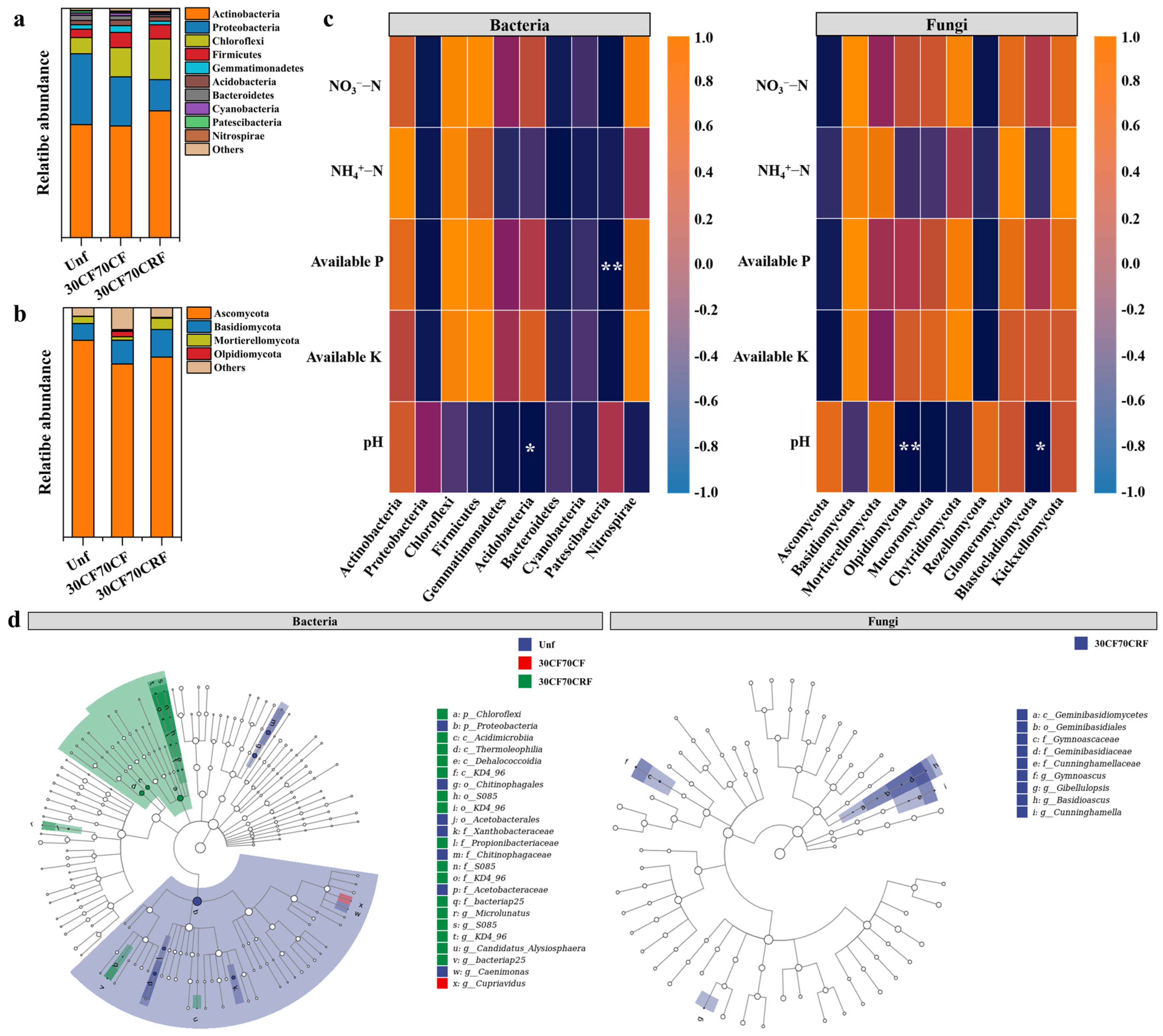
The combined application of CF and CRF drove distinct succession of soil bacterial and fungal communities (Figure 5a,b). The relative abundance of Actinobacteria, Chloroflexi and Firmicutes in 30CF70CRF was greater than that in Unf and 30CF70CF, whereas the abundance of Proteobacteria was lower. The application of CF or CRF decreased the abundance of Ascomycota in fungi, whereas the abundances of Basidiomycota and Mortierellomycota were greater than those in Unf and 30CF70CF. There was no obvious effect on soil nutrient properties or bacteria or fungi, but the relative abundances of Actinobacteria, Chloroflexi, Firmicutes and Basidiomycota were positively correlated with soil nutrients, while those of Proteobacteria and Ascomycota were negatively correlated (Figure 5c). Taxonomic dendrogram analysis indicated that 30CF70CRF was enriched in key functional taxa involved in nutrient cycling with N fixing bacteria and P solubilizing fungi (Figure 5d), including Caenimonas, Cupriavidus, Cunninghamellaceae, Gibellulopsis and Cunninghamella. Compared with Unf and 30CF70CF, 30CF70CRF is the main driver of microbial community succession, with 30CF70CRF forming a unique and stable microbial community structure.

3.7. Response of Soil Functional Gene Abundance to CRF Fertilization

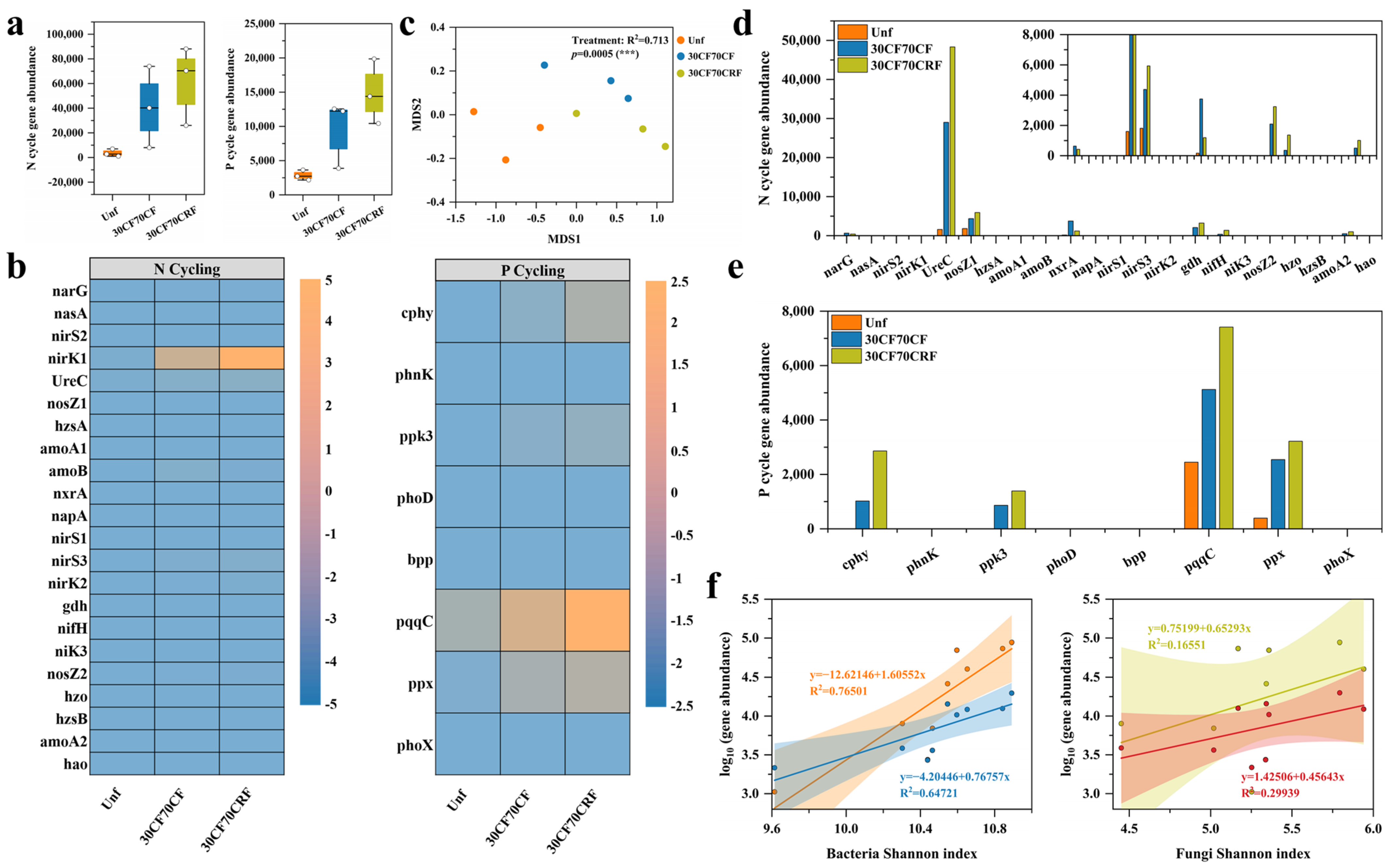
The combined application of CF and CRF increased the abundance of functional genes related to N and P cycling (Figure 6a). The relationships between N and P cycling gene abundances and Unf, 30CF70CF and 30CF70CRF indicated that the N cycling genes of nirK1 and the P cycling gene of pqqC in 30CF70CRF were most strongly divergent from those in Unf (Figure 6b). These results indicated that CRF can drive the enrichment of nutrient cycling genes. 30CF70CRF was distinctly separated from Unf and 30CF70CF along the MDS1 axis, indicating a unique functional gene community structure shaped by the combined application of CRF and CF (Figure 6c). The greatest relative abundance of all the tested N and P cycling genes was detected for 30CF70CRF (Figure 6d,e). The relative abundances of the UreC, nosZ1, gdh, nifH, amoA2, cphy, ppk3, pqqC and ppx genes in 30CF70CRF were clearly greater than those in Unf and 30CF70CF. The abundance of N- and P-cycling functional genes increased with increasing bacterial and fungal α diversity (Figure 6f).

3.8. Effect to Yield from PLS–PM

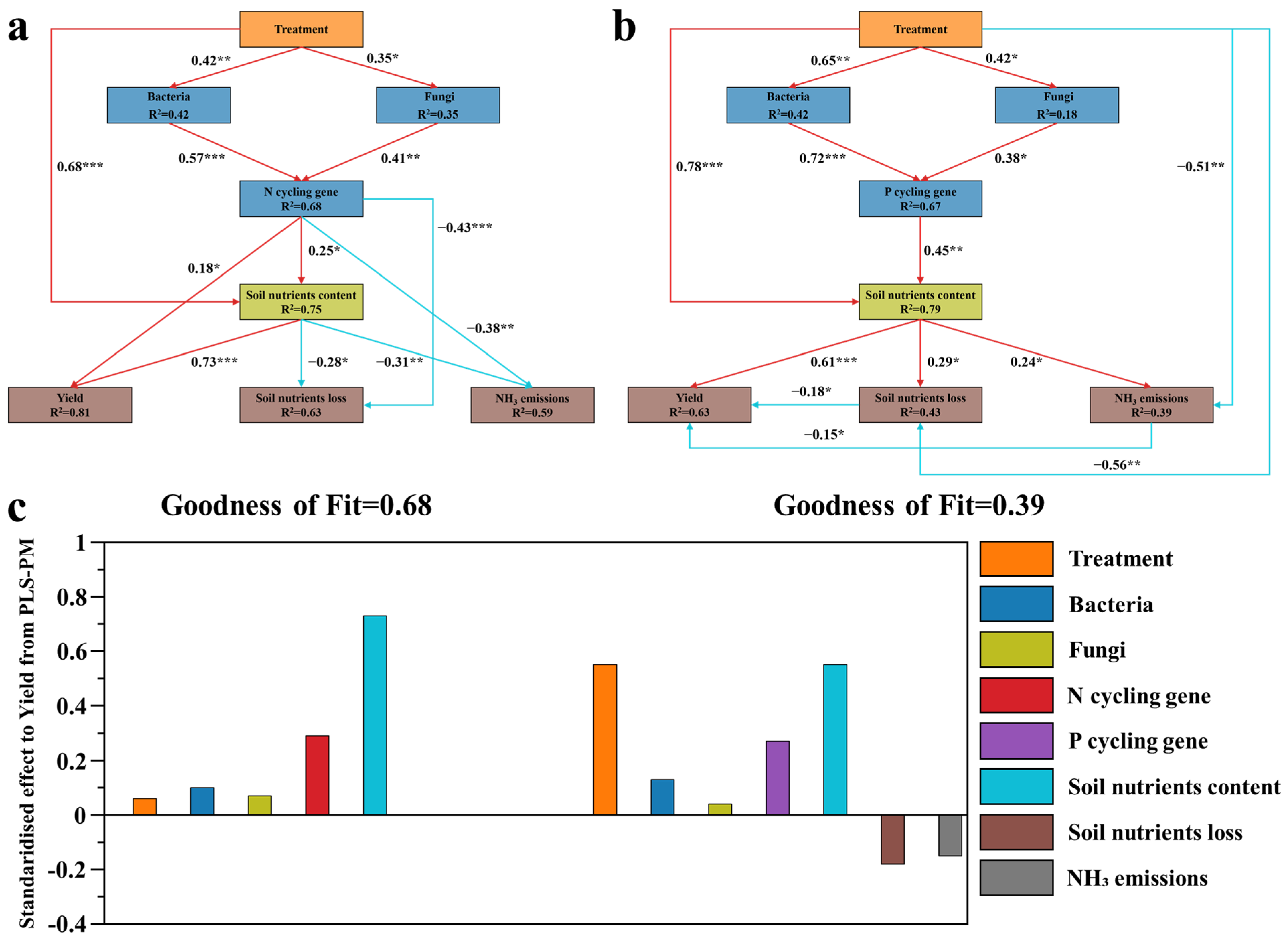
The relationships between treatment, the microbiome, functional genes, soil nutrient content, soil nutrient loss, NH3 emissions and apple yield were elucidated using PLS–PM analysis (Figure 7). Treatment had a direct positive effect (p < 0.05) on the bacterial and fungal communities (Figure 7a,b). Compared with fungi, bacteria were more closely correlated with N and P cycling genes. N cycling genes and soil nutrient content had direct effects (p < 0.05) on apple yield, whereas the effects of soil nutrient content on soil nutrient loss and NH3 emissions were negative as N cycling genes mediated. The standardized total effects indicated that soil nutrient content, treatment, and N and P cycling genes contributed the most to apple yield (Figure 7c).

4. Discussion

4.1. Combined Application of CF and CRF Increases Apple Yield and Decreases Nutrient Loss

The growth of apple trees requires an adequate and precise nutrient supply during the germination and fruit growth periods to ensure maximum production efficiency. The CRF in this study had a sigmoid nutrient release curve with three stages: slow, accelerated and stable (Figure S1) [24,25]. CRFs can cumulatively release 72.94%, 61.15% and 67.01% of N, P and K, over a period of 3 months, achieving a stable and continuous supply of nutrients before fruit ripening and harvesting. 30CF70CRF achieved the highest apple yield and net income, as the CF can rapidly release nutrients to meet the needs of new organ differentiation in March, while CRF will continuously supply a large amount of nutrients to support fruit development in July [19]. The combined application of CRF and CF also increased the yields of tomato, rice and potato to achieve greater economic benefits, as reported by Qu et al. (2020), Souza et al. (2020) and Hou et al. (2020) [26,27,28]. The yield increase observed was attributed to the synergistic effects of CF and CRF, which increased with increasing single-fruit quality. The raw cost of the combined application of CF and CRF increases as the cost of the coating materials and coating processes increase, but the economic returns from higher yields surpass the fertilizer costs.
The application of fertilizers not only aims to increase crop yields but also aims to achieve the goal of balancing soil nutrients [29,30]. In this study, the application of CRF and CF achieved nutrient regulation to optimize the nutrient supply to meet apple growth requirements and decrease loss and NH3 emissions in the context of CRF [31]. 30CF70CRF decreased the loss of NO3-N, NH4+-N, P and K in the soil by 7.04–8.19%, 11.59–25.15%, 12.96–17.12% and 16.05–18.29% (Figure 1), but compared with only the application of CF during the experimental years, the losses increased by 4.41–13.34%, 34.11–47.39%, 16.82–37.04% and 9–24.68%. Optimizing N fertilizer application can optimize soil NO3-N and NH4+-N contents to increase the productivity of apple trees [32,33], and the soil P and K contents also increase. The effectiveness of P easily decreased because P was fixed with certain cations in soil through the formation of insoluble complexes [34]. Applying the corresponding rate of P during apple growth periods is important. The long-term application of fertilizer decreases soil pH [35], and a suitable soil pH still range for apple growth is maintained for a short-term experimental year [36]. NH3 emissions are mainly lost from N in the field [37,38], but they are affected by soil type, climatic conditions and fertilization practices. Here, the combination of CF and CRF decreased NH3 emissions by 17.98–44.86% as CRF delayed nutrient release and met crop needs.

4.2. Combined Application of CF and CRF Regulates Soil Microbial Communities and Functions

Soil microbial communities and functions can drive nutrient cycling and crop productivity, which mediate the transformation, retention, and supply of soil nutrients [14]. In this study, the combined application of CF and CRF regulated the soil microbial communities and optimized their functions, which was associated with the synergistic nutrient supply of the two fertilizers. The relative abundances of Actinobacteria, Chloroflexi and Firmicutes in 30CF70CRF increased compared with those in Unf and only CF, enhancing the decomposition and transformation of soil organic nutrients to increase nutrient availability for apple trees [39]. Soil nutrient content was the main driver of microbial communities, and microbial diversity was affected by soil NO3-N, available K and pH, while soil nutrients also directly affected key functional taxa. The combined application of CF and CRF enriched the functional taxa of N- and P-cycling genes, such as UreC, nosZ1, gdh, nifH, amoA2, cphy, ppk3, pqqC and ppx. These changes form a unique and stable microbial functional network, mediating efficient nutrient cycling. This microbial regulatory mechanism further links soil nutrient supply to apple nutrient uptake, making it an important biological pathway for combined applications to achieve high yields and environmental friendliness [40].

5. Conclusions

A two-year field experiment was conducted to study the effects of combined application of CF and CRF on apple productivity and soil nutrient and microbial parameters. The combined application of CF and CRF can increase apple yield and quality, achieving the greatest net economic benefits by applying 30% common fertilizer in March and 70% controlled-release fertilizer in July (J-30CF70CRF) to 34,890 kg/ha and 165,810.3 ¥/ha. Compared with the combined application of only CF, the combined application of CF and CRF decreased the loss of NO3-N, NH4+-N, P and K by 4.45–8.19%, 11.59–29.81%, 8.28–17.12% and 10.73–18.29%, while it decreased NH3 emissions by 17.98–44.86%. A suitable soil pH level can also be maintained to ensure apple tree growth through the use of CF and CRF. The synergistic nutrient supply of CF and CRF increased bacterial and fungal alpha diversity and enriched beneficial functional taxa, thereby upregulating the abundance of N- and P-cycling genes and achieving efficient nutrient transformation and supply. This study provides a scientific basis for precision nutrient management in the apple orchards on the Jiaodong Peninsula and provides a scalable method for the green and sustainable development of similar regions with comparable soil and climatic conditions.

Supplementary Materials

The following supporting information can be downloaded at: https://www.mdpi.com/article/10.3390/horticulturae12030339/s1, Table S1: Listed information was investigated genes and nucleotide sequences of developed primers; Figure S1: Release rate of nitrogen, phosphorus, potassium from controlled release fertilizer in laboratory water.

Author Contributions

J.L.: Formal Analysis, Writing—Original Draft Preparation; S.L.: Investigation; D.C.: Data curation; Z.W.: Validation; W.Q.: Software; P.R.: Data curation; X.P.: Data curation; S.Z.: Conceptualization, Supervision, Funding Acquisition, Writing—Review and Editing; Y.Y.: Conceptualization, Supervision, Funding Acquisition, Project Administration, Writing—Review and Editing. All authors have read and agreed to the published version of the manuscript.

Funding

This research was supported by the Taishan Scholar Distinguished Expert (grant no. tstp20230619), the Natural Science Foundation of Shandong Province (grant no. ZR20220C051), and the Taishan Scholar Foundation of Shandong Province (grant no. tsqn202312151).

Data Availability Statement

The datasets generated and analyzed during the current study are available from the corresponding authors upon reasonable request.

Conflicts of Interest

The authors declare that they have no known competing financial interests or personal relationships that could have appeared to influence the work reported in this study.

References

  1. Food and Agriculture Organization (FAO). Available online: https://www.fao.org/faostat/en/#data/QCL (accessed on 5 January 2026).
  2. Wang, F.; Xu, X.X.; Jia, Z.H.; Hou, X.; Chen, Q.; Sha, J.C.; Liu, Z.X.; Zhu, Z.L.; Jiang, Y.M.; Ge, S.F. Nitrification inhibitor 3,4-dimethylpyrazole phosphate application during the later stage of apple fruit expansion regulates soil mineral nitrogen and tree carbon-nitrogen nutrition, and improves fruit quality. Front. Plant Sci. 2020, 11, 764. [Google Scholar] [CrossRef]
  3. Wei, S.H.; Jiang, Y.M. Investigation on fertilization status in apple orchards of Shandong Province. Shandong Agric. Sci. 2012, 44, 77–79. [Google Scholar] [CrossRef]
  4. Xiao, Y.S.; Peng, F.T.; Zhang, Y.F.; Wang, J.; Zhuge, Y.P.; Zhang, S.S.; Gao, H.F. Effect of bag-controlled release fertilizer on nitrogen loss, greenhouse gas emissions, and nitrogen applied amount in peach production. J. Clean. Prod. 2019, 234, 258–274. [Google Scholar] [CrossRef]
  5. Bai, X.G.; Wang, Y.N.; Huo, X.X.; Salim, R.; Bloch, H.; Zhang, H. Assessing fertilizer use efficiency and its determinants for apple production in China. Ecol. Indic. 2019, 104, 268–278. [Google Scholar] [CrossRef]
  6. Shen, Y.W.; Chen, H.N.; Lin, H.T.; Liu, P.; Song, X.Z.; Ma, Y.N.; Li, M.L.; Gao, W.S.; Song, L.L. Severe nitrogen leaching and marked decline of nitrogen cycle-related genes during the cultivation of apple orchard on barren mountain. Agric. Ecosyst. Environ. 2024, 342, 114930. [Google Scholar] [CrossRef]
  7. Zhu, Z.L.; Xia, Y.; Liu, J.J.; Ge, S.F.; Jiang, Y.M. Analysis of soil phosphorus input and phosphorus environment load risk in major apple production regions of Shandong Province. Acta Hortic. Sin. 2017, 44, 97–105. [Google Scholar] [CrossRef]
  8. Du, Q.; Zhou, L.; Chen, P.; Liu, X.M.; Song, C.; Yang, F.; Wang, X.C.; Liu, W.G.; Sun, X.; Du, J.B.; et al. Relay-intercropping soybean with maize maintains soil fertility and increases nitrogen recovery efficiency by reducing nitrogen input. Crop J. 2020, 8, 140–152. [Google Scholar] [CrossRef]
  9. Hauck, R.D.; Stephenson, H.F. Nitrification of nitrogen fertilizers. Effect of nitrogen source, size, and pH of the granule, and concentration. J. Agric. Food Chem. 1965, 13, 486–492. [Google Scholar] [CrossRef]
  10. Song, X.Z.; Zhao, C.X.; Wang, X.L.; Li, J. Study of nitrate leaching and nitrogen fate under intensive vegetable production pattern in northern China. Comptes Rendus Biol. 2009, 332, 385–392. [Google Scholar] [CrossRef]
  11. Cao, Y.S.; Sun, H.F.; Liu, Y.Q.; Fu, Z.S.; Chen, G.F.; Zou, G.Y.; Zhou, S. Reducing N losses through surface runoff from rice–wheat rotation by improving fertilizer management. Environ. Sci. Pollut. Res. 2017, 24, 4841–4850. [Google Scholar] [CrossRef]
  12. Campos, M.; Antonangelo, J.A.; Alleoni, L.R.F. Phosphorus sorption index in humid tropical soils. Soil Tillage Res. 2016, 156, 110–118. [Google Scholar] [CrossRef]
  13. United Nations (UN). Sustainable Development Goals: 17 Goals to Transform Our World. 2025. Available online: https://www.un.org/en/exhibits/page/sdgs-17-goals-transform-world (accessed on 12 May 2025).
  14. Zhang, Y.; Cheng, H.B.; Chai, S.X.; Yang, J.J.; Chai, Y.W.; Wang, W.J. Soil bacterial communities are influenced by mulching methods and growth stages in dryland wheat fields. Plant Soil 2024, 510, 661–675. [Google Scholar] [CrossRef]
  15. Wang, Y.; Zhu, Y.C.; Zhang, S.X.; Wang, Y.Q. What could promote farmers to replace chemical fertilizers with organic fertilizers? J. Clean. Prod. 2018, 199, 882–890. [Google Scholar] [CrossRef]
  16. Fageria, N.K.; Baligar, V.C. Enhancing nitrogen use efficiency in crop plants. Adv. Agron. 2005, 88, 97–185. [Google Scholar] [CrossRef]
  17. Zhu, Z.L.; Bai, Y.; Lv, M.L.; Tian, G.; Zhang, X.; Li, L.; Jiang, Y.M.; Ge, S.F. Soil fertility, microbial biomass, and microbial functional diversity responses to four years fertilization in an apple orchard in north China. Hortic. Plant J. 2020, 6, 223–230. [Google Scholar] [CrossRef]
  18. Maarten, V.G.; Matthias, D.B.; Tobias, C.; Kenny, C.; An, C.; Dany, B.; Ann, G.; Bart, L.; Olivier, H. Application of slow-release phosphorus fertilizers increases arbuscular mycorrhizal fungal diversity in the roots of apple trees. Plant Soil 2016, 402, 291–301. [Google Scholar] [CrossRef]
  19. Zhou, X.; Wang, R.S.; Gao, F.; Xiao, H.J.; Xu, H.S.; Wang, D.M. Apple and maize physiological characteristics and water-use efficiency in an alley cropping system under water and fertilizer coupling in Loess Plateau, China. Agric. Water Manag. 2019, 221, 1–12. [Google Scholar] [CrossRef]
  20. Zhao, Z.Y.; Zheng, W.; Ma, Y.T.; Wang, X.L.; Li, Z.Y.; Zhai, B.N.; Wang, Z.H. Responses of soil water, nitrate and yield of apple orchard to integrated soil management in Loess Plateau, China. Agric. Water Manag. 2020, 240, 106325. [Google Scholar] [CrossRef]
  21. Ke, J.; He, R.C.; Hou, P.F.; Ding, C.; Ding, Y.F.; Wang, S.H.; Liu, Z.H.; Tang, S.; Ding, C.Q.; Chen, L.; et al. Combined controlled-released nitrogen fertilizers and deep placement effects of N leaching, rice yield and N recovery in machine-transplanted rice. Agric. Ecosyst. Environ. 2018, 265, 402–412. [Google Scholar] [CrossRef]
  22. Braghin, S.F.D.O.; Mello, S.C.; Angelotti-Mendoncxa, J.; Minami, K.; Li, Y.C.C. Controlled-release fertilizers improved croton growth and reduced nitrogen leaching. HortScience 2019, 54, 2224–2230. [Google Scholar] [CrossRef]
  23. Feng, Y.F.; Sun, H.J.; Xue, L.H.; Liu, Y.; Gao, Q.; Lu, K.P.; Yang, L.Z. Biochar applied at an appropriate rate can avoid increasing NH3 volatilization dramatically in rice paddy soil. Chemosphere 2017, 168, 1277–1284. [Google Scholar] [CrossRef]
  24. Li, Z.L.; Liu, Z.G.; Zhang, M.; Li, C.L.; Li, Y.C.; Wang, Y.S.; Martin, G.G. Long-term effects of controlled-release potassium chloride on soil available potassium, nutrient absorption and yield of maize plants. Soil Till. Res. 2020, 196, 104438. [Google Scholar] [CrossRef]
  25. Li, G.H.; Zhao, B.; Dong, S.T.; Zhang, J.W.; Liu, P.; Liu, W.P. Controlled-release urea combining with optimal irrigation improved grain yield, nitrogen uptake, and growth of maize. Agric. Water Manag. 2020, 227, 105834. [Google Scholar] [CrossRef]
  26. Qu, Z.M.; Qi, X.C.; Shi, R.G.; Zhao, Y.J.; Hu, Z.P.; Chen, Q.; Li, C.L. Reduced N fertilizer application with optimal blend of controlled-release urea and urea improves tomato yield and quality in greenhouse production system. J. Plant Nutr. Soil Sci. 2020, 20, 1741–1750. [Google Scholar] [CrossRef]
  27. Souza, E.F.C.; Soratto, R.P.; Sandaña, P.; Venterea, R.T.; Rosen, C.J. Split application of stabilized ammonium nitrate improved potato yield and nitrogen-use efficiency with reduced application rate in tropical sandy soils. Field Crops Res. 2020, 254, 107847. [Google Scholar] [CrossRef]
  28. Hou, P.F.; Yu, Y.L.; Xue, L.X.; Petropoulos, E.; He, S.Y.; Zhang, Y.S.; Pandey, A.; Xue, L.H.; Yang, L.Z.; Chen, D.L. Effect of long term fertilization management strategies on methane emissions and rice yield. Sci. Total Environ. 2020, 725, 138261. [Google Scholar] [CrossRef] [PubMed]
  29. Wu, W.M.; Chen, H.J.; Wang, S.J.; Wei, F.Z.; Li, J.C. Effects of nitrogen fertilization application regime on dry matter, nitrogen accumulation, and transportation in summer maize under waterlogging at the seedling stage. Acta Agron. Sin. 2015, 41, 1246. [Google Scholar] [CrossRef]
  30. Hou, Y.P.; Li, Q.; Kong, L.L.; Qin, Y.B.; Wang, M.; Yu, L.; Wang, L.C.; Yin, C.X. Effects of different slow/controlled release nitrogen fertilizers on spring maize nitrogen uptake and utilization, soil inorganic nitrogen and nitrogen balance. Sci. Agric. Sin. 2018, 51, 3928–3940. [Google Scholar] [CrossRef]
  31. Vejan, P.; Khadiran, T.; Abdullah, R.; Ahmad, N.; Hashim, S.; Mahadi, N. Controlled release fertilizer: A review on developments, applications and potential in agriculture. J. Control. Release 2021, 339, 321–334. [Google Scholar] [CrossRef]
  32. Constantin, J.; Beaudoin, N.; Launay, M.; Duval, J.; Mary, B. Long-term nitrogen dynamics in various catch crop scenarios: Test and simulations with STICS model in a temperate climate. Agric. Ecosyst. Environ. 2012, 147, 36–46. [Google Scholar] [CrossRef]
  33. Nyawade, S.O.; Karanja, N.K.; Gachene, C.K.K.; Gitari, H.I.; Schulte-Geldermann, E.; Parker, M. Optimizing soil nitrogen balance in a potato cropping system through legume intercropping. Nutr. Cycl. Agroecosys. 2020, 117, 43–59. [Google Scholar] [CrossRef]
  34. Alam, S.; Khalil, S.; Ayub, N.; Rashid, M. In vitro solubilization of inorganic phosphate by phosphate solubilizing microorganisms (PSM) from maize rhizosphere. Int. J. Agric. Biol. 2002, 4, 454–458. [Google Scholar]
  35. Yan, P.; Shen, C.; Fan, L.C.; Li, X.; Zhang, L.P.; Zhang, L.; Han, W.Y. Tea planting affects soil acidification and nitrogen and phosphorus distribution in soil. Agric. Ecosyst. Environ. 2018, 254, 20–25. [Google Scholar] [CrossRef]
  36. Barden, J.A.; Neilsen, G.H. Selecting the orchard site, site preparation and orchard planning and establishment. In Apples: Botany, Production, and Uses; CABI Publishing: Wallingford, UK, 2003; pp. 237–265. [Google Scholar] [CrossRef]
  37. Bai, J.; Li, Y.; Zhang, J.; Xu, F.L.; Bo, Q.F.; Wang, Z.L.; Li, Z.Y.; Li, S.Q.; Shen, Y.F.; Yue, S.C. Straw returning and one-time application of a mixture of controlled-release and solid granular urea to reduce carbon footprint of plastic film mulching spring maize. J. Clean. Prod. 2021, 280, 124478. [Google Scholar] [CrossRef]
  38. Zhang, Z.; Chen, R.R.; Blagodatskaya, E.; Blagodatsky, S.; Liu, D.Y.; Yu, Y.J.; Zhu, X.L.; Feng, Y.Z. Long-term application of mineral fertilizer weakens the stability of microbial N-transforming functions via the decrease of soil microbial diversity. J. Sustain. Agric. Environ. 2024, 3, 1–11. [Google Scholar] [CrossRef]
  39. Obermeier, M.M.; Gndinger, F.; Durai Raj, A.C.; Obermeier, W.A.; Schmid, C.A.O.; Balázs, H.; Schröder, P. Under temperate climate, the conversion of grassland to arable land affects soil nutrient stocks and bacteria in a short term. Sci. Total Environ. 2020, 703, 135494. [Google Scholar] [CrossRef]
  40. Ren, Y.; Su, L.; Hou, X.Q.; Shao, J.H.; Liu, K.M.; Shen, Q.R.; Zhang, R.F.; Xun, W.B. Rhizospheric compensation of nutrient cycling functions dominates crop productivity and nutrient use efficiency. Appl. Soil Ecol. 2023, 182, 104722. [Google Scholar] [CrossRef]
Figure 1. Effects of the combined application of CF and CRF on soil nutrient content. Note: Unf, no fertilizer; J-CF, 30% CF in March and 70% CF in July; A-CF, 30% CF in March and 70% CF in August; J-30CF70CRF, 30% CF in March and 70% CRF in July; J-50CF50CRF, 50% CF in March and 50% CRF in July; A-30CF70CRF, 30% CF in March and 70% CRF in August; A-50CF50CRF, 50% CF in March and 50% CRF in August.
Horticulturae 12 00339 g001
Figure 2. Effects of the combined application of CF and CRF in March and July on soil nutrient loss and cumulative loss. Note: CRF: 100% CRF in March; 30CF70CRF: 30% CF in March and 70% CRF in July; 50CF50CRF: 50% CF in March and 50% CRF in July; 30CF70CF: 30% CF in March and 70% CF in July; 50CF50CF: 50% CF in March and 50% CF in July; and 100% CF in March. The color-coded bars correspond to the treatments shown in the legend. The bars represent the standard error of the mean (n = 3). Different letters indicate statistically significant differences among treatments at p < 0.05.
Horticulturae 12 00339 g002
Figure 3. Effects of the combined application of CF and CRF in March and July on NH3 emissions. Note: CRF: 100% CRF in March; 30CF70CRF: 30% CF in March and 70% CRF in July; 50CF50CRF: 50% CF in March and 50% CRF in July; 30CF70CF: 30% CF in March and 70% CF in July; 50CF50CF: 50% CF in March and 50% CF in July; and 100% CF in March. The color-coded bars correspond to the treatments shown in the legend. The bars represent the standard error of the mean (n = 3). Different letters indicate statistically significant differences among treatments at p < 0.05.
Horticulturae 12 00339 g003
Figure 4. Alpha diversity of bacteria (a) and fungi (b) under CRF fertilization. Pearson correlation between soil nutrient properties and microbial alpha diversity (c). Nonmetric multidimensional scaling (NMDS) based on the Bray–Curtis dissimilarities of bacterial and fungal communities under CRF fertilization (d). Dissimilarity based on Bray–Curtis dissimilarity of bacteria and fungi among Unf, 30CF70CF and 30CF70CRF (e). *, significance at the 0.05 probability level (p < 0.05); **, significance at the 0.01 probability level (p < 0.01).
Horticulturae 12 00339 g004
Figure 5. Major phyla of bacterial (a) and fungal (b) communities under CRF application. Relationships between the abundance of major bacterial and fungal phyla and soil nutrient properties (c). Taxonomic dendrograms of relevant bacteria and fungi among Unf, 30CF70CF and 30CF70CRF, including comparisons of microbial abundances with differences from phylum to genus (d). *, significance at the 0.05 probability level (p < 0.05); **, significance at the 0.01 probability level (p < 0.01).
Horticulturae 12 00339 g005
Figure 6. Abundances of genes related to the N cycle and P cycle under CRF fertilization (a). Relationships between the abundance of major genes in the N cycle and P cycle and Unf, 30CF70CF and 30CF70CRF (b). Nonmetric multidimensional scaling (NMDS) based on the Bray–Curtis dissimilarities of N cycle and P cycle gene communities under CRF fertilization (c). Comparison of the relative abundance of N cycle genes among Unf, 30CF70CF and 30CF70CRF (d). Comparison of the relative abundance of P cycle genes among Unf, 30CF70CF and 30CF70CRF (e). Pearson correlation analysis between N cycle gene abundance, P cycle gene abundance and bacterial and fungal Shannon indices (f). ***, significance at the 0.001 probability level (p < 0.001).
Horticulturae 12 00339 g006
Figure 7. Partial least squares path modeling (PLS–PM) analysis of the relationships between treatments, bacteria, fungi, N cycle genes, soil nutrient properties, nutrient loss, NH3 emissions and apple yield (a). Partial least squares path modeling (PLS–PM) analysis of the relationships between treatments, bacteria, fungi, P cycle genes, soil nutrient properties, nutrient loss, NH3 emissions and apple yield (b). Standardized total effects of treatments, bacteria, fungi, N cycle genes, P cycle genes, soil nutrient properties, nutrient loss, and NH3 emissions on apple yield (c). *, significance at the 0.05 probability level (p < 0.05); **, significance at the 0.01 probability level (p < 0.01); ***, significance at the 0.001 probability level (p < 0.001).
Horticulturae 12 00339 g007
Table 1. Experimental fertilization treatments.
TreatmentFertilization Period and Application Rate (2021/2022)
Budding Period (March)Fruit Expansion Period (July)Fruit Expansion Period (August)
Unf---
J-CF30% CF70% CF-
A-CF30% CF-70% CF
J-30CF70CRF30% CF70% CRF-
J-50CF50CRF50% CF50% CRF-
A-30CF70CRF30% CF-70% CRF
A-50CF50CRF50% CF-50% CRF
Note: Unf, without fertilizer; J-CF, application of 30% common fertilizer in March and 70% common fertilizer in July; A-CF, application of 30% common fertilizer in March and 70% common fertilizer in August; J-30CF70CRF, application of 30% common fertilizer in March and 70% controlled-release fertilizer in July; J-50CF50CRF, application of 50% common fertilizer in March and 50% controlled-release fertilizer in July; A-30CF70CRF, application of 30% common fertilizer in March and 70% controlled-release fertilizer in August; A-50CF50CRF, application of 50% common fertilizer in March and 50% controlled-release fertilizer in August.
Table 2. Nutrient loss experiment.
TreatmentBudding Period (March)Fruit Expansion Period (July)
CRF100% CRF-
30CF70CRF30% CF70% CRF
50CF50CRF50% CF50% CRF
30CF70CF30% CF70% CF
50CF50CF50% CF50% CF
CF100% CF-
Note: CRF, application of 100% controlled-release fertilizer in March; 30CF70CRF, application of 30% common fertilizer in March and 70% controlled-release fertilizer in July; 50CF50CRF, application of 50% common fertilizer in March and 50% controlled-release fertilizer in July; 30CF70CF, application of 30% common fertilizer in March and 70% common fertilizer in July; 50CF50CF, application of 50% common fertilizer in March and 50% common fertilizer in July; CF, application of 100% common fertilizer in March.
Table 3. Effects of the combined application of CF and CRF on the yield and economic benefits of apple.
YearTreatmentsSingle Fruit Weight (g)Fruit Hardness (kg/cm)Fruit Shape IndexSoluble Sugar Content (%)Yield (kg/ha)Fertilizer
Cost (¥/ha)
Labor
Cost (¥/ha)
Apple Income (¥/ha)Net Apple Income (103¥/ha)Increased
Revenue
Compared
to Unf
(103¥/ha)%
2021Unf153.51 d6.68 d0.89 b11.76 c25,320 c00126,600 d126.60 c--
J-CF229.26 c7.52 c0.82 c13.19 b26,424 c4512.481500132,120 c126.11 c−0.49−0.39
A-CF281.15 a8.30 a0.86 b13.88 b25,896 c4512.481500129,480 c123.47 c−3.13−2.47
J-30CF70CRF229.13 c7.77 b0.81 c17.38 a32,688 a7139.661500163,440 a154.80 a28.2022.28
J-50CF50CRF251.78 b7.97 ab0.83 c17.51 a30,516 b6389.041500152,580 b144.69 b18.0914.29
A-30CF70CRF220.49 c8.13 a0.88 b15.82 ab30,900 b7139.661500154,500 b145.86 b19.2615.21
A-50CF50CRF222.38 c8.43 a0.96 a10.90 c29,820 b6389.041500149,100 b141.21 b14.6111.54
2022Unf178.32 e5.62 a0.85 a16.42 a24,036 d00120,180 e120.18 d--
J-CF221.97 b5.83 a0.82 a16.36 a27,888 c4512.481500139,440 d133.43 c13.2411.02
A-CF250.21 a5.87 a0.83 a17.10 a29,412 bc4512.481500147,060 c141.05 b20.8717.36
J-30CF70CRF202.7 c7.15 a0.83 a18.16 a37,092 a7139.661500185,460 a176.82 a56.6447.13
J-50CF50CRF201.74 c6.19 a0.85 a16.23 a33,096 b6389.041500165,480 b157.59 b37.4131.13
A-30CF70CRF234.84 ab6.80 a0.83 a18.04 a31,164 b7139.661500155,820 b147.18 b27.0022.47
A-50CF50CRF180.47 d6.17 a0.86 a17.21 a31,452 b6389.041500157,260 b149.37 b29.1924.29
ANOVA
Years**************---***--
Treatments**************---***--
Years × Treatments************---*--
Note: Unf, no fertilizer; J-CF, 30% CF in March and 70% CF in July; A-CF, 30% CF in March and 70% CF in August; J-30CF70CRF, 30% CF in March and 70% CRF in July; J-50CF50CRF, 50% CF in March and 50% CRF in July; A-30CF70CRF, 30% CF in March and 70% CRF in August; A-50CF50CRF, 50% CF in March and 50% CRF in August. Values followed by different lowercase letters in the same column indicate significant differences at the 5 % level. *, significance at the 0.05 probability level (p < 0.05); **, significance at the 0.01 probability level (p < 0.01); ***, significance at the 0.001 probability level (p < 0.001).
Disclaimer/Publisher’s Note: The statements, opinions and data contained in all publications are solely those of the individual author(s) and contributor(s) and not of MDPI and/or the editor(s). MDPI and/or the editor(s) disclaim responsibility for any injury to people or property resulting from any ideas, methods, instructions or products referred to in the content.