Structural Diversification of Actinidia Trichomes and Modulation by Polyploidization

Abstract
1. Introduction
2. Materials and Methods
2.1. Plant Materials and Sampling
2.2. Micromorphological Characterization of Trichomes
2.2.1. Optical and Stereomicroscopy
2.2.2. Scanning Electron Microscopy (SEM)
2.3. Histological Analysis of Pericarp Thickness
2.4. Assessment of Ploidy Levels
2.5. Transcriptomic Profiling and Bioinformatic Analysis
2.6. Statistical Analysis
3. Results
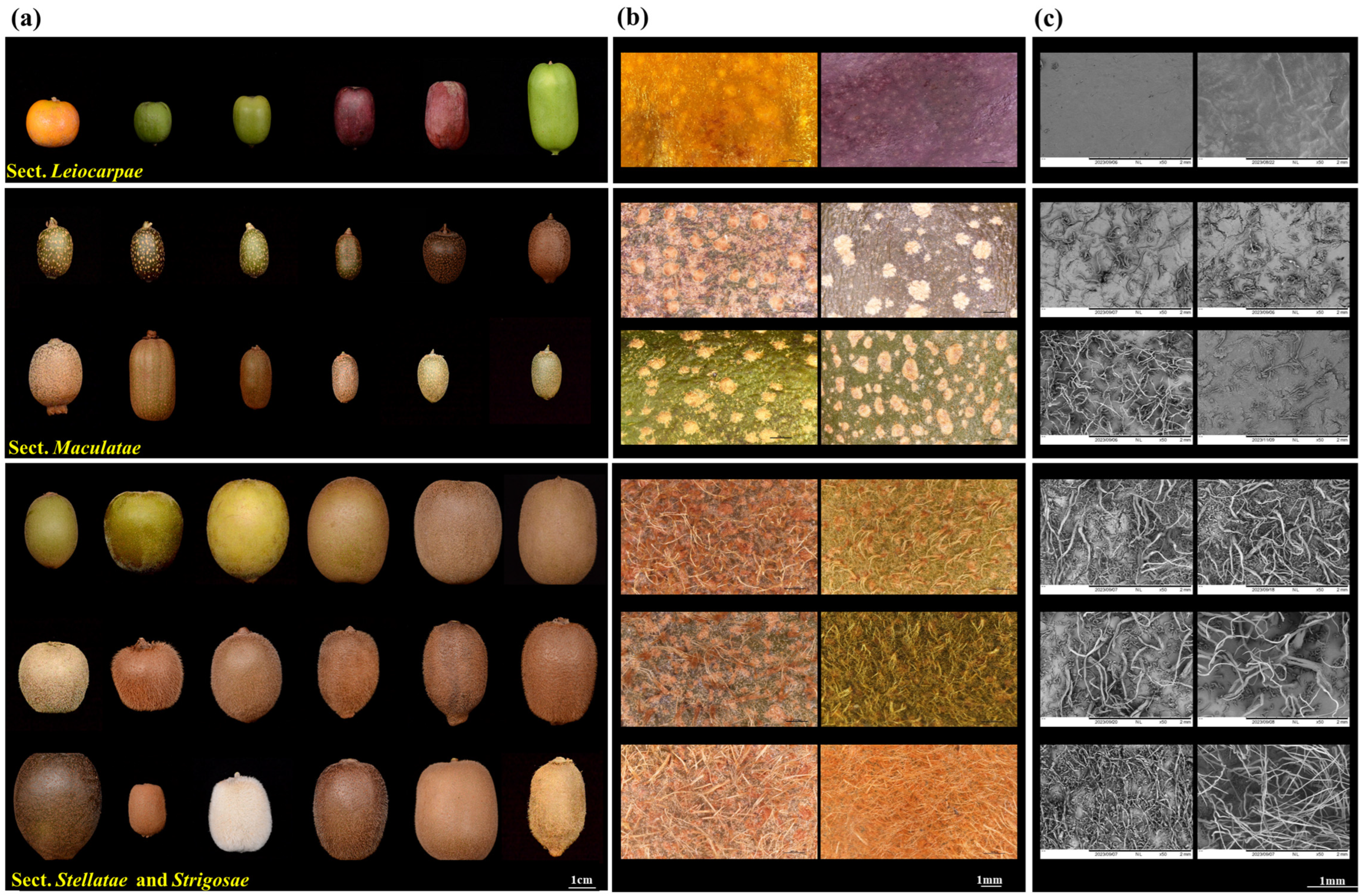
3.1. Morphological Diversity of Kiwifruit Epidermis and Trichomes
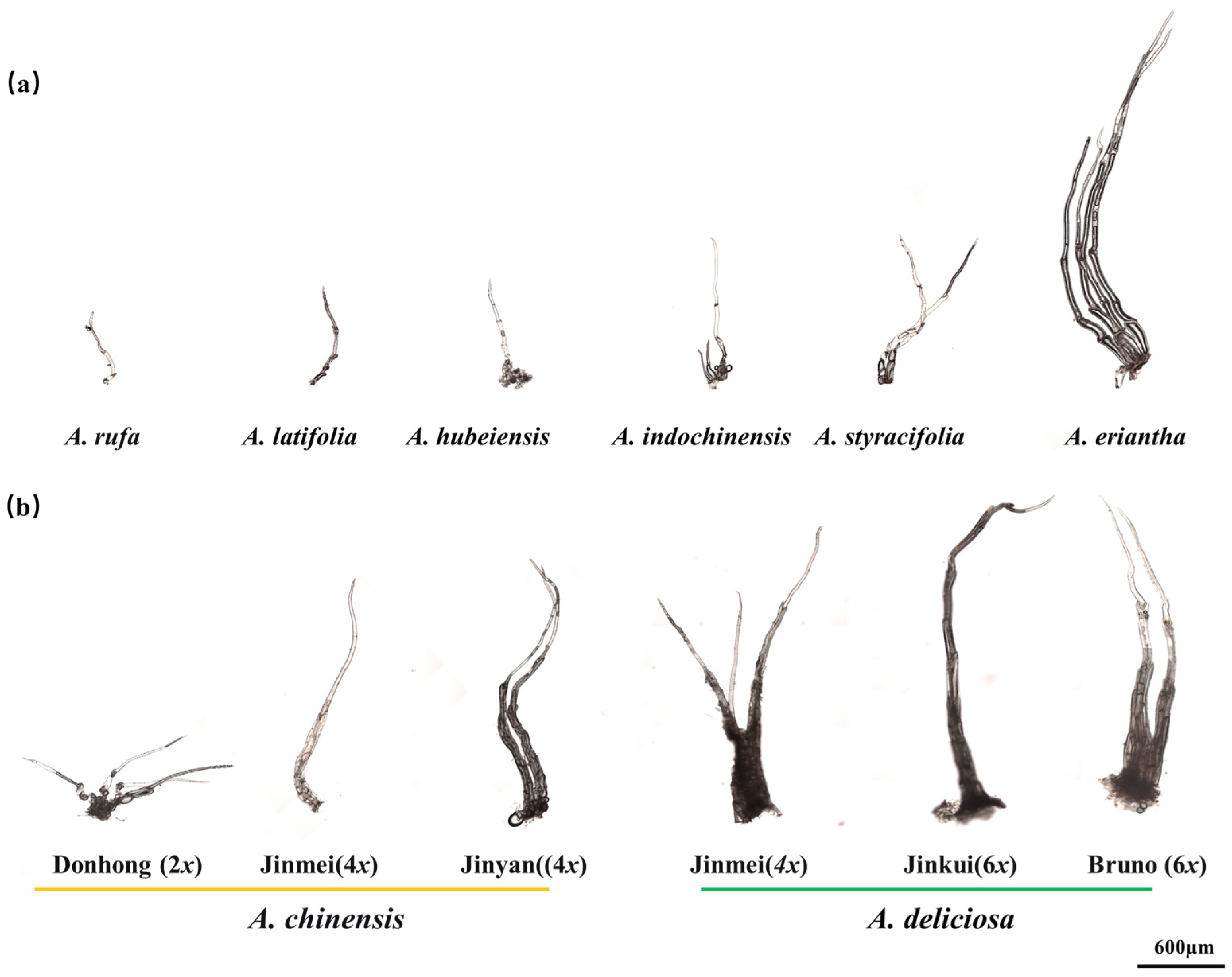
3.2. Cytological Architecture of Kiwifruit Multicellular Trichomes
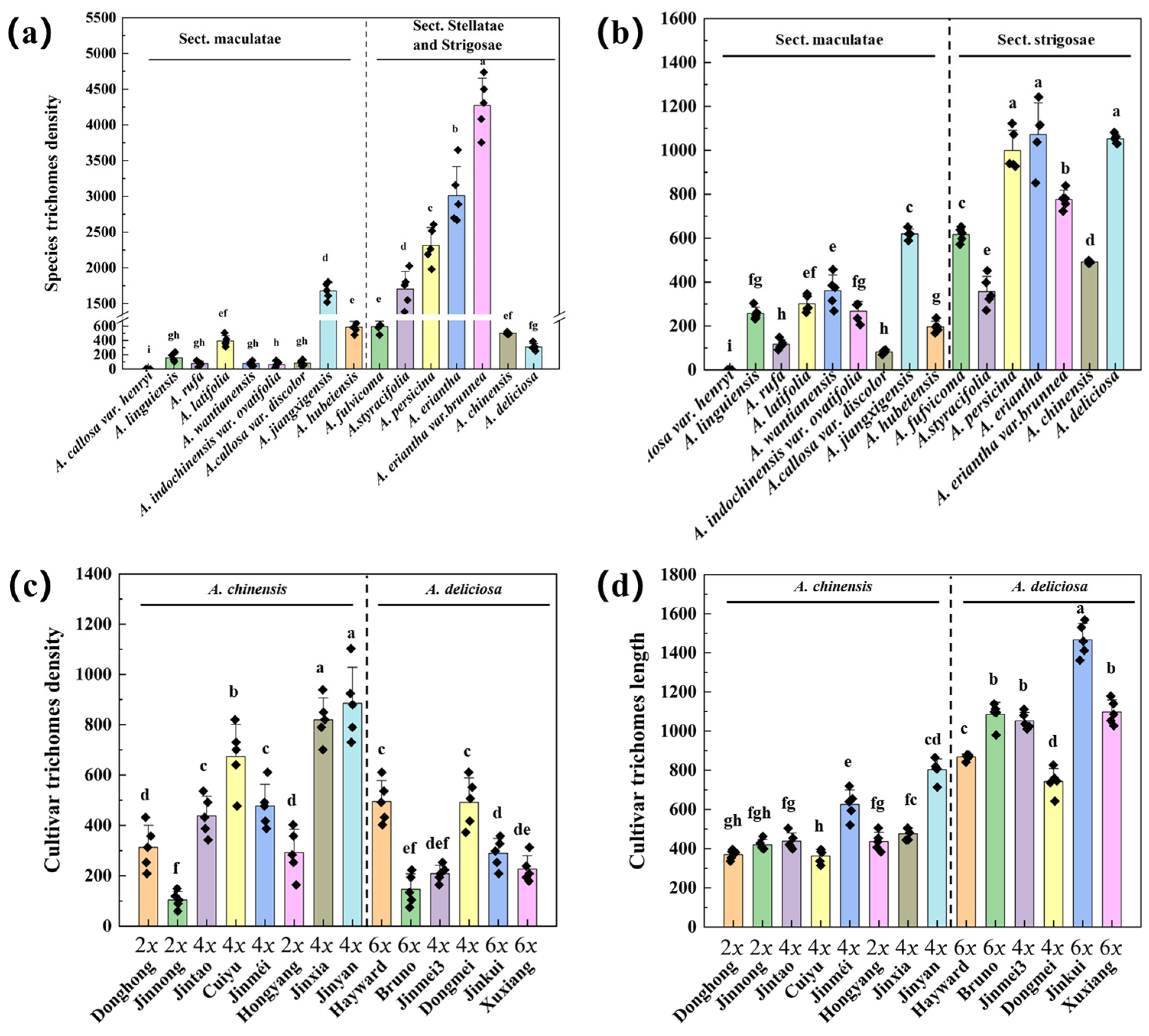
3.3. Micromorphological and Density Variation Across Actinidia Taxa
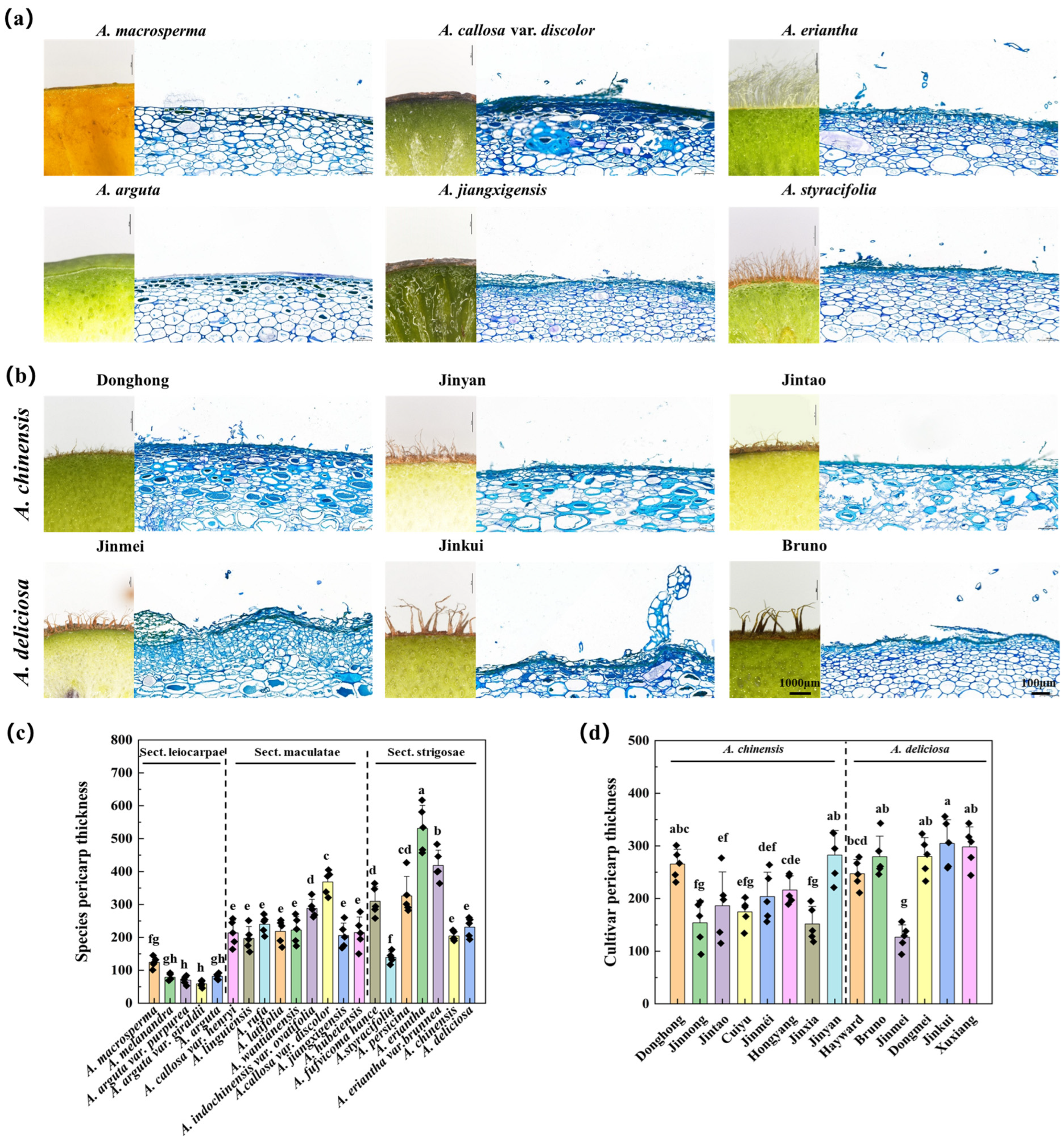
3.4. Comparative Analysis of Pericarp Thickness
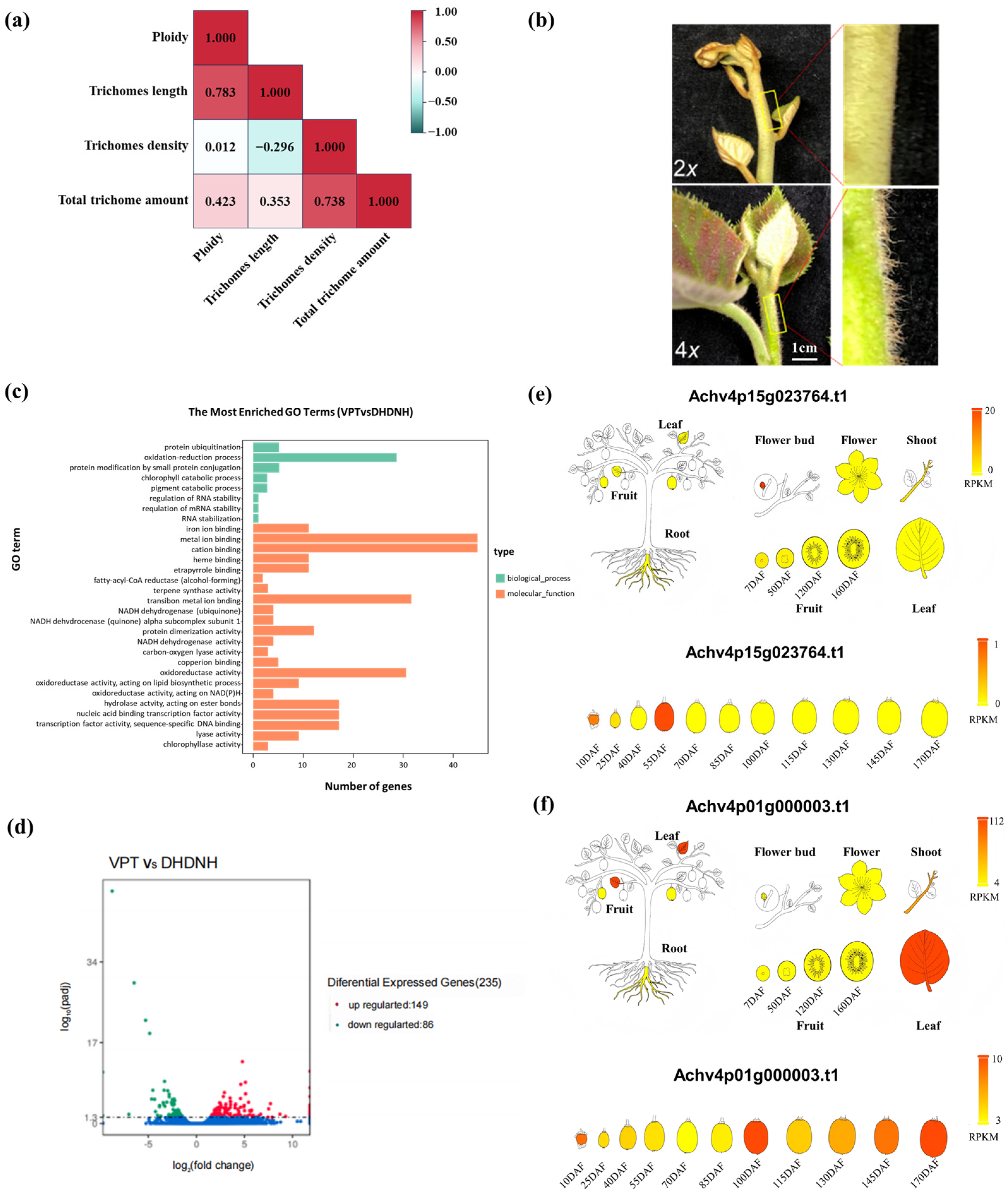
3.5. Transcriptomic Analysis of Ploidy-Induced Trichome Morphogenesis
4. Discussion
Supplementary Materials
Author Contributions
Funding
Data Availability Statement
Conflicts of Interest
Abbreviations
| Abbreviation | English Full Form |
| 2× | Diploid |
| 4× | Tetraploid |
| 6× | Hexaploid |
| DAPI | 4′,6-diamidino-2-phenylindole |
| DEGs | Differentially Expressed Genes |
| FDR | False Discovery Rate |
| FPKM | Fragments Per Kilobase of transcript per Million mapped reads |
| GO | Gene Ontology |
| GSTs | Glandular Secretory Trichomes |
| KEGG | Kyoto Encyclopedia of Genes and Genomes |
| KTD | Kiwifruit Transcriptome Database |
| NGTs | Non-glandular Trichomes |
| RT-qPCR | Real-time Quantitative Polymerase Chain Reaction |
| ROS | Reactive Oxygen Species |
| SEM | Scanning Electron Microscopy |
| WGD | Whole-Genome Duplication |
References
- Werker, E. Trichome diversity and development. Adv. Bot. Res. 2000, 31, 1–35. [Google Scholar]
- Chalvin, C.; Drevensek, S.; Dron, M.; Bendahmane, A.; Boualem, A. Genetic control of glandular trichome development. Trends Plant Sci. 2020, 25, 477–487. [Google Scholar] [CrossRef]
- Mauricio, R. Costs of resistance to natural enemies in field populations of the annual plant Arabidopsis thaliana. Am. Nat. 1998, 152, 265–272. [Google Scholar]
- Ran, R.; Li, X.; Zhang, J.; Zhao, J.; Zhao, X.; Cui, X.; Chen, G.; Zhao, P. Monocot-like leaf structure and trichome-water relations in early growth stages of the C3 plant sand rice (Agriophyllum squarrosum). Plant Sci. 2025, 355, 112480. [Google Scholar] [CrossRef]
- Oksman-Caldentey, K.; Inzé, D. Plant cell factories in the post-genomic era: New ways to produce designer secondary metabolites. Trends Plant Sci. 2004, 9, 433–440. [Google Scholar] [CrossRef]
- Cao, J.; Zhao, Y.; Tang, K. MYC: Orchestrating secondary metabolism and glandular trichome formation. Trends Plant Sci. 2025, 30, 821–825. [Google Scholar] [CrossRef]
- Wang, H.; Ren, J.; Zhou, S.; Duan, Y.; Zhu, C.; Chen, C.; Liu, Z.; Zheng, Q.; Xiang, S.; Xie, Z.; et al. Molecular regulation of oil gland development and biosynthesis of essential oils in Citrus spp. Science 2024, 383, 659–666. [Google Scholar] [CrossRef] [PubMed]
- Feng, Z.; Bartholomew, E.; Liu, Z.; Cui, Y.; Dong, Y.; Li, S.; Wu, H.; Ren, H.; Liu, X. Glandular trichomes: New focus on horticultural crops. Hortic. Res. 2021, 8, 158. [Google Scholar] [CrossRef] [PubMed]
- Fu, Y.; Li, M.; Zhang, W.; Liu, X.; Huang, L.; Zhang, S.; Liang, X.; Zhang, L.; Tang, K.; Rose, J.K.; et al. The role, regulation and application of plant fruit trichomes. Mol. Hortic. 2025, 5, 41. [Google Scholar] [CrossRef]
- Li, X.; Li, J. Lectotypification of Actinidia. Nord. J. Bot. 2025, 25, 294–295. [Google Scholar] [CrossRef]
- Liang, C. The Genus Actinidia in China; Science Press: Beijing, China, 1984. [Google Scholar]
- Ferguson, A. The need for characterization and evaluation of germplasm: Kiwifruit as an example. Euphytica 2007, 154, 371–382. [Google Scholar] [CrossRef]
- Huang, H.; Li, J.; Ferguson, A. The genus Actinidia: A review of morphological and taxonomic characteristics. Plant Divers. Resour. 2013, 35, 697–706. [Google Scholar]
- Wu, M.; Bian, X.; Hu, S.; Huang, B.; Shen, J.; Du, Y.; Wang, Y.; Xu, M.; Xu, H.; Yang, M.; et al. A gradient of the Hd-Zip regulator woolly regulates multicellular trichome morphogenesis in tomato. Plant Cell 2024, 36, 2375–2392. [Google Scholar] [CrossRef]
- Wu, M.; Bian, X.; Huang, B.; Du, Y.; Hu, S.; Wang, Y.; Shen, J.; Wu, S. HD-Zip proteins modify floral structures for self-pollination in tomato. Science 2024, 384, 124–130. [Google Scholar] [CrossRef]
- Yu, N.; Cai, W.; Wang, S.; Shan, C.; Wang, L.; Chen, X. Temporal control of trichome distribution by microRNA156-targeted SPL genes in Arabidopsis thaliana. Plant Cell 2010, 22, 2322–2335. [Google Scholar] [CrossRef] [PubMed]
- Wu, H.; Yang, W.; Dong, G.; Hu, Q.; Li, D.; Liu, J. Construction of the super pan-genome for the genus Actinidia reveals structural variations linked to phenotypic diversity. Hortic. Res. 2025, 12, uhaf067. [Google Scholar] [CrossRef] [PubMed]
- Wang, L.; Feng, Z.; Wang, X.; Wang, X.; Zhang, X. DEGseq: An R package for identifying differentially expressed genes from RNA-seq data. Bioinformatics 2010, 26, 136–138. [Google Scholar] [CrossRef] [PubMed]
- Ashburner, M.; Ball, C.; Blake, J.; Botstein, D.; Butler, H.; Cherry, J.; Davis, A.P.; Dolinski, K.; Dwight, S.S.; Eppig, J.T.; et al. Gene ontology: Tool for the unification of biology. Nat. Genet. 2020, 25, 25–29. [Google Scholar] [CrossRef]
- Kanehisa, M.; Goto, S.; Kawashima, S.; Okuno, Y.; Hattori, M. The KEGG resource for deciphering the genome. Nucleic Acids Res. 2004, 32, D277–D280. [Google Scholar] [CrossRef]
- Liu, X.; Wu, R.; Bulley, S.M.; Zhong, C.; Li, D. Kiwifruit MYBS1-like and GBF3 transcription factors influence l-ascorbic acid biosynthesis by activating transcription of GDP-L-galactose phosphorylase 3. New Phytol. 2022, 234, 1782–1800. [Google Scholar] [CrossRef]
- White, J. Ontogeny and morphology of ovarian and fruit hairs in kiwifruit. N. Z. J. Bot. 1986, 24, 403–414. [Google Scholar] [CrossRef]
- Qi, B.; Li, P.; Li, J.; Zha, M.; Wang, F. Kiwifruit Peelability (Actinidia spp.): A Review. Horticulturae 2025, 11, 927. [Google Scholar] [CrossRef]
- Macnee, N.; Hilario, E.; Tahir, J.; Currie, A.; Warren, B.; Rebstock, R.; Hallett, I.C.; Chagne, D.; Schaffer, R.J.; Bulley, S.M. Peridermal fruit skin formation in Actinidia sp. (kiwifruit) is associated with genetic loci controlling russeting and cuticle formation. BMC Plant Biol. 2021, 21, 334. [Google Scholar] [CrossRef] [PubMed]
- Celano, G.; Minnocci, A.; Sebastiani, L.; D’Auria, M.; Xiloyannis, C. Changes in the structure of the skin of kiwifruit in relation to water loss. J. Hortic. Sci. Biotechnol. 2009, 84, 41–46. [Google Scholar] [CrossRef]
- Wei, N.; Cronn, R.; Liston, A.; Ashman, T. Functional trait divergence and trait plasticity confer polyploid advantage in heterogeneous environments. New Phytol. 2018, 221, 2286–2297. [Google Scholar] [CrossRef]
- Bharati, R.; Gupta, A.; Novy, P.; Severová, L.; Šrédl, K.; Žiarovská, J.; Fernández-Cusimamani, E. Synthetic polyploid induction influences morphological, physiological, and photosynthetic characteristics in Melissa officinalis L. Front. Plant Sci. 2023, 14, 1332428. [Google Scholar]
- Han, G.; Li, Y.; Yang, Z.; Wang, C.; Zhang, Y.; Wang, B. Molecular mechanisms of plant trichome development. Front. Plant Sci. 2022, 13, 910228. [Google Scholar] [CrossRef]
- Wu, J.; Ferguson, A.; Murray, B.; Jia, Y.; Datson, P.; Zhang, J. Induced polyploidy dramatically increases the size and alters the shape of fruit in Actinidia chinensis. Ann. Bot. 2012, 109, 169–179. [Google Scholar] [CrossRef] [PubMed]


Disclaimer/Publisher’s Note: The statements, opinions and data contained in all publications are solely those of the individual author(s) and contributor(s) and not of MDPI and/or the editor(s). MDPI and/or the editor(s) disclaim responsibility for any injury to people or property resulting from any ideas, methods, instructions or products referred to in the content. |
© 2026 by the authors. Licensee MDPI, Basel, Switzerland. This article is an open access article distributed under the terms and conditions of the Creative Commons Attribution (CC BY) license.
Share and Cite
Qi, X.; Han, F.; Luo, L.; Lv, H.; Deng, Y.; Gasura, E.; Xiao, C.; Zhang, X.; Deng, Y.; Xie, X. Structural Diversification of Actinidia Trichomes and Modulation by Polyploidization. Horticulturae 2026, 12, 322. https://doi.org/10.3390/horticulturae12030322
Qi X, Han F, Luo L, Lv H, Deng Y, Gasura E, Xiao C, Zhang X, Deng Y, Xie X. Structural Diversification of Actinidia Trichomes and Modulation by Polyploidization. Horticulturae. 2026; 12(3):322. https://doi.org/10.3390/horticulturae12030322
Chicago/Turabian StyleQi, Xiaoqiong, Fei Han, Lansha Luo, Haiyan Lv, Yanqing Deng, Edmore Gasura, Changsheng Xiao, Xianzhi Zhang, Yinghua Deng, and Xiaodong Xie. 2026. "Structural Diversification of Actinidia Trichomes and Modulation by Polyploidization" Horticulturae 12, no. 3: 322. https://doi.org/10.3390/horticulturae12030322
APA StyleQi, X., Han, F., Luo, L., Lv, H., Deng, Y., Gasura, E., Xiao, C., Zhang, X., Deng, Y., & Xie, X. (2026). Structural Diversification of Actinidia Trichomes and Modulation by Polyploidization. Horticulturae, 12(3), 322. https://doi.org/10.3390/horticulturae12030322