Article

Identification and Characterization of WRKY Genes in Amaranthus palmeri and Their Response to Abiotic Stress

1
MARA Key Laboratory of Sustainable Crop Production in the Middle Reaches of the Yangtze River (Co-Construction by Ministry and Province)/Hubei Key Laboratory of Waterlogging Disaster and Agricultural Use of Wetland, College of Agriculture, Yangtze University, Jingzhou 434025, China
2
Hubei Key Laboratory of Resource Utilization and Quality Control of Characteristic Crops, College of Life Science and Technology, Hubei Engineering University, Xiaogan 432000, China
3
Wulian County Bureau of Agriculture and Rural Affairs, Rizhao 262300, China
*
Authors to whom correspondence should be addressed.
These authors contributed equally to this work.
Horticulturae 2026, 12(3), 314; https://doi.org/10.3390/horticulturae12030314

Submission received: 28 January 2026 / Revised: 25 February 2026 / Accepted: 4 March 2026 / Published: 6 March 2026
(This article belongs to the Special Issue Conventional and Organic Weed Management in Horticultural Production)

Abstract

The WRKY transcription factors (TFs) are key regulators of plant responses to biotic and abiotic stresses. However, their roles in Amaranthus palmeri remain unexplored. In this study, 32 ApWRKYs were identified through bioinformatics and gene expression analyses. Subcellular localization predictions placed ApWRKYs in the nucleus, and transient expression assays of ApWRKY2 and ApWRKY5 confirmed nuclear targeting, supporting their role as transcriptional regulators. ApWRKYs are distributed across 15 genomic scaffolds, and phylogenetic analysis grouped them into three subfamilies, with conserved motifs identified within specific clades. Interaction analysis suggested potential post-transcriptional regulation by miRNAs. Gene expression profiling of ApWRKYs under glufosinate ammonium, NaCl, and PEG-induced osmotic stress treatments revealed potential distinct regulatory roles. Furthermore, transient overexpression in Arabidopsis thaliana found that ApWRKY1, ApWRKY2, and ApWRKY5 potentially regulate chlorophyll fluorescence and photosynthetic efficiency under glufosinate treatment. These findings establish ApWRKYs as central regulators of stress adaptation in A. palmeri, provide novel insights into WRKY-mediated regulation, and lay a foundation for future functional investigations aimed at enhancing stress resilience and herbicide management in horticultural systems.

1. Introduction

Transcription factors are DNA-binding proteins that regulate gene expression by interacting with specific cis-acting elements in promoter regions [1]. Through this mechanism, TFs such as WRKY proteins can either activate or repress transcription, thereby fine-tuning plant responses to environmental stress [2]. Structurally, WRKY transcription factors are defined by two conserved domains: the WRKY domain, approximately 60 amino acids in length and characterized by the highly conserved WRKYGQK motif, which specifically binds to the W-box (TTGACC/T) cis-element found in many plant promoters; and a zinc finger domain, typically of the C2H2 (CX4–5CX22–23HXH) or C2HC (CX7CX23HXH) type, which stabilizes DNA binding and protein integrity [3].
The first WRKY transcription factor was identified in Ipomoea batatas [4]. Since then, WRKY proteins have been classified into three major groups based on the number of WRKY domains and the type of zinc finger motif: Group I, containing two WRKY domains and a C2H2 zinc finger; Group II, with a single WRKY domain and a C2H2 zinc finger, further subdivided into five subgroups (II-a to II-e); and Group III, characterized by one WRKY domain and a C2HC zinc finger [5]. As a plant-specific transcription factor family, WRKYs are now recognized as key regulators of growth, development, metabolism, and responses to both biotic and abiotic stresses [6].
Extensive research has established that WRKY TFs play pivotal roles in diverse plant physiological processes [7]. For instance, tomato thermotolerance is enhanced through the interaction of SlWRKY55 with SlVG11, which together regulate the transcriptional and post-transcriptional functions of the heat shock transcription factor SlHsfA2 [8]. Similarly, TaWRKY24 in wheat [9] and FcWRKY40 in kumquat [10] contribute to improved salt stress resistance. In rice, the negative regulator WRKY53 fine-tunes gibberellin levels in anthers during the booting stage, thereby strengthening cold tolerance [11]. Overexpression of soybean GmWRKY21 confers enhanced cold tolerance, while GmWRKY54 improves resistance to both salt and drought in transgenic Arabidopsis plants. In contrast, GmWRKY13 overexpression increases sensitivity to salt and mannitol [12]. In rice, heat shock–inducible expression of OsWRKY11 under the HSP101 promoter enhances both heat and drought tolerance [13]. OsWRKY45 overexpression improves salt and drought tolerance and simultaneously strengthens disease resistance [14]. In Arabidopsis, overexpression of AtWRKY25 or AtWRKY33 increases salt tolerance [15], and additional studies using AtWRKY25 mutants and overexpression lines revealed its involvement in heat stress responses [16]. Beyond model crops, WRKYs have also been implicated in stress signaling in wild species. A WRKY isolated from the xerophytic shrub Larrea tridentata was identified as an activator of abscisic acid (ABA) signaling [17]. Consistent with this, transient expression assays performed in aleurone cells indicate that OsWRKY24 and OsWRKY45 serve as repressors of an ABA-inducible promoter, whereas OsWRKY72 and OsWRKY77 function as activators of the same promoter [18].
The genus Amaranthus (Amaranthaceae family) comprises roughly 75 species worldwide. Among them, Amaranthus palmeri S. Watson (Palmer amaranth) is an annual invasive weed native to northwestern Mexico and the southwestern United States, including regions such as southern California, New Mexico, and Texas [19]. This species poses a major threat to horticultural plants due to its extended emergence period, which overlaps with the growing seasons of staple crops, and its rapid growth rate that intensifies competition for essential resources. A. palmeri is capable of producing substantial aboveground biomass, thereby suppressing crop development. Season-long interference by this weed has been shown to cause severe yield reductions in Zea mays, Gossypium hirsutum, and Glycine max [20,21].
Given the urgent need to understand the genetic basis of stress responses in A. palmeri, this study provides the genome-wide characterization of its WRKY family under abiotic stress conditions. Previous genome-wide investigations in other plant species have demonstrated that WRKY genes are central regulators of development and stress adaptation. However, their specific roles in A. palmeri, particularly in relation to herbicide tolerance and abiotic stress regulation, remain unexplored. To bridge this gap, we employed bioinformatics approaches to identify and characterize the ApWRKY gene family and analyzed their expression profiles under glufosinate ammonium, NaCl, and PEG6000-induced osmotic stress. The findings from this study will establish a valuable foundation for future studies aimed at managing A. palmeri invasiveness and for harnessing WRKY genes in molecular breeding programs to enhance stress resilience in economically important horticultural crops.

2. Materials and Methods

2.1. Identification of ApWRKY Proteins

Two approaches were employed to identify the ApWRKY proteins. First, genomic and annotation data for A. palmeri were retrieved from the Comparative Genomics Research (CoGe) database (https://genomevolution.org/coge/, accessed on 5 January 2025). The available assembly (version 1.2) is a scaffold-level genome generated by scaffolding a BASF male A. palmeri assembly to Amaranthus hypochondriacus. The assembly spans 411.9 Mb across 16 scaffolds and was annotated using AUGUSTUS, RepeatModeler/RepeatMasker, and transcriptome and protein alignments. The hidden Markov model (HMM) profile of the WRKY domain (PF03106) was obtained from the Pfam database (http://pfam.xfam.org/, accessed on 5 January 2025). Using TBtools v2.310 [22], a simple HMM search was performed against the A. palmeri protein sequences with the Pfam HMM file to identify putative ApWRKY proteins. Second, WRKY protein sequences from Arabidopsis [23], wheat [24], and tomato [25] were downloaded from the Ensembl Plants database (https://plants.ensembl.org/, accessed on 6 January 2025). These sequences were used as queries in a BLASTP search against the A. palmeri proteins using the Blast Several Sequences to a Big Database tool in TBTools, with an E-value cutoff of 1 × 10⁻⁵. Candidate ApWRKYs identified through both methods were combined and subsequently validated using the NCBI-CDD and SMART (http://smart.embl.de/, accessed on 8 January 2025) databases. Default parameters were applied to remove proteins lacking a complete WRKY domain and a correctly conserved zinc-finger motif.

2.2. Characteristic Features of ApWRKY Proteins

The physicochemical properties of the identified ApWRKY proteins were evaluated using the Protein Parameter Calculation tool available in TBtools. Key parameters analyzed included molecular weight (MW), isoelectric point (pI), instability index, grand average of hydropathicity (GRAVY), and total amino acid composition. SignalP 6.0 (https://services.healthtech.dtu.dk/services/SignalP-6.0/, accessed on 15 January 2025) was used for signal peptide prediction.

2.3. Phylogenetic Analysis of ApWRKY Proteins

WRKY protein sequences from A. thaliana (AtWRKY), Triticum aestivum (TaWRKY), Amaranthus tuberculatus (AtuWRKY), and A. hybridus (AhyWRKY) were retrieved from the Phytozome v14 (https://phytozome-next.jgi.doe.gov/cart, accessed on 26 February 2025) and Amaranth Genomic Resource (AGRDB) databases [26] using BLAST searches with an E-value threshold of 1 × 10⁻⁵. In total, 164 WRKY protein sequences were analyzed, comprising 32 ApWRKYs, 72 AtWRKYs, 20 TaWRKYs, 20 AtuWRKYs, and 20 AhWRKYs. Multiple sequence alignment was conducted using ClustalW with default parameters. A phylogenetic tree was constructed using the Neighbor-Joining (NJ) method. To evaluate the reliability of the tree topology, bootstrap analysis was performed with 1000 replicates under the Jones–Taylor–Thornton (JTT) substitution model, applying uniform rates and pairwise deletion [27]. The resulting phylogenetic tree was visualized using the iTOL platform [28].

2.4. Gene Structure, Conserved Motifs, and cis-Acting Element Analyses

The structural organization of ApWRKY genes was examined using the BioSequence Structure Illustrator tool in TBtools, with the A. palmeri genome annotation GFF3 file serving as the reference. Conserved motifs within the ApWRKY proteins were identified using the MEME Suite (https://meme-suite.org/meme/tools/meme, accessed on 24 February 2025), using default parameters and a maximum of 20 motifs [29]. To investigate potential regulatory elements, the 2000 bp upstream promoter regions of ApWRKY genes were analyzed using the PlantCARE database [30]. The predicted cis-acting elements were subsequently visualized with TBtools.

2.5. Chromosome Mapping and Duplication Analyses of ApWRKYs

The chromosomal distribution of ApWRKY genes within the A. palmeri genome was determined using the Gene Location Visualizer tool in TBtools. To identify potential gene duplication events, sequence alignments were performed with ClustalW, and duplicated gene pairs were subsequently analyzed using the duplication module in MEGA11. For each duplicated pair, the ratio of non-synonymous to synonymous substitutions (Ka/Ks) was calculated with the Simple Ka/Ks Calculator in TBtools to assess evolutionary constraints. The approximate timing of duplication events was estimated using the formula T = Ks/(2λ) × 10−6 million years ago (Mya), where λ was set at 6.5 × 10⁻⁹ substitutions per site per year [31].

2.6. Protein-Protein and miRNA Target ApWRKYs Interaction Network

The protein sequences of ApWRKYs were submitted to the STRING v12.0 database (http://string-db.org). Using the A. thaliana genome as a reference, a BLAST analysis was performed to identify orthologous proteins with high sequence identity, applying an E-value threshold of 1 × 10⁻⁵. These orthologs were subsequently used to construct the ApWRKY protein–protein interaction (PPI) network. Putative microRNAs (miRNAs) from A. palmeri were retrieved from the AGRDB database. The miRNAs and coding sequences (CDS) of ApWRKYs were analyzed using the psRNATarget (www.zhaolab.org/psRNATarget/analysis, accessed on 28 February 2025) under default parameters [32].

2.7. Plant Material and Stress Treatments

Seeds of A. palmeri were surface-sterilized with 1% hypochlorite solution, rinsed thoroughly with distilled water, and placed on filter paper in Petri dishes. Germination was carried out in a controlled growth chamber maintained at 60% relative humidity, with a day/night temperature cycle of 25 °C and a photoperiod of 16 h light and 8 h dark. For stress treatments, seedlings at the five-leaf stage were subjected to different conditions. Sodium chloride (200 μM) and osmotic stress (20% PEG6000) were applied by transferring seedlings to hydroponic trays containing half-strength Hoagland nutrient solution (pH 6.0). For glufosinate ammonium treatment (100 μM), seedlings were transplanted into soil-filled plastic pots. Each treatment was performed with three biological replicates, and three technical replicate leaf samples were collected at designated time points: 0, 12, 24, and 48 h for glufosinate ammonium and PEG6000, and 0, 12, 24, 36, and 48 h for NaCl. All harvested samples were immediately frozen in liquid nitrogen and stored at −80 °C until further analysis.

2.8. RNA Extraction and Quantitative PCR Analysis

Total RNA was isolated from A. palmeri leaves using TRIzol reagent (Invitrogen, Gaithersburg, MD, USA), and quality was assessed by agarose gel electrophoresis and NanoDrop one spectrophotometer (Thermo Fisher Scientific, Wilmington, DE, USA). Complementary DNA (cDNA) synthesis was performed using the HiScript IV RT SuperMix for qPCR (+gDNA wiper) kit (Vazyme Biotech, Nanjing, China). Quantitative PCR (qPCR) was performed in 20 µL reactions using ChamQ SYBR qPCR Master Mix (Vazyme, Nanjing, China) on a Bio-Rad CFX96 Real-Time System (XinXingXing Instrument Co., Ltd., Wuhan, China), with cycling conditions of 95 °C for 30 s followed by 40 cycles of 95 °C for 10 s and 60 °C for 30 s. Each reaction was run in triplicate. Primer specificity was confirmed by melt-curve analysis, and primer efficiencies were determined from five-point standard curves with R2 values > 0.99. Six ApWRKY genes were randomly selected for qPCR analysis, and relative gene expression levels were calculated using the 2−ΔΔCT method, with UBQ serving as the reference gene (Supplementary File S1). Statistical differences among treatments were evaluated using two-way ANOVA in GraphPad Prism v10.2.0, with significance defined at p ≤ 0.05.

2.9. Subcellular Localization Analysis of ApWRKY Genes

The subcellular localization of ApWRKY proteins was predicted using the Plant-mPLoc tool (http://www.csbio.sjtu.edu.cn/bioinf/plant-multi/, accessed on 10 March 2025). To confirm the prediction, the CDS of ApWRKY2 and ApWRKY5 were cloned into the pCAMBIA1302-GFP vector, generating fusion constructs. The plasmids were introduced into Agrobacterium tumefaciens GV3101 by the freeze–thaw method and subsequently infiltrated into leaves of 4-week-old Nicotiana benthamiana leaves using a needleless syringe. The empty pCAMBIA1302-GFP vector was used as a control. Following infiltration, plants were incubated in darkness for 24 h and then maintained under normal light conditions for 48 h. GFP signals were observed using a laser scanning confocal microscope to determine protein localization.

2.10. Glufosinate-Ammonium Resistance Assay in Mutant Arabidopsis

Seeds of A. thaliana wild-type (Col-0) were sterilized, stratified at 4 °C for three days, and germinated on MS medium. Two-week-old seedlings were transplanted into a peat moss–vermiculite mix and grown under controlled conditions. For transient expression, ApWRKY1/2/5-GFP constructs (Section 2.9) were introduced into three-week-old Col-0 plants via Agrobacterium tumefaciens infiltration [33]. Two days later, plants were sprayed with glufosinate-ammonium (100 μM) using a calibrated sprayer (200 L ha−1), while controls received distilled water. Each treatment included three biological replicates, and leaf samples were collected 24 h post-treatment. Chlorophyll fluorescence was measured with the PlantView 230F imaging system under standard parameters, and chlorophyll content was quantified spectrophotometrically. Pigments were extracted from homogenized leaf tissue, and absorbance was recorded at 665 and 649 nm. Concentrations of chlorophyll a, b, and total chlorophyll were calculated following Ren’s method [34].

3. Results

3.1. Identification and Characteristics of ApWRKY Proteins

A total of 41 putative ApWRKY proteins were initially identified. Subsequent screening with the NCBI-CDD and SMART databases confirmed 32 ApWRKY genes containing conserved WRKY domains. The predicted amino acid sequences ranged in length from 177 to 567 residues, with an average of 356.75 aa (Supplementary File S2). The MW varied between 19.59 and 61.86 kDa, averaging 39.38 kDa. The pI spanned from 5.35 to 9.84, with a mean value of 7.19. The aliphatic index ranged from 37.82 to 82.67, with an average of 58.73. The GRAVY values were consistently negative, ranging from −1.08 to −0.31, with a mean of −0.78, indicating that ApWRKY proteins are generally hydrophilic. In terms of stability, all ApWRKY proteins were classified as unstable based on their instability index, except for ApWRKY12, which exhibited a stable value of 32.57.

3.2. Gene Structure and Motif Discovery Analyses of ApWRKY Genes

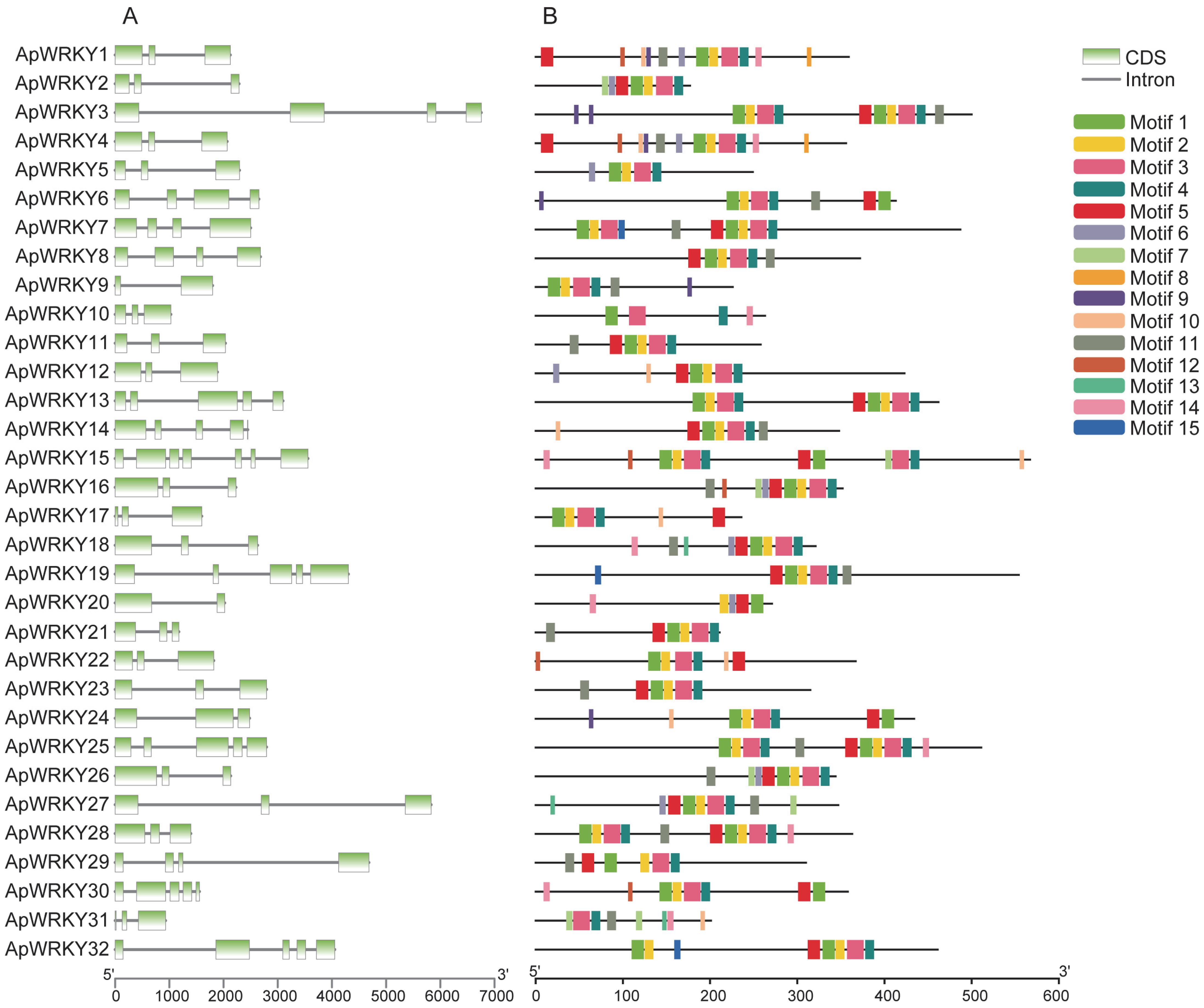
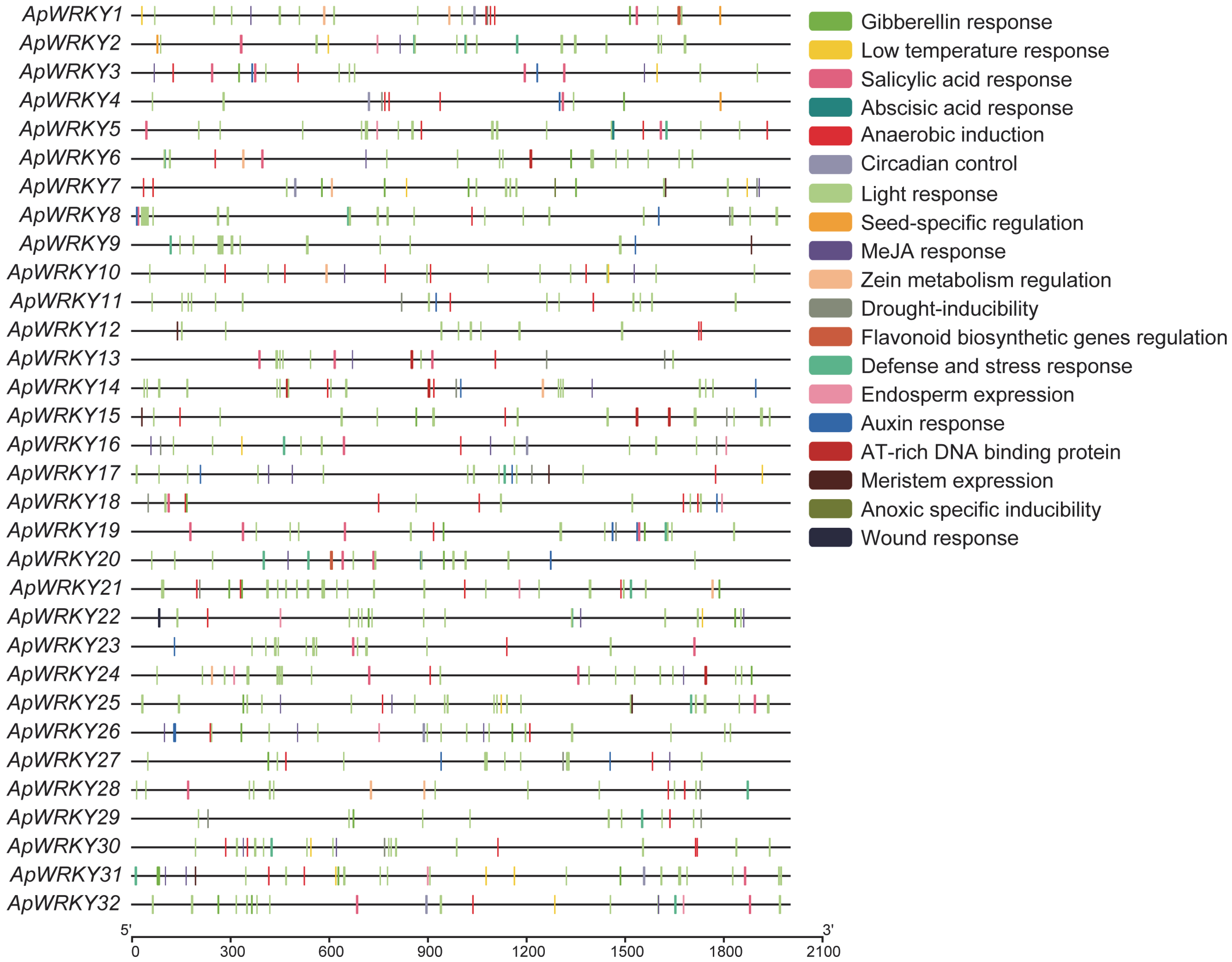
Structural analysis of ApWRKY genes revealed considerable variation in exon–intron organization, with no untranslated regions (UTRs) detected. Each gene contained between 1 and 6 introns and 2 to 7 exons (Figure 1A). Conserved motif analysis identified 15 putative motifs ranging from 6 to 20 aa, each occurring once per sequence (Figure 1B, Supplementary File S3). Individual ApWRKY proteins harbored between 4 and 12 motifs. Motifs 1, 2, and 3 were widely conserved across the family, although ApWRKY10 lacked motif 1, ApWRKY20 lacked motif 3, and ApWRKY31 was missing both motifs 1 and 2. Promoter analysis of the 2 kb upstream regions revealed several cis-acting regulatory elements associated with stress responses. These included elements linked to anaerobic induction, anoxic-specific inducibility, gibberellin and MeJA responses, low-temperature and abscisic acid responses, drought inducibility, auxin and salicylic acid responses, as well as wound response (Figure 2). In addition, elements related to light responsiveness, plant growth, and developmental regulation were also detected.

3.3. Phylogenetic Analysis of WRKY Proteins

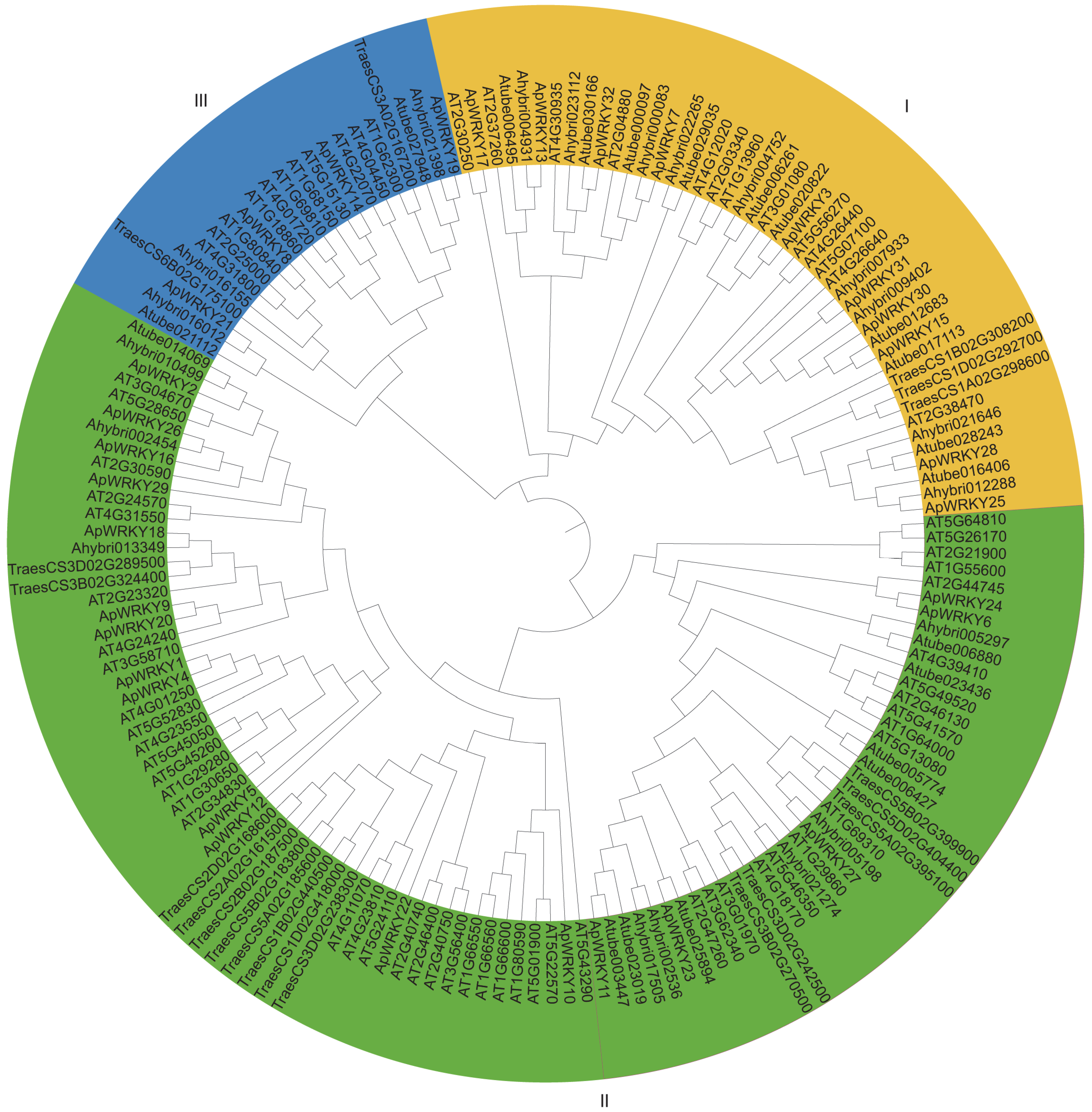
To investigate evolutionary relationships within the WRKY family, a phylogenetic analysis was performed on 164 WRKY proteins, comprising 32 ApWRKYs, 72 AtWRKYs, 20 TaWRKYs, 20 AtuWRKYs, and 20 AhyWRKYs. The proteins were grouped into three distinct subfamilies based on the number of WRKY domains and the type of zinc finger motif in the ApWRKY proteins (Figure 3). Among the ApWRKYs, 10 are in subfamily I, 18 are clustered in subfamily II, and 4 are in subfamily III. WRKY proteins from A. thaliana, T. aestivum, and other Amaranthus species were distributed across all subfamilies. Motif analysis revealed that most were conserved across the phylogenetic tree, while some were restricted to specific subfamilies. For example, motif 15 was conserved in subfamilies I and III, motif 8 was unique to subfamily II, and motif 7/15 also appeared in subfamilies I and II. Overall, ApWRKYs exhibited close evolutionary relationships with WRKY proteins from other Amaranthus species. Notably, ApWRKY8 clustered at terminal branches with AT1G80840, while ApWRKY10 and ApWRKY22 showed high similarity to WRKY proteins from Arabidopsis and wheat.

3.4. Chromosome Mapping and Duplication Events of ApWRKY Genes

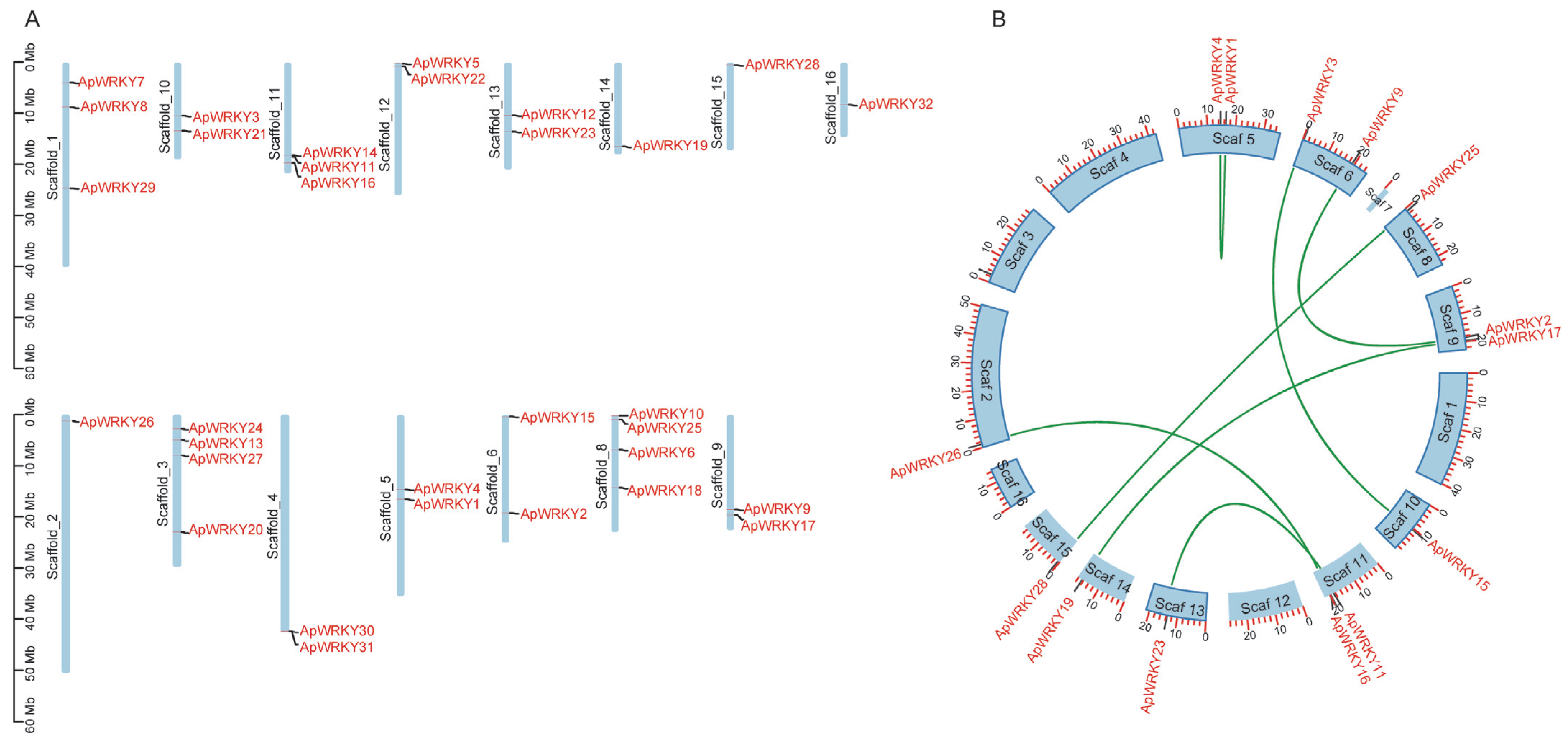
The 32 identified ApWRKY genes were unevenly distributed across 15 scaffolds of the A. palmeri genome. Gene density varied from 1 to 4 per scaffold, with no ApWRKY mapped to scaffold 7 (Figure 4A). Scaffolds 3 and 8 contained the highest number of genes (four each), whereas scaffolds 2, 14, 15, and 16 harbored only a single gene. Duplication analysis revealed seven segmentally duplicated ApWRKY gene pairs (Figure 4B). To evaluate evolutionary constraints, Ka/Ks ratios were calculated for these pairs. All values were below 1 (Supplementary File S4), indicating that the duplicated ApWRKY genes have predominantly undergone purifying selection rather than positive Darwinian selection. The timing of duplication events was estimated using Ks values. These ranged from 0.045 to 2.744, with an average of 1.255 (Supplementary File S4). Based on these values, the average divergence time of duplicated ApWRKY genes was approximately 96.6 Mya, suggesting ancient duplication events may have contributed to the expansion of the ApWRKY gene family.

3.5. Protein-Protein and miRNA-ApWRKY Interaction Network

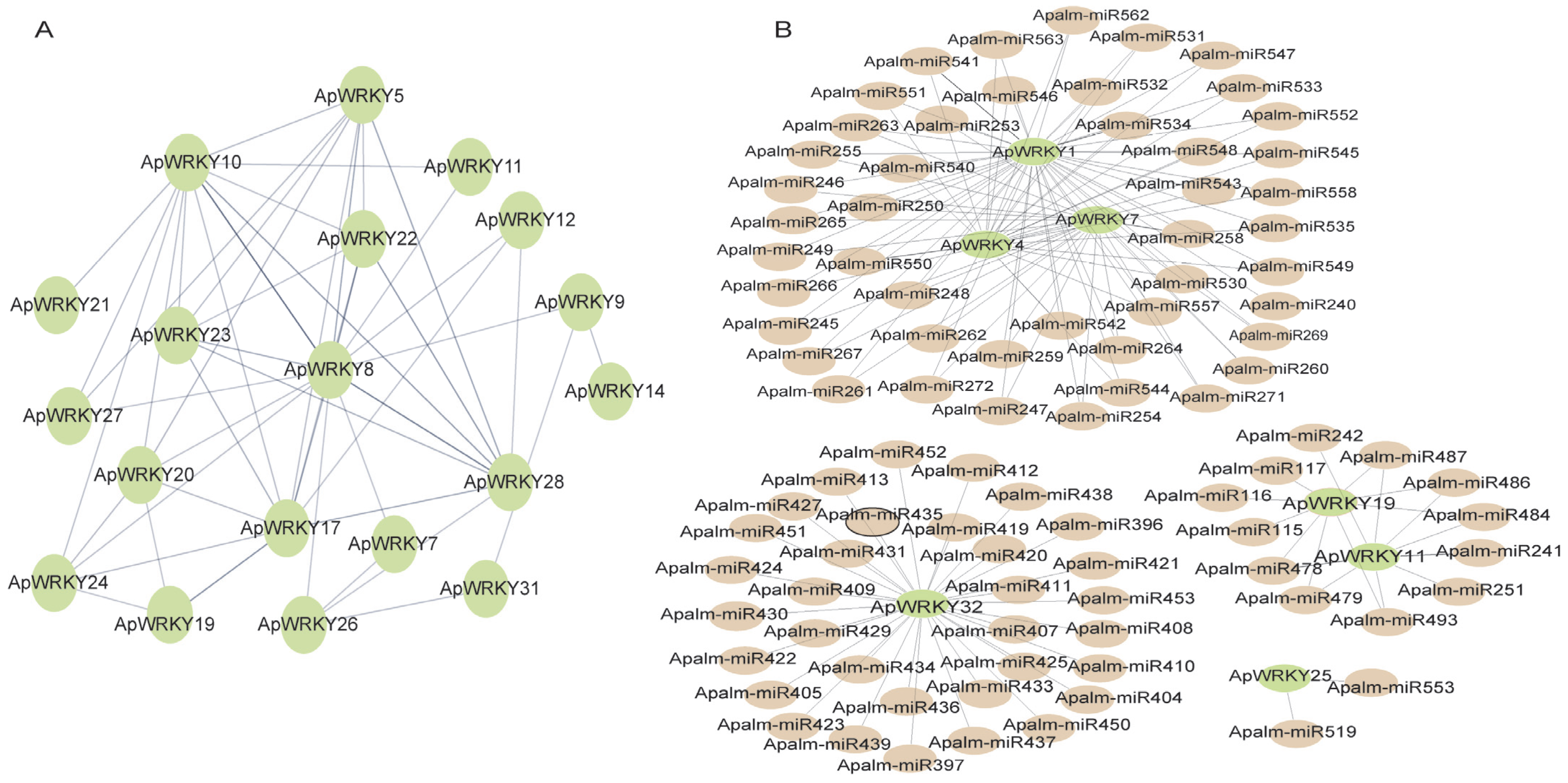
To explore potential functional associations among ApWRKY proteins, a protein–protein interaction (PPI) network was generated using the A. thaliana reference genome in the STRING database. The resulting network included 19 Arabidopsis WRKY proteins (Figure 5A). Gene Ontology (GO) enrichment of these predicted interactions indicated that the most represented biological process was the response to salicylic acid. Sequence-specific DNA binding was the predominant molecular function, and the nucleus was identified as the major cellular component.
To investigate possible post-transcriptional regulatory relationships, miRNA–ApWRKY interactions were predicted using psRNATarget. A total of 93 miRNAs were predicted to target seven ApWRKY genes (Figure 5B, Supplementary File S5). The number of predicted miRNAs per gene ranged from 2 to 47, with ApWRKY1 showing the highest number of predicted interactions (47) and ApWRKY25 the fewest (2). Additional predicted interactions included ApWRKY11 (9 miRNAs), ApWRKY19 (8 miRNAs), ApWRKY32 (33 miRNAs), and ApWRKY4/7 (23 miRNAs). These predictions indicate that multiple ApWRKY genes may be subject to miRNA-mediated regulation.

3.6. Subcellular Localization of ApWRKY Proteins

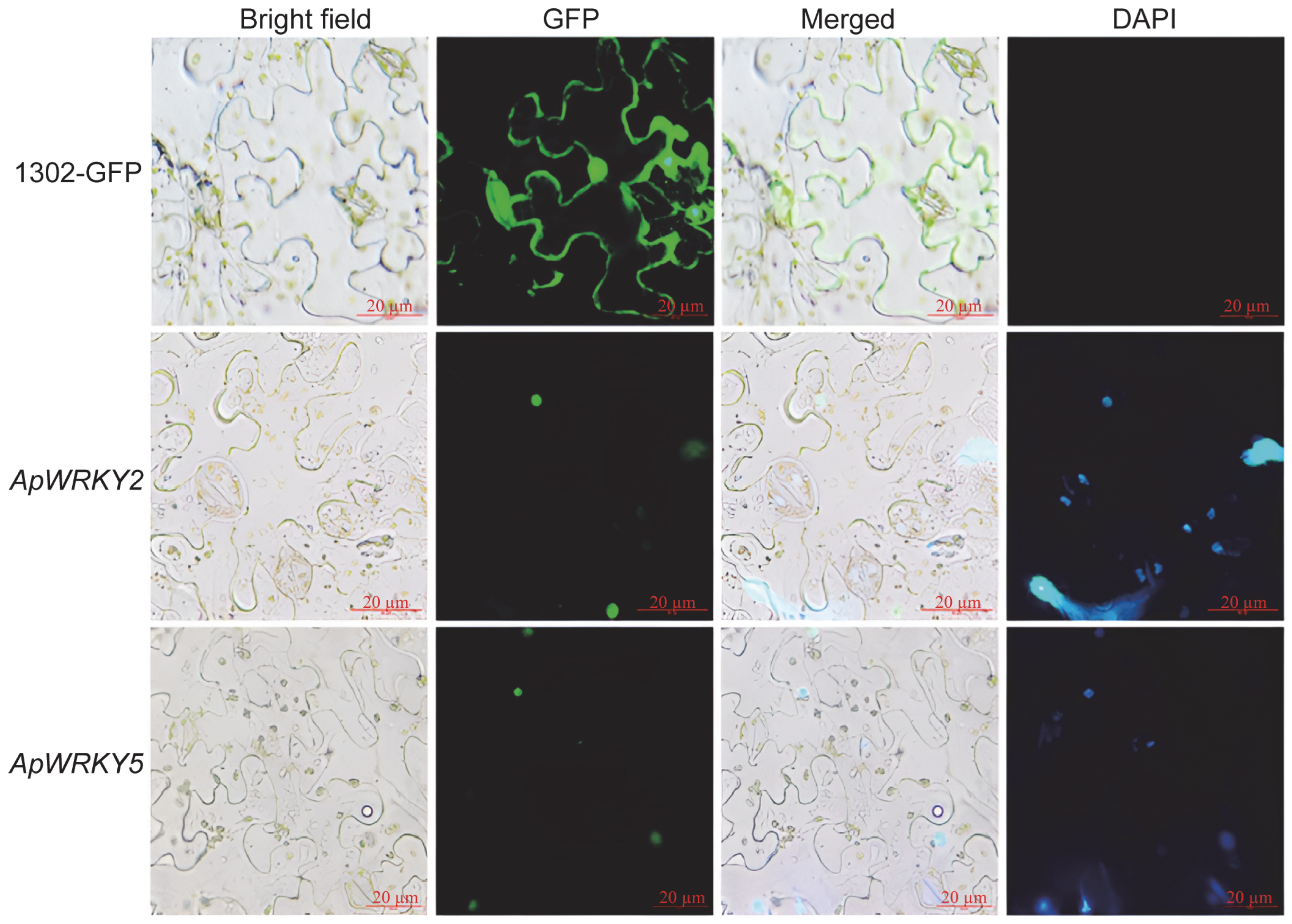
In silico predictions using the Plant-mPLoc database indicated that ApWRKY proteins are localized to the nucleus (Supplementary File S2). To validate these predictions, transient expression assays were performed for ApWRKY2 and ApWRKY5. The results revealed that GFP fluorescence from the control vector was distributed throughout the cell, whereas the ApWRKY2-GFP and ApWRKY5-GFP fusion proteins showed strong nuclear localization (Figure 6). These observations were consistent with computational predictions, supporting the role of ApWRKY2 and ApWRKY5 as nuclear proteins likely involved in transcriptional regulation.

3.7. Quantitative PCR Analysis of ApWRKYs Under Each Stress Response

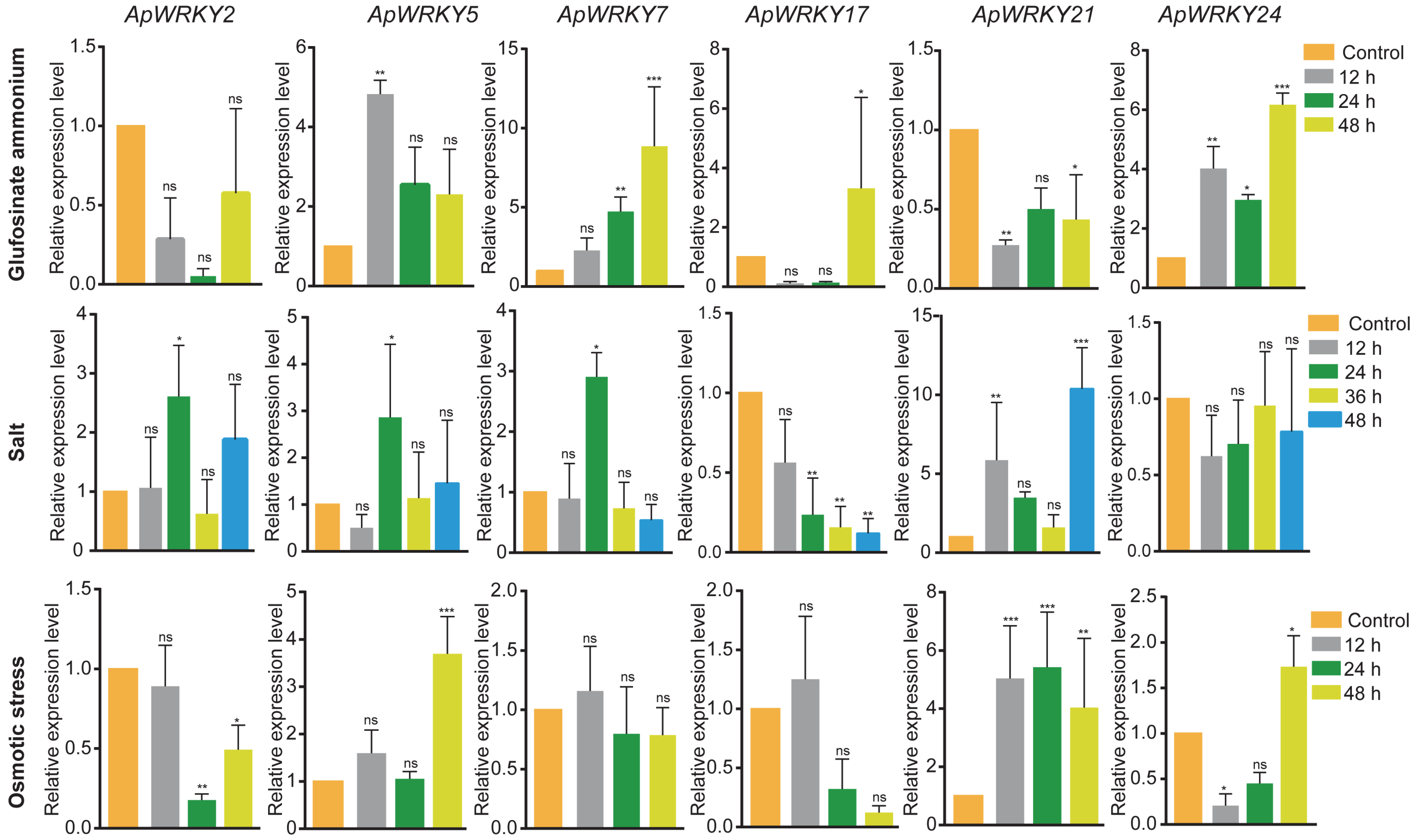
To assess the functional roles of ApWRKY genes under stress conditions, qPCR was performed on six randomly selected ApWRKY genes. Under glufosinate ammonium treatment, ApWRKY5, ApWRKY7, and ApWRKY24 were consistently upregulated. Notably, ApWRKY5 expression declined with prolonged exposure, whereas ApWRKY7 showed progressive induction (Figure 7). ApWRKY17 remained downregulated up to 24 h but increased at 48 h, while ApWRKY2 and ApWRKY21 were suppressed throughout the treatment period. During PEG6000-induced osmotic stress, ApWRKY21 was upregulated across all time points, whereas ApWRKY2 was consistently downregulated (Figure 7). ApWRKY17 expression peaked at 12 h before declining, ApWRKY7 remained low throughout, and ApWRKY5 displayed a fluctuating pattern—upregulated at 12 h, reduced at 24 h, and peaking again at 48 h. Under NaCl treatment, most genes exhibited reduced expression, except ApWRKY21, which was upregulated after 12 h and maintained induction across the treatment period (Figure 7). ApWRKY17 and ApWRKY24 were consistently downregulated, while ApWRKY2, ApWRKY5, and ApWRKY7 showed increased expression, peaking at 24 h.

3.8. ApWRKY Negatively Regulates the Herbicide Resistance of A. palmeri

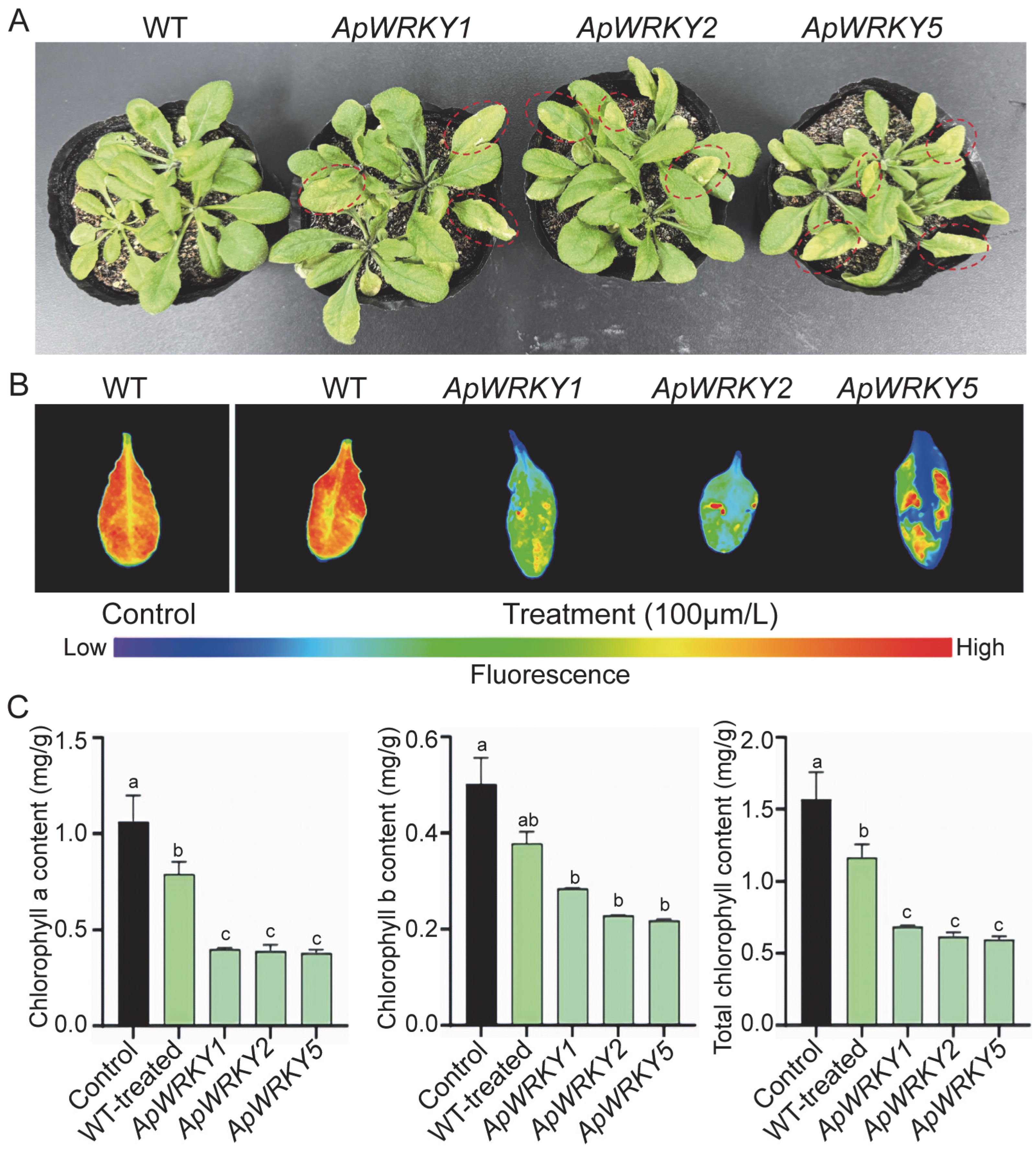
The photochemical efficiency of leaves from control and ApWRKY-GFP plants was evaluated (Figure 8A). Chlorophyll fluorescence intensity was consistently higher in the control and treated Col-0 plants compared to the ApWRKY1-GFP, ApWRKY2-GFP, and ApWRKY5-GFP treatment groups (Figure 8B). In addition, chlorophyll a, chlorophyll b, and total chlorophyll content were greater in the control plants relative to both the treated Col-0 and ApWRKY-GFP lines. Although the treated Col-0 displayed reduced chlorophyll levels compared to the control, its values remained higher than those observed in the ApWRKY-GFP groups (Figure 8C). This finding indicates that transient expression of ApWRKYs potentially compromises chlorophyll accumulation and photosynthetic efficiency in Arabidopsis.

4. Discussion

The WRKY gene family is unique to plants and plays a central role in regulating responses to diverse stress conditions [35]. Although WRKY TFs have been extensively studied in several species, including Platostoma palustre [36], Asparagus officinalis [37], and maize [38], their regulatory functions in A. palmeri have not yet been studied. In this study, 32 ApWRKY genes were identified, and their roles in response to NaCl, glufosinate ammonium, and osmotic stress were examined.
WRKY proteins have been characterized in numerous plant species, including Passiflora edulis [39], Saccharum spontaneum [40], and Vaccinium bracteatum [41]. Similar to WRKY proteins reported in these species, ApWRKY proteins displayed hydrophilic properties and variation in molecular weight and pI. Most ApWRKYs were predicted to be unstable, a feature commonly observed in WRKY proteins and associated with dynamic regulatory activity [42]. Subcellular localization analysis predicted that all ApWRKY proteins reside in the nucleus, and transient expression assays of ApWRKY2 and ApWRKY5 in N. benthamiana confirmed their nuclear localization, supporting their primary role as transcriptional regulators during stress responses in A. palmeri.
Phylogenetic comparisons with WRKY proteins from Arabidopsis (AtWRKYs), wheat (TaWRKYs), A. tuberculatus (AtuWRKYs), and A. hybridus (AhyWRKYs) showed that ApWRKYs cluster into several well-supported clades. Most ApWRKYs grouped closely with WRKYs from other Amaranthus species, reflecting conserved evolutionary relationships within the genus. A few members, including ApWRKY8, ApWRKY14, and ApWRKY17, showed closer similarity to Arabidopsis WRKYs, suggesting divergence in their evolutionary history. These relationships provide a comparative framework for future studies to understand how WRKY diversification contributes to stress-related functions in A. palmeri.
Gene duplication is a fundamental mechanism by which organisms acquire new genes and generate genetic diversity [43]. In this study, seven segmentally duplicated ApWRKY gene pairs were identified. All exhibited Ka/Ks ratios below 1, demonstrating that these genes may have undergone strong purifying selection [44]. Such evolutionary constraints suggest conservation of core WRKY functions following duplication. The estimated divergence time of approximately 96.6 Mya [45] indicates that these duplication events occurred early in the evolutionary history of A. palmeri. This timing suggests that ancient duplication events may have contributed to the diversification and specialization of ApWRKYs, enabling A. palmeri to better adapt to varying environmental stresses.
Mao et al. [46] reported 176 putative WRKY proteins in Cenchrus purpureus, with gene structures containing 0–8 introns and 1–9 exons but lacking UTRs. In the present study, ApWRKY genes similarly displayed variable exon–intron organization and also lacked annotated UTRs. Variation in gene structure is common among WRKY families and reflects the evolutionary flexibility of this transcription factor group. Although the absence of UTRs in ApWRKYs could suggest a compact gene architecture, untranslated regions are incompletely annotated in the current A. palmeri scaffold-level genome assembly, and their apparent absence may therefore reflect annotation limitations rather than true biological loss [47]. Post-transcriptional regulation typically relies on UTRs, which encode functional information recognized by regulatory factors such as miRNAs and RNA-binding proteins [48]. While miRNA-responsive elements are most commonly located in 3′UTRs, they can also occur in 5′UTRs or CDS [49,50]. Liu et al. [51] demonstrated that g UTRs lacking gene were targeted by a greater number of miRNAs compared to those with UTRs, suggesting alternative targeting mechanisms. Consistent with this, the present analysis predicted that seven ApWRKY genes are targeted by 93 miRNAs. These findings imply that ApWRKYs may undergo non-canonical miRNA regulation, with binding sites located within CDS or intronic regions. Even with the limitations of the current genome annotation, the extensive predicted miRNA targeting suggests that ApWRKYs could undergo rapid post-transcriptional modulation under stress, potentially contributing to ROS detoxification and stress resilience [52].
WRKY TFs are widely recognized as central regulators of plant defense signaling [2]. In this study, qPCR analysis revealed that ApWRKY5, ApWRKY7, and ApWRKY524 were consistently induced under glufosinate ammonium exposure, suggesting their potential involvement in regulating oxidative stress pathways [53]. In contrast, the sustained suppression of ApWRKY2 and ApWRKY21 indicates that some ApWRKYs may act in opposing regulatory roles. ApWRKY17 exhibited delayed induction, which may reflect involvement in later phases of stress response or recovery. Under NaCl- and PEG6000-induced osmotic stress, ApWRKY21 was upregulated, while ApWRKY2, ApWRKY5, and ApWRKY7 showed coordinated induction during the mid-phase of salt exposure. These patterns suggest that ApWRKYs respond at different stages of stress progression, with some activated rapidly and others contributing to longer-term adjustment. Salinity is a major abiotic stress that alters soil chemistry and reduces crop productivity [54]. Previous research has consistently demonstrated WRKY involvement in plant growth and stress tolerance, with both up- and down-regulation observed under salt stress [36,37,55]. For example, OsWRKY47 enhances drought and osmotic stress tolerance in rice [56], while GhWRKY genes in cotton exhibit differential regulation under osmotic stress [57]. Similarly, MeWRKY18 in cassava showed strong induction across all stress treatments, peaking under osmotic stress [58]. Overexpression of MdWRKY70L in apple improved drought and salt tolerance in transgenic tobacco [59]; MdWRKY30 enhanced salt tolerance in Arabidopsis and apple callus [60]; and HbWRKY83 and IbWRKY2 increased tolerance to salt and drought in Arabidopsis by promoting ROS scavenging [61,62]. Likewise, AhWRKY75 in peanut conferred salt tolerance by boosting ROS elimination and photosynthetic efficiency [63].
Glufosinate acts by inhibiting glutamine synthetase, which leads to ammonium accumulation, oxidative stress, and a rapid decline in photosynthetic activity. This inhibition manifests as reduced chlorophyll fluorescence and diminished photochemical efficiency [64]. In A. palmeri, glufosinate quickly suppresses both photosynthetic rate and stomatal conductance [65], while earlier studies in barley demonstrated that phosphinothricin significantly lowered chlorophyll fluorescence [66]. Similarly, Arabidopsis mutants with impaired photosystem regulation often exhibit altered chlorophyll fluorescence and PSII efficiency. For example, the Low Chlorophyll Fluorescence 1 (LCF1) mutant shows reduced fluorescence but modified PSII operating efficiency [67]. WRKY TFs are recognized as key regulators of stress responses, frequently repressing photosynthetic gene expression and accelerating chlorophyll degradation under stress conditions. In citrus, CrWRKY42 was shown to positively regulate chlorophyll breakdown [36]. Consistent with this, transient overexpression of ApWRKY1/2/5-GFP in A. thaliana resulted in the lowest chlorophyll fluorescence and pigment levels following glufosinate exposure. These observations suggest that ApWRKYs may influence photosynthesis-related stress responses. However, because these assays were performed in a heterologous system using transient expression, further functional validation in A. palmeri will be required to determine their comparable roles under herbicide stress in their native cells.

5. Conclusions

This study systematically characterized the WRKY TF family in A. palmeri and examined its roles in abiotic stress responses. A total of 32 ApWRKY genes exhibiting variability in exon–intron organization were identified. Subcellular localization analysis confirmed that ApWRKY2 and ApWRKY5 are targeted to the nucleus, consistent with their function as transcriptional regulators. Chromosomal mapping revealed an uneven distribution of ApWRKYs across the A. palmeri genome and found that gene duplication events contributed to their functional diversification. Expression of ApWRKYs showed marked transcriptional changes under glufosinate ammonium, NaCl, and PEG-induced osmotic stress, indicating that members of this family may participate in multiple layers of abiotic stress signaling. Transient overexpression of ApWRKY1, ApWRKY2, and ApWRKY5 in A. thaliana affected chlorophyll fluorescence under glufosinate treatment, suggesting a possible link between ApWRKY activity and photosynthesis-related stress responses. Further studies are needed to characterize the specific regulatory mechanisms governing ApWRKY gene expression under herbicide and abiotic stress conditions. The findings establish ApWRKYs as central regulators of stress adaptation in A. palmeri and provide insights for future studies and horticultural crop improvement strategies.

Supplementary Materials

The following supporting information can be downloaded at https://www.mdpi.com/article/10.3390/horticulturae12030314/s1: Supplementary File S1: Primers used in this study; Supplementary File S2: Characteristic features of the ApWRKY proteins; Supplementary File S3: Conserved motifs consensus of ApWRKY proteins; Supplementary File S4: Duplication events, Ka/Ks ratio, and divergence time of ApWRKY genes; Supplementary File S5: MicroRNA-ApWRKYs target analysis.

Author Contributions

Conceptualization, methodology, validation, formal analysis, investigation, data curation, writing—original draft preparation, writing—review and editing, X.L. and D.B.; conceptualization, methodology, resources, writing—review and editing, supervision, funding acquisition, G.Z., Y.W., W.C., Y.L. and D.M. All authors have read and agreed to the published version of the manuscript.

Funding

This research was funded by National Key R&D Program of China (2024YFC2607600) and Humanities and Social Sciences Research Program funded by Ministry of Education of the People’s Republic of China (25YJAZH180), the Natural Science Funds of Hubei Province of China (2024AFB1015), Open Project Program of State Key Laboratory for Biology of Plant Disease and Insect Pests (SKLOF202313), Open Project Program of Key Laboratory of Integrated Pest Management on Crop in Central China, Ministry of Agriculture/Hubei Province Key Laboratory for Control of Crop Diseases, Pest and Weeds (2023ZTSJJ2), and Open Program of Hubei Key Laboratory of Waterlogging Disaster and Agricultural Use of Wetland (KFG202407).

Data Availability Statement

The data presented in this study are available upon request from the corresponding authors. The data are not publicly available due to privacy restrictions.

Conflicts of Interest

The authors declare no conflicts of interest.

References

  1. Todeschini, A.L.; Georges, A.; Veitia, R.A. Transcription factors: Specific DNA binding and specific gene regulation. Trends Genet. 2014, 30, 211–219. [Google Scholar] [CrossRef]
  2. Jiang, J.; Ma, S.; Ye, N.; Jiang, M.; Cao, J.; Zhang, J. WRKY transcription factors in plant responses to stresses. J. Integr. Plant Biol. 2017, 59, 86–101. [Google Scholar] [CrossRef]
  3. Chen, X.; Li, C.; Wang, H.; Guo, Z. WRKY transcription factors: Evolution, binding, and action. Phytopathol. Res. 2019, 1, 13. [Google Scholar] [CrossRef]
  4. Ishiguro, S.; Nakamura, K. Characterization of a cDNA encoding a novel DNA-binding protein, SPF1, that recognizes SP8 sequences in the 5’ upstream regions of genes coding for sporamin and beta-amylase from sweet potato. Mol. Gen. Genet. 1994, 244, 563–571. [Google Scholar] [CrossRef]
  5. Goyal, P.; Devi, R.; Verma, B.; Hussain, S.; Arora, P.; Tabassum, R.; Gupta, S. WRKY transcription factors: Evolution, regulation, and functional diversity in plants. Protoplasma 2023, 260, 331–348. [Google Scholar] [CrossRef] [PubMed]
  6. Phukan, U.J.; Jeena, G.S.; Shukla, R.K. WRKY Transcription Factors: Molecular Regulation and Stress Responses in Plants. Front. Plant Sci. 2016, 7, 760. [Google Scholar] [CrossRef] [PubMed]
  7. Liu, F.; Xi, M.; Liu, T.; Wu, X.; Ju, L.; Wang, D. The central role of transcription factors in bridging biotic and abiotic stress responses for plants’ resilience. New Crops 2024, 1, 100005. [Google Scholar] [CrossRef]
  8. Ma, J.; Wang, Y.; Hong, Y.; Zhao, M.; Ma, X.; Liu, J.; Chai, W.; Zhao, W.; Sun, L.; Yang, R.; et al. SlWRKY55 coordinately acts with SlVQ11 to enhance tomato thermotolerance by activating SlHsfA2. Plant J. 2024, 119, 2904–2918. [Google Scholar] [CrossRef]
  9. Yu, Y.; He, L.; Wu, Y. Wheat WRKY transcription factor TaWRKY24 confers drought and salt tolerance in transgenic plants. Plant Physiol. Biochem. 2023, 205, 108137. [Google Scholar] [CrossRef]
  10. Dai, W.; Wang, M.; Gong, X.; Liu, J.H. The transcription factor FcWRKY40 of Fortunella crassifolia functions positively in salt tolerance through modulation of ion homeostasis and proline biosynthesis by directly regulating SOS2 and P5CS1 homologs. New Phytol. 2018, 219, 972–989. [Google Scholar] [CrossRef]
  11. Tang, J.; Tian, X.; Mei, E.; He, M.; Gao, J.; Yu, J.; Xu, M.; Liu, J.; Song, L.; Li, X.; et al. WRKY53 negatively regulates rice cold tolerance at the booting stage by fine-tuning anther gibberellin levels. Plant Cell. 2022, 34, 4495–4515. [Google Scholar] [CrossRef]
  12. Zhou, Q.; Tian, A.; Zou, H.; Xie, Z.; Lei, G.; Huang, J.; Wang, C.; Wang, H.; Zhang, J.; Chen, S. Soybean WRKY-type transcription factor genes, GmWRKY13, GmWRKY21, and GmWRKY54, confer differential tolerance to abiotic stresses in transgenic Arabidopsis plants. Plant Biotechnol. J. 2008, 6, 486–503. [Google Scholar] [CrossRef]
  13. Wu, X.; Shiroto, Y.; Kishitani, S.; Ito, Y.; Toriyama, K. Enhanced heat and drought tolerance in transgenic rice seedlings overexpressing OsWRKY11 under the control of HSP101 promoter. Plant Cell Rep. 2009, 28, 21–30. [Google Scholar] [CrossRef]
  14. Qiu, Y.; Yu, D. Over-expression of the stress-induced OsWRKY45 enhances disease resistance and drought tolerance in Arabidopsis. Environ. Exp. Bot. 2008, 65, 35–47. [Google Scholar] [CrossRef]
  15. Jiang, Y.; Deyholos, M.K. Functional characterization of Arabidopsis NaCl-inducible WRKY25 and WRKY33 transcription factors in abiotic stresses. Plant Mol. Biol. 2008, 69, 91–105. [Google Scholar] [CrossRef]
  16. Li, S.; Fu, Q.; Huang, W.; Yu, D. Functional analysis of an Arabidopsis transcription factor WRKY25 in heat stress. Plant Cell Rep. 2009, 28, 683–693. [Google Scholar] [CrossRef] [PubMed]
  17. Zou, X.; Seemann, J.R.; Neuman, D.; Shen, Q.J. A WRKY gene from creosote bush encodes an activator of the abscisic acid signaling pathway. J. Biol. Chem. 2004, 279, 55770–55779. [Google Scholar] [CrossRef] [PubMed]
  18. Xie, Z.; Zhang, Z.L.; Zou, X.; Huang, J.; Ruas, P.; Thompson, D.; Shen, Q.J. Annotations and functional analyses of the rice WRKY gene superfamily reveal positive and negative regulators of abscisic acid signaling in aleurone cells. Plant Physiol. 2005, 137, 176–189. [Google Scholar] [CrossRef] [PubMed]
  19. Ward, S.M.; Webster, T.M.; Steckel, L.E. Palmer amaranth (Amaranthus palmeri): A review. Weed Technol. 2013, 27, 12–27. [Google Scholar] [CrossRef]
  20. Bensch, C.N.; Horak, M.J.; Peterson, D. Interference of redroot pigweed (Amaranthus retroflexus), Palmer amaranth (A. palmeri), and common waterhemp (A. rudis) in soybean. Weed Sci. 2003, 51, 37–43. [Google Scholar] [CrossRef]
  21. King, T.A.; Norsworthy, J.K.; Butts, T.R.; Fernandes, S.B.; Drescher, G.L.; Avent, T.H. Effect of Palmer amaranth (Amaranthus palmeri) time of emergence on furrow-irrigated rice yields and weed seed production. Weed Sci. 2025, 73, e21. [Google Scholar] [CrossRef]
  22. Chen, C.; Wu, Y.; Li, J.; Wang, X.; Zeng, Z.; Xu, J.; Liu, Y.; Feng, J.; Chen, H.; He, Y.; et al. TBtools-II: A “one for all, all for one” bioinformatics platform for biological big-data mining. Mol. Plant 2023, 16, 1733–1742. [Google Scholar] [CrossRef]
  23. Wang, Q.; Wang, M.; Zhang, X.; Hao, B.; Kaushik, S.K.; Pan, Y. WRKY gene family evolution in Arabidopsis thaliana. Genetica 2011, 139, 973–983. [Google Scholar] [CrossRef]
  24. Ning, P.; Liu, C.; Kang, J.; Lv, J. Genome-wide analysis of WRKY transcription factors in wheat (Triticum aestivum L.) and differential expression under water deficit condition. PeerJ 2017, 5, e3232. [Google Scholar] [CrossRef]
  25. Bai, Y.; Sunarti, S.; Kissoudis, C.; Visser, R.G.F.; van der Linden, C.G. The Role of Tomato WRKY Genes in Plant Responses to Combined Abiotic and Biotic Stresses. Front. Plant Sci. 2018, 9, 801. [Google Scholar] [CrossRef]
  26. Singh, A.; Mahato, A.K.; Maurya, A.; Rajkumar, S.; Singh, A.K.; Bhardwaj, R.; Kaushik, S.K.; Kumar, S.; Gupta, V.; Singh, K. Amaranth Genomic Resource Database: An integrated database resource of Amaranth genes and genomics. Front. Plant Sci. 2023, 14, 1203855. [Google Scholar] [CrossRef]
  27. Tamura, K.; Stecher, G.; Kumar, S. MEGA11: Molecular Evolutionary Genetics Analysis Version 11. Mol. Biol. Evol. 2021, 38, 3022–3027. [Google Scholar] [CrossRef] [PubMed]
  28. Letunic, I.; Bork, P. Interactive Tree of Life (iTOL) v6: Recent updates to the phylogenetic tree display and annotation tool. Nucleic Acids Res. 2024, 52, W78–W82. [Google Scholar] [CrossRef] [PubMed]
  29. Bailey, T.L.; Boden, M.; Buske, F.A.; Frith, M.; Grant, C.E.; Clementi, L.; Ren, J.; Li, W.W.; Noble, W.S. MEME SUITE: Tools for motif discovery and searching. Nucleic Acids Res. 2009, 37, W202–W208. [Google Scholar] [CrossRef] [PubMed]
  30. Lescot, M.; Déhais, P.; Thijs, G.; Marchal, K.; Moreau, Y.; Van de Peer, Y.; Rouzé, P.; Rombauts, S. PlantCARE, a database of plant cis-acting regulatory elements and a portal to tools for in silico analysis of promoter sequences. Nucleic Acids Res. 2002, 30, 325–327. [Google Scholar] [CrossRef]
  31. Jiang, W.; Geng, Y.; Liu, Y.; Chen, S.; Cao, S.; Li, W.; Chen, H.; Ma, D.; Yin, J. Genome-wide identification and characterization of SRO gene family in wheat: Molecular evolution and expression profiles during different stresses. Plant Physiol. Biochem. 2020, 154, 590–611. [Google Scholar] [CrossRef]
  32. Dai, X.; Zhuang, Z.; Zhao, P.X. psRNATarget: A plant small RNA target analysis server (2017 release). Nucleic Acids Res. 2018, 46, W49–W54. [Google Scholar] [CrossRef]
  33. Zhang, Y.; Chen, M.; Siemiatkowska, B.; Toleco, M.R.; Jing, Y.; Strotmann, V.; Zhang, J.; Stahl, Y.; Fernie, A.R. A Highly Efficient Agrobacterium-Mediated Method for Transient Gene Expression and Functional Studies in Multiple Plant Species. Plant Commun. 2020, 1, 100028. [Google Scholar] [CrossRef]
  34. Ren, J.; Song, M.; Bimpong, D.; Wang, F.; Chen, W.; Ma, D.; Du, L. Genomic and Functional Characterization of Acetolactate Synthase (ALS) Genes in Stress Adaptation of the Noxious Weed Amaranthus palmeri. Plants 2025, 14, 3088. [Google Scholar] [CrossRef]
  35. Zou, X.; Dong, C.; Liu, H.-t.; Gao, Q. Genome-wide characterization and expression analysis of WRKY family genes during development and resistance to Colletotrichum fructicola in cultivated strawberry (Fragaria×ananassa Duch). J. Integr. Agric. 2022, 21, 1658–1672. [Google Scholar]
  36. Chen, H.; Ji, H.; Huang, W.; Zhang, Z.; Zhu, K.; Zhu, S.; Chai, L.; Ye, J.; Deng, X. Transcription factor CrWRKY42 coregulates chlorophyll degradation and carotenoid biosynthesis in citrus. Plant Physiol. 2024, 195, 728–744. [Google Scholar] [CrossRef] [PubMed]
  37. Chen, J.; Hou, S.; Zhang, Q.; Meng, J.; Zhang, Y.; Du, J.; Wang, C.; Liang, D.; Guo, Y. Genome-Wide Identification and Analysis of the WRKY Gene Family in Asparagus officinalis. Genes 2023, 14, 1704. [Google Scholar] [CrossRef]
  38. Hu, W.; Ren, Q.; Chen, Y.; Xu, G.; Qian, Y. Genome-wide identification and analysis of WRKY gene family in maize provide insights into regulatory network in response to abiotic stresses. BMC Plant Biol. 2021, 21, 427. [Google Scholar] [CrossRef] [PubMed]
  39. Ma, F.; Zhou, H.; Yang, H.; Huang, D.; Xing, W.; Wu, B.; Li, H.; Hu, W.; Song, S.; Xu, Y. WRKY transcription factors in passion fruit analysis reveals key PeWRKYs involved in abiotic stress and flavonoid biosynthesis. Int. J. Biol. Macromol. 2024, 256, 128063. [Google Scholar] [CrossRef] [PubMed]
  40. Li, Z.; Hua, X.; Zhong, W.; Yuan, Y.; Wang, Y.; Wang, Z.; Ming, R.; Zhang, J. Genome-Wide Identification and Expression Profile Analysis of WRKY Family Genes in the Autopolyploid Saccharum spontaneum. Plant Cell Physiol. 2020, 61, 616–630. [Google Scholar] [CrossRef]
  41. Du, H.; Zhou, J.; Liang, X.; Chen, Y.; Liu, X.; Zhen, C.; Zhang, H.; Xiao, J.; Gao, X. Genome-Wide Identification and Expression Analysis of the WRKY Gene Families in Vaccinium bracteatum. Int. J. Mol. Sci. 2025, 26, 7835. [Google Scholar] [CrossRef]
  42. Li, S.; Khoso, M.A.; Xu, H.; Zhang, C.; Liu, Z.; Wagan, S.; Dinislam, K.; Liu, L. WRKY Transcription Factors (TFs) as Key Regulators of Plant Resilience to Environmental Stresses: Current Perspective. Agronomy 2024, 14, 2421. [Google Scholar] [CrossRef]
  43. Song, S.; Hao, L.; Zhao, P.; Xu, Y.; Zhang, H.; Liu, N. Genome-wide identification, expression profiling and evolutionary analysis of auxin response factor gene family in potato (Solanum tuberosum group phureja). Sci. Rep. 2019, 9, 1755. [Google Scholar] [CrossRef]
  44. Zhang, C.; Wang, J.; Long, M.; Fan, C. gKaKs: The pipeline for genome-level Ka/Ks calculation. Bioinformatics 2013, 29, 645–646. [Google Scholar] [CrossRef]
  45. Bohutínská, M.; Peichel, C.L. Divergence time shapes gene reuse during repeated adaptation. Trends Ecol. Evol. 2024, 39, 396–407. [Google Scholar] [CrossRef]
  46. Mao, C.; Zhang, J.; Zhang, Y.; Wang, B.; Li, W.; Wang, X.; Huang, L. Genome-wide analysis of the WRKY gene family and their response to low-temperature stress in elephant grass. BMC Genom. 2024, 25, 947. [Google Scholar] [CrossRef]
  47. Liu, X.; Sun, M.; Gao, A.X.; Ledesma-Amaro, R.; Fang, Q.; Yang, Y.; Bai, Z. Leaderless Bicistronic Design for Precise and Reliable Control of Gene Expression in Corynebacterium glutamicum. ACS Synth. Biol. 2023, 12, 2157–2167. [Google Scholar] [CrossRef]
  48. Mayya, V.K.; Duchaine, T.F. Ciphers and Executioners: How 3′-Untranslated Regions Determine the Fate of Messenger RNAs. Front. Genet. 2019, 10, 6. [Google Scholar] [CrossRef]
  49. Diener, C.; Keller, A.; Meese, E. The miRNA-target interactions: An underestimated intricacy. Nucleic Acids Res. 2024, 52, 1544–1557. [Google Scholar] [CrossRef]
  50. Lytle, J.R.; Yario, T.A.; Steitz, J.A. Target mRNAs are repressed as efficiently by microRNA-binding sites in the 5′ UTR as in the 3′ UTR. Proc. Natl. Acad. Sci. USA 2007, 104, 9667–9672. [Google Scholar] [CrossRef]
  51. Liu, Q.; Zhao, Y.; Wang, Y.; Wei, Q.; Zhang, Y.; Li, S. Comprehensive genome-wide analysis of bHLH family genes in Nymphaea colorata and molecular characterization of NcTT8. BMC Plant Biol. 2025, 25, 878. [Google Scholar] [CrossRef]
  52. Zhu, H.; Chen, C.; Zeng, J.; Yun, Z.; Liu, Y.; Qu, H.; Jiang, Y.; Duan, X.; Xia, R. MicroRNA528, a hub regulator modulating ROS homeostasis via targeting of a diverse set of genes encoding copper-containing proteins in monocots. New Phytol. 2020, 225, 385–399. [Google Scholar] [CrossRef]
  53. Takano, H.K.; Beffa, R.; Preston, C.; Westra, P.; Dayan, F.E. Reactive oxygen species trigger the fast action of glufosinate. Planta 2019, 249, 1837–1849. [Google Scholar] [CrossRef]
  54. Ashraf, M.; Munns, R. Evolution of Approaches to increase the salt tolerance of crops. Crit. Rev. Plant Sci. 2022, 41, 128–160. [Google Scholar] [CrossRef]
  55. Nan, H.; Lin, Y.L.; Liu, J.; Huang, H.; Li, W.; Gao, L.-Z. Genome-Wide Analysis of the WRKY Transcription Factor Gene Family and Their Response to Salt Stress in Rubber Tree. Trop. Plant Biol. 2021, 14, 22–33. [Google Scholar] [CrossRef]
  56. Raineri, J.; Wang, S.; Peleg, Z.; Blumwald, E.; Chan, R.L. The rice transcription factor OsWRKY47 is a positive regulator of the response to water deficit stress. Plant Mol. Biol. 2015, 88, 401–413. [Google Scholar] [CrossRef]
  57. Zhou, L.; Wang, N.N.; Kon, L.; Gong, S.Y.; Li, Y.; Li, X.B. Molecular characterization of 26 cotton WRKY genes that are expressed differentially in tissues and are induced in seedlings under high salinity and osmotic stress. Plant Cell Tiss. Organ. Cult. 2014, 119, 141–156. [Google Scholar] [CrossRef]
  58. Wei, Y.; Shi, H.; Xia, Z.; Tie, W.; Ding, Z.; Yan, Y.; Wang, W.; Hu, W.; Li, K. Genome-Wide Identification and Expression Analysis of the WRKY Gene Family in Cassava. Front. Plant Sci. 2016, 7, 25. [Google Scholar] [CrossRef]
  59. Qin, Y.; Yu, H.; Cheng, S.; Liu, Z.; Yu, C.; Zhang, X.; Su, X.; Huang, J.; Shi, S.; Zou, Y.; et al. Genome-Wide Analysis of the WRKY Gene Family in Malus domestica and the Role of MdWRKY70L in Response to Drought and Salt Stresses. Genes 2022, 13, 1068. [Google Scholar] [CrossRef]
  60. Dong, Q.; Zheng, W.; Duan, D.; Huang, D.; Wang, Q.; Liu, C.; Li, C.; Gong, X.; Li, C.; Mao, K.; et al. MdWRKY30, a group IIa WRKY gene from apple, confers tolerance to salinity and osmotic stresses in transgenic apple callus and Arabidopsis seedlings. Plant Sci. 2022, 299, 110611. [Google Scholar] [CrossRef]
  61. Kang, G.; Yan, D.; Chen, X.; Li, Y.; Yang, L.; Zeng, R. Molecular characterization and functional analysis of a novel WRKY transcription factor HbWRKY83 possibly involved in rubber production of Hevea brasiliensis. Plant Physiol. Biochem. 2020, 155, 483–493. [Google Scholar] [CrossRef]
  62. Zhu, H.; Zhou, Y.; Zhai, H.; He, S.; Zhao, N.; Liu, Q. A novel sweet potato WRKY transcription factor, IbWRKY2, positively regulates drought and salt tolerance in transgenic Arabidopsis. Biomolecules 2020, 10, 506. [Google Scholar] [CrossRef]
  63. Zhu, H.; Jiang, Y.; Guo, Y.; Huang, J.; Zhou, M.; Tang, Y.; Sui, J.; Wang, J.; Qiao, L. A novel salt inducible WRKY transcription factor gene, AhWRKY75, confers salt tolerance in transgenic peanut. Plant Physiol. Biochem. 2021, 160, 175–183. [Google Scholar] [CrossRef]
  64. Takano, H.K.; Beffa, R.; Preston, C.; Westra, P.; Dayan, F.E. A novel insight into the mode of action of glufosinate: How reactive oxygen species are formed. Photosynth. Res. 2020, 144, 361–372. [Google Scholar] [CrossRef]
  65. Coetzer, E.; Al-Khatib, K. Photosynthetic inhibition and ammonium accumulation in Palmer amaranth after glufosinate application. Weed Sci. 2001, 49, 454–459. [Google Scholar] [CrossRef]
  66. Lacuesta, M.; Munoz-Rueda, A.; Gonzalez-Muruá, C.; Sivak, M.N. Effect of phosphlnothricin (glufosinate) on photosynthesis and chlorophyll fluorescence emission by barley leaves illuminated under photorespiratory and non-photorespiratory conditions. J. Exp. Botany 1992, 42, 159–165. [Google Scholar] [CrossRef]
  67. van Tol, N.; Rolloos, M.; Augustijn, D.; Alia, A.; de Groot, H.J.; Hooykaas, P.J.J.; van der Zaal, B.J. An Arabidopsis mutant with high operating efficiency of Photosystem II and low chlorophyll fluorescence. Sci. Rep. 2017, 7, 3314. [Google Scholar] [CrossRef]
Figure 1. Structural features and conserved motifs of ApWRKYs. Exon-intron structural architecture of ApWRKY genes (A). Conserved motifs of the ApWRKY proteins (B).
Horticulturae 12 00314 g001
Figure 2. Cis-acting regulatory elements located 2 kb upstream of the ApWRKY genes promoter region.
Horticulturae 12 00314 g002
Figure 3. Evolutionary tree of WRKY proteins in A. palmeri, A. tuberculatus, A. hybridus, A. thaliana, and Triticum aestivum. The nodes in the tree were tested using bootstrap analysis with 1000 replicates, with the Jones–Taylor–Thornton (JTT) model, uniform rates, and pairwise deletion.
Horticulturae 12 00314 g003
Figure 4. Chromosome mapping and duplication events of ApWRKY genes. The scaffold names are indicated in black, while the ApWRKYs are in red. Scaffold lengths are represented in megabases (Mb) (A). The duplication events of the ApWRKY genes across the A. palmeri genome scaffolds (B).
Horticulturae 12 00314 g004
Figure 5. Protein–protein interactions and the miRNA-ApWRKY network. The network illustrating protein–protein interactions among the ApWRKY proteins according to the Arabidopsis genome in the STRING database (A). The interaction network of the miRNA-ApWRKY network (B).
Horticulturae 12 00314 g005
Figure 6. Subcellular localization of the ApWRKY2-GFP and ApWRKY5-GFP fusion proteins and empty pCAMBIA1302-GFP vector through transient expression in Nicotiana benthamiana.
Horticulturae 12 00314 g006
Figure 7. Expression levels of ApWRKY genes under glufosinate ammonium, salt, and PEG6000-induced osmotic stress treatments. Two-way ANOVA significance levels are represented as p < 0.0013 (*), p = 0.0001 (**), p < 0.0001 (***), and ns (not significant).
Horticulturae 12 00314 g007
Figure 8. Chlorophyll fluorescence and content of ApWRKYs transiently expressed Arabidopsis ApWRKYs. Glufosinate ammonium-treated Col-0 and ApWRKYs-GFP plants (A). Chlorophyll fluorescence of control and glufosinate ammonium-treated Col-0 and ApWRKYs-GFP (B). Chlorophyll content of glufosinate ammonium-treated Col-0 and ApWRKYs-GFP. Significance levels are represented by lower-case letters indicating significant difference (p < 0.05) among the mean values (C).
Horticulturae 12 00314 g008
Disclaimer/Publisher’s Note: The statements, opinions and data contained in all publications are solely those of the individual author(s) and contributor(s) and not of MDPI and/or the editor(s). MDPI and/or the editor(s) disclaim responsibility for any injury to people or property resulting from any ideas, methods, instructions or products referred to in the content.