Article

A Cryopreservation Strategy for Brassicaceae Pollen in Hybrid Breeding

College of Horticulture Science and Engineering, Shandong Agricultural University, Tai’an 271018, China
*
Authors to whom correspondence should be addressed.
These authors contributed equally to this work.
Horticulturae 2026, 12(3), 315; https://doi.org/10.3390/horticulturae12030315
Submission received: 29 January 2026 / Revised: 26 February 2026 / Accepted: 5 March 2026 / Published: 6 March 2026
(This article belongs to the Section Genetics, Genomics, Breeding, and Biotechnology (G2B2))

Abstract

In Brassicaceae cross-breeding, asynchronous flowering and geographic separation often cause pollen shortages that severely constrain hybridization. Although pollen cryopreservation offers an effective solution, Brassicaceae pollen is typically short-lived due to its tricellular structure, thin exine, and high desiccation sensitivity, necessitating optimized cryopreservation protocols. In this study, we optimized a pollen cryopreservation protocol for three representatives Brassicaceae species: Brassica rapa L. (Chinese cabbage), Brassica oleracea L. (cabbage), and Barbarea vulgaris R. Br. (European rockcress). An in vitro pollen germination system was optimized to reliably assess pollen viability before and after cryopreservation. Key parameters including pollen collection time, drying duration, freezing procedure, and thawing conditions were systematically evaluated. The optimal protocol comprised: pollen collection at 8:00–10:00, drying at 28 °C and 2% relative humidity for 1 h, precooling at −20 °C for 30 min, storage at −80 °C, and thawing under running tap water (ca. 25 °C). Following 30-day cryopreservation, pollen maintained high germination rates (75.19% for Brassica rapa L., 71.18% for Brassica oleracea L., 80.33% for Barbarea vulgaris) and produced comparable silique development, seed quality, and seed germination rates to those of fresh pollen following pollination. This study established a reliable and efficient cryopreservation system for Brassicaceae pollen that effectively overcomes asynchronous flowering and geographic barriers in hybridization, thereby improving breeding efficiency and facilitating germplasm innovation for Brassicaceae crops.

1. Introduction

The Brassicaceae family comprises numerous economically important crops cultivated worldwide as vegetables, oilseeds, and condiments [1]. Brassica rapa L. and Brassica oleracea L. are major vegetable crops with high economic value, while their wild relative Barbarea vulgaris R. Br. produces insect-resistant secondary metabolites and represents a valuable reservoir of stress-resistance genes [2]. Through distant hybridization, stress-tolerance genes from Brassica oleracea L. and Barbar vulgaris R. Br. are introgressed into Brassica rapa L., thereby expanding its genetic base and supporting varietal improvement. However, Brassicaceae breeding is often constrained by asynchronous flowering among parental lines [3] and the limited utilization of geographically distant germplasm [4].
Effective pollen storage enables hybridization between different genera, species, and genotypes, making it a key strategy for overcoming asynchronous flowering, conserving genetic resources, and improving breeding efficiency [5,6]. For example, in tropical forage grasses of the genus Paspalum, natural flowering asynchrony among parental lines has long restricted hybridization. Cryopreservation of pollen from species such as P. atratum preserves viability, supports pollen tube growth, and significantly improves hybridization success [7].
Pollen cryopreservation plays a critical role in conserving genetic diversity. Studies in Psidium species show that cryopreservation maintains pollen morphology, viability, and fertilization capacity in both in vitro and in vivo assays, providing an effective means of conserving the haploid gene pool [8]. Similar outcomes have been reported in crops such as Luffa [9]. Advances in ultra-low temperature cryopreservation further enable pollen to function as a stable genetic unit suitable for long-distance transport. Validation studies demonstrate that cryopreserved soybean pollen retains hybridization success rates comparable to those of fresh pollen post-shipping [10], substantially extending the geographic range of cross-breeding programs and facilitating cross-regional germplasm exchange.
Brassicaceae pollen is characterized by a tricellular structure, a thin exine, and high sensitivity to desiccation, resulting in a short lifespan and difficulty in in vitro preservation [11]. Therefore, developing efficient pollen storage techniques is essential to overcome these breeding constraints [12]. Storage under low-temperature, low-oxygen, and low-humidity conditions is generally considered favorable for long-term pollen preservation [13,14,15]. Among available approaches, cryopreservation at ultra-low temperatures offers an effective strategy for maintaining pollen viability over extended periods [16,17,18]. For example, soybean pollen retained approximately 90% viability after storage at −196 °C or −80 °C, with fruit set comparable to that obtained using fresh pollen [4]. Similarly, oil palm pollen preserved by cryopreservation maintained viability and germination capacity comparable to fresh pollen even after 23 years of storage [19], demonstrating the broad applicability of this method. Pollen moisture content is widely recognized as a critical determinant of post-freezing survival [9,20]. Studies, including those by Oreto Fayos et al., demonstrate that controlled dehydration prior to storage is essential for maintaining viability at −20 °C and −80 °C. Appropriately dehydrated pollen stored at −20 °C remained suitable for pollination throughout an entire flowering season [21]. At optimal moisture levels, increased intracellular viscosity facilitates vitrification during freezing and thawing, thereby reducing lethal intracellular ice crystal formation [22]. Consistent with this mechanism, cherry pollen stored for one year at −80 °C or −20 °C showed no significant differences in fruit set compared with fresh pollen [23].
Pollen storage efficiency is commonly evaluated through changes in pollen quality, with viability serving as a primary indicator. In vitro germination assays using defined culture media are widely employed to assess pollen viability [24,25,26,27,28,29,30]. Pollen germination and tube growth are influenced by medium composition, including sucrose concentration [31,32,33], boric acid [34], and micronutrients such as calcium ions [35,36,37,38], as well as environmental factors such as temperature [39,40], light [41], pH, and incubation duration [42].
Despite the proven potential of cryopreservation to extend pollen viability, optimal storage parameters for Brassicaceae crops remain poorly defined. This study aimed to establish a high-efficiency in vitro conservation strategy that maximally preserves pollen bioactivity. The resulting cryopreservation protocol provides a robust technical foundation for accelerating breeding progress across the Brassicaceae family.

2. Materials and Methods

2.1. Plant Materials and Pollen Collection

Plant materials included Chinese cabbage (Brassica rapa L.), cabbage (Brassica oleracea L.), and European rockcress (Barbarea vulgaris R. Br.). For each species, thirty healthy individual plants with consistent growth vigor were selected as experimental materials, and cultivation procedures were largely identical among species, except for vernalization requirements. Uniform, plump seeds were selected, soaked in water at 50 °C for 2 h, and germinated at room temperature.
Chinese cabbage seedlings at the 3–4-true-leaf stage were vernalized at 4 °C for one month. Cabbage and European rockcress seedlings were vernalized at 4 °C for three months after reaching the 6–7-true-leaf stage. After vernalization, cabbage and European rockcress seedlings were transplanted directly to the experimental field.
All plants were grown at the Horticultural Experimental Station of Shandong Agricultural University under standard water and fertilizer management. In the greenhouse, natural light was supplemented with artificial illumination; temperature was maintained at 20–25 °C and relative humidity at 60–70%.
On the day of anthesis, between 8:00 and 10:00, flower buds near anthesis or newly opened flowers were collected. Individual flowers with pedicels were placed in sealed containers containing moist filter paper to prevent dehydration and immediately transported to the laboratory. Flowers were evenly arranged in clean Petri dishes and incubated at 25 °C for 10–20 min to allow complete anther dehiscence. Released pollen grains were gently brushed onto acid-washed paper using a sterile fine brush and transferred into pre-dried 1.5 mL centrifuge tubes. Pollen collection for each species was performed with three biological replicates, and each replicate consisted of pollen mixed from ten individual plants. Tubes were dried at 60 °C for 2 h or until constant weight and cooled in a desiccator before use. Each tube contained ~5–10 mg of pollen, was sealed with Parafilm® (Bemis Company, Inc., Amcor, Neenah, WI, USA), and was labeled with species name and collection time.

2.2. Optimization of In Vitro Pollen Germination Medium

A basal pollen germination medium was prepared based on the dicot pollen medium described by [38]. The medium contained 14% sucrose (Tianjin Kaitong Chemical Reagent Co., Ltd., Tianjin, China), 1.6 mM H3BO3 (Tianjin Kaitong Chemical Reagent Co., Ltd., Tianjin, China), 300 mg/L Ca(NO3)2 (Tianjin Kaitong Chemical Reagent Co., Ltd., Tianjin, China), 200 mg/L MgSO4·7H2O (Tianjin Kaitong Chemical Reagent Co., Ltd., Tianjin, China), and 100 mg/L KNO3 (Tianjin Kaitong Chemical Reagent Co., Ltd., Tianjin, China), with pH adjusted to 5.8 using 0.1 M HCl (Tianjin Kaitong Chemical Reagent Co., Ltd., Tianjin, China) or KOH (Tianjin Kaitong Chemical Reagent Co., Ltd., Tianjin, China). This formulation served as the basis for subsequent optimization.
To determine optimal pollen germination conditions for the three species, single-factor experiments were conducted to evaluate the effects of sucrose concentration, boric acid concentration, and medium pH on germination efficiency [38].
Optimization of sucrose concentration: Sucrose was added to the basal medium at gradient concentrations of 0%, 5%, 10%, 15%, 20%, 25%, and 30% (w/v), and pollen germination rates of Brassica rapa, Brassica oleracea, and Barbarea vulgaris were assessed to identify the optimal sucrose level.
Optimization of boric acid concentration: Using this optimal sucrose concentration, boric acid was supplemented into the basal medium at gradient concentrations of 0, 50, 100, 150, 200, and 250 mg/L.
Optimization of medium pH: Based on the optimal sucrose and boric acid concentrations identified above, the pH of the germination medium was adjusted to a gradient of 5.0, 5.5, 6.0, 6.5, 7.0, 7.5, and 8.0 with 0.1 M HCl or KOH to determine the optimal pH for pollen germination.

2.3. Method for Determining Pollen Germination

Environmental conditions for pollen germination and desiccation followed established standards in pollen biology. Temperature was maintained at 24 °C and relative humidity at ~40% under complete dark, conditions that are widely recognized as suitable for in vitro pollen germination due to appropriate incubation temperature and moderate humidity [35].
For germination assays, one to two drops (60–80 μL) of the optimized medium were placed on a glass slide. Pollen was collected with a sterile fine brush and evenly distributed on the liquid drop surface. Slides were incubated in a humid chamber lined with three layers of moistened filter paper and maintained in complete darkness at 24 ± 1 °C with relative humidity > 40% for 2 h, followed by microscopic observation. Pollen grains were considered germinated when pollen tube length exceeded pollen diameter. Each treatment included three biological replicates, with at least three randomly selected microscopic fields examined per replicate and a minimum of 100 pollen grains counted per replicate. The pollen germination rate was calculated as follows:
Germination rate (%) = (Number of germinated pollen grains/Total number of observed pollen grains) × 100

2.4. Optimization of Environmental Conditions for Pollen Germination

Based on the optimized medium, the effects of key environmental factors on pollen germination were further evaluated:
Pollen Collection Time: Flowers at anthesis or shortly after opening were collected at 1 h intervals from 07:00 to 15:00 on the day of flowering. Pollen was immediately extracted using the previously described method and subjected to germination assays on the optimized medium. The optimal collection window, defined as the period of highest pollen viability, was identified by comparing germination rates across time points.
Light Conditions: Germination rates under continuous darkness were compared with those under alternating light and dark conditions, such as 2 h light and 2 h dark.
Incubation time course: Six incubation durations of 1, 2, 3, 4, 5, and 6 h were tested. Under the optimized medium and standard incubation conditions, samples were collected at each time point and examined microscopically to determine pollen germination rates.

2.5. Long-Term Pollen Storage and Viability Determination

Dehydration Treatment and Moisture Content Determination: Pollen moisture content (MC) was measured using the oven-drying method. A 1.5 mL centrifuge tube was dried to constant weight at 120 °C and weighed (w1). Pollen was added, and the combined weight was recorded (w2). Samples were then dried again to constant weight at 120 °C and reweighed (w3). Tubes were cooled to room temperature in a desiccator before weighing.
MC was calculated as follows:
MC   ( % ) = w 2 w 3 w 2 w 1 × 100 % .
All measurements were performed in triplicate.
To determine the optimal dehydration duration, pollen collected on tracing paper was divided into three aliquots and dried at 27 °C under 3–5% relative humidity. Aliquots were removed after 1, 2, or 3 h, and pollen germination rates were measured to identify the time point corresponding to maximum viability. The optimal dehydration time was defined as the duration that yielded the highest germination rate while achieving sufficient dehydration for storage.
Storage conditions: Dehydrated pollen was aliquoted into pre-dried 1.5 mL centrifuge tubes at 5–10 mg per tube using a sterile spatula. Tubes were sealed with Parafilm® and placed inside 50 mL centrifuge tubes containing silica gel desiccant (Tianjin Kaitong Chemical Reagent Co., Ltd., Tianjin, China). Samples were stored at room temperature at approximately 25 °C, 4 °C, −20 °C, and −80 °C.
Viability assessment after storage: Pollen viability was assessed after 14, 30, 60, and 90 days of storage. Frozen samples were transferred to an ice box, and tube exteriors were rinsed with tap water for 3–5 min. When tap water temperature was low, tubes were briefly immersed in a 30–40 °C water bath for 1–3 min to prevent condensation from contacting pollen. Pollen germination rate was then determined using the method described above.
To further optimize the cryopreservation system, the effects of precooling methods, thawing procedures, and freeze–thaw cycles on pollen viability were systematically evaluated [43,44]. Three precooling treatments were set: 4 °C for 30 min, −20 °C for 30 min, and variable-temperature precooling (4 °C for 10 min followed by −20 °C for 30 min). Four commonly used storage temperatures were tested for short-term storage performance [45]: room temperature (24 °C), 4 °C, −20 °C, and −80 °C. Three thawing methods were compared to screen the optimal protocol [8]: natural thawing, rapid thawing in a 30 °C water bath, and thawing under running tap water. Pollen viability was determined after 1, 2, 3, and 4 freeze–thaw cycles to evaluate freeze–thaw tolerance of the three Brassicaceae species.

2.6. Observation of Pollen by SEM

SEM was used as a standardized method to evaluate cryopreservation-induced morphological damage to pollen grains [46]. The proportion of morphologically aberrant pollen grains in fresh and cryopreserved (at −80 °C for 30 days) samples was statistically calculated, and morphological characteristics of pollen were observed and compared among the three species.
Fresh and cryopreserved pollen were evenly applied to double-sided adhesive tape using a fine brush, and samples were labeled on the stage. The samples were then sputter-coated with gold and either stored in a desiccator or immediately transferred to the observation chamber for imaging. Imaging was performed using a JSM-6610IV Scanning Electron Microscope (JEOL Ltd., Tokyo, Japan).

2.7. Pollination Method

Main branches were selected from vigorously growing plants. One day before pollination, all flowers on these branches were removed, and the branches were re-bagged with breathable paper bags to prevent unintended cross-pollination. On the following morning, cryopreserved pollen was thawed by immersion in running tap water (~25 °C), while fresh pollen was collected for bud pollination. Fully open flowers and the smallest buds were excluded, and the remaining buds were carefully emasculated. Using a sterile fine brush, fresh and thawed cryopreserved pollen were separately applied to stigmas, ensuring gentle and even coverage. Pollinated branches were re-bagged and labeled. Ovarian enlargement was monitored approximately 13 days post-pollination, and seeds were harvested 45 days later.
Field bud-stage pollination experiments were conducted to assess the fertilization capacity of cryopreserved pollen (stored at −80 °C for 30 days), with fresh pollen as the control. Silique development and seed quality were investigated after pollination, and the number of swollen ovules was recorded at 13 days post-pollination to evaluate the pollination efficiency of cryopreserved pollen.

2.8. Seed Germination Experiment

Seeds were surface-sterilized with 75% ethanol (Sinopharm Chemical Reagent Co., Ltd., Shanghai, China) for 30 s, followed by 0.1% (v/v) NaClO (Shanghai Lingfeng Chemical Reagent Co., Ltd., Shanghai, China) for 10 min, rinsed thrice with sterile water, and blotted dry. Approximately 100 seeds per treatment, from pollinations with fresh or ultra-low-temperature-stored pollen, were placed on moist filter paper in Petri dishes and incubated in darkness at 25 °C for 2–3 days. Each Petri dish was lined with two layers of filter paper moistened with 2 mL distilled (Beijing Solarbio Science & Technology Co., Ltd., Beijing, China) water, sufficient to saturate without free liquid. Germination rate (%) was calculated using the following formula: (number of germinated pollen grains/total pollen grains observed) × 100. Each treatment consisted of three independent replicates, with mean values used for statistical analysis.

2.9. Data Analysis

Images were processed in Photoshop 2020, and statistical analyses were conducted using Prism 8.0. Differences between groups were evaluated with Student’s t-test, with significance set at * p < 0.05 and ** p < 0.01.

3. Results

3.1. Optimization of Culture Medium and Conditions for In Vitro Pollen Germination

To identify optimal pollen storage conditions, a simple and reliable method is required to evaluate pollen viability before and after storage. Although staining methods are widely used, they cannot reliably predict germination capacity because metabolically inactive pollen may also stain positively [9,47]. In contrast, in vitro germination assays provide a more accurate and functional measure of pollen vitality. The pollen germination medium was prepared using a half-strength Murashige and Skoog (1/2 MS) basal salt mixture supplemented with vitamins [48].
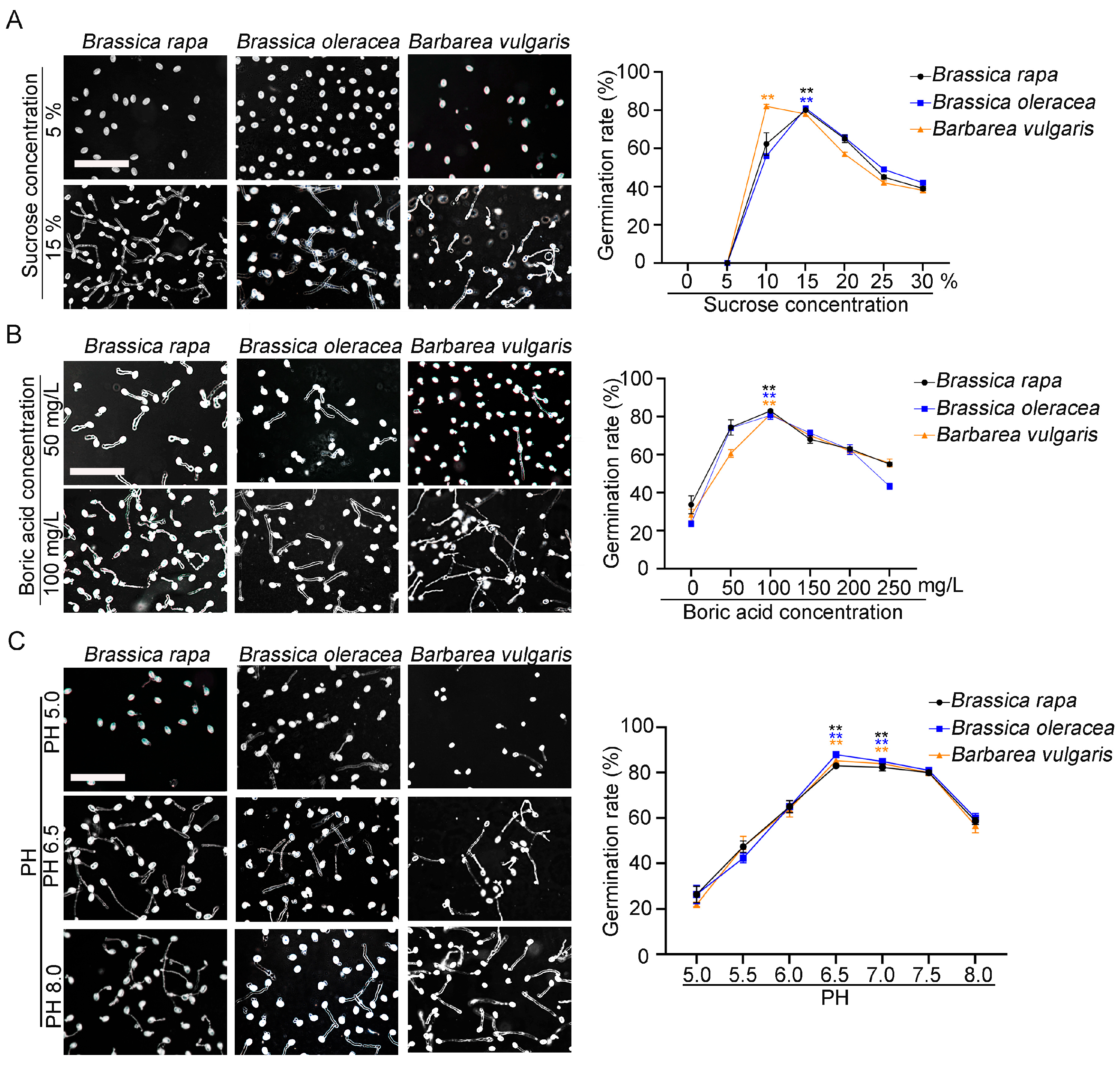
Sucrose concentration, boric acid content, and medium pH are key factors governing in vitro pollen germination [42]. Sucrose concentrations ranging from 0 to 30% at 5% intervals were first evaluated. No germination was observed at 0% or 5% sucrose, confirming its essential role in pollen germination (Figure 1A). Maximum germination rates for Brassica rapa and Brassica oleracea occurred at 15% sucrose, reaching 80% and 81%, respectively, whereas Barbarea vulgaris showed the highest germination rate of 82% at 10% sucrose (Figure 1A). Both low and high H3BO3 concentrations inhibited pollen viability, with 100 mg/L identified as optimal for all three species, resulting in germination rates of 86.00% for Brassica rapa, 82.61% for Brassica oleracea, and 84.25% for Barbarea vulgaris (Figure 1B). Within the pH range of 5.0 to 8.0, germination rates increased initially and then declined with increasing pH, peaking at a pH of 6.5. Accordingly, a pH of 6.5 was selected as the optimal value (Figure 1C). Overall, the optimal germination medium consisted of 15% sucrose for Brassica rapa and Brassica oleracea, 10% sucrose for Barbarea vulgaris, 100 mg/L boric acid, and a pH of 6.5.
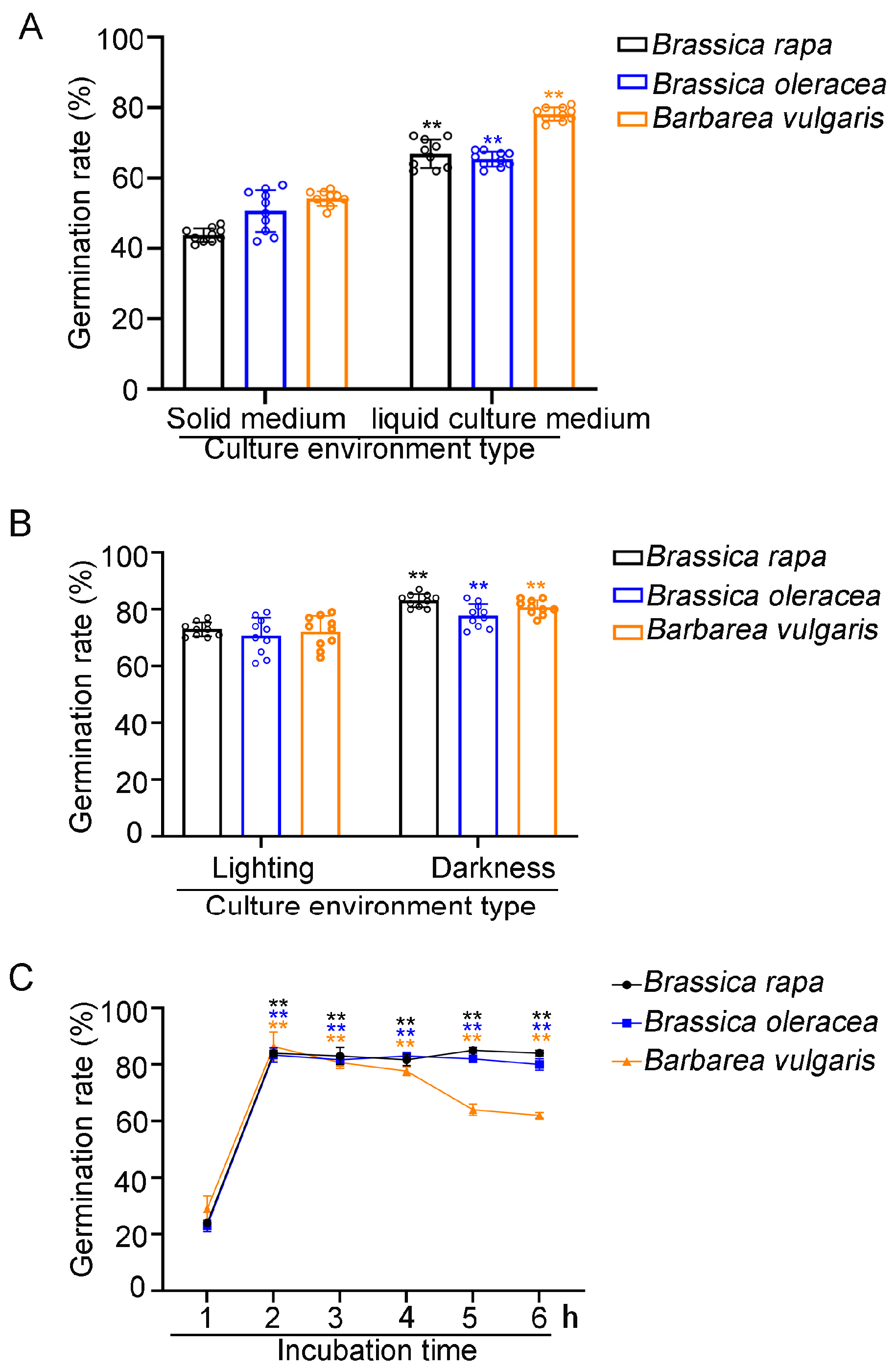
Besides liquid-medium culture, solid-medium culture is also commonly used for in vitro pollen germination. A comparison of these methods showed that liquid-medium culture consistently produced higher germination rates than solid-medium culture (Figure 2A). Germination rates in liquid medium reached 78.30% for Brassica rapa, 72.78% for Brassica oleracea, and 82.60% for Barbarea vulgaris, whereas corresponding rates on solid medium were 48.6%, 52.72%, and 51.1%, respectively.
Previous studies indicate that light is a critical environmental factor regulating in vitro pollen germination and generally exerts an inhibitory effect [49]. Consistent with this, pollen from Brassica rapa, Brassica oleracea, and Barbarea vulgaris exhibited significantly higher germination rates in darkness, reaching 82.71%, 74.63%, and 86.54%, respectively, compared with 70.96%, 66.34%, and 73.55% under light conditions, respectively (Figure 2B). These results confirm the promotive effect of darkness on in vitro pollen germination. In addition, germination rates for all three species peaked after 2 h of dark incubation (Figure 2C). Accordingly, the optimal germination condition was defined as incubation for 2 h in darkness in liquid 1/2 MS medium (pH 6.5).

3.2. Optimization of the Collection and Drying Time of Pollen Before Freezing

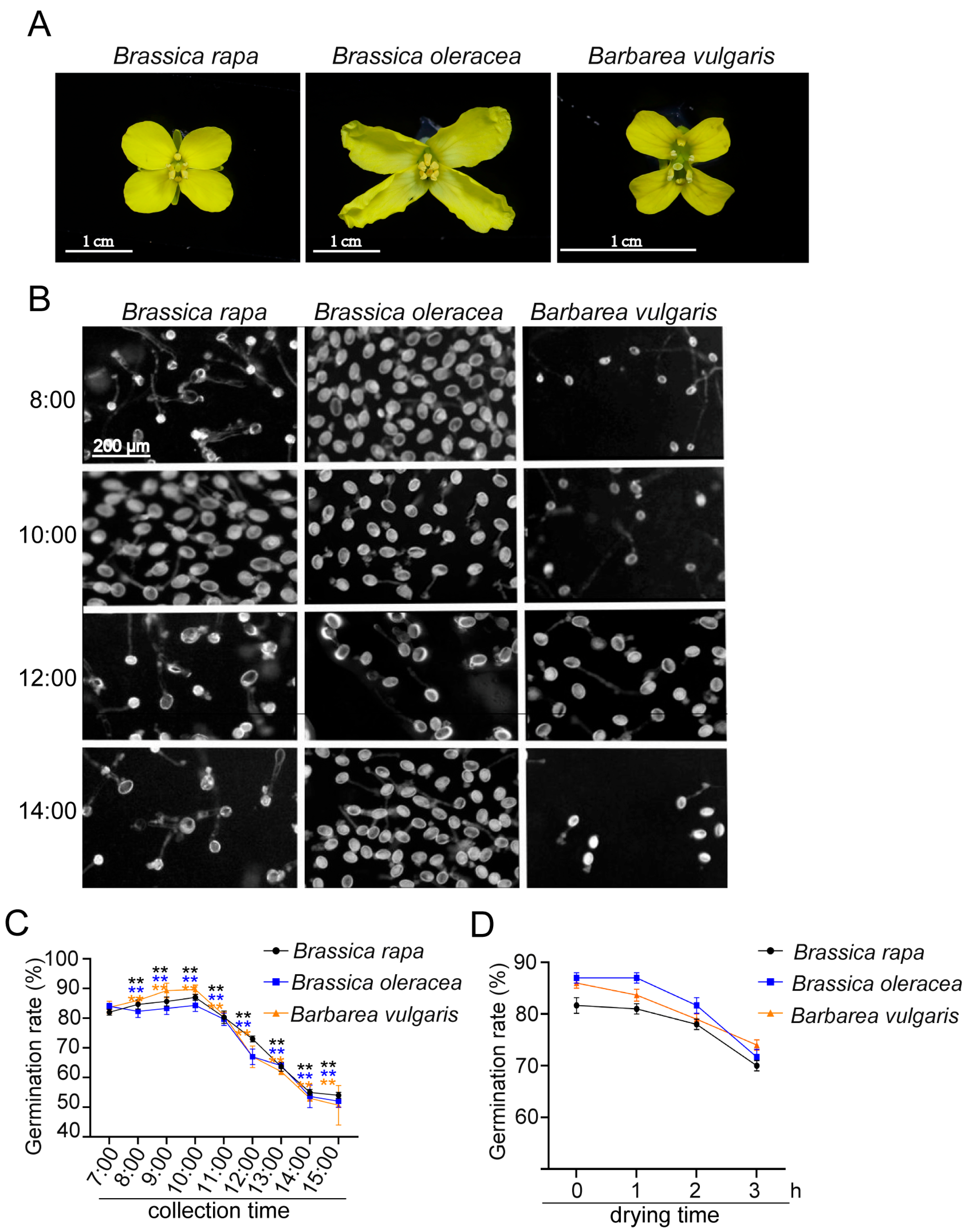
To establish an optimal pre-freezing pollen handling protocol, pollen collection time was first optimized. Pollen from Brassica rapa. Brassica oleracea, and Barbarea vulgaris was collected hourly from 7:00 to 15:00 (Figure 3A), and hourly samples were immediately assessed for in vitro germination. Germination rates were relatively low at 7:00, reaching 83.31% in Brassica rapa, 81.14% in Brassica oleracea, and 80.11% in Barbarea vulgaris. Pollen viability increased between 8:00 and 10:00, followed by a rapid decline after 10:00, decreasing to 50% by 15:00. Therefore, 8:00 to 10:00 was identified as the optimal pollen collection window (Figure 3B,C).
Drying time prior to cryopreservation was then optimized. Because water content is a key determinant of long-term cryopreservation success [50,51,52], pollen collected during the optimal period was dried at 28 °C and 2% relative humidity for 0 to 4 h. Pollen dried for 1 h maintained the highest germination rates across all species, whereas longer drying durations caused a progressive loss of viability (Figure 3D). This indicates that 1 h of drying provides an optimal balance between dehydration and viability preservation.
In summary, an effective pre-treatment protocol was established, involving pollen collection between 8:00 and 10:00 followed by 1 h of drying at 28 °C and 2% relative humidity.

3.3. Optimization of the Freezing Process for Storage

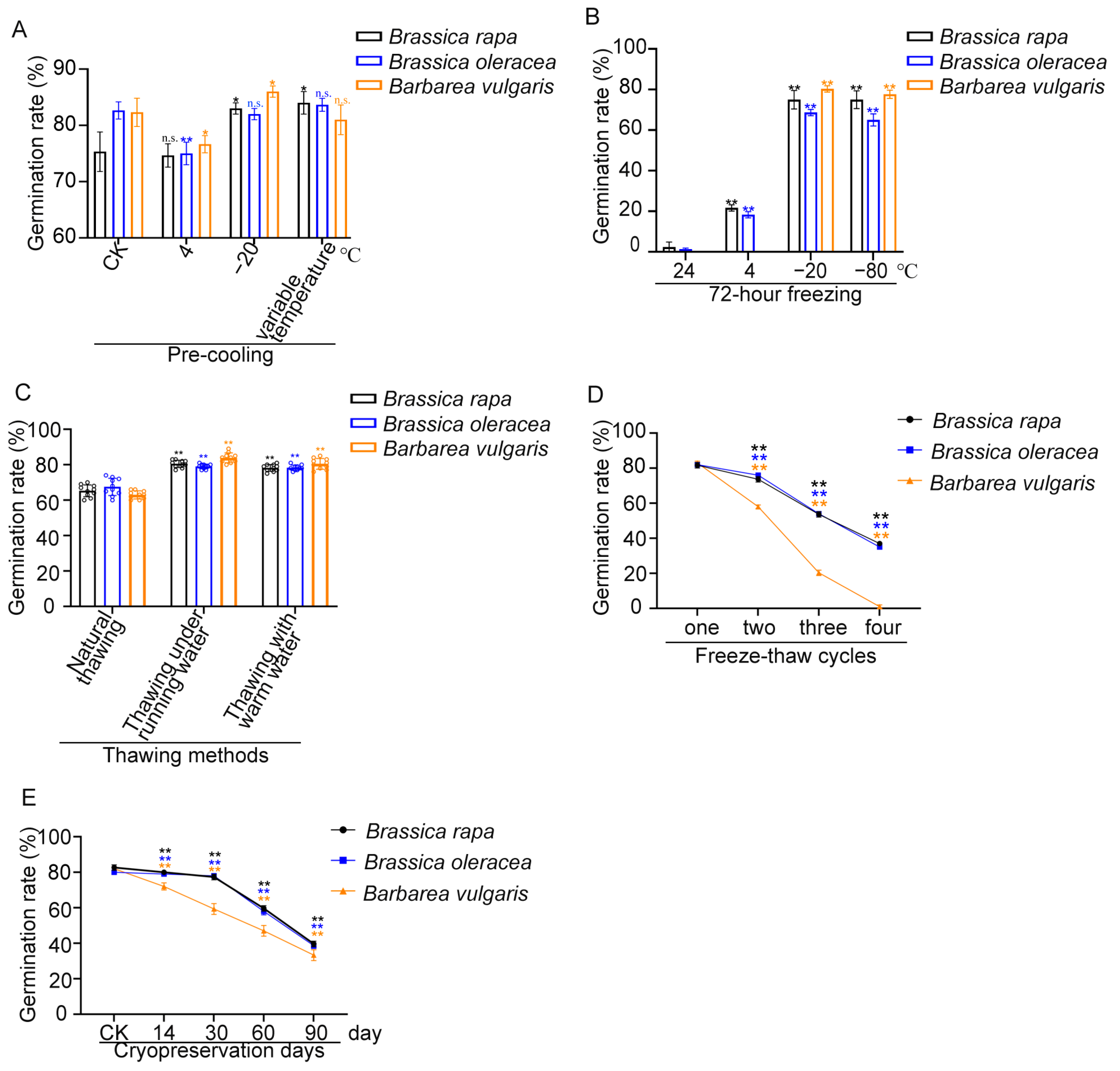
Pollen viability did not differ significantly after pre-cooling at −20 °C for 30 min, whereas it decreased significantly after pre-cooling at 4 °C for 30 min (Figure 4A).
After 72 h of storage, germination rates of all three pollen types were significantly higher at −80 °C and −20 °C than at 4 °C and room temperature. Germination rates at −80 °C reached 75.19%, 71.18%, and 80.33% for the three pollen types, respectively (Figure 4B). These results indicate a negative relationship between storage temperature and pollen germination, with lower temperatures providing superior preservation. Consequently, −80 °C was identified as the optimal storage condition.
Pollen stored at −80 °C for 24 h was subjected to natural thawing, rapid thawing in a 30 °C water bath, or thawing under running tap water. Both rapid thawing in warm water and thawing under running tap water resulted in significantly higher germination rates than natural thawing for all three pollen types, with no significant difference between the two rapid methods. Given its practicality, thawing under running tap water was selected for subsequent experiments (Figure 4C).
In practical production, pollen storage often involves repeated freeze–thaw cycles. Pollen of Brassica rapa and Brassica oleracea retained partial viability after four freeze–thaw cycles, whereas pollen of Barbarea vulgaris lost viability completely after four cycles. Based on these results, we recommend aliquoting pollen into separate portions before freezing to minimize repeated freeze–thaw cycles during use (Figure 4D).
The duration over which Brassicaceae pollen retains viability during storage at −80 °C remains uncertain. To address this gap, we extended the storage period for evaluation. In Brassica rapa and Brassica oleracea, pollen viability declined by approximately 8% after 30 days, 25% after 60 days, and 50% after 90 days of storage. These results indicate that storage at −80 °C is suitable for short-term pollen preservation, particularly within 30 days, for practical production use (Figure 4E). For practical application, we recommend aliquoting pollen before freezing and limiting storage to no more than 30 days to ensure optimal viability.

3.4. Ultrastructural and Functional Assessment of Cryopreserved Pollen

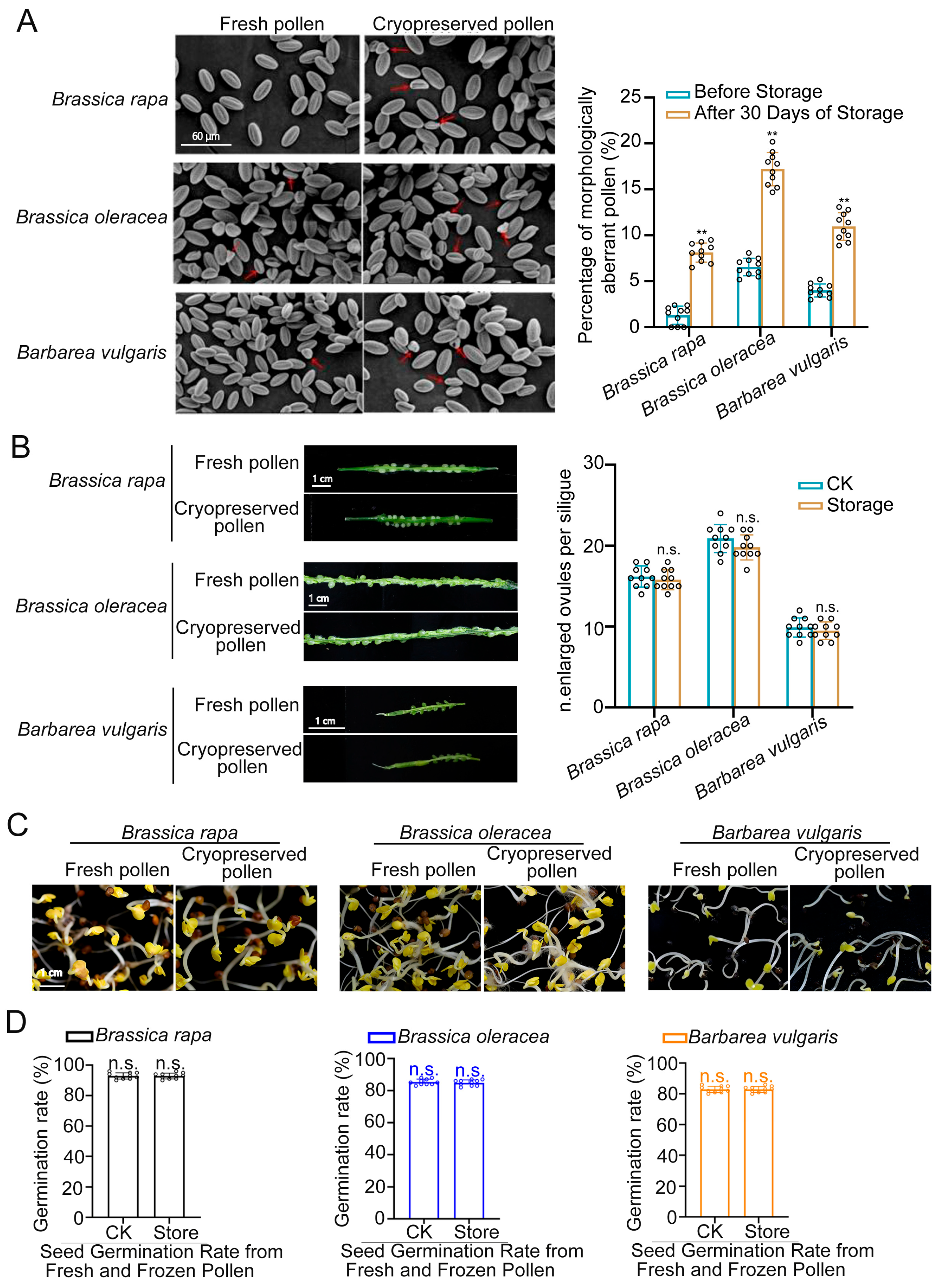
SEM analysis showed that the presence of morphologically aberrant pollen grains in both fresh and cryopreserved samples. The percentage of malformed pollen increased following storage at −80 °C for 30 days (Figure 5A). Pollen cryopreserved for 30 days at −80 °C showed no significant differences in silique development and ovule enlargement of the three species compared with fresh pollen (Figure 5B). Seed germination rates derived from pollination with cryopreserved and fresh pollen reached 94% and 95%, respectively (Figure 5C,D), with no significant difference between the two groups (p > 0.05), indicating that cryopreservation did not compromise the seed yield and quality of Brassicaceae species.

4. Discussion

Efficient pollen cryopreservation is essential for overcoming asynchronous flowering and geographic isolation in breeding programs [7]. Pollen from Brassicaceae crops is typically short-lived because of its tricellular structure, thin exine, and high desiccation sensitivity, highlighting the need for reliable in vitro preservation systems [53]. We established a systematic in vitro pollen germination system and optimized a cryopreservation protocol for three representative Brassicaceae species. Pollen stored at −80 °C for up to 30 days retained high viability and fertilization capacity, offering a practical solution for managing asynchronous flowering and improving germplasm utilization.
At subzero temperatures, intracellular water freezes and forms ice crystals that can disrupt membrane integrity and cause cell death. Accordingly, pollen drying, precooling, and post-freeze thawing are critical determinants of survival. We optimized each stage of the cryopreservation workflow, including pollen collection, drying, freezing, and thawing, to minimize ice crystal formation and associated damage. The optimized protocol consisted of drying at 27 °C for 1 h, precooling at −20 °C for 30 min, storage at −80 °C, and thawing under running tap water. Despite interspecific differences in pollen size, structure, and physiology, this single protocol consistently produced high viability across all three species, suggesting shared physiological traits related to water sensitivity, cold adaptation, and dehydration tolerance. This consistency supports the general applicability of the protocol to other Brassicaceae crops.
Although SEM analysis showed an increased proportion of morphologically aberrant pollen after cryopreservation, in vitro germination and pollination assays confirmed that cryopreserved pollen retained fertilization capacity comparable to fresh pollen. The pollen quantity applied during pollination likely exceeded the threshold required for successful fertilization, thereby offsetting structural damage. Similar discrepancies between ultrastructural alterations and functional competence have been reported in other species [54], indicating that morphological integrity alone is not a reliable predictor of post-cryopreservation reproductive performance.
The cryopreservation protocol described here is highly reproducible and does not significantly impair pollination, demonstrating its suitability for breeding applications. This approach can mitigate constraints imposed by asynchronous flowering, facilitate germplasm exchange, enhance breeding efficiency, and provide a useful reference for pollen preservation in species with comparable pollen characteristics.

5. Conclusions

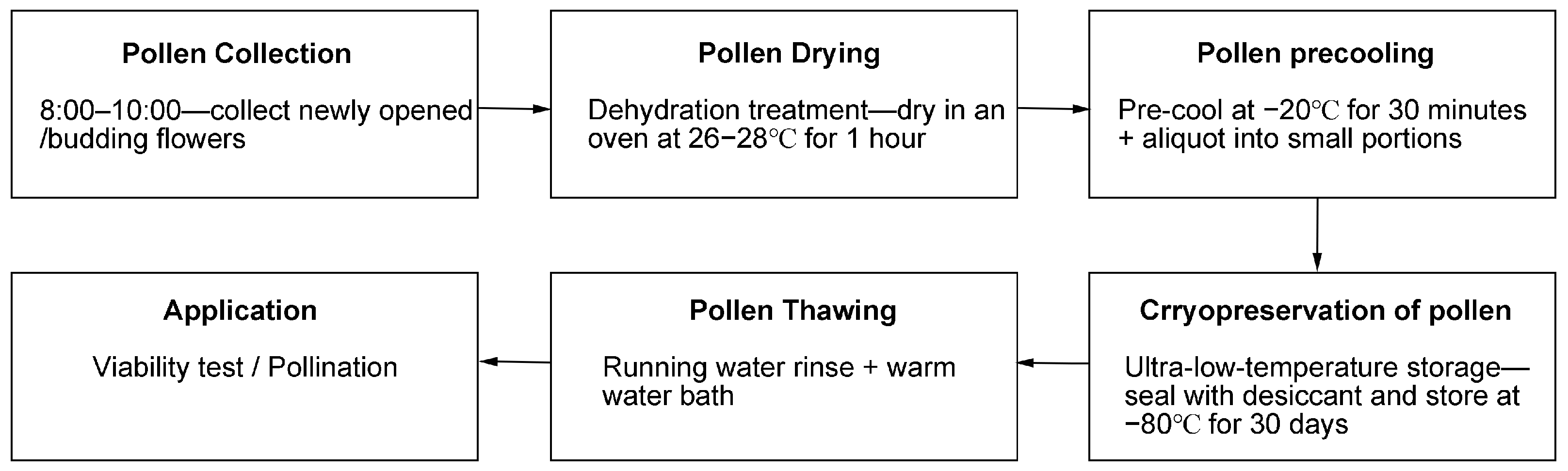
This study establishes an optimized technical system for short-term pollen cryopreservation in Brassicaceae, providing effective support for overcoming asynchronous flowering and geographic constraints in hybrid breeding (Figure 6).

Author Contributions

Y.C. and G.S. designed and supervised the entire study; X.Z., D.W. and Y.W. (Yuexin Wang) performed the pollen cryopreservation and germination experiments; Y.W. (Yuexin Wang), X.W. and Y.W. (Yifan Wu) conducted the data collection and statistical analysis; X.Z., D.W., Y.C. and J.H. visualized and presented the data; Y.W. (Yuexin Wang), X.Z. and D.W. wrote the manuscript; and G.S. and J.H. revised the manuscript. All authors have read and agreed to the published version of the manuscript.

Funding

This work was supported by the Key R&D Program of Shandong Province, China (2024LZGC036), and the National Science Foundation of China (U24A20418).

Data Availability Statement

The original contributions presented in this study are included in the article. Further inquiries can be directed to the corresponding author.

Conflicts of Interest

The authors declare no conflicts of interest.

References

  1. Chen, F.; Song, Y.; Li, X.; Chen, J.; Mo, L.; Zhang, X.; Lin, Z.; Zhang, L. Genome sequences of horticultural plants: Past, present, and future. Hortic. Res. 2019, 6, 112. [Google Scholar] [CrossRef] [Scilit] [PubMed]
  2. Byrne, S.L.; Erthmann, P.; Agerbirk, N.; Bak, S.; Hauser, T.P.; Nagy, I.; Paina, C.; Asp, T. The genome sequence of Barbarea vulgaris facilitates the study of ecological biochemistry. Sci. Rep. 2017, 7, 40728. [Google Scholar] [CrossRef] [Scilit]
  3. Rajasekharan, P.E.; Rohini, M.R. Pollen Cryopreservation Protocols; Humana Press: New York, NY, USA, 2023. [Google Scholar]
  4. Jia, H.; Liang, X.; Zhang, L.; Zhang, J.; Sapey, E.; Liu, X.; Sun, Y.; Sun, S.; Yan, H.; Lu, W.; et al. Improving Ultra-Low Temperature Preservation Technologies of Soybean Pollen for Off-Season and Off-Site Hybridization. Front. Plant Sci. 2022, 13, 920522. [Google Scholar] [CrossRef] [Scilit]
  5. Fileti, J.F.; Watanabe, L.N.; Custodio, C.C.; Foster, J.A.; Machado-Neto, N.B. Banking on pollen: Storing germplasm to preserve genetic diversity and support ex situ conservation of two Cattleya species. Biodivers. Conserv. 2025, 34, 5179–5196. [Google Scholar] [CrossRef] [Scilit]
  6. Connor, K.F.; Towill, L.E. Pollen-handling protocol and hydration/dehydration characteristics of pollen for application to long-term storage. Euphytica 1993, 68, 77–84. [Google Scholar] [CrossRef] [Scilit]
  7. Dinato, N.B.; Vigna, B.B.Z.; de Matta, F.; Fávero, A.P. Increasing pollination possibilities in Paspalum species: In vitro and in vivo viability of cryopreserved pollen to address flowering asynchrony. 3 Biotech 2024, 14, 308. [Google Scholar] [CrossRef] [Scilit]
  8. Vishwakarma, P.K.; Vincent, L.; Vasugi, C.; Rajasekharan, P.E. Effect of cryopreservation on pollen viability, fertility and morphology of different Psidium species. Cryobiology 2021, 98, 112–118. [Google Scholar] [CrossRef] [Scilit]
  9. Nagar, A.; Gowthami, R.; Sureja, A.K.; Munshi, A.D.; Verma, M.; Singh, A.K.; Mallick, N.; Singh, J.; Chander, S.; Shankar, M.; et al. Simple cryopreservation protocol for Luffa pollen: Enhancing breeding efficiency. Front. Plant Sci. 2023, 14, 1268726. [Google Scholar] [CrossRef] [Scilit] [PubMed]
  10. Castillo, S.E.; Aragón, R.; Chacoff, N. Assessment of Pollen Limitation and Pollinators’ Contribution in Soybean (Glycine max). Plants 2025, 14, 2964. [Google Scholar] [CrossRef] [Scilit]
  11. Hughes, H.G.; Lee, C.W.; Towill, L.E. Low-temperature preservation of Clianthus formosus pollen. Hortscience 1991, 26, 1411–1412. [Google Scholar] [CrossRef] [Scilit]
  12. Carter, J.D.; Dinwiddie, J.A.; Hill-Skinner, S.E.; Polge, N.D.; Fajalia, A.I.; Hodges, G.R.; Hone, J.H.E.; Lai, S.C.S.; Medeiros, D.B.; Langer, L.O.E.; et al. Development of accessible and scalable maize pollen storage technology. Commun. Biol. 2025, 8, 397. [Google Scholar] [CrossRef] [Scilit]
  13. Kulakowski, S.; Banerjee, D.; Scown, C.D.; Mukhopadhyay, A. Improving microbial bioproduction under low-oxygen conditions. Curr. Opin. Biotechnol. 2023, 84, 103016. [Google Scholar] [CrossRef] [Scilit]
  14. Ren, R.; Li, Z.; Li, B.; Xu, J.; Jiang, X.; Liu, Y.; Zhang, K. Changes of pollen viability of ornamental plants after long-term preservation in a cryopreservation pollen bank. Cryobiology 2019, 89, 14–20. [Google Scholar] [CrossRef] [Scilit] [PubMed]
  15. Akihama, T. Further investigation of freeze-drying for deciduous fruit tree pollen. In Long Term Preservation of Favourable Germ Plasm in Arboreal Crops; Ministry of Agriculture and Forestry (MAF): Tokyo, Japan, 1978. [Google Scholar]
  16. dos Nascimento, G.Q.S.S.; Souza, F.V.D.; Aona, L.Y.S.; de Carvalho Costa, M.A.P.; de Souza, E.H. Reproductive Potential of Cryopreserved Pollen in Wittmackia (Bromeliaceae): Implications for Conservation and Plant Breeding. Trop. Plant Biol. 2025, 18, 84. [Google Scholar] [CrossRef] [Scilit]
  17. de Oliveira, R.S.; Souza, F.V.D.; Dos Santos, I.L.; Souza, S.D.O.; Aona, L.Y.S.; de Souza, E.H. Cryopreservation and low-temperature storage of seeds of Tillandsia species (Bromeliaceae) with ornamental potential. 3 Biotech 2021, 11, 186. [Google Scholar] [CrossRef] [Scilit] [PubMed]
  18. Maryam, M.; Jaskani, M.J.; Fatima, B.; Haider, M.S.; Naqvi, S.A.; Nafees, M.; Ahmad, R.; Khan, I.A. Evaluation of Pollen Viability in Date Palm Cultivars Under Different Storage Temperatures. Pak. J. Bot. 2015, 47, 377–381. [Google Scholar]
  19. Sorokhaibam, S.; Tandon, R.; Agrawal, A.; Shivanna, K.R. Quantitative assessment of oil palm pollen after 23 years of cryobanking. Cryoletters 2023, 44, 20–25. [Google Scholar] [CrossRef] [Scilit]
  20. Dinato, N.B.; Santos, I.R.I.; Vigna, B.B.Z.; Ferreira de Paula, A.; Favero, A.P. Pollen Cryopreservation for Plant Breeding and Genetic Resources Conservation. Cryoletters 2020, 41, 115–127. [Google Scholar] [PubMed]
  21. Fayos, O.; Echávarri, B.; Vallés, M.P.; Mallor, C.; Garcés-Claver, A.; Castillo, A.M. A simple and efficient method for onion pollen preservation: Germination, dehydration, storage conditions, and seed production. Sci. Hortic. 2022, 305, 111358. [Google Scholar] [CrossRef] [Scilit]
  22. Impe, D.; Ballesteros, D.; Nagel, M. Impact of drying and cooling rate on the survival of the desiccation-sensitive wheat pollen. Plant Cell Rep. 2022, 41, 447–461. [Google Scholar] [CrossRef] [Scilit]
  23. Overbeck, V.; Schmitz, M.; Blanke, M. Targeted forcing improves quality, nutritional and health value of sweet cherry fruit. J. Sci. Food Agric. 2017, 97, 3649–3655. [Google Scholar] [CrossRef] [Scilit] [PubMed]
  24. Aldahadha, A.; Al Sane, K.; Bataineh, A.; Abu Alloush, A.; Hamouri, Z. Pollen viability and in vitro germination of six pistachio (Pistacia vera L.) cultivars grown in northern Jordan. Adv. Hortic. Sci. 2019, 33, 441–446. [Google Scholar] [CrossRef] [Scilit]
  25. Alexander, L.W. Optimizing pollen germination and pollen viability estimates for Hydrangea macrophylla, Dichroa febrifuga, and their hybrids. Sci. Hortic. 2019, 246, 244–250. [Google Scholar] [CrossRef] [Scilit]
  26. dos Santos Ferreira, M.; Soares, T.L.; Costa, E.M.R.; da Silva, R.L.; de Jesus, O.N.; Junghans, T.G.; Souza, F.V.D. Optimization of culture medium for the in vitro germination and histochemical analysis of Passiflora spp. pollen grains. Sci. Hortic. 2021, 288, 110298. [Google Scholar] [CrossRef] [Scilit]
  27. Hachef, A.; Bourguiba, H.; Zarkouna, R.; Oueslati, R.; Cherif, E.; Zehdi-Azouzi, S. Effect of Long-Term Storage on Pollen Reproductive Quality and Polyphenolic Content of Date Palm (Phœnix dactylifera L.) Species in Tunisia. Appl. Fruit Sci. 2024, 66, 1453–1462. [Google Scholar] [CrossRef] [Scilit]
  28. Chen, Y.; Zhang, X.; Yang, J.; Guo, D.; Wang, X.; Wang, Z. Development and Application of an In Vitro Pollen Viability Assay for Comparative Safety Assessment of Transgenic Alfalfa (Medicago sativa L.). Plants 2025, 14, 3070. [Google Scholar] [CrossRef] [Scilit]
  29. Almeida, C.; Amaral, A.; Neto, J.; Sereno, M.J.C.M. Conservation and in vitro germination of pollen of maize (Zea mays subsp. mays). Rev. Bras. De Bot. 2011, 34, 493–497. [Google Scholar] [CrossRef] [Scilit]
  30. Pfahler, P.L.; Linskens, H.F. In vitro germination and pollen tube growth of maize (Zea mays L.) pollen. Theor. Appl. Genet. 1972, 42, 136–140. [Google Scholar] [CrossRef] [Scilit] [PubMed]
  31. Biagini, G.; Faleri, C.; Cresti, M.; Cai, G. Sucrose concentration in the growth medium affects the cell wall composition of tobacco pollen tubes. Plant Reprod. 2014, 27, 129–144. [Google Scholar] [CrossRef] [Scilit] [PubMed]
  32. Yohana, N.Y.; Nakano, A.; Hoshino, Y. Effects of the sucrose concentrations and incubation periods on in vitro pollen germination and pollen tube growth in three rice cultivars. Plant Biotechnol. 2025, 42, 9–15. [Google Scholar] [CrossRef] [Scilit]
  33. Seitz, J.; Reimann, T.M.; Fritz, C.; Schröder, C.; Knab, J.; Weber, W.; Stadler, R. How pollen tubes fight for food: The impact of sucrose carriers and invertases of Arabidopsis thaliana on pollen development and pollen tube growth. Front. Plant Sci. 2023, 14, 1063765. [Google Scholar] [CrossRef] [Scilit] [PubMed]
  34. Gonçalves-Esteves, V.; Cartaxo-Pinto, S.; Marinho, E.B.; Esteves, R.L.; Mendonça, C.B.F. Pollen morphology and evolutionary history of Sapindales. Braz. J. Bot. 2021, 45, 341–366. [Google Scholar] [CrossRef] [Scilit]
  35. Jia, W.; Wang, Y.; Mi, Z.; Wang, Z.; He, S.; Kong, D. Optimization of culture medium for in vitro germination and storage conditions of Exochorda racemosa pollen. Front. Plant Sci. 2022, 13, 994214. [Google Scholar] [CrossRef] [Scilit]
  36. Wood, B.W. Flavonoids, Alkali Earth, and Rare Earth Elements Affect Pecan Pollen Germination. HortScience 2017, 52, 85–88. [Google Scholar] [CrossRef] [Scilit]
  37. Brandoli, C.; Cristofori, V.; Silvestri, C.; Todeschini, C.; Sgarbi, E. The Development of an Improved Medium for the In Vitro Germination of Corylus avellana L. Pollen. Forests 2024, 15, 1095. [Google Scholar] [CrossRef] [Scilit]
  38. Tushabe, D.; Rosbakh, S. A Compendium of in vitro Germination Media for Pollen Research. Front. Plant Sci. 2021, 12, 709945. [Google Scholar] [CrossRef] [Scilit]
  39. Radović, A.; Nikolić, D.; Cerović, R.; Milatović, D.; Rakonjac, V.; Bakić, I. The effect of temperature on pollen germination and pollen tube growth of quince cultivars. Acta Hortic. 2020, 1289, 67–72. [Google Scholar] [CrossRef] [Scilit]
  40. Simpson, J.; Thomas, E.; Lang, M. Increased temperature reduces walnut pollen germination in semi-arid regions of Australia. Acta Hortic. 2021, 1318, 91–96. [Google Scholar] [CrossRef] [Scilit]
  41. Pavlov, A.; Verzhuk, V.; Bondaruk, D. The effect of phytohormones and light on the germination of apple pollen with reduced viability. Proc. Appl. Bot. Genet. Breed. 2020, 180, 27–31. [Google Scholar] [CrossRef] [Scilit]
  42. Fragallah, S.A.D.A.; Lin, S.; Li, N.; Ligate, E.J.; Chen, Y. Effects of Sucrose, Boric Acid, pH, and Incubation Time on in Vitro Germination of Pollen and Tube Growth of Chinese fir (Cunnighamial lanceolata L.). Forests 2019, 10, 102. [Google Scholar] [CrossRef] [Scilit]
  43. Zhang, Y.L.; Chen, R.D.; Huang, C.J.; Liu, Y. Cryo-banking of Prunus mume pollen and its application in cross-breeding. Cryoletters 2009, 30, 165–170. [Google Scholar] [PubMed]
  44. Nepi, M.; Cresti, L.; Guarnieri, M.; Pacini, E. Effect of relative humidity on water content, viability and carbohydrate profile of Petunia hybrida and Cucurbita pepo pollen. Plant Syst. Evol. 2010, 284, 57–64. [Google Scholar] [CrossRef] [Scilit]
  45. Barnabás, B.; Rajki, E. Storage of maize (Zea mays L.) pollen at −196 °C in liquid nitrogen. Euphytica 1976, 25, 747–752. [Google Scholar] [CrossRef] [Scilit]
  46. Du, K.; Zhang, D.; Ma, J.; Dan, Z.; Wen, X.; Lv, W.; Yang, L.; Bao, L.; Li, Y.; Chen, G.; et al. Effect of ultra-low temperature storage on the viability of pepper pollen and its implications for hybrid breeding. Front. Plant Sci. 2025, 16, 1516016. [Google Scholar] [CrossRef] [Scilit]
  47. Weng, Z.; Deng, Y.; Tang, F.; Zhao, L.; Zhao, L.; Wang, Y.; Dai, X.; Zhou, Z.; Cao, Q. Screening and optimisation of in vitro pollen germination medium for sweetpotato (Ipomoea batatas). Plant Methods 2023, 19, 93. [Google Scholar] [CrossRef] [Scilit] [PubMed]
  48. Murashige, T.; Skoog, F. A Revised Medium for Rapid Growth and Bio Assays with Tobacco Tissue Cultures. Physiol. Plant. 1962, 15, 473–497. [Google Scholar] [CrossRef] [Scilit]
  49. Gamborg, O.L.; Miller, R.A.; Ojima, K. Nutrient requirements of suspension cultures of soybean root cells. Exp. Cell Res. 1968, 50, 151–158. [Google Scholar] [CrossRef] [Scilit]
  50. Fan, L.M.; Wang, Y.F.; Wang, H.; Wu, W.H. In vitro Arabidopsis pollen germination and characterization of the inward potassium currents in Arabidopsis pollen grain protoplasts. J. Exp. Bot. 2001, 52, 1603–1614. [Google Scholar] [CrossRef] [Scilit]
  51. Zinn, K.E.; Tunc-Ozdemir, M.; Harper, J.F. Temperature stress and plant sexual reproduction: Uncovering the weakest links. J. Exp. Bot. 2010, 61, 1959–1968. [Google Scholar] [CrossRef] [Scilit]
  52. Rodriguez-Riano, T.; Dafni, A. A new procedure to assess pollen viability. Sex. Plant Reprod. 2000, 12, 241–244. [Google Scholar] [CrossRef] [Scilit]
  53. Lora, J.; Herrero, M.; Hormaza, J.I. The coexistence of bicellular and tricellular pollen in Annona cherimola (Annonaceae): Implications for pollen evolution. Am. J. Bot. 2009, 96, 802–808. [Google Scholar] [CrossRef] [Scilit] [PubMed]
  54. Ge, K.; Du, X.; Liu, H.; Meng, R.; Wu, C.; Zhang, Z.; Liang, X.; Yang, J.; Zhang, H. The cytotoxicity of microcystin-LR: Ultrastructural and functional damage of cells. Arch. Toxicol. 2024, 98, 663–687. [Google Scholar] [CrossRef] [Scilit] [PubMed]
Figure 1. Effects of medium components on in vitro germination of Brassicaceae pollen. (A) Germination status and statistical data of each species under different (A) sucrose concentrations; (B) boric acid concentrations; (C) pH values. Note: ** indicates an extremely significant difference (p < 0.01).
Horticulturae 12 00315 g001
Figure 2. Effects of culture conditions on in vitro germination of Brassicaceae pollen. (A) Statistical data of pollen of each species under different (A) medium types; (B) light conditions; (C) culture durations. Note: ** indicates an extremely significant difference (p < 0.01).
Horticulturae 12 00315 g002
Figure 3. Effects of collection time and drying time on the germination rate of Brassicaceae pollen. (A) The flower states of three Brassicaceae species collected. (B) The pollen germination status of three Brassicaceae species collected at different time periods. (C) The statistical data of pollen germination rate every hour from 7:00 to 15:00. throughout the day. (D) Changes in pollen germination rates of the three species under different drying times. Note: ** indicates an extremely significant difference (p < 0.01).
Horticulturae 12 00315 g003
Figure 4. Pollen germination rates of three Brassicaceae species under different pretreatment, storage, and processing conditions. (A) Effects of different precooling treatments (control, 4 °C, −20 °C, and variable temperature pre-cooling) on pollen germination rate. (B) Effects of 72 h storage at different temperatures (24 °C, 4 °C, −20 °C, and −80 °C) on pollen germination rate. (C) Effects of thawing methods on the cryopreservation efficacy of pollen from Brassicaceae plants. (D) Effects of freeze–thaw cycles on pollen germination rates. (E) Effects of different storage durations at −80 °C on pollen germination rates. Note: * indicates a significant difference (p < 0.05), ** indicates an extremely significant difference (p < 0.01), and n.s. indicates no significant difference between groups.
Horticulturae 12 00315 g004
Figure 5. Effects of cryopreservation on pollen ultrastructure and pollination efficacy. (A) Scanning electron microscopy (SEM) images of fresh pollen and cryopreserved pollen (preserved at −80 °C for 30 days) of the three Brassicaceae species; defective pollen is marked with red arrows. (B) The number of swollen ovules in the three species after being pollinated with fresh or cryopreserved pollen (preserved at −80 °C for 30 days). (C) The seed germination status of the three species derived from pollination treatment with fresh or cryopreserved pollen (preserved at −80 °C for 30 days). (D) Comparison of pollen germination rates of the three species between the fresh pollen control group (CK) and the cryopreserved group (preserved at −80 °C for 30 days). Data are presented as the mean ± SD. No significant differences were detected between fresh and cryopreserved pollen treatments (Student’s t-test, p > 0.05). Note: ** indicates an extremely significant difference (p < 0.01), and n.s. indicates no significant difference between groups.
Horticulturae 12 00315 g005
Figure 6. Technical flowchart of short-term cryopreservation and application of Brassicaceae pollen.
Horticulturae 12 00315 g006
Disclaimer/Publisher’s Note: The statements, opinions and data contained in all publications are solely those of the individual author(s) and contributor(s) and not of MDPI and/or the editor(s). MDPI and/or the editor(s) disclaim responsibility for any injury to people or property resulting from any ideas, methods, instructions or products referred to in the content.