Article

Symbiotic Cultivation of Gastrodia elata: Armillaria Strain Selection Reprograms Carbon Allocation to Balance Tuber Yield and Phenolic Glycosides


1
School of Traditional Chinese Medicine, Capital Medical University, Beijing 100069, China
2
Yunnan Key Laboratory of Gastrodia and Fungal Symbiotic Biology, Zhaotong University, Zhaotong 657000, China
*
Authors to whom correspondence should be addressed.
Horticulturae 2026, 12(2), 181; https://doi.org/10.3390/horticulturae12020181

Submission received: 21 December 2025 / Revised: 26 January 2026 / Accepted: 30 January 2026 / Published: 31 January 2026

Abstract

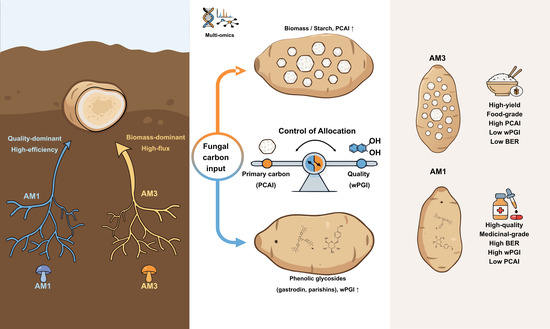
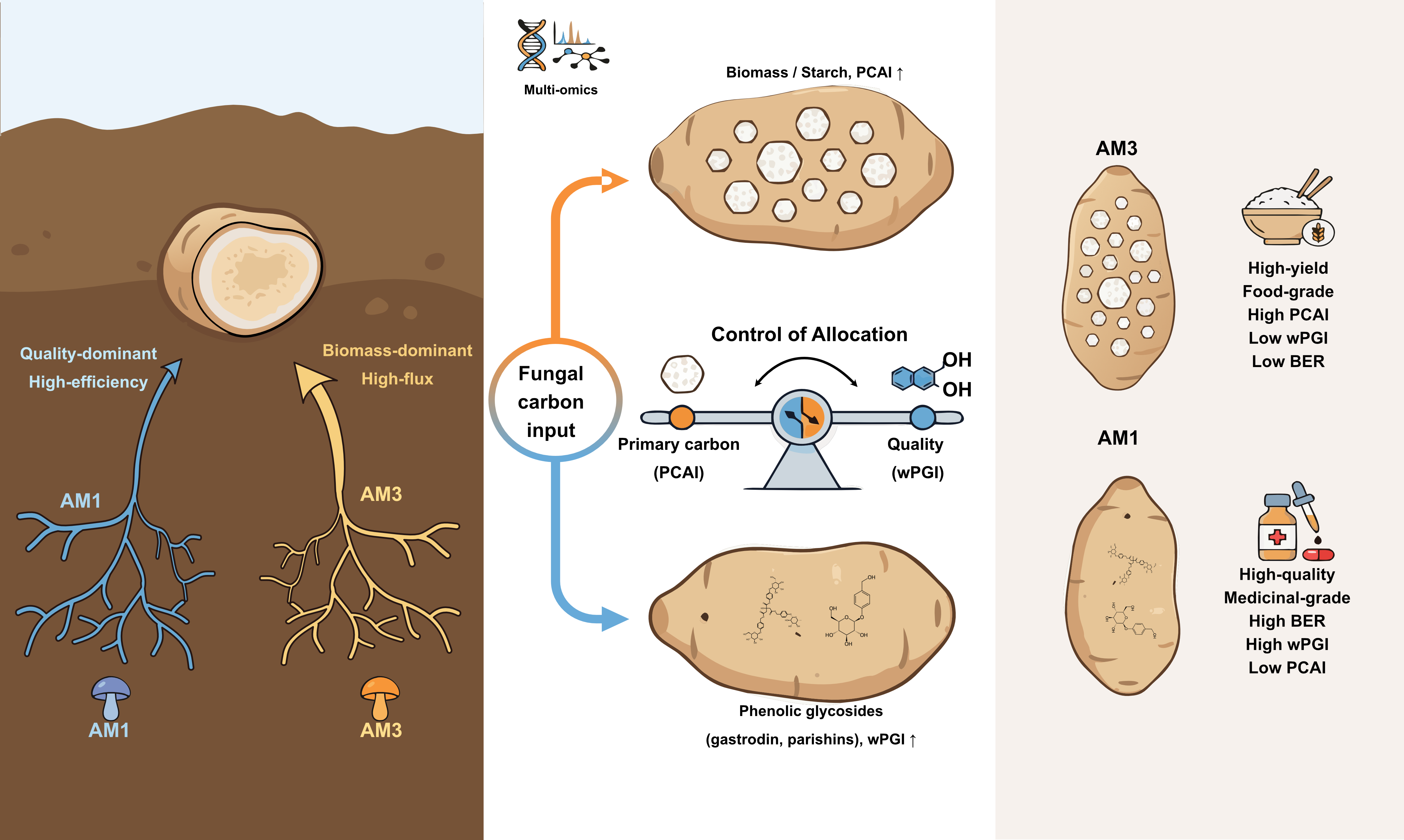
Gastrodia elata is a fully mycoheterotrophic orchid whose tuber development depends on carbon delivered by Armillaria fungi. Its formal inclusion in China’s “medicine and food homology” catalog has intensified demand for cultivated tubers combining high yield with consistent bioactive quality. Here, we tested whether Armillaria mellea strains steer host carbon allocation between biomass accumulation and phenolic glycoside biosynthesis. Using a standardized EPS symbiotic cultivation system (AM1, AM2, AM3; n = 3 biological replicates per strain), we integrated agronomic traits with widely targeted metabolomics and RNA-seq transcriptomics, including weighted gene co-expression network analysis (WGCNA). AM3 produced the highest tuber yield and higher primary carbon status (PCAI), but lower gastrodin/parishin-type phenolic glycosides and lower allocation efficiency (BER), whereas AM1 showed a quality-dominant profile with significantly higher BER. WGCNA highlighted an AM3-associated module enriched in starch-biosynthetic genes, and PCAI was strongly negatively correlated with the weighted Parishin-Gastrodin Index (wPGI) across samples (n = 9), consistent with a carbohydrate-storage versus phenolic-glycoside trade-off. These results indicate that fungal strain identity functions as an external regulator of source–sink dynamics in G. elata, supporting “precision symbiosis” for food-grade versus medicinal-grade production.

Graphical Abstract

1. Introduction

Gastrodia elata Blume (Orchidaceae), commonly known as “Tianma”, is a culturally and economically important herbal crop in East Asia. It has long been used in traditional Chinese medicine for neurological conditions such as vertigo, epilepsy, and headache [1], and is characterized by bioactive phenolic glycosides, notably gastrodin and parishin derivatives [2]. Due to habitat degradation and over-exploitation, wild resources have declined markedly [3], and current market supply relies largely on artificial cultivation [4,5].
Gastrodia elata has also been traditionally used as a food-related material in certain regions, and its formal inclusion in China’s 2023 official catalog of “medicine and food homology” (substances with dual food and traditional Chinese medicine properties) has further expanded its application potential [6]. This regulatory recognition is expected to accelerate industrial use and simultaneously increase demands for stable yield and standardized phytochemical quality. Accordingly, a central cultivation challenge is to optimize the trade-off between high biomass production (for food/commodity use) and high levels of bioactive constituents (for medicinal applications).
Addressing this challenge requires a mechanistic understanding of the species’ obligate mycoheterotrophic lifestyle [7]. Gastrodia elata is a fully mycoheterotrophic, achlorophyllous orchid that lacks functional roots [8] and has abandoned photosynthesis [9]. Its life cycle involves sequential fungal associations: seed germination and protocorm development depend on germination fungi (typically Mycena spp.) [10], while vegetative growth and tuber maturation rely primarily on symbiosis with Armillaria spp. In cultivation practice, Armillaria functions as the dominant carbon donor during tuber expansion and yield formation. Empirical cultivation experience and previous reports suggest that different Armillaria strains can lead to contrasting phenotypes [11]—with some favoring rapid biomass accumulation (high yield) and others supporting enhanced accumulation of secondary metabolites (high quality). However, the molecular basis by which fungal strain identity reshapes host carbon metabolism and phenolic glycoside biosynthesis remains insufficiently resolved, limiting rational strain selection for defined production goals.
The growth–defense trade-off, formalized in the Growth–Differentiation Balance Hypothesis (GDBH) [12], proposes that allocation of limited resources toward growth and storage often coincides with reduced investment in defense-related secondary metabolism [4]. For an obligate mycoheterotroph such as G. elata, which cannot fix carbon autonomously, this trade-off is expected to be particularly sensitive to the amount and form of carbon delivered by the fungal partner [13]. In this context, host sugar transport and sugar/energy signaling provide a plausible interface between fungal carbon input and host allocation decisions. For example, sucrose transporters (e.g., GeSUT4) [14] have been implicated in sucrose uptake and distribution [15] in G. elata, while broader sugar/energy signaling networks (including the T6P/SnRK1 axis) offer testable regulatory frameworks through which carbon status could modulate partitioning between storage sinks and the shikimate–phenylpropanoid routes underlying phenolic glycoside formation.
Here, we hypothesized that natural variation among Armillaria strains in carbon-supply strategies shifts the balance between primary biomass formation (sink strength) and phenolic glycoside accumulation in G. elata. To test this, we established a standardized foam-box symbiotic cultivation system inoculated with three Armillaria mellea strains (AM1, AM2, AM3) with contrasting growth-promoting characteristics and integrated agronomic measurements with widely targeted metabolomics, RNA-seq transcriptomics, and network-based analyses, including weighted gene co-expression network analysis (WGCNA) [16]. This design enables a systems-level linkage between strain-dependent yield–quality divergence, primary carbon status, phenolic glycoside profiles, and coordinated gene-expression programs, thereby providing a mechanistic basis for “precision symbiosis” in food- versus medicine-oriented G. elata production.

2. Materials and Methods

2.1. Plant Materials and Fungal Strains

Gastrodia elata f. glauca (cultivar “Wutianma”) was used as plant material. Immature seed tubers (“white hemp”) were collected from commercial production fields in Shuizhu Township, Yongshan County (Zhaotong, Yunnan, China). Tubers showing visible damage or disease symptoms were discarded, and uniform seed tubers (14.74 ± 1.07 g fresh weight; mean ± SD) were selected.
Three Armillaria mellea strains commonly used in local cultivation systems were evaluated: AM1 (commercial production strain used in Shuizhu), AM2 (local wild isolate from decayed wood in Xiaocaoba, Yiliang County), and AM3 (introduced strain originally sourced from Dafang County, Guizhou Province, currently used in Xiaocaoba). Strains were maintained on potato dextrose agar (PDA) at 25 °C and propagated on a sterilized sawdust–wheat bran substrate to prepare inoculum (“spawn”) for cultivation (details in Supplementary Materials S1).

2.2. Symbiotic Cultivation and Experimental Design

The experiment was conducted in a greenhouse at Zhaotong University (Zhaotong, Yunnan, China) maintained at 20 ± 2 °C and 70–80% relative humidity. Because G. elata is fully mycoheterotrophic, all foam boxes were kept in darkness to mimic subterranean cultivation conditions. A completely randomized design was used with three Armillaria treatments (AM1, AM2, AM3) and three independent fungal-bed replicates per treatment (n = 9). Each foam box (50 cm × 30 cm × 21 cm) was treated as one experimental unit.
Fungal beds were established in foam boxes using Quercus logs inoculated with each Armillaria strain and incubated until a dense rhizomorph network formed (August 2020–January 2021). Seed tubers were planted into mature beds (January 2021; nine tubers per box arranged in a 3 × 3 grid and placed in direct contact with colonized logs/rhizomorphs) and cultivated until harvest (November 2021). No chemical fertilizers or pesticides were applied. Detailed bed preparation and cultivation procedures are provided in Supplementary Materials S1.

2.3. Harvest, Agronomic Traits, and Sampling for Omics

All harvestable tubers were collected from each box at maturity (November), gently washed, blotted dry, and weighed. Two agronomic traits were calculated at the box level (n = 3 per treatment):
Fresh yield (kg box−1) = total fresh tuber weight per box/1000;
Propagation coefficient = total harvested fresh weight per box/total initial seed-tuber fresh weight per box.
For multi-omics analyses, visually healthy tubers from each replicate box were pooled (three tubers per replicate), immediately frozen in liquid nitrogen, and stored at −80 °C until metabolomic and transcriptomic analyses.

2.4. Widely Targeted Metabolomics

Freeze-dried tuber tissue was ground to powder and 100 mg was extracted with 1.0 mL of 70% aqueous methanol containing 2-chlorophenylalanine (4 ppm) as an internal standard (4 °C, overnight, 120 rpm). After centrifugation (10,000× g, 10 min, 4 °C), supernatants were filtered (0.22 μm) prior to analysis. A pooled quality control (QC) sample (equal aliquots of each extract) was injected at the start of the run and after every 10 study samples.
Metabolites were profiled using an ExionLC AD UPLC system coupled to a QTRAP 6500+ mass spectrometer (Sciex, Framingham, MA, USA) in scheduled multiple reaction monitoring (MRM) mode under electrospray ionization in both positive and negative ion modes. Separation was performed on an ACQUITY UPLC HSS T3 C18 column (1.8 μm, 2.1 mm × 100 mm) at 40 °C with water/acetonitrile mobile phases containing 0.04% acetic acid; full chromatographic settings are provided in Supplementary Materials S2. Metabolites were annotated against a self-built database (MWDB, Metware Biotechnology) supplemented with Metlin, HMDB, and MassBank by matching retention time (±0.2 min), Q1/Q3 masses (±10 ppm), and MS/MS fragment patterns; peak areas were integrated using MultiQuant 3.0.2 (Sciex).
Features with signal-to-noise ratio < 10 or detected in <50% of samples in any treatment were removed. Remaining missing values were imputed as half of the minimum positive value per metabolite. QC-based LOESS correction was applied, and intensities were total-ion-current (TIC) normalized, log2-transformed, and auto-scaled prior to downstream analyses.

2.5. Transcriptomics and Co-Expression Network Analysis

Total RNA was extracted from nine samples (n = 3 per treatment; three pooled tubers per replicate) using TRIzol reagent. RNA integrity was assessed using an Agilent 2100 Bioanalyzer; samples with RIN ≥ 7.0 and A260/280 = 1.8–2.2 were used. Libraries were prepared using standard Illumina protocols and sequenced on an Illumina NovaSeq 6000 platform (2 × 150 bp) by Gene Denovo Biotechnology (Guangzhou, China).
Reads were filtered with fastp (v0.18.0) and aligned to the G. elata reference genome (GCA_016760335.1) using HISAT2 (v2.4) with GelFAP v3.0 annotation files [17]. Transcript assembly/quantification was conducted with StringTie (v1.3.1); gene-level counts were generated with HTSeq-count. Differential expression was tested with DESeq2 (v1.46.0) using the design~Treatment; genes with FDR < 0.05 and |log2 fold change| > 1 were considered differentially expressed.
WGCNA was performed in R (WGCNA package) on all nine samples [18]. Genes with total counts ≤ 10 across all samples were excluded, and expression values were transformed as log2(count + 1). A signed-hybrid network was constructed (networkType = “signed hybrid”); the soft-threshold power was selected by the scale-free topology criterion (β = 12; scale-free fit R2 > 0.85). Modules were detected by dynamic tree cutting (minimum module size = 30) and merged at 0.25. Module–trait analyses and enrichment settings are described in Supplementary Materials S4.

2.6. Statistical and Integrative Analyses

Analyses were conducted in R (v4.4.3) and Python (v3.12.1). Agronomic traits were analyzed by one-way ANOVA with Armillaria treatment as a fixed effect; assumptions were assessed by residual diagnostics and Shapiro–Wilk (normality) and Levene/Bartlett tests (homogeneity). Welch’s ANOVA was used when variances were unequal. Post hoc comparisons were carried out using Tukey’s HSD test (α = 0.05).
For metabolomics, pairwise comparisons used two-sided Welch’s t-tests with Benjamini–Hochberg (BH) correction; differentially accumulated metabolites (DAMs) were defined as FDR < 0.05 and |log2(fold change)| ≥ 1. Principal component analysis (PCA) was used for unsupervised overview. PLS-DA was used as an exploratory tool to resolve strain-associated metabolite signatures; detailed model settings, validation, and feature selection procedures are provided in Supplementary Materials S3.
Module eigengenes from WGCNA were correlated with external traits using Pearson correlation. p-values for module–trait correlations were BH-adjusted; modules with |r| ≥ 0.6 and FDR < 0.05 were considered significant. Within significant modules, hub genes were defined by high module membership (|kME| > 0.9) and used for GO/KEGG enrichment with clusterProfiler (BH-adjusted q < 0.05) (Supplementary Materials S4).

2.7. Trade-Off Indices (wPGI, PCAI, and BER)

To quantify the balance between soluble carbon status and the output of major bioactive phenolic glycosides, three unitless indices were constructed per sample from metabolite intensities that were quality-controlled and normalized (TIC-normalized, log2-transformed, and auto-scaled; see Section 2.4):
wPGI = 0.6 × G + 0.4 × P ¯
where G is the normalized abundance of gastrodin and P is the mean normalized abundance of quantified parishin-type phenolic glycosides (Parishin A, B, C, G, H, I, L, M, T, U, V, and W; Table S1). We used the mean parishin abundance (rather than summing across congeners) to represent the parishin family without over-weighting it by the number of detected derivatives. The 0.6/0.4 weighting gives a modest emphasis to gastrodin as a widely used quality marker while retaining the contribution of parishin-type glycosides. To evaluate robustness, wPGI was recalculated under alternative weights (e.g., 0.5/0.5 and 0.7/0.3) and the qualitative conclusions were unchanged (Supplementary Figure S2).
PCAI = 1 5 j = 1 5 C j
where Cj are the normalized abundances of a set of soluble sugars/oligosaccharides that were robustly quantified across all nine samples (sucrose, solatriose, stachyose, D-ribose, and L-fucose; Table S2). Glucose and fructose were detected but showed high within-group biological variability (>40% CV) and were therefore excluded from PCAI to avoid capturing transient turnover (see Table S2). PCAI summarizes the soluble sugar pool captured by the LC–MS/MS platform and therefore serves as a proxy for primary carbon availability within this dataset; it does not represent total carbohydrate or starch content.
BER = wPGI PCAI
Pearson correlations were used to assess relationships among indices and traits (n = 9); 95% confidence intervals were obtained by Fisher’s z-transformation and BH correction was applied when multiple correlations were tested. BER values were compared among strains by one-way ANOVA followed by Tukey’s HSD.

3. Results

3.1. Divergent Phenotypes and Metabolomic Plasticity: Fungal Strains Shape the Host’s Growth–Defense Allocation

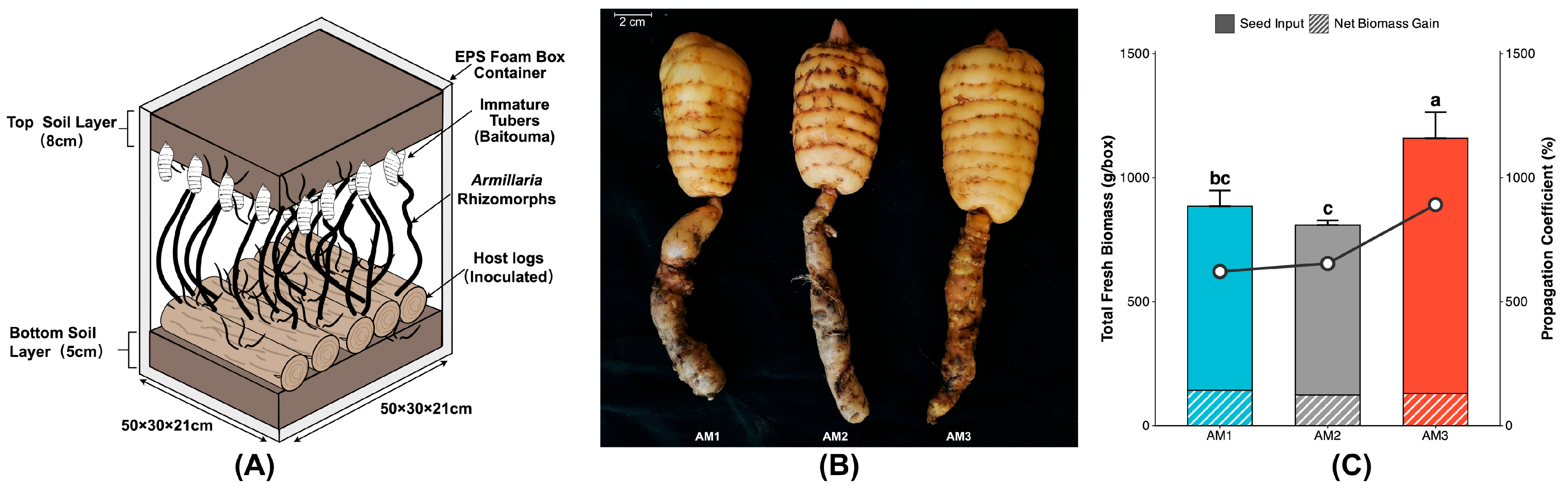
To elucidate how different fungal symbionts influence host developmental trajectories, we established a standardized foam-box symbiotic cultivation system with three Armillaria mellea strains (AM1, AM2, AM3) (Figure 1A). Each treatment comprised three independently cultivated boxes (n = 3 per strain). After long-term symbiosis, Gastrodia elata tubers developed normally across all treatments but displayed marked strain-associated divergence in biomass production and metabolite allocation (Figure 1B,C).
AM3 induced a “biomass-dominant” phenotype, with the highest fresh tuber yield (1159.72 ± 104.59 g box−1) exceeding AM1 (809.46 ± 18.65 g box−1) and AM2 (885.33 ± 63.29 g box−1) (one-way ANOVA followed by Tukey’s HSD, p < 0.05; Figure 1C). Given the small sample size (n = 3 per group), these estimates are best interpreted as effect-direction signals observed under the present cultivation conditions rather than definitive strain rankings across environments. Notably, higher biomass under AM3 coincided with lower accumulation of key medicinal phenolic glycosides, whereas AM1 showed a lower yield but “quality-dominant” tendency [19] (Figure 2 and Figures S1).
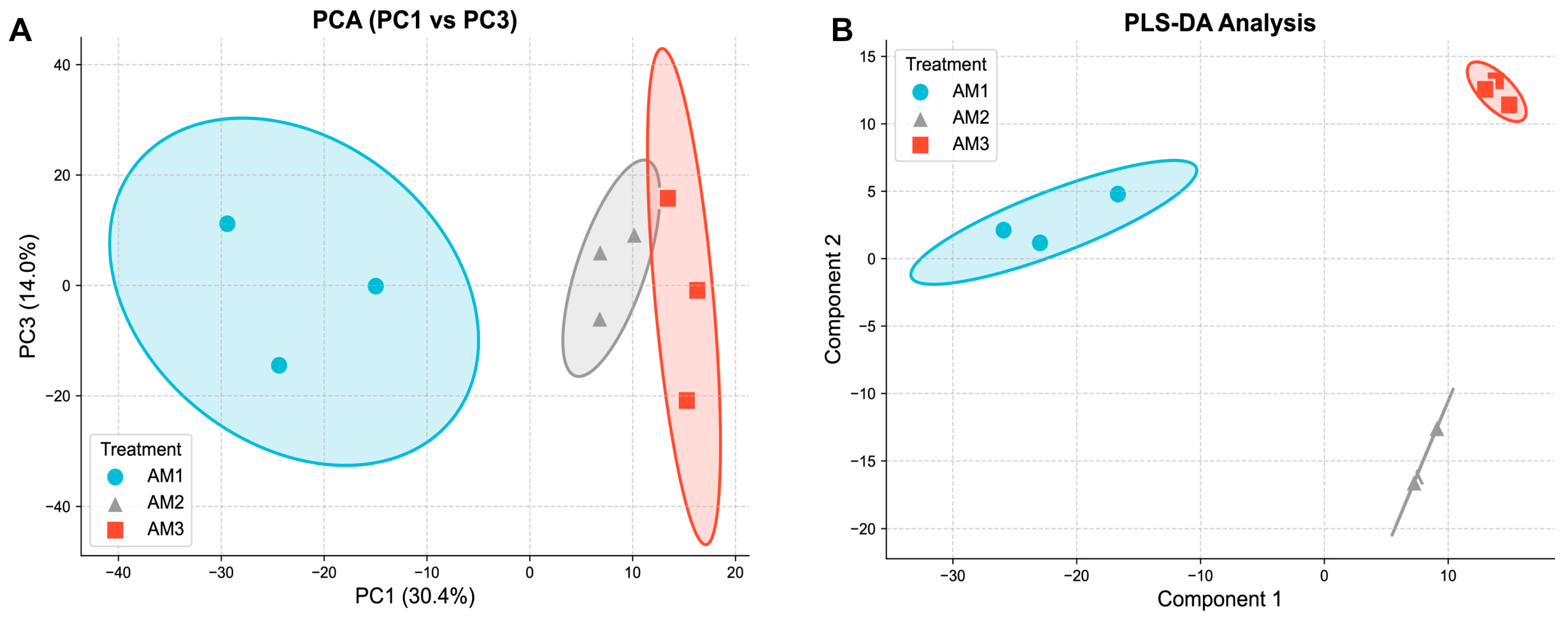
We next performed widely targeted metabolomics, quantifying 935 metabolites across 11 chemical classes. PCA indicated strain-associated structure in the multivariate metabolome (Figure 3A; PC1 and PC3 are shown), while univariate testing (pairwise Welch’s t-tests with Benjamini–Hochberg correction, q < 0.05) yielded relatively few metabolites passing stringent FDR thresholds, consistent with limited power at n = 3 and coordinated multivariate shifts rather than single-metabolite dominance.
To probe coordinated metabolic patterns more sensitively, we applied PLS-DA. The three-class model produced clearer separation than PCA (Figure 3B), with high explained variance (R2 = 0.98) and moderate cross-validated predictivity (Q2 = 0.45; permutation-tested; Methods). Because supervised models can overfit at small n, this separation is interpreted as exploratory.
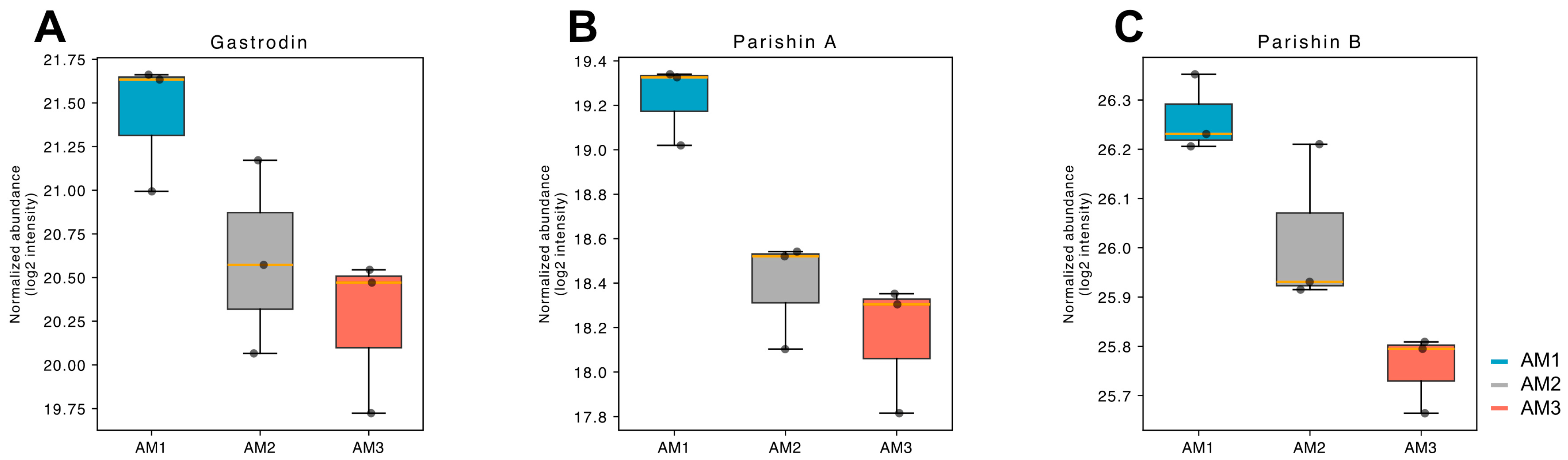
Because gastrodin-type phenolic glycosides are widely recognized as core bioactive constituents of G. elata, we further examined gastrodin and representative parishin congeners directly (Figure 2). Gastrodin showed a directional trend of higher median abundance under AM1 and lower abundance under AM3 (p = 0.099; Table S1), while parishin B exhibited the strongest contrast, with the lowest abundance under AM3 (p = 0.00156). Parishin A showed a similar directional trend but was borderline (p = 0.099), consistent with limited power at n = 3 per treatment. Together, these phenotypic and metabolomic readouts support strain-associated shifts along a yield–quality axis in the GastrodiaArmillaria symbiosis [20].

3.2. The Carbon-Rich State: High-Energy Substrate Accumulation Is Associated with Reduced Secondary Metabolite Levels

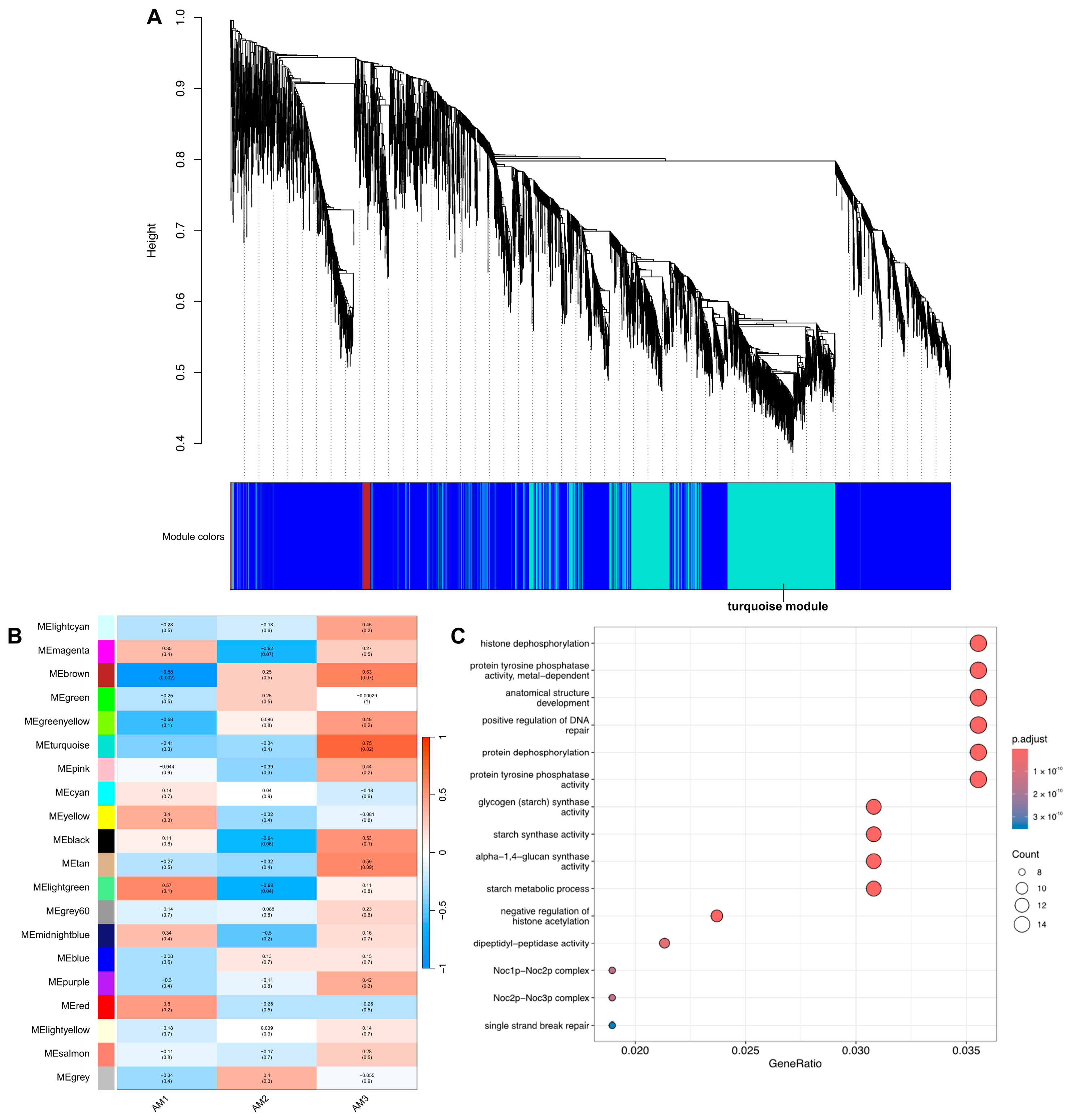
Building on the strain-dependent yield–quality divergence described above, we asked whether the AM3 “biomass-dominant” state is supported by a coordinated transcriptional program consistent with enhanced carbon storage [21]. Weighted gene co-expression network analysis (WGCNA) resolved expressed genes into discrete modules and highlighted a prominent turquoise module (Figure 4A). Module–trait relationships indicated that this turquoise module was most closely aligned with the AM3 condition (Figure 4B). Functional enrichment of turquoise-module genes revealed strong over-representation of starch-related biological processes and activities (e.g., “starch metabolic process” and “starch synthase activity”), together with chromatin-related terms (Figure 4C).
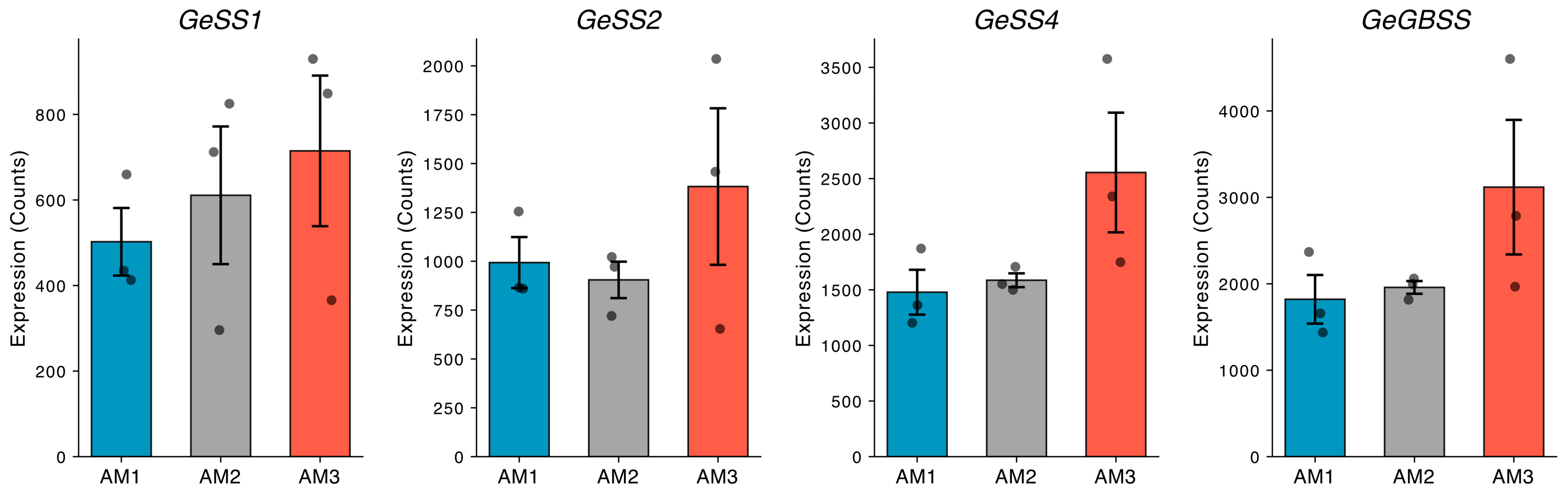
To illustrate this storage-oriented program at the gene level, representative starch synthase genes identified within the turquoise module (GeSS1, GeSS2, GeSS4 and GeGBSS) showed higher mean expression in AM3-colonized tubers than in AM1 and AM2 (Figure 5). GeSS4 and GeGBSS displayed the largest directional increases relative to AM1, consistent with activation of sink strength machinery for starch deposition.
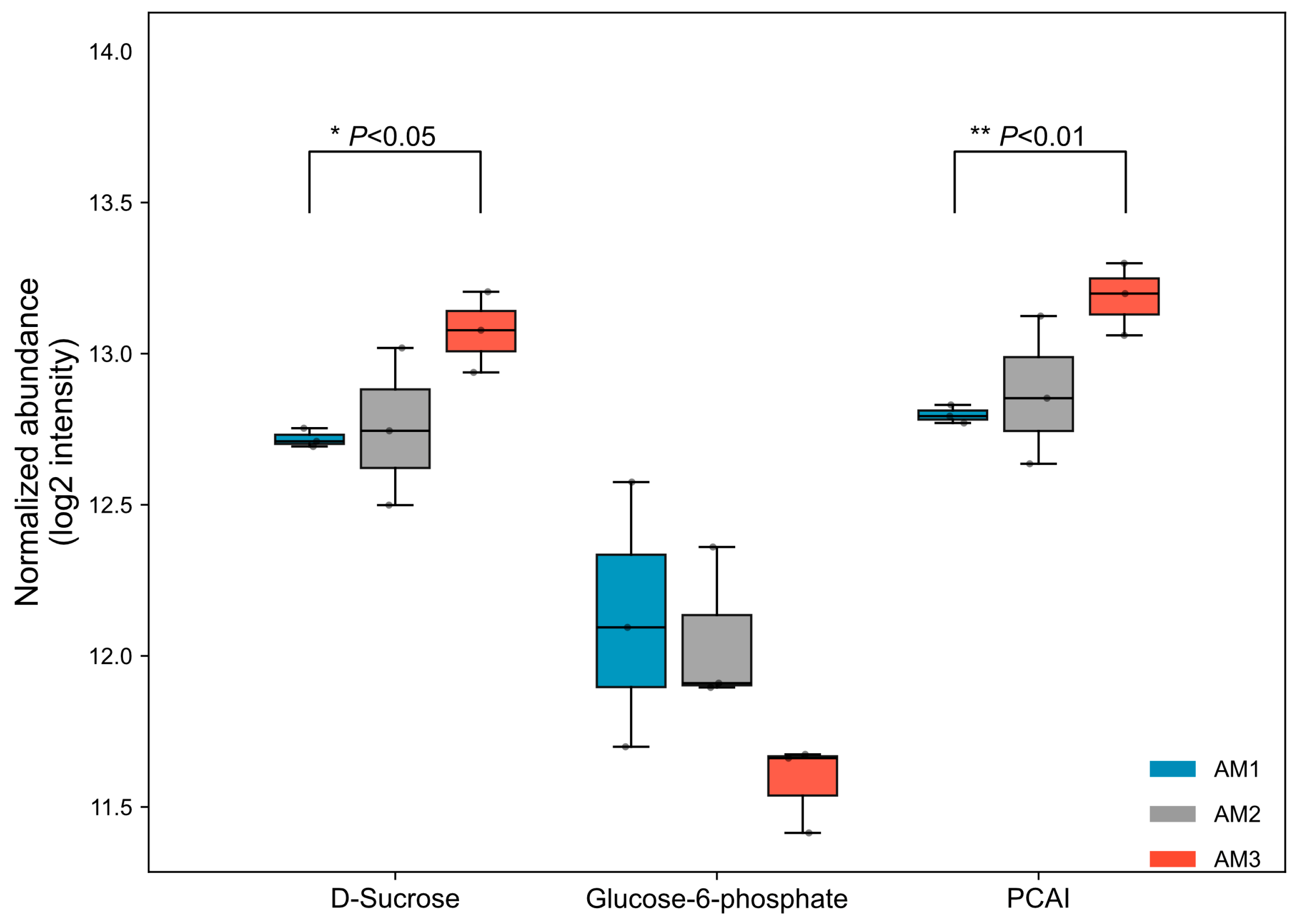
Consistent with this transcriptional signature, metabolomic profiling revealed enrichment of primary carbon substrates under AM3. Sucrose—the major transport form of carbon in plants—reached its highest abundance in the AM3 group, and the composite Primary Carbon Availability Index (PCAI) was correspondingly elevated (Figure 6). By contrast, a representative glycolytic intermediate (glucose-6-phosphate) did not differ significantly among treatments, suggesting rapid utilization of incoming carbon rather than intermediate accumulation.
Notably, this apparent enrichment of primary carbon pools in AM3 did not coincide with increased accumulation of downstream defense-related secondary metabolites. Instead, AM1—despite lower free sugar content—showed comparatively greater investment in phenylpropanoid/phenolic glycoside products, including gastrodin and representative parishin congeners (Figure 2 and Figure S1). Together, these coupled transcriptional and metabolic profiles are consistent with an AM3-associated carbon-rich state in which abundant fungal-derived carbon is preferentially directed toward primary storage sinks (e.g., starch/biomass) rather than phenylpropanoid-linked phenolic glycoside accumulation [22].

3.3. Quantifying the Trade-Off: Biosynthetic Efficiency and Inferred Metabolic Flux Competition

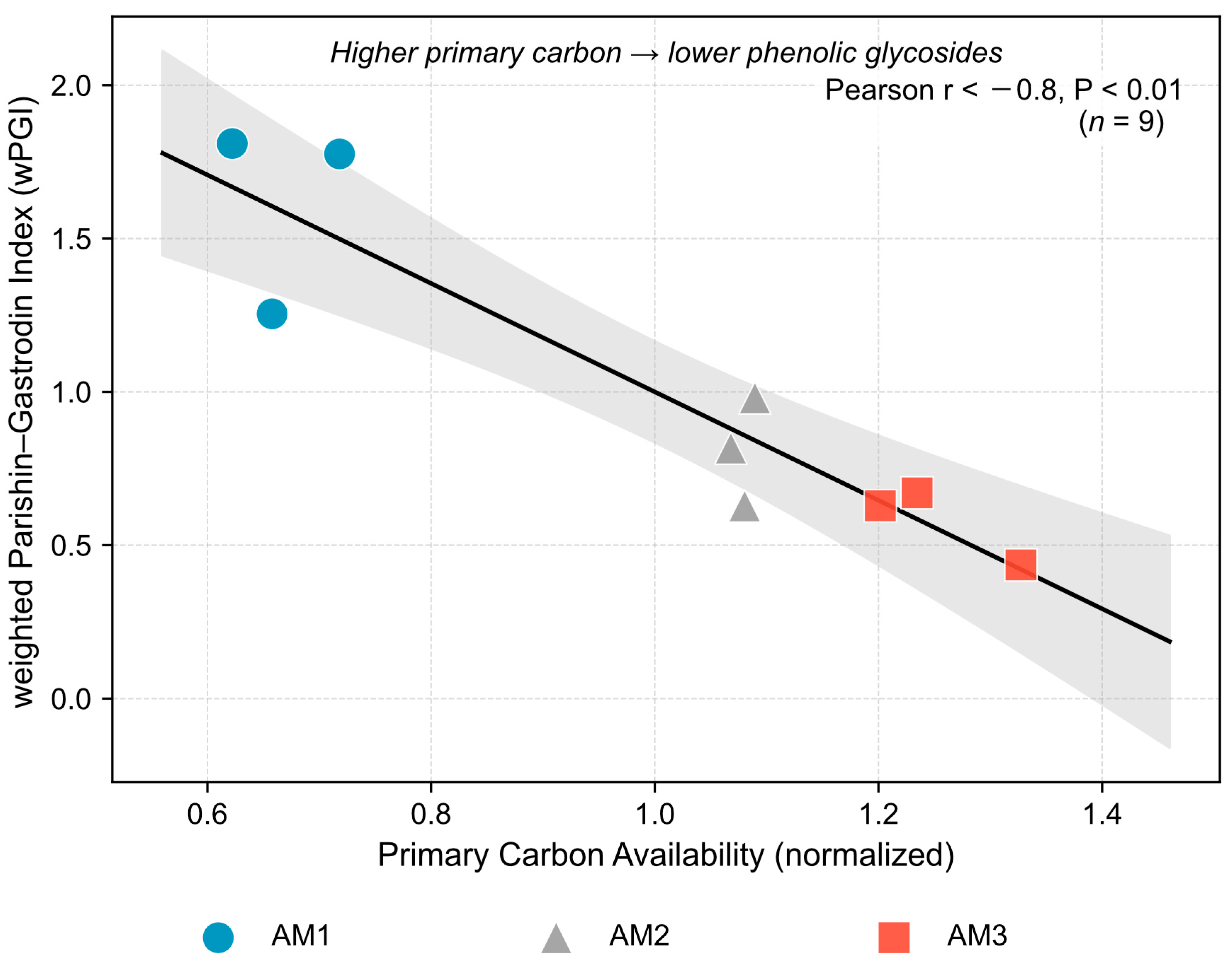
To quantify the relationship between primary carbon status and medicinal phenolic output, we regressed the weighted Parishin-Gastrodin Index (wPGI; according to Equation (3)) against the Primary Carbon Availability Index (PCAI; according to Equation (4)) across all samples (n = 9; Figure 7). Within this dataset (n = 3 biological replicates per strain), we observed a strong negative correlation between primary carbon availability and the weighted phenolic output (Pearson r < −0.8, p < 0.01). Although the small sample size warrants caution in interpreting correlation coefficients, this antagonistic pattern suggests a broad trade-off between carbohydrate storage pools and secondary metabolite accumulation.
We interpret this strong negative association as consistent with a working “flux competition” model [23]: under the AM3-associated strong-sink regime, incoming carbon may be preferentially routed into biomass formation and storage-carbohydrate deposition (supported by the AM3-enriched starch-biosynthetic transcriptional program), which could reduce the availability of shikimate/phenylpropanoid precursors (e.g., phosphoenolpyruvate and erythrose-4-phosphate) required for gastrodin/parishin biosynthesis [24]. Conversely, under AM1, a less saturated storage sink may leave a larger fraction of carbon skeletons available for phenylpropanoid flux, consistent with higher wPGI and BER. As such, this interpretation should be viewed as a working hypothesis about how carbon is partitioned between primary and secondary metabolism, not as a direct demonstration of substrate competition [25].
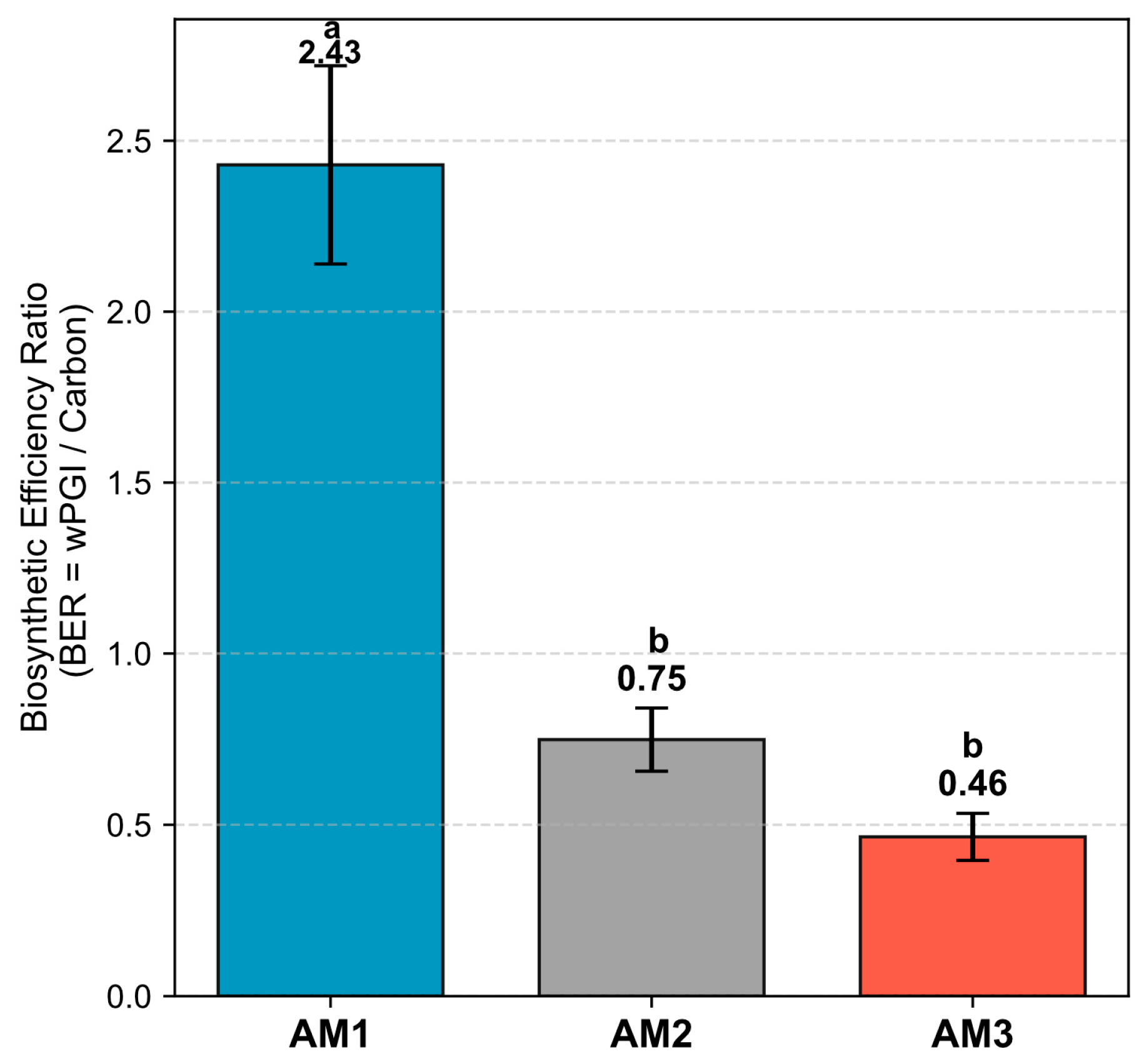
To compare strain-specific strategies more intuitively, we proposed a composite metric—the “Biosynthetic Efficiency Ratio” (according to Equation (5)) (Figure 8). In our dataset, the AM1 group showed the highest BER (~2.43), consistent with a “high-efficiency” strategy in which a relatively limited carbon supply is associated with greater conversion into high-value bioactive compounds. Statistical analysis confirmed that AM1 exhibited significantly higher biosynthetic efficiency compared to AM2 and AM3 (p < 0.01). Conversely, the AM3 group showed the lowest numerical BER (~0.46), aligning with its “Biomass-Dominant” allocation mode, although it was not statistically distinguishable from the intermediate AM2 group (p = 0.54) due to sample variability. These results are consistent with the idea that, within the GastrodiaArmillaria symbiotic system, the identity of the fungal partner is a key factor influencing the host’s metabolic balance [26].

4. Discussion

4.1. Fungal Partners Drive the Growth–Defense Trade-Off in Gastrodia elata

Our integrated multi-omics analysis shows that symbiotic Armillaria strains are important determinants of the growth–defense balance in G. elata, extending beyond simple nutrient provision to shape the allocation of carbon between biomass and secondary metabolism [27,28,29]. In our standardized foam-box cultivation system, AM3 induced a biomass-dominant phenotype characterized by high tuber yield, elevated sucrose and an AM3-associated starch-biosynthetic transcriptional program, and a low Biosynthetic Efficiency Ratio (BER), whereas AM1 supported a quality-dominant phenotype with lower yield but higher contents of gastrodin and parishin-type phenolic glycosides and the highest BER. The strong negative correlation between the Primary Carbon Availability Index (PCAI) and the weighted Parishin-Gastrodin Index (wPGI) further indicates a broad antagonism between soluble primary carbon pools and medicinal secondary metabolite accumulation at the whole-tuber level.
These patterns are consistent with the Growth–Differentiation Balance Hypothesis (GDBH) [23], which posits that plants draw on a finite resource pool such that enhanced allocation to growth and storage tends to coincide with reduced investment in defense and differentiation [30]. For an obligate mycoheterotroph such as G. elata, which cannot fix carbon autonomously, the identity of the fungal partner [13] effectively defines the external carbon regime [9]. In this context, AM3 and AM1 can be viewed as steering the host toward opposite ends of a growth–defense continuum: a “carbon-rich, biomass-dominant” state versus a “moderate-carbon, quality-dominant” state.

4.2. Fungal Partners as External Metabolic Effectors

Our data support the view that Armillaria strains function as external metabolic effectors that bias host allocation strategies [31]. While univariate statistics suggested a relatively robust basal metabolic background across treatments, multivariate ordination and network analyses (PCA/PLS-DA and WGCNA) resolved clear strain-specific signatures in both metabolite profiles and gene-expression modules. Together with the strain-dependent shifts in wPGI, PCAI and BER, these signatures indicate that different Armillaria partners do not merely change the “amount” of carbon available but may also reconfigure the regulatory landscape through which G. elata interprets and allocates that carbon. Given that there are n = 3 biological replicates per treatment, the multivariate results should be regarded as exploratory and interpreted primarily in terms of effect direction under the present cultivation conditions.
A central observation is the AM3-associated turquoise co-expression module, which is strongly enriched for genes encoding starch synthases and related carbohydrate-active enzymes and is specifically correlated with the AM3 treatment. At the metabolic level, AM3-colonized tubers show elevated sucrose and a higher PCAI, while a representative glycolytic intermediate (glucose-6-phosphate) does not accumulate, suggesting efficient downstream utilization. This combination of a starch-biosynthetic transcriptional program and high primary carbon availability is consistent with an AM3-specific carbon-rich state regime in which an abundant influx of fungal-derived carbon is preferentially directed into storage sinks and vegetative expansion, accompanied by a relative de-emphasis of phenylpropanoid-linked secondary metabolism [32].
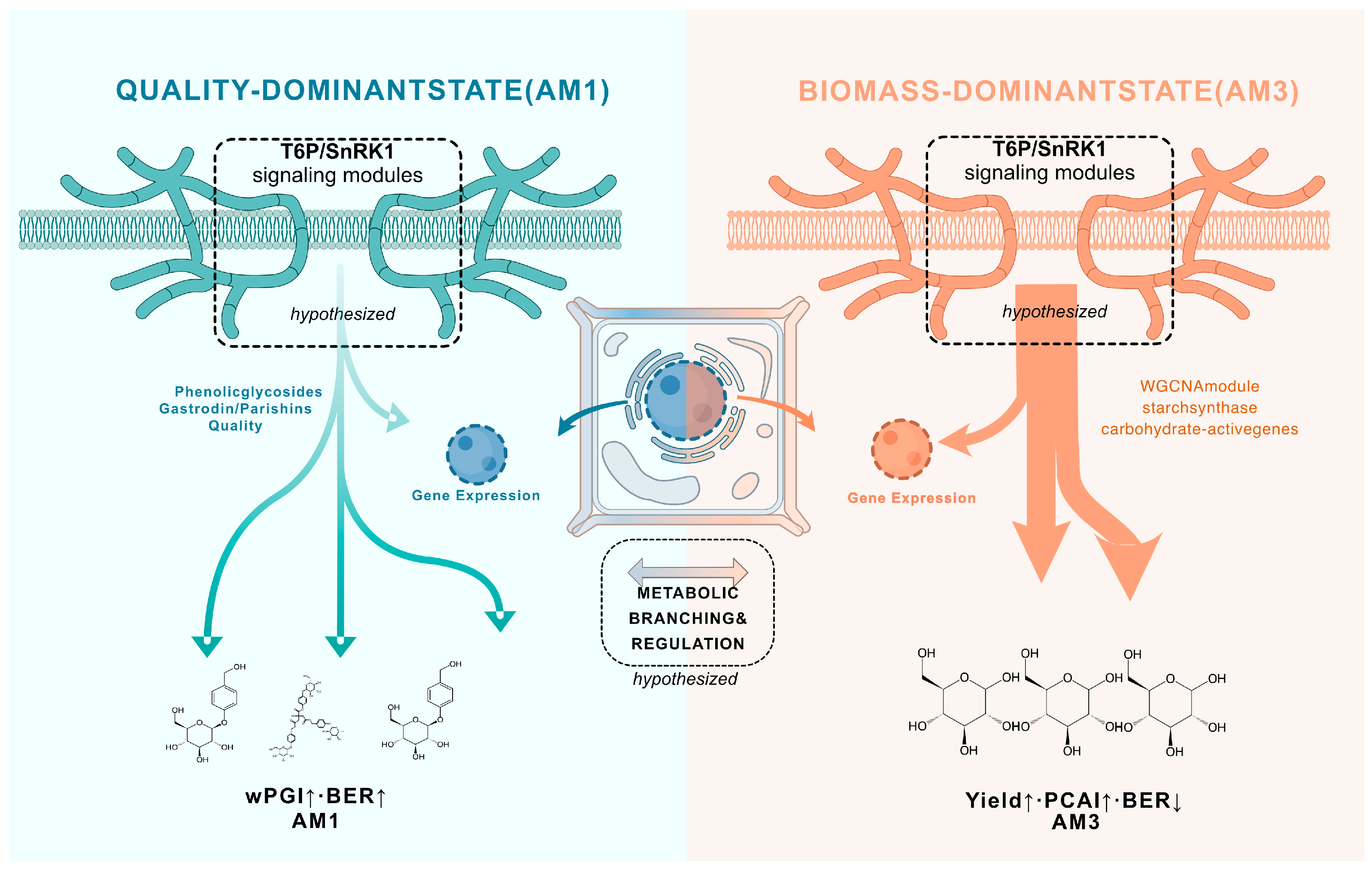
Sugar and energy-signaling networks, including the trehalose-6-phosphate (T6P)/SnRK1 axis, provide a biologically plausible framework for interpreting this shift. Elevated sucrose often correlates with increased T6P, which in several model systems represses SnRK1 activity [33]; SnRK1, in turn, is a central energy sensor that typically promotes stress- and defense-associated transcriptional programs under energy-limiting conditions and can modulate phenylpropanoid metabolism in a context-dependent manner [34]. In our system, high sucrose under AM3 coincides with lower gastrodin/parishin-type glycosides and reduced expression of phenylpropanoid-related genes, whereas the more moderate carbon status under AM1 is associated with a higher BER and greater phenolic glycoside output. One working model is that AM3-driven carbon abundance shifts sugar/energy signaling in a way that favors allocation to primary sinks and attenuates specific defense-associated branches [35], while AM1 maintains a regime in which energy sensors remain partially engaged, allowing sustained investment in secondary metabolism. Because we did not quantify T6P levels or SnRK1 activity directly, this model remains inferential. The expression profiles of annotated TPS/TPP and SnRK1 genes are provided in Supplementary Figure S3. We observed no coordinated transcriptional shift across these signaling components. This stability suggests that the potential regulatory differences likely occur at the post-translational level (e.g., phosphorylation) rather than through transcript abundance, which is consistent with the canonical regulation of the SnRK1 complex. This conceptual source–sink allocation model is summarized in Figure 9.
AM3 is associated with a high-carbon regime (elevated primary carbon pool indexed by PCAI) and strengthened storage sink activity, supported by the AM3-aligned turquoise WGCNA module [18] enriched in starch synthase and carbohydrate-active genes, resulting in a biomass-dominant state (higher yield and storage-oriented transcriptional program) and reduced biosynthetic efficiency (lower according to Equation (5)). In contrast, AM1 is associated with a moderate-carbon regime that favors allocation toward phenolic glycosides (gastrodin/parishins), yielding higher wPGI and BER. Solid arrows summarize patterns supported by metabolomic and transcriptomic evidence, whereas dashed elements denote hypothesized regulatory links (e.g., sugar/energy signaling via the T6P–SnRK1 axis) [36,37] and attenuation inferred from steady-state profiles rather than direct flux measurements [38]. The inset summarizes the observed negative association between PCAI and wPGI across samples (n = 9).

4.3. Metabolic Flux Competition: The Physical Cost of a Carbon-Rich State

Beyond signaling, our results are compatible with a contribution of direct metabolic flux competition to the growth–defense trade-off. Biosynthesis of gastrodin and parishins proceeds via the shikimate and phenylpropanoid pathways [39], which draw on central carbon intermediates such as phosphoenolpyruvate (PEP) and erythrose-4-phosphate. Under the AM3-associated “strong sink” regime—characterized by upregulated starch synthase genes and elevated sucrose (PCAI)—incoming carbon is likely directed into storage sinks (potentially including starch deposition capacity). This would restrict the size of the precursor pools that can be diverted into phenylpropanoid metabolism, imposing a physical constraint on secondary metabolite production.
Within this interpretive framework, the strong negative correlation between PCAI and wPGI, and the low BER observed in AM3, can be viewed as emergent readouts of such flux allocation. By contrast, AM1 appears to support a more “high-efficiency” state: primary carbon pools are more limited, but a larger fraction is converted into phenolic glycosides, yielding a higher BER. Conceptually, this corresponds to a regime in which primary sinks do not fully saturate, and the balance between growth and differentiation remains shifted toward the latter, consistent with GDBH. We emphasize that these inferences are based on steady-state metabolite levels and pathway architecture rather than on isotope-based flux measurements; accordingly, the “flux competition” model should be regarded as a working hypothesis that now invites targeted fluxomics experiments.

4.4. Implications for Precision Symbiosis in the “Medicine and Food Homology” Era

The recent inclusion of G. elata in China’s “medicine and food homology” catalog brings the long-standing tension between yield and quality into sharp focus for this crop. Our findings suggest that this tension can be managed not only through host genetics and agronomic inputs, but also through “precision symbiosis”—the deliberate selection and deployment of fungal partners to steer the growth–defense balance toward defined production goals [40]. Because our experiments were conducted in a controlled foam-box system and assessed only three Armillaria strains, the stability and generality of the inferred allocation strategies should be validated across environments/production settings and expanded strain panels (ideally with genotypic or genomic characterization).
In a food- or commodity-oriented context, strains such as AM3 may be advantageous [41]. Their carbon-abundant allocation strategy is associated with higher biomass and a higher soluble-carbon index, traits that are desirable when fresh yield and caloric value are prioritized over maximal medicinal potency [42]. Conversely, for medicinal applications where the concentration and biosynthetic efficiency of gastrodin and parishins are paramount, strains like AM1 appear more suitable: they support a quality-dominant phenotype with higher BER, reflecting more efficient relative allocation of available primary carbon toward bioactive phenolic glycosides. AM2, which tends to show intermediate values, may be useful in mixed or transitional production schemes where both moderate yield and quality are acceptable.
Viewed this way, the GastrodiaArmillaria symbiosis offers a tunable axis for regulating the growth–defense trade-off [43], with fungal strain identity functioning as a practical lever for designing cultivation protocols [44]. These results provide a conceptual basis for defining fungal strain standards or inoculation guidelines for food-grade versus medicinal-grade G. elata, complementing existing standards that focus primarily on host genotype and agronomic management. As strain collections and omics resources expand, it should become feasible to integrate simple indices such as PCAI, wPGI and BER into routine evaluation pipelines, thereby linking physiological metrics directly to cultivation decisions [45].

5. Conclusions

This study demonstrates that symbiotic Armillaria strains are key determinants of the growth–defense balance in G. elata. In a standardized foam-box system, AM3 induced a biomass-dominant phenotype with high tuber yield, elevated primary carbon availability (PCAI) and low relative biosynthetic efficiency of phenolic glycosides, whereas AM1 supported a quality-dominant phenotype with lower yield but higher gastrodin/parishin-type glycosides and the greatest Biosynthetic Efficiency Ratio (BER); AM2 showed intermediate characteristics. The strong negative correlation between PCAI and the weighted Parishin-Gastrodin Index (wPGI) quantitatively captures this trade-off under the present cultivation conditions.
By integrating metabolomics, transcriptomics and weighted gene co-expression network analysis, we further show that these contrasting allocation modes are underpinned by coordinated reprogramming of central carbon metabolism, including an AM3-associated module enriched in starch-biosynthetic and chromatin-related genes. Together, the wPGI–PCAI–BER framework and the identified co-expression modules support a view of Armillaria as an external metabolic effector that steers G. elata between biomass- and quality-oriented states, consistent with the Growth–Differentiation Balance Hypothesis. Practically, our results provide a mechanistic basis for “precision symbiosis”: strains such as AM3 for high-yield, food-grade production and AM1 for high-value medicinal tubers should be selected, and simple physiological indices should be used to screen and deploy fungal resources in standardized G. elata cultivation. Future work should functionally validate the proposed sugar signaling links and test the stability of strain-dependent allocation strategies across environments.

Supplementary Materials

The following supporting information can be downloaded at https://www.mdpi.com/article/10.3390/horticulturae12020181/s1, Figure S1: Boxplots of normalized abundances (log2 intensity) of gastrodin and parishin-type phenolic glycosides in Gastrodia elata tubers colonized by three Armillaria mellea strains (AM1, AM2, AM3; n = 3 biological replicates per strain). Boxes indicate the interquartile range (IQR) with the median shown as the central line; whiskers extend to 1.5 × IQR; points represent individual biological replicates. “Sum_Gastrodins” denotes the summed signal of measured gastrodin-related derivatives; Figure S2: Robustness of the yield–quality trade-off under varying wPGI weighting schemes. Correlation between PCAI and wPGI calculated with varying gastrodin (G) to parishin (P) weights (0.5:0.5, 0.6:0.4, and 0.7:0.3). Regardless of the weighting ratio, a significant negative correlation is observed (Pearson r < −0.8, p < 0.01), indicating the model’s stability. Shaded regions represent 95% confidence intervals; Figure S3: Expression profiles of T6P- and SnRK1-related genes across Armillaria treatments. Heatmap showing the expression patterns of genes annotated as SnRK1 complex subunits (α/β/γ) and T6P pathway enzymes (TPS/TPP) in Gastrodia elata tubers colonized by three Armillaria strains (AM1, AM2, AM3). Values are displayed as row-wise Z-scores (standardized per gene) to emphasize relative differences among treatments; red and blue indicate higher and lower expression, respectively. Gene IDs are shown on the left with functional annotations in parentheses; Table S1: Descriptive statistics (mean and 95% CI), log2 fold change (AM3/AM1), effect size (Hedges’ g; AM3 vs. AM1), and pairwise p values (AM3 vs. AM1) for gastrodin and parishin-type phenolic glycosides (n = 3); Table S2: Rationale for metabolite selection and source dataset for the Primary Carbon Availability Index (PCAI); Supplementary Material S1: Foam-Box Symbiotic Cultivation Protocol; Supplementary Material S2: Widely Targeted Metabolomics—LC–MS/MS Settings and Preprocessing; Supplementary Material S3: Multivariate Modeling (PLS-DA); Supplementary Material S4: WGCNA Module–Trait Associations and Functional Enrichment.

Author Contributions

Conceptualization, Z.S., L.X. and S.Y.; Methodology, Z.S., Z.M. and Y.W.; Software, Y.W. and Z.M.; Validation, Z.S.; Formal analysis, Z.S., Z.M. and Y.W.; Investigation, Z.S., Z.M. and L.D.; Resources, Z.S. and S.Y.; Data curation, Z.S. and Y.W.; Writing—original draft preparation, Z.S.; Writing—review and editing, Z.S., Z.M., Y.W., L.D., L.X. and S.Y.; Visualization, Z.S., Y.G. and Z.M.; Supervision, L.X. and S.Y.; Project administration, L.X. and S.Y.; Funding acquisition, Z.S. and S.Y. All authors have read and agreed to the published version of the manuscript.

Funding

This research was funded by the National Natural Science Foundation of China, grant numbers 82360756 and 32160063; the Natural Science Foundation of Yunnan Province, grant numbers 202401AT071136 and 202301AU070037; the Young Talent Support Program of Yunnan Province “Xingdian Talents Support Program”, grant number XDYC-QNRC-2022-0762; and the China Postdoctoral Science Foundation, grant number GZC20231758.

Data Availability Statement

The raw transcriptomic data presented in this study have been deposited in the Genome Sequence Archive (GSA) in the National Genomics Data Center, China National Center for Bioinformation (CNCB), under accession number CRA035288 [accessible at https://ngdc.cncb.ac.cn/gsa (accessed on 26 January 2026)]. The dataset is associated with BioProject PRJCA053565.

Conflicts of Interest

The authors declare that they have no known competing financial interests or personal relationships that could have appeared to influence the work reported in this paper.

Abbreviations

AMArmillaria mellea strain
AM1–AM3Armillaria strains used in this study
ANOVAanalysis of variance
BERBiosynthetic allocation efficiency ratio
BHBenjamini–Hochberg
CNCBChina National Center for Bioinformation
EPSExpanded Polystyrene
FDRfalse discovery rate
FPKMfragments per kilobase of transcript per million mapped reads
GDBHGrowth–Differentiation Balance Hypothesis
GOGene Ontology
GSAGenome Sequence Archive
HSDhonestly significant difference
kMEmodule membership (correlation with module eigengene)
KEGGKyoto Encyclopedia of Genes and Genomes
LOESSlocally estimated scatterplot smoothing
MEmodule eigengene
MRMmultiple reaction monitoring
PCAprincipal component analysis
PCAIprimary carbon availability index
PDApotato dextrose agar
PLS-DApartial least squares discriminant analysis
QCquality control
RINRNA integrity number
RNA-seqRNA sequencing
SDstandard deviation
SEstandard error
SnRK1SNF1-related protein kinase 1
T6Ptrehalose-6-phosphate
TICtotal ion current
TOMtopological overlap matrix
UPLC–MS/MSultra-performance liquid chromatography–tandem mass spectrometry
VIPvariable importance in projection
WGCNAweighted gene co-expression network analysis
wPGIthe weighted Parishin-Gastrodin Index

References

  1. Cai, J.; Muhammad, I.; Chen, B.; Xu, P.; Li, Y.; Xu, H.; Li, K. Whole Genome Sequencing and Analysis of Armillaria gallica Jzi34 Symbiotic with Gastrodia elata. BMC Genom. 2023, 24, 275–287. [Google Scholar] [CrossRef]
  2. Yang, Y.; Hai, Y.; Yang, Y.; Wen, R.; Wang, L.; Qian, Y.; Zhang, J.; Li, Y.; Shi, Z.; Zhang, H. Extraction, Purification, Structural Characteristics, Biological Activities, and Applications of Polysaccharides from Gastrodia elata: A Review. Molecules 2025, 30, 262. [Google Scholar] [CrossRef]
  3. Hsieh, C.-H.; Liang, Z.-C.; Shieh, W.-J.; Chang, S.-L.; Ho, W.-J. Effects of Nutrients and Growth Regulators on Seed Germination and Development of Juvenile Rhizome Proliferation of Gastrodia elata In Vitro. Agriculture 2022, 12, 1210. [Google Scholar] [CrossRef]
  4. Favre-Godal, Q.; Gourguillon, L.; Lordel-Madeleine, S.; Gindro, K.; Choisy, P. Orchids and Their Mycorrhizal Fungi: An Insufficiently Explored Relationship. Mycorrhiza 2020, 30, 5–22. [Google Scholar] [CrossRef] [PubMed]
  5. Zhan, H.-D.; Zhou, H.-Y.; Sui, Y.-P.; Du, X.-L.; Wang, W.; Dai, L.; Sui, F.; Huo, H.-R.; Jiang, T.-L. The Rhizome of Gastrodia elata Blume—An Ethnopharmacological Review. J. Ethnopharmacol. 2016, 189, 361–385. [Google Scholar] [CrossRef] [PubMed]
  6. Fan, Y.; Tian, M.; Hu, D.; Xiong, Y. Exploring the Biocultural Nexus of Gastrodia elata in Zhaotong: A Pathway to Ecological Conservation and Economic Growth. Biology 2025, 14, 846. [Google Scholar] [CrossRef]
  7. Bae, E.-K.; An, C.; Kang, M.-J.; Lee, S.-A.; Lee, S.J.; Kim, K.-T.; Park, E.-J. Chromosome-Level Genome Assembly of the Fully Mycoheterotrophic Orchid Gastrodia elata. G3 Genes|Genomes|Genet. 2022, 12, jkab433. [Google Scholar] [CrossRef]
  8. Suetsugu, K.; Matsubayashi, J.; Tayasu, I. Some Mycoheterotrophic Orchids Depend on Carbon from Dead Wood: Novel Evidence from a Radiocarbon Approach. New Phytol. 2020, 227, 1519–1529. [Google Scholar] [CrossRef]
  9. Yuan, Y.; Jin, X.; Liu, J.; Zhao, X.; Zhou, J.; Wang, X.; Wang, D.; Lai, C.; Xu, W.; Huang, J.; et al. The Gastrodia elata Genome Provides Insights into Plant Adaptation to Heterotrophy. Nat. Commun. 2018, 9, 1615. [Google Scholar] [CrossRef]
  10. Ren, L.-Y.; Zhao, H.; Liu, X.-L.; Zong, T.-K.; Qiao, M.; Liu, S.-Y.; Liu, X.-Y. Transcriptome Reveals Roles of Lignin-Modifying Enzymes and Abscisic Acid in the Symbiosis of Mycena and Gastrodia elata. Int. J. Mol. Sci. 2021, 22, 6557. [Google Scholar] [CrossRef] [PubMed]
  11. Caballero, J.R.I.; Lalande, B.M.; Hanna, J.W.; Klopfenstein, N.B.; Kim, M.-S.; Stewart, J.E. Genomic Comparisons of Two Armillaria Species with Different Ecological Behaviors and Their Associated Soil Microbial Communities. Microb. Ecol. 2023, 85, 708–729. [Google Scholar] [CrossRef]
  12. Monson, R.K.; Trowbridge, A.M.; Lindroth, R.L.; Lerdau, M.T. Coordinated Resource Allocation to Plant Growth–Defense Tradeoffs. New Phytol. 2022, 233, 1051–1066. [Google Scholar] [CrossRef]
  13. Lallemand, F.; Puttsepp, Ü.; Lang, M.; Luud, A.; Courty, P.-E.; Palancade, C.; Selosse, M.-A. Mixotrophy in Pyroleae (Ericaceae) from Estonian Boreal Forests Does Not Vary with Light or Tissue Age. Ann. Bot. 2017, 120, 361–371. [Google Scholar] [CrossRef]
  14. Ho, L.-H.; Lee, Y.-I.; Hsieh, S.-Y.; Lin, I.-S.; Wu, Y.-C.; Ko, H.-Y.; Klemens, P.A.; Neuhaus, H.E.; Chen, Y.-M.; Huang, T.-P.; et al. GeSUT4 Mediates Sucrose Import at the Symbiotic Interface for Carbon Allocation of Heterotrophic Gastrodia elata (Orchidaceae). Plant Cell Environ. 2021, 44, 20–33. [Google Scholar] [CrossRef] [PubMed]
  15. Lei, M.; Wang, X.; Chen, K.; Wei, Q.; Zhou, M.; Chen, G.; Su, S.; Tai, Y.; Zhuang, K.; Li, D.; et al. Sugar Transporters: Mediators of Carbon Flow between Plants and Microbes. Front. Plant Sci. 2025, 16, 1536969. [Google Scholar] [CrossRef] [PubMed]
  16. Zhang, S.; Liu, J.; Shi, L.; Wang, Q.; Zhang, P.; Wang, H.; Liu, J.; Li, H.; Li, L.; Li, X.; et al. Identification of Core Genes Associated with Different Phosphorus Levels in Quinoa Seedlings by Weighted Gene Co-Expression Network Analysis. BMC Genom. 2023, 24, 399–412. [Google Scholar] [CrossRef]
  17. Pan, B.; Zhang, J.; Yang, J.; Yang, H.; Pan, Q.; Zhu, P.; Li, J.; Yang, J. An Enhanced Gene Function Analysis Platform for Gastrodia elata Integrating Further Omics Data and Analysis Tools. BMC Plant Biol. 2025, 25, 1111. [Google Scholar] [CrossRef] [PubMed]
  18. Zhu, H.; Li, R.; Fang, Y.; Zhao, X.; Teng, W.; Li, H.; Han, Y. Weighted Gene Co-Expression Network Analysis Uncovers Critical Genes and Pathways Involved in Soybean Response to Soybean Mosaic Virus. Agronomy 2024, 14, 2455. [Google Scholar] [CrossRef]
  19. Giolai, M.; Laine, A.-L. A Trade-off between Investment in Molecular Defense Repertoires and Growth in Plants. Science 2024, 386, 677–680. [Google Scholar] [CrossRef]
  20. Lundberg, D.S.; Kersten, S.; Mehmetoğlu Boz, E.; Pramoj Na Ayutthaya, P.; Zhu, W.; Poersch, K.; Yuan, W.; Swartz, S.; Müller, D.; Bezrukov, I.; et al. A Major Trade-off between Growth and Defense in Arabidopsis Thaliana Can Vanish in Field Conditions. PLoS Biol. 2025, 23, e3003237. [Google Scholar] [CrossRef]
  21. Bavnhøj, L.; Driller, J.H.; Zuzic, L.; Stange, A.D.; Schiøtt, B.; Pedersen, B.P. Structure and Sucrose Binding Mechanism of the Plant SUC1 Sucrose Transporter. Nat. Plants 2023, 9, 938–950. [Google Scholar] [CrossRef]
  22. Song, S.; Morales Moreira, Z.; Briggs, A.L.; Zhang, X.-C.; Diener, A.C.; Haney, C.H. PSKR1 Balances the Plant Growth–Defence Trade-off in the Rhizosphere Microbiome. Nat. Plants 2023, 9, 2071–2084. [Google Scholar] [CrossRef]
  23. Huot, B.; Yao, J.; Montgomery, B.L.; He, S.Y. Growth–Defense Tradeoffs in Plants: A Balancing Act to Optimize Fitness. Mol. Plant 2014, 7, 1267–1287. [Google Scholar] [CrossRef]
  24. Yang, J.; Zhang, Y.; Jia, J.; Wang, C.; Fu, Y. Flavonoid-Lignin Crosstalk: Engineering Metabolic Flux for Optimised Plant Growth and Stress Resilience. Plant Cell Environ. 2025, 48, 8141–8160. [Google Scholar] [CrossRef]
  25. Zhang, Y.-M.; Yu, H.-X.; Ye, W.-W.; Shan, J.-X.; Dong, N.-Q.; Guo, T.; Kan, Y.; Xiang, Y.-H.; Zhang, H.; Yang, Y.-B.; et al. A Rice QTL GS3.1 Regulates Grain Size through Metabolic-Flux Distribution between Flavonoid and Lignin Metabolons without Affecting Stress Tolerance. Commun. Biol. 2021, 4, 1171. [Google Scholar] [CrossRef] [PubMed]
  26. Li, J.; Liao, Q.; Zhou, H.; Hu, R.; Li, Y.; Hu, Z.; Yu, B.; Liu, P.; Zheng, Q.; Pu, W.; et al. Multi-Omics Analyses Reveal Regulatory Networks Underpinning Metabolite Biosynthesis in Nicotiana Tabacum. Nat. Commun. 2025, 16, 10339. [Google Scholar] [CrossRef]
  27. He, Z.; Webster, S.; He, S.Y. Growth–Defense Trade-Offs in Plants. Curr. Biol. 2022, 32, R634–R639. [Google Scholar] [CrossRef]
  28. Erb, M.; Kliebenstein, D.J. Plant Secondary Metabolites as Defenses, Regulators, and Primary Metabolites: The Blurred Functional Trichotomy. Plant Physiol. 2020, 184, 39–52. [Google Scholar] [CrossRef]
  29. Karasov, T.L.; Chae, E.; Herman, J.J.; Bergelson, J. Mechanisms to Mitigate the Trade-off between Growth and Defense. Plant Cell 2017, 29, 666–680. [Google Scholar] [CrossRef] [PubMed]
  30. Ehrlich, E.; Kath, N.J.; Gaedke, U. The Shape of a Defense-Growth Trade-off Governs Seasonal Trait Dynamics in Natural Phytoplankton. ISME J. 2020, 14, 1451–1462. [Google Scholar] [CrossRef] [PubMed]
  31. Genre, A.; Lanfranco, L.; Perotto, S.; Bonfante, P. Unique and Common Traits in Mycorrhizal Symbioses. Nat. Rev. Microbiol. 2020, 18, 649–660. [Google Scholar] [CrossRef] [PubMed]
  32. Li, M.-H.; Liu, K.-W.; Li, Z.; Lu, H.-C.; Ye, Q.-L.; Zhang, D.; Wang, J.-Y.; Li, Y.-F.; Zhong, Z.-M.; Liu, X.; et al. Genomes of Leafy and Leafless Platanthera Orchids Illuminate the Evolution of Mycoheterotrophy. Nat. Plants 2022, 8, 373–388. [Google Scholar] [CrossRef] [PubMed]
  33. Fichtner, F. Trehalose 6-Phosphate—A Central Regulator at the Crossroads of Sugar Signalling, Metabolism, and Development. New Phytol. 2025, 248, 2243–2250. [Google Scholar] [CrossRef]
  34. Zhai, Z.; Keereetaweep, J.; Liu, H.; Feil, R.; Lunn, J.E.; Shanklin, J. Trehalose 6-Phosphate Positively Regulates Fatty Acid Synthesis by Stabilizing WRINKLED1. Plant Cell 2018, 30, 2616–2627. [Google Scholar] [CrossRef]
  35. Dong, N.-Q.; Sun, Y.; Guo, T.; Shi, C.-L.; Zhang, Y.-M.; Kan, Y.; Xiang, Y.-H.; Zhang, H.; Yang, Y.-B.; Li, Y.-C.; et al. UDP-Glucosyltransferase Regulates Grain Size and Abiotic Stress Tolerance Associated with Metabolic Flux Redirection in Rice. Nat. Commun. 2020, 11, 2629. [Google Scholar] [CrossRef]
  36. Baena-González, E.; Lunn, J.E. SnRK1 and Trehalose 6-Phosphate—Two Ancient Pathways Converge to Regulate Plant Metabolism and Growth. Curr. Opin. Plant Biol. 2020, 55, 52–59. [Google Scholar] [CrossRef]
  37. He, G.-X.; Zheng, F.-L.; Zou, Y.-N.; Gao, X.-B.; Wu, Q.-S.; Guo, C. Mycorrhizal Regulation of Core ZmSWEET Genes Governs Sugar Accumulation in Maize. Agriculture 2025, 15, 1790. [Google Scholar] [CrossRef]
  38. Li, L.; Wang, X.; Li, H.; Ali, M.M.; Hu, X.; Oelmuller, R.; Yousef, A.F.; Alrefaei, A.F.; Liu, J.; Chen, F. The SWEET14 Sugar Transporter Mediates Mycorrhizal Symbiosis and Carbon Allocation in Dendrobium Officinale. BMC Plant Biol. 2025, 25, 416–427. [Google Scholar] [CrossRef]
  39. Yin, D.-J.; Ye, S.-J.; Sun, X.-Y.; Chen, Q.-Y.; Min, T.; Wang, H.-X.; Wang, L.-M. Integrative Analysis of the Transcriptome and Metabolome Reveals Genes Involved in Phenylpropanoid and Flavonoid Biosynthesis in the Trapa Bispinosa Roxb. Front. Plant Sci. 2022, 13, 913265. [Google Scholar] [CrossRef]
  40. Ma, K.-W.; Niu, Y.; Jia, Y.; Ordon, J.; Copeland, C.; Emonet, A.; Geldner, N.; Guan, R.; Stolze, S.C.; Nakagami, H.; et al. Coordination of Microbe–Host Homeostasis by Crosstalk with Plant Innate Immunity. Nat. Plants 2021, 7, 814–825. [Google Scholar] [CrossRef] [PubMed]
  41. Bell, C.A.; Magkourilou, E.; Ault, J.R.; Urwin, P.E.; Field, K.J. Phytophagy Impacts the Quality and Quantity of Plant Carbon Resources Acquired by Mutualistic Arbuscular Mycorrhizal Fungi. Nat. Commun. 2024, 15, 801–815. [Google Scholar] [CrossRef]
  42. Yang, C.; Li, X.; Yang, L.; Chen, S.; Liao, J.; Li, K.; Zhou, J.; Shen, W.; Zhuang, X.; Bai, M.; et al. A Positive Feedback Regulation of SnRK1 Signaling by Autophagy in Plants. Mol. Plant 2023, 16, 1192–1211. [Google Scholar] [CrossRef] [PubMed]
  43. Hou, S.; Thiergart, T.; Vannier, N.; Mesny, F.; Ziegler, J.; Pickel, B.; Hacquard, S. A Microbiota–Root–Shoot Circuit Favours Arabidopsis Growth over Defence under Suboptimal Light. Nat. Plants 2021, 7, 1078–1092. [Google Scholar] [CrossRef] [PubMed]
  44. Paasch, B.C.; Sohrabi, R.; Kremer, J.M.; Nomura, K.; Cheng, Y.T.; Martz, J.; Kvitko, B.; Tiedje, J.M.; He, S.Y. A Critical Role of a Eubiotic Microbiota in Gating Proper Immunocompetence in Arabidopsis. Nat. Plants 2023, 9, 1468–1480. [Google Scholar] [CrossRef] [PubMed]
  45. Yuan, Q.-S.; Luo, L.; Shi, H.; Wang, H.; An, J.; Gao, Y.; Xu, J.; Ou, X.; Yang, Y.; Tabl, K.M.; et al. Fungal Symbiont Mycena Complements Impaired Nitrogen Utilization in Gastrodia elata and Supplies Indole-3-Acetic Acid to Facilitate Its Seed Germination. Plant Commun. 2025, 6, 101500. [Google Scholar] [CrossRef] [PubMed]
Figure 1. (A) Schematic overview of the foam-box symbiotic cultivation system. An EPS/foam cultivation box (50 × 30 × 21 cm) was filled with a 5 cm bottom soil layer, inoculated Quercus logs were placed horizontally, and the bed was covered with an 8 cm topsoil layer. Gastrodia elata seed tubers (immature tubers; “white hemp”) were positioned in direct contact with Armillaria-colonized logs and rhizomorphs to initiate symbiosis. (B) Representative morphological phenotypes of Gastrodia elata tubers harvested after symbiotic cultivation with different Armillaria strains (AM1, AM2, and AM3). Scale bar = 2 cm. (C) Agronomic input–output analysis of G. elata tubers colonized by three Armillaria mellea strains (AM1, AM2, AM3). Stacked bars (left axis) show total fresh tuber biomass per box (mean ± SE, n = 3 boxes per strain). The hatched lower segment in each bar denotes the standardized seed tuber input (initial fresh weight), and the solid upper segment represents net biomass gain (harvest fresh weight minus seed input). The overlaid line (right axis) indicates the propagation coefficient (growth rate; total harvest fresh weight/total initial seed tuber fresh weight). AM3 exhibits a “Biomass-Dominant” phenotype with the highest fresh yield and propagation coefficient, whereas AM1 displays a comparatively “Quality-Dominant” phenotype with lower biomass but higher medicinal quality (see Figure 2 and Figure S1). Different letters above bars indicate significant differences among strains (one-way ANOVA followed by Tukey’s HSD, p < 0.05).
Horticulturae 12 00181 g001
Figure 2. Boxplots of selected gastrodin-type phenolic glycosides with established relevance to G. elata medicinal quality (gastrodin (A), parishin A (B), and parishin B (C)). Boxes show the interquartile range with the median; whiskers denote 1.5 × IQR; points represent individual biological replicates (n = 3). See Methods for statistical details.
Horticulturae 12 00181 g002
Figure 3. (A) Principal component analysis (PCA) score plot of the widely targeted metabolome (935 metabolites; n = 3 biological replicates per strain). Points are colored by Armillaria strain. The partial separation with overlap indicates that tubers share a robust basal metabolic background while exhibiting strain-associated structure in the metabolome. (B) Partial least squares discriminant analysis (PLS-DA) score plot of the same metabolomic dataset (three-class model: AM1, AM2, AM3). Compared with PCA, PLS-DA reveals clearer class separation, indicating that combinations of metabolites can distinguish the three symbiotic states within this small dataset (R2 = 0.98, Q2 = 0.45; permutation-tested; see Methods). Given n = 3 per group, this model is interpreted as exploratory. Shaded ellipses indicate 95% confidence regions.
Horticulturae 12 00181 g003
Figure 4. (A) Hierarchical clustering dendrogram of genes based on topological overlap dissimilarity from weighted gene co-expression network analysis (WGCNA). Colored bars beneath the tree denote module assignments identified by dynamic tree cutting (n = 9 samples; three biological replicates per Armillaria strain). (B) Module–trait relationship heatmap. Rows represent module eigengenes, and columns represent fungal treatments (AM1, AM2, AM3). The color scale reflects Pearson correlation coefficients (red, positive; blue, negative). Values in each cell show the correlation coefficient (r) and associated p-value. The turquoise module shows a strong positive association specifically with the AM3 treatment (r = 0.75, p = 0.02), whereas the light green module shows a non-significant trend toward AM1 (r = 0.57, p = 0.11). These associations are interpreted as correlative given the limited sample size (n = 3 per group). (C) Gene Ontology (GO) and KEGG pathway enrichment analysis of the top 500 hub genes (|kME| > 0.95) within the turquoise module. Each point represents an enriched GO term or KEGG pathway; dot size corresponds to the number of genes, and color intensity reflects statistical significance (−log10 adjusted p-value). Key enriched categories include “starch synthase activity” and other carbohydrate-active functions, indicative of enhanced sink strength, as well as “histone dephosphorylation” and chromatin-related processes, suggesting that AM3-associated transcriptional reprogramming involves genes linked to chromatin state. These patterns highlight the turquoise module as a candidate regulatory cluster that warrants further functional validation.
Horticulturae 12 00181 g004
Figure 5. Transcriptional upregulation of the starch biosynthetic program. Expression profiles of representative starch synthase genes (GeSS1, GeSS2, GeSS4 and GeGBSS) identified within the AM3-associated turquoise module. Bars represent mean normalized counts ± SD (n = 3 biological replicates), with individual data points overlaid.
Horticulturae 12 00181 g005
Figure 6. Carbon status analysis showing the normalized abundance of D-sucrose (primary source), glucose-6-phosphate (metabolic intermediate), and the composite Primary Carbon Availability Index (PCAI). While AM3 exhibits significantly elevated carbon input (D-sucrose) and overall availability (PCAI), the levels of the intermediate glucose-6-phosphate remain statistically comparable to those in AM1 and AM2 (displaying a non-significant lower trend). This lack of intermediate accumulation, despite high sucrose availability, is consistent with increased carbon utilization and/or diversion toward starch biosynthesis, although steady-state abundances cannot resolve flux. Asterisks denote significant differences (* p < 0.05, ** p < 0.01; Welch’s t-test).
Horticulturae 12 00181 g006
Figure 7. Relationship between primary carbon availability and medicinal phenolic output. Scatterplot showing the correlation between the Primary Carbon Availability Index (X-axis; composite of sucrose and four other primary sugars) and the weighted Parishin-Gastrodin Index (wPGI; Y-axis, according to Equation (3)) across all samples (n = 9; three biological replicates per strain). Points are colored by Armillaria strain. A fitted regression line and 95% confidence band are shown. Within this dataset, primary carbon and wPGI are strongly negatively correlated (Pearson r < −0.8, p < 0.01).
Horticulturae 12 00181 g007
Figure 8. Biosynthetic Efficiency Ratio (BER) as a summary metric of relative allocation to phenolic glycosides. Bars show BER values (according to Equation (5)) for each Armillaria treatment (mean ± SD, n = 3 biological replicates per strain). AM1 exhibits the highest BER (~2.43), indicating a strategy where a limited carbon pool is efficiently converted into bioactive phenolic glycosides. AM3 shows the lowest BER (~0.46), associated with a higher soluble-carbon index but lower relative investment in secondary metabolism. Different letters above bars (a, b) denote significant differences among strains (one-way ANOVA followed by Tukey’s HSD, p < 0.05). Note that while AM3 has the lowest mean BER, it is statistically comparable to AM2 (b) in this dataset.
Horticulturae 12 00181 g008
Figure 9. Conceptual two-state model of Armillaria strain–dependent source–sink allocation underlying the yield–quality trade-off in Gastrodia elata. (Left) The blue panel depicts the AM1-associated “quality-dominant” state, in which carbon is preferentially allocated toward phenolic glycosides (gastrodin/parishins), consistent with higher wPGI and higher BER. (Right) The orange panel depicts the AM3-associated “biomass-dominant” state, characterized by higher carbon status (higher PCAI) and enhanced storage-sink activity, supported by the WGCNA turquoise co-expression module enriched for starch-synthase and carbohydrate-active enzyme genes, resulting in higher yield but lower BER. Solid arrows indicate inferred preferential carbon-allocation routes and associated gene-expression responses supported by the metabolomic and transcriptomic data in this study (arrow size is schematic and not quantitative). Dashed boxes (and dashed outlines) denote regulatory links and metabolic branching points hypothesized from prior literature (e.g., sugar/energy signaling via the T6P–SnRK1 axis) that were not directly tested here. Upward/downward symbols (↑/↓) indicate relative increases/decreases of the indicated indices in that state compared with the alternative state. (Abbreviations: wPGI, [weighted Parishin-Gastrodin Index]; PCAI, [primary carbon availability index]; BER, [Biosynthetic allocation efficiency ratio]; T6P, trehalose-6-phosphate; SnRK1, SNF1-related protein kinase 1; WGCNA, weighted gene co-expression network analysis.).
Horticulturae 12 00181 g009
Disclaimer/Publisher’s Note: The statements, opinions and data contained in all publications are solely those of the individual author(s) and contributor(s) and not of MDPI and/or the editor(s). MDPI and/or the editor(s) disclaim responsibility for any injury to people or property resulting from any ideas, methods, instructions or products referred to in the content.