Article

Greenhouse Performance of Anemone and Ranunculus Under Northern Climates: Effects of Temperature, Vernalization, and Storage Organ Traits


Department of Biology and the Centre for Forest Research, Laval University, Quebec City, QC G1X 1N1, Canada
*
Author to whom correspondence should be addressed.
Horticulturae 2026, 12(1), 43; https://doi.org/10.3390/horticulturae12010043

Submission received: 21 November 2025 / Revised: 19 December 2025 / Accepted: 23 December 2025 / Published: 29 December 2025
(This article belongs to the Section Floriculture, Nursery and Landscape, and Turf)

Abstract

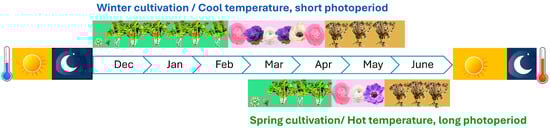
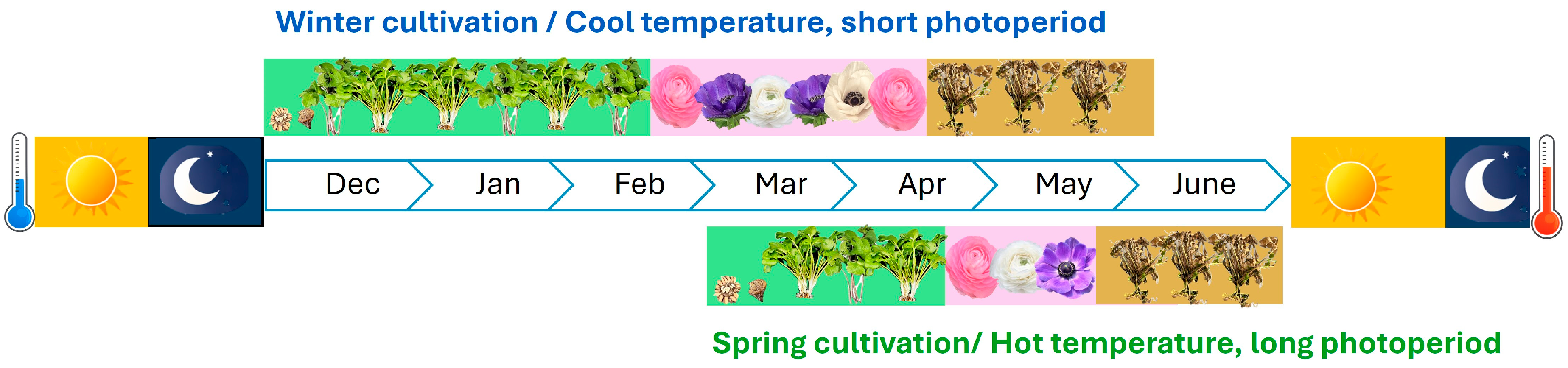
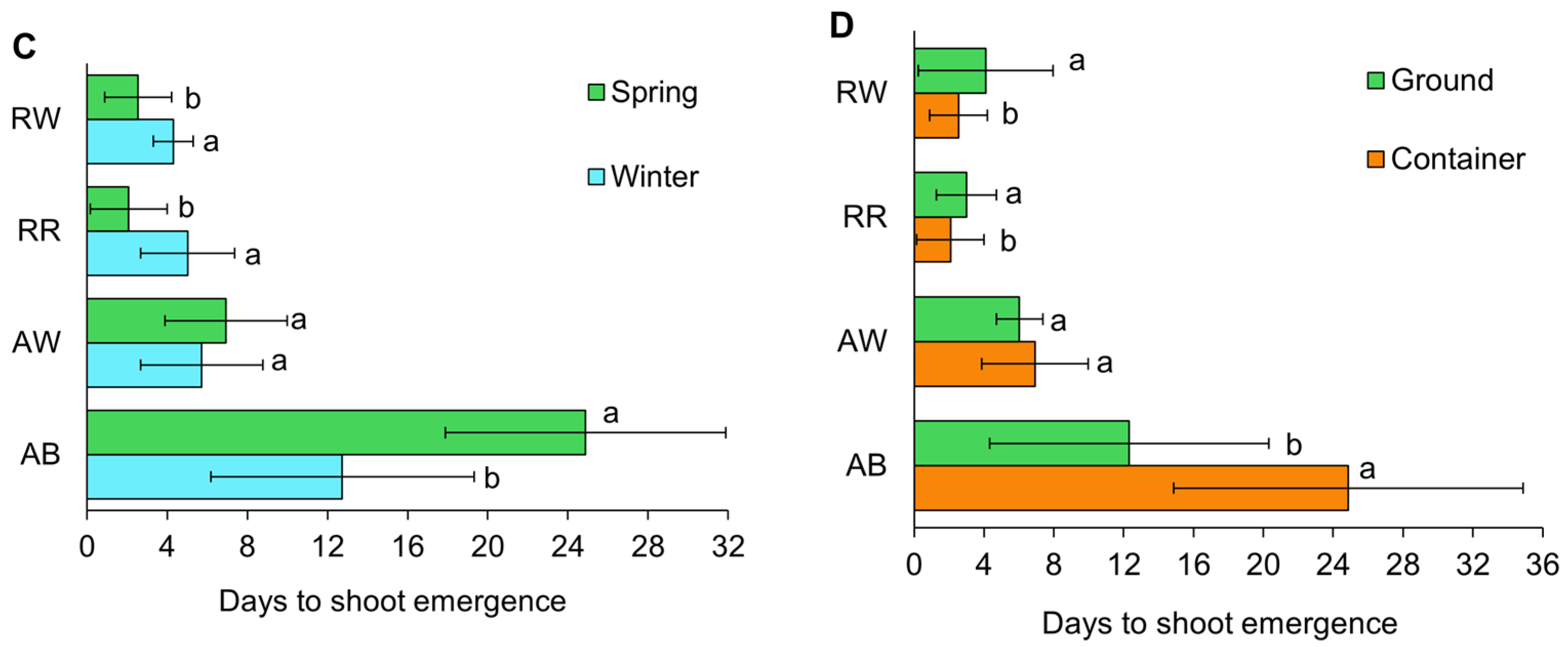
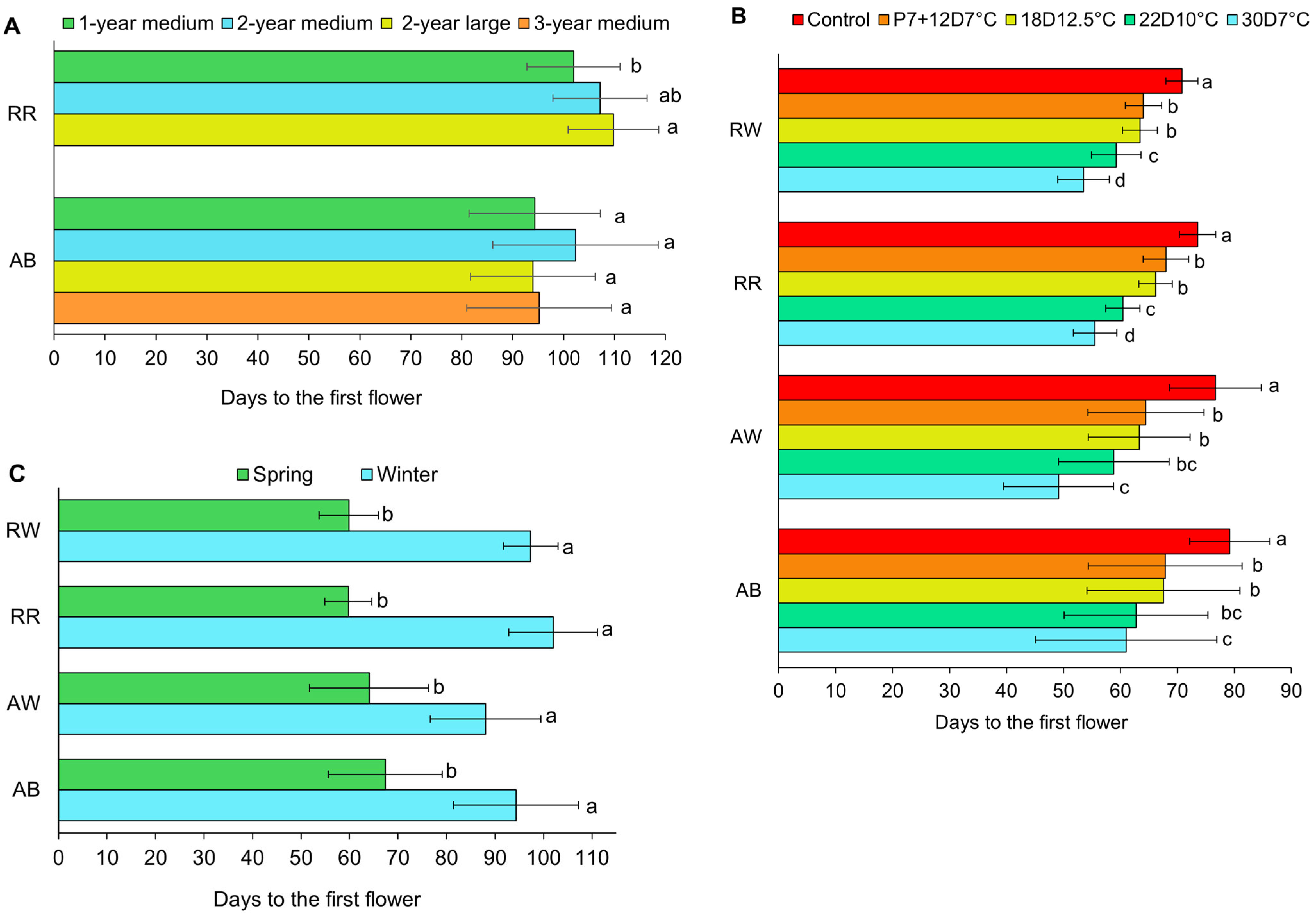
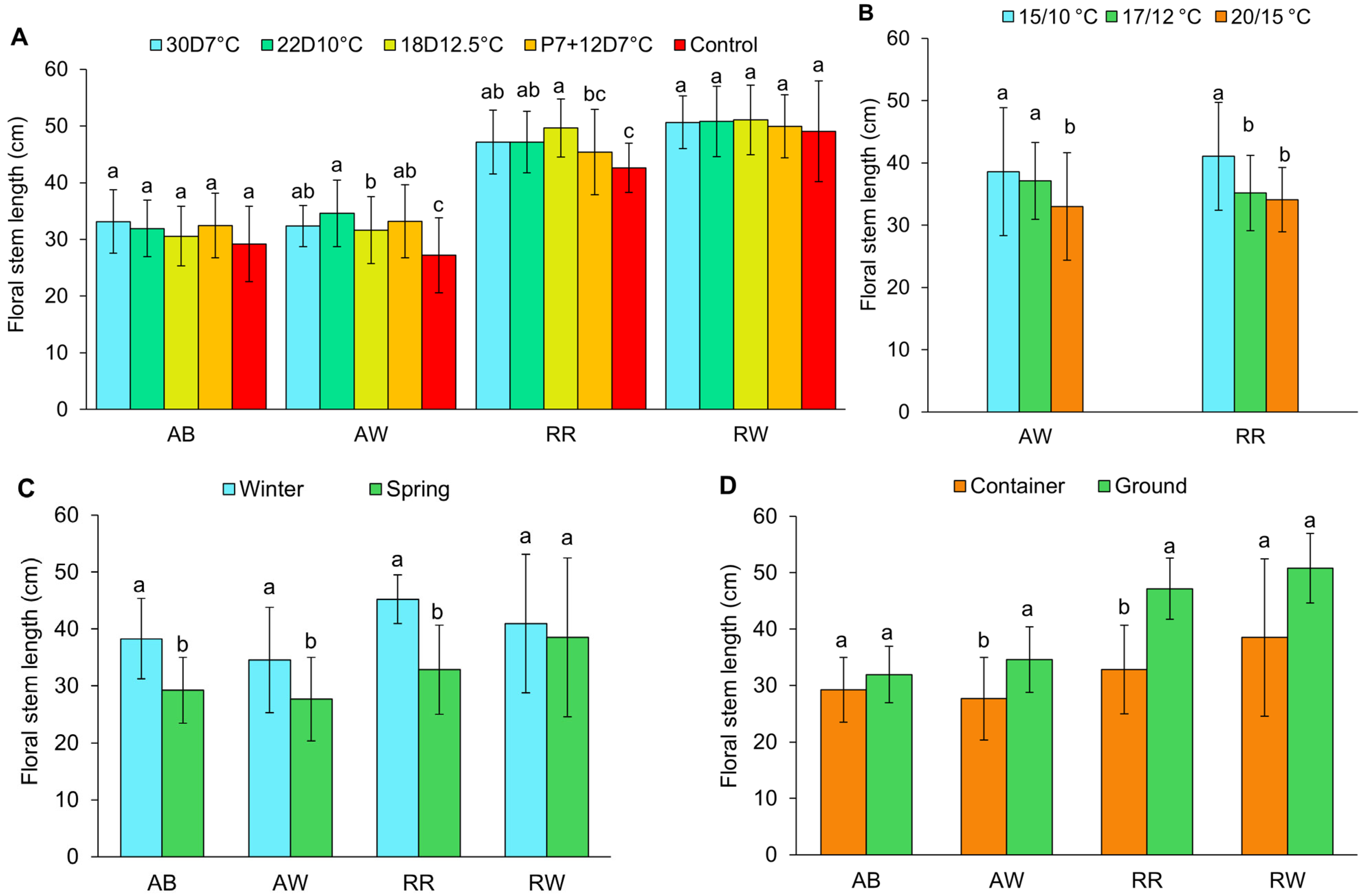
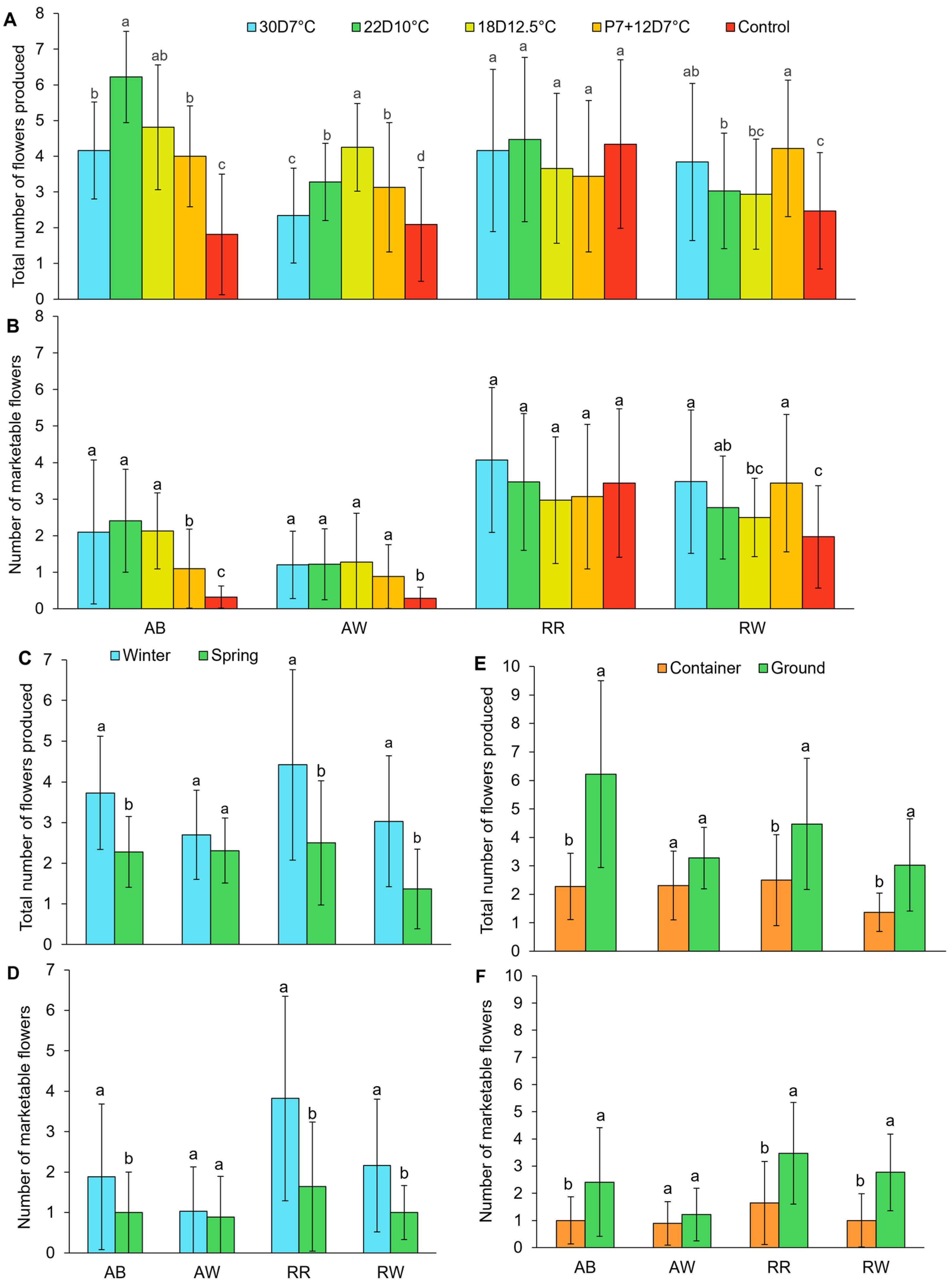
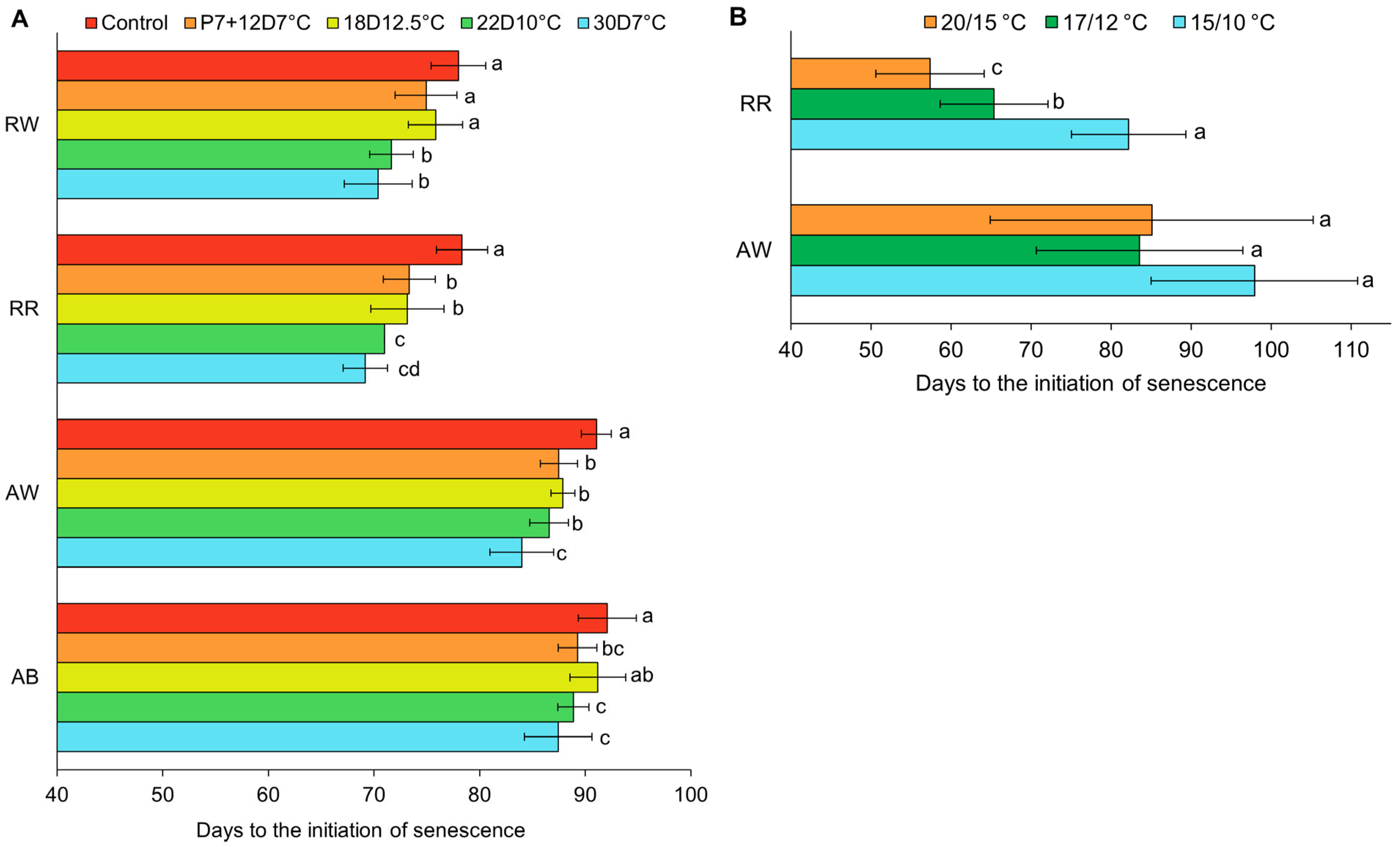
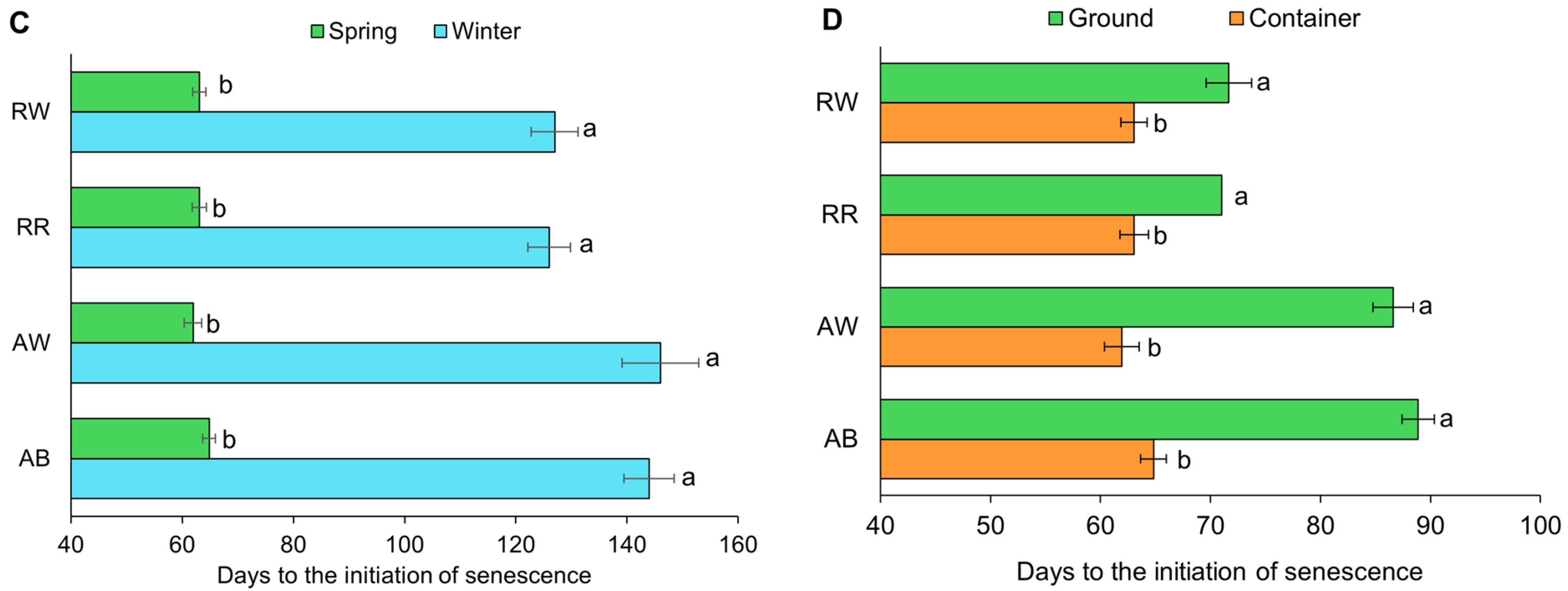
Optimizing the growing conditions of Anemone coronaria and Ranunculus asiaticus for cut-flower production under northern greenhouse conditions requires a better understanding of the environmental and cultivation practices influencing emergence, flowering, and flower quality. This study evaluated the effect of storage organ reuse, along with vernalization conditions, growth temperature, growing season, and planting method (in-ground vs. containers) on plant phenology and flower yield and quality. Flower quantity and quality were unaffected by storage organ age, confirming that these organs can be stored and reused the following season. Vernalization at temperatures of 7 °C or 10 °C advanced flowering compared to warmer vernalization in all cultivars, and increased flower yield compared to non-vernalization. Growth under cool conditions (15/10 °C day/night) extended the production period and improved floral quality by promoting longer stems and delaying senescence. Short to moderate photoperiods (11–13 h in the winter vs. 15 h in the spring) and low light intensity, typical of winter, promoted stem elongation and marketable flower yield, whereas increasing photoperiod and temperature in late spring shorten the flowering period. Ground beds provided cooler and more buffered soil conditions, improving flowering duration and yield compared to container-grown plants during springtime. These findings highlight the importance of integrating temperature management, vernalization, and tailored cultivation practices to enhance flower quality, prolong the production, and improve sustainability of cut-flower production under northern climates in both species.
Keywords: Anemone coronaria L.; Ranunculus asiaticus L.; cut flowers; flowering; growth temperature; soil temperature; storage organ; vernalization; senescence Anemone coronaria L.; Ranunculus asiaticus L.; cut flowers; flowering; growth temperature; soil temperature; storage organ; vernalization; senescence
Graphical Abstract