Article

Projected Shifts in the Growing Season for Plum Orchards in Romania Under Future Climate Change

Department of Geography, Faculty of Geography and Geology, “Alexandru Ioan Cuza” University of Iasi, 700506 Iasi, Romania
*
Authors to whom correspondence should be addressed.
Horticulturae 2025, 11(12), 1479; https://doi.org/10.3390/horticulturae11121479
Submission received: 5 November 2025 / Revised: 28 November 2025 / Accepted: 4 December 2025 / Published: 7 December 2025
(This article belongs to the Special Issue Orchard Management Under Climate Change: 2nd Edition)

Abstract

Climate change strongly influences the phenology of temperate fruit species, yet its long-term effects on Romanian plum orchards (Prunus domestica L.) remain insufficiently quantified. This study analyzes projected changes in the start (SGS), end (EGS), and duration (GSL) of the growing season under two emission scenarios (RCP 4.5 and RCP 8.5) throughout the 21st century. Using temperature-based phenological thresholds, SGS and EGS were modeled for six orchard clusters representing distinct regional and altitudinal conditions across Romania. Results reveal a consistent advancement of SGS and a marked extension of GSL, particularly under RCP 8.5, where the growing season may lengthen by up to 60 days compared with early-century conditions. Under RCP 4.5, changes are more moderate but directionally similar, indicating a robust climatic signal across all clusters. These findings highlight that earlier and longer vegetation periods may enhance fruit development potential but also increase risks associated with late spring frosts, heat stress, and pollination mismatches. Despite inherent model uncertainties, the convergence of trends suggests reliable projections that can support adaptive orchard management and long-term strategies for sustainable fruit production under a changing climate.

1. Introduction

Fruit cultivation represents a key component of agricultural production, where yield and quality depend on continuous interaction between environmental factors and farm management practices [1,2]. Beyond their nutritional value, fruits increasingly contribute to public health and wellbeing [3,4,5], and pomology supports both agricultural production and related economic sectors [6,7]. As global population increases, fruit demand is also expected to rise; however, long-term supply may be constrained by environmental limitations [8].
Climate change is among the most widely investigated environmental issues due to its multiple implications for agriculture and food security [9]. Numerous studies reports that rising temperatures reduce winter chill accumulation and alter the phenological development of fruit trees [10,11]. Earlier onset of the growing season increases frost exposure risk during sensitive flowering stages, as illustrated by the severe event of 2017, which affected apple orchards across Central and Eastern Europe [12]. Fraga et al. [13] demonstrated, under RCP 4.5 and RCP 8.5 scenarios, accelerated heat accumulation and significant phenological shifts in olive and vineyard systems, particularly in Mediterranean regions. Subsequent research extended these findings to apple, plum, orange and pear [14], highlighting that warm winters may delay flowering and reduce yields. Similar trends were detected in Spain, where apple, almond and plum orchards are projected to experience stronger climatic stress than cherry [15], and in France, where milder winters and earlier flowering in peach sometimes led to bloom failure [16].
Romania is the leading plum producer in Europe, with traditional cultivars such as Tuleu Gras, Grase Românești and Vinete Românești, alongside commercial varieties like Reine Victoria grown for export. Annual production typically ranges between 400,000–500,000 tons, but exceptional yields of 830,000 and 693,000 tons were recorded in 2018 and 2019, respectively [17].
Several Romanian studies have explored climate–fruit interactions. Jitariu et al. [18] evaluated apple orchards in the northeast, while [19,20] examined grapevine suitability. Gitea et al. [21] assessed climate impacts on apple, plum and almond orchards in the west, and Cosmulescu [22] analyzed apricot yields in drought-prone southern regions. FAO’s Climate Change Strategy [23] acknowledges similar concerns, emphasizing the need to enhance resilience and reduce vulnerability in agri-food systems in alignment with the Paris Agreement and the 2030 Agenda.
Understanding the relationship between climatic variability and fruit species is essential for identifying zones with different suitability levels and those at higher risk of extreme events [24]. Orchard establishment involves long-term investment and low short-term reversibility compared to annual crops, making climate-sensitive planning crucial. Although effects of climate change on major fruit crops are increasingly documented across Western and Central Europe, information remains limited for plum phenology in Romania, particularly regarding projected shifts in the timing and duration of the growing season under future emission pathways.
Despite Romania being one of the leading plum producers in Europe, the response of plum phenology to future climate trajectories remains insufficiently investigated. Existing studies mainly address yield trends or climatic stress factors, but few quantify how the timing and duration of the growing season may shift across different regions under future warming. Therefore, this study intends to fill this research gap by analyzing projected changes in the thermal growing season across Romania’s main plum-producing zones, comparing spatial patterns under RCP4.5 and RCP8.5. By identifying areas with potential season extension, increased phenological vulnerability, or heightened frost risk, our results aim to provide a scientific basis for adaptation strategies, orchard planning, and long-term management. This work thus contributes new regional-scale evidence to a topic that is currently underrepresented in literature, offering a foundation for future phenological research, cultivar-specific assessment, and practical decision-making in Romanian fruit production.

2. Materials and Methods

2.1. Study Area

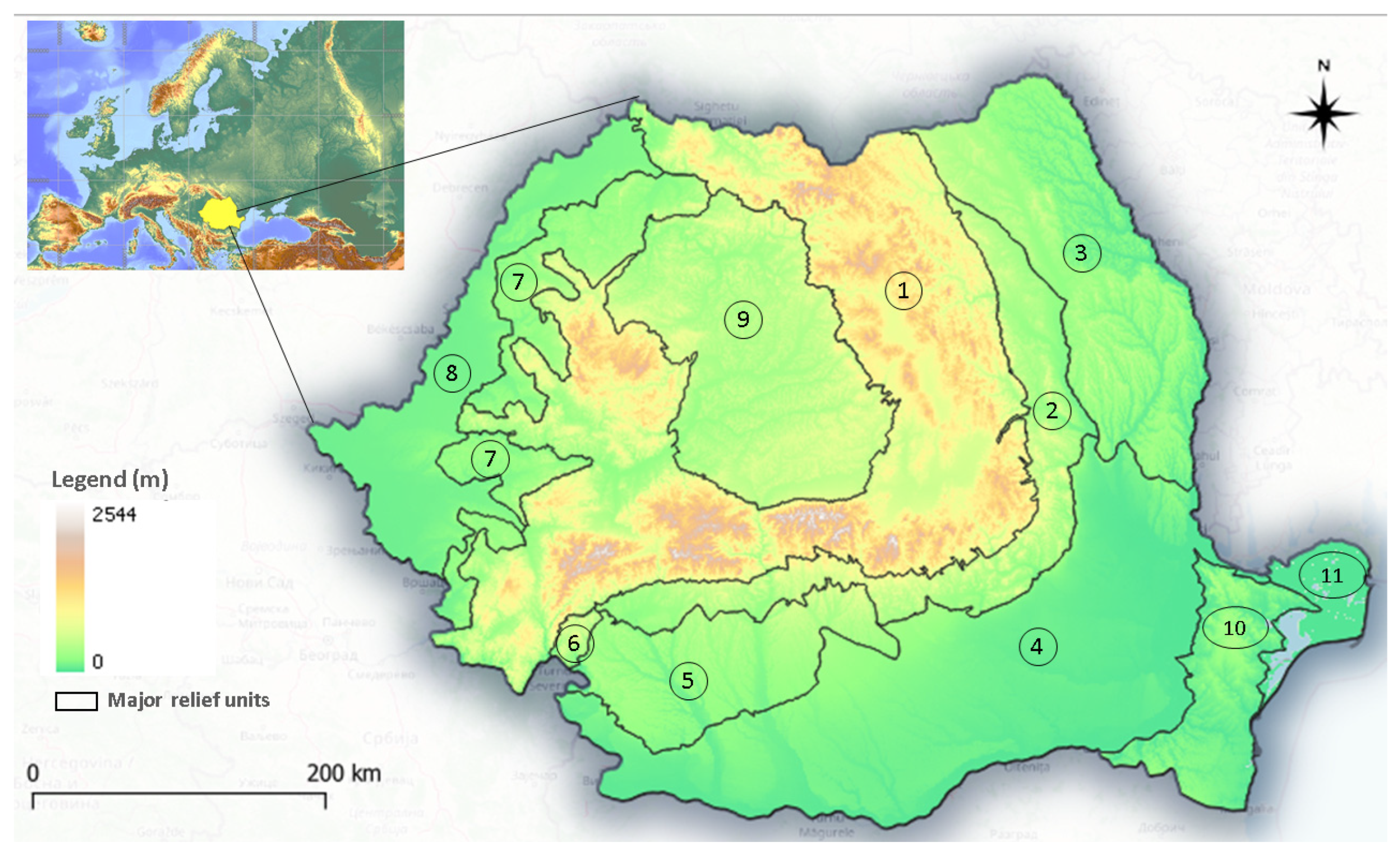
Romania is a medium-sized country (approx. 239,000 km2), which is located in the southeastern region of the European continent (Figure 1). The Romanian relief is defined by the central presence of the Carpathian arc, which encircles the Transylvanian Depression, and by its progressive transition toward lower landforms on the periphery, including the Subcarpathians, Western Hills, Moldavian Plateau, Romanian Plain, and Western Plain [25].
Romania is characterized by a temperate-continental climate, resulting from its position at the intersection of the main European atmospheric circulation pathways and from the pronounced contrasts between major landform units. According to the Köppen–Geiger classification, three main climate types can be identified across the country: Cfa (temperate, without dry season, hot summer), Cfb (temperate, without dry season, warm summer), and Dfb (cold-continental, without dry season, warm summer) [26,27]. The country lies at the confluence of Atlantic, Continental, and Scandinavian high-pressure systems, and under the influence of Mediterranean and Atlantic cyclone tracks, which explains the alternation of air mass advections and the frequent variability of weather types [28]. The Carpathian Mountains play a key role in shaping the climatic individuality of Romania, generating strong contrasts between the intra- and extra-Carpathian regions through their effects on air circulation, temperature, and precipitation patterns [28].
The Romanian climate is temperate continental, with mean annual temperatures ranging from values below 0 °C at elevations above 2000 m to more than 11 °C in the southern and south-eastern regions. A significant warming trend has been observed over recent decades, with the national average increasing from 8.81 °C (1961–1990) to 9.52 °C (1991–2013). July is typically the hottest month, with mean values around 21 °C and extremes between 2.5 °C and 26 °C, while January is the coldest, averaging −2 °C, with a range from −12 °C to 3 °C. Mean annual precipitation for the 1990–2019 period is approximately 700 mm, though it varies markedly across the country, from less than 400 mm in the Danube Delta to more than 1200 mm in high mountain areas. June is generally the wettest month (28–216 mm), whereas March tends to be the driest, with a mean of 41 mm and values ranging between 20 mm and 128 mm [25,29].
In addition, the westerly atmospheric circulation exerts a dominant influence on the country’s climate, particularly during the cold season, controlling the regional thermal response to external forcings such as solar variability [30]. The climatic regionalization of Romania reflects the complex interplay among relief, general atmospheric circulation, and solar-radiative forcing, positioning the country within a transitional climatic zone between the oceanic climate of Western Europe and the continental climate of Eastern Europe.
Given its relatively modest climatic requirements, plum cultivation is well suited to a wide range of Romanian regions, from lowland plains to hilly areas. According to the guide for fruit growing issued by the Ministry of Agriculture and Rural Development, the species tolerates a broad thermal spectrum, with optimal hourly growth conditions between 18 and 33 °C, and growth ceasing only outside absolute limits of approximately 8–36 °C. It also shows good resistance to winter frost, enduring temperatures down to −35 °C, while the chilling requirement during dormancy (0–7 °C) typically ranges between 800 and 900 h depending on the cultivar [31]. These characteristics explain why plum orchards occupy a significant share of the national fruit-growing area (over 67,000 ha), being distributed across diverse landscapes where both traditional varieties and commercial cultivars are well adapted to Romania’s temperate continental climate.

2.2. Data

2.2.1. Spatial Distribution of Plum Orchards

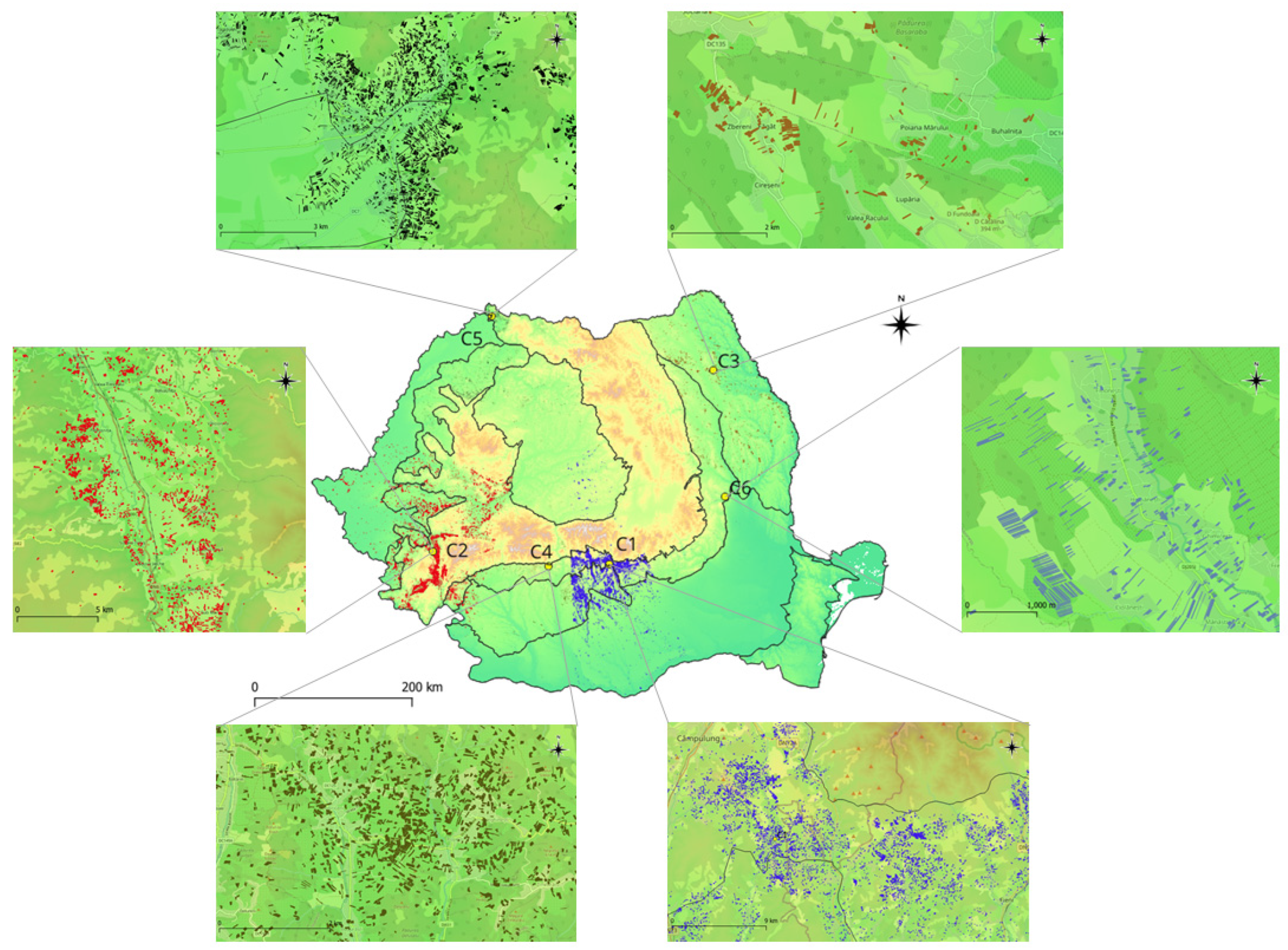
In order to carry out this study, regarding potential shifts in the plum growing season in the context of future climate scenarios, the spatialization of current plum orchard locations was taken into account, and these data were obtained from the Agency for Payments and Interventions in Agriculture (www.apia.ro). Although plum orchards are widespread across Romania, their distribution is highly fragmented, which complicates the identification of regional patterns and the assessment of their relationship with environmental factors. To address this limitation, we applied a spatial clustering procedure using the K-means algorithm [32,33]. This method aggregated the individual orchard polygons into 6 clusters (C1, C2, C3, C4, C5, C6) based on their geographical position, reducing spatial dispersion and creating more coherent analytical units. The resulting clusters correspond to major fruit-growing regions such as the Subcarpathians (C1, C4, C6), the Moldavian Plateau (3) and the Western Hills (C2) [17,34]. K-means clustering was performed on all orchard locations using latitude, longitude, elevation as input variables, with the final number of six clusters selected based on geographic interpretability. These units provide a robust spatial framework for subsequent analyses, facilitating the evaluation of climate change impacts, phenological shifts, and potential adaptation strategies at the regional level (Figure 2).

2.2.2. Climatic Data

Climatic data were obtained from the CHELSA project, which provides high-resolution (30 arc-second) downscaled estimates of temperature and precipitation [35]. For future climate projections, we used the CHELSA CMIP5 timeseries dataset, which includes four global circulation models (GCMs) covering the period 2006–2100 at a spatial resolution of 0.049° (~5 km at the equator). The analysis was based on monthly averages of maximum, minimum, and mean air temperatures derived from the MIROC5 (Model for Interdisciplinary Research on Climate), developed at the University of Tokyo. This model was selected because it provides more realistic estimates of air temperature under RCP2.6, RCP4.5, and RCP8.5 scenarios [36]. Kawamiya et al. [37] have highlighted the robustness and broad applicability of the MIROC5 model in a comprehensive review. Beyond its theoretical framework, the model has been extensively applied in diverse fields, including soil erosion studies under climate change conditions [38,39], yield estimation for cotton production in Pakistan [40], assessments of crop suitability [41,42,43], as well as analyses of extreme climatic events affecting agricultural systems in China [44,45,46]. Downscaled MIROC5 climate data were extracted at point level for all meteorological stations in Romania (157 stations), after which the start (SGS), end (EGS), and length (GSL) of the growing season were calculated individually for each station, and the resulting values were subsequently interpolated spatially. For this study were used RCP 4.5 and RCP 8.5 in order to capture a moderate stabilization trajectory and a high-emission future, respectively. RCP 4.5 reflects a scenario in which radiative forcing stabilizes at 4.5 W/m2 through the implementation of mitigation measures, whereas RCP 8.5 represents a “business-as-usual” pathway characterized by continuously increasing emissions and radiative forcing reaching 8.5 W/m2 by the end of the century [47].

2.2.3. Growing Season Calculation

The previously described climatic data were used to determine the start and end dates of the growing season, defined as the period during which the mean daily air temperature exceeds the biological threshold of 6 °C. This threshold-based approach has been widely applied in previous studies [48,49]. To identify the start and end of the growing season, we employed the mathematical equations proposed by Gumiński [50]. The method assumes that the mean monthly temperature corresponds to the 15th day of each month, that each month contains 30 days, and that temperature changes linearly between consecutive months. Based on these assumptions, the start of the growing season (SGS) and end of the growing season (EGS) were calculated using the following equations:
SGS = 30 (tt − t1)/(t2 − t1)
EGS = 30 (t1 − tt)/(t1 − t2)
where tt represents the temperature threshold (6 °C base temperature used for plum—[51]), t1 is the mean temperature of the month preceding the threshold crossing, t2 is the mean temperature of the following month, and SGS/EGS denotes the number of days between the threshold day and the 15th day of the previous month.
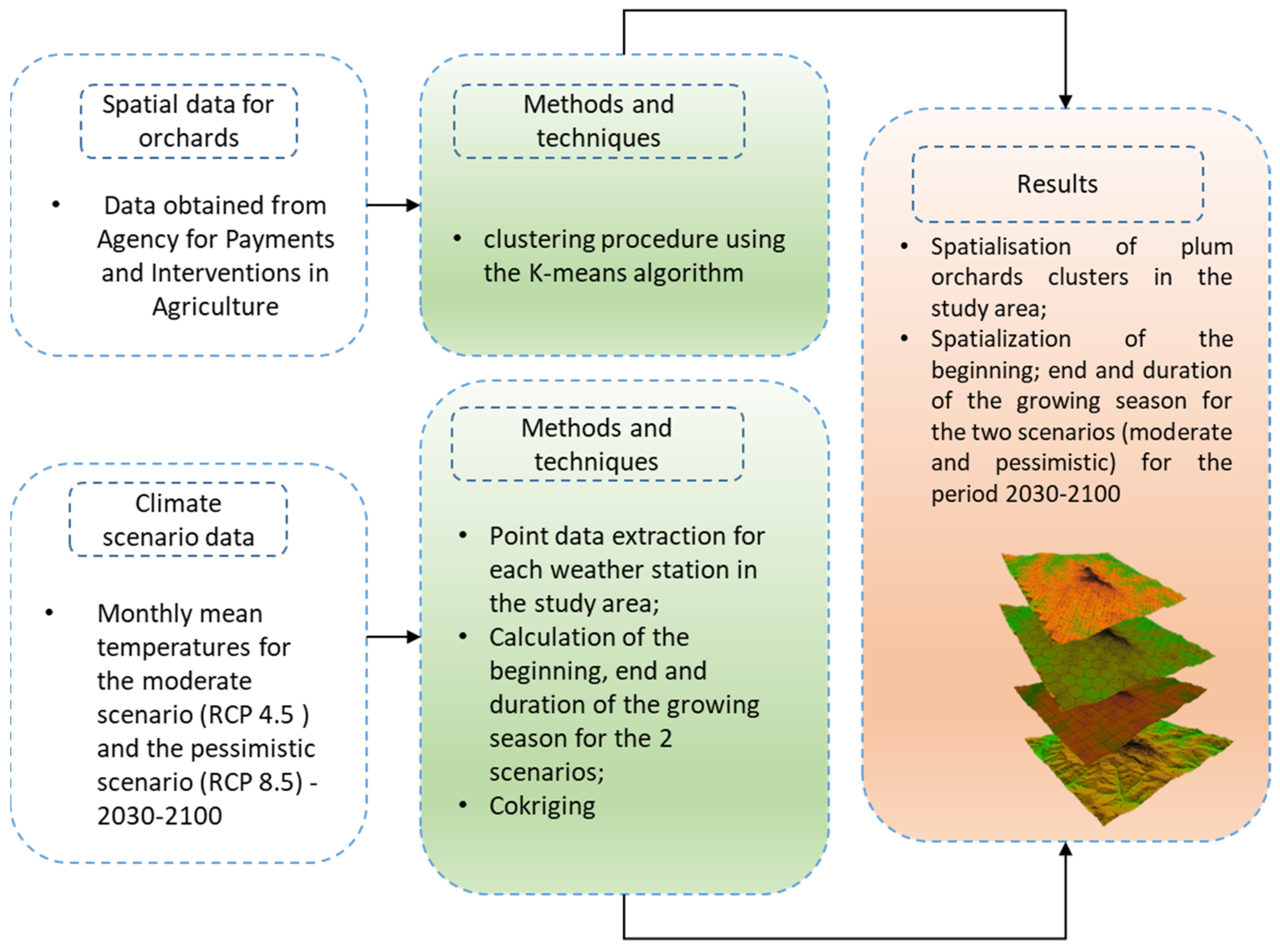
The number of days calculated using the above equations was added to the 15th day of the month preceding the threshold temperature. When the resulting value exceeded 15, the actual number of days in that month was considered to ensure temporal accuracy. The obtained date thus represents either the start or the end of the growing season and it-s expressed in the number of the day of the year (DOY). This method is commonly applied in determining the length of the growing season as well as other thermal seasons of the year [52,53]. Pluta et al. [54] demonstrated a strong agreement between the average start dates of the growing season estimated using Gumiński’s [50] method and those derived from satellite-based remote sensing data for the 2001–2010 period. The growing season length (GSL) was calculated as the difference between the day of the year marking its end and that marking its beginning. The purpose of using the Gumiński approach was not to obtain highly precise phenological dates, but to provide a standardized and comparable climatic indicator that can be applied across large spatial domains and long time periods. The temporal analysis was conducted for successive time intervals of 15 and 11 years, respectively: 2030–2044, 2045–2059, 2060–2074, 2075–2089, and 2090–2100. The reason why these intervals were chosen is related to the operating duration of a super-intensive plum orchard (approximately 15 years), which could make this study a good benchmark to take into account when talking about establishing such a type of orchard. To map the obtained results (SGS, EGS and GSL), the co-kriging method was used, taking into account the altitude as an auxiliary variable [55,56,57]. Based on the methodology described previously, a synthetic work scheme was created, intended to illustrate the sequence of analysis stages and the relationships between the components used (Figure 3).

3. Results

3.1. Spatial Distribution and Temporal Evolution of the Start of the Growing Season (SGS) in Romania Under the RCP4.5 Scenario for the 2030–2100 Time Horizon

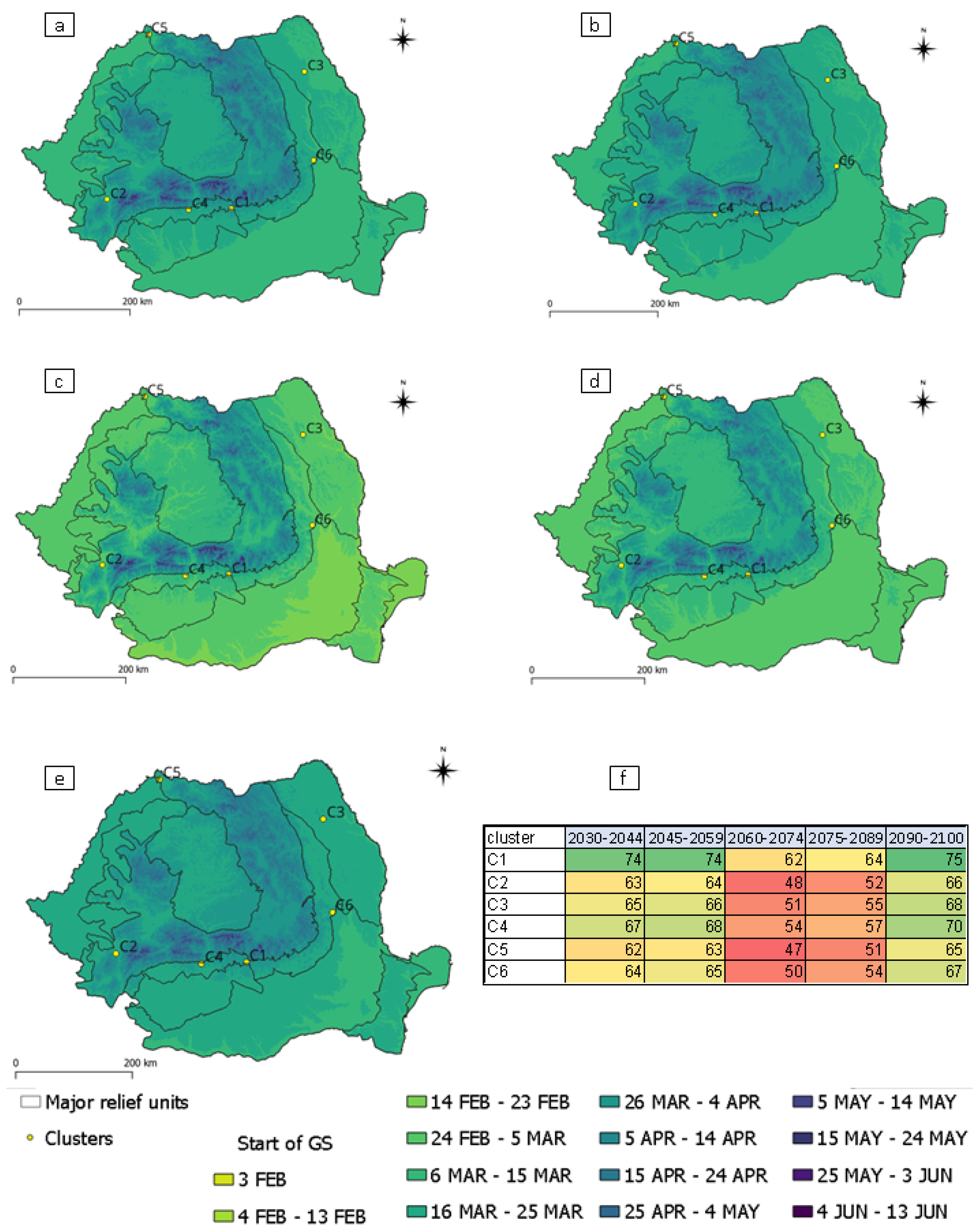
In response to anticipated temperature increases under the RCP 4.5 scenario, the start of the growing season (SGS) has gradually advanced over the century, especially after 2060. In the early future period (2030–2059), the start of vegetation occurs mainly between late February and mid-March, with limited regional differences. From 2060 onward, however, the onset becomes markedly earlier by 10–20 days compared to the 2030–2044 baseline, especially across the southern and eastern lowlands, where the mean DOY decreases below 60 (early March). In contrast, the Subcarpathian clusters maintain later starts (mid- to late March), reflecting the persistence of lower temperatures at higher altitudes. By the end of the century (2090–2100), most orchards exhibit an average GS onset around DOY 65 ± 5, while upland areas remain above DOY 70, indicating an overall north–south and altitudinal gradient in phenological response.
Overall, the RCP45 scenario highlights the following fact: mean start dates for the studied clusters advance from DOY 63–67 (~early March) in 2030–2044 to DOY 50–55 (~late February) during 2060–2089, with a slight stabilization towards the end of the century (Figure 4).

3.2. Spatial Distribution and Temporal Evolution of the End of the Growing Season (EGS) in Romania Under the RCP4.5 Scenario for the 2030–2100 Time Horizon

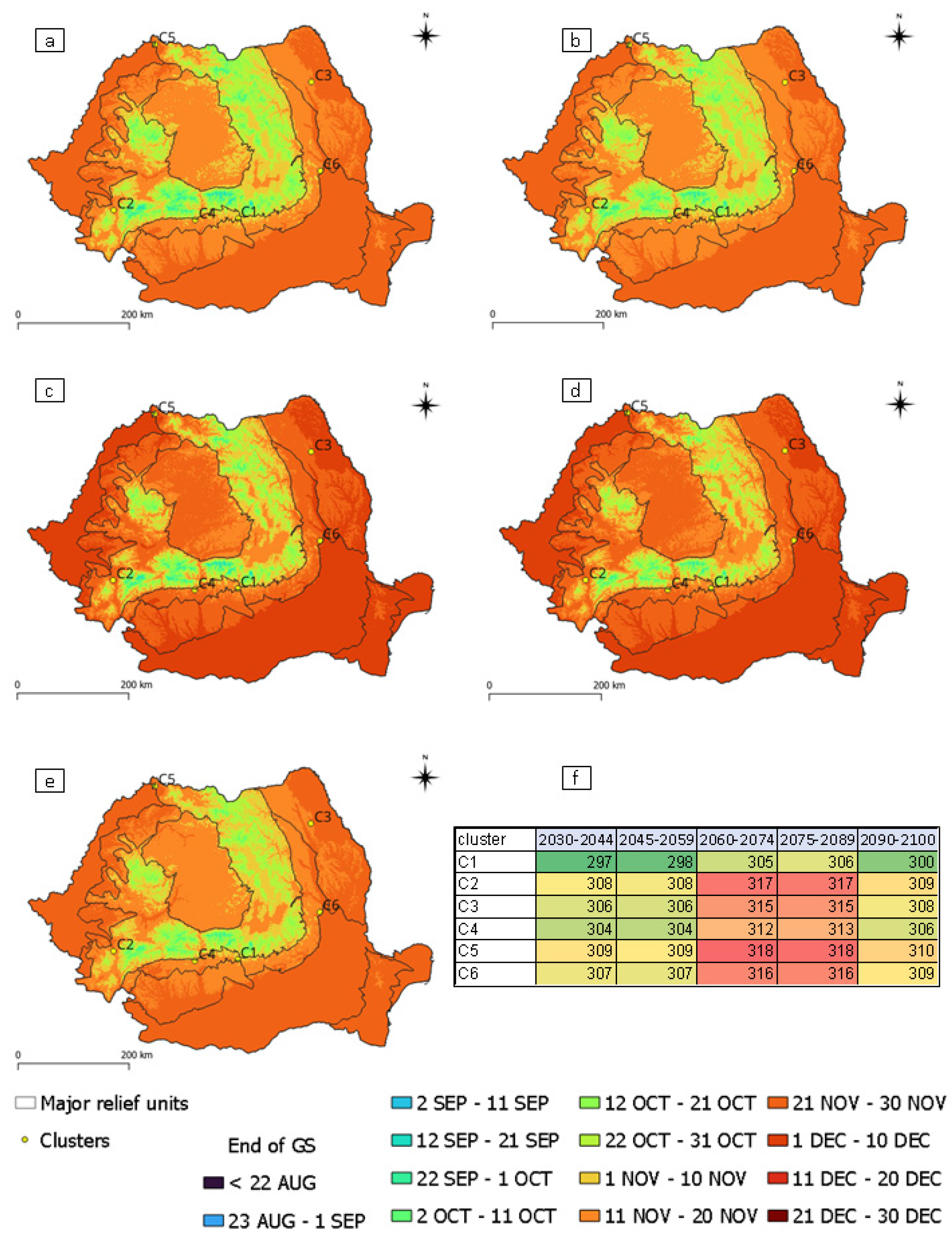
The results regarding the EGS indicate a consistent delay of the end of the growing season throughout the 21st century, reflecting the gradual warming of autumn months under the RCP 4.5 scenario. In the near future (2030–2059), the EGS typically occurs between early and mid-November, while by 2060–2074 it extends to late November or even early December across most of the lowlands and hilly regions. This delay corresponds to a 15–25-day extension of the vegetation period compared to the early-century baseline.
The high-altitude and Subcarpathian zones retain an earlier end of season, usually between late September and mid-October, due to lower air temperatures and faster cooling rates in autumn. In contrast, extensive lowland regions in the south, east, and west experience a much later EGS, with modeled values surpassing DOY 315–320 (late November to early December) in the final projection intervals (2075–2100) (Figure 5).
According to the mean values summarized in Figure 5f, the end of the growing season (EGS) exhibits a clear temporal delay across all orchard clusters, consistent with the general warming trend projected under the RCP 4.5 scenario. During the first two studied intervals (2030–2044 and 2045–2059), most clusters show relatively stable mean values between DOY 297–309, corresponding to late October–early November. From 2060 onward, all clusters indicate a distinct shift towards later autumn termination, with mean EGS dates ranging from DOY 312 to 318 (approximately early to mid-November), suggesting an extension of the vegetation period by nearly two to three weeks compared to the early projection horizon.
The maximum delay is recorded in the 2075–2089 interval, when most of the studied clusters (C2, C3, C6) reach mean values above DOY 315, highlighting an autumn phenological limit around late November in lowland and hilly regions. By the end of the century (2090–2100), the EGS slightly retracts toward earlier dates (around DOY 306–310), indicating a possible stabilization of autumn conditions and reduced interdecadal variability after 2090.

3.3. Spatial Distribution and Temporal Evolution of the Growing Season Length (GSL) in Romania Under the RCP 4.5 Scenario for the 2030–2100 Period

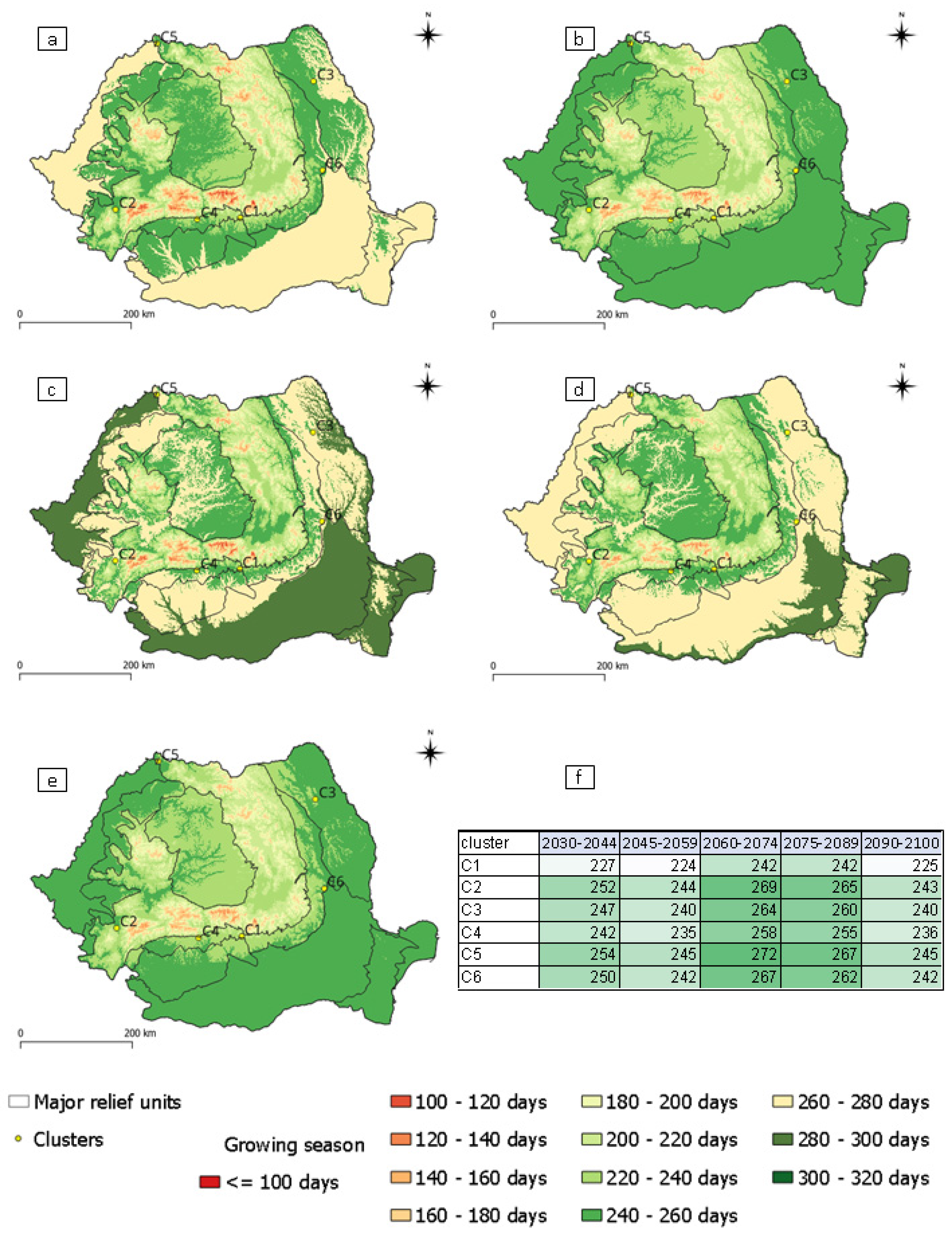
Under RCP 4.5, the model results show an overall lengthening of the growing season length throughout the majority of Romania in the twenty-first century. The average length of the growing season in the lowlands and hilly regions ranges between 220 and 250 days over the early projection periods (2030–2044 and 2045–2059), while shorter seasons (less than 200 days) continue in the intra-Carpathian depressions and mountainous regions.
In the southern, eastern, and western regions of the country, the vegetation period lasts more than 260–270 days, starting with the 2060–2074 interval. The maximum duration locally reaches 280–300 days by the end of the century (2090–2100), indicating a 20–40 day increase over the early-century baseline. The maps also reveal that the lowland and sub-Carpathian regions experience the most noticeable increases, with both delayed autumn senescence and earlier spring start contributing to the total expansion.
Despite this general trend, a slight stabilization or minor reduction in GSL is noticeable in some regions after 2080, likely reflecting the balancing effect of mid-century warming stabilization in RCP 4.5 (Figure 6).
According to the mean values summarized in Figure 6f, the growing season length (GSL) exhibits a heterogeneous but consistent increase across all orchard clusters, reflecting both regional climatic differences and altitudinal gradients. In the early projection periods (2030–2044 and 2045–2059), clusters located in central-southern and eastern Romania (C2, C4, C6) display longer vegetation durations (around 245–255 days), while those situated in central and northwestern highlands (C1, C3, C5) maintain shorter seasons (approximately 225–245 days).
From the 2060–2074 horizon onward, the growing season extends markedly in all clusters, reaching values of 258–272 days, which implies an extension of 20–30 days compared with the early-century baseline. The most substantial increases occur in the southern and western lowlands (C2 and C5), where both earlier spring onset and delayed autumn senescence contribute to vegetation periods approaching nine months per year.
During 2075–2089, the GSL remains similarly elevated, confirming a persistent lengthening trend, particularly in lowland orchards where DOY based estimates indicate values exceeding 265 days. By the end of the century (2090–2100), a modest decline is observed in most clusters, especially in C1, C3, and C4, with mean values returning to approximately 240–245 days, suggesting a stabilization of the phenological response under the moderate RCP 4.5 warming trajectory.

3.4. Spatial Distribution and Temporal Evolution of the Start of the Growing Season (GS) in Romania Under the RCP8.5 Scenario for the 2030–2100 Time Horizon

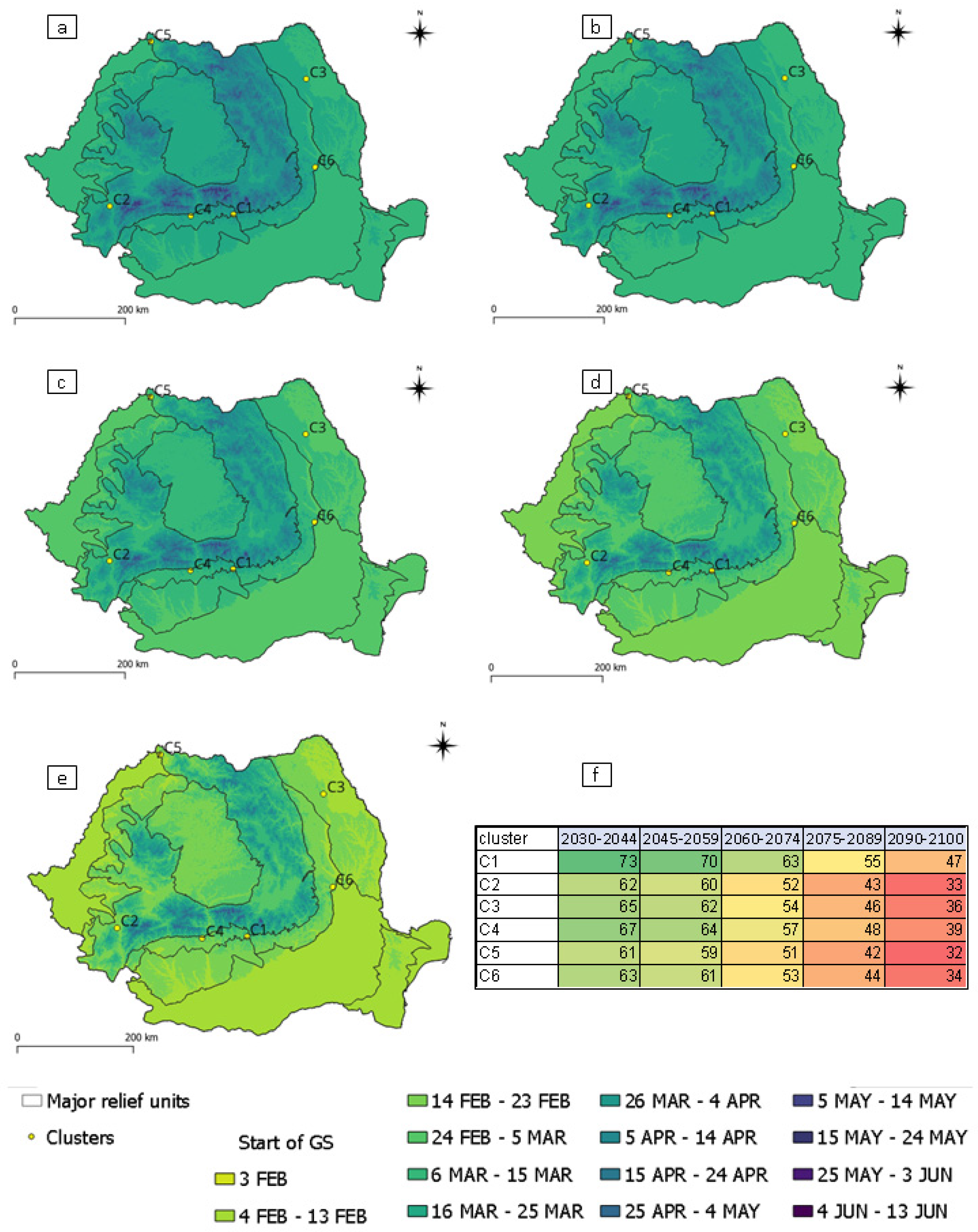
Under the high-emission RCP 8.5 scenario, the onset of the growing season exhibits a faster and more spatially homogeneous advancement than under the moderate RCP 4.5 pathway. In the early projection period (2030–2044), the simulated start of vegetation remains within the last decade of February to early March, broadly comparable with present conditions. By mid-century (2045–2059), the advancement becomes increasingly evident: large parts of the southern, western, and eastern plains reach DOY values near 50–55, meaning that the vegetative season can begin as early as mid-February, while mountainous regions still show onsets in early March. After 2060, the signal intensifies considerably. The 2060–2074 and 2075–2089 intervals reveal a rapid shift toward earlier activation of vegetation, with extended areas of the country recording SGS around DOY 40–45—equivalent to the first half of February. By the end of the century (2090–2100), most lowland and plateau zones show an advance exceeding three weeks relative to the 2030–2044 horizon, and in several warm southern and eastern regions the models suggest vegetation resumption possibly even in late January.
The spatial contrasts gradually diminish, indicating a tendency toward climatic homogenization of the spring phenophase as winter temperatures rise. The earlier initiation of vegetation could enhance annual biomass accumulation and fruit yield potential, yet it simultaneously amplifies vulnerability to late frosts and early-spring cold surges, especially in regions where temperature variability remains high (Figure 7).
The values presented in Figure 7f reveal a pronounced temporal advancement of the start of the growing season (SGS) across all orchard clusters under the RCP 8.5 scenario, with clear acceleration after the mid-21st century. During the early projection periods (2030–2044 and 2045–2059), most clusters register mean SGS values between DOY 60–70, corresponding roughly to late February–early March, comparable with present-day or RCP 4.5 conditions. From 2060 onward, however, the onset of vegetation advances sharply, with all clusters showing reductions of 10–15 days per period. By 2060–2074, average SGS values range between DOY 51–64, and by 2075–2089 they drop further to DOY 42–55, indicating that the start of vegetative activity occurs predominantly in early to mid-February. By the end of the century (2090–2100), most clusters record the earliest onset ever simulated, between DOY 32–47, equivalent to late January to early February, confirming a total advancement of about 25–30 days compared to the 2030–2044 interval.
The lowest values (earliest SGS) are recorded in the clusters located within southern and eastern Romania (C2, C4, C6), which reach mean dates as early as DOY 32–36 in 2090–2100, while northern and central clusters (C1, C3, C5) maintain relatively later onsets, between DOY 39–47, reflecting the residual influence of altitude and cooler regional climates. This strong spatial gradient, however, tends to weaken toward the end of the century, suggesting a progressive climatic homogenization under intense warming.

3.5. Spatial Distribution and Temporal Evolution of the End of the Growing Season (EGS) in Romania Under the RCP8.5 Scenario for the 2030–2100 Time Horizon

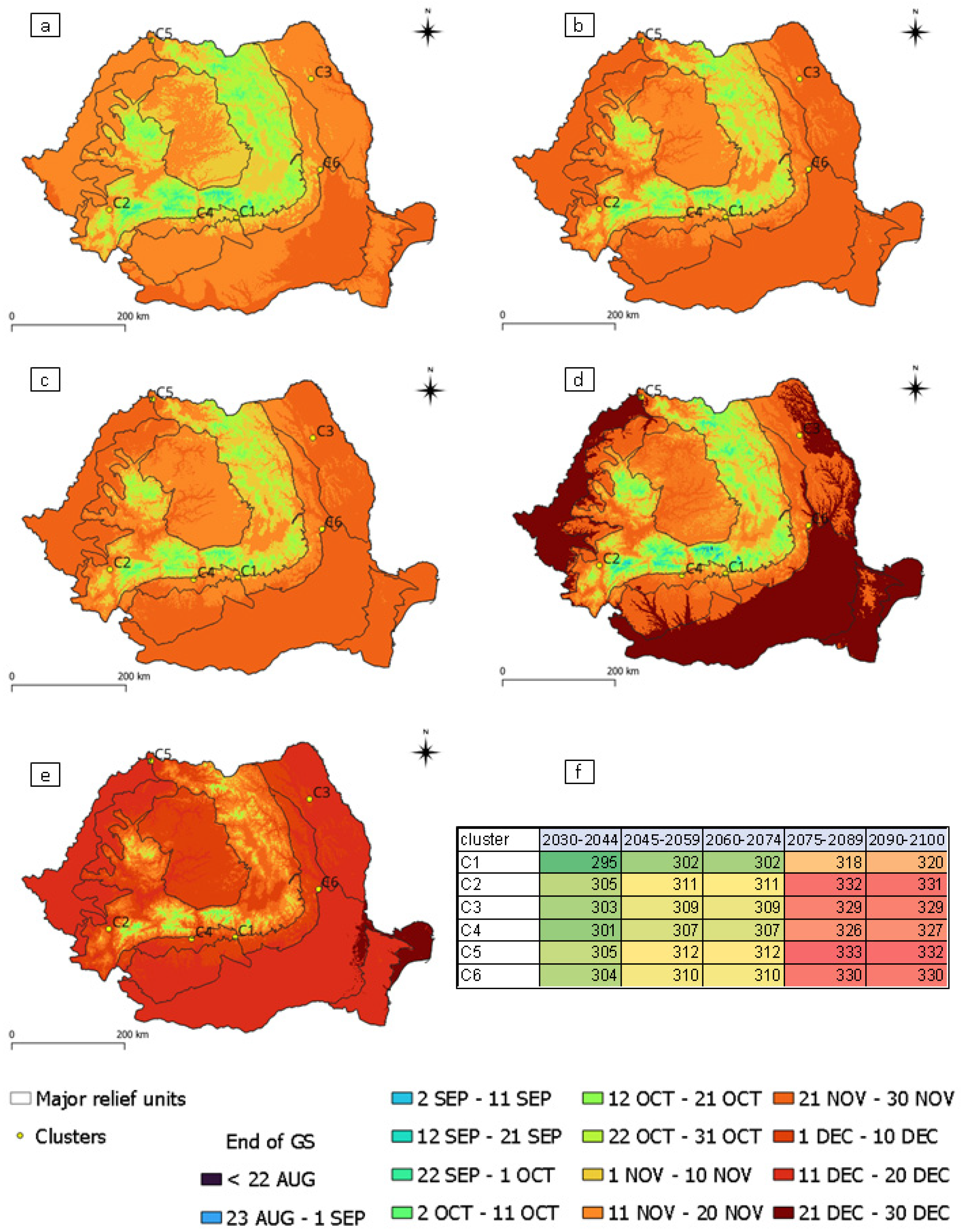
The projections under the RCP 8.5 scenario reveal a marked and continuous delay of the end of the growing season throughout the 21st century, with the most substantial changes occurring after mid-century. During the first projection interval (2030–2044), the EGS largely coincides with present-day conditions, ending between late October and mid-November across most regions. By 2045–2059, however, the end of vegetation progressively shifts towards late November, especially within the southern and eastern lowlands, suggesting the onset of a prolonged autumn growing phase.
From 2060 onwards, the simulated extension becomes more accentuated and spatially coherent. Between 2060–2074, large parts of Romania exhibit EGS dates surpassing DOY 310–320 (late November–early December), while some lowland and hilly areas approach DOY 325–330, corresponding to the second decade of December. By the final part of the century (2090–2100), almost the entire territory—excluding high-altitude regions—shows the end of the growing season shifted well into mid or even late December, indicating a phenological delay of nearly one month compared to the early projection horizon.
Regarding the orchard clusters (Figure 8f), the results indicate a pronounced and nearly continuous delay of the end of the growing season (EGS) in all orchard clusters under the RCP 8.5 scenario, with particularly rapid changes after the mid-21st century. During the early projection horizons (2030–2044), EGS values range between DOY 295–305, meaning that vegetation typically ends between late October and early November. These dates are close to current climatic conditions, suggesting limited alterations in the near future.
However, by 2045–2059, all clusters register increases of 5–10 days, with mean values around DOY 307–312, pointing to a transition of the vegetative limit towards mid-November. This trend continues through 2060–2074, when most clusters stabilize temporarily at similar values, reflecting an intermediate stage before the accelerated extension seen in the late-century projections.
From 2075 onward, a sharp shift toward later autumn termination becomes evident. Clusters C2, C5, and C6 reach the highest mean values, between DOY 330–333, equivalent to mid or even late December. Meanwhile, C1, C3, and C4 record slightly earlier EGS values around DOY 320–327, but still indicate a delay of almost one month compared to early-century conditions.
By the end of the century (2090–2100), most clusters maintain this late-season plateau, with differences of only a few days among them, suggesting a quasi-uniform extension of the vegetation period across Romania. The cumulative lengthening relative to 2030–2044 reaches approximately 25–30 days for the lowlands and 20–25 days in the upland clusters.

3.6. Spatial Distribution and Temporal Evolution of the Growing Season Length (GSL) in Romania Under the RCP 8.5 Scenario for the 2030–2100 Period

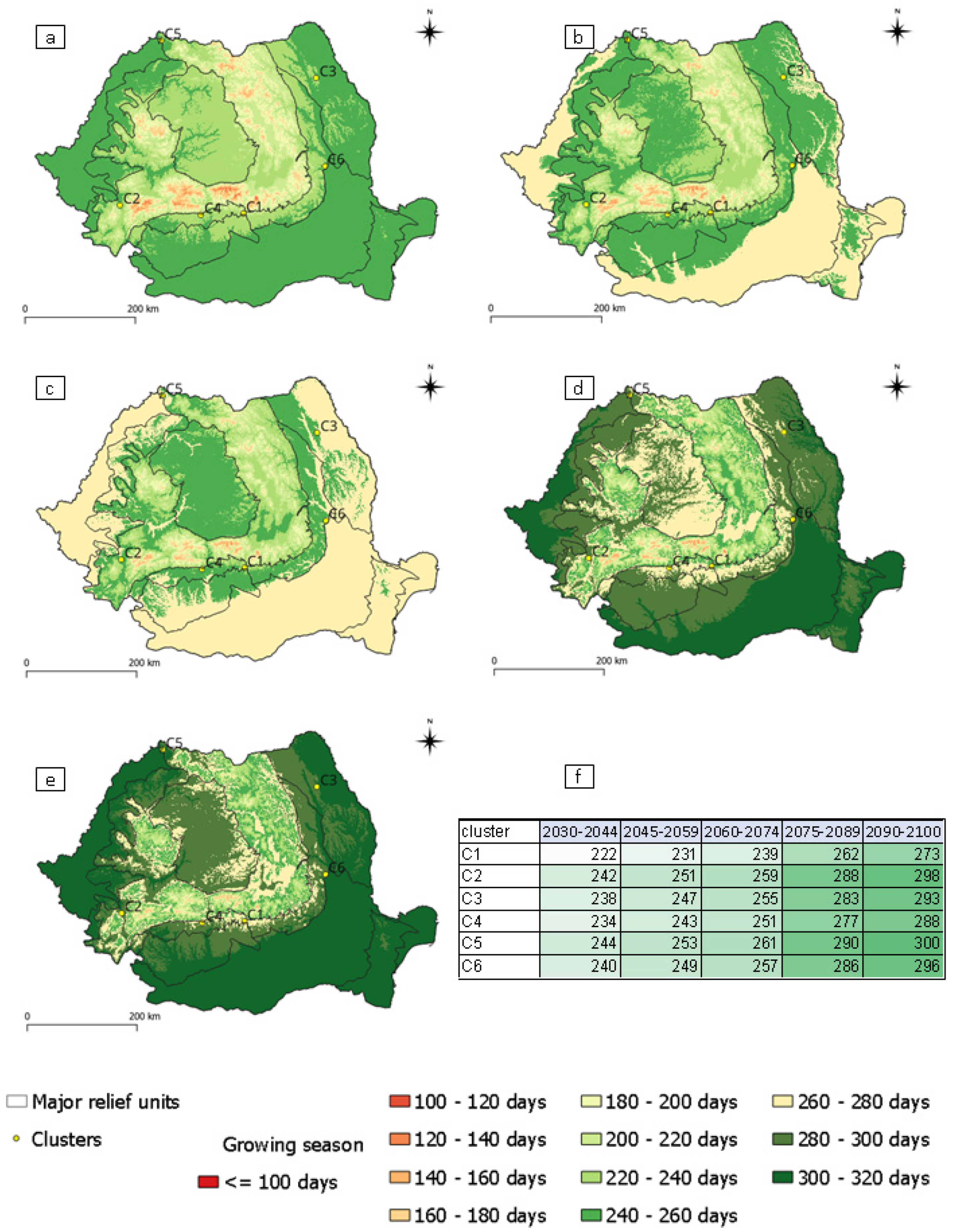
The simulations depict a progressive and strong lengthening of the growing season, with the most dynamic changes occurring from mid-century onward. In the near-term (2030–2044), GSL values are broadly comparable to present-day conditions, typically spanning ~220–245 days over large areas. By 2045–2059, the distribution shifts upward, with extensive regions entering the 240–260-day class, signaling the early imprint of warmer springs and milder autumns.
A visible-change emerges after 2060. During 2060–2074, much of the country crosses the 260-day threshold, and in favored lowland and plateau zones the season frequently extends toward 270–280 days. The late-century intervals (2075–2089 and 2090–2100) exhibit the most expansive increases, with broad swaths reaching 280–300 days and localized maxima approaching ~300+ days. This pattern reflects the compound effect of earlier spring onset and delayed autumn termination documented in the SGS and EGS maps.
A tendency toward thermal homogenization under prolonged warming is indicated by the diminishing of spatial disparities that were noticeable in the early horizons (longer seasons in lowlands versus shorter seasons at higher elevations) approaching 2100.
The results (Figure 9f) show a consistent and substantial increase in the duration of the growing season (GSL) across all orchard clusters under the RCP 8.5 scenario, reflecting in the early projection horizons (2030–2044), mean GSL values range from 222 to 244 days, depending on altitude and regional climate. C2, C5 and C6 clusters already exhibit slightly longer growing seasons (240–244 days), while C1, C3, and C4 maintain shorter intervals (around 222–238 days). By mid-century (2045–2059), a uniform increase of roughly 8–10 days is observed across the country, marking the transition toward a climate regime favorable to prolonged vegetative activity. From 2060–2074, the rate of extension accelerates further, with mean GSL values ranging between 251 and 261 days, indicating a clear shift to nearly nine-month vegetation periods in several lowland and sub-Carpathian clusters.
The most substantial lengthening occurs after 2075, when all clusters surpass 270 days, and lowland areas reach 290–300 days by the end of the century. The northwestern and southwestern clusters (C5 and C2) record the highest values—up to 298–300 days in 2090–2100 representing an increase of nearly 50–60 days relative to the early-century baseline. Even in the cooler and higher elevation clusters, GSL extends to 273–288 days, underscoring the warming trend.

4. Discussion

In the specialized literature, the duration of the growing season for plum (Prunus domestica) in Romania is reported to range between 235 and 250 days, varying among regions according to local climatic characteristics [58]. For instance, in clusters C1, C4, and C6, the growing season length (GSL) averages around 235 days, while in C2 and C5, it can extend to 240–250 days. In southern Romania, the onset of the growing season for plum orchards generally occurs in late March or early April, a pattern also observed in the north-eastern region of the country [59,60]. The end of the vegetative period typically takes place between the second half of October and mid-November, depending on local temperature conditions and altitude.
The temporal evolution of the growing season across Romania displays a clear advancing and lengthening trend throughout the 21st century, with distinct rates of change under the two emission scenarios. Under RCP 4.5, both the onset (SGS) and termination (EGS) of the growing season show a gradual yet statistically significant shift. The SGS advances by approximately 10–15 days, and the EGS is delayed by about 15–20 days, resulting in an overall extension of the growing season by three to four weeks compared to the early projection horizon (2030–2044).
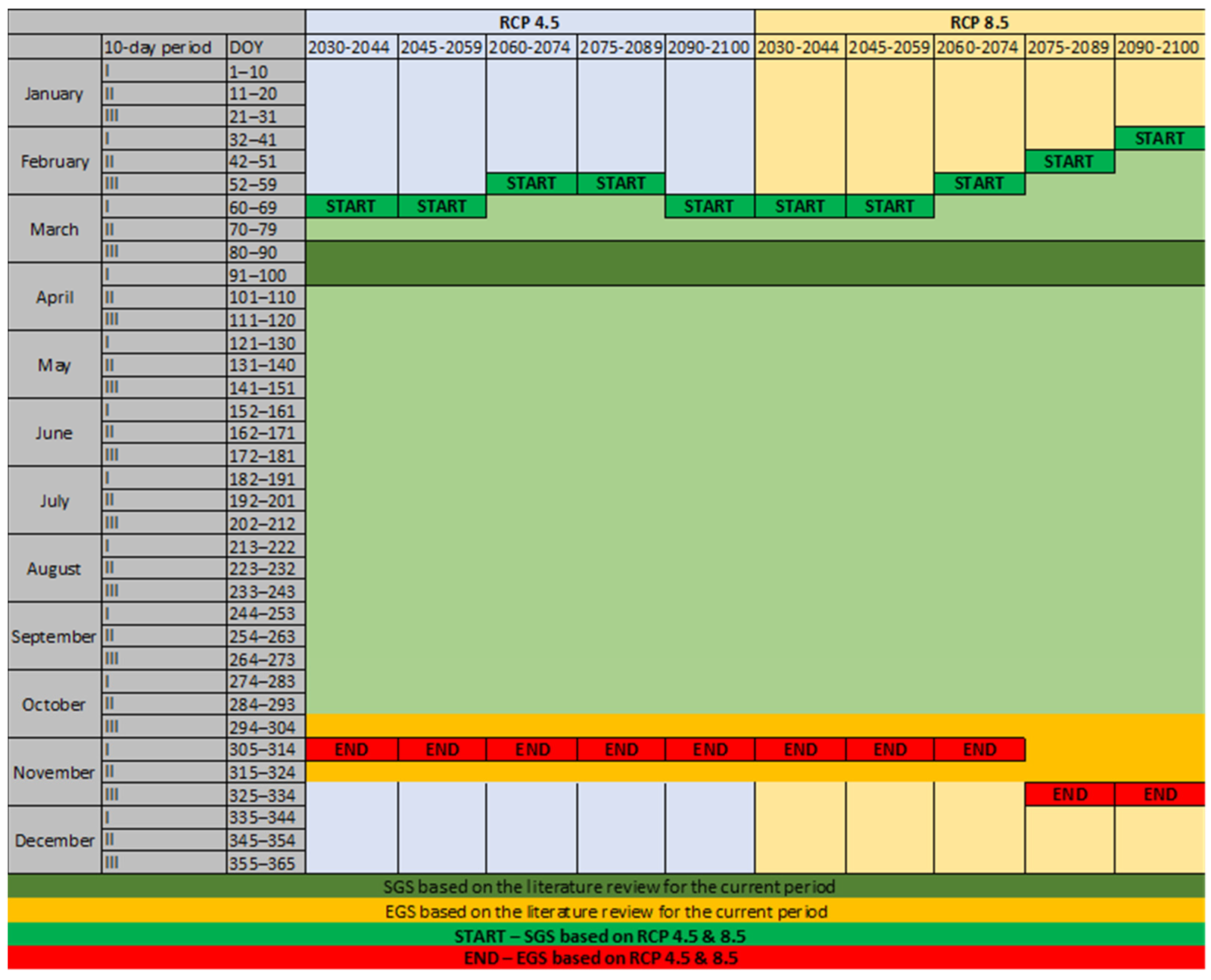
In contrast, the RCP 8.5 scenario produces a markedly stronger and non-linear response. After 2060, the phenological indicators accelerate sharply: the SGS advances by 25–30 days, frequently occurring in late January or early February, while the EGS extends into late November or December, leading to a growing season 40–60 days longer than at the beginning of the century. This temporal expansion intensifies between 2060 and 2089, after which most variables stabilize or plateau, indicating a potential climatic equilibrium toward the end of the century. Such behavior highlights the sensitivity of perennial orchard systems to cumulative thermal forcing, with the strongest adjustments concentrated in the second half of the century (Figure 10).
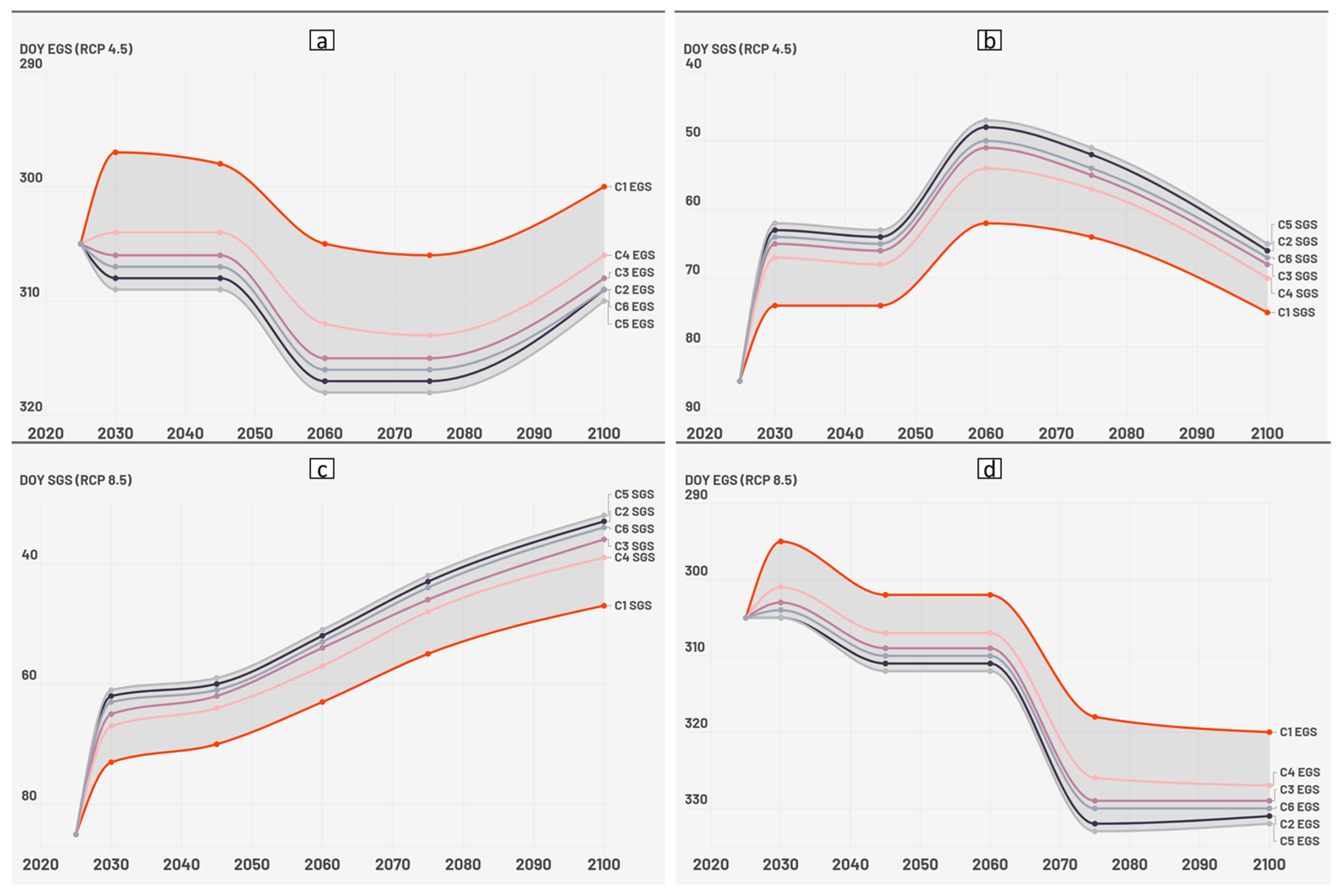
Following the evolution of the SGS and EGS indicators by cluster, C1 shows the lowest variations compared to the standards mentioned in the literature, followed in each case by C4. This indicates the importance of taking into account the vertical gradient which, in the context of RCP 4.5, is presented in a clearer manner, the two clusters mentioned above (C1 and C4) being located in areas with higher hills with a subcarpathian character. This clear difference seems to fade in the context of the RCP 8.5 scenario, when although the two clusters maintain their order, the differences compared to the other clusters are much smaller. Irimia et al. [19], in a study targeting the relationship between climate change and the suitability for wine production, note that from a climatic perspective, an altitudinal shift is also observed, with areas suitable for wine production moving to higher altitudes in the context of recent climate change.
Although the scale of Romania is too small to draw such conclusions, it should be noted that for RCP 8.5 there is an increase in homogeneity in the territory. We associate this with a visible decrease in the differences between clusters for SGS and EGS. The decrease in heterogeneity in the context of future climate scenarios was also observed by [61] (Figure 11).
Regarding the start of the growing season (SGS), Xia et al. [62] reported a marked advancement across northern latitudes. For the late-century period (2080–2099), the mean shift relative to 1985–2004 is projected to reach approximately −18.6 days under RCP 4.5 and −37.5 days under RCP 8.5, indicating a substantial early onset of vegetation under intensified warming conditions. Similarly, a notable extension of the growing season has been documented for various regions of Finland based on multiple climate model simulations. According to Ruosteenoja et al. [63], thermal winter is shrinking much faster than thermal summer is lengthening, primarily because winter temperatures are expected to increase more than twice as rapidly as summer temperatures. As a result, areas that are currently characterized by long and cold winters, such as Lapland or the Carpathian uplands are projected to develop thermal regimes comparable to those of present-day lowlands or even Central Europe by the end of the 21st century.
Based on the obtained results, it can be observed that the variability is more pronounced in the changes affecting the start of the growing season (SGS) than in those related to its end (EGS) under both climate scenarios analyzed. This indicates that spring phenophases are more sensitive to temperature increases and interannual thermal fluctuations than autumn ones, as the onset of vegetation responds directly to early-season warming. Overall, the analysis highlights a non-linear but accelerated shift in spring phenology under RCP 8.5, where each successive period brings an earlier SGS by approximately one week compared with the previous decade. Such advancement is projected to lengthen the overall growing season but also heightens the frost risk window, particularly for early-flowering with implication over the fruit production, respectively, over the economic sector [12,47]. Climate change can affect multiple components of agricultural ecosystems, including the activity and efficiency of pollinating insects. Temperature extremes or insufficient chilling may disrupt flowering–pollinator synchrony, reducing fertilization and ultimately fruit set. The optimal temperature range for pollination and fertilization in temperate fruit species such as plum, apple, or cherry is between 20–25 °C, while prolonged periods of cold, rain, or heat stress can severely limit pollination success [64]. Under projected climatic conditions in Romania, phenological mismatches between flowering periods and pollinator activity may therefore become an additional factor influencing the productivity and stability of orchard ecosystems.
In the context of a future warmer climate, the reduction in winter chill is expected to have some of the most severe implications for fruit production in temperate regions. Insufficient chilling can delay or even inhibit flowering, produce uneven or prolonged bloom, and generate abnormal vegetative growth, ultimately affecting fruit quality and yield [11,65]. In the context of the Romanian orchard regions, this process could intensify under warmer winters projected by both RCP 4.5 and RCP 8.5 scenarios. The observed advancement of the (SGS), combined with weaker chilling accumulation, may disrupt the physiological balance between dormancy and flowering, posing a critical challenge for the long-term adaptation and productivity of plum orchards. Although the extended growing period may enhance productivity potential, it also increases the exposure window to frost, heat [66,67], and drought extremes [68,69], redefining the risk calendar for Romanian orchards. For plum orchards, in the context of future climate change, [70] mentions that the projected temperature increases in the Bydgoszcz region are expected to raise the water needs of plum orchards (the annual optimal precipitation requirement for plum is estimated to rise from 712 mm to 807 mm, representing a 95 mm increase. In Great Britain, [71] revealed emerging geographic mismatches between suitable orchard areas and suitable pollinator habitats, suggesting a potential decline in pollination services unless production shifts towards more climatically favorable north-western regions. A recent study [72] highlighted that under 2050 conditions, the median bloom date shift in apples, pears and European plum ranged between −12 days to −19 days. According to [73], adapting agriculture to ongoing climate change requires coordinated and integrated measures across the production sector. In fruit growing, this process is particularly challenging and costly due to the perennial nature of orchards, which cannot be rapidly replaced or relocated. The most vulnerable crops are also the most widely cultivated in Bosnia and Herzegovina, including plum, apple, pear, cherry and sour cherry, making their adaptation especially urgent.
Although the results obtained depend on the assumptions and resolution of the climate models used, they provide a coherent picture of the direction and magnitude of phenological changes at the regional level. This study relies on a single GCM (MIROC5), which, although appropriate for the methodological structure adopted here, does not capture the full range of climate model uncertainty; therefore, future research should incorporate multi-model ensembles to enhance robustness and quantify variability among projections. The main sources of uncertainty, which can also be considered limitations, come from the differences between global and regional climate models [74], but also from the sensitivity of phenological thresholds to altitude, exposure and microclimate [75,76]. However, the convergence of trends between clusters and scenarios (RCP 4.5 and RCP 8.5) suggests a general robustness of the climate signal, which allows the use of these results in comparative assessments and fruit-growing adaptation plans. In the future, the integration of observational phenological series, monitoring data in orchards and the incorporation of varietal stratification to better reflect phenological variability within orchards, together with multi-model and multi-scenario analyses, can reduce uncertainty and refine local estimates of SGS and EGS periods. Although the projections presented here reveal coherent spatial and temporal patterns, several sources of uncertainty may influence the direction and magnitude of the estimated changes. Climate model bias is an inherent limitation, as different GCMs may produce warmer or cooler seasonal trajectories, potentially shifting the timing of SGS and EGS by several days. Likewise, the selection of the 6 °C phenological threshold may affect the absolute values of start and end dates, especially in transitional years, although the relative trends across time periods are expected to remain robust. Even so, the consistent advancement of SGS and extension of GSL across scenarios and clusters suggests that the underlying climatic signal is strong and resilient to methodological uncertainty.

5. Conclusions

This research provides a comprehensive assessment of possible changes in the growing season of plum (Prunus domestica L.) orchards in Romania, under moderate (RCP 4.5) and severe (RCP 8.5) climate scenarios during the 21st century. By integrating temperature-based phenology modeling with a regional cluster approach, the results highlight a clear trend towards advancing the start and lengthening the duration of the growing season in all regions analyzed.
Under the RCP 4.5 scenario, the start of the growing season (SGS) is projected to occur about 10–15 days earlier and the end of the growing season (EGS) 15–20 days later, implying a moderate extension of the growing season by about three to four weeks compared to the first-time interval analyzed in this paper. These trends reflect a gradual but steady warming, compatible with moderate adaptation needs in fruit systems. This moderate extension of the season may call for revised orchard management calendars, including earlier pruning, earlier pest and disease monitoring, and improved preparedness for late spring frost events.
In contrast, under the RCP 8.5 scenario, both the magnitude and the pace of phenological changes increase significantly after mid-century. In this case, the beginning of the growing season is expected to occur 25–30 days earlier and the end 25–35 days later, which determines a total extension of up to 60 days in some clusters. The most pronounced changes are anticipated between 2060 and 2089, an interval characterized by an intensification of the increase in temperatures. From a spatial point of view, the differences between the plain and the hill or mountain areas tend to reduce, indicating a thermal homogenization of the phenological behavior across the territory of Romania.
In the context of projected advances of SGS and extensions of the growing season, adaptation in plum orchards will require more targeted strategies. Selecting cultivars with later flowering dates or improved frost tolerance could help minimize exposure to early-season frost risk. In addition, assessing future winter chill availability will be essential for guiding cultivar suitability and orchard renewal decisions. Water management will also become increasingly important under longer growing seasons, particularly in regions projected to experience reduced precipitation and higher evaporative demand.
Although the results may be influenced by uncertainties specific to the climate scenarios (the limitations of the models used or local microclimatic particularities), the general direction of the trends is clear and consistent across regions and scenarios. This provides confidence that the obtained projections reflect a real and significant climate signal, which can serve as a solid basis for anticipating and managing the planning of future plum orchards in Romania.
In conclusion, the progressive advancement and extension of the plum growing season in Romania, especially under the high emissions scenario, indicates a fundamental phenological shift that will redefine the biological calendar of fruit ecosystems. The results obtained emphasize the need for adaptive strategies and continuous monitoring of phenological responses, to ensure the sustainability and resilience of fruit production in the context of current climate change.

Author Contributions

Conceptualization, V.J. and P.I.; methodology, V.J., P.I. and L.N.; software, V.J., P.I. and A.U.; validation, V.J., L.N., A.U. and P.I.; formal analysis, V.J. and A.U.; investigation, V.J., P.I. and L.N.; resources, V.J. and P.I.; data curation, V.J. and P.I.; writing—original draft preparation, V.J. and P.I.; writing—review and editing, A.U. and L.N.; visualization, V.J.; supervision, V.J.; project administration, V.J.; funding acquisition, V.J. All authors have read and agreed to the published version of the manuscript.

Funding

This research was funded by “Alexandru Ioan Cuza” University of Iasi, grant number GI-UAIC-2022-05. The APC was funded by GI-UAIC-2022-05.

Data Availability Statement

The original contributions presented in this study are included in the article. Further inquiries can be directed to the corresponding authors.

Conflicts of Interest

The authors declare no conflicts of interest.

Abbreviations

The following abbreviations are used in this manuscript:
SGSStart of the growing season
EGSEnd of the growing season
GSLGrowing season length
DOYDay of the year
GSGrowing season

References

  1. Kuden, A.B. Climate change affects fruit crops. Acta Hortic. 2020, 437–440. [Google Scholar] [CrossRef]
  2. Santos, J.A.; Costa, R.; Fraga, H. Climate change impacts on thermal growing conditions of main fruit species in Portugal. Clim. Change 2017, 140, 273–286. [Google Scholar] [CrossRef]
  3. Hervert-Hernández, D.; García, O.P.; Rosado, J.L.; Goñi, I. The contribution of fruits and vegetables to dietary intake of polyphenols and antioxidant capacity in a Mexican rural diet: Importance of fruit and vegetable variety. Food Res. Int. 2011, 44, 1182–1189. [Google Scholar] [CrossRef]
  4. Liu, R.H. Health-Promoting Components of Fruits and Vegetables in the Diet. Adv. Nutr. 2013, 4, 384S–392S. [Google Scholar] [CrossRef] [PubMed]
  5. Mazzoni, L.; Ariza Fernández, M.T.; Capocasa, F. Potential Health Benefits of Fruits and Vegetables. Appl. Sci. 2021, 11, 8951. [Google Scholar] [CrossRef]
  6. Mohamed, Z.; AbdLatif, I.; Mahir Abdullah, A. 1—Economic importance of tropical and subtropical fruits. In Postharvest Biology and Technology of Tropical and Subtropical Fruits; Yahia, E.M., Ed.; Woodhead Publishing Series in Food Science, Technology and Nutrition; Woodhead Publishing: Cambridge, UK, 2011; pp. 1–20. ISBN 978-1-84569-733-4. [Google Scholar] [CrossRef]
  7. Campos, D.A.; Gómez-García, R.; Vilas-Boas, A.A.; Madureira, A.R.; Pintado, M.M. Management of Fruit Industrial By-Products—A Case Study on Circular Economy Approach. Molecules 2020, 25, 320. [Google Scholar] [CrossRef]
  8. Schneider, U.A.; Havlík, P.; Schmid, E.; Valin, H.; Mosnier, A.; Obersteiner, M.; Böttcher, H.; Skalský, R.; Balkovič, J.; Sauer, T.; et al. Impacts of population growth, economic development, and technical change on global food production and consumption. Agric. Syst. 2011, 104, 204–215. [Google Scholar] [CrossRef]
  9. Osorio-Marín, J.; Fernandez, E.; Vieli, L.; Ribera, A.; Luedeling, E.; Cobo, N. Climate change impacts on temperate fruit and nut production: A systematic review. Front. Plant Sci. 2024, 15, 1352169. [Google Scholar] [CrossRef]
  10. Ramírez, F.; Kallarackal, J. Climate Change and Chilling Requirements. In Responses of Fruit Trees to Global Climate Change; Ramirez, F., Kallarackal, J., Eds.; Springer International Publishing: Cham, Switzerland, 2015; pp. 31–34. ISBN 978-3-319-14200-5. [Google Scholar] [CrossRef]
  11. Luedeling, E.; Girvetz, E.H.; Semenov, M.A.; Brown, P.H. Climate Change Affects Winter Chill for Temperate Fruit and Nut Trees. PLoS ONE 2011, 6, e20155. [Google Scholar] [CrossRef] [PubMed]
  12. Unterberger, C.; Brunner, L.; Nabernegg, S.; Steininger, K.W.; Steiner, A.K.; Stabentheiner, E.; Monschein, S.; Truhetz, H. Spring frost risk for regional apple production under a warmer climate. PLoS ONE 2018, 13, e0200201. [Google Scholar] [CrossRef]
  13. Fraga, H.; Pinto, J.G.; Santos, J.A. Climate change projections for chilling and heat forcing conditions in European vineyards and olive orchards: A multi-model assessment. Clim. Change 2019, 152, 179–193. [Google Scholar] [CrossRef]
  14. Fraga, H.; Santos, J.A. Assessment of Climate Change Impacts on Chilling and Forcing for the Main Fresh Fruit Regions in Portugal. Front. Plant Sci. 2021, 12, 689121. [Google Scholar] [CrossRef] [PubMed]
  15. Rodríguez, A.; Pérez-López, D.; Centeno, A.; Ruiz-Ramos, M. Viability of temperate fruit tree varieties in Spain under climate change according to chilling accumulation. Agric. Syst. 2021, 186, 102961. [Google Scholar] [CrossRef]
  16. Vanalli, C.; Casagrandi, R.; Gatto, M.; Bevacqua, D. Shifts in the thermal niche of fruit trees under climate change: The case of peach cultivation in France. Agric. For. Meteorol. 2021, 300, 108327. [Google Scholar] [CrossRef]
  17. Botu, I.; Botu, M.; Achim, G.; Baciu, A. Plum culture in Romania: Present situation and perspectives. Acta Hortic. 2010, 365–372. [Google Scholar] [CrossRef]
  18. Jitariu, V.; Ichim, P.; Sfica, L.; Ursu, A. Climate change projections regarding apple orchards in the north-eastern region of romania. Int. Multidiscip. Sci. GeoConference SGEM 2019, 19, 915–924. [Google Scholar] [CrossRef]
  19. Irimia, L.M.; Patriche, C.V.; Roşca, B.; Cotea, V.V. Modifications in climate suitability for wine production of Romanian wine regions as a result of climate change. BIO Web Conf. 2017, 9, 01026. [Google Scholar] [CrossRef]
  20. Irimia, L.M.; Patriche, C.V.; Roșca, B. Climate change impact on climate suitability for wine production in Romania. Theor. Appl. Climatol. 2018, 133, 1–14. [Google Scholar] [CrossRef]
  21. Gitea, M.A.; Gitea, D.; Tit, D.M.; Purza, L.; Samuel, A.D.; Bungău, S.; Badea, G.E.; Aleya, L. Orchard management under the effects of climate change: Implications for apple, plum, and almond growing. Environ. Sci. Pollut. Res. 2019, 26, 9908–9915. [Google Scholar] [CrossRef]
  22. Cosmulescu, S. Climatic variability in Craiova (Romania) and its impacts on fruit orchards. South-West. J. Hortic. Biol. Environ. 2016, 7, 15–26. [Google Scholar]
  23. FAO. FAO Strategy on Climate Change 2022–2031; FAO: Rome, Italy, 2022. [Google Scholar]
  24. Paltineanu, C.; Chitu, E. Climate change impact on phenological stages of sweet and sour cherry trees in a continental climate environment. Sci. Hortic. 2020, 261, 109011. [Google Scholar] [CrossRef]
  25. Patriche, C.V.; Roșca, B.; Pîrnău, R.G.; Vasiliniuc, I.; Irimia, L.M. Digital Mapping of Land Suitability for Main Agricultural Crops in Romania. Agronomy 2024, 14, 2828. [Google Scholar] [CrossRef]
  26. Belda, M.; Holtanová, E.; Halenka, T.; Kalvová, J. Climate classification revisited: From Koppen to Trewartha. Clim. Res. 2014, 59, 1–13. [Google Scholar] [CrossRef]
  27. Cheval, S.; Dumitrescu, A.; Irașoc, A.; Paraschiv, M.-G.; Perry, M.; Ghent, D. MODIS-based climatology of the Surface Urban Heat Island at country scale (Romania). Urban Clim. 2022, 41, 101056. [Google Scholar] [CrossRef]
  28. Apostol, L.; Sfîcă, L. Influence of the Siret River Corridor on wind conditions. Pr. Stud. Geogr. 2011, 47, 483–491. [Google Scholar]
  29. Dumitrescu, A.; Birsan, M.-V. ROCADA: A gridded daily climatic dataset over Romania (1961–2013) for nine meteorological variables. Nat. Hazards 2015, 78, 1045–1063. [Google Scholar] [CrossRef]
  30. Sfîcă, L.; Iordache, I.; Voiculescu, M. Solar signal on regional scale: A study of possible solar impact upon Romania’s climate. J. Atmos. Sol.-Terr. Phys. 2018, 177, 257–265. [Google Scholar] [CrossRef]
  31. Ministry of Agriculture and Rural Development. Fruit Trees, Shrubs, and Strawberry—Technical and Economic Guide. Invel Multimedia. 2014. Available online: https://www.madr.ro/docs/agricultura/legume-fructe/Ghid-Pomicultura-final.pdf (accessed on 22 October 2025). (In Romanian)
  32. MacQueen, J. Some methods for classification and analysis of multivariate observation. In Proceedings of the Fifth Berkeley Symposium on Mathematical Statistics and Probability; University of California Press: Oakland, CA, USA, 1967. [Google Scholar]
  33. Folini, A.; Lenzi, E.; Biraghi, C.A. Cluster analysis: A comprehensive and versatile qgis plugin for pattern recognition in geospatial data. Int. Arch. Photogramm. Remote Sens. Spat. Inf. Sci. 2022, XLVIII-4-W1-2022, 151–157. [Google Scholar] [CrossRef]
  34. Coman, M.; Butac, M.; Sumedrea, D.; Dutu, I.; Iancu, M.; Mazilu, C.; Plopa, C. Plum culture in romania—Current status and perspectives. Acta Hortic. 2012, 25–32. [Google Scholar] [CrossRef]
  35. Karger, D.N.; Conrad, O.; Böhner, J.; Kawohl, T.; Kreft, H.; Soria-Auza, R.W.; Zimmermann, N.E.; Linder, H.P.; Kessler, M. Climatologies at high resolution for the earth’s land surface areas. Sci. Data 2017, 4, 170122. [Google Scholar] [CrossRef]
  36. Watanabe, M.; Suzuki, T.; O’ishi, R.; Komuro, Y.; Watanabe, S.; Emori, S.; Takemura, T.; Chikira, M.; Ogura, T.; Sekiguchi, M.; et al. Improved Climate Simulation by MIROC5: Mean States, Variability, and Climate Sensitivity. J. Clim. 2010, 23, 6312–6335. [Google Scholar] [CrossRef]
  37. Kawamiya, M.; Hajima, T.; Tachiiri, K.; Watanabe, S.; Yokohata, T. Two decades of Earth system modeling with an emphasis on Model for Interdisciplinary Research on Climate (MIROC). Prog. Earth Planet. Sci. 2020, 7, 64. [Google Scholar] [CrossRef]
  38. Pal, S.C.; Chakrabortty, R. Simulating the impact of climate change on soil erosion in sub-tropical monsoon dominated watershed based on RUSLE, SCS runoff and MIROC5 climatic model. Adv. Space Res. 2019, 64, 352–377. [Google Scholar] [CrossRef]
  39. Duulatov, E.; Chen, X.; Amanambu, A.C.; Ochege, F.U.; Orozbaev, R.; Issanova, G.; Omurakunova, G. Projected Rainfall Erosivity Over Central Asia Based on CMIP5 Climate Models. Water 2019, 11, 897. [Google Scholar] [CrossRef]
  40. ur Rahman, M.H.; Ahmad, A.; Wang, X.; Wajid, A.; Nasim, W.; Hussain, M.; Ahmad, B.; Ahmad, I.; Ali, Z.; Ishaque, W.; et al. Multi-model projections of future climate and climate change impacts uncertainty assessment for cotton production in Pakistan. Agric. For. Meteorol. 2018, 253–254, 94–113. [Google Scholar] [CrossRef]
  41. Ahmadi, M.; Etedali, H.R.; Elbeltagi, A. Evaluation of the effect of climate change on maize water footprint under RCPs scenarios in Qazvin plain, Iran. Agric. Water Manag. 2021, 254, 106969. [Google Scholar] [CrossRef]
  42. Jayasinghe, S.L.; Kumar, L. Modeling the climate suitability of tea [Camellia sinensis (L.) O. Kuntze] in Sri Lanka in response to current and future climate change scenarios. Agric. For. Meteorol. 2019, 272–273, 102–117. [Google Scholar] [CrossRef]
  43. Webb, L.; Darbyshire, R.; Erwin, T.; Goodwin, I. A robust impact assessment that informs actionable climate change adaptation: Future sunburn browning risk in apple. Int. J. Biometeorol. 2017, 61, 891–901. [Google Scholar] [CrossRef]
  44. Sun, S.K.; Li, C.; Wu, P.T.; Zhao, X.N.; Wang, Y.B. Evaluation of agricultural water demand under future climate change scenarios in the Loess Plateau of Northern Shaanxi, China. Ecol. Indic. 2018, 84, 811–819. [Google Scholar] [CrossRef]
  45. Masaki, Y. Future risk of frost on apple trees in Japan. Clim. Change 2020, 159, 407–422. [Google Scholar] [CrossRef]
  46. Pfleiderer, P.; Menke, I.; Schleussner, C.-F. Increasing risks of apple tree frost damage under climate change. Clim. Change 2019, 157, 515–525. [Google Scholar] [CrossRef]
  47. Lhotka, O.; Brönnimann, S. Possible Increase of Vegetation Exposure to Spring Frost under Climate Change in Switzerland. Atmosphere 2020, 11, 391. [Google Scholar] [CrossRef]
  48. Skaugen, T.E.; Tveito, O.E. Growing-season and degree-day scenario in Norway for 2021–2050. Clim. Res. 2004, 26, 221–232. [Google Scholar] [CrossRef]
  49. Linderholm, H.W.; Walther, A.; Chen, D. Twentieth-century trends in the thermal growing season in the Greater Baltic Area. Clim. Change 2008, 87, 405–419. [Google Scholar] [CrossRef]
  50. Gumiński, R. Próba wydzielenia dzielnic rolniczo-klimatycznych w Polsce (Attempt to separate agricultural and climatic districts in Poland). Przegląd Meteorologiczno-Hydrologiczny. Warszawa 1948. Available online: https://bibliotekanauki.pl/articles/2085324 (accessed on 28 January 2025). (In Polish).
  51. Woznicki, T.; Heide, O.; Sønsteby, A.; Måge, F.; Remberg, S. Climate warming enhances flower formation, earliness of blooming and fruit size in plum (Prunus domestica L.) in the cool Nordic environment. Sci. Hortic. 2019, 257, 108750. [Google Scholar] [CrossRef]
  52. Kępińska-Kasprzak, M.; Mager, P. Thermal growing season in Poland calculated by two different methods. Ann. Wars. Univ. Life Sci. Land. Reclam. 2015, 47, 261–273. [Google Scholar] [CrossRef]
  53. Tomczyk, A.M.; Szyga-Pluta, K. Variability of thermal and precipitation conditions in the growing season in Poland in the years 1966–2015. Theor. Appl. Climatol. 2019, 135, 1517–1530. [Google Scholar] [CrossRef]
  54. Szyga-Pluta, K.; Tomczyk, A.M.; Piniewski, M.; Eini, M.R. Past and future changes in the start, end, and duration of the growing season in Poland. Acta Geophys. 2023, 71, 3041–3055. [Google Scholar] [CrossRef]
  55. Patriche, C.V.; Sfîcă, L.; Roşca, B. About the problem of digital precipitations mapping using (geo)statistical methods in GIS. Geogr. Tech. 2008, 1, 82–91. [Google Scholar]
  56. Secci, D.; Patriche, C.V.; Ursu, A.; Sfica, L. Spatial interpolation of mean annual precipitations in Sardinia. A comparative analysis of several methods. Geogr. Tech. 2010, 9, 67–75. [Google Scholar]
  57. Vasiliniuc, I.; Patriche, C.V.; Pirnau, R.; Rosca, B. Statistical spatial models of soil parameters. An approach using different methods at different scales. Environ. Eng. Manag. J. 2013, 12, 457–464. [Google Scholar] [CrossRef]
  58. Sumedrea, D.; Sumedrea, M. Pomicultură general (General Pomology) in Romanian; Invel Multimedia: Bucureşti, Romania, 2011; ISBN 978-973-1886-60-2. [Google Scholar]
  59. Cosmulescu, S.; Botu, M. Walnut biodiversity in south-western Romania-resource for perspective cultivars. Pak. J. Bot. 2012, 44, 307–311. [Google Scholar]
  60. Jitariu, V.; Rosca, B.; Rusu, C. Pedo-Climatic Risks Over Făllticeni City Related Orchards. Present Environ. Sustain. Dev. 2017, 11, 151–162. [Google Scholar] [CrossRef][Green Version]
  61. Guan, Y.; Lu, H.; Jiang, Y.; Tian, P.; Qiu, L.; Pellikka, P.; Heiskanen, J. Changes in global climate heterogeneity under the 21st century global warming. Ecol. Indic. 2021, 130, 108075. [Google Scholar] [CrossRef]
  62. Xia, J.; Yan, Z.; Jia, G.; Zeng, H.; Jones, P.D.; Zhou, W.; Zhang, A. Projections of the advance in the start of the growing season during the 21st century based on CMIP5 simulations. Adv. Atmos. Sci. 2015, 32, 831–838. [Google Scholar] [CrossRef]
  63. Ruosteenoja, K.; Räisänen, J.; Pirinen, P. Projected changes in thermal seasons and the growing season in Finland. Intl J. Climatol. 2011, 31, 1473–1487. [Google Scholar] [CrossRef]
  64. Haokip, S.W.; Shankar, K.; Lalrinngheta, J. Climate change and its impact on fruit crops. J. Pharmacogn. Phytochem. 2020, 9, 435–438. [Google Scholar]
  65. Petri, J.L.; Leite, G.B. Consequences of insufficient winter chilling on apple tree bud-break. Acta Hortic. 2004, 662, 53–60. [Google Scholar] [CrossRef]
  66. Deryng, D.; Conway, D.; Ramankutty, N.; Price, J.; Warren, R. Global crop yield response to extreme heat stress under multiple climate change futures. Environ. Res. Lett. 2014, 9, 034011. [Google Scholar] [CrossRef]
  67. Cabezas, J.M.; Ruiz-Ramos, M.; Soriano, M.A.; Gabaldón-Leal, C.; Santos, C.; Lorite, I.J. Identifying adaptation strategies to climate change for Mediterranean olive orchards using impact response surfaces. Agric. Syst. 2020, 185, 102937. [Google Scholar] [CrossRef]
  68. Pechan, P.M.; Bohle, H.; Obster, F. Reducing vulnerability of fruit orchards to climate change. Agric. Syst. 2023, 210, 103713. [Google Scholar] [CrossRef]
  69. Calderón-Orellana, A.; Plaza-Rojas, G.; Gerding, M.; Huepe, G.; Kuschel-Otárola, M.; Bastías, R.M.; Alvear, T.; Olivos, A.; Calderón-Orellana, M. Productive, Physiological, and Soil Microbiological Responses to Severe Water Stress During Fruit Maturity in a Super High-Density European Plum Orchard. Plants 2025, 14, 1222. [Google Scholar] [CrossRef]
  70. Rolbiecki, S.; Piszczek, P. Effect of the forecast climate change on the plum tree water requirements in the bydgoszcz region. Infrastrukt. Ekol. Teren. Wiej. Infrastruct. Ecol. Rural. 2016, 1615–1624. [Google Scholar] [CrossRef]
  71. Polce, C.; Garratt, M.P.; Termansen, M.; Ramirez-Villegas, J.; Challinor, A.J.; Lappage, M.G.; Boatman, N.D.; Crowe, A.; Endalew, A.M.; Potts, S.G.; et al. Climate-driven spatial mismatches between British orchards and their pollinators: Increased risks of pollination deficits. Glob. Change Biol. 2014, 20, 2815–2828. [Google Scholar] [CrossRef]
  72. Caspersen, L.; Schiffers, K.; Picornell, A.; Egea, J.A.; Delgado, A.; El Yaacoubi, A.; Benmoussa, H.; Rodrigo, J.; Fadón, E.; Ben Mimoun, M.; et al. Contrasting responses to climate change—Predicting bloom of major temperate fruit tree species in the Mediterranean region and Central Europe. Agric. For. Meteorol. 2025, 375, 110859. [Google Scholar] [CrossRef]
  73. Trbic, G.; Popov, T.; Djurdjevic, V.; Milunovic, I.; Dejanovic, T.; Gnjato, S.; Ivanisevic, M. Climate Change in Bosnia and Herzegovina According to Climate Scenario RCP8.5 and Possible Impact on Fruit Production. Atmosphere 2022, 13, 1. [Google Scholar] [CrossRef]
  74. Haensler, A.; Saeed, F.; Jacob, D. Assessing the robustness of projected precipitation changes over central Africa on the basis of a multitude of global and regional climate projections. Clim. Change 2013, 121, 349–363. [Google Scholar] [CrossRef]
  75. Suggitt, A.J.; Wilson, R.J.; Isaac, N.J.B.; Beale, C.M.; Auffret, A.G.; August, T.; Bennie, J.J.; Crick, H.Q.P.; Duffield, S.; Fox, R.; et al. Extinction risk from climate change is reduced by microclimatic buffering. Nat. Clim. Change 2018, 8, 713–717. [Google Scholar] [CrossRef]
  76. Maclean, I.M.D. Predicting future climate at high spatial and temporal resolution. Glob. Change Biol. 2020, 26, 1003–1011. [Google Scholar] [CrossRef] [PubMed]
Figure 1. Major relief units of the study area (1—Carpathians; 2—Subcarpathians; 3—Moldavian Plateau; 4—Romanian Plain; 5—Getic Plateau; 6—Mehedinti Plateau; 7—Western Hills; 8—Western Plain; 9—Transilvanian Depression; 10—Dobrogea Plateau; 11—Danube Delta).
Horticulturae 11 01479 g001
Figure 2. Orchard clusters.
Horticulturae 11 01479 g002
Figure 3. Workflow diagram summarizing the methodological steps.
Horticulturae 11 01479 g003
Figure 4. Spatial distribution and temporal evolution of the start of the GS in Romania under the RCP4.5 scenario; (a) 2030−2044, (b) 2045−2059, (c) 2060−2074, (d) 2075−2089, and (e) 2090−2100. Panel (f) summarizes the mean day of year (DOY) corresponding to the beginning of the vegetative season for the six orchard clusters (C1−C6).
Horticulturae 11 01479 g004
Figure 5. Spatial distribution and temporal evolution of the end of the GS in Romania under the RCP4.5 scenario; (a) 2030−2044, (b) 2045−2059, (c) 2060−2074, (d) 2075−2089, and (e) 2090−2100. Panel (f) summarizes the mean day of year (DOY) corresponding to the end of the vegetative season for the six orchard clusters (C1−C6).
Horticulturae 11 01479 g005
Figure 6. Spatial distribution and temporal evolution of the GSL in Romania under the RCP4.5 scenario; (a) 2030−2044, (b) 2045−2059, (c) 2060−2074, (d) 2075−2089, and (e) 2090−2100. Panel (f) summarizes the GSL corresponding for the six orchard clusters (C1−C6).
Horticulturae 11 01479 g006
Figure 7. Spatial distribution and temporal evolution of the start of the GS in Romania under the RCP8.5 scenario; (a) 2030−2044, (b) 2045−2059, (c) 2060−2074, (d) 2075−2089, and (e) 2090−2100. Panel (f) summarizes the mean day of year (DOY) corresponding to the beginning of the vegetative season for the six orchard clusters (C1−C6).
Horticulturae 11 01479 g007
Figure 8. Spatial distribution and temporal evolution of the end of the GS in Romania under the RCP8.5 scenario; (a) 2030−2044, (b) 2045−2059, (c) 2060−2074, (d) 2075−2089, and (e) 2090−2100. Panel (f) summarizes the mean day of year (DOY) corresponding to the end of the vegetative season for the six orchard clusters (C1−C6).
Horticulturae 11 01479 g008
Figure 9. Spatial distribution and temporal evolution of the GSL in Romania under the RCP8.5 scenario; (a) 2030−2044, (b) 2045−2059, (c) 2060−2074, (d) 2075−2089, and (e) 2090−2100. Panel (f) summarizes the GSL corresponding for the six orchard clusters (C1−C6).
Horticulturae 11 01479 g009
Figure 10. Calendar representation of the growing season timing (SGS, EGS, GSL) for current and projected climatic conditions. The SGS and the EGS represent the mean value for the 6 clusters.
Horticulturae 11 01479 g010
Figure 11. Projected changes in: (a) SGS under RCP 4.5; (b) EGS under RCP 4.5; (c) SGS under RCP 8.5; (d) EGS under RCP 8.5 for the 2030–2100 period.
Horticulturae 11 01479 g011
Disclaimer/Publisher’s Note: The statements, opinions and data contained in all publications are solely those of the individual author(s) and contributor(s) and not of MDPI and/or the editor(s). MDPI and/or the editor(s) disclaim responsibility for any injury to people or property resulting from any ideas, methods, instructions or products referred to in the content.