Article

Selective Breeding of Saccharomyces Wine and Beer Strains to Enhance Aromatic Diversity in Beverage Fermentation


1
Department of Microbiology and Biochemistry, Hochschule Geisenheim University, Von-Lade-Straße 1, 65366 Geisenheim, Germany
2
Geisenheim Yeast Breeding Center, Hochschule Geisenheim University, Von-Lade-Straße 1, 65366 Geisenheim, Germany
*
Authors to whom correspondence should be addressed.
Fermentation 2026, 12(6), 291; https://doi.org/10.3390/fermentation12060291
Submission received: 17 March 2026 / Revised: 10 June 2026 / Accepted: 11 June 2026 / Published: 18 June 2026
(This article belongs to the Section Yeast)

Abstract

This study investigates the breeding of the German wine yeast Oppenheimer Kreuz 1894, which carries a FOT1 allele of a fungal oligopeptide transporter, with Freya, a Kveik ale yeast, to enhance fermentation performance and aroma in beer and wine. By combining Kveik traits (osmotolerance, thermotolerance, and rapid fermentation kinetics) with those of a German wine yeast (ethanol tolerance, broadened nitrogen utilization, and aroma production) and introducing FOT1 into an ale background via classical breeding, we aimed to leverage the Saccharomyces biodiversity to improve fermentation activity and expand aromatic complexity. Fermentation products and volatile aroma compounds were quantified by HPLC and HS-SPME-GC-MS. Spore clone derivatives of initial hybrid strains (F2-generation) showed improved fermentation profiles with increased CO2 production. In wine fermentations, the best-performing spore clone, GYBC 901, yielded a rich aromatic profile with elevated fruity and floral notes. In beer fermentations, GYBC 899 produced the most diverse and complex aroma. FOT1 was of minor relevance to the breeding outcome, whereas meiotic recombination generated a set of diverse spore clones. These results highlight the potential of strategic yeast breeding to optimize fermentation processes and tailor flavor profiles to diverse product targets. Future work will elucidate metabolic pathways underlying these phenotypes and advance the development of application-specific strains, offering avenues to enhance beverage quality and product differentiation in the fermentation industry.

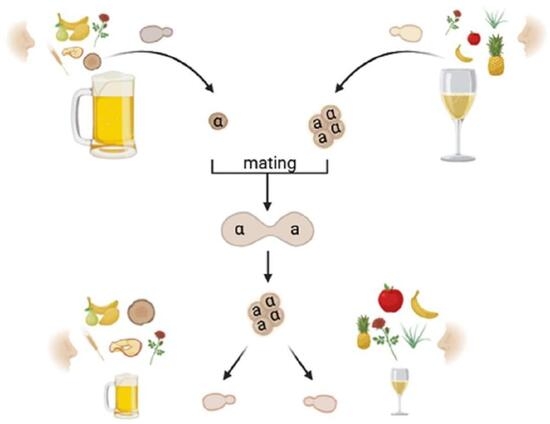
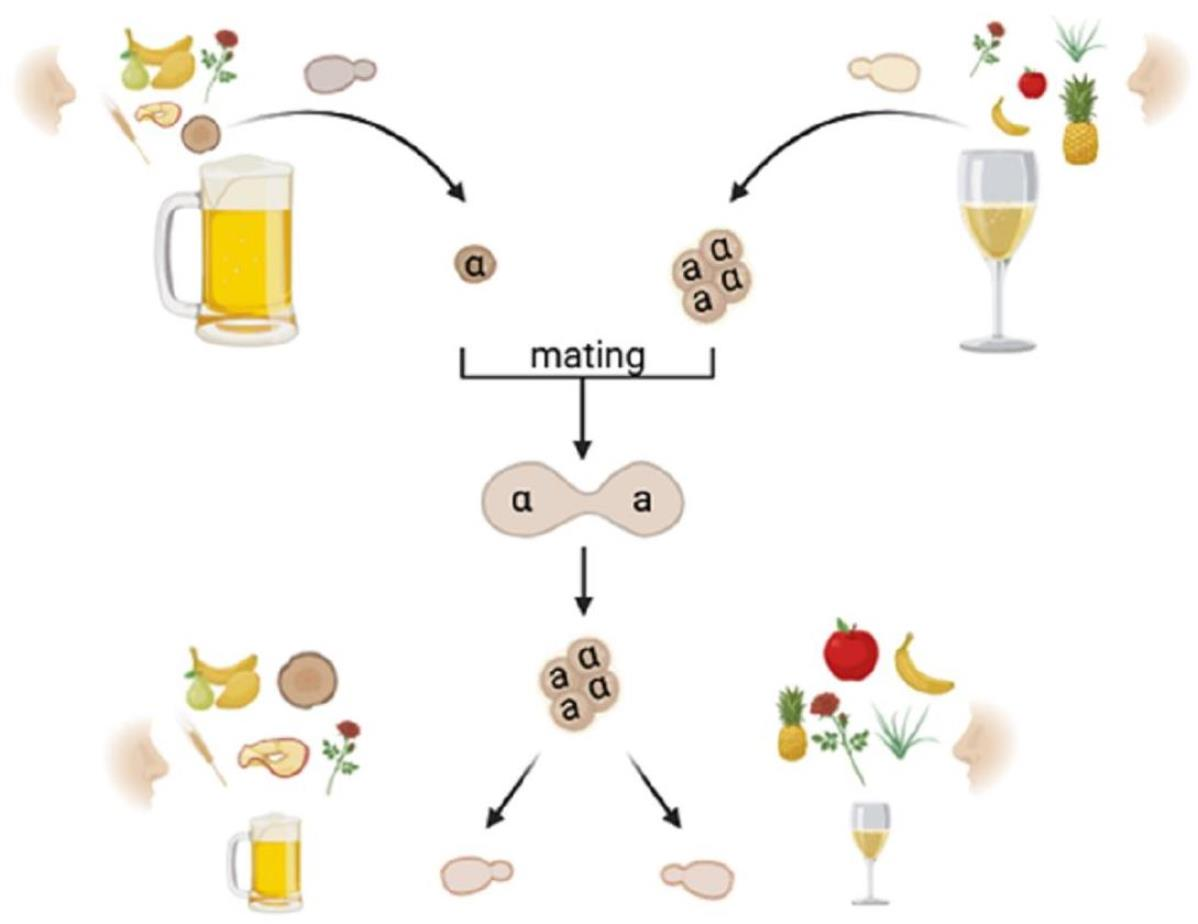
Graphical Abstract

1. Introduction

Fermentation is a critical process in the production of alcoholic beverages, with yeasts playing a key role in mediating this biochemical transformation. Through metabolic processes, yeasts convert sugars into ethanol and a variety of secondary metabolites that influence the sensory profile of the final product. The development of novel yeast hybrids represents an emerging area in fermentation science, with the potential to enhance production processes in both brewing and winemaking [1,2]. Recent advancements underscore the potential benefits of hybridizing yeast strains from diverse genetic backgrounds to yield strains with improved functional traits [3,4,5].
Norwegian Kveik ale yeasts and German wine yeasts originate from two distinct fermentation environments. Kveik yeasts, traditionally used for farmhouse ale production in western Norway, have gained international recognition for their resilience and ability to perform rapid fermentation at elevated temperatures [6]. In contrast, German wine yeasts have been cultivated over centuries in vineyards and cellar environments to refine the vinification process, optimizing the conversion of grape must into wine while enhancing flavor and aroma complexity [7].
Norwegian Kveik ale yeasts and German wine yeasts exhibit distinct genetic and physiological characteristics that reflect their adaptation to specific fermentation environments. Kveik yeasts, which are Saccharomyces cerevisiae ale yeasts, are known for genetic traits that confer high temperature tolerance and stress resistance [6,8]. These properties facilitate rapid fermentation kinetics and the production of unique ester profiles, distinguishing them from standard ale yeasts [6]. Notably, this robustness allows Kveik strains to achieve complete fermentation in significantly shorter periods compared to conventional ale yeasts [9].
The genetic architecture of Kveik strains results in unique flavor profiles. Some Kveik strains exhibit a distinct lack of phenolic off-flavor production (POF) due to mutations in either PAD1 or FDC1 that render these genes non-functional [6,10]. However, the inability to produce 4-vinylguaiacol appears to be a rare trait [5,10]. Furthermore, copy number variations in the flocculation genes FLO1 and FLO11 lead to high flocculation rates in some Kveik strains, while amplification of the MAL genes allows for rapid maltose consumption [6]. These features distinguish Kveik strains from many other brewing yeasts. These genetic differences present an opportunity for hybridization to develop novel yeast strains that leverage the desirable traits from both Kveik and wine yeast backgrounds. Co-fermenting Kveik strains with non-conventional yeasts produces beverages with higher levels of fruity esters and more diverse sensory characteristics [9]. This approach has great potential for advancing brewing science, as it leverages the complementary properties of different yeast species to create specific flavor profiles.
To understand the unique features of Kveik ale yeasts, it is also useful to compare them with lager yeasts. Lager yeasts, used in the brewing of lager-style beers, are typically hybrids of S. cerevisiae and S. eubayanus and belong to group I/Saaz-type lager yeasts (e.g., ~3n S. carlsbergensis) or group II/Frohberg-type lager yeasts (e.g., ~4n S. pastorianus) [11,12]. These yeasts are distinguished by their ability to ferment at cold temperatures and produce clean, crisp flavors with less ester production, which contributes to the distinct lager profile [13,14,15]. This cold fermentation capability distinguishes lager yeasts from Kveik’s ability to ferment efficiently at higher temperatures (35 °C), resulting in distinct aromatic characteristics.
In contrast, German wine yeasts, mostly diploid, exhibit genetic traits adapted for high-sugar environments typical of grape must fermentation. The presence of genes such as FOT1, encoding a fungal oligopeptide transporter located in the plasma membrane [16], positively enhances the organoleptic balance, reducing acetate production while increasing levels of acetate esters and higher alcohols [17]. FOT genes are absent in beer yeasts and are the result of an introgression from Torulaspora microellipsoides [18,19,20]. These oligopeptide transporters provide access to glutamate/glutamine-rich dipeptides and oligopeptides, which results in better fermentation performance in low-nitrogen musts [19]. Additionally, their β-glucosidase activity releases precursors converted into volatile aroma compounds, contributing to the complex sensory profiles of wines [21]. The integration of these genetic traits allows wine yeasts to produce alcohol efficiently while maintaining the organoleptic qualities desired in oenology.
Breeding of Kveik and wine yeasts could combine the advantageous traits of both yeast strains, creating novel hybrid strains for brewers and winemakers alike. These hybrid strains may combine traits of robustness to high fermentation temperatures characteristic of Kveik yeasts and the enhanced sugar tolerance, as well as an increased precursor-related aroma production typical of wine yeasts. This combination makes these hybrids promising candidates for innovative and improved fermentation protocols.
The development of hybrid strains also offers the potential for greater flexibility in production processes, including faster fermentation with less cooling capacity needed. Additionally, Kveik strains could contribute to a more complex aroma profile in wines, while the complex sugar metabolism capabilities of wine yeasts could diversify the flavor and texture of beers.
Targeted hybridization of diploid wildtype Saccharomyces strains is complicated by the ability of haploid sexual progeny to switch mating types, promoting self-fertility. In contrast, heterothallic strains require a compatible partner of the opposite mating type for zygote formation. The polyploidies and aneuploidies of some wine yeasts, but particularly of lager yeasts, result in poor or absent sporulation, which further limits their ability to form hybrids via regular pheromone-mediated mating [22,23].
The implementation of effective screening and selection protocols is essential to identify hybrids that not only retain key desirable traits but also demonstrate hybrid vigor. High-throughput genetic and phenotypic assays play a crucial role in rapidly assessing the performance of resulting strains under a variety of fermentation conditions.
Extensive documentation exists on intra-species yeast hybridization, contributing to advances in beverage fermentation [24]. However, research focusing specifically on hybridization of ale and wine yeasts remains in its nascent stages. While initial studies have shown success in achieving desirable fermentation characteristics through yeast hybridization, the specific hybridization of Kveik and wine yeasts has yet to be thoroughly explored.
The aim of this study is to investigate the benefits arising from hybridizing the wine yeast Oppenheimer Kreuz, which was isolated in 1894 by Wortmann, the founder of the Geisenheim Yeast Breeding Center, with a haploid, heterothallic Kveik yeast that was previously characterized [5]. By creating such inter-strain hybrids, we sought to combine the robust fermentation traits, high-temperature fermentation and stress tolerance of a Kveik yeast with the complex aroma profile of a wine yeast that also harbors a FOT1 gene for improved nitrogen utilization.
By undertaking a comprehensive experimental approach, this research seeks to explore both the scientific potential and practical implications of yeast hybridization in the fermentation industry.

2. Materials and Methods

2.1. Strains, Media and Growth Conditions

Yeasts were cultivated in YPD (10 g/L yeast extract, 20 g/L peptone, 20 g/L glucose) at 25–30 °C. Sulfometuron-methyl (SM)-resistant strains were selected using SD medium (20 g/L glucose, 1.7 g/L YNB w/o amino acids and w/o ammonium sulfate, 2 g/L asparagine (sterile filtered, added after autoclaving)) supplemented with 300 or 500 µg/mL SM. Petite mutants were selected upon incubation with ethidium bromide, as described in [25], and were confirmed by lack of growth on SG medium (20 g/L glycerol, 1.7 g/L YNB, 2 g/L asparagine) and YPG (10 g/L yeast extract, 10 g/L peptone, 10 g/L glycerol). Selection of hybrids was performed using SG medium supplemented with 300 µg/mL SM. Osmotic stress tolerance was tested on YPD containing 1 M NaCl. Selected spore clones were tested for growth in 2 × CSM (20 g/L glucose, 3.4 g/L YNB w/o amino acids and w/o ammonium sulfate, 1.58 g/L CSM drop-out complete) supplemented with 1 g/L glutathione (GSH; Glu (Cys-Gly)), Gly-Gly or Glu-Glu (all peptides obtained from Peptide Institute, Inc., Osaka, Japan). Then, 20 g/L agar was added to obtain solid media.
For the spot assay, yeast strains were grown overnight in YPD at 25 °C. Then, a 100-fold dilution was prepared, after which 5 µL of the cell suspension was spotted onto plates containing different media in order to test growth.
Table 1 lists all strains that were used and generated in this study. Strains are hosted in the Geisenheim Yeast Breeding Center (GYBC) collection.

2.2. PCR Amplifications

For mating-type PCR, a universal primer (27-MAT) was paired with either a MATα-specific primer (25-MATalpha), generating a 404 bp product, or a MATa-specific primer (26-MATa), yielding a 544 bp PCR product, as described before [26]. Internal primers (1349_I1-ScFOT & 1350_I2-ScFOT) were used to test for the presence of FOT1, generating a PCR product of 502 bp. SM-resistant strains were analyzed for mutations within the ILV2 ORF, altering the proline residue at position 192 in Ilv2. To this end, PCR products were obtained by using primers 1241_I1_ScILV2 and 1242_I2_ScILV2 and sent for sequencing (StarSeq, Mainz, Germany). Primers used in this study are shown in Table 2.

2.3. Sporulation and Tetrad Dissection

Yeast strains were sporulated as described previously [5]. Yeast strains were pre-cultured in YPD medium for 24 h in baffled flasks at 25 °C with continuous shaking at 140 min−1. Subsequently, an 8 mL cell suspension from each strain was centrifuged, rinsed once with sterile distilled water, and resuspended in 1 mL of water. From this suspension, 100 µL was spread onto sporulation plates composed of 2% potassium acetate, 0.22% yeast extract, 0.05% glucose, and 0.08% Complete Supplement Mixture (CSM); supplemented with 20 µg/mL adenine; and adjusted to a pH of 7. The plates were incubated at 25 °C for periods ranging from 2 to 10 days. Spore dissection was done using a micromanipulator (MSM 400, Singer Instruments, Roadwater, UK) following a method described earlier [27].
To evaluate the germination efficiency of spores, 26–32 tetrads from each hybrid were dissected. The dissection plates were incubated at 30 °C for five days, after which colonies were counted.

2.4. Identification of Sulfometuron-Methyl Resistant Strains

Sulfometuron-methyl (SM)-resistant yeast strains were isolated as previously described [28]. Overnight pre-cultures of the yeast strain were prepared in 20 mL SD medium, either with or without the addition of 50 µg/mL SM. A stock solution of SM (Genaxxon, Ulm, Germany) was prepared at a concentration of 50 mg/mL in DMSO and stored at −21 °C. Then, cells were centrifuged at 4700 min−1 for 5 min, and the yeast pellets were washed with sterile distilled water and centrifuged again under the same conditions. Cells were resuspended in 1 mL of SD medium, and 150 µL was plated onto SD agar plates supplemented with 300 µg/mL and 500 µg/mL SM. Plates were incubated at 26 °C for three days or until colonies appeared. Yeast colonies obtained from these plates were further evaluated in liquid SD medium containing 300 µg/mL SM. Mutations in ILV2 conferring SM-resistance were identified by PCR and sequencing (see Section 2.2).

2.5. Isolation of Petite Mutants

Petite mutants were isolated as described in [25]. To this end, 50 mL of YPD was inoculated with a pre-cultured yeast strain at an OD600nm of 0.3 and incubated at 30 °C with shaking up to an OD600nm of 1.0. Then, cells were harvested by centrifugation, washed twice with sterile distilled water and resuspended in 1 mL of sterile distilled water. Subsequently, 100 µL of this cell suspension was used to inoculate 5 mL of a medium containing 2% glycerol and 0.1 µg/mL ethidium bromide (Carl Roth, Karlsruhe, Germany; prepared from a 0.1 mg/mL stock solution) and incubated at 30 °C with shaking at 130 min−1 for 24 h. Cells were then plated onto YPD plates to identify petite colonies that were replica-plated onto SG plates to confirm the absence of growth on glycerol.

2.6. Yeast Breeding

Freya GYBC 771 (MATα, SM-resistant, petite) was crossed with the wine yeast strain Oppenheimer Kreuz 1894 (GYBC 126, MATa/α). Freya was cultured in YPD. Oppenheimer Kreuz 1894 was sporulated, and a spore suspension was treated with zymolyase to remove vegetative cells. Then, 10 µL of this spore suspension was transferred to 20 mL of YPD and incubated at 180 min−1 overnight to allow for germination. The next day, aliquots from both strains were mixed and plated on SG medium supplemented with SM. This was selected for zygotes by complementing the deficiency of each strain. Zygotes were confirmed by mating-type PCR (see Section 2.2).

2.7. Fermentation Setup

All of the fermentations were performed using sterile/autoclaved medium. The putative impact of FOT1 was tested via fermentations using 2 × CSM with the addition of either tripeptide glutathione or the dipeptide Gly-Gly or Glu-Glu (see Section 2.1). Fermentations were carried out in 100 mL Erlenmeyer flasks, filled with 40 mL of medium and inoculated with pre-cultured yeast strains at an OD600nm of 0.3. Flasks were sealed with aluminum foil and incubated, shaking at 25 °C for nine days. The cumulative mass loss of CO2 was monitored by daily weight measurements.
Lab-scale fermentation experiments were conducted for both wine and beer fermentations. For beer fermentations, the ANKOM Rf Gas Production system (ANKOM Gesellschaft für Analysentechnik—HLS, Salzwedel, Germany) was used as described previously [29]. Fermentations were done using 150 mL of wort containing 7.8 g/L glucose, 3.2 g/L fructose, 24.1 g/L maltose, 8.6 g/L maltotriose and 25.9 g/L saccharose, inoculated with 1 × 10⁷ cells/mL. The bottles were equipped with magnetic stirrer bars for continuous stirring. Fermentations were run for seven days at 20 °C.
Riesling must was obtained from our university’s vinery. Sugar content of the must was ~85° Oechsle, corresponding to 189.5 g/L of total sugars (95.3 g/L glucose, 94.2 g/L fructose). The amount of organic acid was 3.9 g/L of tartaric acid, 3.8 g/L of malic acid and 0.2 g/L citric acid. Yeast assimilable nitrogen (YAN) consisted of 82.0 mg/L of free ammonium analyzed via the rapid ammonium kit (Megazyme, Bray, Ireland) and 71.1 mg/L of free amino nitrogen (FAN) determined spectrophotometrically using the NOPA (nitrogen by the o-phthaldialdehyde) method [30]. Stirred wine fermentations were run at 20 °C for 16 days in 250 mL flasks filled with 150 mL of Riesling must inoculated with 1 × 10⁶ cells/mL. The weight of the flasks was measured daily to determine the cumulative mass loss of CO2.

2.8. High-Performance Liquid Chromatography (HPLC) Analysis

For the quantification of organic acids, sugars, and ethanol in wines and musts, as well as major sugars and ethanol in beers and wort, high-performance liquid chromatography (HPLC) was employed using an Agilent Technologies Series 1100 system as previously described [5,31]. The instrument was equipped with an autosampler, a multi-wavelength detector (MWD), a refractive index detector (RID), and a binary pump. The separation of analytes was achieved using a 250 mm Allure Organic Acids Column (Restek GmbH, Bad Homburg, Germany) with an inner diameter of 4.6 mm and a particle size of 5 μm. Detection of organic acids was performed at a wavelength of 210 nm using the MWD, while the RID facilitated the detection of sugars, organic acids, glycerol, and ethanol. An isocratic eluent of deionized water with 0.5% ethanol, acidified with 0.0139% concentrated sulfuric acid, was employed. The flow rate varied between 0.5 mL/min and 0.6 mL/min, with column temperatures maintained at 29 °C and 46 °C depending on the targeted analyte. The Agilent OpenLab CDS ChemStation Edition software (Rev.C.01.10) was utilized for data analysis, integration, and quantification based on external standards. For wine samples, the supernatants were then diluted fourfold with ultrapure water, to which 55 μL of 10% ethanol was added to ensure consistent and reliable detection of analytes. For beer samples, the supernatant was diluted fivefold with ultrapure water while adding 55 µL of 10% ethanol.

2.9. Analysis of VOCs with Headspace Solid-Phase Microextraction Gas Chromatography Mass Spectrometry (HS-SPME-GC-MS)

For the quantification of volatile aroma compounds in wine and beer, HS-SPME-GC-MS was employed, following established protocols [29]. The analytical setup included a 7890 A gas chromatograph coupled with a 5975-B mass spectrometer (Agilent Technologies Inc., Santa Clara, CA, USA). Sample preparation involved placing 5 mL of wine and 1.7 g of NaCl into a 20 mL headspace vial, along with two internal standards: 10 μL of 600 mg/L 1-octanol and 52 mg/L cumene. The SPME process utilized a polydimethylsiloxane and divinylbenzene-coated fiber (1 cm length, 65 μm particle size) provided by Supelco (Merck, Darmstadt, Germany). This was conducted at 40 °C with a 10 min incubation period, followed by extraction at a stirring rate of 500 rpm for 20 min. Chromatographic separation was performed on a 60 m Rxi®-5Si1 MS column (0.25 mm I.D., 1 μm film thickness) from Restek GmbH (Germany), using helium as the carrier gas. Sample injection occurred in a 1:10 split mode, starting with an initial column temperature of 30 °C, increasing at a rate of 12 °C/s to 240 °C, and holding for 4 min. The GC run proceeded with a temperature program beginning at 40 °C for 4 min, then increasing to 210 °C at 5 °C/min, followed by a ramp to 240 °C at 20 °C/min, with a final hold lasting 10.5 min. Mass spectra were recorded over a mass-to-charge ratio (m/z) range of 35 to 250, facilitating the quantification of aroma compounds. Calibration for each analyte was achieved using a five-point curve in wine model solutions containing 3% tartaric acid at pH 3 and varying ethanol concentrations reflecting the sample’s composition. This methodology enabled precise detection of higher alcohols, medium-chain fatty acids, and acetate and ethyl esters, contributing to the characterization of both the wine and beer aroma bouquets.
The odor activity value (OAV) for both the wine and beer aroma bouquets was determined using the odor thresholds of the respective compounds detected in either the beer [32,33,34] or wine [35,36,37,38,39,40] matrix.

2.10. Statistical Analysis and Software

Fermentations were run with three to six replicates: beer wort fermentations: n = 3 (except for GYBC 902, n = 4); grape must fermentations: n = 3 (except for GYBC 263, n = 5, and GYBC 126, n = 6). Data analysis for statistical evaluation was performed using JASP Team (2025; Version 0.95.4) [computer software], employing a classical ANOVA, including a homogeneity test with Welch’s correction and a Post Hoc test using the Games–Howell test, with a significance level set at * p < 0.05 relative to the control. HPLC data were analyzed using the Agilent OpenLab CDS ChemStation Edition software (Rev.C.01.10) for LC systems (Agilent, Santa Clara, CA, USA). The software GraphPad Prism version 10.5.0 (GraphPad Software, San Diego, CA, USA) was used to create the graphics. The graphical abstract was created using BioRender.com.

2.11. Usage of GenAI

GenAI was used in this paper to generate text ([HAWKI Gpt-40, GPT 5].

3. Results

3.1. Hybridization of Wine and Beer Yeast Strains

We used sexual crosses via regular mating to hybridize a wine yeast strain with an ale yeast strain, generating novel hybrids and meiotic offspring thereof. The diploid S. cerevisiae wine yeast Oppenheimer Kreuz 1894 (GYBC 126) was selected for breeding since it is a wildtype yeast strain that sporulates well and contains the FOT1 gene, which is absent in beer yeasts. The haploid Kveik ale strain Freya (GYBC 263, MATα, ho) has been characterized previously for its excellent breeding properties [5]. Hybrids derived from the mating of Freya × Oppenheimer Kreuz 1894, as well as meiotic offspring, i.e., spore clones generated from these hybrids, were labeled as KOK strains.
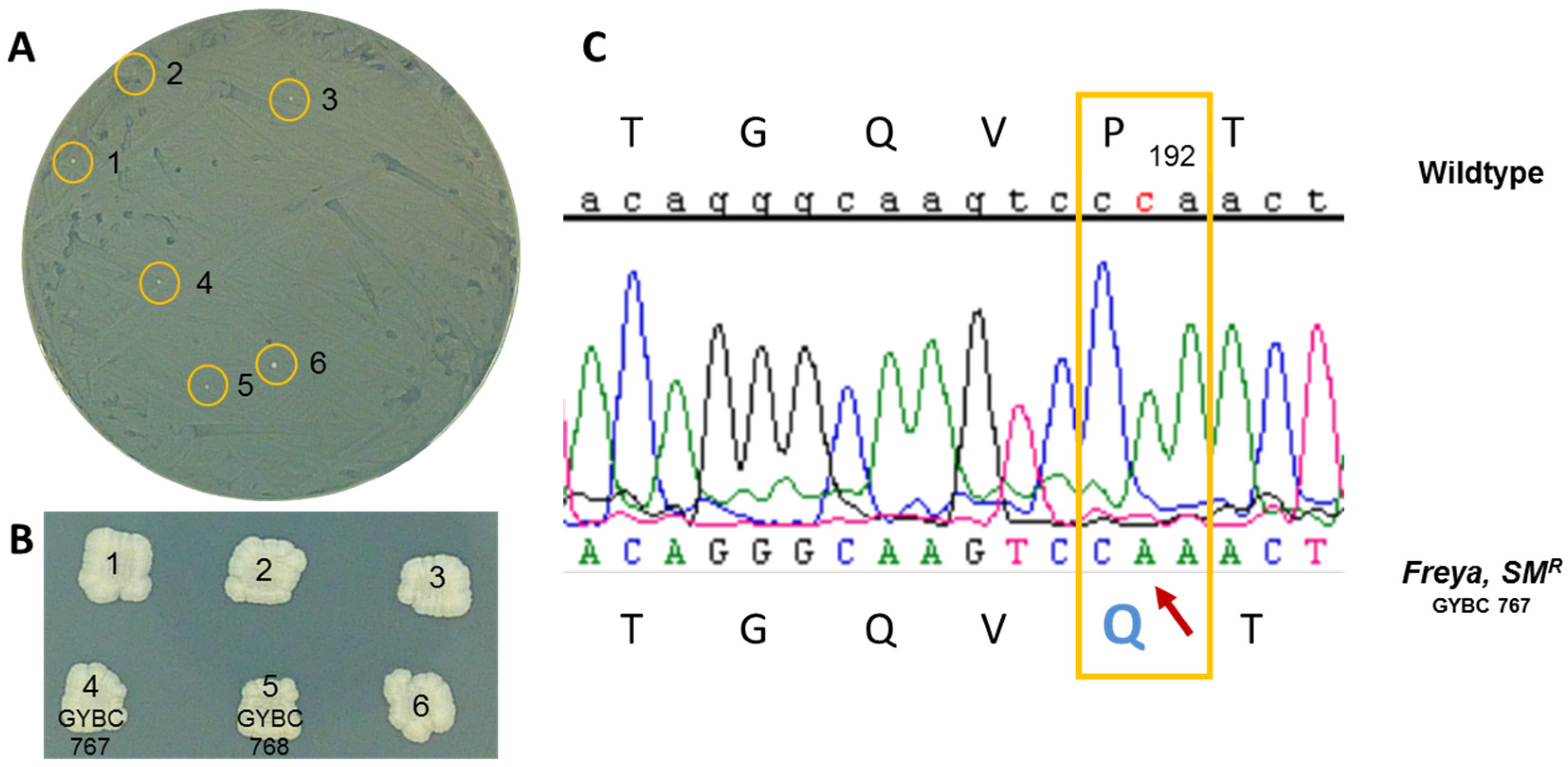
Identification of hybrids based on the mass mating of cells of two yeast strains is facilitated by direct selection of these hybrids based on complementary selection markers or selectable traits found in both strains. To this end, sulfometuron-methyl (SM)-resistant cells of Freya were selected (Figure 1A,B). Two descendants were characterized, GYBC 767 and GYBC 768, which both harbor a CCA > CAA mutation at codon 192 of the ILV2 gene, as can be seen in the example of GYBC 767 (Figure 1C). This mutation results in a substitution of proline at position 192 by glutamine (P192Q) in the protein sequence. Such a mutation has previously been described in other SM-resistant yeast strains [41].
Of the SM-resistant Freya descendant, petite colonies were isolated upon ethidium bromide treatment [25]. Petite strains form very small colonies on YPD plates and are unable to grow on glycerol-containing media due to defective mitochondria. Petite derivatives of GYBC 767 bear the strain number GYBC 771.
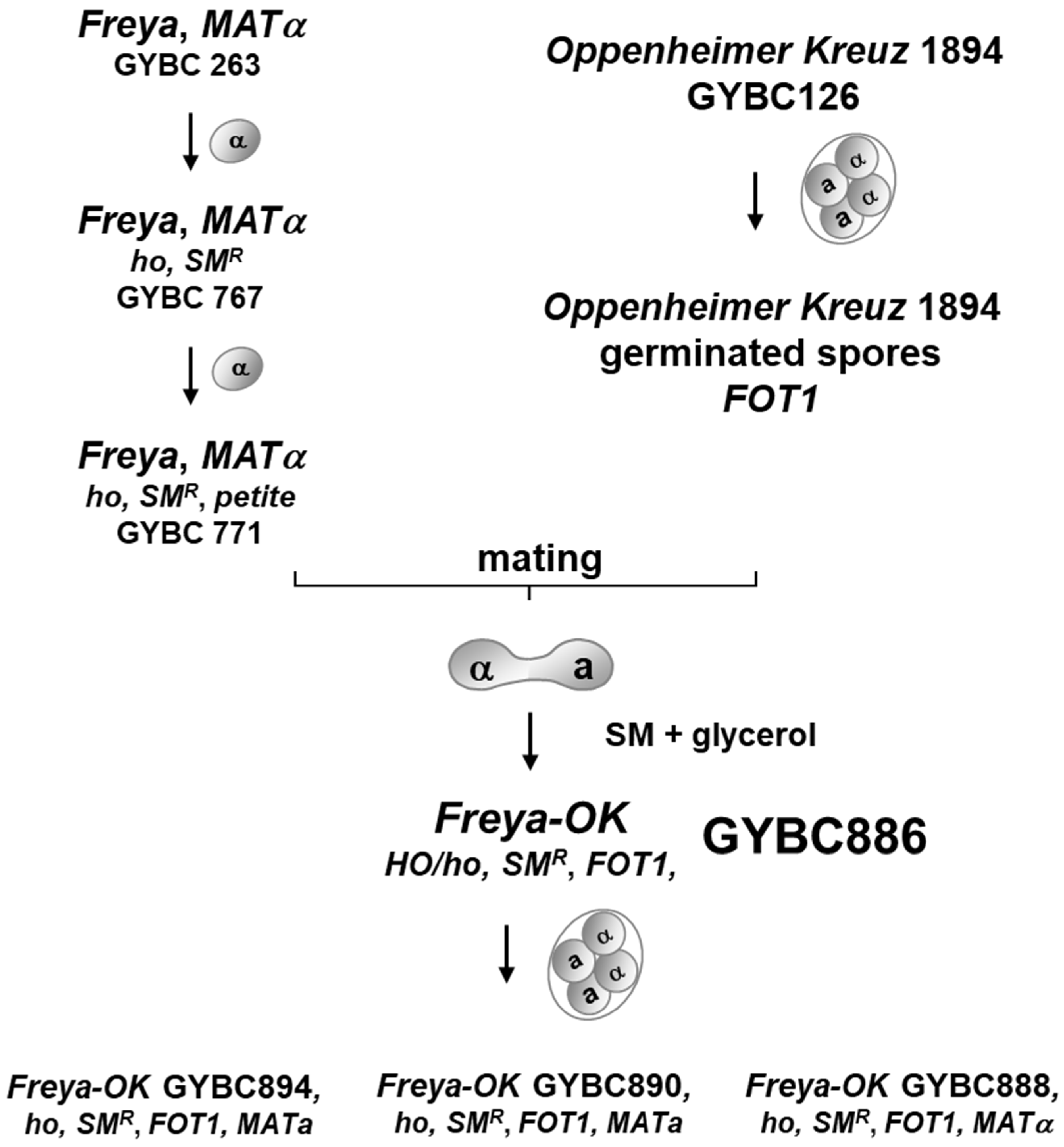
The derivative was then used in mass-matings. Freya GYBC 771 was mixed with germinated spores of Oppenheimer Kreuz 1894. Only germinated MATa spores of the wine yeast were able to mate directly with Freya cells. The resulting zygotes could be directly selected as the petite Freya cells contributed SM-resistance, while the grande cells of Oppenheimer Kreuz 1894 conferred the ability to grow on glycerol (Figure 2). We identified two zygotes (GYBC 885 and GYBC 886). To obtain haploid offspring, i.e., heterothallic spore clones capable of mating, these zygotes were sporulated, and 32 and 26 tetrads were isolated for GYBC 885 and GYBC 886, respectively. The germination efficiency of the dissected spores was above 90% (90.6% for GYBC 885 spores and 91% for GYBC 886 spores).

3.2. Characterization of KOK Spore Clones

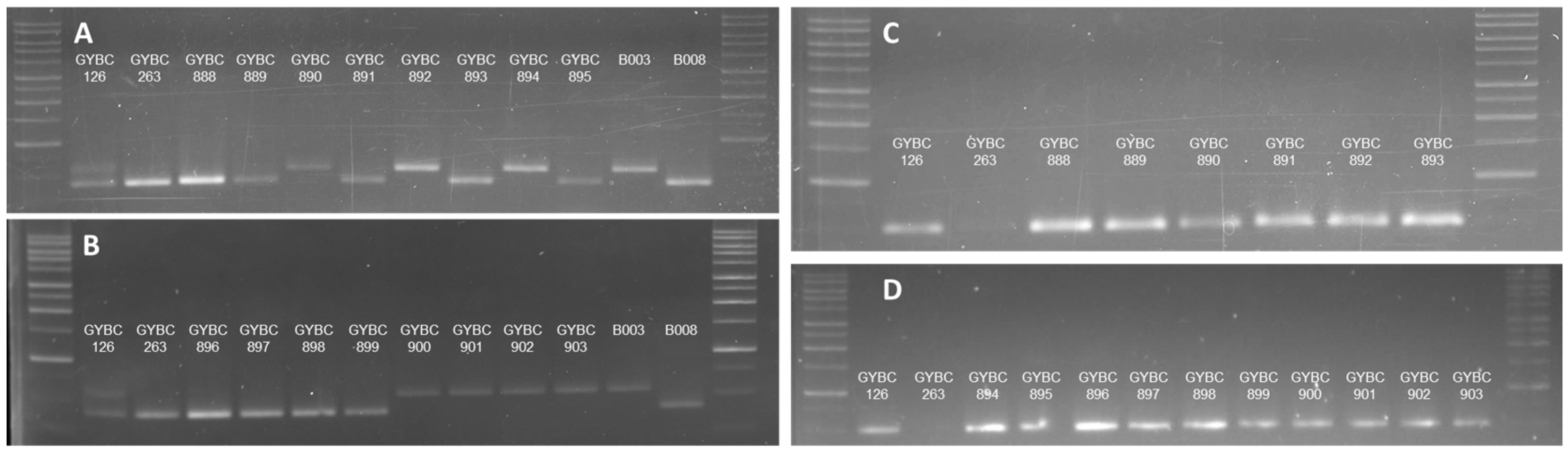
Only spore clones derived from four-spored asci from which all four spores germinated were analyzed. We selected spore clones for further studies that combined all available traits: heterothallic, i.e., the presence of a single mating type indicating a deficient HO gene, the presence of FOT1 and SM-resistance. Mating type and FOT1 were detected by PCR (Figure 3) and SM-resistance by growth on selective media. With this procedure, we isolated 16 haploid MATa and MATα strains (GYBC 888 to GYBC 903).
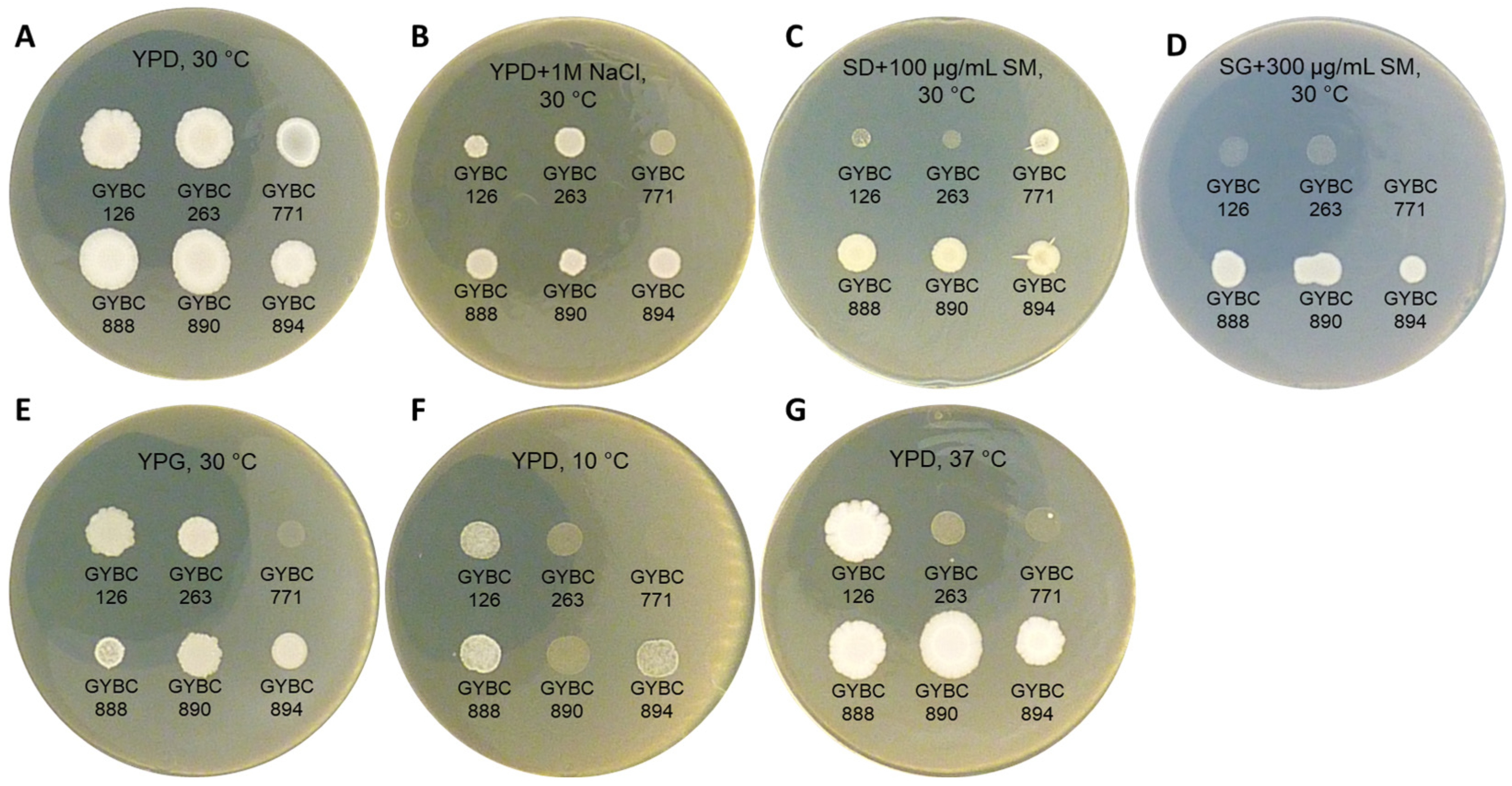
Furthermore, the spore clones were tested for growth on various media at a temperature of 30 °C, as well as on YPD at different temperatures (Figure 4). Figure 4 shows growth tests using the parental strains Oppenheimer Kreuz 1894 (GYBC 126), Freya (GYBC 263) and the petite SMR Freya strain (GYBC 771), as well as three spore clones formed from zygotes (GYBC 888, GYBC 890 and GYBC 894). All the yeast strains showed good growth on the YPD medium at 30 °C (Figure 4A). The same was observed on the YPG medium, except for the petite SMR petite strain GYBC 771, which could not grow on glycerol (Figure 4E). YPD plates containing 1M NaCl revealed good growth for Freya and the spore clones, while Oppenheimer Kreuz 1894 and the petite SMR Freya strain showed reduced growth (Figure 4B). The SD + 100 µg/mL SM medium only revealed growth of GYBC 771 and the spore clones (Figure 4C), whereas only the spore clones grew on SG + 300 µg/mL of SM (Figure 4D). Incubation at 10 °C revealed reduced growth of GYBC 126, GYBC 888 and GYBC 894; minimal growth of GYBC 263 and GYBC 890; and no growth of GYBC 771 (Figure 4F). A higher temperature (37 °C) revealed reduced growth of Freya and strongly reduced growth of GYBC 771, while GYBC 126 and the spore clones grew well (Figure 4G).

3.3. Testing for Putative Impact of the FOT Gene

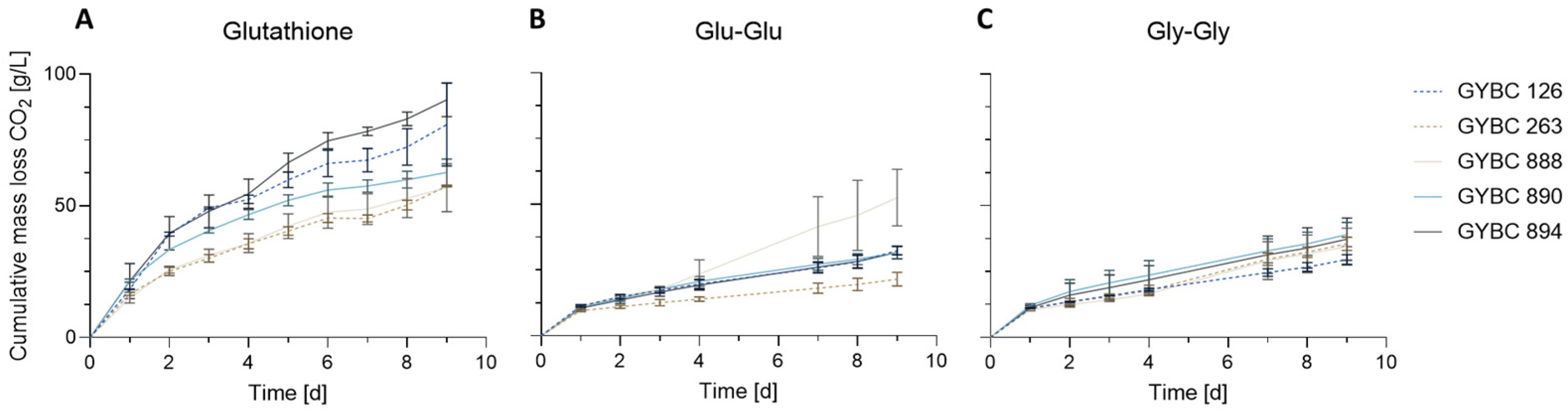
Three of the spore clones generated were selected for the analysis of any potential impact of the FOT1 gene in fermentations compared to the parental strains Freya and Oppenheimer Kreuz 1894 (Figure 5). Fermentations with CSM medium supplemented with the tripeptide glutathione (Figure 5A) or the dipeptide Glu-Glu (Figure 5B) revealed a higher cumulative mass loss of CO2 for Oppenheimer Kreuz 1894 (GYBC 126) than could be detected for Freya (GYBC 263). However, in fermentations with CSM plus the dipeptide Gly-Gly (Figure 5C), the cumulative mass loss of CO2 was the same for both strains until day four of the fermentations. Afterwards, Freya exhibited a greater cumulative CO2 mass loss than GYBC 126. The KOK spore clones GYBC 888 and GYBC 890 showed higher fermentation activity in terms of cumulative CO2 mass loss than the parental strain GYBC 263, but lower than GYBC 126, when glutathione was added (Figure 5A). While GYBC 888 and GYBC 890 showed intermediary phenotypes, GYBC 894 demonstrated an even higher cumulative CO2 mass loss than GYBC126. While the cumulative mass loss of CO2 for GYBC 890 and GYBC 894 was similar to that for GYBC 126 in fermentations with added Glu-Glu (Figure 5B), GYBC 888 stood out in particular, showing the highest amount of cumulative mass loss of CO2. Similar cumulative mass loss of CO2 was observed for all strains in fermentations using CSM plus Gly-Gly (Figure 5C).

3.4. Use of Hybrid Yeasts in Wort Fermentations

3.4.1. Fermentation Kinetics

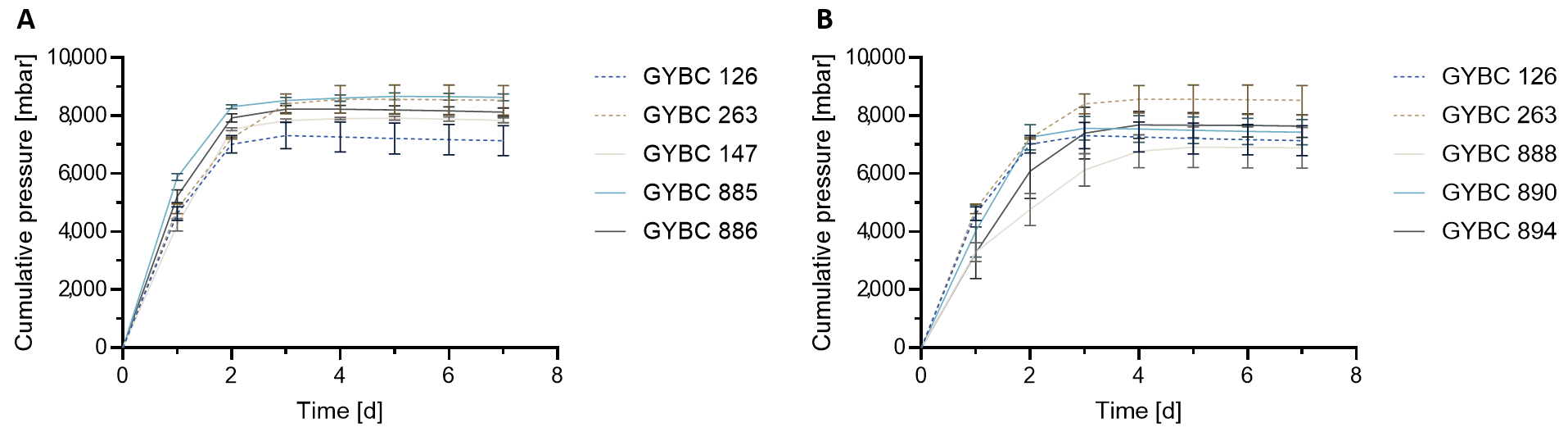
Beer fermentations of the KOK hybrids and their spore clones were carried out using 10° Plato wort. Oppenheimer Kreuz 1894 showed the lowest pressure accumulation level at the end of fermentation (7139 mbar on average), followed by the original Freya strain (GYBC 147; 7840 mbar on average). The meiotic offspring of Freya, the haploid GYBC 263, showed a strong fermentation rate (leading to an average of 8530 mbar pressure; Figure 6A and Figure S1). During the first two days of fermentation, both of the KOK hybrids showed higher pressure accumulations than GYBC 263 (Figure 6A). While GYBC 886 was surpassed by GYBC 263 the following day, GYBC 885 surpassed the amount of pressure accumulation measured in fermentations of GYBC 263 by the end of fermentation (GYBC 885: 8632 mbar on average), finishing fermentation one day in advance. The pressure accumulation detected in fermentations using most of the KOK spore clones (GYBC 890, 891, 892, 894, 895, 897, 898, 899 and 903) revealed levels between those of GYBC 126 and GYBC 147 (Figure 6A and Figure S1). Three of the spore clones (GYBC 888, 896 and 902), however, showed an even lower pressure accumulation by the end of fermentation than the wine yeast strain with the lowest value of 6320 mbar produced by GYBC 896. Pressure accumulation higher than that of Freya, but lower than that of GYBC 263, was monitored in the fermentations of four spore clones (GYBC 889, 893, 900 and 901). But only the pressure accumulations of two of the spore clones (GYBC 901: 8440 mbar; GYBC 893: 8494 mbar (both average values)) almost reached that of GYBC 263, which was 8530 mbar on average.
All of the KOK spore clones, as well as their parental ale yeast strains, completely utilized glucose, maltose and maltotriose (at concentrations of less than 1 g/L). However, 8.09 ± 0.13 g/L of maltotriose remained in the green beer produced by GYBC 896 at the end of fermentation (Table 3 and Table S1). The highest concentrations of ethanol were produced by GYBC 263 (4.77 ± 0.25%); the KOK hybrids GYBC 885 (4.73 ± 0.06%) and GYBC 886 (4.97 ± 0.06%); and the KOK spore clones GYBC 901 (4.70 ± 0.00 %), GYBC 888 (4.77 ± 0.06%) and GYBC 893 (4.93 ± 0.06%). GYBC 892 and GYBC 896 revealed the lowest levels of ethanol produced, 4.03 ± 0.06% and 3.67 ± 0.06%, respectively.

3.4.2. Aroma Analysis

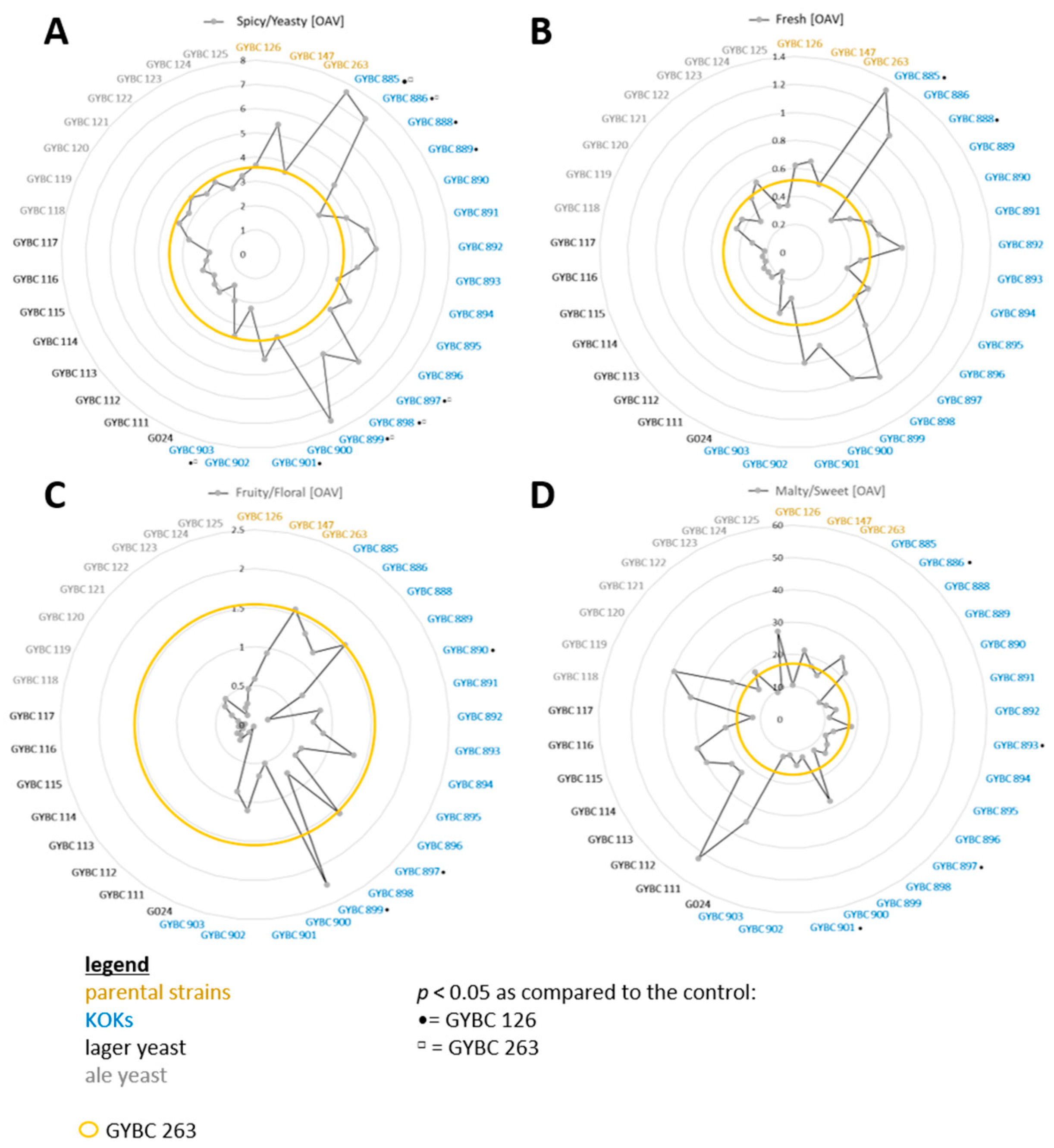
Compared to the lager and ale yeast strains serving as controls, Freya, the KOK hybrids, and most of the KOK spore clones produced much higher levels of beer-related flavors, such as spicy/yeasty, fresh and fruity/floral (Figure 7A–C). Nine of the KOK spore clones produced at least one typical beer flavor significantly different from at least one of the parental strains (Figure 7, Table S3). While none of the spore clones produced significantly higher amounts of malty/sweet, fruity/floral or fresh aroma than GYBC 263, both KOK hybrids as well as three spore clones (GYBC 897, 898 and 899) produced more spicy/yeasty aroma than GYBC 263, with one spore clone showing lower levels (GYBC 902: Figure 7A). No wood/dried fruit aroma was found in the supernatant of the control strains, while both of the KOK hybrids and three of the spore clones (GYBC 895, 899 and 902) produced wood/dried fruit aroma (Table S3), with GYBC 899 being the only one reaching an OAV level above one, which is relevant for aroma development. In contrast to the beer strains, the wine yeast strain (GYBC 126) produced much lower levels of malty/sweet or fruity/floral aroma, as well as no wood/dried fruit flavor (Figure 7C,D; Table S3). Therefore, both of the KOK hybrids and most of the spore clones showed increased levels of these aromas measured within the supernatant. In comparison, the levels of spicy/yeasty and fresh aroma produced by GYBC 126 were similar to those produced by GYBC 263 (Figure 7A,B). Aroma analysis reveals GYBC 899 as the spore clone producing the highest amounts of all the beer flavors. Of all the yeast strains tested in wort fermentation experiments, GYBC 899 yielded the highest levels of the following aroma compounds: fruity/floral (OAV: 2.26 ± 0.22), spicy/yeasty (OAV: 7.53 ± 0.32) and wood/dried fruit (OAV: 1.56 ± 0.27; Table S3). These results have a significant impact on the aroma profile of green beer.

3.5. Riesling Fermentations

3.5.1. Fermentation Kinetics

Wine fermentations using Riesling must were performed. Fermentation kinetics showed a similar behavior of both parental strains GYBC 126 and GYBC 263 (Figure S2). While GYBC 126 has higher levels of cumulative loss of CO2 during the first 13 days, it is surpassed by GYBC 263 by day 14, resulting in similar end concentrations at day 16 (GYBC 263: 115 g/L; GYBC 126: 110 g/L (both average values)). The KOK hybrid GYBC 886 showed a higher release of CO2 than GYBC 885. Three of the KOK spore clones revealed the highest amounts of cumulative mass loss of CO2 by the end of the fermentation: GYBC 898 and GYBC 889 (both 114 g/L on average) and GYBC 894 (112 g/L on average; Figure S2). While the cumulative mass loss of CO2 for GYBC 889 and GYBC 894 was very similar to that for GYBC 126 (Figure S2C,D), GYBC 898 stood out in particular, finishing fermentations and reaching the plateau phase by day nine of the fermentations. GYBC 903 took the longest time reaching its end concentration of cumulative mass loss CO2 without reaching the plateau phase by day 16 (Figure S2B). The KOK spore clones GYBC 899 and GYBC 901 showed a similar fermentation activity to Freya (GYBC 147), reaching a similar cumulative mass loss of CO2 by the end of fermentation (GYBC 899: 95 g/L, GYBC 901: 94 g/L (both average values); Figure S2A,B).
All of the strains tested were able to consume the sugars (glucose and fructose) completely (<1 g/L) by the end of fermentation, except for GYBC 903, where 18.14 ± 4.12 g/L of fructose was detected in the supernatant (Table S2). In fermentations using the KOK spore clones GYBC 888, GYBC 897 and GYBC 903, higher levels of tartaric and malic acid than those of the parental strains GYBC 126 and GYBC 263 were detected (Table S2). Of all KOK spore clones, GYBC 899 showed the highest levels of malic acid (3.45 ± 0.04 g/L), and in fermentations using GYBC 901, the highest levels of tartaric acid (3.07 ± 0.03 g/L) were detected (Table S2). In the supernatants of 12 of the spore clones, higher acetic acid levels than in GYBC 126 were found, with GYBC 903 reaching the highest amount (0.75 ± 0.01 g/L). GYBC 899 produced the highest levels of ethanol (12.18 ± 0.03%), while GYBC 896 and GYBC 903 revealed the lowest ethanol levels: 11.66 ± 0.06% and 10.95 ± 0.24%, respectively.

3.5.2. Aroma Analysis

Table S4 shows the wine-related aroma profiles for Riesling fermentations using a wine yeast (GYBC 142) as a control, the parental strains, both KOK hybrids (GYBC 885, GYBC 886), and the KOK spore clones (GYBC 888–903). Compared to the parental wine yeast Oppenheimer Kreuz 1894, the KOK spore clone GYBC 901 produced significantly higher amounts of honey/rose and green aromas. Furthermore, GYBC 901 reveals the highest levels of pineapple, banana, green and fruity flavors detected among the KOK spore clones (Table S4). Besides GYBC 901, the KOK spore clones GYBC 891 and GYBC 898 also showed higher honey/rose aroma compared to GYBC 126, with GYBC 898 producing the most honey/rose aroma detected.

4. Discussion

This study provides an in-depth analysis of the genetic enhancement of yeast strains by combining different characteristics from wine and ale yeasts. This process has significant effects on fermentation efficiency and, crucially, aroma production in beer and wine.

4.1. Conventional Yeast Breeding

Conventional yeast breeding offers a non-GMO route to harness the intraspecific Saccharomyces diversity for brewing and enological innovation. Crossing a Kveik brewing yeast strain (S. cerevisiae; thermotolerance, rapid fermentation kinetics, distinctive aroma potential) with a German wine yeast strain (S. cerevisiae; cold/ethanol tolerance, differentiated nitrogen utilization) combines complementary, industrially relevant traits. Prior work with S. cerevisiae hybrids in oenology has shown benefits such as redox shifts toward higher glycerol and modulated higher alcohols [24,42], suggesting that in beer wort matrices, ethanol/glycerol partitioning and aroma formation can be finely tuned.
Haploid, heterothallic parents are central to this strategy since they enable precise mating and direct zygote selection (e.g., via mitochondrial competence [25] and spontaneous resistance markers through point mutation phenotypes such as P192Q in ILV2 [41]). Combining a resistance marker with mitochondrial competence improves the efficiency and authenticity of zygote recovery. Hybridizing wine and beer yeast strains, two hybrids, and 16 spore clones thereof were obtained. The hybrids, spore clones and parental strains were tested in fermentations using different media for characterization.

4.2. Effect of FOT1

The fermentation experiments revealed distinct performance differences among the KOK spore clones compared to the parental strains, Freya (lacking FOT1) and Oppenheimer Kreuz 1894. Three of the spore clones, all containing FOT1, were tested for the influence of FOT1 on fermenting activity using minimal media with the tripeptide glutathione (GSH) or dipeptides (Glu-Glu; Gly-Gly) as the only nitrogen source. FOT1, present in some wine yeast strains due to an introgression from Torulaspora microellipsoides [18], is responsible for higher oligopeptide uptake, leading to optimized fermentation efficiency and increased synthesis of aroma compounds in wine [17,19]. All spore clones tested showed different fermentation kinetics, leading to the assumption that these differences in fermenting activity are not related to FOT1. When utilizing CSM media supplemented with peptides such as Glu-Glu, GYBC 888 displayed enhanced fermentation activity, evidenced by higher cumulative CO2 mass loss. Interestingly, GYBC 894 demonstrated exceptional potential, surpassing the cumulative mass loss of CO2 of the parent strain Oppenheimer Kreuz 1894, particularly when glutathione was present. Besides the presence of a FOT gene, additional gene regulatory effects introduced via meiotic recombination may also result in altered nitrogen utilization, leading to differences in fermentation efficiency. This highlights that fermentation performance depends on multifactorial gene networks, rather than individual transporters.

4.3. Growth Test

Growth tests of individual yeast strains under different conditions (medium and temperature) produced the expected results in most cases. One exception was Freya, which exhibited minimal growth at low temperatures (10 °C) and reduced, delayed growth at high temperatures (37 °C), but strong growth at 30 °C. Although Kveiks are known for their thermotolerance, it is possible that the selected Kveik spore clone is thermotolerant but not thermophilic. Previous studies have shown that Kveik yeasts can exhibit high fermentation activity at temperatures above 37 °C [43,44]. Due to decreased viability and cell counts with increasing temperature, however, the optimal growth temperature is often lower, at around 30 °C [43,45]. These results are consistent with those obtained here. One possible explanation for Freya’s slowed growth could be the effects of heat stress at temperatures above 37 °C [45].
All three KOK spore clones tested on the spot assay showed similar results, except for GYBC 890, revealing minimal growth at 10 °C compared to the other KOK spore clones. The tolerance of the spore clones to grow at low temperatures can differ due to recombination events during meiosis.

4.4. Fermentation Performance

Initial focus on beer fermentations revealed distinct fermentation kinetics among parental and hybrid yeast strains. The inferior performance of the wine yeast Oppenheimer Kreuz 1894 in beer fermentations, shown by its low pressure accumulation, highlights the challenges faced by wine-adapted strains in maltose/maltotriose-rich environments, contrasted by the superior fermentation efficiency of the ale yeast Freya, in line with earlier findings [5]. In contrast, the KOK-hybrid GYBC 885-derived spore clones exhibited remarkable fermentation activity, although none surpassed their parental hybrid strain in pressure accumulation. Interestingly, we identified one spore clone, GYBC 893, derived from GYBC 886 that achieved elevated pressure accumulation, surpassing its progenitor. In summary, Freya already displays optimized fermentation kinetics, making it a highly promising candidate strain for beer fermentation that would be difficult to improve upon through further breeding. Yet, the diploid Freya × Oppenheimer Kreuz 1894 hybrid GYBC 885 showed improved fermentation activity in terms of pressure accumulation compared to Freya. It produced higher cumulative pressure levels and finished fermentation one day earlier.
The ethanol yields provided another layer of complexity. The KOK hybrid GYBC 886 and the spore clone GYBC 893 achieved the highest ethanol concentrations in fermentations using 10° Plato wort, correlating with their vigorous fermentation profile. However, unexpected outcomes were observed, such as GYBC 888 displaying robust ethanol production despite its modest fermentation kinetics, whereas GYBC 892 produced only small quantities of ethanol, exhibiting average fermenting activity.
Glycolytic capacity and carbon utilization were further examined in wine fermentations using Riesling must. The parental strains, Freya and Oppenheimer Kreuz 1894, demonstrated similar fermentation behaviors in must, although Oppenheimer Kreuz 1894 initially excelled in CO2 evolution, potentially due to its adaptation to sugar-rich, nitrogen-poor environments typical of grape musts. However, of all the KOK spore clones, GYBC 898 displayed exceptional fermentation kinetics, rapidly reaching the stationary phase, while GYBC 903 lagged, evidenced by residual fructose and minimal ethanol production.

4.5. Aroma Production in Beer vs. Wine Fermentations

All of the hybrids and KOK spore clones tested exhibited unique aroma profiles, as described in previous studies [46], revealing the diversity that is generated upon meiotic recombination.
The impact of breeding on aroma production manifested differently in beer and wine fermentations, revealing the complexity of yeast metabolism and the interplay between genetic factors and fermentation substrates.
In beer fermentations with 10° Plato wort, the hybrid strains exhibited a diverse array of aroma profiles. As FOT1 is present in all KOK hybrids and spore clones, its presence was only compared to Freya. Notably, both hybrids as well as three KOK spore clones, including GYBC 899, produced increased levels of spicy and yeasty aromas compared to their parent strains. These aromas are typically desirable in beer, adding to the sensory richness of the product. The hybrid GYBC 885, which showed higher fermentation activity, finishing fermentation earlier than Freya, produced higher amounts of spicy/yeasty, wood/dried fruit and fresh aroma. Conversely, some spore clones, such as GYBC 890, matched the aromatic profile of Oppenheimer Kreuz 1894, validating our breeding approach.
One of the KOK spore clones exhibited a distinct phenotype in terms of acid utilization and aroma profiles during Riesling must fermentations. This illustrates the complementary physiological trade-offs associated with organic acid catabolism and provides mechanistic insights into the divergence of aroma in wine hybrids. GYBC 899 displayed the weakest malic acid degradation and elevated apple aroma but diminished pineapple, banana, honey/rose, green and fruity notes relative to the wine parent. Impaired malate catabolism preserves cytosolic NAD+, enhancing basal ester formation but limiting medium-chain (C4–C10) synthesis. The linkage of malate degradation to cellular redox balance and central carbon flux, thus indirectly affecting the production of aroma-active metabolites, is consistent with current knowledge [47,48].
This can be explained by classical hybridization effects, combining the weaker acid degradation of beer yeasts with the higher ester synthesis found in wine yeasts. This property could be particularly favorable for Riesling fermentation, resulting in more traditional fruity aromas without compromising the acid balance. These findings underscore the predictive value of acid catabolism profiling for aroma engineering in wine hybrids. Targeted analysis of MAE1/Atf1p expression, NAD+/NADH ratios and fatty acid pools (C2–C10) during fermentation would validate this model, offering a framework for rational hybrid selection in premium white wine production [47,49]. Conversely, GYBC 889 and GYBC 892 exhibited lesser aroma intensities. The spore clone GYBC 898, which showed exceptional fermentation kinetics, finishing fermentation in advance, also produced the highest amounts of honey/rose aroma detected.
Interestingly, while beer fermentations benefited from the introduction of spicy/yeasty and wood/dried fruit notes, wine fermentations favored fruity and floral aromas from the hybrids and spore clones derived from the Freya × Oppenheimer Kreuz 1894 breeding. This divergence highlights the importance of the fermentation medium; the carbon and nitrogen sources available in grape must push the metabolic pathways towards compounds that contribute to light, fresh aromatic notes, unlike the more robust, savory profiles in beer.
The differential aroma production observed across both fermentation types may indicate the potential of FOT genes in expanding the sensory profiles of hybrid strains and the spore clones derived thereof. It also reflects the multifactorial nature of aroma synthesis, influenced by the genetic background, the environmental conditions of fermentation, and the substrate composition. Understanding these dynamics presents an opportunity to tailor yeast strains more precisely for specific aromatic outcomes in various beverage applications.

4.6. Comparative Insights from Wine and Beer Fermentations

Conventional breeding of wine and beer yeasts was performed to explore the diversity of miotic progeny. Examining both wine and beer fermentations accentuates the diversity of the KOK F1 hybrids, which is consistent with matrix-specific heterosis in S. cerevisiae hybrids [22,50]. Despite sharing identical wine yeast mtDNA and FOT1, the hybrids exhibit different nuclear recombination patterns, such as different combinations of beer and wine yeast alleles and copy number variations. In Riesling must, the KOK hybrid GYBC 886 surpassed GYBC 885 in cumulative CO2 mass loss, whereas in malt wort, GYBC 885 exhibited superior performance, illustrating the context-specific advantages conferred by the genetic background.
The variation in aroma production among the different KOK spore clones, as shown in the analysis of both wine and beer fermentations, underscores the genetic influence on metabolic pathways involved in flavor and aroma synthesis.
Considering Oppenheimer Kreuz 1894, which inherently lacks typical beer flavors such as wood/dried fruit, fresh or fruity/floral aromas, the introduction of the genetic pool derived from this yeast into Freya has broadened the sensory profile spectrum. Both KOK F1-hybrids and several F2-spore clones demonstrated increased levels of spicy/yeasty, wood/dried fruit and/or fresh aroma in the green beer compared to Freya due to enhanced production of esters and higher alcohols. In contrast to Freya, most of the spore clones revealed weaker fermentation kinetics. GYBC 899 showed interesting potential to enrich aroma production in beer fermentations. Meanwhile, wine made using GYBC 901 was found to have a fruity and floral aroma.

5. Conclusions

Conventional intraspecific breeding between beer and wine yeasts improves fermentation performance and modifies the aroma. Beer yeast hybrids acquire spicy, yeasty, woody and dried-fruit notes from wine yeast contributions, while wine yeast hybrids exhibit elevated green, honey and rose attributes, as well as fruity notes reminiscent of apple and banana, from beer yeasts. This work highlights the immense value of genetic crossbreeding in developing tailored yeast strains that meet diverse sensory demands, effectively bridging beer and wine fermentation and delivering novel strains for product diversification. Future work should focus on refining metabolic control to potentially reduce the need for nitrogen supplementation and explore targeted genetic modifications to expand applications, differentiate products more sharply and improve quality and consumer acceptance. In addition, microbiological monitoring and molecular verification throughout fermentation under practical conditions, e.g., during spontaneous fermentation of unsterilized medium, should be analyzed using appropriate methods such as ITS-PCR-sequencing, species-specific PCR amplification of suitable marker genes or fingerprinting techniques.

Supplementary Materials

The following supporting information can be downloaded at https://www.mdpi.com/article/10.3390/fermentation12060291/s1: Figure S1: Comparative fermentation analyses of KOK hybrids and their spore clones and their parental strains fermented in 10° Plato wort. (A,B) Fermentation curves of GYBC 885-derived spore clones. (C,D) Fermentation curves of GYBC 886-derived spore clones. The ANKOM Rf Gas Production system was used to detect the cumulative pressure. Data shown are the mean of three independent experiments ±SEM (except for GYBC 902 n = 4). Figure S2: Fermentation analyses of the KOK hybrids, the wine yeast GYBC 142 as a control and the KOK spore clones compared to their parental strains fermented in Riesling must. (A,B) Fermentation curves of GYBC 885-derived spore clones. (C,D) Fermentation curves of GYBC 886-derived spore clones. The mass loss of CO2 was measured daily to generate the cumulative loss of CO2. Data shown are the mean of three independent experiments ±SEM (except for GYBC 263 n = 5 and GYBC 126 n = 6). Table S1: Residual sugars and total ethanol concentrations at the end of fermentations with KOK hybrids, all of the spore clones, and their parental strains using 10° Plato wort. Table S2: Residual sugars; organic acids and total ethanol concentration at the end of Riesling must fermentations with KOK hybrids; the wine yeast GYBC 142 as the control; the spore clones; and their parental strains. Table S3: Aroma analysis of green beers at the end of fermentations with KOK hybrids, all of the spore clones, their parental strains, and lager and ale control strains using 10° Plato wort. Table S4: Aroma analysis of Riesling wines at the end of fermentations with KOK hybrids, all of the spore clones, their parental strains, and GHM control strain.

Author Contributions

Conceptualization, J.W. and J.B.; methodology, J.W. and J.B.; software, J.W. and J.B.; validation, J.W. and J.B.; formal analysis, D.R., S.B. and H.S.; investigation, J.B., J.M.-B., K.Z. and K.M.; resources, J.W.; data curation, J.W. and J.B.; writing—original draft preparation, J.B.; writing—review and editing, J.W. and J.B.; visualization, J.W. and J.B.; supervision, J.W. and J.B.; project administration, J.W.; funding acquisition, J.W. All authors have read and agreed to the published version of the manuscript.

Funding

This work was funded by WiFö (Wissenschaftsförderung der Deutschen Brauwirtschaft e.V.), project B113.

Institutional Review Board Statement

Not applicable.

Informed Consent Statement

Not applicable.

Data Availability Statement

The original contributions presented in this study are included in the article/Supplementary Material. Further inquiries can be directed to the corresponding authors.

Acknowledgments

During the preparation of this manuscript/study, the authors used HAWKI Gpt-40 and GPT 5 (https://chatai.hs-gm.de/login; 13 June 2026) for the purpose of generating a first draft of the introduction. The authors have reviewed and edited the output and take full responsibility for the content of this publication.

Conflicts of Interest

The authors declare no conflict of interest.

Abbreviations

The following abbreviations are used in this manuscript:
FOT1Fungal Oligopeptide Transporter 1
HPLCHigh-performance liquid chromatography
HS-SPME-GC-MSHeadspace solid-phase microextraction gas chromatography–mass spectrometry
CO2Carbon dioxide
GYBCGeisenheim Yeast Breeding Center
POFPhenolic off-flavor production
PAD1Phenylacrylic acid decarboxylase 1
FDC1Ferulic acid decarboxylase 1
FLO1Lectin-like protein involved in flocculation
FLO11GPI-anchored cell surface glycoprotein (flocculin)
MALGenes that allow rapid maltose consumption
S.Saccharomyces
nPloidy
YPDYeast extract peptone dextrose media
SMSulfometuron-methyl
SDSynthetic defined minimal medium for yeasts
YNBYeast nitrogen base
w/oWithout
SGSynthetic defined minimal medium for yeasts with glycerol
YPGYeast extract peptone glycerol media
MMolar
NaClSodium chloride
CSMMedia-complete supplement mixture for yeasts
GSHGlutathione
GluGlutamic acid
CysCysteine
GlyGlycine
SMRSulfometuron-methyl resistance
MATMating-type locus
PCRPolymerase chain reaction
bpBase pair
ILV2Acetolactate synthase
OD600nmOptical density of a sample measured at a wavelength of 600 nm in 1 cm light path
YANYeast assimilable nitrogen
FANFree amino nitrogen
MWDMulti-wavelength detector
RIDRefractive index detector
VOCVolatile organic compound
OAVOdor activity value
HOSite-specific endonuclease
KOKKveik × Oppenheimer Kreuz 1894
PProline
QGlutamine
GMOGenetically modified organism
CCarbon
NAD+/NADHNicotinamide adenine dinucleotide
MAE1Mitochondrial malic enzyme
Atf1pAlcohol O-acetyltransferase protein
mtDNAMitochondrial DNA
TCATricarboxylic acid
ATPAdenosine triphosphate

References

  1. Bisson, L.F. Yeast hybrids in winemaking. Catal. Discov. Pract. 2017, 1, 27–34. [Google Scholar] [CrossRef] [Scilit]
  2. Winans, M.J. Yeast hybrids in brewing. Fermentation 2022, 8, 87. [Google Scholar] [CrossRef] [Scilit]
  3. Gabaldón, T. Hybridization and the origin of new yeast lineages. FEMS Yeast Res. 2020, 20, foaa040. [Google Scholar] [CrossRef] [Scilit]
  4. Steensels, J.; Gallone, B.; Verstrepen, K.J. Interspecific hybridization as a driver of fungal evolution and adaptation. Nat. Rev. Microbiol. 2021, 19, 485–500. [Google Scholar] [CrossRef] [Scilit] [PubMed]
  5. Badura, J.; Bernardi, B.; Muno-Bender, J.; Matti, K.; Zimmer, K.; Wendland, J. Isolation and characterization of haploid heterothallic beer yeasts. Appl. Microbiol. Biotechnol. 2025, 109, 17. [Google Scholar] [CrossRef] [Scilit]
  6. Preiss, R.; Tyrawa, C.; Krogerus, K.; Garshol, L.M.; van der Merwe, G. Traditional norwegian Kveik are a genetically distinct group of domesticated Saccharomyces cerevisiae brewing yeasts. Front. Microbiol. 2018, 9, 2137. [Google Scholar] [CrossRef] [Scilit] [PubMed]
  7. van Wyk, N.; Grossmann, M.; Wendland, J.; von Wallbrunn, C.; Pretorius, I.S. The whiff of wine yeast innovation: Strategies for enhancing aroma production by yeast during wine fermentation. J. Agric. Food Chem. 2019, 67, 13496–13505. [Google Scholar] [CrossRef] [Scilit]
  8. Shirasaya, D.; Powell, C.D. Quantitative analysis of stress tolerance in Kveik yeast. J. Am. Soc. Brew. Chem. 2025, 83, 317–329. [Google Scholar] [CrossRef] [Scilit]
  9. Dippel, K.; Matti, K.; Muno-Bender, J.; Michling, F.; Brezina, S.; Semmler, H.; Rauhut, D.; Wendland, J. Co-fermentations of Kveik with non-conventional yeasts for targeted aroma modulation. Microorganisms 2022, 10, 1922. [Google Scholar] [CrossRef] [Scilit]
  10. Preiss, R.; Fletcher, E.; Garshol, L.M.; Foster, B.; Ozsahin, E.; Lubberts, M.; van der Merwe, G.; Krogerus, K. European farmhouse brewing yeasts form a distinct genetic group. Appl. Microbiol. Biotechnol. 2024, 108, 430. [Google Scholar] [CrossRef] [Scilit]
  11. Walther, A.; Hesselbart, A.; Wendland, J. Genome sequence of Saccharomyces carlsbergensis, the world’s first pure culture lager yeast. G3 2014, 4, 783–793. [Google Scholar] [CrossRef] [Scilit]
  12. Monerawela, C.; Bond, U. Brewing up a storm: The genomes of lager yeasts and how they evolved. Biotechnol. Adv. 2017, 35, 512–519. [Google Scholar] [CrossRef] [Scilit]
  13. Sanchez, R.G.; Solodovnikova, N.; Wendland, J. Breeding of lager yeast with Saccharomyces cerevisiae improves stress resistance and fermentation performance. Yeast 2012, 29, 343–355. [Google Scholar] [CrossRef] [Scilit]
  14. Wendland, J. Lager yeast comes of age. Eukaryot. Cell 2014, 13, 1256–1265. [Google Scholar] [CrossRef] [Scilit]
  15. Lin, C.L.; de la Cerda García-Caro, R.; Zhang, P.; Carlin, S.; Gottlieb, A.; Petersen, M.A.; Vrhovsek, U.; Bond, U. Packing a punch: Understanding how flavours are produced in lager fermentations. FEMS Yeast Res. 2021, 21, foab040. [Google Scholar] [CrossRef] [Scilit]
  16. Becerra-Rodríguez, C.; Taghouti, G.; Portier, P.; Dequin, S.; Casal, M.; Paiva, S.; Galeote, V. Yeast plasma membrane fungal oligopeptide transporters display distinct substrate preferences despite their high sequence identity. J. Fungi 2021, 7, 963. [Google Scholar] [CrossRef] [Scilit]
  17. Marsit, S.; Sanchez, I.; Galeote, V.; Dequin, S. Horizontally acquired oligopeptide transporters favour adaptation of Saccharomyces cerevisiae wine yeast to oenological environment. Environ. Microbiol. 2016, 18, 1148–1161. [Google Scholar] [CrossRef] [Scilit]
  18. Novo, M.; Bigey, F.; Beyne, E.; Galeote, V.; Gavory, F.; Mallet, S.; Cambon, B.; Legras, J.-L.; Wincker, P.; Casaregola, S.; et al. Eukaryote-to-eukaryote gene transfer events revealed by the genome sequence of the wine yeast Saccharomyces cerevisiae EC1118. Proc. Natl. Acad. Sci. USA 2009, 106, 16333–16338. [Google Scholar] [CrossRef] [Scilit]
  19. Marsit, S.; Mena, A.; Bigey, F.; Sauvage, F.-X.; Couloux, A.; Guy, J.; Legras, J.-L.; Barrio, E.; Dequin, S.; Galeote, V. Evolutionary advantage conferred by an eukaryote-to-eukaryote gene transfer event in wine yeasts. Mol. Biol. Evol. 2015, 32, 1695–1707. [Google Scholar] [CrossRef] [Scilit]
  20. Gallone, B.; Mertens, S.; Crauwelse, S.; Lievense, B.; Verstrepen, K.J.; Steensels, J. Genomics and evolution of beer yeasts. In Brewing Microbiology: Current Research, Omics and Microbial Ecology; Caister Academic Press: Poole, UK, 2017. [Google Scholar]
  21. Zhang, P.; Zhang, R.; Sirisena, S.; Gan, R.; Fang, Z. Beta-glucosidase activity of wine yeasts and its impacts on wine volatiles and phenolics: A mini-review. Food Microbiol. 2021, 100, 103859. [Google Scholar] [CrossRef] [Scilit]
  22. Marsit, S.; Hénault, M.; Charron, G.; Fijarczyk, A.; Landry, C.R. The neutral rate of whole-genome duplication varies among yeast species and their hybrids. Nat. Commun. 2021, 12, 3126. [Google Scholar] [CrossRef] [Scilit]
  23. Serero, A.; Bedrat, A.; Baulande, S.; Bastianelli, G.; Colavizza, D.; Desfougères, T.; Pignède, G.; Quipourt-Isnard, A.-D.; Nicolas, A. Recombination in a sterile polyploid hybrid yeast upon meiotic Return-To-Growth. Microbiol. Res. 2021, 250, 126789. [Google Scholar] [CrossRef] [Scilit]
  24. Prior, B.A.; Baccari, C.; Mortimer, R.K. Selective breeding of Saccharomyces cerevisiae to increase glycerol levels in wine. OENO One 1999, 33, 57. [Google Scholar] [CrossRef] [Scilit]
  25. Wallis, O.C.; Whittaker, P.A. Induction of petite mutation in yeast by starvation in glycerol. J. Gen. Microbiol. 1974, 84, 11–18. [Google Scholar] [CrossRef] [Scilit]
  26. Huxley, C.; Green, E.D.; Dunham, I. Rapid assessment of S. cerevisiae mating type by PCR. Trends Genet. 1990, 6, 236. [Google Scholar] [CrossRef] [Scilit]
  27. Sherman, F.; Hicks, J. Micromanipulation and dissection of asci. Methods Enzymol. 1991, 194, 21–37. [Google Scholar] [CrossRef] [Scilit]
  28. Ambrona, J.; Maqueda, M.; Zamora, E.; Ramírez, M. Sulfometuron resistance as a genetic marker for yeast populations in wine fermentations. J. Agric. Food Chem. 2005, 53, 7438–7443. [Google Scholar] [CrossRef] [Scilit]
  29. Badura, J.; Medić, M.; van Wyk, N.; Krause, B.; Semmler, H.; Brezina, S.; Pretorius, I.S.; Rauhut, D.; von Wallbrunn, C. Synthesis of aroma compounds as a function of different nitrogen sources in fermentations using non-Saccharomyces wine yeasts. Microorganisms 2022, 11, 14. [Google Scholar] [CrossRef] [Scilit]
  30. Dukes, B.C.; Butzke, C.E. Rapid determination of primary amino acids in grape juice using an o-phthaldialdehyde/N-acetyl-L-cysteine spectrophotometric assay. Am. J. Enol. Vitic. 1998, 49, 125–134. [Google Scholar] [CrossRef] [Scilit]
  31. Badura, J.; Kiene, F.; Brezina, S.; Fritsch, S.; Semmler, H.; Rauhut, D.; Pretorius, I.S.; von Wallbrunn, C.; van Wyk, N. Aroma profiles of Vitis vinifera L. cv. Gewürztraminer must fermented with co-cultures of Saccharomyces cerevisiae and seven Hanseniaspora spp. Fermentation 2023, 9, 109. [Google Scholar] [CrossRef] [Scilit]
  32. Tan, Y.; Siebert, K.J. Quantitative structure-activity relationship modeling of alcohol, ester, aldehyde, and ketone flavor thresholds in beer from molecular features. J. Agric. Food Chem. 2004, 52, 3057–3064. [Google Scholar] [CrossRef] [Scilit]
  33. Olaniran, A.O.; Hiralal, L.; Mokoena, M.P.; Pillay, B. Flavour-active volatile compounds in beer: Production, regulation and control. J. Inst. Brew. 2017, 123, 13–23. [Google Scholar] [CrossRef] [Scilit]
  34. Chen, Y.; Huang, H.; Yin, R.; He, X.; Guo, L.; Song, Y.; Zhao, D.; Sun, J.; Li, J.; Huang, M.; et al. Multi-technique flavoromics for identifying key differential volatile compounds underlying sensory profiles in lager beers. Foods 2025, 14, 3428. [Google Scholar] [CrossRef] [Scilit]
  35. Falcao, L.D.; Lytra, G.; Darriet, P.; Barbe, J.-C. Identification of ethyl 2-hydroxy-4-methylpentanoate in red wines, a compound involved in blackberry aroma. Food Chem. 2012, 132, 230–236. [Google Scholar] [CrossRef] [Scilit]
  36. Cameleyre, M.; Lytra, G.; Tempere, S.; Barbe, J.-C. 2-Methylbutyl acetate in wines: Enantiomeric distribution and sensory impact on red wine fruity aroma. Food Chem. 2017, 237, 364–371. [Google Scholar] [CrossRef] [Scilit]
  37. Francis, I.L.; Newton, J.L. Determining wine aroma from compositional data. Aust. J. Grape Wine Res. 2005, 11, 114–126. [Google Scholar] [CrossRef] [Scilit]
  38. Uselmann, V.; Schieberle, P. Decoding the combinatorial aroma code of a commercial Cognac by application of the sensomics concept and first insights into differences from a German brandy. J. Agric. Food Chem. 2015, 63, 1948–1956. [Google Scholar] [CrossRef] [Scilit]
  39. Vázquez-Pateiro, I.; Arias-González, U.; Mirás-Avalos, J.M.; Falqué, E. Evolution of the aroma of treixadura wines during bottle aging. Foods 2020, 9, 1419. [Google Scholar] [CrossRef] [Scilit]
  40. Sumby, K.M.; Grbin, P.R.; Jiranek, V. Microbial modulation of aromatic esters in wine: Current knowledge and future prospects. Food Chem. 2010, 121, 1–16. [Google Scholar] [CrossRef] [Scilit]
  41. Xie, Q.; Jiménez, A. Molecular cloning of a novel allele of SMR1 which determines sulfometuron methyl resistance in Saccharomyces cerevisiae. FEMS Microbiol. Lett. 1996, 137, 165–168. [Google Scholar] [CrossRef]
  42. Origone, A.C.; Rodríguez, M.E.; Oteiza, J.M.; Querol, A.; Lopes, C.A. Saccharomyces cerevisiae × Saccharomyces uvarum hybrids generated under different conditions share similar winemaking features. Yeast 2018, 35, 157–171. [Google Scholar] [CrossRef] [Scilit]
  43. Aasen, N.M. Growth, Metabolism and Beer Brewing with Kveik. Master’s Thesis, Norwegian University of Life Sciences, Ås, Norway, 2020. [Google Scholar]
  44. Kits, D.; Garshol, L.M. Norwegian Kveik brewing yeasts are adapted to higher temperatures and produce fewer off-flavours under heat stress than commercial Saccharomyces cerevisiae American Ale yeast. bioRxiv 2021. [Google Scholar] [CrossRef] [Scilit]
  45. Foster, B. Analysis of Fermentation Capabilities, Trehalose Metabolism, Quantitative Proteomics, and Hybridisation of Norwegian Kveik Brewing Yeast. Doctoral Dissertation, The University of Guelph, Guelph, ON, Canada, 2024. [Google Scholar]
  46. Contreras-Ruiz, A.; Minebois, R.; Alonso-Del-Real, J.; Barrio, E.; Querol, A. Differences in metabolism among Saccharomyces species and their hybrids during wine fermentation. Microb. Biotechnol. 2024, 17, e14476. [Google Scholar] [CrossRef] [Scilit]
  47. Dittrich, H.H.; Großmann, M. Mikrobiologie des Weines: 56 Tabellen, 4th ed.; aktualisierte Aufl.; Ulmer: Stuttgart, Germany, 2010. [Google Scholar]
  48. Mendes Ferreira, A.; Mendes-Faia, A. The role of yeasts and lactic acid bacteria on the metabolism of organic acids during winemaking. Foods 2020, 9, 1231. [Google Scholar] [CrossRef] [Scilit]
  49. Quirós, M.; Martínez-Moreno, R.; Albiol, J.; Morales, P.; Vázquez-Lima, F.; Barreiro-Vázquez, A.; Ferrer, P.; Gonzalez, R. Metabolic flux analysis during the exponential growth phase of Saccharomyces cerevisiae in wine fermentations. PLoS ONE 2013, 8, e71909. [Google Scholar] [CrossRef] [Scilit]
  50. Shapira, R.; Levy, T.; Shaked, S.; Fridman, E.; David, L. Extensive heterosis in growth of yeast hybrids is explained by a combination of genetic models. Heredity 2014, 113, 316–326. [Google Scholar] [CrossRef] [Scilit]
Figure 1. Selection of SM-resistant Freya strains. (A) SM-treated Freya forming colonies on SD + SM plates. (B) Growth of the selected strains upon re-streaking on SD + SM plates. (C) SM-resistant Freya strains were sequenced. Both strains (GYBC 767 and GYBC 768) revealed the same mutation (C > A) in codon 192 of the ILV2 gene (marked with an orange frame and a red arrow).
Fermentation 12 00291 g001
Figure 2. Conventional breeding of Freya and the wine yeast Oppenheimer Kreuz 1894. Freya was treated to form SM-resistant petite strains, which were then hybridized with germinated spores of the wine yeast. Zygotes were selected on plates containing both SM and glycerol. MATa and MATα derivative strains were selected from the haploid, heterothallic (ho) meiotic progeny that were simultaneously SM-resistant and carried the FOT1 gene.
Fermentation 12 00291 g002
Figure 3. Screening of spore clones derived from zygotes for mating type and FOT1 gene. (A,B) The mating type of the spore clones and their parental strains was tested by mating type PCR using primers 25-MATalpha/26-MATa/27-MAT visualized via gel electrophoresis. Strains B003 and B008 served as controls for mating type MATa and MATα, respectively. (C,D) Electrophoretic visualization of FOT gene detection by PCR using primer set 1349_I1-ScFOT/1350_I2-ScFOT.
Fermentation 12 00291 g003
Figure 4. Characterization of spore clones via spotting assay using different media and temperatures. The parental strains (GYBC 126 and GYBC 263), the SM-resistant petite mutant (GYBC 771) and three resulting spore clones (GYBC 888, GYBC 890 and GYBC 894) were tested for growth using (A) YPD at 30 °C, (B) YPD + 1M NaCl at 30 °C, (C) SD + 100 µg/mL SM at 30 °C, (D) SG + 300 µg/mL SM at 30 °C, (E) YPG at 30 °C, (F) YPD at 10 °C and (G) YPD at 37 °C.
Fermentation 12 00291 g004
Figure 5. Comparative fermentations of selected spore clones and parental strains using CSM media supplemented with the tripeptide glutathione (A), the dipeptide Glu-Glu (B), and the dipeptide Gly-Gly (C), which were used to score the potential impact of the FOT1 gene during fermentation. Data shown are the mean of three independent experiments ± SEM.
Fermentation 12 00291 g005
Figure 6. Comparative fermentation analyses of KOK strains. Fermentation curves of (A) hybrids and (B) selected spore clones and their parental strains fermented in 10° Plato wort. The ANKOM Rf Gas Production system was used to detect the cumulative pressure. Data shown are the mean of three independent experiments ± SEM.
Fermentation 12 00291 g006
Figure 7. Aroma analyses of beer fermentations with parental strains (GYBC 126, GYBC 147, GYBC 263), KOK hybrids (GYBC 885 and GYBC 886), and their spore clones (GYBC 889–GYBC 903) compared with lager (GYBC 024–GYBC 117) and ale yeast strains (GYBC 118–GYBC 125). The analyzed beer flavors–shown as OAV—were grouped into (A) spicy/yeasty (sum of isoamyl alcohol, amyl alcohol, isobutanol, 2-phenylethanol), (B) fresh (sum of hexyl acetate, ethyl hexanoate, 2-phenylethanol), (C) fruity/floral (sum of isoamyl acetate, amyl acetate, hexyl acetate, 2-phenylethyl acetate, ethyl acetate) and (D) malty/sweet (sum of ethyl acetate, ethyl propionate, ethyl isobutyrate, ethyl butyrate, ethyl lactate). Lager yeasts, ale yeasts and the parental strains (GYBC 126, GYBC 147, GYBC 263) served as controls. The flavor values detected in fermentations using the parental strain GYBC 263 were marked with an orange baseline in the form of a circle for reference. Results are presented as the means of three biological replicates (except for GYBC 902, n = 4). Significant differences in flavor formation between the spore clones and their respective parental strains were determined using a classical ANOVA, including a homogeneity test with Welch’s correction and a Post Hoc test using the Games–Howell test, p < 0.05 as compared to the respective control (• = GYBC 126; = GYBC 263). The OAV was determined using the odor thresholds of the respective compounds detected in beer [32,33,34].
Fermentation 12 00291 g007
Table 1. List of strains used in this study.
Strain Number 1DescriptionGenotypeSource
GYBC 126Oppenheimer Kreuz 1894S. cerevisiae wine yeastGYBC strain collection, Geisenheim, Germany
GYBC 147Kveik 3, TormodgardenWildtype[9]
GYBC 263Freya 8C (spore clone of GYBC 147)MATα[5]
GYBC 767Freya 8C-SMR (derivative of GYBC 263)MATα, SMRThis study
GYBC 768Freya 8C-SMR (derivative of GYBC 263)MATα, SMRThis study
GYBC 771Freya 8C-SMR, petite (derivative of GYBC 767)MATα, SMR, petiteThis study
GYBC 885Hybrid 1 of GYBC 771 and GYBC 126MATa/αThis study
GYBC 886Hybrid 2 of GYBC 771 and GYBC 126MATa/αThis study
GYBC 888Spore clone of GYBC 886MATα, FOT+, SMRThis study
GYBC 889Spore clone of GYBC 886MATα, FOT+, SMRThis study
GYBC 890Spore clone of GYBC 886MATa, FOT+, SMRThis study
GYBC 891Spore clone of GYBC 886MATα, FOT+, SMRThis study
GYBC 892Spore clone of GYBC 886MATa, FOT+, SMRThis study
GYBC 893Spore clone of GYBC 886MATα, FOT+, SMRThis study
GYBC 894Spore clone of GYBC 886MATa, FOT+, SMRThis study
GYBC 895Spore clone of GYBC 886MATα, FOT+, SMRThis study
GYBC 896Spore clone of GYBC 886MATα, FOT+, SMRThis study
GYBC 897Spore clone of GYBC 885MATα, FOT+, SMRThis study
GYBC 898Spore clone of GYBC 885MATα, FOT+, SMRThis study
GYBC 899Spore clone of GYBC 885MATα, FOT+, SMRThis study
GYBC 900Spore clone of GYBC 885MATa, FOT+, SMRThis study
GYBC 901Spore clone of GYBC 885MATa, FOT+, SMRThis study
GYBC 902Spore clone of GYBC 885MATa, FOT+, SMRThis study
GYBC 903Spore clone of GYBC 885MATa, FOT+, SMRThis study
B003BY4741MATa; his3∆1; leu2∆0; met15∆0; ura3∆0Euroscarf, Frankfurt, Germany
B008BY4742MATα, his3∆1; leu2∆0; lys2∆0; ura3∆0Euroscarf, Frankfurt, Germany
GYBC 142GHM wine yeastS. cerevisiaeGYBC strain collection, Geisenheim, Germany
G024Lager yeast W34/70S. cerevisiae × S. eubayanus hybridWeihenstephan, Freising, Germany
GYBC 111Lager yeast W34/78S. pastorianusWeihenstephan, Freising, Germany
GYBC 112Lager yeast W107S. pastorianusWeihenstephan, Freising, Germany
GYBC 113Lager yeast W128S. pastorianusWeihenstephan, Freising, Germany
GYBC 114Lager yeast W164S. pastorianusWeihenstephan, Freising, Germany
GYBC 115Lager yeast W168S. pastorianusWeihenstephan, Freising, Germany
GYBC 116Lager yeast W193S. pastorianusWeihenstephan, Freising, Germany
GYBC 117Lager yeast W195S. pastorianusWeihenstephan, Freising, Germany
GYBC 118Ale yeast W100S. cerevisiaeWeihenstephan, Freising, Germany
GYBC 119Ale yeast W210S. cerevisiaeWeihenstephan, Freising, Germany
GYBC 120Ale yeast W211S. cerevisiaeWeihenstephan, Freising, Germany
GYBC 121Ale yeast W213S. cerevisiaeWeihenstephan, Freising, Germany
GYBC 122Ale yeast W208S. cerevisiaeWeihenstephan, Freising, Germany
GYBC 123Ale yeast W177S. cerevisiaeWeihenstephan, Freising, Germany
GYBC 124Ale yeast W174S. cerevisiaeWeihenstephan, Freising, Germany
GYBC 125Abbey Ale yeast WLP530S. cerevisiaeWHITE LABS, Copenhagen, Denmark
1 GYBC, Geisenheim Yeast Breeding Center.
Table 2. List of primers used in this study.
PrimerSequence (5′ to 3′)
25-MATalphaGCACGGAATATGGGACTACTTCG
26-MATaACTCCACTTCAAGTAAGAGTTTG
27-MATAGTCACATCAAGATCGTTTATGG
1241_I1_ScILV2CCAGGTGGTGCTATCCTACC
1242_I2_ScILV2GTGCGCGACTGGTTAATTGG
1349_I1-ScFOTGCGTCGACGAGAAAGGAGAA
1350_I2-ScFOTAACTGTAGAAGCCCGAACGG
Table 3. Residual sugar and total ethanol concentrations at the end of fermentations of KOK hybrids, selected spore clones, and their parental strains using 10° Plato wort.
StrainGlucose [g/L]Maltose [g/L]Maltotriose [g/L]Ethanol [g/L]Ethanol [%]
Oppenheimer Kreuz 1894GYBC 126<1.00<1.00<1.0034.70 ± 0.464.53 ± 0.06
FreyaGYBC 147<1.00<1.00<1.0035.13 ± 0.764.43 ± 0.12
GYBC 263<1.00<1.00<1.0037.80 ± 1.934.77 ± 0.25
ZygotesGYBC 885<1.00<1.00<1.0037.50 ± 0.404.73 ± 0.06
GYBC 886<1.00<1.00<1.0039.27 ± 0.31 •4.97 ± 0.06 •
Spore clonesGYBC 888<1.00<1.00<1.0037.67 ± 0.844.77 ± 0.06
GYBC 890<1.00<1.00<1.0034.57 ± 0.234.37 ± 0.06
GYBC 894<1.00<1.00<1.0036.10 ± 1.744.57 ± 0.21
Results are presented as the mean ± SD of three biological replicates. Significant differences in sugar degradation and ethanol formation between the spore clones and their respective parental strains were determined using a classical ANOVA, including a homogeneity test with Welch’s correction and a Post Hoc test using the Games–Howell test, p < 0.05 as compared to the control (• = GYBC 126).
Disclaimer/Publisher’s Note: The statements, opinions and data contained in all publications are solely those of the individual author(s) and contributor(s) and not of MDPI and/or the editor(s). MDPI and/or the editor(s) disclaim responsibility for any injury to people or property resulting from any ideas, methods, instructions or products referred to in the content.