Article

Dynamics of Microbial Community, Physicochemical Properties, and Flavor Metabolites in Huangshui During Strong-Flavor Baijiu Fermentation

1
College of Food and Chemical Engineering, Shaoyang University, Shaoyang 422000, China
2
Key Laboratory of Brewing Ecotypically New Technology and Application of Hunan Universities, Shaoyang 422000, China
3
Xiangjiao Distillery Co., Ltd., Shaoyang 422000, China
*
Author to whom correspondence should be addressed.
Fermentation 2026, 12(6), 290; https://doi.org/10.3390/fermentation12060290
Submission received: 29 April 2026 / Revised: 13 June 2026 / Accepted: 15 June 2026 / Published: 17 June 2026
(This article belongs to the Section Fermentation for Food and Beverages)

Abstract

Huangshui (HS) is a key byproduct of Chinese strong-flavor Baijiu (a traditional distilled spirit) fermentation. This study investigated microbial succession and flavor formation across five key fermentation stages using high-throughput sequencing, physicochemical analysis, and untargeted GC-MS. The results show that Lactobacillus dominated the bacterial communities, while Thermoascus, Aspergillus, and Candida were core fungal genera. Redundancy analysis (RDA) identified acidity, available phosphorus, and ammonia nitrogen as the primary physicochemical drivers of microbial succession. Untargeted metabolomics detected 300 volatile compounds, with 29 discriminant volatile metabolites (VIP > 1.0 or p < 0.05), mainly enriched in carbohydrate and amino acid metabolism pathways associated with Lactobacillus, Thermomyces, Wickerhamomyces, and Kazachstania. These findings establish a link among physicochemical properties, microbiota assembly, and flavor metabolism, providing potential targets for optimizing Baijiu fermentation quality.

1. Introduction

Strong-flavor baijiu (SFB) is a traditional Chinese distilled spirit, produced from cereal grains via solid-state fermentation and distinguished by its complex, persistent aroma profile and a production tradition spanning over 600 years [1]. SFB is produced through solid-state fermentation in clay pits, and sorghum is the main raw material; after adding yeast and water, it is placed in the pits for fermentation. Usually, the raw materials of the fermented mash are mixed with various ingredients such as rice, peas, and wheat, which are all of superior quality. During the fermentation process, microorganisms break down starch and proteins, with the moisture content being around 54%. The fermentation period lasts for 60 days, generating various aroma precursors; alcohol; carbon dioxide; tannins; and other macromolecular substances, such as reducing sugars, amino acids, and other aroma-forming substances [2]. These soluble compounds migrate downward with percolating moisture into the cellar base, where they accumulate as Huangshui (HS), a viscous, brownish-yellow to dark brown liquid characterized by its pungent, sour/fermented odor [3]. HS is enriched in organic acids (e.g., acetic, lactic, and caproic acids), higher alcohols, and ethyl esters, compounds that not only underpin SFB’s aromatic complexity but also serve as critical carbon and energy sources sustaining microbial vitality and functional stability in pit mud [4,5]. Monitoring the physicochemical indicators and flavor component contents of the HS provides crucial information regarding the fermentation quality of the mash; additionally, assessment of the HS has the potential to reduce the cost of wastewater treatment and achieve the effective utilization of resources [6].
Huangshui (HS) harbors unique, niche-adapted probiotic microorganisms, including caproic acid-producing bacteria (e.g., Clostridium kluyveri and Caproiciproducens spp.) and other anaerobic Clostridia, that are rarely cultivable outside their native HS environment yet play indispensable roles in acidogenesis, esterification, and aroma compound formation [7,8]. During fermentation, HS-associated microbial communities undergo functional adaptation and ecological selection, progressively enriching taxa capable of synthesizing key flavor-active metabolites; this enrichment directly governs liquor quality and sensory fidelity. Concurrently, cyclical fluctuations in the physicochemical microenvironment, such as acidity, moisture content, redox potential (Eh), and bioavailable nutrient concentrations in both the HS and pit mud, exert deterministic control over microbial community succession, composition, and metabolic activity, thereby modulating fermentation kinetics, metabolic flux distribution, and batch-to-batch product consistency [9]. Therefore, an integrative, time-resolved analysis of the tripartite interplay among HS microbial ecology, dynamic physicochemical parameters, and flavor metabolite profiles is essential for rationally optimizing strong-flavor baijiu (SFB) quality and for mechanistically elucidating the biosynthetic origins and formation pathways of jiaoxiang compounds. Huang et al. [10] studied the changing patterns of HS during the fermentation process of Wuliangye strong-flavor Chinese liquor. The results showed that the physicochemical indicators of the yellow water were highly correlated with the fermentation stage.
The flavor-forming compounds in HS directly determine the sensory quality and batch-to-batch consistency of SFB. Their identity and concentration are tightly governed by the taxonomic composition, relative abundance, and functionally coordinated succession of microbial populations throughout fermentation [11]. Peng et al. [12] detected a total of 72 volatile flavor substances in HS, including 40 esters, 11 acids, and 14 alcohols. Through PLS-DA analysis, it was found that, due to the influence of fermentation temperature and microbial activity, there were significant differences in the volatile flavor substances among HS samples from different seasons and fermentation stages. The relative abundance and absolute concentration of key aroma-active compounds, including ethyl caproate, ethyl lactate, and isoamyl alcohol, serve as sensitive early-warning indicators of suboptimal fermentation conditions, such as pH deviation, unintended oxygen ingress, or nutrient exhaustion. Therefore, integrative analysis of the dynamic interplay among the HS microbial community structure, spatiotemporally resolved physicochemical parameters, and time-resolved flavor metabolite profiles holds both fundamental theoretical significance and direct practical relevance: it enables objective, multi-dimensional quality assessment of SFB and facilitates mechanistic dissection of how HS microbiota collectively orchestrate liquor quality [13].
The physicochemical indicators and flavor substance contents of the HS can indirectly reflect the fermentation status of the mash in the batch. However, comprehensive characterization of the HS-associated microbiota and, critically, its functional linkages to flavor metabolite production remains limited. In particular, the temporal dynamics of the microbial community composition across the HS fermentation cycle, as well as how these shifts quantitatively correlate with concurrent changes in physicochemical parameters and the accumulation kinetics of flavor metabolites, remain poorly resolved [14]. It is essential to rationally optimize flavor development and advance sustainable, scalable strategies for HS valorization, whether through recovery, reuse, or biotransformation into value-added products. High-throughput sequencing has been widely applied to profile the microbial diversity in Daqu (distiller’s yeast) and Zaopei (fermenting grains), consistently revealing robust associations between microbial diversity indices (e.g., Shannon and Chao1) and key liquor quality attributes [15,16]. Gao et al. [2] indicate that there is a large number of strictly anaerobic microbial groups in HS. The dominant bacterial groups include the Firmicutes phylum (66.8%), the Actinobacteria phylum (16.0%), the Spirochaetes (2.2%), and the Actinomycetes phylum (1.8%).
Accordingly, the objective of this study was to comprehensively track the co-evolution of microbial communities, physicochemical properties, and flavor-forming compounds across a temporal gradient during HS fermentation, and to elucidate the causal and correlative relationships linking environmental drivers, microbiota assembly, and flavor metabolite production. By integrating high-throughput amplicon sequencing, physicochemical monitoring, and GC–MS-based untargeted metabolomics, this study aimed to characterize the successional dynamics of bacterial and fungal communities in HS; identify the key physicochemical factors driving microbial community shifts; and establish microbe–metabolite correlation networks underlying flavor formation. The findings provide a scientific foundation for the high-value valorization of HS and enable rational, mechanism-guided quality enhancement of SFB.

2. Materials and Methods

2.1. Sample Collection

HS samples were collected from Xiangjiao Distillery Co., Ltd. (Shaoyang, China) across five key time points representing distinct fermentation stages: the early stage (20 d), middle stage (30 d, 40 d, and 50 d), and mature stage (60 d). The samples were obtained from two conventional fermentation pits that had been in continuous use for over 20 years and exhibited comparable physicochemical profiles. Prior to fermentation, a stainless steel water reservoir (0.7 × 0.4 × 0.4 cm) was embedded in a pre-installed pit located at the corner of each fermentation pit floor, positioned 10 cm below the pit bottom to facilitate consistent moisture and HS collection. At each designated time point, approximately 200 mL of HS was withdrawn from the reservoir using a sterile stainless steel sampler inserted through the pit seal, minimizing oxygen exposure. Six technical replicates were collected per pit at each time point, yielding a total of 30 samples. These were systematically labeled as HS20-1 to HS20-6, HS30-1 to HS30-6, HS40-1 to HS40-6, HS50-1 to HS50-6, and HS60-1 to HS60-6, where the numerical suffix denotes the fermentation day. Immediately after collection, all samples were transferred into oxygen-free bags, flash-frozen in liquid nitrogen within 5 min, and stored at −80 °C until subsequent physicochemical analysis and DNA extraction.

2.2. Physicochemical Characterization

To characterize the dynamic physicochemical environment during fermentation, six key parameters were quantified: acidity, total nitrogen (TN), ammonium nitrogen (NH4+-N), available potassium (Avail-K), available phosphorus (Avail-P), and total phosphorus (TP). All analyses were performed on homogenized HS samples in sextuplicate, with reagent blanks and certified reference materials included for quality control. Total titratable acidity reflects the combined content of all acid species. Acidity (total titratable acidity, mg/L) was determined following the method described by Liu et al. [17]. Total nitrogen (TN) was measured using the Kjeldahl method with sulfuric acid digestion followed by ammonium molybdate spectrophotometric determination. Ammonium nitrogen (NH4+-N) was quantified after alkaline potassium persulfate digestion. Available potassium (Avail-K) was assessed by sequential extraction of rapidly available K and slowly available K fractions, with quantification by flame photometry. Available phosphorus (Avail-P) was determined using the sodium bicarbonate (Olsen) extraction method coupled with molybdenum–antimony colorimetric detection at 700 nm (GB 5009.5-2016) [18]. Total phosphorus (TP) was analyzed via perchloric acid according to Zhang et al. [19].

2.3. DNA Extraction and High-Throughput Sequencing

Genomic DNA was extracted from 0.5 g of each homogenized HS sample (n = 30) using an EZNA™ Soil DNA Kit (Omega Bio-Tek, Norcross, GA, USA), following the manufacturer’s protocol with modifications: samples were incubated with lysis buffer at 65 °C for 10 min to enhance cell disruption, and DNA was eluted in 50 µL of elution buffer. DNA concentration and purity were assessed using a NanoDrop 2000 spectrophotometer (Thermo Scientific, Wilmington, DE, USA), with acceptable quality thresholds of A260/A280 = 1.8–2.0 and A260/A230 > 1.5. DNA integrity was verified by 1% agarose gel electrophoresis. All extracted DNA samples were stored at −80 °C until PCR amplification [20].
Bacterial community composition was profiled by amplifying the V3–V4 hypervariable region of the 16S rRNA gene using primers 343F (5′-TACGGRAGGCAGCAG-3′) and 798R (5′-AGGGTATCTAATCCT-3′); fungal communities were characterized via amplification of the internal transcribed spacer (ITS) region using primers ITS1F (5′-CTTGGTCATTTAGAGGAAGTAA-3′) and ITS2R (5′-GCTGCGTTCTTCATCGATGC-3′) [21]. Each 25 µL PCR reaction contained 12.5 µL of 2× Phusion Master Mix, 0.5 µL of each primer (10 µM), 10 ng of template DNA, and nuclease-free water. The thermal cycling conditions were: 95 °C for 30 s; 35 cycles of 98 °C for 10 s, 55 °C for 30 s, and 72 °C for 30 s; followed by a final extension at 72 °C for 5 min. PCR amplicons were purified using AMPure XP magnetic beads (Beckman Coulter, Brea, CA, USA), quantified fluorometrically using a Qubit™ dsDNA HS Assay Kit (Thermo Fisher Scientific, Waltham, MA, USA), normalized, pooled equimolarly, and sequenced on an Illumina MiSeq platform (2 × 300 bp paired-end) at OE Biotech Co., Ltd. (Shanghai, China).
Sequence quality filtering and preprocessing: Raw FASTQ reads underwent adapter trimming with Cutadapt (v3.4), quality filtering (Phred score ≥ 20, minimum length 150 bp), denoising, read merging (minimum overlap 20 bp), and chimera removal using the DADA2 plugin within QIIME2 (v2023.5) under default parameters. Sequences with ambiguous bases or homopolymer runs exceeding 8 bp were discarded. The resulting high-quality sequences were clustered into amplicon sequence variants (ASVs) at 100% sequence identity, generating a sample-by-ASV abundance table for downstream analysis. Singletons (ASVs with only one read across all samples) were removed to minimize spurious signals. Taxonomic annotation was performed by classifying ASVs against the SILVA database (v138) using the q2-feature-classifier plugin with a confidence threshold of 0.8. It should be acknowledged that taxonomic resolution at lower ranks (e.g., genus and species) may be limited by the short read length of the V3–V4 region and the completeness of reference databases, which could affect the precision of fine-level classification.

2.4. Flavor Metabolite Profiling by GC–MS

Volatile and semi-volatile metabolites in HS samples were qualitatively and quantitatively analyzed using gas chromatography–mass spectrometry (GC–MS). For each sample (2.5 mL), 20 µL of internal standard solution (L-2-chlorophenylalanine, 0.06 mg/mL in methanol) was added prior to lyophilization. The dried residue was reconstituted in 3 mL of methanol–acetonitrile (2:1, v/v), vortexed for 30 s, and subjected to ice-cold ultrasonic extraction for 10 min. Following centrifugation (13,000× g, 10 min, 4 °C), the supernatant was transferred to a new tube, and an additional aliquot of internal standard and solvent was added. A second round of vortexing and ice-cold ultrasonication was performed, followed by centrifugation. The final supernatant was transferred to a derivatization vial and dried under a nitrogen stream. Oximation was carried out by adding 80 µL of 15 mg/mL methoxyamine hydrochloride in pyridine (80% v/v), vortexing for 2 min, and incubating at 37 °C for 90 min with shaking. Subsequently, 50 µL of N,O-bis(trimethylsilyl)trifluoroacetamide (BSTFA) containing 1% trimethylchlorosilane (TMCS) and 20 µL of n-hexane were added, along with 10 µL of a mixed internal standard solution comprising C8–C24 n-alkanes (each 1 mg/mL in chloroform). After vortexing for 2 min, silylation was performed at 70 °C for 60 min. Samples were cooled to room temperature for 30 min prior to GC–MS analysis [22].
GC conditions: Chromatographic separation was performed on a DB-5MS fused-silica capillary column (30 m × 0.25 mm i.d., 0.25 µm film thickness; Agilent J&W Scientific, Folsom, CA, USA). High-purity helium (≥99.999% purity) served as the carrier gas at a constant flow rate of 1.0 mL/min. Samples (1 µL) were introduced via splitless injection at 260 °C. Solvent delay was set to 6.2 min to protect the detector from early-eluting solvent peaks. The oven temperature program was as follows: initial hold at 60 °C for 0.5 min; ramped to 125 °C at 8 °C/min; further ramped to 210 °C at 8 °C/min; then to 270 °C at 15 °C/min; and finally to 350 °C at 20 °C/min, with a final hold of 5 min.
MS Detection: Electron ionization (EI) was employed at 70 eV electron energy. The ion-source temperature was maintained at 230 °C, and the quadrupole mass analyzer was operated at 150 °C. Full-scan mode (m/z 50–500) was used for data acquisition.

2.5. Data Analysis

Representative sequences for each amplicon sequence variant (ASV) were selected using QIIME 2 (version 2023.5). Taxonomic annotation was performed by classifying ASVs against the SILVA database (v138) using the q2-feature classifier plugin with a confidence threshold of 0.8. Alpha diversity indices (Chao1, Shannon, and Simpson) were calculated after rarefying all samples to the minimum sequencing depth. Beta diversity was assessed using principal coordinate analysis (PCoA) based on Bray–Curtis dissimilarity, and statistical significance was evaluated using PERMANOVA with 999 permutations. Redundancy analysis (RDA) was performed to evaluate the influence of physicochemical parameters on microbial community composition, with environmental variables fitted using the envfit function (vegan package v2.7-1). Mantel tests were conducted to quantify the associations between microbial community dissimilarity (Bray–Curtis) and individual physicochemical parameters. Correlation analyses between dominant microbial genera and volatile metabolites were conducted using Spearman’s rank correlation coefficient (ρ); statistical significance was defined as p < 0.05. Heatmaps and multivariate visualizations were generated in OriginPro 9.0 (OriginLab Corporation, Northampton, MA, USA). GraphPad Prism 9.0 Metabolic pathway enrichment analysis of differential metabolites was performed using the KEGG database with Fisher’s exact test, and pathway significance was defined as FDR-adjusted p < 0.05.

3. Results and Discussion

To comprehensively reveal the temporal changes in and intrinsic correlations of the physicochemical indicators, microbial communities, and volatile metabolites in HS during the fermentation process of strong-flavor Baijiu, this study systematically collected HS samples at five key fermentation stages. By integrating physicochemical determination, high-throughput sequencing, and GC-MS untargeted metabolomics, a multi-omics framework was constructed to analyze the dynamic evolution of the HS fermentation system.

3.1. Physicochemical Characteristics of HS During Fermentation

The physicochemical properties of HS are closely linked to microbial community composition and metabolic activity, thereby directly modulating pit mud quality. Among these parameters, nitrogen (N), phosphorus (P), and potassium (K) serve as fundamental macronutrients governing microbial growth, enzymatic activity, and metabolic flux [4].
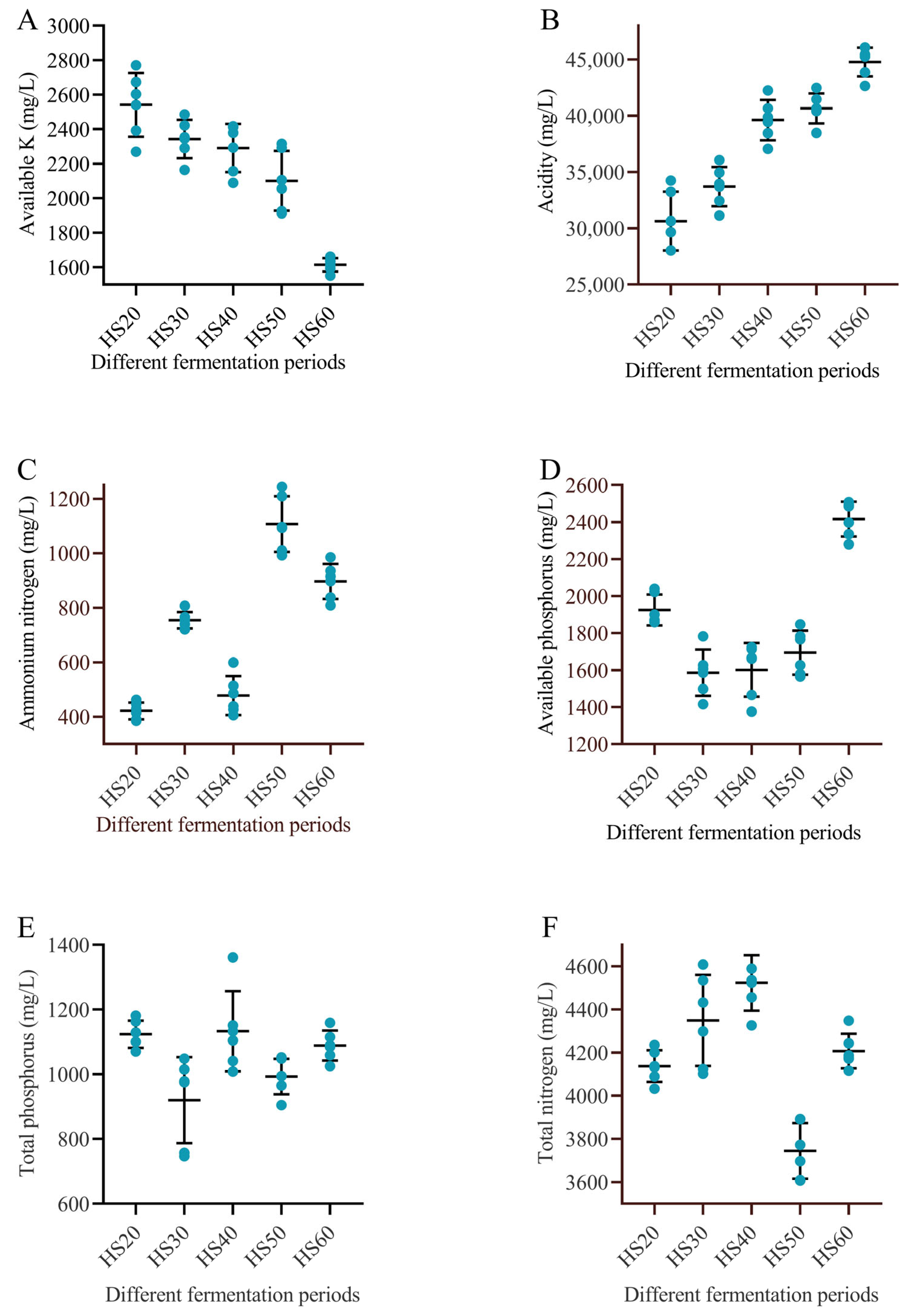
During the early fermentation of HS, the available K concentration peaked at 2379 ± 399.55 mg/L (day 20) and then declined progressively to 1526 ± 130.03 mg/L by day 60 (Figure 1A). As an essential cofactor in ATP-dependent reactions, ion transport, and protein synthesis, bioavailable K is rapidly assimilated by active microbes; its sustained depletion over time thus provides a quantitative indicator of persistent microbial metabolic engagement [23]. In contrast, HS acidity increased markedly from day 20 onward, reaching a maximum of 44,761 ± 1156.23 mg/L (expressed as lactic acid equivalent) on day 60, exhibiting a robust inverse correlation with available K (Figure 1B). This pronounced acidification is primarily attributable to the fermentative activity of acidogenic bacteria, especially Lactobacillus, which consistently dominates the bacterial community in HS. The concomitant accumulation of lactic and acetic acids signifies high-intensity microbial catabolism and critically contributes to the characteristic sour taste of HS, serving as a key determinant of downstream Baijiu flavor complexity and sensory quality [24].
Ammonium nitrogen (NH4+–N) followed a non-monotonic trajectory: starting at 493 ± 95.04 mg/L on day 20, it rose to 716 ± 89.72 mg/L by day 30, decreased to 486 ± 76.64 mg/L on day 40, surged again to 1107 ± 93 mg/L on day 50, and subsequently declined to 862 ± 97.15 mg/L by day 60 (Figure 1C). These oscillations likely reflect the dynamic equilibrium between proteolytic nitrogen mineralization driven by extracellular proteases from Bacillus and other degraders, and concurrent NH4+–N assimilation into biomass during exponential growth and secondary metabolite synthesis [25]. The late-stage peak may further stem from accelerated necromass lysis under highly acidic conditions, releasing intracellular nitrogen pools. Available phosphorus (Figure 1D) and total phosphorus (Figure 1E) both exhibited an initial decline (days 20–30), followed by a steady increase until fermentation completion. Phosphorus is indispensable for phospholipid bilayer formation, nucleic acid synthesis, and energy transfer (e.g., ATP/ADP cycling); its bioavailability is enhanced through microbial-mediated mineralization of organic phosphates and acidolysis under decreasing pH conditions [19]. Notably, phosphorus accumulation in HS shows a significant positive association with pit age, as older pits harbor more resilient and functionally redundant microbial consortia capable of efficient P solubilization and retention [26].
The total nitrogen (TN) content increased sharply to 4380 ± 340.47 mg/L by day 40 and then gradually decreased to 4164 ± 216.10 mg/L by day 60 (Figure 1F). The initial surge likely results from rapid hydrolysis of residual proteins and peptides by extracellular proteases, liberating soluble nitrogenous compounds into the HS matrix. In the mid-to-late fermentation phase, however, nitrogen demand for cellular biosynthesis, including amino acid, nucleotide, and cofactor production, outpaces mineralization rates, leading to net nitrogen depletion [3]. This decline may also be partially attributed to the assimilation of ammonium and amino acids by late-colonizing microbial taxa, as well as the volatilization of nitrogenous compounds under the high-temperature, acidic conditions characteristic of the late fermentation stage.

3.2. Microbial Community Diversity During Huangshui Fermentation

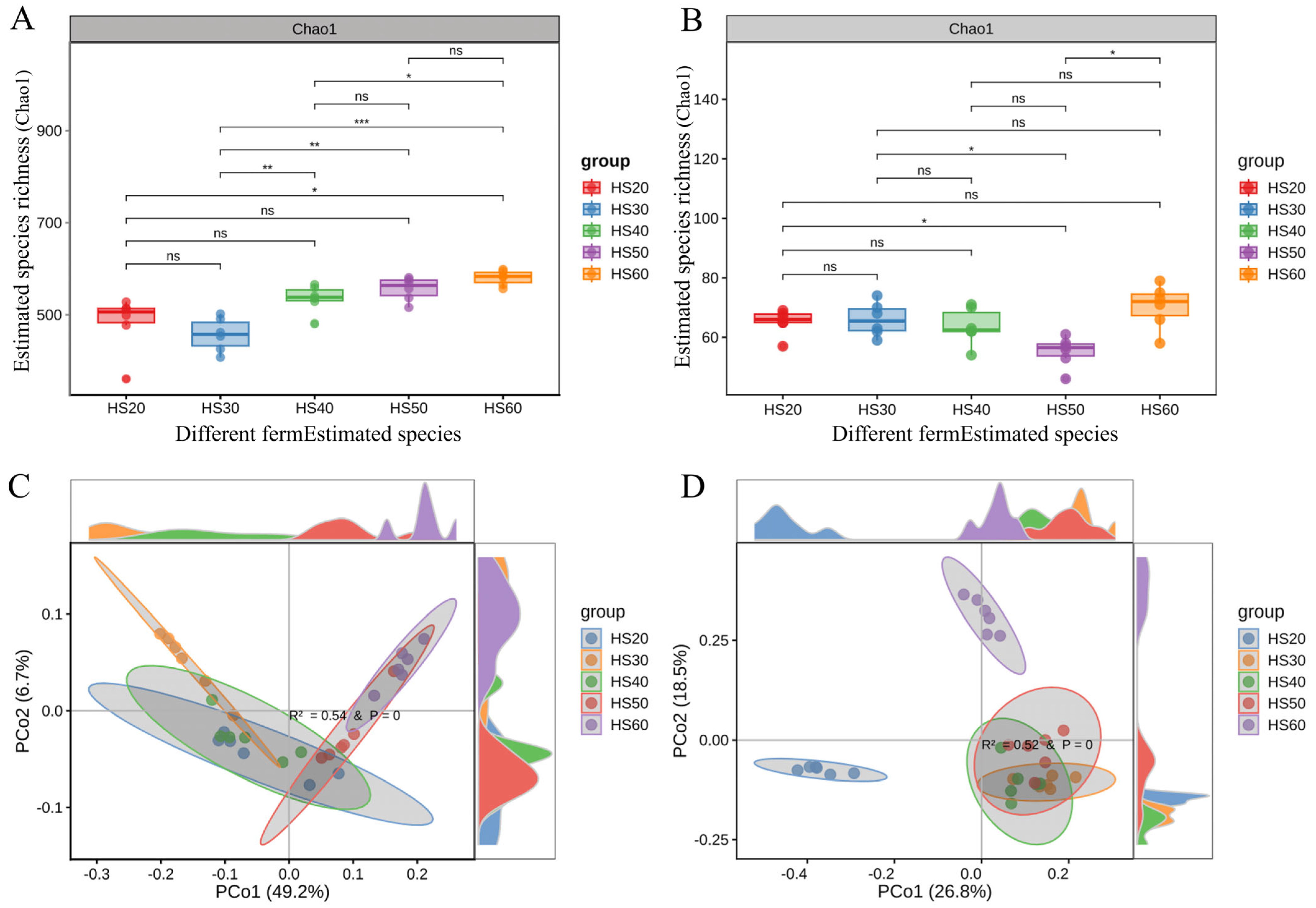
Based on Illumina MiSeq sequencing, the number of high-quality filtered reads for bacteria and fungi ranged from 70,498 to 73,370 and from 71,149 to 74,558, respectively (Supplementary Tables S1 and S2). Microbial abundance and diversity were assessed using ASV counts, the Chao1 index, the Shannon index, and the Simpson index. Both the Shannon and Chao1 indices increased progressively throughout fermentation, indicating a gradual rise in bacterial taxonomic diversity and richness in HS.
Venn analysis revealed shared and unique operational taxonomic units (OTUs) across HS samples (Supplementary Figure S1). Specifically, the numbers of bacterial OTUs in samples HS20, HS30, HS40, HS50, and HS60 were 1623, 1527, 1871, 2127, and 2317, respectively; meanwhile, 506 OTUs were common to all 30 samples (Figure S1A). For fungi, the numbers of OTUs in the same time-point samples were 169, 157, 182, 170, and 240, respectively, whereas only 24 OTUs were shared across all samples (Figure S1B). Notably, despite the lower absolute count of fungal OTUs compared to bacteria, the proportion of exclusive fungal OTUs at each time point was substantially higher relative to the shared pool, pointing to a pronounced temporal turnover in fungal community composition. This suggests that fungal assemblage in HS is more sensitive to environmental fluctuations, such as changes in acidity, ethanol content, and nutrient availability, than bacterial communities.
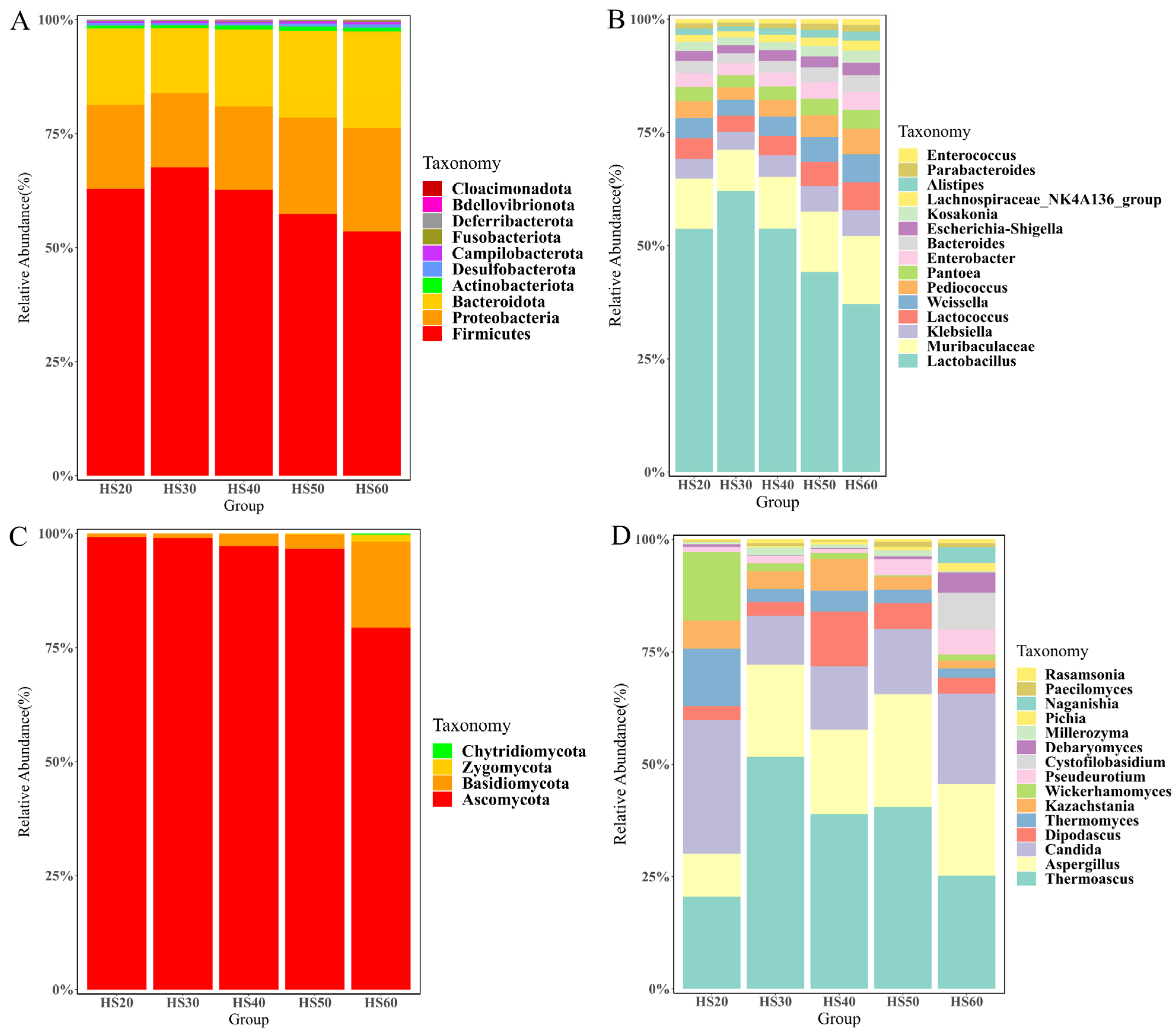
Microbial community composition was analyzed at both the phylum and genus levels. At the phylum level, 26 bacterial phyla were detected. Firmicutes, Proteobacteria, and Bacteroidota collectively dominated the bacterial community, accounting for 95.69%. Notably, Firmicutes exhibited overwhelming dominance, with its relative abundance ranging from 52.68% to 66.79% (Figure 2A). The prevalence of Firmicutes is consistent with its known tolerance to acidic and anaerobic conditions characteristic of the HS ecosystem. In contrast, the abundance of fungi was substantially lower than that of bacteria. Ascomycota was the overwhelmingly dominant phylum among fungi, and the overall relative abundance of fungal genera peaked at day 20 (Figure 2C). This early-stage fungal proliferation may be attributed to the relatively abundant fermentable sugars still available and the as-yet limited competitive pressure from bacterial populations, conditions that favored the rapid expansion of key fungal taxa before the subsequent environmental shift toward higher acidity and ethanol levels.
At the genus level, a total of 592 bacterial and fungal genera were identified, including 83 bacterial genera consistently present across all samples. The top 14 most abundant genera each contributed >1% to the total community, collectively accounting for 80.6% of the total relative abundance (Figure 2B). Among them, Lactobacillus was the predominant bacterial genus throughout fermentation, representing 41.82% of the bacterial community at day 20, 50.40% at day 30, 41.52% at day 40, 32.87% at day 50, and 26.77% at day 60. The dominance of Lactobacillus is a hallmark of HS and reflects its high adaptability to acidic environments. However, its gradual decline after day 30 may be attributed to the accumulation of lactic acid and other organic acids to inhibitory levels, as well as nutrient depletion [27]. Other dominant bacterial taxa included Muribaculaceae, Klebsiella, Lactococcus, Weissella, Pediococcus, Pantoea, Enterobacter, Bacteroides, EscherichiaShigella, Kosakonia, Lachnospiraceae_NK4A136_group, Alistipes, Parabacteroides, and Enterococcus; their relative abundances increased markedly during fermentation. Notably, sample HS60 exhibited a higher abundance of most bacterial genera than the other samples, except for Lactobacillus. This shift suggests a transition from a Lactobacillus-dominated community to a more evenly structured consortium, which may be driven by interspecies interactions and the accumulation of metabolic byproducts.
For fungi, due to the specificity of the HS samples, relatively few fungal species were detected. Candida (25.00%), Thermoascus (17.21%), and Wickerhamomyces (12.79%) were the dominant fungal genera during the early fermentation stage. In the later stage, the abundance of these strains gradually decreased and stabilized, while the dominant fungi shifted to Pichia, Debaryomyces, Cystofilobasidium, and Naganishia (Figure 2D). This succession pattern is likely related to the physicochemical conditions of HS, particularly the high acidity. Candida and Wickerhamomyces are known to be sensitive to acidity, whereas Pichia and Debaryomyces exhibit greater acid tolerance, allowing them to prevail in later stages [28]. Additionally, the decline of Thermoascus may reflect the gradual cooling of the fermentation system after the peak heating period.

3.3. Diversity Dynamics and Successional Patterns of Microbial Communities in HS Fermentation

The temporal dynamics of the microbial community diversity in the HS samples are illustrated in Figure 3. Alpha diversity, which was quantified using the Chao1 index, exhibited distinct trajectories for bacterial (Figure 3A) and fungal (Figure 3B) communities. For bacteria, species richness declined between HS20 and HS30 (p > 0.05), followed by a sustained and progressive increase from HS30 to mid-to-late fermentation (HS40–HS60), with statistically significant differences detected across multiple interval time points (p < 0.05). The initial decline likely reflects strong environmental filtering. The accumulation of organic acids (e.g., lactic and acetic acids) and ethanol during early fermentation selectively suppresses acid-sensitive and facultatively anaerobic taxa, thereby reducing both richness and evenness. The subsequent increase in bacterial richness from HS30 onward suggests adaptive enrichment of acid-tolerant or acidophilic lineages, including Lactobacillus spp. and fermentative yeasts, as well as the gradual emergence of previously rare, stress-resilient taxa. For fungi, species richness exhibited a different pattern. It increased slightly from HS20 to HS30 (p > 0.05), then decreased slightly at HS40 (p > 0.05), further declined at HS50, and increased significantly at HS60 (p < 0.05). These distinct trajectories indicate that fungal richness fluctuates more in response to environmental conditions.
β-Diversity analysis via principal coordinate analysis (PCoA) demonstrated clear, stage-dependent separation in both bacterial (Figure 3C) and fungal (Figure 3D) communities. The high R2 values and significant p-values indicate that fermentation time is a major deterministic factor driving microbial community differentiation. The distinct clustering of the HS20 and HS30 samples suggests that the early fermentation stage is characterized by rapid community turnover, likely driven by the drastic changes in physicochemical parameters such as acidity and nutrient availability. In contrast, the tighter clustering of the HS40–HS60 samples suggests that the microbial community gradually stabilizes in the later stage, although continued succession occurs at the genus level as interspecific interactions become more prominent [29].

3.4. Flavor-Related Volatile Metabolite Profiling During HS Fermentation

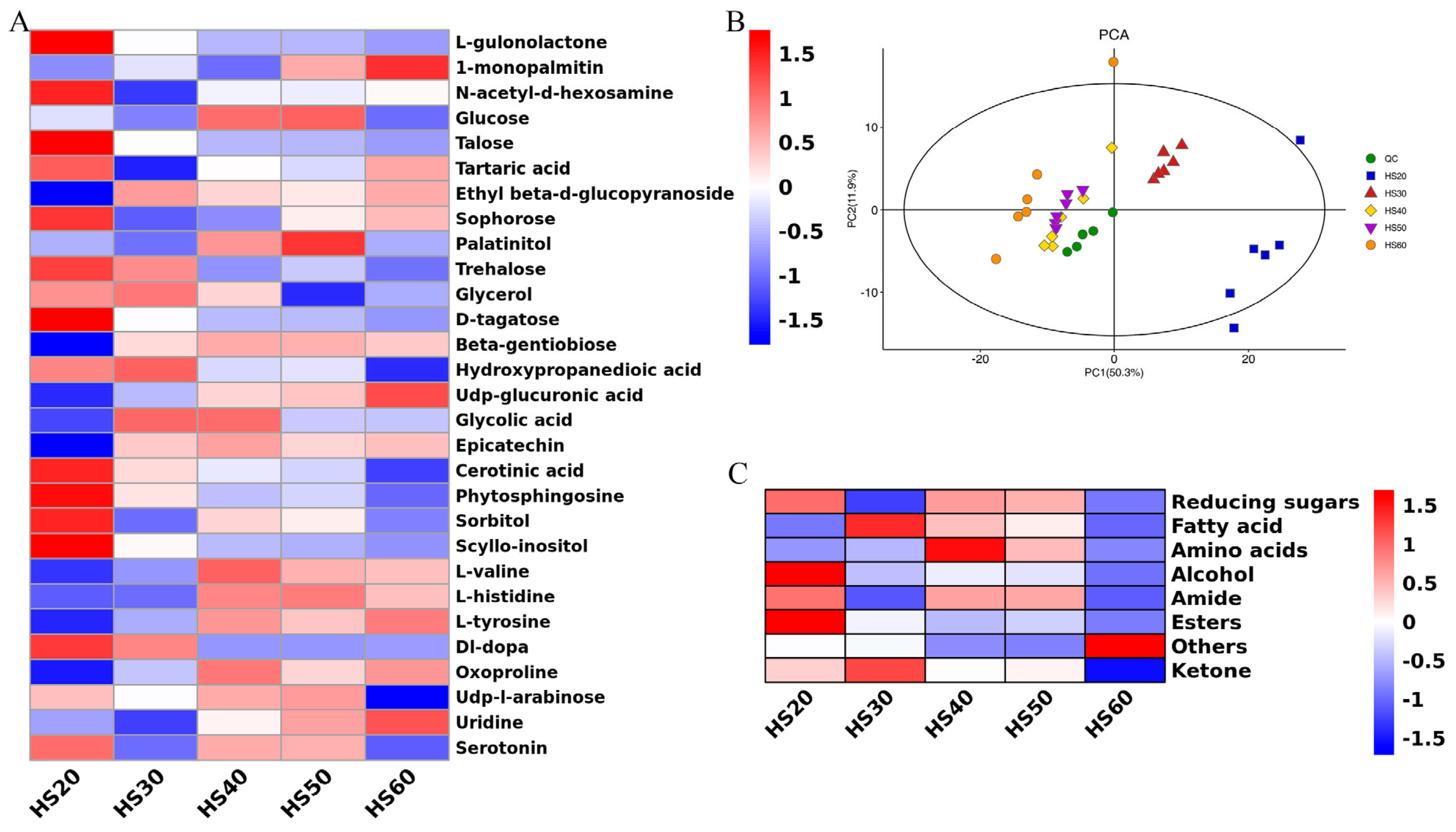
Gas chromatography–mass spectrometry (GC-MS) analysis identified 300 volatile metabolites in the HS samples, encompassing amino acids, alcohols, fatty acids, reducing sugars, esters, amides, ketones, and nucleosides (Figure 4C). These compounds collectively constitute the core volatile metabolic landscape underpinning Baijiu flavor formation [30]. Temporal dynamics revealed fermentation stage-dependent patterns. Reducing sugar, alcohol, amide, and esters peaked during the early fermentation phase (20-30 days) and then gradually declined.
Fatty acids and ketone exhibited an initial decrease followed by a subsequent increase, reaching their maximum abundance at day 30, while amino acids peaked at day 40. Among these were bioactive species such as UDP-glucuronic acid, epicatechin, L-tyrosine, oxoproline, and uridine, which suggests potential immunomodulatory functionality, thus supporting the prospective development of HS as a functional food ingredient [25].
To rigorously assess temporal metabolite divergence, principal component analysis (PCA) was performed. As shown in Figure 4B, HS samples from distinct fermentation stages were clearly separated in the PCA score plot, confirming that fermentation duration exerts a statistically significant influence on the overall volatile metabolite profile. Subsequent partial least-squares discriminant analysis (PLS–DA) identified 29 discriminatory features with VIP scores >1.0 (Figure 4A and Table S3). These included nine reducing sugars, five amino acids, five fatty acids, four alcohols, two esters, one ketone, one nucleoside, and two amides, collectively representing the most flavor-relevant metabolites in the HS samples. Among them, amino acids (L-valine, L-histidine, L-tyrosine, and oxoproline) and reducing sugars (ethyl beta-d-glucopyranoside, D-tagatose, beta-gentiobiose, Udp-glucuronic acid, and palatinitol) increased progressively throughout fermentation, whereas alcohols (e.g., phytosphingosine, sorbitol, glycerol, and scyllo-inositol), fatty acids (e.g., hydroxypropanedioic acid, tartaric acid, Udp-l-arabinose, and cerotinic acid), and reducing sugars (e.g., talose, sophorose, and trehalose) decreased steadily. This coordinated, stage-specific modulation underscores their functional centrality in Baijiu flavor biogenesis [31].

3.5. Correlation of Physicochemical Indicators and Dominant Microbial Species in HS Samples

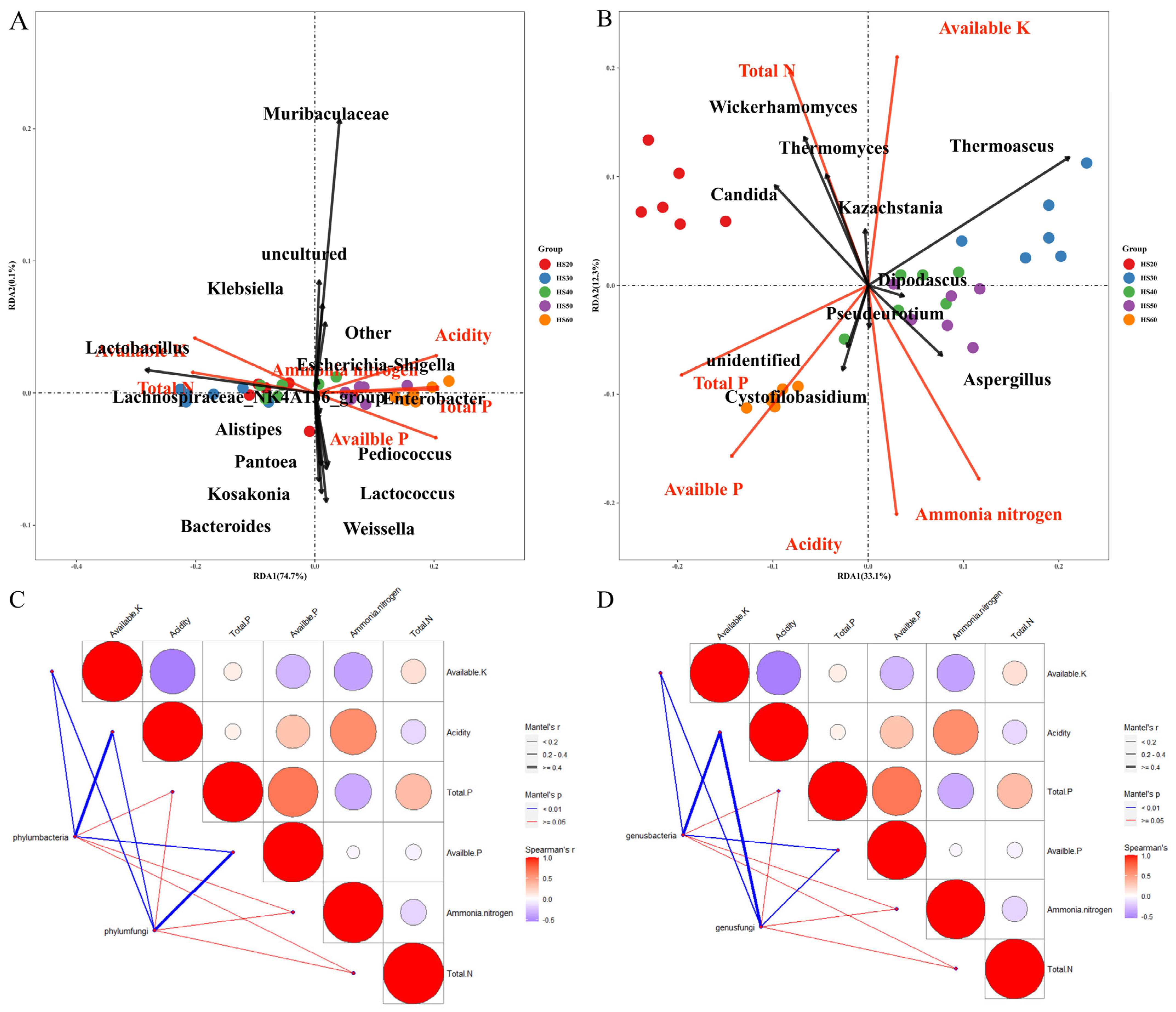
Redundancy analysis (RDA) was performed to elucidate the key environmental drivers of microbial succession during Huangshui (HS) fermentation (Figure 5). For the bacterial community (Figure 5A), RDA1 and RDA2 jointly explained 74.8% of the total variance. Early fermentation samples (HS20 and HS30) clustered along the negative RDA1 axis and were positively correlated with Lactobacillus abundance, driven primarily by high total nitrogen (TN) and available potassium (Ava-K). This is consistent with reports that Lactobacillus is amino acid-auxotrophic and thrives in nitrogen-rich environments [32]. In contrast, late-stage samples (HS40–HS60) grouped along the positive RDA1 axis and were associated with elevated ammonia nitrogen (NH4+-N), available phosphorus (Ava-P), and acidity, conditions favoring Klebsiella and Enterobacter proliferation. These genera are known to metabolize organic acids and contribute to ester synthesis during late fermentation [33].
For the fungal community (Figure 5B), the two RDA axes accounted for 45.4% of the total variance. Early-stage samples were enriched in Wickerhamomyces, Thermomyces, and Candida, positively correlating with TN and Ava-K, reflecting their role in saccharification and alcohol production [32]. Middle-to-late-stage samples exhibited higher relative abundances of Thermoascus and Aspergillus, significantly associated with increased NH4+–N, acidity, and Ava-P. Notably, Aspergillus has been identified as a core functional genus in HS, significantly correlated with key flavor compounds such as phenethyl acetate and ethylidene diacetate [4], while Thermoascus produces thermophilic glycoside hydrolases that may aid in carbohydrate degradation [23]. Collectively, TN and Ava-K emerged as key drivers of early microbial colonization, whereas NH4+–N, Ava-P, and acidity governed late-stage succession.
Mantel tests were conducted to further quantify the microbe–environment associations. The results revealed significant positive correlations between both bacterial and fungal communities and total phosphorus (Total P), NH4+–N, and TN (p < 0.05), and significant negative correlations with Ava-K, acidity, and Ava-P (p < 0.05) (Figure 5C,D). The negative correlation between acidity and community similarity suggests that acid accumulation may suppress overall microbial diversity, a phenomenon well-documented in anaerobic fermentation systems [34]. Spearman correlation analysis on dominant taxa (>0.5% relative abundance) further revealed taxon-specific response patterns, confirming that environmental filtering during HS fermentation is driven by a combination of nitrogen sources, phosphorus availability, and acidity stress. These findings are consistent with those of recent studies demonstrating that organic acids and nitrogen compounds act as key selective forces shaping microbial consortia in Baijiu fermentation ecosystems [3].

3.6. Correlation of Dominant Microbial Genera and Flavor-Associated Metabolites in HS Samples

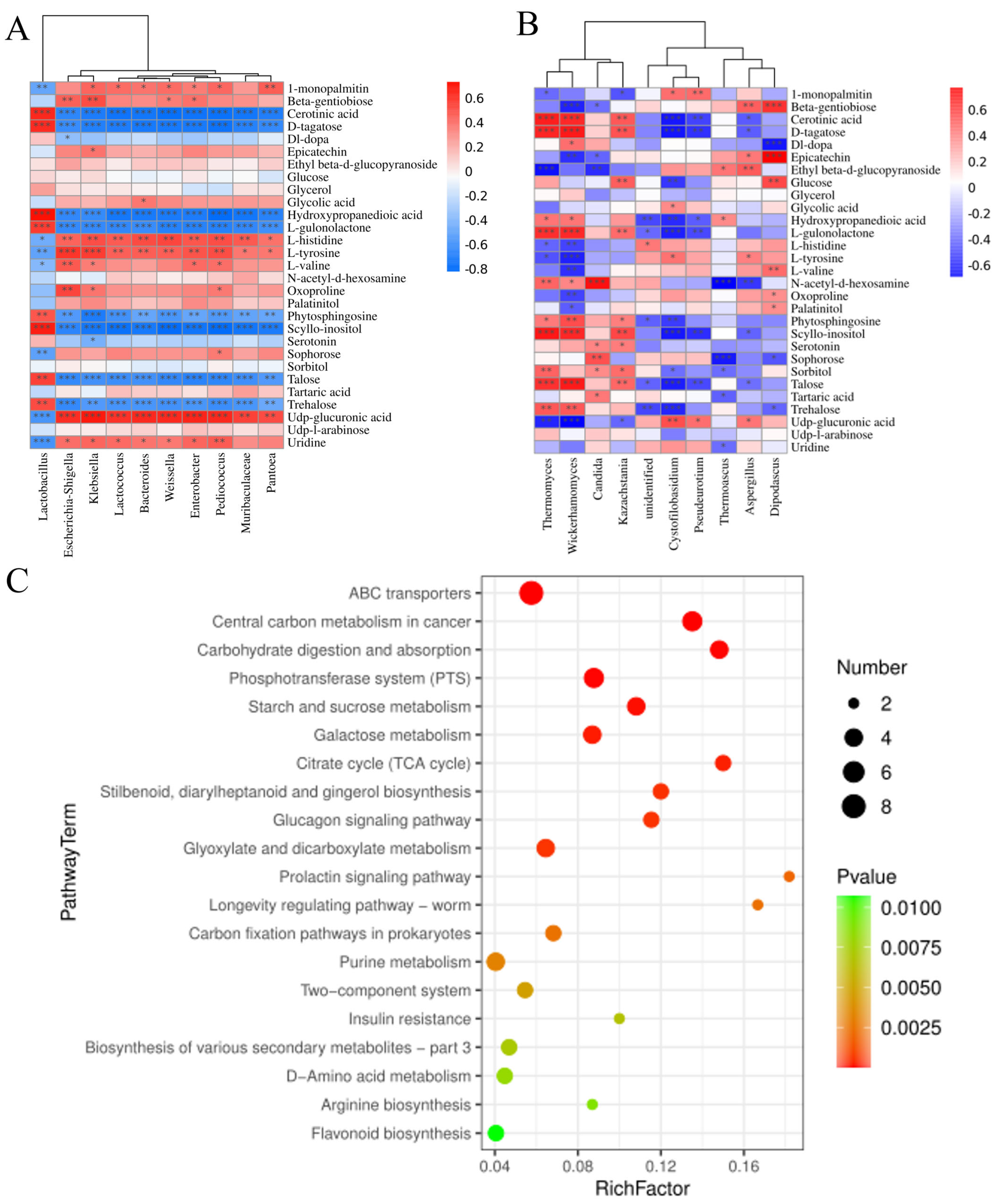
Volatile organic compounds (VOCs) and flavor-associated metabolites are critical chemical indicators of Baijiu quality [35]. To decipher microbe–metabolite interactions, Spearman rank correlation analysis was performed between dominant bacterial/fungal genera and 29 VOCs categorized into esters, amides, ketones, reducing sugars, organic acids, alcohols, and amino acids (Figure 6A,B). A total of 116 significant positive correlations (p < 0.05) and 133 significant negative correlations (p < 0.05) were identified.
Bacterial genera showed differential association patterns with metabolite categories. Most bacterial genera showed positive associations with esters (1-monopalmitin), amino acids (L-valine, L-histidine, and L-tyrosin), and reducing sugars (Udp-glucuronic acid and beta-gentiobiose) while showing negative correlations with fatty acids and alcohols. Notably, Lactobacillus, the dominant bacterial genus across all fermentation stages, displayed predominantly negative correlations with most metabolites, suggesting a primary role in substrate consumption rather than direct flavor compound production, consistent with its well-documented function in lactic acid accumulation (Figure 6A) [36].
In contrast, the correlation between dominant fungal genera and flavor substances exhibited significant differences (Figure 6B). The fungal genera Thermomyces, Wickerhamomyces, and Candida exhibited positive associations with reducing sugars, alcohols, and esters. The stronger association of fungi with flavor-related metabolites, despite their lower relative abundance compared to bacteria, suggests that fungal communities may serve as major contributors to flavor compound biosynthesis in HS, a phenomenon also observed in other Baijiu fermentation ecosystems [37].
KEGG pathway enrichment analysis was conducted to identify the biological pathways underpinning the flavor-related differential metabolites in HS (Figure 6C). Carbohydrate digestion and absorption, including starch and sucrose metabolism, the citrate cycle (TCA cycle), and galactose metabolism, were significantly enriched (Rich Factor > 0.1, p < 0.05), supplying foundational precursors such as reducing sugars and organic acids for downstream flavor biosynthesis. Amino acid metabolism pathways, particularly D-amino acid metabolism and arginine biosynthesis, also showed statistical significance (p < 0.01), generating flavor precursors (e.g., branched-chain aldehydes and higher alcohols). Furthermore, ABC transporter pathways exhibited the highest enrichment level, reflecting active nutrient uptake and metabolite exchange that may facilitate flavor compound accumulation [32]. Collectively, these results suggest that coordinated activity across carbohydrate catabolism, amino acid metabolism, and transporter-mediated flux contributes to flavor formation in HS, providing a metabolic basis for targeted modulation of Baijiu flavor quality.

4. Conclusions

In conclusion, this study demonstrates that the dynamic succession of microbial communities during HS fermentation is primarily driven by three key environmental factors, acidity, available phosphorus, and ammonia nitrogen, which collectively shape the metabolic potential for flavor formation in strong-flavor Baijiu production. Specifically, we found that early-stage fermentation (HS20–HS30) was dominated by high total nitrogen and available P, which favored the proliferation of Lactobacillus and early fungal colonizers such as Wickerhamomyces and Candida. In contrast, late-stage fermentation (HS40–HS60) was characterized by elevated ammonia nitrogen, available phosphorus, and acidity, driving a shift toward Klebsiella, Enterobacter, and Aspergillus. Notably, bacterial communities exhibited stronger correlations with these environmental drivers than fungal communities, with Lactobacillus showing an inverse relationship with most volatile metabolites, suggesting that it plays a primary role in substrate consumption and acid production rather than direct flavor synthesis.
This divergence in microbial assembly across fermentation stages resulted in distinct metabolic profiles and functional potentials. Spearman correlation analysis confirmed that bacterial genera were significantly associated with the dynamics of esters, amides, and amino acids, while fungal communities, despite their lower abundance, contributed to key ester formation. KEGG pathway enrichment analysis further revealed that carbohydrate metabolism, amino acid metabolism, and ABC transporter pathways were significantly enriched, providing the foundational precursors and transport machinery for flavor biosynthesis. These functional disparities manifested as progressive changes in the volatile metabolome throughout fermentation, with the most pronounced shifts occurring between the early (HS20–HS30) and late (HS40–HS60) stages.
Therefore, flavor formation during HS fermentation can be explained by a model in which temporal dynamics shape the bacterial community structure, which in turn drives the metabolic transformations that generate diverse flavor compounds. This work provides a systematic understanding of the microbial ecology underlying HS fermentation and establishes a scientific basis for process optimization in strong-flavor Baijiu production. Targeted modulation of these key environmental factors, particularly nitrogen and potassium levels in early fermentation, as well as acidity control in later stages, offers a rational strategy for optimizing HS quality and enhancing Baijiu flavor.

Supplementary Materials

The following supporting information can be downloaded at: https://www.mdpi.com/article/10.3390/fermentation12060290/s1, Figure S1: Venn analysis across HS samples; Table S1: Sequences and diversity indices of bacterial community in HS samples; Table S2: Sequences and diversity indices of fungi community in HS samples; Table S3: Key Flavor-Related Volatile Metabolite Profiling during HS Fermentation.

Author Contributions

Z.Z.: Data curation, Formal analysis, Methodology, Software, Writing—original draft; X.Z.: Data curation, Conceptualization, Project administration; Y.W.: Formal analysis, Methodology, Software; Q.Z.: Project administration, Funding acquisition. All authors have read and agreed to the published version of the manuscript.

Funding

This work was supported by the project of the Central Guidance Fund for Local Science and Technology Development in Hunan Province (2024ZYC029), Aid Program for Science and Technology Innovative Research Team in Higher Educational Institutions of Hunan Province (Xiangjiaotong [2023] No. 233), Scientific research Project of the Education Department of Hunan Province (25C0561), School-enterprise cooperation project (2025Hx291, 2025Hx292), and Hunan Province Science and Technology Innovation Project (2025RC3283).

Institutional Review Board Statement

Not applicable.

Informed Consent Statement

Not applicable.

Data Availability Statement

All raw sequencing reads have been deposited in the NCBI Sequence Read Archive (SRA) under BioProject accession PRJNA841400. Associated BioSample accessions are SUB11507572 (bacterial 16S rRNA gene data) and SUB11507738 (fungal ITS region data).

Acknowledgments

The authors declare that this study received funding from Yougui Yu. The funder was not involved in the study design; collection, analysis, or interpretation of data; the writing of the article; or the decision to submit the article for publication. The authors have reviewed and edited the output and take full responsibility for the content of this publication.

Conflicts of Interest

Author Yong Wan was employed by the company Xiangjiao Distillery Co., Ltd., Shaoyang, China. The remaining authors declare that the research was conducted in the absence of any commercial or financial relationships that could be construed as a potential conflict of interest.

Abbreviations

The following abbreviations are used in this manuscript:
SFBStrong-flavor baijiu
HSHuangshui
RDARedundancy analysis
TNTotal nitrogen
TPTotal phosphorus
PCRPolymerase Chain Reaction
ASVsAmplicon sequence variants
TMCSTrimethylchlorosilane
GC–MSGas chromatography–mass spectrometry
VIPVariable Importance in the Projection
VOCsVolatile organic compounds

References

  1. Wang, J.; Li, Q.; Sun, Y.; Liu, J.; Jiang, Z.; Zheng, Z.; Liu, L.; Min, X.; Yu, Y.; Zheng, Q. Why does distilled liquor (Baijiu) have a yellowish color: A comprehensive analysis. Food Chem. 2025, 463, 141469. [Google Scholar] [PubMed]
  2. Gao, L.; Xie, F.; Ren, X.; Wang, J.; Du, L.; Wei, Y.; Zhou, J.; He, G. Correlation between microbial diversity and flavor metabolism in Huangshui: A by-product of solid-state fermentation Baijiu. LWT 2023, 181, 114767. [Google Scholar]
  3. Ren, Z.; Chen, Q.; Tang, T.; Huang, Z. Unraveling the water source and formation process of Huangshui in solid-state fermentation. Food Sci. Biotechnol. 2025, 34, 665–675. [Google Scholar] [PubMed]
  4. Guo, Q.; Zhao, J.; Peng, J.; Huang, Y.; Shao, B.; Gao, Z. Revealing the flavor compositions, microbial diversity, and biological functions of Huangshui from different production workshops. LWT 2024, 207, 116683. [Google Scholar] [CrossRef]
  5. Jiang, Y.; Sun, J.; Chandrapala, J.; Majzoobi, M.; Brennan, C.; Zeng, X.; Sun, B. Current situation, trend, and prospects of research on functional components from by-products of baijiu production: A review. Food Res. Int. 2024, 180, 114032. [Google Scholar] [CrossRef] [PubMed]
  6. Li, M.; Su, J.; Wu, J.; Zhao, D.; Huang, M.; Lu, Y.; Zheng, J.; Li, H. The prebiotic activity of a novel polysaccharide extracted from Huangshui by fecal fermentation In vitro. Foods 2023, 12, 4406. [Google Scholar] [CrossRef] [PubMed]
  7. Jin, X.; Lin, J.; Fan, Z.; Li, J.; Hu, Y.; Peng, N.; Zhao, S. Caproiciproducens puteiluti sp. nov. and Caproiciproducens lactatisolvens sp. nov., isolated from the pit mud of strong-flavour Baijiu distilleries. Int. J. Syst. Evol. Microbiol. 2025, 75, 007008. [Google Scholar] [CrossRef] [PubMed]
  8. Chai, L.J.; Lu, Z.M.; Zhang, X.J.; Ma, J.; Xu, P.X.; Qian, W.; Xiao, C.; Wang, S.T.; Shen, C.H.; Shi, J.S.; et al. Zooming in on butyrate-producing clostridial consortia in the fermented grains of baijiu via gene sequence-guided microbial isolation. Front. Microbiol. 2019, 10, 1397. [Google Scholar] [PubMed]
  9. Hao, F.; Tan, Y.; Lv, X.; Chen, L.; Yang, F.; Wang, H.; Du, H.; Wang, L.; Xu, Y. Microbial community succession and its environment driving factors during initial fermentation of Maotai-Flavor Baijiu. Front. Microbiol. 2021, 12, 669201. [Google Scholar] [CrossRef] [PubMed]
  10. Huang, Z.; Jiang, K.; Qiao, Z.; An, M.; Ren, Z.; Wei, C.; Deng, J. Change patterns of Huangshui in Wuliang Nongxiang Baijiu during the fermentation process. Mod. Food Sci. Technol. 2023, 39, 1–7. [Google Scholar]
  11. Gong, L.; Yang, H.W. Comparison of the correlations of microbial community and volatile compounds between pit-mud and fermented grains of compound-flavor Baijiu. Foods 2024, 13, 203. [Google Scholar] [PubMed]
  12. Peng, J. Study on the Change Law of Huangshui During Fermentation of Zaopei Spirits of Strong-Flavor Baijiu; Sichuan University: Chengdu, China, 2024. [Google Scholar]
  13. Yu, Y.; Xiong, J.; Chen, Z.; Yang, J.; Fan, B.; Yuan, Q.; Wu, Q. Enhancement of physical and chemical properties of rice hull via Huangshui bioconversion for improved Baijiu quality. Appl. Food Res. 2025, 5, 101228. [Google Scholar] [CrossRef]
  14. Gao, Z.; Wu, Z.; Zhang, W. Effect of pit mud on bacterial community and aroma components in yellow water and their changes during the fermentation of Chinese strong-flavor liquor. Foods 2020, 9, 372. [Google Scholar] [CrossRef] [PubMed]
  15. Zhang, H.; Meng, Y.; Wang, Y.; Zhou, Q.; Li, A.; Liu, G.; Li, J.; Xing, X. Prokaryotic communities in multidimensional bottom-pit-mud from old and young pits used for the production of Chinese Strong-Flavor Baijiu. Food Chem. 2020, 312, 126084. [Google Scholar] [PubMed]
  16. Tan, G.; Hu, Y.; Huang, Y.; Liu, H.; Dong, W.; Li, J.; Liu, J.; Peng, N.; Liang, Y.; Zhao, S. Analysis of bacterial communities in pit mud from Zhijiang Baijiu distillery using denaturing gradient gel electrophoresis and high-throughput sequencing. J. Inst. Brew. 2020, 126, 90–97. [Google Scholar]
  17. Liu, C.; Gong, X.; Zhao, G.; Soe Htet, M.N.; Jia, Z.; Yan, Z.; Liu, L.; Zhai, Q.; Huang, T.; Deng, X.; et al. Liquor flavour is associated with the physicochemical property and microbial diversity of fermented grains in waxy and non-waxy sorghum (Sorghum bicolor) during fermentation. Front. Microbiol. 2021, 12, 618458. [Google Scholar] [CrossRef] [PubMed]
  18. GB 5009.5-2016; National Health and Family Planning Commission of the People’s Republic of China, China Food and Drug Administration. National Food Safety Standard—Determination of Protein in Foods. Standards Press of China: Beijing, China, 2016.
  19. Zhang, M.; Wu, X.; Mu, D.; Xu, B.; Xu, X.; Chang, Q.; Li, X. Profiling the influence of physicochemical parameters on the microbial community and flavor substances of zaopei. J. Sci. Food Agricuture 2021, 101, 6300–6310. [Google Scholar] [CrossRef] [PubMed]
  20. Amend, A.; Samson, R.; Seifert, K.; Bruns, T. Deep sequencing reveals diverse and geographically structured assemblages of fungi in indoor dust. Proc. Natl. Acad. Sci. USA 2020, 107, 13748–13753. [Google Scholar]
  21. Zang, J.; Xu, Y.; Xia, W.; Yu, D.; Gao, P.; Jiang, Q.; Yang, F. Dynamics and diversity of microbial community succession during fermentation of Suan yu, a Chinese traditional fermented fsh, determined by high throughput sequencing. Food Res. Int. 2018, 111, 565–573. [Google Scholar] [PubMed]
  22. Xu, Y.; Zhao, J.; Liu, X.; Zhang, C.; Zhao, Z.; Li, X.; Sun, B. Flavor mystery of Chinese traditional fermented baijiu: The great contribution of ester compounds. Food Chem. 2020, 369, 130920. [Google Scholar]
  23. Ma, S.; Luo, H.; Zhao, D.; Qiao, Z.; Zheng, J.; An, M.; Huang, D. Environmental factors and interactions among microorganisms drive microbial community succession during fermentation of Nongxiangxing daqu. Bioresour. Technol. 2022, 345, 126549. [Google Scholar] [CrossRef] [PubMed]
  24. Jin, X.; Wang, H.; Tian, H.; Hu, Y.; Peng, N.; Zhao, S. Caproiciproducens converts lactic acid into caproic acid during chinese strong-flavor Baijiu brewing. Int. J. Food Microbiol. 2025, 426, 110931. [Google Scholar] [PubMed]
  25. Kang, J.; Sun, Y.; Huang, X.; Ye, L.; Chen, Y.; Chen, X.; Zheng, X.; Han, B.-Z. Unraveling the microbial compositions, metabolic functions, and antibacterial properties of Huangshui, a byproduct of Baijiu fermentation. Food Res. Int. 2022, 157, 11320. [Google Scholar] [CrossRef] [PubMed]
  26. Hu, X.L.; Yu, M.; Wang, K.L.; Tian, R.J.; Yang, X.; Wang, Y.L.; Zhang, Z.G.; He, P.X. Diversity of microbial community and its correlation with physicochemical factors in Luzhou-flavor liquor pit mud. Food Res. Dev. 2021, 42, 178–185. [Google Scholar]
  27. Liu, S.; Ren, D.; Qin, H.; Yin, Q.; Yang, Y.; Liu, T.; Zhang, S.; Mao, J. Exploring major variable factors influencing flavor and microbial characteristics of upper jiupei. Food Res. Int. 2023, 172, 113057. [Google Scholar] [CrossRef] [PubMed]
  28. Wu, M.; Fan, Y.; Zhang, J.; Chen, H.; Wang, S.; Shen, C.; Fu, H.; She, Y. A novel organic acids-targeted colorimetric sensor array for the rapid discrimination of origins of Baijiu with three main aroma types. Food Chem. 2024, 447, 138968. [Google Scholar] [CrossRef] [PubMed]
  29. Qiang, W.; Xiao, C.; Lu, Z.; Zhang, X.; Wang, A.; Li, D.; Shen, C.; Shi, J.; Xu, Z. Bacterial community succession in fermented grains of Luzhou-flavor baijiu. Acta Microbiol. Sin. 2019, 59, 195–204. [Google Scholar]
  30. Stratford, J.P.; Beecroft, N.J.; Slade, R.C.; Gruning, A.; Avignone-Rossa, C. Anodic microbial community diversity as a predictor of the power output of microbial fuel cells. Bioresour. Technol. 2014, 156, 84–91. [Google Scholar] [CrossRef] [PubMed]
  31. Hong, J.; Zhao, D.; Sun, B. Research progress on the profile of trace components in Baijiu. Food Rev. Int. 2021, 39, 1666–1693. [Google Scholar] [CrossRef]
  32. Xu, S.; Zhang, M.; Xu, B.; Liu, L.; Sun, W.; Mu, D.; Wu, X.; Li, X. Microbial communities and flavor formation in the fermentation of Chinese strong-flavor Baijiu produced from old and new Zaopei. Food Res. Int. 2022, 156, 111162. [Google Scholar] [CrossRef] [PubMed]
  33. Cai, W.; Wang, Y.; Liu, Z.; Liu, J.; Zhong, J.; Hou, Q.; Yang, X.; Shan, C.; Guo, Z. Depth-depended quality comparison of light-flavor fermented grains from two fermentation rounds. Food Res. Int. 2022, 159, 111587. [Google Scholar] [PubMed]
  34. Li, M.; Su, J.; Wu, J.; Zhao, D.; Huang, M.; Lu, Y.; Zheng, J.; Zheng, F.; Sun, B.; Liang, H. The Regulatory Effect of Huangshui Polysaccharides on Intestinal Microbiota and Metabolites during In Vitro Fermentation. J. Agric. Food Chem. 2024, 72, 5222–5236. [Google Scholar] [CrossRef] [PubMed]
  35. Jin, X.; Fan, Z.; Yang, M.; Shen, H.; Li, J.; Hu, Y.; Peng, N.; Zhao, S. A metabolic relay for caproic acid production in Huangshui: Cooperative interaction between Clostridium tyrobutyricum and Caproiciproducens. Bioresour. Technol. 2026, 453, 134542. [Google Scholar] [CrossRef] [PubMed]
  36. Wang, Z.; Wang, Y.; Zhu, T.; Wang, J.; Huang, M.; Wei, J.; Ye, H.; Wu, J.; Zhang, J.; Meng, N. Characterization of the key odorants and their content variation in Niulanshan Baijiu with different storage years using flavor sensory omics analysis. Food Chem. 2022, 376, 131851. [Google Scholar] [CrossRef] [PubMed]
  37. Jin, Y.; Li, D.; Ai, M.; Tang, Q.; Huang, J.; Ding, X.; Wu, C.; Zhou, R. Correlation between volatile profiles and microbial communities: A metabonomic approach to study Jiang-flavor liquor Daqu. Food Res. Int. 2019, 121, 422–432. [Google Scholar] [CrossRef] [PubMed]
Figure 1. Dynamic changes in physicochemical indices in Huangshui during different fermentation periods. (A) Available K; (B) acidity; (C) ammonium nitrogen; (D) available phosphorus; (E) total phosphorus; (F) total nitrogen. Data are expressed as mean ± standard deviation (n = 6).
Fermentation 12 00290 g001
Figure 2. Microbial community composition at the phyla and genus levels during HS fermentation: (A) the dynamics of the bacterial community at the phyla level; (B) the dynamics of the bacterial community at the genus level; (C) the dynamics of the fungal community at the phyla level; (D) the dynamics of the fungal community at the genus level.
Fermentation 12 00290 g002
Figure 3. Dynamic changes in α-diversity and β-diversity of microbial communities in HS during fermentation. (A,B) Box plots showing the Chao1 diversity index of bacterial (A) and fungal (B) communities. (C,D) Principal coordinate analysis (PCoA) based on Bray–Curtis distance revealing the β-diversity of bacterial (C) and fungal (D) communities. Different colors represent different fermentation stages (HS20 to HS60). Significant differences between groups are indicated as follows: ns (not significant), * p < 0.05, ** p < 0.01, and *** p < 0.001.
Fermentation 12 00290 g003
Figure 4. Volatile metabolite profiles of Huangshui (HS) samples across different fermentation periods. (A) Heatmap of volatile compounds generated by partial least-squares discriminant analysis (PLS–DA), highlighting 29 discriminatory features (VIP > 1.0 or p < 0.05) across fermentation stages. (B) Principal component analysis (PCA) score plot showing clear separation of HS samples from different fermentation periods, indicating significant temporal shifts in volatile metabolite composition. (C) Abundance distribution of various metabolite classes in HS samples during different fermentation stages, based on GC-MS identification.
Fermentation 12 00290 g004
Figure 5. Correlation of microbial community structure and physicochemical factors in Huangshui (HS) samples. (A) RDA biplot of bacterial community and physicochemical factors; (B) RDA biplot of fungal community and physicochemical factors. (C) Mantel test matrices showing correlations between phylum microbial community dissimilarity (Bray–Curtis) and physicochemical parameters; (D) Mantel test matrices showing correlations between genus microbial community dissimilarity (Bray–Curtis) and physicochemical parameters. The length and direction of the arrows represent the strength and correlation of the physicochemical variables, respectively.
Fermentation 12 00290 g005
Figure 6. Correlation between dominant microbial genera and flavor-associated volatile metabolites in Huangshui (HS) samples. (A) Heatmap of Spearman correlations between top 15 bacterial genera and 29 volatile organic compounds (VOCs). (B) Heatmap of Spearman correlations between top 15 fungal genera and 29 VOCs. Red and blue squares indicate positive and negative correlations, respectively. Significance levels: * p < 0.05, ** p < 0.01, *** p < 0.001. (C) KEGG pathway enrichment analysis of differential metabolites in HS samples. The Rich Factor represents the ratio of differentially abundant metabolites to total metabolites annotated in each pathway. Bubble size indicates the number of metabolites enriched, and color gradient represents statistical significance (p-value). Abbreviations: TCA, tricarboxylic acid; ABC, ATP-binding cassette.
Fermentation 12 00290 g006
Disclaimer/Publisher’s Note: The statements, opinions and data contained in all publications are solely those of the individual author(s) and contributor(s) and not of MDPI and/or the editor(s). MDPI and/or the editor(s) disclaim responsibility for any injury to people or property resulting from any ideas, methods, instructions or products referred to in the content.