
A Rare Actinomycete from Sicilian Soil: Antimicrobial Potential and Spore Conditioning-Driven Antibiotic Production in Kitasatospora sp. SeTe27

 , ,
, ,  , and
, and 
Abstract
1. Introduction
2. Materials and Methods
2.1. Isolation of Kitasatospora sp. SeTe27
2.2. Genome Sequencing, Assembly, and Functional Annotation of Biosynthetic Gene Clusters (BGCs)
2.3. Bacterial Growth Profile and Spore Conditioning Experiments
2.4. Antibacterial Activity of Cell-Free Spent Media
2.5. Laser Scanning Fluorescence Microscopy
2.6. Statistical Analysis
3. Results and Discussion
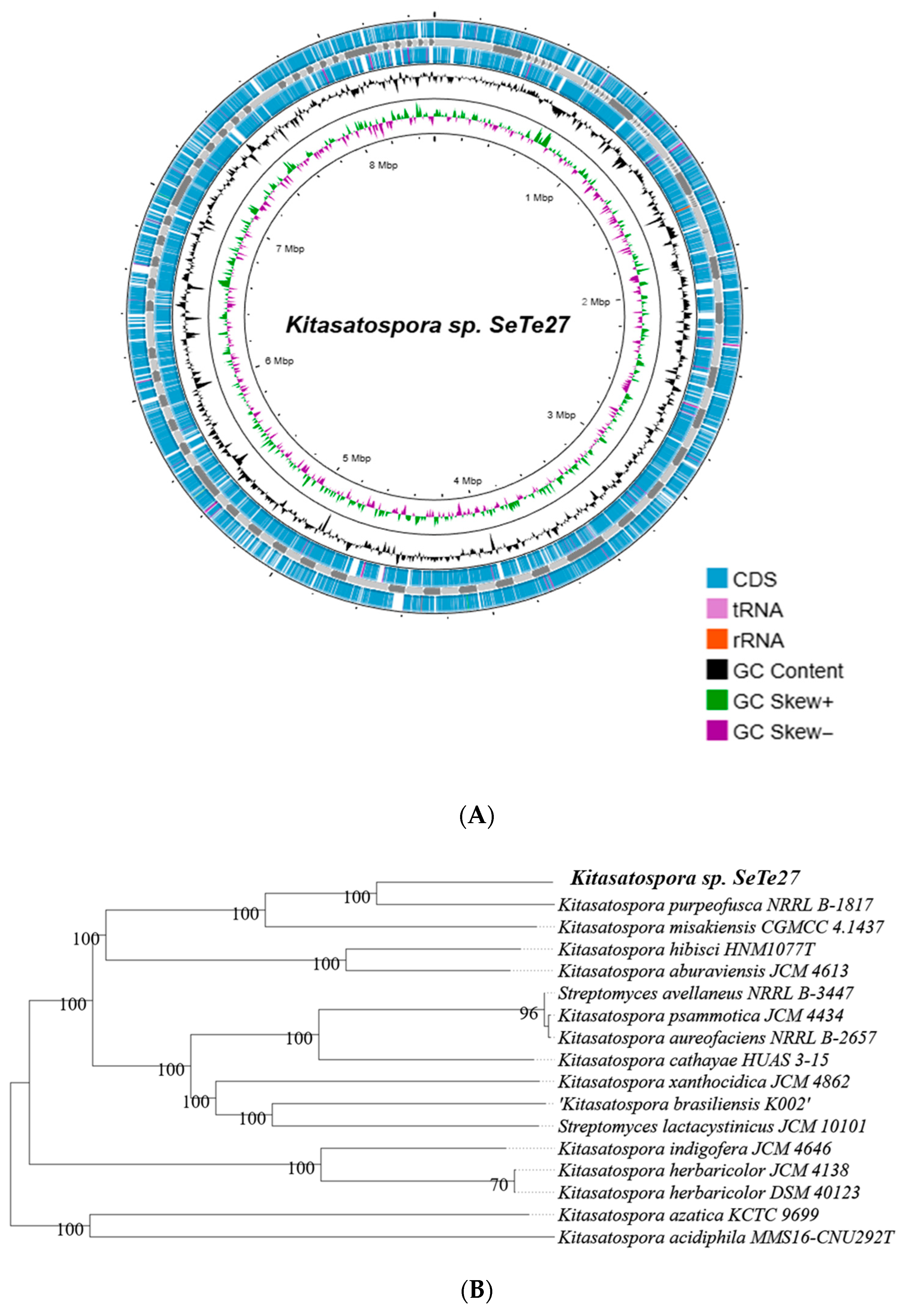
3.1. Sequencing and Phylogenetic Analysis of Kitasatospora sp. SeTe27
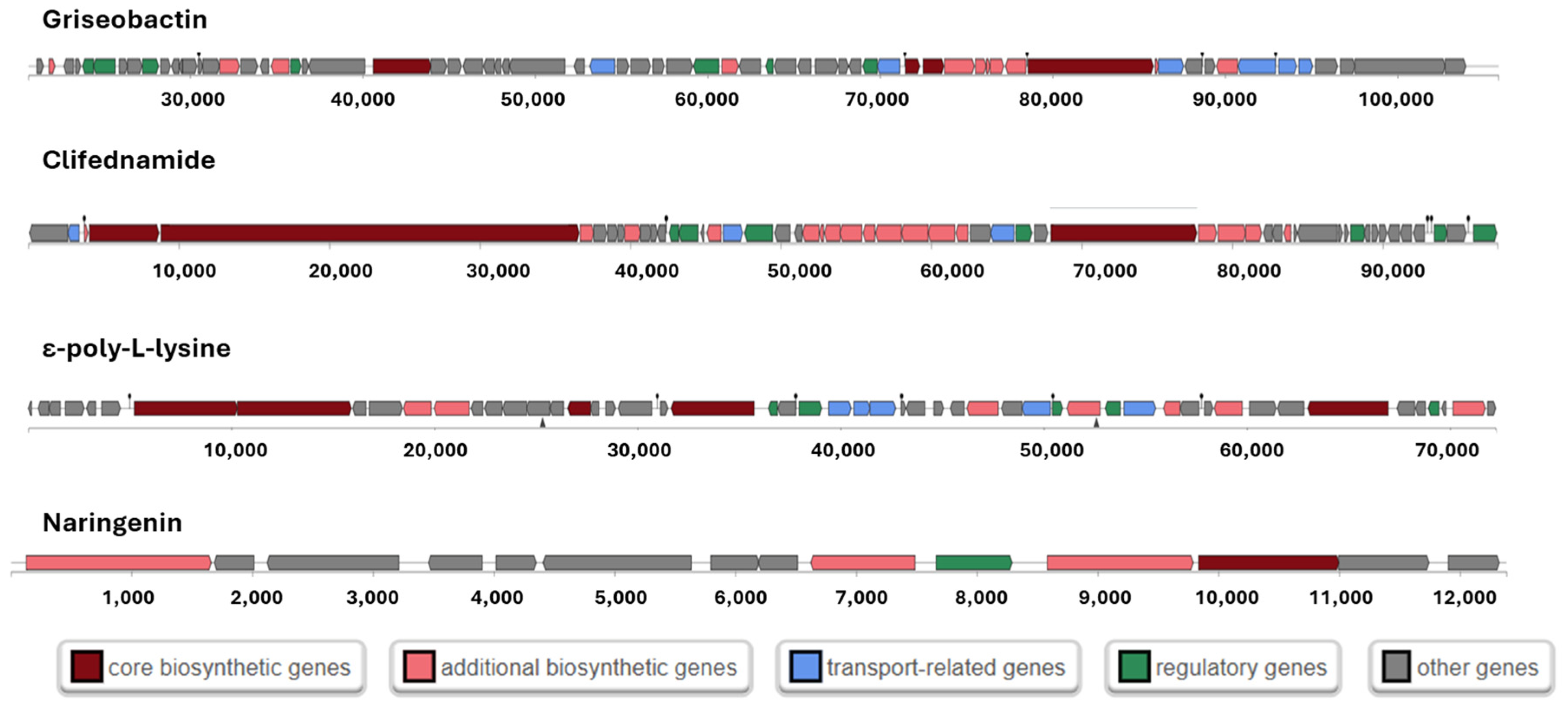
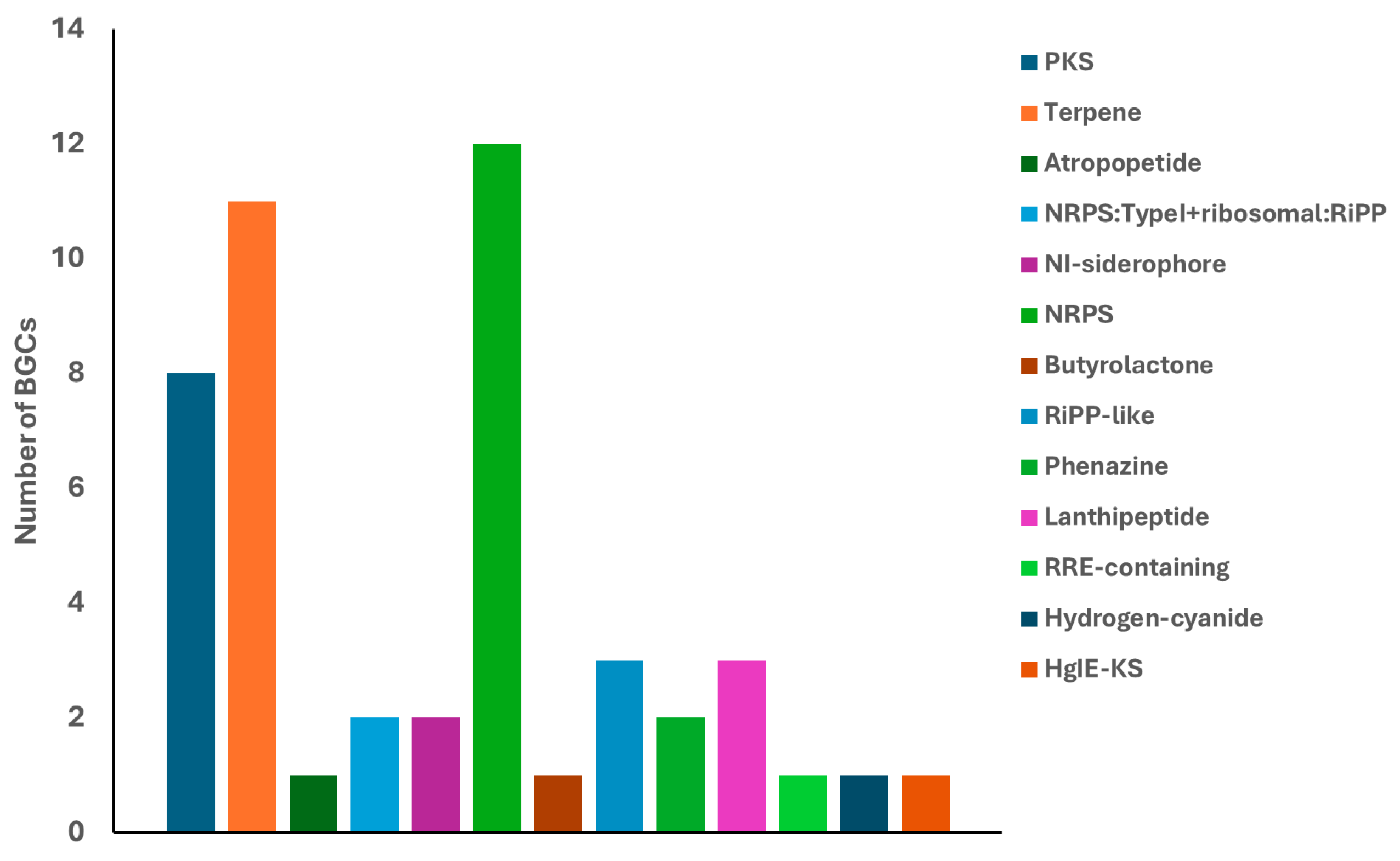
3.2. Identification of Secondary Metabolic Biosynthetic Gene Clusters
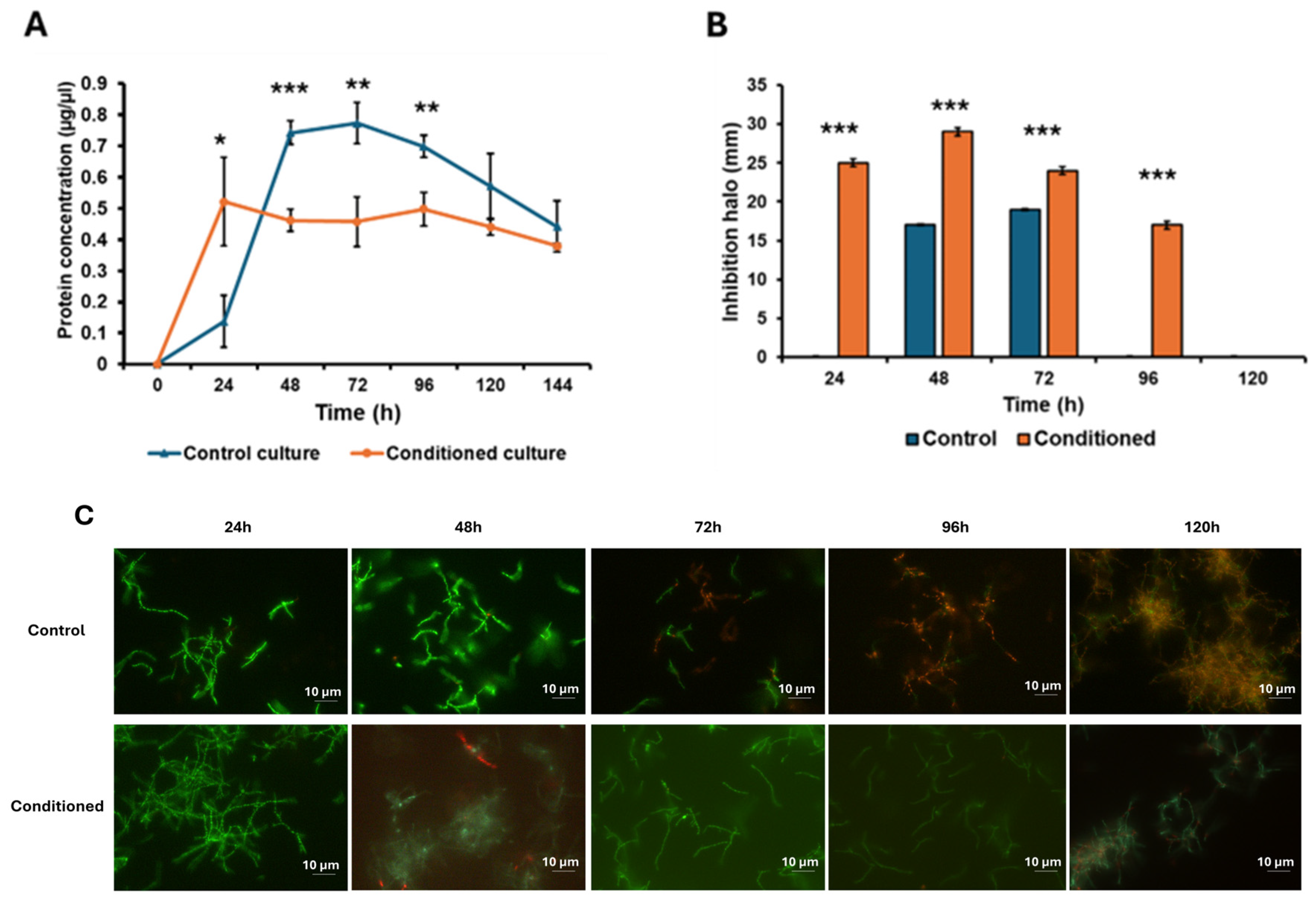
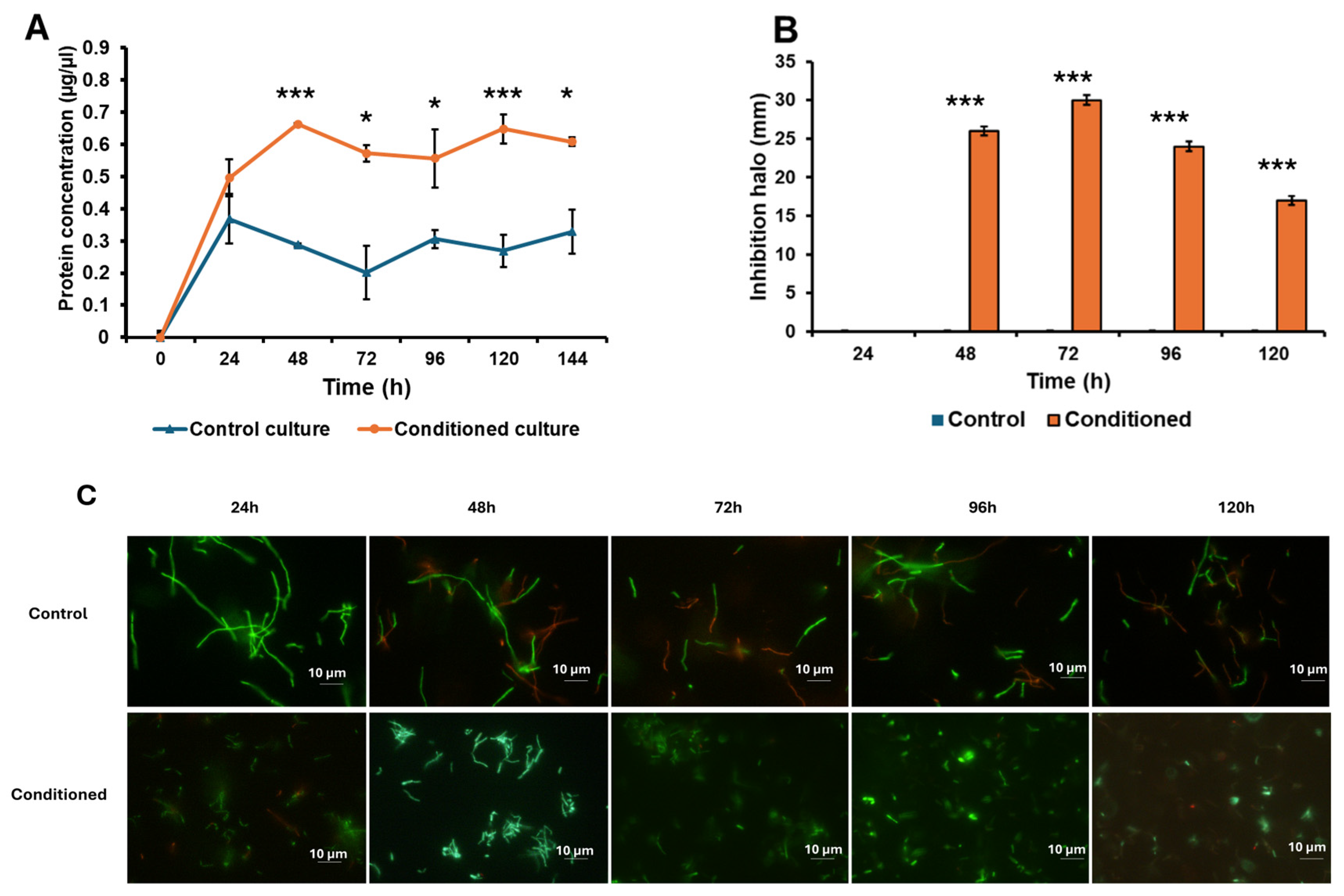
3.3. Spore Conditioning as a Tool to Improve Secondary Metabolite Production
4. Conclusions
Supplementary Materials
Author Contributions
Funding
Institutional Review Board Statement
Informed Consent Statement
Data Availability Statement
Conflicts of Interest
References
- WHO. Antimicrobial Resistance: Global Report on Surveillance; World Health Organization: Geneva, Switzerland, 2014; Available online: https://www.who.int/publications/i/item/9789241564748 (accessed on 18 March 2026).
- O’Neill, J. Tackling Drug-Resistant Infections Globally: Final Report and Recommendations; Review on Antimicrobial Resistance: London, UK, 2016; Available online: https://amr-review.org (accessed on 18 March 2026).
- Newman, D.J.; Cragg, G.M. Natural Products as Sources of New Drugs over the Nearly Four Decades from 01/1981 to 09/2019. J. Nat. Prod. 2020, 83, 770–803. [Google Scholar] [CrossRef]
- Bhatti, A.A.; Haq, S.; Bhat, R.A. Actinomycetes benefaction role in soil and plant health. Microb. Pathog. 2017, 111, 458–467. [Google Scholar] [CrossRef]
- Kekuda, P.T.R.; Onkarappa, R.; Jayanna, N.D. Characterization and antibacterial activity of a glycoside antibiotic from Streptomyces variabilis PO-178. Sci. Technol. Arts Res. J. 2014, 3, 116–121. [Google Scholar] [CrossRef]
- Claessen, D.; Rozen, D.E.; Kuipers, O.P.; Søgaard-Andersen, L.; van Wezel, G.P. Bacterial solutions to multicellularity: A tale of biofilms, filaments and fruiting bodies. Nat. Rev. Microbiol. 2014, 12, 115–124. [Google Scholar] [CrossRef] [PubMed]
- Barka, E.A.; Vatsa, P.; Sanchez, L.; Gaveau-Vaillant, N.; Jacquard, C.; Meier-Kolthoff, J.P.; Klenk, H.P.; Clément, C.; Ouhdouch, Y.; van Wezel, G.P. Taxonomy, physiology, and natural products of Actinobacteria. Microbiol. Mol. Biol. Rev. 2016, 80, 1–43. [Google Scholar] [CrossRef] [PubMed]
- Pisciotta, A.; Manteca, Á.; Alduina, R. The SCO1731 methyltransferase modulates actinorhodin production and morphological differentiation of Streptomyces coelicolor A3(2). Sci. Rep. 2018, 8, 13686. [Google Scholar] [CrossRef]
- Donald, L.; Pipite, A.; Subramani, R.; Owen, J.; Keyzers, R.A.; Taufa, T. Streptomyces: Still the Biggest Producer of New Natural Secondary Metabolites, a Current Perspective. Microbiol. Res. 2022, 13, 418–465. [Google Scholar] [CrossRef]
- De Simeis, D.; Serra, S. Actinomycetes: A Never-Ending Source of Bioactive Compounds-An Overview on Antibiotics Production. Antibiotics 2021, 10, 483. [Google Scholar] [CrossRef]
- Tiwari, K.; Gupta, R.K. Rare actinomycetes: A potential storehouse for novel antibiotics. Crit. Rev. Biotechnol. 2012, 32, 108–132. [Google Scholar] [CrossRef]
- Tiwari, K.; Gupta, R.K. Diversity and isolation of rare actinomycetes: An overview. Crit. Rev. Microbiol. 2013, 39, 256–294. [Google Scholar] [CrossRef] [PubMed]
- Takahashi, Y. Genus Kitasatospora, taxonomic features and diversity of secondary metabolites. J. Antibiot. 2017, 70, 506–513. [Google Scholar] [CrossRef] [PubMed]
- Wei, B.; Du, A.Q.; Zhou, Z.Y.; Lai, C.; Yu, W.C. An atlas of bacterial secondary metabolite biosynthesis gene clusters. Environ. Microbiol. 2021, 23, 6981–6992. [Google Scholar] [CrossRef] [PubMed]
- Zimmermann, A.; Nouioui, I.; Pötter, G.; Neumann-Schaal, M.; Wolf, J.; Wibberg, D.; Mast, Y. Kitasatospora fiedleri sp. nov., a novel antibiotic-producing member of the genus Kitasatospora. Int. J. Syst. Evol. Microbiol. 2023, 73, 006137. [Google Scholar] [CrossRef]
- Yun, B.R.; Malik, A.; Kim, S.B. Genome-based characterization of Kitasatospora sp. MMS16-BH015, a multiple heavy metal resistant soil actinobacterium with high antimicrobial potential. Gene 2020, 733, 144379. [Google Scholar] [CrossRef]
- Wu, C.; van Wezel, G.P.; Choi, Y.H. Identification of novel endophenaside antibiotics produced by Kitasatospora sp. MBT66. J. Antibiot. 2015, 68, 445–452. [Google Scholar] [CrossRef]
- Singh, S.B.; Pelaez, F. Biodiversity, chemical diversity and drug discovery. Prog. Drug Res. 2008, 65, 141–174. [Google Scholar] [CrossRef]
- Bérdy, J. Bioactive microbial metabolites. J. Antibiot. 2005, 58, 1–26. [Google Scholar] [CrossRef]
- Hao, X.; Yu, J.; Wang, Y.; Connolly, J.A.; Liu, Y.; Zhang, Y.; Yu, L.; Cen, S.; Goss, R.J.; Gan, M. Zelkovamycins B–E, cyclic octapeptides containing rare amino acid residues from an endophytic Kitasatospora sp. Org. Lett. 2020, 22, 9346–9350. [Google Scholar] [CrossRef]
- Medema, M.H.; Fischbach, M.A. Computational approaches to natural product discovery. Nat. Chem. Biol. 2015, 11, 639–648. [Google Scholar] [CrossRef]
- Scherlach, K.; Hertweck, C. Mining and unearthing hidden biosynthetic potential. Nat. Commun. 2021, 12, 3864. [Google Scholar] [CrossRef]
- Marín, L.; Gutiérrez-Del-Río, I.; Yagüe, P.; Manteca, Á.; Villar, C.J.; Lombó, F. De Novo Biosynthesis of Apigenin, Luteolin, and Eriodictyol in the Actinomycete Streptomyces albus and Production Improvement by Feeding and Spore Conditioning. Front. Microbiol. 2017, 8, 921. [Google Scholar] [CrossRef] [PubMed]
- Demain, A.L.; Sánchez, S. Microbial drug discovery: 80 years of progress. J. Antibiot. 2009, 62, 5–16. [Google Scholar] [CrossRef]
- van Wezel, G.P.; McDowall, K.J. The regulation of the secondary metabolism of Streptomyces: New links and experimental advances. Nat. Prod. Rep. 2011, 28, 1311–1333. [Google Scholar] [CrossRef]
- Olano, C.; Méndez, C.; Salas, J.A. Antitumor compounds from marine actinomycetes. Mar. Drugs 2009, 7, 210–248. [Google Scholar] [CrossRef]
- Firrincieli, A.; Tornatore, E.; Piacenza, E.; Cappelletti, M.; Saiano, F.; Pavia, F.C.; Alduina, R.; Zannoni, D.; Presentato, A. The actinomycete Kitasatospora sp. SeTe27, subjected to adaptive laboratory evolution (ALE) in the presence of selenite, varies its cellular morphology, redox stability, and tolerance to the toxic oxyanion. Chemosphere 2024, 354, 141712. [Google Scholar] [CrossRef]
- Meier-Kolthoff, J.P.; Göker, M. TYGS is an automated high-throughput platform for state-of-the-art genome-based taxonomy. Nat. Commun. 2019, 10, 2182. [Google Scholar] [CrossRef]
- Lefort, V.; Desper, R.; Gascuel, O. FastME 2.0: A comprehensive, accurate, and fast distance-based phylogeny inference program. Mol. Biol. Evol. 2015, 32, 2798–2800. [Google Scholar] [CrossRef] [PubMed]
- Lee, I.; Kim, Y.O.; Park, S.C.; Chun, J. OrthoANI: An improved algorithm and software for calculating average nucleotide identity. Int. J. Syst. Evol. Microbiol. 2016, 66, 1100–1103. [Google Scholar] [CrossRef]
- Blin, K.; Medema, M.H.; Kazempour, D.; Fischbach, M.A.; Breitling, R.; Takano, E.; Weber, T. antiSMASH 2.0—A versatile platform for genome mining of secondary metabolite producers. Nucleic Acids Res. 2013, 41, W204–W212. [Google Scholar] [CrossRef] [PubMed]
- Bauer, A.W.; Kirby, W.M.; Sherris, J.C.; Turck, M. Antibiotic susceptibility testing by a standardized single disk method. Am. J. Clin. Pathol. 1966, 45, 493–496. [Google Scholar] [CrossRef]
- Holder, I.A.; Boyce, S.T. Agar well diffusion assay testing of bacterial susceptibility to various antimicrobials in concentrations non-toxic for human cells in culture. Burns 1994, 20, 426–429. [Google Scholar] [CrossRef]
- Manteca, Á.; Fernández, M.; Sánchez, J. A death round affecting a young compartmentalized mycelium precedes aerial mycelium dismantling in confluent surface cultures of Streptomyces antibioticus. Microbiology 2008, 151, 3689–3697. [Google Scholar] [CrossRef]
- Wayne, L.G.; Brenner, D.J.; Colwell, R.R.; Grimont, P.A.D.; Kandler, O.; Krichevsky, M.I.; Moore, L.H.; Moore, W.E.C.; Murray, R.G.E.; Stackebrandt, E.; et al. Report of the ad hoc committee on reconciliation of approaches to bacterial systematics. Int. J. Syst. Bacteriol. 1987, 37, 463–464. [Google Scholar] [CrossRef]
- Jiao, Y.J.; Liu, Y.; Wang, H.X.; Zhu, D.Y.; Shen, Y.M.; Li, Y.Y. Expression of the clifednamide biosynthetic pathway in Streptomyces generates 27,28-seco-derivatives. J. Nat. Prod. 2020, 83, 2803–2808. [Google Scholar] [CrossRef]
- Zhang, Z.H.; Yin, L.; Wang, Y.M. Catalysis by L-lysine: A green method for the condensation of aromatic aldehydes with acidic methylene compounds in water at room temperature. Chin. J. Chem. 2010, 28, 2223–2228. [Google Scholar] [CrossRef]
- Ouyang, J.; Xu, H.; Li, S.; Zhu, H.; Chen, W.; Zhou, J.; Wu, Q.; Xu, L.; Ouyang, P. Production of ε-poly-L-lysine by newly isolated Kitasatospora sp. PL6-3. Biotechnol. J. 2006, 1, 1459–1463. [Google Scholar] [CrossRef]
- Xue, Y.; Zhou, Z.; Feng, F.; Zhao, H.; Tan, S.; Li, J.; Wu, S.; Ju, Z.; He, S.; Ding, L. Genomic analysis of Kitasatospora setae to explore its biosynthetic potential regarding secondary metabolites. Antibiotics 2024, 13, 459. [Google Scholar] [CrossRef] [PubMed]
- Martín, J.F.; Liras, P. Comparative molecular mechanisms of biosynthesis of naringenin and related chalcones in Actinobacteria and plants: Relevance for the obtention of potent bioactive metabolites. Antibiotics 2022, 11, 82. [Google Scholar] [CrossRef] [PubMed]
- Patzer, S.I.; Braun, V. Gene cluster involved in the biosynthesis of griseobactin, a catechol-peptide siderophore of Streptomyces sp. ATCC 700974. J. Bacteriol. 2010, 192, 426–435. [Google Scholar] [CrossRef] [PubMed]
- Ko, M.S.; Moon, M.Y.; Hyun, C.G. Genomic and metabolomic characterization of Kitasatospora griseola JNUCC 62 from Mulyeongari Oreum and its cosmeceutical potential. Fermentation 2025, 11, 671. [Google Scholar] [CrossRef]
- Heine, D.; Martin, K.; Hertweck, C. Genomics-guided discovery of endophenazines from Kitasatospora sp. HKI 714. J. Nat. Prod. 2014, 77, 1083–1087. [Google Scholar] [CrossRef] [PubMed]
- Cao, S.; Blodgett, J.A.V.; Clardy, J. Targeted discovery of polycyclic tetramate macrolactams from an environmental Streptomyces strain. Org. Lett. 2010, 12, 4652–4654. [Google Scholar] [CrossRef]
- Mavrodi, D.V.; Blankenfeldt, W.; Thomashow, L.S. Phenazine compounds in fluorescent Pseudomonas spp.: Biosynthesis and regulation. Annu. Rev. Phytopathol. 2006, 44, 417–445. [Google Scholar] [CrossRef]
- Hyldgaard, M.; Mygind, T.; Vad, B.S.; Stenvang, M.; Otzen, D.E.; Meyer, R.L. The antimicrobial mechanism of action of epsilon-poly-l-lysine. Appl. Environ. Microbiol. 2014, 80, 7758–7770. [Google Scholar] [CrossRef] [PubMed]
- van Dissel, D.; Claessen, D.; van Wezel, G.P. Morphogenesis of Streptomyces in submerged cultures. Adv. Appl. Microbiol. 2014, 89, 1–45. [Google Scholar] [CrossRef] [PubMed]
- Sánchez, S.; Demain, A.L. Metabolic regulation of fermentation processes. Enzyme Microb. Technol. 2002, 31, 895–906. [Google Scholar] [CrossRef]
- Rigali, S.; Nothaft, H.; Noens, E.E.; Schlicht, M.; Colson, S.; Müller, M.; Joris, B.; Koerten, H.K.; Hopwood, D.A.; Titgemeyer, F.; et al. The sugar phosphotransferase system of Streptomyces coelicolor is regulated by the GntR-family regulator DasR and links N-acetylglucosamine metabolism to the control of development. Mol. Microbiol. 2006, 61, 1237–1251. [Google Scholar] [CrossRef]
- Rutledge, P.J.; Challis, G.L. Discovery of microbial natural products by activation of silent biosynthetic gene clusters. Nat. Rev. Microbiol. 2015, 13, 509–523. [Google Scholar] [CrossRef]



Disclaimer/Publisher’s Note: The statements, opinions and data contained in all publications are solely those of the individual author(s) and contributor(s) and not of MDPI and/or the editor(s). MDPI and/or the editor(s) disclaim responsibility for any injury to people or property resulting from any ideas, methods, instructions or products referred to in the content. |
© 2026 by the authors. Licensee MDPI, Basel, Switzerland. This article is an open access article distributed under the terms and conditions of the Creative Commons Attribution (CC BY) license.
Share and Cite
Capri, F.C.; Tornatore, E.; Firrincieli, A.; Fernánez-García, G.; Alduina, R.; Manteca, A.; Presentato, A. A Rare Actinomycete from Sicilian Soil: Antimicrobial Potential and Spore Conditioning-Driven Antibiotic Production in Kitasatospora sp. SeTe27. Fermentation 2026, 12, 185. https://doi.org/10.3390/fermentation12040185
Capri FC, Tornatore E, Firrincieli A, Fernánez-García G, Alduina R, Manteca A, Presentato A. A Rare Actinomycete from Sicilian Soil: Antimicrobial Potential and Spore Conditioning-Driven Antibiotic Production in Kitasatospora sp. SeTe27. Fermentation. 2026; 12(4):185. https://doi.org/10.3390/fermentation12040185
Chicago/Turabian StyleCapri, Fanny Claire, Enrico Tornatore, Andrea Firrincieli, Gemma Fernánez-García, Rosa Alduina, Angel Manteca, and Alessandro Presentato. 2026. "A Rare Actinomycete from Sicilian Soil: Antimicrobial Potential and Spore Conditioning-Driven Antibiotic Production in Kitasatospora sp. SeTe27" Fermentation 12, no. 4: 185. https://doi.org/10.3390/fermentation12040185
APA StyleCapri, F. C., Tornatore, E., Firrincieli, A., Fernánez-García, G., Alduina, R., Manteca, A., & Presentato, A. (2026). A Rare Actinomycete from Sicilian Soil: Antimicrobial Potential and Spore Conditioning-Driven Antibiotic Production in Kitasatospora sp. SeTe27. Fermentation, 12(4), 185. https://doi.org/10.3390/fermentation12040185