Article

Comprehensive Study on Carbon-Coated Silver for Improved Tribo-Electrical and Wetting Performance


Department of Materials Science and Engineering, Saarland University, Campus D3.3, 66123 Saarbrücken, Germany
*
Author to whom correspondence should be addressed.
Submission received: 13 December 2023 / Revised: 18 January 2024 / Accepted: 1 February 2024 / Published: 4 February 2024

Abstract

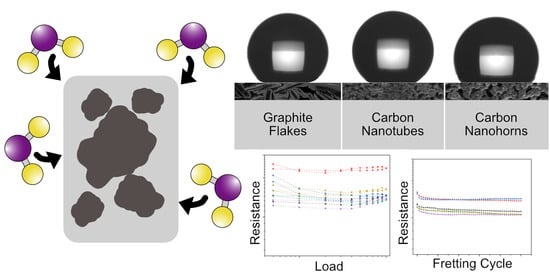
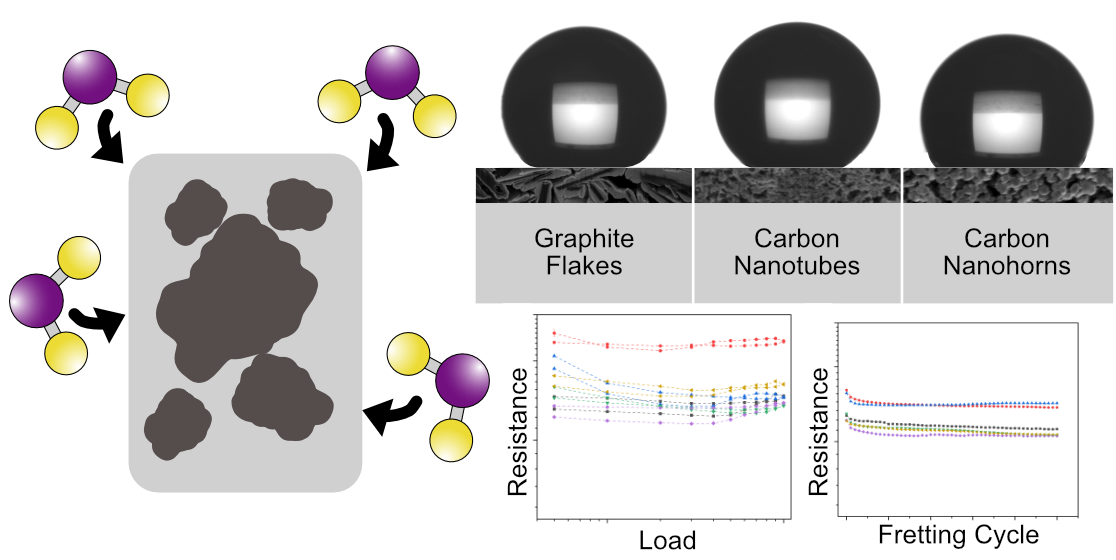
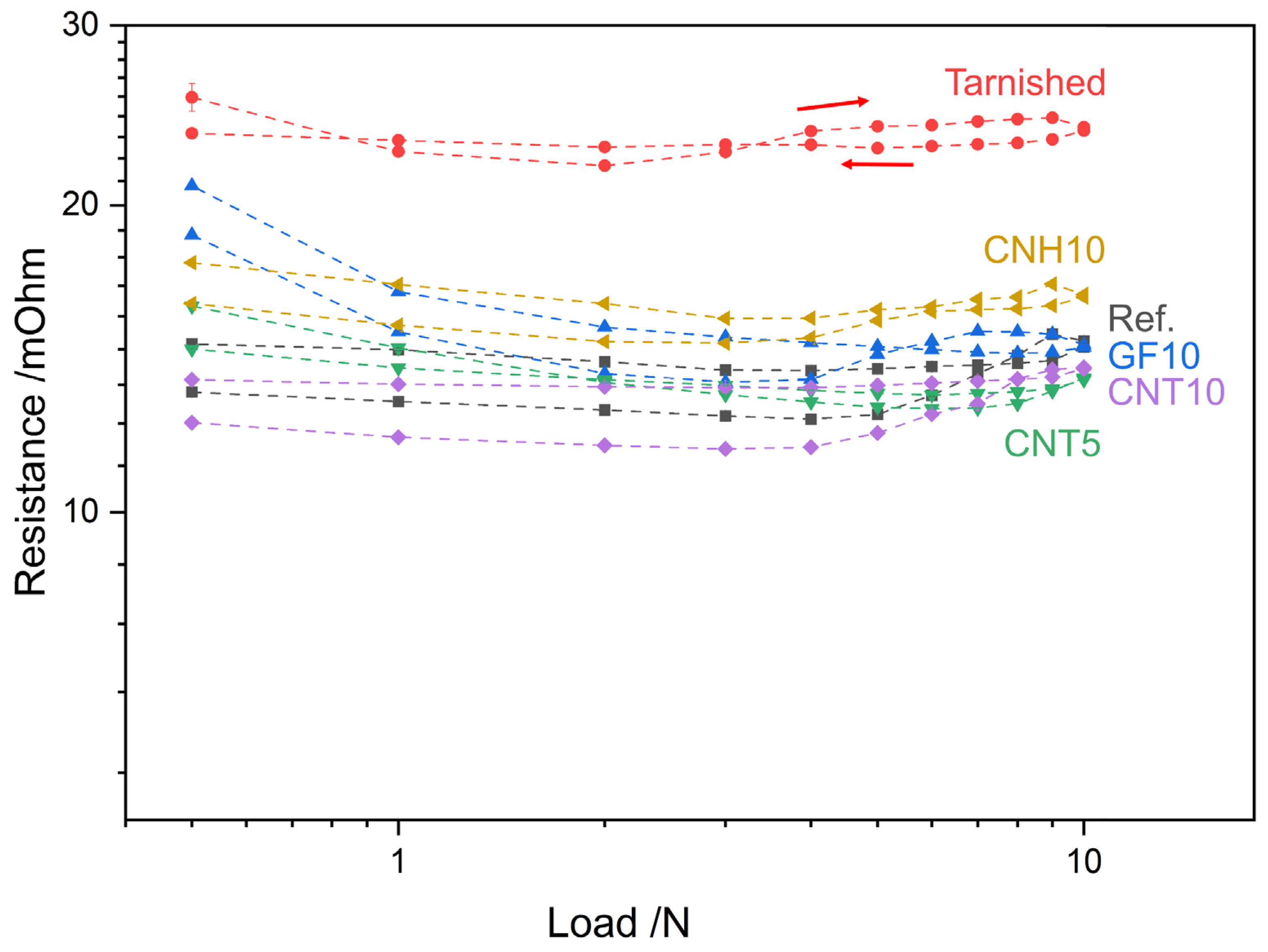
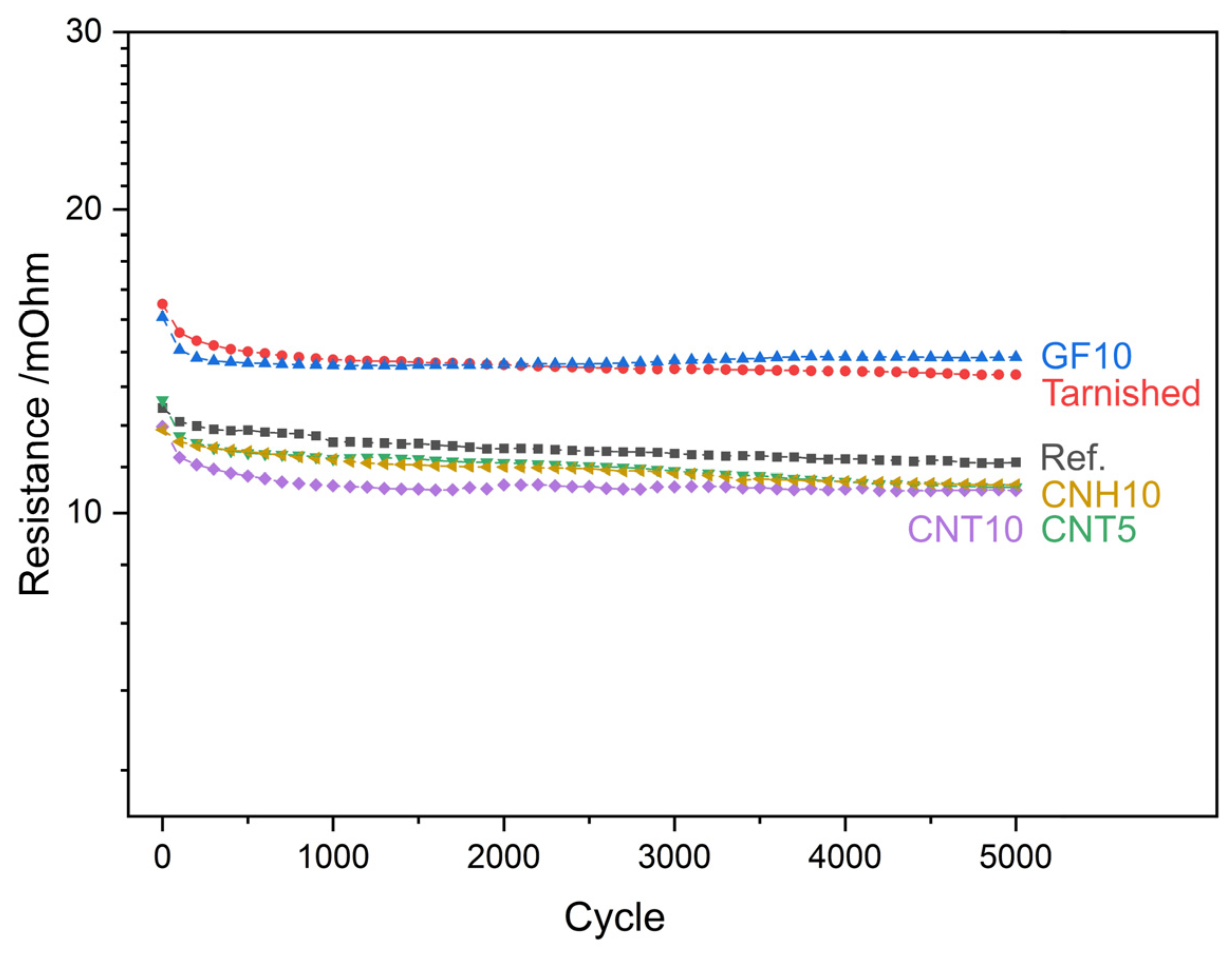
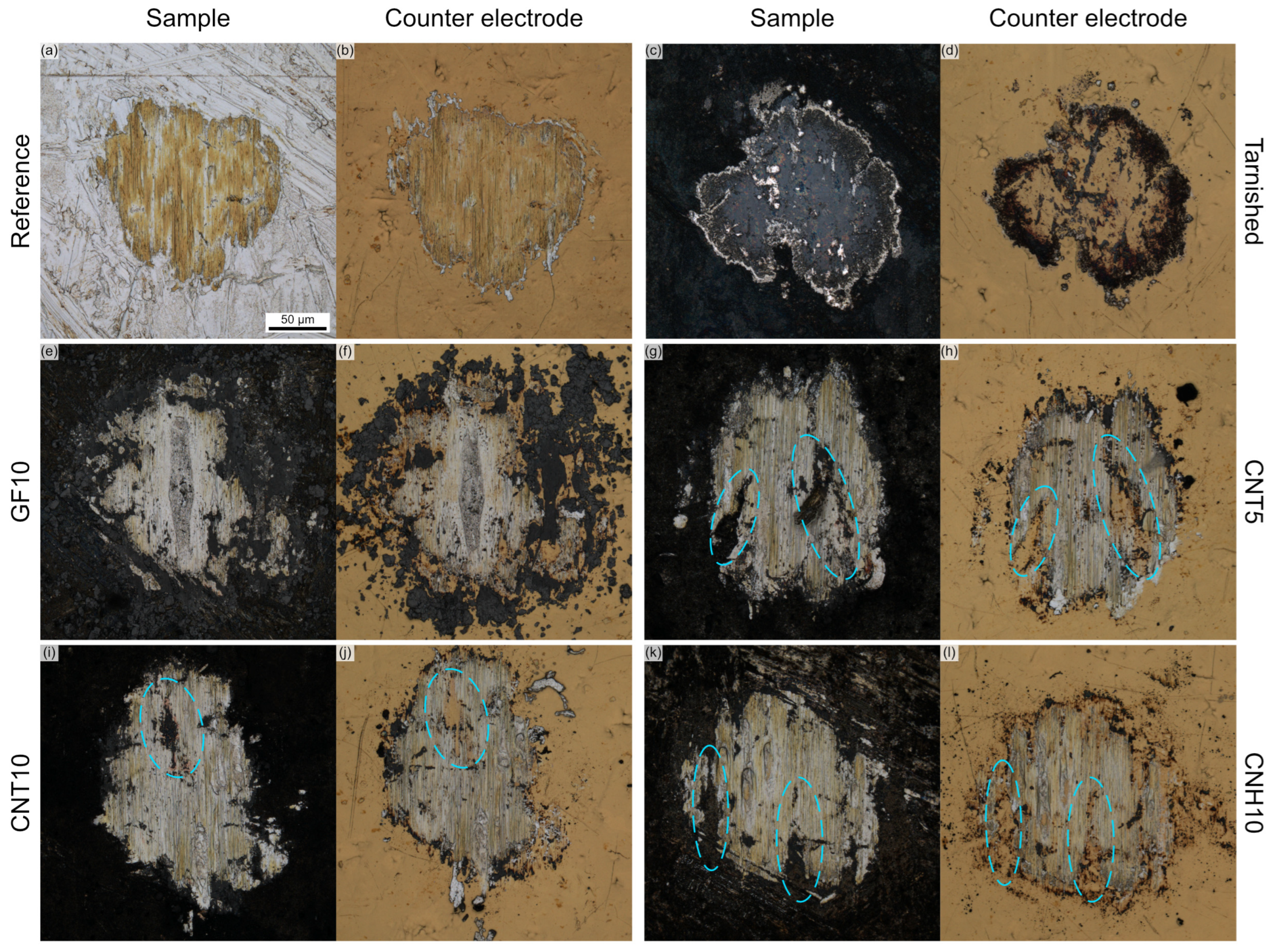
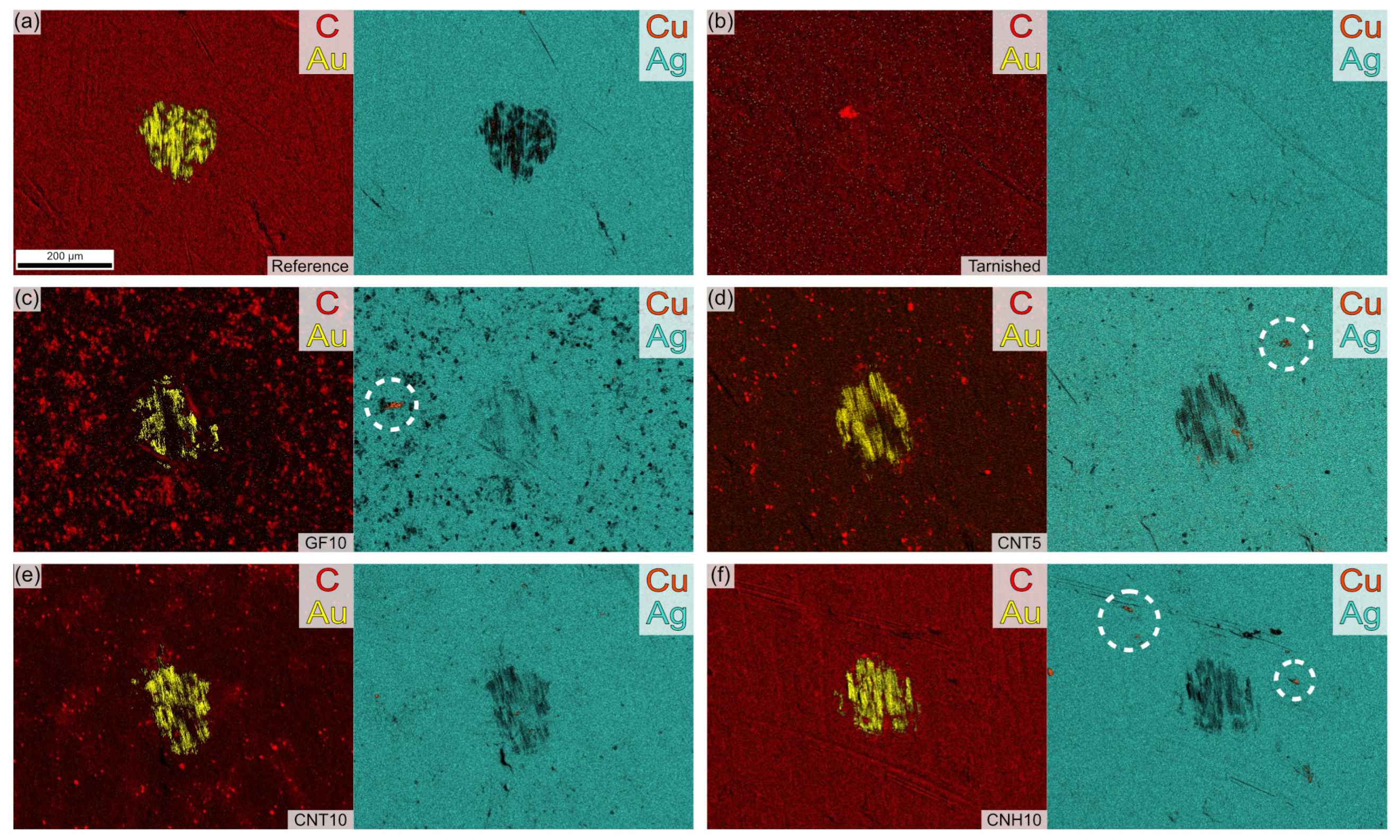
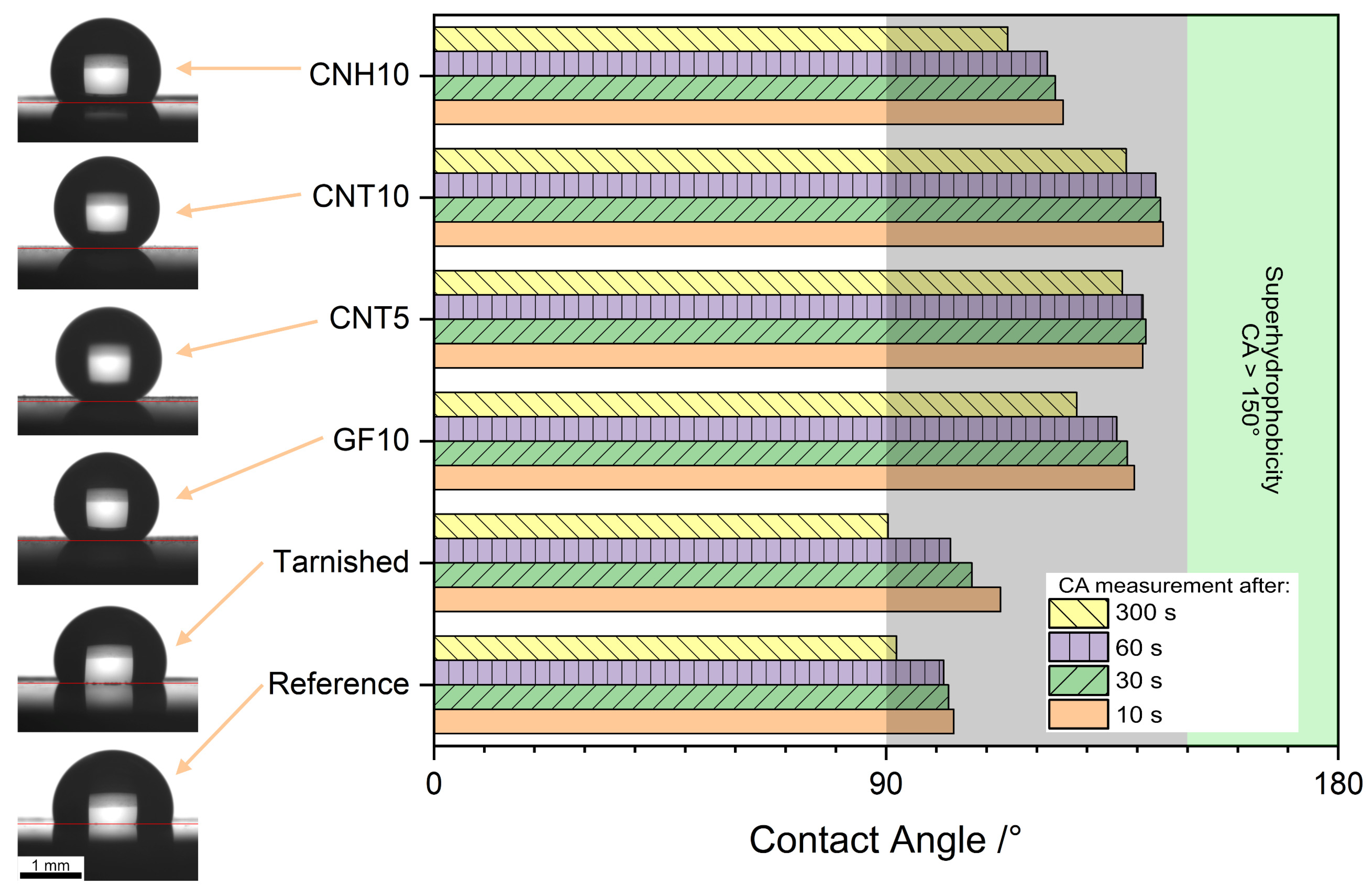
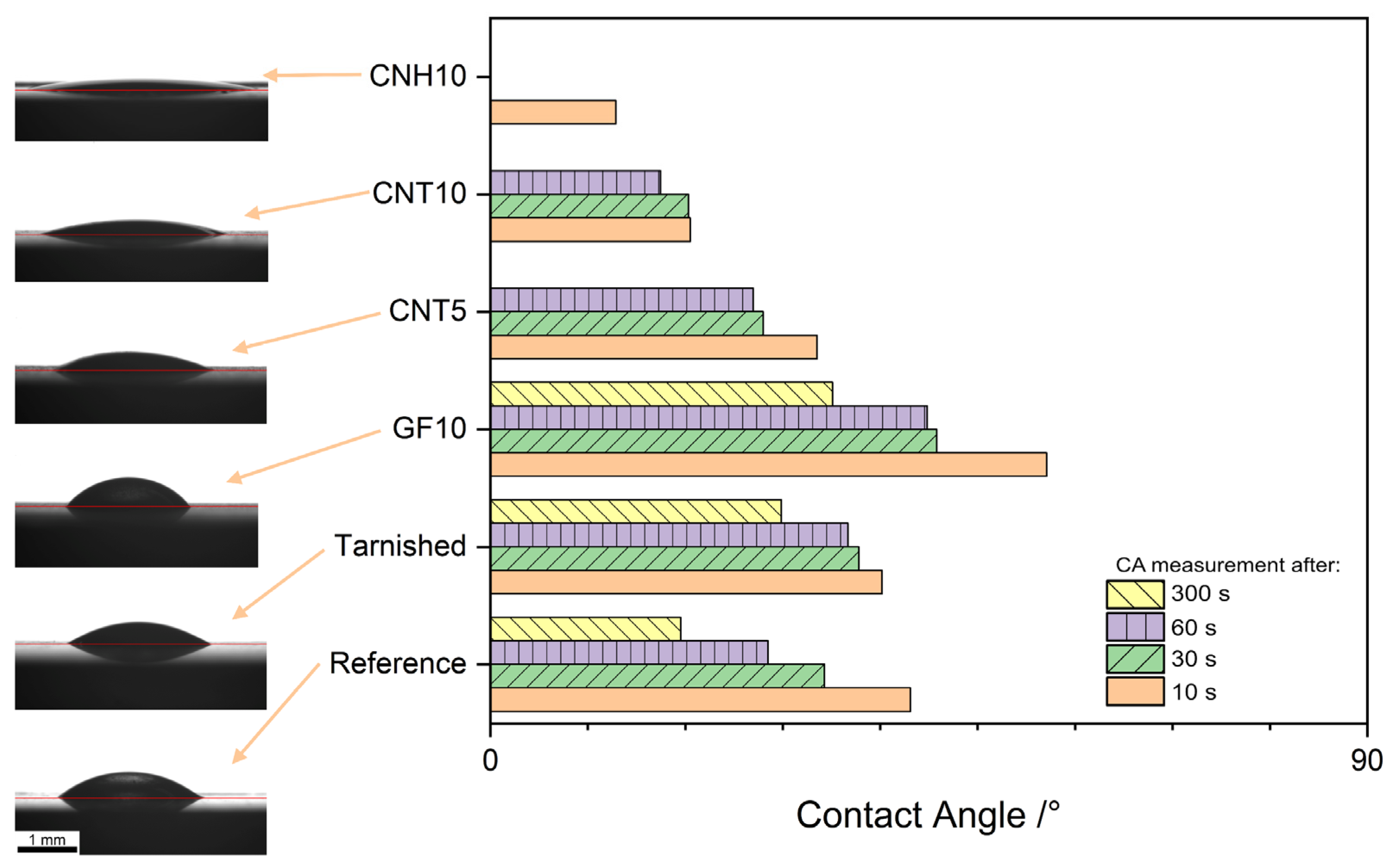
The rise in electrification has considerably increased the demand for high-efficiency and durable electrical contact materials. Carbon nanoparticles (CNP) are a promising coating material due to their intrinsic transport properties (thus minimizing the impact on conductivity), their proven solid lubricity (potentially improving tribological performance), and their hydrophobic wetting behavior (potentially providing atmospheric protection). In this study, carbon nanotube and nanohorn coatings are produced via electrophoretic deposition on silver-plated surfaces, followed by tribo-electrical and wetting characterization. The proposed coatings do not negatively affect the conductivity of the substrate, showing resistance values on par with the uncoated reference. Tribo-electrical characterization revealed that the coatings reduce adhesive wear during fretting tests while maintaining stable and constant electrical contact resistance. Furthermore, CNP-coated surfaces show a hydrophobic wetting behavior toward water, with graphite and carbon nanotube (CNT) coatings approaching super-hydrophobicity. Prolonged exposure to water droplets during sessile drop tests caused a reduction in contact angle (CA) measurement; however, CNT coatings’ CA reduction after five minutes was only approximately 5°. Accordingly, CNP (specifically CNT) coatings show auspicious results for their application as wear and atmospheric protective barriers in electrical contacts.
Keywords: carbon nanotubes; carbon nanohorns; electrical contact resistance; graphite; tarnished silver carbon nanotubes; carbon nanohorns; electrical contact resistance; graphite; tarnished silver
Graphical Abstract