

The Influence of Different ECMO Cannulation Site and Blood Perfusion Conditions on the Aortic Hemodynamics: A Computational Fluid Dynamic Model



Abstract
1. Introduction
2. Materials and Methods
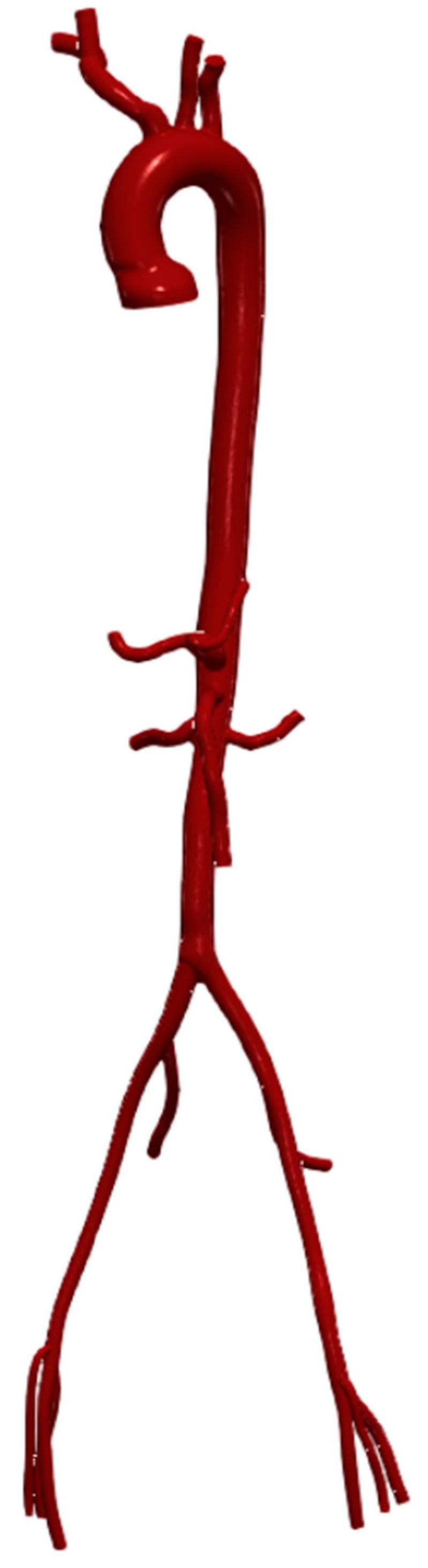
2.1. Anatomical Model
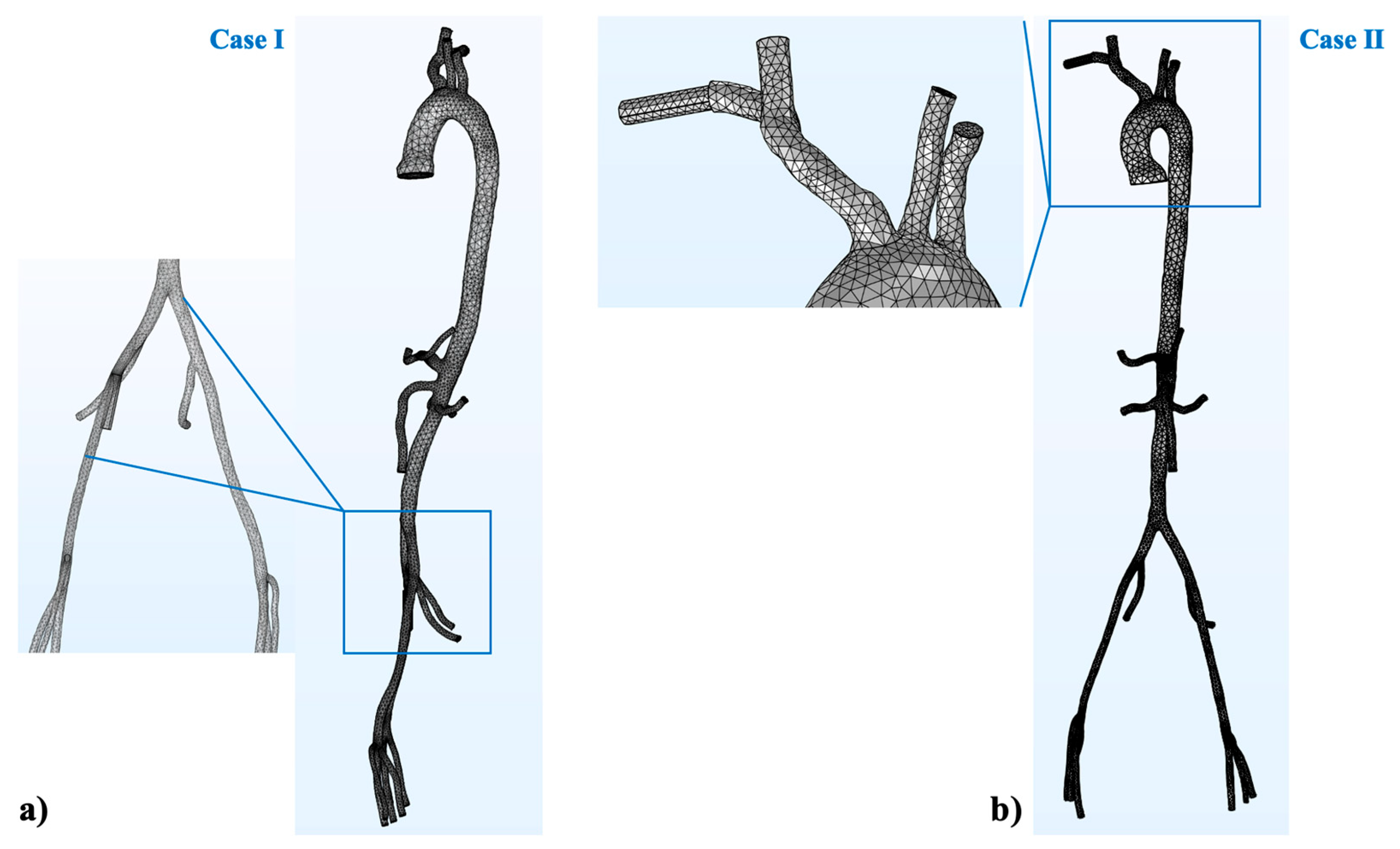
2.2. Mathematical Model, Boundary Conditions, and Simulation Details
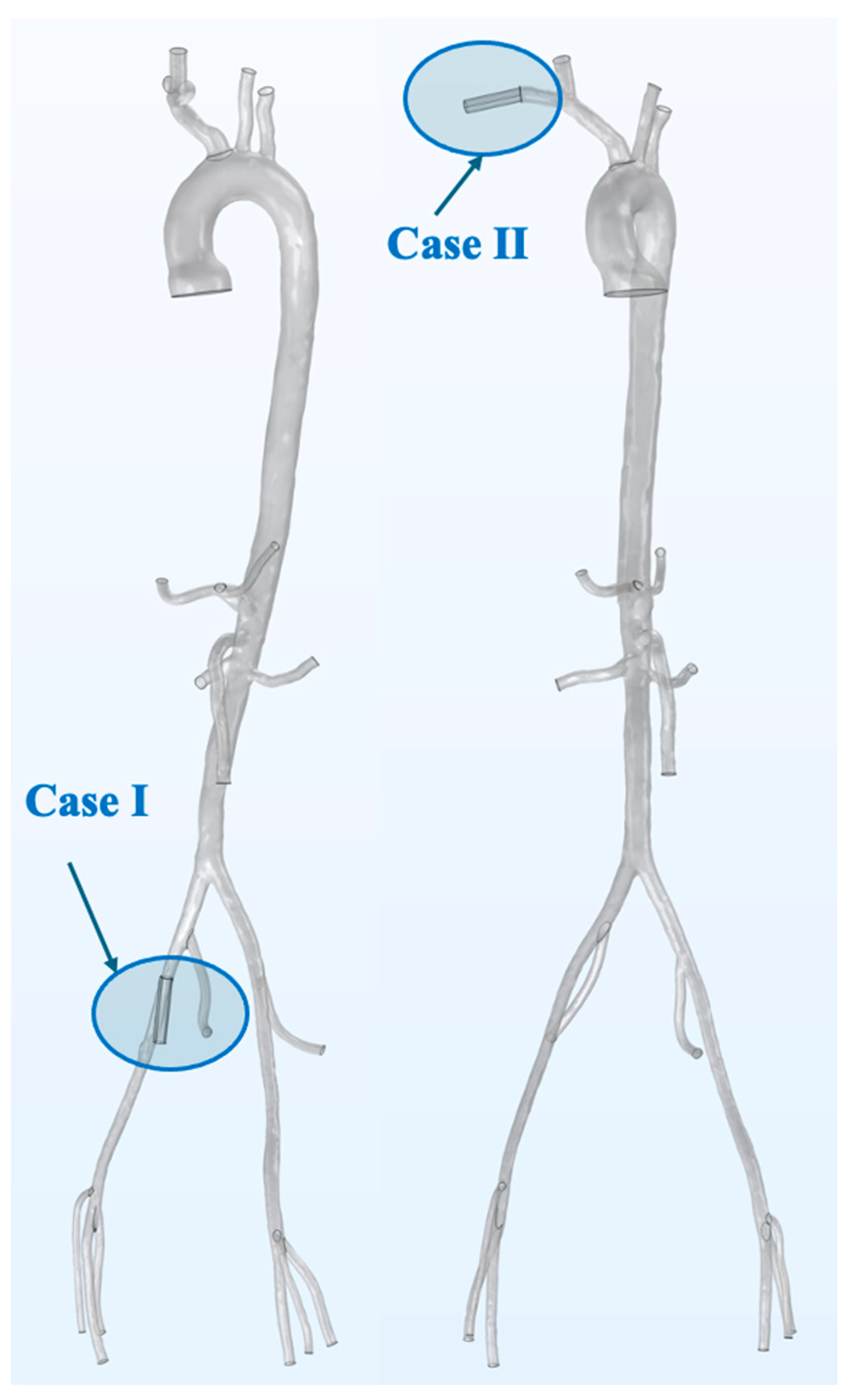
- (a)
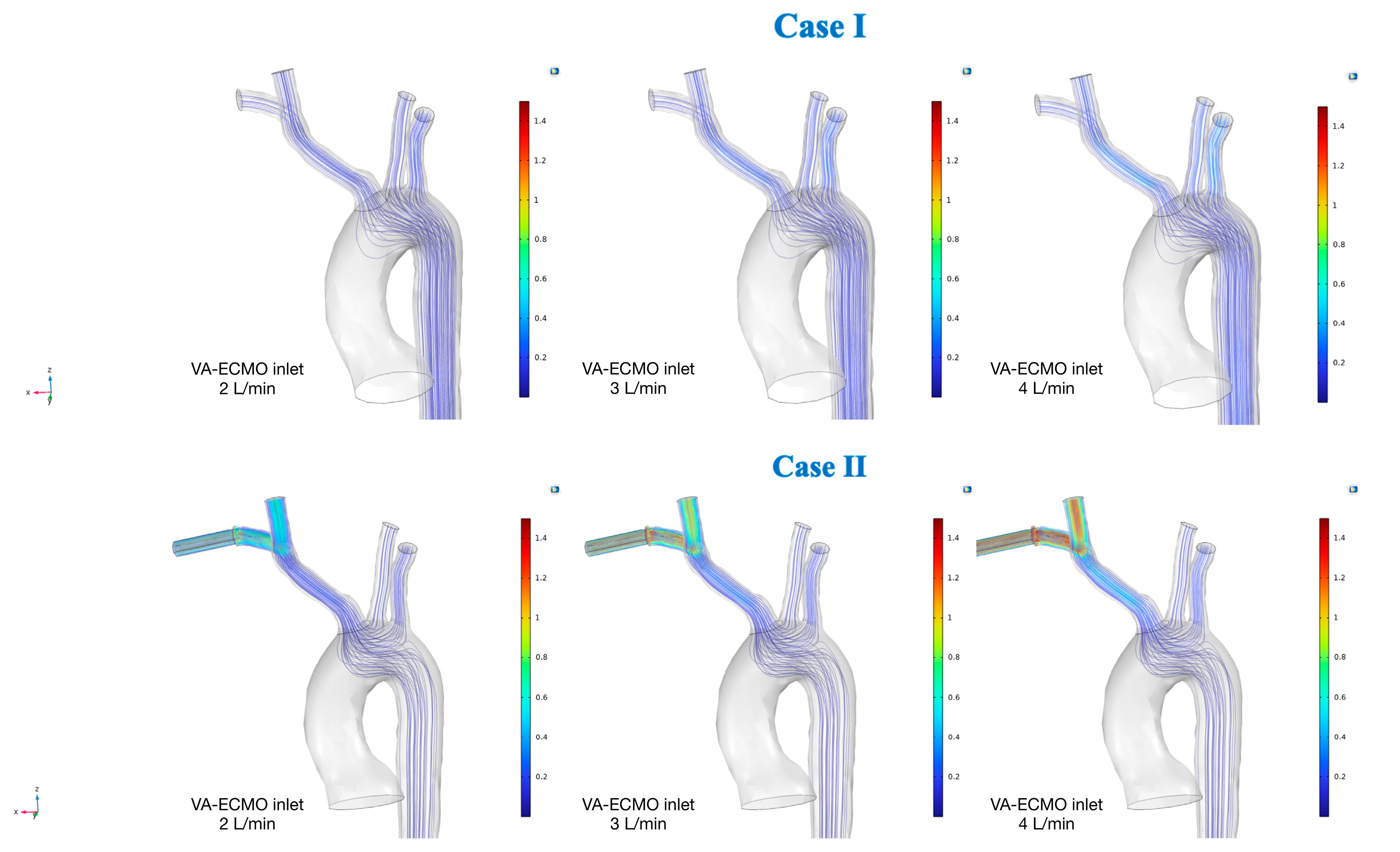
- Case I: Arterial Cannula in femoral site;
- (b)
- Case II: Arterial Cannula in subclavian site.
3. Results
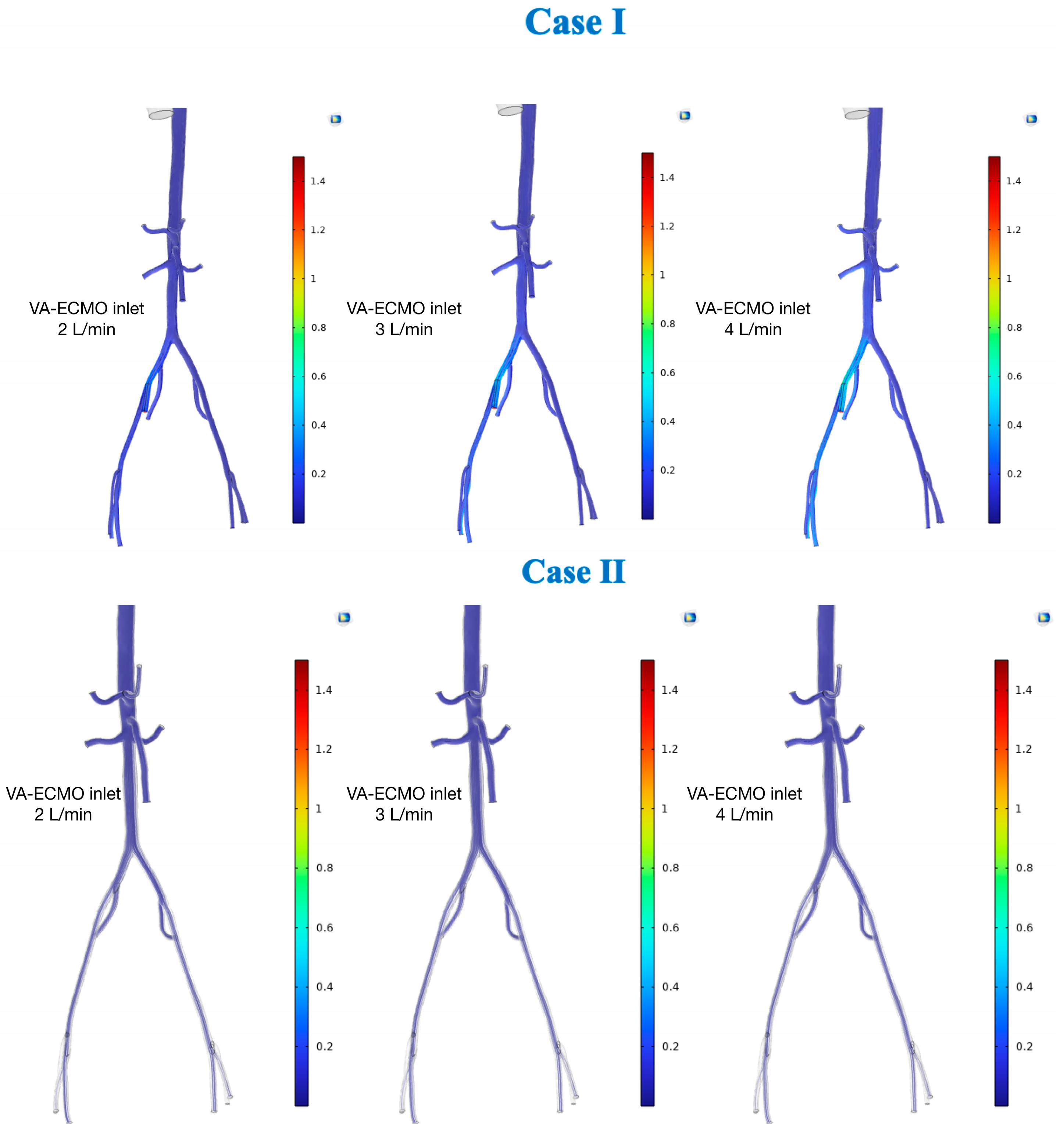
- Flow rate of 3.00 L/min was set as the inlet boundary condition for the VA-ECMO cannula;
- Flow rate of 1.00 L/min (small left ventricular contribution) was set as the inlet boundary condition for the ascending aorta;
- A pressure outlet boundary of 70 mmHg was applied at all the exits.
4. Discussion
5. Conclusions
Author Contributions
Funding
Data Availability Statement
Conflicts of Interest
References
- Rabah, H.; Rabah, A. Extracorporeal membrane oxygenation (ECMO): What we need to know. Cureus 2022, 14, e26735. [Google Scholar] [CrossRef] [Scilit] [PubMed]
- Makdisi, G.; Wang, I.W. Extra Corporeal Membrane Oxygenation (ECMO) review of a lifesaving technology. J. Thorac. Dis. 2015, 7, E166–E176. [Google Scholar] [CrossRef] [Scilit] [PubMed]
- Gehron, J.; Schuster, M.; Rindler, F.; Bongert, M.; Böning, A.; Krombach, G.; Fiebich, M.; Grieshaber, P.; EMPACS (Exploration of the mixing phenomena during interaction of internal and external circulations) study group. Watershed phenomena during extracorporeal life support and their clinical impact: A systematic in vitro investigation. ESC Heart Fail. 2020, 7, 1850–1861. [Google Scholar] [CrossRef] [Scilit] [PubMed]
- Calhoun, A.; Szabo, C.; Convissar, D.; Pisano, D.V.; Ortoleva, J. Beyond Venoarterial and Venovenous Extracorporeal Membrane Oxygenation: Novel Cannulation Strategies. J. Cardiothorac. Vasc. Anesth. 2024, 38, 1830–1835. [Google Scholar] [CrossRef] [Scilit]
- Bongert, M.; Gehron, J.; Geller, M.; Böning, A.; Grieshaber, P. In silico study of the dynamic interaction between extracorporeal circulation and native circulation. Curr. Dir. Biomed. Eng. 2018, 4, 55–58. [Google Scholar] [CrossRef] [Scilit]
- Napp, L.C.; Brehm, M.; Kühn, C.; Schäfer, A.; Bauersachs, J. Heart against veno-arterial ECMO: Competition visualized. Int. J. Cardiol. 2015, 187, 164–165. [Google Scholar] [CrossRef] [Scilit]
- Alwardt, C.M.; Patel, B.M.; Lowell, A.; Dobberpuhl, J.; Riley, J.B.; DeValeria, P.A. Regional perfusion during venoarterial extracorporeal membrane oxygenation: A case report and educational modules on the concept of dual circulations. J. Extra Corpor. Technol. 2013, 45, 187–194. [Google Scholar] [CrossRef] [Scilit]
- Angleitner, P.; Röggla, M.; Laufer, G.; Wiedemann, D. Watershed of veno-arterial extracorporeal life support. Eur. J. Cardio-Thorac. Surg. 2016, 50, 785. [Google Scholar] [CrossRef] [Scilit]
- Avgerinos, D.V.; DeBois, W.; Voevidko, L.; Salemi, A. Regional variation in arterial saturation and oxygen delivery during venoarterial extracorporeal membrane oxygenation. J. Extra Corpor. Technol. 2013, 45, 183–186. [Google Scholar] [CrossRef] [Scilit]
- Broomé, M.; Donker, D.W. Individualized real-time clinical decision support to monitor cardiac loading during venoarterial ECMO. J. Transl. Med. 2016, 14, 4. [Google Scholar] [CrossRef] [Scilit]
- Doshi, D.; Burkhoff, D. Cardiovascular Simulation of Heart Failure Pathophysiology and Therapeutics. J. Card. Fail. 2016, 22, 303–311. [Google Scholar] [CrossRef] [Scilit] [PubMed]
- Morris, P.D.; Narracott, A.; von Tengg-Kobligk, H.; Silva Soto, D.A.; Hsiao, S.; Lungu, A.; Evans, P.; Bressloff, N.W.; Lawford, P.V.; Hose, D.R.; et al. Computational fluid dynamics modelling in cardiovascular medicine. Heart 2016, 102, 18–28. [Google Scholar] [CrossRef] [Scilit] [PubMed]
- Chiastra, C.; Zuin, M.; Rigatelli, G.; D’Ascenzo, F.; De Ferrari, G.M.; Collet, C.; Chatzizisis, Y.S.; Gallo, D.; Morbiducci, U. Computational fluid dynamics as supporting technology for coronary artery disease diagnosis and treatment: An international survey. Front. Cardiovasc. Med. 2023, 10, 1216796. [Google Scholar] [CrossRef] [Scilit] [PubMed]
- Syed, F.; Khan, S.; Toma, M. Modeling Dynamics of the Cardiovascular System Using Fluid-Structure Interaction Methods. Biology 2023, 12, 1026. [Google Scholar] [CrossRef] [Scilit]
- Caruso, M.V.; Gramigna, V.; Serraino, G.F.; Renzulli, A.; Fragomeni, G. Influence of aortic outflow cannula orientation on epiaortic flow pattern during pulsed cardiopulmonary bypass. J. Med. Biol. Eng. 2015, 35, 455–463. [Google Scholar] [CrossRef] [Scilit]
- Gramigna, V.; Palumbo, A.; Rossi, M.; Fragomeni, G. A Computational Fluid Dynamics Study to Compare Two Types of Arterial Cannulae for Cardiopulmonary Bypass. Fluids 2023, 8, 302. [Google Scholar] [CrossRef] [Scilit]
- Caruso, M.V.; Gramigna, V.; Renzulli, A.; Fragomeni, G. Computational analysis of aortic hemodynamics during total and partial extracorporeal membrane oxygenation and intra-aortic balloon pump support. Acta Bioeng. Biomech. 2016, 18, 3–9. [Google Scholar]
- Nezami, F.R.; Khodaee, F.; Edelman, E.R.; Keller, S.P. A Computational Fluid Dynamics Study of the Extracorporeal Membrane Oxygenation-Failing Heart Circulation. ASAIO J. 2021, 67, 276–283. [Google Scholar] [CrossRef] [Scilit]
- Vignali, E.; Gasparotti, E.; Haxhiademi, D.; Celi, S. Fluid dynamic model for extracorporeal membrane oxygenation support and perfusion in cardiogenic shock. Phys. Fluids 2023, 35, 111909. [Google Scholar] [CrossRef] [Scilit]
- He, Y.; Northrup, H.; Le, H.; Cheung, A.K.; Berceli, S.A.; Shiu, Y.T. Medical Image-Based Computational Fluid Dynamics and Fluid-Structure Interaction Analysis in Vascular Diseases. Front. Bioeng. Biotechnol. 2022, 10, 855791. [Google Scholar] [CrossRef] [Scilit]
- Khamooshi, M.; Wickramarachchi, A.; Byrne, T.; Seman, M.; Fletcher, D.F.; Burrell, A.; Gregory, S.D. Blood flow and emboli transport patterns during venoarterial extracorporeal membrane oxygenation: A computational fluid dynamics study. Comput. Biol. Med. 2024, 172, 108263. [Google Scholar] [CrossRef] [Scilit] [PubMed]
- Xi, Y.; Li, Y.; Wang, H.; Sun, A.; Deng, X.; Chen, Z.; Fan, Y. The impact of ECMO lower limb cannulation on the aortic flow features under differential blood perfusion conditions. Med. Nov. Technol. Devices 2022, 16, 100183. [Google Scholar] [CrossRef] [Scilit]
- Gu, K.; Zhang, Y.; Gao, B.; Chang, Y.; Zeng, Y. Hemodynamic Differences Between Central ECMO and Peripheral ECMO: A Primary CFD Study. Med. Sci. Monit. 2016, 22, 717–726. [Google Scholar] [CrossRef] [Scilit] [PubMed]
- Available online: https://www.vascularmodel.com/vmr-pdfs/0028_H_ABAO_H.pdf (accessed on 4 April 2023).
- Comsol. COMSOL-Software for Multiphysics Simulation. Available online: https://www.comsol.com/ (accessed on 4 April 2023).
- Formaggia, L.; Perktold, K.; Quarteroni, A. Cardiovascular Mathematics: Modeling and Simulation of the Circulatory System; Springer: Milan, Italy, 2009; Volume 1. [Google Scholar]
- Moon, J.H.; Kim, D.Y.; Lee, S.H. Spreading and receding characteristics of a non-Newtonian droplet impinging on a heated surface. Exp. Therm. Fluid Sci. 2014, 57, 94–101. [Google Scholar] [CrossRef] [Scilit]
- Johnston, B.M.; Johnston, P.R.; Corney, S.; Kilpatrick, D. Non-Newtonian blood flow in human right coronary arteries: Transient simulations. J. Biomech. 2006, 39, 1116–1128. [Google Scholar] [CrossRef] [Scilit]
- Hippelheuser, J.E.; Lauric, A.; Cohen, A.D.; Malek, A.M. Realistic non-Newtonian viscosity modelling highlights hemodynamic differences between intracranial aneurysms with and without surface blebs. J. Biomech. 2014, 47, 3695–3703. [Google Scholar] [CrossRef] [Scilit]
- Husain, I.; Labropulu, F.; Langdon, C.; Schwark, J. A comparison of Newtonian and non-Newtonian models for pulsatile blood flow simulations. J. Mech. Behav. Mater. 2013, 21, 147–153. [Google Scholar] [CrossRef] [Scilit]
- Rabby, M.G.; Shupti, S.P.; Molla, M.M. Pulsatile Non-Newtonian Laminar Blood Flows through Arterial Double Stenoses. J. Fluids 2014, 2014, 757902. [Google Scholar] [CrossRef] [Scilit]
- Cutnell, J.D.; Johnson, K.W. Physics; Wiley: Hoboken, NJ, USA, 1998. [Google Scholar]
- Yilmaz, F.; Gundogdu, M.Y. A critical review on blood flow in large arteries; relevance to blood rheology, viscosity models, and physiologic conditions. Korea-Aust. Rheol. J. 2008, 20, 197–211. [Google Scholar]


Vessel | Case I (Femoral Site) | Case II (Subclavian Site) | ||||
|---|---|---|---|---|---|---|
(2.00 L/min) | Cannula Inlet (3.00 L/min) | (4.00 L/min) | (2.00 L/min) | Cannula Inlet (3.00 L/min) | (4.00 L/min) | |
| Mean Flow (L/min) | Mean Flow (L/min) | Mean Flow (L/min) | Mean Flow (L/min) | Mean Flow (L/min) | Mean Flow (L/min) | |
| Superior Trunk | 0.7019 | 1.0530 | 1.4041 | 1.2332 | 1.8507 | 2.4688 |
| Inferior Trunk | 1.3165 | 1.9746 | 2.6326 | 0.1546 | 0.2321 | 0.3099 |
Vessel | Case I (Femoral Site) | Case II (Subclavian Site) | ||
|---|---|---|---|---|
| Cannula Inlet (3.00 L/min) | Asc. Aorta Inlet (1.00 L/min) | Cannula Inlet (3.00 L/min) | Asc. Aorta Inlet (1.00 L/min) | |
| Mean Flow (L/min) | Mean Flow (L/min) | |||
| Superior Trunk | 1.7807 | 2.5227 | ||
| Inferior Trunk | 2.2561 | 0.5228 | ||
Disclaimer/Publisher’s Note: The statements, opinions and data contained in all publications are solely those of the individual author(s) and contributor(s) and not of MDPI and/or the editor(s). MDPI and/or the editor(s) disclaim responsibility for any injury to people or property resulting from any ideas, methods, instructions or products referred to in the content. |
© 2024 by the authors. Licensee MDPI, Basel, Switzerland. This article is an open access article distributed under the terms and conditions of the Creative Commons Attribution (CC BY) license (https://creativecommons.org/licenses/by/4.0/).
Share and Cite
Gramigna, V.; Palumbo, A.; Fragomeni, G. The Influence of Different ECMO Cannulation Site and Blood Perfusion Conditions on the Aortic Hemodynamics: A Computational Fluid Dynamic Model. Fluids 2024, 9, 269. https://doi.org/10.3390/fluids9110269
Gramigna V, Palumbo A, Fragomeni G. The Influence of Different ECMO Cannulation Site and Blood Perfusion Conditions on the Aortic Hemodynamics: A Computational Fluid Dynamic Model. Fluids. 2024; 9(11):269. https://doi.org/10.3390/fluids9110269
Chicago/Turabian StyleGramigna, Vera, Arrigo Palumbo, and Gionata Fragomeni. 2024. "The Influence of Different ECMO Cannulation Site and Blood Perfusion Conditions on the Aortic Hemodynamics: A Computational Fluid Dynamic Model" Fluids 9, no. 11: 269. https://doi.org/10.3390/fluids9110269
APA StyleGramigna, V., Palumbo, A., & Fragomeni, G. (2024). The Influence of Different ECMO Cannulation Site and Blood Perfusion Conditions on the Aortic Hemodynamics: A Computational Fluid Dynamic Model. Fluids, 9(11), 269. https://doi.org/10.3390/fluids9110269