1. Introduction
Amid growing global concerns over energy security, environmental degradation, and climate change, the pursuit of green and sustainable energy sources has intensified worldwide [
1]. Wind energy, characterized by its vast abundance and renewable nature, stands out as a key contributor [
2,
3]. Its utilization offers significant environmental benefits by displacing fossil fuel consumption and reducing greenhouse gas emissions. Consequently, wind power has emerged as one of the fastest-growing renewable energy sectors. According to data from the Global Wind Energy Council, the annual global installed wind energy capacity increases by 100 GW, and is projected to be 180 GW per year after 2025 [
4].
Wind turbines, as the primary means of harnessing this resource, directly determine the overall energy conversion rate based on their efficiency [
5]. Offshore wind energy, in particular, presents advantages including higher energy density, longer operational periods, and greater suitability for large-scale projects, making the development of large offshore turbines a current research focus [
6].
Well-designed blades with superior aerodynamic performance are essential for maximizing the energy capture efficiency of wind turbines. Zhang et al. [
7] showed that incorporating leading-edge protuberances (LEPs) on turbine blades improved the lift-to-drag ratio (CL/CD) by 2–11% in the post-stall regime. Moon et al. [
8] reported that attaching a pair of vortex generators (VGs) to the blades increased torque by 2.80% at a rated wind speed of 10 m/s.
Airfoils, as the basic structural elements of wind turbine blades, have drawn increasing scholarly attention. The focus of these investigations is to elucidate the airfoil flow mechanisms, thereby enabling further enhancements in blade energy capture efficiency [
9]. Significant work has been dedicated to understanding airfoil vortex shedding dynamics [
10,
11,
12] and developing biomimetic strategies [
13,
14,
15]. Su et al. designed a composite bionic airfoil inspired by bird wing airfoils, and discovered that prior to stall, its aerodynamic performance exhibited a 119.7% improvement over that of the original airfoil [
16]. Xu et al. found that the leading-edge tubercle wing exhibits a higher coefficient of lift (CL) than the baseline wing under steady-state conditions, though tubercle variants incur increased drag penalties [
17]. These studies revealed that modifying local surface structures has proven effective in enhancing aerodynamic performance [
18,
19].
Among these, riblets—a drag-reduction technology inspired by the microscopic grooves on shark skin—have garnered considerable interest for wind turbines. Early investigations of riblets on these un-smooth surfaces on flat plates evaluated how their cross-sectional shapes or dimensions affect the plates’ drag, near-wall flow fields, and boundary-layer velocity profiles. Experimental studies reported maximum drag reduction rates of approximately 7% for trapezoidal, 6% for rectangular [
20], and 5.6% for V-shaped grooves [
21] under their respective Reynolds numbers.
Among the various cross-sectional shapes, V-shaped grooves are particularly well suited for both mechanistic analysis and practical applications, owing to their well-defined geometric parameters and ease of manufacturing. In their classic investigation of riblet–turbulence interactions, García-Mayoral et al. [
22] demonstrated that drag reduction performance is closely associated with the cross-sectional area of the riblets. The V-shaped geometry offers a simple, effective model for validating this theoretical insight. By using direct numerical simulation, Choi et al. [
23] analyzed turbulent coherent structures near a smooth surface and a wall covered with the V-riblet. It was observed that the riblets considerably weaken the magnitude of the Reynolds shear stress. Similar conclusions were drawn by El-Samni et al. [
24], and further studies noted that the V-riblets could increase the spanwise spacing of low-speed streaks by 15–30% [
25].
Furthermore, researchers started using riblets in more complex flows, such as airfoils, to improve their aerodynamic performance. Wu et al. [
26] achieved a 9.65% drag reduction for NACA0012 by employing V-riblets, while the drag was reduced by 16% [
27] under respective flow conditions. A comparative experimental study on a wind turbine blade section further confirmed an 8% drag reduction for the V-riblet-equipped profile [
28].
However, the operating conditions of wind turbines are highly variable, influenced by multiple factors such as wind speed and turbulence. Evaluating the drag reduction effect of shark skin solely under design conditions is therefore insufficient. For instance, in large offshore turbines, the turbulent motion within offshore wind farms, coupled with the intricate interactions between airflow and ocean waves, results in strong temporal and spatial randomness and unsteadiness in the airflow direction across time and space [
29]. These complex, highly turbulent flows induced by sea winds often force blades to operate at high angles of attack (AOA) [
30]. In addition, offshore turbines are arranged in an array layout, resulting in additional shear flow, turbulence structures [
31], and a significant deviation in airfoil velocity direction from the theoretical value.
It is well established that for typical airfoil sections, the critical stall angle is approximately 15°, beyond which extensive flow separation occurs, leading to a sharp decline in lift and a dramatic rise in drag [
32]. Consequently, the AOA range of 15° to 25° is particularly significant, as it spans the transition from stall inception to deep stall conditions—a regime highly relevant to the off-design and extreme operating conditions of wind turbines [
33]. Indeed, parametric studies on wind turbine performance frequently investigate this specific angle of attack (AOA) range to capture the development of flow separation [
34].
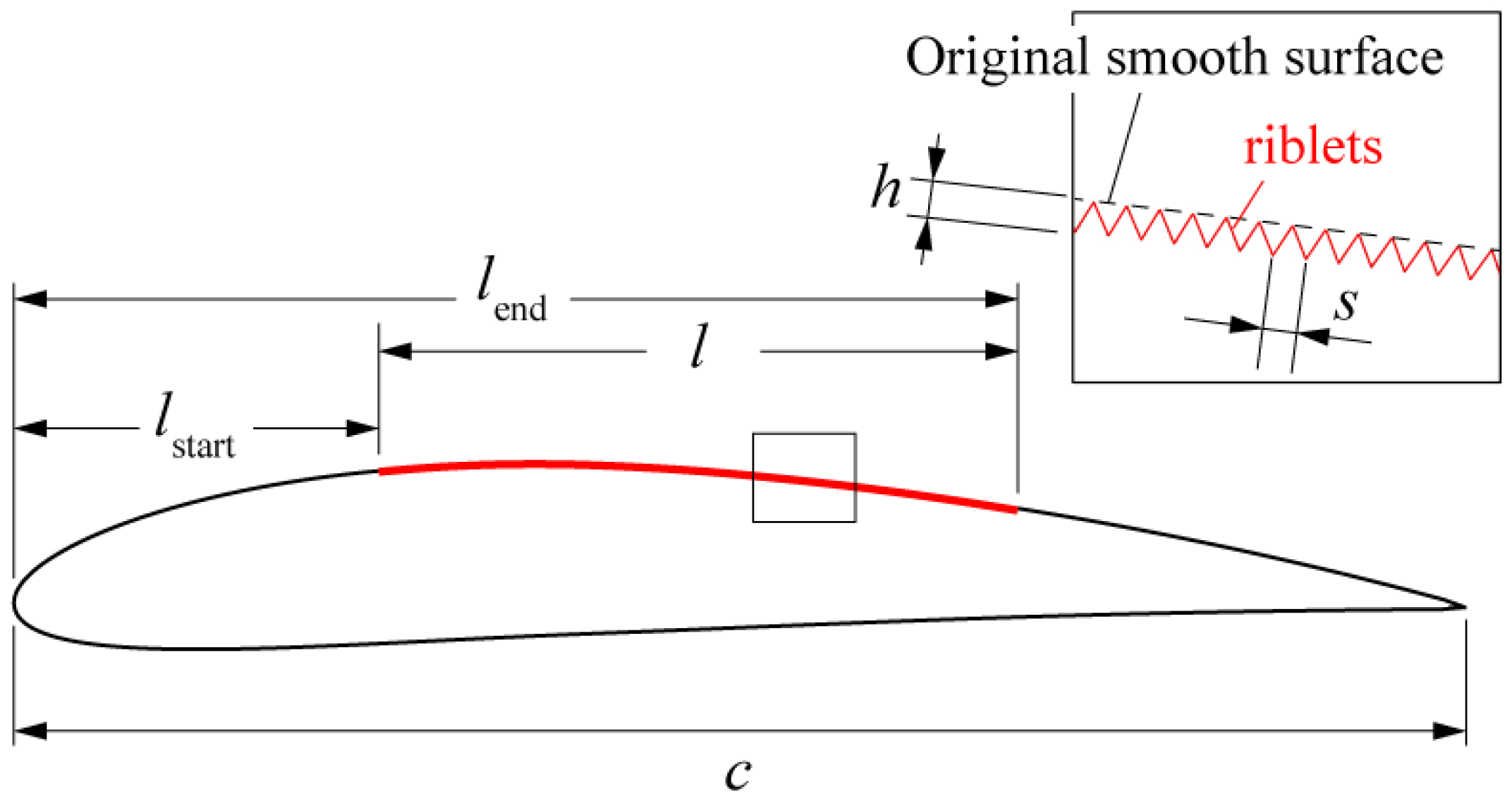
In recent years, we have conducted a series of studies on the application of riblets aligned perpendicular to the flow direction on the suction surface (SS) of airfoils. The drag reduction performance of riblets has been confirmed within the AOA range of 0° to 12°, and the underlying mechanism is attributed to the formation of inter-groove vortices that rotate in the same direction as the main flow, effectively acting as “rolling bearings” that reduce the velocity gradient near the wall compared to a smooth surface [
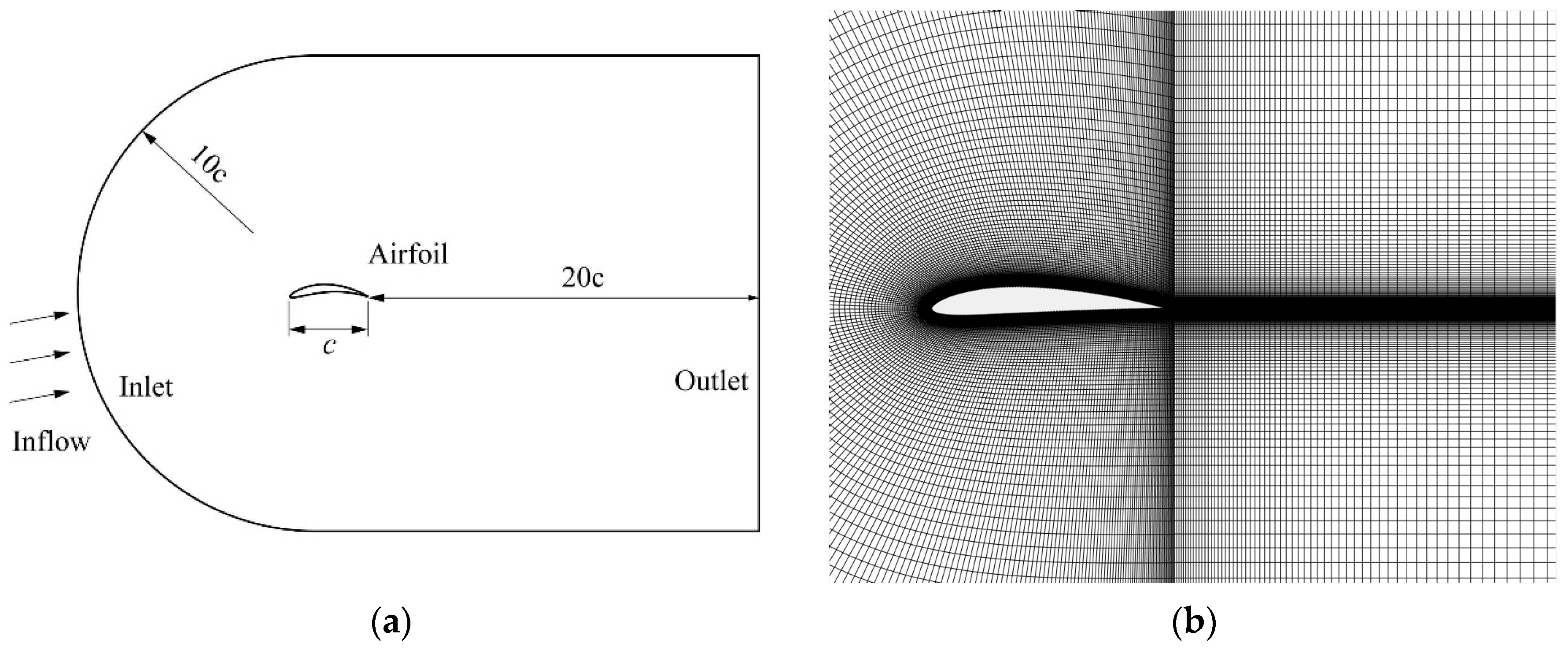
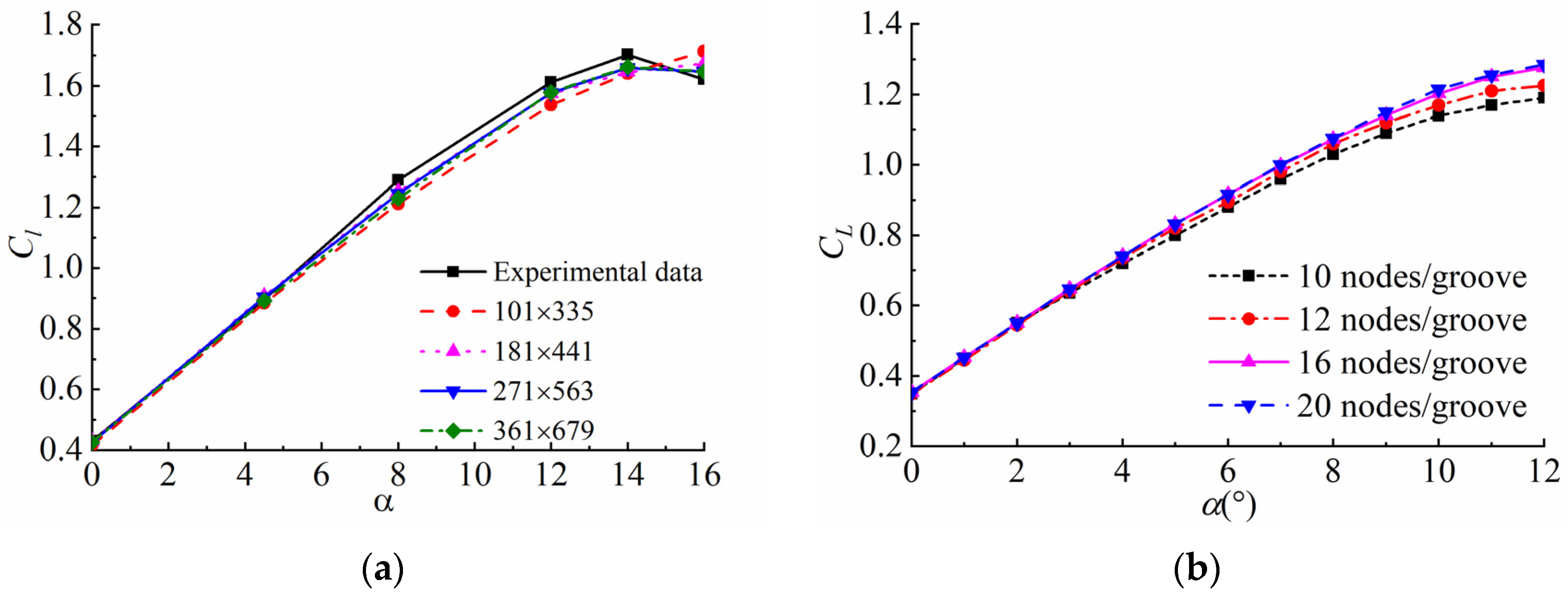
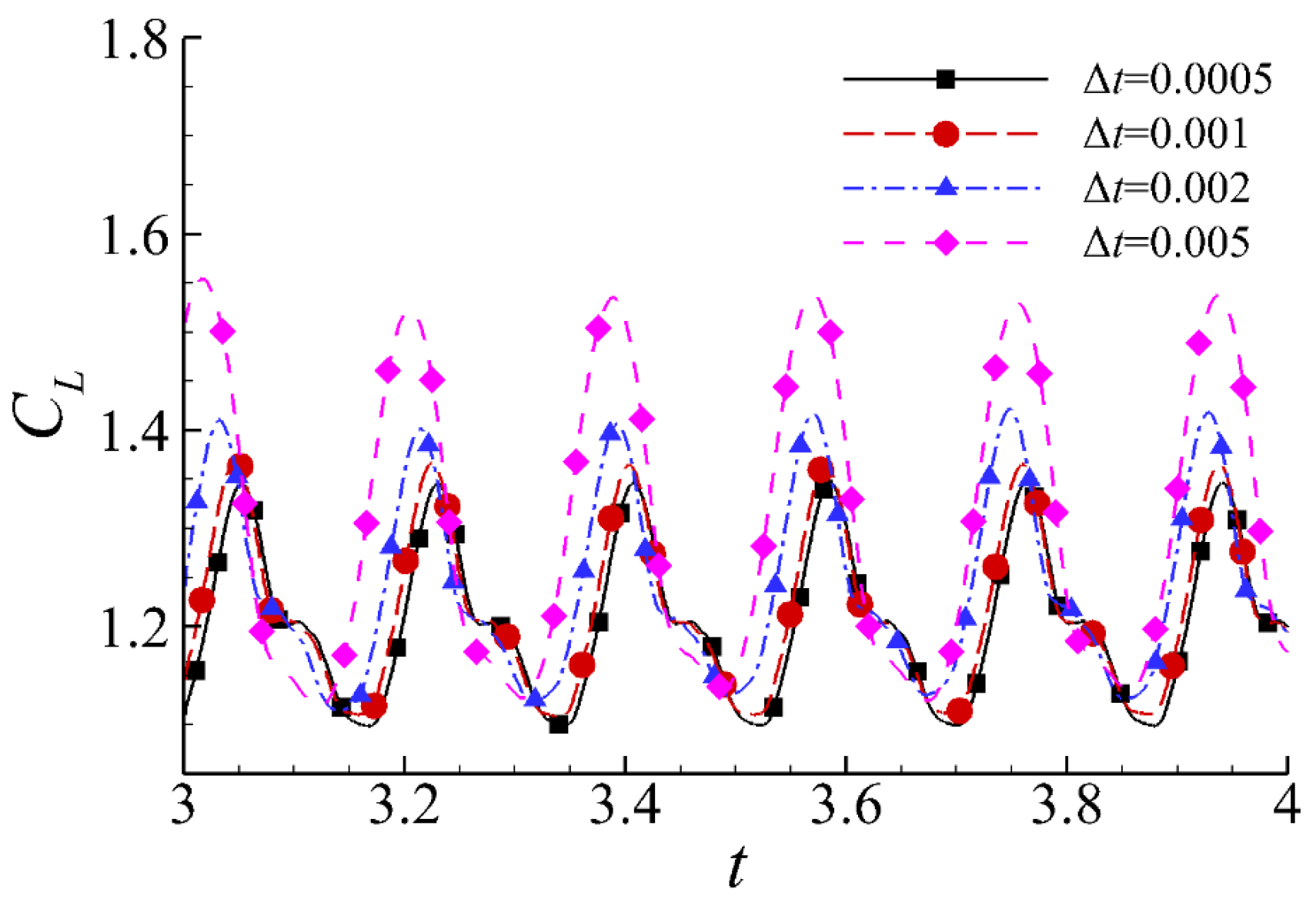
35]. However, we have observed that the influence of riblets on airfoil flow varies with the angle of attack, and their behavior under high AOA conditions is particularly worthy of further investigation. Currently, limited research has examined airfoil performance under high AOAs with riblets. Even less is understood about how riblets influence flow separation that has already occurred on the airfoil under these extreme conditions. To address these research gaps, this study investigated how the riblets influence airfoil aerodynamics and flow mechanisms at high AOAs. In this study, a vertical flow-direction riblet model is applied to the SS of a NACA4412 airfoil. The unsteady numerical simulations of both the original and modified airfoils were conducted using ANSYS Fluent (version 18.0). The effect of riblets on trailing-edge vortex shedding patterns and near-wall turbulence characteristics under varying AOAs was discussed.
3. Results and Discussion
3.1. Vortex Shedding Law of the NACA4412 Airfoil
At the 1 × 10
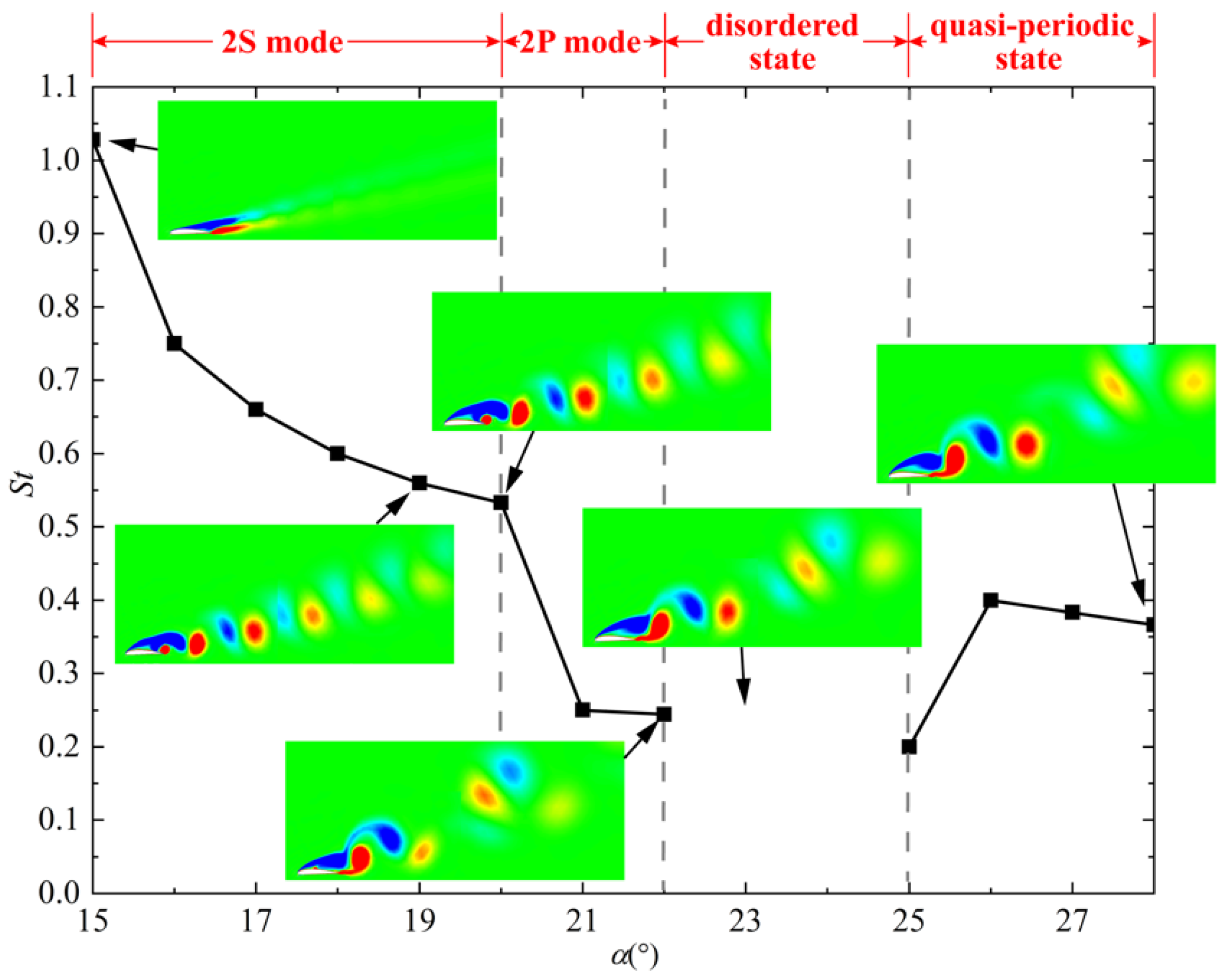
5 Reynolds number, the unsteady flow of the NACA4412 airfoil was numerically simulated under different AOAs. The airfoil’s Strouhal number (St) distribution and the vorticity magnitude contours were obtained, as shown in
Figure 5.
At a 15° AOA, the separation vortex and counterclockwise vortex are still attached to the airfoil surface. Only two tiny vortices with opposite rotation directions shed from the TE, resulting in a fast trailing vortex shedding frequency, and the St value is about 1.02. As the AOA reaches 20°, the Strouhal number for the primary frequency is 0.5332, and the harmonic frequency, whose amplitude is 1/2 that of the primary frequency, appears, suggesting that the trailing vortex shedding is intensifying. The large-scale separation vortex on the SS is continuously squeezed by the counterclockwise vortex, which in turn generates a clockwise vortex. Therefore, the 2S vortexes with opposing rotation direction are formed in each cycle by the separated clockwise vortex and the shed counterclockwise vortex [
40]. The vortex pair intensified compared to the 15° AOA.
As the AOA increases, a Hopf bifurcation can be observed in the airfoil wake. The Strouhal number decreases with an increasing AOA and abruptly halves at a 21° AOA, indicating that period-doubling is taking place.
When the AOA increases to 22°, the appearance of the sub-harmonic, whose frequency is half the fundamental frequency (f = 2.445), indicates that period-doubling is taking place. Meanwhile, the airfoil trailing vortex structure converts into the 2P mode, and the intensities of the two pairs of vortices differ greatly, as shown in the vorticity magnitude contour. The airfoil flow becomes disordered at an AOA of 23°. The airfoil has no typical Strouhal number, indicating that the trailing vortex shedding is disordered and lacks a fixed frequency. The flow field presents three pairs of trailing vortices, but their shedding law cannot be estimated. Subsequently, the periodic flow is restarted at a 25° AOA. Two pairs of counter-rotating vortexes with significantly different intensities and sizes in the vorticity magnitude contours were observed, indicating that the trailing vortex shedding is also in the 2P mode and the flow is quasi-periodic. Consequently, as the AOA increases, the trailing vortex shedding exhibits the development law of 2S mode—2P mode—disordered state—quasi-periodic flow as the airfoil turns into the unstable flow regime.
3.2. Influence of Riblet Length on the Airfoil Trailing Vortex Shedding Law
Unsteady simulations were performed for four riblet schemes at 15°~25° AOAs to explore the effect of riblet length on the airfoil trailing vortex shedding law.
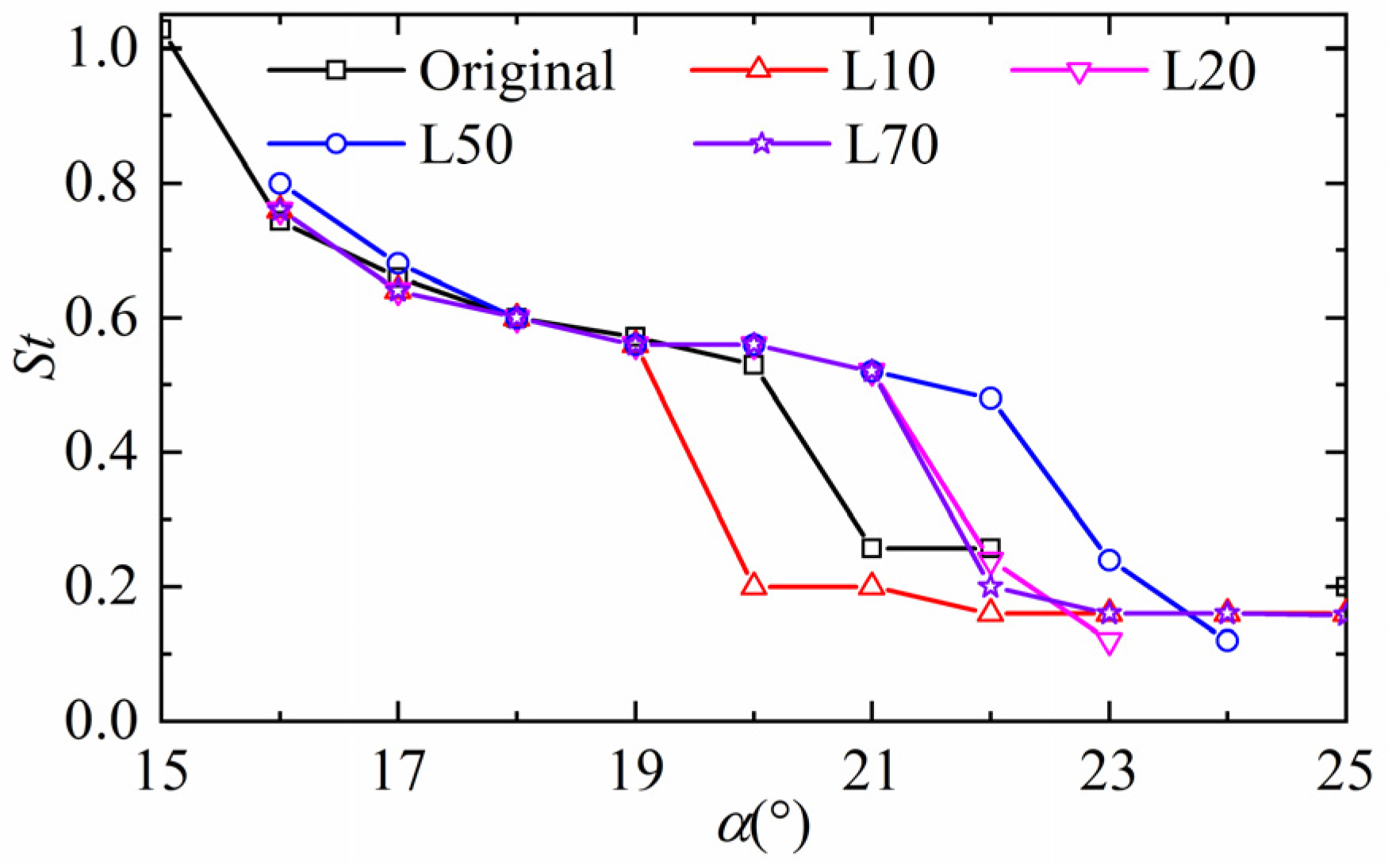
Figure 6 shows the Strouhal numbers for the riblet schemes at different AOAs. As the AOA increases, the trailing vortex shedding modes of the four schemes also follow the 2S mode—2P mode—disordered state—quasi-periodic flow. However, the AOA of each scheme differs when the mode converts.
At a 15° AOA, the four riblets are still in steady flow while the original flow is periodic, hence their Strouhal numbers are null, indicating that the airfoil steady flow condition is improved by riblets. Though the original and four riblet airfoils are all in 2S mode, the trailing vortex shedding frequency of each riblet scheme is reduced due to their lower Strouhal number at 16°~19° AOAs. When the AOA reaches 20°, the L10 scheme turns to the 2P mode earlier than the others, demonstrating that the secondary vortex arises in the flow field.
With the AOA ranging from 21° to 24°, considerable differences took place in the trailing vortex shedding of each riblet airfoil at each AOA. The other riblet schemes, except L10, suppress the division of the trailing vortex and enhance stability in the 2S mode at a 21° AOA. This explains why the trailing vortex shedding modes of the three schemes remain 2S, while the original changes into 2P. It can be seen that only the L50 scheme remains in the 2S mode at a 22° AOA, demonstrating that it provides the best stability improvement. When the AOA is 23°, the original flow is disordered, and each riblet scheme is in 2P mode. All four riblet schemes control the secondary vortex well at this AOA. As mentioned above, riblets with various lengths influence trailing vortex shedding differently at specific AOAs. The period-doubling mode appears earlier in the L10 scheme than in the original, while the remaining three riblet schemes postpone this phenomenon. Moreover, all four schemes delay the AOA of the disordered flow and restrict the secondary vortex development.
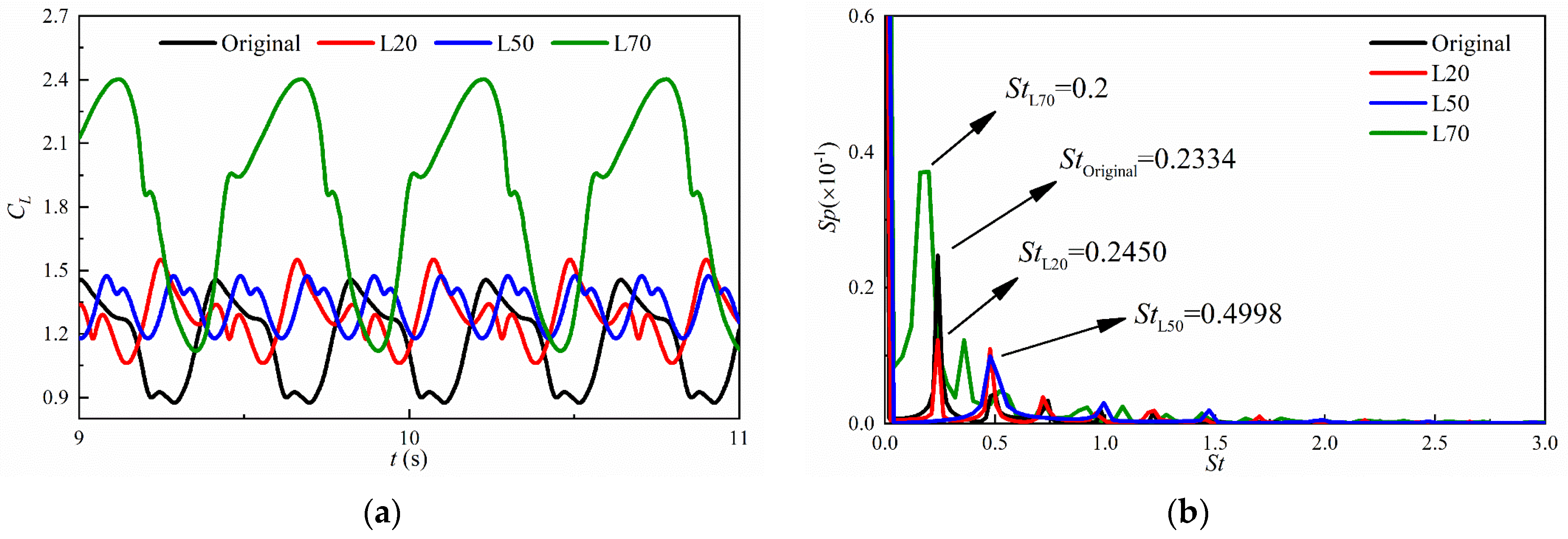
Figure 7 compares the spectrum and transient values of the CL values for the selected schemes at a 22° AOA. It is obvious that the variation in the force coefficients of riblet schemes differs from the original. Compared with the baseline, the L20 configuration exhibits a slight increase in both the maximum and minimum CL values, accompanied by a marginal reduction in the amplitude of lift variation. In comparison with L20, the L50 configuration shows a slightly lower maximum CL but a notably higher minimum CL, resulting in the smallest lift fluctuation among all cases. As the riblet length is further increased, the L70 configuration displays a significant rise in the maximum CL, along with a more pronounced increase in fluctuation amplitude.
Though the Strouhal numbers of the L20, L50, and L70 schemes are close to the original and their trailing vortex shedding modes are the same, the frequencies of the separation vortex and secondary vortex formation and development are altered by these riblet schemes. As a result, the sub-harmonic intensity of the riblet schemes’ trailing vortex seems to be greater than that of the original.
The pressure pulsations on an airfoil surface are primarily due to vortex shedding. By shifting the large-scale vortices generated by this process downstream, pressure pulsations on both the suction and pressure surfaces of the airfoil can be effectively suppressed [
41].
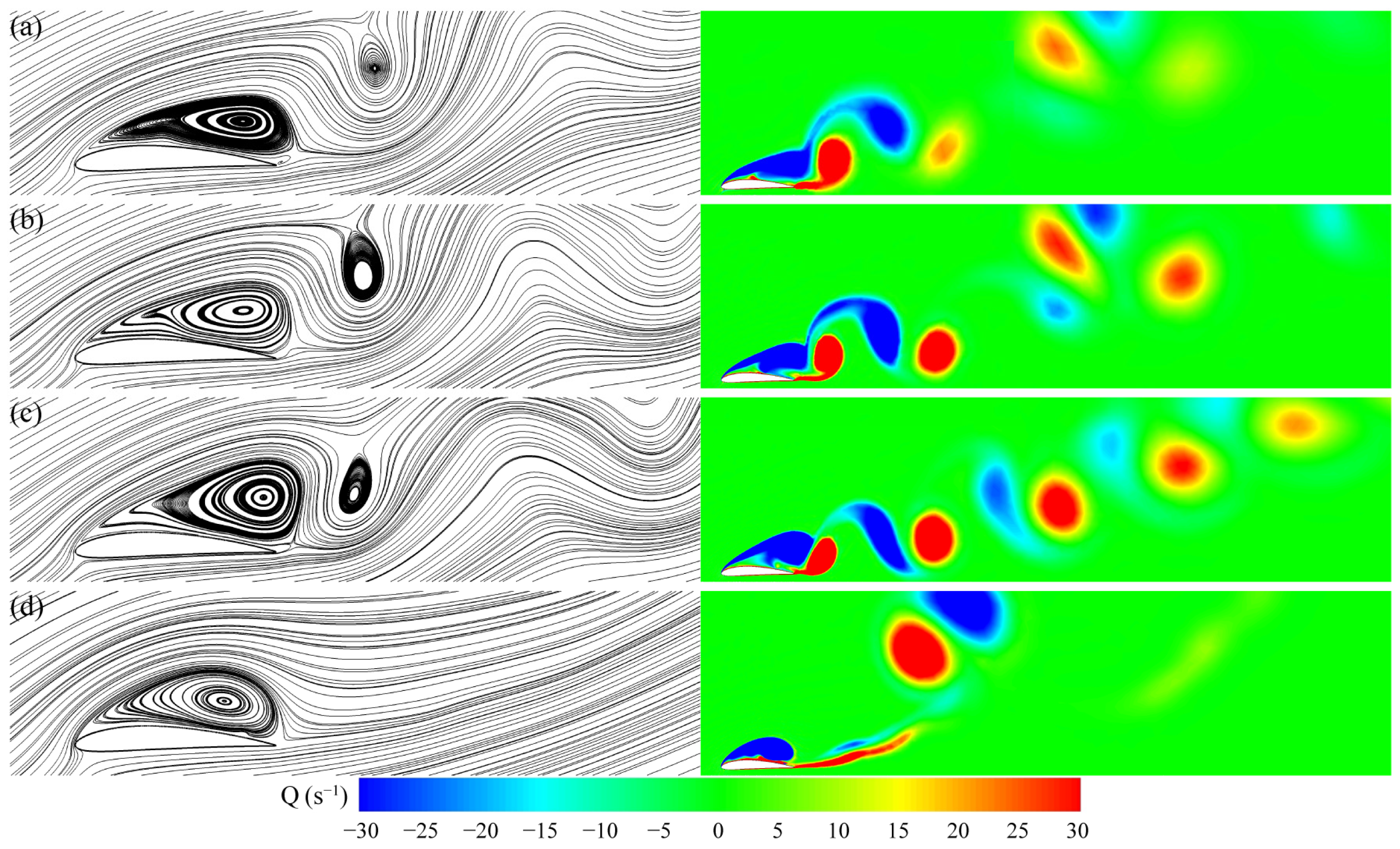
Figure 8 illustrates the flow field of selected schemes at a 22° AOA when the CL reaches the peak. The left subplots illustrate the streamline distribution around each airfoil, while the right ones present the corresponding vorticity magnitude contours. At the illustrated instant, the CL values for all schemes reach their maximum values. The separation vortices on each airfoil’s SS extend to their fullest, covering the entire airfoil, while the counterclockwise vortices at the TE are on the verge of shedding. As time progresses, these two vortices alternately shed from the blade trailing edge, forming a pair of vortices in the wake. Evidently, in the flow fields of the original airfoil and the L20 scheme, the vortices shed at this time differ in scale and intensity from those previously shed, leading to the formation of two pairs of vortices. In contrast, for the L50 scheme, the intensities of the shed vortices are similar each time, resulting in sequential shedding that forms the most regular vortex street. This, to some extent, indicates that vortex shedding in the L50 scheme is more stable than in the other schemes. Furthermore, the counterclockwise trailing vortices in the L20 and L50 schemes are slightly narrower than those in the original airfoil, indicating that riblets reduce the maximum lift and enhance stability. Regarding the L70 airfoil scheme, although two different pairs of vortices exist, only one pair shows a regular morphology. As shown, induced by the huge separation vortex, the SS mainstream re-attaches to the airfoil surface at the trailing edge and mixes with the airflow leaving the pressure surface. Consequently, the pressure gradient at the TE is flushed downstream before a counterclockwise vortex can form toward the SS, resulting in only one pair of strip-like vortex structures.
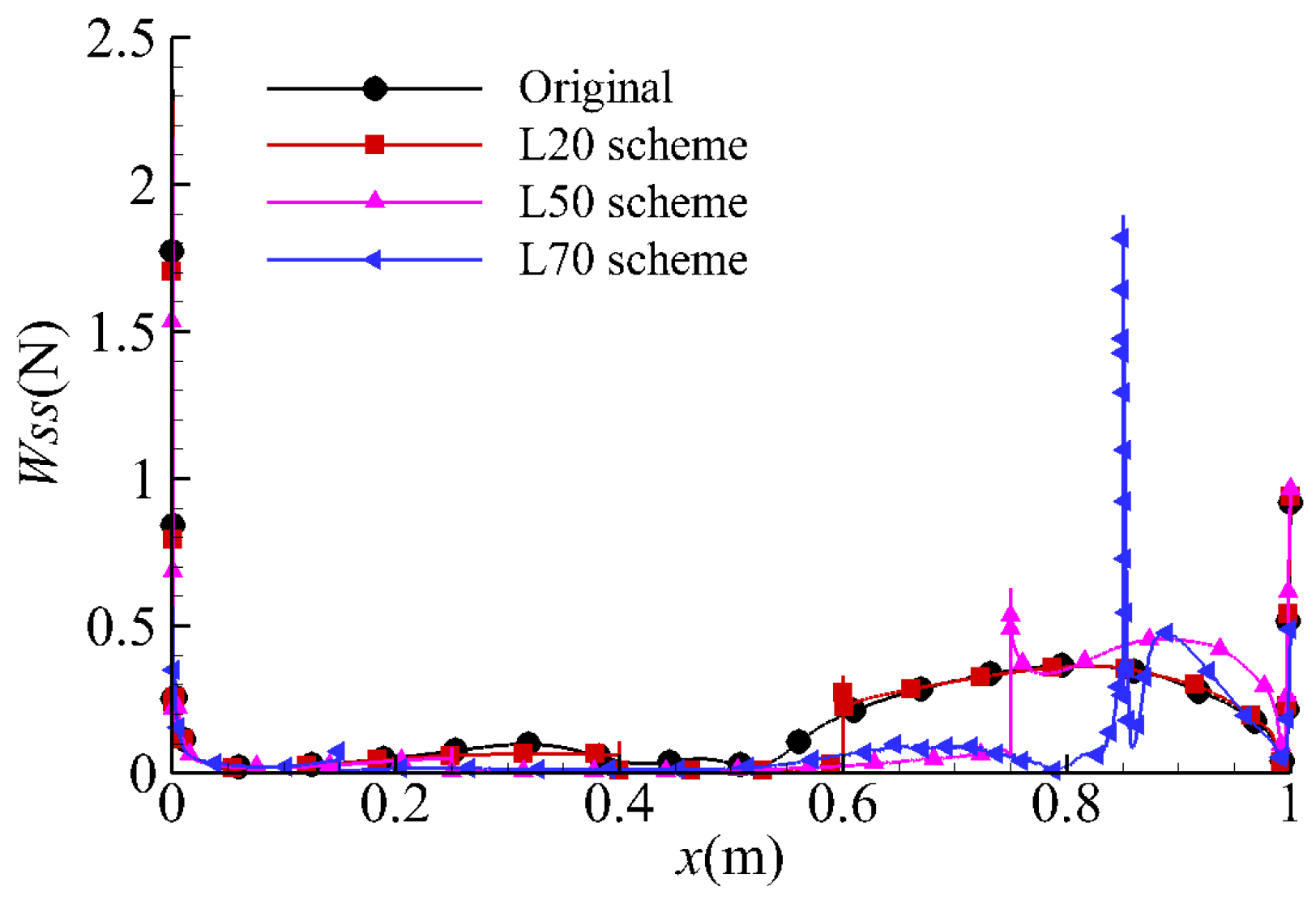
Figure 9 illustrates the wall shear stress (WSS) distribution on the SS of the original smooth airfoil and various riblet schemes under a 22° AOA at the instant of maximum CL. The WSS at each groove was the average across both sides of the groove. Under this high AOA condition, the airfoil SS is covered by a large-scale separation vortex, with the actual airflow on the surface effectively reversing from the TE toward the LE against the mainstream. This results in the WSS being distributed in a pattern of being larger in the rear and smaller in the front. Except for the local maxima at the very leading and trailing edges, the WSS is notably greater in the rear half, where the relative chord position exceeds 0.5c. The riblet effectively hinders the clockwise motion of the separation vortex. In the L20, L50, and L70 schemes, the WSS in the riblet region decreases significantly, well below the values at corresponding positions on the original airfoil. This occurs primarily because low-energy fluid resides within the grooves, increasing the distance between the mainstream and the airfoil wall (the groove surface) and thereby reducing the velocity gradient. As noted earlier, the airflow near the SS wall is actually directed from the TE toward the LE. The flow first traverses the TE smooth region before reversely passing the rougher riblet region, creating a new local peak at the riblet end. Furthermore, the riblet’s obstruction to the airflow also induces a slight increase in the WSS within the TE smooth region. For the L20 scheme, the short length of the riblet has a limited influence on the flow field. Except for the riblet itself, the WSS at other regions is nearly identical to that of the original airfoil. In the L50 scheme, the separation vortex is larger than in the original airfoil, leading to a slight increase in the WSS in the TE smooth region, though the increase is modest. For the L70 scheme, which features the longest riblet, the WSS decreases in the widest region, but the peak at the riblet end surges to over four times the value at the equivalent position on the smooth airfoil. This may explain why the flow instability of the L70 scheme is worse than in the L50 scheme.
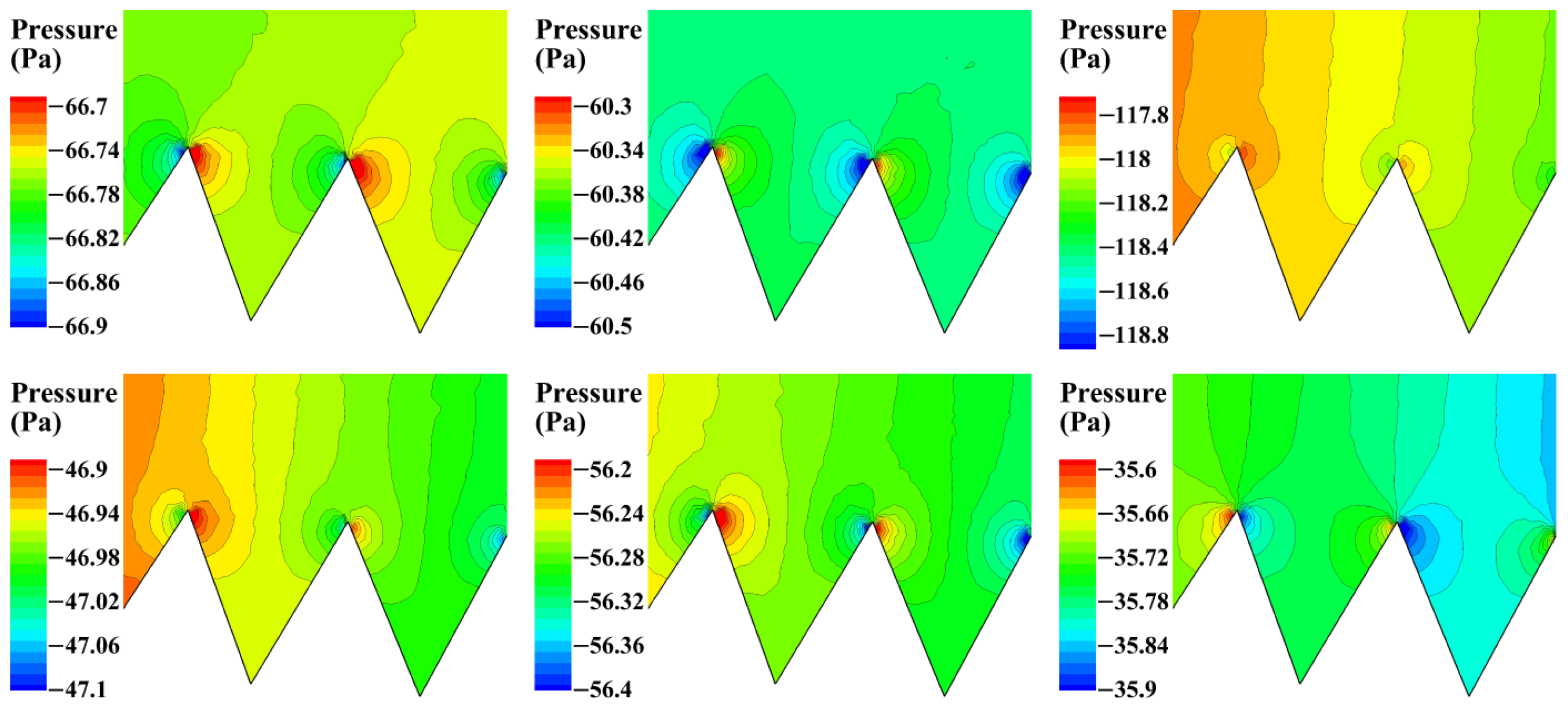
Figure 10 compares the static pressure contours of the riblet grooves on the airfoil. The first line of contours shows static pressure distributions at the maximum CL, while the bottom line shows distributions at the minimum CL. At these moments, the static pressure distributions of the three schemes at the grooves were symmetrical. In the L20 and L50 schemes, the static pressure difference at the groove tip is approximately 0.2Pa, while the L70 scheme has a more significant value at the same location than the others. This larger difference is caused by the stronger separation vortex on the airfoil SS, which creates a greater velocity gradient in the groove.
3.3. Comparison of Turbulence Statistics Results
Riblets with a drag reduction effect can thicken the viscous sublayer of the turbulent boundary layer. To explain the influence of riblets on boundary layer flow and understand their mechanism of stability expansion, the impact of riblets on the second- and higher-order statistics of the airfoil turbulent boundary layer is examined.
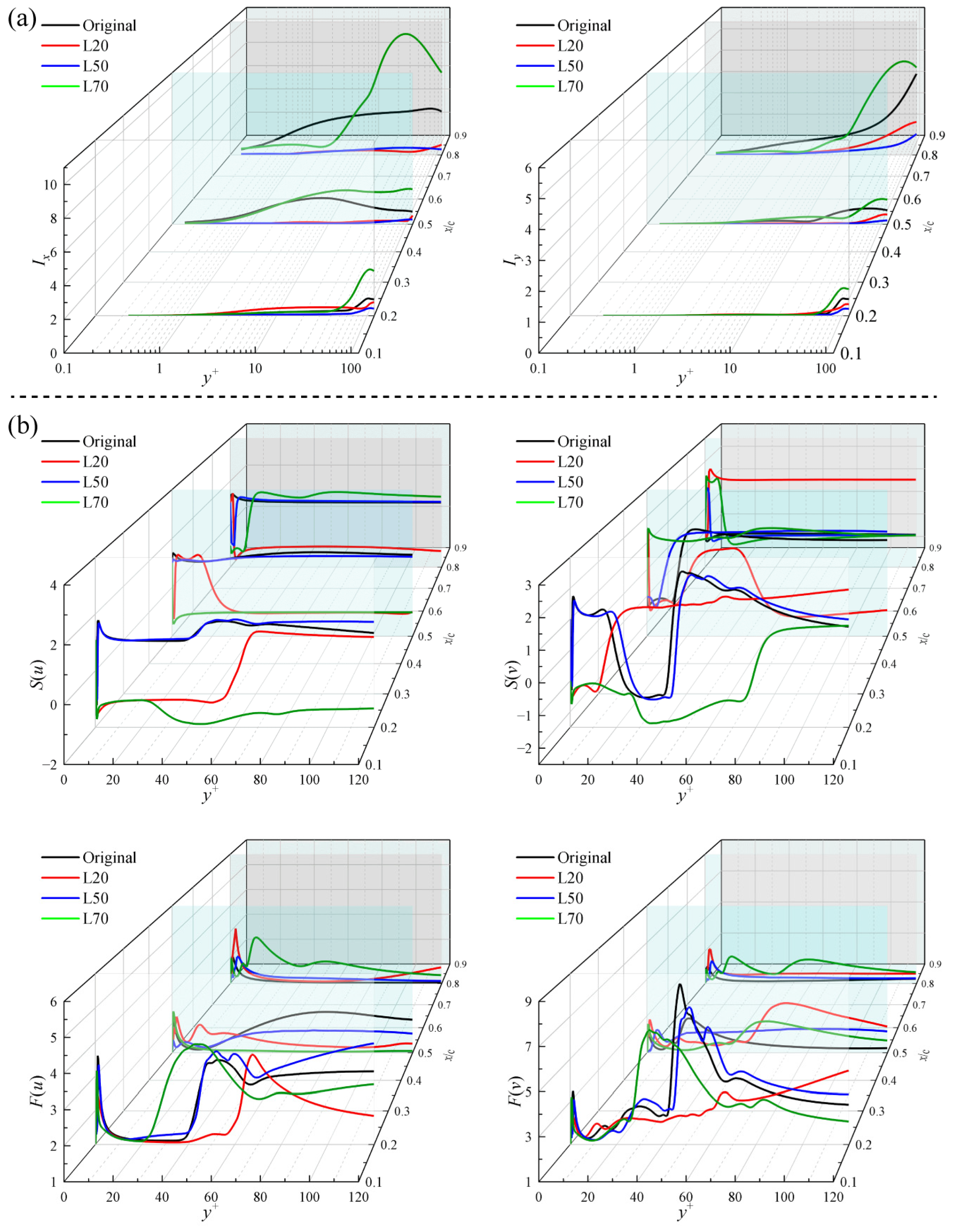
The turbulent pulsation of the flow field is reflected in the turbulence intensity. The boundary layer’s turbulence intensity distribution of the original and riblet airfoils is compared in
Figure 11, where
Ix and
Iy are the flow direction turbulence intensity and normal turbulence intensity, respectively:
As shown in
Figure 11a, each airfoil generates higher turbulence intensity in the flow direction than in the normal direction at the chosen position. It illustrates that the flow direction pulsation is the predominant source of the boundary layer loss. It is noted that riblets affect turbulence intensity differently in the two directions at various locations on the airfoil SS. When
x = 0.2c, the L20 scheme enhances flow direction turbulence in the viscous sublayer and buffer layer, but its influence decreases when
increases to the log layer. Therefore, the L20 system increases pulsation of the flow direction and the exchange of turbulent kinetic energy at the bottom of the boundary layer. The riblet airfoil turbulence pulsation of the flow direction in the viscous sublayer and log layer is weakened in the L50 system, indicating that the fluid in the boundary layer is more "quiet" in the flow direction. When the riblets’ length reaches 0.7c, they have little effect on the viscous sublayer and buffer layer but enhance the flow turbulence in the log layer. In normal turbulence, the viscous sublayer and buffer layer are not considerably affected by any of the three schemes, but the log layer is where their effects differ. The L20 and L50 schemes significantly decrease the fluid’s normal pulsation, but the L70 scheme significantly worsens it.
At x = 0.5c and 0.8c, the L20 and L50 schemes reduce the flow direction and normal pulsations in the viscous sublayer, buffer layer, and log layer, reducing the energy loss in the boundary layer. The L70 scheme significantly increases fluid pulsation in both directions. As mentioned above, riblets that suppress the airfoil wake vortex (L50 scheme) can reduce fluid pulsation near the bottom of the boundary layer. Conversely, riblets, which facilitate faster trailing vortex shedding, will promote fluid pulsation in both directions locally or globally.
Figure 11b shows the skewness factors and flat factor distribution of the flow pulsation velocity and normal pulsation velocity along the dimensionless wall height y
+ for the four schemes. As is defined in Equation (16), the skewness factors of the pulsation velocity characterize the asymmetrical distribution of its probability density function. The positive and negative skewness factors in the turbulent boundary layer flow reflect the “jet” (Q2) and “sweep” (Q4) events, which have a major impact on the Reynolds stress.
At , the skewness factor of the original pulsating velocity in the flow direction is positive, whereas that of the normal pulsating velocity is negative at . It illustrates that the Q4 event, in which high-speed fluid dives toward the airfoil wall, is the dominant flow occurrence in this region. Because the Q1 event, which has little effect on the Reynolds stress, is the dominant event in the log layer, the Q4 event near the wall contributes the most to the Reynolds stress. For the L50 scheme, the wall height at which the normal pulsation velocity skewness factor changes from negative to positive is dropped. This appearance indicates that the number of Q4 events and the Reynolds stress at the bottom of the boundary layer are reduced. The Q2 event, in which low-velocity fluid “jets” into the high-velocity fluid in the upper layer, takes place in the L70 scheme’s viscous sublayer and log layer. Therefore, the L70 scheme alters the boundary layer flow characteristics and increases the Reynolds stress. Though the L20 scheme has similar flow events to the original at , it generates the Q2 event and Q4 event after the transition layer and , enhancing the Reynolds stress in the boundary layer.
When the cross-section is 0.8c, the near-wall Reynolds stress of the L20 scheme significantly rises because the Q2 event is generated in the inner layer. The L50 and L70 schemes have skewness factor distributions comparable to the original, but they generate Q2 events near the viscous sublayer. Meanwhile, the absolute values of their pulsating velocity skewness factor are more considerable. Consequently, the Reynolds stress in these two schemes is enhanced in the viscous sublayer. Considering that the L70 scheme also increases the Reynolds stress in part of the log layer, the increase in that in the L50 scheme is minimal.
In general, different riblets have various effects on turbulence pulsation. The riblets (L50 scheme) efficiently control the development of the airfoil trailing vortex, thereby diminishing turbulent bursts, which are the principal cause of Reynolds stress at the boundary layer bottom. In contrast, riblets that raise the airfoil’s trailing vortex shedding frequency increase turbulent bursting inside the boundary layer.
The flatness factor of the pulsating velocity component reflects intermittent flow in the turbulent boundary layer. The L50 airfoil displayed flatness factor distributions similar to those of the original at two chosen cross-sections. However, the L20 scheme makes the flatness factor of the flow pulsation velocity at the log layer higher than 3, and the same holds for the normal pulsation velocity between 60 < y+ < 105. Furthermore, the flatness factors of the viscous sublayer in the two directions are beyond 3. These distributions reveal that intermittent flow is developed by the riblets. At the same cross-section, the L70 riblets significantly raise the flatness factor at the buffer layer and the flatness factor of the normal pulsation velocity below the log layer. Therefore, it can be speculated that riblets that promote faster trailing vortex shedding also increase intermittent flow in the boundary layer.
4. Conclusions
Based on the unsteady calculation results, the trailing vortex shedding characteristics of the smooth NACA4412 airfoil and the effects of riblets with various lengths on airfoil stability and turbulence characteristics are analyzed in detail.
Unsteady numerical simulations were conducted to analyze the trailing vortex shedding characteristics of a smooth NACA4412 airfoil and to evaluate the effects of riblets with varying streamwise lengths on its flow stability and near-wall turbulence. The main findings are as follows:
- (1)
The development law of the trailing vortex shedding mode on the airfoil was summarized. At Re = 1 × 10⁵, the flow over the baseline airfoil transitions from steady to periodic unsteady states with increasing angle of attack (AOA), progressing sequentially through the 2S, 2P, disordered state, and quasi-periodic shedding modes. All four riblet configurations tested were found to delay the AOA at which this transition to unsteady flow occurs.
- (2)
The effects of riblets on the airfoil trailing vortex mode and flow characteristics under unsteady flow conditions were compared. The influence of riblets on the vortex shedding pattern depends on their length. The shortest riblets (L10) advanced the onset of Hopf bifurcation during the transition from the 2S to the 2P mode. In contrast, the longer riblet configurations (L20, L50, and L70) delayed this bifurcation, effectively extending the operational AOA range for both the 2S and 2P modes.
- (3)
At the selected AOA, the riblets that delay Hopf bifurcation were observed to attenuate near-wall velocity fluctuations and reduce the Reynolds stress caused by turbulent bursts. However, both riblets that promote and delay Hopf bifurcation restrict the development of the secondary vortex on the airfoil surface. They postpone the working condition in which the airfoil flow enters a disordered state.
Existing studies generally indicate that such riblets help reduce drag and increase the lift-to-drag ratio for airfoils. This study further reveals that reasonably designed riblets can also broaden the stable operating range of airfoils. Collectively, these results demonstrate that this structure is indeed promising for increasing wind turbine power generation efficiency and improving operational stability. However, most of the conclusions in this paper are derived from simulation results based on a two-dimensional airfoil. Further investigations, such as simulations of three-dimensional airfoils or blades, are needed to deepen the understanding of how riblets work and validate their actual effects on wind turbines. Experiments are also essential to verify whether riblets improve the operational efficiency or stability of wind turbines. Since wind turbine blades are inherently constructed from composite materials, applying riblets to the blade surface is neither difficult nor costly, and the foreseeable impact on blade structural strength is not expected to be substantial. However, whether these millimeter-scale grooves will become clogged (with dust or other contaminants) during prolonged operation, leading to failure, may represent the greatest challenge to their practical application on wind turbines.