Article

Flow Mechanism Analysis of Engine Valve Deviation Under Braking Conditions

1
State Key Laboratory of Engine and Powertrain System, Weichai Power Co., Ltd., Weifang 261061, China
2
Ningbo Shenglong Intelligent Automotive Systems Co., Ltd., Ningbo 315800, China
3
Aircraft and Propulsion Laboratory, Ningbo Institute of Technology, Beihang University, Ningbo 315800, China
*
Author to whom correspondence should be addressed.
Fluids 2026, 11(4), 87; https://doi.org/10.3390/fluids11040087
Submission received: 28 February 2026 / Revised: 23 March 2026 / Accepted: 26 March 2026 / Published: 27 March 2026
(This article belongs to the Special Issue Industrial CFD and Fluid Modelling in Engineering, 3rd Edition)

Abstract

The valve serves as the actuating component within the valve mechanism. Under braking conditions, the valve is prone to swaying, which significantly compromises the reliability and service life of the engine. Hence, this paper focuses on researching the deviation characteristics of engine valves. Through a three-dimensional numerical simulation, we analyze the flow field around the valve in the instantaneous states. Our research has revealed that the flow surrounding the valve exhibits a complex multi-vortex structure. Specifically, we observed the evolution pattern of the asymmetric multi-vortex flow along the valve axis within three distinct zones: the asymmetry increase zone, the symmetric development zone, and the asymmetry re-increase zone. The asymmetry increase zone and the asymmetry re-increase zone are located in the curved section and the cylindrical body of the valve, respectively. These zones are the primary contributors to the lateral force acting on the valve, which in turn induces deviation. Based on these analysis results, further research must be conducted on the dynamic characteristics of the flow during valve movement and on optimizing the valve structure through flow control strategies.

1. Introduction

The Weichai Exhaust Valve Brake (WEVB) is an engine auxiliary brake device developed by Weichai Power Co., Ltd., Weifang, Shandong, China and is automatically triggered when the vehicle is downhill braking. Under downhill braking conditions, the engine is shut down and dragged in motion under the inertia of the vehicle. The WEVB controls the lift of one of the exhaust valves (called the brake exhaust valve), which can maintain a slight opening gap of 1–2 mm between the brake exhaust valve and the exhaust port during the compression and power strokes, significantly reducing the gas pressure in the cylinder, avoiding high-pressure gas from driving the engine to do positive work, and improving the braking efficiency of the engine. The WEVB can reduce the braking frequency by more than 50% and relieve the risk of brake system wear and tire overheating. Due to the excellent performance of the WEVB, it has become the standard configuration of Weichai engine.
However, under braking conditions, the WEVB will only keep one exhaust valve slightly open. Compared with the common exhaust conditions (two exhaust valves open), the brake exhaust valve will be subjected to greater lateral force, resulting in the deviation of the brake exhaust valve [1,2,3]. This phenomenon leads to inadequate sealing between the valve and the valve seat, thereby compromising the engine’s combustion efficiency and overall performance. Furthermore, the deviation can exacerbate wear on both the valve and the valve seat, significantly diminishing the engine’s reliability and service life [4]. Therefore, it is essential to conduct in-depth research on the deviation phenomenon of valves. This research should aim to uncover the underlying flow mechanisms responsible for its occurrence, propose effective methods for flow control and deviation suppression, enhance engine reliability, and provide both theoretical support and practical guidance for the advancement of engine technology.
At present, research on engine valves can be broadly categorized into two main areas. The first involves investigating the solid structure of engine valves [5,6,7], while the second encompasses the flow around engine valves. Regarding the study of failure mechanisms, factors such as mechanical stress, thermal loads, and chemical corrosion are taken into account [8,9]. In terms of valve material research, various valve materials have been compared based on their performance characteristics [10]. For the dynamic analysis of valves, the primary approach involves setting boundary conditions on software platforms, introducing dynamic loads, and achieving maximum parameterization of working conditions in the analysis methods and processes [11]. However, existing research predominantly focuses on the dynamic simulation and modeling of valves from the perspectives of material and structural enhancements. Notably, the typical fluid–solid-coupling-induced motion characteristics of valve deviation are overlooked when the flow component is not considered. This omission hinders the revelation of the underlying mechanisms of valve deviation, thereby restricting the development of suppression technologies and optimization schemes for valve structures. Therefore, it is imperative to conduct systematic research on flow characteristics to address these gaps.
Regarding the study of the flow around engine valves, in the 1980s Gosman et al. [12] carried out both experimental and numerical simulation investigations into the steady-state flow of valves. Their work enabled predictions for medium and small valve strokes, although the results were less satisfactory for larger strokes. With the advancement of three-dimensional flow simulation technology, extensive and detailed studies have been conducted on the flow fields surrounding valves, illustrating various flow patterns within the intake system [13,14,15]. Many more studies have been conducted on the influence of exhaust valve structure and strategy on the flow around it [16,17,18,19,20]. These research findings indicate that numerous factors influence the flow characteristics at the valve. These factors primarily include the intake conditions, the geometric structure and placement of the valve, the type of air passage, and the engine’s operating state. However, the mechanisms by which these factors induce deviation in the valve have not been thoroughly addressed. Consequently, there is a need for further exploration to reveal the flow structure around the valve in greater detail.
This paper performs a static analysis of the aerodynamic characteristics during the valve braking process via a three-dimensional numerical simulation and elucidates the flow mechanism underlying valve deviation through an examination of the flow field structure. Section 2 outlines the test model and the methodologies employed. Section 3 presents and discusses the obtained results. Section 4 offers a discussion on the conclusions drawn from this study.

2. Test Model and Approaches

2.1. Test Model

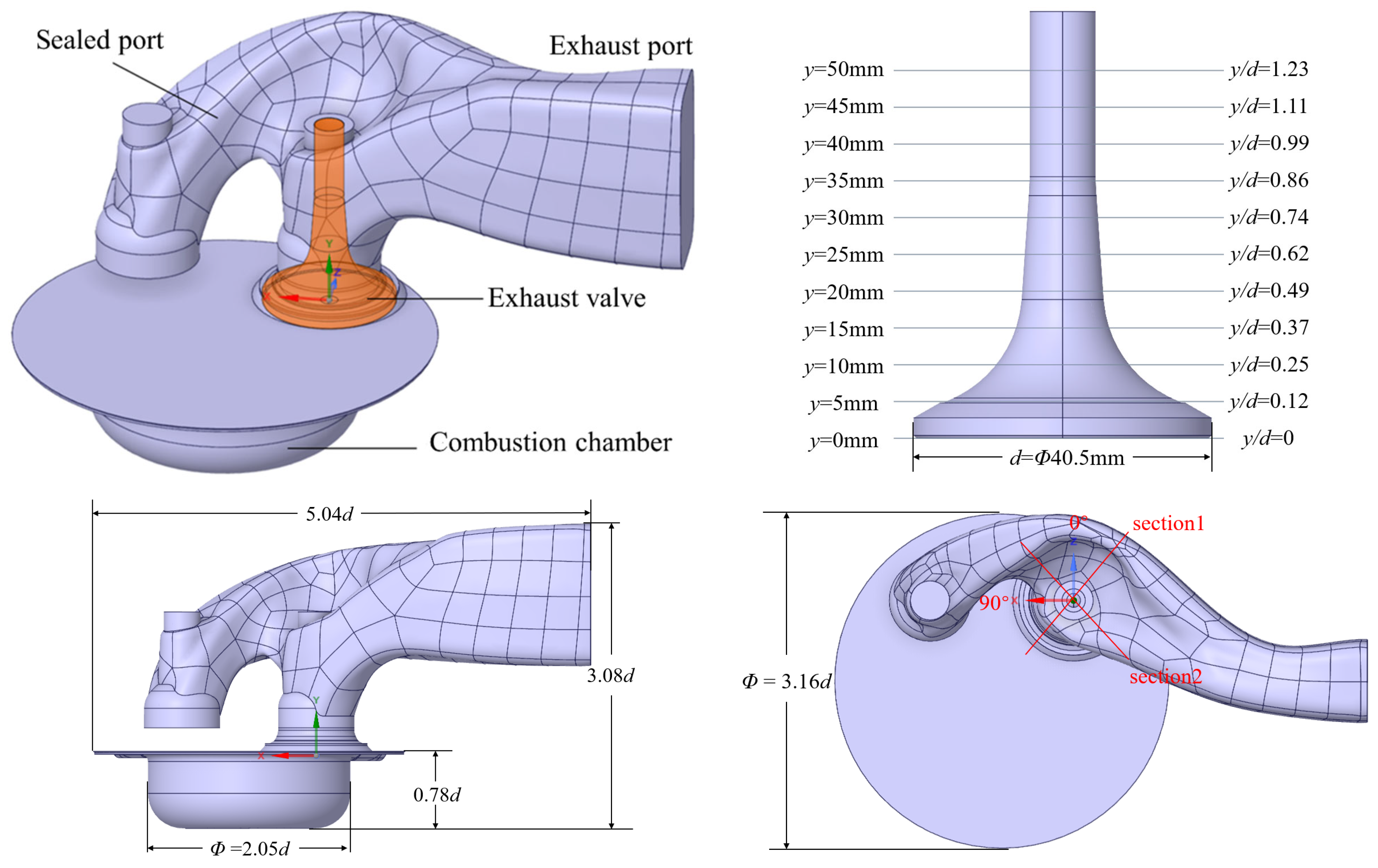
Figure 1 illustrates a simplified model of the WP13 engine of Weichai Power Co., Ltd., Weifang, Shandong, China. Its intake port, two intake valves and one exhaust valve are deleted because only the brake exhaust valve opens at the crankshaft angle of 0°. The port where the deleted exhaust valve is located is regarded as the sealed port. The valve and piston are fixed at the crankshaft angle of 0° (see the details of the boundary conditions in ③④ below). The computational geometric model encompasses the exhaust port, the exhaust valve, and the combustion chamber. The valve has an outer diameter of d = 40.5 mm. A coordinate system is established with its origin at the center of the valve, where the y-axis aligns with the valve’s symmetric axis, the x-axis represents the horizontal direction, and the z-axis is perpendicular to the xy-plane. The simulation conditions are summarized as follows: ① The time step is 1 × 10⁻⁴ s. ② The crankshaft angle is 0°. ③ The valve lift is 1.3132 mm. ④ The piston is located at the top dead center, which is 1.2 mm away from the top of the combustion chamber. ⑤ The bottom of the combustion chamber is treated as a pressure inlet, with a pressure of 3.866 MPa and a temperature of 837.85 K. ⑥ The end of the exhaust port is treated as a pressure outlet, with a pressure of 0.296 MPa and a temperature of 757.16 K. ⑦ The combustion is not considered because the engine will shut down under braking conditions. ⑧ Gas is considered compressible and modeled as an ideal gas. The data of boundary conditions ③④⑤⑥ are provided by Weichai Power Co., Ltd., Weifang, Shandong, China.

2.2. Numerical Methods

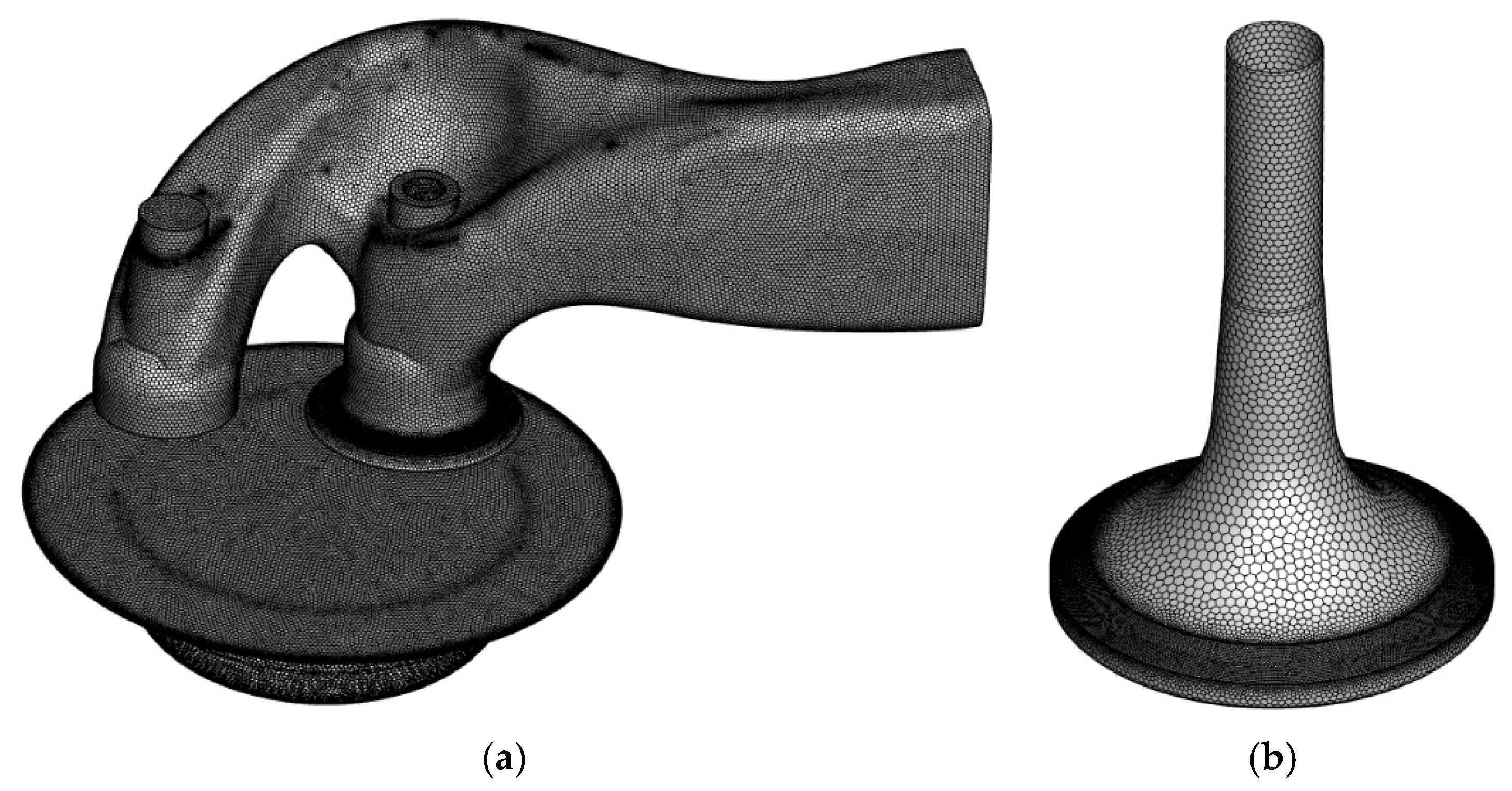
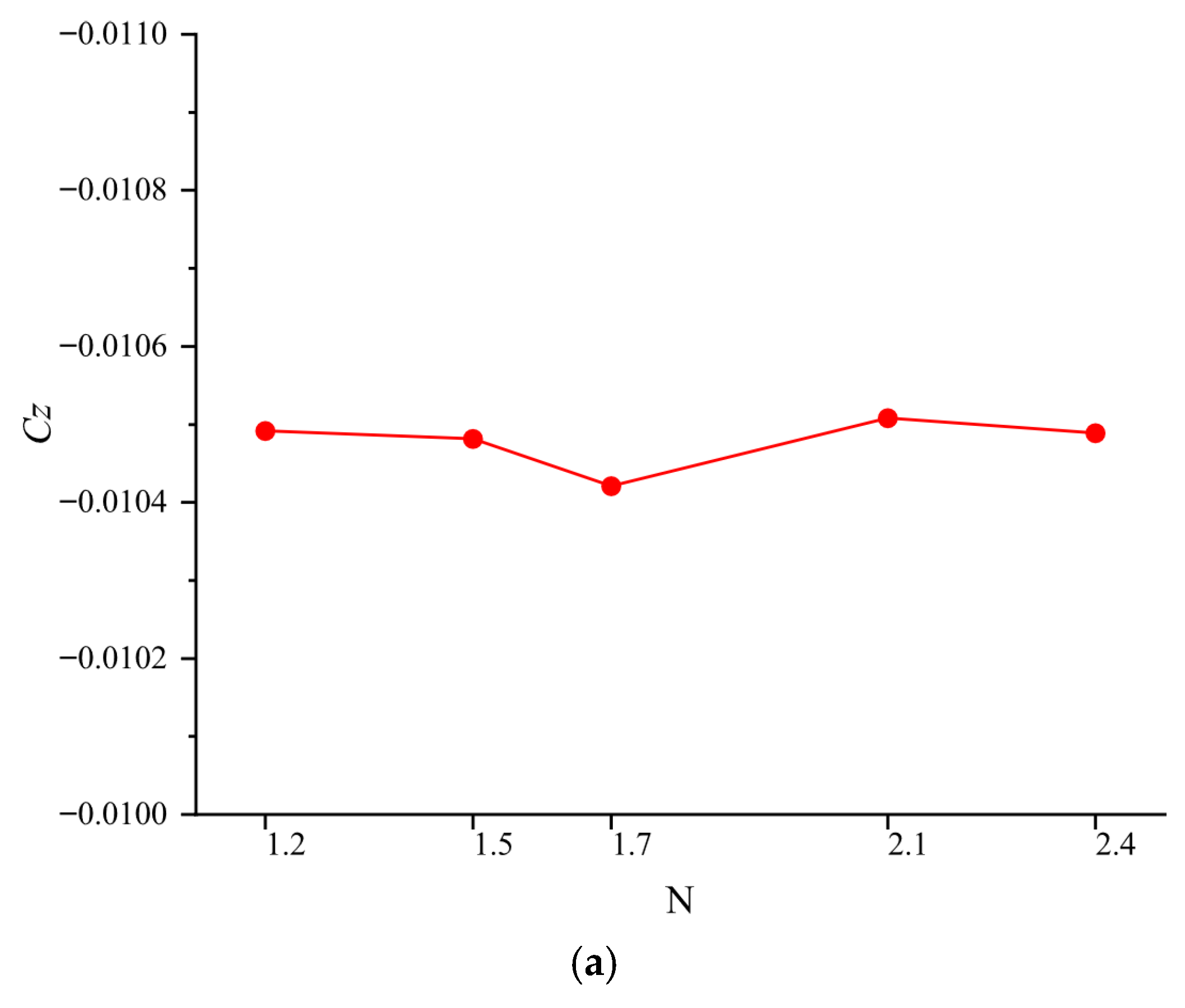
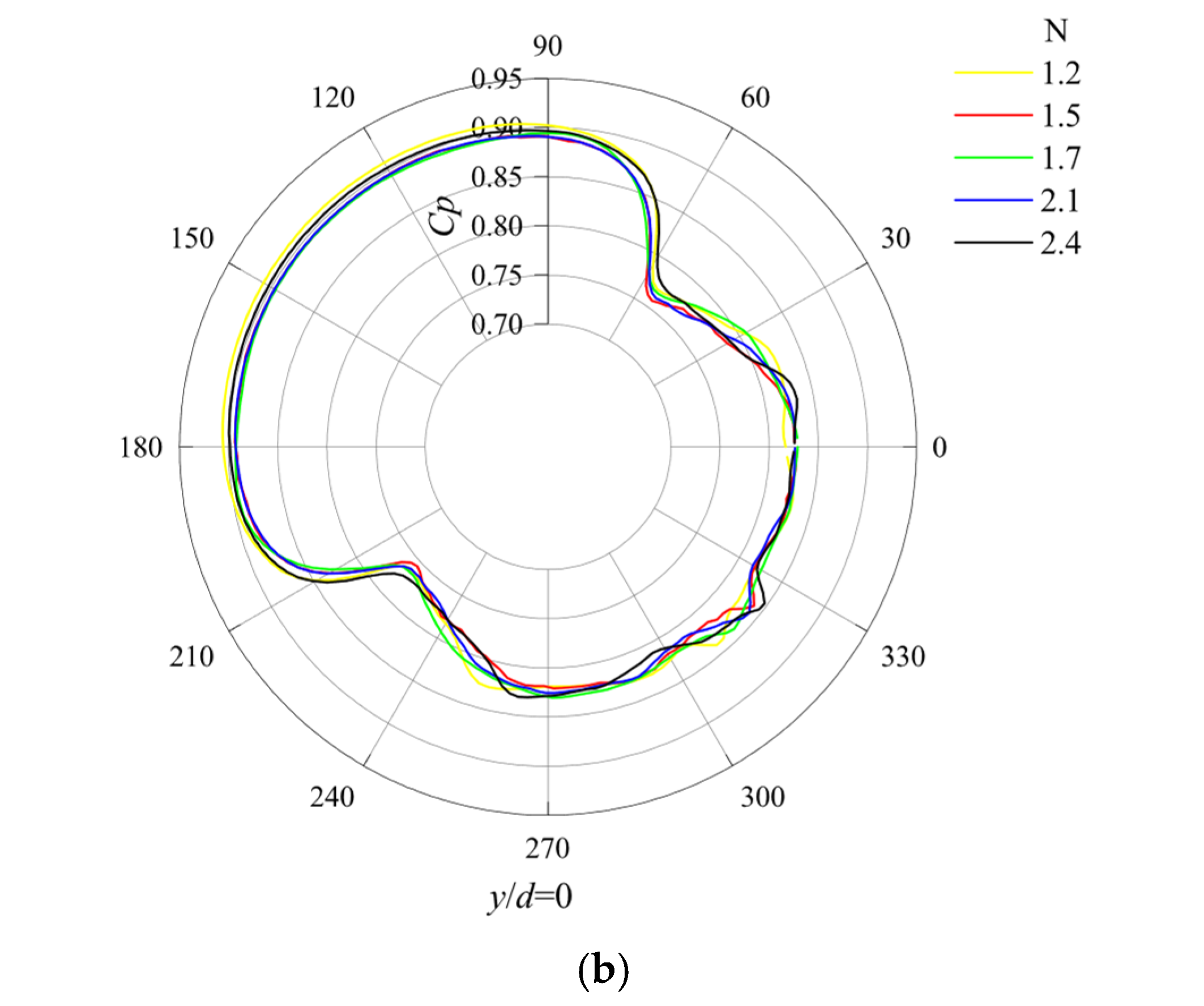
In this paper, ANSYS Fluent 2023 is employed to perform a three-dimensional compressible simulation of the flow characteristics around the exhaust valve. Figure 2 displays the polyhedral mesh of the model shell and valve. The height of the first boundary layer grid is set sufficiently low to ensure that y+ < 1, and the grid growth rate is maintained at 1.2. The grid size of the valve is refined from 0.3 mm to 0.1 mm, and the number of grids is increased from 1.2 million to 2.4 million. The entire computational domain comprises a total of 1.5 million cells. Figure 3 illustrates the variations in the force coefficient in the z-direction (Cz) with respect to the grid number (N, in millions) and the circumferential pressure coefficient (Cp) distributions under different grid resolutions. The force coefficient in the z-direction, Cz, is defined as C z = F z / ( 0.5 ρ V 2 d ) , where Fz represents the force acting on the valve in the z-direction, defined as F z = 0 2 π ( 0.5 p i D   sin θ s ) d θ s , and pi is the static pressure at the ith tap. The circumferential pressure coefficient, Cp, is defined as C p = p ( θ s ) / ( 0.5 ρ A V 2 ) , where p(θs) is the static pressure obtained at the location corresponding to θs. The variations in both Cz and Cp across the five different grid resolutions are essentially consistent. Therefore, a grid with N = 1.5 million cells is selected as the moderate computational grid for this study.
The transient Reynolds-Averaged Navier–Stokes (RANS) equations are solved using the finite volume method. For the spatial discretization of the transport equations, a second order upwind scheme is employed. A first order implicit scheme is used for temporal discretization. Meanwhile, the pressure-velocity coupling is handled using the Semi-Implicit Method for Pressure-Linked Equations-Consistent (SIMPLEC) algorithm. The Shear-Stress Transport (SST) k-ω turbulence model is adopted in this paper due to its higher capability in the simulation of in-cylinder flow [21,22,23,24].

3. Results and Discussion

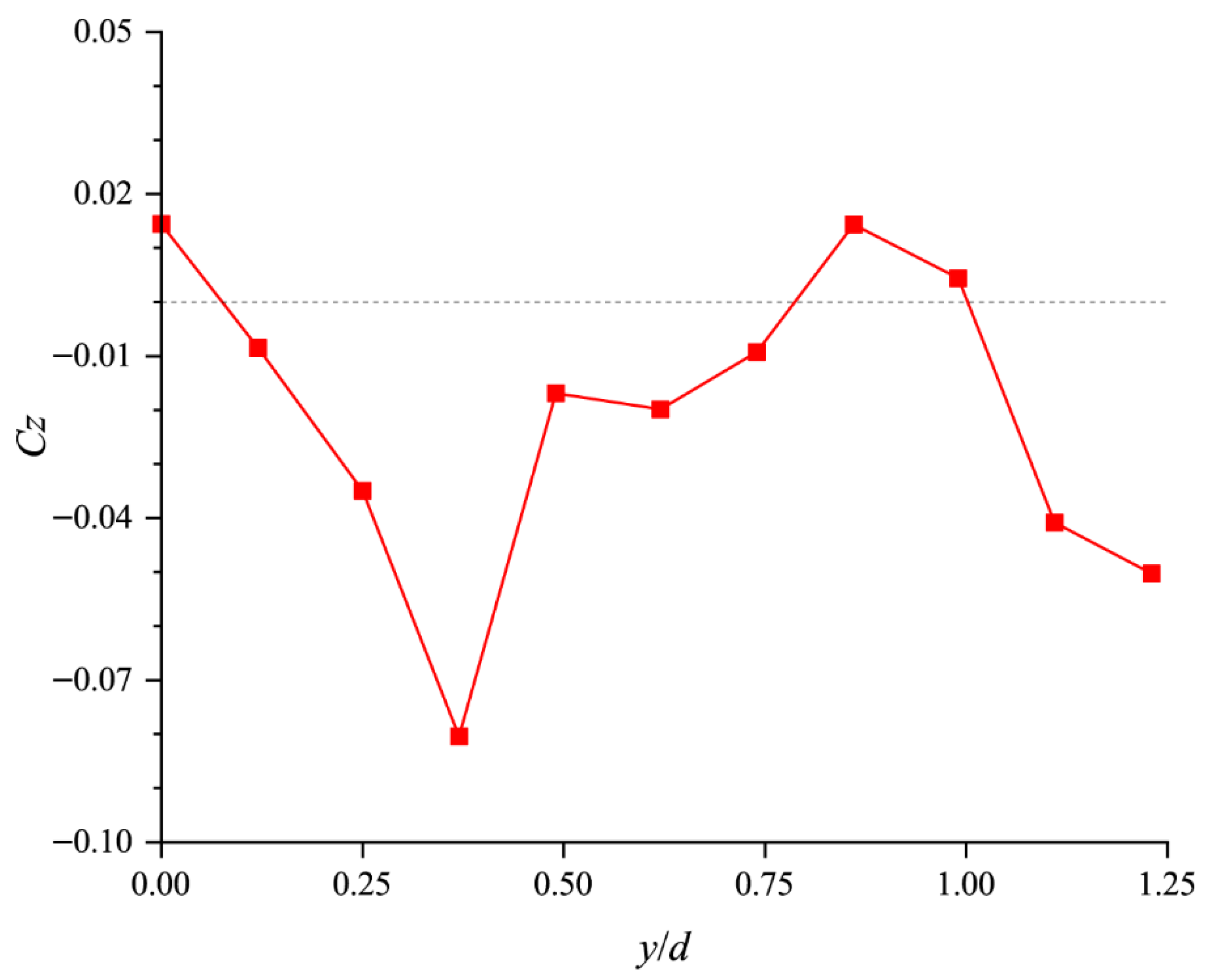
To elucidate the flow mechanism responsible for valve deviation, this section discusses the aerodynamic forces acting on the valve and the associated flow characteristics. Figure 4 illustrates the variation in the time-averaged sectional lateral force coefficient, Cz, with respect to y/d, which is correlated with the evolution of flow along the valve axis. It is evident that Cz is positive, indicating that the sectional lateral force acts along the positive z-axis. As the flow progresses along the y-axis, the sectional lateral force transitions to negative and increases rapidly, reaching its peak at y/d = 0.37, where it acts along the negative z-axis. Consequently, the interval y/d ≤ 0.37 is designated as the “asymmetry increase zone,” which is situated in the curved section of the valve, as depicted in Figure 1. As Cz evolves along y/d, the negative Cz diminishes and becomes positive at y/d = 0.8, only to revert to negative at y/d = 1. The sectional lateral force fluctuates around zero within this range. Thus, the interval 0.37 < y/d ≤ 0.99 is designated as the “symmetric development zone.” This range is located in the conical section of the valve, as shown in Figure 1. When y/d > 0.99, corresponding to the cylindrical body of the valve, the sectional lateral force becomes negative again and increases rapidly. The interval y/d > 0.99 is, therefore, designated as the “asymmetry re-increase zone.” These observations reveal that the valve is subjected to a lateral force in the negative z-direction, which causes the valve to exhibit lateral deviation.
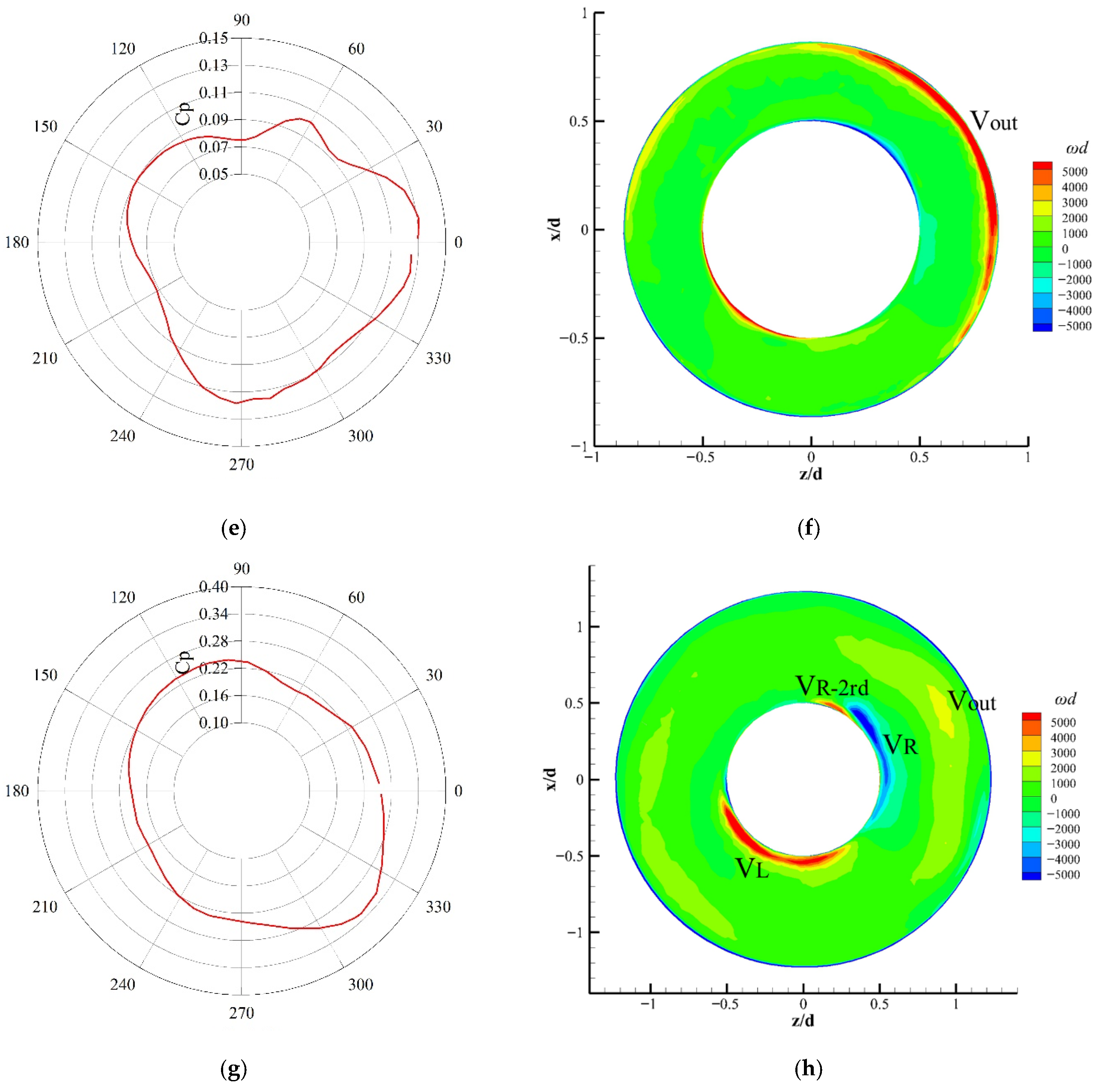
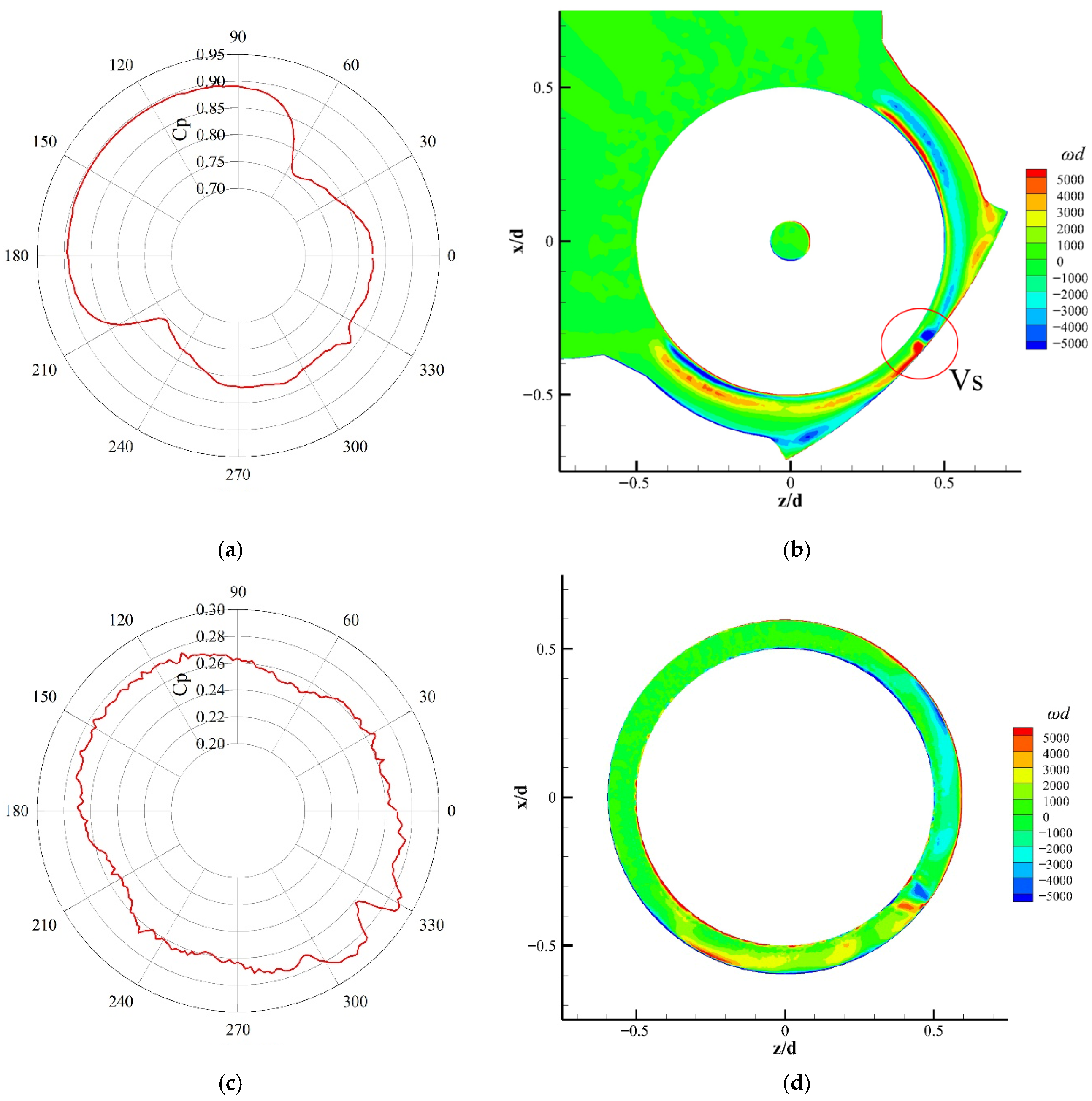
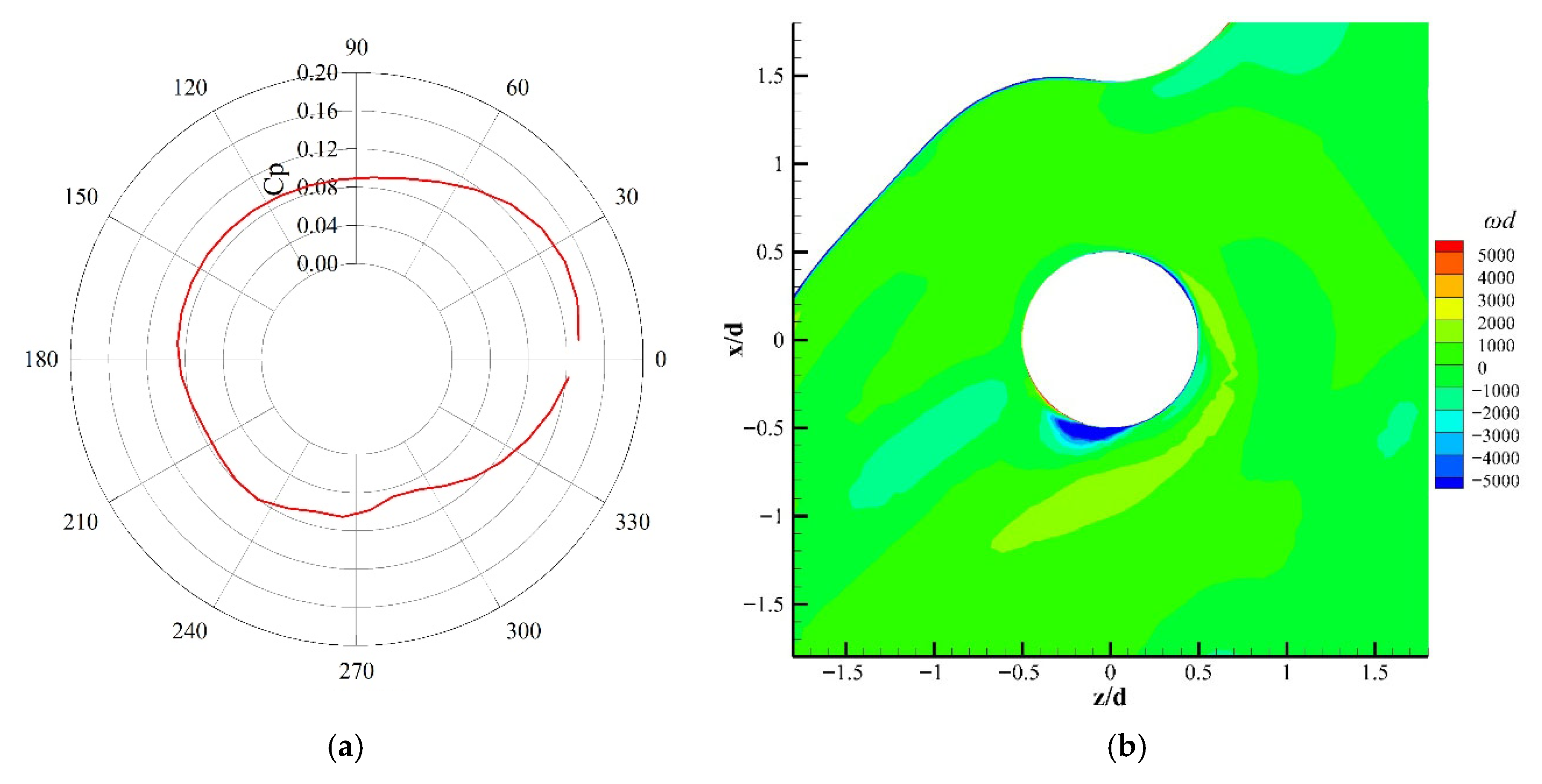
Figure 5 depicts the flow structures and corresponding circumferential pressure distributions at y/d values of 0, 0.12, 0.25, and 0.37, all of which fall within the asymmetry increase zone. It is evident from Figure 5a,b that the pressure distribution exhibits symmetry with respect to the valve symmetry plane x/d = −z/d, while displaying significant asymmetry relative to the symmetry plane x/d = z/d. Owing to variations in the fluid velocity and pressure, the flow velocity differs across regions as the fluid transitions from a narrow gap into a larger space. This disparity generates tangential forces, leading to rotational flow. Consequently, two symmetrical vortices form radially at the 325° radial position and symmetrically around the valve in both directions. These vortices create distinct suction peaks at the 220° and 50° radial positions, resulting in a reduction in pressure on the valve surface. Additionally, due to radial flow diffusion, two vortices (Vs) emerge at the 320° radial position. As the vortices develop along the valve axis, their intensity diminishes and they expand radially at y/d = 0.12, as shown in Figure 5c,d. The surface pressure at the 0–90° and 180–270° ranges becomes even lower due to the influence of these vortices on the valve surface. The VRs (radial vortices) develop and propagate along the axial direction. As illustrated in Figure 5h, the presence of Vout (an outer vortex) subjects the VR (radial vortex) to its suction force, causing it to lift away from the wall surface and generate a secondary vortex, VR-2rd. Consequently, the surface pressure at the 60° radial position decreases, as shown in Figure 5g.
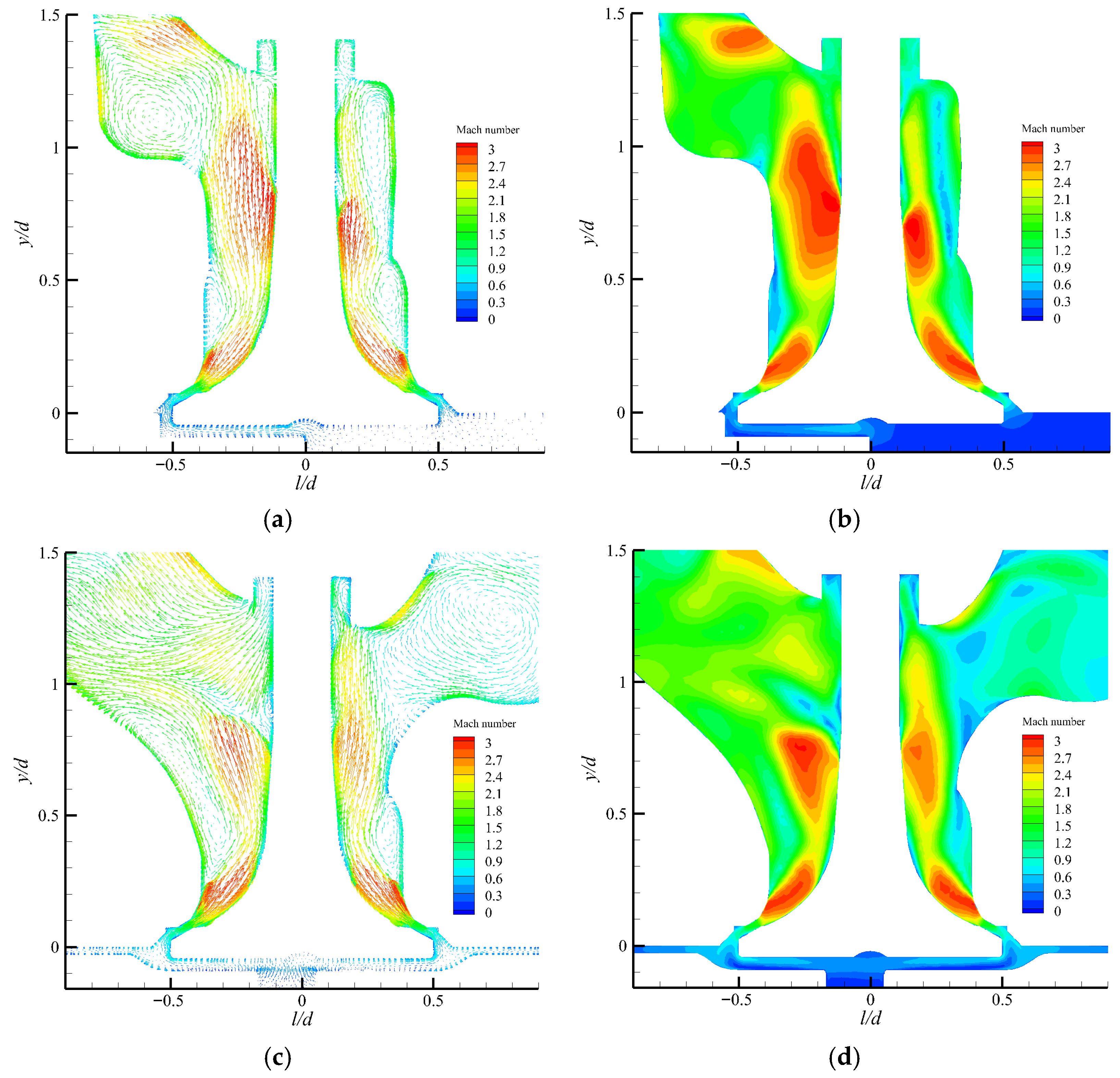
The pressure distributions and flow field structures depicted in Figure 5 exhibit a symmetrical state with respect to the line x/d = −z/d. Consequently, Figure 6 illustrates the velocity vectors and contours of both the symmetrical plane (Section 2 in Figure 1) and its perpendicular plane (Section 1 in Figure 1). It is evident that the velocity is symmetric about the valve axis when y/d < 0.37. As a result, the surface pressure distribution shown in Figure 5c displays a structure characterized by minimal radial fluctuations, with the pressure magnitude hovering near 0.26. Subsequently, the flow collides with the valve at y/d = 0.25, prompting a change in the flow direction and a reduction in velocity. The continuous impacts lead to an increase in pressure on the valve surface, as demonstrated in Figure 5e. According to the model structure presented in Figure 1, the exhaust port is situated between the radial positions of 30° and 60°. Therefore, a vortex structure, denoted as Vout, emerges on the inner surface of the outer wall, as shown in Figure 5f. This vortex structure causes the surface pressure to rise at the radial position of 60°, as indicated in Figure 5e.
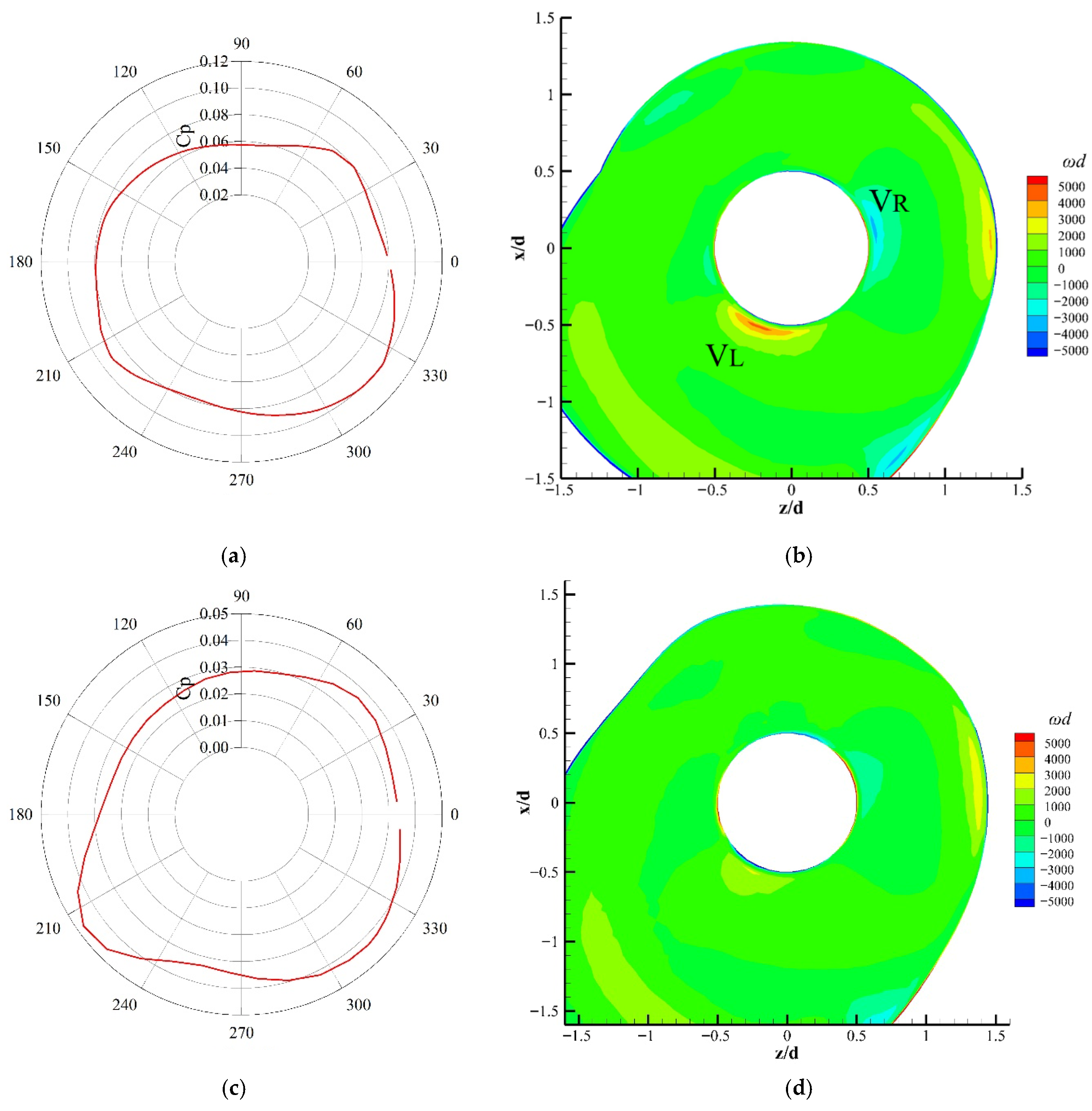
As the flow progresses along the axial direction of the valve, the axial velocity depicted in Figure 6 decreases within the range of y/d = 0.37 to 0.5 and increases within the range of y/d = 0.5 to 0.99, both of which fall within the symmetric development zone. Figure 7 illustrates the flow structures and corresponding circumferential pressure distributions at y/d = 0.49. Since VR-2rd lacks continuous flow replenishment, it dissipates by y/d = 0.49. As shown in Figure 7b, there are still two vortex structures present near the valve wall. Consequently, the surface pressure distribution remains symmetrical with respect to the plane x/d = −z/d, as indicated in Figure 7a.
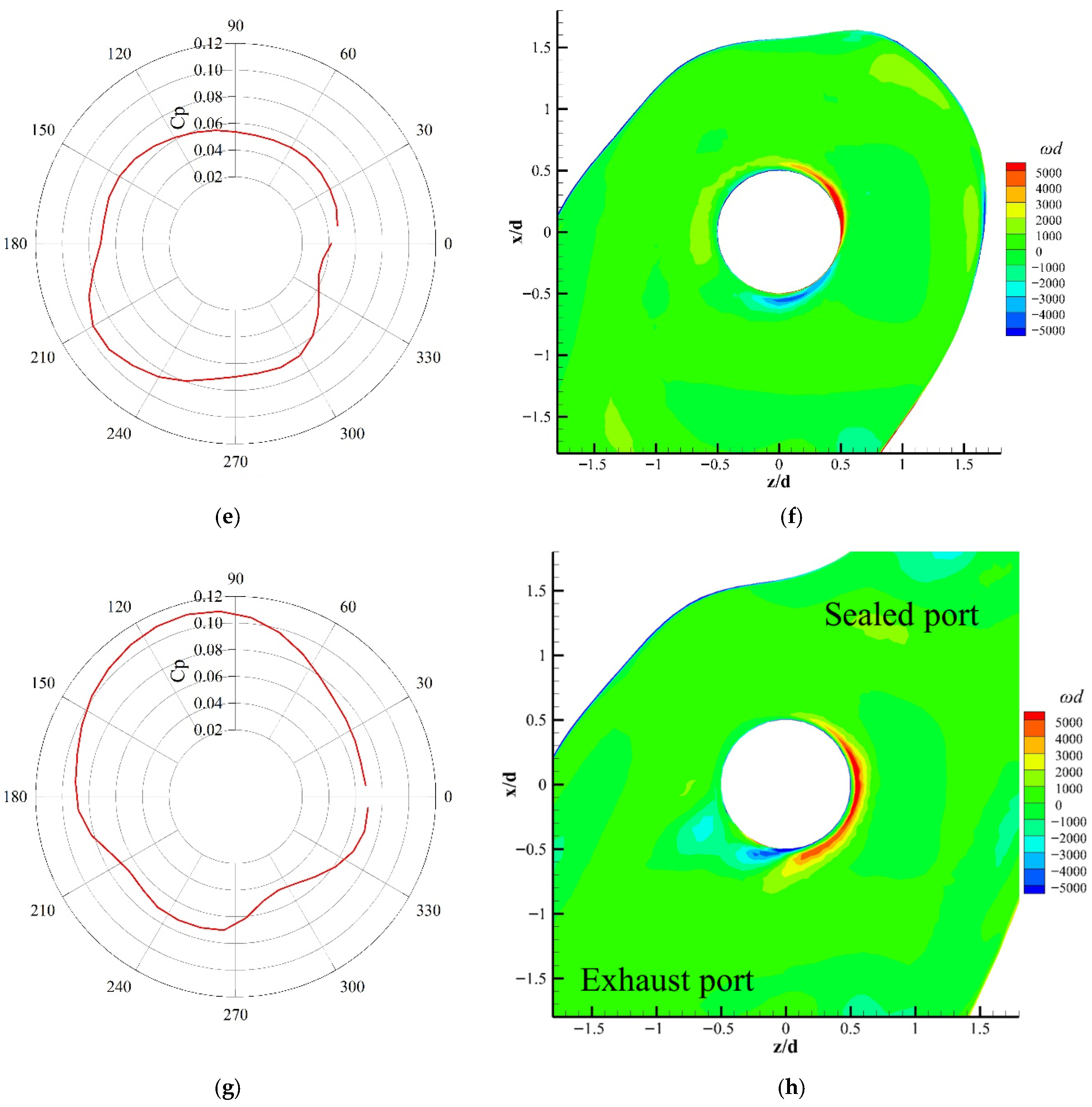
The velocity shown in Figure 6 increases within the axial range of y/d = 0.5 to 0.99. Figure 8 presents the flow structures and corresponding circumferential pressure distributions at y/d values of 0.62, 0.74, 0.86, and 0.99. At y/d = 0.62, two vortex structures are still observable near the valve wall. Given that VL is in close proximity to the exhaust port and possesses a relatively large vorticity, as illustrated in Figure 8b, the surface pressure at the circumferential position of 220° is higher than that at 45°, as depicted in Figure 8a. As the flow progresses along the axial direction at y/d = 0.74, as shown in Figure 8c,d, characteristics similar to those in Figure 8a,b become more prominent. Figure 8e,f display the circumferential pressure distributions and vorticity distributions at y/d = 0.86, which is near the exhaust port. The position of the stationary point shifts towards the downwind side of the exhaust port. As the flow continues to develop along the axial direction of the valve, y/d = 0.99 represents the section located precisely at the exhaust port. The location of the stationary point is close to the circumferential position of 0°, causing the two vortices to develop from the same side and move towards the exhaust port, as shown in Figure 8h. Consequently, the pressure in the circumferential zone spanning from 240° to 360° is lower, as indicated in Figure 8g.
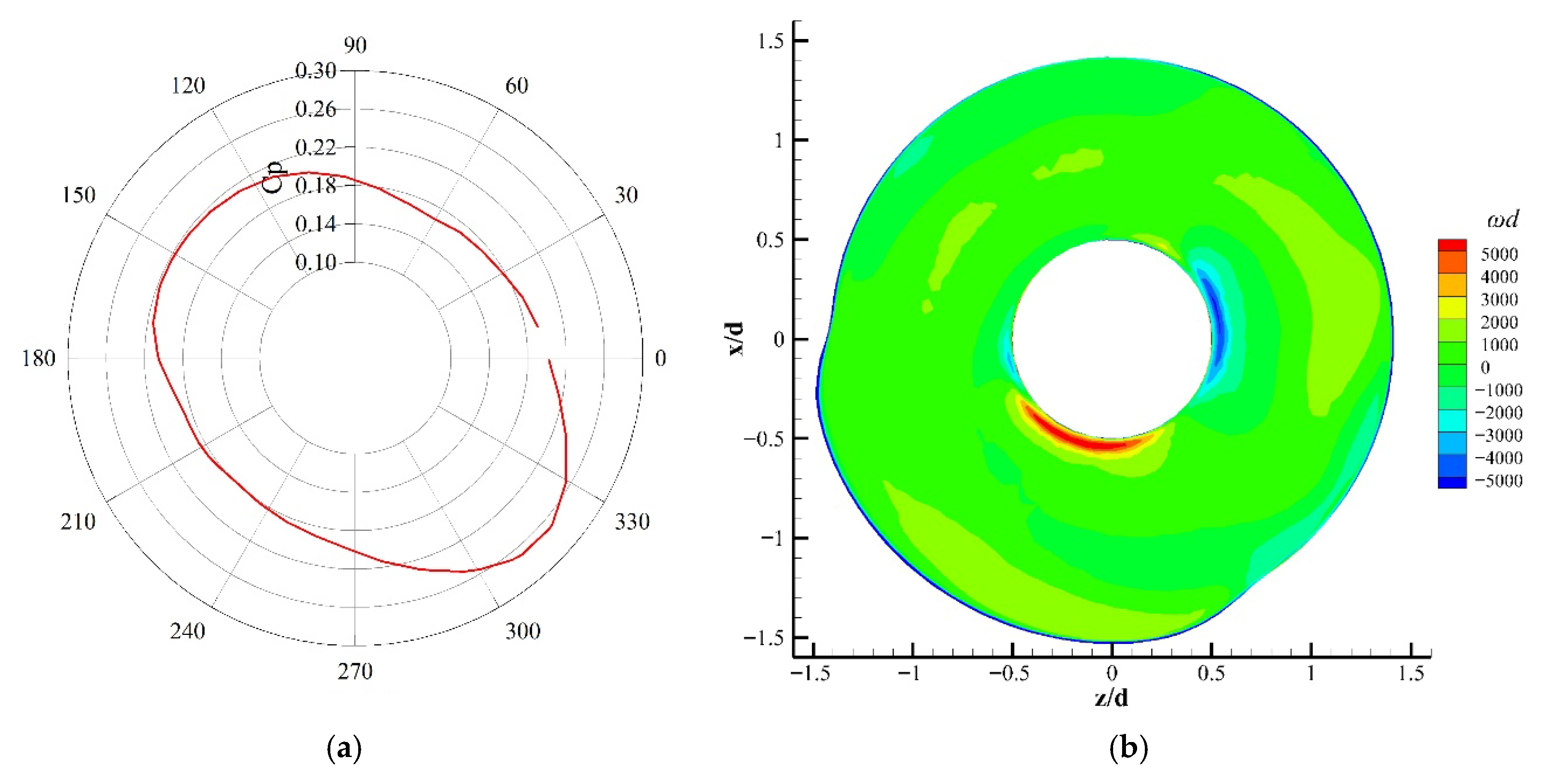
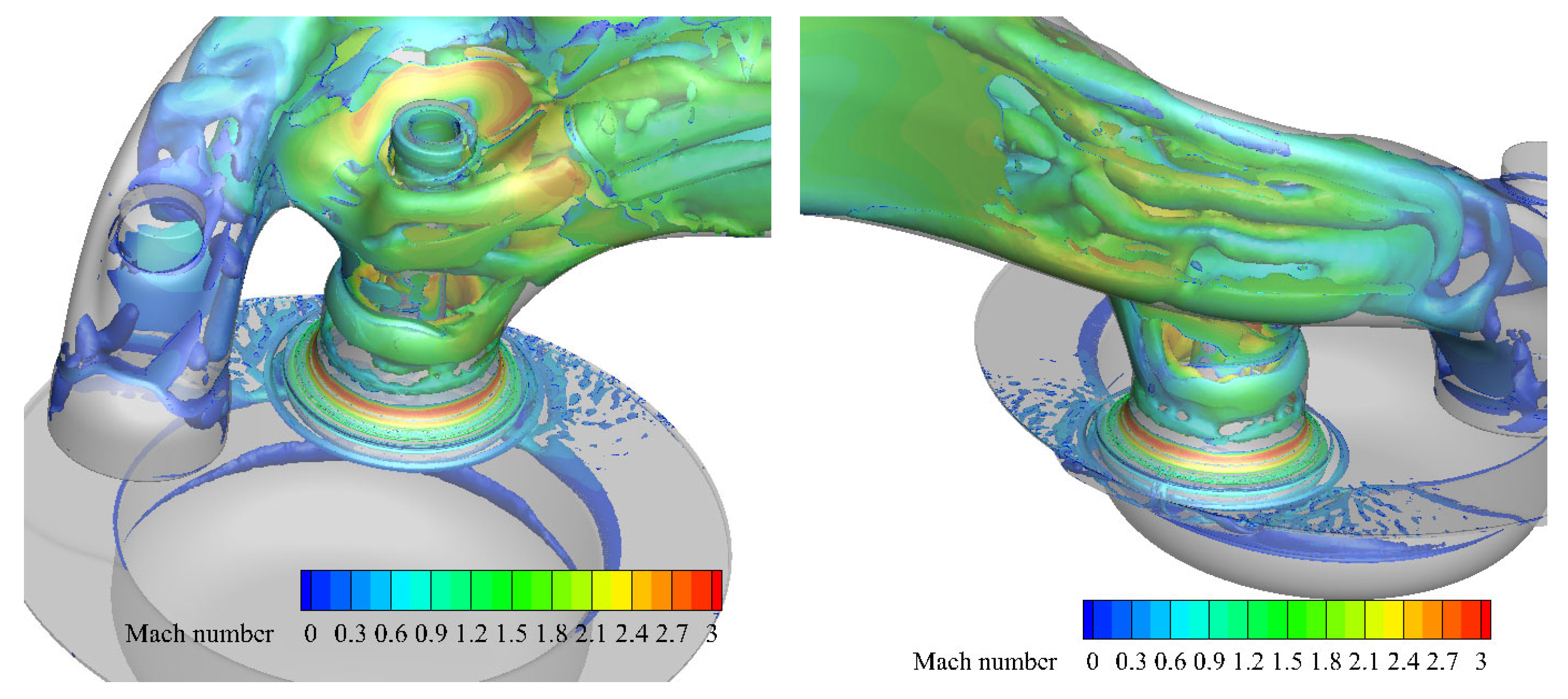
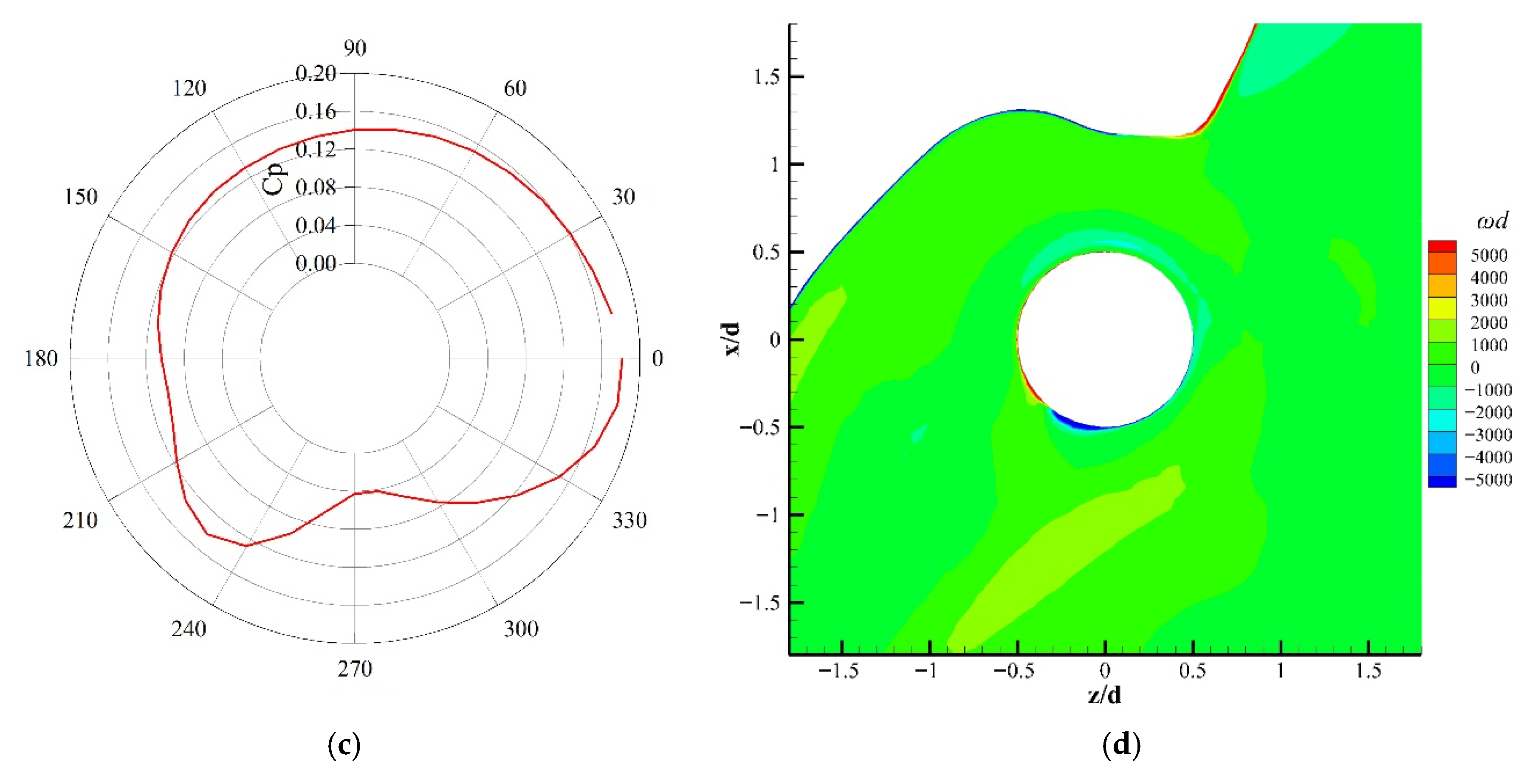
As depicted in Figure 1, the exhaust port is situated in the negative direction along the x-axis. Figure 9 illustrates the flow structures and corresponding circumferential pressure distributions at y/d values of 1.11 and 1.23, which fall within the asymmetry re-increase zone. Since these sections are positioned at the exhaust port, the flow within them clearly moves towards the port. Flow separation occurs on both sides of the valve, giving rise to the formation of two back vortices, which subsequently intensifies the asymmetry. Figure 10 presents the physical model of the flow around the valve.
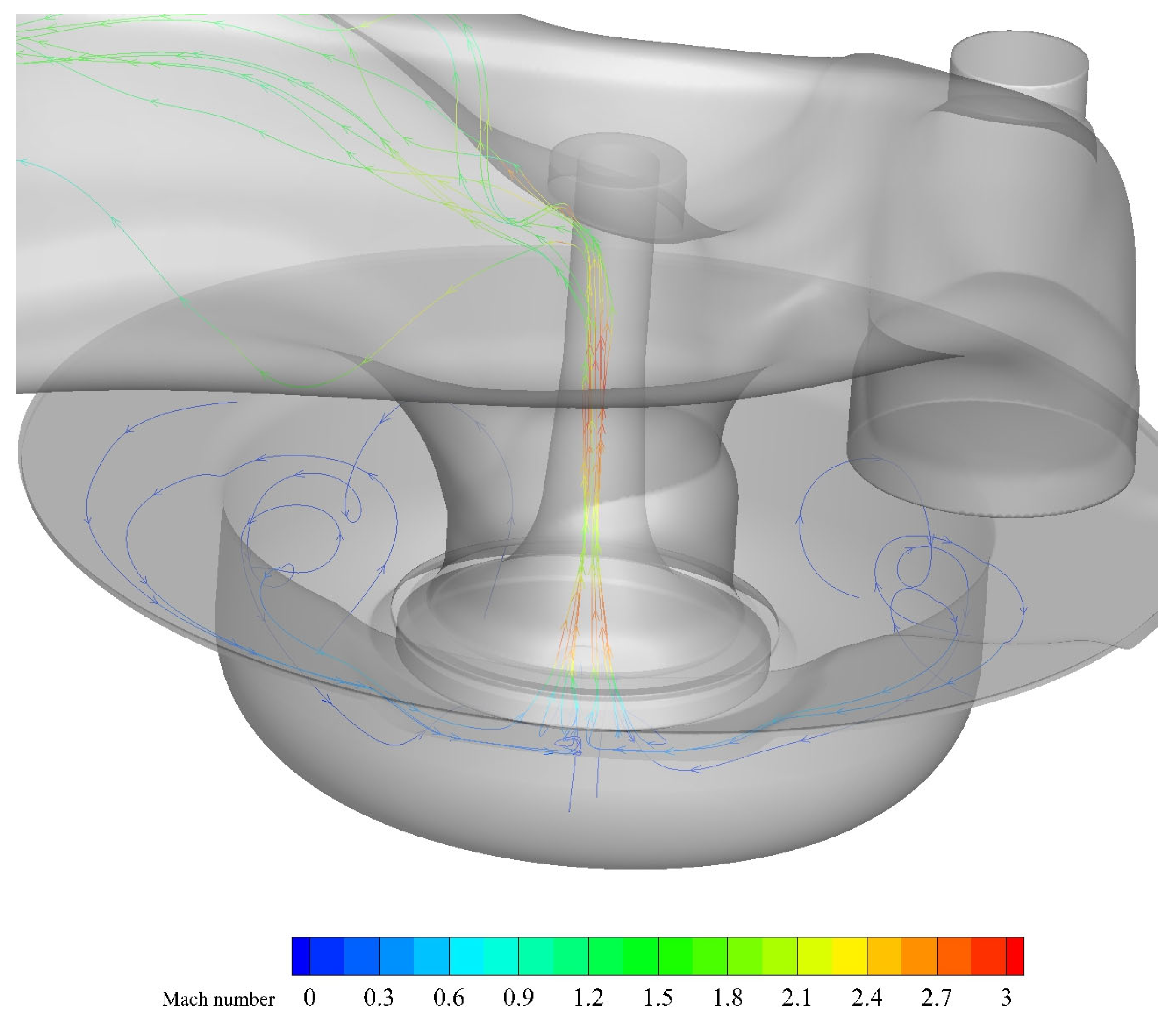
It is noteworthy that the rapid development of vortices on both sides of the valve gave rise to a localized vacuum, which in turn resulted in the formation of two small vortices, labeled as Vs, in Figure 5b,d. To assess the influence of Vs, Figure 11 displays the streamlines associated with these vortices. It can be observed that the streamlines ascend directly upwards along the axial direction and subsequently exit through the exhaust port. Given their minimal impact on the valve, these vortices can be considered negligible.


4. Conclusions

An analysis of the aerodynamic characteristics of the exhaust valve under braking conditions was conducted via a three-dimensional numerical simulation, revealing the flow mechanism underlying the valve deviation in the instantaneous state. For this study, the data measured in the bench experiment of Weichai Power were used as boundary conditions to ensure the reliability of the simulation. The piston and valve were fixed at the crankshaft angle of 0°, and the pressure difference between the cylinder and the exhaust port was about 3.5 MPa with a maximum temperature of 837.85 k. Due to the small lift of the brake exhaust valve, a high-speed airflow of about Mach 3 was induced around the valve.
The flow pattern within the valve chamber demonstrates a complex, multi-turbulent state. The evolution pattern of the asymmetric multi-vortex flow along the valve axis was observed across three distinct zones: the asymmetry increase zone, the symmetric development zone, and the asymmetry re-increase zone. Consequently, the curved section and cylindrical body of the valve emerge as the primary locations where lateral forces are generated, making them the focal points of research on valve deviation. Based on the results of this paper, methods for optimizing the exhaust valve structure through flow control can be further studied. In addition, drawing on the research done by Semlitsch et al. [18,19], more investigations can perform Proper Orthogonal Decomposition (POD) of coherent structures or incorporate the movement of the piston and valve to analyze the flow field around the valve.

Author Contributions

Validation, Z.D.; investigation, Z.C.; writing—original draft preparation, W.M.; writing—review and editing, Z.C.; supervision, Q.S. All authors have read and agreed to the published version of the manuscript.

Funding

This research was funded by the Research Fund of State Key Laboratory of Engine and Powertrain System (funding number: skleps-sq-2024-095).

Institutional Review Board Statement

Not applicable.

Informed Consent Statement

Not applicable.

Data Availability Statement

The raw data supporting the conclusions of this article will be made available by the authors on request.

Conflicts of Interest

Authors Wenchao Mo and Zhancheng Dou were employed by the company State Key Laboratory of Engine and Powertrain System, Weichai Power Co., Ltd. Author Qiang Sun was employed by the company Ningbo Shenglong Intelligent Automotive Systems Co., Ltd. The remaining authors declare that the research was conducted in the absence of any commercial or financial relationships that could be construed as a potential conflict of interest.

References

  1. Korczewski, Z.; Rudnicki, J.; Varbanets, R.; Minchev, D. Multi-Symptom Diagnostic Investigation of the Working Process of a Marine Diesel Engine: Case Study. Pol. Marit. Res. 2025, 32, 87–96. [Google Scholar] [CrossRef]
  2. Zhang, J.; Han, J. CAE process to simulate and optimise engine noise and vibration. Mech. Syst. Signal Process. 2006, 20, 1400–1409. [Google Scholar] [CrossRef]
  3. Ungar, E.E.; Ross, D. Vibration and noise due to piston slap in reciprocating machinery. J. Sound Vib. 1965, 2, 132–146. [Google Scholar] [CrossRef]
  4. Duan, Q.J.; Tan, Y.H. Analysis of the cause of piston colliding with valve in diesel engine. Mod. Agric. 2005, 4, 27–28. [Google Scholar]
  5. Hu, W. Analysis of the Failure of the Neck of the Diesel Engine Intake Valve and Structural Optimization; Nanhua University: Hengyang, China, 2016. [Google Scholar]
  6. Li, Y.Z. The causes and prevention analysis of carbon deposits in diesel engines. South Agric. Mach. 2020, 51, 130–131. [Google Scholar]
  7. He, K.; Zhang, B. Diagnosis and analysis of mechanical system failures in automobile engines. South. Agric. Mach. 2020, 51, 180–181. [Google Scholar]
  8. Xu, D.Y.; Ding, X.H. Conceptual Design and Practice of High-Speed Diesel Engines; Mechanical Industry Press: Beijing, China, 2004; pp. 5–8. [Google Scholar]
  9. Wang, L.; Liu, Z.M. The present situation of the failure mechanism of engine exhaust valves in the world. J. Wuhan Univ. Technol. 2000, 22, 83–86. [Google Scholar]
  10. Takeo, Q.; Noboru, Y.; Akira, F.; Atsushi, E. Impact wear characteristics of engine valve seat insert materials engineering and performance. Trans. Jpn. Soc. Mech. Eng. Ser. C 1995, 4, 55–60. [Google Scholar]
  11. da Silva, J.A.; da Silva, L.P.; Campos, J.C.C.; Siqueira, A.M.d.O.; Gurgel, A.; Gómez, L.C. Dynamic mesh analysis by numerical simulation of internal combustion engines. REM-Int. Eng. J. 2024, 77, 27. [Google Scholar] [CrossRef]
  12. Gosman, A.D.; Ahmed, A.M.Y. Measurement and Multidimensional Calculation of Combustion in All Idealized Homogenous Charge Engine; SAE Technical Paper 810151; SAE: Warrendale, PA, USA, 1987. [Google Scholar]
  13. Li, F.; Zhao, Q.; Luo, Y.J. Affection of valve shape on air flow of S.I. engine. J. Beijing Univ. Aeronaut. Astronaut. 2001, 20, 48–50. [Google Scholar]
  14. Cosadia, I.; Borée, J.; Charnay, G.; Dumont, P. Cyclic variations of the swirling flow in a diesel transparent engine. Exp. Fluids 2006, 41, 115. [Google Scholar] [CrossRef]
  15. Miles, P.C.; Collin, R.; Hildingsson, L.; Hultqvist, A.; Andersson, Ö. Combined measurements of flow structure, partially oxidized fuel, and soot in a high-speed, direct-injection diesel engine. Proc. Combust. Inst. 2007, 31, 2963–2970. [Google Scholar] [CrossRef]
  16. Wang, Y.; Semlitsch, B.; Mihaescu, M.; Fuchs, L. Flow-structures Generated by Valve and Piston Motion in an Exhaust Port of a Truck Engine. In Proceedings of the 4th International Conference on Jets, Wakes and Separated Flows, ICJWSF2013, Nagoya, Japan, 17–21 September 2013. [Google Scholar]
  17. Wang, Y.; Semlitsch, B.; Mihaescu, M.; Fuchs, L. Flow induced energy losses in the exhaust port of an internal combustion engine. J. Fluids Eng. 2015, 137, 011105. [Google Scholar] [CrossRef]
  18. Semlitsch, B.; Wang, Y.; Mihaescu, M. Flow effects due to pulsation in an internal combustion engine exhaust port. Energy Convers. Manag. 2014, 86, 520–536. [Google Scholar] [CrossRef][Green Version]
  19. Semlitsch, B.; Wang, Y.; Mihaescu, M. Flow effects due to valve and piston motion in an internal combustion engine exhaust port. Energy Convers. Manag. 2015, 96, 18–30. [Google Scholar] [CrossRef]
  20. Winroth, P.M.; Ford, C.L.; Alfredsson, P.H. On discharge from poppet valves: Effects of pressure and system dynamics. Exp. Fluids 2018, 59, 24. [Google Scholar] [CrossRef]
  21. Fontanesi, S.; Cicalese, G.; Sever, E. Analysis of Turbulence Model Effect on the Characterization of the In-Cylinder Flow Field in a HSDI Diesel Engine; SAE Technical Paper; SAE: Warrendale, PA, USA, 2013. [Google Scholar]
  22. Yang, X.; Keum, S.; Kuo, T.-W. Effect of valve opening/closing setup on computational fluid dynamics prediction of engine flows. J. Eng. Gas Turbines Power 2016, 138, 081503. [Google Scholar] [CrossRef]
  23. Hoffmann, J.; Mirsch, N.; Vera-Tudela, W.; Wüthrich, D.; Rosenberg, J.; Günther, M.; Pischinger, S.; Weiss, D.A.; Herrmann, K. Flow field investigation of a single engine valve using PIV, POD, and LES. Energies 2023, 16, 2402. [Google Scholar] [CrossRef]
  24. Rabault, J.; Vernet, J.A.; Lindgren, B.; Alfredsson, P.H. A study using PIV of the intake flow in a diesel engine cylinder. Int. J. Heat Fluid Flow 2016, 62, 56–67. [Google Scholar] [CrossRef]
Figure 1. A model of the valve and its related components. Units of length scale are in mm.
Fluids 11 00087 g001
Figure 2. Numerical model and grids. (a) Model shell; (b) valve.
Fluids 11 00087 g002
Figure 3. Verification of grid number independence. (a) Variations in sectional lateral force (Cz) with grid number (N millions). (b) Circumferential pressure (Cp) distributions under different grids.
Fluids 11 00087 g003aFluids 11 00087 g003b
Figure 4. Variation in sectional lateral-force Cz with y/d.
Fluids 11 00087 g004
Figure 5. Flow structures and corresponding circumferential pressure distributions at y/d = 0, 0.12, 0.25 and 0.37 (shown in Figure 1). The contour plot represents dimensionless vorticity. (a) y/d = 0, circumferential pressure distributions. (b) y/d = 0, distributions of vorticity. (c) y/d = 0.12, circumferential pressure distributions. (d) y/d = 0.12, distributions of vorticity. (e) y/d = 0.25, circumferential pressure distributions. (f) y/d = 0.25, distributions of vorticity. (g) y/d = 0.37, circumferential pressure distributions. (h) y/d = 0.37, distributions of vorticity.
Fluids 11 00087 g005aFluids 11 00087 g005b
Figure 6. The vector and contour images of y-velocity direction. (a) Section 1, velocity vector. (b) Section 1, velocity contour. (c) Section 2, velocity vector. (d) Section 2, velocity contour.
Fluids 11 00087 g006
Figure 7. Flow structures and corresponding circumferential pressure distributions at y/d = 0.49 (shown in Figure 1). The contour plot represents dimensionless vorticity. (a) y/d = 0.49, circumferential pressure distributions. (b) y/d = 0.49, distributions of vorticity.
Fluids 11 00087 g007
Figure 8. Flow structures and corresponding circumferential pressure distributions at y/d =0.62, 0.74, 0.86 and 0.99 (shown in Figure 1). The contour plot represents dimensionless vorticity. (a) y/d = 0.62, circumferential pressure distributions. (b) y/d = 0.62, distributions of vorticity. (c) y/d = 0.74, circumferential pressure distributions. (d) y/d = 0.74, distributions of vorticity. (e) y/d = 0.86, circumferential pressure distributions. (f) y/d = 0.86, distributions of vorticity. (g) y/d = 0.99, circumferential pressure distributions. (h) y/d = 0.99, distributions of vorticity.
Fluids 11 00087 g008aFluids 11 00087 g008b
Figure 9. Flow structures and corresponding circumferential pressure distributions at different y/d. The contour plot represents dimensionless vorticity. (a) y/d = 1.11, circumferential pressure distributions. (b) y/d = 1.11, distributions of vorticity. (c) y/d = 1.23, circumferential pressure distributions. (d) y/d = 1.23, distributions of vorticity.
Fluids 11 00087 g009aFluids 11 00087 g009b
Figure 10. Three-dimensional flow structure around the valve.
Fluids 11 00087 g010
Figure 11. The streamline of Vs.
Fluids 11 00087 g011
Disclaimer/Publisher’s Note: The statements, opinions and data contained in all publications are solely those of the individual author(s) and contributor(s) and not of MDPI and/or the editor(s). MDPI and/or the editor(s) disclaim responsibility for any injury to people or property resulting from any ideas, methods, instructions or products referred to in the content.