Article

Numerical Study on the Aerodynamic Performance and Noise of Composite Bionic Airfoils

1
Hebei Key Laboratory of Low Carbon and High Efficiency Power Generation Technology, North China Electric Power University, Baoding 071003, China
2
Sichuan Yanyuan Huadian New Energy Co., Ltd., Liangshan 601226, China
*
Author to whom correspondence should be addressed.
Fluids 2026, 11(2), 36; https://doi.org/10.3390/fluids11020036
Submission received: 26 December 2025 / Revised: 21 January 2026 / Accepted: 26 January 2026 / Published: 28 January 2026
(This article belongs to the Special Issue 10th Anniversary of Fluids—Recent Advances in Fluid Mechanics)

Abstract

Bionic airfoils are an effective method to improve aerodynamic performance and reduce the noise of wind turbine blades. To explore the impact of the lower surface of bird wing airfoils on the aerodynamic performance and noise of blades, this study combines the upper surface of the NACA0018 airfoil with the lower surfaces of the teal, long-eared owl, and sparrowhawk (CBA-T, CBA-O, CBA-S) to create three new composite bionic airfoils (CBAs). The aerodynamic performance of these airfoils is evaluated, and the CBA-O airfoil is identified as having the best aerodynamic characteristics. A comparison of the noise and vortex structures of the CBA-O, owl wing airfoil, and NACA0018 is conducted, and the mechanisms behind the CBA-O airfoil performance improvement and noise reduction are explored. The results indicate that the CBAs enhance the aerodynamic performance of the airfoils. Before stall, the aerodynamic performance of the CBA-O improves the lift-to-drag ratio by 12.7% and 119.7% compared to the owl and NACA0018 airfoils, with its average SPL significantly lower than that of the NACA0018. The CBA-O has smaller vortex sizes at the trailing-edge, and the wake vortex develops more stably, effectively reducing both surface radiation noise and wake noise.

1. Introduction

As a critical renewable energy technology, wind power plays a vital role in reducing reliance on fossil fuels and alleviating environmental pollution. The airfoil serves as the fundamental aerodynamic unit of wind turbine blades; consequently, its performance decisively determines the turbine’s power output and energy conversion efficiency. Therefore, enhancing the aerodynamic performance of airfoils while simultaneously reducing aerodynamic noise is of significant practical importance for advancing wind energy utilization and minimizing environmental impact.
Many living things in nature, with their exceptional morphological characteristics, have provided inspiration for scientists and engineers [1]. Humanity’s continuous learning from and mimicking of nature has accelerated the progress of bionics and promoted the development of bionic flow control technologies [2]. Bionic flow control strategies reduce drag, enhance lift, and minimize noise by mimicking the structure and function of natural living things [3,4,5].
Many studies on flow dynamics and noise reduction mechanisms have been conducted on various bionic airfoil profiles, including serrated, wavy, and protruding designs [6,7,8]. Experimental measurements of the flow field around a serrated trailing-edge airfoil revealed that this structure significantly reduces the transport speed of turbulent vortices and diminishes the spanwise correlation of wall pressure fluctuations [9]. Numerical simulations on the aerodynamic performance of multiple protrusions showed that when the distance between the protrusions is 0.25 times the chord length, the lift-to-drag ratio improves by 5% to 15%. Moreover, these airfoils maintain good lift characteristics even at high angles of attack [10]. A novel biomimetic airfoil was designed by mimicking the shape of a dolphin’s head based on the NACA0018 airfoil. Numerical simulations indicated that at an angle of attack of 16° and a leading-edge deflection angle of 24°, the lift coefficient increased by 21.1%, while the drag coefficient decreased by 29.8% [4]. Research has shown that leading-edge biomimetic nodules can enhance the lift coefficient, delay stall, and effectively improve stall characteristics [11]. A biomimetic serrated vortex generator, inspired by shark skin, was developed, and experimental results demonstrated that it reduces the turbulence-induced disturbance to the boundary layer. At an angle of attack of 0°, the drag of the airfoil was reduced by 25.4% [12]. The use of the leading-edge serrated bionic airfoil can reduce noise by approximately 14.3 dB [13]. By combining the skeletal structure of a dolphin, two new biomimetic airfoils were designed, and the results showed that these airfoils significantly improved the lift coefficient and suppressed flow separation on the suction side. At an angle of attack of 18°, the maximum sound pressure level decreased by 11.96% and 7.03%, respectively, for the two airfoils [14]. A leading-edge serrated biomimetic airfoil was designed, and simulation results confirmed that it effectively reduces noise and suppresses trailing-edge vortex separation [15]. Numerical simulations also indicated that adding biomimetic ridge structures to the airfoil surface could reduce the sound pressure level by 10 dB and the peak noise by 26 dB [16]. By designing a biomimetic airfoil with a wavy leading edge, serrated trailing edge, and surface ridges, the results showed that the noise was reduced by 13.1–13.9 dB, and a horseshoe vortex was generated at the trailing edge [17].
In addition to bio-inspired derivative structures, direct biomimicry of airfoil shapes has garnered significant attention. Recent studies have also explored modifying the trailing edge geometry, such as using deformable trailing edges, to effectively improve the aerodynamic lift-to-drag ratio and stall characteristics [18]. Similarly, the wing shape characteristics of seagulls, mallards, long-eared owls, and sparrowhawks were analyzed using 3D laser scanning technology, and different cross-sectional airfoils were reverse-engineered, facilitating the development and application of biomimetic airfoils [19]. A biomimetic airfoil inspired by the sturgeon was developed using curve-fitting methods. Numerical studies indicated that the lift coefficient of the asymmetric biomimetic airfoil was significantly higher than that of the symmetric biomimetic airfoil [20]. Analysis of a locust-inspired wing airfoil revealed that the drag of both the forewings and hindwings increased with the thickness of the wings, while the effect of corrugations on the lift-to-drag ratio was relatively small [21]. Simulations of a biomimetic airfoil based on the 40% cross-section of a long-eared owl’s wing showed that the unique structure of the owl’s wing could suppress unsteady pressure fluctuations on the surface of the blade [22]. A new biomimetic airfoil was designed by mimicking the wings of the long-eared owl, and simulation results indicated that the lift coefficient of the biomimetic blade increased by 12% [23]. A biomimetic airfoil with a trailing-edge deflection was designed by mimicking bird wings, and it was found that this airfoil could effectively delay flow separation and suppress Reynolds stresses. However, the generated broadband noise was relatively higher [24].
The reported work mentioned above has primarily focused on bionic flow control or the aerodynamic performance and noise of bionic airfoils, with most bionic studies on airfoils targeting the entire airfoil shape. The NACA airfoil upper surface has a relatively smooth curvature, which provides good lift and stability at high angles of attack, while the lower surface of bird wings is typically steeper, helping to reduce drag. Coupling the two could undoubtedly enhance the aerodynamic performance of airfoils. Unfortunately, there is little published literature on bionic airfoils combining the upper surface of NACA airfoils with the lower surface of bird wings. Therefore, the main novelty of this work lies in the systematic design and comparative analysis of three composite bionic airfoils (CBAs) created by combining the upper surface of the standard NACA0018 airfoil with the lower surfaces of three distinct bird wings (teal, long-eared owl, sparrowhawk). This hybrid design strategy, which decouples the upper and lower surface influences, is less explored compared to whole-profile biomimicry. We aim to reveal the individual contribution of the bird-inspired lower camber to aerodynamic and aeroacoustic performance, providing a new perspective for bionic airfoil optimization. This study uses the NACA0018 airfoil as the baseline and combines its upper surface with the lower surfaces of three bird wings, the teal, long-eared owl, and sparrowhawk, to create three new composite bionic airfoils (CBAs). Through numerical simulations, the aerodynamic performance and internal flow characteristics of these CBAs are compared to identify the one with the optimal aerodynamic performance. Then, the noise characteristics and vortex structure distribution of the best CBA are compared with those of the corresponding bird-wing airfoil and NACA0018 airfoil, aiming to reveal the underlying mechanisms behind the improvements in aerodynamic performance and the reduction in noise.

2. Formulation of Models

2.1. Geometric Model

The shape and working environment of wind turbine blades share certain similarities with bird wings. Over millions of years of natural selection, birds have ingeniously utilized airflow to achieve efficient flight, with their wings characterized by low drag and low noise. The published studies have shown that at a spanwise position greater than 70%, bird wings only feature primary feathers without coverts, and the spacing between fully extended primary feathers is relatively large, preventing the formation of a continuous airfoil. The aerodynamic performance of bird wings is particularly high at a 40% spanwise location, where the lift-to-drag ratio is large [19]. In this study, using reverse engineering techniques, the three novel CBAs are reconstructed for a teal, long-eared owl, and sparrowhawk at the 40% spanwise location of their wings, each representing different aerodynamic characteristics.
The contour equation of the airfoil surface is determined by the relationship between the mean surface and the airfoil thickness distribution as follows:
z u = z c + z t
z l = z c z t
where Zu and Zl represent the upper and lower surface coordinates of an airfoil, respectively; Z(c) is the mean surface coordinate of an airfoil; Z(t) is the airfoil thickness distribution coordinate of an airfoil.
The calculation formulas for Z(c) and Z(t) are given as follows:
z c c = z c max c η 1 η n = 1 3 s n 2 η 1 n 1
z t c = z t max c η 1 η n = 1 4 A n η n + 1 η
where η = x/c is the non-dimensional chord length coordinate; Z(c)max is the maximum surface coordinate of an airfoil; Z(t)max is the maximum thickness coordinate of an airfoil; Sn and An are the polynomial coefficients describing the surface and airfoil thickness distribution of an airfoil, respectively.
The fitting relationships of the maximum airfoil thickness distribution and camber for the teal airfoil are given as follows:
z c max c = 0.11 / 1 + 4 ξ 1.4
z c c = z c max c η 1 η n = 1 3 s n 2 η 1 n 1
The fitting relationships of the maximum airfoil thickness distribution and camber for the long-eared owl airfoil are described as follows:
z c max c = 0.18 / 1 + 7.31 ξ 2.77
z t max c = 0.1 / 1 + 14.86 ξ 3.52
where ξ represents the aspect ratio of an airfoil, and ξ is set to 0.4 in this study.
The polynomial coefficients are obtained through least-squares fitting, resulting in the specific airfoil shapes for the two bird wings. The coefficients in Equations (3) and (4) for two bionic airfoils are listed in Table 1.
The relationships for the upper and lower surfaces of the sparrowhawk [25] are given as follows:
y up = 0.0006 x 3 0.0367 x 2 + 1.1094 x + 1.1985
y low = 0.011 x 3 + 0.045 x 2 0.3793 x 1.3623
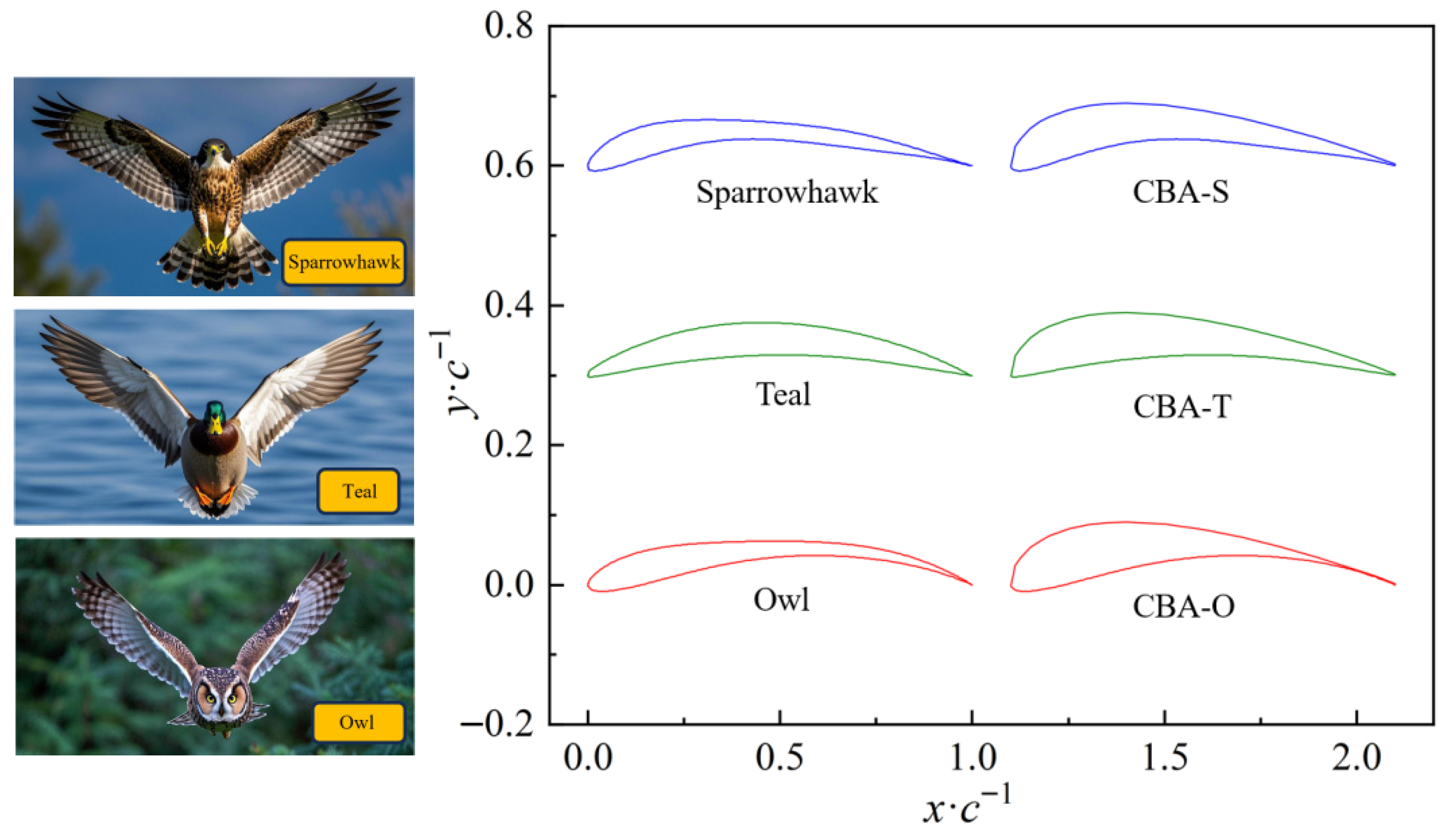
The NACA0018 upper surface is combined with the lower surface of three bird wings to create three CBAs, as shown in Figure 1. Mathematically, the upper and lower surfaces are joined by aligning their leading edges at the coordinate origin (0, 0). To ensure a smooth transition and avoid geometric singularity at the leading edge, a local cubic spline fitting was applied to merge the curvature of the NACA0018 upper profile with the bio-inspired lower profile, ensuring tangent continuity at the junction. The horizontal and vertical coordinates in Figure 1 are used for a comparison of their shapes only. For ease of description, the subsequent composite bio-inspired airfoils based on different bird species are named as follows: CBA-bird. For example, CBA-O indicates that the airfoil is a combination of the upper surface of NACA0018 and the lower surface of the long-eared owl. Similarly, CBA-T and CBA-S refer to airfoils created by combining the NACA0018 upper surface with the lower surfaces of the teal and sparrowhawk, respectively.
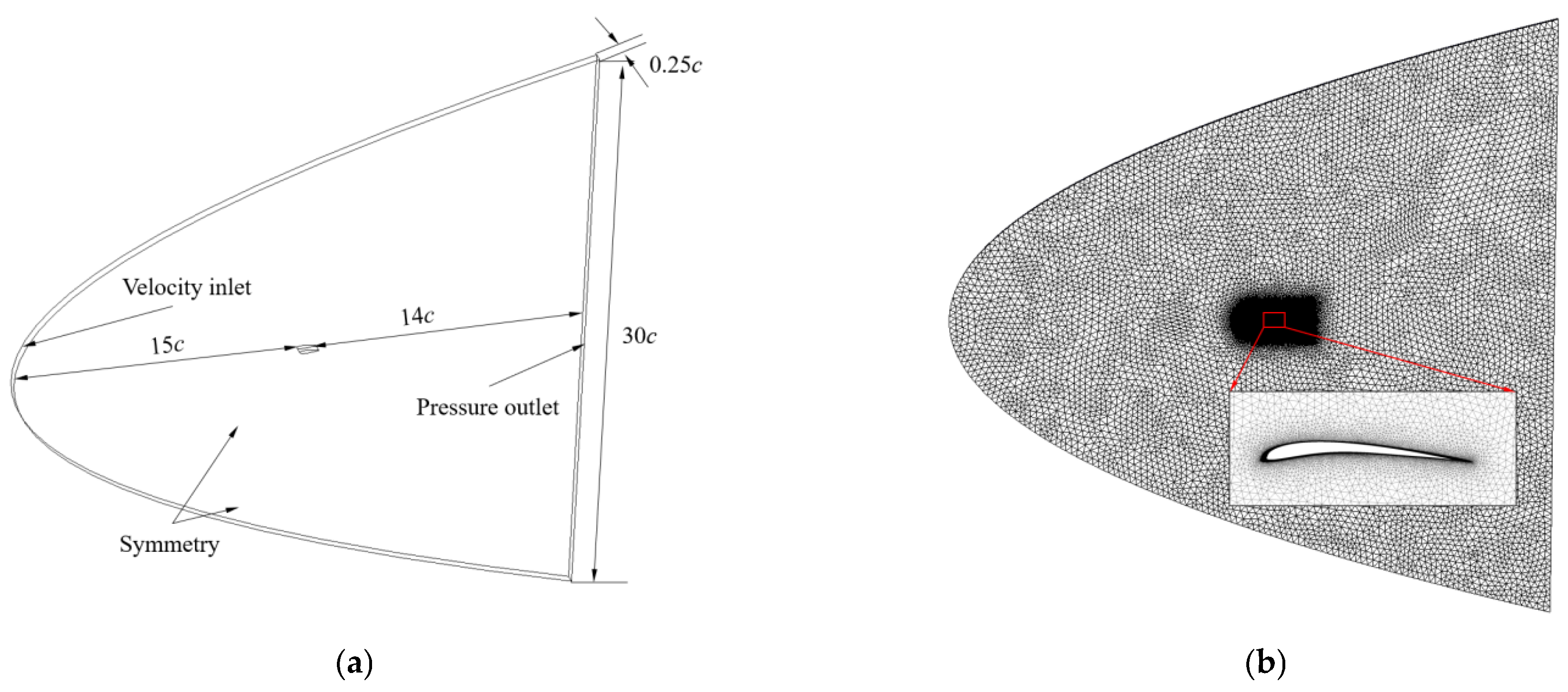
A chord length of 0.5 m of the baseline is selected in this study, and the computational domain boundary is a sector-shaped region, as shown in Figure 2a. For the boundary conditions, the inlet is defined as a velocity inlet with a Reynolds number of 5 × 10⁵, and the outlet is set as a pressure outlet. The height of the first grid layer near the wall is set to 5.73 × 10⁻⁵ m, with a normal grid growth ratio near the wall of 1.05, ensuring the requirements of y+ < 1. The specific grid setup is illustrated in Figure 2b.

2.2. Mathematical Models and Computational Methods

The fluid dynamics and acoustic analyses were performed using ANSYS Fluent 2020R2. The flow around the airfoil has a Mach number less than 0.3, so the Reynolds-averaged Navier–Stokes (RANS) method, which describes incompressible flow, can be used. The governing equations include the continuity equation and the Reynolds-averaged Navier–Stokes equations (RANS).
u ¯ i x i = 0
ρ d u ¯ i d t = p ¯ x i + x j μ u ¯ i x j ρ u i u j ¯
where t is the time, μ is the dynamic viscosity, ui is the instantaneous velocity components in the i direction, and the term ρ u i u j the Reynolds stress, which accounts for the impact of turbulent fluctuations on the mean flow.
The turbulence model chosen to solve the RANS equations is the Shear Stress Transport (SST) k-ω model. This model is well-suited for capturing boundary layer flows with high accuracy [26,27]. It combines the k-ε model for free-stream turbulence and the k-ω model for boundary layers, providing a more robust solution for turbulent flows, especially in regions with high shear stresses, such as near walls.
ρ d k d t = μ + μ T σ k k + P k β * ρ ω k
ρ d ω d t = μ + μ T σ ω ω + P ω β ρ ω 2 + 2 ( 1 F 1 ) σ ω 2 ρ ω k ω
where k and ω are the turbulent kinetic energy and the specific energy dissipation rate, respectively; Pk is the effective generation rate of k, and Pω is the effective generation rate of ω; β, β*, σk, σω and σω2 are empirical coefficients; and F1 is a blending function.
In the solution of the above equations, the coupling of pressure and velocity terms is computed using the SIMPLE algorithm, and the convective and diffusive terms are discretized using a second-order upwind scheme [28]. The aerodynamic noise prediction is performed using a combined approach of Large Eddy Simulation (LES) and Computational Aeroacoustics (CAA) simulations. The LESs are three-dimensional, as confirmed by the computational domain in Figure 2. In the flow field simulation, the steady-state calculation results are used as the initial field, and LES is employed to obtain local sound pressure. The sound pressure is then processed using Fast Fourier Transform (FFT) to obtain the frequency domain characteristics of the local sound pressure, which are used to quantify the noise frequency and sound pressure level at monitoring points near the noise source. For the LES, the Smagorinsky–Lilly Subgrid Scale model, which is more suitable for turbulence simulations, is used. The spatial discretization adopts the central difference scheme, and the transient solution uses the second-order implicit scheme. Considering the human hearing frequency range, the time step is set to 5 × 10⁻⁵ s, with a total of 8000 calculation steps. The maximum iteration number for each time step is set to 10.
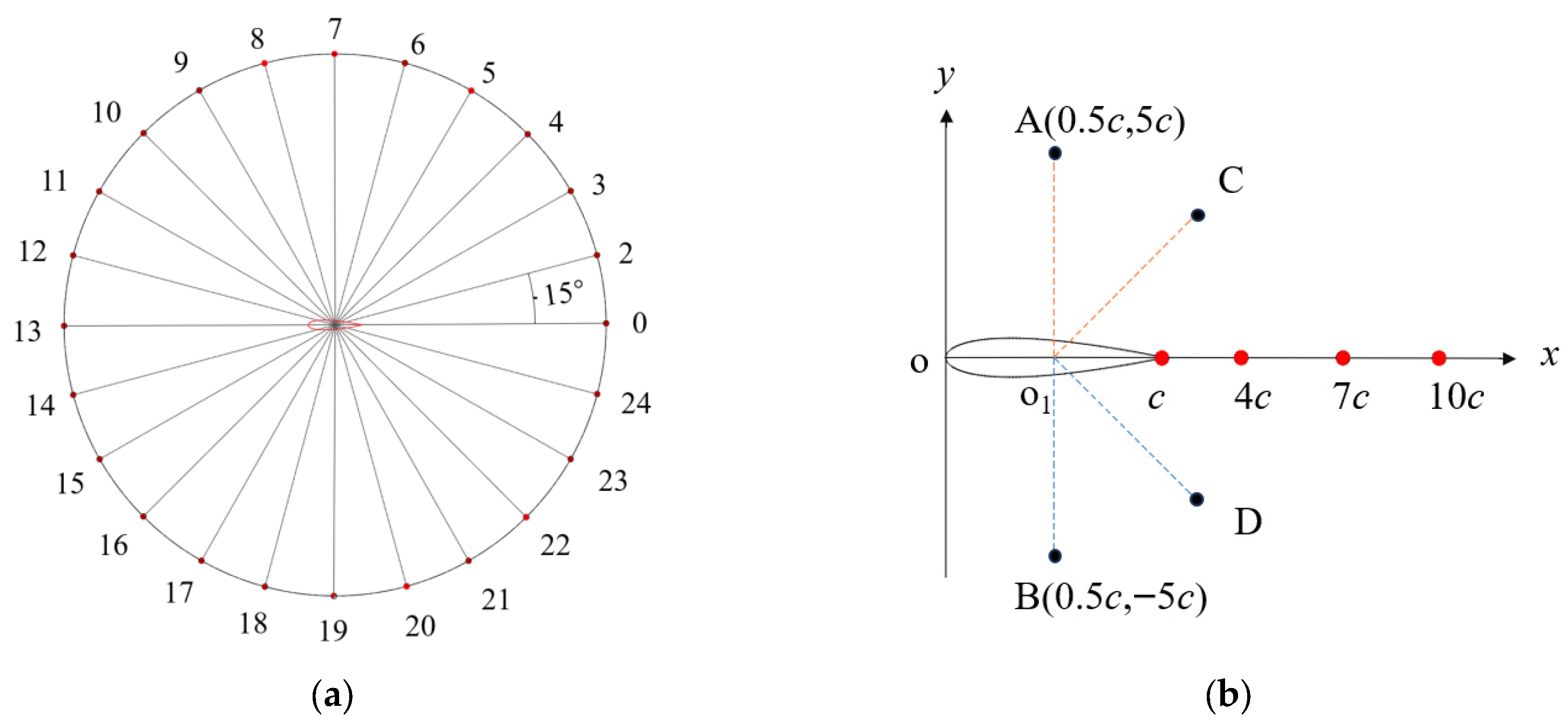
To monitor the surface radiation noise and wake noise of the airfoil, noise monitoring points are set as shown in Figure 3. The difference in sound radiation intensity of the sound source in free space causes the aerodynamic noise to exhibit different directional distributions. To evaluate the directional features of the sound pressure level of the surface radiation noise, a circle with the chord midpoint O1 as the center and a radius of 5c is drawn. A total of 24 noise monitoring points is arranged at 15° intervals along the circumference, as shown in Figure 3a. Additionally, to analyze the variation in noise, a rectangular coordinate system is constructed with the leading-edge of the airfoil as the origin, the chord line direction as the x-axis, and the direction perpendicular to the chord line as the y-axis. Monitoring points A and B are set at (0.5c, 5c) and (0.5c, −5c), respectively, located directly above and below the midpoint O1 (0.5c, 0) of the chord line. Points C and D are obtained by rotating point A clockwise by 45° and 135°, respectively. Four more monitoring points are placed at x = c, 4c, 7c, and 10c to monitor changes in the wake noise of the airfoil.

2.3. Mesh Division and Simulation Validation

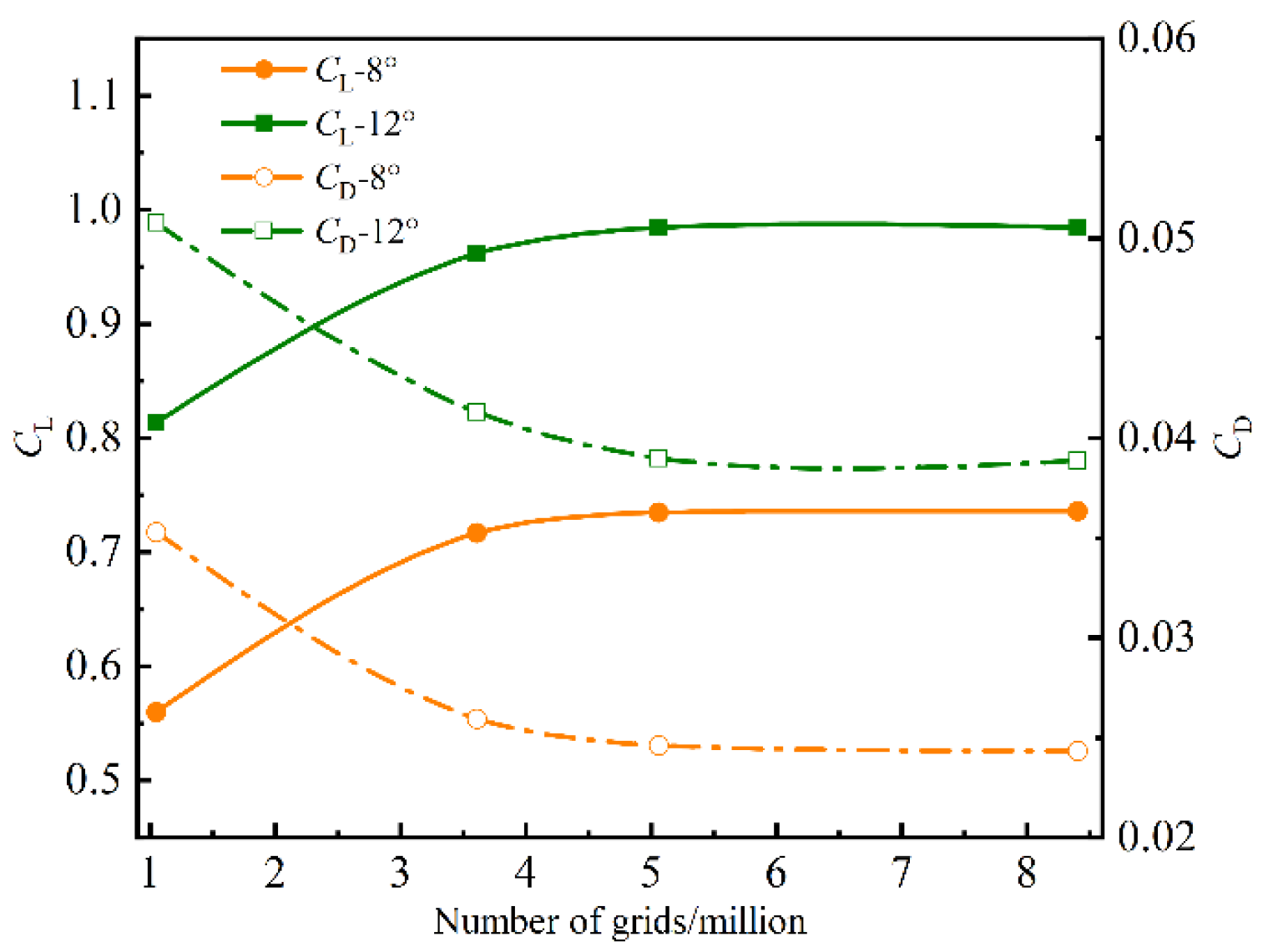
Taking the baseline at attack angles of 8° and 12° as examples, grid independence verification is conducted using grid numbers of 1.05 million, 3.61 million, 5.06 million, and 8.04 million. As shown in Figure 4, when the grid number increases from 5.06 million to 8.04 million, the lift and drag coefficients at both attack angles remain almost unchanged. Considering both the computational time and accuracy, a grid number of 5.06 million is chosen for subsequent modeling.
To perform a time-step independence test, as shown in Table 2, three time-step sizes (Δt = 1 × 10⁻⁴ s, 5 × 10⁻⁵ s, and 2 × 10⁻⁵ s) were compared at α = 6°. The resulting overall sound pressure levels (OASPL) at the far-field monitoring point A were 47.7 dB, 51.2 dB, and 51.4 dB, respectively. Reducing Δt from 5 × 10⁻⁵ s to 2 × 10⁻⁵ s produced only a 0.2 dB change in OASPL, indicating that the acoustic results have converged with respect to time step. Therefore, balancing computational accuracy and efficiency, a time step of Δt = 5 × 10⁻⁵ s was adopted for all subsequent simulations.
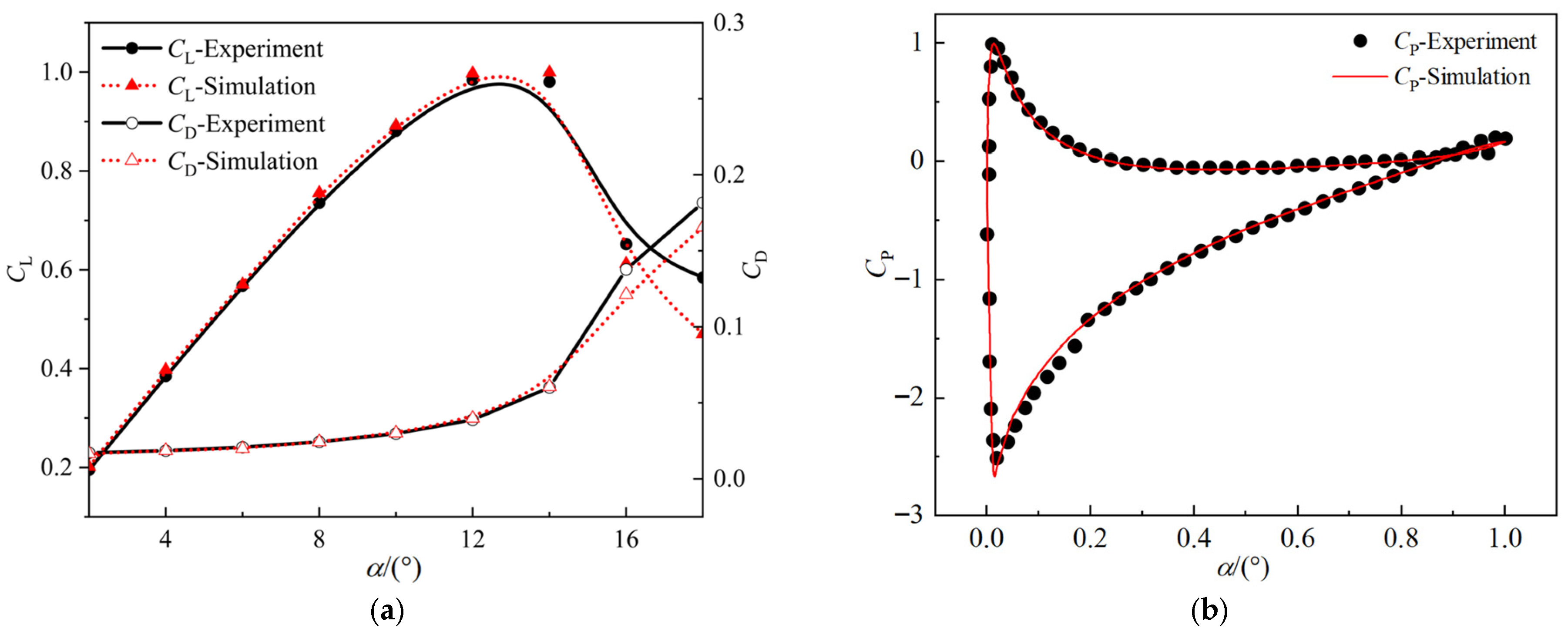
To assess the accuracy of the numerical simulation, Figure 5 presents a comparison between the simulated and experimental results for the lift and drag coefficients of the NACA0018 airfoil, along with the surface pressure coefficient distribution at an angle of attack of α = 8° [29]. The simulated lift and drag coefficients exhibit good agreement with the experimental data before the stall. Although discrepancies slightly increase beyond the stall angle, the average deviation remains within 1.2% across the examined post-stall range. Furthermore, the surface pressure distribution at α = 8° closely aligns with the experimental measurements. These results demonstrate that the numerical simulation method employed in this study is both reliable and accurate.

3. Results and Discussion

3.1. Aerodynamic Performance of CBAs

To ensure the stable operation of wind turbines, they typically operate within a flow Reynolds number range of Re = 103 to 106 and an angle of attack (α) range of 0° to 13° [30]. To investigate the aerodynamic performance and flow field characteristics of the airfoils at different α values, the study selects Re = 5 × 10⁵ and a wider range of α = 2°–16°. Steady-state RANS simulations were conducted for all airfoils across this range to evaluate aerodynamic performance. Based on these results, unsteady LES and acoustic simulations were specifically performed for the NACA0018, Owl, and CBA-O airfoils at three representative angles of attack (α = 6°, 10°, and 14°) to investigate the underlying noise mechanisms corresponding to stable attached flow, transitional flow, and separated flow regimes, respectively.
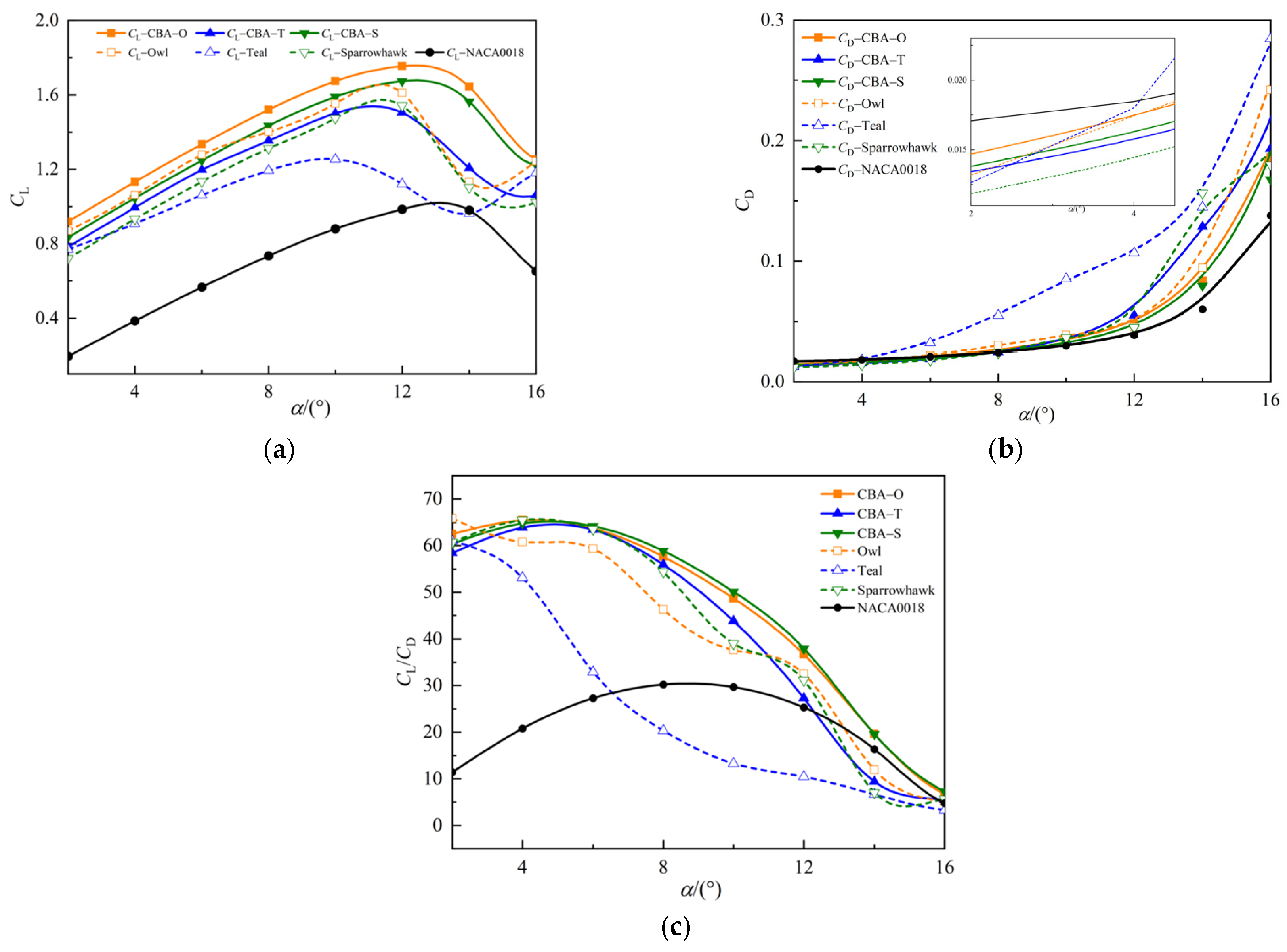
Figure 6 shows the lift and drag coefficients and the lift-to-drag ratio of each airfoil at different α values. Figure 6a indicates that the lift coefficient increases initially and then decreases as α increases, with the lift coefficient trends for the three CBAs showing similar patterns to those reported by [25]. Before stall, the maximum lift coefficients (corresponding to α = 14°) of CBA-O, CBA-T, and CBA-S are significantly higher than those of the corresponding bird wing airfoils, with increases of 10.3%, 12.6%, and 16.3%, respectively.
To provide a clear evaluation, the aerodynamic performance improvements are analyzed relative to two distinct baselines: the standard NACA0018 (engineering baseline) and the corresponding bird wing airfoils (bionic baseline).
First, regarding the comparison with the NACA0018, the CBAs demonstrate substantial aerodynamic advantages. As shown in Figure 6a, the maximum lift coefficient of the CBA-O is enhanced by 159% compared to the NACA0018. Furthermore, regarding the lift-to-drag ratio shown in Figure 6c, the CBA-O exhibits a remarkable increase of 119% compared to the NACA0018 before stall. Second, regarding the comparison with the bird wing airfoils, the CBAs also show improvements, though to a different extent. Figure 6b demonstrates that the drag coefficients of the CBAs decrease relative to the bird wings. Consequently, the lift-to-drag ratios of the CBA-O, CBA-T, and CBA-S are, on average, 12.7%, 71.4%, and 7.5% higher than those of their corresponding bird wing airfoils (Figure 6c). This indicates that the composite design successfully optimizes the original biological shapes.
When α ≥ 10°, due to the increase in drag coefficients, the lift-to-drag ratios of both the bird wing airfoils and CBAs significantly decrease. Overall, compared to the bird wing airfoils and NACA0018, the CBAs demonstrate enhanced lift coefficients and lift-to-drag ratios, indicating that the CBAs offer superior aerodynamic performance, with CBA-O exhibiting the best aerodynamic performance.
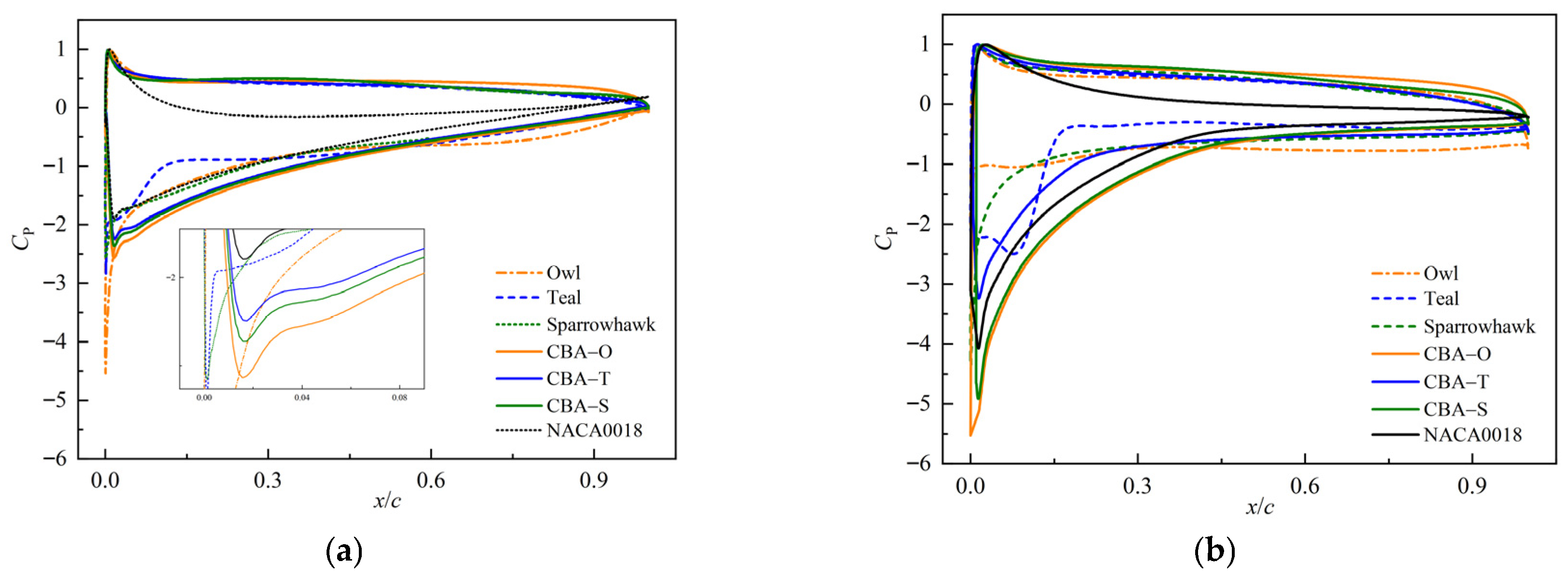
To explore the lift enhancement mechanism of the CBAs, Figure 7 presents the surface static pressure coefficient distribution for each airfoil at α of 6° and 14°. The results show that at α = 6°, the static pressure coefficient curve of the CBAs envelops the curve of the baseline, indicating an enhanced lift coefficient. Close inspection of Figure 7 shows that the static pressure coefficients of all the airfoils show little difference near the leading-edge of the pressure side; however, when x/c ≥ 0.6, the static pressure coefficient on the pressure side of the CBA-O increases. On the suction side, there are more significant differences in the static pressure coefficients, with the owl wing airfoil showing a significant increase in the pressure peak near the leading-edge, but its static pressure coefficient rapidly decreases as x/c increases. When x/c ≥ 0.6, the static pressure coefficient increases again. The CBAs also show similar increases in static pressure coefficients near the leading-edge, but with different peak values, where the CBA-O exhibits the highest peak, leading to the largest pressure difference, which results in the highest lift coefficient at α = 6°. At α = 14°, the airfoils are in a stall regime, and the static pressure coefficient distribution on the pressure side remains similar to that at α = 6°. However, on the suction side, the reduction in static pressure coefficient near the leading-edge of the CBAs is more pronounced compared to that at α = 6°, with its values being higher. Overall, at both α = 6° and 14°, the CBAs exhibit higher pressure differences compared to the bird wing airfoils and NACA0018, indicating superior aerodynamic performance, with the CBA-O showing the most prominent improvement.
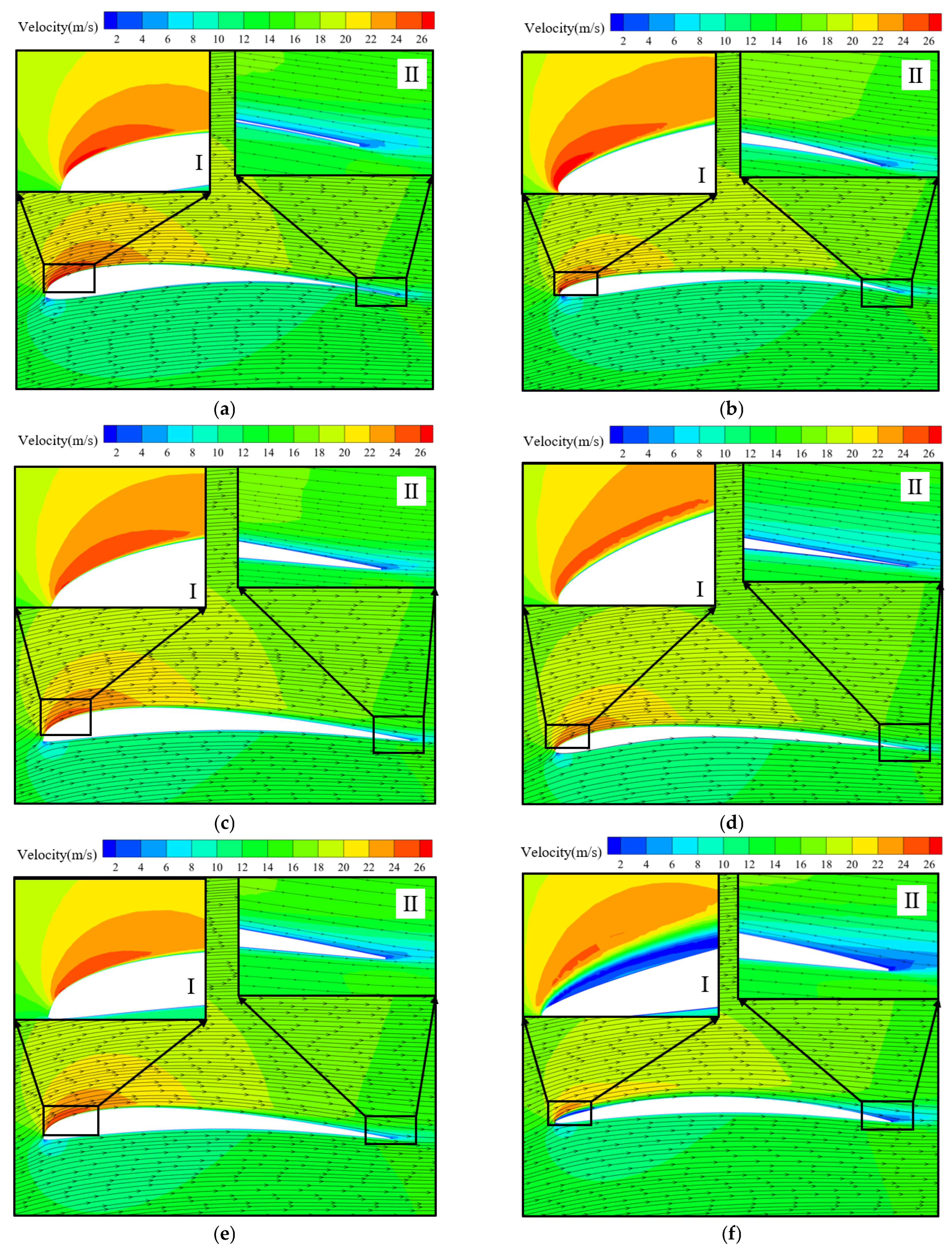
To further reveal the underlying mechanisms of how the CBAs improve aerodynamic performance, Figure 8 presents the streamline and velocity distributions for each airfoil at an α value of 6°. It is found that no flow separation occurs on the suction side of any of the airfoils, allowing the fluid to smoothly flow over the suction surface. Additionally, the CBA-O and owl wing airfoil exhibit a small high-speed region in the leading-edge region (as indicated by Region I) of the suction side. The high-speed region of the owl wing airfoil is larger and closer to the leading-edge, and as the airflow speed increases, this results in a wider negative pressure region on the suction side. In contrast, the teal wing airfoil has a more prominent low-speed region near the leading-edge region (as indicated by Region I), which causes an increase in suction side pressure. This explains why, as shown in Figure 7a, the pressure difference near the leading-edge of the owl wing airfoil is larger, while the teal wing airfoil has a smaller pressure difference.
Compared to the bird wing airfoils, the CBAs exhibit higher flow speeds on the suction side. On the pressure side, the velocity distributions of both the bird wing airfoils and CBAs are similar. However, the CBA-O and owl wing airfoil have lower velocities in the range of 0.6 ≤ x/c ≤ 1, leading to an increase in the static pressure on the pressure side. This effectively enlarges the pressure difference between the suction and pressure sides, resulting in promoted aerodynamic performance. These results indicate that, compared to the bird wing airfoils, the pressure distribution on the pressure side of CBAs is roughly the same, but the pressure on the suction side is lower. This leads to a larger pressure difference between the suction and pressure sides of the CBAs, yielding higher lift, which is further corroborated by the data in Figure 7a.

3.2. Aerodynamic Noise

3.2.1. Directional Distribution of Noise

When the boundary layer and wake interact with an airfoil, pressure fluctuations occur on the airfoil surface, leading to self-generated noise. As an airfoil radiates sound waves, interference effects arise due to differences in the vibration intensity and sound propagation distances of various surface elements. This results in different radiation intensities as the noise propagates radially from the surface [31]. Therefore, aerodynamic noise around the airfoil exhibits a distinct directional distribution.
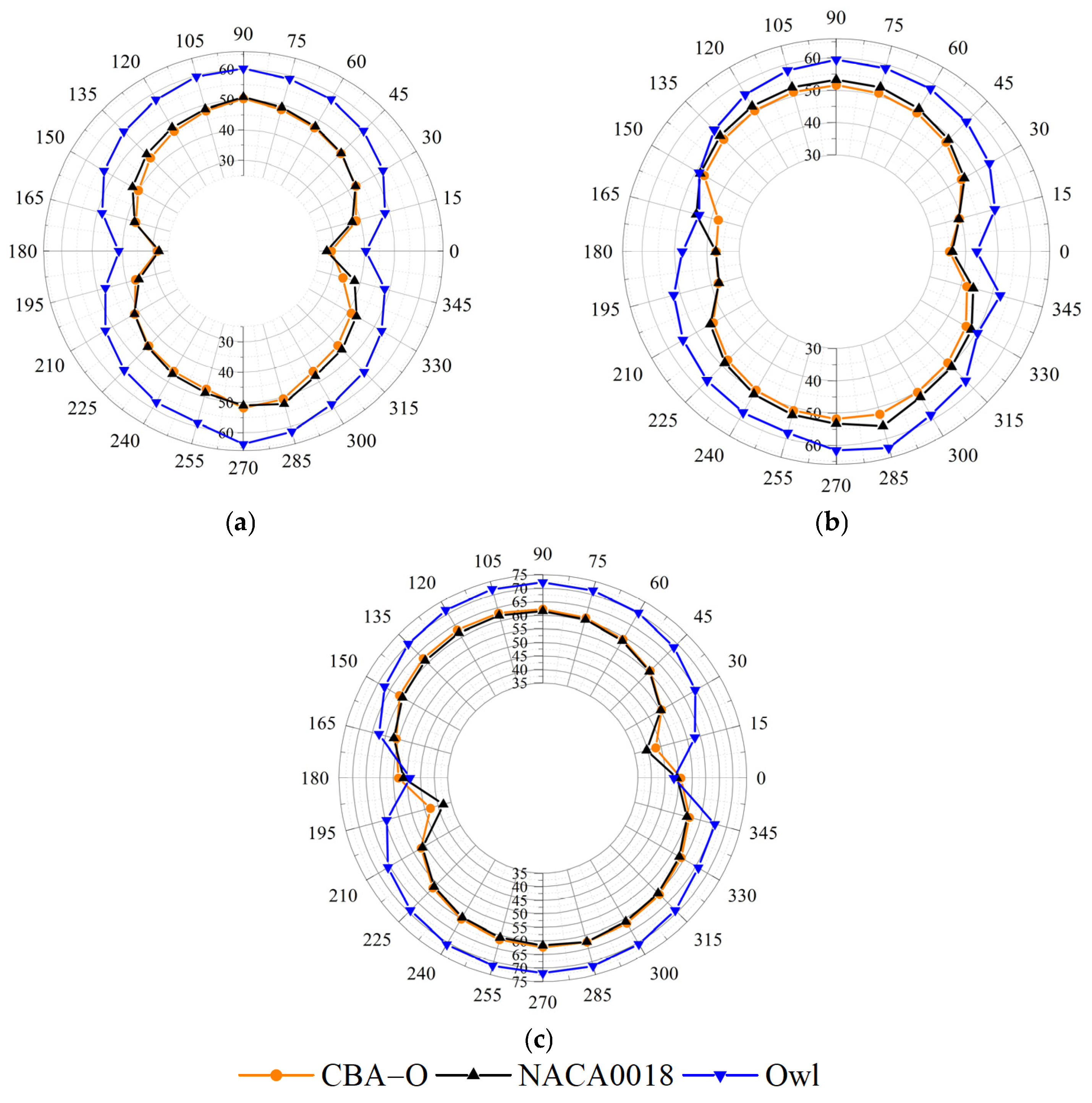
To investigate the changes in aerodynamic noise characteristics, the CBA-O, which exhibits favorable aerodynamic performance, the owl wing airfoil, and the NACA0018 are compared. Figure 9 presents the surface radiated noise directional distribution for the three airfoils at different α values. It is seen that the radiated noise demonstrates the typical dipole “8”-shaped distribution consistent with the airfoil self-noise theory [32], with the maximum radiation occurring perpendicular to the chord line and the minimum along the chord line. The surface radiated noise distribution of the owl wing airfoil aligns with the findings of [22]. At α = 6°, the noise reduction effect of the CBA-O is more pronounced compared to the owl wing airfoil. It should be noted that the owl wing airfoil exhibits a higher noise level than the NACA0018 in this simulation. This result arises because the geometric model represents a simplified smooth cross-section, lacking the silent features (such as serrations and velvet surfaces) of actual owl wings. Consequently, the high camber of the smooth owl profile induces stronger wake vortices (as detailed in Section 3.3), leading to higher loading noise compared to the symmetric NACA0018. The average overall sound pressure level (OASPL) of the CBA-O is reduced by 11.5 dB and 0.53 dB compared to the owl wing airfoil and NACA0018, respectively. At α = 10°, the reductions are 8.5 dB and 1.6 dB, respectively. After stall (α = 14°), the surface radiated noise of both the CBA-O and NACA0018 shifts counterclockwise by approximately 15° with a symmetrical distribution, and the average OASPL of the CBA-O is 0.4 dB higher than that of NACA0018. Although the noise differences between the CBA-O and NACA0018 are relatively small (0.4–1.6 dB), they exceed the numerical uncertainty margin (approx. 0.2 dB verified in the independence study). This indicates that while the acoustic benefit is modest compared to the baseline, the CBA-O successfully maintains a comparable low-noise profile while offering superior aerodynamic efficiency. Namely, the CBA-O exhibits a lower radiated noise OASPL and provides the best noise reduction performance.

3.2.2. Noise Spectrum

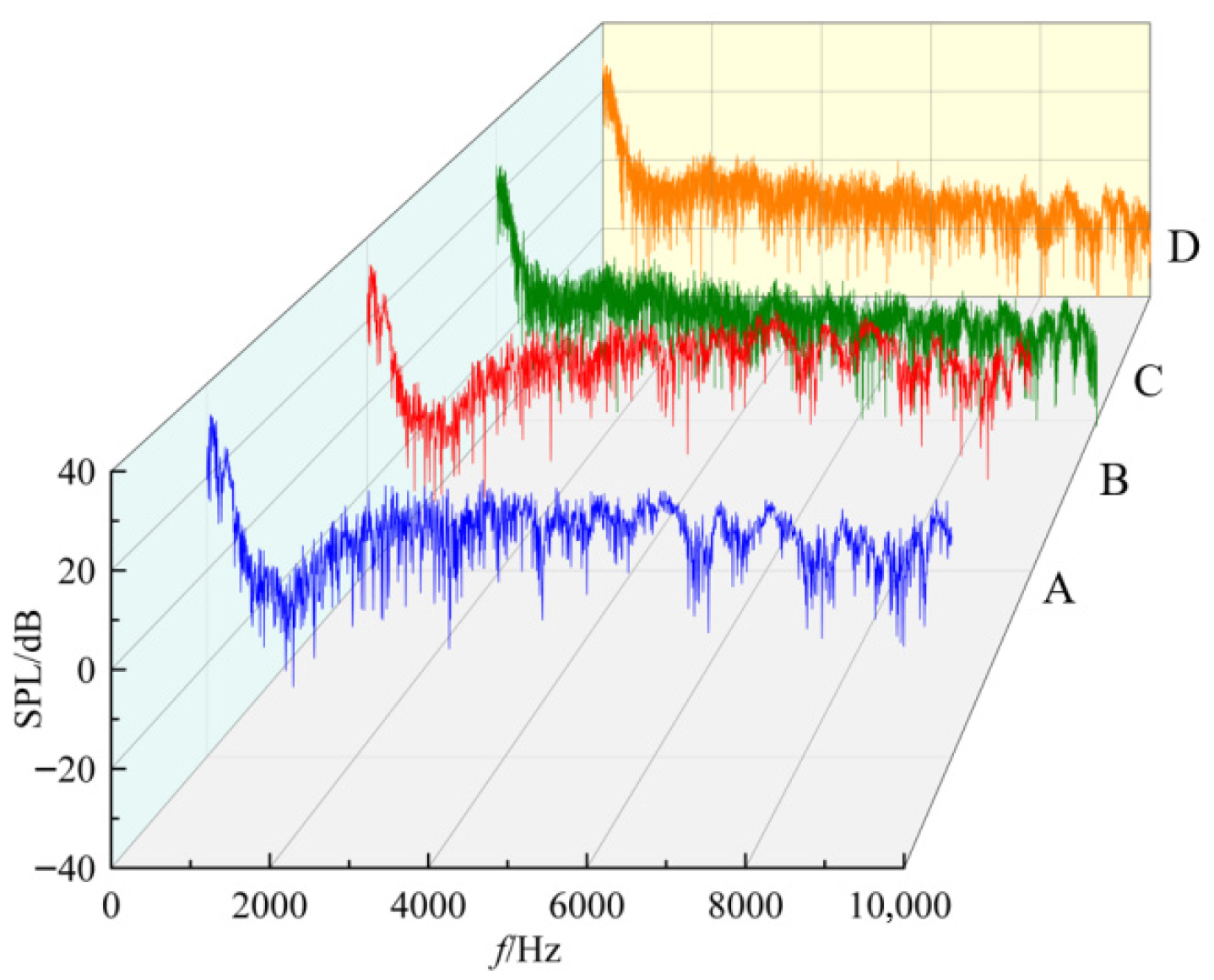
To examine the aerodynamic noise differences between the three airfoils, Figure 10 presents the SPLs at monitoring points A, B, C, and D (as defined in Figure 3 and Section 2.2) for the CBA-O at α = 6°. It is found that the SPL differences between monitoring points A and B, as well as between C and D, are relatively small. Therefore, in the following analysis, monitoring points A and C are selected for noise spectrum analysis.
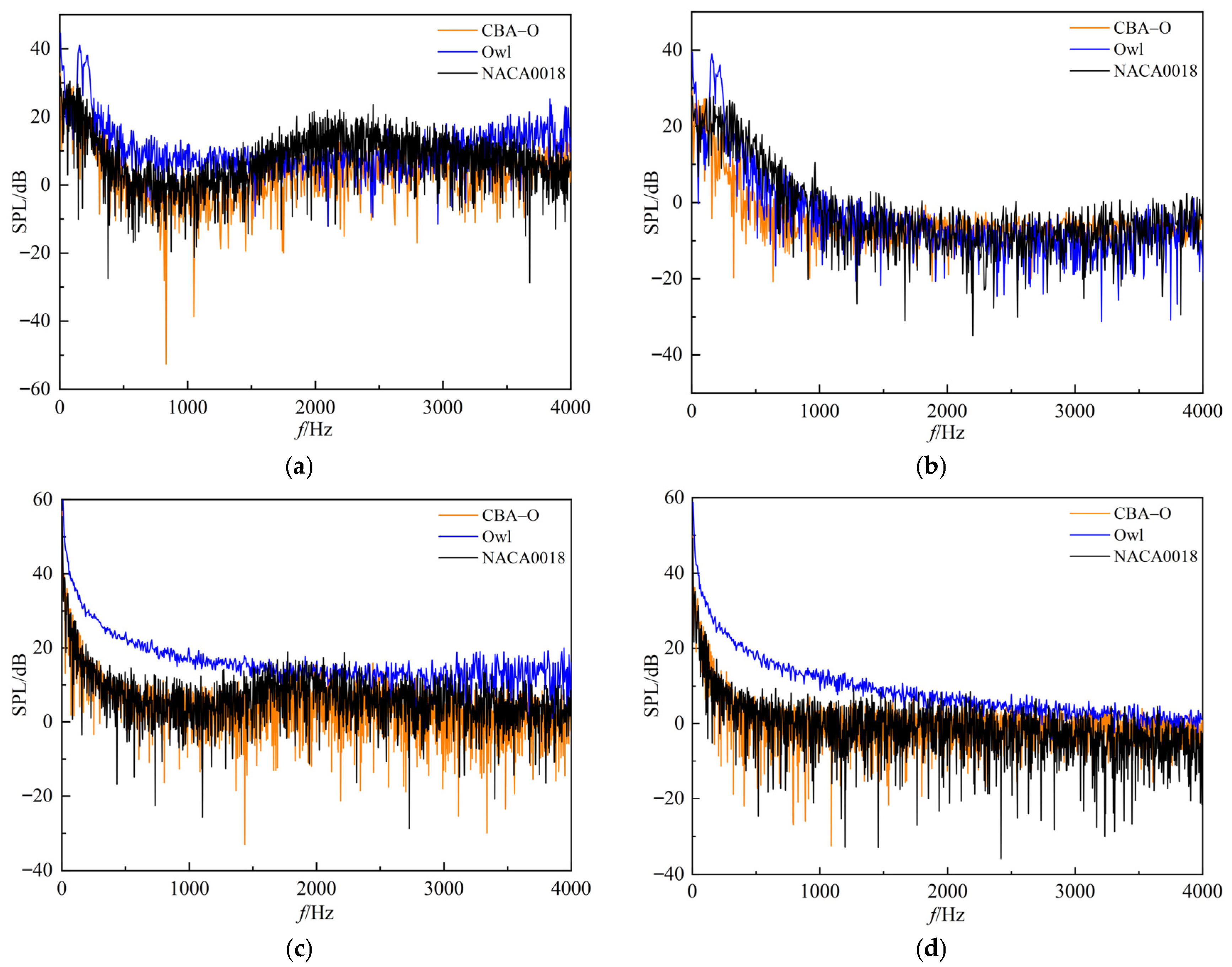
Figure 11 shows the variation in SPLs at monitoring points A and C for the three airfoils at α = 6° and 14°. As shown in Figure 11a,b, at α = 6°, the CBA-O exhibits a better noise suppression effect for frequencies between 300 Hz and 2000 Hz. In this frequency range, the OASPL of the CBA-O is reduced by 11.2 dB compared to the owl wing airfoil. The SPL distribution of NACA0018 is essentially the same as that of the CBA-O. For all three airfoils at monitoring point A, the SPL decreases initially with increasing frequency, then gradually increases. At monitoring point A, both the CBA-O and NACA0018 exhibit a noticeable “bump” feature, indicating a distinct low-frequency characteristic. Figure 11c,d reveal that at α = 14°, the SPL of the owl wing airfoil is higher than that of the CBA-O across the entire 0–4000 Hz range, with the largest difference occurring between 0 and 1000 Hz. This indicates that the CBA-O demonstrates a more significant low-frequency noise suppression effect at higher α values.

3.2.3. Wake Noise

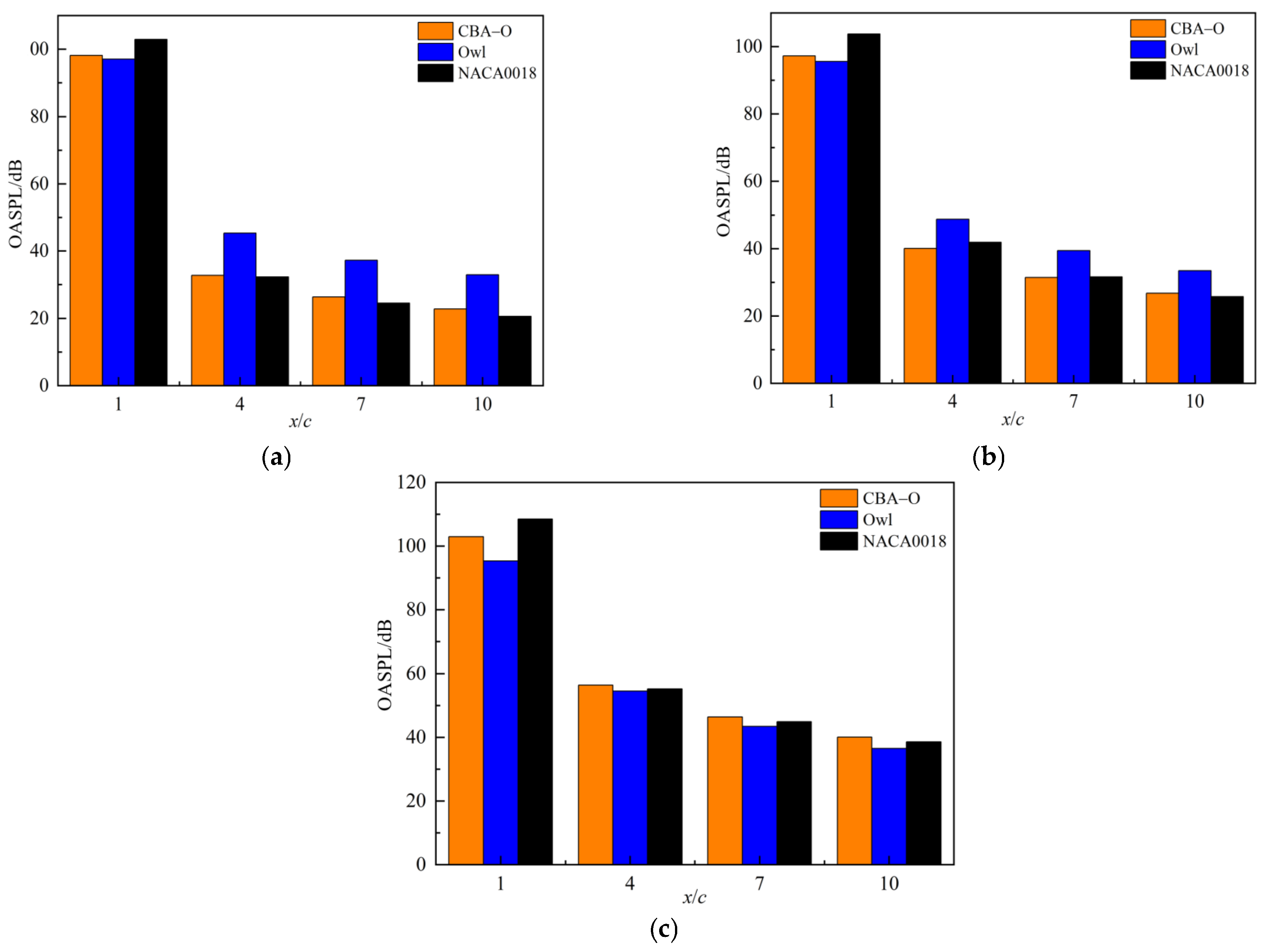
Wake noise is a type of aerodynamic noise caused by pressure pulsations resulting from the interaction between the turbulent boundary layer on the airfoil surface and the wake at the trailing-edge. It is one of the main sources of high-frequency noise in wind turbines. Therefore, the following explores the change in the SPL of wake noise for the three airfoils. Figure 12 shows the distribution of wake noise SPLs along the flow direction for the three airfoils at α of 6°, 10°, and 14°.
Figure 12 shows that as x/c increases, the local wake noise at each monitoring point gradually decreases, and the rate of reduction in OASPLs also diminishes. At the trailing-edge of x = c, the SPL of the NACA0018 is the highest, with an average SPL of 105.1 dB across the three attack angles. Compared to the owl wing airfoil, the noise of CBA-O increases slightly, with the OASPL increasing by an average of 3.8 dB at all three angles of attack. Additionally, before stall, the local SPL at x = c for all the airfoils changes little with attack angle. However, after the stall, the SPL of the CBA-O increases by approximately 5.2 dB compared to the normal regime. Notably, at x = 4c, 7c, and 10c, before stall, the SPL of the CBA-O is lower than that of the owl wing airfoil by an average of about 9.5 dB. After stall, the SPL of the CBA-O increases by an average of 2.8 dB, which is due to the increased flow separation zone and wake vortices after stall. These results suggest that, compared to the other two airfoils, the CBA-O exhibits the best noise suppression effect on both surface radiated noise and wake noise before stall, with a significant reduction in low-frequency noise.

3.3. Wake Vortex Pattern

When airflow passes over an airfoil, it not only generates a significant amount of vortices attached to the airfoil surface but also forms more complex vortex structures around the airfoil, which in turn affect both the aerodynamic performance and noise. According to the vortex sound theory, vortices are the primary source of flow-induced noise, and the development and interaction of separation vortices and wake vortices on the airfoil surface can reflect the underlying causes of airfoil noise generation [33,34].
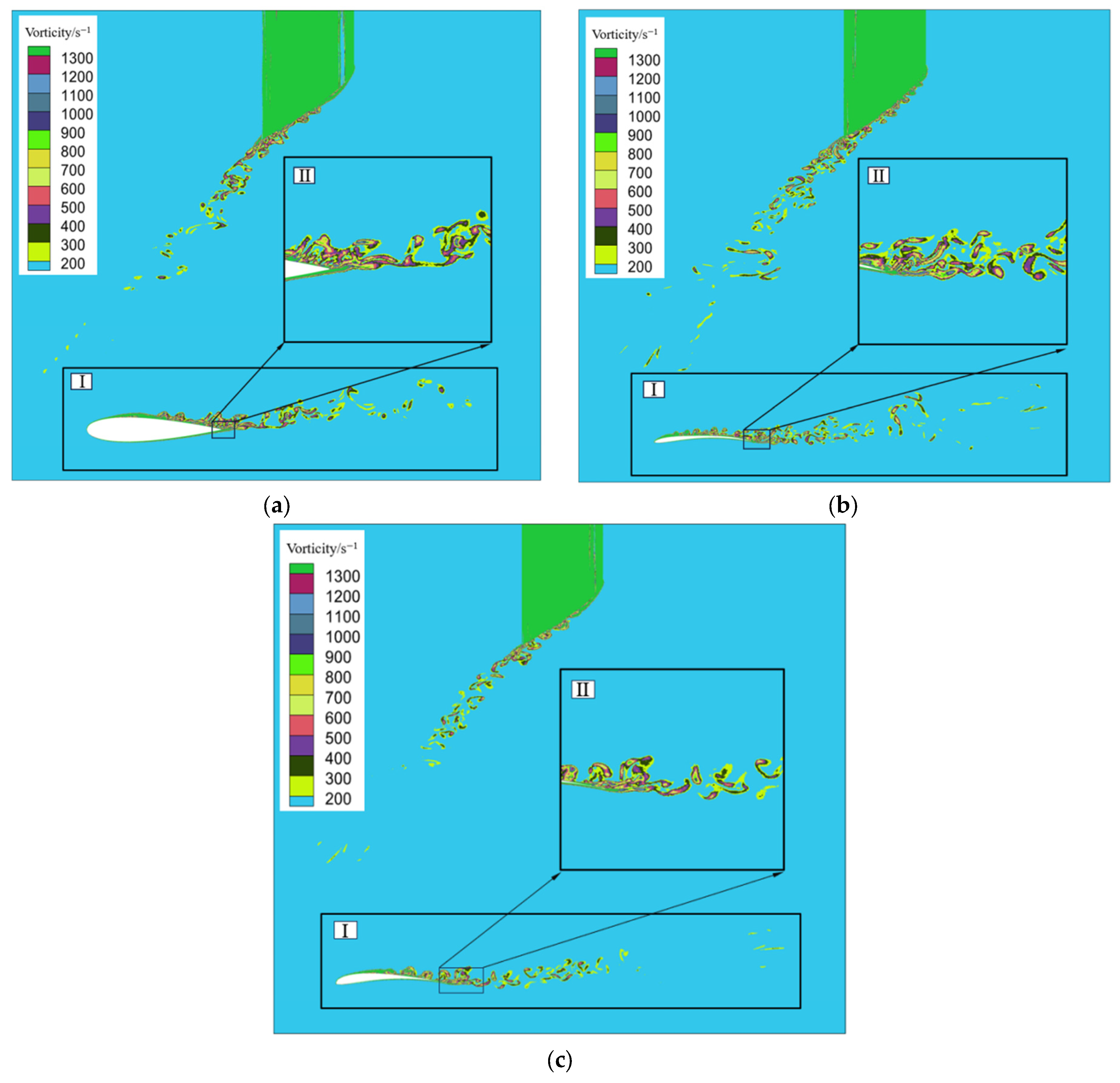
To examine the wake vortex patterns around the three airfoils at the optimal aerodynamic performance condition (α = 10°), Figure 13 illustrates the vortex patterns near the trailing-edge. It is observed that the wake vortices near the trailing-edge of all three airfoils break up, interact, and move upward to the right. The NACA0018 and CBA-O experience flow separation at the suction surface near x = 0.5c, while the owl wing airfoil undergoes flow separation at x = 0.25c on the suction surface. The wake vortex distribution of the NACA0018 is more chaotic, with many small-scale vortices. These small vortices lead to uneven pressure distribution on the airfoil surface, which increases drag. In contrast, the vortex distribution around the owl wing airfoil and CBA-O is more orderly, particularly in the wake region. This indicates smoother flow over the airfoil surface, reducing the energy losses caused by vortex generation and improving the aerodynamic performance. Furthermore, the flow separation in CBA-O occurs farther from the leading-edge compared to the other two airfoils, which is why CBA-O exhibits the best aerodynamic performance.
Compared to the owl wing airfoil, although the CBA-O exhibits a delayed flow separation phenomenon, the size and distribution of the wake vortices have a greater impact on the airfoil noise [35,36]. This is because the wake vortices at the trailing-edge of the owl wing airfoil are smaller and have lower vorticity, resulting in lower wake noise at x = c for the owl wing airfoil compared to the CBA-O. As the vortex group develops downstream, the intensity of the wake vortices of the CBA-O decreases continuously, alternating shedding and eventually breaking into smaller vortices. However, the owl wing airfoil has a larger flow separation region, so the vortex size decreases more slowly during the downstream development, and the distribution is more chaotic. This results in a stronger wake vortex intensity, causing the wake noise SPL of the owl wing airfoil to be higher than that of the CBA-O in the region of 4cx ≤ 10c, which is consistent with the previous results.

4. Conclusions

This study proposes a novel design strategy for composite bionic airfoils (CBAs) by hybridizing the upper camber of a standard NACA0018 airfoil with the lower cambers of different bird wings. This approach effectively decouples the influence of the upper lifting surface from the lower drag-affecting surface, offering a new pathway for enhancing airfoil performance beyond whole-profile biomimicry. The proposed CBAs demonstrate higher lift coefficients compared to both their corresponding bird wing airfoils and the standard NACA0018.
At low angles of attack, the CBAs exhibit lower drag coefficients than the NACA0018, resulting in significantly improved lift-to-drag ratios. Among the tested models, the CBA-O exhibits the best aerodynamic performance, achieving lift-to-drag ratio improvements of 12.7% and 119.7% over the owl wing airfoil and NACA0018, respectively, prior to stall. The primary mechanism driving this improvement is the higher flow speed on the suction surface of the CBA compared to the bird wing airfoils, while the pressure surface speed distribution remains comparable. Furthermore, the CBA-O demonstrates superior noise suppression capabilities, particularly in reducing surface radiation and wake noise, resulting in more stable wake vortex development and smaller vortex sizes at the trailing edge.

Author Contributions

Formal analysis, Software, and Writing—original draft, S.S.; Investigation and Data curation, S.X.: Supervision and Writing—review and editing, X.Y.; Supervision and Writing—review and editing, C.L. All authors have read and agreed to the published version of the manuscript.

Funding

This research received no external funding.

Institutional Review Board Statement

Not applicable.

Informed Consent Statement

Not applicable.

Data Availability Statement

The data that support the findings of this study are available from the corresponding author upon reasonable request.

Conflicts of Interest

Author Shunlong Su was employed by the company Sichuan Yanyuan Huadian New Energy Co., Ltd. The remaining authors declare that the research was conducted in the absence of any commercial or financial relationships that could be construed as a potential conflict of interest.

References

  1. Lotfabadi, P.; Alibaba, H.Z.; Arfaei, A. Sustainability; as a Combination of Parametric Patterns and Bionic Strategies. Renew. Sustain. Energy Rev. 2016, 57, 1337–1346. [Google Scholar] [CrossRef]
  2. Zhao, M.; Zhao, Y.; Liu, Z. Dynamic Mode Decomposition Analysis of Flow Characteristics of an Airfoil with Leading Edge Protuberances. Aerosp. Sci. Technol. 2020, 98, 105684. [Google Scholar] [CrossRef]
  3. Li, M.; Wu, J.H.; Yuan, X.Y. Wall Suction & Slip Effect of Spherical-Grooved Bionic Metasurface for Controlling the Aerodynamic Noise. Appl. Acoust. 2021, 171, 107537. [Google Scholar] [CrossRef]
  4. Huang, S.; Hu, Y.; Wang, Y. Research on Aerodynamic Performance of a Novel Dolphin Head-Shaped Bionic Airfoil. Energy 2021, 214, 118179. [Google Scholar] [CrossRef]
  5. Domel, A.G.; Saadat, M.; Weaver, J.C.; Haj-Hariri, H.; Bertoldi, K.; Lauder, G.V. Shark Skin-Inspired Designs That Improve Aerodynamic Performance. J. R. Soc. Interface 2018, 15, 20170828. [Google Scholar] [CrossRef]
  6. Avallone, F.; van der Velden, W.C.P.; Ragni, D. Benefits of Curved Serrations on Broadband Trailing-Edge Noise Reduction. J. Sound Vib. 2017, 400, 167–177. [Google Scholar] [CrossRef]
  7. Kant, R.; Bhattacharyya, A. A Bio-Inspired Twin-Protuberance Hydrofoil Design. Ocean Eng. 2020, 218, 108209. [Google Scholar] [CrossRef]
  8. Rostamzadeh, N.; Hansen, K.L.; Kelso, R.M.; Dally, B.B. The Formation Mechanism and Impact of Streamwise Vortices on NACA 0021 Airfoil’s Performance with Undulating Leading Edge Modification. Phys. Fluids 2014, 26, 107101. [Google Scholar] [CrossRef]
  9. Lima Pereira, L.T.; Ragni, D.; Avallone, F.; Scarano, F. Aeroacoustics of Sawtooth Trailing-Edge Serrations under Aerodynamic Loading. J. Sound Vib. 2022, 537, 117202. [Google Scholar] [CrossRef]
  10. Li, D.; Chang, H.; Zuo, Z.; Wang, H.; Liu, S. Aerodynamic Characteristics and Mechanisms for Bionic Airfoils with Different Spacings. Phys. Fluids 2021, 33, 064101. [Google Scholar] [CrossRef]
  11. Fan, M.; Sun, Z.; Dong, X.; Li, Z. Numerical and Experimental Investigation of Bionic Airfoils with Leading-Edge Tubercles at a Low-Re in Considering Stall Delay. Renew. Energy 2022, 200, 154–168. [Google Scholar] [CrossRef]
  12. Guo, C.; Wu, Y.; Han, Y.; LingHu, K. Experimental Study on Influence of Sharkskin Denticles Structure on the Hydrodynamic Performance of Airfoil. Ocean Eng. 2023, 271, 113756. [Google Scholar] [CrossRef]
  13. Wang, L.; Liu, X.; Li, D. Noise Reduction Mechanism of Airfoils with Leading-Edge Serrations and Surface Ridges Inspired by Owl Wings. Phys. Fluids 2021, 33, 015123. [Google Scholar] [CrossRef]
  14. Huang, S.; Qiu, H.; Wang, Y. Aerodynamic Performance of Horizontal Axis Wind Turbine with Application of Dolphin Head-Shape and Lever Movement of Skeleton Bionic Airfoils. Energy Convers. Manag. 2022, 267, 115803. [Google Scholar] [CrossRef]
  15. Wang, M.; Liu, X. Numerical Investigation of Aerodynamic and Acoustic Characteristics of Bionic Airfoils Inspired by Bird Wing. Proc. Inst. Mech. Eng. Part G J. Aerosp. Eng. 2019, 233, 4004–4016. [Google Scholar] [CrossRef]
  16. Zhang, C.; Cheng, W.; Du, T.; Sun, X.; Shen, C.; Chen, Z.; Liang, D. Experimental and Numerical Study on Noise Reduction of Airfoil with the Bioinspired Ridge-like Structure. Appl. Acoust. 2023, 203, 109190. [Google Scholar] [CrossRef]
  17. Wang, J.; Zhang, C.; Wu, Z.; Wharton, J.; Ren, L. Numerical Study on Reduction of Aerodynamic Noise around an Airfoil with Biomimetic Structures. J. Sound Vib. 2017, 394, 46–58. [Google Scholar] [CrossRef]
  18. Liu, T.; Jones, S.; Kuykendoll, K.; Rhew, R. Avian Wing Geometry and Kinematics. AIAA J. 2006, 44, 954–963. [Google Scholar] [CrossRef]
  19. Zhang, L.; Wang, J.; Zhang, Y.; Guo, H.; Li, W. Aerodynamic performance analysis of wind turbine airfoil based on deformable trailing edge. Electr. Power Sci. Eng. 2022, 38, 58–64. [Google Scholar]
  20. Yan, H.; Su, X.; Zhang, H.; Hang, J.; Zhou, L.; Liu, Z.; Wang, Z. Design Approach and Hydrodynamic Characteristics of a Novel Bionic Airfoil. Ocean Eng. 2020, 216, 108076. [Google Scholar] [CrossRef]
  21. Xiang, J.; Du, J.; Li, D.; Liu, K. Aerodynamic Performance of the Locust Wing in Gliding Mode at Low Reynolds Number. J. Bionic Eng. 2016, 13, 249–260. [Google Scholar] [CrossRef]
  22. Li, D.; Liu, X. A Comparative Study on Aerodynamic Performance and Noise Characteristics of Two Kinds of Long-Eared Owl Wing Models. J. Mech. Sci. Technol. 2017, 31, 3821–3830. [Google Scholar] [CrossRef]
  23. Tian, W.; Yang, Z.; Zhang, Q.; Wang, J.; Li, M.; Ma, Y.; Cong, Q. Bionic Design of Wind Turbine Blade Based on Long-Eared Owl’s Airfoil. Appl. Bionics Biomech. 2017, 2017, 8504638. [Google Scholar] [CrossRef] [PubMed]
  24. Akhter, M.d.Z.; Omar, F.K.; Elnajjar, E. Aerodynamic and Aeroacoustic Characteristics of a Bionic Morphing Flap. Energy Rep. 2023, 9, 310–315. [Google Scholar] [CrossRef]
  25. Liming, W.; Yixin, J.; Xiaomin, L.; Wanxiang, T.; Guang, X. Numerical Analysis of Dynamic Stall Characteristics of Several Bionic Airfoils. Xi’an Jiaotong Daxue Xuebao 2022, 56, 1–9. [Google Scholar]
  26. Kim, H.-J.; Lee, S.; Fujisawa, N. Computation of Unsteady Flow and Aerodynamic Noise of NACA0018 Airfoil Using Large-Eddy Simulation. Int. J. Heat Fluid Flow 2006, 27, 229–242. [Google Scholar] [CrossRef]
  27. Kundu, P. Numerical Simulation of the Effects of Passive Flow Control Techniques on Hydrodynamic Performance Improvement of the Hydrofoil. Ocean Eng. 2020, 202, 107108. [Google Scholar] [CrossRef]
  28. Zhang, J.; Liu, H. Effect of Blade Tip Pattern on Blade Load and Vibration Characteristics of a Twin-Stage Axial Flow Fan. J. Mech. Sci. Technol. 2022, 36, 3487–3500. [Google Scholar] [CrossRef]
  29. Timmer, W. Two-Dimensional Low-Reynolds Number Wind Tunnel Results for Airfoil NACA 0018. Wind Eng. 2008, 32, 525–537. [Google Scholar] [CrossRef]
  30. Lei, H.; Zhou, D.; Bao, Y.; Li, Y.; Han, Z. Three-Dimensional Improved Delayed Detached Eddy Simulation of a Two-Bladed Vertical Axis Wind Turbine. Energy Convers. Manag. 2017, 133, 235–248. [Google Scholar] [CrossRef]
  31. Nan, Z.; Xuemin, Y.; Chunxi, L. Numerical investigation on Aerodynamic noise of wind turbine airfoils with serrated gurney flap. Taiyangneng Xuebao 2023, 44, 297–305. [Google Scholar]
  32. Howe, M.S. Noise Produced by a Sawtooth Trailing Edge. J. Acoust. Soc. Am. 1991, 90, 482–487. [Google Scholar] [CrossRef]
  33. Chen, W.; Qiao, W.; Tong, F.; Wang, L.; Wang, X. Numerical Investigation of Wavy Leading Edges on Rod–Airfoil Interaction Noise. AIAA J. 2018, 56, 2553–2567. [Google Scholar] [CrossRef]
  34. Guo, C.; Gao, M.; Wang, J.; Shi, Y.; He, S. The Effect of Blade Outlet Angle on the Acoustic Field Distribution Characteristics of a Centrifugal Pump Based on Powell Vortex Sound Theory. Appl. Acoust. 2019, 155, 297–308. [Google Scholar] [CrossRef]
  35. Butt, F.; Talha, T.; Khan, R.; Mazhar, A.R.; Butt, M.; Petru, J.; Seikh, A.H. Effect of the Shape of Flapping Airfoils on Aerodynamic Forces. Heliyon 2024, 10, e29561. [Google Scholar] [CrossRef]
  36. Yu, M.; Hrynuk, J.T.; Booth, D.T.; Poudel, N. Freestream Turbulence Effects on Low Reynolds Number NACA 0012 Airfoil Laminar Separation Bubble and Lift Generation. Aerosp. Sci. Technol. 2024, 149, 109145. [Google Scholar] [CrossRef]
Figure 1. Schematic diagram of profiles of the three bird wing airfoils and CBAs.
Fluids 11 00036 g001
Figure 2. Computational domain and Meshing: (a) the computational domain and boundaries; (b) meshing of the computational domain.
Fluids 11 00036 g002
Figure 3. Layout of monitoring probes for noise detection: (a) noise directional distribution; (b) wake noise. The red dots represent the wake monitoring probes, while the black dots represent the specific far-field receivers (A, B, C, D). The dashed lines indicate the relative angles.
Fluids 11 00036 g003
Figure 4. Verification of grid independence.
Fluids 11 00036 g004
Figure 5. Validation of the accuracy of the simulation results: (a) comparison of CL and CD with experiment; (b) comparison of Cp with experiment at α = 8°.
Fluids 11 00036 g005
Figure 6. Variations in lift and drag coefficients and lift-to-drag ratio at different α values: (a) lift coefficient; (b) drag coefficient; (c) lift-to-drag ratio.
Fluids 11 00036 g006
Figure 7. The surface static pressure coefficient distribution for each airfoil at α of 6° and 14°: (a) α = 6°; (b) α = 14°.
Fluids 11 00036 g007
Figure 8. The streamline and velocity distribution for each airfoil at α of 6°: (a) CBA-O, (b) owl wing airfoil; (c) CBA-S; (d) sparrowhawk wing airfoil; (e) CBA-T; (f) teal wing airfoil.
Fluids 11 00036 g008
Figure 9. Comparison of the OASPL of surface radiated noise of the three airfoils at different α values: (a) α = 6°; (b) α = 10°; (c) α = 14°. (Unit: dB).
Fluids 11 00036 g009
Figure 10. Comparison of the SPLs at monitoring points A, B, C, and D.
Fluids 11 00036 g010
Figure 11. Variation in SPLs at monitoring points A and C for the three airfoils at α of 6° and 14°: (a) monitoring point A (α = 6°); (b) monitoring point C (α = 6°); (c) monitoring point A (α = 14°); (d) monitoring point C (α = 14°).
Fluids 11 00036 g011
Figure 12. Distribution of wake noise SPLs along the flow direction for the three airfoils at α values of 6°, 10°, and 14°: (a) α = 6°; (b) α = 10°; (c) α = 14°.
Fluids 11 00036 g012
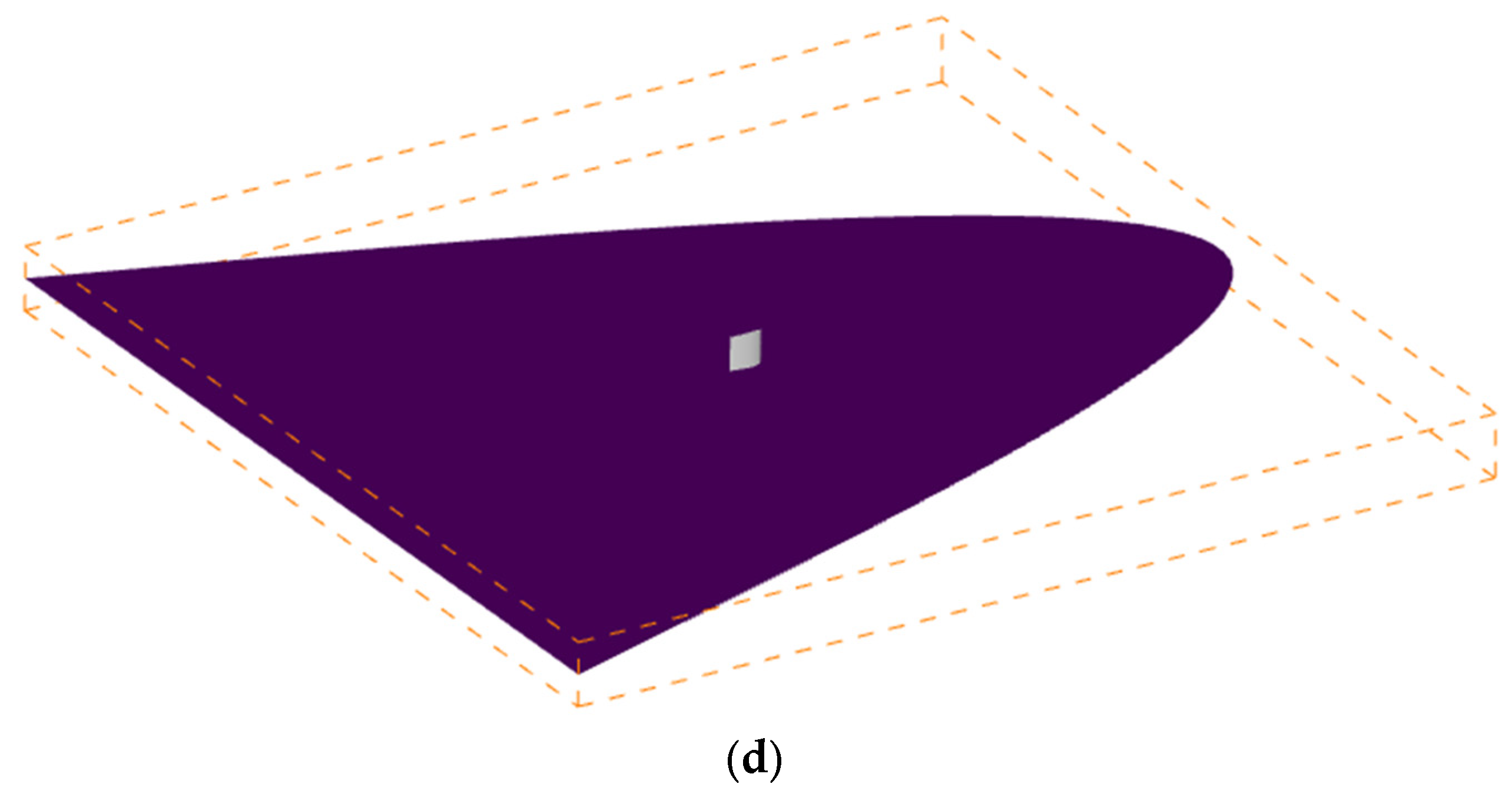
Figure 13. Visualization of the Z-vorticity magnitude and vortex structures at α = 10°. Note: The airfoil surface is colored by the local vorticity magnitude: (a) NACA0018; (b) owl wing airfoil; (c) CBA-O; (d) schematic of the computational domain and airfoil position. “I” represents the overall view of the wake vortices, and “II” represents the enlarged view of the local vortex structures. The orange dashed lines indicate the computational domain, the purple area represents the visualization plane, and the grey square indicates the position of the airfoil.
Fluids 11 00036 g013aFluids 11 00036 g013b
Table 1. Coefficients in Equations (3) and (4) for two bionic airfoils.
CoefficientsLong-Eared OwlTeal
S13.87353.9117
S2−0.8070−0.3677
S30.77100.0239
A1−15.24601.7804
A226.4820−13.6875
A3−18.975018.2760
A44.6232−13.6875
Table 2. Verification of time-step independence.
CaseTime Step (Δt)OASPL, dBRelative Difference, dB
11 × 10−447.73.7
25 × 10−551.20.2
32 × 10−551.4
Disclaimer/Publisher’s Note: The statements, opinions and data contained in all publications are solely those of the individual author(s) and contributor(s) and not of MDPI and/or the editor(s). MDPI and/or the editor(s) disclaim responsibility for any injury to people or property resulting from any ideas, methods, instructions or products referred to in the content.