
One-Step Process of Mixed Oleic Acid Esters and Its High Temperature Lubrication Properties in Bentonite Gelling Suspension


Abstract
1. Introduction
2. Results and Discussion
2.1. Oleic Acid Esterification with Methanol
- S—acid value of oil and grease (mg KOH/g);
- M—mass of grease (g);
- M1—MT molar mass (g/mol);
- M2—KOH molar mass (g/mol).
2.1.1. Effect of Catalysts on Esterification
2.1.2. Effect of Temperatures on the Esterification Reaction
2.2. Oleic Acid Esterification with Ethylene Glycol
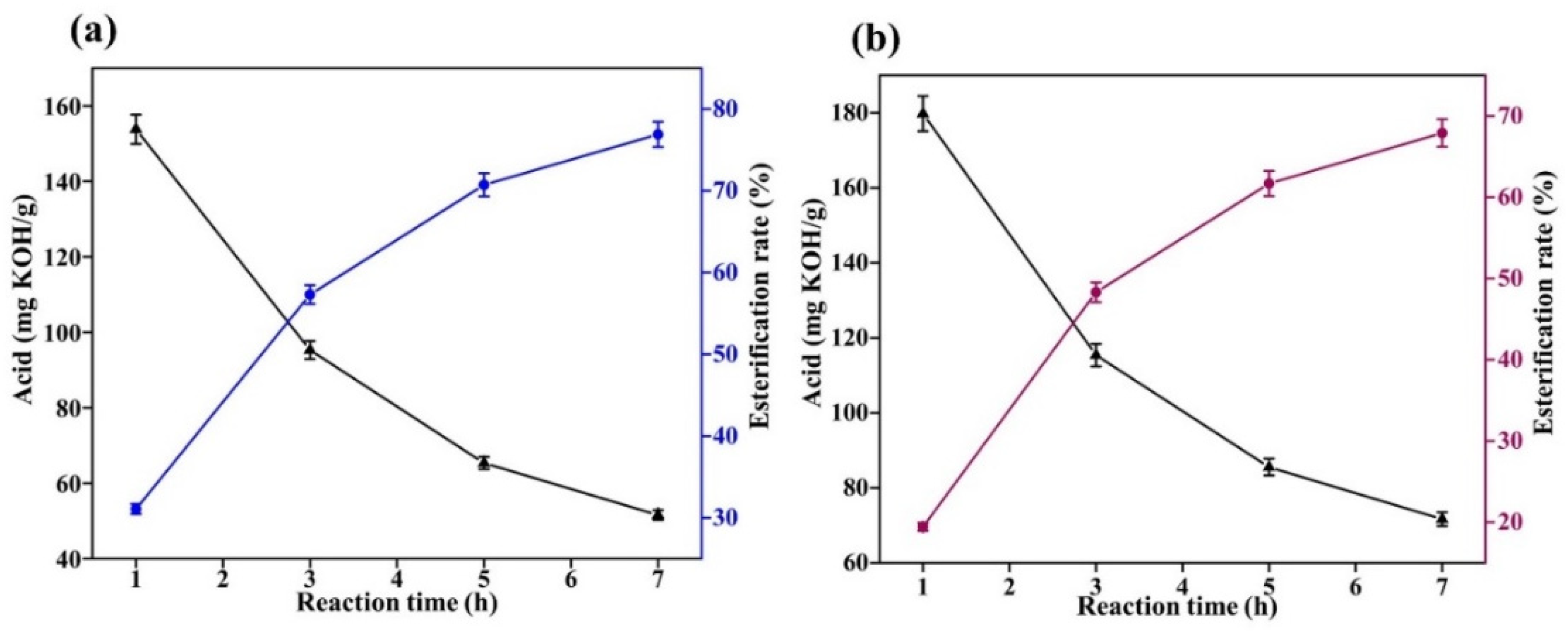
2.2.1. Effect of Catalysts on Esterification
2.2.2. Effect of Temperatures on the Esterification Reaction
2.3. Esterification of Oleic Acid with Mixed Alcohols
2.3.1. Effect of Temperatures on the Esterification Reaction
2.3.2. Effect of the Proportion of Alcohols on Esterification Reactions
2.4. Performance Evaluation of Three Esterification Products
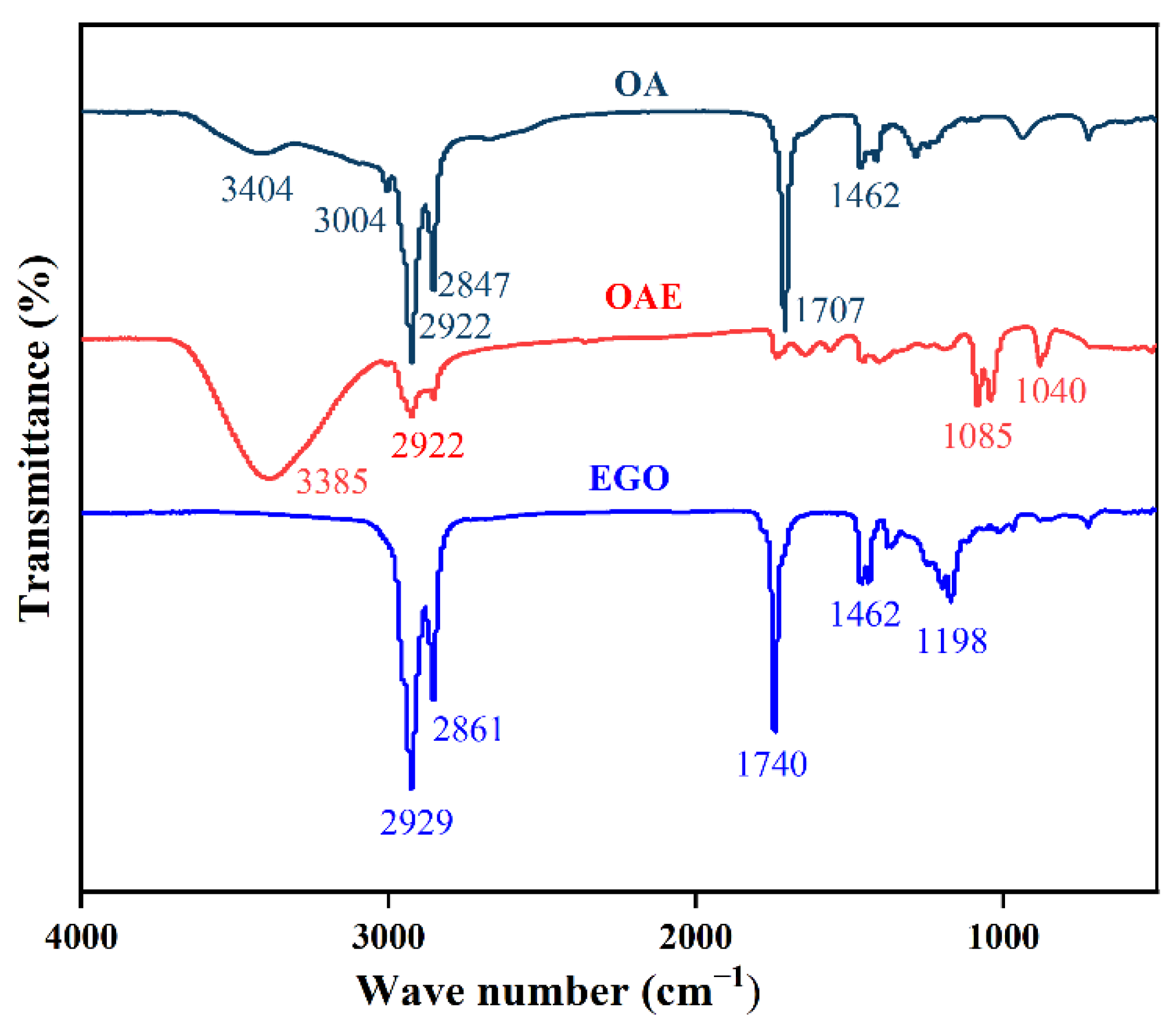
2.4.1. FT-IR Analysis of Different Esterification Products
2.4.2. Basic Performance Analysis of Different Esterification Products
2.4.3. Lubricity Analysis of Different Esterification Products
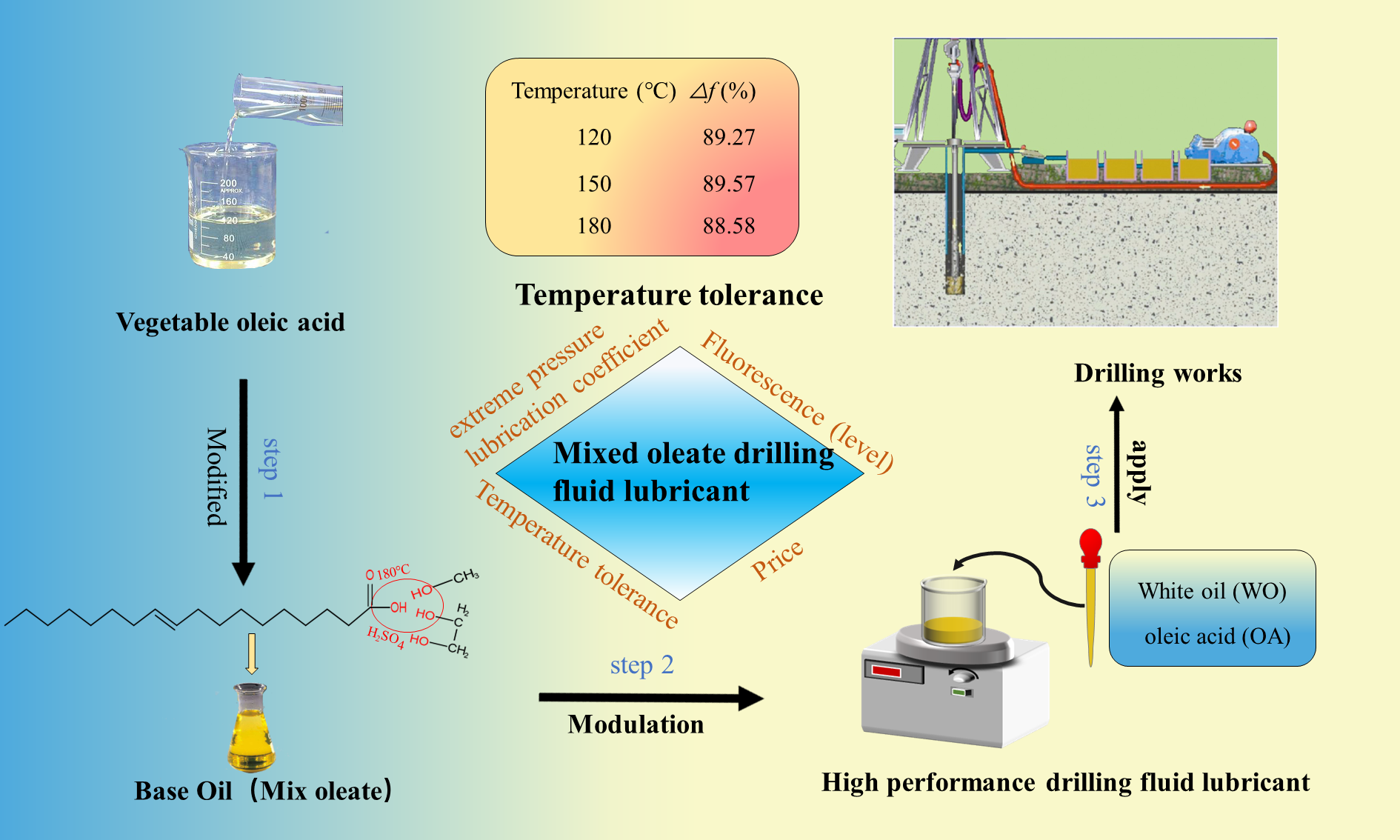
2.5. Preparation of High-Performance Lubricants
2.5.1. Compounding of Lubricants
2.5.2. Evaluation of High-Temperature Resistance
2.5.3. Compared with the Same Type of Lubricant
3. Conclusions
- (1)
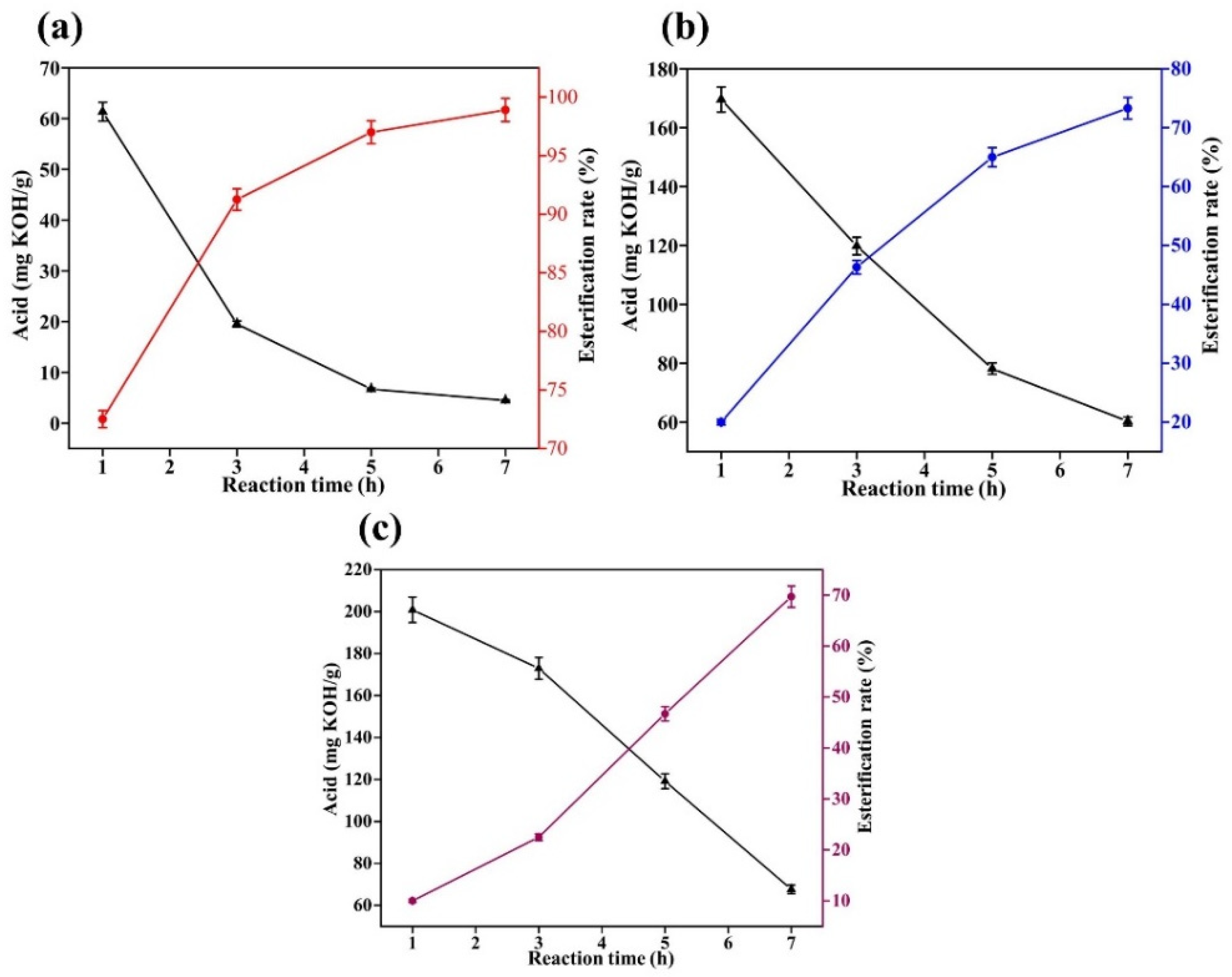
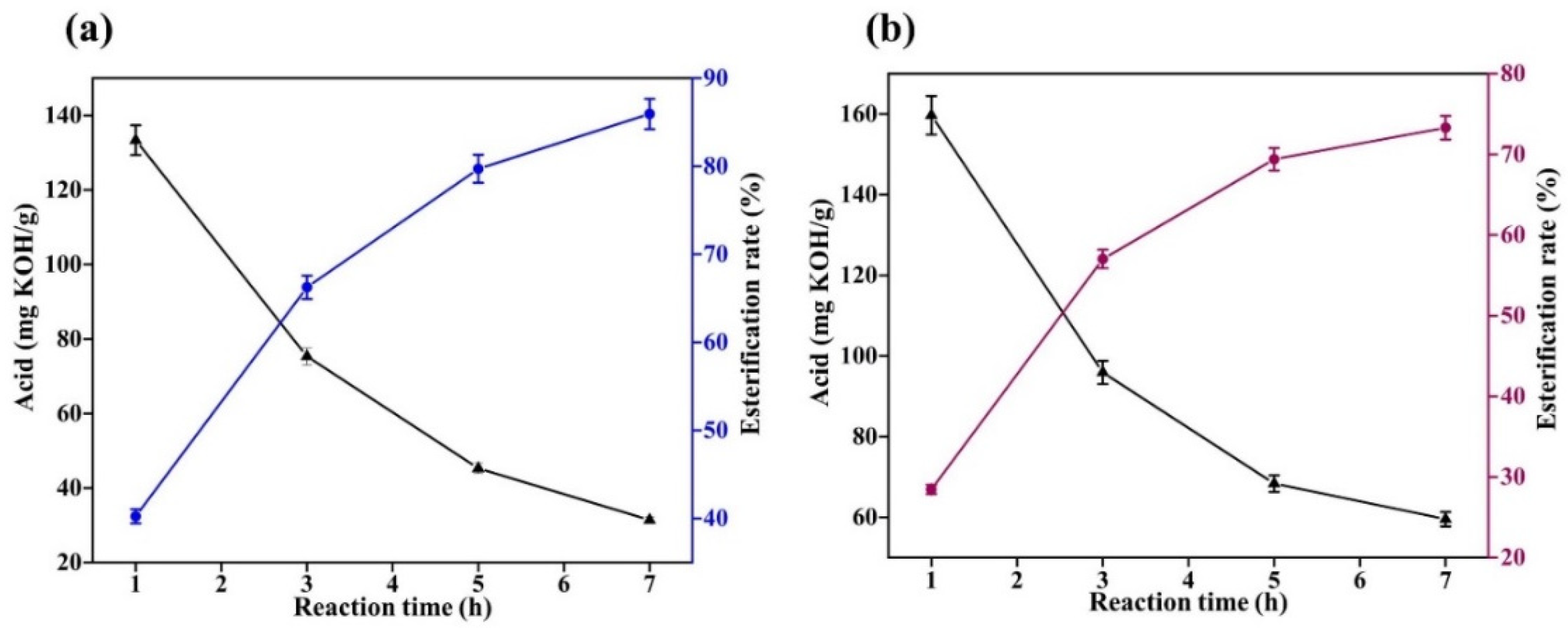
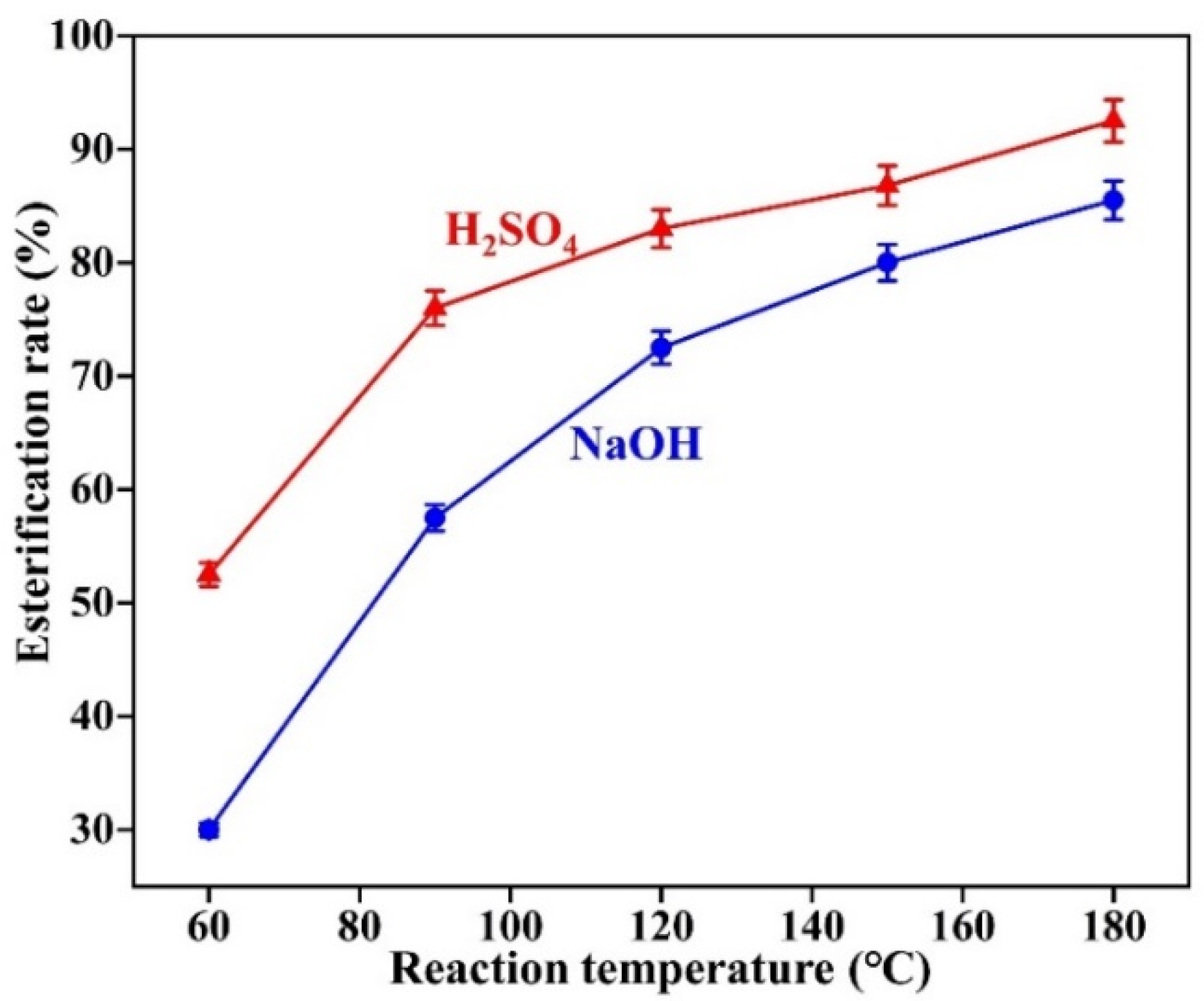
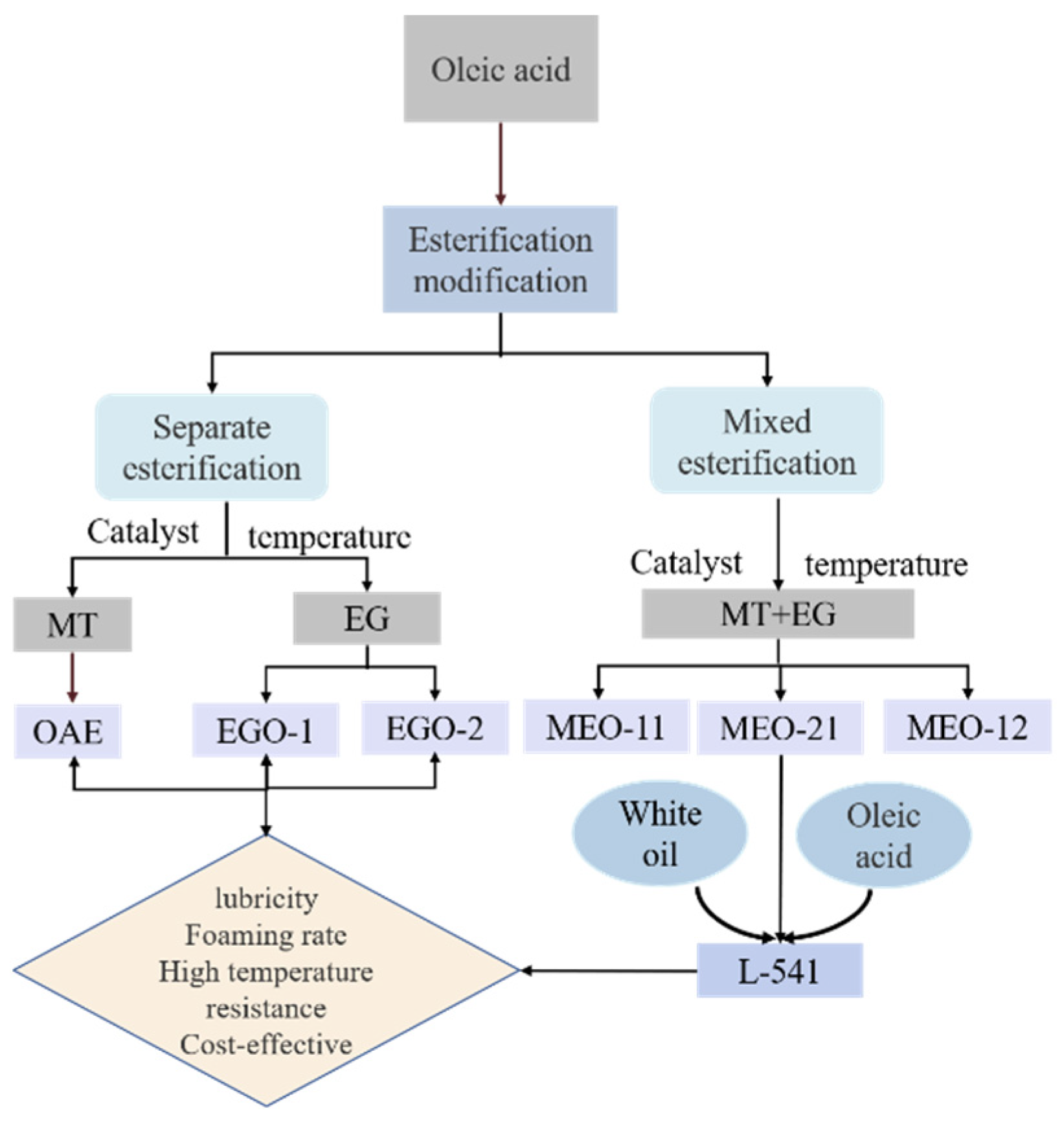
- When oleic acid is esterified with methanol, and concentrated sulfuric acid is used as a catalyst while the reaction temperature is 60 °C and the reaction time set at 3 h, the esterification rate is close to 90%. When oleic acid is esterified with ethylene glycol, both concentrated sulfuric acid and sodium hydroxide can be used as catalysts. The reaction temperature is 180 °C, and the reaction is carried out under the catalysis of concentrated sulfuric acid for 3 h, and the esterification rate reaches 90%. Under the catalysis of sodium hydroxide, the esterification rate is approximately 85%.
- (2)
- Under the optimal esterification process, the Δf of methyl oleate (OAE) obtained by the esterification of oleic acid and methanol is 85.16% at room temperature, but after hot rolling at 150 °C for 16 h, the Δf becomes 72.25%. Lubricity drops significantly after hot rolling at high temperature. When oleic acid is esterified with ethylene glycol, and the prepared ethylene glycol oleate (EGO) has a Δf of 80.34% at room temperature, but after 16 h of hot rolling at 150 °C, the Δf becomes 82.25% and the lubricating properties rise after hot rolling at high temperature.
- (3)
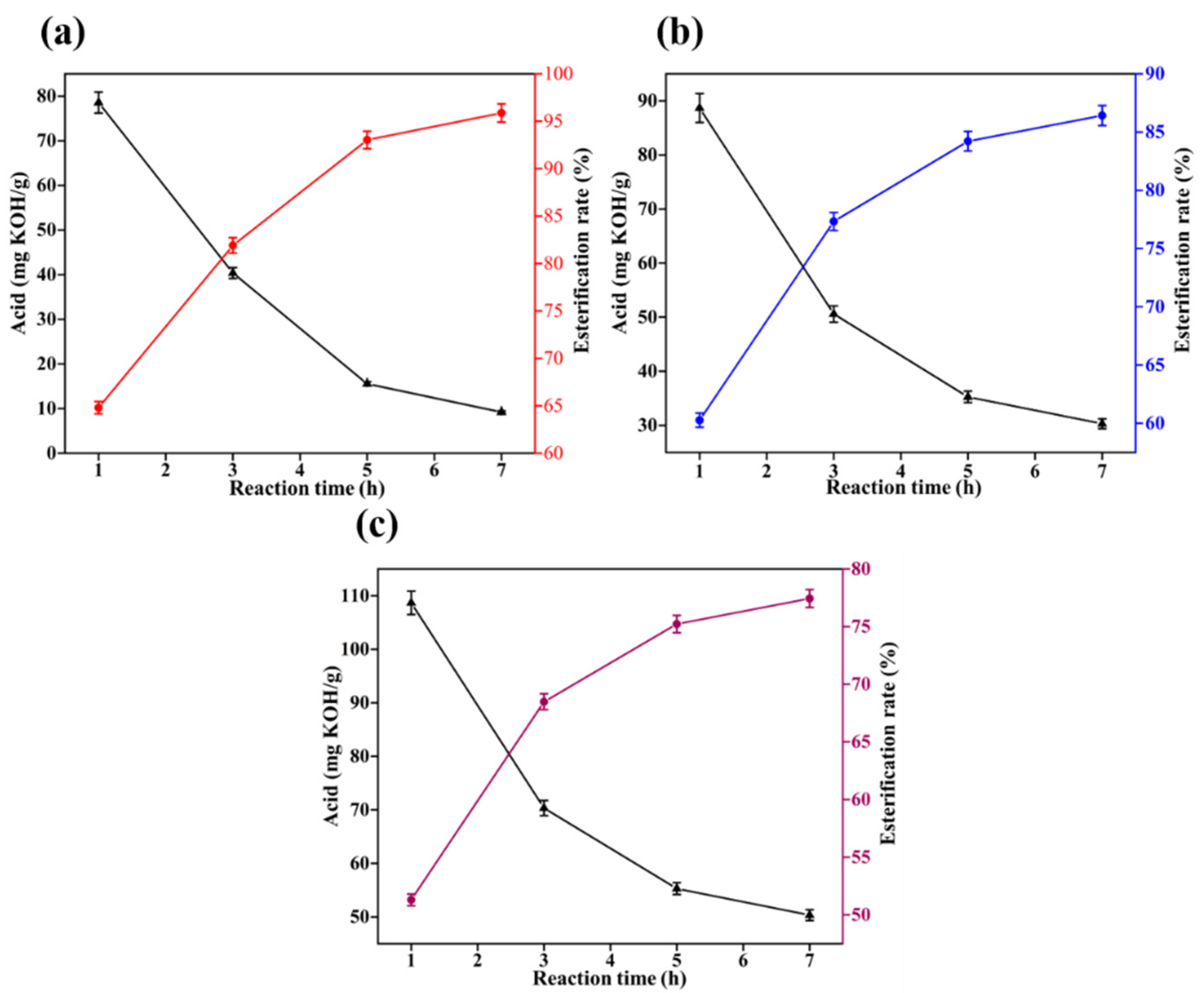
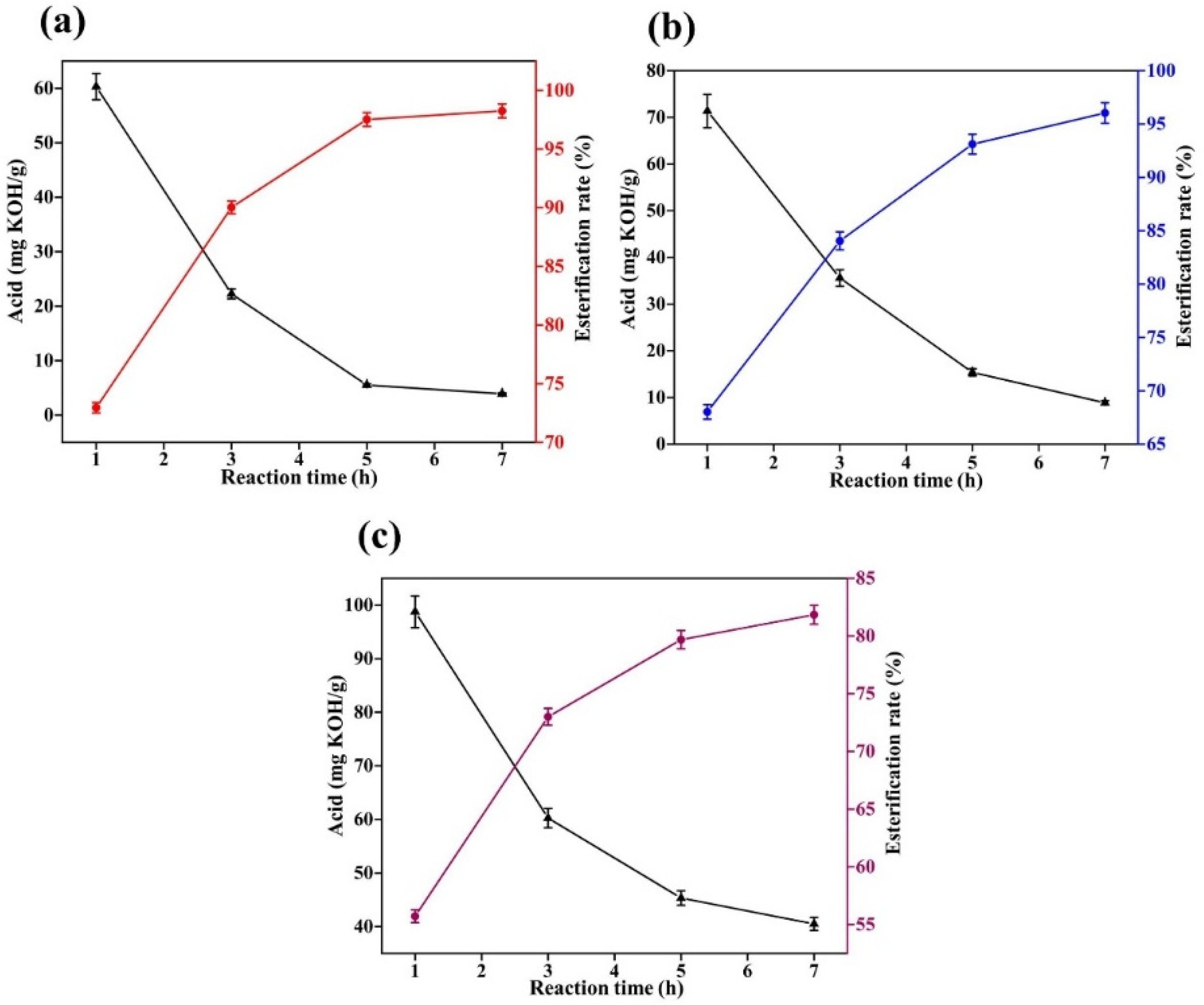
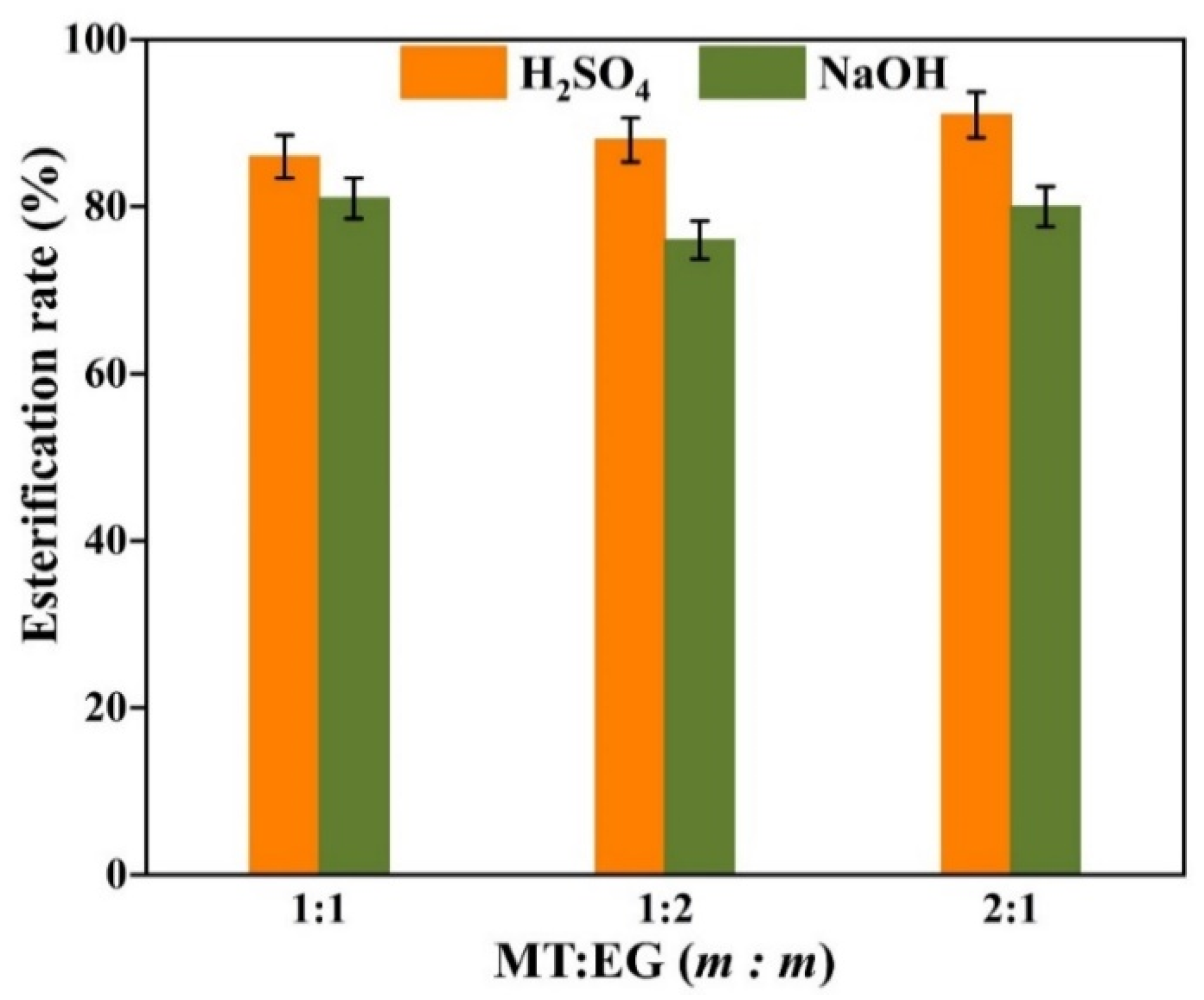
- When methanol and ethylene glycol are mixed with oleic acid, the optimal reaction conditions are as follows: the reaction time is 3 h, the reaction temperature is 150 °C, and concentrated sulfuric acid is used as the catalyst. The obtained esterification product is named MEO-21. The Δf of MEO-21 at room temperature is 86.57%, the Δf is 85.25 after hot rolling at 150 °C for 16 h, and the Δf is 89.56% after 180 °C hot rolling for 16 h. This mixed esterification method not only simplifies the preparation process, but also the obtained mixed oleic acid ester has excellent lubricity regardless of room temperature or high temperature.
- (4)
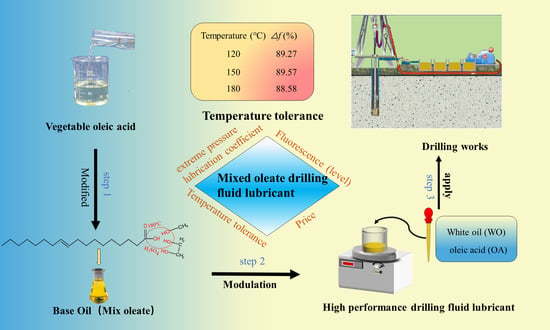
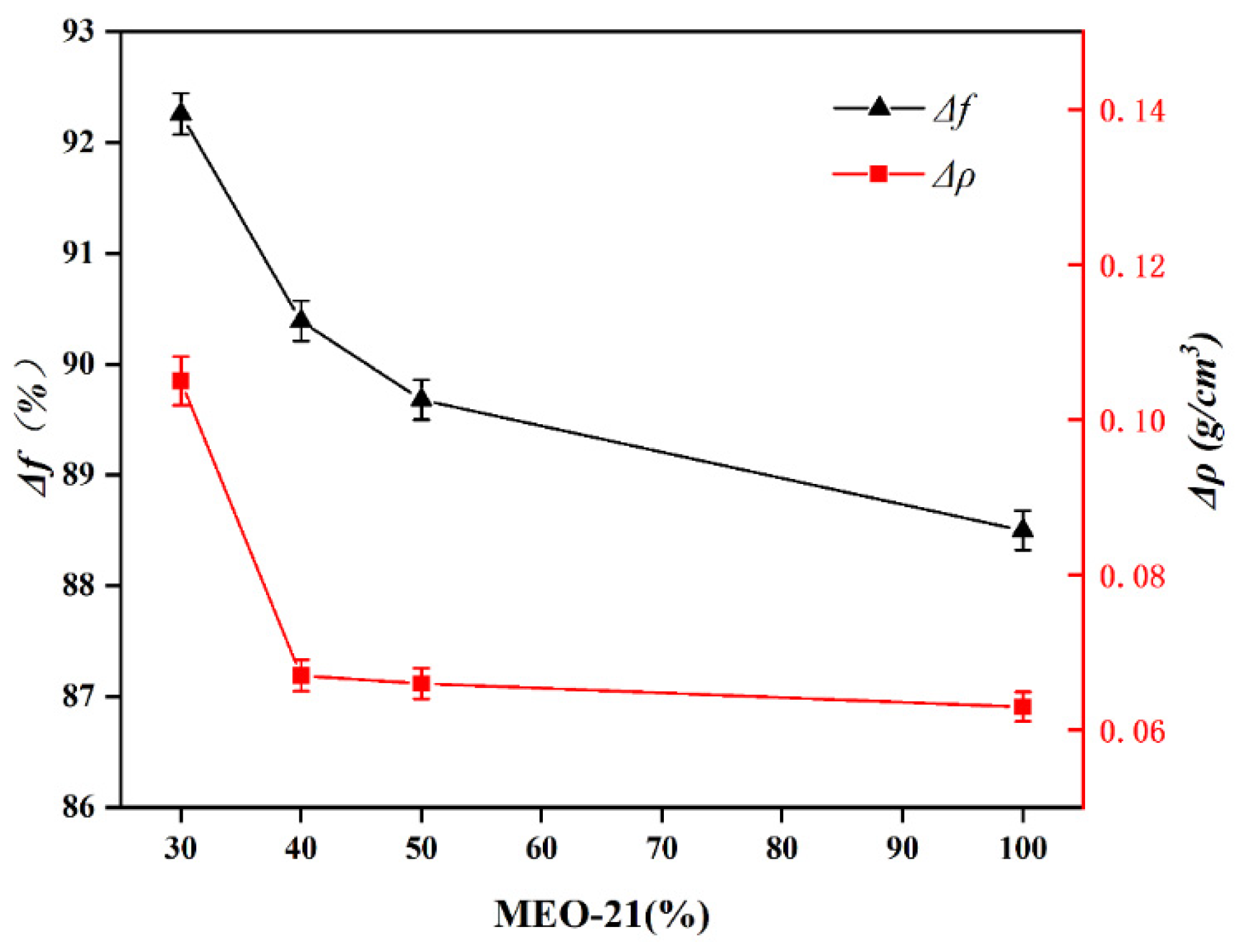
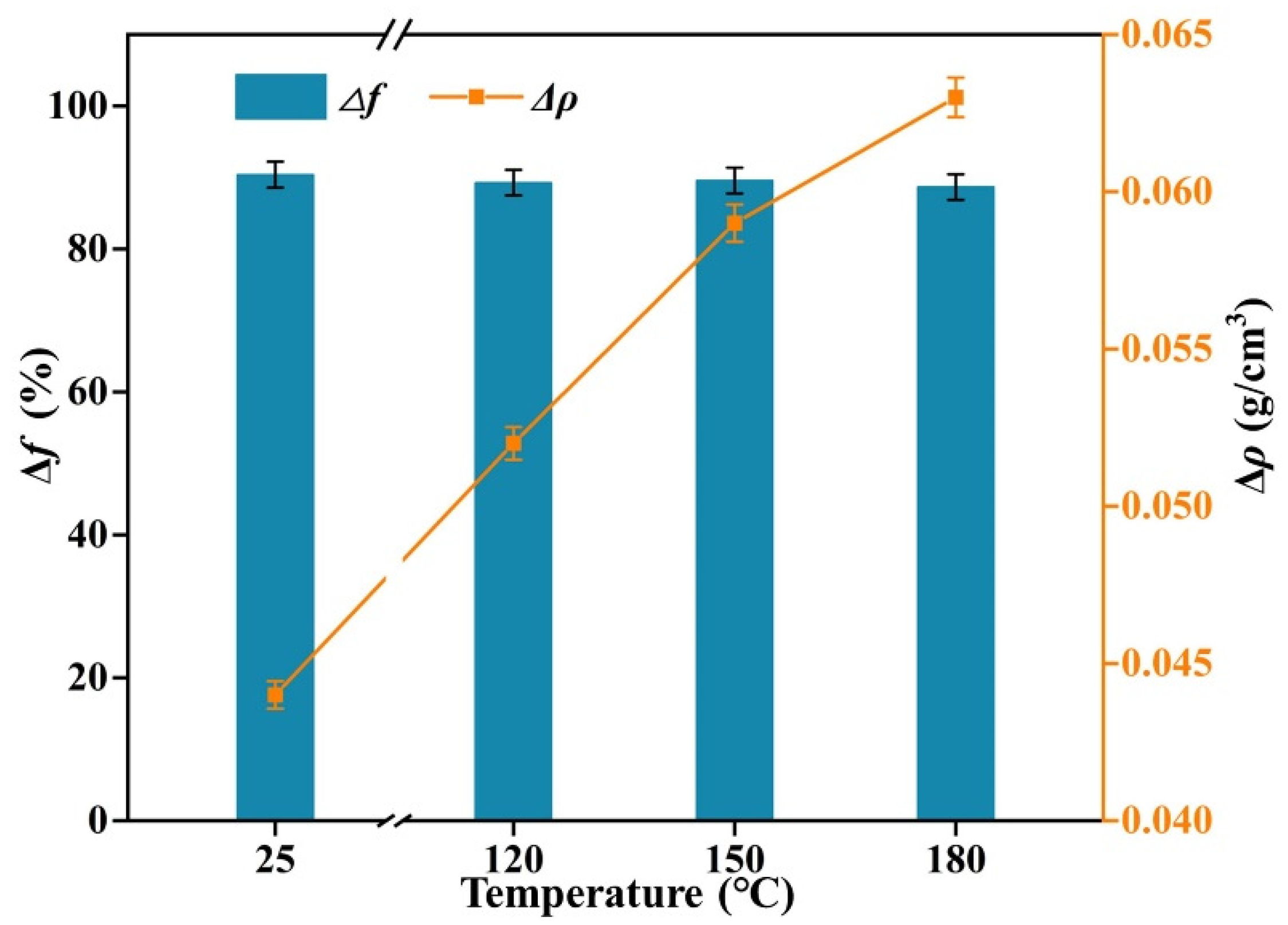
- Taking MEO-21 as base oil and compounding with other oils, a high-performance lubricant is prepared, named L-541. After adding L-541 to the base slurry, the base slurry Δρ is 0.064 g/cm3, and the Δf at room temperature is 90.39%, and after 16 h of hot rolling at 120 °C, 150 °C and 180 °C, basically approximately 89%. Compared with the same type of lubricant, L-541 has good high-temperature resistance, stable lubricating performance at room temperature and high temperature, and is a good ester-based lubricant.
4. Materials and Methods
4.1. Materials
4.2. Instruments
4.3. Methods
4.4. Evaluation Methods
4.4.1. Acid Value Test
- X—acid value of the sample being measured (mg KOH/g);
- V1—scale of KOH after titration in a blank experiment (mL);
- V2—scale of KOH after sample titration (mL);
- CKOH—the concentration of KOH standard solution (mol/L);
- m—sample quantity (g).
4.4.2. Rheological Performance
- AV—apparent viscosity(mPa·s);
- Φ600—viscometer dial reading at 600 r/min (dia).
4.4.3. Lubricity Performance Test
- Δf—reduction rate of extreme pressure lubrication coefficient, %;
- T1—extreme pressure lubrication coefficient of the base paste;
- T2—the extreme pressure lubrication coefficient after the base slurry is added to the specimen.
4.4.4. Fluorescence Level Determination of Oil Samples
Author Contributions
Funding
Institutional Review Board Statement
Informed Consent Statement
Data Availability Statement
Conflicts of Interest
References
- Dong, X.; Wang, L.; Yang, X.; Lin, Y.; Xue, Y. Effect of ester based lubricant SMJH-1 on the lubricity properties of water based drilling fluid. J. Pet. Sci. Eng. 2015, 135, 161–167. [Google Scholar] [CrossRef] [Scilit]
- Espagne, B.J.-L.; Lamrani-Kern, S.; éne Rodeschini, H. Biodegradable Lubricating Composition and Use Thereof in a Drilling Fluid, in Particular for Very Deep Reservoirs. USA Patent 8846583, 30 September 2014. [Google Scholar]
- Li, W.; Zhao, X.; Li, Y.; Ji, Y.; Peng, H.; Liu, L.; Yang, Q. Laboratory investigations on the effects of surfactants on rate of penetration in rotary diamond drilling. J. Pet. Sci. Eng. 2015, 134, 114–122. [Google Scholar] [CrossRef] [Scilit]
- Kercheville, J.D.; Hinds, A.A.; Clements, W.R. Comparison of Environmentally Acceptable Materials With Diesel Oil for Drilling Mud Lubricity and Spotting Fluid Formulations. In Proceedings of the IADC/SPE Drilling Conference, Dallas, TX, USA, 10–12 February 1986; p. SPE-14797-MS. [Google Scholar]
- Lescure, J.; Teng, J.; Degouy, D.; Espagne, B. Development and Field Trial of a Non-Aqueous-Based Mud Lubricant. In Proceedings of the SPE Offshore Europe Oil and Gas Conference and Exhibition, Aberdeen, UK, 3–6 September 2013; p. SPE-166545-MS. [Google Scholar]
- Amorim, A.; Nascimento, R.C.A.M.; Lira, D.S.; Magalhães, J. Evaluation of the behavior of biodegradable lubricants in the differential sticking coefficient of water based drilling fluids. Braz. J. Pet. Gas 2011, 5, 197–207. [Google Scholar] [CrossRef] [Scilit]
- Patel, A.; Zhang, J.H.; Ke, M.; Panamarathupalayam, B. Lubricants and Drag Reducers for Oilfield Applications—Chemistry, Performance, and Environmental Impact. In Proceedings of the SPE International Symposium on Oilfield Chemistry, The Woodlands, TX, USA, 8–10 April 2013; p. SPE-164049-MS. [Google Scholar]
- Naidu, S.K.; Klaus, E.E.; Duda, J.L. Evaluation of liquid phase oxidation products of ester and mineral oil lubricants. Ind. Eng. Chem. Prod. Res. Dev. 1984, 23, 613–619. [Google Scholar] [CrossRef] [Scilit]
- Willing, A. Oleochemical esters—Environmentally compatible raw materials for oils and lubricants from renewable resources. Lipid/Fett 1999, 101, 192–198. [Google Scholar] [CrossRef] [Scilit]
- Willing, A. Lubricants based on renewable resources ± an environmentally. Chemosphere 2001, 43, 89–98. [Google Scholar] [CrossRef] [Scilit]
- Addy, J.M.; Hartley, J.P.; Tibbetts, P.J.C. Ecological effects of low toxicity oil-based mud drilling in the Beatrice oilfield. Mar. Pollut. Bull. 1984, 15, 429–436. [Google Scholar] [CrossRef] [Scilit]
- Zhou, F.; Xiong, Z.Q.; Cui, B.L.; Liu, F.B.; Li, G.H.; Wei, J.R.; Cui, H. Effect of Nitric Acid on the Low Fluorescing Performance of Drilling Fluid Lubricant Based Animal and Vegetable Oils. J. Spectrosc. 2013, 2013, 269280. [Google Scholar] [CrossRef] [Scilit]
- Sönmez, A.; Kök, M.V.; Özel, R. Performance analysis of drilling fluid liquid lubricants. J. Pet. Sci. Eng. 2013, 108, 64–73. [Google Scholar] [CrossRef] [Scilit]
- Quinchia, L.A.; Delgado, M.A.; Reddyhoff, T.; Gallegos, C.; Spikes, H.A. Tribological studies of potential vegetable oil-based lubricants containing environmentally friendly viscosity modifiers. Tribol. Int. 2014, 69, 110–117. [Google Scholar] [CrossRef] [Scilit]
- Borugadda, V.B.; Goud, V.V. Improved thermo-oxidative stability of structurally modified waste cooking oil methyl esters for bio-lubricant application. J. Clean. Prod. 2016, 112, 4515–4524. [Google Scholar] [CrossRef] [Scilit]
- Ma, C.; Wen, R.; Zhou, F.; Zhao, H.; Bao, X.; Evelina, A.; Long, W.; Wei, Z.; Ma, L.; Liu, J.; et al. Preparation and application of an environmentally friendly compound lubricant based biological oil for drilling fluids. Arab. J. Chem. 2022, 15, 103610. [Google Scholar] [CrossRef] [Scilit]
- Growcock, F.B.; Patel, A.D. The Revolution in Non-Aqueous Drilling Fluids. In Proceedings of the 2011 AADE National Technical Conference and Exhibition, Houston, TX, USA, 12–14 April 2011; p. M-I SWACO. [Google Scholar]
- Photaworn, S.; Tongurai, C.; Kungsanunt, S. Process development of two-step esterification plus catalyst solution recycling on waste vegetable oil possessing high free fatty acid. Chem. Eng. Process. Process. Intensif. 2017, 118, 1–8. [Google Scholar] [CrossRef] [Scilit]
- Razali, S.Z.; Yunus, R.; Rashid, S.A.; Lim, H.N.; Jan, B.M. Review of biodegradable synthetic-based drilling fluid: Progression, performance and future prospect. Renew. Sustain. Energy Rev. 2018, 90, 171–186. [Google Scholar] [CrossRef] [Scilit]
- Kisic, I.; Mesic, S.; Basic, F.; Brkic, V.; Mesic, M.; Durn, G.; Zgorelec, Z.; Bertovic, L. The effect of drilling fluids and crude oil on some chemical characteristics of soil and crops. Geoderma 2009, 149, 209–216. [Google Scholar] [CrossRef] [Scilit]
- Cordes, E.E.; Jones, D.O.; Schlacher, T.A.; Amon, D.J.; Bernardino, A.F.; Brooke, S.; Carney, R.; DeLeo, D.M.; Dunlop, K.M.; Escobar-Briones, E.G.; et al. Environmental Impacts of the Deep-Water Oil and Gas Industry: A Review to Guide Management Strategies. Front. Environ. Sci. 2016, 4, 58. [Google Scholar] [CrossRef] [Scilit]
- Tornero, V.; Hanke, G. Chemical contaminants entering the marine environment from sea-based sources: A review with a focus on European seas. Mar. Pollut. Bull. 2016, 112, 17–38. [Google Scholar] [CrossRef] [Scilit] [PubMed]
- Murphy, C.; Zisman, W. Structural guides for synthetic lubricant development. Ind. Eng. Chem. 1950, 42, 2415–2420. [Google Scholar] [CrossRef] [Scilit]
- Rudnick, L.R. Synthetics, Mineral Oils, and Bio-Based Lubricants: Chemistry and Technology; CRC Press: Boca Raton, FL, USA, 2020. [Google Scholar]
- Marchetti, J.M.; Miguel, V.U.; Errazu, A.F. Heterogeneous esterification of oil with high amount of free fatty acids. Fuel 2007, 86, 906–910. [Google Scholar] [CrossRef] [Scilit]
- Eckhout, D.; Dolan, S.; Gogan, R.; Ledgister, H.; Mowat, C.; Tipton, P.; Ewen, B.; Dye, W. Development Process and Field Applications of a New Ester-based Mud System for ERD Wells on Australia’s Northwest Shelf. In Proceedings of the IADC/SPE Asia Pacific Drilling Technology, Kuala Lumpur, Malaysia, 11–13 September 2000; p. SPE-62791-MS. [Google Scholar]





| Oil Samples | Fluorescence Level, Grade | ρ, g/cm3 | Δρ, g/cm3 |
|---|---|---|---|
| OAE | 3 | 0.99 | 0.034 |
| EGO-1 | 3 | 0.96 | 0.064 |
| EGO-2 | 3 | 0.97 | 0.054 |
| MEO-11 | 3 | 0.99 | 0.033 |
| MEO-21 | 3 | 0.96 | 0.063 |
| MEO-12 | 3 | 0.99 | 0.033 |
| Evaluation Methods | Q/SY | OAE | EGO-1 | EGO-2 | MEO-11 | MEO-21 | MEO-12 |
|---|---|---|---|---|---|---|---|
| AV, mPa·s | 5≤ | 4 | 4.5 | 5 | 5 | 4.5 | 5 |
| Δρ, g/cm3 | 0.08≤ | 0.034 | 0.064 | 0.054 | 0.033 | 0.063 | 0.043 |
| Δf (Room temperature), % | ≥85 | 85.16 | 80.34 | 81.16 | 84.46 | 86.57 | 82.26 |
| Δf (120 °C × 16 h Hot Rolling), % | 82.34 | 80.15 | 85.35 | 83.34 | 85.15 | 83.35 | |
| Δf (150 °C × 16 h Hot Rolling), % | 72.25 | 82.25 | 82.46 | 85.25 | 85.25 | 82.46 | |
| Δf (180 °C × 16 h Hot Rolling), % | 70.59 | 77.56 | 82.57 | 79.59 | 89.56 | 80.57 |
| Evaluation Method | Comparison Samples | ||||
|---|---|---|---|---|---|
| L-541 | ZJY-1 | ZJY-2 | PGCS-1 | HLB | |
| Fluorescence level, grade | 3 | 3 | 3 | 4 | 4 |
| AV, mPa·s | 3 | 4 | 3.5 | 4 | 5 |
| Δρ, g/cm3 | 0.064 | 0.064 | 0.054 | 0.064 | 0.084 |
| Δf (Room temperature), % | 90.39 | 91.27 | 92.78 | 86.16 | 85.09 |
| Δf (120 °C × 16 h), % | 89.27 | 89.65 | 91.34 | 87.21 | 87.06 |
| Δf (150 °C × 16 h), % | 89.57 | 88.34 | 87.45 | 87.26 | 86.13 |
| Δf (180 °C × 16 h), % | 88.58 | 84.21 | 87.35 | 86.45 | 86.60 |
| Price, CNY/ton | 7000 | 8000 | 8500 | 8000 | 7000 |
Publisher’s Note: MDPI stays neutral with regard to jurisdictional claims in published maps and institutional affiliations. |
© 2022 by the authors. Licensee MDPI, Basel, Switzerland. This article is an open access article distributed under the terms and conditions of the Creative Commons Attribution (CC BY) license (https://creativecommons.org/licenses/by/4.0/).
Share and Cite
Bao, X.; Ma, C.; Zhou, F. One-Step Process of Mixed Oleic Acid Esters and Its High Temperature Lubrication Properties in Bentonite Gelling Suspension. Gels 2022, 8, 678. https://doi.org/10.3390/gels8100678
Bao X, Ma C, Zhou F. One-Step Process of Mixed Oleic Acid Esters and Its High Temperature Lubrication Properties in Bentonite Gelling Suspension. Gels. 2022; 8(10):678. https://doi.org/10.3390/gels8100678
Chicago/Turabian StyleBao, Xincheng, Cunfa Ma, and Fengshan Zhou. 2022. "One-Step Process of Mixed Oleic Acid Esters and Its High Temperature Lubrication Properties in Bentonite Gelling Suspension" Gels 8, no. 10: 678. https://doi.org/10.3390/gels8100678
APA StyleBao, X., Ma, C., & Zhou, F. (2022). One-Step Process of Mixed Oleic Acid Esters and Its High Temperature Lubrication Properties in Bentonite Gelling Suspension. Gels, 8(10), 678. https://doi.org/10.3390/gels8100678