
Synergistic Mechanisms of Surfactants and Monovalent Ions for Enhanced Oil Recovery Through Interfacial Properties and Microfluidic Study

Abstract
1. Introduction
2. Results and Discussion
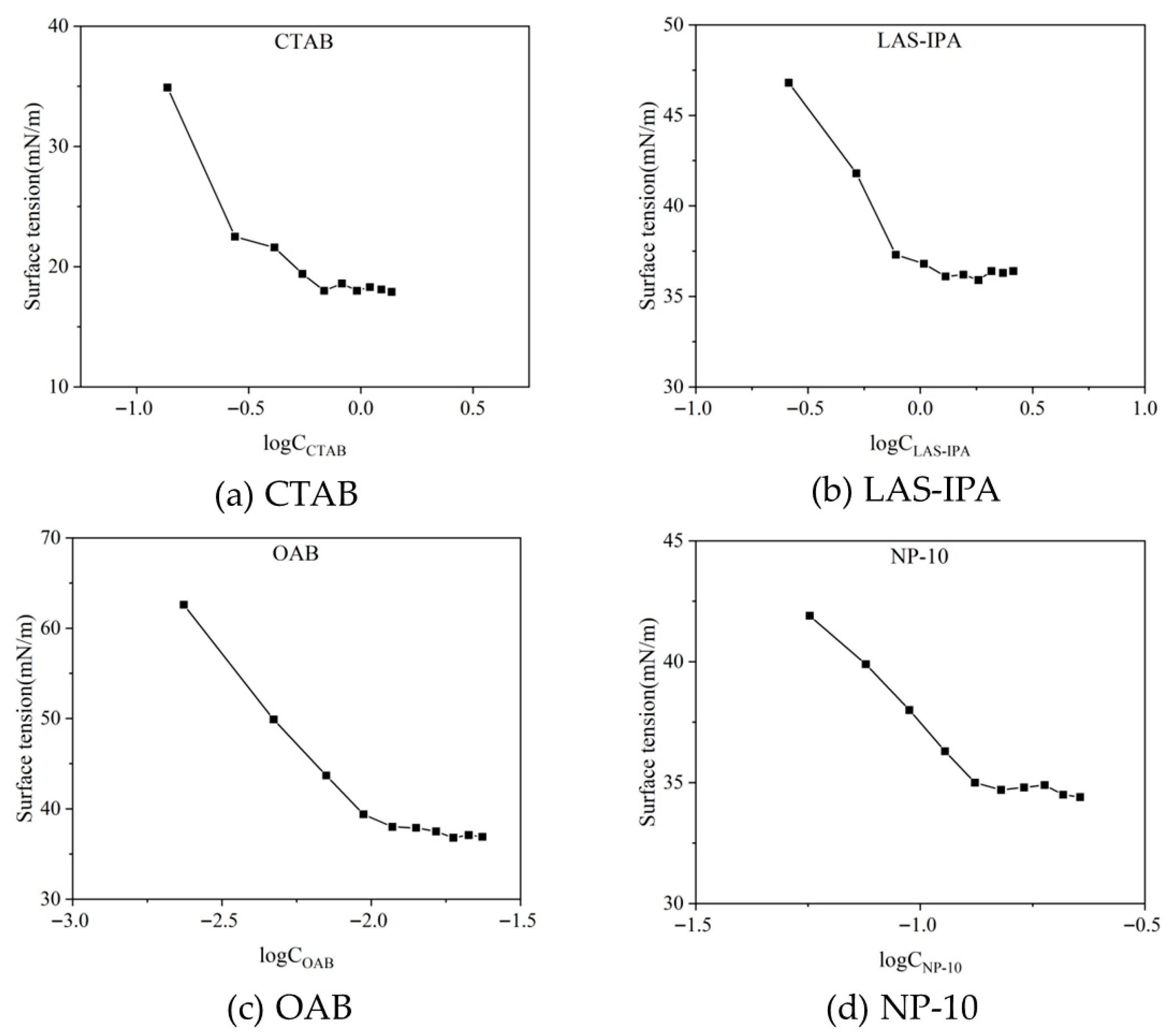
2.1. Critical Micelle Concentration of the Surfactants
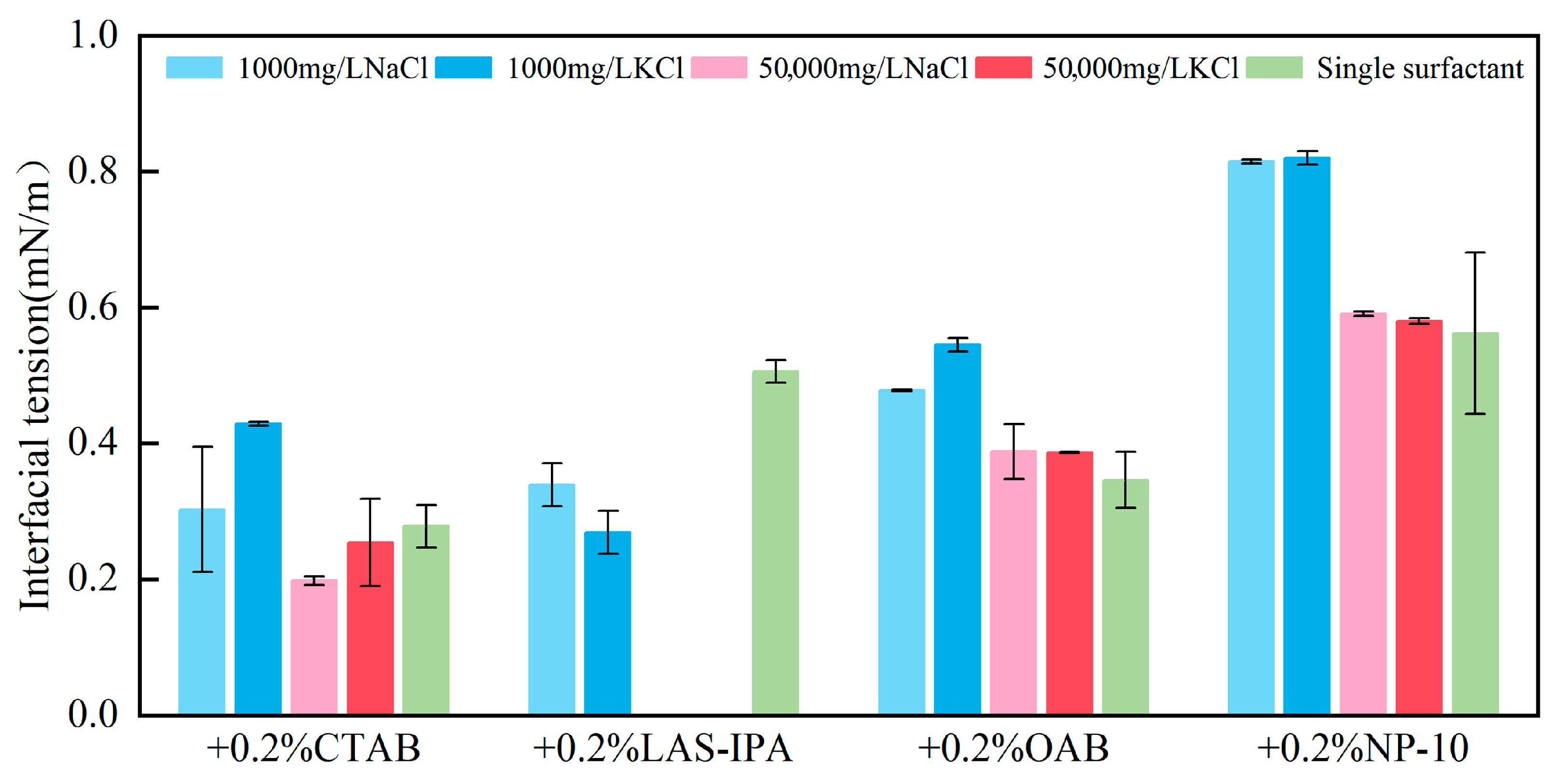
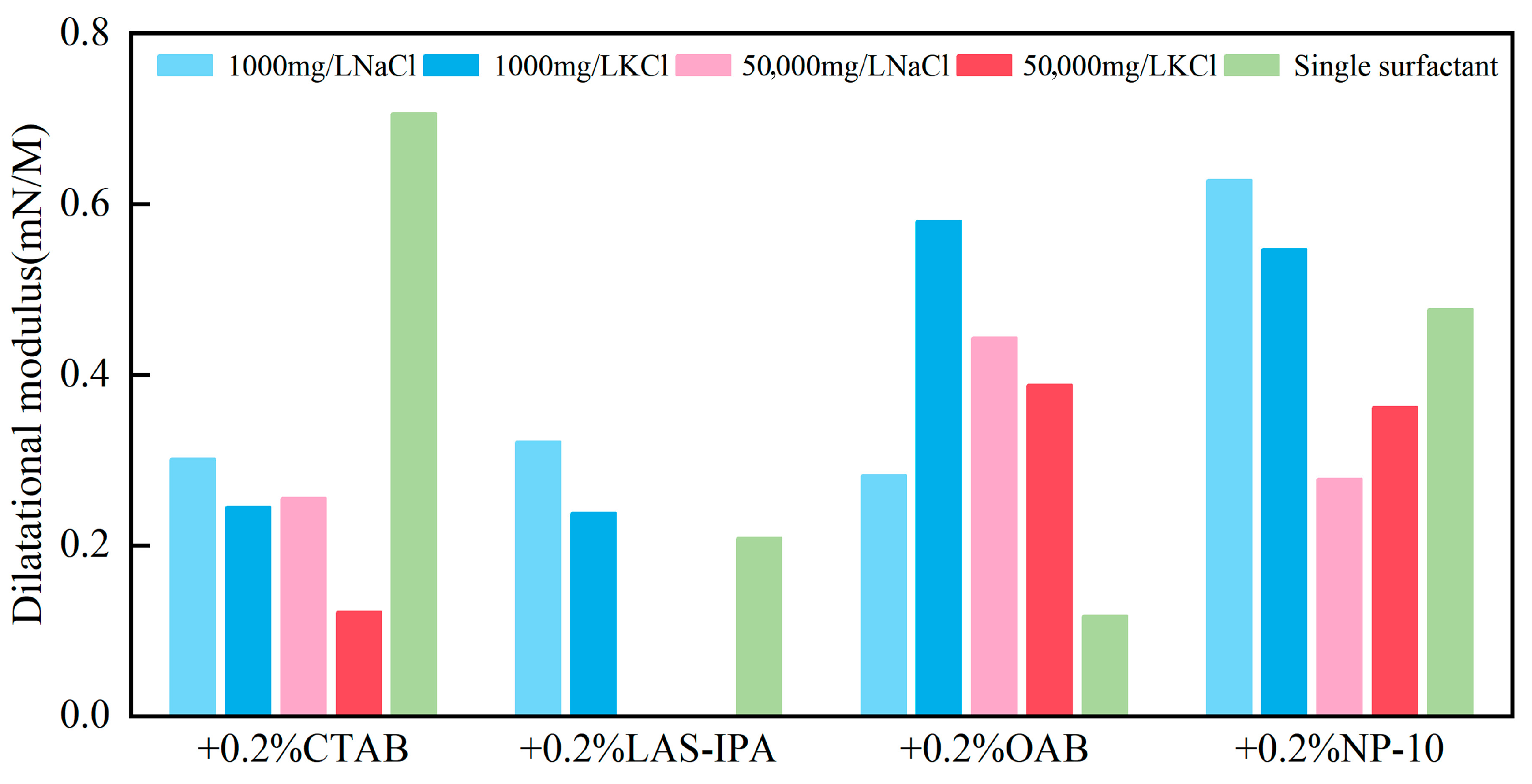
2.2. Effect of Salts on the IFT and VE
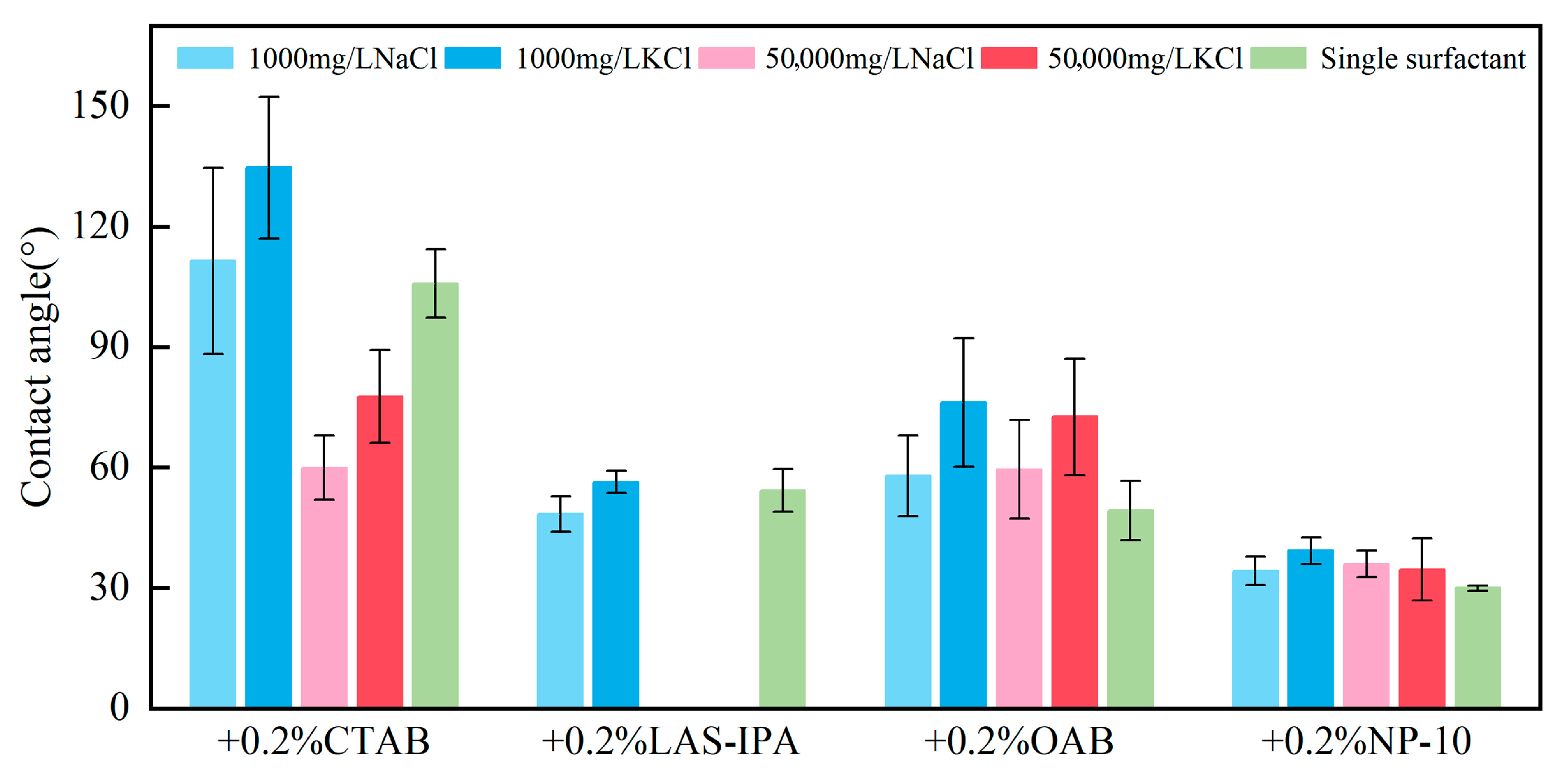
2.3. Effect of Salts on the Wettability
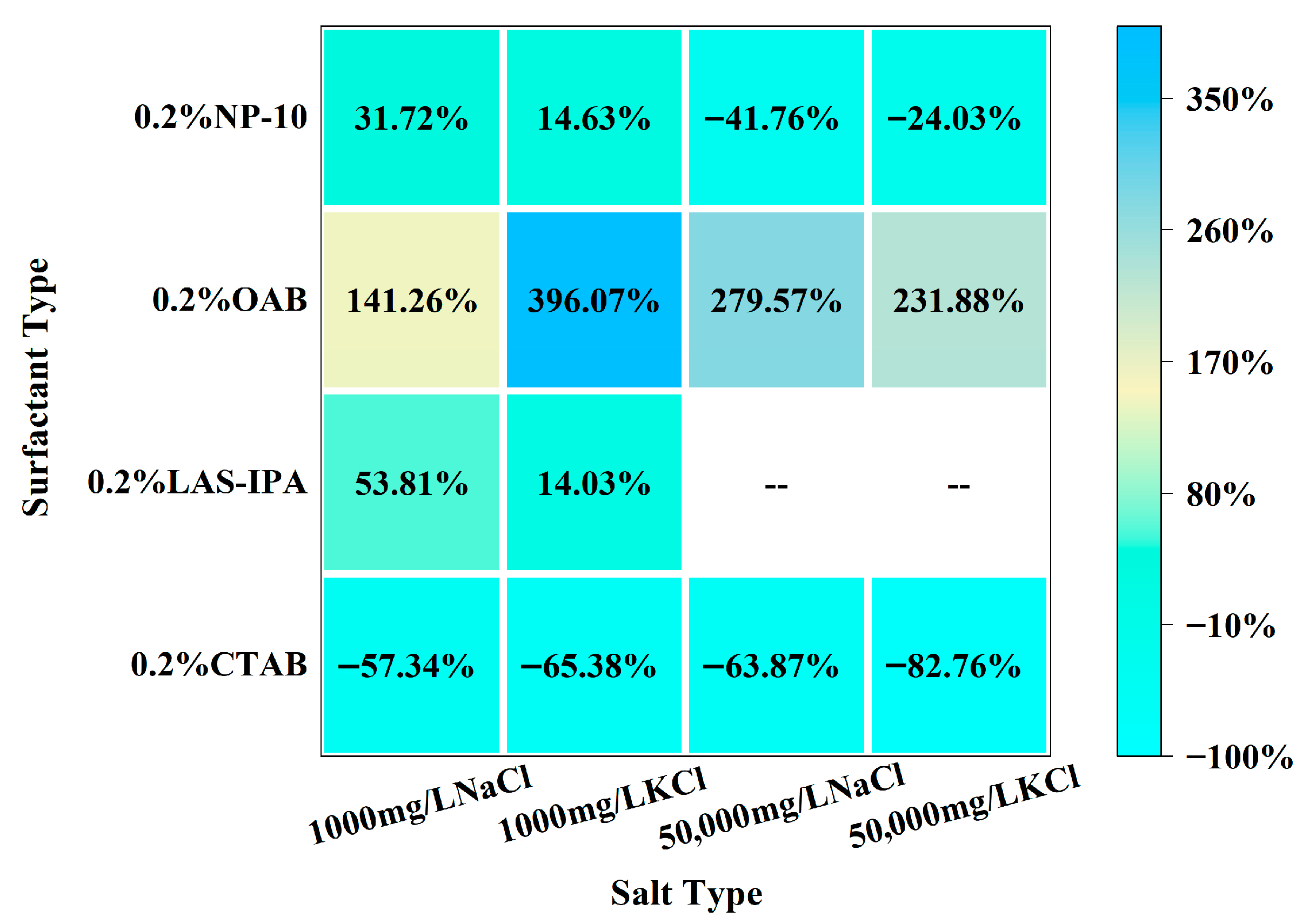
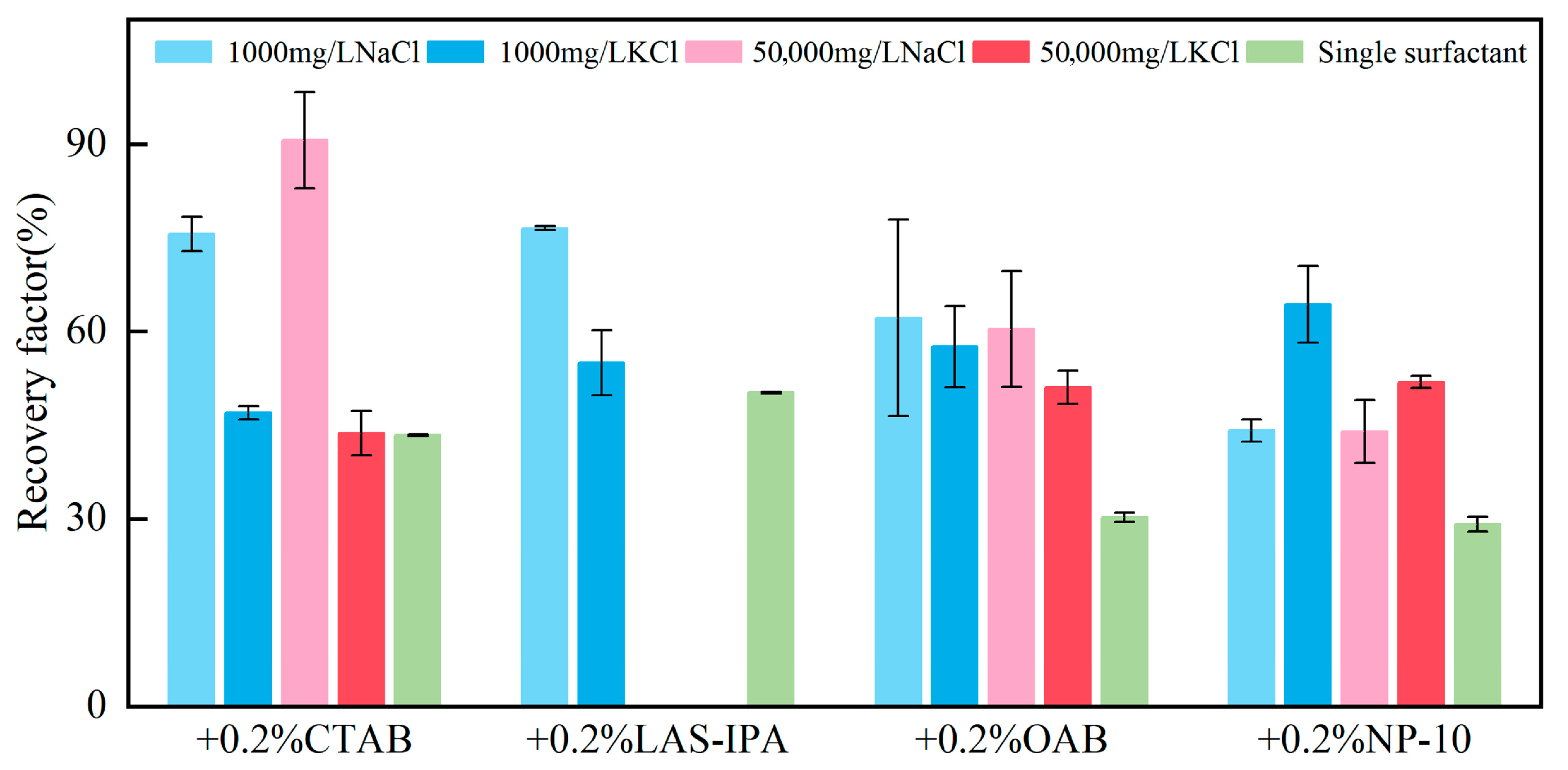
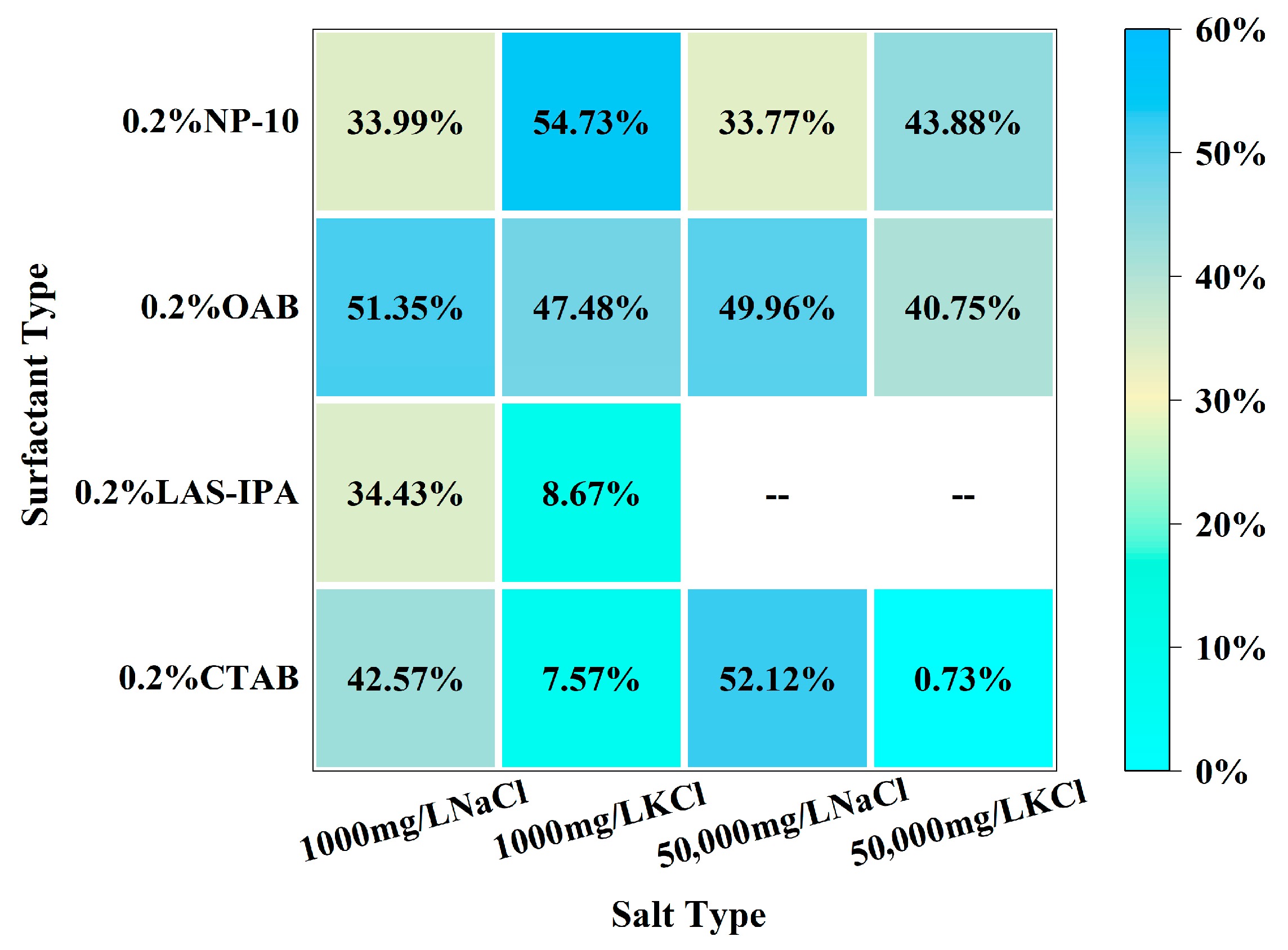
2.4. Oil Recovery with Composite Solutions
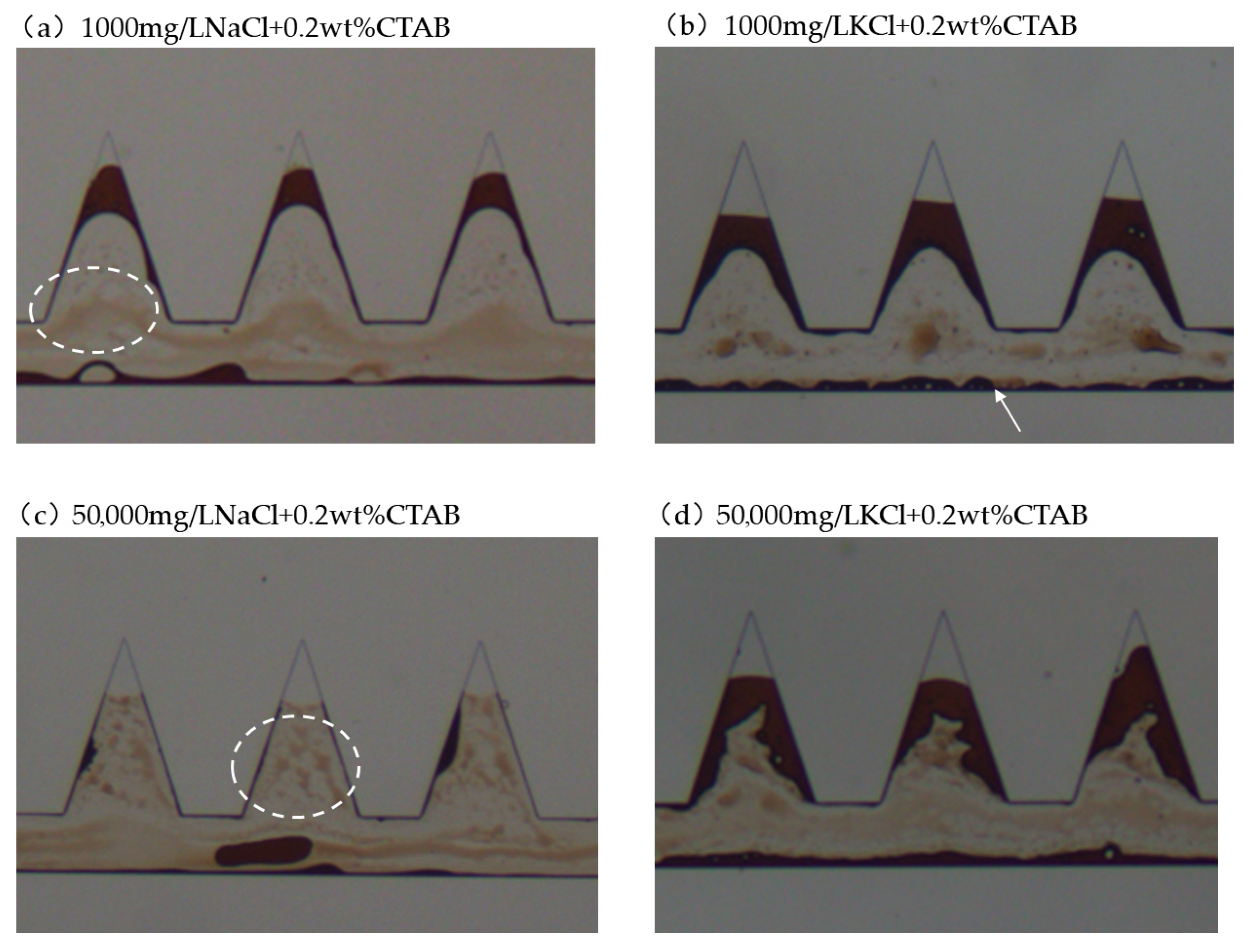
2.4.1. Cationic Surfactant CTAB with Salts
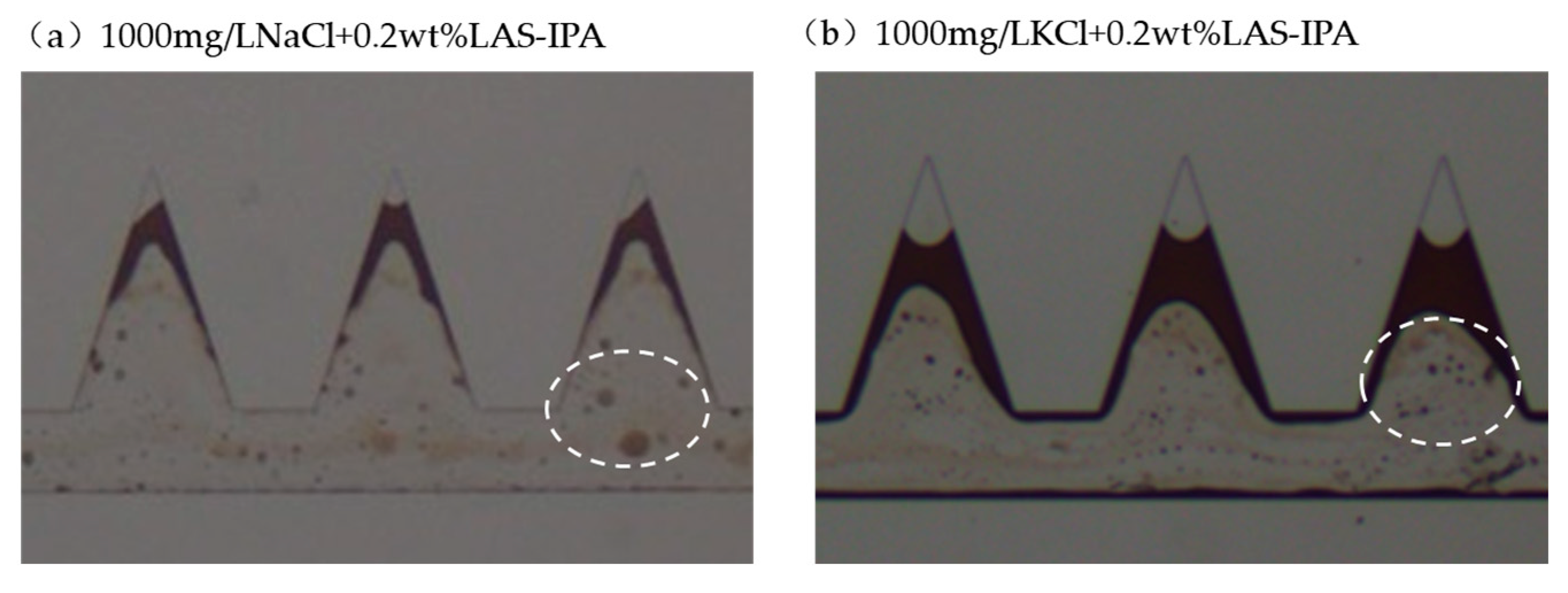
2.4.2. Anionic Surfactant LAS-IPA with Salts
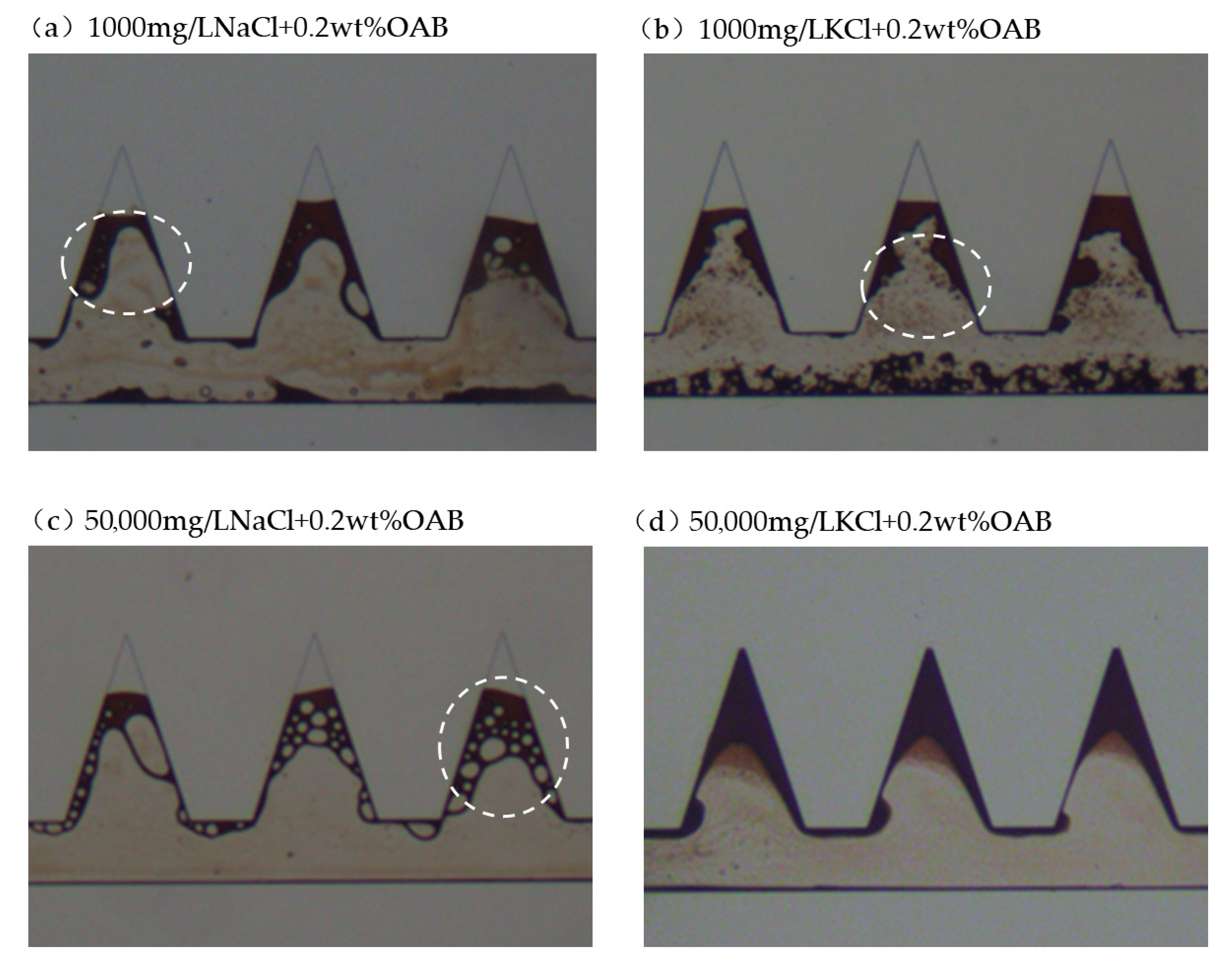
2.4.3. Zwitterionic Surfactant OAB with Salts
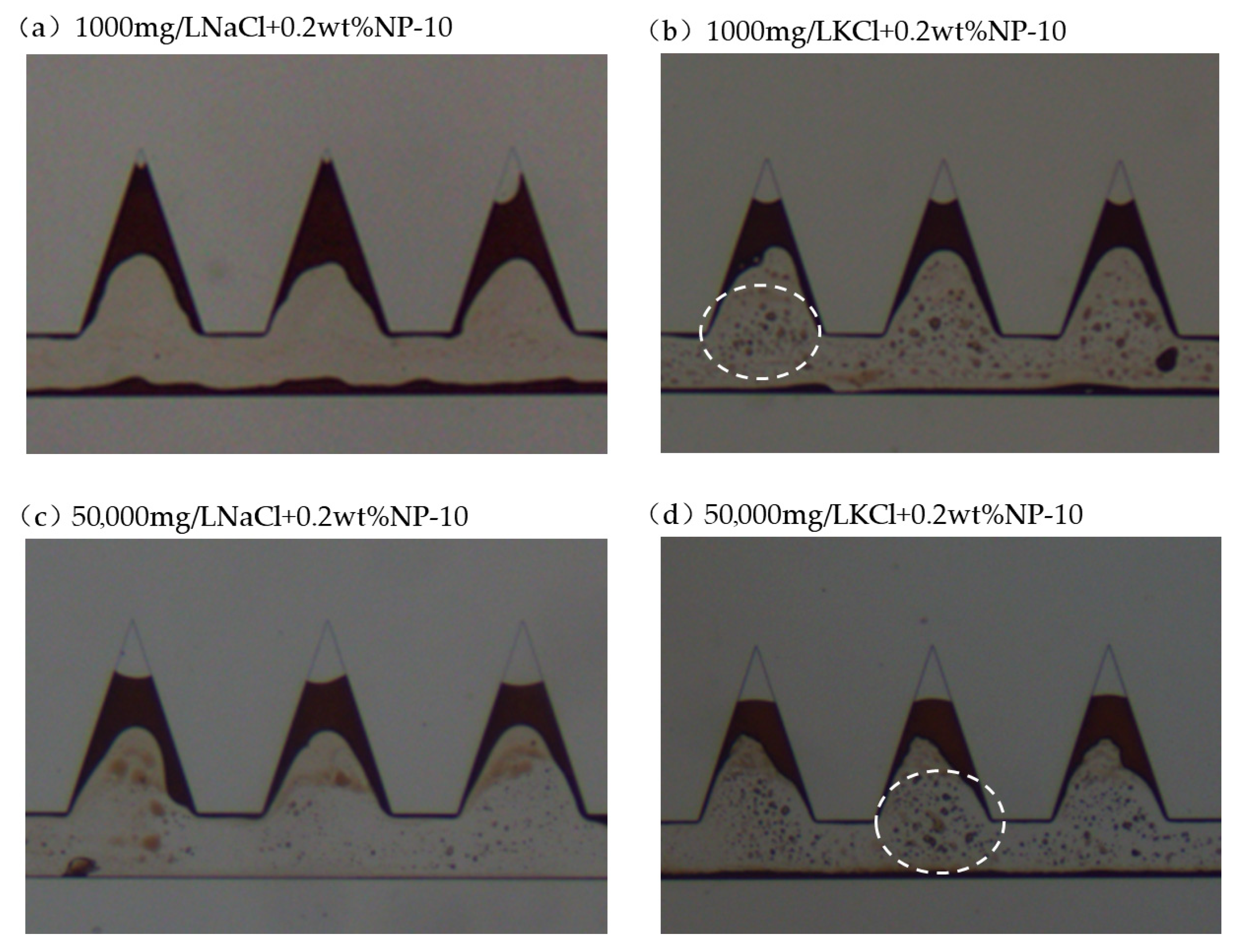
2.4.4. Nonionic Surfactant NP-10 with Salts
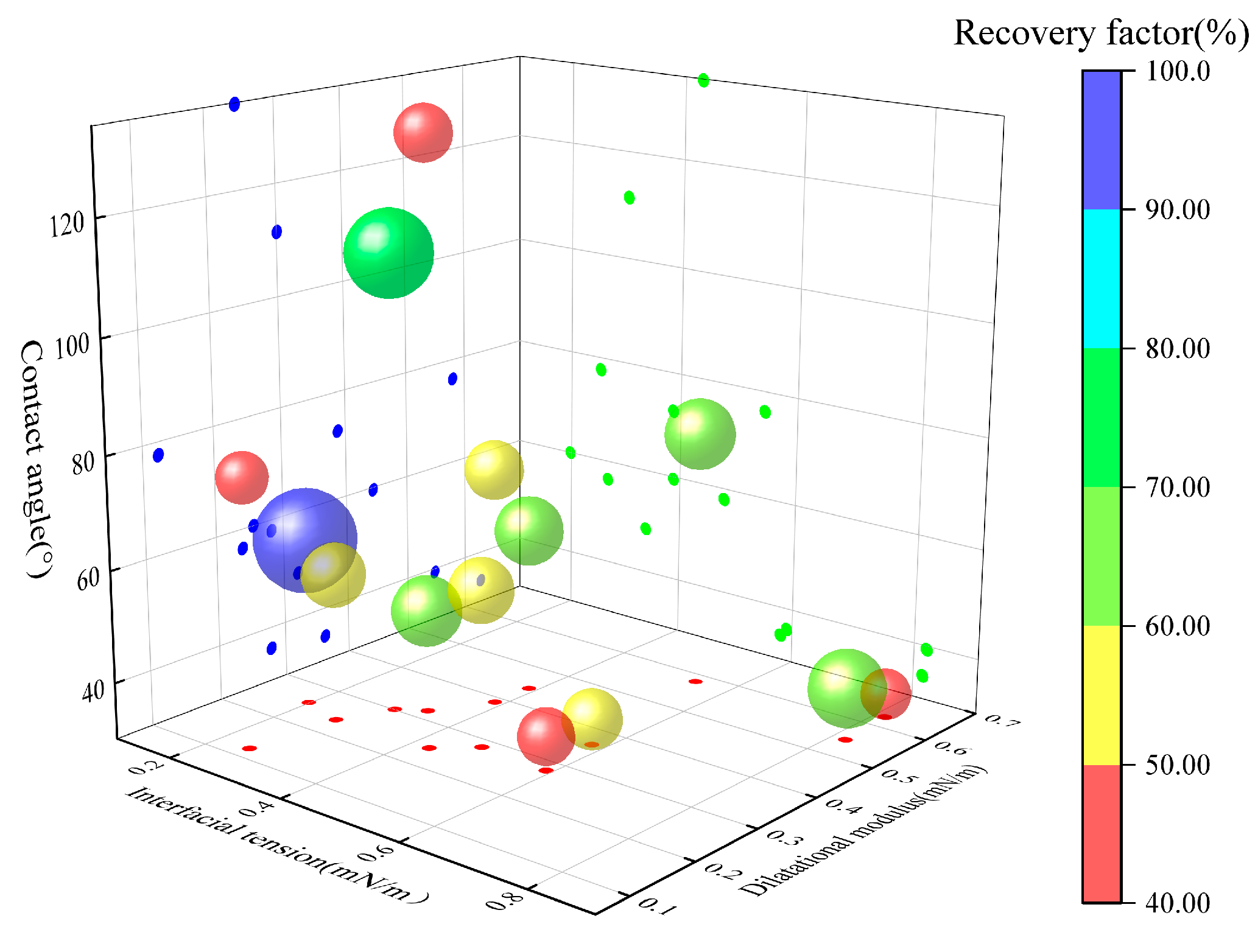
2.5. Statistical Analysis
3. Conclusions
4. Materials and Methods
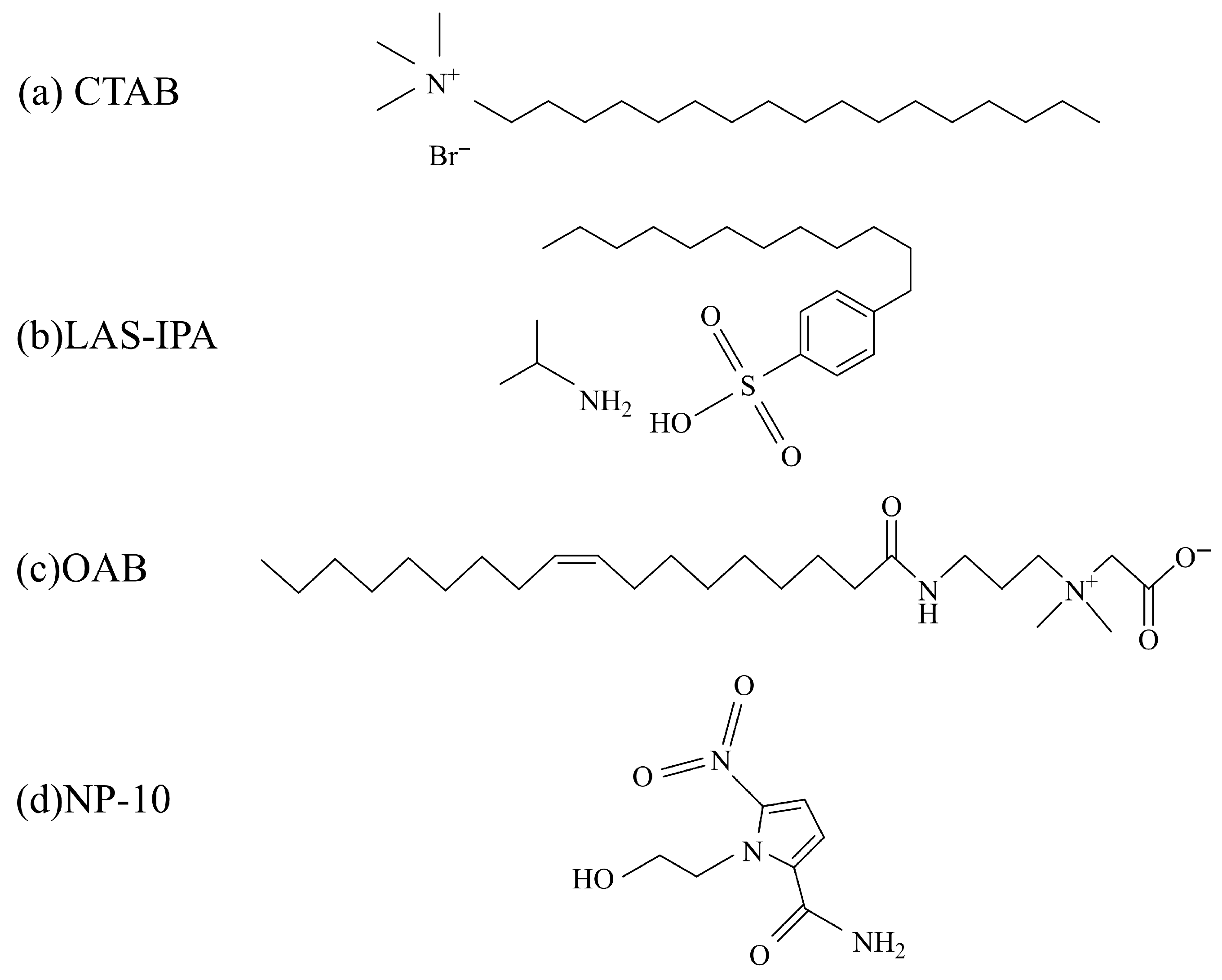
4.1. Materials
4.2. Methods
4.2.1. Determination of the Critical Micelle Concentration
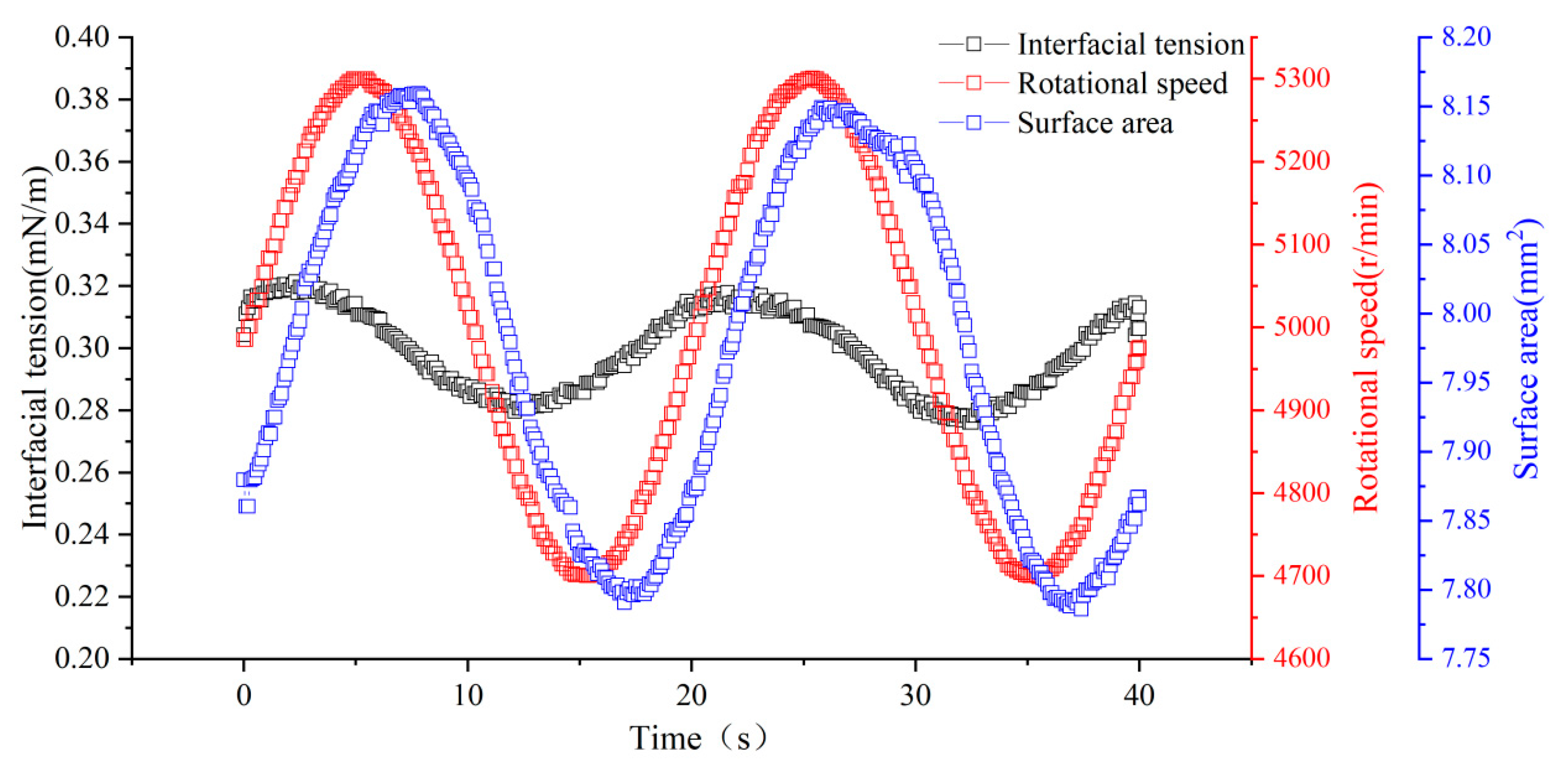
4.2.2. Determination of the Interfacial Tension and Dilatational Modulus
4.2.3. Determination of the Contact Angle
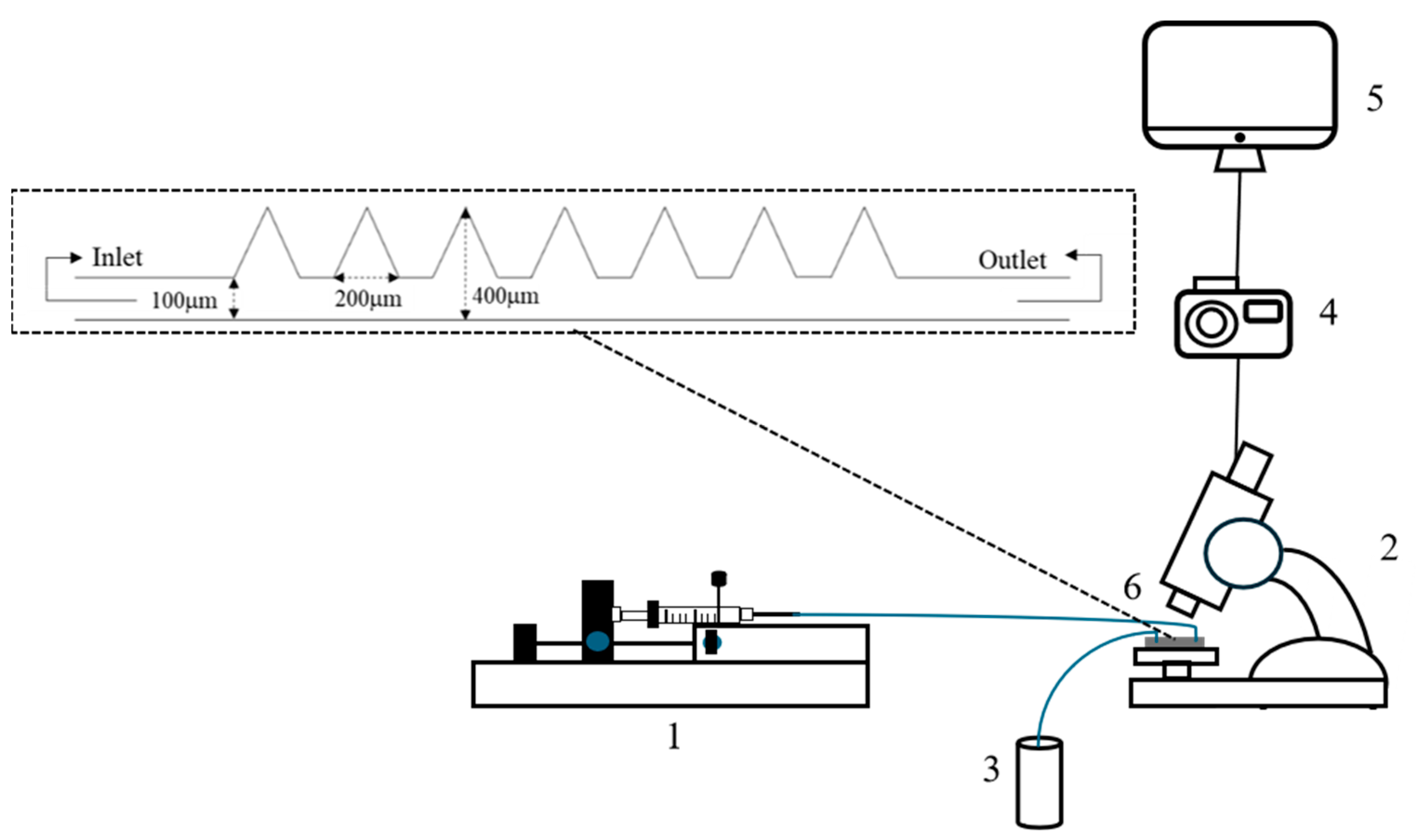
4.2.4. Microscale Oil Displacement Experiment
Author Contributions
Funding
Institutional Review Board Statement
Informed Consent Statement
Data Availability Statement
Conflicts of Interest
References
- Bao, X.-N.; Li, Y.-C.; Zhang, W.-D.; Zhang, H.; Gang, H.-Z.; Jin, J.; Yang, S.-Z.; Sha, O.; Mu, B.-Z. A New Thermal Stable and Salt Tolerant Alkyl Polyether Benzyl Sulfonate Surfactant with Ultralow Interfacial Tensions for Enhanced Oil Recovery. Energy Fuels 2023, 37, 1828–1835. [Google Scholar] [CrossRef]
- Druetta, P.; Picchioni, F. Surfactant–Polymer Flooding: Influence of the Injection Scheme. Energy Fuels 2018, 32, 12231–12246. [Google Scholar] [CrossRef] [PubMed]
- Lv, W.; Zhou, Z.; Zhang, Q.; Zhang, X.; Zhang, L. Study on the Mechanism of Surfactant Flooding: Effect of Betaine Structure. Adv. Geo-Energy Res. 2023, 10, 146–158. [Google Scholar] [CrossRef]
- Zhao, X.-Z.; Liao, G.-Z.; Gong, L.-Y.; Luan, H.-X.; Chen, Q.-S.; Liu, W.-D.; Liu, D.; Feng, Y.-J. New Insights into the Mechanism of Surfactant Enhanced Oil Recovery: Micellar Solubilization and in-Situ Emulsification. Pet. Sci. 2022, 19, 870–881. [Google Scholar] [CrossRef]
- Hassan, A.M.; Al-Shalabi, E.W.; Ayoub, M.A. Updated Perceptions on Polymer-Based Enhanced Oil Recovery toward High-Temperature High-Salinity Tolerance for Successful Field Applications in Carbonate Reservoirs. Polymers 2022, 14, 2001. [Google Scholar] [CrossRef] [PubMed]
- Samanta, A.; Ojha, K.; Sarkar, A.; Mandal, A. Surfactant and Surfactant-Polymer Flooding for Enhanced Oil Recovery. Adv. Pet. Explor. Dev. 2011, 2, 13–18. [Google Scholar]
- Song, W.; Hatzignatiou, D.G. On the Reduction of the Residual Oil Saturation through the Injection of Polymer and Nanoparticle Solutions. J. Pet. Sci. Eng. 2022, 208, 109430. [Google Scholar] [CrossRef]
- Wang, F.; Xu, H.; Liu, Y.; Jiang, Y.; Wu, C. Experimental Study on the Enhanced Oil Recovery Mechanism of an Ordinary Heavy Oil Field by Polymer Flooding. ACS Omega 2023, 8, 14089–14096. [Google Scholar] [CrossRef] [PubMed]
- Liao, H.; Yu, H.; Xu, G.; Liu, P.; He, Y.; Zhou, Y. Polymer–Surfactant Flooding in Low-Permeability Reservoirs: An Experimental Study. ACS Omega 2022, 7, 4595–4605. [Google Scholar] [CrossRef] [PubMed]
- Boampong, L.O.; Rafati, R.; Haddad, A.S. Analysis of Wettability Alteration in Low Salinity Water Flooding Using a Zeta Potential-Based Model. Capillarity 2023, 7, 32–40. [Google Scholar] [CrossRef]
- Kumar Saw, R.; Mandal, A. Experimental Investigation on Fluid/Fluid and Rock/Fluid Interactions in Enhanced Oil Recovery by Low Salinity Water Flooding for Carbonate Reservoirs. Fuel 2023, 352, 129156. [Google Scholar] [CrossRef]
- Mahmud, W.M. Impact of Salinity and Temperature Variations on Relative Permeability and Residual Oil Saturation in Neutral-Wet Sandstone. Capillarity 2022, 5, 23–31. [Google Scholar] [CrossRef]
- Alameri, W.; Teklu, T.; Graves, R.; Kazemi, H.; AlSumaiti, A. Low-Salinity Water-Alternate-Surfactant in Low-Permeability Carbonate Reservoirs. In Proceedings of the SPE EUROPEC Featured at 77th EAGE Conference and Exhibition, Dresden, Germany, 14–17 April 2015. [Google Scholar]
- Chakraborty, R.; Jangid, L.; Pandey, R.; Pasivedala, R.K.; Shaw, T.; Dutta, R.; Mandal, A. Synergistic Effects of Nonionic Surfactant and Organic Alkali for Enhanced Oil Recovery: Optimizing Interfacial Tension Reduction, Emulsion Stability, and Corrosion Control under Optimal Salinity Conditions. Energy Fuels 2025, 39, 3462–3476. [Google Scholar] [CrossRef]
- Liu, J.; Liu, S.; Zhong, L.; Wang, P.; Gao, P.; Guo, Q. Ultra-Low Interfacial Tension Anionic/Cationic Surfactants System with Excellent Emulsification Ability for Enhanced Oil Recovery. J. Mol. Liq. 2023, 382, 121989. [Google Scholar] [CrossRef]
- Ratanpara, A.; Kim, M. Wettability Alteration Mechanisms in Enhanced Oil Recovery with Surfactants and Nanofluids: A Review with Microfluidic Applications. Energies 2023, 16, 8003. [Google Scholar] [CrossRef]
- Liu, X.; Kang, Y.; Yan, L.; Tian, J.; Li, J.; You, L. Implication of Interfacial Tension Reduction and Wettability Alteration by Surfactant on Enhanced Oil Recovery in Tight Oil Reservoirs. Energy Rep. 2022, 8, 13672–13681. [Google Scholar] [CrossRef]
- Amani, P.; Firouzi, M. Effect of Divalent and Monovalent Salts on Interfacial Dilational Rheology of Sodium Dodecylbenzene Sulfonate Solutions. Colloids Interfaces 2022, 6, 39. [Google Scholar] [CrossRef]
- Anto, R.; Bhui, U.K. Surfactant Flooding for Enhanced Oil Recovery—Insights on Oil Solubilization through Optical Spectroscopic Approach. J. Pet. Sci. Eng. 2022, 208, 109803. [Google Scholar] [CrossRef]
- Li, M.-Y.; Yin, Q.; Li, B.; Cao, R.-B.; Zhang, Y.; Zhao, X.-Z.; Feng, Y.-J. Enhanced Oil Recovery with a Thermo-Thickening Viscoelastic Surfactant: A Comparison with Polymer. Pet. Sci. 2025, 22, 5176–5188. [Google Scholar] [CrossRef]
- Massarweh, O.; Abushaikha, A.S. Application of Surfactants in Enhancing Oil Recovery from Tight Carbonates: Physicochemical Properties and Core Flooding Experiments. Geoenergy Sci. Eng. 2023, 221, 211400. [Google Scholar] [CrossRef]
- Hama, S.M.; Manshad, A.K.; Ali, J.A. Experimental Investigation of New Derived Anionic Natural Surfactant from Peanut Oil: Application for Enhanced Oil Recovery. J. Mol. Liq. 2024, 395, 123876. [Google Scholar] [CrossRef]
- Abou-alfitooh, S.A.M.; Mohamed, A.S.; Abdelhafiz, F.M.; Zahran, A.; Hosny, R. Enhanced Oil Recovery from Sandstone Reservoir Using Cationic Hyperbranched Polyamidoamine Dendrimer Surfactant Flooding under Real Reservoir Conditions. Sci. Rep. 2025, 15, 32509. [Google Scholar] [CrossRef]
- Hartyányi, M.; Nagy, R.; Bejczi, R.; Bartha, L.; Puskás, S. The Impact of Salt Concentration on the Screening of Surfactant Packages for EOR Applications. Energy Sci. Eng. 2025, 13, 3296–3306. [Google Scholar] [CrossRef]
- Hou, J.; Lin, S.; Du, J.; Sui, H. Study of the Adsorption Behavior of Surfactants on Carbonate Surface by Experiment and Molecular Dynamics Simulation. Front. Chem. 2022, 10, 847986. [Google Scholar] [CrossRef]
- Yin, S.; Cao, G.; He, T. Role of Surfactant Emulsification Ability in Chemical Flooding and Advances in Enhanced Oil Recovery. J. GeoEnergy 2025, 2025, 2292980. [Google Scholar] [CrossRef]
- Hossein Javadi, A.; Fatemi, M. Impact of Salinity on Fluid/Fluid and Rock/Fluid Interactions in Enhanced Oil Recovery by Hybrid Low Salinity Water and Surfactant Flooding from Fractured Porous Media. Fuel 2022, 329, 125426. [Google Scholar] [CrossRef]
- Hosseinzade Khanamiri, H.; Baltzersen Enge, I.; Nourani, M.; Stensen, J.Å.; Torsæter, O.; Hadia, N. EOR by Low Salinity Water and Surfactant at Low Concentration: Impact of Injection and in Situ Brine Composition. Energy Fuels 2016, 30, 2705–2713. [Google Scholar] [CrossRef]
- Roldán-Carrillo, T.; Castorena-Cortes, G.; Salazar Castillo, R.O.; Hernández-Escobedo, L.; Olguín-Lora, P.; Gachuz-Muro, H. Hybrid Low Salinity Water and Surfactant Process for Enhancing Heavy Oil Recovery. Pet. Explor. Dev. 2023, 50, 1466–1477. [Google Scholar] [CrossRef]
- Tichelkamp, T.; Vu, Y.; Nourani, M.; Øye, G. Interfacial Tension between Low Salinity Solutions of Sulfonate Surfactants and Crude and Model Oils. Energy Fuels 2014, 28, 2408–2414. [Google Scholar] [CrossRef]
- Liu, Y.; He, F.; Li, M.; Ling, C.; Fang, W.; Zhu, Z. Effect of Brine Chemistry on Microscale Oil Displacement via Micromodel. Pet. Sci. Technol. 2025, 44, 315–333. [Google Scholar] [CrossRef]
- Kalam, S.; Abu-Khamsin, S.A.; Gbadamosi, A.O.; Patil, S.; Kamal, M.S.; Hussain, S.M.S.; Al-Shehri, D.; Al-Shalabi, E.W.; Mohanty, K.K. Static and Dynamic Adsorption of a Gemini Surfactant on a Carbonate Rock in the Presence of Low Salinity Water. Sci. Rep. 2023, 13, 11936. [Google Scholar] [CrossRef]
- Cao, X.; Xia, W.; Zhang, P.; Cao, H.; Li, X.; Zhang, X. Microscopic Mechanisms of MgCl2 Affecting Anionic Surfactant Adsorption Kinetics on the Airwater Interface. Colloids Surf. A Physicochem. Eng. Asp. 2022, 653, 129925. [Google Scholar] [CrossRef]
- Shakeel, M.; Samanova, A.; Pourafshary, P.; Hashmet, M.R. Capillary Desaturation Tendency of Hybrid Engineered Water-Based Chemical Enhanced Oil Recovery Methods. Energies 2021, 14, 4368. [Google Scholar] [CrossRef]
- Kedar, V.; Bhagwat, S.S. Effect of Salinity on the IFT between Aqueous Surfactant Solution and Crude Oil. Pet. Sci. Technol. 2018, 36, 835–842. [Google Scholar] [CrossRef]
- Johannessen, A.M.; Spildo, K. Enhanced Oil Recovery (EOR) by Combining Surfactant with Low Salinity Injection. Energy Fuels 2013, 27, 5738–5749. [Google Scholar] [CrossRef]
- Quintella, C.M.; Rodrigues, P.D.; Hanna, S.A.; Nicoleti, J.L.; Carvalho, E.B.; Medeiros, A.C.G.D.; Ramos-de-Souza, E.; Santos, E.S.D.; Vasconcelos, A.C.; Moura, J.D.D.; et al. Sustainable Enhanced Oil Recovery Fluid Based on Synergic Effects of Cationic, Anionic, and Nonionic Surfactants in Low Salinity: SLS.; QA; and SDBS. ACS Omega 2025, 10, 8408–8419. [Google Scholar] [CrossRef] [PubMed]
- Asadabadi, S.; Kharazi, M.; Saien, J. Salinity and Alkalinity Impacts on the Interfacial Activity of Crude Oil–Water Systems Using Individual and Mixtures of a Surface-Active Ionic Liquid and Conventional Surfactant. RSC Adv. 2025, 15, 36050–36064. [Google Scholar] [CrossRef]
- Kamal, M.S.; Hussein, I.A.; Sultan, A.S. Review on Surfactant Flooding: Phase Behavior, Retention, IFT and Field Applications. Energy Fuels 2017, 31, 6849–6891. [Google Scholar] [CrossRef]
- Zhou, Z.-H.; Ma, D.-S.; Zhang, Q.; Wang, H.-Z.; Zhang, L.; Luan, H.-X.; Zhu, Y.; Zhang, L. Surface Dilational Rheology of Betaine Surfactants: Effect of Molecular Structures. Colloids Surf. A Physicochem. Eng. Asp. 2018, 538, 739–747. [Google Scholar] [CrossRef]
- Xue, J.; Shi, P.; Zhu, L.; Ding, J.; Chen, Q.; Wang, Q. A Modified Captive Bubble Method for Determining Advancing and Receding Contact Angles. Appl. Surf. Sci. 2014, 296, 133–139. [Google Scholar] [CrossRef]










| Influencing Factor | F-Value | p-Value | Significance |
|---|---|---|---|
| Salt Type | 8.30 | 0.0064 | Significant |
| Surfactant Type | 2.04 | 0.1245 | Not Significant |
| Salt Concentration | 0.34 | 0.5613 | Not Significant |
| Evaluation Index | Interfacial Tension | Contact Angle | Oil Recovery |
|---|---|---|---|
| Normality test p-value | 0.0061 | 0.0003 | 0.0041 |
| Homogeneity test p-value | 0.0159 | 0.3370 | 0.1154 |
| Surfactant main effect p-value | <0.001 | <0.001 | <0.001 |
| Salt condition main effect p-value | <0.001 | 0.0226 | <0.001 |
| Interaction p-value | 0.0009 | <0.001 | <0.001 |
| Reagent | Producer |
|---|---|
| NaCl | Shanghai Aladdin Biochemical Technology Co., Ltd. (Shanghai, China) |
| CaCl2 | Tianjin Tianli Chemical Reagent Co., Ltd. (Tianjin, China) |
| KCl | Tianjin Tianli Chemical Reagent Co., Ltd. (Tianjin, China) |
| MgCl2·6H2O | Tianjin Tianli Chemical Reagent Co., Ltd. (Tianjin, China) |
| CTAB | Chemical Reagent Co., Ltd. (Shanghai, China) |
| LAS-IPA | Shandong Yousuo Chemical Technology Co., Ltd. (Zibo, China) |
| OAB | Shandong Yousuo Chemical Technology Co., Ltd. (Zibo, China) |
| NP-10 | Shanghai McLean Biochemical Technology Co., Ltd. (Shanghai, China) |
| Asphaltene/% | Resin/% | Aromatics/% | Saturates/% |
|---|---|---|---|
| 2.09 | 22.78 | 4.27 | 70.86 |
| No. | NaCl and Surfactant | No. | KCl and Surfactant |
|---|---|---|---|
| 1 | 1000 mg/LNaCl + 0.2 wt%CTAB | 9 | 1000 mg/LKCl + 0.2 wt%CTAB |
| 2 | 1000 mg/LNaCl + 0.2 wt%LAS-IPA | 10 | 1000 mg/LKCl + 0.2 wt%LAS-IPA |
| 3 | 1000 mg/LNaCl + 0.2 wt%OAB | 11 | 1000 mg/LKCl + 0.2 wt%OAB |
| 4 | 1000 mg/LNaCl + 0.2 wt%NP-10 | 12 | 1000 mg/LKCl + 0.2 wt%NP-10 |
| 5 | 50,000 mg/LNaCl + 0.2 wt%CTAB | 13 | 50,000 mg/LKCl + 0.2 wt%CTAB |
| 6 | 50,000 mg/LNaCl + 0.2 wt%LAS-IPA | 14 | 50,000 mg/LKCl + 0.2 wt%LAS-IPA |
| 7 | 50,000 mg/LNaCl + 0.2 wt%OAB | 15 | 50,000 mg/LKCl + 0.2 wt%OAB |
| 8 | 50,000 mg/LNaCl + 0.2 wt%NP-10 | 16 | 50,000 mg/LKCl + 0.2 wt%NP-10 |
Disclaimer/Publisher’s Note: The statements, opinions and data contained in all publications are solely those of the individual author(s) and contributor(s) and not of MDPI and/or the editor(s). MDPI and/or the editor(s) disclaim responsibility for any injury to people or property resulting from any ideas, methods, instructions or products referred to in the content. |
© 2026 by the authors. Licensee MDPI, Basel, Switzerland. This article is an open access article distributed under the terms and conditions of the Creative Commons Attribution (CC BY) license.
Share and Cite
Yang, X.; Liu, Y.; He, F.; Du, C.; Zheng, J.; Zhou, D. Synergistic Mechanisms of Surfactants and Monovalent Ions for Enhanced Oil Recovery Through Interfacial Properties and Microfluidic Study. Gels 2026, 12, 435. https://doi.org/10.3390/gels12050435
Yang X, Liu Y, He F, Du C, Zheng J, Zhou D. Synergistic Mechanisms of Surfactants and Monovalent Ions for Enhanced Oil Recovery Through Interfacial Properties and Microfluidic Study. Gels. 2026; 12(5):435. https://doi.org/10.3390/gels12050435
Chicago/Turabian StyleYang, Xuchun, Yafei Liu, Fen He, Chenlu Du, Jingdi Zheng, and Desheng Zhou. 2026. "Synergistic Mechanisms of Surfactants and Monovalent Ions for Enhanced Oil Recovery Through Interfacial Properties and Microfluidic Study" Gels 12, no. 5: 435. https://doi.org/10.3390/gels12050435
APA StyleYang, X., Liu, Y., He, F., Du, C., Zheng, J., & Zhou, D. (2026). Synergistic Mechanisms of Surfactants and Monovalent Ions for Enhanced Oil Recovery Through Interfacial Properties and Microfluidic Study. Gels, 12(5), 435. https://doi.org/10.3390/gels12050435