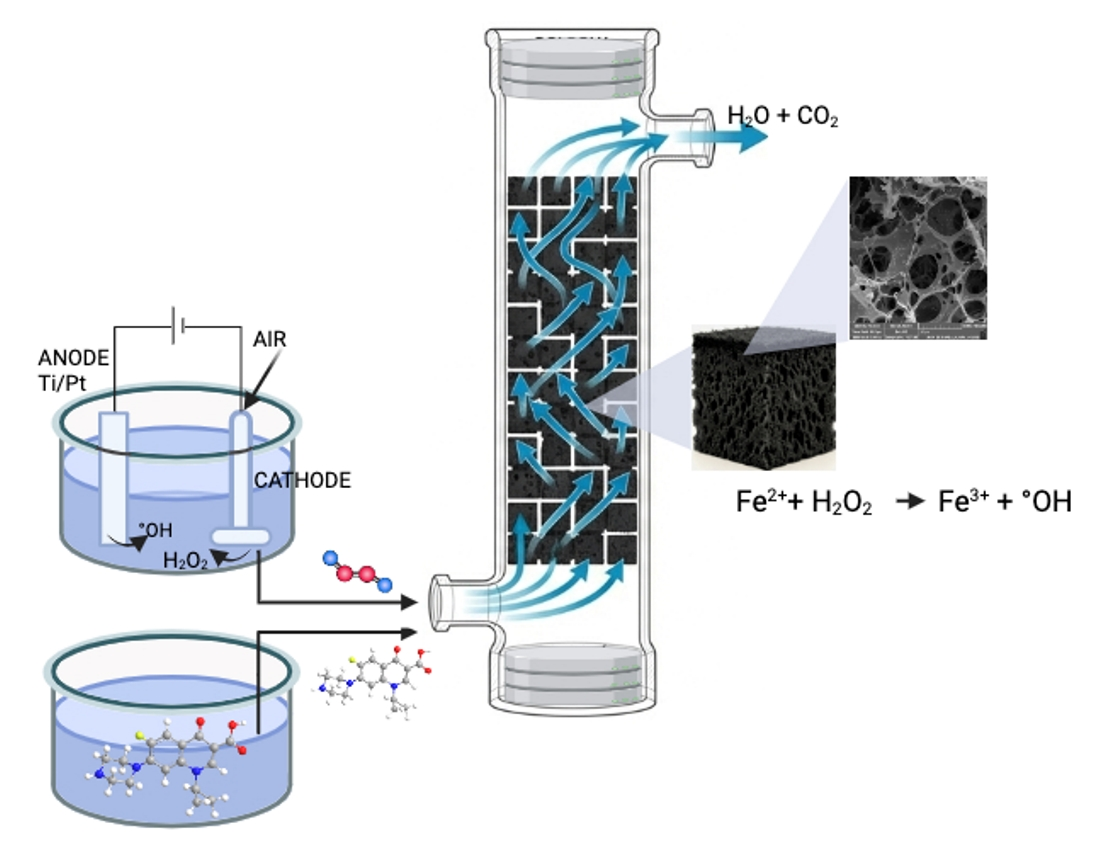

Iron Oxide–Chitosan Macroporous Nanocomposite Hydrogels for Efficient Heterogeneous Electro-Fenton Degradation of Ciprofloxacin
 , and
, and 
Abstract
1. Introduction
2. Results and Discussion
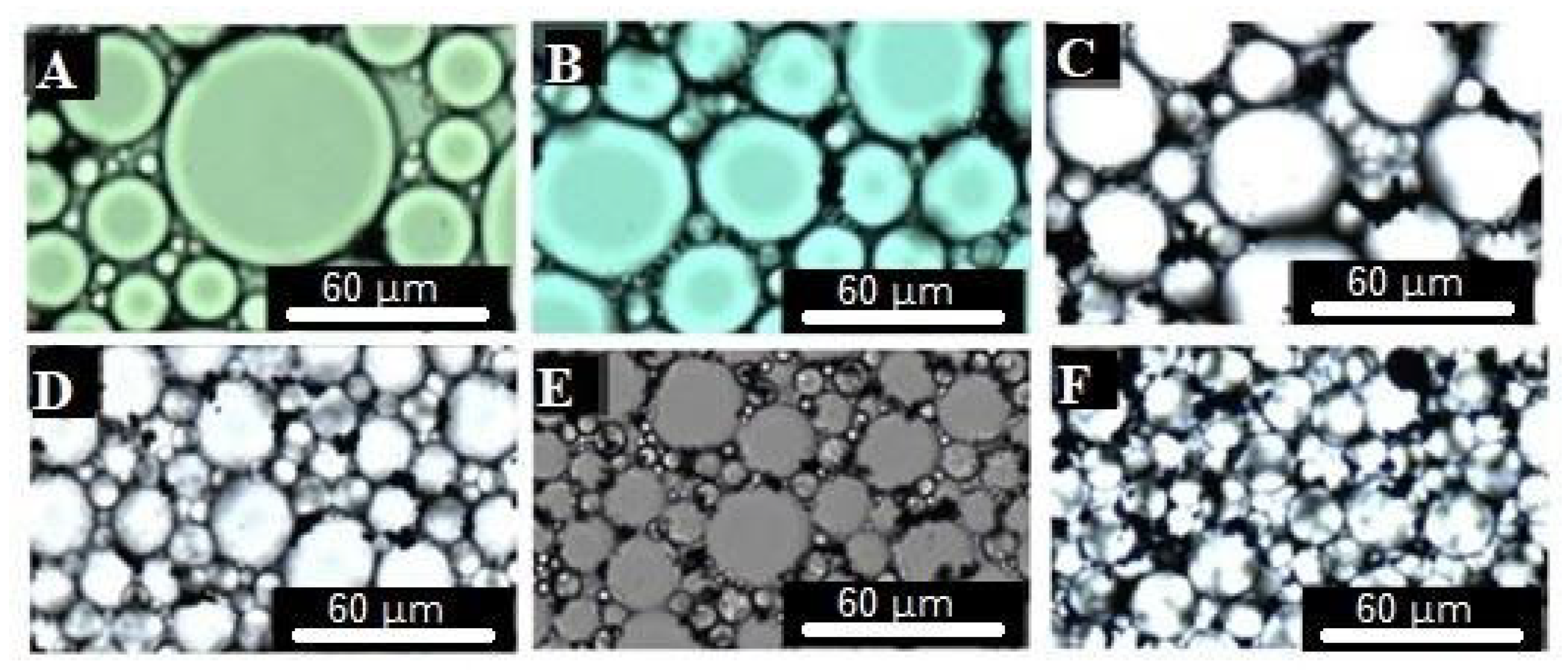
2.1. Stabilization and Structural Morphology of Oil-in-Water Pickering HIPEs
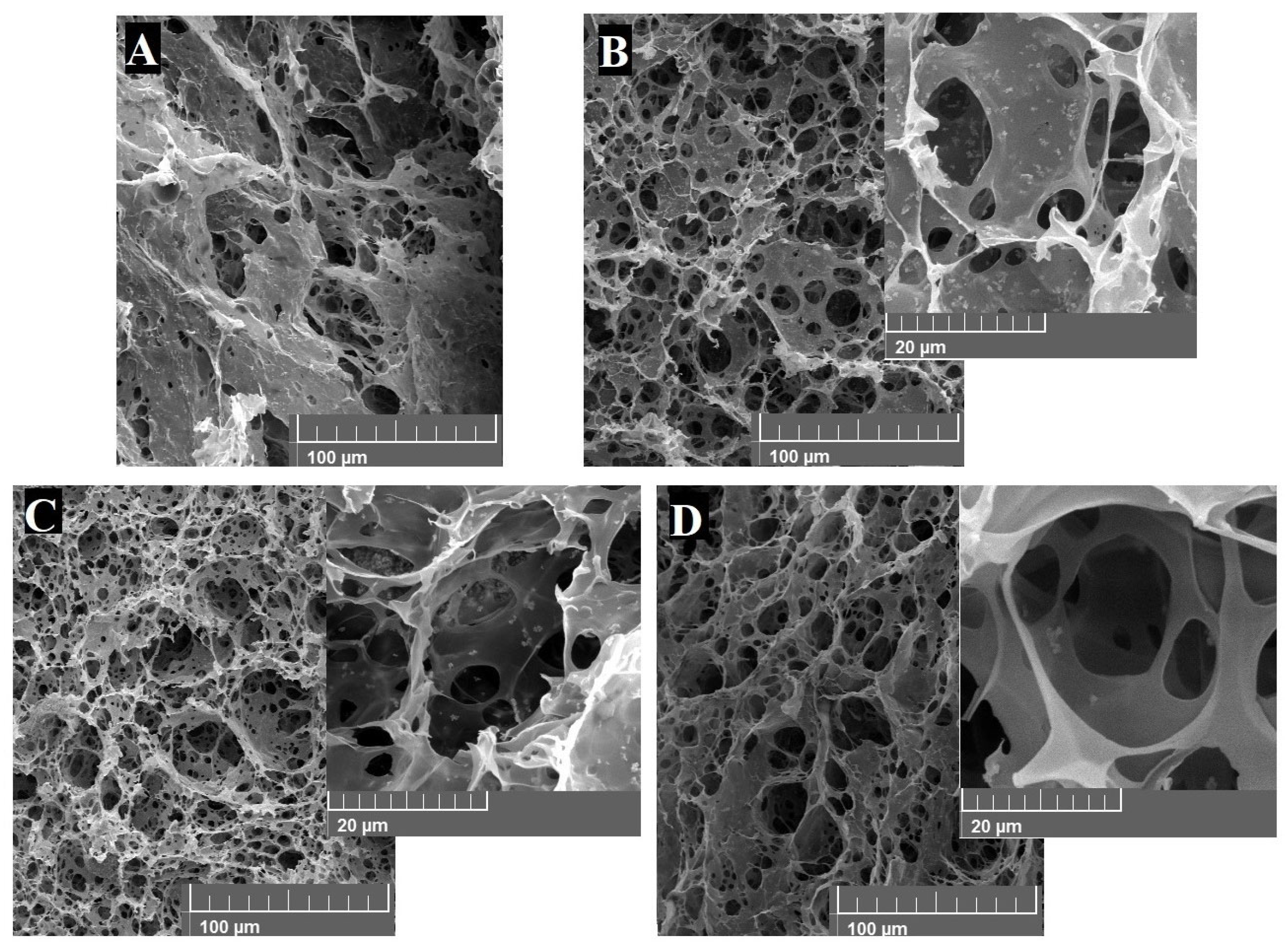
2.2. Porous Structure of the Nanocomposite Chitosan PolyHIPEs
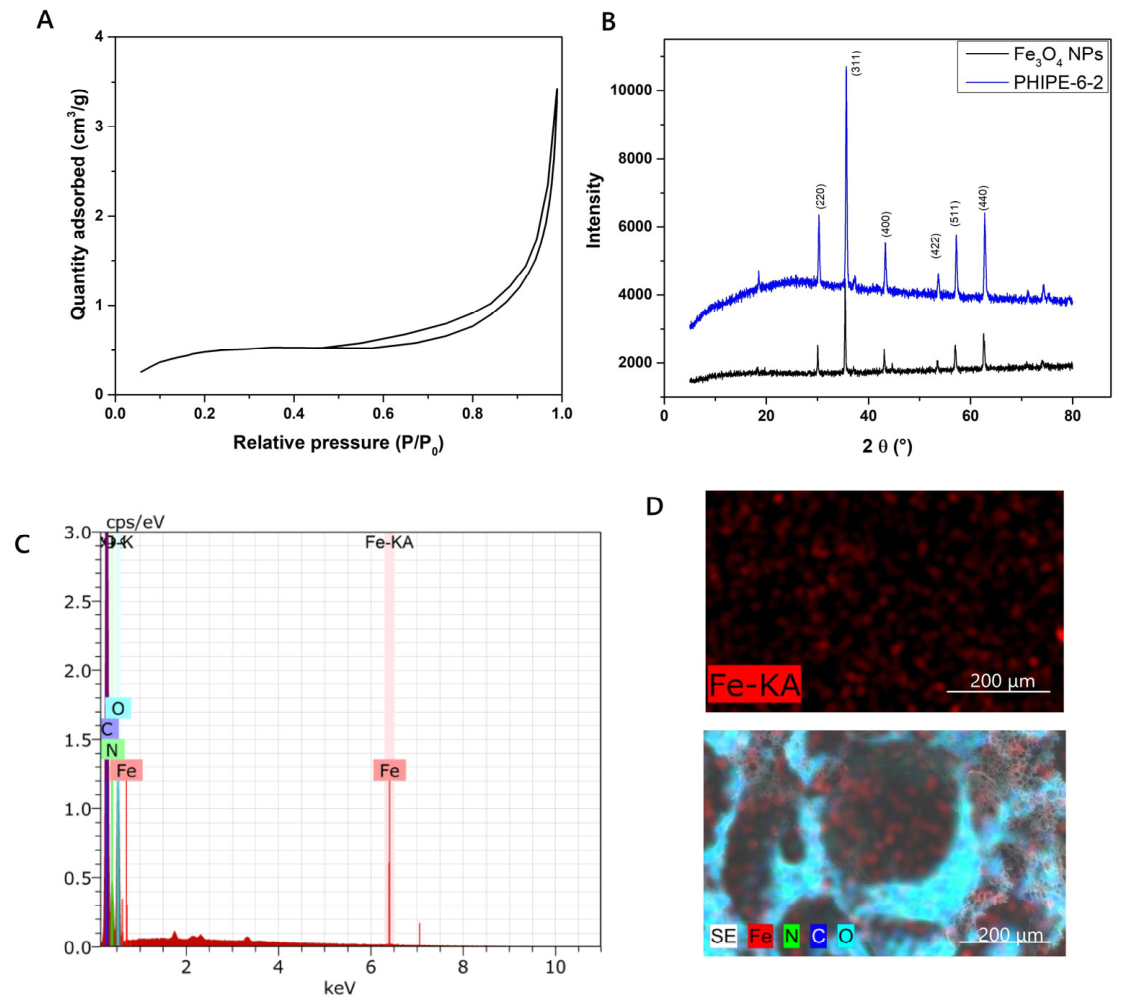
2.3. Selection and Characterization of the Electro-Fenton Catalyst
2.4. CIP Degradation by Heterogeneous Electro-Fenton Process and Anodic Oxidation
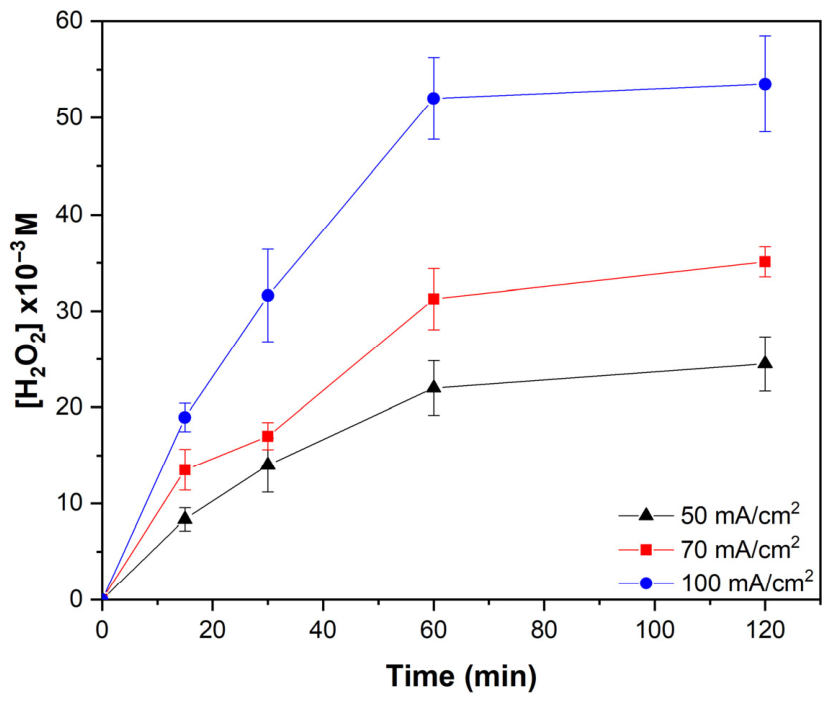
2.4.1. Electrogeneration of Hydrogen Peroxide (H2O2)
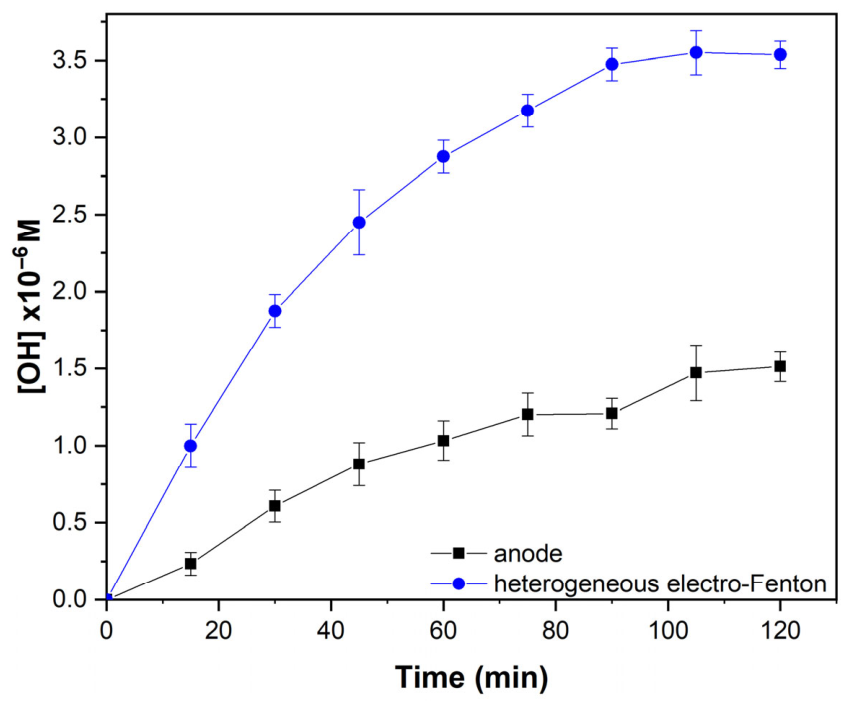
2.4.2. Hydroxyl Radical Generation
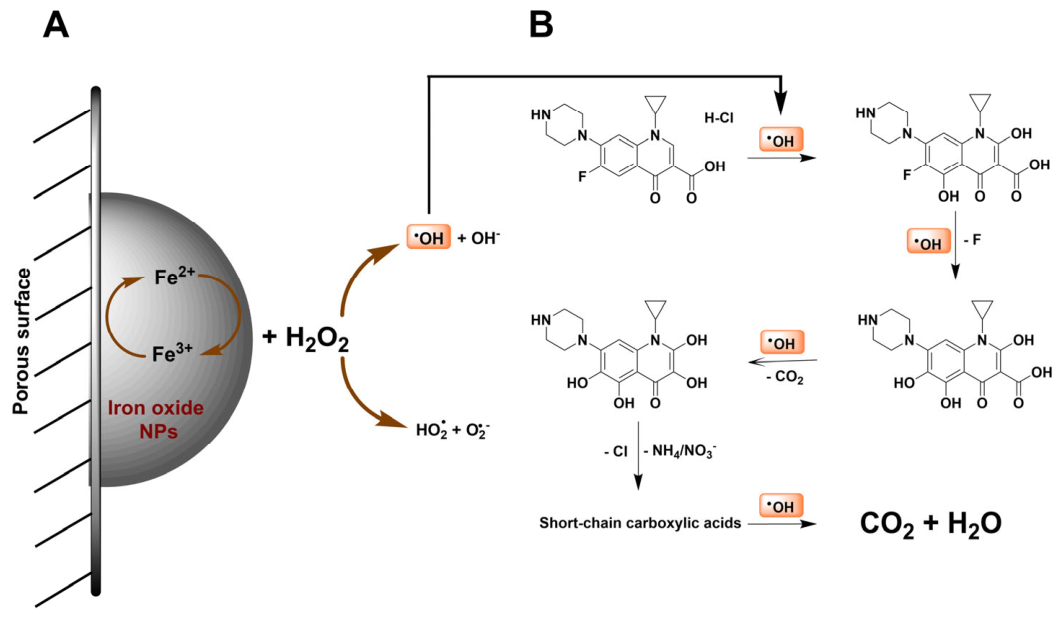
2.4.3. CIP Degradation
3. Conclusions
4. Materials and Methods
4.1. Materials
4.2. Formulation and Characterization of Pickering High Internal Phase Emulsions
4.3. Preparation and Characterization of the Magnetite-Chitosan Macroporous Nanocomposite Hydrogels
4.4. Electrogeneration and Quantification of H2O2
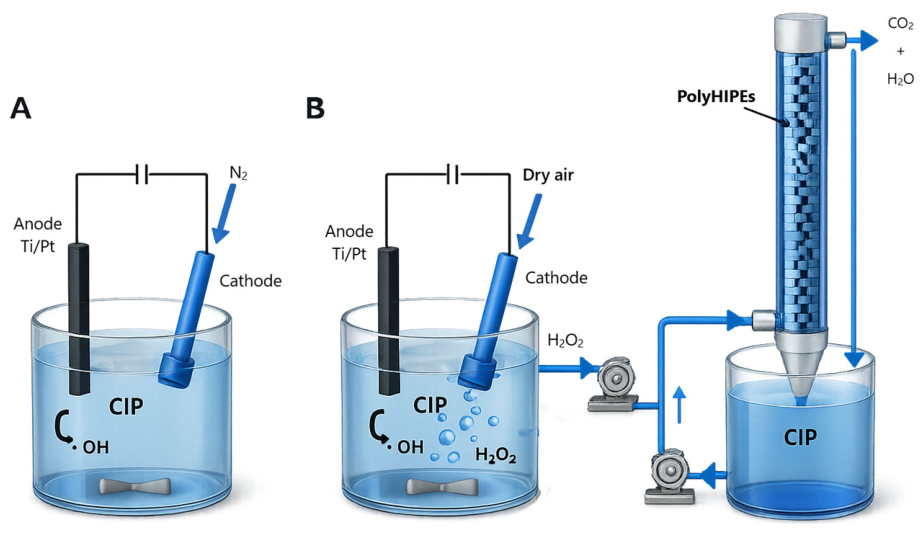
4.5. Ciprofloxacin Degradation by Anodic Oxidation
4.6. Ciprofloxacin Degradation by Heterogeneous Electro-Fenton Process
4.7. Determination of Ciprofloxacin Degradation
4.8. Determination of ·OH Concentration
Supplementary Materials
Author Contributions
Funding
Institutional Review Board Statement
Informed Consent Statement
Data Availability Statement
Acknowledgments
Conflicts of Interest
Abbreviations
| AOPs | Advanced oxidation processes |
| CIP | Ciprofloxacin |
| CS | Chitosan |
| DES | Deep eutectic solvent |
| Dp | Pore diameter |
| Dpw | Window (pore throat) diameter |
| FESEM | Field emission scanning electron microscopy |
| GA | Glutaraldehyde |
| HIPE | High internal phase emulsion |
| HO2• | Hydroperoxyl radical |
| H2O2 | Hydrogen peroxide |
| O | Openness degree |
| PHIPE | Polymerized high internal phase emulsion (monolith) |
| polyHIPE | Polymerized high internal phase emulsion |
| TOC | Total organic carbon |
| UV–Vis | Ultraviolet–visible spectroscopy |
| λ_em | Emission wavelength |
| λ_ex | Excitation wavelength |
| % S | Gravimetric swelling |
| % Sv | Volumetric swelling |
| •OH | Hydroxyl radical |
| ROS | Reactive oxygen species |
References
- Ebele, A.J.; Abdallah, M.A.-E.; Harrad, S. Pharmaceuticals and personal care products (PPCPs) in the freshwater aquatic environment. Emerg. Contam. 2017, 3, 1–16. [Google Scholar] [CrossRef]
- Milić, N.; Milanović, M.; Letić, N.; Sekulić, M.; Radonić, J.; Mihajlović, I.; Miloradov, M. Occurrence of antibiotics as emerging contaminant substances in aquatic environment. Int. J. Environ. Health Res. 2013, 23, 296–310. [Google Scholar] [CrossRef]
- Bottoni, P.; Caroli, S.; Caracciolo, A.B. Pharmaceuticals as priority water contaminants. Toxicol. Environ. Chem. 2010, 92, 549–565. [Google Scholar] [CrossRef]
- Wang, Q.; Mo, C.; Li, Y.; Gao, P.; Tai, Y.; Zhang, Y.; Xu, J. Determination of four fluoroquinolone antibiotics in tap water in Guangzhou and Macao. Environ. Pollut. 2010, 158, 2350–2358. [Google Scholar] [CrossRef] [PubMed]
- Ebert, I.; Bachmann, J.; Kühnen, U.; Küster, A.; Kussatz, C.; Maletzki, D.; Schlüter, C. Toxicity of the fluoroquinolone antibiotics enrofloxacin and ciprofloxacin to photoautotrophic aquatic organisms. Environ. Toxicol. Chem. 2011, 30, 2786–2792. [Google Scholar] [CrossRef]
- Lin, C.; Wu, M. Degradation of ciprofloxacin by UV/S2O82− process in a large photoreactor. J. Photochem. Photobiol. A 2014, 285, 1–6. [Google Scholar] [CrossRef]
- Sayed, M.; Ismail, M.; Khan, S.; Tabassum, S.; Khan, H. Degradation of ciprofloxacin in water by advanced oxidation process: Kinetics study, influencing parameters and degradation pathways. Environ. Technol. 2016, 37, 590–602. [Google Scholar] [CrossRef]
- Pignatello, J.J.; Oliveros, E.; MacKay, A. Advanced oxidation processes for organic contaminant destruction based on the Fenton reaction and related chemistry. Crit. Rev. Environ. Sci. Technol. 2006, 36, 1–84. [Google Scholar] [CrossRef]
- Brillas, E. Electro-Fenton, A review on the degradation of organic pollutants in waters by UV photoelectro-Fenton and solar photoelectro-Fenton. J. Braz. Chem. Soc. 2014, 25, 393–417. [Google Scholar]
- Ganiyu, S.O.; Zhou, M.; Martínez-Huitle, C.A. Heterogeneous electro-Fenton and photoelectro-Fenton processes: A critical review of fundamental principles and application for water/wastewater treatment. Appl. Catal. B 2018, 235, 103–129. [Google Scholar] [CrossRef]
- Hartmann, M.; Kullmann, S.; Keller, H. Wastewater treatment with heterogeneous Fenton-type catalysts based on porous materials. J. Mater. Chem. 2010, 20, 9002–9017. [Google Scholar] [CrossRef]
- Dantas, T.L.P.; Mendonça, V.P.; José, H.J.; Rodrigues, A.E.; Moreira, R.F.P.M. Treatment of textile wastewater by heterogeneous Fenton process using a new composite Fe2O3/carbon. Chem. Eng. J. 2006, 118, 77–82. [Google Scholar] [CrossRef]
- Planeix, J.M.; Coustel, N.; Coq, B.; Brotons, V.; Kumbhar, P.S.; Dutartre, R.; Geneste, P.; Bernier, P.; Ajayan, P.M. Application of carbon nanotubes as supports in heterogeneous catalysis. J. Am. Chem. Soc. 1994, 116, 7935–7936. [Google Scholar] [CrossRef]
- Zhu, L.; Yin, S.; Yin, Q.; Wang, H.; Wang, S. Biochar: A new promising catalyst support using methanation as a probe reaction. Energy Sci. Eng. 2015, 3, 126–134. [Google Scholar] [CrossRef]
- Lai, C.; Huang, F.; Zeng, G.; Huang, D.; Qin, L.; Cheng, M.; Li, L. Fabrication of novel magnetic MnFe2O4/bio-char composite and heterogeneous photo-Fenton degradation of tetracycline in near neutral pH. Chemosphere 2019, 224, 910–921. [Google Scholar] [CrossRef]
- Molina, C.B.; Casas, J.A.; Zazo, J.A.; Rodríguez, J.J. A comparison of Al-Fe and Zr-Fe pillared clays for catalytic wet peroxide oxidation. Chem. Eng. J. 2006, 118, 29–35. [Google Scholar] [CrossRef]
- Poupart, R.; Grande, D.; Carbonnier, B.; Le Droumaguet, B. Porous polymers and metallic nanoparticles: A hybrid wedding as a robust method toward efficient supported catalytic systems. Prog. Polym. Sci. 2019, 96, 21–42. [Google Scholar] [CrossRef]
- Rezgui, S.; Amrane, A.; Fourcade, F.; Assadi, A.; Monser, L.; Adhoum, N. Electro-Fenton catalyzed with magnetic chitosan beads for the removal of Chlordimeform insecticide. Appl. Catal. B 2018, 226, 346–359. [Google Scholar] [CrossRef]
- Bouzayani, B.; Sanromán, M.Á. Polymer-Supported Heterogeneous Fenton Catalysts for the Environmental Remediation of Wastewater. Molecules 2024, 29, 2188. [Google Scholar] [CrossRef]
- Lee, Y.; Lee, W. Degradation of trichloroethylene by Fe(II) chelated with cross-linked chitosan in a modified Fenton reaction. J. Hazard. Mater. 2010, 178, 187–193. [Google Scholar] [CrossRef]
- Guibal, E. Heterogeneous catalysis on chitosan-based materials: A review. Prog. Polym. Sci. 2005, 30, 71–109. [Google Scholar] [CrossRef]
- Pulko, I.; Krajnc, P. High Internal Phase Emulsion Templating—A Path To Hierarchically Porous Functional Polymers. Macromol. Rapid Commun. 2012, 33, 1731–1746. [Google Scholar] [CrossRef] [PubMed]
- Xu, H.; Zheng, X.; Huang, Y.; Wang, H.; Du, Q. Interconnected Porous Polymers with Tunable Pore Throat Size Prepared via Pickering High Internal Phase Emulsions. Langmuir 2016, 32, 38–45. [Google Scholar] [CrossRef] [PubMed]
- Foudazi, R. HIPEs to PolyHIPEs. React. Funct. Polym. 2021, 164, 104917. [Google Scholar] [CrossRef]
- Chevalier, Y.; Bolzinger, M.A. Emulsions stabilized with solid nanoparticles: Pickering emulsions. Colloids Surf. A 2013, 439, 23–34. [Google Scholar] [CrossRef]
- Binks, B.P. Particles as surfactants—Similarities and differences. Curr. Opin. Colloid Interface Sci. 2002, 7, 21–41. [Google Scholar] [CrossRef]
- Zhu, W.; Zhu, Y.; Zhou, C.; Zhang, S. Pickering emulsion-templeted polymer: Insights into the relationship between surfactant and interconnecting pores. RSC Adv. 2019, 9, 18909–18916. [Google Scholar] [CrossRef]
- Recio-Colmenares, C.L.; Ortiz-Ríos, D.; Espinola-Portilla, F.; Quintero Hernández, L.H.; Gómez-Salazar, S.; Mota-Morales, J.D.; Soltero, J.F.A.; Pelayo-Vázquez, J.B.; Pérez-García, M.G. Sustainable synthesis of magnetic polyHIPE nanocomposites using a menthol-based deep eutectic solvent for efficient Fenton catalytic dye degradation. Langmuir 2025, 41, 12954–12966. [Google Scholar] [CrossRef]
- Recio-Colmenares, C.L.; Ortiz-Ríos, D.; Pelayo-Vázquez, J.B.; Moreno-Medrano, E.D.; Arratia-Quijada, J.; Torres-Lubian, J.R.; Huerta-Marcial, S.T.; Mota-Morales, J.D.; Pérez-García, M.G. Polystyrene macroporous magnetic nanocomposites synthesized through deep eutectic solvent-in-oil high internal phase emulsions and Fe3O4 nanoparticles for oil sorption. ACS Omega 2022, 7, 21763–21774. [Google Scholar] [CrossRef]
- Carranza, A.; Pérez-García, M.G.; Song, K.; Jeha, G.M.; Diao, Z.; Jin, R.; Bogdanchikova, N.; Soltero, A.F.; Terrones, M.; Wu, Q.; et al. Deep-eutectic solvents as MWCNT delivery vehicles in the synthesis of functional poly(HIPE) nanocomposites for applications as selective sorbents. ACS Appl. Mater. Interfaces 2016, 8, 31295–31303. [Google Scholar] [CrossRef]
- Pérez-García, M.G.; Carranza, A.; Puig, J.E.; Pojman, J.A.; del Monte, F.; Luna-Bárcenas, G.; Mota-Morales, J.D. Porous monoliths synthesized via polymerization of styrene and divinyl benzene in nonaqueous deep-eutectic solvent-based HIPEs. RSC Adv. 2015, 5, 23255–23263. [Google Scholar] [CrossRef]
- Munive-Olarte, A.; Hidalgo-Moyle, J.J.; Velasquillo, C.; Juarez-Moreno, K.; Mota-Morales, J.D. Boosting cell proliferation in three-dimensional polyacrylates/nanohydroxyapatite scaffolds synthesized by deep eutectic solvent-based emulsion templating. J. Colloid Interface Sci. 2022, 607, 298–311. [Google Scholar] [CrossRef] [PubMed]
- Blancas-Flores, J.M.; Pérez-García, M.G.; González-Contreras, G.; Coronado-Mendoza, A.; Romero-Arellano, V.H. Polydimethylsiloxane nanocomposite macroporous films prepared via Pickering high internal phase emulsions as effective dielectrics for enhancing the performance of triboelectric nanogenerators. RSC Adv. 2021, 11, 416–424. [Google Scholar] [CrossRef] [PubMed]
- Lu, T.; Zhu, Y.; Qi, Y.; Kang, X.; Wang, A. Tunable superporous magnetic adsorbent prepared via eco-friendly Pickering MIPEs for high-efficiency adsorption of Rb+ and Sr2+. Chem. Eng. J. 2019, 368, 988–998. [Google Scholar] [CrossRef]
- Zhu, Y.; Zheng, Y.; Wang, F.; Wang, A. Fabrication of magnetic macroporous chitosan-g-poly (acrylic acid) hydrogel for removal of Cd2+ and Pb2+. Int. J. Biol. Macromol. 2016, 93, 483–492. [Google Scholar] [CrossRef]
- Vallejo, M.; Recio, C.; Pelayo, J.B.; Gómez, S.; Carvajal, F.; Félix-Soltero, J.; Pérez, M. Macroporous Polyacrylamide γ-Fe2O3 Nanoparticle Composites as Methylene Blue Dye Adsorbents. ACS Appl. Nano Mater. 2020, 3, 5794–5806. [Google Scholar] [CrossRef]
- Zhang, N.; Zhong, S.; Zhou, X.; Jiang, W.; Wang, T.; Fu, J. Superhydrophobic P (St-DVB) foam prepared by the high internal phase emulsion technique for oil spill recovery. Chem. Eng. J. 2016, 298, 117–124. [Google Scholar] [CrossRef]
- Lu, T.; Zhu, Y.; Qi, Y.; Wang, W.; Wang, A. Magnetic chitosan–based adsorbent prepared via Pickering high internal phase emulsion for high-efficient removal of antibiotics. Int. J. Biol. Macromol. 2018, 106, 870–877. [Google Scholar] [CrossRef]
- Zhang, S.; Fan, X.; Zhang, F.; Zhu, Y.; Chen, J. Synthesis of Emulsion-Templated Magnetic Porous Hydrogel Beads and Their Application for Catalyst of Fenton Reaction. Langmuir 2018, 34, 3669–3677. [Google Scholar] [CrossRef]
- Muñoz, M.; de Pedro, Z.M.; Casas, J.A.; Rodríguez, J.J. Preparation of magnetite-based catalysts and their application in heterogeneous Fenton oxidation—A review. Appl. Catal. B Environ. 2015, 176–177, 249–265. [Google Scholar] [CrossRef]
- Miras, J.; Vílchez, S.; Solans, C.; Tadros, T.; Esquena, J. Kinetics of chitosan hydrogel formation in high internal phase oil-in-water emulsions (HIPEs) using viscoelastic measurements. Soft Matter 2013, 9, 8678–8686. [Google Scholar] [CrossRef]
- Zhao, Y.; Zhao, Z.; Zhang, J.; Wei, M.; Jiang, X.; Hou, L. Gemini surfactant mediated HIPE template for the preparation of highly porous monolithic chitosan-g-polyacrylamide with promising adsorption performances. Eur. Polym. J. 2019, 112, 809–816. [Google Scholar] [CrossRef]
- Williams, J.M.; Wrobleski, D.A. Spatial distribution of the phases in water-in-oil emulsions. Open and closed microcellular foams from cross-linked polystyrene. Langmuir 1988, 4, 656–662. [Google Scholar] [CrossRef]
- Williams, J.M.; Gray, A.J.; Wilkerson, M.H. Emulsion stability and rigid foams from styrene or divinylbenzene water-in-oil emulsions. Langmuir 1990, 6, 437–444. [Google Scholar] [CrossRef]
- García-Landeros, S.A.; Cervantes-Díaz, J.M.; Gutiérrez-Becerra, A.; Pelayo-Vázquez, J.B.; Landazuri-Gomez, G.; Herrera-Ordonez, J.; Soltero-Martínez, J.F.A.; Mota-Morales, J.D.; Pérez-García, M.G. Oil-in-eutectic mixture HIPEs co-stabilized with surfactant and nanohydroxyapatite: Ring-opening polymerization for nanocomposite scaffold synthesis. Chem. Commun. 2019, 55, 12292–12295. [Google Scholar] [CrossRef]
- Zou, S.; Yang, Y.; Liu, H.; Wang, C. Synergistic stabilization and tunable structures of Pickering high internal phase emulsions by nanoparticles and surfactants. Colloids Surf. A Physicochem. Eng. Asp. 2013, 436, 1–9. [Google Scholar] [CrossRef]
- Dorraji, M.S.S.; Mirmohseni, A.; Carraro, M.; Gross, S.; Simone, S.; Tasselli, F.; Figoli, A. Fenton-like catalytic activity of wet-spun chitosan hollow fibers loaded with Fe3O4 nanoparticles: Batch and continuous flow investigations. J. Mol. Catal. A Chem. 2015, 398, 353–357. [Google Scholar] [CrossRef]
- Cameron, N.R.; Sherrington, D.C.; Albiston, L.; Gregory, D.P. Study of the formation of the open-cellular morphology of poly(styrene/divinylbenzene) polyHIPE materials by cryo-SEM. Colloid Polym. Sci. 1996, 274, 592–595. [Google Scholar] [CrossRef]
- Zhu, Y.; Wang, W.; Yu, H.; Wang, A. Preparation of porous adsorbents via Pickering emulsion templates for water treatment: A review. J. Environ. Sci. 2020, 88, 217–236. [Google Scholar] [CrossRef]
- Thommes, M.; Kaneko, K.; Neimark, A.V.; Olivier, J.P.; Rodriguez-Reinoso, F.; Rouquerol, J.; Sing, K.S.W. Physisorption of gases, with special reference to the evaluation of surface area and pore size distribution (IUPAC Technical Report). Pure Appl. Chem. 2015, 87, 1051–1069. [Google Scholar] [CrossRef]
- Ramos-Guivar, J.A.; Flores-Cano, D.A.; Passamani, E.C. Differentiating nanomaghemite and nanomagnetite and discussing their importance in arsenic and lead removal from contaminated effluents: A critical review. Nanomaterials 2021, 11, 2310. [Google Scholar] [CrossRef]
- Vílchez, A.; Rodríguez-Abreu, C.; Esquena, J.; Menner, A.; Bismarck, A. Macroporous polymers obtained in highly concentrated emulsions stabilized solely with magnetic nanoparticles. Langmuir 2011, 27, 13342–13352. [Google Scholar] [CrossRef]
- Kildeeva, N.R.; Perminova, P.A.; Vladimirov, L.V.; Novikov, V.V.; Mikhailov, S.N. About Mechanism of Chitosan Cross-Linking with Glutaraldehyde. Russ. J. Bioorg. Chem. 2009, 35, 360–369. [Google Scholar] [CrossRef]
- Beppu, M.M.; Vieira, R.S.; Aimoli, C.G.; Santana, C.C. Crosslinking of Chitosan Membranes Using Glutaraldehyde: Effect on Ion Permeability and Water Absorption. J. Membr. Sci. 2007, 301, 126–130. [Google Scholar] [CrossRef]
- Flox, C.; Cabot, P.L.; Centellas, F.; Garrido, J.A.; Rodríguez, R.M.; Arias, C.; Brillas, E. Solar photoelectro-Fenton degradation of cresols using a flow reactor with a boron-doped diamond anode. Appl. Catal. B Environ. 2007, 75, 17–28. [Google Scholar] [CrossRef]
- Panizza, M.; Cerisola, G. Electro-Fenton degradation of synthetic dyes. Water Res. 2009, 43, 339–344. [Google Scholar] [CrossRef]
- Zárate-Guzmán, A.I.; González-Gutiérrez, L.V.; Godínez, L.A.; Medel-Reyes, A.; Carrasco-Marín, F.; Romero-Cano, L.A. Towards understanding of heterogeneous Fenton reaction using carbon–Fe catalysts coupled to in situ H2O2 electrogeneration as a clean technology for wastewater treatment. Chemosphere 2019, 224, 698–706. [Google Scholar] [CrossRef]
- Ribeiro, J.P.N.; Segundo, M.A.; Reis, S.; Lima, J.L.F.C. Spectrophotometric FIA methods for determination of hydrogen peroxide: Application to evaluation of scavenging capacity. Talanta 2009, 79, 1169–1176. [Google Scholar] [CrossRef]
- Martínez-Huitle, C.A.; Brillas, E. Decontamination of wastewaters containing synthetic organic dyes by electrochemical methods: A general review. Appl. Catal. B Environ. 2009, 87, 105–145. [Google Scholar] [CrossRef]
- Xie, J.; Zhang, C.; Waite, T.D. Hydroxyl radicals in anodic oxidation systems: Generation, identification and quantification. Water Res. 2022, 217, 118425. [Google Scholar] [CrossRef]
- Yahya, M.S.; Oturan, N.; El Kacemi, K.; El Karbane, M.; Aravindakumar, C.T.; Oturan, M.A. Oxidative degradation study on antimicrobial agent ciprofloxacin by electro-Fenton process: Kinetics and oxidation products. Chemosphere 2014, 117, 447–454. [Google Scholar] [CrossRef]
- Wang, J.L.; Xu, L.J. Advanced oxidation processes for wastewater treatment: Formation of hydroxyl radical and application. Crit. Rev. Environ. Sci. Technol. 2012, 42, 251–325. [Google Scholar] [CrossRef]
- Payá, M.; Halliwell, B.; Hoult, J.R.S. Interactions of a series of coumarins with reactive oxygen species: Scavenging of superoxide, hypochlorous acid and hydroxyl radicals. Biochem. Pharmacol. 1992, 44, 205–214. [Google Scholar] [CrossRef]
- Comninellis, C. Electrocatalysis in the electrochemical conversion/combustion of organic pollutants for wastewater treatment. Electrochim. Acta 1994, 39, 1857–1862. [Google Scholar] [CrossRef]
- Bejan, D.; Guinea, E.; Bunce, N.J. On the nature of the hydroxyl radicals produced at boron-doped diamond and Ebonex® anodes. Electrochim. Acta 2012, 69, 275–281. [Google Scholar] [CrossRef]
- Gupta, A.; Garg, A. Degradation of ciprofloxacin using Fenton’s oxidation: Effect of operating parameters, identification of oxidized by-products and toxicity assessment. Chemosphere 2018, 193, 1181–1188. [Google Scholar] [CrossRef]
- Diao, Z.-H.; Xu, X.-R.; Jiang, D.; Li, G.; Liu, J.-J.; Kong, L.-J.; Zuo, L.-Z. Enhanced catalytic degradation of ciprofloxacin with FeS2/SiO2 microspheres as heterogeneous Fenton catalyst: Kinetics, reaction pathways and mechanism. J. Hazard. Mater. 2017, 327, 108–115. [Google Scholar] [CrossRef]
- Nie, X.; Li, G.; Li, S.; Luo, Y.; Luo, W.; Wan, Q.; An, T. Highly efficient adsorption and catalytic degradation of ciprofloxacin by a novel heterogeneous Fenton catalyst of hexapod-like pyrite nanosheets mineral clusters. Appl. Catal. B Environ. 2022, 300, 120734. [Google Scholar] [CrossRef]
- Frick Pavoni, J.M.; dos Santos, N.Z.; May, I.C.; Pollo, L.D.; Tessaro, I.C. Impact of acid type and glutaraldehyde crosslinking in the physicochemical and mechanical properties and biodegradability of chitosan films. Polym. Bull. 2021, 78, 981–1000. [Google Scholar] [CrossRef]
- Miras, J.; Vílchez, S.; Solans, C.; Esquena, J. Chitosan Macroporous Foams Obtained in Highly Concentrated Emulsions as Templates. J. Colloid Interface Sci. 2013, 410, 33–42. [Google Scholar] [CrossRef]
- Giri, A.S.; Golder, A.K. Ciprofloxacin degradation from aqueous solution by Fenton oxidation: Reaction kinetics and degradation mechanisms. RSC Adv. 2014, 4, 6738–6745. [Google Scholar] [CrossRef]
- Li, J.; Pan, L.; Yu, G.; Xie, S.; Li, C.; Lai, D.; Li, Z.; You, F.; Wang, Y. The synthesis of heterogeneous Fenton-like catalyst using sewage sludge biochar and its application for ciprofloxacin degradation. Sci. Total Environ. 2019, 654, 1284–1292. [Google Scholar] [CrossRef]
- Nidheesh, P.V.; Gandhimathi, R.; Velmathi, S.; Sanjini, N.S. Magnetite as a heterogeneous electro-Fenton catalyst for the removal of Rhodamine B from aqueous solution. RSC Adv. 2014, 4, 5698–5708. [Google Scholar] [CrossRef]
- Giri, A.S.; Golder, A.K. Ciprofloxacin degradation in photo-Fenton and photocatalytic processes: Degradation mechanisms and iron chelation. J. Environ. Sci. 2019, 80, 82–92. [Google Scholar] [CrossRef] [PubMed]





| Code X-Y * | HIPE | polyHIPEs | |||||
|---|---|---|---|---|---|---|---|
| Stability (Days) | Dg (µm) | Integrity of Monolith | Dp (µm) | Dpw (µm) | O (%) | C (%) | |
| 2-0.5 | >2 | 27.96 ± 0.3 | crumbled | - | - | - | 93.5 |
| 2-1 | >2 | 27.24 ± 0.8 | crumbled | - | - | - | 96.8 |
| 2-2 | >2 | 22.4 ± 0.5 | shrinks (ca. 39 vol%) | 22.83 ± 0.5 | 5.2 ± 0.2 | 19.15 | 92.9 |
| 6-0.5 | >7 | 21.2 ± 0.6 | crumbled | - | - | - | 86.2 |
| 6-1 | >7 | 20.5 ± 0.4 | shrinks (ca. 39 vol%) | 23.9 ± 1.2 | 6.2 ± 0.7 | 29.6 | 95.9 |
| 6-2 | >7 | 19.4 ± 0.3 | shrinks (ca. 39 vol%) | 18.9 ± 0.7 | 8.1 ± 0.7 | 39.6 | 92.1 |
Disclaimer/Publisher’s Note: The statements, opinions and data contained in all publications are solely those of the individual author(s) and contributor(s) and not of MDPI and/or the editor(s). MDPI and/or the editor(s) disclaim responsibility for any injury to people or property resulting from any ideas, methods, instructions or products referred to in the content. |
© 2026 by the authors. Licensee MDPI, Basel, Switzerland. This article is an open access article distributed under the terms and conditions of the Creative Commons Attribution (CC BY) license.
Share and Cite
Pelayo-Vázquez, J.B.; Osuna-Laveaga, D.R.; Peña-Jaramillo, J.P.; Gómez-Salazar, S.; Moreno-Medrano, E.D.; Pérez-García, M.G. Iron Oxide–Chitosan Macroporous Nanocomposite Hydrogels for Efficient Heterogeneous Electro-Fenton Degradation of Ciprofloxacin. Gels 2026, 12, 434. https://doi.org/10.3390/gels12050434
Pelayo-Vázquez JB, Osuna-Laveaga DR, Peña-Jaramillo JP, Gómez-Salazar S, Moreno-Medrano ED, Pérez-García MG. Iron Oxide–Chitosan Macroporous Nanocomposite Hydrogels for Efficient Heterogeneous Electro-Fenton Degradation of Ciprofloxacin. Gels. 2026; 12(5):434. https://doi.org/10.3390/gels12050434
Chicago/Turabian StylePelayo-Vázquez, José Benito, Daryl Rafael Osuna-Laveaga, José Patricio Peña-Jaramillo, Sergio Gómez-Salazar, Edgar David Moreno-Medrano, and María Guadalupe Pérez-García. 2026. "Iron Oxide–Chitosan Macroporous Nanocomposite Hydrogels for Efficient Heterogeneous Electro-Fenton Degradation of Ciprofloxacin" Gels 12, no. 5: 434. https://doi.org/10.3390/gels12050434
APA StylePelayo-Vázquez, J. B., Osuna-Laveaga, D. R., Peña-Jaramillo, J. P., Gómez-Salazar, S., Moreno-Medrano, E. D., & Pérez-García, M. G. (2026). Iron Oxide–Chitosan Macroporous Nanocomposite Hydrogels for Efficient Heterogeneous Electro-Fenton Degradation of Ciprofloxacin. Gels, 12(5), 434. https://doi.org/10.3390/gels12050434