Review

Gel Electrolytes in the Development of Textile-Based Power Sources

Centre for Textile Science and Technology (2C2T), Department of Textile Engineering, University of Minho, Campus of Azurém, 4800-058 Guimarães, Portugal
*
Author to whom correspondence should be addressed.
Gels 2025, 11(6), 392; https://doi.org/10.3390/gels11060392
Submission received: 28 March 2025 / Revised: 16 May 2025 / Accepted: 18 May 2025 / Published: 27 May 2025
(This article belongs to the Special Issue Research Progress and Application Prospects of Gel Electrolytes)

Abstract

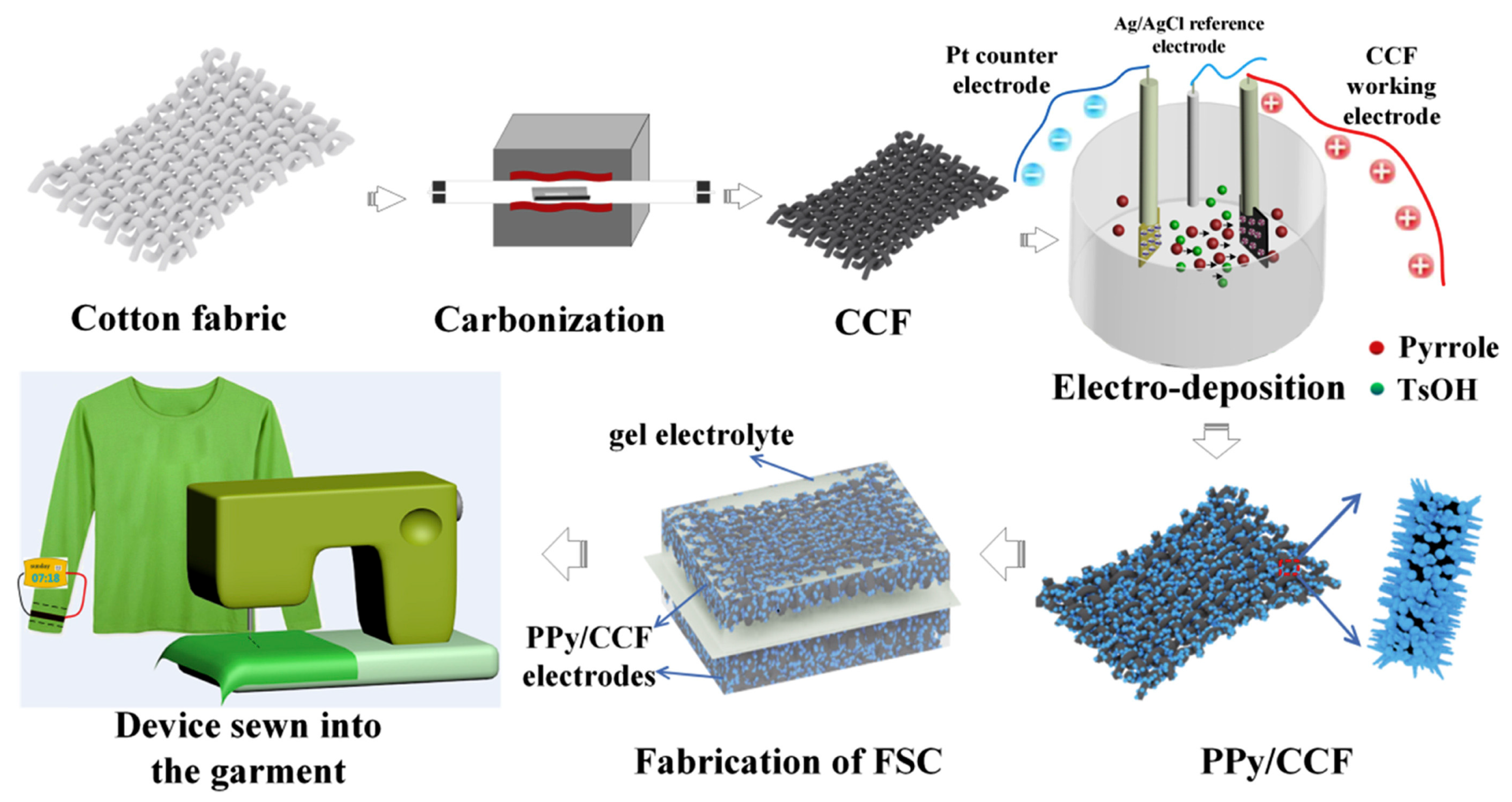
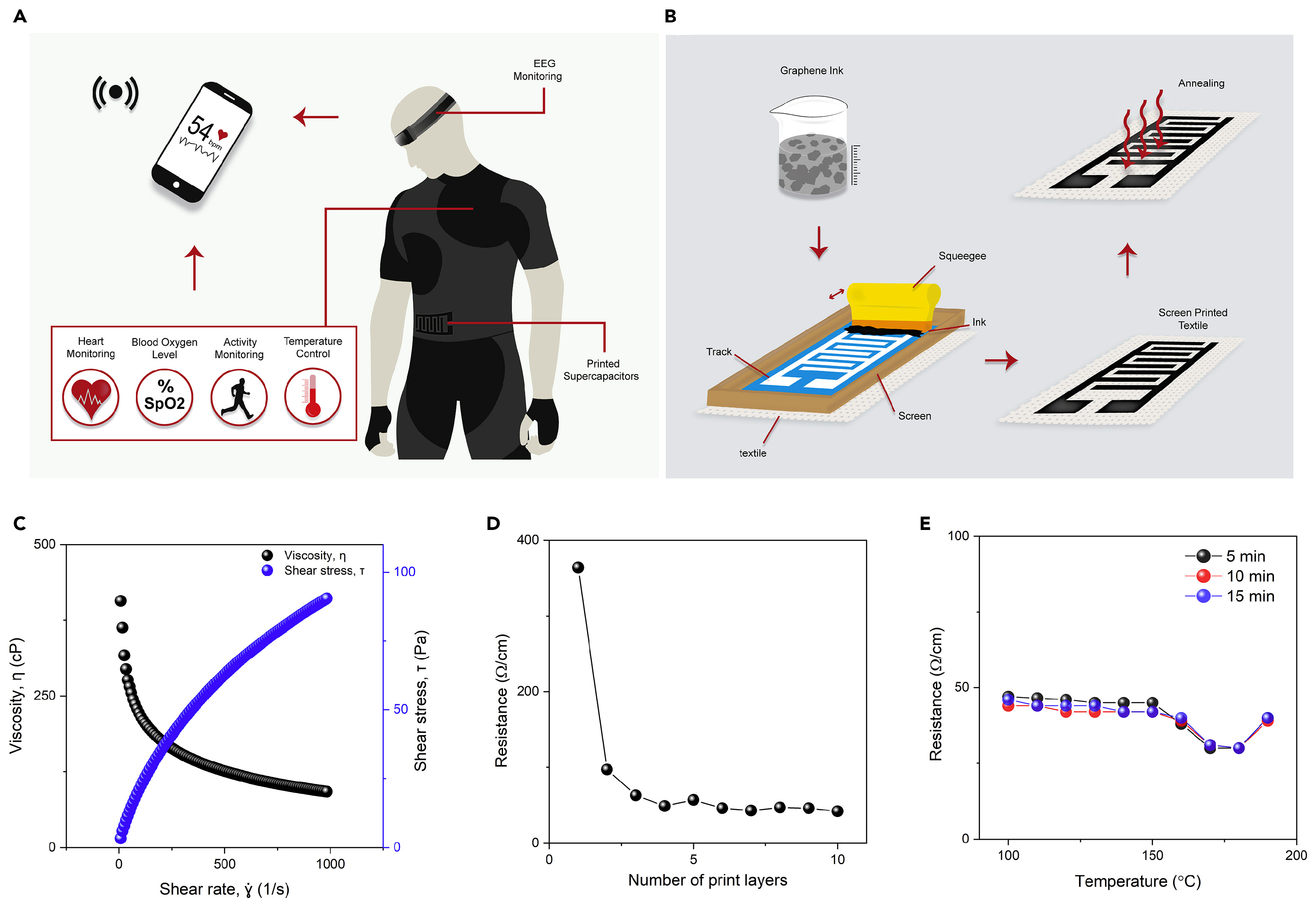
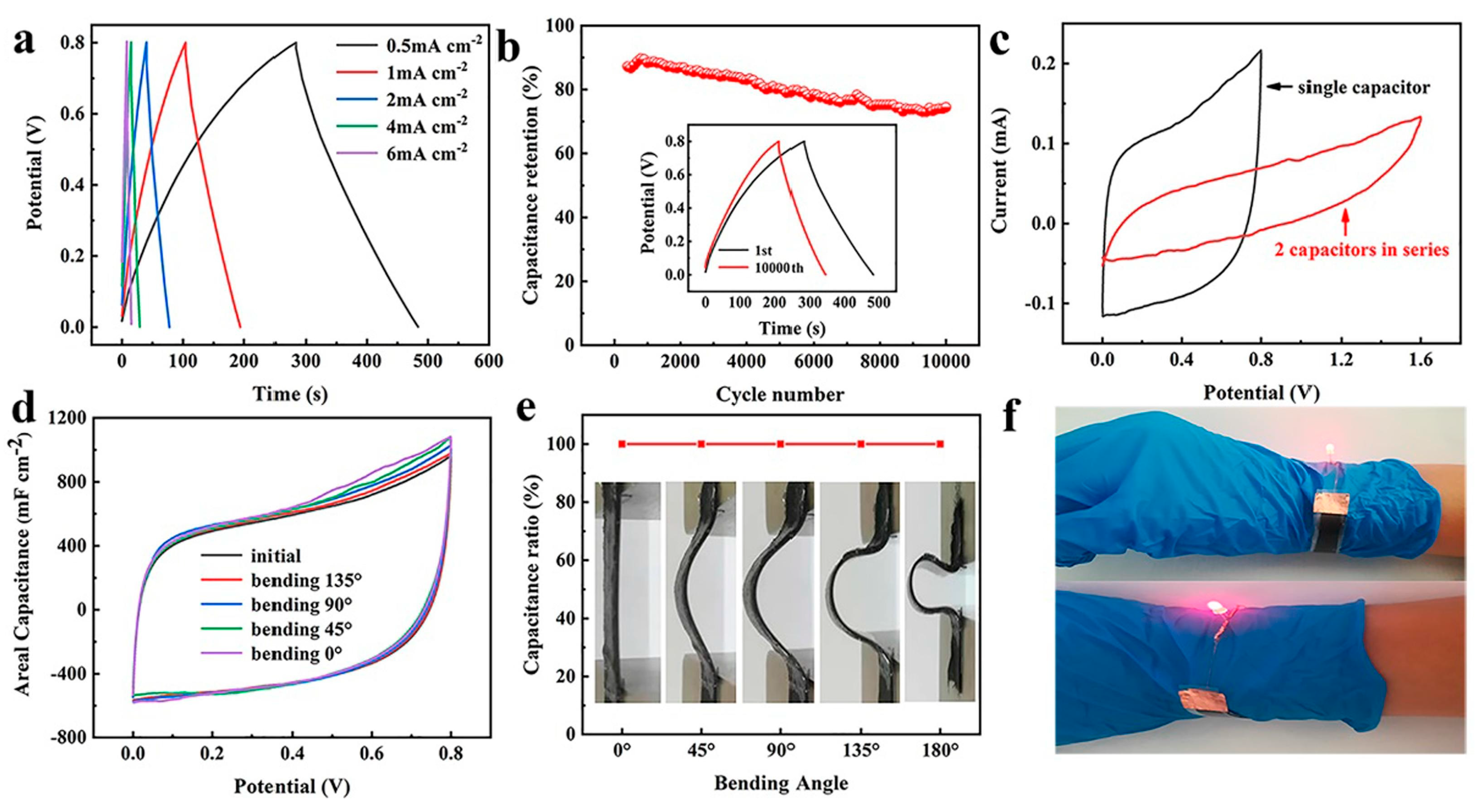
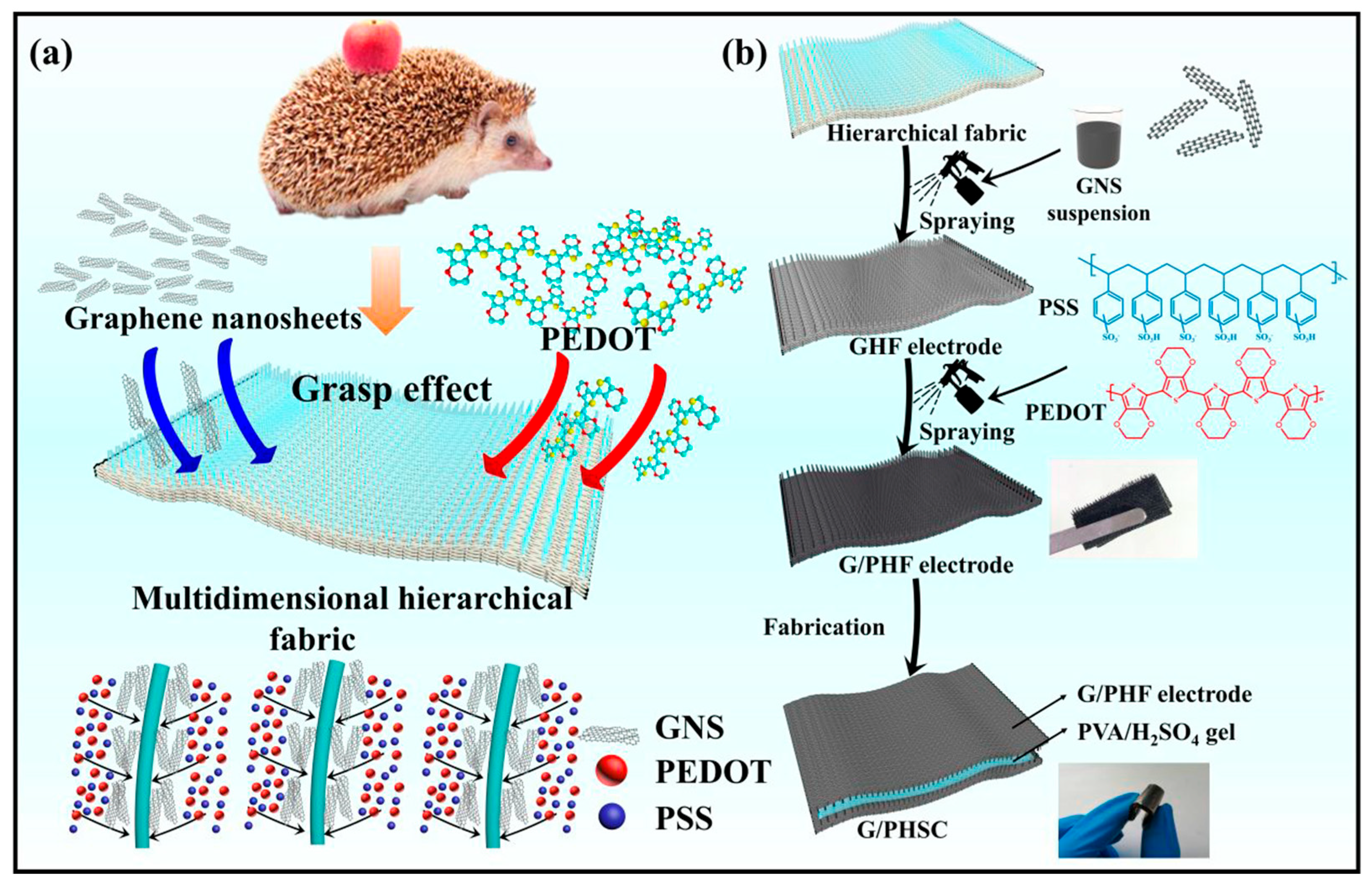
The interest in flexible and wearable electronics is increasing in both scientific research and in multiple industry sectors, such as medicine and healthcare, sports, and fashion. Thus, compatible power sources are needed to develop secondary batteries, fuel cells, supercapacitors, sensors, and dye-sensitized solar cells. Traditional liquid electrolytes pose challenges in the development of textile-based electronics due to their potential for leakage, flammability, and limited flexibility. On the other hand, gel electrolytes offer solutions to these issues, making them suitable choices for these applications. There are several advantages to using gel electrolytes in textile-based electronics, namely higher safety, leak resistance, mechanical flexibility, improved interface compatibility, higher energy density, customizable properties, scalability, and easy integration into manufacturing processes. However, it is also essential to consider some challenges associated with these gels, such as lower conductivity and long-term stability. This review highlights the application of gel electrolytes to textile materials in various forms (e.g., fibers, yarns, woven, knit, and non-woven), along with the strategies for their integration and their resulting properties. While challenges remain in optimizing key parameters, the integration of gel electrolytes into textiles holds immense potential to enhance conductivity, flexibility, and energy storage, paving the way for advanced electronic textiles.
Keywords: gel electrolytes; wearable electronics; e-textiles; energy storage; sensors gel electrolytes; wearable electronics; e-textiles; energy storage; sensors
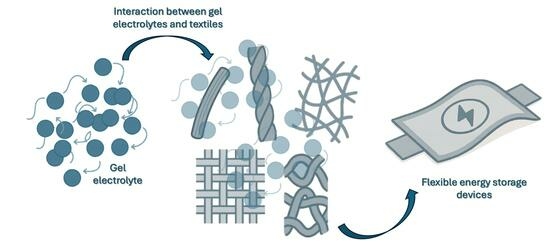
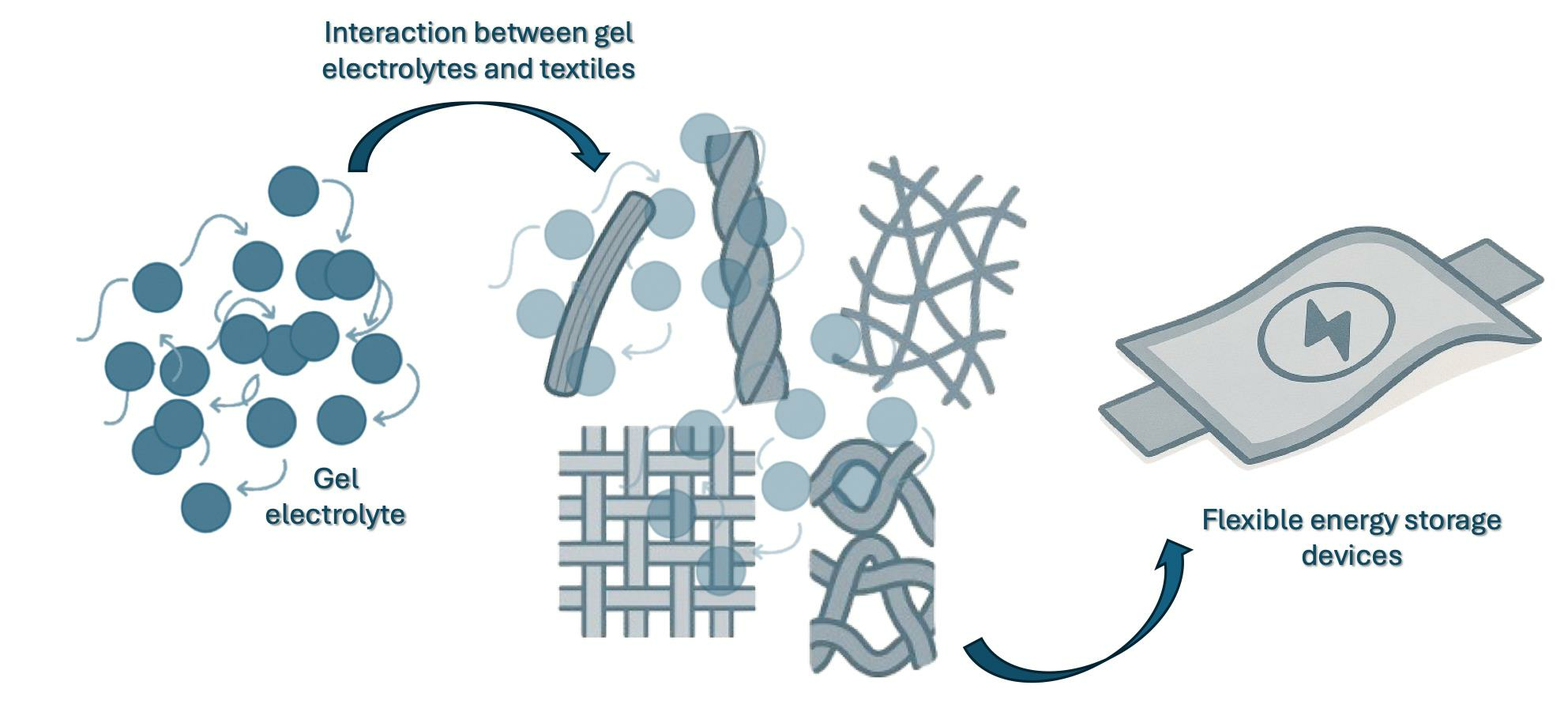
Graphical Abstract