
Article

Transporter Engineering for Enhancing Citric Acid Production in Aspergillus niger

1
Key Laboratory of Industrial Microbiology & Engineering Research Center of Food Biotechnology of Ministry of Education, College of Biotechnology, Tianjin University of Science and Technology, Tianjin 300457, China
2
Key Laboratory of Industrial Fermentation Microbiology, Tianjin University of Science and Technology, Ministry of Education, Tianjin 300457, China
3
Tianjin Engineering Research Center of Microbial Metabolism and Fermentation Process Control Technology, College of Biotechnology, Tianjin University of Science and Technology, Tianjin 300457, China
*
Authors to whom correspondence should be addressed.
J. Fungi 2026, 12(7), 472; https://doi.org/10.3390/jof12070472
Submission received: 12 May 2026 / Revised: 10 June 2026 / Accepted: 12 June 2026 / Published: 26 June 2026
(This article belongs to the Special Issue Biotechnological Applications of Fungi)

Abstract

The efficient industrial production of citric acid by A. niger requires overcoming the limitations of substrate uptake and citrate export on the citrate synthesis efficiency. This study addresses these obstacles using a transporter engineering strategy, modifying the endogenous high-affinity glucose transporter MstF and citrate exporter CexA. The “push–pull” strategy was used to improve citric acid production by increasing glucose import and citrate export. A single overexpression of mstF improved citric acid production, reaching 179.35 g/L in the H7 strain. However, cexA high expression impaired dense mycelium pellet formation and affected the expression of key genes, resulting in reduced citric acid production. For balancing intracellular accumulation and secretion of citrate, simultaneous overexpression of mstF and cexA increased citric acid production and efficiency. In a 30 L fermenter, strain A5 achieved a citric acid titer of 185.91 g/L, a productivity of 3.21 g/h/L, and a shortened fermentation cycle. Collectively, these results provide a reference for the industrial production of citric acid and other organic acids.

1. Introduction

A. niger is the main industrial workhorse for global citric acid (CA) production [1]. A. niger utilizes corn starch as a raw material, producing 180–200 g/L CA within 60–80 h at 35–37 °C [2,3,4]. Whole corn flour is a nutrient-rich source that provides almost all the nutrients required for citric acid fermentation by A. niger [1]. CA production may depend on the strain, process, scale, and other operating conditions (Table 1). In industrial fermentation, increasing yield and shortening the fermentation cycle to reduce costs and increase efficiency have become the first priority. With a detailed understanding of the mechanism of CA synthesis and the development of omics, using metabolic engineering strategies to modify A. niger to obtain high-yielding CA-engineered strains has become a core strategy [5]. Collectively, such metabolic engineering strategies mainly include: (1) enhancing the metabolic flux of the glycolytic pathway to increase the abundance of precursors [5]; (2) blocking by-product formation [2,6]; (3) regulating NAD(H) recycling and decoupling the feedback inhibition of ATP [7]; and (4) engineering the transporter to enhance substrate import and citrate export [8]. Currently, transporter engineering is an attractive strategy for increasing metabolite production and reducing downstream extraction costs [8,9,10]. Carbon source uptake and intracellular metabolite export are two major bottlenecks in industrial microbial fermentation [9]. Both of these obstacles can be overcome by genetic manipulation to increase expression levels or transport activity [9].
Transporters that import substrates can increase the substrate absorption rates and promote the flow of substrate to the target product [14]. A. niger has a high and low-affinity dual glucose transport system. The high-affinity transport system was inhibited at high glucose concentrations and assisted the low-affinity transport system in a low-capacity, high-affinity manner [15,16]. Increasing the number of high-affinity glucose transporters achieved the uptake rate of low-affinity transporters [15]. However, sugar transporters are regulated by complex transcriptional regulators and have different affinities for substrates [17,18]. In A. niger, MstA, MstE, MstF, MstG, and MstH were identified as high-affinity glucose transporters, whereas MstC was identified as a low-affinity glucose transporter [16,19]. In A. niger citric acid fermentation, a low-affinity transporter was continuously expressed at high levels, while five high-affinity glucose transporters were induced for expression [20]. Increasing the expression of high-affinity glucose transporters can ensure glucose absorption rates and maintain citrate synthesis flux.
Promoting the secretion of intracellular metabolites is also an important target for metabolic engineering to enhance industrial organic acid production. Improving the secretion of organic acids eliminated cytotoxicity and the burden caused by intracellular accumulation [8]. Increasing carboxylic acid transporter expression successfully enhanced organic acid accumulation [21,22,23]. CexA was the major citrate exporter of A. niger and belonged to the DHA1 family [24]. Increasing cexA transcription increased extracellular accumulation of CA [24,25], whereas cexA knockout eliminated citrate secretion and decreased glycolytic flux [26,27]. CexA not only facilitated citrate secretion, but also positively promoted the CA production morphology [28]. In summary, CexA occupies an irreplaceable role in the CA fermentation of A. niger.
Research on the function and mechanisms involved in glucose transporters and citrate exporters in A. niger has been steadily increasing [16,19]. However, most research on transporters has been conducted at the laboratory scale. Transporters, as components of membranes, have not been sufficiently studied in terms of their role in filamentous morphology development, and their potential industrial significance remains largely unexplored. Glucose transporters and the citrate exporter have been demonstrated to increase citric acid production, but production levels do not reach those of the citric acid hyper-producing strain [16,29]. Therefore, it is necessary to further explore the promoting effect of transporters on the citric acid production to establish more efficient and economical metabolic control strategies and further reduce the cost of biological production.
This study used the high-producing CA strain of industrial A. niger, emphasizing transporters as a promising target for rapid and efficient CA production. Our findings demonstrated that individually overexpressing mstF augmented CA accumulation, but intracellular citrate export further limited CA production potential. Surprisingly, individually overexpressing cexA impaired dense mycelium pellet formation and caused intracellular metabolic disturbances, thereby leading to a decrease in CA production. To address this challenge, the simultaneous overexpression of mstF and cexA in A. niger enabled a dynamic equilibrium between citrate synthesis and export. Improved fermentation performance was evident, including higher CA titer and apparent sugar-to-acid yield, and shorter fermentation durations. In conclusion, our study makes a great contribution to the enhancement of industrial CA manufacturing by modifying the transporter module and serves as an excellent reference for the metabolic regulation of other organic acids.

2. Materials and Methods

2.1. Strains, Plasmids, and Media

Details of the engineered A. niger strains and plasmids utilized in this study are available in Tables S1 and S2. The industrial A. niger CGMCC 10142, as a citric acid hyper-producing strain [2], served as the parent strain. Escherichia coli (E. coli) DH5α was used for plasmid construction, amplification, and storage. Agrobacterium tumefaciens (A. tumefaciens) AGL1 was used to transfer T-DNA (including the target gene) to A. niger during transformation. E. coli and A. tumefaciens were cultured in a Luria broth (LB) medium. A. niger was cultivated in or on the indicated media. A potato-dextrose agar (PDA) medium was used for obtaining conidia [26]. The complete medium (CM) was used for the screening of transformants [19], optionally supplemented with 200 μg/mL hygromycin B, and/or 25 μg/mL bleomycin. A liquefied corn medium was used as the CA fermentation medium, as previously described [2], with an initial total sugar concentration of 180 g/L. The mineral elements of the seed medium consisted of FeSO4·7H2O 30 mg L−1, CaCl2·2H2O 10 mg L−1, MnCl2·4H2O 7 mg L−1, CuSO4·5H2O 0.3 mg L−1, MgSO4·7H2O 0.3 g L−1, ZnSO4·7H2O 10 mg L−1, and KH2PO4 0.3 g L−1.

2.2. Plasmid Preparation

The gas promoter (Pgas), mstF gene and terminator (mstF, TmstF), glaA promoter (PglaA), cexA gene and terminator (cexA, TcexA), upstream and downstream homologous arms of ku70 (ku70 up, ku70 down), and upstream and downstream homologous arms of agdA (agdAup, agdAdown) were cloned from the genome of A. niger, CGMCC 10142. The bleomycin (ble) and hygromycin B (hyg) selection markers were cloned from plasmids p44 and p60, respectively. The mstF and cexA expression cassettes were constructed by overlapping PCR. The plasmid p44 was digested with EcoRI and HindIII. The digested fragment of p44 and expression cassettes were connected using Clon Express MultiS One Step Cloning Kit (Vazyme, Nanjing, China), generating p94 and p95 (Figure S1). All primers used for plasmid construction are listed in Table S3.

2.3. Construction and Initial Screening of Engineered A. niger

Recombinants were constructed by A. tumefaciens-mediated transformation (ATMT) as described previously [2,30]. Briefly, the target gene expression cassettes in p94 or p95 were integrated into the genome of A. niger by ATMT. Recombinants can be easily isolated from CM medium under the stress of bleomycin and/or hygromycin B. Subsequently, transformants were verified by PCR to amplify the overexpression cassette. The mstF overexpression-associated transformants were further screened in the CM medium with low glucose (0.05%) and 0.2% calcium carbonate (CaCO3) (Tables S4 and S5). Briefly, fresh mycelium from the transformants grown on CM + hygromycin medium was transferred to CM (0.05% glucose) + 0.2% CaCO3 plates and incubated at 37 °C for 72 h. The strain’s CA production was assessed by comparing the ratio of the transparent halo zone to the colony diameter. A larger acid-etched cycle indicates a greater acid production potential. Subsequently, spore suspensions of the proper transformants were prepared for shake flask fermentation.
After 15 generations of the selected transformants were passaged on the CM medium, the genomic DNA was extracted to verify their genetic stability. Additionally, CA production in the shake flask fermentation was retested.

2.4. Shake Flask and Fermenter Cultures

The process for shake flask culture was initiated by cultivating 1 × 10⁵ spores/mL in a 50 mL medium within a 500 mL Erlenmeyer flask. Shake flask cultivation took place at 37 °C at 300 rpm for 72 h. The recombinants with the highest CA titer in the shake flask were selected for a 30 L fermenter scale-up.
The fermenter culture was initiated by inoculating 1 × 10⁵ spores/mL into a 5 L seed jar with 3 L of seed medium. The seed jar was cultured at 35 °C with a rotation speed of 300 rpm and an aeration rate of 330 L/h for 24 h. Then the culture mixture was transferred to a 30 L fermenter containing 20 L fermentation medium at 10% inoculum. The process was maintained at 35 °C with a rotation speed of 350 rpm and an aeration rate of 400 L/h for 64 h. The measurement of relevant indicators begins at 0 h post-inoculation. The entire fermentation process was operated under fully automated controlled conditions with real-time monitoring of all parameters.
Additionally, 1 × 10⁵ A. niger spores were inoculated into a 250 mL conical flask containing 50 mL of CM medium and then cultured at 35 °C and 200 rpm. Samples were collected at specified time points in order to determine the relative transcriptional levels of the high-affinity glucose transporter.

2.5. Measurement of Organic Acids, Sugar, and Biomass

The fermentation broth was centrifuged at 4 °C and 12,000 rpm for 10 min. Then the supernatant was filtered through a 0.22 μm sterile filter membrane. The contents of CA were assessed using high-performance liquid chromatography (HPLC) with an Aminex HPX-87H column (Bio-Rad, Tianjin, China) and ultraviolet detection in 5 mM H2SO4, flowing at a rate of 0.6 mL/min. In addition, the injection volume of HPLC was set as 10 μL, and the column temperature was set as 60 °C. Standard solutions of anhydrous citric acid with varying concentrations were tested under identical conditions, and a calibration curve was plotted. The concentration of citric acid in the fermentation samples was calculated by linear regression analysis based on the peak area. The content of total sugar and reducing sugar was determined using the 3,5-dinitrosalicylic acid (DNS) method according to the previous research [31]. Briefly, 1 mL of diluted supernatant and 1 mL of DNS reagent were placed in a boiling water bath for 5 min, then cooled to room temperature. Subsequently, absorbance at 540 nm (A540) was measured to determine reducing sugars. The total sugar in the supernatant required the addition of an equal volume of 6 mol/L HCl, which was heated in a boiling water bath for 30 min, adjusting the pH to neutral, and subsequently measured via the DNS method. Standard measurements were performed using the same procedure. For dry cell weight (DCW) analysis during fermenter cultivations, 50 mL of fermentation broth was filtered onto pre-weighted filter paper and dried at 60 °C until the weight was constant.
The calculation formulas of the fermentation results were as follows [4]:
Citric acid titer = concentration of citric acid in fermentation broth (g/L).
The apparent sugar-to-acid yield = concentration of CA/concentration of total sugar (g/g).
Citric acid productivity = concentration of CA/fermentation time (g/L/h).

2.6. Measurement of Relative Transcription Level

After cultivation for the indicated time, fresh mycelia of A. niger were washed and vacuum filtered with filter paper. The wet pellets were snap frozen in liquid N2 and powdered using a mortar and pestle (WKBIO, Tianjin, China) [30]. The total RNA was extracted with the Fungal RNA Extraction Kit (Coolaber, Beijing, China) according to the manufacturer’s instructions. The total RNA was reverse transcribed to cDNA with HiScript III RT SuperMix for qPCR (+gDNA wiper) (Vazyme, Nanjing, China). Reverse transcription-quantitative PCR (RT-qPCR) was performed to quantify the transcription level of the target gene with the ChamQ Universal SYBR qPCRMaster Mix (Vazyme, Nanjing, China). The relative transcription level was calculated via the 2−ΔΔCt method [7]. The primers used for RT-qPCR in this study are listed in Table S3. The housekeeping gene actA in A. niger was used as the reference gene.

2.7. Statistical Analysis

Experiments and measurements in this study were performed in triplicate. All data were presented as mean values or mean ± standard deviation. Statistical analysis was performed with the Origin 2024 software package. A one-way ANOVA statistically tested all values with a Tukey’s post-hoc test at a 95% confidence interval. Asterisks indicate significant differences: * represents a p < 0.05; ** represents a p < 0.01; and *** represents a p < 0.001. Data are given as means ± SD, n = 3.

3. Results

3.1. Screening of High-Affinity Glucose Transporter

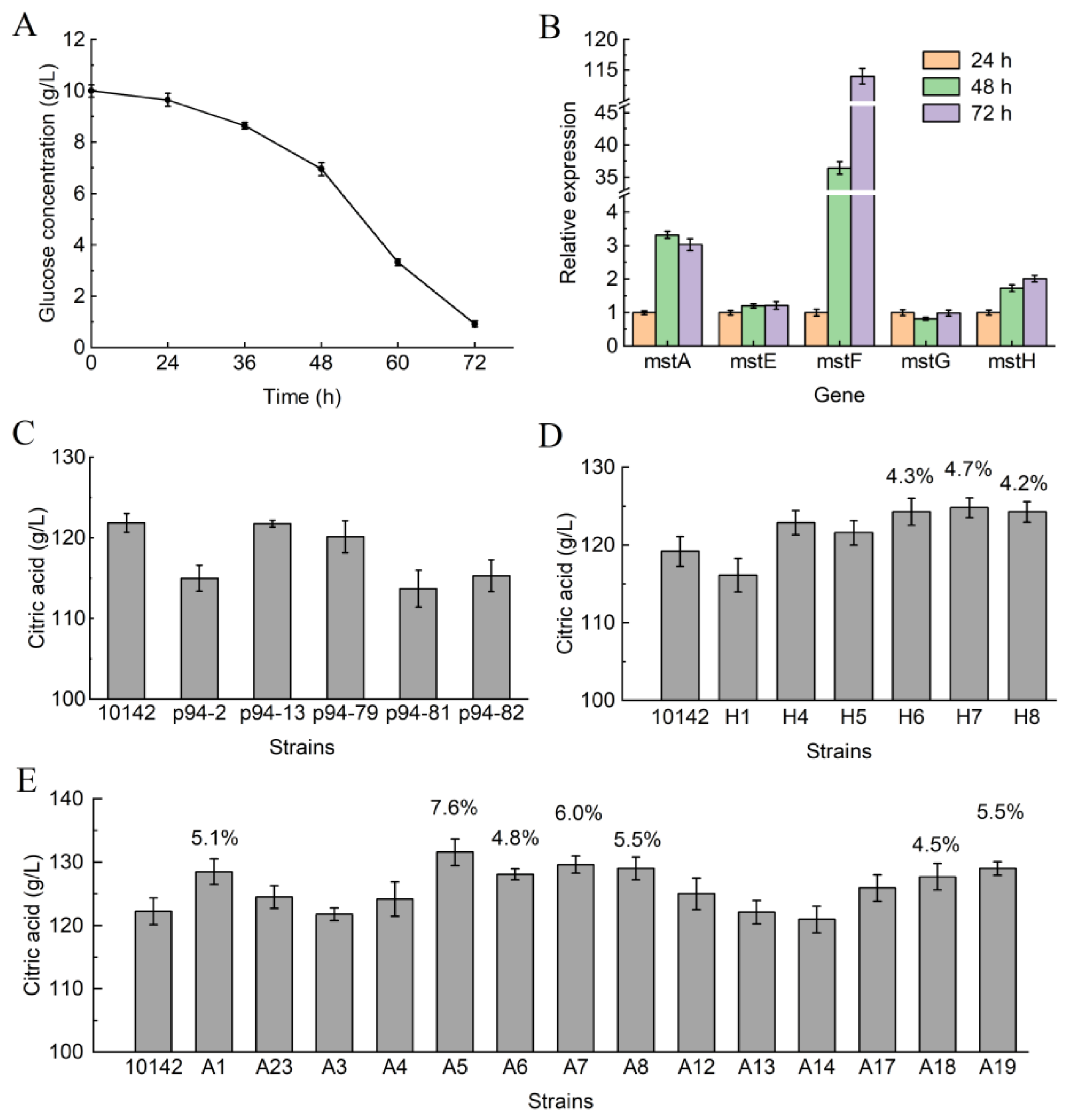
Glucose uptake and conversion affect the intracellular citrate synthesis rate, and the increased glucose transport significantly increased the CA production in A. niger [16]. So far, several key transporters in A. niger have been identified, including the low-affinity glucose transporter, MstC, and the high-affinity glucose transporters, MstA, MstE, MstF, MstG, and MstH. High-affinity and high-capacity exhibit clear exclusivity. Increasing the number of individual high-affinity transporters can achieve uptake rates equivalent to those of low-affinity systems [15]. To identify which high-affinity glucose transporter in CGMCC 10142 was highly induced under low glucose conditions. Therefore, we analyzed glucose consumption and the relative transcript levels of five high-affinity glucose transporters (MstA, MstE, MstF, MstG, MstH) in CGMCC 10142 grown on the low-glucose CM medium (Figure 1A,B). The mstA, mstF, and mstH genes were expressed upon glucose depletion (Figure 1A,B), with mstF showing a significant difference. Previous findings indicated that the expression of mstF was highly induced upon glucose depletion [19]. Ultimately, the high-affinity glucose transporter MstF was selected as the target to improve glucose uptake.

3.2. Construction Engineered Strains

Both vectors were introduced into A. niger by an ATMT, and transformants were screened. The transformants were cultivated for three generations on the CM medium supplemented with bleomycin and/or hygromycin B. Finally, 13 mstF overexpression transformants, five cexA overexpression transformants, and 14 mstF/cexA co-overexpression transformants were screened. As shown in Figures S2–S4, the random integration of mstF and/or cexA expression cassettes into transformant genomes was further confirmed by PCR. For mstF overexpression-associated transformants, superior transformants were screened by calculating the ratio of the clear zone diameter to colony diameter (Tables S4 and S5). Ultimately, five cexA overexpression transformants (Figure 1C), six mstF overexpression transformants (Figure 1D), and 14 mstF/cexA co-overexpression transformants (Figure 1E) were isolated through plate screening. These recombinant strains (Figure 1C–E) were then further identified for their citric acid production capacity in citric acid shake flask fermentations using liquefied corn medium. Only the CA titer of the cexA-overexpressing recombinant p94-13 was comparable to that of CGMCC 10142, while the titers of all other recombinant strains were lower than that of CGMCC 10142 (Figure 1C). The CA titer of the mstF-overexpressing recombinant H7 increased by 4.7% compared to CGMCC 10142, reaching 124.75 g/L (Figure 1D). And the CA titer of the mstF/cexA co-overexpressing recombinant A5 increased by 7.6% compared to CGMCC 10142, reaching 131.57 g/L (Figure 1E). Therefore, strains p94-13 (cexA overexpression), H7 (mstF overexpression), and A5 (mstF/cexA co-overexpression) were employed for scale-up in a 30 L fermenter. Furthermore, strains p94-13, H7, and A5 were passaged for 15 generations, and the strains’ genetic stability was confirmed by validating the mstF expression cassette and cexA expression cassette, as shown in Figure S7.

3.3. Inducible Overexpression of mstF Increases Glucose Consumption and CA Production

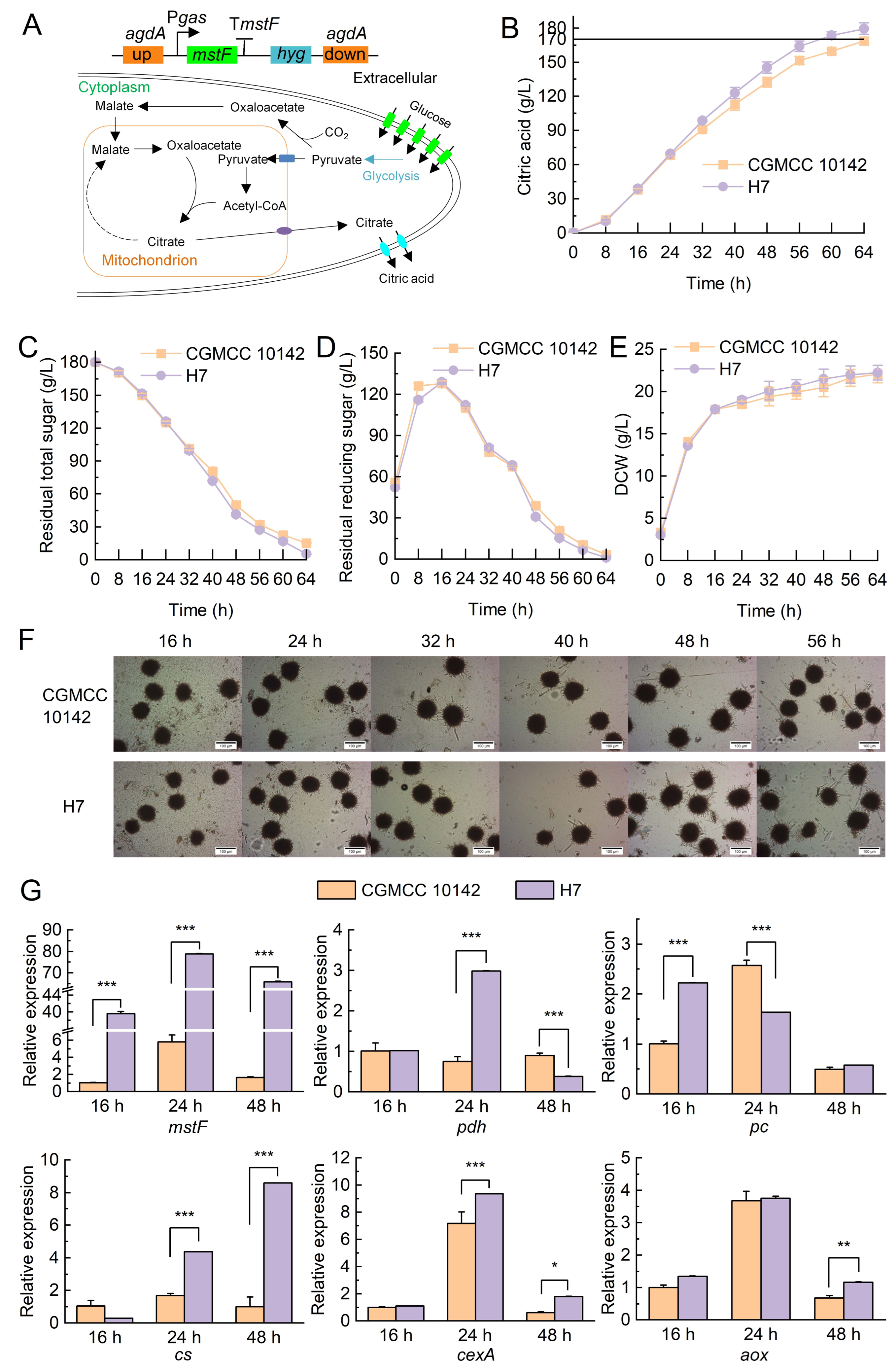
An efficient glucose transport system was the basis for increasing the flux of citrate synthesis [20]. However, the high initial sugar concentration in citric acid fermentation inhibited the high-affinity transport system. Increasing the number of high-affinity glucose transporters improves glucose transport efficiency. Therefore, overexpression of mstF at the low pH-inducible promoter Pgas enhanced citrate synthesis flux under the “push” effect (Figure 2A). In industrial A. niger citric acid fermentation, transcriptomic analysis revealed that the Pgas promoter functions efficiently at a low pH (2.0), and the Pgas strength correlates exclusively with pH [32].
In comparing the fermentation process of H7 with that of CGMCC 10142, the trend in dissolved oxygen (DO) change was nearly the same (Figure S8A). Both strains exhibited a rapid decline in dissolved oxygen to a minimum within 10 h, and remained at low levels throughout the fermentation process. The pH decreased continuously, reaching a final value of 1.5 (Figure S8B). The CA production assay revealed that the final CA titer of H7 was 6.41% higher than that of CGMCC 10142, reaching 179.35 g/L (Figure 2B). Upon calculation, the apparent sugar-to-acid yield in H7 stands at 0.99 g/g, demonstrating a productivity of 2.80 g/h/L. The monitoring of sugar consumption indicated that H7 increased the rate and efficiency of sugar utilization compared with CGMCC 10142 (Figure 2C,D). The total sugar utilization of H7 was 24.72% higher than that of CGMCC 10142, at only 5.31 g/L, indicating that MstF can improve the fermentation performance while increasing conversion efficiency. During fermentation, it can be observed that H7 formed mycelium pellets and biomass comparable with CGMCC 10142 (Figure 2E,F), illustrating that MstF has no effect on the growth or morphology of A. niger. Transcription analysis showed (Figure 2G) that the relative expression levels of mstF, pdh, pc, cs, cexA, and aox genes in the H7 were 21.85-, 1.65-, 1.09-, 3.54-, 1.39-, and 1.17-fold those of CGMCC 10142, respectively. Transcript levels increased significantly for cs, but not for cexA, so it is hypothesized that intracellular citrate export limited the CA production potential of H7. In conclusion, the mstF overexpression successfully increased the CA titer and the apparent sugar-to-acid yield.

3.4. Overexpression of cexA Impairs Mycelium Pellet Morphology and Reduces CA Production

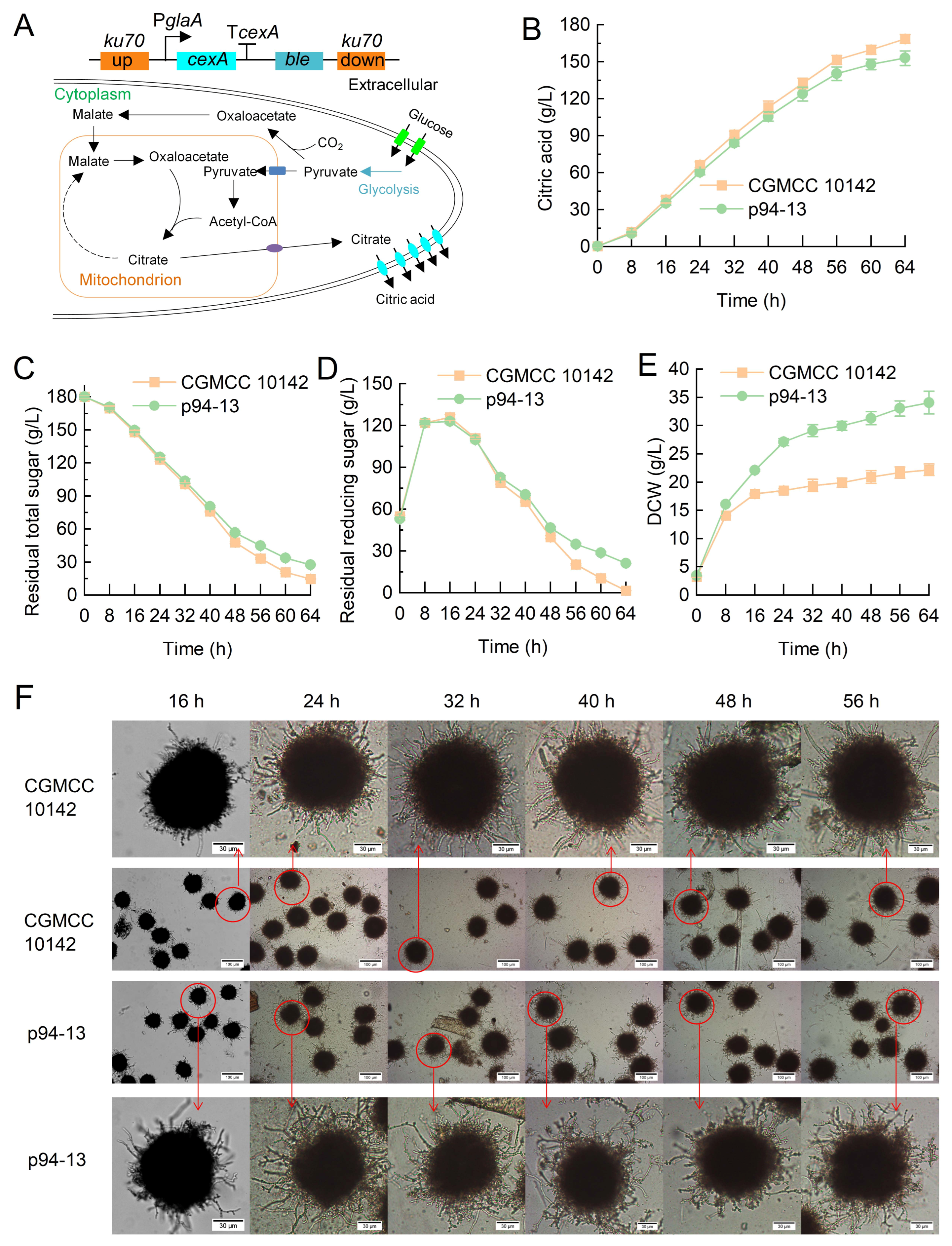
The export of citrate from intracellular to extracellular was also a bottleneck in industry production. Prompt secretion of intracellular citrate into the extracellular space eliminated feedback inhibition caused by citrate accumulation [14]. Therefore, overexpression of cexA using the inducible promoter PglaA improved citrate secretion under the “pull” effect (Figure 3A).
The dissolved oxygen profiles of CGMCC 10142 and the cexA-overexpressing strain p94-13 were nearly identical throughout fermentation (Figure S8C). Both strains reached the minimum DO within 10 h. However, the dissolved oxygen level began to rise gradually during the middle phase of fermentation of p94-13. The pH declined continuously to a final value of 1.5 (Figure S8D). Unsatisfactorily, p94-13 showed no desired improvement in the CA titer. The CA production assay revealed that the final CA titer of p94-13 was 9.2% lower than that of CGMCC 10142, reaching 152.99 g/L (Figure 3B). The apparent sugar-to-acid yield in p94-13 stands at 0.85 g/g, demonstrating a productivity of 2.39 g/h/L. Residual sugar levels displayed that p94-13 consumed sugar at a rate lower than CGMCC 10142 (Figure 3C,D). After fermentation, the residual total sugar of p94-13 reached 27.56 g/L, an increase of 87.48% over CGMCC 10142. At each detection time point, it can be observed that p94-13 formed looser mycelium pellets with elongated hyphae and more apical branching and produced more biomass than CGMCC 10142 (Figure 3E,F). After fermentation, the biomass assay demonstrated that the final DCW of p94-13 was 53.69% higher than that of CGMCC 10142, reaching 34.07 g/L (Figure 3E), illustrating the impact of CexA on the growth and morphology of A. niger. Phenotypic analysis revealed that the overexpression of cexA caused colony growth defects of A. niger (Figure S6). Thus, these findings provide clear evidence that cexA expression levels may affect the normal metabolism in A. niger.
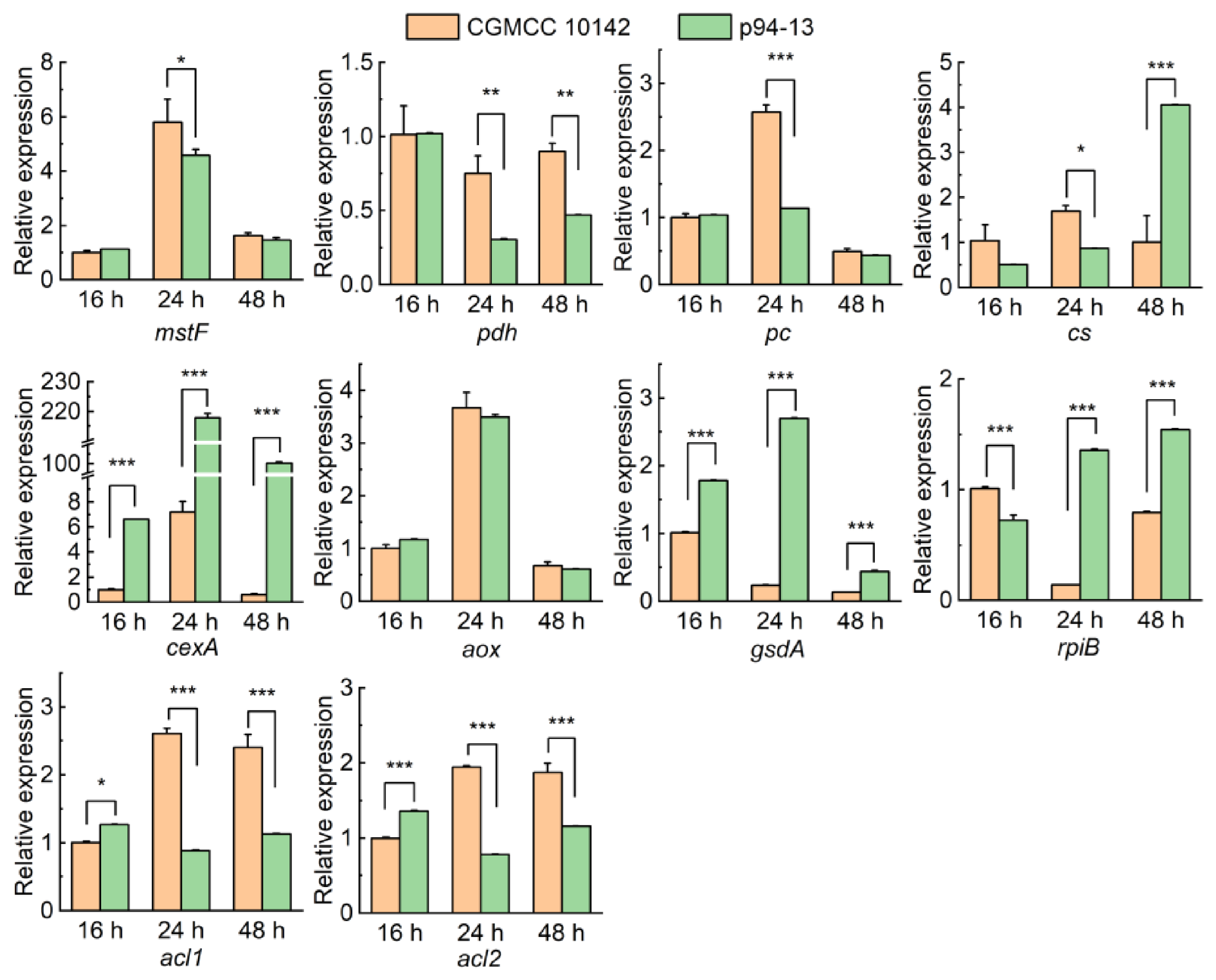
Subsequently, transcriptional analysis of key genes further confirmed the effect of CexA on intracellular metabolism. Transcription analyses showed (Figure 4) that the relative expression levels of mstF, pdh, pc, cs, cexA, and aox genes in p94-13 were 0.85-, 0.67-, 0.64-, 1.45-, 36.94-, and 0.98-fold those of CGMCC 10142, respectively. Although the expression level increased, cs was consistently expressed at low levels during the critical phase of CA fermentation, which apparently affected the intracellular citrate synthesis rate. Cytoplasmic acetyl coenzyme A (Ac-CoA) is involved in cellular stress, cell membrane synthesis, and histone acetylation [33]. The ATP-citrate lyase (ACL) pathway was the primary cytoplasmic Ac-CoA-generating pathway in A. niger [34]. The relative expression levels of acl1 and acl2 genes in the p94-13 were 0.54- and 0.68-fold those of CGMCC 10142, respectively. This may lead to a decrease in cytoplasmic Ac-CoA, which caused a decrease in pc transcript levels (Figure 4). As observed in p94-13, the relative expression levels of gsdA and rpiB were 3.58- and 1.86-fold those of CGMCC 10142 (Figure 4), respectively, consistent with the phenomenon of increased biomass (Figure 3E). In conclusion, cexA overexpression impaired dense mycelium pellet formation and downregulated key genes involved in CA synthesis, resulting in lower CA production.

3.5. Simultaneous Overexpression of mstF and cexA Improves CA Production Efficiency and Fermentation Performance

Enhanced glucose import capacity improved citrate synthesis efficiency and glucose conversion but was limited by the citrate export. In contrast, increasing citrate export capacity by overexpressing cexA alone affected mycelium pellet formation, interfered with intracellular metabolism, and reduced CA production. We speculated that the reason may be that the intracellular synthesis of citrate, coupled with its extracellular transport, failed to achieve a dynamic equilibrium. Therefore, we expect to improve the CA fermentation efficiency by simultaneously enhancing glucose import and citrate export under the “push and pull” effect (Figure 5A).
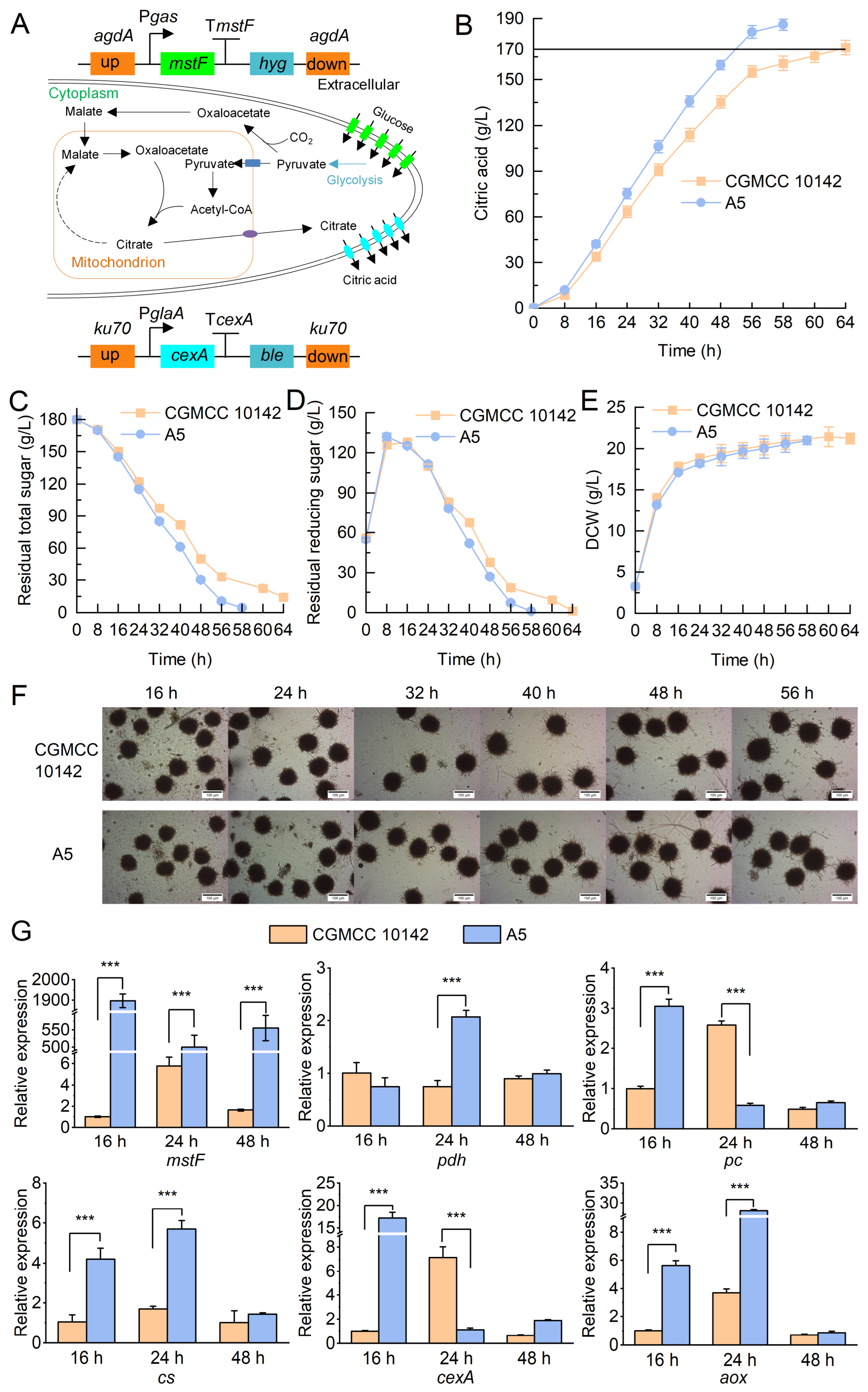
During fermentation, the trend in dissolved oxygen concentrations for A5 and CGMCC 0142 was nearly identical (Figure S8E). The dissolved oxygen level of the mstF/cexA co-overexpressing strain A5 declined rapidly in the early stage, reaching 10% at 5 h. The pH value decreased continuously during fermentation, reaching a final value of 1.4 (Figure S8F). The CA production assay revealed that the final CA titer of A5 was 8.71% higher than that of CGMCC 10142, reaching 185.91 g/L (Figure 5B). Crucially, A5 consistently maintained a high fermentation efficiency and completed the fermentation process 6 h earlier than CGMCC 10142 (Figure 5B). Upon calculation, the apparent sugar-to-acid yield in A5 stands at 1.03 g/g, demonstrating a productivity of 3.21 g/h/L. The monitoring of residual sugar levels indicated that A5 consumed sugar at a rate higher than CGMCC 10142 (Figure 5C,D). The total sugar consumption of A5 was 68.41% higher than that of CGMCC 10142, at only 4.47 g/L. Notably, there was no difference in mycelium pellets and biomass (Figure 5E,F) between A5 and CGMCC 10142.
Transcription analyses demonstrated (Figure 5G) that the relative expression levels of mstF, pdh, pc, cs, cexA, and aox genes in A5 were 350.01-, 1.44-, 1.05-, 3.02-, 2.30-, and 6.47-fold those of CGMCC 10142, respectively. Key metabolic enzymes involved in citric acid synthesis were differentially upregulated. Surprisingly, the mstF transcript level in A5 was considerably higher than that of H7 (Figure 2G and Figure 5G), whereas the cexA transcript level was much lower than that of p94-13 (Figure 4) but higher than that of H7 (Figure 2G). Meanwhile, the high expression of mstF had no effect on CA production morphology. High expression of aox (Figure 5G) was also observed, which was important for NADH recirculation without ATP production, and uncoupling the inhibitory effect of ATP on glycolysis. In conclusion, simultaneous overexpression of mstF and cexA in A. niger enhanced citrate synthesis flux and export, improving CA production. It is attributed to the dynamic equilibrium between effective substrate import, efficient intracellular citrate synthesis, rapid citrate export, and maintenance of energy balance.

4. Discussion

4.1. Intracellular Import of Glucose Stands as a Potential Bottleneck in the Synthesis of CA by A. niger

A massive carbon flux through the glycolytic pathway was a fundamental prerequisite to efficient citrate synthesis, as it provided sufficient precursors [20]. And to achieve high efficiency in glycolysis, an efficient glucose transport system was required. Recombinants we constructed demonstrated improvements in terms of fermentation strength and sugar–acid conversion for CA fermentation by A. niger. These results underscore that the high-affinity glucose transporter accelerated the glucose import. The upregulation of CS (Figure 2G) contributed to citrate accumulation. However, a trace increase in cexA transcripts further limited efficient CA production. Although mstF was highly expressed (Figure 2G and Figure 5G), no changes in mycelium pellet morphology were observed, indicating that MstF had no effect on the mycelium pellet morphology formation, in contrast to CexA.

4.2. Overexpression of cexA Affects Mycelia Morphogenesis and Transcription of Key Genes

The enhanced glucose import increased citrate synthesis flux and CA accumulation. However, the export of citrate further limited fermentation potential. In this study, PglaA-induced cexA strain p94-13 formed mycelium pellets with elongated hyphae and more apical branching and showed transcriptional changes in key genes of central metabolism. The degradation of cytosolic citrate constitutes the primary source of cytosolic acetyl-CoA [34], while simultaneously consuming ATP and releasing feedback inhibition. Although CexA provokes a “pull” effect on citrate, it may cause cytoplasmic citrate depletion, thereby affecting other biological processes. The transcriptional downregulation (Figure 4) of key genes pdh, pc, and acl confirmed this hypothesis. During CA fermentation, redox balance was important. AOX was responsible for oxidizing excess NADH without forming ATP, and the lysis of cytoplasmic citrate may help release the pressure of the alternative respiration pathway [20]. But aox transcript levels were unchanged (Figure 4). Downregulation of acl transcription may enable excess ATP to inhibit glycolysis, redirecting metabolic flux toward the PPP pathway. As we observed, gsdA and rpiB showed upregulation (Figure 4), and biomass increased (Figure 3E) in p94-13. At the same time, cytoplasmic Ac-CoA was closely related to cell membrane synthesis and the acetylation of nuclear histones [35]. Increased Ac-CoA in the cytoplasm effectively mitigated pH inhibition and promoted cell growth under stress conditions [33,35,36]. On the other hand, changes in mycelium pellet morphology induced by cexA overexpression may also affect the strain’s stress tolerance and oxidative stress. NADPH can defend cells from oxidative stress by reacting directly or indirectly with ROS [37]. Metabolic flux was reconfigured in response to oxidative stress, enhancing the PPP flux to increase NADPH supply [38,39,40]. This may be one reason for gsdA transcript upregulation and increased biomass. Our findings were consistent with previous studies. Previous studies demonstrated that tet-on induced cexA expression yielded higher CA production than the constitutive expression of PmbfA, and constitutive expression showed a reduced conidiation pattern [24]. These findings demonstrated that citrate exporter CexA exhibited a diversity of biological functions. And other organic acid transporter proteins exhibited the diversity of biological functions, such as tetracarboxylic acid transporters. In Metarhizium acridum, MaDct1 not only regulated and transported tetracarboxylic acid but also modified fungal development and conidiation by influencing carbon source availability, and was involved in stress tolerance [41]. This drives the need for metabolic regulation in terms of transporters to shift from static regulation of simple intracellular overexpression to dynamic regulation in response to cell growth and metabolites [42]. In conclusion, a profound comprehension of the structure–function and transcription–regulation relationships of organic acid transporters can facilitate the industrialization of efficient organic acid production.

4.3. Dynamic Equilibrium Between Glucose Import and Citrate Export Can Improve the Fermentation Efficiency of CA by A. niger

Overexpressing transporters increases glucose import and citrate export, driving the carbon reaction forward for CA accumulation under the “push–pull” effect. Nevertheless, the simple overexpression of a transporter often does not lead to the expected accumulation of metabolites [43]. In the malic acid fermentation of Trichoderma reesei, the titer of malic acid reached 235.8 g/L through the overexpression of the glucose transporter, key enzymes for malic acid synthesis, and malic acid transporter, and optimization of fungal morphology [21]. Research results emphasize that collaboration between transport modules, metabolic modules, and morphological modules contributes to organic acid production.
The engineered strains we developed demonstrated a significant improvement in three key metrics of CA synthesis: increased CA production, reduced fermentation time, and enhanced sugar-acid conversion. These results highlight the vital role of efficient transporters in producing high-quality CA. Simultaneous overexpression of mstF and cexA provoked “pull” and “push” effects in the metabolic network, increasing intracellular citrate synthesis metabolic flux and export. At the same time, the cyanide-resistant respiration (CRR) pathway was enhanced. Transcript levels of aox were up-regulated (Figure 5G), leading to NADH recirculation and uncoupling the inhibition of ATP production on the glycolytic pathway and CS. To gain insight into the effect of AOX on energy metabolism in A. niger CGMCC 10142, we have previously conducted aox disruption and overexpression strains [7]. Overexpression of aox increased the NADH oxidation rate, thereby accelerating the rate-limiting step and enhancing the metabolic flux. Furthermore, AOX critically contributed to maintaining mycelium pellet morphology under oxidative stress. Of course, the mechanism of the CRR pathway enhancement caused by mstf/cexA co-overexpression remains unclear. Numerous cases underscore the important role of NADH recycling in the synthesis of organic acids [44,45]. These results illustrate the importance of maintaining energy balance in metabolic regulatory strategies to enhance organic acids.
Based on the above analysis, the systematic metabolic regulation of organic acid synthesis in filamentous fungi needs to consider the following key points: (1) increasing the intracellular import of carbon sources; (2) improving the intracellular synthesis flux of organic acids; (3) enhancing the extracellular export of organic acids; (4) accelerating the NADH recirculation and decoupling the inhibitory effect of ATP; and (5) maintaining the optimal mycelium pellet morphology for organic acids synthesis. Unilateral efforts may not achieve the desired results; a balance will need to be struck between these several strategies. This requires shifting from the “push–pull-block” strategy of regulating enzyme expression under static control to precise dynamic regulation [42]. Modular engineering becomes a promising strategy [46]. Modular design of independent and functionally specific components, such as the morphology module, transporter module, and metabolism module, and adjustment of the relative activity of the modules can precisely regulate the metabolic synthesis of organic acids. The dynamic control system can regulate the balance between intracellular functional modules by responding to changes in signals to maximize the carbon flux to synthesize the target metabolite. The PmfsA promoter sensed calcium ions to trigger the expression of target genes in A. niger malic acid fermentation [47]. Precise control of sthA expression by the PmfsA promoter during the fermentation phase mitigated the severe asexual developmental defects caused by constitutive expression of sthA. Therefore, it is essential to tap into signal-sensing key metabolic regulation factors to control gene expression precisely.

5. Conclusions

In summary, this study underscored the key role of the transporter in CA biosynthesis. Overexpression of the mstF gene increased the apparent sugar-to-acid yield and metabolic flux of citrate synthase but had no effect on CA production morphology. In addition, the overexpression of cexA impaired CA production and mycelium pellet formation. Simultaneous overexpression of mstF and cexA achieved a dynamic equilibrium between key modules of citrate synthesis, increasing CA accumulation and fermentation efficiency. The ultimate co-overexpression engineered strain A5 exhibited exceptional performance in CA synthesis within a 30 L fermenter, showing elevated CA titer (185.91 g/L), apparent sugar-to-acid yield (1.03 g/g sugar), productivity (3.21 g/h/L), and a shortened fermentation cycle (from 64 to 58 h).

Supplementary Materials

The following supporting information can be downloaded at https://www.mdpi.com/article/10.3390/jof12070472/s1. Table S1: Strains used in the study. Table S2: Plasmids used in the study. Table S3: Primers used in this study. Table S4: The screening of high-yield citric acid transformants with single mstF overexpression in CM medium with low glucose (0.05%) containing 0.2% CaCO3. Table S5: The screening of high-yield citric acid transformants with simultaneous overexpression of mstF and cexA in CM medium with low glucose (0.05%) containing 0.2% CaCO3. Figure S1: Schematic Diagram of plasmid construction. Figure S2: PCR verification of mstF overexpression recombinants. Figure S3: PCR verification of the cexA overexpression recombinants. Figure S4: PCR verification of simultaneous overexpression cexA and mstF recombinants. Figure S5: Microscopic observation of mycelium pellets morphology under shake flask fermentation. Figure S6: Colony diameter of A. niger p94-13 and CGMCC 10142 on PDA plate. Figure S7: Validating cexA expression cassette and/or mstF expression cassette in p94-13, H7, A5 at the 15th generation. Figure S8: Dissolved oxygen and pH profiles of strains H7 (mstF overexpression), p94-13 (cexA overexpression), A5 (mstF/cexA co-overexpression), and control strain CGMCC 10142 during 30 L fed-batch fermentation.

Author Contributions

J.L. conceived and designed the study, conducted the experiments, analyzed the data, and wrote the manuscript. M.L. analyzed data and drafted the figures. Y.S. analyzed the data. Z.X. analyzed data. Y.C. reviewed the manuscript. X.X. reviewed the manuscript. D.W. conceived the study, reviewed the manuscript, and secured the project funding. All authors have read and agreed to the published version of the manuscript.

Funding

This work was financially supported by the National Natural Science Foundation of China (32400033) and, the National Key Research and Development Program of China (2021YFC1808901).

Data Availability Statement

All data supporting the findings of this study are available within the paper and its Supplementary Information.

Conflicts of Interest

The authors declare that they have no known competing financial interests or personal relationships that could have appeared to influence the work reported in this paper.

Abbreviations

MstF, high-affinity glucose transporter; CexA, citrate exporter; CA, citric acid; PDH, pyruvate dehydrogenase; PC, pyruvate carboxylase; CS, citrate synthase; AOX, alternative oxidase; GsdA, glucose 6-phosphate dehydrogenase; RpiB, ribose 5-phosphate isomerase; ACL, ATP-citrate lyase; CRR, cyanide-resistant respiration; and PPP, pentose phosphate pathway.

References

  1. Tong, Z.; Tong, Y.; Wang, D.; Shi, Y. Whole Maize Flour and Isolated Maize Starch for Production of Citric Acid by Aspergillus niger: A Review. Starch-Stärke 2023, 75, 2000014. [Google Scholar] [CrossRef]
  2. Wang, L.; Cao, Z.; Hou, L.; Yin, L.; Wang, D.; Gao, Q.; Wu, Z.; Wang, D. The Opposite Roles of agdA and glaA on Citric Acid Production in Aspergillus niger. Appl. Microbiol. Biotechnol. 2016, 100, 5791–5803. [Google Scholar] [CrossRef] [PubMed]
  3. Xie, H.; Ma, Q.; Wei, D.-Z.; Wang, F.-Q. Transcriptomic Analysis of Aspergillus niger Strains Reveals the Mechanism Underlying High Citric Acid Productivity. Bioresour. Bioprocess. 2018, 5, 21. [Google Scholar] [CrossRef]
  4. Jin, S.; Sun, F.; Hu, Z.; Liu, L.; Li, J.; Du, G.; Li, Y.; Shi, G.; Chen, J. Improving Aspergillus niger Seed Preparation and Citric Acid Production by Morphology Controlling-Based Semicontinuous Cultivation. Biochem. Eng. J. 2021, 174, 108102. [Google Scholar] [CrossRef]
  5. Liu, H.; Jin, Y.; Zhang, R.; Ning, Y.; Yu, Y.; Xu, P.; Deng, L.; Wang, F. Recent Advances and Perspectives on Production of Value-Added Organic Acids through Metabolic Engineering. Biotechnol. Adv. 2023, 62, 108076. [Google Scholar] [CrossRef] [PubMed]
  6. Zhou, S.; Ding, N.; Han, R.; Deng, Y. Metabolic Engineering and Fermentation Optimization Strategies for Producing Organic Acids of the Tricarboxylic Acid Cycle by Microbial Cell Factories. Bioresour. Technol. 2023, 379, 128986. [Google Scholar] [CrossRef] [PubMed]
  7. Hou, L.; Liu, L.; Zhang, H.; Zhang, L.; Zhang, L.; Zhang, J.; Gao, Q.; Wang, D. Functional Analysis of the Mitochondrial Alternative Oxidase Gene (Aox1) from Aspergillus niger CGMCC 10142 and Its Effects on Citric Acid Production. Appl. Microbiol. Biotechnol. 2018, 102, 7981–7995. [Google Scholar] [CrossRef] [PubMed]
  8. Wu, T.; Li, J.; Tian, C. Fungal Carboxylate Transporters: Recent Manipulations and Applications. Appl. Microbiol. Biotechnol. 2023, 107, 5909–5922. [Google Scholar] [CrossRef] [PubMed]
  9. Soares-Silva, I.; Ribas, D.; Sousa-Silva, M.; Azevedo-Silva, J.; Rendulić, T.; Casal, M. Membrane Transporters in the Bioproduction of Organic Acids: State of the Art and Future Perspectives for Industrial Applications. FEMS Microbiol. Lett. 2020, 367, fnaa118. [Google Scholar] [CrossRef] [PubMed]
  10. Agrimi, G.; Steiger, M.G. Metabolite Transport and Its Impact on Metabolic Engineering Approaches. FEMS Microbiol. Lett. 2021, 368, fnaa211. [Google Scholar] [CrossRef] [PubMed]
  11. Hu, W.; Liu, J.; Chen, J.; Wang, S.; Lu, D.; Wu, Q.; Li, W. A Mutation of Aspergillus niger for Hyper-Production of Citric Acid from Corn Meal Hydrolysate in a Bioreactor. J. Zhejiang Univ. Sci. B 2014, 15, 1006–1010. [Google Scholar] [CrossRef] [PubMed]
  12. Wang, B.; Li, H.; Zhu, L.; Tan, F.; Li, Y.; Zhang, L.; Ding, Z.; Shi, G. High-Efficient Production of Citric Acid by Aspergillus niger from High Concentration of Substrate Based on the Staged-Addition Glucoamylase Strategy. Bioprocess Biosyst. Eng. 2017, 40, 891–899. [Google Scholar] [CrossRef] [PubMed]
  13. Sun, X.; Wu, H.; Zhao, G.; Li, Z.; Wu, X.; Liu, H.; Zheng, Z. Morphological Regulation of Aspergillus niger to Improve Citric Acid Production by chsC Gene Silencing. Bioprocess Biosyst. Eng. 2018, 41, 1029–1038. [Google Scholar] [CrossRef] [PubMed]
  14. van der Hoek, S.A.; Borodina, I. Transporter Engineering in Microbial Cell Factories: The Ins, the Outs, and the in-Betweens. Curr. Opin. Biotechnol. 2020, 66, 186–194. [Google Scholar] [CrossRef] [PubMed]
  15. Wang, B.; Li, J.; Gao, J.; Cai, P.; Han, X.; Tian, C. Identification and Characterization of the Glucose Dual-Affinity Transport System in Neurospora crassa: Pleiotropic Roles in Nutrient Transport, Signaling, and Carbon Catabolite Repression. Biotechnol. Biofuels 2017, 10, 17. [Google Scholar] [CrossRef] [PubMed]
  16. Zheng, X.; Chen, M.; Du, P.; Cairns, T.C.; Zhang, L.; Gao, K.; Ni, X.; Lei, Y.; Zheng, P.; Sun, J. MstH Is the Major High-Affinity Glucose Transporter with Pleiotropic Roles in Carbon Utilization Regulation and Citric Acid Production in Aspergillus niger. J. Agric. Food Chem. 2025, 73, 12328–12341. [Google Scholar] [CrossRef] [PubMed]
  17. Peng, M.; Aguilar-Pontes, M.V.; de Vries, R.P.; Mäkelä, M.R. In Silico Analysis of Putative Sugar Transporter Genes in Aspergillus niger Using Phylogeny and Comparative Transcriptomics. Front. Microbiol. 2018, 9, 1045. [Google Scholar] [CrossRef] [PubMed]
  18. Mäkelä, M.R.; Aguilar-Pontes, M.V.; van Rossen-Uffink, D.; Peng, M.; de Vries, R.P. The Fungus Aspergillus niger Consumes Sugars in a Sequential Manner That Is Not Mediated by the Carbon Catabolite Repressor CreA. Sci. Rep. 2018, 8, 6655. [Google Scholar] [CrossRef] [PubMed]
  19. Zheng, X.; Du, P.; Gao, K.; Du, Y.; Cairns, T.C.; Ni, X.; Chen, M.; Zhao, W.; Ma, X.; Yang, H.; et al. Genome-Wide Transcription Landscape of Citric Acid Producing Aspergillus niger in Response to Glucose Gradient. Front. Bioeng. Biotechnol. 2023, 11, 1282314. [Google Scholar] [CrossRef] [PubMed]
  20. Yin, X.; Shin, H.; Li, J.; Du, G.; Liu, L.; Chen, J. Comparative Genomics and Transcriptome Analysis of Aspergillus niger and Metabolic Engineering for Citrate Production. Sci. Rep. 2017, 7, 41040. [Google Scholar] [CrossRef] [PubMed]
  21. Chen, Y.; Wang, J.; Wang, M.; Han, A.; Zhao, X.; Wang, W.; Wei, D. Engineering the Metabolism and Morphology of the Filamentous Fungus Trichoderma reesei for Efficient L-Malic Acid Production. Bioresour. Technol. 2023, 387, 129629. [Google Scholar] [CrossRef] [PubMed]
  22. Deng, S.; Kim, J.; Pomraning, K.R.; Gao, Y.; Evans, J.E.; Hofstad, B.A.; Dai, Z.; Webb-Robertson, B.-J.; Powell, S.M.; Novikova, I.V.; et al. Identification of a Specific Exporter That Enables High Production of Aconitic Acid in Aspergillus pseudoterreus. Metab. Eng. 2023, 80, 163–172. [Google Scholar] [CrossRef] [PubMed]
  23. Lu, Y.; Zheng, X.; Wang, Y.; Zhang, L.; Wang, L.; Lei, Y.; Zhang, T.; Zheng, P.; Sun, J. Evaluation of Aspergillus niger Six Constitutive Strong Promoters by Fluorescent-Auxotrophic Selection Coupled with Flow Cytometry: A Case for Citric Acid Production. J. Fungi 2022, 8, 568. [Google Scholar] [CrossRef] [PubMed]
  24. Steiger, M.G.; Rassinger, A.; Mattanovich, D.; Sauer, M. Engineering of the Citrate Exporter Protein Enables High Citric Acid Production in Aspergillus niger. Metab. Eng. 2019, 52, 224–231. [Google Scholar] [CrossRef] [PubMed]
  25. Nakamura, E.; Kadooka, C.; Okutsu, K.; Yoshizaki, Y.; Takamine, K.; Goto, M.; Tamaki, H.; Futagami, T. Citrate Exporter Enhances Both Extracellular and Intracellular Citric Acid Accumulation in the Koji Fungi Aspergillus luchuensis Mut. Kawachii and Aspergillus oryzae. J. Biosci. Bioeng. 2021, 131, 68–76. [Google Scholar] [CrossRef] [PubMed]
  26. Xu, Y.; Zhou, Y.; Cao, W.; Liu, H. Improved Production of Malic Acid in Aspergillus niger by Abolishing Citric Acid Accumulation and Enhancing Glycolytic Flux. ACS Synth. Biol. 2020, 9, 1418–1425. [Google Scholar] [CrossRef] [PubMed]
  27. Laothanachareon, T.; Bruinsma, L.; Nijsse, B.; Schonewille, T.; Suarez-Diez, M.; Tamayo-Ramos, J.A.; Martins dos Santos, V.A.P.; Schaap, P.J. Global Transcriptional Response of Aspergillus niger to Blocked Active Citrate Export through Deletion of the Exporter Gene. J. Fungi 2021, 7, 409. [Google Scholar] [CrossRef] [PubMed]
  28. Reinfurt, A.; Fritsche, S.; Bíró, V.; Márton, A.; Ellena, V.; Fekete, E.; Sándor, E.; Karaffa, L.; Steiger, M.G. Manganese(II) Ions Suppress the Transcription of the Citrate Exporter Encoding Gene cexA in Aspergillus niger. Front. Bioeng. Biotechnol. 2023, 11, 1292337. [Google Scholar] [CrossRef] [PubMed]
  29. Yoshioka, I.; Kirimura, K. Generation of Citric Acid-Hyperproducers Independent of Methanol Effect by High-Level Expression of cexA Encoding Citrate Exporter in Aspergillus tubingensis. Biosci. Biotechnol. Biochem. 2024, 88, 1203–1211. [Google Scholar] [CrossRef] [PubMed]
  30. Tang, X.; Ling, F.; Zhao, J.; Chen, H.; Chen, W. Overexpression of Citrate-Malate Carrier Promoted Lipid Accumulation in Oleaginous Filamentous Fungus Mortierella alpina. J. Agric. Food Chem. 2023, 71, 7468–7476. [Google Scholar] [CrossRef] [PubMed]
  31. Xue, X.; Bi, F.; Liu, B.; Li, J.; Zhang, L.; Zhang, J.; Gao, Q.; Wang, D. Improving Citric Acid Production of an Industrial Aspergillus niger CGMCC 10142: Identification and Overexpression of a High-Affinity Glucose Transporter with Different Promoters. Microb. Cell Fact. 2021, 20, 168. [Google Scholar] [CrossRef] [PubMed]
  32. Yin, X.; Shin, H.-D.; Li, J.; Du, G.; Liu, L.; Chen, J. Pgas, a Low-pH-Induced Promoter, as a Tool for Dynamic Control of Gene Expression for Metabolic Engineering of Aspergillus niger. Appl. Environ. Microbiol. 2017, 83, e03222-16. [Google Scholar] [CrossRef] [PubMed]
  33. Guo, B.; Yu, W.; Xu, X.; Liu, Y.; Liu, Y.; Du, G.; Liu, L.; Lv, X. Adaptively Evolved and Multiplexed Engineered Saccharomyces cerevisiae for Neutralizer-Free Production of L-Lactic Acid. J. Agric. Food Chem. 2025, 73, 9009–9018. [Google Scholar] [CrossRef] [PubMed]
  34. Hossain, A.H.; van Gerven, R.; Overkamp, K.M.; Lübeck, P.S.; Taşpınar, H.; Türker, M.; Punt, P.J. Metabolic Engineering with ATP-Citrate Lyase and Nitrogen Source Supplementation Improves Itaconic Acid Production in Aspergillus niger. Biotechnol. Biofuels 2019, 12, 233. [Google Scholar] [CrossRef] [PubMed]
  35. Zhang, J.-J.; Fan, T.-T.; Mao, Y.-Z.; Hou, J.-L.; Wang, M.; Zhang, M.; Lin, Y.; Zhang, L.; Yan, G.-Q.; An, Y.-P.; et al. Nuclear Dihydroxyacetone Phosphate Signals Nutrient Sufficiency and Cell Cycle Phase to Global Histone Acetylation. Nat. Metab. 2021, 3, 859–875. [Google Scholar] [CrossRef] [PubMed]
  36. Song, J.-Y.; Park, J.-S.; Kang, C.D.; Cho, H.-Y.; Yang, D.; Lee, S.; Cho, K.M. Introduction of a Bacterial Acetyl-CoA Synthesis Pathway Improves Lactic Acid Production in Saccharomyces cerevisiae. Metab. Eng. 2016, 35, 38–45. [Google Scholar] [CrossRef] [PubMed]
  37. Shimizu, K.; Matsuoka, Y. Redox Rebalance against Genetic Perturbations and Modulation of Central Carbon Metabolism by the Oxidative Stress Regulation. Biotechnol. Adv. 2019, 37, 107441. [Google Scholar] [CrossRef] [PubMed]
  38. Nikel, P.I.; Fuhrer, T.; Chavarría, M.; Sánchez-Pascuala, A.; Sauer, U.; de Lorenzo, V. Reconfiguration of Metabolic Fluxes in Pseudomonas Putida as a Response to Sub-Lethal Oxidative Stress. ISME J. 2021, 15, 1751–1766. [Google Scholar] [CrossRef] [PubMed]
  39. Christodoulou, D.; Link, H.; Fuhrer, T.; Kochanowski, K.; Gerosa, L.; Sauer, U. Reserve Flux Capacity in the Pentose Phosphate Pathway Enables Escherichia Coli’s Rapid Response to Oxidative Stress. Cell Syst. 2018, 6, 569–578.e7. [Google Scholar] [CrossRef] [PubMed]
  40. Christodoulou, D.; Kuehne, A.; Estermann, A.; Fuhrer, T.; Lang, P.; Sauer, U. Reserve Flux Capacity in the Pentose Phosphate Pathway by NADPH Binding Is Conserved across Kingdoms. iScience 2019, 19, 1133–1144. [Google Scholar] [CrossRef] [PubMed]
  41. Luo, Y.; Yan, X.; Xia, Y.; Cao, Y. Tetracarboxylic Acid Transporter Regulates Growth, Conidiation, and Carbon Utilization in Metarhizium acridum. Appl. Microbiol. Biotechnol. 2023, 107, 2969–2982. [Google Scholar] [CrossRef] [PubMed]
  42. Liu, D.; Mannan, A.A.; Han, Y.; Oyarzún, D.A.; Zhang, F. Dynamic Metabolic Control: Towards Precision Engineering of Metabolism. J. Ind. Microbiol. Biotechnol. 2018, 45, 535–543. [Google Scholar] [CrossRef] [PubMed]
  43. Ferraz, L.; Sauer, M.; Sousa, M.J.; Branduardi, P. The Plasma Membrane at the Cornerstone Between Flexibility and Adaptability: Implications for Saccharomyces cerevisiae as a Cell Factory. Front. Microbiol. 2021, 12, 5891. [Google Scholar] [CrossRef] [PubMed]
  44. Xu, J.; Cheng, S.; Zhang, R.; Cai, F.; Zhu, Z.; Cao, J.; Wang, J.; Yu, Q. Study on the Mechanism of Sodium Ion Inhibiting Citric Acid Fermentation in Aspergillus niger. Bioresour. Technol. 2024, 394, 130245. [Google Scholar] [CrossRef] [PubMed]
  45. Upton, D.J.; McQueen-Mason, S.J.; Wood, A.J. In Silico Evolution of Aspergillus niger Organic Acid Production Suggests Strategies for Switching Acid Output. Biotechnol. Biofuels 2020, 13, 27. [Google Scholar] [CrossRef] [PubMed]
  46. Yin, L.; Zhou, Y.; Ding, N.; Fang, Y. Recent Advances in Metabolic Engineering for the Biosynthesis of Phosphoenol Pyruvate–Oxaloacetate–Pyruvate-Derived Amino Acids. Molecules 2024, 29, 2893. [Google Scholar] [CrossRef] [PubMed]
  47. Yang, D.; Xu, Y.; Mo, L.; Shi, M.; Wu, N.; Lu, L.; Xue, F.; Xu, Q.; Zhang, C. Enhancing L-Malic Acid Production in Aspergillus niger via Natural Activation of sthA Gene Expression. J. Agric. Food Chem. 2024, 72, 4869–4879. [Google Scholar] [CrossRef] [PubMed]
Figure 1. Transcriptional analysis of high-affinity transporters of CGMCC 10142 and citric acid shake flask fermentation experiments of recombinant strains. (A,B) correspond to the low-glucose CM medium experiment used to assess transporter transcription. In contrast, (CE) correspond to citric acid shake flask fermentation screening. The glucose consumption curve (A) and relative expression levels of high-affinity transporters (B) of A. niger CGMCC 10142 during cell growth in the CM medium. The cexA overexpressing recombinants (C), mstF overexpressing recombinants (D), and the cexA and mstF simultaneously overexpressing recombinants (E) with high citric acid production were screened through citric acid shake flask fermentation in liquefied corn medium. The data presented are mean values of at least three independent assays; the error bars represent the standard deviation. Data are given as means ± SD, n = 3.
Jof 12 00472 g001
Figure 2. Inductive expression of mstF in A. niger using the promoter Pgas. (A) Schematic diagram of mstF single overexpression in A. niger. (BE) Citric acid, residual total sugar, residual reducing sugar, and dry cell weight (DCW) were measured every 8 h in a 30 L fermenter. (F) Microscopic observation of the mycelium pellet’s morphology in a 30 L fermenter. (G) Transcript levels of key genes involved in intracellular citrate synthesis were measured at the indicated timepoints. The data presented are mean values of at least three independent assays; the error bars represent the standard deviation. Statistical significance was estimated by one-way ANOVA followed by a post hoc Tukey’s multiple comparisons. Asterisks indicate significant differences: * p < 0.05; ** p < 0.01; *** p < 0.001, indicating varying degrees of significance. Data are given as means ± SD, n = 3.
Jof 12 00472 g002
Figure 3. Inductive expression of cexA in A. niger using the promoter PglaA. (A) Schematic diagram of cexA single overexpression in A. niger. (BE) Citric acid, residual total sugar, residual reducing sugar, and dry cell weight (DCW) were measured every 8 h in a 30 L fermenter. (F) Microscopic observation of the mycelium pellet’s morphology in a 30 L fermenter. The data presented are mean values of at least three independent assays; the error bars represent the standard deviation. Data are given as means ± SD, n = 3.
Jof 12 00472 g003
Figure 4. Transcript levels of key genes in p94-13 were assessed at the indicated time points in a 30 L fermenter. The data presented are mean values of at least three independent assays; the error bars represent the standard deviation. Statistical significance was estimated by one-way ANOVA followed by a post hoc Tukey’s multiple comparisons. Asterisks indicate significant differences: * p < 0.05; ** p < 0.01; *** p < 0.001, indicating varying degrees of significance. Data are given as means ± SD, n = 3.
Jof 12 00472 g004
Figure 5. Simultaneous overexpression of mstF and cexA in A. niger. (A) Schematic diagram of simultaneous overexpression of mstF and cexA in A. niger. (BE) Citric acid, residual total sugar, residual reducing sugar, and dry cell weight (DCW) were measured every 8 h in a 30 L fermenter. (F) Microscopic observation of the mycelium pellet’s morphology in a 30 L fermenter. (G) Transcript levels of key genes were measured at the indicated timepoints. The data presented are mean values of at least three independent assays; the error bars represent the standard deviation. Statistical significance was estimated by one-way ANOVA followed by a post hoc Tukey’s multiple comparisons. Asterisks indicate significant differences: *** p < 0.001, indicating varying degrees of significance. Data are given as means ± SD, n = 3.
Jof 12 00472 g005
Table 1. Microbial cell factories for producing citric acid.
MicroorganismSubstrateCycle (h)ScaleCitric Acid (g/L)Reference
A. niger TNA 101Liquefied corn medium, 180 g/L total sugar7230 L185.7[2]
A. niger YX-1217Liquefied corn medium, 175.2 g/L initial reducing sugar60250 mL180.0[3]
A. nigerLiquefied corn medium, 180 g/L total sugar585000 L181.4[4]
A. nigerLiquefied corn medium, 170 g/L total sugar545000 L171.8[4]
A. nigerLiquefied corn medium, 200 g/L total sugar695000 L193.4[4]
A. nigercorn meal hydrolysate, 210 g/L total sugar6050 L187.5[11]
A. nigerLiquefied corn medium, 175 g/L total sugar5524 L173.2[12]
A. niger chsC-3Liquefied corn medium, 177 g/L total sugar6430 L180.3[13]
Disclaimer/Publisher’s Note: The statements, opinions and data contained in all publications are solely those of the individual author(s) and contributor(s) and not of MDPI and/or the editor(s). MDPI and/or the editor(s) disclaim responsibility for any injury to people or property resulting from any ideas, methods, instructions or products referred to in the content.