
Effects of Legume–Grass Mixture Composition and Seeding Ratio on Plant Community Traits, Soil Physicochemical Properties, and Soil Fungal Diversity

Abstract
1. Introduction
2. Materials and Methods
2.1. Overview of the Study Area
2.2. Experimental Design
2.3. Plant Community Survey and Soil Sample Collection
2.3.1. Investigation of Plant Community
2.3.2. Collection of Soil Samples
2.4. Determination of Soil Indicators
2.4.1. Determination of Soil Physical and Chemical Properties
2.4.2. Soil Fungal DNA Extraction, PCR Amplification, and High-Throughput Sequencing
2.5. Data Analysis
3. Results
3.1. Effects of Legume–Grass Mixture Combinations and Ratios on Plant Community Characteristics
3.2. Effects of Legume–Grass Mixture Combinations and Ratios on Soil Physicochemical Properties
3.3. Effects of Legume–Grass Mixture Combinations and Ratios on Soil Fungal Community Structure and Diversity
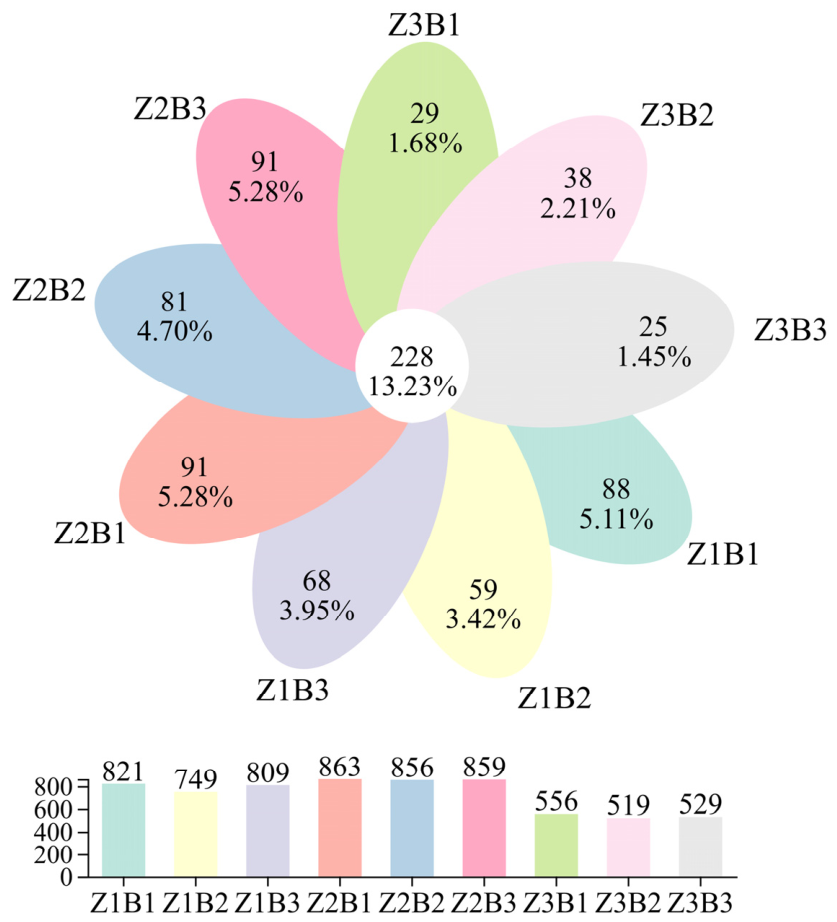
3.3.1. OTU Richness and Distribution
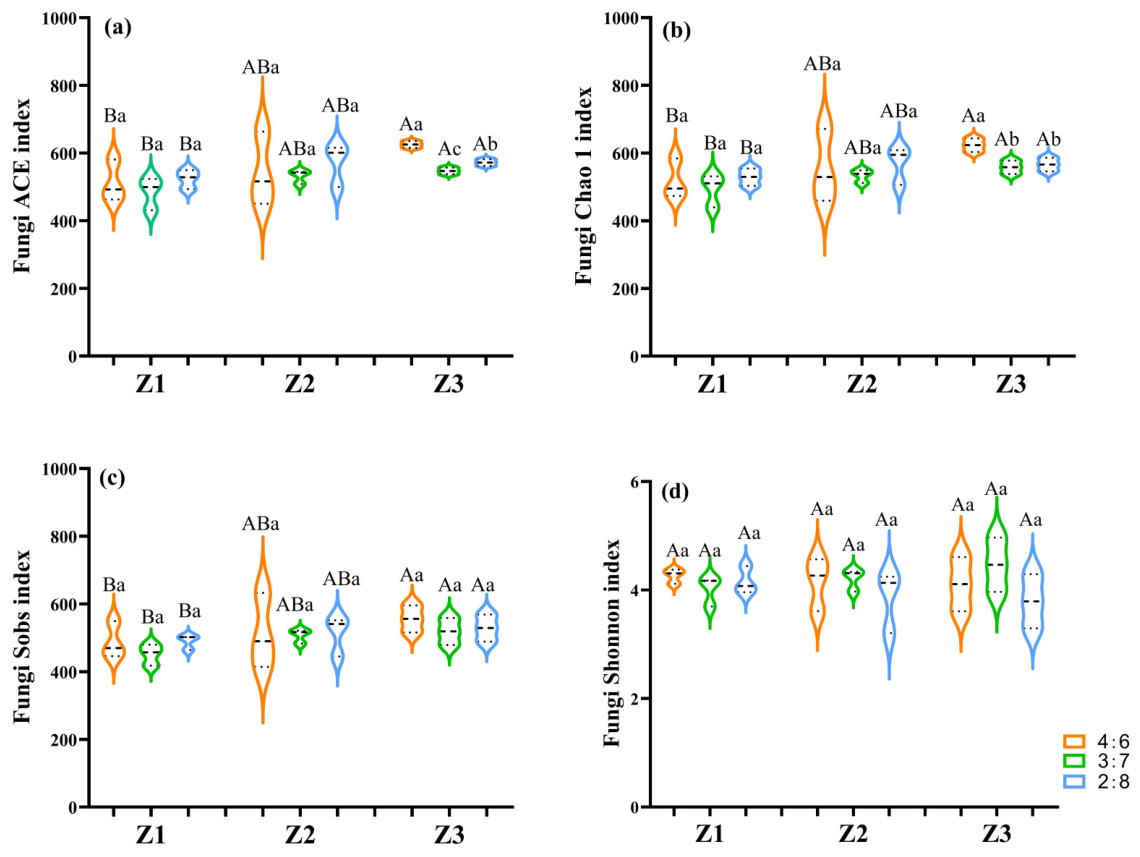
3.3.2. Changes in Soil Fungal Alpha Diversity
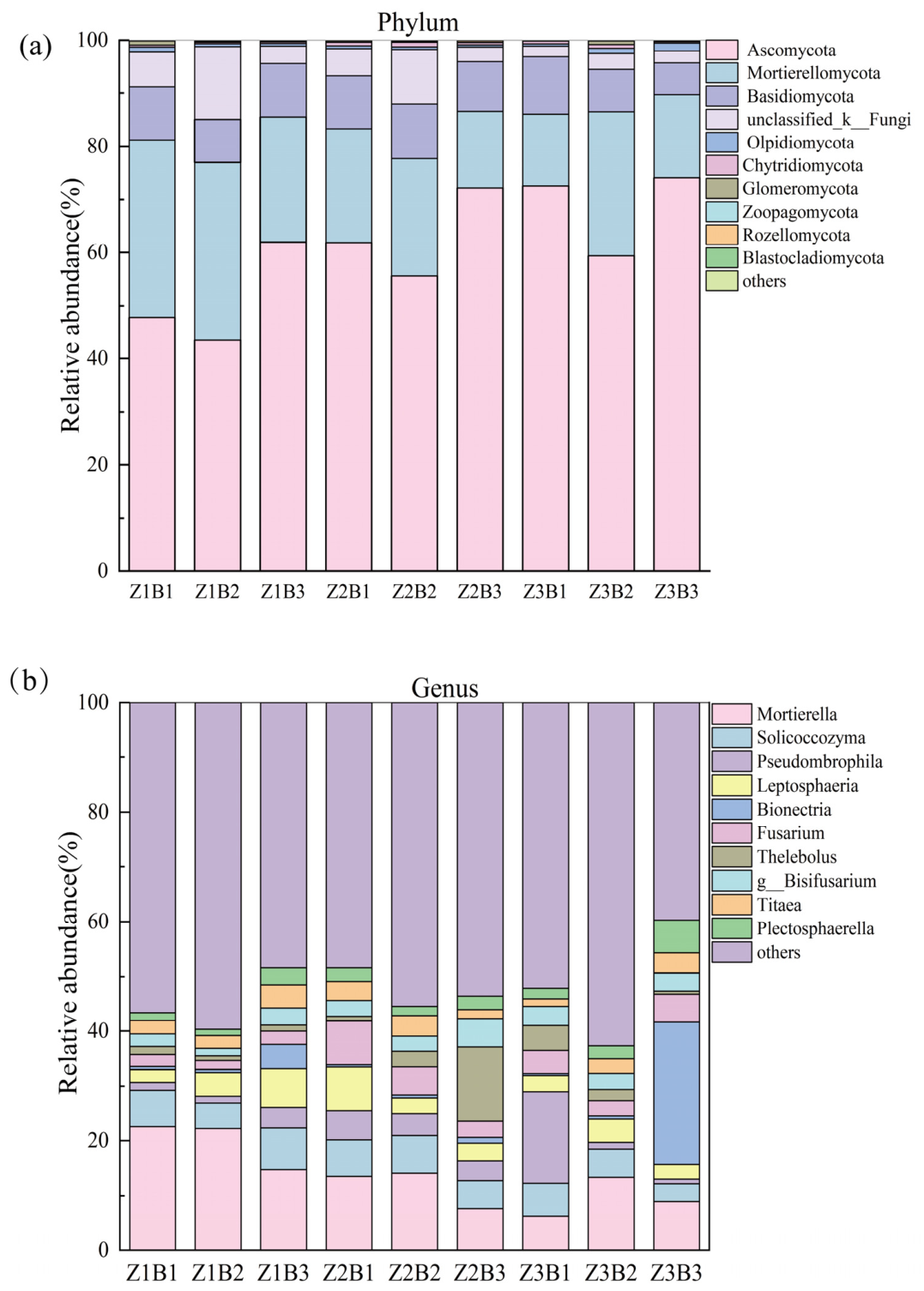
3.3.3. Changes in Soil Fungal Community Composition and Relative Abundance
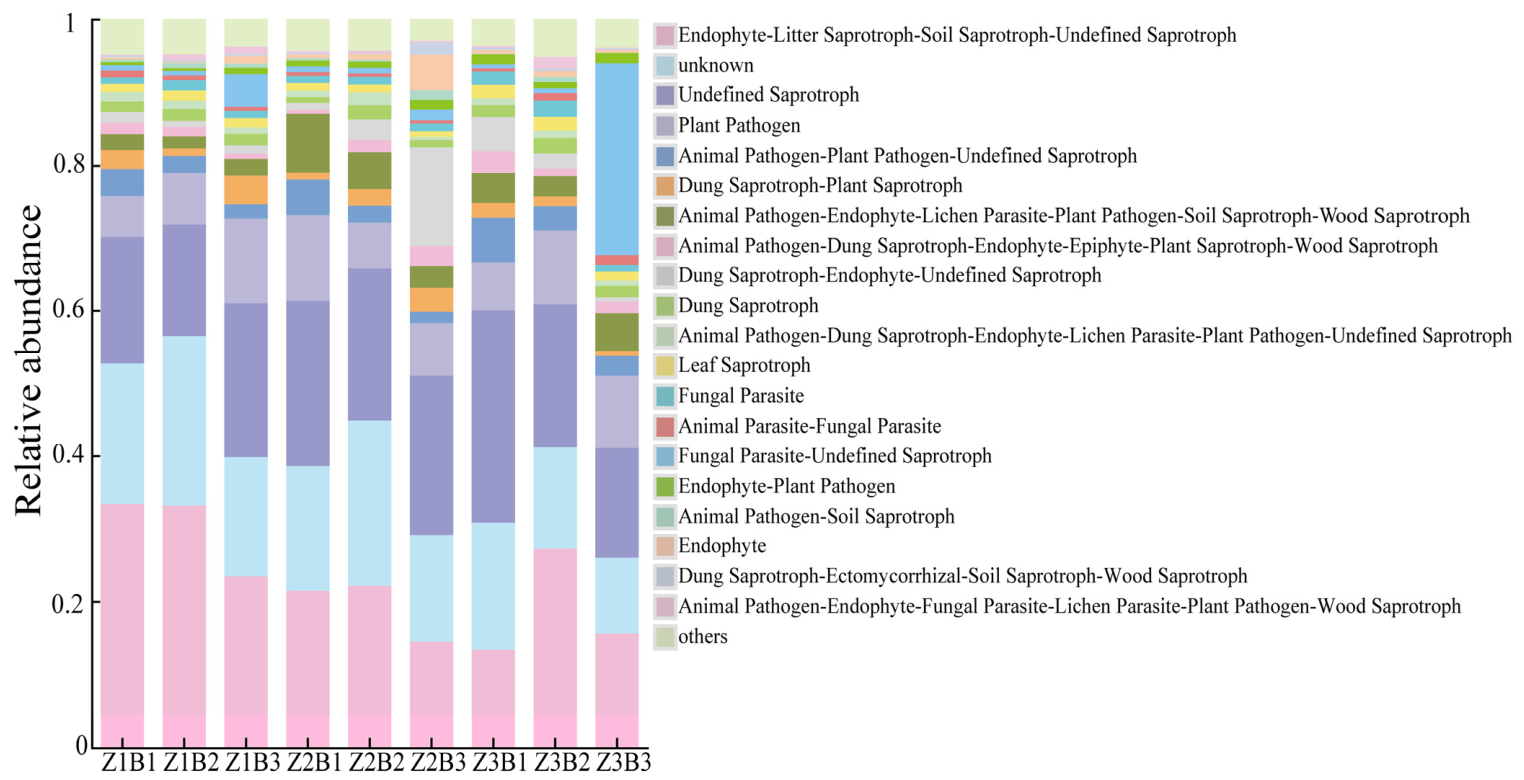
3.3.4. Effects of Different Legume–Grass Mixture Combinations and Ratios on Soil Fungal Functional Guilds
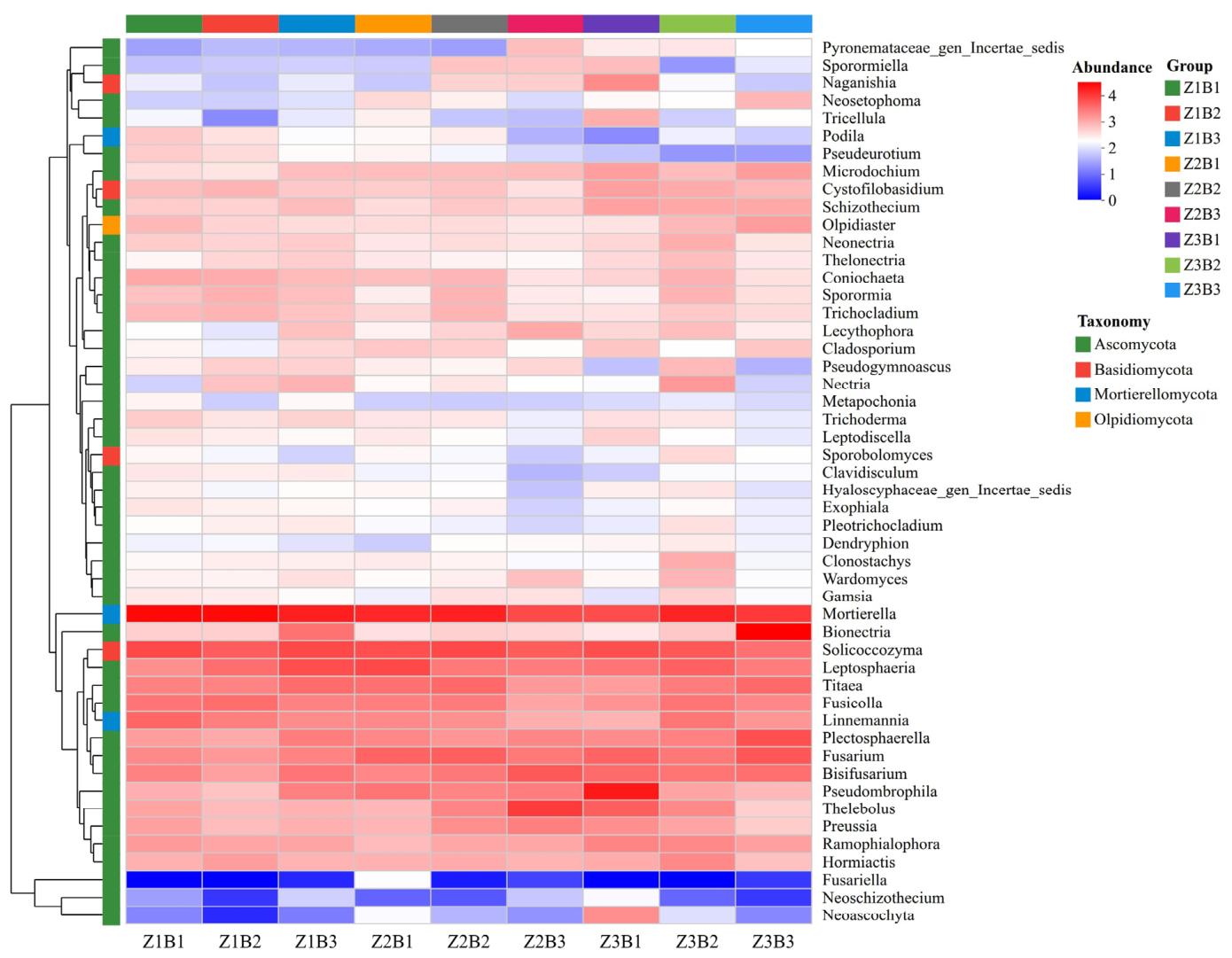
3.3.5. Clustered Heatmap Analysis of Soil Fungal Communities
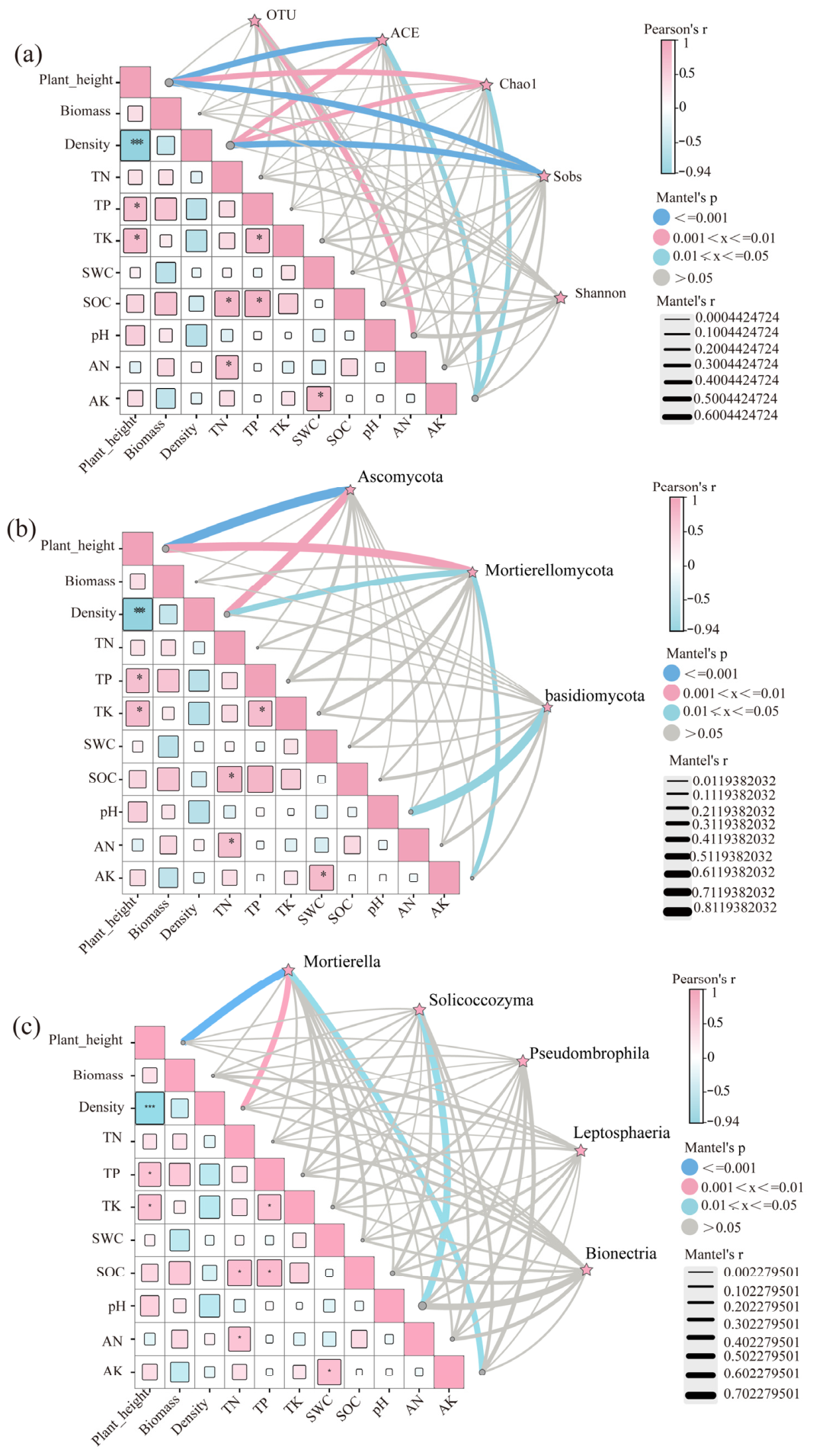
3.3.6. Coupling Relationships Among Plant Community Characteristics, Soil Physicochemical Properties, and Soil Fungal Community Structure
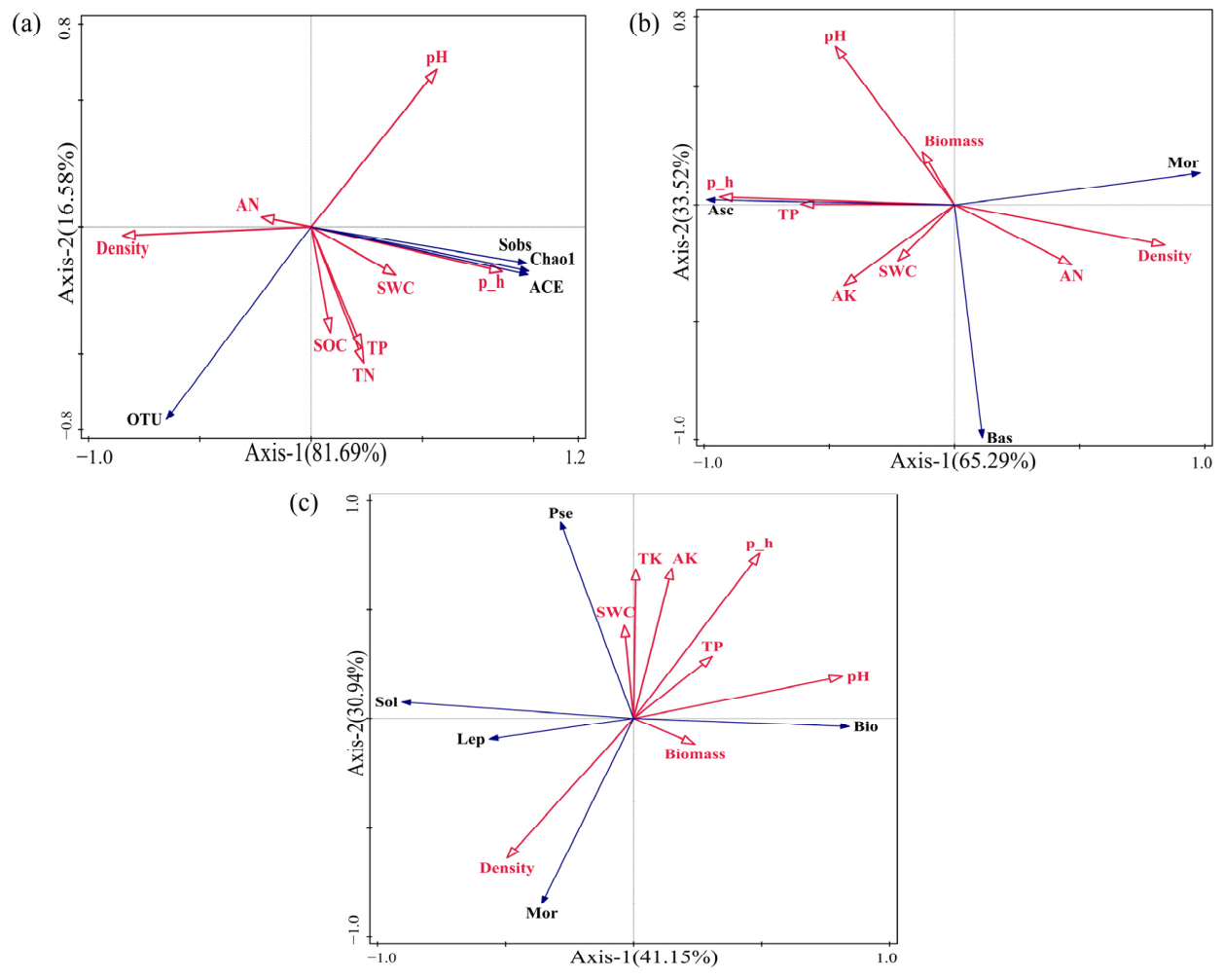
3.3.7. Potential Driving Factors of Soil Fungal Community Diversity
4. Discussion
4.1. Effects of Different Legume–Grass Mixture Combinations and Ratios on Artificial Grassland Community Characteristics
4.2. Effects of Different Legume–Grass Mixture Combinations and Ratios on Soil Physicochemical Properties
4.3. Effects of Different Legume–Grass Mixture Combinations and Ratios on Soil Fungal Community Structure and Function
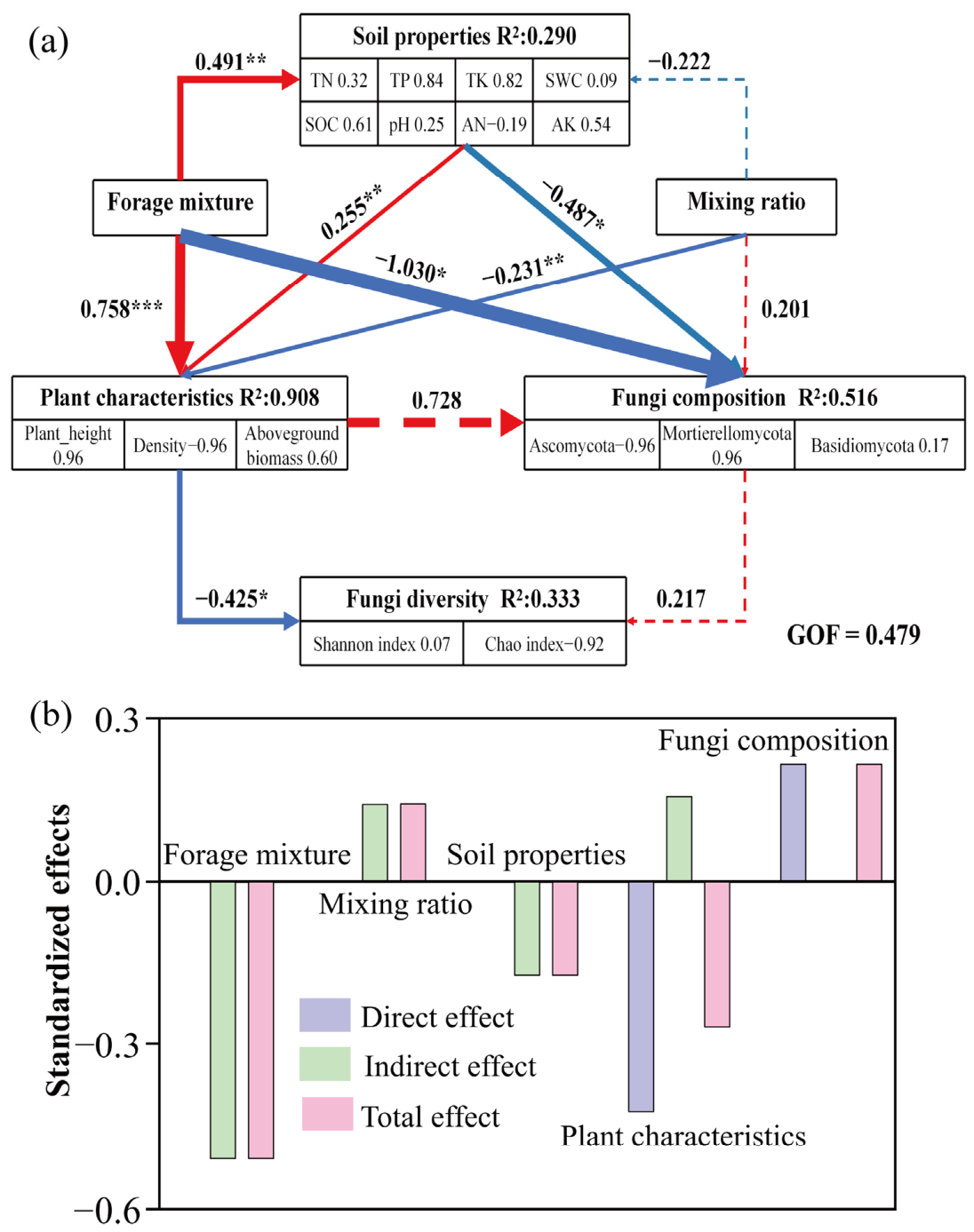
4.4. Correlations Among Plant Community Characteristics, Soil Physicochemical Properties, and Soil Fungal Diversity
5. Conclusions
Supplementary Materials
Author Contributions
Funding
Institutional Review Board Statement
Informed Consent Statement
Data Availability Statement
Conflicts of Interest
References
- Jia, T.; Guo, T.Y.; Yao, Y.S.; Wang, R.H.; Chai, B.F. Seasonal Microbial Community Characteristic and Its Driving Factors in a Copper Tailings Dam in the Chinese Loess Plateau. Front. Microbiol. 2020, 11, 1574. [Google Scholar] [CrossRef] [Scilit] [PubMed]
- Baldrian, P.; Bell-Dereske, L.; Lepinay, C.; Vëtrovsky, T.; Kohout, P. Fungal communities in soils under global change. Stud. Mycol. 2022, 103, 1–24. [Google Scholar] [CrossRef] [Scilit] [PubMed]
- van der Heijden, M.G.; Bardgett, R.D.; van Straalen, N.M. The unseen majority: Soil microbes as drivers of plant diversity and productivity in terrestrial ecosystems. Ecol. Lett. 2008, 11, 296–310. [Google Scholar] [CrossRef] [Scilit] [PubMed]
- Ren, H.Y.; Huang, X.F.; Wang, Z.S.; Abdallah, Y.; Ayoade, S.O.; Qi, X.J.; Yu, Z.P.; Wang, Q.; Mohany, M.; Al-Rejaie, S.S.; et al. The epidemic occurrence of decline disease in bayberry trees altered plant and soil related microbiome and metabolome. Environ. Microbiome 2024, 19, 79. [Google Scholar] [CrossRef] [Scilit]
- Ma, X.M.; Zhou, Z.; Chen, J.; Xu, H.; Ma, S.H.; Dippold, M.A.; Kuzyakov, Y. Long-term nitrogen and phosphorus fertilization reveals that phosphorus limitation shapes the microbial community composition and functions in tropical montane forest soil. Sci. Total Environ. 2023, 854, 158709. [Google Scholar] [CrossRef] [Scilit]
- Guo, W.Q.; Jiang, Y.B.; Yin, M.H.; Ling, Y.; Kang, Y.X.; Qi, G.P.; Duan, Y.Y.; Ma, Y.L.; Liu, Y.S.; Ling, G.; et al. Meta-Analysis of Mixed Sowing Effects on Forage Yield and Water Use Efficiency in China: Influencing Factors and Optimal Conditions. Plants 2025, 14, 1283. [Google Scholar] [CrossRef] [Scilit]
- Chen, J.R.; Chen, X.S.; Nan, L.L. Responses of soil fertility indicators and fungi community diversity to fertilization strategies in legume-grass mixtures. Front. Plant Sci. 2025, 16, 1579011. [Google Scholar] [CrossRef] [Scilit]
- Yan, H.; Jin, X.; Zhou, X.; Gu, S.; Wu, X.; Li, P.; Shi, D.; Liu, H.; Lu, G.; Deng, Y. Long-term cultivation of grass-legume mixtures changed the assembly process of the microbial community and increased microbial community stability. ISME Commun. 2025, 5, ycae157. [Google Scholar] [CrossRef] [Scilit]
- Klabi, R.; Bell, T.H.; Hamel, C.; Iwaasa, A.; Schellenberg, M.; Raies, A.; St-Arnaud, M. Plant assemblage composition and soil P concentration differentially affect communities of AM and total fungi in a semi-arid grassland. FEMS Microbiol. Ecol. 2015, 91, 1–13. [Google Scholar] [CrossRef] [Scilit]
- Wang, F.; Shi, L.; Zhang, R.; Xu, W.; Bo, Y. Effects of nitrogen addition and Bothriochloa ischaemum and Lespedeza davurica mixture on plant chlorophyll fluorescence and community production in semi-arid grassland. Front. Plant Sci. 2024, 15, 1400309. [Google Scholar] [CrossRef] [Scilit]
- Hao, F.; Yu, T.F.; Gao, K.; Xiong, M.; An, H.B. Production performance and stability of mixed forage grasslands improved by planting proportion and mode in Horqin sandy land, China. Sci. Rep. 2025, 15, 14683. [Google Scholar] [CrossRef] [Scilit] [PubMed]
- Ma, X.D.; Zou, J.L.; Wu, J.Y. Responses of soil bacterial and fungal community structure and functions to different plant species in a mixed forest plantation in a semi-arid region of China. Appl. Soil Ecol. 2024, 198, 105369. [Google Scholar] [CrossRef] [Scilit]
- Bittlingmaier, M.; Séjalon-Delmas, N.; Goldmann, K.; Johnson, D.; Huys, R.; Freschet, G.T. Plant and soil biodiversity sustain root mycorrhizal fungal richness under drought stress. ISME J. 2026, 20, wraf102. [Google Scholar] [CrossRef] [Scilit] [PubMed]
- Wang, X.; Vandenberghe, D.; Yi, S.; Vandenberghe, J.; Lu, H.; Van Balen, R.; Van den Haute, P. Late Quaternary paleoclimatic and geomorphological evolution at the interface between the Menyuan basin and the Qilian Mountains, northeastern Tibetan Plateau. Quat. Res. 2013, 80, 534–544. [Google Scholar] [CrossRef] [Scilit]
- Hu, J.; Wan, L.; Wang, Y.F.; Dai, K.; Butterbach-Bahl, K.; Lin, S. The Decrease of Soil Microbial Community Diversity and Network Complexity Results in the Increase of Soil-Borne Diseases with Monocultural Years in Greenhouse Tomato Production Systems. Environ. Microbiol. Rep. 2025, 17, e70165. [Google Scholar] [CrossRef] [Scilit]
- Xu, R.R.; Shi, W.; Kamran, M.; Chang, S.H.; Jia, Q.M.; Hou, F.J. Grass-legume mixture and nitrogen application improve yield, quality, and water and nitrogen utilization efficiency of grazed pastures in the loess plateau. Front. Plant Sci. 2023, 14, 1088849. [Google Scholar] [CrossRef] [Scilit]
- Kramberger, B.; Podvrsnik, M.; Gselman, A.; Sustar, V.; Kristl, J.; Mursec, M.; Lesnik, M.; Skorjanc, D. The effects of cutting frequencies at equal fertiliser rates on bio-diverse permanent grassland: Soil organic C and apparent N budget. Agric. Ecosyst. Environ. 2015, 212, 13–20. [Google Scholar] [CrossRef] [Scilit]
- Francioli, D.; van Rijssel, S.Q.; van Ruijven, J.; Termorshuizen, A.J.; Cotton, T.E.A.; Dumbrell, A.J.; Raaijmakers, J.M.; Weigelt, A.; Mommer, L. Plant functional group drives the community structure of saprophytic fungi in a grassland biodiversity experiment. Plant Soil 2020, 461, 91–105. [Google Scholar] [CrossRef] [Scilit]
- Cline, L.C.; Hobbie, S.E.; Madritch, M.D.; Buyarski, C.R.; Tilman, D.; Cavender-Bares, J.M. Resource availability underlies the plant-fungal diversity relationship in a grassland ecosystem. Ecology 2018, 99, 204–216. [Google Scholar] [CrossRef] [Scilit]
- Qi, W.; Kang, X.M.; Knops, J.M.H.; Jiang, J.C.; Abuman, A.; Du, G.Z. The Complex Biodiversity-Ecosystem Function Relationships for the Qinghai-Tibetan Grassland Community. Front. Plant Sci. 2022, 12, 772503. [Google Scholar] [CrossRef] [Scilit]
- Gao, P.; Lyu, L.; Xing, Y.; Ma, J.; Liu, Y.; Yang, Z.; Wang, X.; Shi, J. Characteristics of Plant Community, Soil Physicochemical Properties, and Soil Fungal Community in a 22-Year Established Poaceae Mixed-Sown Grassland. J. Fungi 2025, 11, 756. [Google Scholar] [CrossRef] [Scilit]
- Bao, S.D. Soil Agrochemical Analysis, 3rd ed.; China Agriculture Press: Beijing, China, 2000. [Google Scholar]
- Foster, A.; Vera, C.L.; Malhi, S.S.; Clarke, F.R. Forage yield of simple and complex grass-legume mixtures under two management strategies. Can. J. Plant Sci. 2014, 94, 41–50. [Google Scholar] [CrossRef] [Scilit]
- Guimaraes-Steinicke, C.; Weigelt, A.; Ebeling, A.; Eisenhauer, N.; Wirth, C. Diversity Effects on Canopy Structure Change throughout a Growing Season in Experimental Grassland Communities. Remote Sens. 2022, 14, 1557. [Google Scholar] [CrossRef] [Scilit]
- Weiner, J. Asymmetric competition in plant populations. Trends Ecol. Evol. 1990, 5, 360–364. [Google Scholar] [CrossRef] [Scilit]
- Deng, J.M.; Ran, J.Z.; Wang, Z.Q.; Fan, Z.X.; Wang, G.X.; Ji, M.F.; Liu, J.; Wang, Y.; Liu, J.Q.; Brown, J.H. Models and tests of optimal density and maximal yield for crop plants. Proc. Natl. Acad. Sci. USA 2012, 109, 15823–15828. [Google Scholar] [CrossRef] [Scilit] [PubMed]
- Bi, Y.X.; Yang, G.W.; Wei, Y.Q.; Wilson, G.W.T.; Wei, B.; He, Y.J.; Yu, H.Q.; Liu, N.; Zhang, Y.J. Low legume-grass seeding ratio combined with phosphorus fertilization promotes forage yield and soil quality in managed grasslands. Agron. Sustain. Dev. 2024, 44, 36. [Google Scholar] [CrossRef] [Scilit]
- Nyfeler, D.; Huguenin-Elie, O.; Matthias, S.; Frossard, E.; Lüscher, A. Grass-legume mixtures can yield more nitrogen than legume pure stands due to mutual stimulation of nitrogen uptake from symbiotic and non-symbiotic sources. Agric. Ecosyst. Environ. 2011, 140, 155–163. [Google Scholar] [CrossRef] [Scilit]
- Xie, K.Y.; He, F.; Meng, X.; Yan, A.; Wan, J.C. Dynamics of Productivity and Nitrogen Contribution in Mixed Legume/Grass Grasslands in Rain-fed Semi-arid Areas in Northwest China. Agronomy 2025, 15, 632. [Google Scholar] [CrossRef] [Scilit]
- Bai, Y.F.; Ma, L.N.; Degen, A.A.; Rafiq, M.K.; Kuzyakov, Y.; Zhao, J.X.; Zhang, R.; Zhang, T.; Wang, W.Y.; Li, X.G.; et al. Long-term active restoration of extremely degraded alpine grassland accelerated turnover and increased stability of soil carbon. Glob. Change Biol. 2020, 26, 7217–7228. [Google Scholar] [CrossRef] [Scilit]
- Liu, S.Q.; Yang, R.; Peng, X.D.; Hou, C.L.; Ma, J.B.; Guo, J.R. Contributions of Plant Litter Decomposition to Soil Nutrients in Ecological Tea Gardens. Agriculture 2022, 12, 957. [Google Scholar] [CrossRef] [Scilit]
- Zhao, M.L.; Zhao, J.; Yuan, J.; Hale, L.; Wen, T.; Huang, Q.W.; Vivanco, J.M.; Zhou, J.Z.; Kowalchuk, G.A.; Shen, Q.R. Root exudates drive soil-microbe-nutrient feedbacks in response to plant growth. Plant Cell Environ. 2021, 44, 613–628. [Google Scholar] [CrossRef] [Scilit]
- Brink, G.E.; Sanderson, M.A.; Casler, M.D. Grass and Legume Effects on Nutritive Value of Complex Forage Mixtures. Crop Sci. 2015, 55, 1329–1337. [Google Scholar] [CrossRef] [Scilit]
- Wu, X.; Wu, W.; Yang, H. Effects of Legume–Grass Ratio on C and Nutrients of Root and Soil in Common Vetch–Oat Mixture under Fertilization. Agronomy 2022, 12, 1936. [Google Scholar] [CrossRef] [Scilit]
- Mackie, D.S.; Boyd, P.W.; McTainsh, G.H.; Tindale, N.W.; Westberry, T.K.; Hunter, K.A. Biogeochemistry of iron in Australian dust: From eolian uplift to marine uptake. Geochem. Geophys. Geosyst. 2008, 9, Q03Q08. [Google Scholar] [CrossRef] [Scilit]
- Torn, M.S.; Vitousek, P.M.; Trumbore, S.E. The Influence of Nutrient Availability on Soil Organic Matter Turnover Estimated by Incubations and Radiocarbon Modeling. Ecosystems 2005, 8, 352–372. [Google Scholar] [CrossRef] [Scilit]
- Rojas-Botero, S.; Teixeira, L.H.; Kollmann, J. Low precipitation due to climate change consistently reduces multifunctionality of urban grasslands in mesocosms. PLoS ONE 2023, 18, e0275044. [Google Scholar] [CrossRef] [Scilit] [PubMed]
- Hubbell, S.P. Neutral theory in community ecology and the hypothesis of functional equivalence. Funct. Ecol. 2005, 19, 166–172. [Google Scholar] [CrossRef] [Scilit]
- Mortensen, E.Ø.; Abalos, D.; Rasmussen, J. Well-designed multi-species grassland mixtures enhance both soil carbon inputs and aboveground productivity. Agric. Ecosyst. Environ. 2025, 385, 109578, Corrigendum in Agric. Ecosyst. Environ. 2025, 386, 109619. https://doi.org/10.1016/j.agee.2025.109619. [Google Scholar] [CrossRef] [Scilit]
- Wang, T.; Cao, X.; Chen, M.; Lou, Y.; Wang, H.; Yang, Q.; Pan, H.; Zhuge, Y. Effects of Soil Acidification on Bacterial and Fungal Communities in the Jiaodong Peninsula, Northern China. Agronomy 2022, 12, 927. [Google Scholar] [CrossRef] [Scilit]
- Xia, Y.; Feng, J.; Zhang, H.; Xiong, D.; Kong, L.; Seviour, R.; Kong, Y. Effects of soil pH on the growth, soil nutrient composition, and rhizosphere microbiome of Ageratina adenophora. PeerJ 2024, 12, e17231. [Google Scholar] [CrossRef] [Scilit]
- Veen, G.F.; Fry, E.L.; ten Hooven, F.C.; Kardol, P.; Morriën, E.; De Long, J.R. The Role of Plant Litter in Driving Plant-Soil Feedbacks. Front. Environ. Sci. 2019, 7, 168. [Google Scholar] [CrossRef] [Scilit]
- Ferlian, O.; Goldmann, K.; Eisenhauer, N.; Tarkka, M.T.; Buscot, F.; Heintz-Buschart, A. Distinct effects of host and neighbour tree identity on arbuscular and ectomycorrhizal fungi along a tree diversity gradient. ISME Commun. 2021, 1, 40. [Google Scholar] [CrossRef] [Scilit]
- Guo, J.; Chu, L.; Ye, X.; King, W.L.; Shao, J.; Wang, Z.; Liu, J.; Chen, C.; Yu, M. Low soil phosphorus and high symbiotic fungal richness inhibits plant aboveground biomass in fragmented forests in China. Commun. Biol. 2025, 8, 1598. [Google Scholar] [CrossRef] [Scilit] [PubMed]
- Yu, H.; Liu, Y.; Deng, Y.; Lu, G.X.; Yan, H.L.; Wang, Y.C. Effects of the Transformation from Natural Alpine Grassland to Mixed Artificial Grassland on the Characteristics of Soil Microbial Community. Huan Jing Ke Xue 2023, 44, 2928–2935. [Google Scholar] [CrossRef] [Scilit]
- Yang, H.; Wang, Q.C.; Jin, S.S.; Lin, Y.; He, J.Z.; Zheng, Y. Phosphorus addition predominantly influences the soil fungal community and functional guilds in a subtropical mountain forest. J. Sustain. Agric. Environ. 2023, 3, e12072. [Google Scholar] [CrossRef] [Scilit]
- Zhang, T.; Wang, N.F.; Liu, H.Y.; Zhang, Y.Q.; Yu, L.Y. Soil pH is a Key Determinant of Soil Fungal Community Composition in the Ny-Alesund Region, Svalbard (High Arctic). Front. Microbiol. 2016, 7, 227. [Google Scholar] [CrossRef] [Scilit]
- Li, Z.X.; Gao, X.Y.; Li, D.D.; Gao, J.; Li, J.H.; Cai, Z.J.; Sun, N.; Wu, L.H.; Xu, M.G. Differential responses of bacteria, fungi, and C, N, P functions to soil acidification in farmland: A meta-analysis. Environ. Technol. Innov. 2025, 40, 104499. [Google Scholar] [CrossRef] [Scilit]
- Bai, X.; Zhang, E.; Wu, J.; Ma, D.; Zhang, C.; Zhang, B.; Liu, Y.; Zhang, Z.; Tian, F.; Zhao, H.; et al. Soil fungal community is more sensitive than bacterial community to modified materials application in saline-alkali land of Hetao Plain. Front. Microbiol. 2024, 15, 1255536. [Google Scholar] [CrossRef] [Scilit]
- Ozimek, E.; Hanaka, A. Mortierella Species as the Plant Growth-Promoting Fungi Present in the Agricultural Soils. Agriculture 2020, 11, 7. [Google Scholar] [CrossRef] [Scilit]
- Leifheit, E.F.; Camenzind, T.; Lehmann, A.; Andrade-Linares, D.R.; Fussan, M.; Westhusen, S.; Wineberger, T.M.; Rillig, M.C. Fungal traits help to understand the decomposition of simple and complex plant litter. FEMS Microbiol. Ecol. 2024, 100, fiae033. [Google Scholar] [CrossRef] [Scilit]
- LeBlanc, N.; Kinkel, L.L.; Kistler, H.C. Soil Fungal Communities Respond to Grassland Plant Community Richness and Soil Edaphics. Microb. Ecol. 2015, 70, 188–195. [Google Scholar] [CrossRef] [Scilit]
- Nguyen, N.H.; Song, Z.W.; Bates, S.T.; Branco, S.; Tedersoo, L.; Menke, J.; Schilling, J.S.; Kennedy, P.G. FUNGuild: An open annotation tool for parsing fungal community datasets by ecological guild. Fungal Ecol. 2016, 20, 241–248. [Google Scholar] [CrossRef] [Scilit]
- Long, S.S.; He, X.F.; Zeng, S.Q.; Xiao, H.S. Investigating the Self-Thinning Rule in Plantation Forests: Analyzing the Relationship Between the Basal Area and Height Growth in Southern China. Ecol. Evol. 2025, 15, e71034. [Google Scholar] [CrossRef] [Scilit] [PubMed]
- Fang, X.Y.; Yang, Y.R.; Zhao, Z.G.; Zhou, Y.; Liao, Y.; Guan, Z.Y.; Chen, S.M.; Fang, W.M.; Chen, F.D.; Zhao, S. Optimum Nitrogen, Phosphorous, and Potassium Fertilizer Application Increased Chrysanthemum Growth and Quality by Reinforcing the Soil Microbial Community and Nutrient Cycling Function. Plants 2023, 12, 4062. [Google Scholar] [CrossRef] [Scilit]
- Bi, X.Q.; Chu, H.; Fu, M.M.; Xu, D.D.; Zhao, W.Y.; Zhong, Y.J.; Wang, M.; Li, K.; Zhang, Y.N. Distribution characteristics of organic carbon (nitrogen) content, cation exchange capacity, and specific surface area in different soil particle sizes. Sci. Rep. 2023, 13, 12242. [Google Scholar] [CrossRef] [Scilit] [PubMed]
- Tomazelli, D.; Peron, R.A.D.; Mendes, S.D.C.; Pinto, C.E.; Baldissera, T.C.; Baretta, D.; Mendes, L.W.; Goss-Souza, D.; Klauberg, O. Plant diversity and root traits shape rhizosphere microbial communities in natural grasslands and cultivated pastures. Rhizosphere 2024, 29, 100864. [Google Scholar] [CrossRef] [Scilit]
- Graça, J.; Daly, K.; Bondi, G.; Ikoyi, I.; Crispie, F.; Cabrera-Rubio, R.; Cotter, P.D.; Schmalenberger, A. Drainage class and soil phosphorus availability shape microbial communities in Irish grasslands. Eur. J. Soil Biol. 2021, 104, 103297. [Google Scholar] [CrossRef] [Scilit]
- Xu, Y.X.; Wang, Z.C.; Huang, R.X.; Zhu, W.K.; Du, A.P.; Li, C. Soil Nutrient Availability Drives Fungal Community Structure and Function During the Transformation of Eucalypt Plantations Logging Sites in Southern China. Ecol. Evol. 2025, 15, e72263. [Google Scholar] [CrossRef] [Scilit]
- Vylkova, S. Environmental pH modulation by pathogenic fungi as a strategy to conquer the host. PLoS Pathog. 2017, 13, e1006149. [Google Scholar] [CrossRef] [Scilit]
- Teng, J.; Tian, J.; Barnard, R.; Yu, G.; Kuzyakov, Y.; Zhou, J. Aboveground and Belowground Plant Traits Explain Latitudinal Patterns in Topsoil Fungal Communities from Tropical to Cold Temperate Forests. Front. Microbiol. 2021, 12, 633751. [Google Scholar] [CrossRef] [Scilit]
- Loranger-Merciris, G.; Barthes, L.; Gastine, A.; Leadley, P. Rapid effects of plant species diversity and identity on soil microbial communities in experimental grassland ecosystems. Soil Biol. Biochem. 2006, 38, 2336–2343. [Google Scholar] [CrossRef] [Scilit]
- Fahey, C.; Koyama, A.; Antunes, P.M.; Dunfield, K.; Flory, S.L. Plant communities mediate the interactive effects of invasion and drought on soil microbial communities. ISME J. 2020, 14, 1396–1409. [Google Scholar] [CrossRef] [Scilit]
- Lindahl, B.D.; Tunlid, A. Ectomycorrhizal fungi–potential organic matter decomposers, yet not saprotrophs. New Phytol. 2015, 205, 1443–1447. [Google Scholar] [CrossRef] [Scilit]
- Eisenhauer, N.; Hines, J.; Maestre, F.T.; Rillig, M.C. Reconsidering functional redundancy in biodiversity research. npj Biodiversity 2023, 2, 9. [Google Scholar] [CrossRef] [Scilit]



| Group | Mixture | Species Composition (% of Total Seed Weight) |
|---|---|---|
| Z1 | 3-species mixture-1 | Forage pea (40%), Oat (40%), Triticale (20%) |
| Forage pea (30%), Oat (50%), Triticale (20%) | ||
| Forage pea (20%), Oat (60%), Triticale (20%) | ||
| 3-species mixture-2 | Common vetch (40%), Oat (40%), Triticale (20%) | |
| Common vetch (30%), Oat (50%), Triticale (20%) | ||
| Common vetch (20%), Oat (60%), Triticale (20%) | ||
| 3-species mixture-3 | Milk vetch (40%), Oat (40%), Triticale (20%) | |
| Milk vetch (30%), Oat (50%), Triticale (20%) | ||
| Milk vetch (20%), Oat (60%), Triticale (20%) | ||
| Z2 | 4-species mixture-1 | Forage pea (20%), Common vetch (20%), Oat (40%), Triticale (20%) |
| Forage pea (15%), Common vetch (15%), Oat (50%), Triticale (20%) | ||
| Forage pea (10%), Common vetch (10%), Oat (60%), Triticale (20%) | ||
| 4-species mixture-2 | Common vetch (20%), Milk vetch (20%), Oat (40%), Triticale (20%) | |
| Common vetch (15%), Milk vetch (15%), Oat (50%), Triticale (20%) | ||
| Common vetch (10%), Milk vetch (10%), Oat (60%), Triticale (20%) | ||
| 4-species mixture-3 | Forage pea (20%), Milk vetch (20%), Oat (40%), Triticale (20%) | |
| Forage pea (15%), Milk vetch (15%), Oat (50%), Triticale (20%) | ||
| Forage pea (10%), Milk vetch (10%), Oat (60%), Triticale (20%) | ||
| Z3 | 5-species mixture-1 | Forage pea (10%), Common vetch (25%), Milk vetch (5%), oat (40%), Triticale (20%) |
| 5-species mixture-2 | Forage pea (10%), Common vetch (15%), Milk vetch (5%), oat (50%), Triticale (20%) | |
| 5-species mixture-3 | Forage pea (10%), Common vetch (5%), Milk vetch (5%), oat (60%), Triticale (20%) |
Disclaimer/Publisher’s Note: The statements, opinions and data contained in all publications are solely those of the individual author(s) and contributor(s) and not of MDPI and/or the editor(s). MDPI and/or the editor(s) disclaim responsibility for any injury to people or property resulting from any ideas, methods, instructions or products referred to in the content. |
© 2026 by the authors. Licensee MDPI, Basel, Switzerland. This article is an open access article distributed under the terms and conditions of the Creative Commons Attribution (CC BY) license.
Share and Cite
Li, J.; Xi, J.; Yang, Y.; Wang, W.; Xu, C.; Ma, J.; Yao, X.; Liu, H. Effects of Legume–Grass Mixture Composition and Seeding Ratio on Plant Community Traits, Soil Physicochemical Properties, and Soil Fungal Diversity. J. Fungi 2026, 12, 353. https://doi.org/10.3390/jof12050353
Li J, Xi J, Yang Y, Wang W, Xu C, Ma J, Yao X, Liu H. Effects of Legume–Grass Mixture Composition and Seeding Ratio on Plant Community Traits, Soil Physicochemical Properties, and Soil Fungal Diversity. Journal of Fungi. 2026; 12(5):353. https://doi.org/10.3390/jof12050353
Chicago/Turabian StyleLi, Jianyue, Jien Xi, Yuanwu Yang, Wei Wang, Chengti Xu, Jinling Ma, Xixi Yao, and Haodong Liu. 2026. "Effects of Legume–Grass Mixture Composition and Seeding Ratio on Plant Community Traits, Soil Physicochemical Properties, and Soil Fungal Diversity" Journal of Fungi 12, no. 5: 353. https://doi.org/10.3390/jof12050353
APA StyleLi, J., Xi, J., Yang, Y., Wang, W., Xu, C., Ma, J., Yao, X., & Liu, H. (2026). Effects of Legume–Grass Mixture Composition and Seeding Ratio on Plant Community Traits, Soil Physicochemical Properties, and Soil Fungal Diversity. Journal of Fungi, 12(5), 353. https://doi.org/10.3390/jof12050353