
Chromosome-Level Genome Assembly of Morchella sextelata Reveals Its Early Divergence and Adaptive Evolution

 and
and
Abstract
1. Introduction
2. Materials and Methods
2.1. Preparation of Sample
2.2. Genome Sequencing and Assembly
2.3. Genome Annotation
2.4. Comparative Genomic Analysis
3. Results
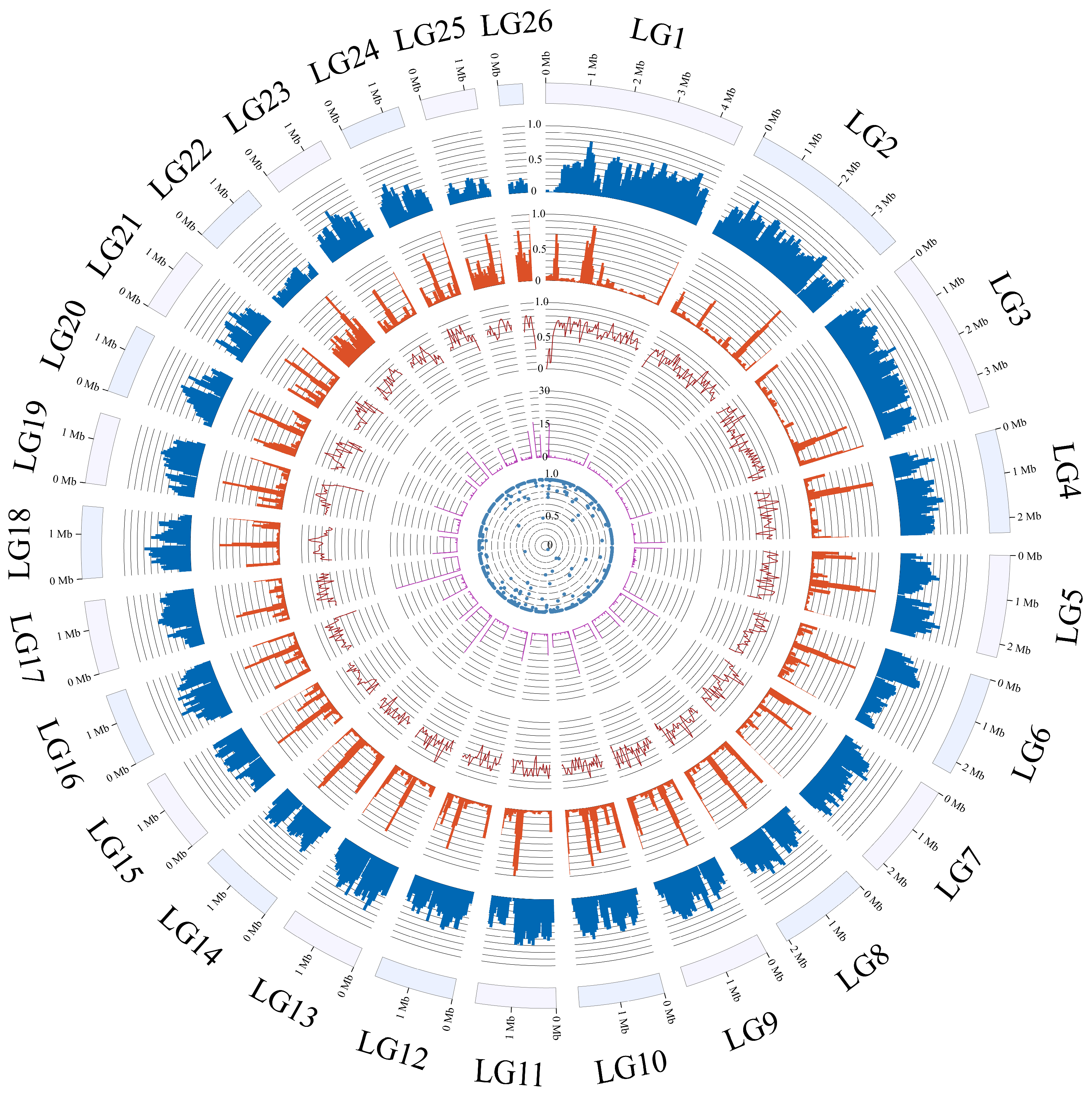
3.1. Genome Assembly and Structural Annotation
3.2. Genome Comparison with Previously Published M. sextelata Assemblies
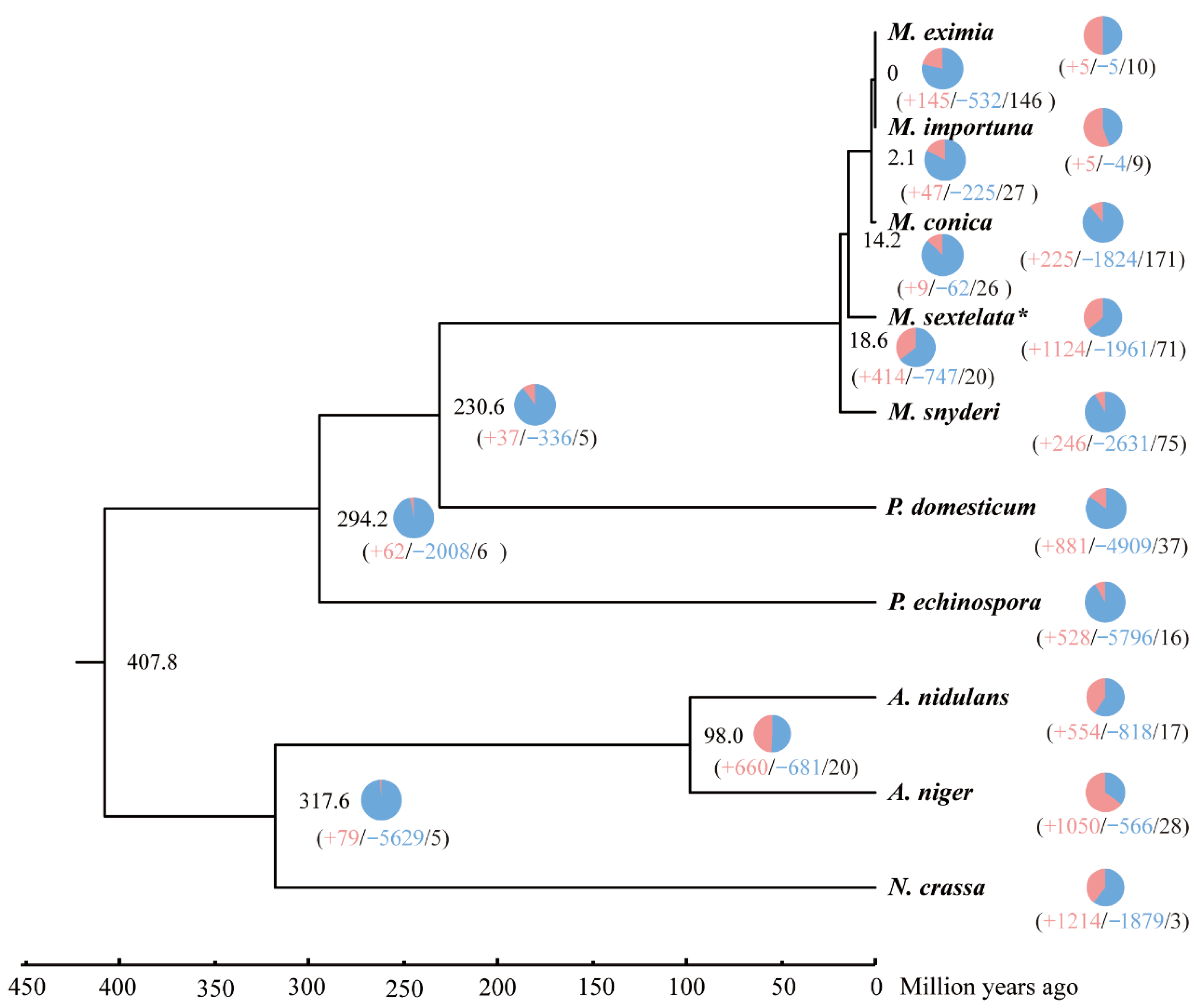
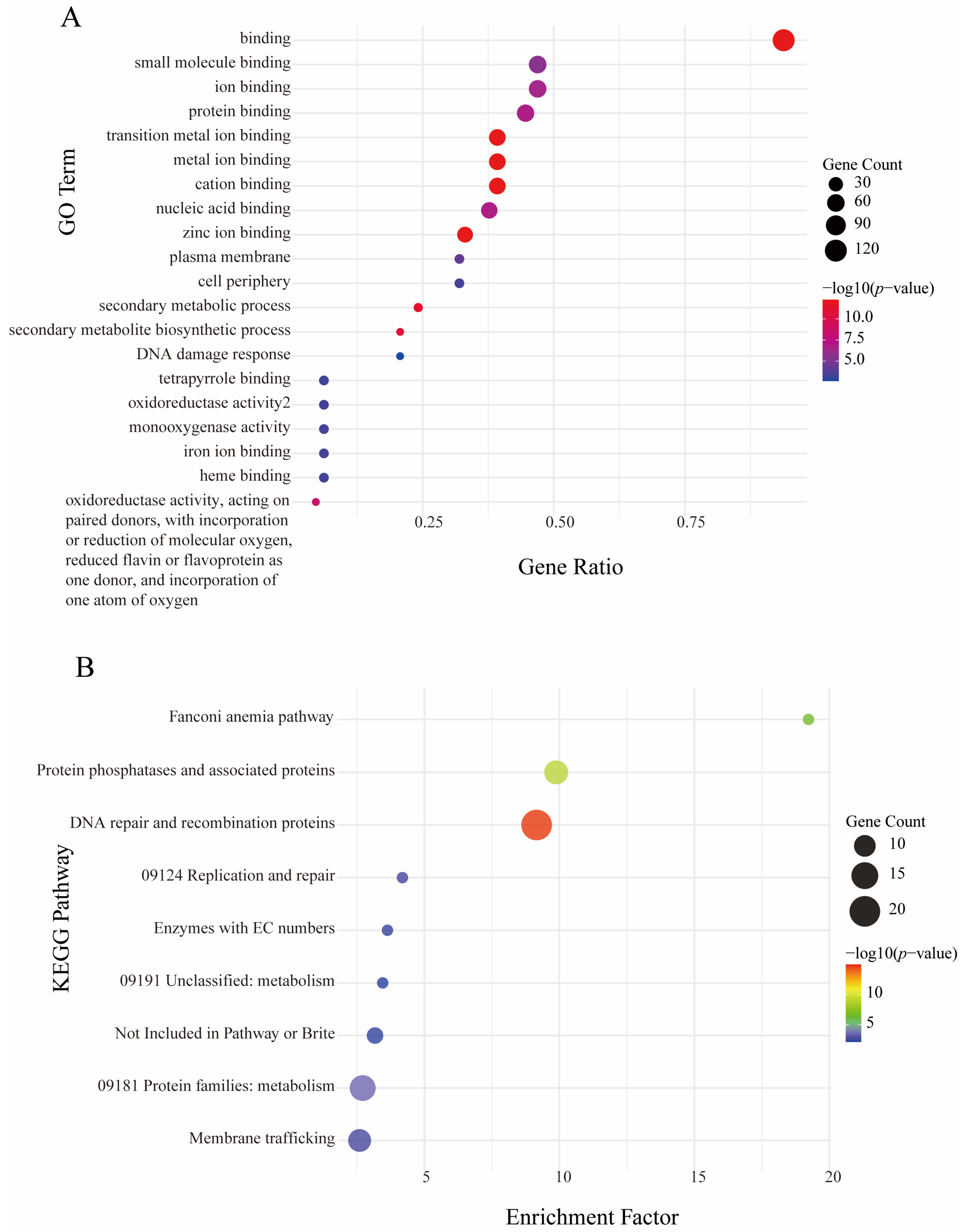
3.3. Phylogenetic and Gene Family Evolution Analysis
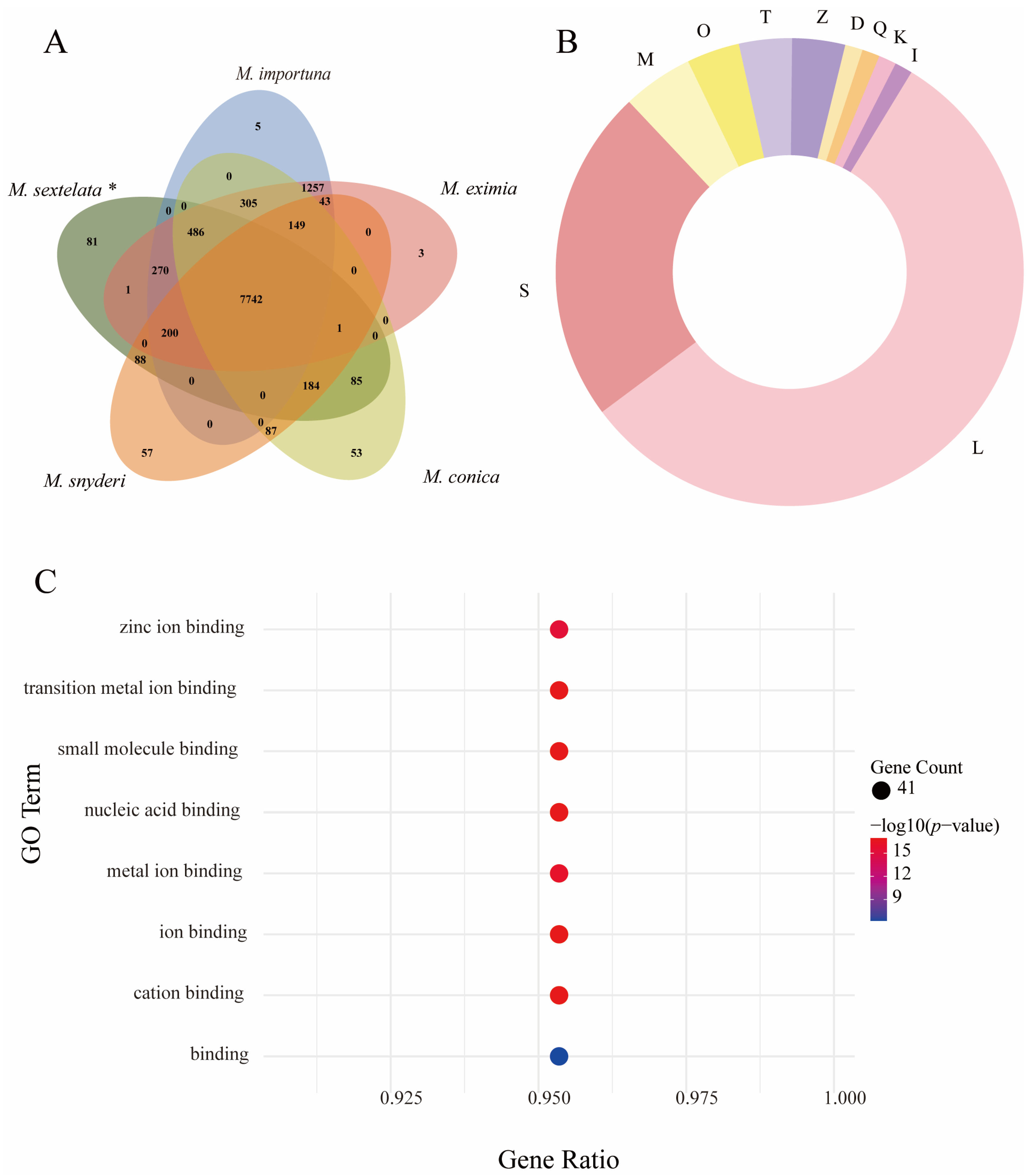
3.4. Unique Gene Families in M. sextelata
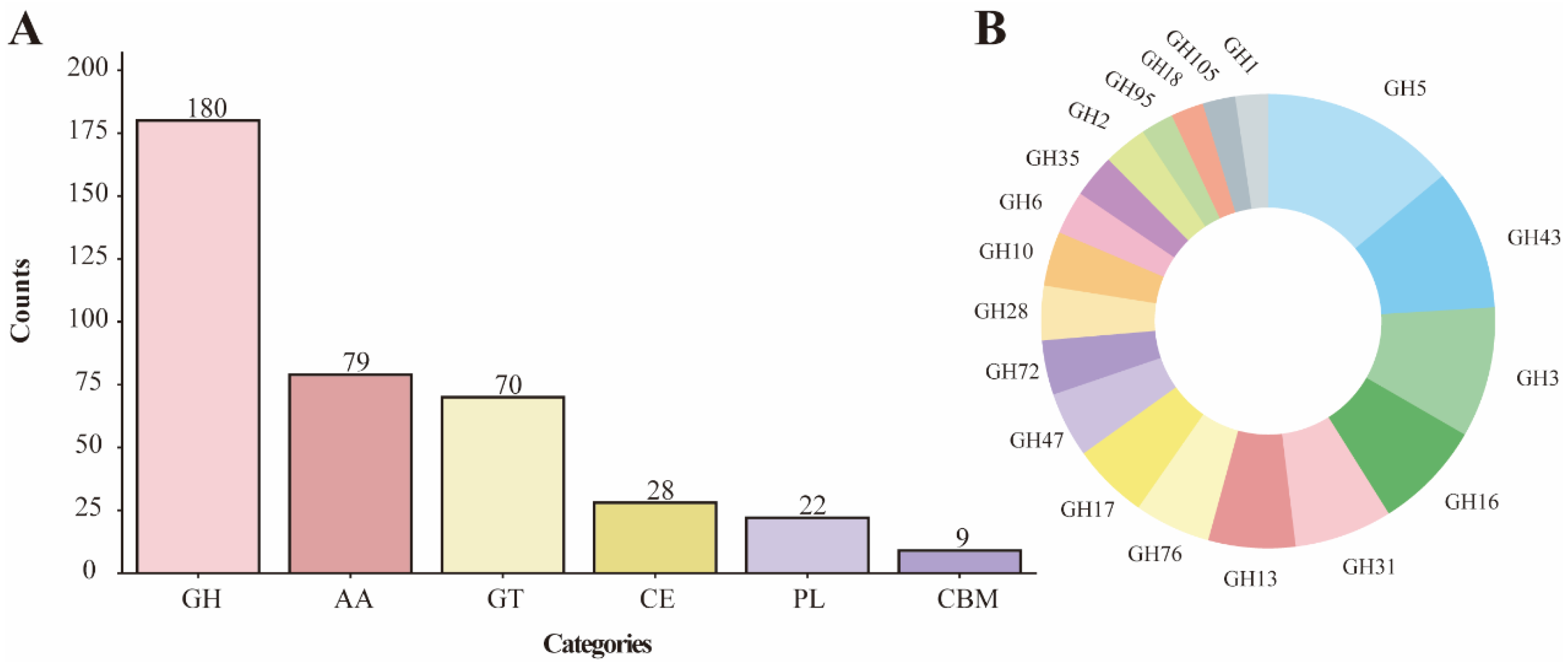
3.5. Functional Annotation of Genes and Compositional Features of CAZymes
3.6. Analysis of Secondary Metabolite Gene Clusters
4. Discussion
4.1. Obtaining a Chromosome-Level Genome of M. sextelata and Comparison with Previous Assemblies
4.2. Rapid Genome Remodeling During the Evolution of M. sextelata
4.3. Retrotransposons Encoded by Unique Gene Families May Drive Genome Remodeling
4.4. The Composition Characteristics of CAZymes Provide Insights into the Predicted Carbohydrate-Degrading Capabilities of M. sextelata
4.5. M. sextelata May Possess a Large Number of Novel or Highly Differentiated Secondary Metabolic Pathways
5. Conclusions
Supplementary Materials
Author Contributions
Funding
Institutional Review Board Statement
Informed Consent Statement
Data Availability Statement
Conflicts of Interest
References
- Xu, C.X.; Qian, L.J.; Meng, Q.; Sun, Y.J. State-of-the-art review of morel: From chemistry to nutrition and health benefits. J. Food Compos. Anal. 2025, 141, 107351. [Google Scholar] [CrossRef] [Scilit]
- Dong, H.; Zhao, X.; Cai, M.; Gu, H.; E, H.; Li, X.; Zhang, Y.; Lu, H.; Zhou, C. Metabolomics Analysis of Morchella sp. From Different Geographical Origins of China Using UPLC-Q-TOF-MS. Front. Nutr. 2022, 9, 865531. [Google Scholar] [CrossRef] [Scilit]
- Wu, H.; Chen, J.; Li, J.; Liu, Y.; Park, H.J.; Yang, L. Recent Advances on Bioactive Ingredients of Morchella esculenta. Appl. Biochem. Biotechnol. 2021, 193, 4197–4213. [Google Scholar] [CrossRef] [Scilit] [PubMed]
- Hu, M.; Chen, Y.; Wang, C.; Cui, H.; Duan, P.; Zhai, T.; Yang, Y.; Li, S. Induction of apoptosis in HepG2 cells by polysaccharide MEP-II from the fermentation broth of Morchella esculenta. Biotechnol. Lett. 2013, 35, 1–10. [Google Scholar] [CrossRef] [Scilit]
- Cai, Z.N.; Li, W.; Mehmood, S.; Pan, W.J.; Wang, Y.; Meng, F.J.; Wang, X.F.; Lu, Y.M.; Chen, Y. Structural characterization, in vitro and in vivo antioxidant activities of a heteropolysaccharide from the fruiting bodies of Morchella esculenta. Carbohydr. Polym. 2018, 195, 29–38. [Google Scholar] [CrossRef] [Scilit]
- Yang, Y.; Chen, J.; Lei, L.; Li, F.; Tang, Y.; Yuan, Y.; Zhang, Y.; Wu, S.; Yin, R.; Ming, J. Acetylation of polysaccharide from Morchella angusticeps peck enhances its immune activation and anti-inflammatory activities in macrophage RAW264.7 cells. Food Chem. Toxicol. 2019, 125, 38–45. [Google Scholar] [CrossRef] [Scilit] [PubMed]
- Ul Haq, F.; Imran, M.; Ullah, S.; Aftab, U.; Akhtar, T.; Khan, A.H.; Ullah, R.; Ejaz, H.; Gaffar, F.; Khan, I. Morchella conica, Morchella esculenta and Morchella delicosa Induce Apoptosis in Breast and Colon Cancer Cell Lines via Pro-apoptotic and Anti-apoptotic Regulation. Chin. J. Integr. Med. 2025, 31, 918–927. [Google Scholar] [CrossRef] [Scilit] [PubMed]
- Ul Haq, F.; Imran, M.; Saleem, S.; Aftab, U.; Muazzam, A.; Rafi, A.; Jamal, M.; Safi, S.Z. Chemical characterization and cytotoxic effect of three edible fungi (Morchella) against breast cancer cells: A therapeutic approach. Kuwait J. Sci. 2025, 52, 100285. [Google Scholar] [CrossRef] [Scilit]
- Sunil, C.; Xu, B. Mycochemical profile and health-promoting effects of morel mushroom Morchella esculenta (L.)—A review. Food Res. Int. 2022, 159, 111571. [Google Scholar] [CrossRef] [Scilit]
- Liu, W.; He, P.; Shi, X.; Zhang, Y.; Moreno, J.P.; Yu, F. Large-Scale Field Cultivation of Morchella and Relevance of Basic Knowledge for Its Steady Production. J. Fungi 2023, 9, 855. [Google Scholar] [CrossRef] [Scilit]
- Peng, W.; Yan, S.; Zhou, J.; Luo, J.; Wang, Y. Key Issues in Morchella Research That Deserve Attention, Edible and Medicinal Mushrooms. Edible Med. Mushrooms 2025, 33, 86–92. (In Chinese) [Google Scholar]
- Liu, W.; Chen, L.; Cai, Y.; Zhang, Q.; Bian, Y. Opposite Polarity Monospore Genome De Novo Sequencing and Comparative Analysis Reveal the Possible Heterothallic Life Cycle of Morchella importuna. Int. J. Mol. Sci. 2018, 19, 2525. [Google Scholar] [CrossRef] [Scilit]
- Han, M.; Wang, Q.; Baiyintala; Wuhanqimuge. The whole-genome sequence analysis of Morchella sextelata. Sci. Rep. 2019, 9, 15376. [Google Scholar] [CrossRef] [Scilit] [PubMed]
- Liu, W.; Cai, Y.; Zhang, Q.; Shu, F.; Chen, L.; Ma, X.; Bian, Y. Subchromosome-Scale Nuclear and Complete Mitochondrial Genome Characteristics of Morchella crassipes. Int. J. Mol. Sci. 2020, 21, 483. [Google Scholar] [CrossRef] [Scilit]
- Li, Y.; Yang, T.; Qiao, J.; Liang, J.; Li, Z.; Sa, W.; Shang, Q. Whole-genome sequencing and evolutionary analysis of the wild edible mushroom, Morchella eohespera. Front. Microbiol. 2023, 14, 1309703. [Google Scholar] [CrossRef] [Scilit]
- Ren, R.; Tang, S.; Yan, L.; Fan, T.; Lei, X.; Shao, C.; Yang, Y.; Zhu, H.; Yang, D.; Xu, J. Whole-Genome Resequencing and Evolutionary Analysis of Wild Morel Mushroom Morchella sp. Horticulturae 2024, 10, 1287. [Google Scholar] [CrossRef] [Scilit]
- Yue, Y.; Hao, H.; Wang, Q.; Xiao, T.; Zhang, Y.; Chen, H.; Zhang, J. Comparative Transcriptome Profiles of the Response of Mycelia of the Genus Morchella to Temperature Stress: An Examination of Potential Resistance Mechanisms. J. Fungi 2024, 10, 178. [Google Scholar] [CrossRef] [Scilit]
- Xie, G.; Chen, M.; Yang, Y.; Xie, Y.; Deng, K.; Xie, L. Comprehensive untargeted lipidomics study of black morel (Morchella sextelata) at different growth stages. Food Chem. 2024, 451, 139431. [Google Scholar] [CrossRef] [Scilit]
- Zhang, Y.; Li, X.; Zhao, Z.; E, H.; Fan, T.; Dong, H.; He, X.; Zhao, X.; Tang, L.; Zhou, C. Comprehensive investigation on non-volatile and volatile flavor compounds in the Morchella sextelata and Morchella importuna by UPLC-MS/MS and GC × GC-TOF-MS. Food Chem. X 2023, 20, 100961. [Google Scholar] [CrossRef] [Scilit]
- Fan, T.; Ren, R.; Tang, S.; Zhou, Y.; Cai, M.; Zhao, W.; He, Y.; Xu, J. Transcriptomics combined with metabolomics unveiled the key genes and metabolites of mycelium growth in Morchella importuna. Front. Microbiol. 2023, 14, 1079353. [Google Scholar] [CrossRef] [Scilit]
- Qiu, Z.; Wang, S.; Zhao, J.; Cui, L.; Wang, X.; Cai, N.; Li, H.; Ren, S.; Li, T.; Shu, L. Synthesis and structural characteristics analysis of melanin pigments induced by blue light in Morchella sextelata. Front. Microbiol. 2023, 14, 1276457. [Google Scholar] [CrossRef] [Scilit]
- Zhang, C.; Shi, X.; Zhang, J.; Zhang, Y.; Liu, W.; Wang, W. Integration of Metabolomes and Transcriptomes Provides Insights into Morphogenesis and Maturation in Morchella sextelata. J. Fungi 2023, 9, 1143. [Google Scholar] [CrossRef] [Scilit]
- Xie, L.; Zhu, Y.; Gao, M.; Chen, S.; Li, L.; Liu, Y.; Gu, T.; Zhang, J. Mechanisms of the increase triterpenoids content of Morchella eximia induced by salicylic acid and magnetic field. Food Bioprod. Process. 2024, 145, 21–31. [Google Scholar] [CrossRef] [Scilit]
- Kewlani, P.; Tiwari, D.; Singh, L.; Balodi, S.; Bhatt, I.D. Food and Antioxidant Supplements with Therapeutic Properties of Morchella esculenta (Ascomycetes): A Review. Int. J. Med. Mushrooms 2023, 25, 11–29. [Google Scholar] [CrossRef] [Scilit]
- Wu, F.; Li, Z.; Chen, X.; Si, X.; Lin, S. Untargeted metabolomics reveals sour jujube kernel benefiting the nutritional value and flavor of Morchella esculenta. Open Life Sci. 2023, 18, 20220708. [Google Scholar] [CrossRef] [Scilit] [PubMed]
- Wei, W.; Qi, X.; Wang, L.; Zhang, Y.; Hua, W.; Li, D.; Lv, H.; Zhang, X. Characterization of the sesame (Sesamum indicum L.) global transcriptome using Illumina paired-end sequencing and development of EST-SSR markers. BMC Genom. 2011, 12, 451. [Google Scholar] [CrossRef] [Scilit]
- Ramani, V.; Deng, X.; Qiu, R.; Lee, C.; Disteche, C.M.; Noble, W.S.; Shendure, J.; Duan, Z. Sci-Hi-C: A single-cell Hi-C method for mapping 3D genome organization in large number of single cells. Methods 2020, 170, 61–68. [Google Scholar] [CrossRef] [Scilit] [PubMed]
- Chen, S.; Zhou, Y.; Chen, Y.; Gu, J. fastp: An ultra-fast all-in-one FASTQ preprocessor. Bioinformatics 2018, 34, i884–i890. [Google Scholar] [CrossRef] [Scilit]
- Marçais, G.; Kingsford, C. A fast, lock-free approach for efficient parallel counting of occurrences of k-mers. Bioinformatics 2011, 27, 764–770. [Google Scholar] [CrossRef] [Scilit] [PubMed]
- Ranallo-Benavidez, T.R.; Jaron, K.S.; Schatz, M.C. GenomeScope 2.0 and Smudgeplot for reference-free profiling of polyploid genomes. Nat. Commun. 2020, 11, 1432. [Google Scholar] [CrossRef] [Scilit]
- Cheng, H.; Concepcion, G.T.; Feng, X.; Zhang, H.; Li, H. Haplotype-resolved de novo assembly using phased assembly graphs with hifiasm. Nat. Methods 2021, 18, 170–175. [Google Scholar] [CrossRef] [Scilit]
- Freire, B.; Ladra, S.; Parama, J.R. Memory-Efficient Assembly Using Flye. IEEE/ACM Trans. Comput. Biol. Bioinform. 2022, 19, 3564–3577. [Google Scholar] [CrossRef] [Scilit]
- Vaser, R.; Sović, I.; Nagarajan, N.; Šikić, M. Fast and accurate de novo genome assembly from long uncorrected reads. Genome Res. 2017, 27, 737–746. [Google Scholar] [CrossRef] [Scilit]
- Walker, B.J.; Abeel, T.; Shea, T.; Priest, M.; Abouelliel, A.; Sakthikumar, S.; Cuomo, C.A.; Zeng, Q.; Wortman, J.; Young, S.K.; et al. Pilon: An integrated tool for comprehensive microbial variant detection and genome assembly improvement. PLoS ONE 2014, 9, e112963. [Google Scholar] [CrossRef] [Scilit] [PubMed]
- Chakraborty, M.; Baldwin-Brown, J.G.; Long, A.D.; Emerson, J.J. Contiguous and accurate de novo assembly of metazoan genomes with modest long read coverage. Nucleic Acids Res. 2016, 44, e147. [Google Scholar]
- Jo, H.; Koh, G. Faster single-end alignment generation utilizing multi-thread for BWA. Biomed. Mater. Eng. 2015, 26, S1791–S1796. [Google Scholar] [CrossRef] [Scilit]
- Durand, N.C.; Shamim, M.S.; Machol, I.; Rao, S.S.; Huntley, M.H.; Lander, E.S.; Aiden, E.L. Juicer Provides a One-Click System for Analyzing Loop-Resolution Hi-C Experiments. Cell Syst. 2016, 3, 95–98. [Google Scholar] [CrossRef] [Scilit]
- Dudchenko, O.; Batra, S.S.; Omer, A.D.; Nyquist, S.K.; Hoeger, M.; Durand, N.C.; Shamim, M.S.; Machol, I.; Lander, E.S.; Aiden, A.P.; et al. De novo assembly of the Aedes aegypti genome using Hi-C yields chromosome-length scaffolds. Science 2017, 356, 92–95. [Google Scholar] [CrossRef] [Scilit] [PubMed]
- Durand, N.C.; Robinson, J.T.; Shamim, M.S.; Machol, I.; Mesirov, J.P.; Lander, E.S.; Aiden, E.L. Juicebox Provides a Visualization System for Hi-C Contact Maps with Unlimited Zoom. Cell Syst. 2016, 3, 99–101. [Google Scholar] [CrossRef] [Scilit] [PubMed]
- Brown, M.R.; de La Rosa, P.M.G.; Blaxter, M. tidk: A toolkit to rapidly identify telomeric repeats from genomic datasets. Bioinformatics 2025, 41, btaf049. [Google Scholar] [CrossRef] [Scilit]
- Simão, F.A.; Waterhouse, R.M.; Ioannidis, P.; Kriventseva, E.V.; Zdobnov, E.M. BUSCO: Assessing genome assembly and annotation completeness with single-copy orthologs. Bioinformatics 2015, 31, 3210–3212. [Google Scholar] [CrossRef] [Scilit] [PubMed]
- Flynn, J.M.; Hubley, R.; Goubert, C.; Rosen, J.; Clark, A.G.; Feschotte, C.; Smit, A.F. RepeatModeler2 for automated genomic discovery of transposable element families. Proc. Natl. Acad. Sci. USA 2020, 117, 9451–9457. [Google Scholar] [CrossRef] [Scilit]
- Ou, S.; Jiang, N. LTR_retriever: A Highly Accurate and Sensitive Program for Identification of Long Terminal Repeat Retrotransposons. Plant Physiol. 2018, 176, 1410–1422. [Google Scholar] [CrossRef] [Scilit]
- Smit, A.F.A.; Hubley, R.; Green, P. Available online: http://repeatmasker.org (accessed on 11 September 2024).
- Kim, D.; Paggi, J.M.; Park, C.; Bennett, C.; Salzberg, S.L. Graph-based genome alignment and genotyping with HISAT2 and HISAT-genotype. Nat. Biotechnol. 2019, 37, 907–915. [Google Scholar] [CrossRef] [Scilit]
- Grabherr, M.G.; Haas, B.J.; Yassour, M.; Levin, J.Z.; Thompson, D.A.; Amit, I.; Adiconis, X.; Fan, L.; Raychowdhury, R.; Zeng, Q.; et al. Full-length transcriptome assembly from RNA-Seq data without a reference genome. Nat. Biotechnol. 2011, 29, 644–652. [Google Scholar] [CrossRef] [Scilit]
- Palmer, J.M.; Stajich, J. Funannotate v1.8.1: Eukaryotic Genome Aannotation, v1.8; Zenodo: Geneva, Switzerland, 2020. [CrossRef]
- Stanke, M.; Diekhans, M.; Baertsch, R.; Haussler, D. Using native and syntenically mapped cDNA alignments to improve de novo gene finding. Bioinformatics 2008, 24, 637–644. [Google Scholar] [CrossRef] [Scilit] [PubMed]
- Blum, M.; Andreeva, A.; Florentino, L.C.; Chuguransky, S.R.; Grego, T.; Hobbs, E.; Pinto, B.L.; Orr, A.; Paysan-Lafosse, T.; Ponamareva, I.; et al. InterPro: The protein sequence classification resource in 2025. Nucleic Acids Res. 2025, 53, D444–D456. [Google Scholar] [CrossRef] [Scilit]
- Cantalapiedra, C.P.; Hernández-Plaza, A.; Letunic, I.; Bork, P.; Huerta-Cepas, J. eggNOG-mapper v2: Functional Annotation, Orthology Assignments, and Domain Prediction at the Metagenomic Scale. Mol. Biol. Evol. 2021, 38, 5825–5829. [Google Scholar] [CrossRef] [Scilit]
- Käll, L.; Krogh, A.; Sonnhammer, E.L. Advantages of combined transmembrane topology and signal peptide prediction--the Phobius web server. Nucleic Acids Res. 2007, 35, W429–W432. [Google Scholar] [CrossRef] [Scilit]
- Nielsen, H. Practical Applications of Language Models in Protein Sorting Prediction: SignalP 6.0, DeepLoc 2.1, and DeepLocPro 1.0. Methods Mol. Biol. 2025, 2941, 153–175. [Google Scholar] [PubMed]
- Blin, K.; Shaw, S.; Vader, L.; Szenei, J.; Reitz, Z.L.; Augustijn, H.E.; Cediel-Becerra, J.D.D.; de Crécy-Lagard, V.; Koetsier, R.A.; Williams, S.E.; et al. antiSMASH 8.0: Extended gene cluster detection capabilities and analyses of chemistry, enzymology, and regulation. Nucleic Acids Res. 2025, 53, W32–W38. [Google Scholar] [CrossRef] [Scilit]
- Emms, D.M.; Kelly, S. OrthoFinder: Phylogenetic orthology inference for comparative genomics. Genome Biol. 2019, 20, 238. [Google Scholar] [CrossRef] [Scilit]
- Edgar, R.C. MUSCLE: Multiple sequence alignment with high accuracy and high throughput. Nucleic Acids Res. 2004, 32, 1792–1797. [Google Scholar] [CrossRef] [Scilit]
- Stamatakis, A. RAxML version 8: A tool for phylogenetic analysis and post-analysis of large phylogenies. Bioinformatics 2014, 30, 1312–1313. [Google Scholar] [CrossRef] [Scilit]
- Yang, Z. PAML 4: Phylogenetic analysis by maximum likelihood. Mol. Biol. Evol. 2007, 24, 1586–1591. [Google Scholar] [CrossRef] [Scilit] [PubMed]
- Kumar, S.; Suleski, M.; Craig, J.M.; Kasprowicz, A.E.; Sanderford, M.; Li, M.; Stecher, G.; Hedges, S.B. TimeTree 5: An expanded resource for species divergence times. Mol. Biol. Evol. 2022, 39, msac174. [Google Scholar] [CrossRef] [Scilit] [PubMed]
- De Bie, T.; Cristianini, N.; Demuth, J.P.; Hahn, M.W. CAFE: A computational tool for the study of gene family evolution. Bioinformatics 2006, 22, 1269–1271. [Google Scholar] [CrossRef] [Scilit] [PubMed]
- Harris, S.R. SKA: Split Kmer Analysis toolkit for bacterial genomic epidemiology. BioRxiv 2018. [Google Scholar] [CrossRef] [Scilit]
- Cloutier, P.; Coulombe, B. Regulation of molecular chaperones through post-translational modifications: Decrypting the chaperone code. Biochim. Biophys. Acta 2013, 1829, 443–454. [Google Scholar] [CrossRef] [Scilit]
- Yao, R.A.; Berrin, J.-G.; McKee, L.S.; Bissaro, B. Fungal cell walls: The rising importance of carbohydrate-active enzymes. Trends Microbiol. 2025, 33, 1085–1098. [Google Scholar] [CrossRef] [Scilit]
- Du, J.; Tian, Z.; Hans, C.S.; Laten, H.M.; Cannon, S.B.; Jackson, S.A.; Shoemaker, R.C.; Ma, J. Evolutionary conservation, diversity and specificity of LTR-retrotransposons in flowering plants: Insights from genome-wide analysis and multi-specific comparison. Plant J. 2010, 63, 584–598. [Google Scholar] [CrossRef] [Scilit]
- Kostenkova, K.; Scalese, G.; Gambino, D.; Crans, D.C. Highlighting the roles of transition metals and speciation in chemical biology. Curr. Opin. Chem. Biol. 2022, 69, 102155. [Google Scholar] [CrossRef] [Scilit] [PubMed]
- Knipscheer, P.; Räschle, M.; Smogorzewska, A.; Enoiu, M.; Ho, T.V.; Schärer, O.D.; Elledge, S.J.; Walter, J.C. The Fanconi Anemia Pathway Promotes Replication-Dependent DNA Interstrand Cross-Link Repair. Science 2009, 326, 1698–1701. [Google Scholar] [CrossRef] [Scilit]
- Koczorowska, A.M.; Białkowska, A.; Kluzek, K.; Zdzienicka, M.Z. The role of the Fanconi anemia pathway in DNA repair and maintenance of genome stability. Postępy Hig. I Med. Doświadczalnej 2014, 68, 459–472. [Google Scholar] [CrossRef] [Scilit] [PubMed]
- Zattera, M.L.; Bruschi, D.P. Transposable Elements as a Source of Novel Repetitive DNA in the Eukaryote Genome. Cells 2022, 11, 3373. [Google Scholar] [CrossRef] [Scilit]
- Lee, M.; Ahmad, S.F.; Xu, J. Regulation and function of transposable elements in cancer genomes. Cell. Mol. Life Sci. 2024, 81, 157. [Google Scholar] [CrossRef] [Scilit]
- Nefedova, L.N.; Kim, A.I. The Role of Retroelements in the Evolution of Animal Genomes. Biol. Bull. Rev. 2022, 12, 29–40. [Google Scholar] [CrossRef] [Scilit]
- Modzelewski, A.J.; Chong, J.G.; Wang, T.; He, L. Mammalian genome innovation through transposon domestication. Nat. Cell Biol. 2022, 24, 1332–1340. [Google Scholar] [CrossRef] [Scilit]
- Papolu, P.K.; Ramakrishnan, M.; Mullasseri, S.; Kalendar, R.; Wei, Q.; Zou, L.H.; Ahmad, Z.; Vinod, K.K.; Yang, P.; Zhou, M. Retrotransposons: How the continuous evolutionary front shapes plant genomes for response to heat stress. Front. Plant Sci. 2022, 13, 1064847. [Google Scholar] [CrossRef] [Scilit]
- Park, Y.-J.; Jeong, Y.-U.; Kong, W.-S. Genome Sequencing and Carbohydrate-Active Enzyme (CAZyme) Repertoire of the White Rot Fungus Flammulina elastica. Int. J. Mol. Sci. 2018, 19, 2379. [Google Scholar] [CrossRef] [Scilit]
- Filho, J.A.F.; Horta, M.A.C.; Beloti, L.L.; Dos Santos, C.A.; de Souza, A.P. Carbohydrate-active enzymes in Trichoderma harzianum: A bioinformatic analysis bioprospecting for key enzymes for the biofuels industry. BMC Genom. 2017, 18, 779. [Google Scholar] [CrossRef] [Scilit]



| Description | Statistics |
|---|---|
| Genome size | 54,639,260 nt |
| Pseudochromosomes | 26 |
| Scaffold number | 33 |
| Scaffold max | 4,534,616 nt |
| Contig number | 38 |
| Gap number | 5 |
| Scaffold N50 | 1,942,406 nt |
| Scaffold L50 | 10 |
| Contig N50 | 1,942,406 nt |
| Contig L50 | 10 |
| Genes | 11,269 |
| GC content | 47.38% |
| Repetitive sequences | 18.96% |
| BUSCO genome integrity | 98.8% |
| BUSCO protein integrity | 96.3% |
| Feature | m-ty1 | 2019 (Mei et al.) [13] | 2021 (GCA_020137385) | 2022 (GCA_024713665) |
|---|---|---|---|---|
| Assembly level | Chromosome | Contig | Contig | Contig |
| Size (Mb) | 54.64 | 52.93 | 53.52 | 53.61 |
| Contig number | 38 | 59 | 42 | 28 |
| Contig N50 (Mb) | 1.94 | 1.57 | 1.82 | 1.90 |
| Gene number | 11,269 | 9550 | 13,182 | – |
| ANI vs. m-ty1 (%) | 100 | 99.83 | 99.86 | 99.76 |
| SNPs vs. m-ty1 | 0 | 29,368 | 20,604 | 28,212 |
| Nucleotide divergence (%) | 0 | 0.065 | 0.045 | 0.063 |
| Region No. | Gene Cluster Type | Length (nt) | Location (nt) | Scaffold |
|---|---|---|---|---|
| 1 | terpene | 21,705 | 2,555,372–2,577,076 | scaffold_2 |
| 2 | terpene | 21,672 | 402,314–423,985 | scaffold_6 |
| 3 | NRPS-like | 43,241 | 1,997,006–2,040,246 | scaffold_6 |
| 4 | NRPS-like | 44,050 | 327,456–371,505 | scaffold_9 |
| 5 | terpene | 21,506 | 1,857,614–1,879,119 | scaffold_10 |
| 6 | NRPS-like | 43,416 | 1,708,134–1,751,549 | scaffold_11 |
| 7 | NRPS-like, T1PKS | 53,115 | 382,445–435,559 | scaffold_12 |
| 8 | terpene-precursor | 21,262 | 880,827–902,088 | scaffold_16 |
| 9 | NRPS-like | 43,349 | 703,630–746,978 | scaffold_17 |
| 10 | terpene-precursor | 21,233 | 333,383–354,615 | scaffold_19 |
| 11 | terpene | 22,102 | 972,559–994,660 | scaffold_19 |
| 12 | NRP-metallophore, NRPS | 74,062 | 560,759–634,820 | scaffold_22 |
Disclaimer/Publisher’s Note: The statements, opinions and data contained in all publications are solely those of the individual author(s) and contributor(s) and not of MDPI and/or the editor(s). MDPI and/or the editor(s) disclaim responsibility for any injury to people or property resulting from any ideas, methods, instructions or products referred to in the content. |
© 2026 by the authors. Licensee MDPI, Basel, Switzerland. This article is an open access article distributed under the terms and conditions of the Creative Commons Attribution (CC BY) license.
Share and Cite
Hong, L.; Fan, Q.; Tao, N.; Wang, P.; Liu, P.; Leng, J.; Yao, C.; Liu, Q. Chromosome-Level Genome Assembly of Morchella sextelata Reveals Its Early Divergence and Adaptive Evolution. J. Fungi 2026, 12, 352. https://doi.org/10.3390/jof12050352
Hong L, Fan Q, Tao N, Wang P, Liu P, Leng J, Yao C, Liu Q. Chromosome-Level Genome Assembly of Morchella sextelata Reveals Its Early Divergence and Adaptive Evolution. Journal of Fungi. 2026; 12(5):352. https://doi.org/10.3390/jof12050352
Chicago/Turabian StyleHong, Linhai, Qi Fan, Nan Tao, Peng Wang, Ping Liu, Jing Leng, Chunxin Yao, and Qinghong Liu. 2026. "Chromosome-Level Genome Assembly of Morchella sextelata Reveals Its Early Divergence and Adaptive Evolution" Journal of Fungi 12, no. 5: 352. https://doi.org/10.3390/jof12050352
APA StyleHong, L., Fan, Q., Tao, N., Wang, P., Liu, P., Leng, J., Yao, C., & Liu, Q. (2026). Chromosome-Level Genome Assembly of Morchella sextelata Reveals Its Early Divergence and Adaptive Evolution. Journal of Fungi, 12(5), 352. https://doi.org/10.3390/jof12050352