
Breaking the Chain of Infection: A Systematic Review of Environmental Decontamination of Candidozyma auris (2017–2025)

 , ,
, ,  and
and 
Abstract
1. Introduction
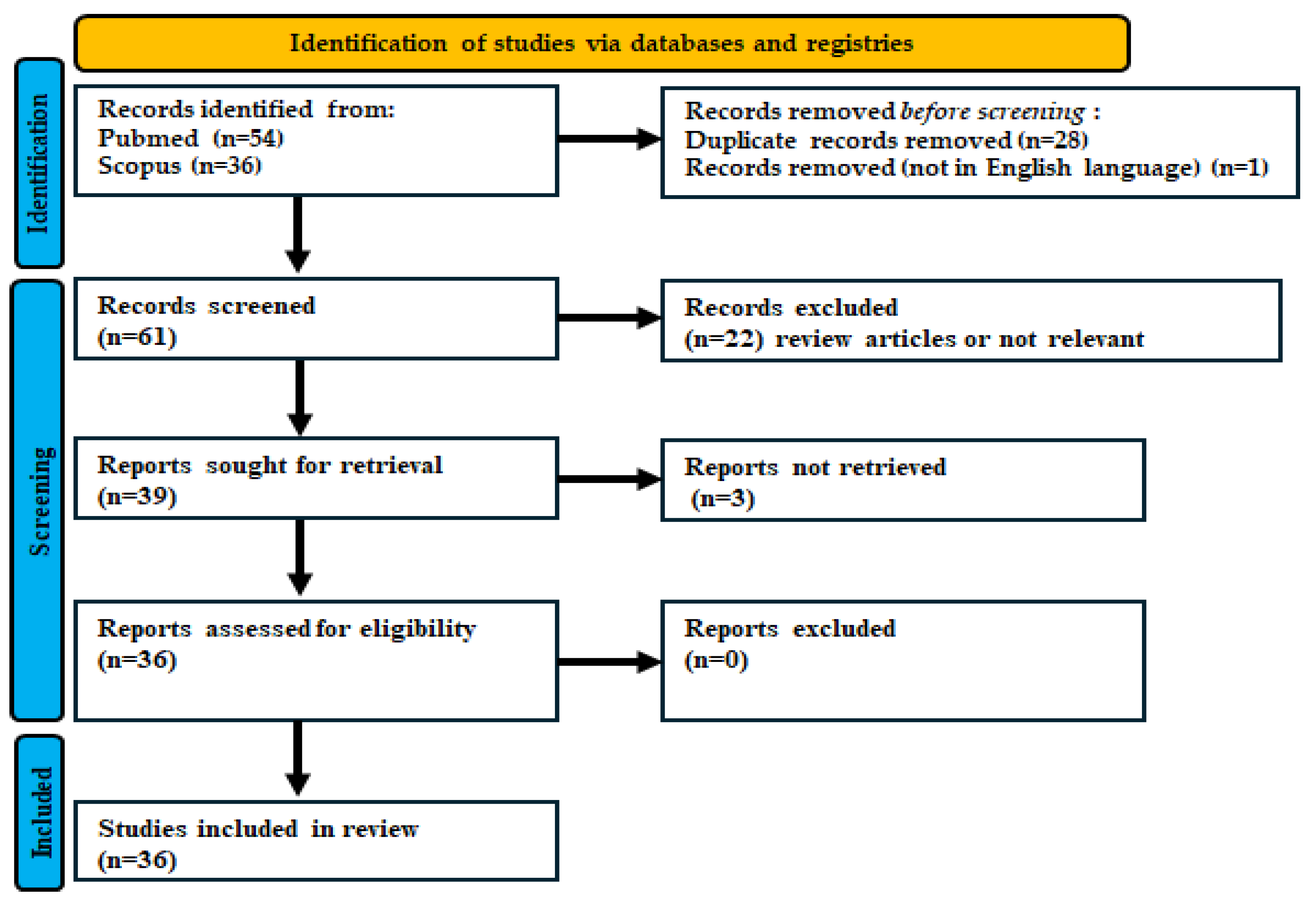
2. Materials and Methods
3. Results
3.1. Study Characteristics and Evidence Base
3.2. Oxidizing Disinfectants
3.3. Quaternary Ammonium Compounds (QACs)
3.4. Alcohol-Based and Phenolic Disinfectants
3.5. Biofilm-Specific Findings
3.6. No-Touch Methods
3.7. Emerging and Adjunctive Approaches
3.8. Summary Across Disinfection Agents
4. Discussion
5. Conclusions
Author Contributions
Funding
Institutional Review Board Statement
Informed Consent Statement
Data Availability Statement
Conflicts of Interest
Abbreviations
| AMR | Antimicrobial Resistance |
| CDC | Centers for Disease Control and Prevention |
| DSB | Dry-Surface Biofilm |
| ECDC | European Centre for Disease Prevention and Control |
| HAI | Healthcare-Associated Infections |
| HEH | Healthcare Environmental Hygiene |
| IPC | Infection Prevention and Control |
| MDRO | Multidrug-Resistant Organism |
| QAC | Quaternary Ammonium Compounds |
| UKHSA | United Kingdom Health Security Agency |
References
- Naghavi, M.; Vollset, S.E.; Ikuta, K.S.; Swetschinski, L.R.; Gray, A.P.; Wool, E.E.; Robles Aguilar, G.; Mestrovic, T.; Smith, G.; Han, C.; et al. Global Burden of Bacterial Antimicrobial Resistance 1990–2021: A Systematic Analysis with Forecasts to 2050. Lancet 2024, 404, 1199–1226. [Google Scholar] [CrossRef]
- Browne, K.; White, N.; Tehan, P.; Russo, P.L.; Amin, M.; Stewardson, A.J.; Cheng, A.C.; Graham, K.; O’Kane, G.; King, J.; et al. A Randomised Controlled Trial Investigating the Effect of Improving the Cleaning and Disinfection of Shared Medical Equipment on Healthcare-Associated Infections: The CLEaning and Enhanced disiNfection (CLEEN) Study. Trials 2023, 24, 133. [Google Scholar] [CrossRef]
- Peters, A.; Schmid, M.N.; Parneix, P.; Lebowitz, D.; De Kraker, M.; Sauser, J.; Zingg, W.; Pittet, D. Impact of Environmental Hygiene Interventions on Healthcare-Associated Infections and Patient Colonization: A Systematic Review. Antimicrob. Resist. Infect. Control 2022, 11, 38. [Google Scholar] [CrossRef]
- Chakrabarti, A.; Sood, P. On the Emergence, Spread and Resistance of Candida auris: Host, Pathogen and Environmental Tipping Points. J. Med. Microbiol. 2021, 70, 001318. [Google Scholar] [CrossRef]
- Satoh, K.; Makimura, K.; Hasumi, Y.; Nishiyama, Y.; Uchida, K.; Yamaguchi, H. Candida auris Sp. Nov., a Novel Ascomycetous Yeast Isolated from the External Ear Canal of an Inpatient in a Japanese Hospital. Microbiol. Immunol. 2009, 53, 41–44. [Google Scholar] [CrossRef]
- Hayes, J.F. Candida auris: Epidemiology Update and a Review of Strategies to Prevent Spread. J. Clin. Microbiol. 2024, 13, 6675. [Google Scholar] [CrossRef]
- European Centre for Disease Prevention and Control. Survey on the Epidemiological Situation, Laboratory Capacity and Preparedness for Candidozyma (Candida) auris, 2024; European Centre for Disease Prevention and Control: Solna, Sweden, 2025.
- Hsu, C.; Yassin, M. Diagnostic Approaches for Candida auris: A Comprehensive Review of Screening, Identification, and Susceptibility Testing. Microorganisms 2025, 13, 1461. [Google Scholar] [CrossRef] [PubMed]
- Centers for Disease Control and Prevention (U.S.) Antibiotic Resistance Threats in the United States, 2019; U.S. Department of Health and Human Services, CDC: Atlanta, GA, USA, 2019. [CrossRef]
- WHO Fungal Priority Pathogens List to Guide Research, Development and Public Health Action, 1st ed.; World Health Organization: Geneva, Switzerland, 2022; ISBN 978-92-4-006024-1.
- Kean, R.; Ramage, G. Combined Antifungal Resistance and Biofilm Tolerance: The Global Threat of Candida auris. mSphere 2019, 4, e00458-19. [Google Scholar] [CrossRef] [PubMed]
- Akinbobola, A.B.; Kean, R.; Hanifi, S.M.A.; Quilliam, R.S. Environmental Reservoirs of the Drug-Resistant Pathogenic Yeast Candida auris. PLoS Pathog. 2023, 19, e1011268. [Google Scholar] [CrossRef]
- Casadevall, A.; Kontoyiannis, D.P.; Robert, V. On the Emergence of Candida auris: Climate Change, Azoles, Swamps, and Birds. mBio 2019, 10, e01397-19. [Google Scholar] [CrossRef] [PubMed]
- Santana, D.J.; Anku, J.A.E.; Zhao, G.; Zarnowski, R.; Johnson, C.J.; Hautau, H.; Visser, N.D.; Ibrahim, A.S.; Andes, D.; Nett, J.E.; et al. A Candida auris–Specific Adhesin, Scf1, Governs Surface Association, Colonization, and Virulence. Science 2023, 381, 1461–1467. [Google Scholar] [CrossRef]
- Kenters, N.; Kiernan, M.; Chowdhary, A.; Denning, D.W.; Pemán, J.; Saris, K.; Schelenz, S.; Tartari, E.; Widmer, A.; Meis, J.F.; et al. Control of Candida auris in Healthcare Institutions: Outcome of an International Society for Antimicrobial Chemotherapy Expert Meeting. Int. J. Antimicrob. Agents 2019, 54, 400–406. [Google Scholar] [CrossRef]
- Horton, M.V.; Johnson, C.J.; Kernien, J.F.; Patel, T.D.; Lam, B.C.; Cheong, J.Z.A.; Meudt, J.J.; Shanmuganayagam, D.; Kalan, L.R.; Nett, J.E. Candida auris Forms High-Burden Biofilms in Skin Niche Conditions and on Porcine Skin. mSphere 2020, 5, e00910-19. [Google Scholar] [CrossRef] [PubMed]
- Baker, A.D.; Gold, J.A.W.; Forsberg, K.; Jones, S.; Lyman, M.M. Progression from Candida auris Colonization Screening to Clinical Case Status, United States, 2016–2023. Emerg. Infect. Dis. 2025, 31, 1613–1617. [Google Scholar] [CrossRef] [PubMed]
- Welsh, R.M.; Bentz, M.L.; Shams, A.; Houston, H.; Lyons, A.; Rose, L.J.; Litvintseva, A.P. Survival, Persistence, and Isolation of the Emerging Multidrug-Resistant Pathogenic Yeast Candida auris on a Plastic Health Care Surface. J. Clin. Microbiol. 2017, 55, 2996–3005. [Google Scholar] [CrossRef] [PubMed]
- Sexton, D.J.; Bentz, M.L.; Welsh, R.M.; Derado, G.; Furin, W.; Rose, L.J.; Noble-Wang, J.; Pacilli, M.; McPherson, T.D.; Black, S.; et al. Positive Correlation Between Candida auris Skin-Colonization Burden and Environmental Contamination at a Ventilator-Capable Skilled Nursing Facility in Chicago. Clin. Infect. Dis. 2021, 73, 1142–1148. [Google Scholar] [CrossRef]
- Schelenz, S.; Hagen, F.; Rhodes, J.L.; Abdolrasouli, A.; Chowdhary, A.; Hall, A.; Ryan, L.; Shackleton, J.; Trimlett, R.; Meis, J.F.; et al. First Hospital Outbreak of the Globally Emerging Candida auris in a European Hospital. Antimicrob. Resist. Infect. Control 2016, 5, 35. [Google Scholar] [CrossRef]
- Kontopidou, F.V.; Antonopoulou, M.; Votsi, A.; Papoutsaki, V.; Bereri, V.; Kourkoulou, E.; Rompola, A.; Tsokou, G.; Pavli, A.; Koutantelia, O.M.; et al. Candidozyma auris Outbreak and Its Effective Control in a General Hospital. Antibiotics 2025, 14, 579. [Google Scholar] [CrossRef]
- Ahmad, S.; Asadzadeh, M. Strategies to Prevent Transmission of Candida auris in Healthcare Settings. Curr. Fungal Infect. Rep. 2023, 17, 36–48. [Google Scholar] [CrossRef]
- Aldejohann, A.M.; Wiese-Posselt, M.; Gastmeier, P.; Kurzai, O. Expert Recommendations for Prevention and Management of Candida auris Transmission. Mycoses 2022, 65, 590–598. [Google Scholar] [CrossRef]
- Chaabane, F.; Graf, A.; Jequier, L.; Coste, A.T. Review on Antifungal Resistance Mechanisms in the Emerging Pathogen Candida auris. Front. Microbiol. 2019, 10, 2788. [Google Scholar] [CrossRef]
- Kean, R.; Sherry, L.; Townsend, E.; McKloud, E.; Short, B.; Akinbobola, A.; Mackay, W.G.; Williams, C.; Jones, B.L.; Ramage, G. Surface Disinfection Challenges for Candida auris: An in-Vitro Study. J. Hosp. Infect. 2018, 98, 433–436. [Google Scholar] [CrossRef]
- Weber, D.J.; Rutala, W.A.; Sickbert-Bennett, E. Emerging Infectious Diseases, Focus on Infection Prevention, Environmental Survival and Germicide Susceptibility: SARS-CoV-2, Mpox, and Candida auris. Am. J. Infect. Control 2023, 51, A22–A34. [Google Scholar] [CrossRef]
- Ledwoch, K.; Vickery, K.; Maillard, J.-Y. Dry Surface Biofilms: What You Need to Know. Br. J. Hosp. Med. 2022, 83, 1–3. [Google Scholar] [CrossRef]
- Maillard, J.-Y.; Centeleghe, I. How Biofilm Changes Our Understanding of Cleaning and Disinfection. Antimicrob. Resist. Infect. Control 2023, 12, 95. [Google Scholar] [CrossRef] [PubMed]
- Vickery, K.; Deva, A.; Jacombs, A.; Allan, J.; Valente, P.; Gosbell, I.B. Presence of Biofilm Containing Viable Multiresistant Organisms despite Terminal Cleaning on Clinical Surfaces in an Intensive Care Unit. J. Hosp. Infect. 2012, 80, 52–55. [Google Scholar] [CrossRef]
- Malinovská, Z.; Čonková, E.; Váczi, P. Biofilm Formation in Medically Important Candida Species. J. Fungi 2023, 9, 955. [Google Scholar] [CrossRef] [PubMed]
- Sherry, L.; Ramage, G.; Kean, R.; Borman, A.; Johnson, E.M.; Richardson, M.D.; Rautemaa-Richardson, R. Biofilm-Forming Capability of Highly Virulent, Multidrug-Resistant Candida auris. Emerg. Infect. Dis. 2017, 23, 328–331. [Google Scholar] [CrossRef]
- Short, B.; Brown, J.; Delaney, C.; Sherry, L.; Williams, C.; Ramage, G.; Kean, R. Candida auris Exhibits Resilient Biofilm Characteristics in Vitro: Implications for Environmental Persistence. J. Hosp. Infect. 2019, 103, 92–96. [Google Scholar] [CrossRef] [PubMed]
- Brown, G.D.; Denning, D.W.; Gow, N.A.R.; Levitz, S.M.; Netea, M.G.; White, T.C. Hidden Killers: Human Fungal Infections. Sci. Transl. Med. 2012, 4, 165rv13. [Google Scholar] [CrossRef]
- Cortegiani, A.; Misseri, G.; Fasciana, T.; Giammanco, A.; Giarratano, A.; Chowdhary, A. Epidemiology, Clinical Characteristics, Resistance, and Treatment of Infections by Candida auris. J. Intensive Care 2018, 6, 69. [Google Scholar] [CrossRef]
- Mitchell, B.G.; Browne, K.; Kiernan, M.; Parneix, P.; Russo, P.L. Hospital Cleaning: Considerations for Designing and Maintaining a Successful Environmental Cleaning Program. CMI Commun. 2025, 2, 105102. [Google Scholar] [CrossRef]
- Page, M.J.; McKenzie, J.E.; Bossuyt, P.M.; Boutron, I.; Hoffmann, T.C.; Mulrow, C.D.; Shamseer, L.; Tetzlaff, J.M.; Akl, E.A.; Brennan, S.E.; et al. The PRISMA 2020 Statement: An Updated Guideline for Reporting Systematic Reviews. BMJ 2021, 372, n71. [Google Scholar] [CrossRef]
- Kumar, J.A.; Cadnum, J.L.; Jencson, A.L.; Donskey, C.J. Are Reduced Concentrations of Chlorine-Based Disinfectants Effective against Candida auris? Am. J. Infect. Control 2020, 48, 448–450. [Google Scholar] [CrossRef] [PubMed]
- Kumar, J.A.; Cadnum, J.L.; Jencson, A.L.; Donskey, C.J. Efficacy of a Multi-Purpose High Level Disinfection Cabinet against Candida auris and Other Health Care-Associated Pathogen. Am. J. Infect. Control 2020, 48, 849–850. [Google Scholar] [CrossRef]
- Kaple, C.E.; Memic, S.; Cadnum, J.L.; Donskey, C.J. Evaluation of an Automated Far Ultraviolet-C Light Technology for Decontamination of Surfaces and Aerosolized Viruses in Bathrooms. Antimicrob. Resist. Infect. Control 2024, 13, 114. [Google Scholar] [CrossRef]
- Astrid, F.; Beata, Z.; Miriam, V.D.N.; Julia, E.; Elisabeth, P.; Magda, D.-E. The Use of a UV-C Disinfection Robot in the Routine Cleaning Process: A Field Study in an Academic Hospital. Antimicrob. Resist. Infect. Control 2021, 10, 84. [Google Scholar] [CrossRef]
- Erganis, S.; Ozturk, A.; Uzuntas, S.T.; Kirca, F.; Dogan, A.; Dinc, B.; Kalkanci, A. Variable Sensitivity of Clinical Candida auris Strains to Biocides: Implications for Infection Control in Healthcare Settings. BMC Microbiol. 2024, 24, 447. [Google Scholar] [CrossRef] [PubMed]
- Livingston, S.H.; Cadnum, J.L.; Benner, K.J.; Donskey, C.J. Efficacy of an Ultraviolet-A Lighting System for Continuous Decontamination of Health Care–Associated Pathogens on Surfaces. Am. J. Infect. Control 2020, 48, 337–339. [Google Scholar] [CrossRef] [PubMed]
- Chatterjee, P.; Choi, H.; Ochoa, B.; Garmon, G.; Coppin, J.D.; Allton, Y.; Lukey, J.; Williams, M.D.; Navarathna, D.; Jinadatha, C. Clade-Specific Variation in Susceptibility of Candida auris to Broad-Spectrum Ultraviolet C Light (UV-C). Infect. Control Hosp. Epidemiol. 2020, 41, 1384–1387. [Google Scholar] [CrossRef]
- Fu, L.; Le, T.; Liu, Z.; Wang, L.; Guo, H.; Yang, J.; Chen, Q.; Hu, J. Different Efficacies of Common Disinfection Methods against Candida auris and Other Candida Species. J. Infect. Public Health 2020, 13, 730–736. [Google Scholar] [CrossRef]
- Mariita, R.M.; Davis, J.H.; Lottridge, M.M.; Randive, R.V. Shining Light on Multi-drug Resistant Candida auris: Ultraviolet-C Disinfection, Wavelength Sensitivity, and Prevention of Biofilm Formation of an Emerging Yeast Pathogen. Microbiologyopen 2022, 11, e1261. [Google Scholar] [CrossRef]
- Kelly, S.; Schnugh, D.; Thomas, T. Effectiveness of Ultraviolet-C vs Aerosolized Hydrogen Peroxide in ICU Terminal Disinfection. J. Hosp. Infect. 2022, 121, 114–119. [Google Scholar] [CrossRef]
- Maslo, C.; Du Plooy, M.; Coetzee, J. The Efficacy of Pulsed-Xenon Ultraviolet Light Technology on Candida auris. BMC Infect. Dis. 2019, 19, 540. [Google Scholar] [CrossRef]
- Truong, L.N.; Whitlock, B.D. Efficacy of Compressed Sodium Chloride (CSC) against E. coli and Candida auris in Minutes and Methods Improvement for Testing. Sci. Rep. 2021, 11, 149. [Google Scholar] [CrossRef] [PubMed]
- Voorn, M.G.; Kelley, A.M.; Chaggar, G.K.; Li, X.; Teska, P.J.; Oliver, H.F. Contact Time and Disinfectant Formulation Significantly Impact the Efficacies of Disinfectant Towelettes against Candida auris on Hard, Non-Porous Surfaces. Sci. Rep. 2023, 13, 5849. [Google Scholar] [CrossRef] [PubMed]
- Haq, M.F.; Cadnum, J.L.; Pearlmutter, B.S.; Jencson, A.L.; Donskey, C.J. Effectiveness of a Novel 1-Step Cleaner and Disinfectant against Candida auris. Infect. Control Hosp. Epidemiol. 2023, 44, 837–839. [Google Scholar] [CrossRef] [PubMed]
- Lemons, A.R.; McClelland, T.L.; Martin, S.B.; Lindsley, W.G.; Green, B.J. Inactivation of the Multi-Drug-Resistant Pathogen Candida auris Using Ultraviolet Germicidal Irradiation. J. Hosp. Infect. 2020, 105, 495–501. [Google Scholar] [CrossRef]
- Dire, O.; Ahmad, A.; Duze, S.; Patel, M. Survival of Candida auris on Environmental Surface Materials and Low-Level Resistance to Disinfectant. J. Hosp. Infect. 2023, 137, 17–23. [Google Scholar] [CrossRef]
- Różańska, A.; Walkowicz, M.; Bulanda, M.; Kasperski, T.; Synowiec, E.; Osuch, P.; Chmielarczyk, A. Evaluation of the Efficacy of UV-C Radiation in Eliminating Microorganisms of Special Epidemiological Importance from Touch Surfaces under Laboratory Conditions and in the Hospital Environment. Healthcare 2023, 11, 3096. [Google Scholar] [CrossRef]
- Koutras, C.; Wade, R.L. Ultraviolet-C Mediated Inactivation of Candida auris, a Rapid Emerging Health Threat. Am. J. Infect. Control 2024, 52, 133–135. [Google Scholar] [CrossRef]
- Abdolrasouli, A.; Armstrong-James, D.; Ryan, L.; Schelenz, S. In Vitro Efficacy of Disinfectants Utilised for Skin Decolonisation and Environmental Decontamination during a Hospital Outbreak with Candida auris. Mycoses 2017, 60, 758–763. [Google Scholar] [CrossRef]
- Haq, M.F.; Pearlmutter, B.S.; Cadnum, J.L.; Donskey, C.J. Efficacy of 23 Commonly Used Liquid Disinfectants against Candida auris Isolates from the 4 Major Clades. Infect. Control Hosp. Epidemiol. 2024, 45, 127–131. [Google Scholar] [CrossRef]
- Cox, C.A.; Manavathu, E.K.; Wakade, S.; Myntti, M.; Vazquez, J.A. Efficacy of Biofilm Disrupters against Candida auris and Other Candida Species in Monomicrobial and Polymicrobial Biofilms. Mycoses 2024, 67, e13684. [Google Scholar] [CrossRef]
- Lara, H.H.; Ixtepan-Turrent, L.; Jose Yacaman, M.; Lopez-Ribot, J. Inhibition of Candida auris Biofilm Formation on Medical and Environmental Surfaces by Silver Nanoparticles. ACS Appl. Mater. Interfaces 2020, 12, 21183–21191. [Google Scholar] [CrossRef]
- Cadnum, J.L.; Pearlmutter, B.S.; Haq, M.F.; Jencson, A.L.; Donskey, C.J. Effectiveness and Real-World Materials Compatibility of a Novel Hydrogen Peroxide Disinfectant Cleaner. Am. J. Infect. Control 2021, 49, 1572–1574. [Google Scholar] [CrossRef]
- Memic, S.; Torres-Teran, M.M.; Cadnum, J.L.; Donskey, C.J. Evaluation of a Far Ultraviolet-C Device for Decontamination of Portable Equipment in Clinical Areas. Am. J. Infect. Control 2025, 53, 403–406. [Google Scholar] [CrossRef]
- Memic, S.; Osborne, A.O.; Cadnum, J.L.; Donskey, C.J. Efficacy of a Far-Ultraviolet-C Light Technology for Continuous Decontamination of Air and Surfaces. Infect. Control Hosp. Epidemiol. 2024, 45, 132–134. [Google Scholar] [CrossRef] [PubMed]
- Loftus, R.W.; Brindeiro, C.T.; Dexter, F.; Parra, M.C.; Hwang, S.M.; Wanta, B.; Szeluga, D.J.; Hadder, B.A.; Seering, M.S.; Charnin, J.E. Importance of Ultraviolet-C (UV-C) Emitter Configuration for the Attenuation of Staphylococcus aureus and Candida auris Pathogens. Cureus 2024, 16, e71612. [Google Scholar] [CrossRef] [PubMed]
- Rutala, W.A.; Bolomey, A.C.; Cadnum, J.L.; Donskey, C.J. Inactivation and/or Physical Removal of Candida auris from Floors by Detergent Cleaner, Disinfectants, Microfiber, and Ultraviolet C Light (UV-C). Infect. Control Hosp. Epidemiol. 2024, 45, 390–392. [Google Scholar] [CrossRef] [PubMed]
- Cadnum, J.L.; Shaikh, A.A.; Piedrahita, C.T.; Sankar, T.; Jencson, A.L.; Larkin, E.L.; Ghannoum, M.A.; Donskey, C.J. Effectiveness of Disinfectants Against Candida auris and Other Candida Species. Infect. Control Hosp. Epidemiol. 2017, 38, 1240–1243. [Google Scholar] [CrossRef]
- Sexton, D.J.; Welsh, R.M.; Bentz, M.L.; Forsberg, K.; Jackson, B.; Berkow, E.L.; Litvintseva, A.P. Evaluation of Nine Surface Disinfectants against Candida auris Using a Quantitative Disk Carrier Method: EPA SOP-MB-35. Infect. Control Hosp. Epidemiol. 2020, 41, 1219–1221. [Google Scholar] [CrossRef]
- Wells, K.M.; Ciftci, Y.; Peddinti, B.S.T.; Ghiladi, R.A.; Vediyappan, G.; Spontak, R.J.; Govind, R. Preventing the Spread of Life-Threatening Gastrointestinal Microbes on the Surface of a Continuously Self-Disinfecting Block Polymer. J. Colloid. Interface Sci. 2023, 652, 718–726. [Google Scholar] [CrossRef] [PubMed]
- Müller, P.; Tan, C.K.; Ißleib, U.; Paßvogel, L.; Eilts, B.; Steinhauer, K. Investigation of the Susceptibility of Candida auris and Candida albicans to Chemical Disinfectants Using European Standards EN 13624 and EN 16615. J. Hosp. Infect. 2020, 105, 648–656. [Google Scholar] [CrossRef]
- Epelle, E.I.; Amaeze, N.; Mackay, W.G.; Yaseen, M. Efficacy of Gaseous Ozone and UVC Radiation against Candida auris Biofilms on Polystyrene Surfaces. J. Environ. Chem. Eng. 2024, 12, 113862. [Google Scholar] [CrossRef]
- Zatorska, B.; Moser, D.; Diab-Elschahawi, M.; Ebner, J.; Lusignani, L.S.; Presterl, E. The Effectiveness of Surface Disinfectants and a Micellic H2O2 Based Water Disinfectant on Candida auris. J. Mycol. Med. 2021, 31, 101178. [Google Scholar] [CrossRef]
- Ledwoch, K.; Maillard, J.-Y. Candida auris Dry Surface Biofilm (DSB) for Disinfectant Efficacy Testing. Materials 2018, 12, 18. [Google Scholar] [CrossRef] [PubMed]
- Ware, A.; Johnston, W.; Delaney, C.; Butcher, M.C.; Ramage, G.; Price, L.; Butcher, J.; Kean, R. Dry Surface Biofilm Formation by Candida auris Facilitates Persistence and Tolerance to Sodium Hypochlorite. APMIS 2025, 133, e70022. [Google Scholar] [CrossRef]
- Ku, T.S.N.; Walraven, C.J.; Lee, S.A. Candida auris: Disinfectants and Implications for Infection Control. Front. Microbiol. 2018, 9, 726. [Google Scholar] [CrossRef]
- Retore, Y.I.; Lucini, F.; Pimentel, L.R.; De Oliveira, H.C.; Simionatto, S.; Rossato, L. Screening of the Global Health Priority BoxⓇ Reveals Potential New Disinfectants against the Emerging Multidrug-Resistant Pathogen Candida auris. Microb. Pathog. 2024, 194, 106828. [Google Scholar] [CrossRef] [PubMed]


| Agent [Abbreviations: See Footnote] | Concentration/ Wavelength | Contact Time | Logarithmic Reduction | Clade/ Strain | Biofilm | Country | Reference |
|---|---|---|---|---|---|---|---|
| NaOCl | 1000 ppm | 5 min, 10 min | 5 min: ~2.5 log10 steel surface, ~1.29 log10 polymer surface 10 min: ~3.5 log10 polymer surface | Clade I and III | No | UK | [25] |
| 10,000 ppm | 5 min | ~3.5 log10 polymer surface | |||||
| PAA | 2000 ppm | 5 min | ≥6 log10 polymer surface, ~3.5 log10 steel surface | ||||
| NaOCl | 6500, 4000, 2000, 1000, and 500 ppm | 1 min, 2 min, 4 min | Both agents ≥ 6 log10 (4 min at ≥1000 ppm) and >3 log10 (4 min at 500 to 536 ppm) >3 log10 at ≥4000 ppm (1 min) | Clade I | No | USA | [37] |
| NaDCC | 4306, 1076, and 536 ppm | ||||||
| Aerosolized PAA and H2O2 | 22% H2O2 and 4.5% PAA | 21 min | ≥5 log10 steel carriers and portable equipment | Clade I, II, III, IV | No | USA | [38] |
| Far Ultraviolet-C (UV-C) | 222 nm | 45 min and 2 h | >3 log10, 2 h exposure, and ≥1.2 log10 (range, 1.2 to 4.2 log10) after 2 h for all organisms at all sites. | Clade IV | No | USA | [39] |
| Ultraviolet-C (UV-C) | 254 nm, (360° coverage 2.7 mJ/cm2 per second for directly exposed surfaces in 1 m distance) | 20–20 min | 1–2 log10 (significant variability between strains). | Clade I, II, III, IV | No | Austria | [40] |
| Chlorine | 200 ppm and 500 ppm | 1, 5, 30 min | >5 log10 500 ppm, <3 log10 200 ppm (depending on strain and contact time) | Clade I, IV | No | Turkey | [41] |
| CHX | 4% | >5 log10 | |||||
| CHX liquid soap | 2% | >3 log10 Clade I, <3 log10 Clade IV | |||||
| Ethyl alcohol | 70% | >5 log10 | |||||
| Ultraviolet-A (UV-A) | 365 nm | 8 h | 0.7 log10 | Clade II | No | USA | [42] |
| PX-UV | 200–280 nm | 10, 20, 30 min 1.5 m distance | 0.92 log10 Clade I (30 min) | Clade I, II, III, IV | No | USA | [43] |
| 1.38 log10 Clade II (30 min) | |||||||
| 0.19 log10 Clade III (30 min) | |||||||
| 1.18 log10 Clade IV (30 min | |||||||
| Chlorine | 1000 ppm | 1 min | No growth (log10 not reported) | Clade I | No | China | [44] |
| Chlorine | 500 ppm | 30 min | No growth (log10 not reported) | ||||
| Ethanol | 75% (v/v) | 1 min | No growth (log10 not reported) | ||||
| Benzalkonium bromide | 2000 ppm | 10 min | Resistance | ||||
| UV-C light | 253.7 nm | 30 min | 4 log10 (dependent on contact time and distance) | ||||
| LK/CXD bed unit ozone disinfection machine | O3 ≥ 300 mg/m3 | 20 min | 3.57 (±0.02) log10 | ||||
| UV-C | 252.4 to 279.5 nm | 5, 10, 30, and 40 s | 4.81 log10 (≈99.998% reduction) using 267 nm and 270 nm (40 s). Effective antibiofilm activity. | Clade II | In vitro biofilm formation assay | USA | [45] |
| UV-C | 254 nm | 20 min | 1.79 log10 reduction (98.38%) | NR | No | S. Africa | [46] |
| Aerosolized H2O2 (aHP) | silver-stabilized 6% H2O2 | 1 h | ~0.29–0.36 log10 reductions (mean ~52% kill) | ||||
| PX-UV | 200–280 nm in short pulses | 5, 10, 15 min | 15 and 10 min 1 m distance: no growth 5 min 1 m: 99.4% CFU reduction 15 min 2 m: no growth 10 min 2 m: 99.6% CFU reduction 5 min 2 m: 90.2% CFU reduction | NR | No | S. Africa | [47] |
| Compressed sodium chloride (CSC) | 97.5–100% sodium chloride compressed into blocks | 1 min | 2 log10 (99% reduction with the pilot stamp method) | Clade II | No | Canada | [48] |
| QAC 1 | 0.14% BC | 3 min | 2.81 ± 0.64 log10 | Clade II | No | USA | [49] |
| QAC 2 (towelette and 1:256 dilution) | 0.125% BC | 3 min towelette and 10 min 1:256 dilution | 2.09 ± 0.12 log10 (towelette) and 2.03 ± 0.12 log10 (1:256 dilution) | ||||
| QAC + Alcohol | 0.25% BC + 55% isopropyl alcohol | 2 min | 1.97 ± 0.17 log10 | ||||
| H2O2 | 0.5% hydrogen peroxide | 1 min | 2.82 ± 0.58 log10 | ||||
| H2O2 | 0.5% hydrogen peroxide | 1 min | 5.64 log10 (Cl. I), 5.20 log10 (Cl. II), 5.74 log10 (Cl III), 4.78 log10 (Cl. IV) | Clade I, II, III, IV | No | USA | [50] |
| QAC 1 | BC 8.2% | 1.51 log10 (Cl. II), <1 log10 (Cl. I, III, IV) | |||||
| QAC 2 | BC 1.19% | 1.80 log10 (Cl. I), 5.20 log10 (Cl. II), 2.18 log10 (Cl. III), 2.31 log10 (Cl. IV) | |||||
| QAC + Alcohol 1 | BC 0.25% + Isopropyl alcohol 55% | 5.64 log10 (Cl. I) 5.20 log10 (Cl. II), 5.74 log10 (Cl. III) 4.22 log10 (Cl. IV) | |||||
| QAC + Alcohol 2 | BC 0.28% + isopropanol 17.2% | 2.47 log10 (Cl. I), 5.20 log10 (Cl. II), 3.36 log10 (Cl. III), 4.08 log10 (Cl. IV) | |||||
| 1-step anionic surfactant disinfectan | Dodecylbenzenesulfonic acid 0.29% | 5.64 log10 (Cl. I), 5.20 log10 (l. II), 4.97 log10 (Cl. III), 4.78 log10 (Cl. IV) | |||||
| UV-C | 254 nm | NR | 5 log10 UV (range 66–110 mJ/cm2) | Clade I, II, III, IV | No | USA | [51] |
| H2O2 | 3% | 30 s | 68.6% (≈0.5 log10) | NR | No | S. Africa | [52] |
| NaDCC | 500 ppm | 30 s | 100% (>2 log10 complete kill) | ||||
| Ethanol | 70% | 30 s | 95.9% (≈1.32 log10) | ||||
| 60 s | 100% (>2 log10 complete kill) | ||||||
| QAC | 95% BC | 30 s | 100% (>2 log10 complete kill) | ||||
| UV-C | 253.7 nm | 10 min | 89.3% Plastic, 100% Glass, 98.9% Steel | NR | No | Poland | [53] |
| UV-C | 254 nm | 7 min | >3.86 log10 (99.97%) 2.4 m distance | Clade IV | No | USA | [54] |
| H2O2 (dry gas-vaporized) | 8 g H2O2/m3 room space | NR | 96.6–100% (3 separate experiments, one Indian isolate showed occasional survival in some replicates). | NR | No | UK | [55] |
| NaDCC | 1000 ppm | 3 min, 3 and 30 h | 100% 3 min | ||||
| 10,000 ppm | Some C. auris (and other Candida spp.) were only killed at concentrations > 1000 ppm at ≥3 min contact time (tolerance compared to 1000 ppm). | ||||||
| NaOCl (wipe and dilution) | 0.65% | 3 min | >5 log10 all Clades | Clade I, II, III, IV | No | USA | [56] |
| NaOCl (wipe) | 0.63% | 4 min | >5 log10 all Clades | ||||
| NaDCC | 4306 ppm | 4 min | >5 log10 all Clades | ||||
| PAA, H2O2 | 1200 ppm, H2O2 < 1%, acetic acid | 3 min | >5 log10 all Clades | ||||
| H2O2 | 1.4% (sporicidal activity due to generation of low concentrations of PAA during use) | 3 min | >5 log10 all Clades | ||||
| H2O2 | 0.5% | 5 min | >5 log10 all Clades | ||||
| H2O2 | 0.07% | 10 min | 4.02 log10 Clade II, 1.48 log10 Clade I, not effective on Clade III and IV | ||||
| H2O2 | 4% | 1 min | >5 log10 all Clades | ||||
| QAC + Alcohol 1 | BC + Isopropyl alcohol 55% | 2 min | >5 log10 all Clades | ||||
| QAC + Alcohol 2 | BC + Isopropanol 17.2% | 3 min | Spray achieved >5 log10 on Clade II, for the rest Clades <5 log10 | ||||
| Phenolic acid | Orthophenylphenol 3.4%, ortho benzyl para chlorophenol 3.0% | 10 min | No >5 log10 reduction in any of the test strains. | ||||
| QAC | BC | 3–10 min | None of the quaternary ammonium–based products achieved a >5 log10 reduction | ||||
| Biofilm-disrupting agents (BDs). | 100% and 20% | Planktonic: 1, 5, 10, 30, 60 min | Planktonic: 100% (≈7-log10) 1 min 20% dilution ≈ 6 log10 10 min | Clade II and IV | In vitro biofilm formation assay | USA | [57] |
| Biofilm: 24 h | Biofilm: ≈ ≥7 log10 reduction (~99.99999%) for 100% concentration | ||||||
| AgNPs | 0.008 to 1.15 ppm and 0.017–2.3 ppm (polystyrene) | 24 h | 50% inhibition | Clade I | In vitro biofilm formation assay | USA | [58] |
| 0.017–2.3 ppm (Elastic bandage fibers) | >80% inhibition | ||||||
| H2O2 | 4.04%, <10% acetic acid | 1 min | >6.0 log10 Clade II, ≥5.1 log10 Clade IV | Clade II, IV | No | USA | [59] |
| NaOCl | 0.65% | >6.1 log10 Clade II, ≥6.6 log10 Clade IV | |||||
| PAA + H2O2 | 0.13% PAA, 0.63% H2O2 | >5.1 log10 Clade II, ≥5.1 log10 Clade IV | |||||
| Accelerated H2O2 + alcohol | H2O2 >0.1–<1%, benzyl alcohol 1–5% | >5.4 log10 Clade II, ≥5.1 log10 Clade IV | |||||
| Far Ultraviolet-C (UV-C) | 222 nm | 4 h, 12 h | >2 log10 CFU 4 h >3 log10 CFU 12 h | Clade II | No | USA | [60] |
| Far Ultraviolet-C (UV-C) | 222 nm | 45 min | <3 log10 Not effective | Clade II, III | No | USA | [61] |
| UV-C | 254 nm (configuration: 3 emitters in a linear/row layout, rotating 5°) | 12 min | >6.0 log10 (575 mJ/cm2 delivery to 2.7 m) | Clade II | No | USA | [62] |
| 254 nm (configuration: 3 emitters triangular; rotate 360°) | 18 min | 1.66 log10 (575 mJ/cm2 delivery to 2.7 m) | |||||
| Detergent | Not reported | NR | 3.69 log10 (Microfiber and cotton mop) | Clade IV | No | USA | [63] |
| QAC | BC | 3.26 log10 (Microfiber Mop) 3.69 log10 (Cotton mop) | |||||
| NaOCl | 0.25% | >3.85 log10 ND (Microfiber Mop) 3.69 log10 (Cotton mop) | |||||
| Water | 3.51 log10 (Microfiber Mop) 2.45 log10 (Cotton Mop) | ||||||
| UV-C | 254 nm | 10 min | >3.85 log10 ND (91 cm distance) | ||||
| NaOCl | 0.65% | 1 min | >5 log10 | Clade II | No | USA | [64] |
| NaOCl | 0.39% | 1 min | >5 log10 | ||||
| NaOCl | 0.825% (diluted) | 1 min | >5 log10 | ||||
| PAA, H2O2 | 1200 ppm, H2O2 < 1% | 3 min | >5 log10 | ||||
| H2O2 | 1.4% | 1 min | >5 log10 | ||||
| H2O2 | 0.5% | 10 min | >5 log10 | ||||
| Acetic acid | >5% (pH 2.0) | 3 min | ≈2–3 log10 | ||||
| Ethyl alcohol | 29.4% | 30 s | ≈2–3 log10 | ||||
| QAC 1 | BC | 10 min | ≈1–2 log10 | ||||
| QAC 2 | BC | 10 min | ≈1–2 log10 | ||||
| H2O2 | 0.5% H2O2 | 10 min | ≥5.32 log10 | Clade IV | No | USA | [65] |
| H2O2 | 0.5% H2O2 | 1 min | ≥5.48 log10 | ||||
| H2O2 | 1.4% H2O2 | 3 min | ≥5.48 log10 | ||||
| QAC 1 | 0.084% | 10 min | 1.82 log10 | ||||
| QAC 2 | 10.9% | 10 min | 0.56 log10 | ||||
| QAC 3 | 21.7% | 10 min | 0.56 log10 | ||||
| QAC 4 | 2% | 10 min | 0.25 log10 | ||||
| QAC + Alcohol 1 | 0.61% BC + 28.7% Isopropanol + 27.3% ethanol | 1 min | ≥5.29 log10 | ||||
| QAC + Alcohol 2 | 0.5% BC + 55% isopropanol | 2 min | ≥5.29 log10 | ||||
| Anionic pentablock polymer with 52 mol% midblock sulfonation | Anionic block polymer that generates layer that is acidic (pH < 1) upon hydration | 30 min | 99% reduction | Clade I, III, IV | No | USA | [66] |
| Alcohol | 35% (25 g ethanol (94%), 35 g propan-1-ol) | 30 s | 4 log10 | Clade II | No | Germany | [67] |
| QAC | 0.25% | 1 min | 4 log10 | ||||
| UV-C + O3 | 254 nm + 50 ppm | 20, 40, 60 min | ≈4 log10 BF and 8 log10 PC | Clade I | In vitro biofilm formation assay | UK | [68] |
| UV-C | 254 nm | ≈7.2 log10 BF and 8 log10 PC 40 min | |||||
| O3 | 50 ppm (1000–3000 ppm·min) | ≈3.3 log10 BF and 8 log10 PC 40 min | |||||
| Alcohol | 100% | 1 min | >5 log10 (no growth) PC and BF | Clade I, II, III | In vitro biofilm formation assay | Austria | [69] |
| QAC | 100% | 1 min | >5 log10 (no growth) PC and BF | ||||
| ALD + QAC | 0.5% | 15 min | >5 log10 (no growth) PC and BF | ||||
| H2O2 | 3.4% (v/v) | 5 min | >5 log10 (no growth) PC Incomplete, strain-dependent for BF | ||||
| H2O2 | 4.25% (v/v) | 5 min | >5 log10 (no growth) PC <3 log10 for NCPF8971 variability reported for BF | ||||
| PP | 3% | 30 min | >5 log10 (no growth) PC and BF | ||||
| PAA | 3500 ppm | 2 min | >7 log10 | Clade II | In vitro biofilm formation assay | UK | [70] |
| 250 ppm | 0.84 log10 | ||||||
| NaOCl | 1000 ppm | >7 log10 | |||||
| NaDCC | 1000 ppm | >7 log10 | |||||
| 10,000 ppm | ≈4 log10 | ||||||
| QAC | BC < 0.5% (<5000 ppm) | 4 log10 | |||||
| ClO2 | 300 ppm | <2.5 log10 | |||||
| 1000 ppm | |||||||
| NaOCl | 500 ppm–1000 ppm | 1 min | ≥6 log10 PC, 4.5 → 1.2 log10 from cycle 1 to cycle 3 BF | Clade I, III | In vitro biofilm formation assay | UK | [71] |
| 1000 ppm | 5 min | ≥6 log10 PC, 6.7 → 3.0 log10 from cycle 1 to cycle 3 BF |
Disclaimer/Publisher’s Note: The statements, opinions and data contained in all publications are solely those of the individual author(s) and contributor(s) and not of MDPI and/or the editor(s). MDPI and/or the editor(s) disclaim responsibility for any injury to people or property resulting from any ideas, methods, instructions or products referred to in the content. |
© 2026 by the authors. Licensee MDPI, Basel, Switzerland. This article is an open access article distributed under the terms and conditions of the Creative Commons Attribution (CC BY) license.
Share and Cite
Papadimitriou, A.; Drosopoulou, L.-P.; Tseroni, M.; Kontopidou, F.V.; Tsakris, A.; Vrioni, G. Breaking the Chain of Infection: A Systematic Review of Environmental Decontamination of Candidozyma auris (2017–2025). J. Fungi 2026, 12, 131. https://doi.org/10.3390/jof12020131
Papadimitriou A, Drosopoulou L-P, Tseroni M, Kontopidou FV, Tsakris A, Vrioni G. Breaking the Chain of Infection: A Systematic Review of Environmental Decontamination of Candidozyma auris (2017–2025). Journal of Fungi. 2026; 12(2):131. https://doi.org/10.3390/jof12020131
Chicago/Turabian StylePapadimitriou, Aristotelis, Lida-Paraskevi Drosopoulou, Maria Tseroni, Flora V. Kontopidou, Athanasios Tsakris, and Georgia Vrioni. 2026. "Breaking the Chain of Infection: A Systematic Review of Environmental Decontamination of Candidozyma auris (2017–2025)" Journal of Fungi 12, no. 2: 131. https://doi.org/10.3390/jof12020131
APA StylePapadimitriou, A., Drosopoulou, L.-P., Tseroni, M., Kontopidou, F. V., Tsakris, A., & Vrioni, G. (2026). Breaking the Chain of Infection: A Systematic Review of Environmental Decontamination of Candidozyma auris (2017–2025). Journal of Fungi, 12(2), 131. https://doi.org/10.3390/jof12020131