



Next Issue
Volume 11, August
Previous Issue
Volume 11, April


Geriatrics, Volume 11, Issue 3 (June 2026) – 24 articles
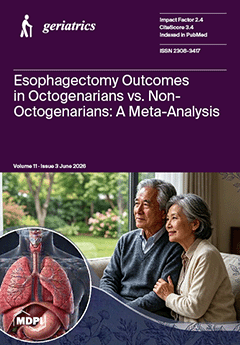
Cover Story (view full-size image): With an aging population and increasing life expectancy, the suitability of esophagectomy in octogenarians remains debated due to concerns regarding worse postoperative outcomes and survival. Our meta-analysis showed that octogenarians undergoing esophagectomy had inferior overall survival compared with non-octogenarians. This result should be carefully interpreted, taking into account pre-existing co-morbidities, sarcopenia, frailty, and inability to tolerate peri-operative chemotherapy. However, post-operative complications were comparable. As minimally invasive techniques, perioperative care, and multimodal therapies continue to evolve, the outlook for curative esophagectomy in selected octogenarians may become increasingly optimistic. View this paper
  • Issues are regarded as officially published after their release is announced to the table of contents alert mailing list.
  • You may sign up for e-mail alerts to receive table of contents of newly released issues.
  • PDF is the official format for papers published in both, html and pdf forms. To view the papers in pdf format, click on the "PDF Full-text" link, and use the free Adobe Reader to open them.
Order results
Result details
Section
Select all
Export citation of selected articles as:
13 pages, 359 KB  
Article
The Association Between Active Aging and Health-Related Quality of Life
by Keon Woo, JungHoon Lee and YoonSoo Choy
Geriatrics 2026, 11(3), 74; https://doi.org/10.3390/geriatrics11030074 - 17 Jun 2026
Viewed by 580
Abstract
Background and Objectives: This study examined the association between active aging and health-related quality of life (HRQoL) in older Korean adults. Furthermore, it examined how socioeconomic factors were related to active aging and HRQoL. Methods: Data were analyzed using the 8th [...] Read more.
Background and Objectives: This study examined the association between active aging and health-related quality of life (HRQoL) in older Korean adults. Furthermore, it examined how socioeconomic factors were related to active aging and HRQoL. Methods: Data were analyzed using the 8th Korea National Health and Nutrition Examination Survey (KNHANES). This study used the Health-Related Quality of Life Instrument with Eight Items (HINT-8), a Korean-specific HRQoL instrument. Multivariable regression analyses were conducted to estimate the associations of overall active aging and its health, participation, and security domains with HRQoL. Results: The health domain showed the largest coefficient, and the security domain was also significantly associated with HRQoL. The participation domain showed a relatively limited and statistically non-significant association, which may partly reflect measurement constraints in the operationalization of participation. Older adults with lower educational levels and those residing in rural areas had lower levels of both active aging and HRQoL. Conclusions: Active aging was positively associated with HRQoL among older Korean adults. These findings highlight health as the domain most strongly associated with HRQoL and identify security as an additional relevant domain, while participation-related findings should be interpreted cautiously given the limited operationalization of participation and its statistically non-significant association. However, longitudinal or intervention studies are needed to examine temporal and causal relationships between active aging and HRQoL. Full article
(This article belongs to the Section Healthy Aging)
Show Figures

Figure 1

17 pages, 293 KB  
Article
From Complexity to Competency: International Nursing Perspectives on Comprehensive Geriatric Assessment
by Evangelos C. Fradelos, Sini Eloranta, Ioanna Tsatsou, Ioanna Dimitriadou, Susanna Mört, Nina Korsström, Anna Lundberg, Magdalena Häger, Jekaterina Šteinmiller, Agita Melbarde-Kelmere, Kristaps Circenis, Sigrun S. Skuladottir, Ingibjörg Hjaltadòttir and Maria Saridi
Geriatrics 2026, 11(3), 73; https://doi.org/10.3390/geriatrics11030073 - 17 Jun 2026
Viewed by 1898
Abstract
Background/Objectives: Population aging has increased the demand for comprehensive and coordinated care for older adults, placing primary health care (PHC) nurses at the forefront of comprehensive geriatric assessment (CGA) implementation. However, limited evidence exists regarding nurses’ experiences and educational needs related to CGA [...] Read more.
Background/Objectives: Population aging has increased the demand for comprehensive and coordinated care for older adults, placing primary health care (PHC) nurses at the forefront of comprehensive geriatric assessment (CGA) implementation. However, limited evidence exists regarding nurses’ experiences and educational needs related to CGA across different European healthcare contexts. This study aimed to explore the experiences, perceived challenges, and educational needs of PHC nurses regarding the implementation of CGA in five European countries. Methods: A qualitative study design was employed using five focus groups, one in each participating country: Greece, Iceland, Finland, Estonia, and Latvia. A total of 29 PHC nurses participated in semi-structured interviews. Data were analyzed using reflexive thematic analysis. Results: Three overarching themes and nine subthemes were identified in relation to good practices in CGA: (1) embracing the complexity of holistic assessment; (2) balancing consistency with flexibility in clinical practice; and (3) advancing professional expertise through structured learning. Participants highlighted the importance of standardized assessment tools and effective multidisciplinary collaboration. At the same time, they reported significant gaps in formal education, limited organizational resources, and insufficient training in cultural competence, which hinder consistent CGA implementation. Conclusions: PHC nurses recognize the value of a holistic and structured approach to CGA but require clearer educational pathways and evidence-based training to address the complex needs of older adults. Strengthening curricula that emphasize interprofessional collaboration, practical competencies, and contextual adaptability may support more effective and sustainable implementation of CGA in primary care settings across Europe. Full article
15 pages, 924 KB  
Systematic Review
Breaking the Vicious Cycle? A Systematic Review of Interventions Targeting Both Falls and Fear of Falling in Older Adults
by Asiye Tuba Ozdogar, Pervin Yesiloglu, Yuval Levitan Marcus and Alon Kalron
Geriatrics 2026, 11(3), 72; https://doi.org/10.3390/geriatrics11030072 - 16 Jun 2026
Viewed by 937
Abstract
Background: Falls and fall-related injuries are common in older adults and are frequently accompanied by fear of falling (FoF), which may lead to activity avoidance and functional decline. Because many interventions target falls or FoF in isolation, we conducted a systematic review and [...] Read more.
Background: Falls and fall-related injuries are common in older adults and are frequently accompanied by fear of falling (FoF), which may lead to activity avoidance and functional decline. Because many interventions target falls or FoF in isolation, we conducted a systematic review and meta-analysis of randomized controlled trials (RCTs) to identify, describe, and evaluate interventions reporting both falls and FoF outcomes in older adults. Methods: This systematic review and meta-analysis were registered in PROSPERO (CRD420251113137) and conducted in accordance with PRISMA guidelines. PubMed, Embase, and Web of Science were searched from inception to 4 November 2025. Eligible studies were English-language RCTs that included adults aged ≥60 years, evaluated nonpharmacological interventions, and reported both FoF and falls. Methodological quality was assessed using the PEDro scale. Random-effects meta-analyses were performed for FoF (Hedges g), and Bayesian random-effects binomial meta-analyses were conducted for falls. Results: Ten RCTs published between 1998 and 2018 (sample sizes per trial: n = 27–540) were included. Interventions included cognitive–behavioral therapy-based programs, Tai Chi, physiotherapist-led strength and balance training, computerized visual feedback, and video-guided home exercise. PEDro scores ranged from 6 to 9 (mean, 7.7). Pooled analyses showed no significant effect on FoF at the end of intervention (g = −0.20, 95% CI −1.45 to 1.05; p = 0.68; high heterogeneity) or at follow-up (g = −0.14, 95% CI −0.60 to 0.33; p = 0.50). For falls, postintervention evidence favored the null (BF10 = 0.16; pooled estimate −0.01, 95% credible interval [CrI] −0.30 to 0.14). Follow-up results were inconclusive (BF10 = 2.07; pooled CrI −0.56 to 0.00), with substantial uncertainty. Conclusions: Across RCTs that measured both outcomes, interventions did not consistently improve both FoF and falls outcomes. These findings may suggest a partial dissociation between psychological and physical fall-related outcomes, highlighting the need for integrated, adequately powered trials that utilize standardized measures and longer follow-up periods. Full article
Show Figures

Figure 1

15 pages, 1293 KB  
Review
Sensory Blurring in Nociplastic Pain: The Role of Descending Inhibitory Dysfunction and Gut–Brain Axis Alterations in Older Adults
by Takahiko Nagamine
Geriatrics 2026, 11(3), 71; https://doi.org/10.3390/geriatrics11030071 - 16 Jun 2026
Viewed by 686
Abstract
Background: Inhibitory processes in the nervous system are traditionally conceptualized as suppressive mechanisms; however, their fundamental role is the refinement and optimization of sensory information. In nociception, this function is mediated by the descending pain inhibitory system (DPIS), which modulates nociceptive transmission [...] Read more.
Background: Inhibitory processes in the nervous system are traditionally conceptualized as suppressive mechanisms; however, their fundamental role is the refinement and optimization of sensory information. In nociception, this function is mediated by the descending pain inhibitory system (DPIS), which modulates nociceptive transmission at multiple hierarchical levels. Biological sex and gender-related factors significantly influence these inhibitory pathways, yet they are often overlooked in clinical frameworks. Methods: A narrative review was conducted using PubMed, MEDLINE, and Scopus databases, focusing on studies published between 2010 and 2025. Search terms included “descending pain inhibitory system,” “nociplastic pain,” “aging,” “sex differences,” “gender,” and “gut–brain axis.” Approximately 30 key references were synthesized. Results: The DPIS enhances the precision of nociceptive signals through mechanisms analogous to lateral inhibition. In chronic and nociplastic pain, this refinement process is impaired, leading to “sensory blurring.” Aging exacerbates these changes through neurochemical depletion and neuroinflammation. Crucially, this decline follows sex-specific trajectories; estrogen depletion in post-menopausal females accelerates the loss of monoaminergic inhibitory reserves, while gender-related sociocultural stressors can further disrupt top-down executive control. Additionally, alterations in the gut–brain axis signaling—modulated by sex-specific gut microbiota profiles—further disrupt inhibitory control. Conclusions: Chronic pain may be conceptualized as a disorder of sensory refinement rather than excessive nociceptive input. Inclusion of sex and gender as biological variables is essential for precision pain management. Therapeutic strategies should focus on restoring inhibitory precision through both central and systemic approaches, tailored to the patient’s hormonal and physiological profile. Full article
Show Figures

Graphical abstract

16 pages, 537 KB  
Review
The Impact of General Anesthetics on Postoperative Delirium: A Narrative Review Based on Clinical Randomized Controlled Trials from the Last Five Years
by Jia-Ni Wu, Jia-Huan Xu, Jia-Yi Ge, Bo-Ran Deng and Xing-Jun Liu
Geriatrics 2026, 11(3), 70; https://doi.org/10.3390/geriatrics11030070 - 12 Jun 2026
Viewed by 1162
Abstract
Postoperative delirium (POD) is an acute, reversible neurocognitive disorder characterized by confusion and altered consciousness. With the improvement in research methodologies and the introduction of innovative clinical drugs in recent years, a growing number of randomized controlled trials have been conducted. This article [...] Read more.
Postoperative delirium (POD) is an acute, reversible neurocognitive disorder characterized by confusion and altered consciousness. With the improvement in research methodologies and the introduction of innovative clinical drugs in recent years, a growing number of randomized controlled trials have been conducted. This article aims to conduct a comprehensive review of the efficacy of general anesthetics—including propofol, ciprofol, sevoflurane, ketamine, esketamine, dexmedetomidine, benzodiazepines, opioids, and lidocaine—in preventing and managing POD, based on randomized controlled trials published in the past five years. Propofol has advantages in preventing POD in pediatric patients. However, its efficacy compared with inhalational anesthetics still requires individualized evaluation in elderly patients. The novel drugs ciprofol and remimazolam exhibit favorable safety profiles and do not increase the risk of POD. The efficacy of dexmedetomidine shows variability across patient populations and surgical types. In addition, specific opioid drugs and lidocaine also demonstrate preventive potential when administered in a standardized manner. Full article
Show Figures

Figure 1

16 pages, 2086 KB  
Systematic Review
Safety of Cholecystectomy in Nonagenarians: A Systematic Review and Meta-Analysis
by Dimitrios Vouros, Belen Conde Inarejos, James Fowler, Sarthak Jain, Vasileios Kotsarinis, Maaz Ullah, Awais Asif Chaudhary, Martyn Charles Stott, Ahmad Hassan, Shahin Hajibandeh, Shahab Hajibandeh, Jacob Kadamapuzha and Thomas Satyadas
Geriatrics 2026, 11(3), 69; https://doi.org/10.3390/geriatrics11030069 - 8 Jun 2026
Viewed by 773
Abstract
Background/Objectives: To evaluate the safety of cholecystectomy in nonagenarians. Methods: In compliance with the PRISMA statement standards, a systematic review including random-effects meta-analysis and meta-regression models was conducted. All studies reporting postoperative outcomes in patients aged ≥90 undergoing cholecystectomy were included [...] Read more.
Background/Objectives: To evaluate the safety of cholecystectomy in nonagenarians. Methods: In compliance with the PRISMA statement standards, a systematic review including random-effects meta-analysis and meta-regression models was conducted. All studies reporting postoperative outcomes in patients aged ≥90 undergoing cholecystectomy were included and analyzed. Results: Six studies (1223 patients) were included. The risk of 30-day mortality was 5.4% (95% CI 3.1–7.7); 30-day morbidity occurred in 22% (95% CI 11.3–32.8). The mean length of hospital stay was 11.5 days (95% CI 8.3–14.6). Postoperative mortality was not affected by male sex (coefficient: 0.028, p = 0.832), ASA status ≥ III (coefficient: 0.051, p = 0.309), cholecystitis as indication for cholecystectomy (coefficient: −0.166, p = 0.051), cholecystectomy in emergency setting (coefficient: −0.020, p = 0.425), laparoscopic (coefficient: −0.104, p = 0.09) or open approach (coefficient: 0.104, p = 0.09), and conversion to open surgery (coefficient: 0.043, p = 0.820). The GRADE certainty of evidence was low to moderate. Conclusions: Subject to selection bias and confounding by fitness, the available evidence suggests that cholecystectomy in highly selected nonagenarians with good performance status, who have passed robust preoperative fitness assessment tests, may be safe with an acceptable risk of morbidity and mortality. Full article
Show Figures

Figure 1

12 pages, 1374 KB  
Case Report
Visual Hallucinations and Cognitive Impairment as the Initial Presentation of Severe Hypothyroidism in an Elderly Patient: A Case Report
by Hongyu Li, Chenxiang Cao, Xiaoyi Wang, Jing Zhang and Wenhui Zhao
Geriatrics 2026, 11(3), 68; https://doi.org/10.3390/geriatrics11030068 - 5 Jun 2026
Viewed by 1415
Abstract
Background: Hypothyroidism is a prevalent endocrine disorder capable of affecting multiple organ systems. While somatic symptoms are common, prominent neuropsychiatric manifestations such as visual hallucinations and cognitive deficits are exceptionally rare as an initial presentation. This atypical clinical picture frequently leads to misdiagnosis [...] Read more.
Background: Hypothyroidism is a prevalent endocrine disorder capable of affecting multiple organ systems. While somatic symptoms are common, prominent neuropsychiatric manifestations such as visual hallucinations and cognitive deficits are exceptionally rare as an initial presentation. This atypical clinical picture frequently leads to misdiagnosis as primary psychiatric disorders or neurodegenerative conditions. Case Presentation: We report the case of a 75-year-old male who presented with a three-month history of complex visual hallucinations and progressive cognitive decline. The hallucinations were notably dependent on environmental light. Initial assessments raised concerns about the neurodegenerative process. However, laboratory investigations revealed severe autoimmune hypothyroidism with high titers of anti-thyroid antibodies. Following timely levothyroxine replacement therapy, the patient achieved complete remission of visual hallucinations and significant cognitive recovery. Conclusions: This case illustrates that severe hypothyroidism can manifest as a reversible metabolic encephalopathy mimicking dementia. It underscores the importance of screening for thyroid dysfunction in elderly patients presenting with unexplained acute neuropsychiatric symptoms to ensure appropriate management. Full article
Show Figures

Figure 1

17 pages, 3104 KB  
Systematic Review
Outcomes of Curative Esophagectomy in Octogenarians vs. Non-Octogenarians with Esophageal Cancer: A Systematic Review and Meta-Analysis
by Liyang Xiao, Kai Siang Chan, Isaac Chan and Aung Myint Oo
Geriatrics 2026, 11(3), 67; https://doi.org/10.3390/geriatrics11030067 - 5 Jun 2026
Cited by 1 | Viewed by 1603
Abstract
Background: Esophageal cancer (EC) poses a growing global challenge in the context of an ageing population. Evidence on the role of curative esophagectomy in octogenarians is limited. This study aims to compare the long-term survival and post-operative mortality and morbidity in octogenarians [...] Read more.
Background: Esophageal cancer (EC) poses a growing global challenge in the context of an ageing population. Evidence on the role of curative esophagectomy in octogenarians is limited. This study aims to compare the long-term survival and post-operative mortality and morbidity in octogenarians undergoing curative esophagectomy for EC with those in non-octogenarians. Methods: A systematic search was performed on PubMed, Embase, Web of Science and Cochrane Library up to Jan 2026. The inclusion criteria were studies that compared outcomes of esophagectomy for EC between octogenarians and non-octogenarians. Exclusion criteria were single-arm studies and studies using different age cut-offs. Results: There were 18 studies with 73,776 patients (octogenarians n = 6234 and non-octogenarians patients n = 67,542), with smaller subsets of studies being analysed for individual outcomes. The overall incidence of open esophagectomy and minimally invasive esophagectomy (MIE) were 78.4% (n = 459/585) and 21.2% (n = 124/585), respectively, in octogenarians, and 69.8% (n = 3270/4688) and 29.4% (n = 1380/4688), respectively, in non-octogenarians. R0 resection was achieved in 85.2% (n = 1759/2064) of octogenarians and 91.9% (n = 30,764/33,480) of non-octogenarians. Pooled OS was inferior in the octogenarian group compared to the non-octogenarian group (n = 35,441, HR 2.29, 95% CI: 1.38–3.79). Pooled in-hospital mortality, 30-day mortality and 90-day mortality were higher in octogenarians. In terms of post-operative complications, pooled analysis demonstrated a higher overall complication rate in the octogenarian group (n = 6515, OR 1.40, 95% CI: 1.11–1.78), while rates of anastomosis leakage, chylothorax, respiratory complication, surgical site infection and recurrent laryngeal nerve injury were comparable between the two groups. Conclusions: Curative esophagectomy for EC is associated with worse overall survival, mortality and overall post-operative complication rate in octogenarians than non-octogenarians. Further research on the role of MIE in octogenarians should be conducted. Full article
(This article belongs to the Section Geriatric Oncology)
Show Figures

Graphical abstract

9 pages, 303 KB  
Article
Kidney Transplantation over 65 Years: Clinical and Immunological Long-Term Outcomes—Single Center Experience
by Lucia Federica Stefanelli, Marianna Alessi, Martina Cacciapuoti, Rime Khalf, Dorella Del Prete, Francesca Katiana Martino, Lorenzo A. Calò and Federico Nalesso
Geriatrics 2026, 11(3), 66; https://doi.org/10.3390/geriatrics11030066 - 2 Jun 2026
Viewed by 1035
Abstract
Background/Objectives: Kidney transplantation (KT) in older recipients remains challenging due to age-related conditions such as frailty and comorbidities, as well as immunological changes related to immunosenescence, which expose older KTRs to a higher risk of infection and infection-related complications. The aim of [...] Read more.
Background/Objectives: Kidney transplantation (KT) in older recipients remains challenging due to age-related conditions such as frailty and comorbidities, as well as immunological changes related to immunosenescence, which expose older KTRs to a higher risk of infection and infection-related complications. The aim of this study was to evaluate clinical and immunological outcomes in older KTRs, analyzing the incidence of cardiovascular, infective, and neoplastic complications, as well as graft and patient survival and the associated risk factors. Methods: This monocentric study includes 157 KTRs aged over 65 years, followed at the Transplant Ambulatory of Padua University Hospital and transplanted between January 2013 and December 2023. Clinical and immunological outcomes were evaluated, including surgical complications, incidence of delayed graft function (DGF), and renal function at 1, 3, and 5 years after KT. Results: Patient survival rates were 96%, 91.5%, and 71.6% at 1, 3, and 5 years after KT, respectively, while graft survival rates were 94%, 87%, and 68%. Major complications were malignancies (40.1%), cardiovascular disease (33.1%), and bacterial infections (22%). In the multivariate analysis, donor age and history of malignancy were identified as independent risk factors for mortality (p = 0.048 and p = 0.056, respectively). Kaplan–Meier survival analysis confirmed donor age as the only significant risk factor for patient survival. Regarding graft survival, multivariate analysis identified hypertension as an independent risk factor for graft failure (p = 0.009), while Kaplan–Meier analysis showed diabetes (p = 0.040) and single-kidney transplantation (p = 0.003) as significant risk factors. Conclusions: KT in older recipients represents a safe and beneficial therapeutic option, offering favorable patient and graft survival outcomes. However, this epidemiological study highlights the need for personalized follow-up strategies and improved prognostic assessment in older KTRs. Full article
Show Figures

Figure 1

20 pages, 3268 KB  
Systematic Review
Differential Effects of Cognitive vs. Motor Dual-Task Training in Stroke Rehabilitation: A Precision-Focused Meta-Analysis
by Hui Gao, Man Lang, Mustapha Mangdow and Wen Liu
Geriatrics 2026, 11(3), 65; https://doi.org/10.3390/geriatrics11030065 - 31 May 2026
Viewed by 1520
Abstract
Objectives: Stroke predominantly affects older adults and is accompanied by age-related declines in balance and mobility. Given the inter-individual variability in post-stroke functional capacity, identifying the most effective dual-task training modalities for specific patient profiles is essential for precision-based stroke rehabilitation. This systematic [...] Read more.
Objectives: Stroke predominantly affects older adults and is accompanied by age-related declines in balance and mobility. Given the inter-individual variability in post-stroke functional capacity, identifying the most effective dual-task training modalities for specific patient profiles is essential for precision-based stroke rehabilitation. This systematic review and meta-analysis aimed to investigate the differential effectiveness of motor dual-task training (MDT) and cognitive dual-task training (CDT) on gait performance, balance control, and motor function while exploring other moderating factors. Methods: The study followed the PRISMA guidelines. A comprehensive search of six English databases (Web of Science, PubMed, Medline, Embase, Cochrane Library, CINAHL) and one Chinese database (CNKI) was conducted from November 2023 to June 2025. Randomized controlled trials involving adult stroke survivors were included. Outcomes included gait, balance, and lower-extremity motor function. Random-effects meta-analysis, subgroup analyses, and meta-regression were performed to evaluate modality-specific effects and moderating factors. Results: Twenty-one RCTs (n = 786) were included. Dual-task training demonstrated moderate improvements in both temporal (SMD = 0.50, p = 0.03) and spatial (SMD = 0.5, p = 0.04) gait performance and balance control (SMD = 0.71, p = 0.02), but not motor function. MDT demonstrated superior effects on gait speed and stride length (SMD = 1.15, p = 0.01; SMD = 0.89, p < 0.01), whereas CDT showed greater benefits for balance (SMD = 0.59, p < 0.01). Greater balance improvements were observed in individuals at high fall risk, and subacute patients showed enhanced responsiveness. Conclusions: These findings provide guidance for tailoring dual-task modality and timing to individual patient profiles, though high heterogeneity and the lack of direct comparisons between MDT and CDT limit definitive conclusions. Full article
(This article belongs to the Section Geriatric Rehabilitation)
Show Figures

Figure 1

14 pages, 588 KB  
Article
Association Between Health Literacy and One-Year Incidence of Pre-Frailty Among Older Adults Undergoing Frailty Health Checkups
by Yoshiharu Yokokawa, Keisuke Nakamura, Tomohiro Sasaki and Shinobu Yokouchi
Geriatrics 2026, 11(3), 64; https://doi.org/10.3390/geriatrics11030064 - 21 May 2026
Viewed by 1470
Abstract
Objective: We aimed to identify predictors of the transition to pre-frailty among older adults undergoing frailty health checkups and to evaluate their relative importance. Methods: A longitudinal analysis was conducted using data from a frailty health checkup project involving 830 older adults [...] Read more.
Objective: We aimed to identify predictors of the transition to pre-frailty among older adults undergoing frailty health checkups and to evaluate their relative importance. Methods: A longitudinal analysis was conducted using data from a frailty health checkup project involving 830 older adults participating in community exercise classes in Matsumoto City, Nagano Prefecture, Japan. Among them, 502 individuals classified as robust (healthy) at baseline were followed for 1 year. Predictors of transition to pre-frailty were examined using multivariate logistic regression analysis. Given the low follow-up rate (43.4%), a sensitivity analysis using inverse probability weighting (IPW) was performed. Model performance was internally validated using bootstrap resampling and calibration assessment. Results: Of the 218 participants who completed the follow-up period, 45 (20.6%) transitioned to pre-frailty. Increasing age was a significant risk factor (OR = 1.13, 95% CI: 1.06–1.20), whereas higher health literacy was a protective factor (OR = 0.51, 95% CI: 0.29–0.86). In the IPW sensitivity analysis, the association with age remained stable, while health literacy demonstrated borderline significance (p = 0.08). The model showed acceptable discrimination (area under the curve [AUC] = 0.737; 0.728 after optimism correction) and good calibration (Hosmer–Lemeshow test, p = 0.124). Conclusions: Age and health literacy were independent predictors of transition to pre-frailty. As a modifiable factor, health literacy may represent a promising target for interventions aimed at preventing the progression to pre-frailty. Full article
(This article belongs to the Collection Frailty in Older Adults)
Show Figures

Figure 1

13 pages, 1334 KB  
Article
Influence of Age on the Effectiveness of Lee Silverman Voice Treatment® BIG in Patients with Parkinson’s Disease: A Retrospective Exploratory Observational Study
by Masanobu Iwai, Kazuya Takeda, Soichiro Koyama, Ikuo Motoya, Yuichi Hirakawa, Hiroaki Sakurai, Yoshikiyo Kanada, Nobutoshi Kawamura, Mami Kawamura and Shigeo Tanabe
Geriatrics 2026, 11(3), 63; https://doi.org/10.3390/geriatrics11030063 - 20 May 2026
Viewed by 1637
Abstract
Background/Objectives: Advanced age in Parkinson’s disease (PD) is linked to worse motor function, more severe symptoms, and impaired activities of daily living (ADLs). Lee Silverman Voice Treatment (LSVT)® BIG may be suitable for older patients, as it can be adapted to individual [...] Read more.
Background/Objectives: Advanced age in Parkinson’s disease (PD) is linked to worse motor function, more severe symptoms, and impaired activities of daily living (ADLs). Lee Silverman Voice Treatment (LSVT)® BIG may be suitable for older patients, as it can be adapted to individual abilities. This study evaluated whether age affects the effectiveness of LSVT® BIG on gait speed, motor symptoms, ADLs, and quality of life (QoL) in PD. Methods: In this retrospective, single-center cohort study, 22 patients with PD were divided into an older group (≥65 years; n = 16) and a younger group (<65 years; n = 6). All participants completed 16 one-hour, face-to-face LSVT® BIG sessions. Gait speed was assessed with the 10-m walk test; motor symptoms with Movement Disorders Society-Unified Parkinson’s Disease Rating Scale (MDS-UPDRS) Part III; ADLs with MDS-UPDRS Part II; and QoL with the Parkinson’s Disease Questionnaire-39 Summary Index. Two-way mixed-design analysis of variance with aligned rank transformation was used for statistical analysis. Results: Significant improvements were observed for all outcomes (gait speed, motor symptoms, ADLs, and QoL) after the intervention. A significant effect of age group was found for gait speed, with younger patients walking faster overall. No significant interaction between timepoint and group was observed for any measure. Conclusions: LSVT® BIG appears to improve gait speed, motor symptoms, ADLs, and QoL in patients with PD, regardless of age, suggesting it is an effective intervention for both older and younger patients. Full article
(This article belongs to the Section Geriatric Neurology)
Show Figures

Graphical abstract

14 pages, 551 KB  
Article
Frailty Predicts Neurological Outcome in Chronic Subdural Hematoma: A Single-Center Prospective Cohort Study
by Tobias Philip Schmidt, Christian Jacquemain, Jule Rupprecht, Kerstin Jütten, Laura Schlager, Christian Blume, Michael Veldeman, Hans Clusmann, Anke Höllig and Catharina Conzen-Dilger
Geriatrics 2026, 11(3), 62; https://doi.org/10.3390/geriatrics11030062 - 19 May 2026
Cited by 1 | Viewed by 1417
Abstract
Objectives: Frailty, reflecting reduced physiological reserve, has emerged as a predictor of postoperative outcomes in neurosurgery and may provide greater prognostic value than age. In chronic subdural hematoma (cSDH), prospective data remain scarce. This study investigates the association between preoperative frailty, assessed using [...] Read more.
Objectives: Frailty, reflecting reduced physiological reserve, has emerged as a predictor of postoperative outcomes in neurosurgery and may provide greater prognostic value than age. In chronic subdural hematoma (cSDH), prospective data remain scarce. This study investigates the association between preoperative frailty, assessed using the Clinical Frailty Scale (CFS), and postoperative recovery in cSDH patients. Methods: In this ongoing prospective single-center cohort study, 78 consecutive patients (≥60 years) with cSDH were enrolled between August 2022 and October 2024. After exclusion of four conservatively managed patients, 74 surgically treated patients were included in the analysis. Frailty was defined as Clinical Frailty Scale (CFS) ≥ 5. The primary outcome was the Glasgow Outcome Scale-Extended at 6 months (GOSE6). Secondary outcomes included GOSE at discharge (GOSE0) and three months (GOSE3), revision surgery, intensive care unit (ICU) admission, and mortality after six months. Results: Higher CFS scores significantly correlated with poorer outcome at 6 months (r = −0.68, padj = 0.011). In regression analysis, frailty (p < 0.001), age (padj = 0.014), and revision surgery (padj = 0.009) were significant predictors of outcome. Frailty was associated with a reduced likelihood of a good neurological outcome (OR = 0.02, 95% CI: [0.004, 0.085]). Frail patients had significantly poorer outcomes at all timepoints (all padj = 0.014) and none achieved a favorable outcome (GOSE ≥ 6). Six-month mortality was significantly higher in frail patients compared to non-frail patients (32% vs. 4%, padj = 0.048, relative risk RR = 3.29, 95% CI [1.67, 5.78]). Conclusions: Our interim results suggest that preoperative frailty, as measured by the CFS, is strongly associated with poorer neurological recovery and higher mortality following surgical treatment of cSDH. Frailty assessment may facilitate individualized treatment strategies and improve risk stratification beyond age or comorbidity burden. Full article
(This article belongs to the Special Issue Comprehensive Geriatric Assessment of Older Surgical Patients)
Show Figures

Figure 1

15 pages, 255 KB  
Article
Fibromyalgia and Risk of Alzheimer’s DiseaseRelated Dementia: A Nationwide Bidirectional Case–Control Study
by Eli Magen, Israel Magen, Eugene Merzon, Ilan Green, Avivit Golan-Cohen, Shlomo Vinker and Ariel Israel
Geriatrics 2026, 11(3), 61; https://doi.org/10.3390/geriatrics11030061 - 18 May 2026
Viewed by 1670
Abstract
Background/Objectives: To evaluate the association between fibromyalgia and dementia, with emphasis on temporal directionality and Alzheimer’s disease-related dementia. Methods: We conducted a nationwide, population-based matched case–control study including 9232 patients with fibromyalgia and 46,160 age- and sex-matched controls. Diagnoses in the Leumit Health [...] Read more.
Background/Objectives: To evaluate the association between fibromyalgia and dementia, with emphasis on temporal directionality and Alzheimer’s disease-related dementia. Methods: We conducted a nationwide, population-based matched case–control study including 9232 patients with fibromyalgia and 46,160 age- and sex-matched controls. Diagnoses in the Leumit Health Services database are recorded using a hybrid coding scheme that combines ICD-9-CM and WHO ICD-10 codes; the specific codes used to ascertain fibromyalgia and each dementia subtype are listed in the Methods. Outcomes were assessed within two predefined windows: up to 20 years before and up to 10 years after fibromyalgia diagnosis. Alzheimer disease-related dementia was defined as the primary outcome. Multivariable logistic regression was used to estimate odds ratios (ORs) with 95% confidence intervals (CIs). Results: During the 20 years preceding fibromyalgia diagnosis, no increased dementia prevalence was observed; Alzheimer disease-related dementia was less frequent among fibromyalgia patients (0.16% vs. 0.31%; absolute difference −0.15 percentage points; OR 0.52, 95% CI 0.31–0.89). In contrast, during the 10 years following diagnosis, fibromyalgia was associated with a higher prevalence of Alzheimer’s disease-related dementia (1.43% vs. 0.99%; absolute difference +0.44 percentage points; OR 1.45, 95% CI 1.18–1.78). No consistent associations were found for other dementia subtypes, which should be interpreted as exploratory given low event counts. Conclusions: Fibromyalgia is associated with a higher prevalence of Alzheimer’s disease-related dementia in the years following diagnosis, with no evidence of pre-diagnostic elevation. Although this temporal pattern argues against reverse causation, the prevalence-based design and residual confounding preclude causal inference. Fibromyalgia should be regarded as a potential risk marker for subsequent Alzheimer-related neurodegeneration rather than a demonstrated causal factor. Full article
(This article belongs to the Section Geriatric Rheumatology)
Show Figures

Graphical abstract

10 pages, 212 KB  
Article
Personality Traits and Attention in Israeli Older Adults: An Exploratory Study
by Dubi Lufi and Iris Haimov
Geriatrics 2026, 11(3), 60; https://doi.org/10.3390/geriatrics11030060 - 18 May 2026
Viewed by 1070
Abstract
Background/Objectives: The purpose of the present study was to assess the relationships between attention level and personality traits among 44 older adults aged from 65 to 75 in the Israeli population. The participants were 19 females and 25 males, with a mean age [...] Read more.
Background/Objectives: The purpose of the present study was to assess the relationships between attention level and personality traits among 44 older adults aged from 65 to 75 in the Israeli population. The participants were 19 females and 25 males, with a mean age of 68.13 years, and 12.32 years average of formal education, who provided clinical history for screening. Methods: The participants completed the 44-item Big Five Inventory, the d2 Test of Attention, and the Mathematics Continuous Performance Test (MATH-CPT), a computerized test that measures participants’ attention levels by recording their responses to visual stimuli. Results: The results showed significant correlations between attention and the domains of Conscientiousness and Neuroticism. Linear regression analysis, with the MATH-CPT measures as the dependent variable and the Big Five personality factors as independent variables, revealed a significant model explaining 41.60% of the variance in MATH-CPT performance. Linear regression analysis of the measures of the d2 test of attention as dependent variables and the Big Five factors as independent variables showed a significant model that explained 47.70% of the variance. No association was found between age and the domains of the Big Five personality traits. Conclusions: This study discusses the implications of the significant correlations between personality domains and measures of attention in older adults. The findings suggest that individuals who are organized, task-oriented, goal-focused, responsible, imaginative, creative, and interested in educational experiences may be better able to perform attention-related tasks in older age. Full article
22 pages, 1264 KB  
Article
Ultrasound-Based Wearable for Older Chronic Back Pain Patients: A Requirement Analysis of a User Interface for Biofeedback
by Luis Perotti, Oskar Stamm, Susan Vorwerg-Gall, Lisa Mesletzky, Drin Ferizaj, Steffen Dißmann, Sandra Stube-Lahmann, Marc Fournelle, Nils Lahmann and Ursula Müller-Werdan
Geriatrics 2026, 11(3), 59; https://doi.org/10.3390/geriatrics11030059 - 15 May 2026
Viewed by 1475
Abstract
Purpose: This study explores how older adults with chronic back pain (CBP) evaluate different user interface (UI) designs and gamification elements for an ultrasound-based wearable providing real-time biofeedback during segmental stabilization exercises (SSE). The aim is to identify design preferences and motivational factors [...] Read more.
Purpose: This study explores how older adults with chronic back pain (CBP) evaluate different user interface (UI) designs and gamification elements for an ultrasound-based wearable providing real-time biofeedback during segmental stabilization exercises (SSE). The aim is to identify design preferences and motivational factors to enhance usability, engagement, and adherence in this specific population. Methods: We conducted a mixed-methods study with 15 older adults (aged ≥ 65) experiencing CBP. Participants interacted with three UI mockups (simple, anatomical, and playful) via a Wizard-of-Oz simulation and evaluated additional motivational elements (e.g., points, badges, progress charts). Semi-structured interviews and the Technology Usage Inventory (TUI) subscales were used to assess usability, acceptance, and intention to use. Results: Participants preferred the simple and anatomical UI designs, citing clarity, professionalism, and ease of interpretation. The playful design was viewed as less appropriate due to perceived infantilization. Game elements such as progress tracking, points, and levels were positively received, while competitive features like leaderboards were viewed critically. Most participants expressed interest in integrating pain education, favoring multimedia formats. Conclusions: Digital health tools for older adults must prioritize intuitive, medically reliable interfaces and allow personalization of motivational and educational components. The findings highlight the need for age-appropriate UI design and suggest that well-balanced gamification and educational features may enhance perceived acceptance and have the potential to support long-term use, which should be evaluated in longitudinal studies. Full article
(This article belongs to the Special Issue Digital Innovations in Geriatric and Gerontological Care)
Show Figures

Figure 1

14 pages, 363 KB  
Article
Knowledge, Attitudes, and Practices of Oral Care for Residential Older People Among Healthcare Providers in Macao
by Miffy M. F. Lam and Florence M. F. Wong
Geriatrics 2026, 11(3), 58; https://doi.org/10.3390/geriatrics11030058 - 13 May 2026
Cited by 1 | Viewed by 1279
Abstract
Background/Objectives: Oral health is integral to the overall well-being and quality of life of older adults. For institutionalized older residents who depend on staff for daily care, the knowledge, attitudes, and practices (KAP) of healthcare providers directly influence oral health outcomes. This [...] Read more.
Background/Objectives: Oral health is integral to the overall well-being and quality of life of older adults. For institutionalized older residents who depend on staff for daily care, the knowledge, attitudes, and practices (KAP) of healthcare providers directly influence oral health outcomes. This study aimed to assess oral care KAP among healthcare providers in Macao’s residential care facilities and to examine the relationships between KAP and personal characteristics. Methods: A cross-sectional study was conducted from September to December 2023 using a structured KAP questionnaire. Data were collected from 225 healthcare providers across four nursing homes in Macao. Results: Significant positive correlations were found among KAP (Spearman’s γ = 0.293–0.419; p < 0.001). Mean scores were 15.60 (SD = 2.27)/19 for knowledge, 52.13 (SD = 5.75)/65 for attitudes, and 45.87 (SD = 5.93)/55 for practices. Denture care was the major knowledge deficit. Knowledge was associated with age 18–20 (p = 0.002), age 31–40 (p = 0.015), and university education (p = 0.003). Attitudes were associated with age 18–20 (p = 0.002), female gender (p = 0.005), and primary education (p = 0.044). Practice was associated with training programme attendance (p = 0.006) and female gender (p = 0.016). All associations involving the age 18–20 subgroup (n = 3) and male gender (n = 16) should be interpreted with caution due to very small sample sizes. Conclusions: Oral care KAP among HAs and PCWs in Macao’s residential care homes are positively but modestly correlated. Most providers acquired knowledge through induction training with verified competency outcomes and personal experience. These findings highlight the need for structured, repeatable training and suggest that Macao’s data can contribute to international efforts to improve oral care in institutionalized aging populations. Future research should employ longitudinal or observational designs and include all elderly care facilities in Macao. Full article
Show Figures

Figure 1

11 pages, 605 KB  
Brief Report
Metabolic Changes After the Implementation of a Recreational Physical Activity Program at Mexican Elderly Adults’ Welfare Homes
by Moisés Martínez Briseño, Manuel Abraham Gómez-Martínez, Diana Rodríguez-Vera, Kenneth Rubio Carrasco, Raúl Lugo Villegas, María de los Ángeles Frías Fernández, Marco A. Loza-Mejía, José A. Morales-González, Rodolfo Pinto-Almazán, Etzel Cruz Cruz and Arely Vergara-Castañeda
Geriatrics 2026, 11(3), 57; https://doi.org/10.3390/geriatrics11030057 - 7 May 2026
Viewed by 1541
Abstract
Background/objective: Hypertension and type 2 diabetes are major causes of morbidity in older adults. Although pharmacological treatments remain the cornerstone of management, structured physical activity has been shown to provide additional benefits, yet evidence from institutionalized populations in Latin America is limited. This [...] Read more.
Background/objective: Hypertension and type 2 diabetes are major causes of morbidity in older adults. Although pharmacological treatments remain the cornerstone of management, structured physical activity has been shown to provide additional benefits, yet evidence from institutionalized populations in Latin America is limited. This study evaluated the impact of a 12-month supervised exercise program on blood pressure (BP), glycated hemoglobin (HbA1c), and body composition in elderly people attending welfare homes in Mexico. Methods: A community-based intervention trial was conducted (February 2018–January 2019) with 260 adults (aged > 60 years) with hypertension and/or diabetes. Participants were allocated based on shelter site to either a control group (n = 129; pharmacological treatment only) or an intervention group (n = 131; pharmacological treatment plus five one-hour supervised recreational physical activity sessions per week). Monthly anthropometric, clinical, and biochemical measurements were analyzed using parametric/non-parametric tests and estimation of effect size (Cohen’s d). Results: Median age was 70 years (86% female). After 12 months, systolic BP decreased from 148.4 to 129.7 mmHg in the intervention group vs. 147.7 to 131.3 mmHg in controls. Diastolic BP showed greater reduction in the intervention group (−25%; 93.1 to 68.9 mmHg) than in controls (−13.5%; 88.1 to 76.2 mmHg). HbA1c reductions were also superior in the intervention group (–2.28% vs. –1.86%). Both groups lost fat mass, but lean mass preservation was limited. Conclusions: Structured community-based physical activity significantly improves BP, glycemic control, and body composition, supporting its integration into routine institutional care with limited resources. Full article
(This article belongs to the Special Issue Exercise Interventions for Healthy Aging)
Show Figures

Graphical abstract

20 pages, 812 KB  
Article
Anodal Transcranial Direct Current Stimulation Enhances Short-Term Balance During Locomotive Training in Older Adults with Locomotive Syndrome: A Pilot Randomized Controlled Trial
by Hitoshi Shitara, Tsuyoshi Tajika, Eiji Takasawa and Hirotaka Chikuda
Geriatrics 2026, 11(3), 56; https://doi.org/10.3390/geriatrics11030056 - 7 May 2026
Viewed by 1111
Abstract
Background/Objectives: Locomotive syndrome (LS) is associated with impaired balance and functional decline in older adults. Although locomotive training (LT) improves mobility, whether central neuromodulation enhances short-term balance adaptation remains unclear. This pilot randomized controlled trial examined the additive effect of anodal transcranial [...] Read more.
Background/Objectives: Locomotive syndrome (LS) is associated with impaired balance and functional decline in older adults. Although locomotive training (LT) improves mobility, whether central neuromodulation enhances short-term balance adaptation remains unclear. This pilot randomized controlled trial examined the additive effect of anodal transcranial direct current stimulation (tDCS) with LT on balance. Methods: Sixteen community-dwelling adults aged ≥ 65 years with LS were randomized (1:1:1) to anodal tDCS + LT (n = 6), sham tDCS + LT (LT group, n = 6), or anodal tDCS alone (n = 4). Participants underwent five consecutive days of intervention. The primary outcome was eyes-open single-leg stance time, assessed before stimulation and at 10, 20, 50, and 80 min during and after stimulation on days 1–5. Group × time interactions were evaluated using linear mixed-effects models adjusted for baseline and age. Long-term outcomes were assessed on days 1, 5, and 12. Results: In the primary analysis, a significant group × time interaction for right-sided single-leg stance time was observed between the anodal tDCS + LT and the LT groups (F(1,58) = 6.08, p = 0.017; β = 0.966), indicating greater within-day improvement with combined therapy, but not in sensitivity analyses treating time as a categorical variable. No significant interactions were observed on the left side. Secondary outcomes showed time-dependent improvements without consistent group-specific effects or significant group × day interactions over the long term. No serious adverse events occurred. Conclusions: Anodal tDCS with LT improved short-term balance in the primary analysis; however, these effects were model-sensitive and not sustained over 12 days. These findings should be considered preliminary and hypothesis-generating. Larger trials are needed to determine optimal stimulation dosing and long-term efficacy. Full article
Show Figures

Figure 1

11 pages, 1188 KB  
Article
Patient-Centred Care for Older Patients Considering Surgery: An Evaluation of the Perioperative Care of Older Patients Service at an Australian Tertiary Hospital
by Rachel Aitken, Katherine Gregorevic, Michelle Preeo, Ross Bicknell, Alyssa Griffiths, Jared Tower, Ned Douglas, Chuan-Whei Lee, Janette Wright, Jai Darvall and Wen Kwang Lim
Geriatrics 2026, 11(3), 55; https://doi.org/10.3390/geriatrics11030055 - 28 Apr 2026
Cited by 1 | Viewed by 1620
Abstract
Background/Objectives: As mounting numbers of older people consider surgery, the importance of aligning treatments with patient values and goals is paramount. This has led to the growth of POPS (Perioperative care of Older Patients) services internationally and across Australia. An observational pilot [...] Read more.
Background/Objectives: As mounting numbers of older people consider surgery, the importance of aligning treatments with patient values and goals is paramount. This has led to the growth of POPS (Perioperative care of Older Patients) services internationally and across Australia. An observational pilot evaluation of the Melbourne Health POPS service was conducted throughout 2022, with the aims of describing the population, measuring patient-reported outcomes and comparing postoperative outcomes to a matched historical cohort. Methods: Data were sourced from clinical review, electronic medical records and health intelligence. Patients who pursued surgery were matched 2:1 with a 2020 control cohort on up to 10 characteristics ranked on clinical judgement. Patient-reported outcomes were collected at 3 months post-surgery or at the clinic in consenting participants. Results: There were 128 participants, of whom 64 (50%) pursued non-surgical management. Participants were older (median 79 [13] years), frail (median CFS 5 [2]), and multimorbid (median CCI 5 [2.25]). Despite increased perioperative risk amongst the POPS surgical group (ASA-4 23.4% vs. 5.5%, p < 0.001), increased incidence of postoperative delirium (15% vs. 5.8%, p = 0.042) and ICU admission (21.7% vs. 7.5%, p = 0.006) compared to the control group, median length of stay was similar (4.3 [6.7] vs. 4.3 [5.1] days, p = 0.537). Patient-reported outcomes were similar between surgical and non-surgical POPS groups (90.7% vs. 88.1% would make the same surgical decision, p = 0.697). Conclusions: Patients attending POPS were multimorbid with geriatric syndromes and elevated perioperative risk. A high proportion pursued non-operative care. Patient-reported feedback was high with low decisional regret. Full article
(This article belongs to the Special Issue Comprehensive Geriatric Assessment of Older Surgical Patients)
Show Figures

Graphical abstract

15 pages, 484 KB  
Review
Day Surgery in Older Adults: Safety, Effectiveness, and Best Practices for Patient Selection and Perioperative Care—A Narrative Review
by Judit Groman, Zsolt Viktor Göböl, Andrea Virág, Gyula Domján and Klara Gadó
Geriatrics 2026, 11(3), 54; https://doi.org/10.3390/geriatrics11030054 - 28 Apr 2026
Viewed by 1698
Abstract
Background: The growing number of older adults undergoing surgical procedures requires care models that minimise hospital exposure, optimise safety, and support rapid recovery. Day surgery has become an increasingly attractive option for selected older patients, provided their medical, functional and psychosocial needs are [...] Read more.
Background: The growing number of older adults undergoing surgical procedures requires care models that minimise hospital exposure, optimise safety, and support rapid recovery. Day surgery has become an increasingly attractive option for selected older patients, provided their medical, functional and psychosocial needs are carefully assessed. Recent developments in prehabilitation, geriatric-focused perioperative pathways and enhanced post-discharge follow-up have further expanded its potential. This narrative review aims not only to synthesise current evidence, but also to provide a clinically oriented framework for patient selection, perioperative optimisation, and safe implementation of day surgery pathways in older adults. Main findings: Evidence from the past decade indicates that day surgery can be safe and effective for adults aged ≥65 when supported by structured preoperative assessment, targeted optimisation, and clear discharge criteria. Older patients benefit particularly from reduced risks of hospital-acquired complications, including infection, delirium, immobility and functional decline. Prehabilitation programmes focusing on nutrition, strength, balance and medication review are associated with improved postoperative stability and faster return to baseline function. Multidisciplinary teamwork, integrating surgeons, anaesthetists, geriatricians, nurses, physiotherapists, dietitians and caregivers, play a key role in identifying modifiable risks and ensuring continuity of care. Studies also highlight the value of post-discharge telephone follow-up, caregiver engagement and close collaboration with primary care in preventing readmissions. Conclusions: Day surgery is a viable and patient-centred option for many older adults when careful selection and preparation are combined with age-sensitive perioperative care. Most adverse outcomes can be mitigated through systematic prehabilitation, thoughtful anaesthetic planning, early mobilisation and structured follow-up. The evidence suggests that older patients may benefit from reduced hospital stay, less exposure to harm, and faster functional recovery. Implications for practice: The findings support broader integration of geriatric day surgery into routine care pathways, especially within health systems facing capacity constraints. Clinicians should consider implementing standardised geriatric assessment, multidisciplinary optimisation strategies, and robust discharge and follow-up protocols to enhance safety and effectiveness. With appropriate preparation and coordinated teamwork, day surgery can contribute meaningfully to safer, more efficient and more patient-centred surgical care for older adults. Full article
Show Figures

Graphical abstract

13 pages, 807 KB  
Article
Effects of Dual Tasking on Intersegmental Coordination During Walking in People with Parkinson’s Disease: A Cross-Sectional Case–Control Study
by Valéria Feijó Martins, Edilson Fernando de Borba, Lucas de Liz Alves, Leonardo A. Peyré-Tartaruga and Flávia Gomes Martinez
Geriatrics 2026, 11(3), 53; https://doi.org/10.3390/geriatrics11030053 - 28 Apr 2026
Viewed by 1669
Abstract
Background: In dual-task (DT) conditions, individuals must walk while simultaneously engaging in cognitive or motor tasks, which impacts gait performance, especially in older adults and individuals with Parkinson’s disease (PD). Gait impairments in PD under DT conditions have implications for intersegmental coordination. Research [...] Read more.
Background: In dual-task (DT) conditions, individuals must walk while simultaneously engaging in cognitive or motor tasks, which impacts gait performance, especially in older adults and individuals with Parkinson’s disease (PD). Gait impairments in PD under DT conditions have implications for intersegmental coordination. Research question: Intersegmental coordination and gait biomechanics during the DTs were compared between people with PD and older adults. Methods: Thirty-two individuals (16 PD, H&Y 1–3; and 16 older adults) participated in this study and were asked to walk under the following self-selected conditions: single task, DT with a math component, and texting on a cell phone. Spatiotemporal, angular, and intersegmental coordination data were collected using a markerless motion analysis system (OpenCap). Results: Dual-task conditions significantly affected spatiotemporal and kinematic variables, as well as intersegmental coordination. A significant task effect was observed for thigh–shank coordination, whereas no significant group effect was found for the main coordination outcomes. Significance: Significant task effects were observed for intersegmental coordination (thigh–shank CRP), with no significant group differences. The concurrent demands of processing visual and motor information for texting and walking lead to significant reductions in gait speed and lower limb movement, as well as altered intersegmental coordination, with task demands rather than disease status being the primary driver of coordination changes. Full article
(This article belongs to the Topic AI-Driven Smart Elderly Care: Innovations and Solutions)
Show Figures

Figure 1

13 pages, 799 KB  
Article
Two Months of Active Video Game Training Improves Selected Lipid Profile Markers in Older Adults: A Preliminary Study
by Agali Y. López-Miguel, Ángel E. Brizuela-Araujo, Omar A. López-López, Juan J. Calleja-Núñez, Roberto Espinoza-Gutiérrez, Elena C. Guzmán-Gutiérrez, Aracely Serrano-Medina, José Moncada-Jiménez and Jorge A. Aburto-Corona
Geriatrics 2026, 11(3), 52; https://doi.org/10.3390/geriatrics11030052 - 23 Apr 2026
Viewed by 1769
Abstract
Background: The purpose of this study was to compare the effects of two months of exergaming, conventional resistance exercise training, and no exercise on body composition and cardiometabolic risk factors in physically inactive older adults. Methods: For the preliminary study, twenty-four [...] Read more.
Background: The purpose of this study was to compare the effects of two months of exergaming, conventional resistance exercise training, and no exercise on body composition and cardiometabolic risk factors in physically inactive older adults. Methods: For the preliminary study, twenty-four physically inactive adults aged 60–74 yrs. were allocated to an active video game training group (AVG n = 8), a conventional exercise group (CEG n = 7), or a non-exercising control group (CON n = 9). The AVG and CEG completed 24 supervised exercise training sessions over two months (three sessions per week) at self-selected, predominantly moderate-to-vigorous intensity, while the CON maintained usual daily activities. Body weight, skeletal muscle mass, body fat percentage, phase angle, and fasting blood biomarkers (glucose, total cholesterol, LDL, HDL, VLDL, and triglycerides) were assessed before and after the intervention. Results: No significant interactions were observed for body composition variables. Body weight decreased significantly following exercise training in both the AVG and CEG (p < 0.05). Significant interactions were found for total cholesterol (p = 0.001) and LDL cholesterol (p = 0.009). The AVG demonstrated significant reductions in fasting glucose, total cholesterol, and LDL cholesterol (p < 0.05), whereas the CEG showed a significant reduction only in total cholesterol. In contrast, the CON exhibited a significant increase in total cholesterol over the same period (p < 0.05). Conclusions: Two months of exergaming-based exercise training may lead to greater improvements in lipid-related cardiometabolic risk factors compared with conventional resistance exercise training in physically inactive older adults. These findings suggest that exergaming could be a promising exercise modality for supporting cardiometabolic health in aging populations. Full article
Show Figures

Figure 1

15 pages, 516 KB  
Article
Sarcopenia Severity and the Accumulation of Geriatric Syndromes Among Older Adults: A Cross-Sectional Study from Vietnam
by Huong Thi Thu Nguyen, Vasi Naganathan, Thanh Xuan Nguyen, Tam Ngoc Nguyen, Thu Thi Hoai Nguyen, Huyen Thi Thanh Vu, Anh Lan Nguyen, Vien Chi Le, Narelle Warren, Hoa Lan Nguyen, Robert J. Goldberg and Anh Trung Nguyen
Geriatrics 2026, 11(3), 51; https://doi.org/10.3390/geriatrics11030051 - 23 Apr 2026
Viewed by 1905
Abstract
Background/Objectives: Sarcopenia frequently coexists with other geriatric syndromes, and its severity may influence their clinical manifestation. This study examines the prevalence of geriatric syndromes in older adults with non-severe and severe sarcopenia and explores the associations between sarcopenia severity and individual geriatric syndromes [...] Read more.
Background/Objectives: Sarcopenia frequently coexists with other geriatric syndromes, and its severity may influence their clinical manifestation. This study examines the prevalence of geriatric syndromes in older adults with non-severe and severe sarcopenia and explores the associations between sarcopenia severity and individual geriatric syndromes in Vietnam. Methods: A cross-sectional study was conducted among 726 older outpatients with sarcopenia. Non-severe and severe sarcopenia were diagnosed according to the Asian Working Group for Sarcopenia algorithm. Fifteen geriatric conditions spanning physical and psychological health, functional status, and social circumstances were assessed using components of the Comprehensive Geriatric Assessment. Logistic regression models were used to examine associations between sarcopenia severity and geriatric syndromes. Results: A total of 726 older patients with sarcopenia (mean age 74.4 years, 77.4% females) were included, of whom 53.4% had severe sarcopenia. A significantly higher prevalence of geriatric syndromes was observed in patients with severe compared with non-severe sarcopenia, including sleep disturbances (79.4% vs. 67.5%), frailty (71.4% vs. 54.7%), malnourishment/risk of malnutrition (61.9% vs. 50.0%), depression (54.9% vs. 34.9%), polypharmacy (49.5% vs. 42.0%), impairment in activities of daily living (52.8% vs. 32.5%), and impairment in instrumental activities of daily living (58.2% vs. 39.3%). After adjustment for potential confounders, severe sarcopenia remained associated with sleep disturbance (adjusted OR 1.49, 95%CI 1.02–2.18, p = 0.046), depression (adjusted OR 1.90, 95%CI 1.36–2.66, p < 0.001), and mobility impairment (adjusted OR 3.01, 95%CI 2.12–4.27, p < 0.001). Conclusions: Older Vietnamese adults with sarcopenia had a high burden of geriatric syndromes, particularly among those with severe disease. Severe sarcopenia was independently associated with sleep disturbance, depression, and impaired mobility—clinically relevant and potentially modifiable conditions. These findings highlight the importance of evaluating sarcopenia within a broader geriatric framework and may inform early identification and prioritization of coexisting geriatric syndromes, especially in resource-limited settings. Full article
Show Figures

Figure 1

Previous Issue
Next Issue
Back to TopTop
