
Molecular Identification, Occurrence, and Risk Factors for Small Babesia Species Among American Stafford Terriers in Serbia
by
 , , , , and
Dajana Davitkov
1 ,
,
Milica Kovačević Filipović
1,
Dimitrije Glišić
2,
Elmin Tarić
1,
Anja Ilić Bozović
1,
Milena Radaković
1,* and
Darko Davitkov
1 1
Faculty of Veterinary Medicine, University of Belgrade, Bulevar Oslobođenja 18, 11000 Belgrade, Serbia
2
Institute of Veterinary Medicine of Serbia, Janisa Janulisa 14, 11000 Belgrade, Serbia
*
Author to whom correspondence should be addressed.
Vet. Sci. 2026, 13(1), 26; https://doi.org/10.3390/vetsci13010026
Submission received: 23 November 2025
/
Revised: 15 December 2025
/
Accepted: 23 December 2025
/
Published: 25 December 2025
(This article belongs to the Section Veterinary Microbiology, Parasitology and Immunology)
Simple Summary
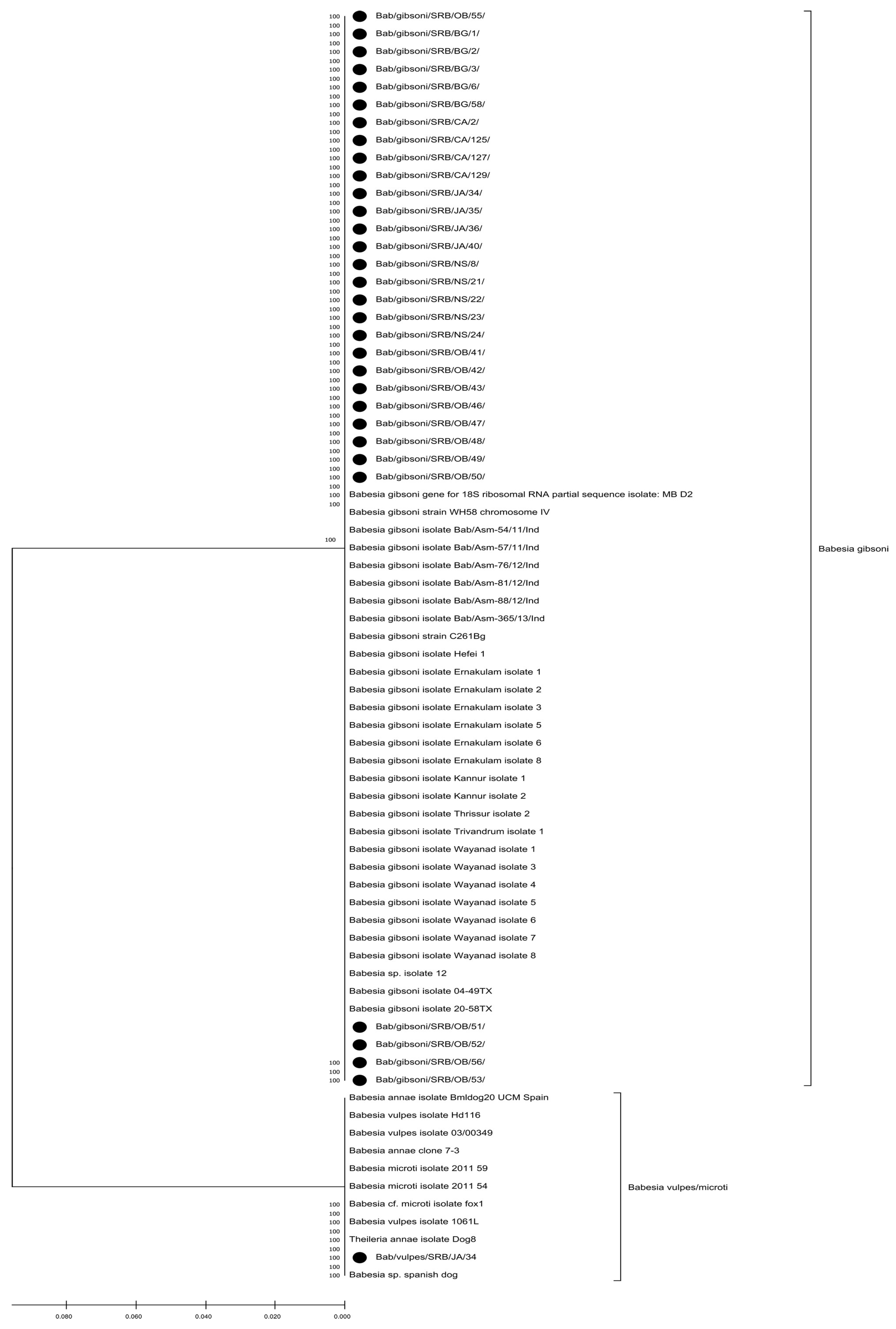
In Serbia, most canine babesiosis cases are caused by Babesia canis, but infections with small Babesia species, especially Babesia gibsoni, are often overlooked and incorrectly treated. These species require different therapy and can cause long-lasting, chronic infections. In this study, we examined 101 American Staffordshire Terriers (ASTs) over two years. Using molecular methods, we found that 37 dogs were infected: 36 with B. gibsoni and one with B. vulpes. The main risk factors were the presence of scars (possible bite wounds), low body condition, previous vector-borne diseases, tick exposure, and living in rural areas. These findings show that small Babesia species are more common in ASTs than previously thought and highlight the importance of proper diagnosis, tick prevention, and reducing dog-to-dog bite transmission.
Abstract
In Serbia, Babesia canis is the predominant cause of canine babesiosis, while B. gibsoni and B. vulpes have been reported only sporadically. Limited awareness of these small Babesia species often leads to misdiagnosis and inappropriate treatment. International reports indicate that American Staffordshire Terriers (ASTs) and related breeds are particularly affected. This study examined 101 ASTs over a two-year period to determine the occurrence of small Babesia species and identify dog- and owner-related risk factors. Collected data included age, sex, body condition score (BCS), clinical signs, presence of scars, history of vector-borne diseases (VBD), living conditions, antiparasitic prophylaxis, and tick exposure. Molecular identification using PCR and Sanger sequencing revealed that 37 dogs were positive for Babesia spp.; among them, 36 were infected with B. gibsoni and one with B. vulpes. Significant risk factors associated with infection included the presence of scars, low BCS, history of VBDs, tick exposure, and living in rural areas. These findings demonstrate a notably high occurrence of B. gibsoni and the presence of B. vulpes in ASTs in Serbia. The results highlight the need for improved awareness, accurate molecular diagnostics, and targeted preventive and therapeutic measures. Additionally, observed risk factors suggest chronic infection and support transmission pathways linked to dog bites and tick exposure.