

Prevalence of Microbial Isolates Cultured from Endometrial Swab Samples Collected from United Kingdom Thoroughbred Mares from 2014 to 2020
by
 , , and
Rebecca Mouncey
1,*,† ,
,
Juan Carlos Arango-Sabogal
1,2,†,
Polly Rathbone
3,
Camilla J. Scott
4 and
Amanda M. de Mestre
3,5,* 1
Department of Pathobiology and Population Sciences, The Royal Veterinary College, University of London, Hertfordshire AL9 7TA, UK
2
Département de Pathologie et Microbiologie, Faculté de Médecine Vétérinaire, Université de Montréal, Saint-Hyacinthe, QC J2S 2M2, Canada
3
Department of Comparative Biomedical Sciences, The Royal Veterinary College, University of London, Hertfordshire AL9 7TA, UK
4
Rossdales Veterinary Surgeons, Beaufort Cottage Stables, Newmarket CB8 8JS, UK
5
Baker Institute for Animal Health, College of Veterinary Medicine, Cornell University, Ithaca, NY 14850, USA
*
Authors to whom correspondence should be addressed.
†
These authors contributed equally to this work.
Vet. Sci. 2024, 11(2), 82; https://doi.org/10.3390/vetsci11020082
Submission received: 14 November 2023
/
Revised: 31 January 2024
/
Accepted: 6 February 2024
/
Published: 9 February 2024
(This article belongs to the Special Issue Horse Reproduction and Fertility)
Simple Summary
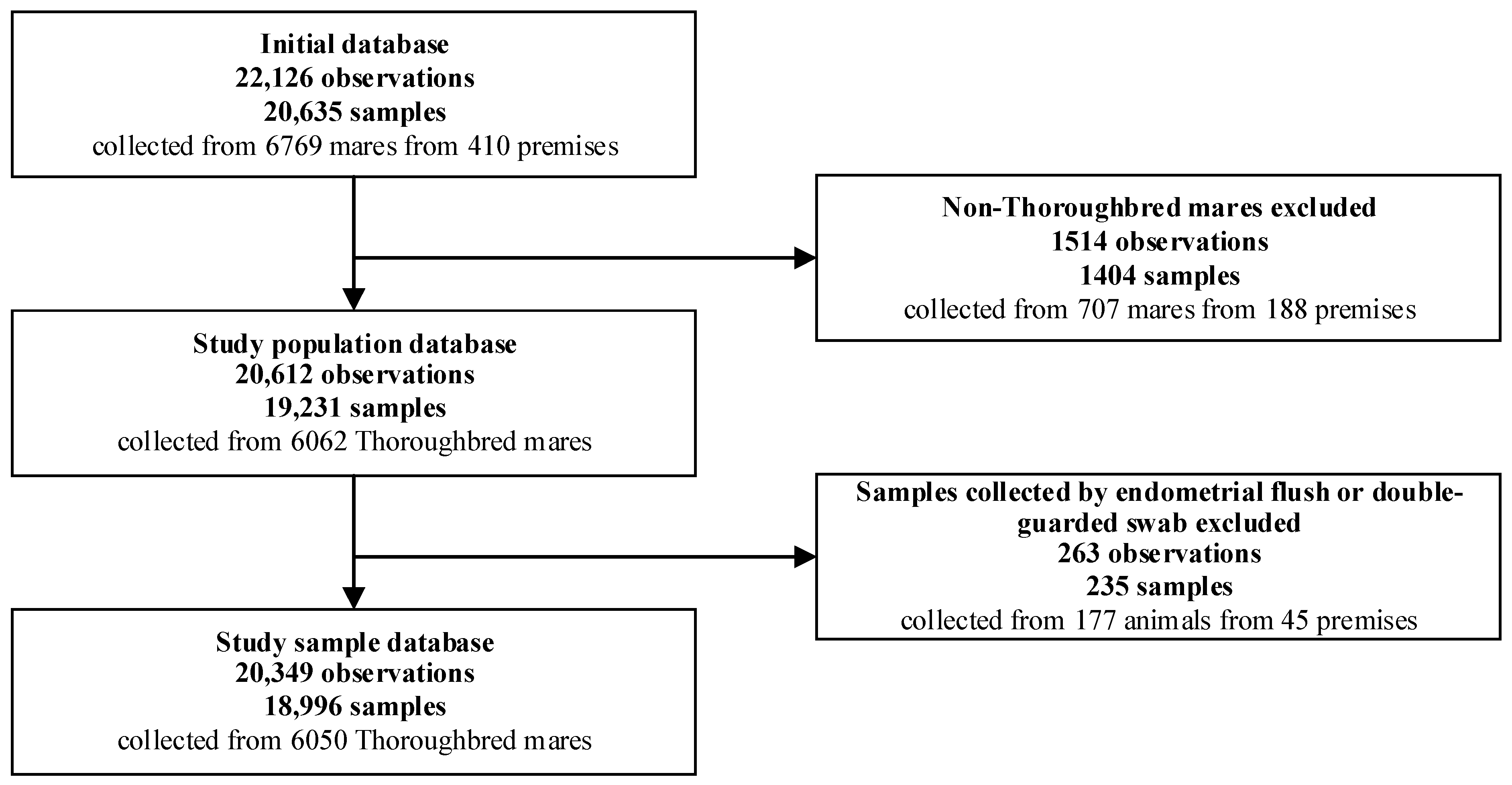
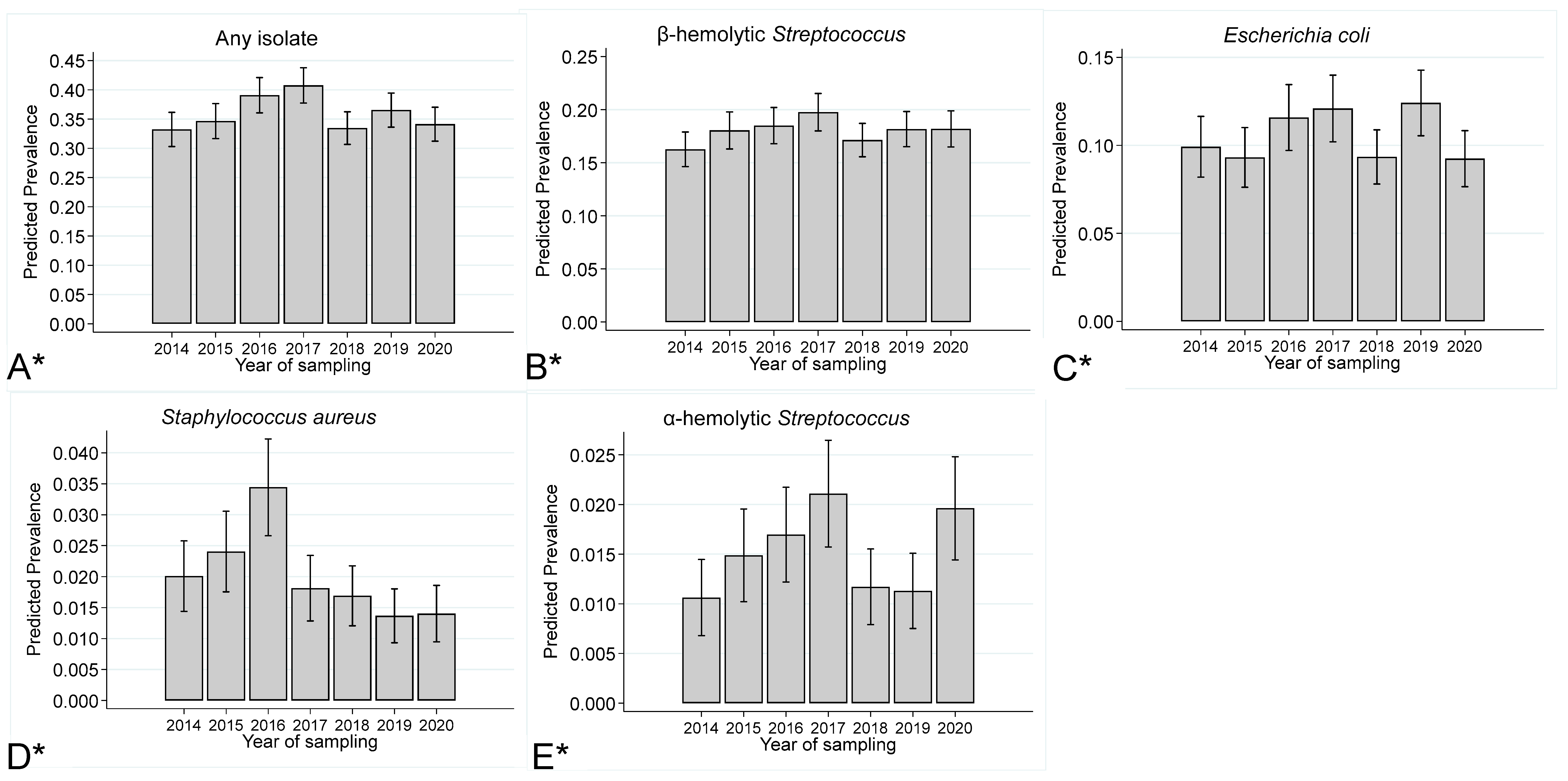
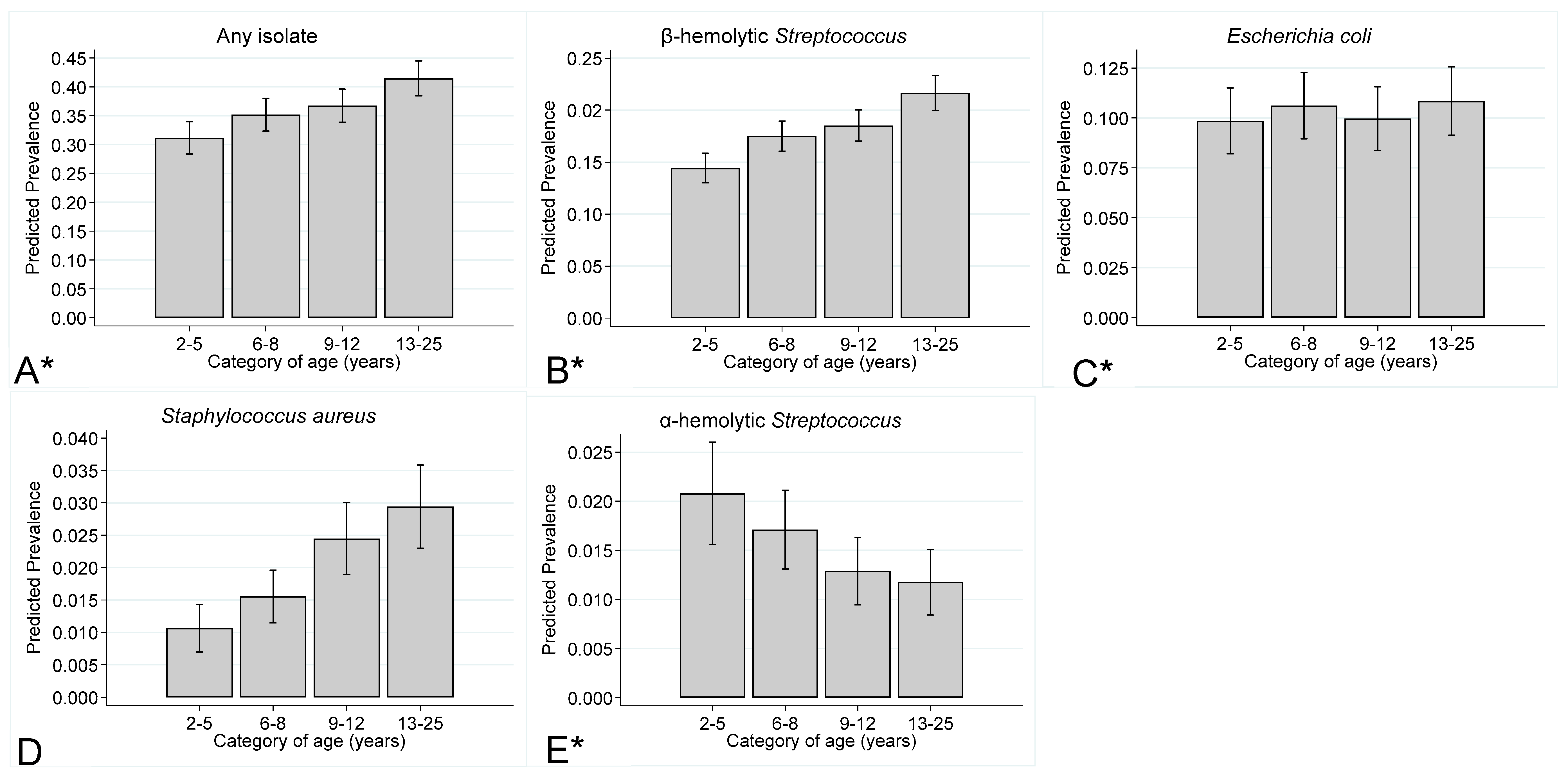
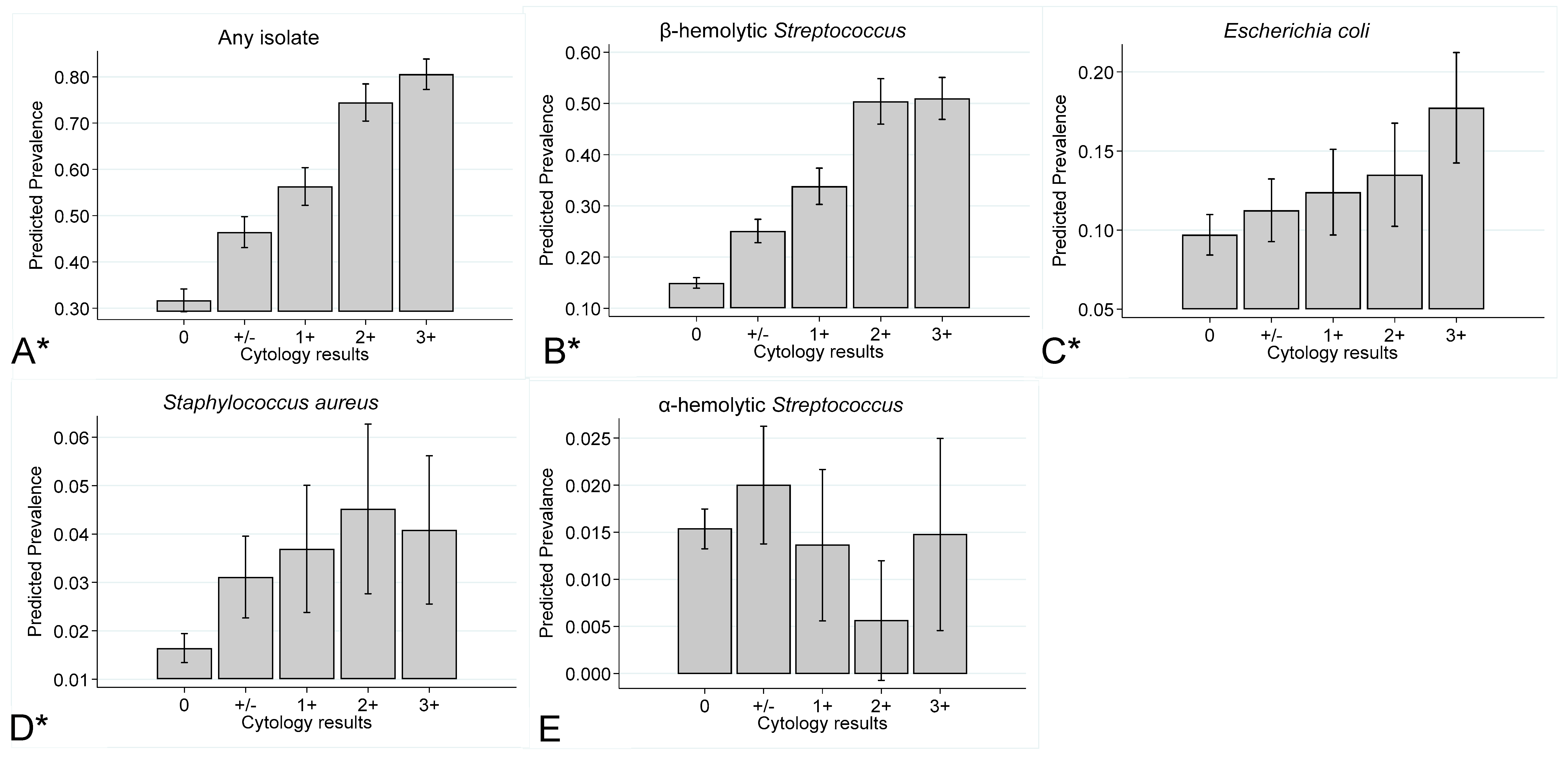
There is a lack of understanding as to whether the bacteria isolated from swabs of the surface of the lining of broodmares’ uteri (endometrial swabs) are present due to infection or contamination, or whether they are, in fact, part of the normal flora. This study aimed to understand this further by investigating endometrial swabs taken from a population of Thoroughbred broodmares and submitted to a laboratory in the UK between 2014 and 2020; by describing bacterial prevalence (the estimated percentage of swabs from which bacteria are isolated); and by evaluating whether bacterial prevalence changed over time or between mares of different ages and with differing amounts of inflammation of the uterine lining. Over the 7-year period, 18,996 endometrial swabs were submitted from 6050 mares on 290 farms. The overall prevalence of bacteria was 35.5%. Beta-hemolytic Streptococcus (17.9%) and E. coli (10.3%) were the most prevalent types of bacteria. The prevalence of bacteria changed over time (between different years in which mares were sampled) and was also impacted by the mare age and by whether there was inflammation of the uterine lining at the time of sampling. Results from this study provide up-to-date prevalence estimates and suggest that the interpretation of Thoroughbred endometrial swab findings is complicated.
Abstract
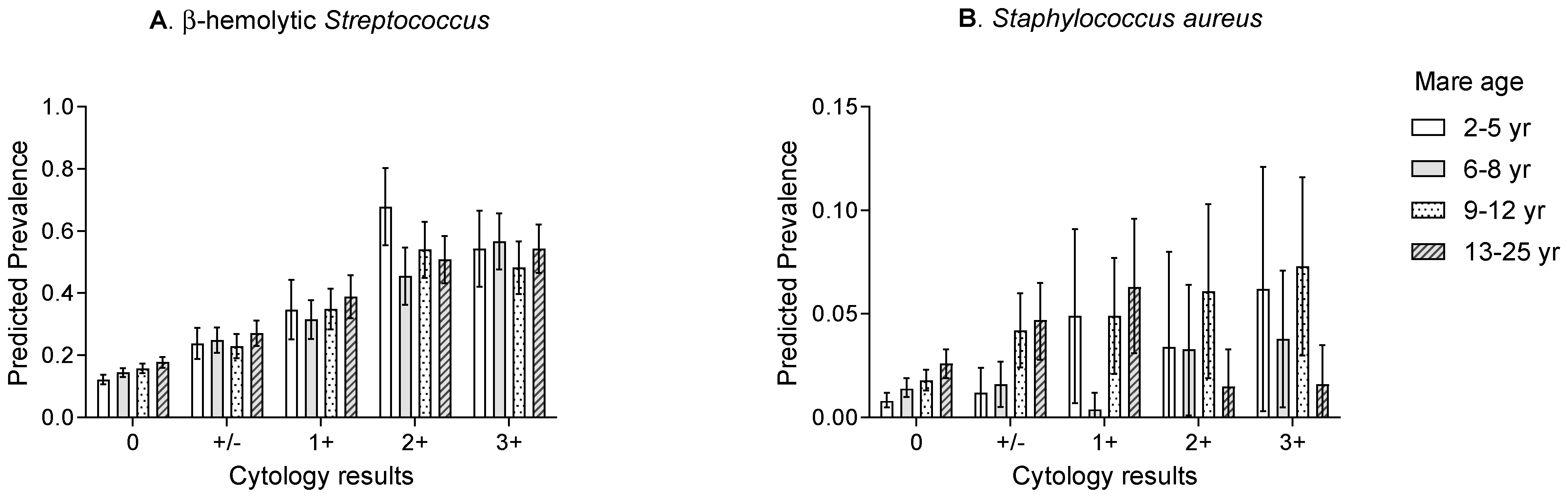
Determining whether endometrial microbial isolates are pathogens, contaminants, or even part of the “normal” microbiome is extremely complex, particularly given the absence of “gold standard” tests for endometritis. Population-level benchmarking and temporal monitoring can provide novel insights and a wider context to improve understanding. This study aimed to (i) estimate the prevalence of endometrial isolates from swabs of Thoroughbred broodmares in Newmarket, UK between 2014 and 2020; and (ii) evaluate the effects of year, mare age, and cytology findings on isolate prevalence. Generalised linear mixed models with a logit link, both null models and models using year of sampling, mare age, or cytology findings as predictors, were fitted to estimate isolate prevalence. Over the 7-year period, data were available from 18,996 endometrial-swab samples from 6050 mares on 290 premises. The overall isolate prevalence was 35.5% (95% confidence interval (CI) 33.0–37.9), and this varied significantly between years. The most prevalent isolates were β-hemolytic Streptococcus (17.9; 95% CI: 17–19) and E. coli (10.3%; 95% CI: 9.0–11.6). Isolate prevalence increased with mare age except for E. coli isolates, and with increasing category of cytology findings except for α-hemolytic Streptococcus isolates. The results provide novel estimates of isolate prevalence and highlight knowledge gaps around potential complexities in the interpretation of findings.
Keywords:
culture; cytology; endometrial; mare; Thoroughbred; prevalence