Prevalence of Cardiac Lesions in Cases of Bovine Blackleg in Tennessee (USA), 2004–2018


1
Department of Biomedical and Diagnostic Sciences, College of Veterinary Medicine, University of Tennessee, Knoxville, TN 37916, USA
2
California Health and Food Safety Laboratory, School of Veterinary Medicine, University of California-Davis, San Bernardino, CA 92408, USA
*
Author to whom correspondence should be addressed.
Vet. Sci. 2023, 10(4), 297; https://doi.org/10.3390/vetsci10040297
Submission received: 17 February 2023
/
Revised: 28 March 2023
/
Accepted: 6 April 2023
/
Published: 17 April 2023
(This article belongs to the Section Anatomy, Histology and Pathology)
Simple Summary
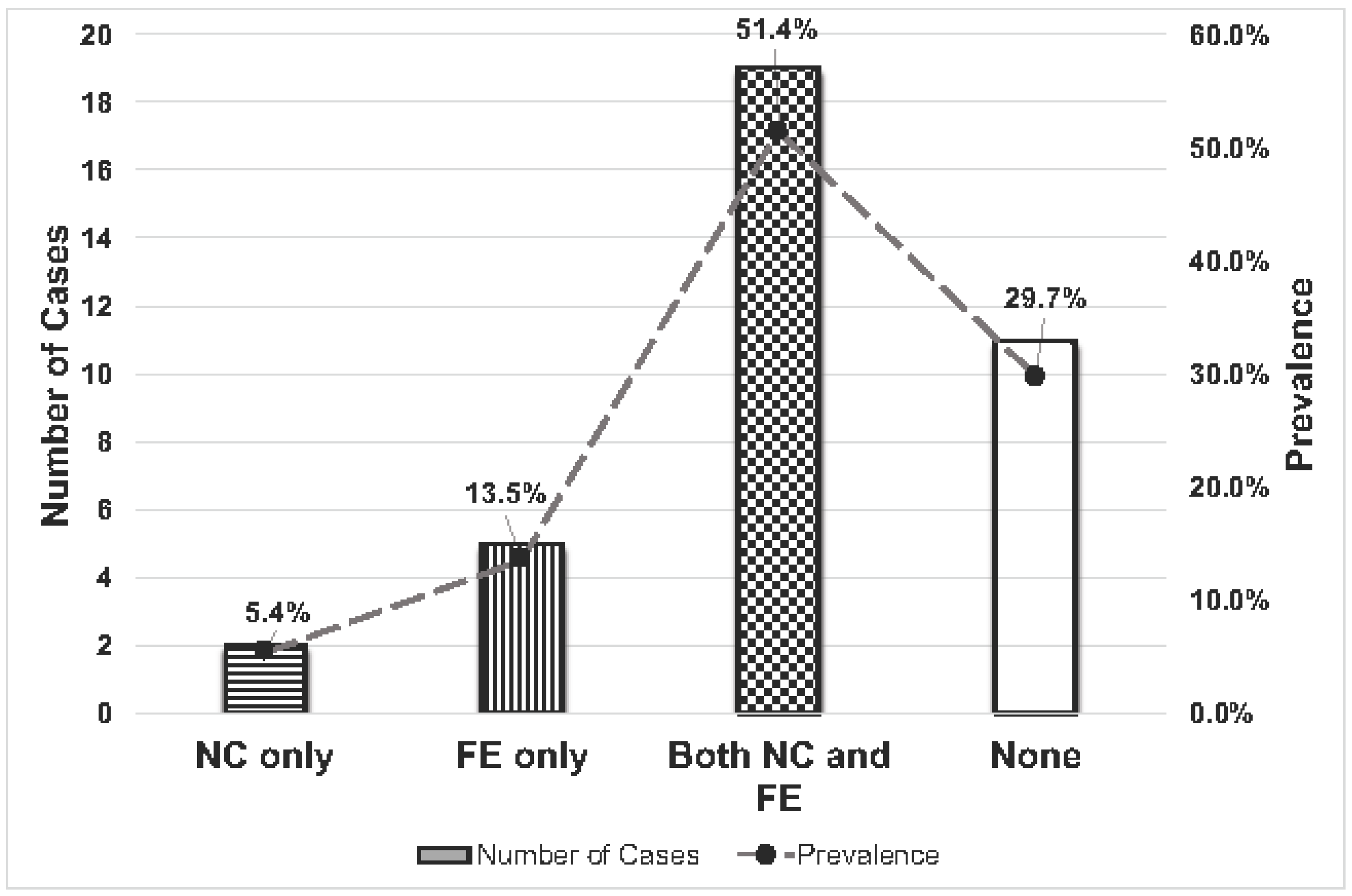
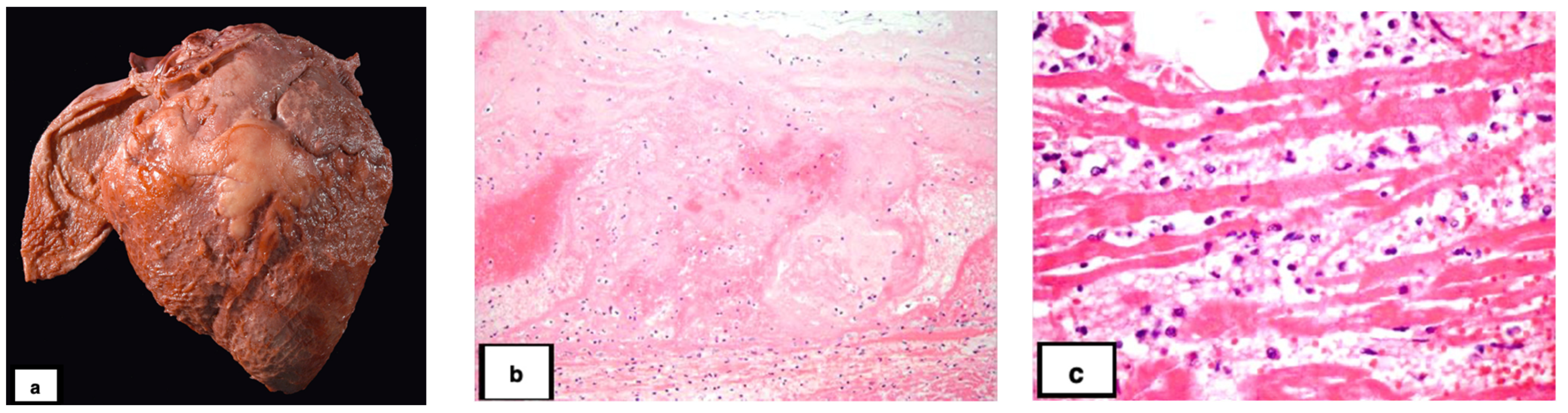
Blackleg is a common cause of death in young cattle, mostly caused by Clostridium chauvoei. Heart lesions were traditionally considered uncommon in cases of blackleg in cattle until a 2018 study reported otherwise. The aim of this study was to determine the prevalence of heart lesions in cases of blackleg in cattle in Tennessee, USA. The University of Tennessee Veterinary Medical Center database was searched for cattle with a diagnosis of blackleg necropsied between 2004 and 2018. Of the 120 necropsy reports, 37 had a diagnosis of blackleg. Histology slides of skeletal muscle (26/37) and the heart (26/37) were reviewed to confirm the presence of supportive lesions. Heart lesions were observed in 26 of the 37 cattle (70.3%) diagnosed with blackleg; no heart lesions were identified in the remaining 11 cases (29.7%). Specifically, (5.4%; 2/37) had only necrotizing myocarditis; (13.5%; 5/37) had only fibrinous or fibrinosuppurative pericarditis, epicarditis, or endocarditis; (51.4%; 19/26) had a combination of myocarditis and pericarditis, epicarditis, or endocarditis; and (29.7%; 11/37) had no lesions. Furthermore, of the 26 cases with heart lesions, 24 cases had visible lesions, while 2 cases were identified only by microscopic examination. This indicates that macroscopic examination alone is insufficient to identify heart lesions in cases of blackleg in cattle. Contrary to traditional perceptions, heart lesions in cases of blackleg in cattle could be as high as 70% and are most often associated with skeletal muscle lesions. The prevalence of heart lesions among cases of blackleg in cattle may be higher when the heart is examined microscopically than if only evaluated macroscopically. Pathologists should specifically evaluate the heart for lesions in suspected cases of blackleg in cattle and utilize microscopic examination when visible lesions are absent.
Abstract
Blackleg is a common cause of death in cattle, mostly caused by the bacterium Clostridium chauvoei. Cardiac lesions were traditionally considered uncommon in cases of blackleg in cattle until a 2018 study reported otherwise. This study was aimed at determining the prevalence of cardiac disease among cattle that died of blackleg in Tennessee, USA. The outcome of this study would reinforce the importance of assessing cardiac lesions in suspected cases of blackleg in cattle. The University of Tennessee Veterinary Medical Center database searched for cattle with a confirmed diagnosis of blackleg necropsied between 2004 and 2018. Of the 120 necropsy reports, 37 had a diagnosis of blackleg. Histology slides of skeletal muscle (26/37) and the heart (26/37) were reviewed to confirm the presence of supportive lesions. Of the 37 cases of blackleg identified, 26 animals (70.3%) had cardiac lesions, including 4 (10.8%) that had only cardiac involvement without skeletal muscle lesions. Specifically, (5.4%; 2/37) had only necrotizing myocarditis; (13.5%; 5/37) had only fibrinous or fibrinosuppurative pericarditis, epicarditis, or endocarditis; (51.4%; 19/26) had a combination of myocarditis and pericarditis, epicarditis, or endocarditis; and (29.7%; 11/37) had no lesions. Furthermore, of the 26 cases with cardiac lesions, 24 cases had gross lesions, while 2 cases were identified only by microscopic examination. This indicates that gross examination alone is insufficient to identify cardiac involvement in blackleg cases in cattle. Contrary to traditional perceptions, cardiac lesions in cases of bovine blackleg could be as high as 70% and are most often associated with skeletal muscle lesions. The prevalence of cardiac lesions in cases of blackleg in cattle may be higher when the heart is examined microscopically than if it is only evaluated grossly. Pathologists should specifically evaluate the heart for lesions in suspected cases of blackleg in cattle and utilize microscopic examination when gross lesions are absent.
Keywords:
blackleg; clostridial myositis; bovine; Clostridium chauvoei; myocarditis; myositis