Data Descriptor

Perceptions of Security, Victimization, and Coexistence: A Database from Cali, Colombia

by
Jhon James Mora
1,
Enrique Javier Burbano-Valencia
2,*,
Angie Mondragón-Mayo
3 and
José Santiago Arroyo Mina
4
1
Facultad de Negocios y Economía Isaac Gilinski, Universidad Icesi, Cali 760031, Colombia
2
Grupo de Investigación GERA, Facultad de Ciencias Sociales y Económicas, Universidad del Valle, Cali 760032, Colombia
3
Facultad de Economía, Universidad del Rosario, Bogotá 111711, Colombia
4
Facultad de Ciencias de la Administración, Universidad del Valle, Cali 760032, Colombia
*
Author to whom correspondence should be addressed.
Data 2026, 11(2), 41; https://doi.org/10.3390/data11020041
Submission received: 2 December 2025 / Revised: 15 January 2026 / Accepted: 2 February 2026 / Published: 14 February 2026

Abstract

This article addresses a key evidence gap in urban safety policy in Colombia: the absence of publicly accessible microdata that jointly measure victimization, perception of security, and probability of sanctions among socioeconomically vulnerable residents. It aims to provide a clean, linkable dataset that enables analysis of variations in these issues across demographic and territorial groups in Cali (recently classified as the 29th most dangerous city worldwide, with 1028 and 1065 homicides in 2024 and 2025, respectively). It reports face-to-face survey data collected from 22 July to 16 August 2024, at Sistema de Identificación de Potenciales Beneficiarios de Programas Sociales (SISBEN) service points. The final dataset includes 2139 adults (aged 18–95 years) and combines (i) primary responses on perceived safety (e.g., public space safety and surveillance cameras), perceived likelihood of sanction, victimization, and self-protection measures with (ii) selected sociodemographic and household characteristics drawn from SISBEN IV records. Individual-level linkage was implemented using respondent identification at interviews, yielding an integrated anonymized file suitable for replication and secondary analysis. The dataset enables distributive analyses of insecurity (e.g., by sex, age, and ethnicity—including Afro-descendant populations) within a policy-relevant target group and supports evaluation and targeting of local interventions by providing individual-level indicators.
Dataset License: Academic Free License (AFL) 3.0

1. Summary

Security is a fundamental component of quality of life and well-being, whereas violence reverses the development of sectors such as education, health, employment, and infrastructure provision [1]. Moreover, the physical security of property and individuals, along with perceptions of security, are vital to the analysis on poverty [2]. Alternatively, the theory of fear of crime has been developed on the basis of the distinction among objective victimization risk, perceived risk, and fear-related emotions, demonstrating that fear constitutes a specific phenomenon that cannot be explained solely by crime rates but also by social and symbolic processes associated with perceived vulnerability, the physical environment, and institutional trust [3,4,5,6,7,8]. In this regard, the literature noted that studies frequently associate fear with perceived risk, although they are distinct constructs with partially different determinants [4,5,6]. Similarly, contemporary approaches posit that fear of crime also operates as an expressive indicator of social order, in that it can reflect perceptions of institutional control, community cohesion, and environmental cues of disorder beyond direct victimization experiences [7,9,10].
This literature documents that victimization, fear of crime, and perceptions of insecurity are systematically associated with low levels of subjective well-being, life satisfaction, and social trust, which reinforces the concept that fear of crime is a central component of quality of life in urban areas [11,12,13]. In Latin America, analyses emphasize that fear can persist despite fluctuations in certain crime indicators due to its links with inequality, institutional weakening, conditions of the urban environment, and everyday experiences of violence [12,13,14]. In Colombia, evidence points to consistent patterns: victimization and perceptions of insecurity are associated with low levels of life satisfaction and high levels of social distress, which implies that subjective security directly influences well-being beyond recorded crime [15].
Cali represents a customary presence of insecurity. For example, the city was ranked 29th and 31st in 2024 and 2023, respectively, among the top 50 “most dangerous cities in the world” [16]. Indeed, the localization of homicides has been persistently concentrated within similar neighborhoods, such as within three comunas 1—14, 15, and 21—which have large proportions of populations registered in Sistema de Identificación de Potenciales Beneficiarios de Programas Sociales [SISBEN] 2) and comprise 31% of the cases recorded in 2024 [17]. In addition, studies that conducted causal evaluations of security policies focused on objective indicators of violence, such as juvenile curfews, and demonstrated that these interventions do not necessarily generate average reductions in homicide rates and may exhibit heterogeneous effects according to territorial and socioeconomic characteristics. This type of evidence underscores the limitations of an approach that is exclusively based on recorded crime and reinforces the importance of measuring the subjective and institutional dimensions of insecurity [18].
Therefore, the current study designed a survey that includes questions on perceptions of human security in urban areas as a part of the framework of Inter-Administrative Agreement No. 4132.010.32.1.376-2024, which was signed between the Fundación Universidad del Valle and the Departamento Administrativo de Planeación Distrital (DAPD) of the Alcaldía de Cali. This survey aims to address gaps in the metrics for perceptions on security within Cali, which are typically derived from aggregate records or private initiatives, such as Cali Cómo Vamos program [19], and do not offer public access to individual data, which is a disadvantage.
This article provides a particularly valuable empirical input, because it simultaneously measures perceptions of safety at the city and neighborhood levels; evaluations of strategies implemented by the Alcaldía de Cali—such as Espacios Públicos Seguros and Vigilancia y Prevención del Delito, as reported in [20]—as well as perceptions of the police, probability of sanction, household victimization experiences, and self-protection measures, together with a broad sociodemographic module and location identifiers at the comuna and neighborhood levels.
This structure enables the operationalization of components highlighted by fear of crime theory, such as perceived insecurity, perceived risk, perceived state effectiveness, institutional control, and self-protective behaviors, and enables the testing of hypotheses on their unequal distribution according to gender, socioeconomic status, education, or labor-market attachment [3,4,9]. Additionally, as [11,12,15] is linked to the SISBEN IV administrative database and focuses on socioeconomically vulnerable populations, the dataset supports a research agenda that examines the interconnections among fear of crime, poverty, and subjective well-being, consistent with evidence that documents the negative effects of victimization and fear on life satisfaction and social trust within the contexts of Latin America in general and Colombia in particular. In particular, the ability to estimate models that elucidate relationships among victimization, perceived safety, and material living conditions enables more refined tests of mechanisms proposed by the theory—such as the mediating role of fear in the relationship between victimization and well-being—and identifies high-vulnerability profiles that can inform policies that target citizen security in urban contexts such as Cali [3,4,7,12].
While featuring certain behavioral and vulnerability dimensions (e.g., specific avoidance practices and heterogeneity in trust across security providers—including the police, private security, and community networks) and individual attributes (e.g., disability or sexual orientation), the proposed instrument provides a solid empirical basis for the economic analysis of perceived insecurity and open the path for recipients of the more explicit incorporation of these element in future applications. The joint availability of measures of perceived safety at multiple territorial scales, household victimization experiences, indicators of self-protection, evaluations of institutional performance, and a detailed sociodemographic and spatial module could enable researchers to estimate associations and distributional gradients in perceived insecurity and explore relevant mechanisms such as relationships among victimization, institutional trust, and protective behaviors. In this manner, the study establishes an appropriate platform for future extensions without undermining the analytical value of the dataset.
This data repository enables researchers to explore the construction, perception, and narration of insecurity, victimization, and coexistence in urban environments. Questions on sense of belonging to a community and sense of security in various public and private spaces open avenues for studies on cultural values and social representation, all of which are key topics under the interdisciplinary humanities approach.
In addition, this dataset can be combined with other administrative records, such as those on health, education, and justice, which significantly expands its utility for the integrated analysis of insecurity conditions and their multidimensional impacts. Integration with administrative records fosters a comprehensive approach that links perceptions and experiences of victimization with structural outcomes, including the identification of spatiotemporal patterns that enrich the design of targeted, evidence-based public policies. Finally, the survey and database enable an inter-administrative agreement to accomplish its main objective—to promote the advancement of public policy and social initiatives that effectively utilize public funding, which, in this case, are grounded in the best use of statistical data.

2. Data Description

Table 1 presents the key topics included in the database at the comuna and neighborhood levels.
The database is divided into several sections: sociodemographic characteristics, perceptions of security and policy, sense of security at places, victimization (sanction), and self-security measures.

2.1. Socioeconomic Characteristics

Table 2 displays socioeconomic attributes grouped into seven standard variables. The database also includes two variables with open-text responses, namely, nationality and the relationship with the household head.

2.2. Perceptions of Security and Policy

Table 3 presents six variables on perceptions of security and coexistence and policy related to these issues. Additionally, it incorporates two questions with multiple potential responses: “From January to June 2024 … (i) have you received information from the Mayor’s Office about:” and (ii) “which of these situations occurred in your neighborhood?”.

2.3. Sense of Security at Places

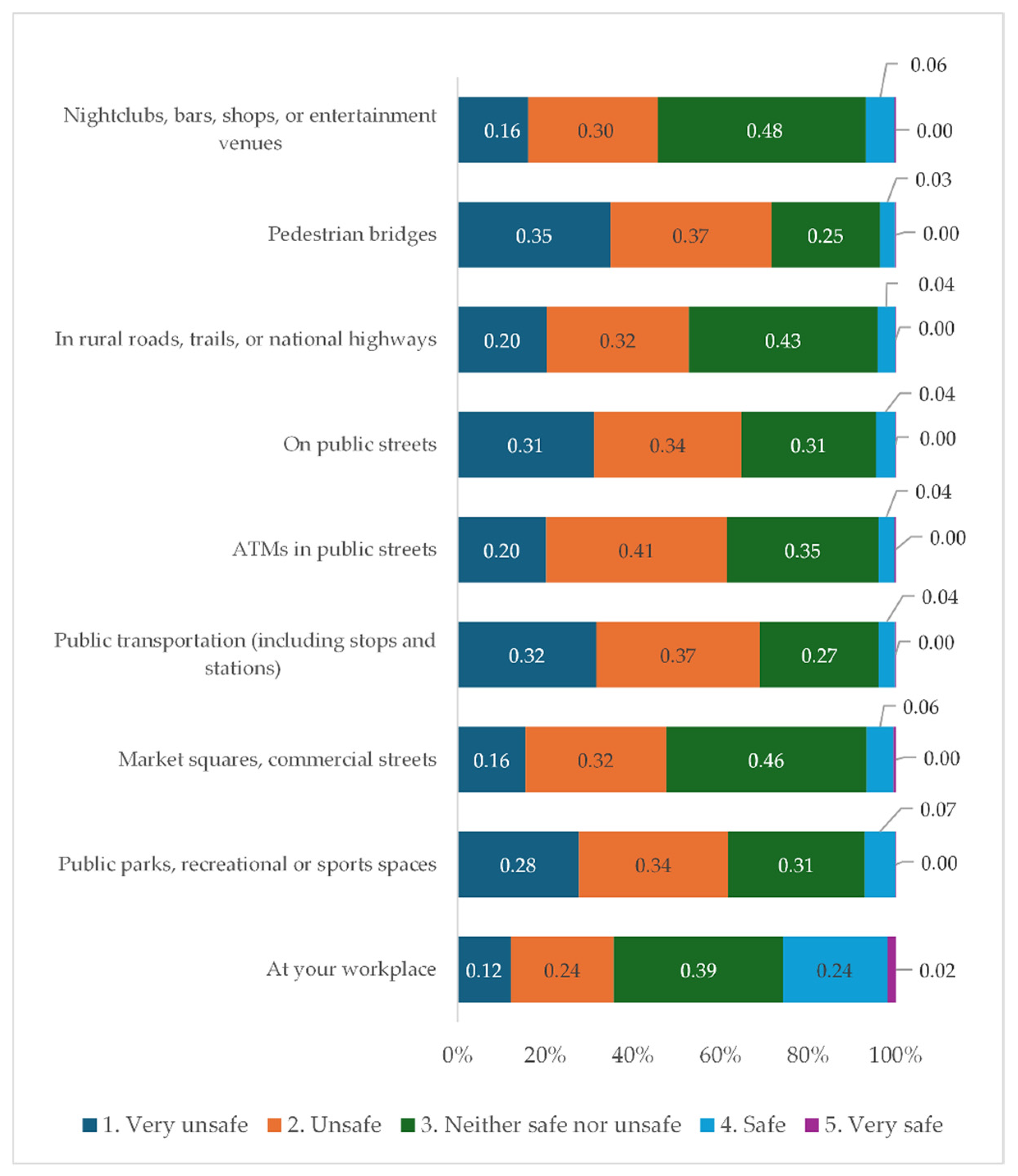
Figure 1 illustrates the variables associated with sense of security in nine private and public places.

2.4. Victimization, Sanction, and Self-Security Measures

Table 4 presents the variables for cases of victimization and probability of crime sanctions. Three complementary variables were captured using questions with multiple responses: “(i) In the last year, have you or a household member been a victim or experienced any of these? From January to June 2024 …. (ii) What measures did you take at home to protect yourself from crime? (iii) What measures did you take for your personal security?”

3. Methods

We conducted a pilot study one month prior to the survey. This pilot helped estimate the duration of the survey and provided valuable field feedback to improve the data collection instrument, further avoid open-ended questions, and incorporate multiple response pathways based on the participants’ responses. In addition, the direction of the Likert scale was reversed for certain questions to mitigate response acquiescence biases. This structure ensured a comprehensive dataset by preventing skipped responses.
Data were collected through in-person, non-probability convenience sampling in Santiago de Cali, Colombia, between 22 July and 16 August 2024, at SISBEN service points. The survey was conducted on respondents within these sites during fieldwork hours, who voluntarily agreed to participate. Therefore, inclusion in the sample depended on attendance at SISBEN service points and voluntary participation, instead of a probability-based selection mechanism. Using national identification, we linked the SISBEN IV survey data with the data collected by the current study—enabling the creation of the proposed integrated database. Notably, the matching success rate in this process was 100 percent, because all respondents were individuals registered in SISBEN IV, whether new or old.
The final dataset includes 2139 respondents. This value corresponds to 26.17% of the total population (N = 8172) based on the SISBEN-registered population in Cali during the same period (22 July–16 August 2024). The sample achieved should be interpreted as a result of convenience sampling at service points and not as a probabilistic sample from the full population. Consequently, conventional sampling error interpretations (e.g., margins of error derived from simple random sampling assumptions) are not strictly applicable.
To minimize missing data and field inconsistencies, the questionnaire was implemented on a digital platform with programmed restrictions (single-option constraints and automated skips based on prior responses). The participants were required to be of legal age (18+) and to provide informed consent, which is consistent with the Colombian law on data protection (Law 1266 of 2008). We omitted information on national IDs from the database to ensure full anonymity.
The sample is not fully representative of the population in Santiago de Cali. Participation was voluntary, and recruitment was conducted at SISBEN service points; this aspect may introduce self-selection that could overrepresent individuals with specific characteristics or extreme perceptions. For example, the dataset exhibits a notable gender imbalance (the sample is composed of approximately 75.3 per cent of women; Table 2), which may be related to patterns in program participation and the timing of data collection during standard weekday business hours. In general, women are the primary effective recipients of benefits from conditional cash transfer programs targeted by SISBEN. This trend is not exclusive to Colombia but is widely observed across Latin America [21]. Finally, the survey was conducted during regular working hours from Monday to Friday, which, given the lower participation rate of women in the labor force in Cali [22], increases the likelihood that women would attend offices where data collection was conducted.
This imbalance between the SISBEN IV-registered population and the survey dataset is also noted for other cardinal attributes (Table 5; regarding years of education, we constructed this variable using level of education and final grade). We strongly recommend considering these data characteristics when generalizing the findings apart from the population registered in SISBEN or those attending service points. Additionally, we observe that non-random survey participation influenced the probability of appearing in the survey [23]. Equation (1) presents a Probit selection model that contrasts such hypotheses in the current case:
S u r v e y i * = β 1 + β 2 A g e i + β 3 E d u c a t i o n i + β 3 W o m e n i + β 3 S i n g l e i   + u i ;   u i ~ N 0 , 1 S u r v e y i * =   1 S u r v e y i * >   0 .
Table 6 presents the estimation used in Equation (1). The model reveals that an increase in one age year increases the probability of appearing in the survey at 0.0045 percentage points (pp; column 3). Moreover, this same probability decreases by 0.003 pp if the individual is single and by 0.0087 pp for every additional year of education. Finally, being a woman increases the likelihood of appearing in the survey by 0.06 pp.

4. User Notes

Multiple analyses using this database are possible (e.g., for calculating indicators such as victimization rate (VR) [2]):
V R = T P  
where T is the total number of victims of any crime, and P is the population aged 18 years and above. The numerator of VR is a response to the question: “In the last year, have you or a household member been a victim or experienced any of these? (Responses: theft or attempted theft in your home; theft or attempted theft of vehicles, vehicle parts, bicycles, motorcycles, or skateboards; deliberate destruction or damage to a house, store, or any other property that you or a member of your household owns; None; and Other.” Moreover, the denominator is different from DANE (15 years old), because the respondents were only adults aged 18 years old and above.
The database enables the presentation of spatial rate victimization using aggregate comunas [24,25] 3. Table 7 presents the results of the VR.
Alternatively, and given the potential self-selection biases discussed in the previous section, the study applied the partial identification framework proposed by Manski. Let us = P(S = 1) denote the probability of being observed in the survey, and p_s = E[Y|S = 1] the observed VR among the surveyed individuals by sex [23].
Table 8 (with s = 0.26 [survey share] and p_s = 0.34 [victimization identified within the survey]) indicates that the Manski lower bound for the population VR is p_s ⁎ s = 0.089329, while the upper bound is p_s ⁎ s + (1 − s) = 0.827582. These bounds represent worst case scenarios and do not rely on ignorability assumptions. Disaggregating by sex, the observed VR among the surveyed men is 0.302, yielding bounds [0.079167, 0.817420]. For women, the observed rate is 0.354037, producing bounds [0.092668, 0.830921]. The higher lower bound for women denotes a higher observed VR in the survey sample, while wide intervals highlight the weak identification inherent to the absence of assumptions regarding non-surveyed individuals.
Furthermore, we estimate the average treatment effect on the treated (ATT) using propensity score matching (PSM), in which treatment is defined as being female. The propensity score is estimated once via the Probit model (Equation (1)).
Table 9 reports ATT values estimated via PSM while varying the number of nearest neighbors (k). We keep caliper = 0.05 and impose common support. The propensity score is estimated once using the Probit model: treat (women = 1) ~ age + education + single. Sensitivity analysis was conducted by varying the number of nearest neighbors (k). The estimated ATT values are k = 1 (ATT = 0.0062), k = 2 (ATT = 0.0258), k = 3 (ATT = 0.0279), k = 4 (ATT = 0.0456), and k = 5 (ATT = 0.0429). These results indicate a consistently positive ATT, which suggests that, based on observables and within the survey, women experience a higher probability of victimization than comparable men.
Although PSM provides a conditional causal interpretation under the assumption of selection of observables, the Manski bounds serve as a complementary benchmark that remains valid under arbitrary selection. Taken together, these approaches bracket the potential range of population effects while preserving all estimated models and results ([23,26,27,28,29]).

Author Contributions

Conceptualization, J.J.M. and E.J.B.-V.; methodology, J.S.A.M. and A.M.-M.; software, A.M.-M., J.J.M. and E.J.B.-V.; validation, J.S.A.M., J.J.M. and A.M.-M.; formal analysis, E.J.B.-V., A.M.-M. and J.J.M.; data curation, A.M.-M.; writing—original draft preparation, J.J.M. and E.J.B.-V. and A.M.-M.; writing—review and editing, J.J.M., E.J.B.-V., A.M.-M. and J.S.A.M.; funding acquisition, J.S.A.M. and E.J.B.-V. All authors have read and agreed to the published version of the manuscript.

Funding

This research has been funded by DAPD of Alcaldía de Cali. Jhon James Mora is thankful to the Internal Grant Agency of Universidad Icesi for the financial support it provided for Project No. COL01130114 to carry out this research.

Institutional Review Board Statement

Ethical review and approval were waived for this study as it strictly adheres to the legal provisions that govern the SISBEN data collection process (in agreement with the Fundación Universidad del Valle, the Alcaldía de Cali), which are protected by the current legislation in Colombia. The data collection is conducted as part of a public initiative and does not pose any risks to the participants; therefore, it is not considered necessary to seek approval from an ethics committee, in accordance with the provisions of Resolution 8430 of 1993 regarding low-risk research. Also, the data collected does not allow for the direct identification of participants and adopted measures to ensure confidentiality and protection of personal information. As a result, the ID numbers were left out of our database, and there are no additional questions that let us follow the respondents. This procedure was realized by our data curation author.

Informed Consent Statement

Informed consent was obtained from all subjects involved in the study.

Data Availability Statement

The original data presented in the study are openly available at https://doi.org/10.17605/OSF.IO/FPB7G.

Acknowledgments

We would like to thank the team of SISBEN, especially Felipe Marín.

Conflicts of Interest

The authors declare no conflicts of interest.

Abbreviations

The following abbreviations are used in this manuscript:
DANEDepartamento Administrativo Nacional de Estadística
DAPDDepartamento Administrativo de Planeación Distrital
PSMPropensity score matching
VRVictimization rate

Notes

1
These are administrative divisions like the districts in United States cities.
2
SISBEN is the System for the Identification of Potential Beneficiaries of Social Programs in Colombia, designed and certified by the National Planning Department (DNP), which allows the population to be classified according to their living conditions and income.
3
The city’s aggregation follows spatial contiguity and similar geographic characteristics of the districts, dividing Santiago de Cali into five clusters: East: “comunas” 7, 13, 14, 15, and 21; Central-East: 8, 11, 12, and 16; Central-North: 3, 4, 5, 6, 9, and 10; Hillside: 1, 18, and 20; North–South: 2, 17, 19, and 22.
4
Complete cases within the survey: N = 2139. The ATT is interpreted as the average difference in the probability of victimization between women (treated) and men (controls) who are comparable on observables. Varying k provides a sensitivity check of the matching rule.

References

  1. Diprose, R. Physical safety and security: A proposal for internationally comparable indicators of violence. Oxf. Dev. Stud. 2007, 35, 431–458. [Google Scholar] [CrossRef]
  2. DANE. Encuesta de Convivencia y Seguridad Ciudadana ECSC. Available online: https://www.dane.gov.co/index.php/estadisticas-por-tema/seguridad-y-defensa/encuesta-de-convivencia-y-seguridad-ciudadana-ecsc (accessed on 10 February 2025).
  3. Hale, C. Fear of crime: A review of the literature. Int. Rev. Victimol. 1996, 4, 79–150. [Google Scholar] [CrossRef]
  4. Ferraro, K.F. Fear of Crime: Interpreting Victimization Risk; State University of New York Press: Albany, NY, USA, 1995. [Google Scholar]
  5. Warr, M. Fear of crime in the United States: Avenues for research and policy. In Criminal Justice 2000; U.S. Department of Justice, Office of Justice Programs: Washington, DC, USA, 2000; Volume 4, pp. 451–489. [Google Scholar]
  6. Rountree, P.W.; Land, K.C. Perceived risk versus fear of crime: Empirical evidence of conceptually distinct dimensions of fear of victimization in a national sample of women. Soc. Forces 1996, 74, 1353–1376. [Google Scholar] [CrossRef]
  7. Jackson, J.; Sunshine, J. Public confidence in policing: A neo-Durkheimian perspective. Br. J. Criminol. 2007, 47, 214–233. [Google Scholar] [CrossRef]
  8. Hart, T.C.; Chataway, M.; Mellberg, J. Measuring fear of crime during the past 25 years: A systematic quantitative literature review. J. Crim. Justice 2022, 82, 101988. [Google Scholar] [CrossRef]
  9. Jackson, J.; Gray, E. Functional fear and public insecurities about crime. Br. J. Criminol. 2010, 50, 1–22. [Google Scholar] [CrossRef]
  10. Pain, R. Place, social relations and the fear of crime: A review. Prog. Hum. Geogr. 2000, 24, 365–387. [Google Scholar] [CrossRef]
  11. Alfaro-Beracoechea, L.; Puente, A.; Da Costa, S.; Ruvalcaba, N.; Páez, D. Effects of fear of crime on subjective well-being: A meta-analytic review. Eur. J. Psychol. Appl. Leg. Context 2021, 13, 61–74. [Google Scholar] [CrossRef]
  12. Reyes-Martínez, V. Victimización y miedo al crimen en Latinoamérica: ¿Cómo se relacionan con el bienestar subjetivo? Intervención 2021, 11, 45–68. [Google Scholar] [CrossRef]
  13. Kessler, G.; Otamendi, A. Sociology of Fear of crime in Latin America. In The Oxford Handbook of the Sociology of Latin America; Roberts, B.R., Wilson, F.H., Eds.; Oxford University Press: Oxford, UK, 2020; pp. 677–696. [Google Scholar]
  14. Dammert, L. Fear and Crime in Latin America: Redefining State-Society Relations, 1st ed.; Routledge: Oxford, UK, 2012. [Google Scholar]
  15. Manjarrés, W.; Baca-Mejía, W. Victimización por crimen, percepción de seguridad y satisfacción con la vida en Colombia. Rev. de Econ. Inst. 2019, 21, 133–158. [Google Scholar]
  16. World Population Review. Most Violent Cities in the World 2024. Available online: https://worldpopulationreview.com/world-city-rankings/most-violent-cities-in-the-world (accessed on 10 January 2025).
  17. de Cali, A. Informe Anual de Homicidios 2024. Available online: https://www.cali.gov.co/observatorios/publicaciones/113364/observatorio-social-informe-anual/ (accessed on 12 February 2025).
  18. Burbano, E.J.; Villa, E.; Zafra, M.I. ¿Los toques de queda para menores de edad disminuyen la tasa de homicidio? Evidencia de Cali (Colombia). Rev. Iberoam. Estud. Desarro. 2020, 9, 174–206. [Google Scholar] [CrossRef]
  19. Vamos, C.C. Encuesta de Percepción Ciudadana 2024. Available online: https://www.calicomovamos.org.co/encuesta-percepcion-ciudadana (accessed on 15 May 2025).
  20. de Cali, A. Plan de Desarrollo Distrital. Available online: https://www.cali.gov.co/planeacion/publicaciones/114694/plan-desarrollo-distrital/ (accessed on 12 May 2025).
  21. Rodríguez, C. Programas de transferencias condicionadas de ingreso e igualdad de género: ¿Por dónde anda América Latina? CEPAL—Ser. Mujer Y Desarro. 2011, 109, 1–39. [Google Scholar]
  22. DANE. Participación de Las Mujeres Colombianas en el Mercado Laboral. Comisión Legal Para la Equidad de la Mujer. 2020. Available online: https://www.dane.gov.co/files/investigaciones/genero/informes/Informe-participacion-mujer-mercado-laboral.pdf (accessed on 1 May 2025).
  23. Heckman, J.J. Sample selection bias as a specification error. Econometrica 1979, 47, 153–161. [Google Scholar] [CrossRef]
  24. CIDSE. ¿Cuántos Somos? ¿Cómo Vamos? Cali: Diagnóstico Sociodemográfico de Cali y 10 Municipios del Pacífico Nariñense. Afroamérica XXI. Available online: http://www.dane.gov.co/files/censo2005/etnia/sys/cuantos_somos.pdf (accessed on 16 May 2025).
  25. Mora, J.J.; Caicedo, C.; González, C.G. Duración del desempleo de los jóvenes y los “ninis” en Cali, Colombia. Rev. de Econ. Inst. 2017, 19, 167–184. [Google Scholar] [CrossRef]
  26. Manski, C.F. Nonparametric bounds on treatment effects. Am. Econ. Rev. 1990, 80, 319–323. [Google Scholar]
  27. Manski, C.F. Identification Problems in the Social Sciences; Harvard University Press: Cambridge, MA, USA, 1995. [Google Scholar]
  28. Leuven, E.; Sianesi, B. PSMATCH2: Stata Module to Perform Full Mahalanobis and Propensity Score Matching, Common Support Graphing, and Covariate Imbalance Testing. In Statistical Software Components S432001; Boston College Department of Economics: Chestnut Hill, MA, USA, 2003. [Google Scholar]
  29. Rosenbaum, P.R.; Rubin, D.B. The central role of the propensity score in observational studies for causal effects. Biometrika 1983, 70, 41–55. [Google Scholar] [CrossRef]
Figure 1. Sense of security across places (n = 2139, %). “On a scale of 1 to 5, where 1 is very unsafe and 5 is very safe, how do you feel in the following places?”.
Data 11 00041 g001
Table 1. Database details.
General areasSociology, economics, social policy, and human geography
Specific areasSecurity, crime, victimization, and perception
Type of data
Method of data acquisitionData were randomly collected through in-person surveys in Santiago de Cali, Colombia, from July to August (2024), at various SISBEN service points. The respondents, residing in 22 administrative divisions, contributed to a dataset that integrates primary survey data with SISBEN IV survey data, yielding a total of 2139 individual responses.
Data source locationCountry: Colombia, Alcaldía de Cali
Data accessibilityRepository name: Open Science Framework
Data identification number: DOI: 10.17605/OSF.IO/W6Y8X
Direct URL: https://doi.org/10.17605/OSF.IO/FPB7G
Table 2. Summary of sociodemographic characteristics (n = 2139).
VariableCategoryN(%)
Age group (years) *18–201175.47
21–241567.29
25–2925812.06
30–3426212.25
35–3927412.81
40–441999.30
45–491738.09
50–541758.18
55–591587.39
60–641728.04
65–69914.25
70–74592.76
75+452.10
SexMale52924.73
Female161075.27
RaceIndigenous1044.86
Gypsy (Rom)30.14
Raizal from the archipelago of San Andrés, Providencia, and Santa Catalina30.14
Black, mulatto (Afro-descendant), and Afro-Colombian68331.93
None of the above134662.93
Marital statusMarried1788.32
Separated or divorced22710.61
Single122157.08
Common-law union44320.71
Widowed703.27
Level of educationalNone622.90
Primary school (1st–5th levels)57726.98
Secondary school (6th–9th levels)38417.95
Media (10th–13th levels)80037.40
Technical or technological (1–4) 23711.08
University (1–6) 773.60
Postgraduate (1–4)
OccupationWork107350.16
Household chores58127.16
Job search31914.91
Neither studying nor working, looking for work, or engaging in housework (NINIS)763.55
Study602.81
Permanently disabled301.40
Years of residence in the neighborhood10 years and older45221.13
Between 5 and 10 years35016.36
Between 1 and 5 years82138.38
Less than 1 year51624.12
Note: * Age distribution follows the Departamento Administrativo Nacional de Estadística (DANE; Colombian Statistical Office) standard, which is used, for example, in population forecasts.
Table 3. Perception of security at the city and neighborhood levels and anti-crime policy measures (n = 2139).
VariableCategoryN(%)
From January to June 2024, have you heard if the Mayor’s Office or the police have implemented strategies to improve security and coexistence?No15920.74
Yes5470.26
How would you rate the effectiveness of the strategies implemented by the Mayor’s Office or the police to improve security and coexistence? (n = 547) *Very ineffective3550.65
Ineffective970.18
Effective880.16
Very effective70.01
On a scale of 1 to 5, where 1 is very unsafe and 5 is very safe, how would you describe your sense of security due to the presence of surveillance cameras in the city?1. Very unsafe3430.16
2. Unsafe8100.38
3. Neither safe nor unsafe7890.37
4. Safe1660.08
5. Very safe310.01
Compared with the situation 12 months ago (i.e., June 2023), what is the extent to which authorities in Cali have made changes to improve neighborhood security?Is the same12280.57
Has increased 5230.24
Has decreased2200.10
Does not know/Does not answer1680.08
On a scale of 1 to 5, where 1 is very unsafe and 5 is very safe, how safe do you feel in your neighborhood?1. Very unsafe3360.16
2. Unsafe7760.36
3. Neither safe nor unsafe6640.31
4. Safe3290.15
5. Very safe340.02
On a scale of 1 to 5, where 1 is very safe and 5 is very unsafe, how safe do you feel in Cali in general?1. Very safe1200.06
2. Safe1230.06
3. Neither safe nor unsafe7810.37
4. Unsafe8670.41
5. Very unsafe2480.12
Note: * The first question is conditional on the second question.
Table 4. Victimization, security measures, and sanction probability perception (n = 2139).
VariableCategoryN(%)
Apart from the incidents mentioned, in the last year, have you or a household member been a victim of any crime in Cali?No14090.66
Yes7300.34
You consider that the likelihood of a crime being sanctioned in Cali is:Very high650.03
High930.04
Medium4180.20
Low7380.35
Very low7300.34
Does not know/answer950.04
Table 5. Mean-difference tests.
VariableSISBEN IV-Registered Population (Mean)Survey Dataset (Mean)Difference (Population−Survey)
Age (years)35.38742.223−6.836 **
Education (years)9.6808.3961.283 **
Female share 0.6680.753−0.084 **
Single share0.6300.5710.059 **
Obs.81722139
Note: Computations are based on SISBEN IV and the dataset survey. Statistical significance ** 1%.
Table 6. Results of the selection Probit.
VariableCoefficientMarginal Effect (AME)
Age0.014708 **  [0.001162]0.004560 **  [0.000352]
Education−0.028076 **  [0.004320]−0.008705 **  [0.001329]
Women0.209339 *  [0.033545]0.063450 **  [0.009924]
Single−0.010137 *  [0.032495]−0.003143 **  [0.010075]
Model fitN = 8172LogLik = −4493.269
Note: Computations are based on SISBEN IV and the dataset survey. Statistical significance ** 1%, * 5%. Standard errors are enclosed in square brackets [ ].
Table 7. Victimization by aggregate comunas (n = 2139).
ZoneNon-VictimVictimTotal
N%N%
East69163.80%39236.20%1083
Hillside24469.71%10630.29%350
Central-North19258.90%13441.10%326
Central-East20078.74%5421.26%254
Rural Zone5664.37%3135.63%87
North–South2666.67%1333.33%39
Total140965.87%73034.13%2139
Table 8. Manski bounds (victimization): overall and by sex.
MetricValue
s = P(survey = 1)0.261747
p_s = E[Y|survey = 1]0.341281
Lower = p_s ⁎ s0.089329
Upper = p_s ⁎ s + (1 − s)0.827582
p_s men (within survey)0.302457
Bounds men [L,U][0.079167, 0.817420]
p_s women (within survey)0.354037
Bounds women [L,U][0.092668, 0.830921]
Note: Computations are based on SISBEN IV and the dataset survey.
Table 9. Average treatment effect on the treated by sex.
Neighbors (k)ATT
10.006234
20.025873
30.027951
40.045615
50.042997
Note: Computations are based on SISBEN IV and the dataset survey 4.
Disclaimer/Publisher’s Note: The statements, opinions and data contained in all publications are solely those of the individual author(s) and contributor(s) and not of MDPI and/or the editor(s). MDPI and/or the editor(s) disclaim responsibility for any injury to people or property resulting from any ideas, methods, instructions or products referred to in the content.