


Abstract
Beer is one of the oldest and most widely consumed fermented beverages in the world. However, barley production is increasingly vulnerable to agricultural and socioeconomic pressures, particularly in temperate growing regions where rising temperatures threaten yield stability. In contrast, rice is projected to experience comparatively smaller yield declines, highlighting its potential as a more climate-resilient starch source for brewing. This opportunity is especially relevant in the United States, where Arkansas produces approximately half of the nation’s rice supply. Large commercial breweries have successfully incorporated rice through the use of cereal cookers, but these systems are often impractical for smaller operations because of their cost and space requirements. In addition, rice supplied to the brewing industry is often sourced as a byproduct of the edible rice market, where multiple cultivars may be blended, reducing consistency and obscuring cultivar-specific effects that influence brewing performance. This manuscript reviews variation among rice cultivars in the physical, chemical, and agronomic properties relevant to brewing and examines how these differences affect extract yield and processability. Particular emphasis is placed on practical strategies to overcome technical barriers, including alternative mashing approaches and the use of heat-stable exogenous enzymes to facilitate the use of milled rice without dedicated cereal-cooking infrastructure.
1. Overview of Adjuncts in Brewing
Malted barley has been the primary grain in beer production, due to its excellent malting qualities and the enzymatic power it develops during the process [1]. Adjuncts are alternative sources of fermentable sugars, including grains like rice, corn, and sorghum. While they provide an additional source of starch when used alongside malted barley, they generally lack the enzymatic activity necessary for the brewing process on their own [2]. While the brewing industry has historically viewed adjuncts as a cost-effective starch source for large-scale production [3,4], and their utility extends beyond mere economic benefit.
Adjuncts provide brewers with functional ‘levers’ to modulate beer profiles, introducing unique flavor characteristics inherent to the specific raw materials used [5,6]. Certain adjunct additions, such as rice, can decrease the aldehydic characteristics present in 100% malted barley beers [7,8], leading to more neutral flavor profiles and/or grain traits unique to that material. Beyond flavor modulation, adjuncts serve as a tool for process optimization. Their elevated starch-to-weight ratio compared to barley malt allows for increased extract potential, thereby improving overall brewhouse efficiency [9,10,11].
Common adjuncts used in the brewing industry include corn, rice, unmalted barley, millet, sorghum, wheat, and sugars [3]. The selection of alternative starch sources is largely dictated by local availability. Consequently, adjunct usage varies significantly across the globe, influenced by regional cultures, regulations, established/historical beer styles, and local agricultural practices [12]. Regulatory frameworks significantly influence adjunct usage; for instance, Germany’s Reinheitsgebot (Purity Law) strictly limits brewing ingredients, effectively restricting adjunct use/innovation. Conversely, in Japan, adjuncts are prevalent due to tax-driven classifications that distinguish traditional beer from happo-shu, or low-malt alternatives [13]. Historically, in Japan, beer was taxed at a much higher rate than happo-shu, with the distinction in classification stemming from the percentage of malt present in the beverage. Happo-shu could contain up to 65% malt before it was reclassified as beer and fell into a higher tax bracket [14]. While the tax discrepancy has closed between happo-shu and beer, the market in Japan is still primarily composed of high-adjunct products. The interplay of culture, agriculture, and economics makes the application and understanding of alternative starch sources an important area of study in brewing science.
2. Historical Use of Adjuncts in North America
Historically, the widespread use of adjuncts in North American brewing emerged from a combination of practical, agricultural, and technological factors. Although adjunct brewing is often discussed in the context of American lager production, reports in American newspapers from the 1870s indicate that rice had previously been used as a brewing adjunct in Northern Germany, with one account stating that rice was used in German beer as early as 1871 to produce an exceptionally clear and stable product [15]. In North America, the shift toward greater adjunct use coincided with the large influx of German immigrants and the westward expansion of beer production from coastal regions of the United States. As brewing moved inland, six-row barley became more prominent because it was better adapted to many North American growing regions than the two-row barley traditionally used in Europe [15].
European two-row barley generally produced plumper kernels with higher starch and lower protein contents, whereas North American six-row barley produced smaller kernels with lower starch and higher protein contents [16,17]. However, malted six-row barley also possessed greater starch-degrading enzymatic potential, including substantially higher β-amylase activity relative to malted two-row barley, which enabled brewers to incorporate larger quantities of adjunct starch sources [17,18]. German immigrant brewers in North America were therefore able to leverage the enzymatic strength of six-row malt by incorporating adjuncts into the brewing process. Corn and rice became the most common adjuncts because of their high starch contents, agricultural abundance, broad availability, and contribution to product stability [15].
Following the repeal of Prohibition, the American beer market underwent a substantial transformation, shifting from a landscape composed largely of regional breweries to an increasingly consolidated industry dominated by a small number of nationally distributed companies. The onset of World War II further reshaped brewing practices, as nationwide shortages and strict rationing significantly affected raw material availability. Faced with limited access to conventional brewing ingredients, brewers increasingly relied on adjuncts to extend available starch sources. However, because rice and corn were also subject to rationing during the war, breweries turned to alternative adjuncts, including soybeans, sorghum, wheat, and unmalted barley [15]. After World War II, rice and corn reemerged as the dominant adjuncts in American brewing, contributing to the continued development and commercial success of American light lager.
In response to the dominance of mass-produced, adjunct-heavy lagers, the growth of craft and regional breweries throughout the 1980s, 1990s, and 2000s helped renew interest in all-malt beer styles. As microbreweries rapidly expanded across the United States in the 2000s, many brewers began moving beyond traditional corn and rice adjuncts, instead experimenting with novel grains and other starch sources to create distinctive beer styles that were previously unfamiliar to many American consumers.
3. Modern Applications of Adjuncts
In today’s market, raw materials like two-row barley are widely accessible, enabling brewers to produce 100% barley malt brews. During the early craft beer boom, rice and other adjuncts were often stigmatized by craft brewers as ingredients used by “nasty industrial brewers” to produce watered-down beer [19]. With the emergence of more breweries, the prevalence of adjunct usage increased across the industry. Ingredients such as rye, wheat, oats, and dextrose are frequently utilized to enhance body, mouthfeel, flavor, and foam stability, while sugars and syrups are typically added to increase the alcohol content of finished beers [20]. The inclusion of adjuncts creates significant chemical and sensorial impacts on the final product. High starch adjuncts like rice and corn promote high fermentability, resulting in highly attenuated beers. This high attenuation produces the light-bodied, crisp, and dry profile that consumers expect from a light lager. Conversely, the addition of wheat and oats increases mouthfeel and stabilizes haze, which are defining characteristics of styles like New England IPAs [5,8,20].
Beyond texture, adjuncts can impart unique flavor characteristics, allowing for the creation of novel products [5]. Furthermore, adjunct usage can modulate product shelf life [21,22]. Rice, for example, can increase shelf life by diluting the barley-derived aldehydes that eventually cause staling off-flavors [11,23]. In contrast, wheat inclusions might decrease shelf life due to higher protein content, even as it provides desirable haze.
Over recent years, craft brewing has shifted its viewpoint on rice and is interested in its usage from a flavor and stability perspective in beer [24]. Despite these benefits provided by rice, many craft brewers remain hesitant to utilize milled rice adjuncts because they lack a comprehensive understanding of specific grain characteristics. This is because milled rice typically arrives with limited certificates of analysis that omit crucial parameters such as extract, gelatinization temperature, and amylose content, leading many brewers to rely instead on pregelatinized forms of rice, such as rice flakes [9]. This reliance on processed grains often leads to lower extract values in the brewhouse due to the retrogradation of starch during the industrial drying and flaking process. Another alternative to milled rice is rice syrup, which could be added directly into the mash with no further processing needed [23]. Malted rice provides another strategy, as the endogenous enzymes developed during malting can be leveraged to support self-saccharification in the mash [25].
While these processed options theoretically bypass the need for specialized equipment and complex mashing regimes to liquefy and pre-gelatinize the material, they often come at a premium cost and prevent the brewer from fully optimizing the raw materials. Ultimately, adjunct usage in brewing represents a complex interplay of agricultural availability, historical context, and flavor modulation. This intersection makes current research on rice cultivars particularly timely because modern agricultural trends may unintentionally work against brewing needs if brewers are not proactive in their selection.
For instance, USDA breeding programs are currently emphasizing higher head rice yields, which is a critical quality parameter for rice millers seeking to increase whole kernel recovery [26]. Simultaneously, the International Rice Research Institute is advancing efforts to develop low glycemic table rice varieties, which typically feature higher amylose content and elevated gelatinization temperatures [27,28].
Remarkably, the last major publicly available research on the factors driving rice extract was performed in the 1980s [29]. The cultivars grown in the industry today are completely different from those of fifty years ago, which makes modern characterization essential. This is especially true given that hybrid rice varieties are now taking a dominant share of the market in the United States.
Hybrid varieties are the first-generation offspring of two genetically distinct rice parents and are specifically bred to exhibit heterosis or hybrid vigor. This genetic synergy allows for plants that are more resilient to stress and can produce up to 20% more yield than traditional inbred varieties [30,31,32]. While these traits are a triumph for global food security, they introduce significant variability for the brewer.
While higher head rice yields and low glycemic traits are highly advantageous for food applications, they directly contrast with the properties shown to improve brewing extract efficiency [33]. For example, high extract varieties tend to have lower amylose content and crack more easily during milling, which facilitates sugar release during saccharification in the brewing process. Rice with lower gelatinization temperatures could save significant energy in the brewing process and allow craft brewers to utilize the raw grain without specialized heating equipment.
Without intentional sourcing and collaboration with rice breeders and farmers, the brewing industry risks losing access to the cultivars best suited for brewhouse performance. As the demand for both sustainability and innovation in the industry continues to grow, securing access to the right varieties of raw rice will be essential for ensuring continued efficiency and product quality.
4. Rice as a Brewing Adjunct
Milled rice has long been a popular adjunct widely utilized within the brewing industry. Rice and barley are both classified in the same family, Poaceae. However, even though these grains reside in the same family, the physical and chemical properties of milled rice differ significantly from those found in malted barley. Gaining a comprehensive understanding of these physicochemical differences is critical for both the success and optimization of brewhouse operations.
With global temperatures projected to rise, recent models have projected rice and barley yield changes due to climate change. Barley is projected to have a decrease in yield of up to 16% due to rising temperatures, while rice has been modeled to have a lower yield drop of 0–6% due to rising temperatures [34,35].
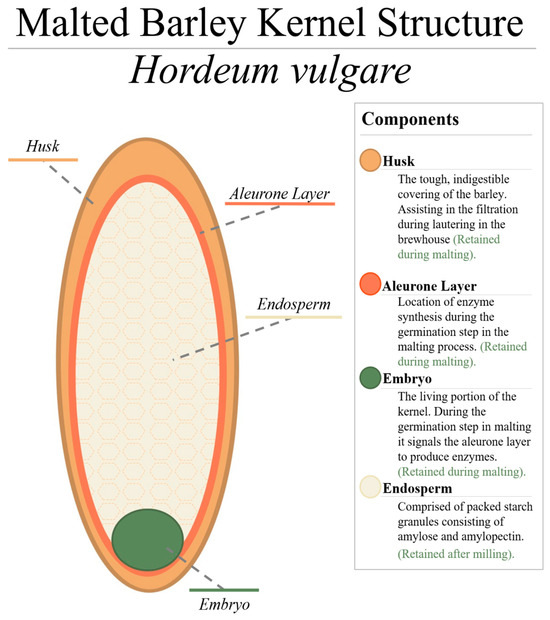
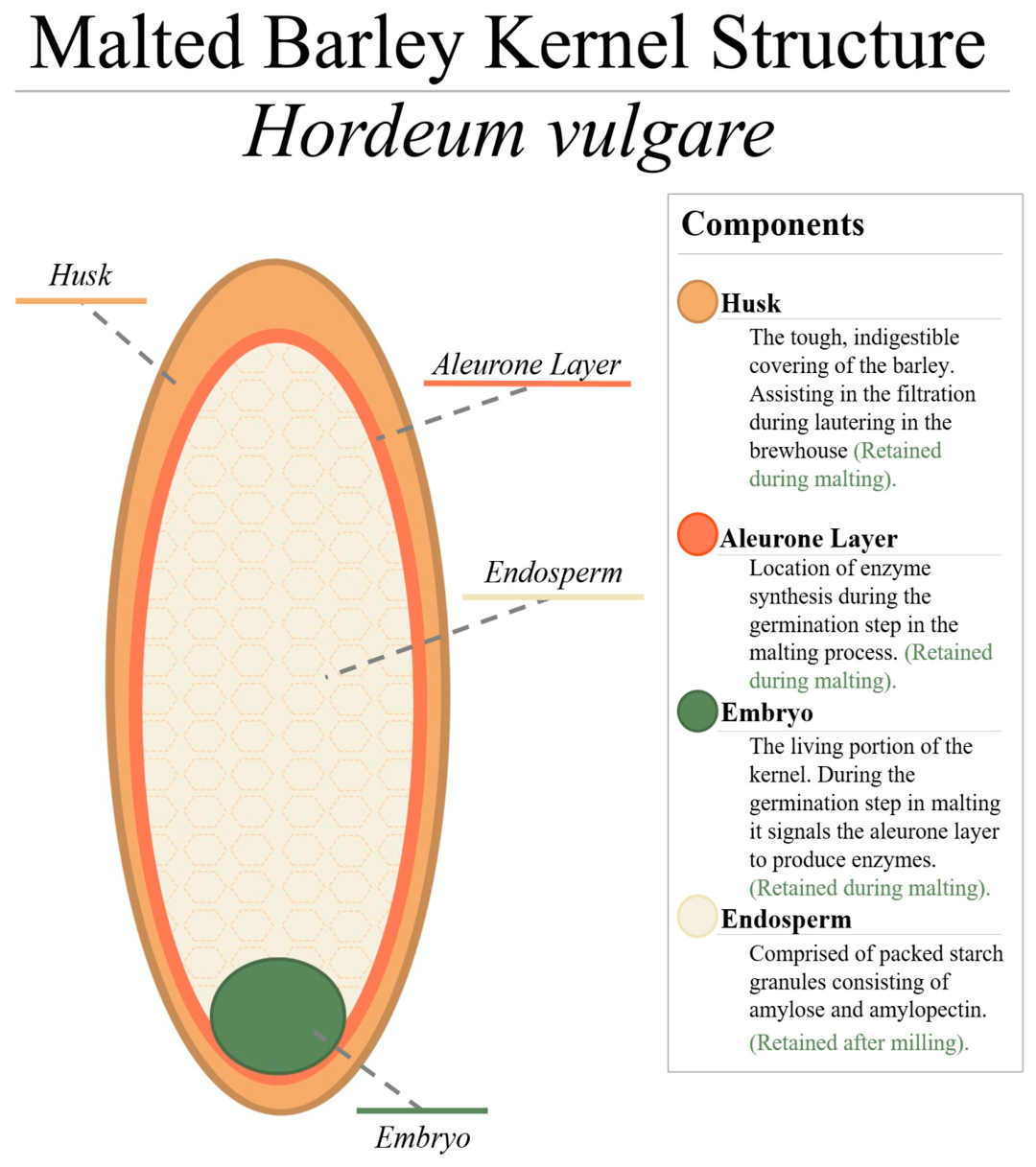
Malted barley as a raw ingredient in brewing consists of a whole intact kernel that has undergone the malting process. This biological transformation modifies the grain and develops the endogenous enzymes required for starch hydrolysis while retaining the hull, aleurone layer, embryo, and starchy endosperm (Figure 1) [36].
Figure 1.
Malted barley kernel structure Hordeum vulgare. Showing components of the barley kernel and a description of each component is listed [36].
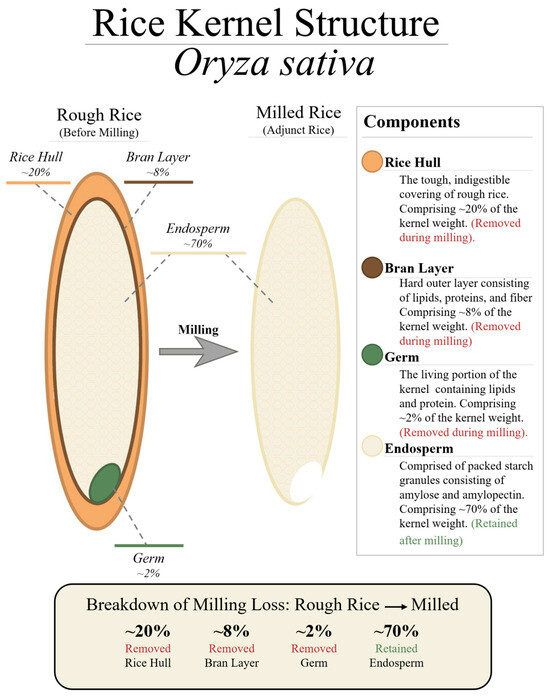
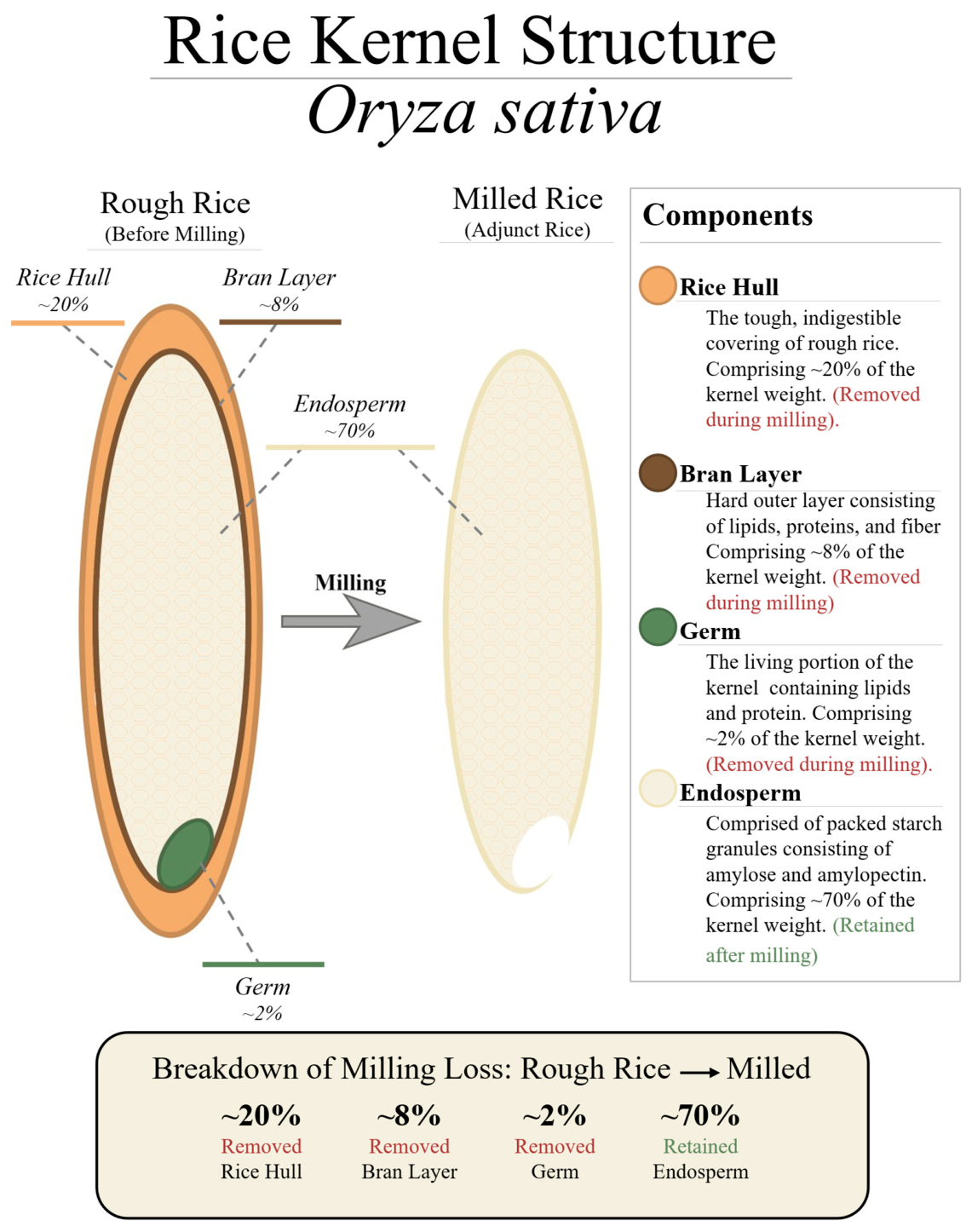
In contrast, milled rice as a brewing adjunct represents only about 70% of the entire rice kernel. The processing of rough rice into its milled form involves the systematic removal of the hull, which accounts for roughly 20% of the weight, as well as the bran and the germ which account for approximately 8% and 2%, respectively [37]. This industrial processing leaves behind the starchy endosperm commonly referred to as white rice or milled adjunct rice in the brewing industry (Figure 2).
Figure 2.
Rice kernel structure Oryza sativa. Displaying rough rice prior to milling and milled rice post-milling. Components and a description of each, and what is removed and retained during milling [37].
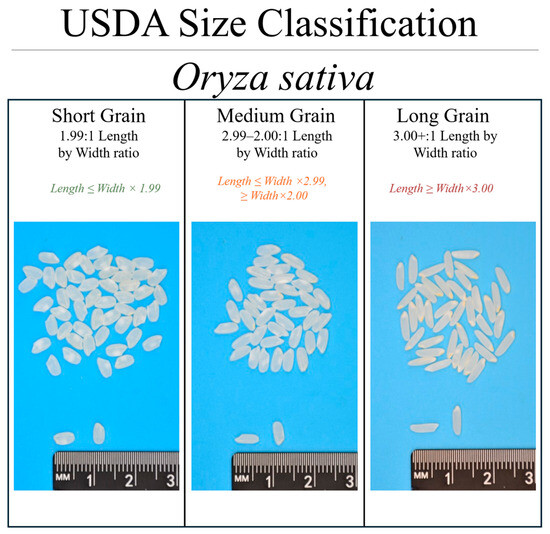
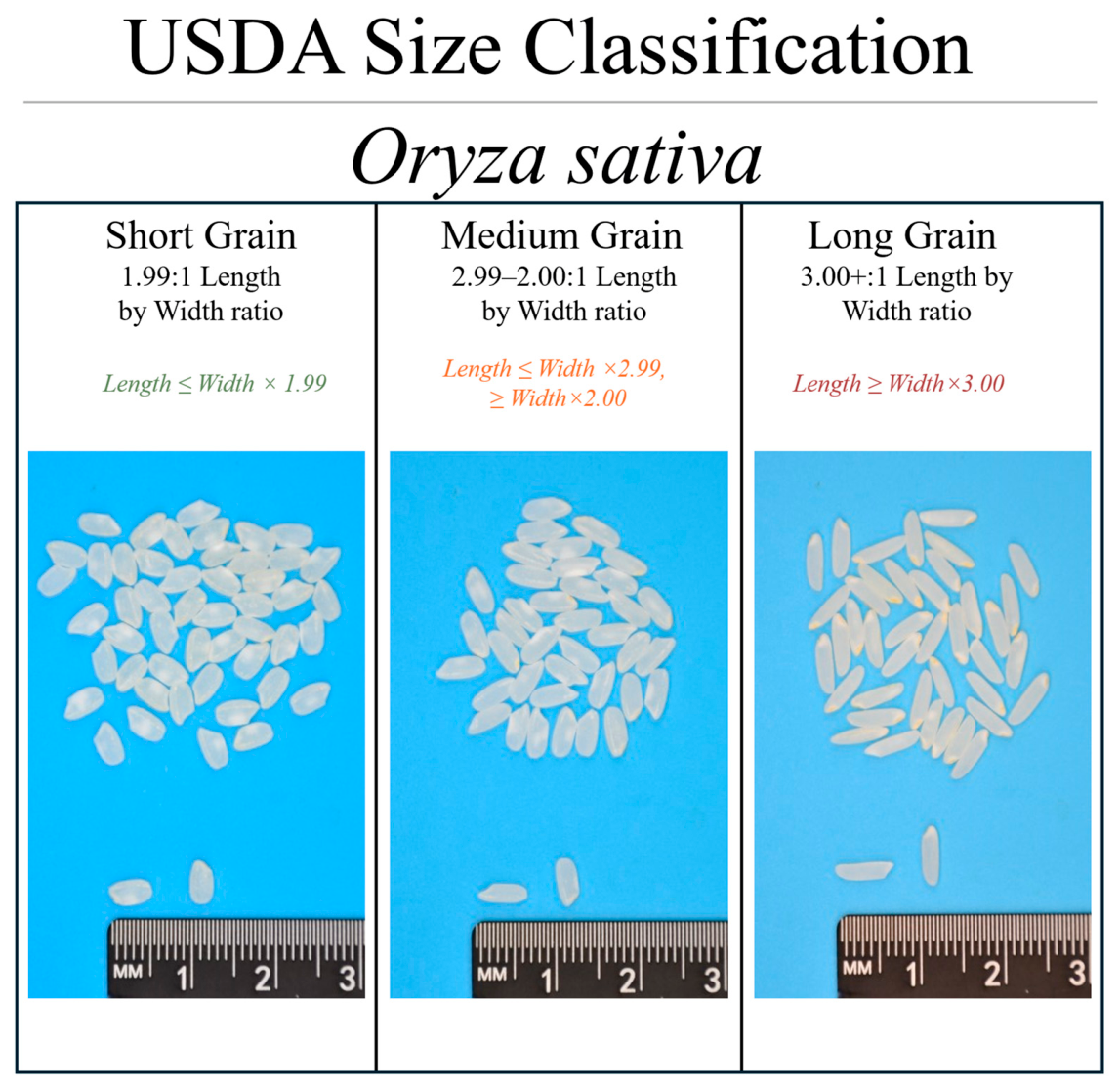
The USDA classifies rice cultivars into three distinct sizes: long-grain, medium grain, and short-grain. Indica varieties primarily consisting of long grain cultivars were bred to be more heat-tolerant and grown in more tropical climates, while japonica varieties primarily consisting of short grain rice cultivars were adapted to cooler climates relative to the indica varieties [38,39]. These size classifications are determined by measuring the length-to-width ratio of a whole intact rice kernel (Figure 3) [40]. Rice with a ratio of 3.0 to 1 or greater is classified as long-grain rice. Rice with a length-to-width ratio that falls between 2.99 to 1 and 2.0 to 1 is classified as medium-grain rice. Finally, rice with a length-to-width ratio of 1.99 to 1 or less is classified as short-grain rice.
Figure 3.
USDA size classifications of Oryza sativa. Showing the length by width ratio of short, medium, and long-grain rice varieties [40]. Short-grain cultivar pictured Yamada Nishiki, medium-grain cultivar pictured 3202, long-grain cultivar pictured Ozark. All varieties are available on the market and grown in Arkansas.
The physical dimensions of these grains are not merely aesthetic because the size and shape of the kernel often correlate with the internal starch structure and the resulting gelatinization temperature. Research conducted by Teng et al., demonstrated that rice variety decidedly controls paste viscosity within the rice cooker [29]. Specifically, long-grain varieties typically exhibit higher amylose content and higher viscosity, which can influence how the grain behaves during the liquefaction phase of the mash.
These varietal changes can lead to significant impacts on brewhouse performance, including a 100-fold difference in mash viscosity, a 2.5% variation in extract yields, and a 3-fold change in lautering flow rates. Long-grain varieties typically exhibit higher gelatinization temperatures, or gel points, which correlate with thicker rice mashes. For example, the long-grain variety Star Bonnet was found to have a gel point of 74.7 °C, compared to only 63.6 °C for the short-grain Mochi Gomi.
Generally, short and medium-grain rices have lower gel points and higher conversion rates than long-grain varieties [29,41]. This is often due to breeding decisions of rice dictated by the edible rice market. In laboratory trials, short and medium grains were shown to yield more extract after the mashing cycle. Furthermore, the total extract yield of a mash has been shown to decrease as the rice gel point increases, with the most rapid rate of decrease occurring in the 62 °C to 68 °C range.
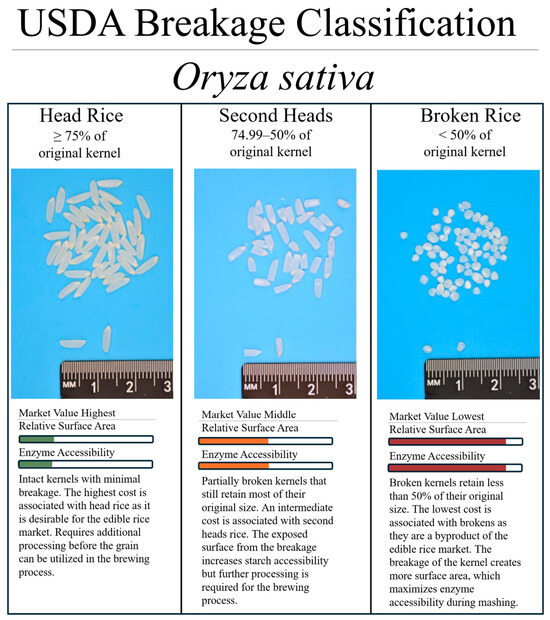
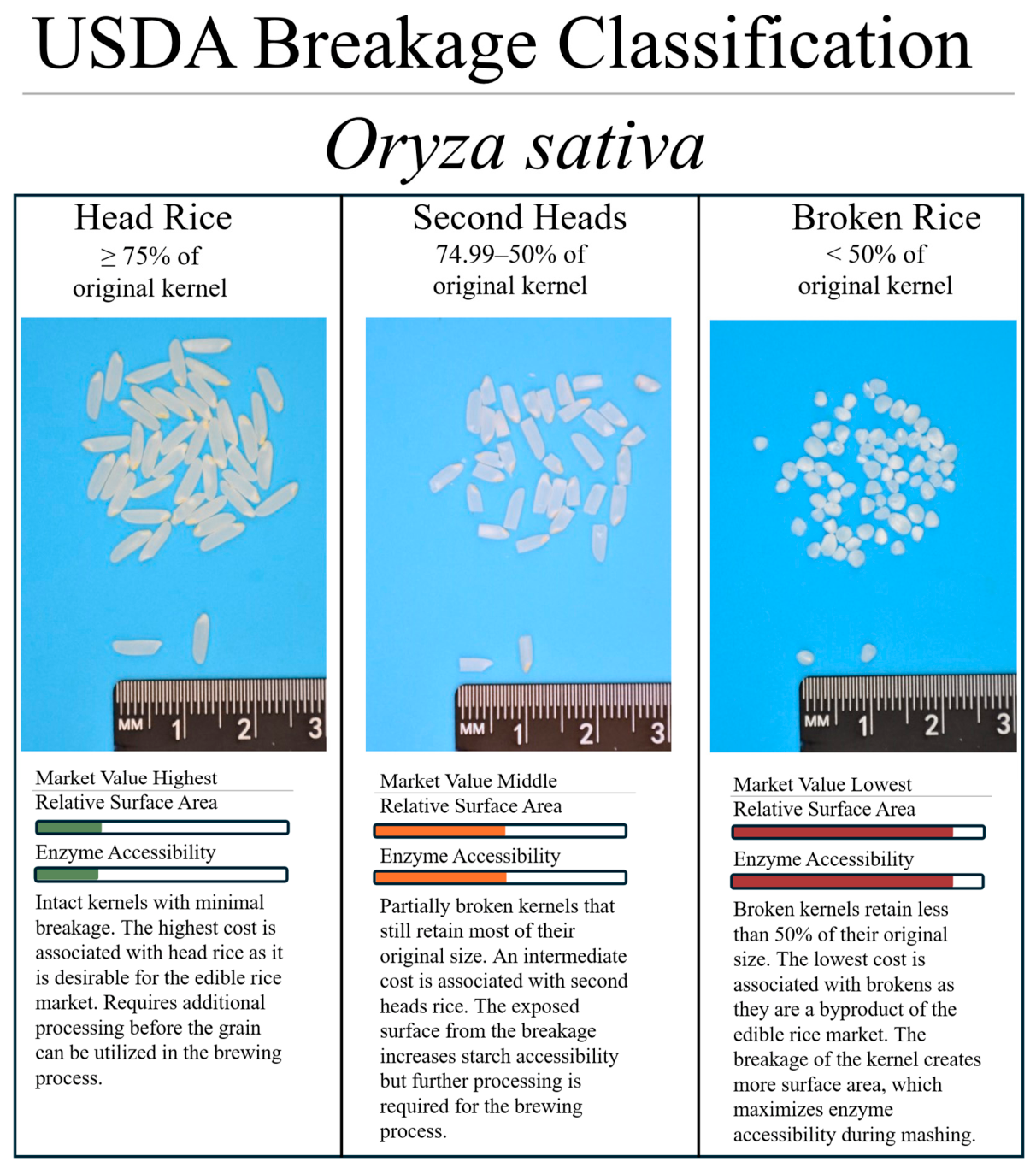
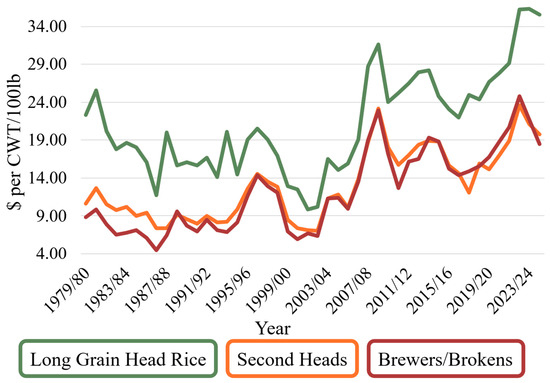
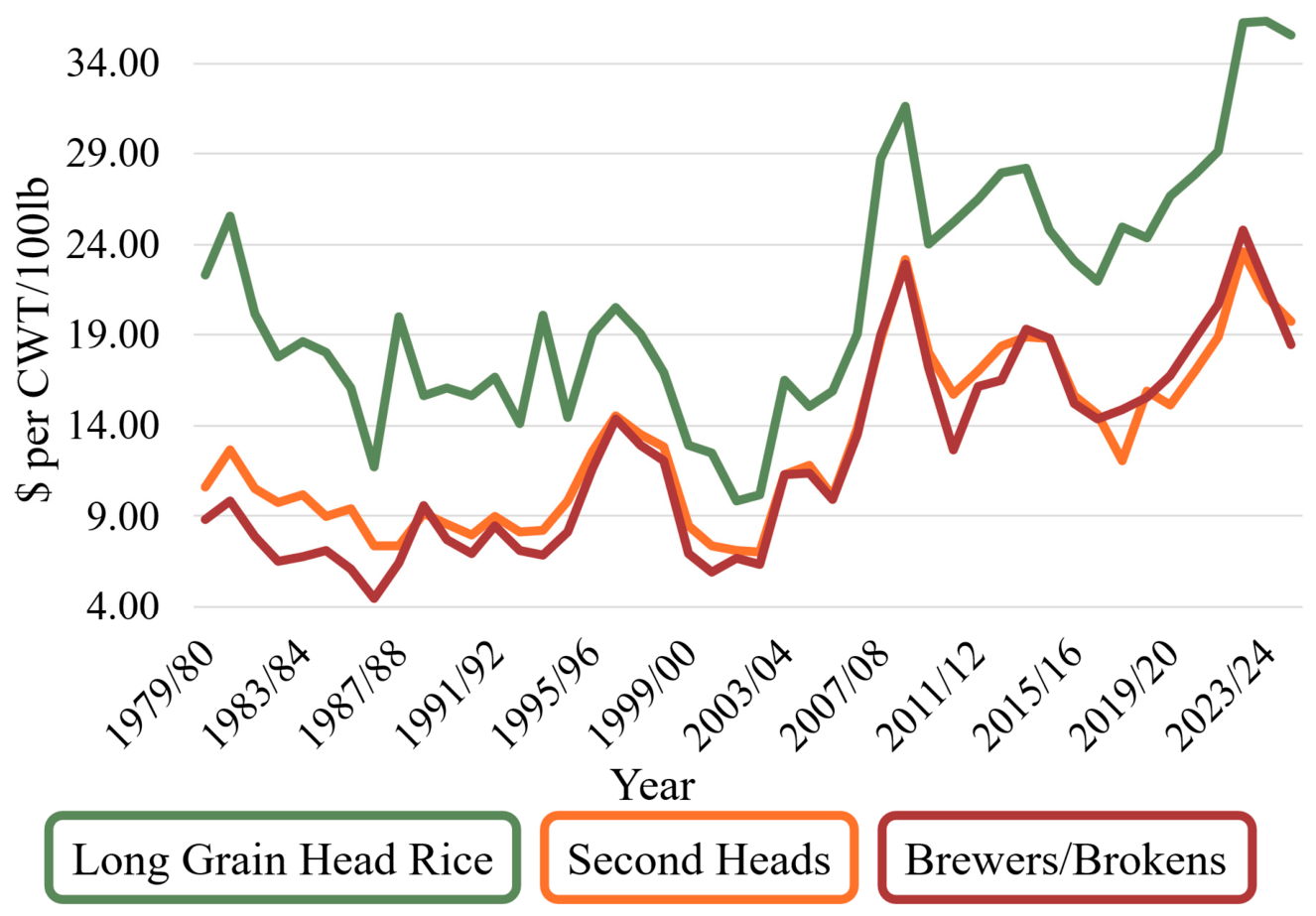
During the milling process, kernel breakage frequently occurs, and the degree of this breakage determines the specific category as dictated by USDA classifications [40]. If the starchy endosperm remains intact or if at least 75% of the kernel is preserved, the grain is classified as head rice. When the remaining starchy endosperm is less than 75% but greater than 50% of its original size, the rice is categorized as second heads. Finally, if the starchy endosperm is less than 50% of the original kernel after milling, the rice is classified as broken rice or more commonly as brewers’ rice (Figure 4). The degree of breakage directly dictates the market price of the commodity. Generally, head rice commands the highest price, followed by second heads, while brewers rice is the least expensive option (Figure 5).
Figure 4.
USDA breakage classification of Oryza sativa. Showing the distinction between head rice, second heads, and broken rice. Long-grain Ozark Rice cultivar displaying head rice, second heads, and broken rice.
Figure 5.
Annual average rice prices from 1979 to 2024. Long-grain head rice prices are from Arkansas. Second heads rice prices are from Southwest Louisiana. Brewers/broken rice prices are from Arkansas.
Milled adjunct rice used in the brewing industry most commonly falls into the classification of brewers’ rice. As a byproduct of the edible rice market, broken rice allows brewers to leverage a cost-effective starch source due to its lower market value relative to second heads and head rice. Because the kernels are already fragmented, they do not strictly require further milling before being incorporated into the brewing process. The increased surface area of these broken kernels improves the accessibility for enzymes to degrade and hydrolyze the starch within the granules.
Further milling to decrease and homogenize particle sizes will increase the efficiency of the extract yield from the grain [33]. In contrast, head rice and second heads consist of more intact kernels, which provide significantly less surface area. This physical structure can limit enzymatic efficiency and result in slower or more inefficient starch conversion unless the grain undergoes additional milling to reduce its size and fully expose the starchy endosperm.
Understanding the structure and composition of milled adjunct rice is critical for brewers to use this grain effectively. Unlike barley malt, which is typically accompanied by a detailed certificate of analysis (COA), milled rice is often supplied with little to no analytical information. This lack of data can leave brewers uncertain about how best to process and utilize the starch source during brewing. Typical ranges for key characteristics of milled rice important to brewing, along with parameters that should ideally be included in a COA for adjunct rice intended for brewery use, are summarized in Table 1.
Table 1.
Attributes of milled rice and their relevance to brewing, including starch composition, gelatinization temperature, and proximate components. Values represent reported ranges across rice varieties. Data sourced from [33,41].
Milled rice as a raw material in brewing is primarily composed of starch, which, after gelatinization and saccharification, yields a measurable extract content. Extract represents the total soluble material in wort, primarily fermentable sugars and dextrins, and is a key driver of brewhouse efficiency. Higher starch content in milled rice translates directly to greater extract yield, meaning less raw material is required to achieve the desired wort composition and target gravity.
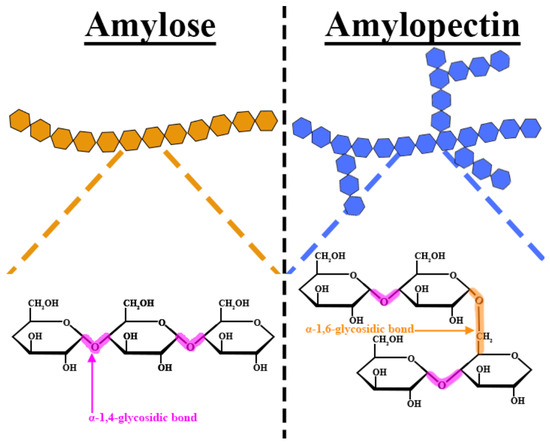
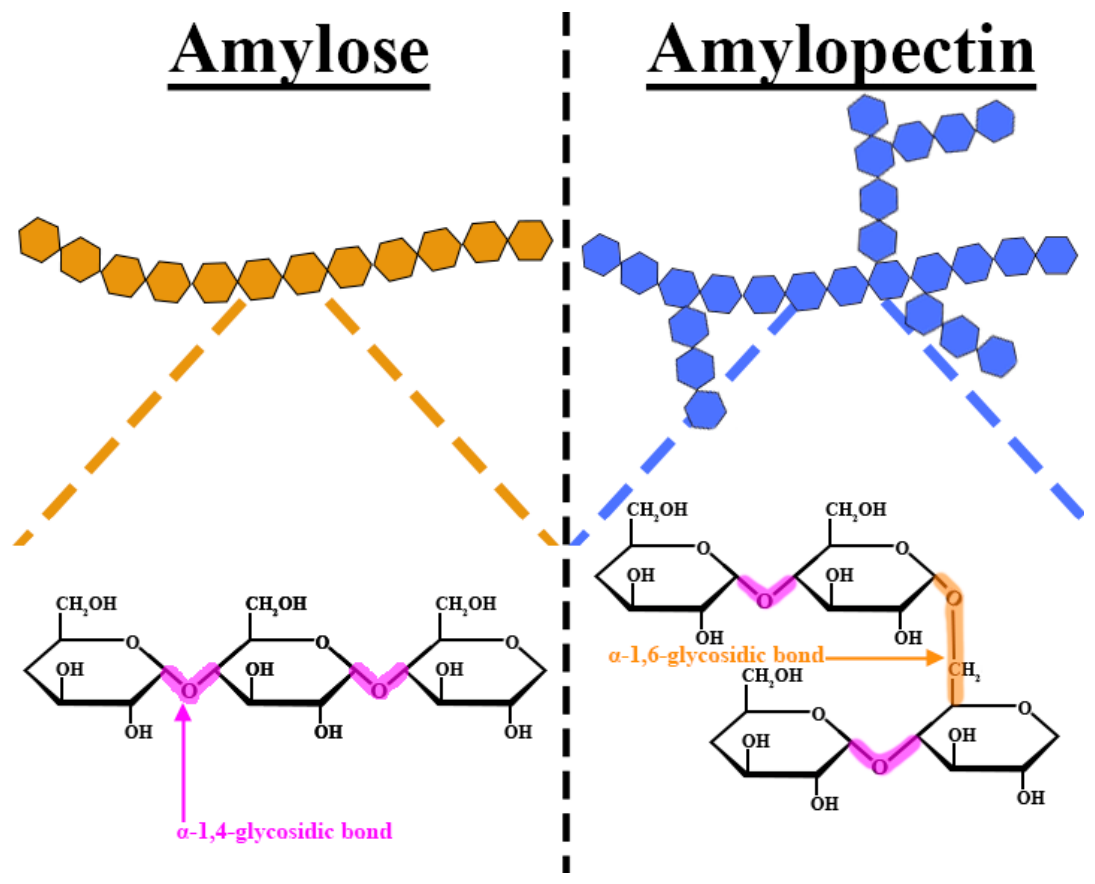
The backbone of milled rice and its characteristics that are a key driver in extract yield are largely made up of the two starch components found in the endosperm, which are amylose and amylopectin. Amylose is a linear glucose chain made up of α-1,4 glycosidic bonds, while amylopectin is a highly branched glucose chain consisting of α-1,4 glycosidic bonds similar to amylose but also containing α-1,6 glycosidic bonds, which provide its branched structure (Figure 6).
Figure 6.
Structural representation of both Amylose and amylopectin. Amylose is represented with α-1,4 glycosidic bonds. Amylopectin is represented with α-1,4 glycosidic bonds and α-1,6 glycosidic bonds.
The distribution of starch types present in rice varies significantly across cultivars. Rice is categorized into four classes based upon amylose content, where high amylose rice contains more than 24%, intermediate amylose rice contains 20% to 24%, low amylose rice contains 10% to 19%, and waxy rice contains less than 5% [42]. These compositional differences have implications specifically related to brewing. Cultivars with higher amylose content have a more compact linear structure and require more thermal energy to disrupt, which leads to a higher gelatinization temperature than low amylose rice cultivars [43]. Previous research has shown that characteristics of the starch in rice cultivars influence extract yield, with negative correlations seen between extract yield and amylose content [33].
This variability in amylose content contributes to the wide range of gelatinization temperatures observed among rice cultivars. Gelatinization occurs when starch granules are heated in the presence of water, causing the granules to hydrate, swell, lose crystalline order, and eventually undergo structural disruption, with starch polymers leaching into the surrounding solution. This process is driven by the disruption of intermolecular hydrogen bonding within the starch granule, which increases water penetration and promotes starch solubilization.
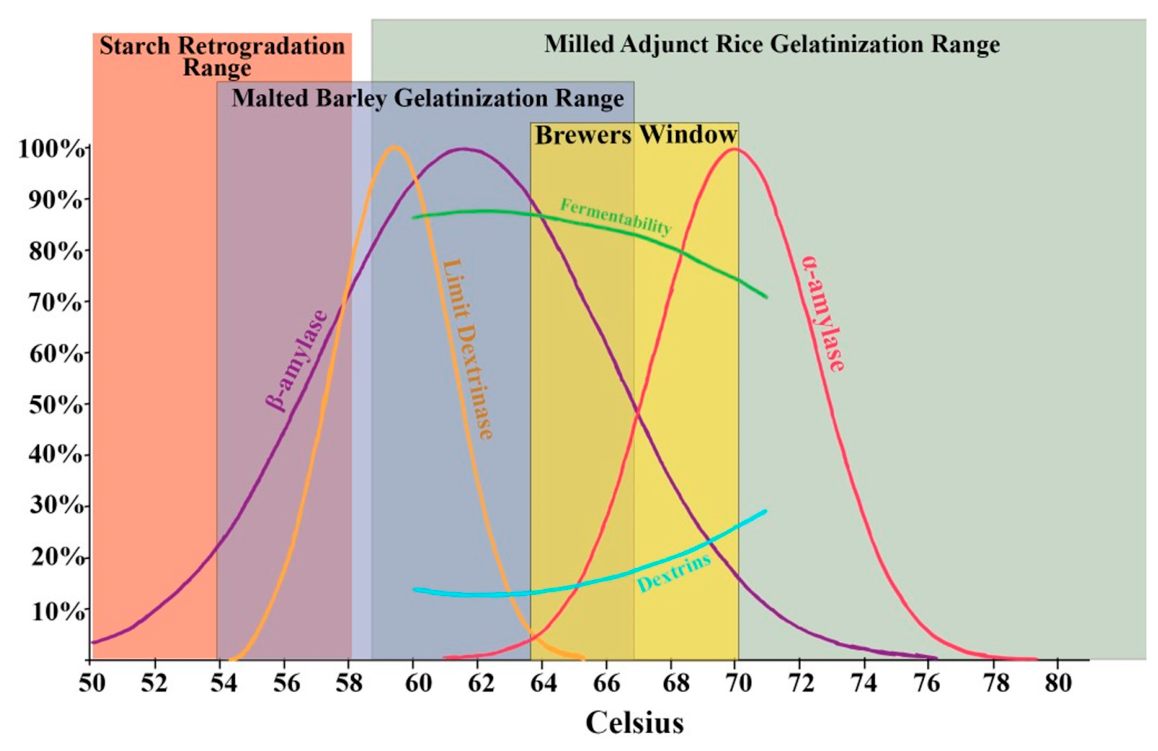
The gelatinization temperature of malted barley has been reported to range from 54.5 °C to 67 °C [44]. In contrast, milled adjunct rice exhibits broader variation and generally higher gelatinization temperatures, ranging from 58.83 °C to 85 °C [25,33]. This variation is influenced by starch granule shape, size, and molecular structure [45]. Previous research by Teng et al. demonstrated that rice variety strongly influences paste viscosity and gel points, with long-grain varieties often reaching gel points of approximately 74.7 °C compared with 63.6 °C for short-grain varieties [29]. Importantly, the gelatinization temperature range of many rice cultivars can exceed the optimal activity window of endogenous barley malt enzymes, particularly β-amylase and α-amylase [46].
Amylose is also an important factor when considering the retrogradation of starch [47]. While both amylose and amylopectin retrograde, amylose does so at a much faster rate due to the lack of steric hindrance that the branched structure of amylopectin creates [48]. Retrogradation occurs when gelatinized starch is cooled and forms hydrogen bonds to reform into a semicrystalline structure [49]. This process can lead to a gel that causes processing issues, such as clogged pipes and stuck mashing equipment. High amylose rice must be carefully considered because it presents both higher gelatinization temperatures and higher retrogradation risks.
Unlike malted barley, milled rice does not undergo malting, so no endogenous enzymes are produced. Therefore, due to the lack of enzymes present in the milled rice, the enzymes native to a high diastatic power malted barley and/or exogenous enzymes are required for the hydrolysis of starch into fermentable sugars. However, the starch in the rice kernel must be gelatinized prior to hydrolysis. Incomplete gelatinization before saccharification will result in a loss of extract and inefficient mashing [50].
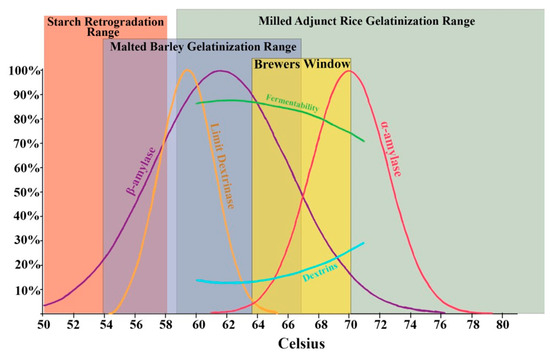
The peak activity ranges for key barley malt enzymes are approximately 54–60 °C for limit dextrinase, 60–63 °C for β-amylase, and 66–72 °C for α-amylase (Figure 7) [46,51]. Limit dextrinase functions as a debranching enzyme by hydrolyzing α-1,6-glycosidic bonds in amylopectin. β-Amylase hydrolyzes α-1,4-glycosidic bonds from the non-reducing ends of starch chains, primarily producing maltose, whereas α-amylase randomly cleaves internal α-1,4-glycosidic bonds to generate a range of fermentable sugars and dextrins.
Figure 7.
Enzymes relevant to brewing and their optimal temperature ranges, including limit dextrinase, β-amylase, and α-amylase. Overlayed with gelatinization ranges for malted barley and milled adjunct rice [44,46,47,50,51].
When brewers are required to mash at higher temperatures to gelatinize rice cultivars with elevated gelatinization temperatures, endogenous barley malt enzymes may become thermally denatured before the rice starch is fully accessible for enzymatic hydrolysis. As a result, starch conversion can be incomplete, leading to elevated levels of unfermentable dextrins, reduced extract efficiency, and diminished finished product quality (Figure 7).
The physical and chemical composition of rice creates a fundamental thermal conflict during brewing. Rice cultivars with high gelatinization temperatures require more intensive thermal treatment to make starch accessible for enzymatic hydrolysis. However, increasing mash temperature to accommodate high-gelatinization rice can move the mash into a temperature range that reduces or denatures endogenous barley malt enzymes. For high-gel-point rice requiring temperatures of approximately 70–85 °C, the thermal limits of key hydrolytic enzymes may be exceeded before efficient starch conversion can occur.
This mismatch between rice starch gelatinization requirements and barley malt enzyme stability directly influences mash design and processing decisions. Depending on brewery equipment, grist composition, and the specific characteristics of the rice cultivar being used, brewers can apply several strategies to bridge this temperature gap. These approaches range from traditional cereal cooking to the use of modern exogenous enzyme additions and are discussed in detail in Section 6.
5. Agricultural Factors Influencing Rice Characteristics
Physicochemical properties of milled adjunct rice (e.g., extract content, amylose content, gelatinization temperature, and protein content) are often treated as cultivar-defined traits. In practice, these attributes can shift with harvest timing, year-to-year climatic variation, and farm management. Brewers sourcing rice should therefore consider what production and harvest decisions were made and how those decisions may translate to brewhouse performance. Two agronomic factors with brewing relevance are fertilizer management and harvest moisture content. Accounting for these influences supports better interpretation of raw material variability and improves brewhouse consistency and extract predictability across lots and seasons.
Recent research has shown that nitrogen application can also have an impact on the pasting and gelatinization properties of rice. Increasing nitrogen application rates (NARs) leads to a significant increase in grain protein content and a decrease in amylose [52]. These compositional shifts directly influence the thermal stability of the starch. Specifically, higher nitrogen rates have been shown to increase the pasting temperature of the rice, meaning the starch granules become more resistant to heat and require higher temperatures to begin the gelatinization process.
Specifically, higher nitrogen rates have been shown to increase the pasting temperature of the rice, meaning the grain requires more thermal energy to begin the gelatinization process. This suggests that modern agricultural practices aimed at increasing crop yields through nitrogen fertilization may unintentionally create higher energy demands for the brewer due to increasing the gelatinization temperature. Furthermore, increased nitrogen application tends to decrease the length-to-width ratio of the kernels, potentially shifting their classification and impacting how they hydrate during the mash.
The relationship between harvest moisture content and grain integrity highlights a disconnect between quality priorities in the edible rice market and the functional needs of brewers. In the edible rice market, head rice yield is a key quality and economic metric because whole kernels command a higher price than broken rice [53]. Harvest moisture content is a primary driver of head rice yield, with optimal ranges typically reported around 19–22% for long-grain cultivars and 22–24% for medium-grain cultivars, depending on variety [53]. When rice is harvested outside these ranges, kernels are more likely to fracture under the mechanical stresses of harvesting, drying, and milling, decreasing head rice yield and market value.
For brewing, this relationship effectively inverts. As discussed in Section 4, milled rice that more readily fractionates into smaller particle sizes during milling can yield higher extract under standardized brewing conditions, largely due to increased surface area that improves enzymatic hydrolysis during mashing. Consequently, the broken rice streams treated as lower value or byproducts in the edible market can represent some of the highest extract-yielding forms of milled adjunct rice available to brewers. This cross-industry disconnect is further complicated by the increasing adoption of hybrid cultivars, which have shown greater resilience in head rice yield relative to pureline varieties under comparable growing and harvesting conditions [54]. While beneficial for producers and the edible market, improved head rice retention may reduce both the availability and consistency of fractured rice fractions that many brewers rely on, creating an additional sourcing and process challenge unless brewers proactively adapt.
These findings highlight a critical intersection between agricultural management and brewhouse efficiency. If brewers are not proactive in sourcing rice produced under defined nitrogen programs and harvested within target moisture ranges, they may see meaningful lot-to-lot variation in gelatinization behavior and extract yield, even when the cultivar is unchanged [55]. Importantly, meeting brewing-relevant specifications may require growers to make management or harvest decisions that are not optimized for maximum farm yield or standard edible-market incentives. As a result, aligning agricultural practices with brewhouse functionality will likely require closer coordination among breeders, growers, and brewers, supported by contracting structures that compensate growers for producing “brewer-spec” rice (e.g., a contract premium on the order of ~$7–9 per bushel) to ensure consistent raw material performance in the brewery [56].
6. Methods for Rice Utilization in the Brewhouse
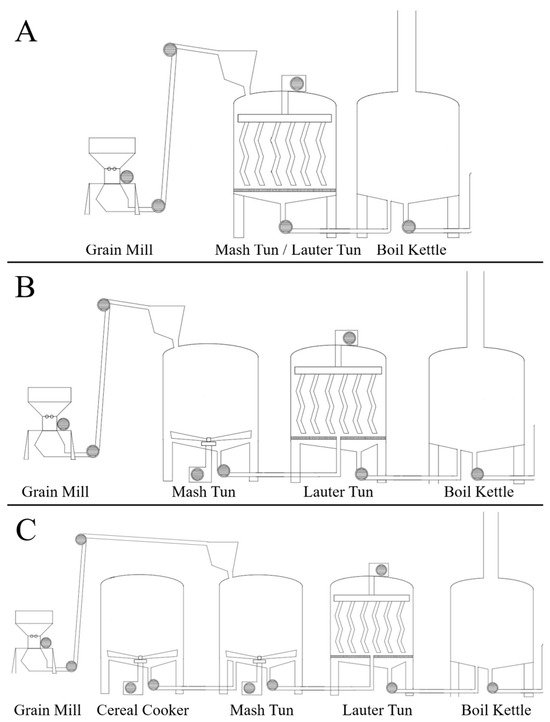
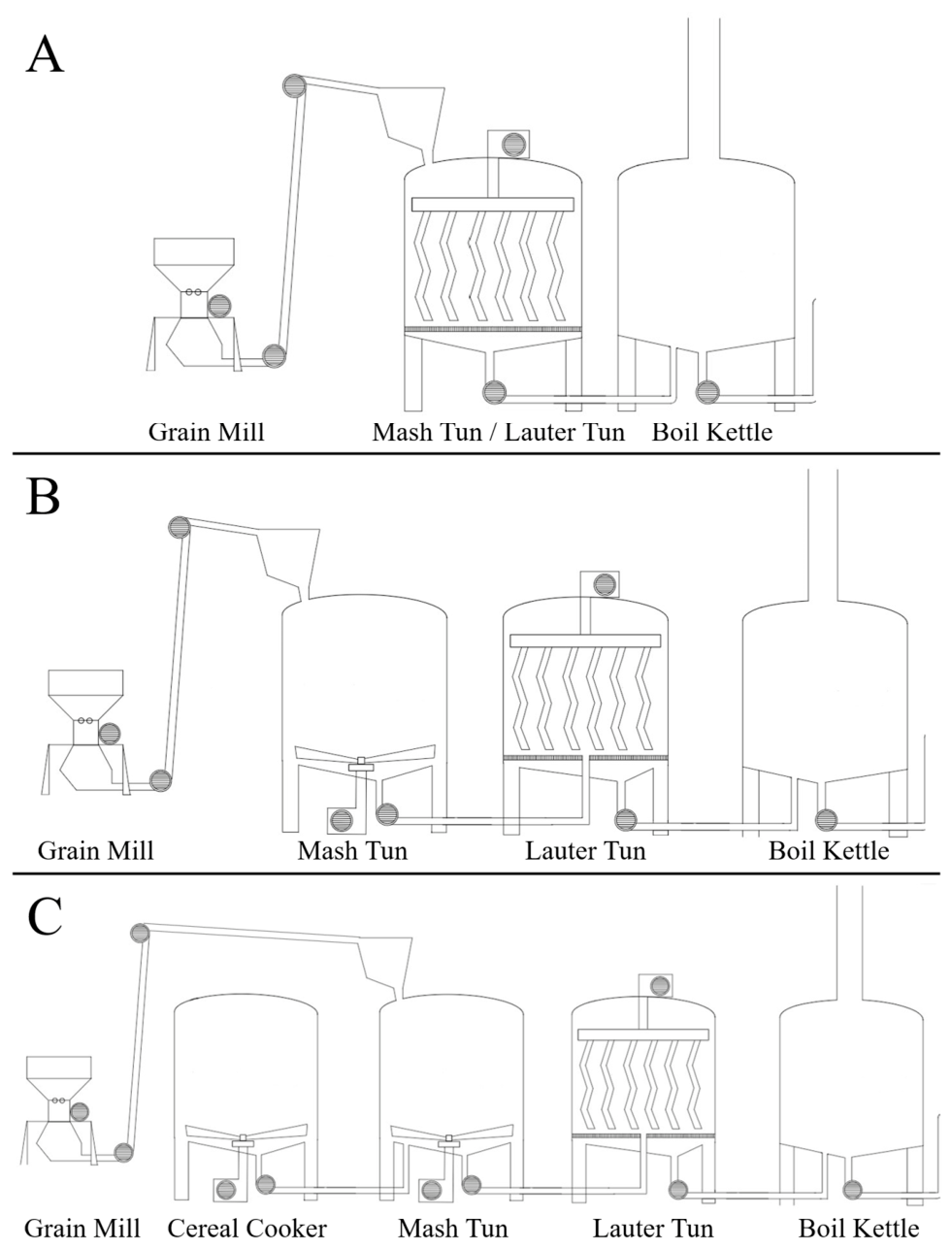
Given the range of rice formats available and the diversity of brewhouse designs, several methods have been developed to incorporate rice into brewing. However, brewhouse configuration ultimately dictates the strategies required to properly utilize milled rice as an adjunct (Figure 8). Configuration A uses a single vessel for both mashing and lautering, followed by a boil-kettle. Configuration B uses a two-vessel system consisting of a mash tun, a lauter tun, and a boil-kettle. Configuration C represents a standard cereal cooker setup with a three-vessel mashing system including a cereal cooker, mash tun, and lauter tun, followed by a boil-kettle. Because the spatial and financial requirements increase substantially for configuration C, configurations A and B are more prevalent in craft and regional breweries.
Figure 8.
Sketches of three potential mashing setups: (A) represents a single-vessel combined mash and lauter tun; (B) represents a two-vessel system with a separate mash tun and a separate lauter tun; and (C) represents a three-vessel mashing system with a cereal cooker, mash tun, and lauter tun.
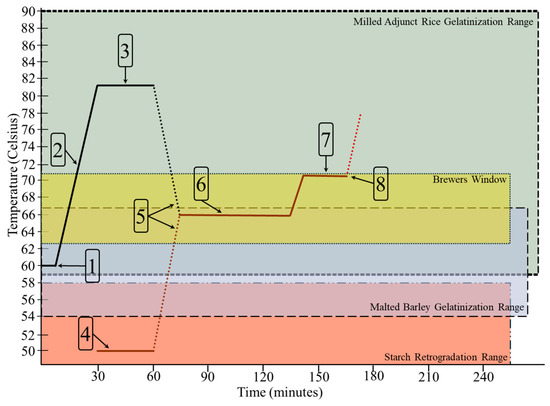
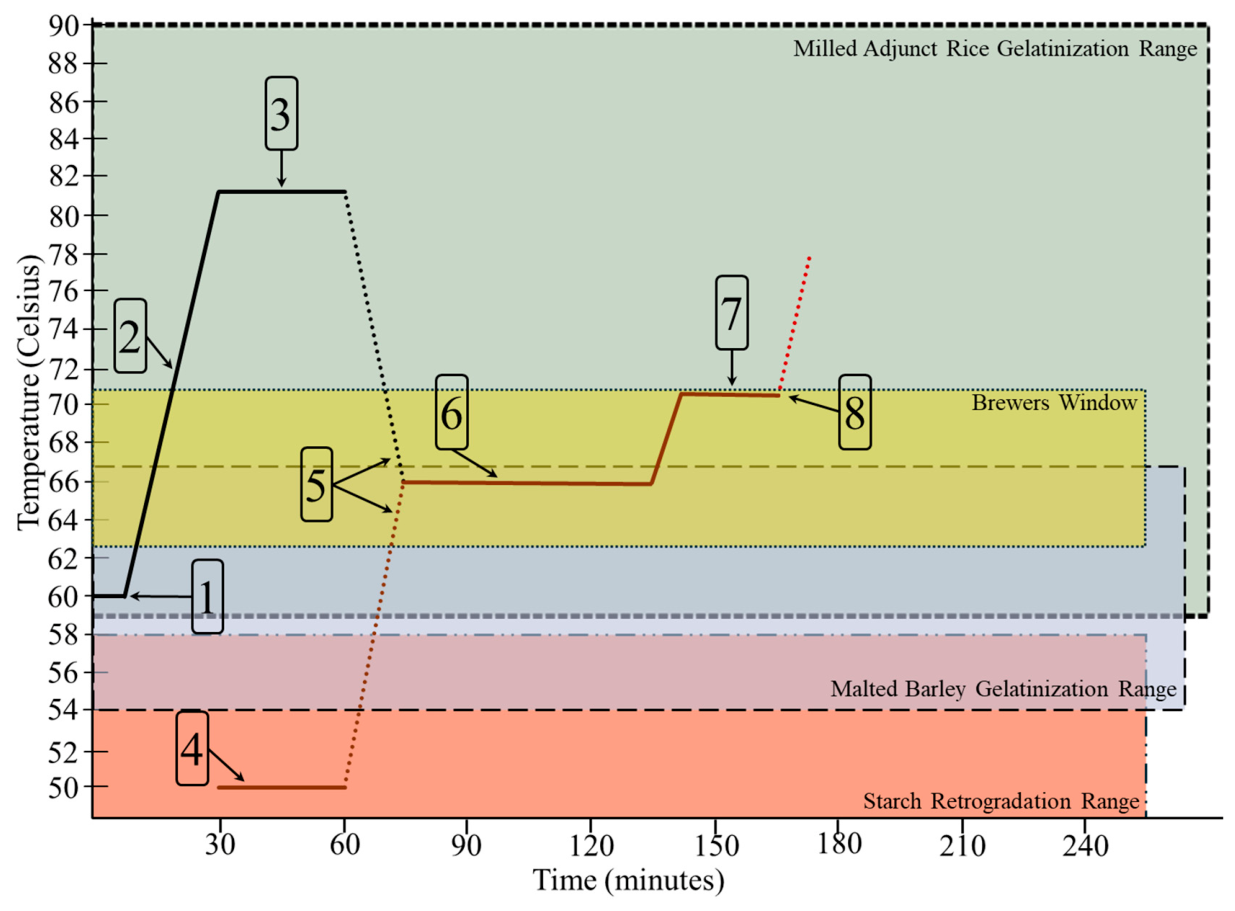
Traditional use of milled adjunct rice typically relies on a cereal cooker and the American double-mash process. The cereal cooker is an additional vessel that is commonly steam heated and equipped with an agitator to ensure proper slurry mixing, as shown in Figure 8C. A representative cereal-cooking mashing regime is shown in Figure 9. In this approach, all of the milled adjunct rice and approximately 10–20% of the barley malt in the grist are mashed in at about 60 °C (Figure 9, Step 1) [3]. Including a portion of barley malt at this stage introduces endogenous enzymes that help reduce excessive viscosity during starch gelatinization.
Figure 9.
Mashing regime utilizing the equipment in Figure 8C. This mashing regime is for a standard cereal cook also known as the American double mash with the numbers 1–8 representing different steps in the cereal cooking process.
After mash-in, the cereal mash temperature is raised to slightly above the rice gelatinization temperature, or nearly to boiling when the gelatinization range is unknown or when blends of rice cultivars with different or uncertain thermal properties are used (Figure 9, Step 2). As the temperature increases, rice starch begins to gelatinize, while the enzymes contributed by the barley malt initiate starch hydrolysis and help maintain mash fluidity. Once the target temperature is reached, the rice and partial barley malt mash is typically held slightly above the known gelatinization temperature for approximately 30 min (Figure 9, Step 3).
During this period, the remaining barley malt is mashed separately in the mash tun, often at approximately 50 °C to allow for a protein rest (Figure 9, Step 4). After gelatinization is complete, the contents of the cereal cooker are transferred into the mash tun containing the remaining barley malt (Figure 9, Step 5). This transfer requires careful temperature control. If the combined mash temperature is too high, enzyme denaturation may occur, reducing saccharification potential. Conversely, if the gelatinized starch cools too rapidly before saccharification, starch retrogradation may occur, increasing the risk of gel formation and a stuck mash. Heat-stable α-amylase may also be added during this stage to improve liquefaction, reduce viscosity, and enhance processability.
Once fully combined, the mash is held at standard saccharification temperatures for approximately 40 min to 1 h (Figure 9, Step 6), although the exact time and temperature may vary depending on the target beer style and adjunct level. The temperature may then be raised further to inactivate β-amylase or adjust the fermentability profile, if desired (Figure 9, Step 7). Finally, the mash is transferred to the lauter tun for wort runoff and sparging before the wort is sent to the boil kettle (Figure 9, Step 8).
Although not a traditional cereal-cooking approach, a two-vessel mashing system can also be used to gelatinize milled rice (Figure 8B). This approach requires a more detailed understanding of the raw material, particularly the gelatinization temperature of the rice cultivar or cultivars being used. When rice blends are incorporated, the highest gelatinization temperature among the cultivars should be known to ensure complete starch gelatinization.
Unlike cereal cookers, which can reach boiling temperatures and therefore provide a broader safety margin for complete gelatinization, most mash tuns are not designed to boil. As a result, effective rice utilization in two-vessel systems depends more heavily on accurate knowledge of rice thermal properties. Importantly, the more precisely the gelatinization temperature is known, the less the mash must be heated beyond what is necessary. This reduces unnecessary thermal input, improves process control, helps preserve enzymatic activity, and may provide meaningful energy savings.
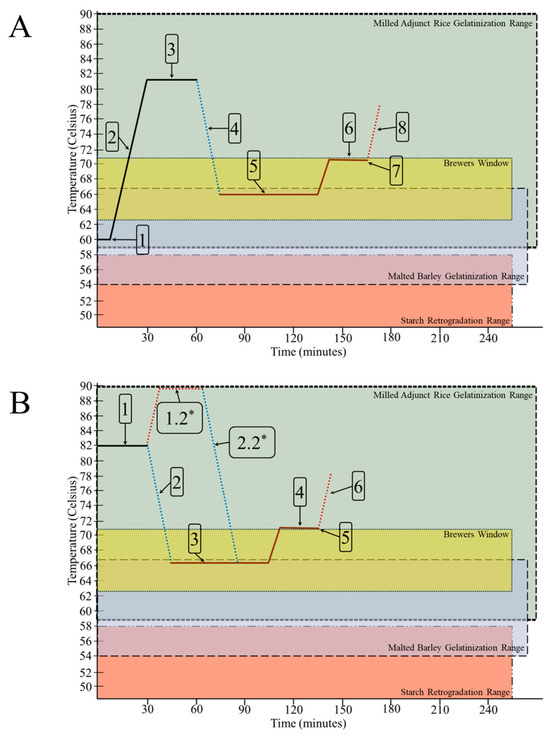
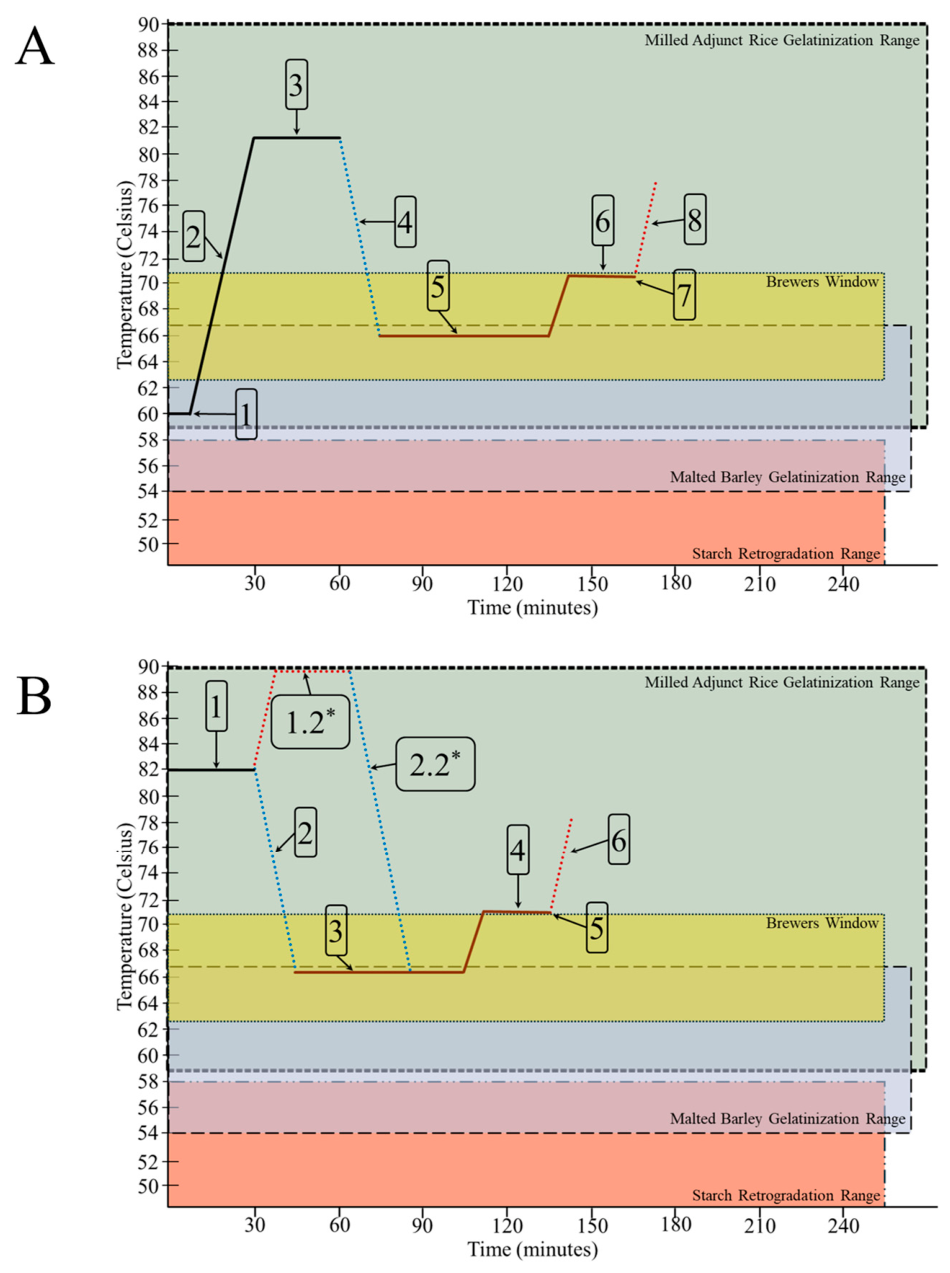
One approach for using a two-vessel system without exogenous enzymes is shown in Figure 10A. In this setup, all of the milled adjunct rice and approximately 10–20% of the barley malt are mashed in at about 60 °C (Figure 10A, Step 1). As in a traditional cereal-cooking process, this allows barley malt enzymes to begin starch hydrolysis as the rice gelatinizes, helping control mash viscosity. The temperature is then raised to slightly above the rice gelatinization temperature (Figure 10A, Step 2) and held for approximately 30 min to ensure complete gelatinization (Figure 10A, Step 3).
Figure 10.
Mashing regimes utilizing the equipment in Figure 8B: (A) shows a mashing regime for milled adjunct rice without the use of exogenous enzymes, with steps labeled 1–8; (B) shows a mashing regime for milled adjunct rice with the use of exogenous enzymes, with steps labeled 1–6. * Indicates an alternative strategy for denaturing heat-stable α-amylase.
After gelatinization, cool water is added to reduce the mash to the desired saccharification temperature range (Figure 10A, Step 4). The required volume and temperature of this water depend on the rice gelatinization temperature, the proportion of rice in the grist, and the target water-to-grist ratio. Excessive cooling should be avoided because retrogradation of gelatinized starch may promote gel formation and increase the risk of a stuck mash. Once the appropriate mash temperature is reached, the remaining grist is added and saccharification proceeds (Figure 10A, Steps 5 and 6). These conditions may vary depending on the brewing objectives and target beer style. The mash is then transferred to the lauter tun for wort runoff and sparging before boiling (Figure 10A, Steps 7 and 8).
A second two-vessel approach uses exogenous enzymes, as shown in Figure 10B. This method is especially useful when the mash tun cannot directly reach or reliably maintain the temperature required for rice gelatinization. In this approach, water is added to achieve a temperature slightly above the rice gelatinization range, along with heat-stable α-amylase. Milled rice is then added and held at the target temperature for approximately 30 min to ensure complete gelatinization and promote liquefaction (Figure 10B, Step 1).
After this step, the brewer must decide whether to retain or denature the exogenous enzyme. In one option, cool-down water is added immediately so that the heat-stable α-amylase remains active during subsequent processing (Figure 10B, Step 2). In the other option, the mash is first heated above the enzyme denaturation range (Figure 10B, Step 1.2) and then cooled to a temperature suitable for barley malt saccharification (Figure 10B, Step 2.2). Although retrogradation is less of a concern in this approach because starch hydrolysis begins during the gelatinization step, excessive cooling should still be avoided because it may extend processing time by requiring reheating before efficient barley malt saccharification can occur. Once the target temperature is reached, the remaining grist is added and saccharification proceeds (Figure 10B, Steps 3 and 4). The mash is then transferred to the lauter tun for wort runoff and sparging before boiling (Figure 10B, Steps 5 and 6).
A single-vessel mash/lauter system can also be used to incorporate milled rice as an adjunct (Figure 8A). This process closely resembles the two-vessel approaches described above, but with important practical differences. Agitation in a mash tun is designed for active mixing, whereas the rakes in a combined mash/lauter vessel are designed primarily for slow movement through a settled grain bed. Therefore, the ability of the rakes to adequately mix rice during the gelatinization step should be verified to prevent clumping and ensure complete gelatinization before cooling.
The temperature profiles used in single-vessel systems are otherwise similar to those described for the two-vessel non-exogenous enzyme approach (Figure 10A) and the exogenous enzyme approach (Figure 10B). The primary difference is that the transfer-to-lauter step is eliminated, specifically Step 7 in Figure 10A and Step 5 in Figure 10B. As with two-vessel systems, improved knowledge of rice gelatinization temperature allows brewers to apply only the thermal input required for complete starch gelatinization, minimizing unnecessary heating, improving process control, and enhancing energy efficiency.
7. Conclusions
Rice is a compelling adjunct with timely relevance to the brewing industry. However, its full potential remains underutilized because of knowledge gaps, equipment limitations, and competing agricultural priorities. This chapter establishes the historical, scientific, and practical foundation needed to address these challenges. The history of adjunct use in North America demonstrates that rice and corn were intentionally incorporated for both practical and sensory reasons. Their use was shaped by agricultural availability, immigration, Prohibition, and wartime restrictions. Although modern craft brewing initially dismissed adjuncts such as rice as inexpensive substitutes, sometimes pejoratively referring to them as “rat poison” [19], attitudes are shifting. Craft brewers are increasingly recognizing rice as a locally sourced, heat-tolerant grain with the potential to improve flavor stability, shelf life, and brewhouse efficiency.
The physical and chemical properties of rice reveal a complex set of factors that define milled adjunct rice as a brewing raw material. Amylose content, gelatinization temperature, and starch granule structure are not fixed across rice cultivars. Instead, these properties vary according to cultivar, processing conditions, and agricultural practices. These differences have important implications for how milled rice can be utilized and optimized in brewing. The mashing strategies discussed in Section 6 demonstrate that a clear understanding of these physicochemical characteristics is essential for successful use in single- and two-vessel systems. With this knowledge, craft brewers can incorporate milled rice without relying on a cereal cooker.
Collectively, the evidence presented in this review highlights the need for comprehensive, cultivar-specific characterization of milled adjunct rice, including its physical, chemical, functional, and agricultural traits. Such information will allow brewers to better match rice cultivars with appropriate processing strategies, improve brewhouse performance, and expand the role of rice from a commodity adjunct to a targeted ingredient for flavor, efficiency, and product innovation.
Author Contributions
M.A.: Conceptualization, Data curation, Formal analysis, Investigation, Methodology, Validation, Visualization, Writing—original draft. S.L.: Conceptualization, Data curation, Formal analysis, Funding acquisition, Methodology, Resources, Validation, Visualization, Writing—review and editing. All authors have read and agreed to the published version of the manuscript.
Funding
This project was supported by the National Institute of Food and Agriculture [2024-67014-42710].
Institutional Review Board Statement
Not applicable.
Informed Consent Statement
Not applicable.
Data Availability Statement
All data generated or analyzed during this study are included in this published article.
Conflicts of Interest
The authors state that they have no financial conflicts of interest or personal relationships that could have influenced the work presented in this paper.
References
- Preece, I. Barley enzymes and malting potential. J. Inst. Brew. 1963, 69, 154–163. [Google Scholar] [CrossRef] [Scilit]
- Oliver, G. The Oxford Companion to Beer; Colicchio, T., Ed.; Oxford University Press: New York, NY, USA, 2011; 960p. [Google Scholar]
- Kunze, W. Technology Brewing & Malting, 6th ed.; VLB: Berlin, Germany, 2019; 948p. [Google Scholar]
- Guimaraes, B.P.; Nalley, L.L.; Lafontaine, S.R. Evaluating the costs of alternative malting grains for market adaptation: A case study on rice malt production in the US. npj Sustain. Agric. 2025, 3, 19. [Google Scholar] [CrossRef] [Scilit]
- Cadenas, R.; Caballero, I.; Nimubona, D. Brewing with Starchy Adjuncts: Its Influence on the Sensory and Nutritional Properties of Beer. Foods 2021, 10, 1726. [Google Scholar] [CrossRef] [Scilit] [PubMed]
- Guimaraes, B.P.; Lafontaine, S. Examining the Impact of Different Malted Rice Cultivars on the Flavor of Non-and Low-Alcoholic Beers. J. Am. Soc. Brew. Chem. 2026, 84, 23–33. [Google Scholar] [CrossRef] [Scilit]
- Maia, C.; Cunha, S.; Debyser, W.; Cook, D. Impacts of adjunct incorporation on flavor stability metrics at early stages of beer production. J. Am. Soc. Brew. Chem. 2023, 81, 54–65. [Google Scholar] [CrossRef] [Scilit]
- Schubert, C.; Sen, R.; Rettberg, N.; Lafontaine, S. Investigating the incorporation of milled rice in brewing non-alcoholic beer to enhance sensory quality. Int. J. Food Prop. 2025, 28, 2520907. [Google Scholar] [CrossRef] [Scilit]
- Ombretta, M.; Valeria, S.; Dayana, C.; Giuseppe, P. The Use of Rice in Brewing. In Advances in International Rice Research; Li, J., Ed.; IntechOpen: Rijeka, Croatia, 2017; Chapter 4. [Google Scholar]
- Lloyd, W. Adjuncts. J. Inst. Brew. 1986, 92, 336–345. [Google Scholar] [CrossRef] [Scilit]
- Puligundla, P.; Smogrovicova, D.; Mok, C.; Obulam, V.S.R. Recent developments in high gravity beer-brewing. Innov. Food Sci. Emerg. Technol. 2020, 64, 102399. [Google Scholar] [CrossRef] [Scilit]
- Massey, A.D.; Higgins, A. Geographical connections in brewing: Locating place and placelessness in beer production. In The Geography of Beer: Policies, Perceptions, and Place; Springer: Berlin/Heidelberg, Germany, 2023; pp. 341–348. [Google Scholar]
- Hayashida, K.; Ishihara, M.; Mizuno, M.; Uetake, K. Addiction and Alcohol Tax: Evidence from Japanese Beer Industry; Columbia Business School: New York, NY, USA, 2023. [Google Scholar]
- Umemura, M.; Slater, S. Institutional explanations for local diversification: A historical analysis of the Japanese beer industry, 1952–2017. J. Strateg. Mark. 2021, 29, 71–92. [Google Scholar] [CrossRef] [Scilit]
- Casey, G.P. The Inspiring History and Legacies of American Lager Beer: Master Brewers Association of the Americas; Master Brewers Association of the Americas: Lexington, KY, USA, 2024; 229p. [Google Scholar]
- Gebhardt, D.J.; Rasmusson, D.C.; Fulcher, R.G. Kernel morphology and malting quality variation in lateral and central kernels of six-row barley. J. Am. Soc. Brew. Chem. 1993, 51, 145–148. [Google Scholar] [CrossRef]
- Rani, H.; Bhardwaj, R. Quality attributes for barley malt: “The backbone of beer”. J. Food Sci. 2021, 86, 3322–3340. [Google Scholar] [CrossRef] [Scilit]
- Yin, C.; Zhang, G.-P.; Wang, J.-M.; Chen, J.-X. Variation of beta-amylase activity in barley as affected by cultivar and environment and its relation to protein content and grain weight. J. Cereal Sci. 2002, 36, 307–312. [Google Scholar] [CrossRef] [Scilit]
- Ogle, M. Ambitious Brew: A History of American Beer; Blue Willow Books: Houston, TX, USA, 2019; 352p. [Google Scholar]
- Preiss, R. Escarpment Labs. 2021. Available online: https://escarpmentlabs.com/en-us/blogs/resources/dude-wheres-my-haze-advice-for-hazy-ipas (accessed on 5 March 2026).
- Irwin, A.; Barker, R.; Pipasts, P. The role of copper, oxygen, and polyphenols in beer flavor instability. J. Am. Soc. Brew. Chem. 1991, 49, 140–149. [Google Scholar] [CrossRef]
- Lermusieau, G.; Noël, S.; Liégeois, C.; Collin, S. Nonoxidative mechanism for development of trans-2-nonenal in beer. J. Am. Soc. Brew. Chem. 1999, 57, 29–33. [Google Scholar] [CrossRef] [Scilit]
- Ofoedu, C.E.; Osuji, C.M.; Omeire, G.C.; Ojukwu, M.; Okpala, C.O.R.; Korzeniowska, M. Functional properties of syrup from malted and unmalted rice of different varieties: A comparative study. J. Food Sci. 2020, 85, 3081–3093. [Google Scholar] [CrossRef] [Scilit]
- Iseman, C. Punch. 2024. Available online: https://punchdrink.com/articles/rice-lager-craft-beer-brewery/ (accessed on 5 March 2026).
- Guimaraes, B.P.; Schrickel, F.; Rettberg, N.; Pinson, S.R.M.; McClung, A.M.; Luthra, K.; Atungulu, G.G.; Sha, X.; de Guzman, C.; Lafontaine, S. Investigating the Malting Suitability and Brewing Quality of Different Rice Cultivars. Beverages 2024, 10, 16. [Google Scholar] [CrossRef] [Scilit]
- Kepiro, J.; McClung, A.; Chen, M.H.; Yeater, K.; Fjellstrom, R. Mapping QTLs for milling yield and grain characteristics in a tropical japonica long grain cross. J. Cereal Sci. 2008, 48, 477–485. [Google Scholar] [CrossRef] [Scilit]
- Liao, C.; Cao, F.; Huang, M.; Chen, J.; Yang, Y.; Fu, C.; Zhao, X.; Wang, W.; Zheng, H. Starch digestion and physiochemical properties of a newly developed rice variety with low glycemic index. Food Chem. X 2024, 24, 101948. [Google Scholar] [CrossRef] [Scilit] [PubMed]
- IRRI. IRRI Reveals Scientific Breakthrough for Low and Ultra-Low Glycemic Index Rice; International Rice Research Institute: Rome, Italy, 2023; Available online: https://www.irri.org/news-and-events/news/irri-reveals-scientific-breakthrough-low-and-ultra-low-glycemic-index-rice (accessed on 8 March 2026).
- Teng, J.; Stubits, M.; Lin, E. Importance of Rice Variety Selection for Optimum Brewhouse Operation; Anheuser-Busch Company: St. Louis, MO, USA, 1983. [Google Scholar]
- Yang, W.; Peng, S.; Laza, R.C.; Visperas, R.M.; Dionisio-Sese, M.L. Grain yield and yield attributes of new plant type and hybrid rice. Crop Sci. 2007, 47, 1393–1400. [Google Scholar] [CrossRef] [Scilit]
- Zhou, L.; Liang, S.; Ponce, K.; Marundon, S.; Ye, G.; Zhao, X. Factors affecting head rice yield and chalkiness in indica rice. Field Crops Res. 2015, 172, 1–10. [Google Scholar] [CrossRef] [Scilit]
- Ali, F.; Jighly, A.; Joukhadar, R.; Niazi, N.K.; Al-Misned, F. Current status and future prospects of head rice yield. Agriculture 2023, 13, 705. [Google Scholar] [CrossRef] [Scilit]
- Aitkens, M.S.; Schubert, C.; Luthra, K.; Atungulu, G.G.; De Guzman, C.; Sha, X.; Pinson, S.R.; Lafontaine, S. Unveiling Cultivar and Agricultural Factors Influencing Extract Yield from Milled Rice. J. Am. Soc. Brew. Chem. 2025, 83, 389–401. [Google Scholar] [CrossRef] [Scilit]
- Xie, W.; Xiong, W.; Pan, J.; Ali, T.; Cui, Q.; Guan, D.; Meng, J.; Mueller, N.D.; Lin, E.; Davis, S.J. Decreases in global beer supply due to extreme drought and heat. Nat. Plants 2018, 4, 964–973. [Google Scholar] [CrossRef] [Scilit]
- Zhao, C.; Liu, B.; Piao, S.; Wang, X.; Lobell, D.B.; Huang, Y.; Huang, M.; Yao, Y.; Bassu, S.; Ciais, P.; et al. Temperature increase reduces global yields of major crops in four independent estimates. Proc. Natl. Acad. Sci. USA 2017, 114, 9326–9331. [Google Scholar] [CrossRef] [Scilit]
- Briggs, D.E.; Boulton, C.; Brookes, P.; Stevens, R. Malts, adjuncts and supplementary enzymes. In Brewing: Science and Practice; Woodhead Publishing: Cambridge, UK, 2004; Volume 2, pp. 11–51. [Google Scholar]
- Bao, J. Rice milling quality. In Rice; Elsevier: Amsterdam, The Netherlands, 2019; pp. 339–369. [Google Scholar]
- Lu, G.; Wu, F.Q.; Wu, W.; Wang, H.J.; Zheng, X.M.; Zhang, Y.; Chen, X.; Zhou, K.; Jin, M.; Cheng, Z. Rice LTG 1 is involved in adaptive growth and fitness under low ambient temperature. Plant J. 2014, 78, 468–480. [Google Scholar] [CrossRef] [Scilit]
- Liu, C.; Ou, S.; Mao, B.; Tang, J.; Wang, W.; Wang, H.; Cao, S.; Schläppi, M.R.; Zhao, B.; Xiao, G. Early selection of bZIP73 facilitated adaptation of japonica rice to cold climates. Nat. Commun. 2018, 9, 3302. [Google Scholar] [CrossRef] [Scilit] [PubMed]
- Service, F.G.I. Rice Inspection Handbook; United States Department of Agriculture: Washington, DC, USA, 2020; p. 484. [Google Scholar]
- Juliano, B. Grain structure, composition and consumers criteria for quality. In Rice in Human Nutrition; FAO: Rome, Italy; IRRI: Rome, Italy, 1993; pp. 35–60. [Google Scholar]
- Juliano, B.O. Structure, chemistry, and function of the rice grain and its fractions. Cereal Foods World 1992, 37, 772–779. [Google Scholar]
- Varavinit, S.; Shobsngob, S.; Varanyanond, W.; Chinachoti, P.; Naivikul, O. Effect of amylose content on gelatinization, retrogradation and pasting properties of flours from different cultivars of Thai rice. Starch-Stärke 2003, 55, 410–415. [Google Scholar]
- Rittenauer, M.; Gladis, S.; Becker, T. Gelatinization or Pasting? The Impact of Different Temperature Levels on the Saccharification Efficiency of Barley Malt Starch. Foods 2021, 10, 1733. [Google Scholar] [CrossRef] [Scilit] [PubMed]
- Fox, G.P.; Bettenhausen, H.M. Variation in quality of grains used in malting and brewing. Front. Plant Sci. 2023, 14, 1172028. [Google Scholar] [CrossRef] [Scilit] [PubMed]
- Laus, A.; Endres, F.; Hutzler, M.; Zarnkow, M.; Jacob, F. Isothermal Mashing of Barley Malt: New Insights into Wort Composition and Enzyme Temperature Ranges. Food Bioprocess Technol. 2022, 15, 2294–2312. [Google Scholar] [CrossRef] [Scilit]
- Yu, S.; Ma, Y.; Sun, D.-W. Impact of amylose content on starch retrogradation and texture of cooked milled rice during storage. J. Cereal Sci. 2009, 50, 139–144. [Google Scholar] [CrossRef] [Scilit]
- Geng, D.-H.; Tang, N.; Zhang, N.; Wang, K.; Asiamah, E.; Cheng, Y.; Zhao, X. Effect of starch chain structures on the order, strength, and digestibility of retrograded starch structures: A review. Carbohydr. Polym. 2025, 375, 124796. [Google Scholar] [CrossRef] [Scilit]
- Wang, S.; Li, C.; Copeland, L.; Niu, Q.; Wang, S. Starch retrogradation: A comprehensive review. Compr. Rev. Food Sci. Food Saf. 2015, 14, 568–585. [Google Scholar] [CrossRef] [Scilit]
- Keßler, M.; Zarnkow, M.; Kreisz, S.; Back, W. Gelatinisation properties of different cereals and pseudocereals. Monatsschrift Brauwiss. 2005, 58, 82–88. [Google Scholar]
- De Schepper, C.F.; Buvé, C.; Van Loey, A.M.; Courtin, C.M. A kinetic study on the thermal inactivation of barley malt α-amylase and β-amylase during the mashing process. Food Res. Int. 2022, 157, 111201. [Google Scholar] [CrossRef] [Scilit]
- Owusu, E.A.; Luthra, K.; Regonda, B.; Atungulu, G. Effects of Nitrogen Application Rates on the Physicochemical Properties of Modern Rice Cultivars: A Comprehensive Study. Cereal Chem. 2025, 102, 999–1012. [Google Scholar] [CrossRef] [Scilit]
- Siebenmorgen, T.J. Role of moisture content in affecting head rice yield. In Rice Science and Technology; CRC Press: Boca Raton, FL, USA, 1993; pp. 341–380. [Google Scholar]
- Nalley, L.; Dixon, B.; Tack, J.; Barkley, A.; Jagadish, K. Optimal harvest moisture content for maximizing mid-south rice milling yields and returns. Agron. J. 2016, 108, 701–712. [Google Scholar] [CrossRef] [Scilit]
- Jongkaewwattana, S.; Geng, S.; Brandon, M.D.; Hill, J.E. Effect of nitrogen and harvest grain moisture on head rice yield. Agron. J. 1993, 85, 1143–1146. [Google Scholar] [CrossRef] [Scilit]
- Parum, F. Significant Farm Losses Persist, Despite Federal Assistance Farm Bureau: Farm Bureau. 2026. Available online: https://www.fb.org/market-intel/significant-farm-losses-persist-despite-federal-assistance (accessed on 3 March 2026).

Disclaimer/Publisher’s Note: The statements, opinions and data contained in all publications are solely those of the individual author(s) and contributor(s) and not of MDPI and/or the editor(s). MDPI and/or the editor(s) disclaim responsibility for any injury to people or property resulting from any ideas, methods, instructions or products referred to in the content. |
© 2026 by the authors. Licensee MDPI, Basel, Switzerland. This article is an open access article distributed under the terms and conditions of the Creative Commons Attribution (CC BY) license.