
Red Wine Aging in Oak Barrels: The Influence of Toasting Levels on Aromatic Profile, Phenolic Composition, and Sensory Properties


Highlights
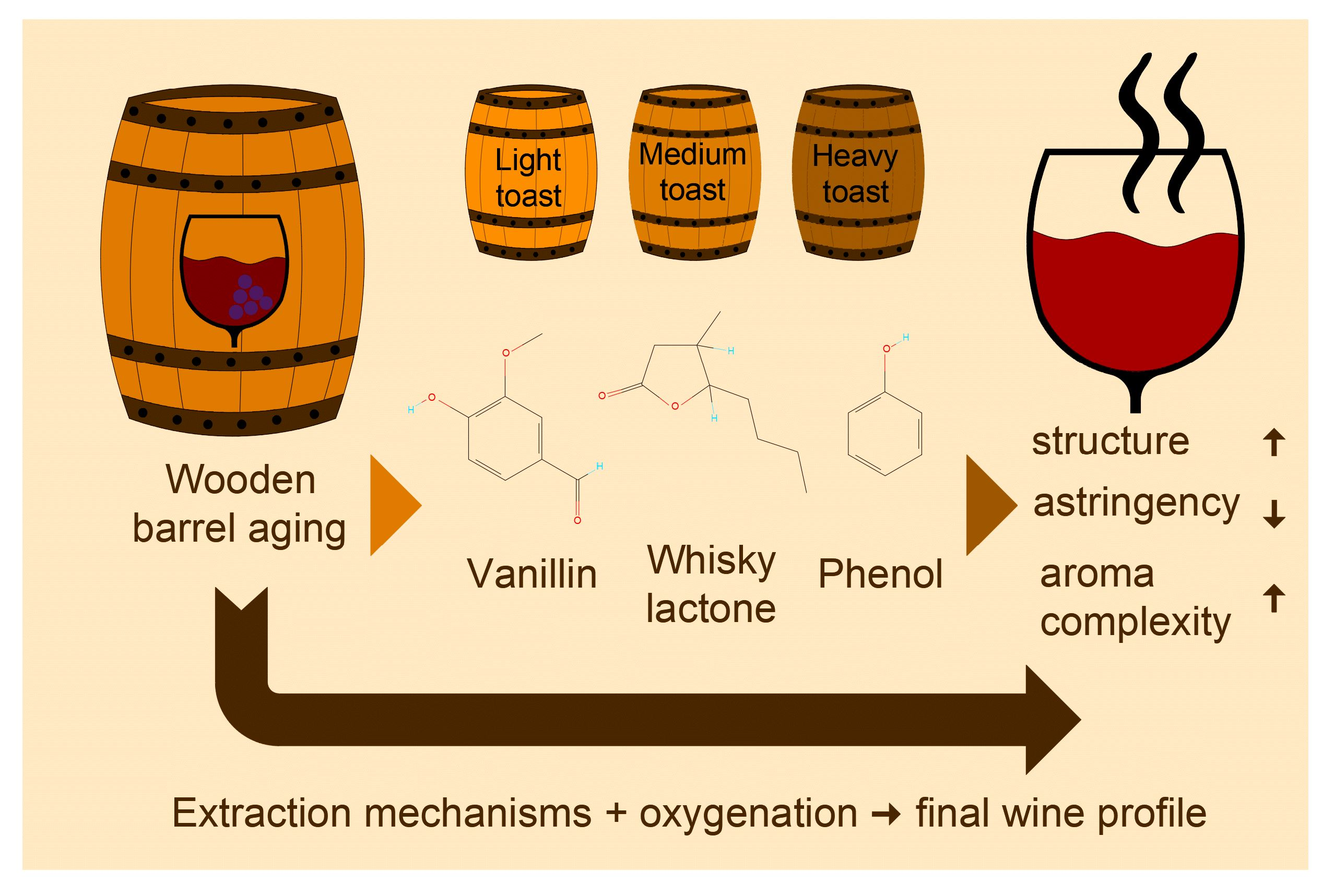
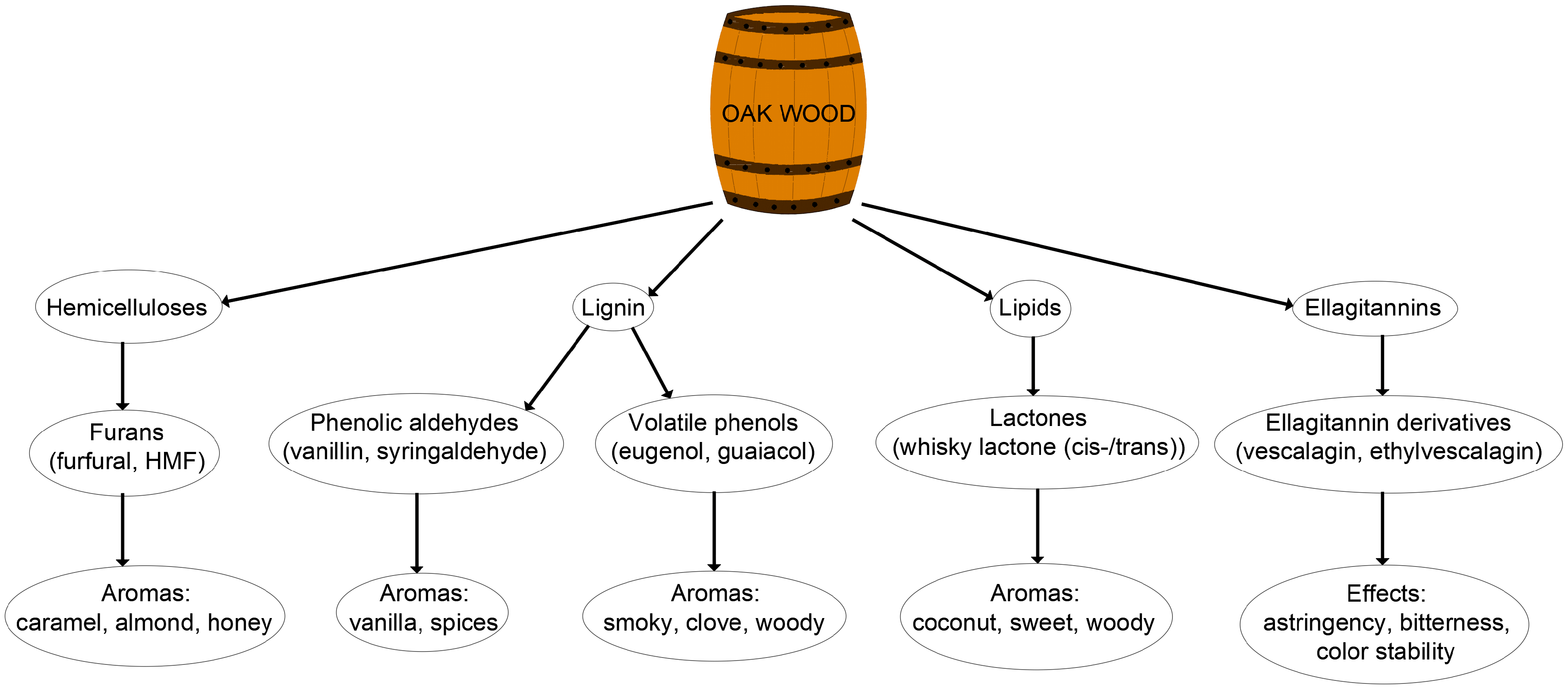
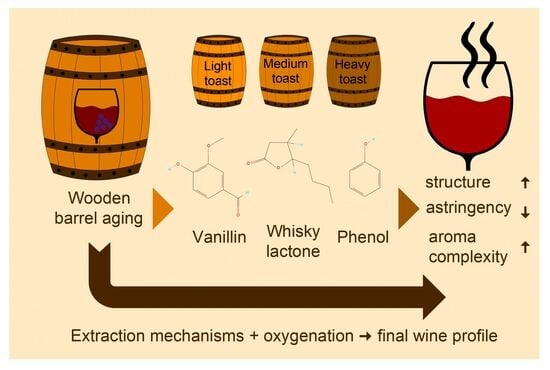
- The intensity of toasting has a strong influence on the extraction of phenolic and volatile compounds.
- Aging reduces the content of free anthocyanins and forms stable polymeric pigments, which improves color stability.
- The selection of oak species, toasting level, and aging duration enable optimization of the wine’s aroma and phenolic profile.
- Standardized analytical and sensory approaches are needed to enable more reliable comparisons between different studies.
Abstract
Share and Cite
Marković, T. Red Wine Aging in Oak Barrels: The Influence of Toasting Levels on Aromatic Profile, Phenolic Composition, and Sensory Properties. Beverages 2025, 11, 165. https://doi.org/10.3390/beverages11060165
Marković T. Red Wine Aging in Oak Barrels: The Influence of Toasting Levels on Aromatic Profile, Phenolic Composition, and Sensory Properties. Beverages. 2025; 11(6):165. https://doi.org/10.3390/beverages11060165
Chicago/Turabian StyleMarković, Tanja. 2025. "Red Wine Aging in Oak Barrels: The Influence of Toasting Levels on Aromatic Profile, Phenolic Composition, and Sensory Properties" Beverages 11, no. 6: 165. https://doi.org/10.3390/beverages11060165
APA StyleMarković, T. (2025). Red Wine Aging in Oak Barrels: The Influence of Toasting Levels on Aromatic Profile, Phenolic Composition, and Sensory Properties. Beverages, 11(6), 165. https://doi.org/10.3390/beverages11060165