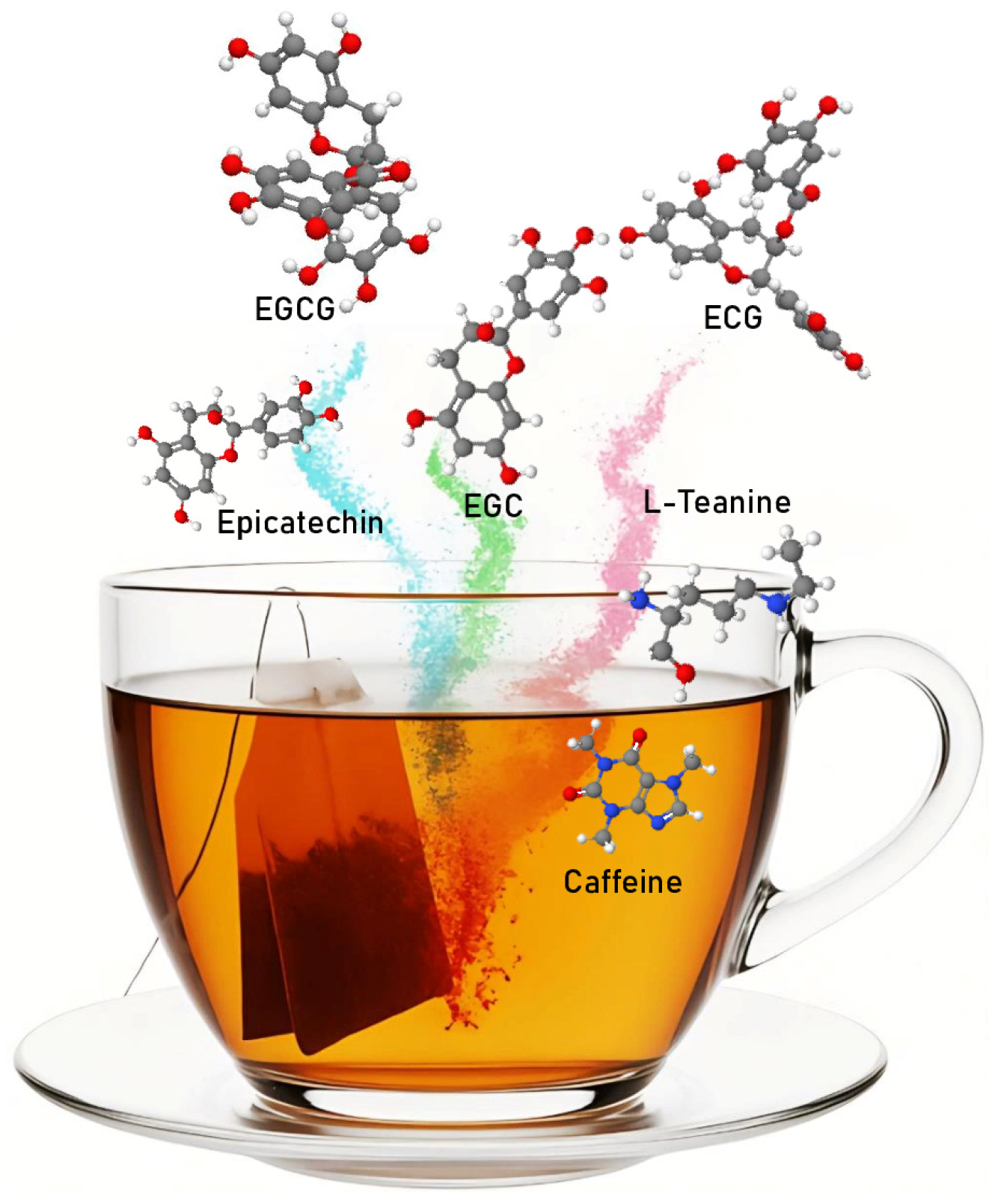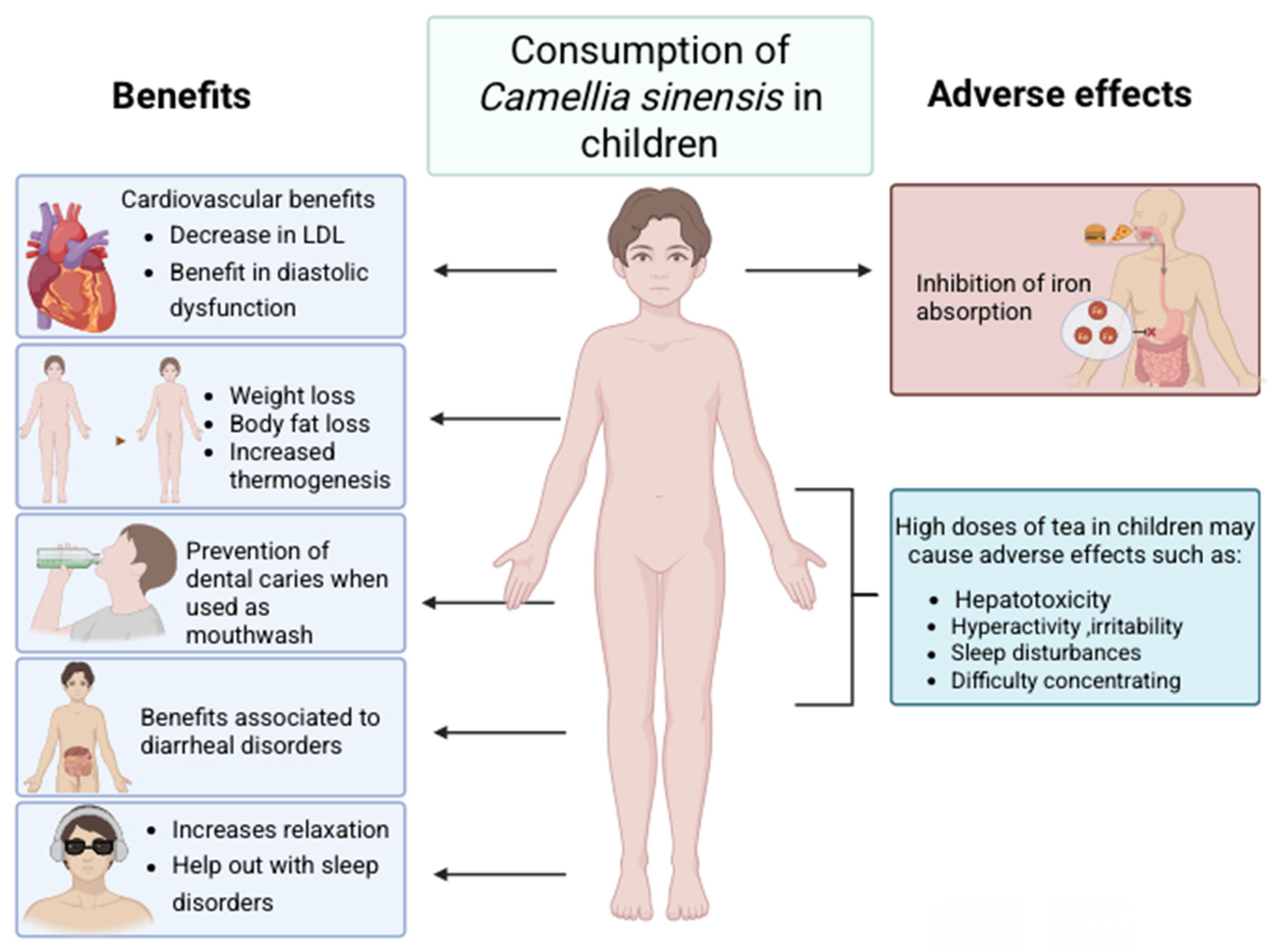

Biological Activities of Tea: Benefits, Risks, and Critical Overview of Their Consumption in Children



Abstract
Share and Cite
Castillo-Ruiz, M.; Espinoza, J.P.; Benavides, L.; Otero, M.C. Biological Activities of Tea: Benefits, Risks, and Critical Overview of Their Consumption in Children. Beverages 2025, 11, 148. https://doi.org/10.3390/beverages11050148
Castillo-Ruiz M, Espinoza JP, Benavides L, Otero MC. Biological Activities of Tea: Benefits, Risks, and Critical Overview of Their Consumption in Children. Beverages. 2025; 11(5):148. https://doi.org/10.3390/beverages11050148
Chicago/Turabian StyleCastillo-Ruiz, Mario, Juan Pablo Espinoza, Lisette Benavides, and María Carolina Otero. 2025. "Biological Activities of Tea: Benefits, Risks, and Critical Overview of Their Consumption in Children" Beverages 11, no. 5: 148. https://doi.org/10.3390/beverages11050148
APA StyleCastillo-Ruiz, M., Espinoza, J. P., Benavides, L., & Otero, M. C. (2025). Biological Activities of Tea: Benefits, Risks, and Critical Overview of Their Consumption in Children. Beverages, 11(5), 148. https://doi.org/10.3390/beverages11050148