Article

Effects of Technique Asymmetry on 500 m Speed Skating Performance

1
School of Sport Science, Beijing Sport University, Beijing 100084, China
2
Tianshui Sports Bureau, Tianshui 741000, China
3
Department of Physical Education, Northwestern Polytechnical University, Xi’an 710072, China
4
Center for Human Movement Science, Division of Physical Therapy, School of Medicine, The University of North Carolina at Chapel Hill, Chapel Hill, NC 27599, USA
5
China Institute of Sports and Health, Beijing Sport University, Beijing 100084, China
*
Authors to whom correspondence should be addressed.
Bioengineering 2024, 11(9), 899; https://doi.org/10.3390/bioengineering11090899

Submission received: 12 August 2024 / Revised: 30 August 2024 / Accepted: 5 September 2024 / Published: 7 September 2024
(This article belongs to the Special Issue Biomechanics and Motion Analysis)

Abstract

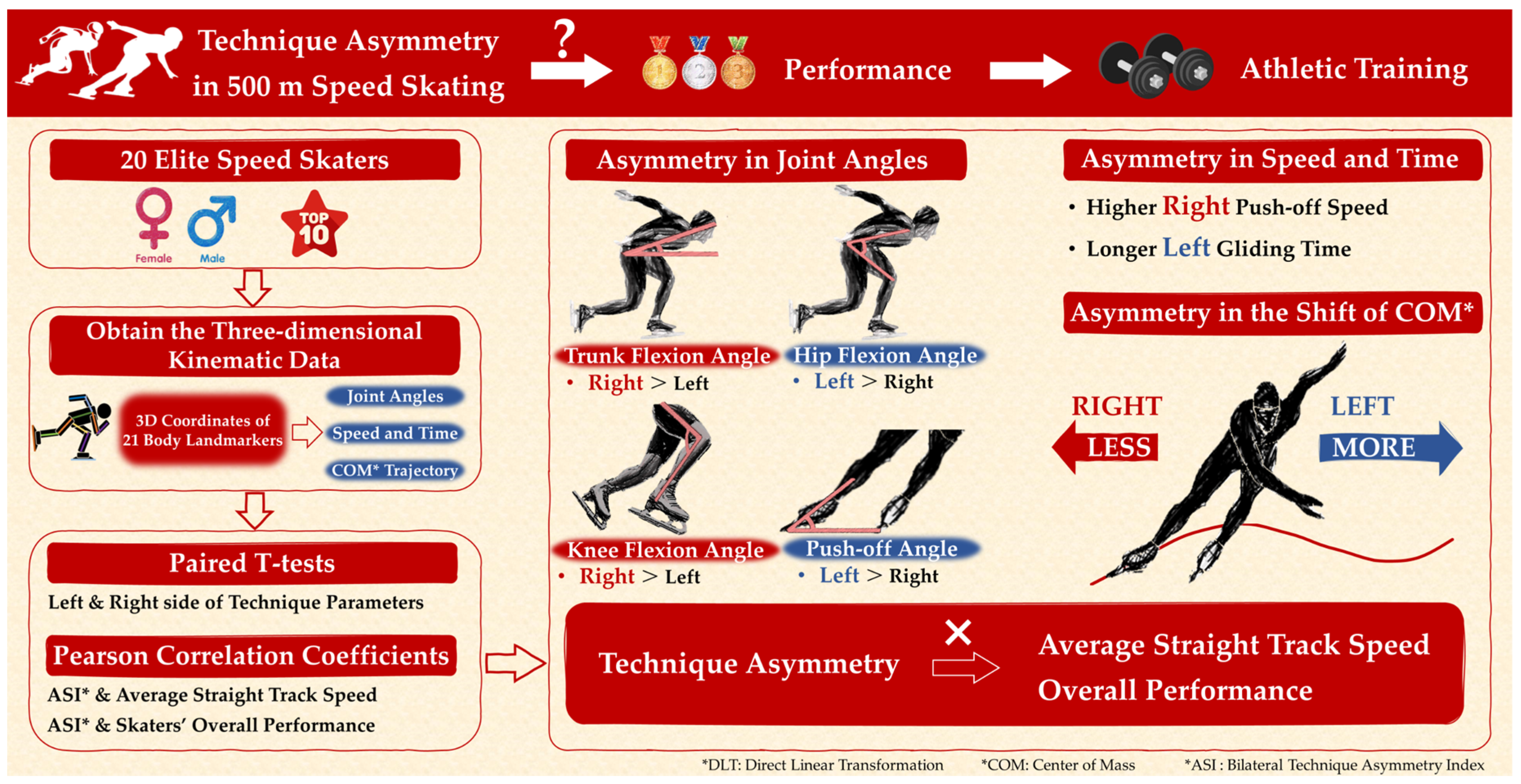
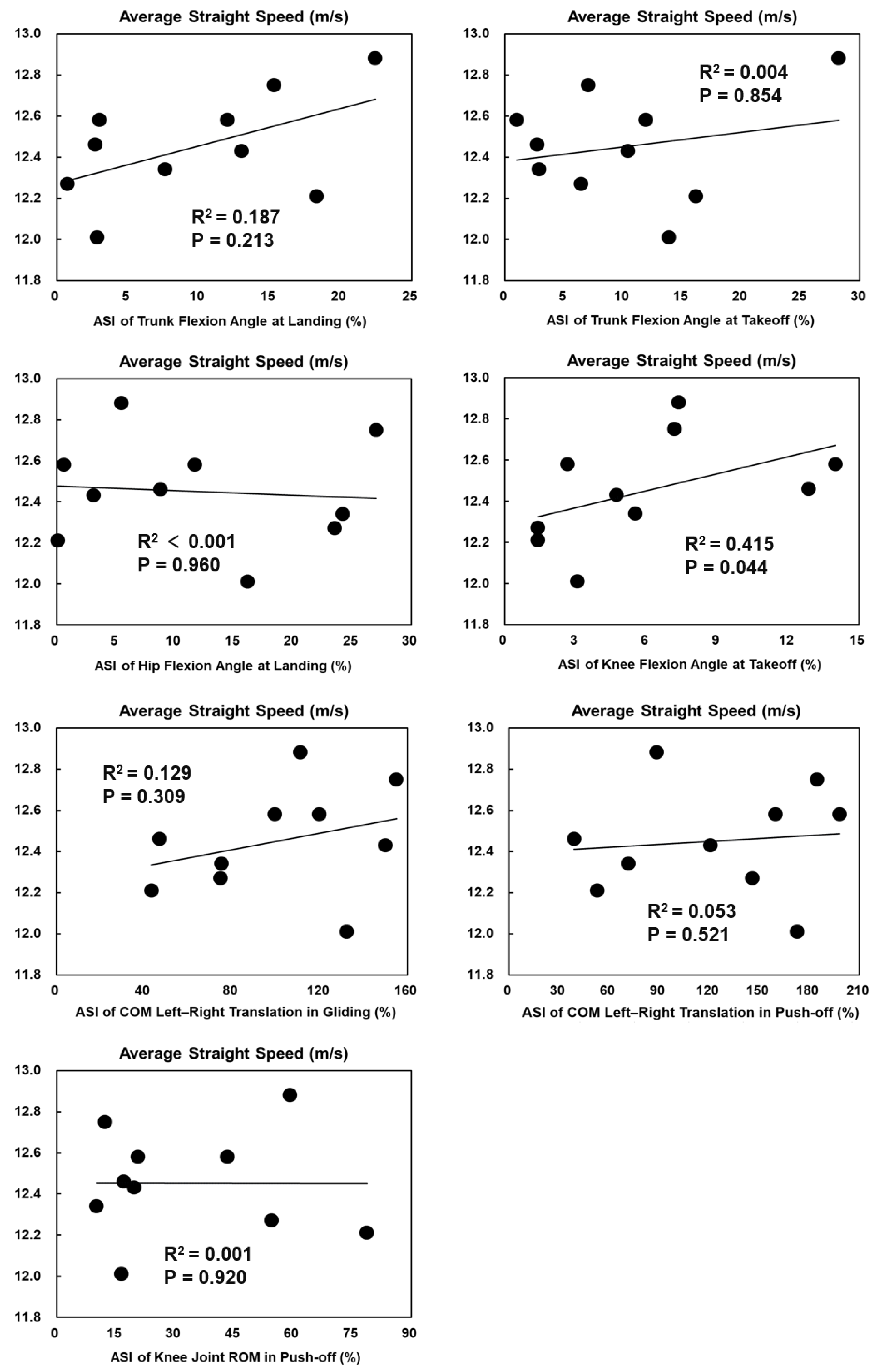
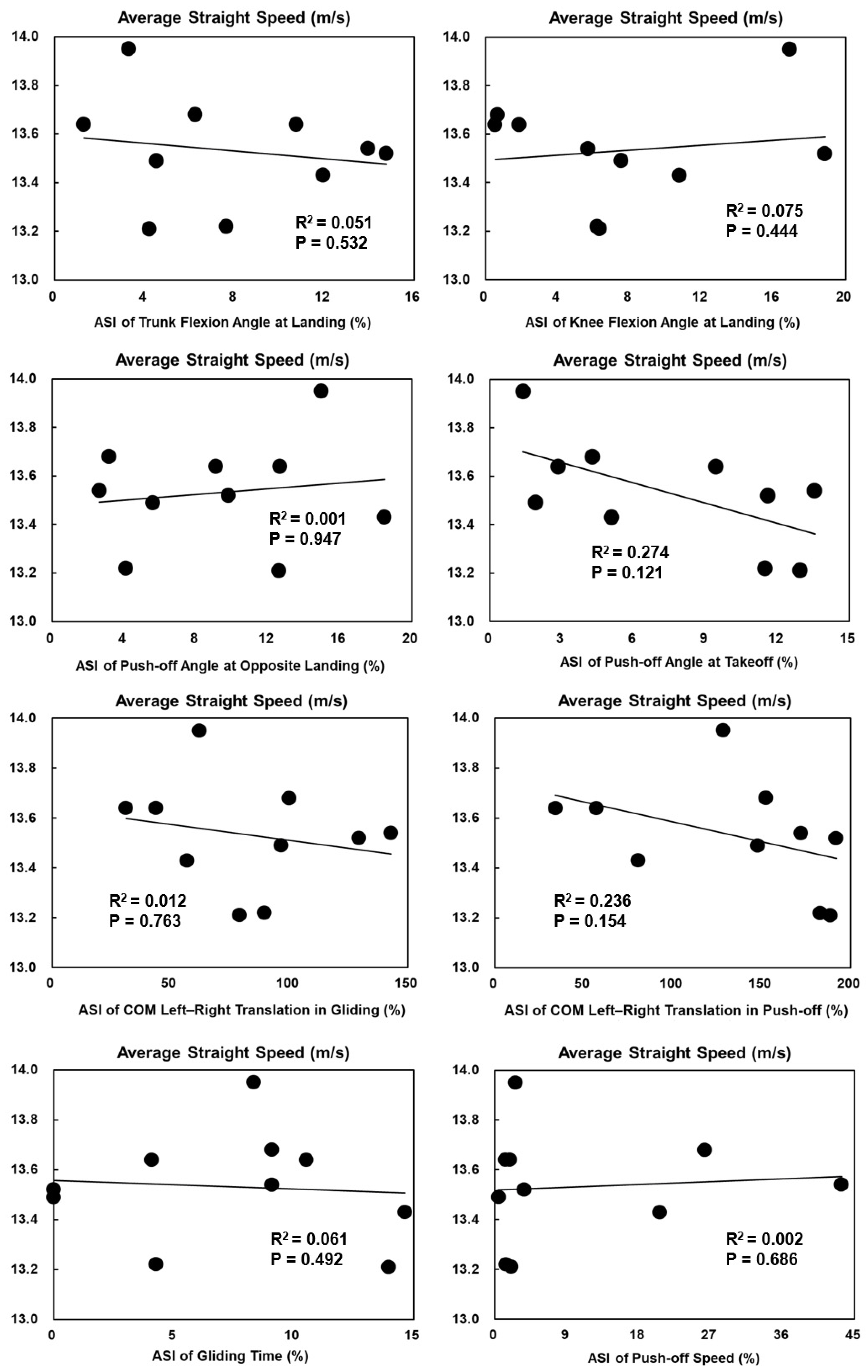
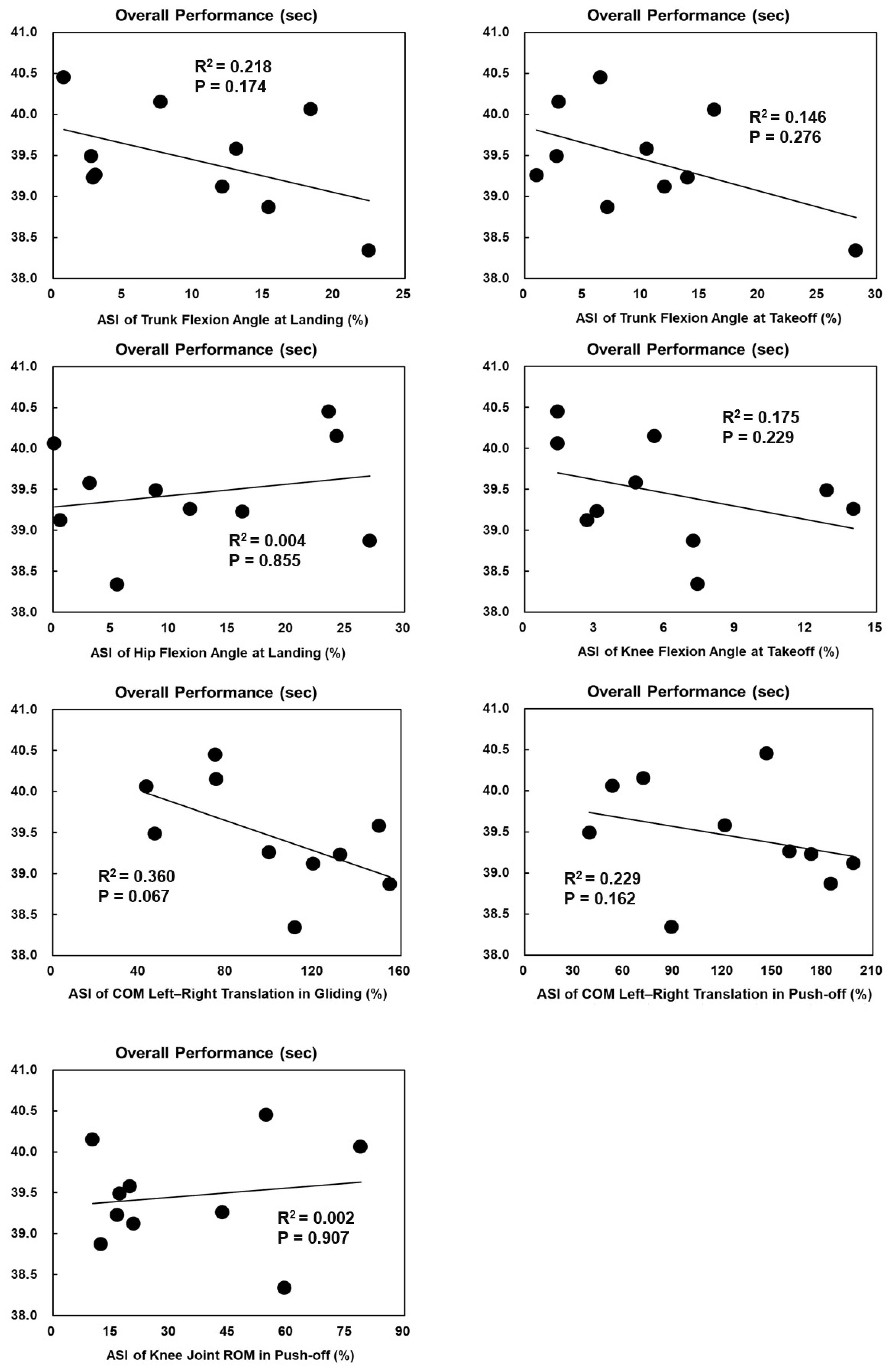
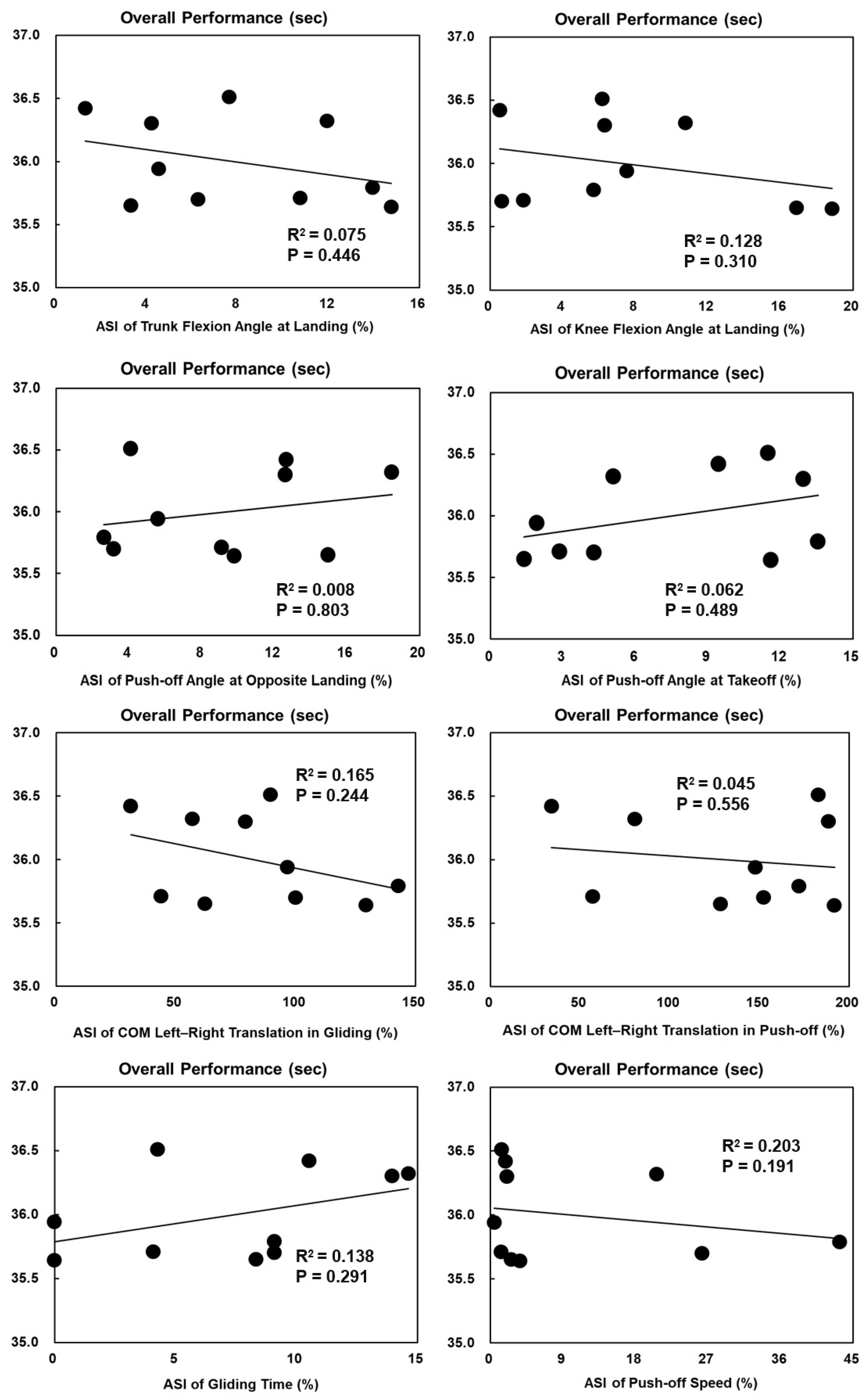
This study aimed to determine the effects of technique asymmetry on 500 m straight-track speed skating performance. We analyzed 20 elite skaters, measuring their joint angles, center of mass shift, and times and speeds during the gliding and push-off phases. The technique asymmetry index (ASI) was calculated for each parameter, and paired t-tests were used to compare bilateral asymmetry. Spearman correlation coefficients assessed the relationship between the ASI and both the average straight track speed and overall performance. Significant bilateral asymmetries in the knee, push-off, trunk, and hip angles were found in both male and female participants (p < 0.05). The male participants demonstrated a higher right push-off speed (p = 0.029) and a longer left gliding time (p = 0.048). Significant asymmetry was also observed in the lateral shift of the center of mass during each phase of the straight-track skating gait cycle (p < 0.001). No significant correlation was found between the ASIs and the overall performance (p ≥ 0.067). These findings indicate that while elite speed skaters demonstrated significant bilateral technique asymmetry in straight track skating, these asymmetries did not significantly impact their overall performance.
Keywords: technique symmetry; speed skating performance; speed skating training technique symmetry; speed skating performance; speed skating training
Graphical Abstract