Article

Importance of the Induced Recharge Term in Riverbank Filtration: Hydrodynamics, Hydrochemical, and Numerical Modelling Investigations


1
Institute of Life Sciences, Scuola Superiore Sant’Anna, 56127 Pisa, Italy
2
Helmholtz Centre for Environmental Research GmbH—UFZ, Permoserstraße 15, 04318 Leipzig, Germany
3
Genio Civile Toscana Nord, Regione Toscana, 55100 Lucca, Italy
*
Author to whom correspondence should be addressed.
Hydrology 2020, 7(4), 96; https://doi.org/10.3390/hydrology7040096

Submission received: 31 October 2020 / Revised: 28 November 2020 / Accepted: 5 December 2020 / Published: 8 December 2020
(This article belongs to the Special Issue Integrated Surface Water and Groundwater Analysis)

Abstract

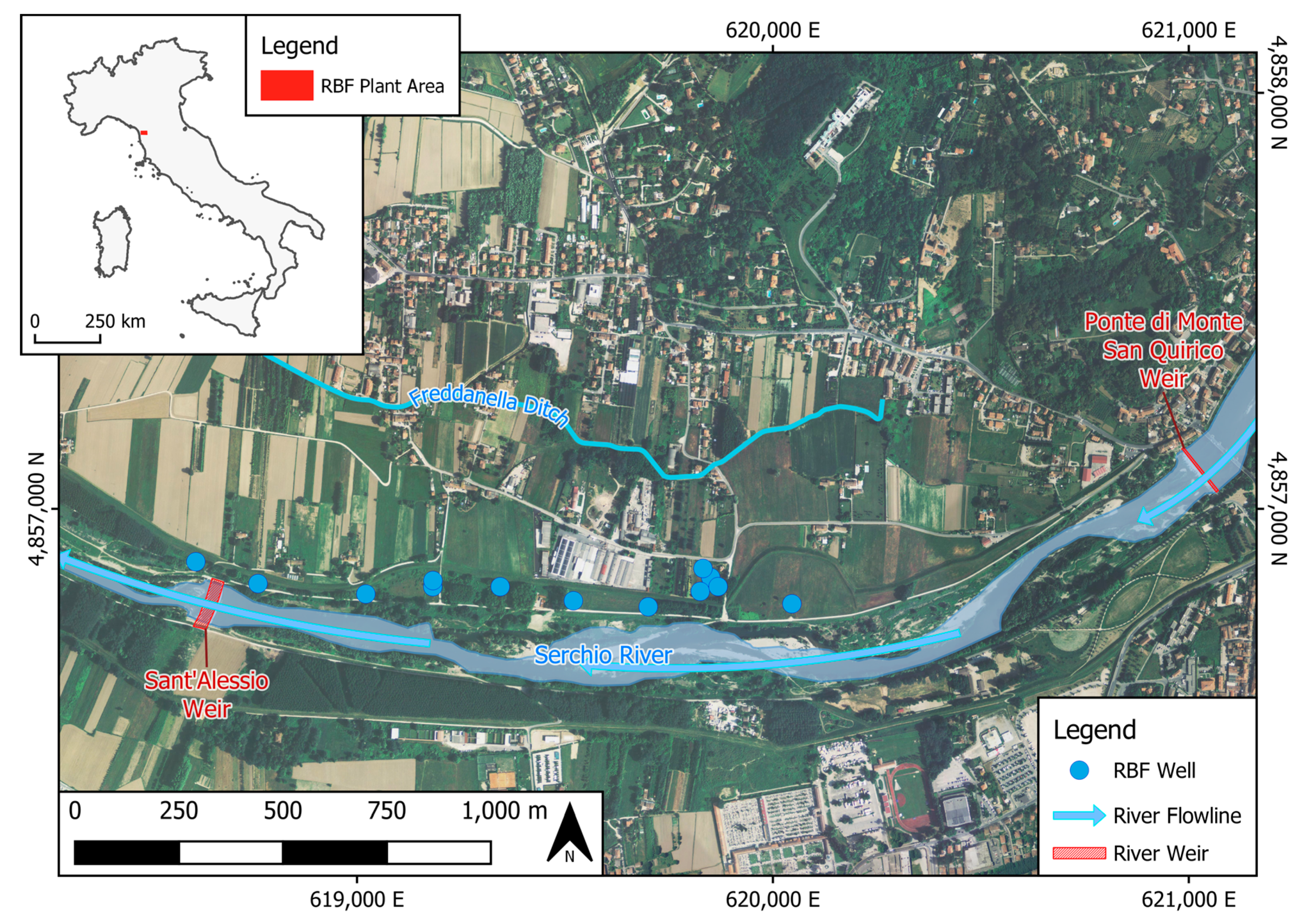
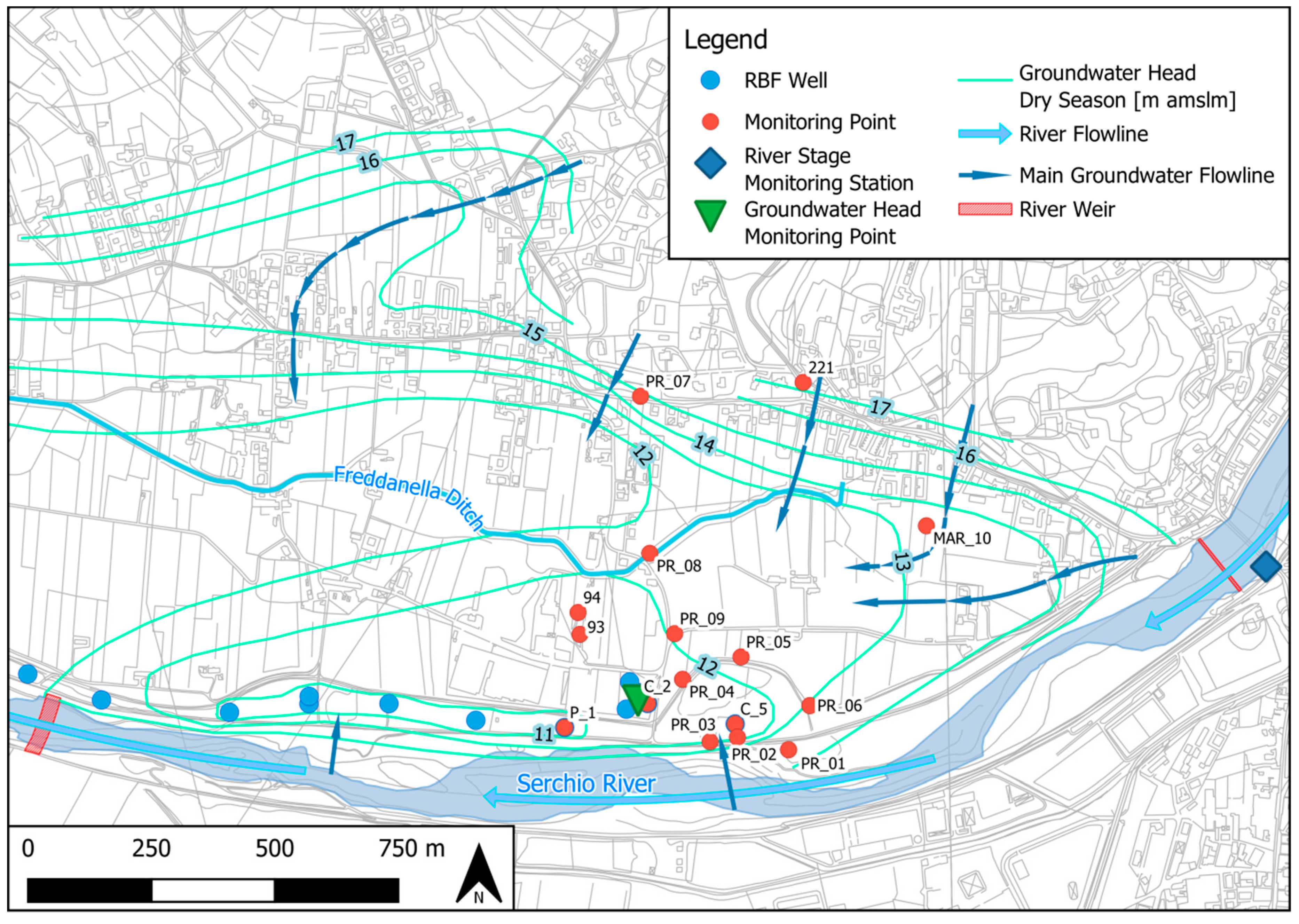
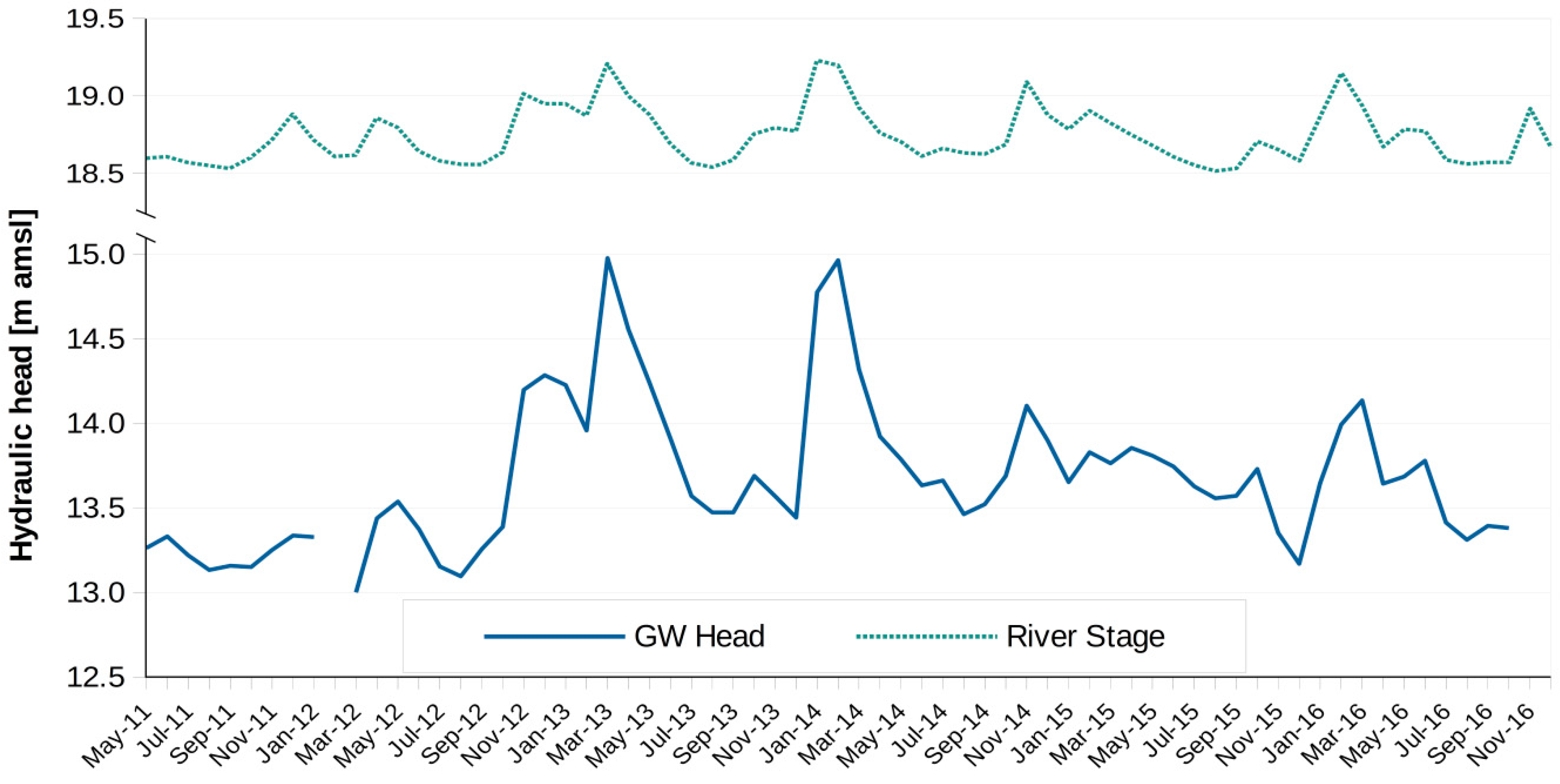
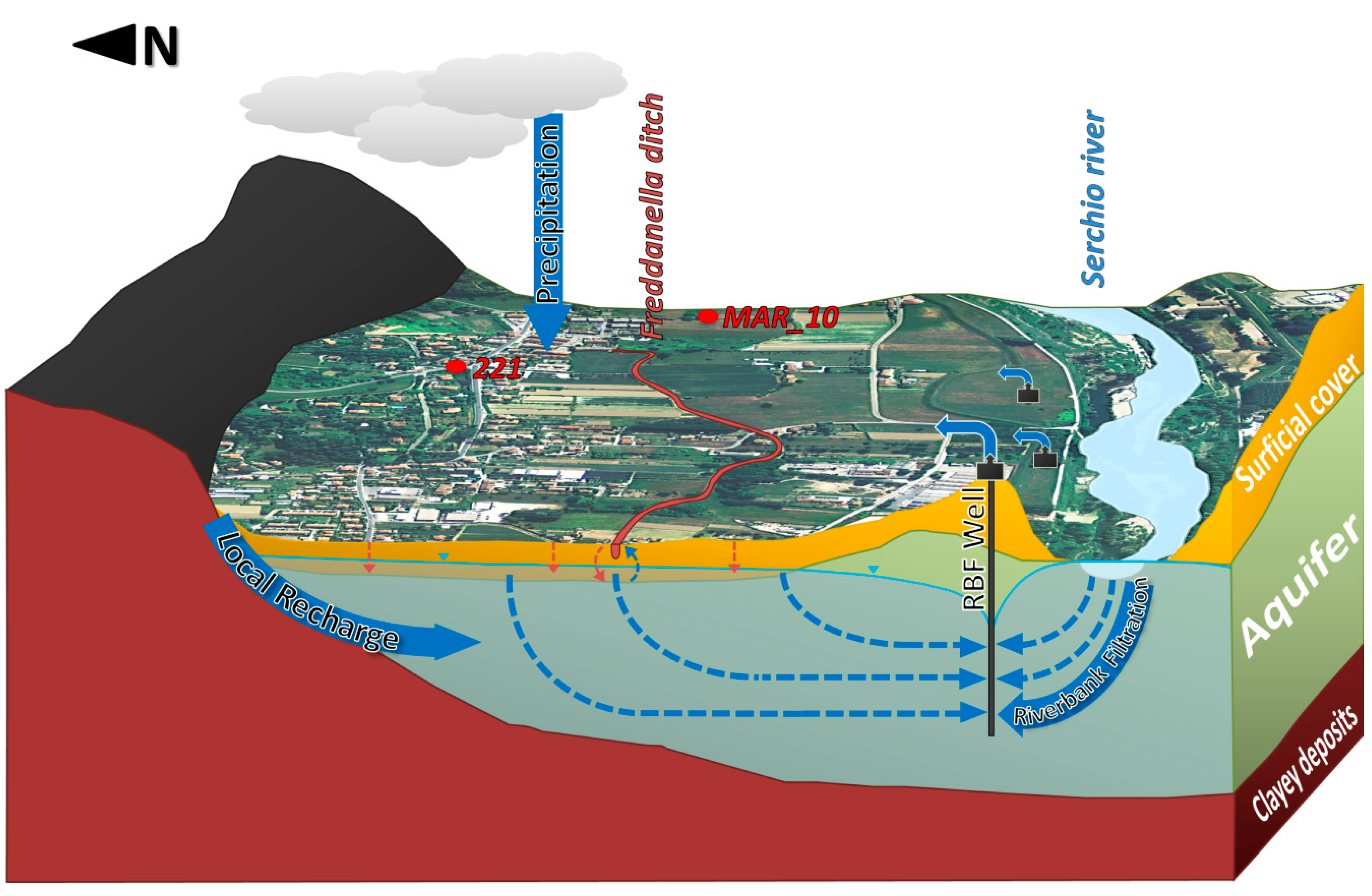
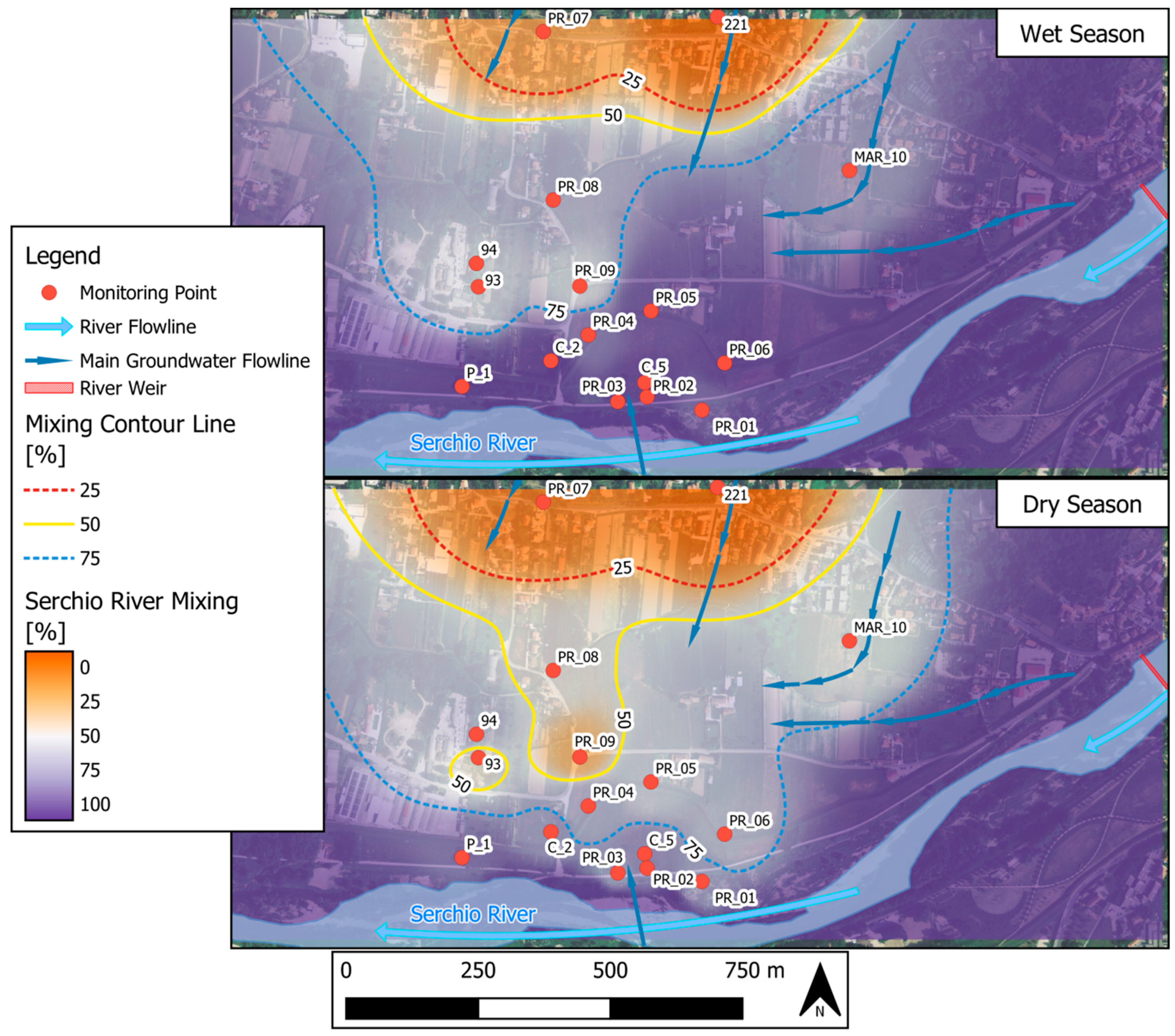
While ensuring adequate drinking water supply is increasingly being a worldwide challenging need, managed aquifer recharge (MAR) schemes may provide reliable solutions in order to guarantee safe and continuous supply of water. This is particularly true in riverbank filtration (RBF) schemes. Several studies aimed at addressing the treatment capabilities of such schemes, but induced aquifer recharge hydrodynamics from surface water bodies caused by pumping wells is seldom analysed and quantified. In this study, after presenting a detailed description of the Serchio River RBF site, we used a multidisciplinary approach entailing hydrodynamics, hydrochemical, and numerical modelling methods in order to evaluate the change in recharge from the Serchio river to the aquifer due to the building of the RBF infrastructures along the Serchio river (Lucca, Italy). In this way, we estimated the increase in aquifer recharge and the ratio of bank filtrate to ambient groundwater abstracted at such RBF scheme. Results highlight that in present conditions the main source of the RBF pumping wells is the Serchio River water and that the groundwater at the Sant’Alessio plain is mainly characterized by mixing between precipitation occurring in the higher part of the plain and the River water. Based on chemical mixing, a precautionary amount of abstracted Serchio River water is estimated to be on average 13.6 Mm3/year, which is 85% of the total amount of water abstracted in a year (~16 Mm3). RBF is a worldwide recognized MAR technique for supplying good quality and reliable amount of water. As in several cases and countries the induced recharge component is not duly acknowledged, the authors suggest including the term “induced” in the definition of this type of MAR technique (to become then IRBF). Thus, clear reference may be made to the fact that the bank filtration is not completely due to natural recharge, as in many cases of surface water/groundwater interactions, but it may be partly/almost all human-made.
Keywords: drinking water supply; water supply scheme; surface water/groundwater interactions; managed aquifer recharge; induced riverbank filtration; groundwater resource management drinking water supply; water supply scheme; surface water/groundwater interactions; managed aquifer recharge; induced riverbank filtration; groundwater resource management