


Abstract
Groundwater–surface water interactions were investigated in the Highwood River (3952 km2) and Sheep River watersheds (1568 km2), originating in the Rocky Mountains headwaters of the South Saskatchewan River (Alberta, Canada), to improve understanding of hydrological processes that potentially influence water use and vulnerability to climatic change in representative, alpine-fed mixed-use watersheds. Similar to adjacent regions of the Bow, Red Deer and Oldman watersheds, the upper reaches of these watersheds are sparsely populated with significant seasonal glacier and snowmelt influence, while the lower watersheds are currently under increasing water supply pressure from competing agricultural–municipal interests, with notable risk of flooding during high-flow events and drought during the growing season. Investigations included mapping of hydrologic and hydrogeologic controls (aquifers, buried channels, colluvial deposits, etc.,) and synoptic geochemical and isotopic surveys (δ2H, δ18O, δ13C-DIC, 222Rn) to characterize evolution in water type and seasonal progression in streamflow sources and underlying mechanisms. Our findings confirm seasonal progression in streamflow water sources, characterized by a pronounced snowmelt-dominated spring freshet, but with a sustained recession fed by colluvial, moraine, fluvial, and fractured bedrock sources. Seasonal isotopic variations establish that shallow groundwater sources are actively maintained throughout the spring freshet, often accounting for a dominant portion of streamflow, which indicates active displacement of groundwater storage by snowmelt recharge during spring melt. The contrast in the proportion of alpine contributions in each watershed suggests these systems may respond very differently to climate change, which needs to be carefully considered in developing sustainable water-use strategies for each watershed.
1. Introduction
Groundwater plays a critical role in generating streamflow in both alpine and non-alpine watersheds [1,2,3,4], and its interaction with surface water has been shown to be an important factor determining water quantity, water quality, and health and resilience of riverine systems [5,6]. Current global pressures on water supply for agriculture, industry and municipal development have made sustainable water management and planning an increasing priority at the national, regional, and municipal levels, particularly for arid and semi-arid climate zones [7]. Within southern Alberta, Canada, a semi-arid region dominated by agricultural lands interspersed with rapidly expanding towns and cities, streamflow predominantly originates and is sustained by drainage from alpine headwaters on the eastern slopes of the central/southern Rocky Mountains, but has been shown to be in systematic decline due to widespread regional warming [8,9,10,11].
The Highwood River and Sheep River (HRSR) watersheds are two examples of alpine-fed mixed-use watersheds which have been classified as being at higher risk of negative drought [12], but are key water supply sources for regional agriculture and communities such as Okotoks, High River and Diamond Valley. Previous assessments have contributed to a better understanding of groundwater conditions and have proposed measures to mitigate flood risk in the lower reaches [13,14]. To better understand the resiliency of the HRSR watersheds to climate change and future growth, a study was initiated to develop a better understanding of streamflow sources and their evolution from alpine headwaters to the mouth within these systems, as well as to identify important mechanisms controlling water quality, quantity, and timing, including groundwater–surface water (GW–SW) interactions. Given the lack of field-based hydrological investigations that have been conducted within the watersheds, our study was aimed at filling existing knowledge gaps in the extent of alpine groundwater storage, flow paths linking groundwater with surface water, and the degree of seasonal connectivity with streamflow. Geologic and hydrogeologic mapping, aquifer risk assessment and historical streamflow analysis, combined with synoptic field surveys to measure a selected array of isotopic and geochemical tracers over an annual hydrologic cycle under seasonally representative flow conditions, was used to gain first insight into the role of alpine regions of the watershed in streamflow generation as well as to characterize important underlying mechanisms delivering water sources to streams and rivers. Our hypothesis at the outset was that the extent of groundwater interaction with streams would be an important determinant of water quality, quantity and the timing of contributions to streamflow, and that we would observe contrasting behaviour in the timing and extent of alpine influence within each watershed due to differing alpine proportions of each watershed. Overall, our main objective was to gain a better understanding of the hydrologic properties of each watershed and their individual characteristics and limitations, for input to future sustainable water management and planning activities.
Rationale for Use of Tracer Methods
This study applied geochemical and isotopic data for the characterization of GW–SW interactions over a hydrologic year to provide a broad perspective on seasonal and synoptic trends from alpine headwaters to the lower river reaches. This approach incorporated measurement of deuterium (δ2H), oxygen-18 (δ18O), carbon-13 (δ13C), and radon (222Rn) in water samples of streamflow and key sources to streamflow at selected nodes along the river channels. δ2H and δ18O isotopes, widely used as hydrological tracers due to their ability to label water sources incorporated in streamflow, including precipitation, groundwater, and surface water, as well as mixing and interactions and evaporation effects [15]. Tracer-based approaches have proven to be of particular value in recent investigations in similar watersheds of the eastern slopes of the Rockies for characterizing complex, nested recharge systems in mountain block terrain [1], age and origin of streamflow sources [16], and snowmelt regulation within similar high-elevation systems [17]. Carbon isotopes (δ13C) were incorporated within the study to explore variations in carbon source and sinks within the watershed, whereas radon-222 was used for labelling groundwater sources and for tracing potential groundwater movement and exchange with surface waters [18,19,20,21,22]. Tracers were applied in combination with geological mapping to facilitate an efficient and timely first assessment over a large area and to identify key watershed areas of higher uncertainty and risk to follow up in future assessments.
2. Study Site
The Highwood River originates in the Canadian Rockies and flows through the Village of Longview and the town of High River before joining the Bow River (Figure 1). Its watershed covers approximately 3952 km2 and is fed by several smaller creeks. The Sheep River begins in the Elbow-Sheep Wildland Provincial Park and converges with the Highwood River near Okotoks (Figure 1). Its watershed spans about 1568 km2. Both rivers exhibit typical mountain stream characteristics, with steep headwaters and gentler slopes downstream. Both the Highwood and Sheep Rivers are part of the Bow River Watershed, which in turn is part of the larger South Saskatchewan River system, ultimately draining into Hudson Bay. Mountainous areas, often referred to as “water towers,” are vital sources of water for downstream regions [23]. In mountain environments, hydrologic patterns are strongly influenced by the seasonal and interannual storage of water in snowpacks and glaciers, which gradually release water into rivers during the melt season. However, these processes are increasingly affected by climate variability [24], with potential downstream impacts on water availability for communities [25] and on alpine stream ecosystems [26].
Figure 1.
Highwood River and Sheep River (HRSR) watershed boundaries outlining the alpine watershed boundaries for both river systems.
The region experiences a semi-arid climate, with cold winters and warm summers, leading to a moisture deficit, particularly between April and September [27]. The area encompasses several natural subregions, including grassland, parkland, and Rocky Mountain, each contributing distinct topographic and ecological features that influence water availability and land use [28].
The Sheep River (188.3 km2) and Highwood River (727.7 km2) alpine watersheds (Figure 1 and Figure 2) are both part of the major Bow River basin and feature various surficial deposit layers (Figure 2), including colluvial (mainly talus), moraine, and fluvial deposits (primarily sand and gravel) [29]. The bedrock geology in the HRSR alpine watersheds (Figure 3) consists of various rock types, including limestone, dolostone, shale, siltstone, sandstone, mudstone, chert, and dolomite [30]. In some areas, these rock types are interbedded with carbonate and siliciclastic layers, adding complexity to the geological structure. Additionally, fractured bedrock aquifers, characterized by fractures, joints, and faults, are prominent in these watersheds.
Figure 2.
Surficial deposits in the Highwood River Alpine watershed (A) and the Sheep River Alpine watershed (B); bedrock geology and prominent structural features in the Highwood River Alpine watershed (C) and the Sheep River Alpine watershed (D).
Figure 3.
Geological, hydrological, and hydrogeological framework of the HRSR watersheds.
The surficial geology of the non-alpine HRSR watersheds (Figure 3) primarily consists of glacial till, fluvial and glaciofluvial gravel and sand deposits, as well as glaciolacustrine silts and clays [29]. Pleistocene and recent fluvial deposits are present but limited in extent. Historical hydrogeology reports [31,32,33] and driller’s logs indicate that these surficial deposits range from 15 m to 35 m thick near High River and Okotoks in the eastern portions of the watersheds, thinning to 5 m to 15 m towards the west. In some areas, surficial deposits range from 0 m in the mountains to over 30 m in river valleys or pre-glacial channels atop bedrock [14]. The eastern part of the HRSR watersheds, as mapped by Hartman [31], shows a significant distribution of moraine, surrounded by preglacial fluvial deposits (Figure 3). Stagnant ice moraine deposits in the region result from the collapse of englacial and supraglacial sediments as buried ice melted.
The bed rock of the foothills and plains of the watersheds (Figure 3) is dominated by siliciclastic rocks—shale, siltstone, sandstone, and mudstone [30]. The eastern part of the watershed predominantly features sandstone, siltstone, and mudstone. The primary water-bearing units are the sands and gravels, with additional storage and connectivity provided by sandstone and fractured shale within the bedrock formations. Several buried channels in the watershed—preglacial, pre-last glacial, and recent—(Figure 3) have origins in subaerial or glacial meltwater processes [34]. Subsurface lineaments, indicative of fractures and faults (Figure 3), are predominantly of Precambrian age [35] and extend across the watershed, connecting the alpine region to the lower reaches of the Highwood and Sheep Rivers. These geological structures, including surface lineaments and glacial landforms such as moraines and eskers [36], contribute to the area’s complex hydrological and hydrogeological network.
The HRSR watersheds span two distinct hydrogeological regions (Figure 3): the Mountains and Foothills, and the Western Plains and Benchlands [37]. The western region features rugged terrain with metamorphic and sedimentary rocks, where valley sediments may host aquifers connected to surface water. The eastern region consists mainly of clastic sedimentary formations and gently rolling plains, with localized aquifers occurring in gravel sheets and buried valleys.
3. Materials and Methods
3.1. Water Sampling Locations
The field investigations were completed at the selected locations over one hydrological sampling year, March 2023–April 2024, to capture the changes across the winter, spring freshet, summer, and fall seasons. Sampling locations identified in the HRSR watershed sampling network are presented in Figure 1 and Supplementary Table S2. The locations included the following:
- (i)
- Alpine inputs mapping on the Highwood and Sheep rivers to understand the seasonal variations in snowpack, the hydrologic regime of alpine contributions, and their subsequent impact on the water supply for downstream communities.
- (ii)
- Existing municipal water monitoring sites from the participating municipalities, namely Foothills County, the town of Okotoks and town of High River. These included a few surface water and groundwater well sites to understand the change in stream and baseflows and the impact of precipitation on the water quality and quantity of the tapped aquifer.
- (iii)
- Springs within the HRSR watersheds were sampled for isotopes and geochemistry to characterize the groundwater discharge (exfiltration) zones within the watersheds and map the groundwater–surface water interactions. Springs usually release groundwater from an aquifer, with flow influenced by natural hydraulic gradients and, in some cases, fractures in the bedrock.
- (iv)
- Provincial monitoring sites within the HRSR watersheds are monitored by Alberta Environment and Protected Areas (EPA) as part of their ongoing monitoring program. The tributary monitoring network in Alberta includes four monitoring stations situated within the HRSR watersheds, which have been incorporated into this study for the assessment of changes in isotopic composition and geochemical properties.
3.2. Geochemical and Isotopic Analysis
Field water quality parameters were measured using a YSI handheld multi-probe, Yellow Springs, OH, USA during the sample collection and included dissolved oxygen, pH, electric conductivity, water temperature, alkalinity, and redox potential. Surface water samples were collected as grab samples, while the groundwater samples were pumped using a peristaltic pump, Denver, CO, USA. Both surface water and groundwater samples were stored at 4 °C until returned for geochemical or isotopic analysis. The geochemical analysis included the characterization of major and minor ions. Isotope samples collected during winter, spring freshet, summer and fall seasons over one hydrologic year included the following tracers:
- (i)
- Deuterium (δ2H) and Oxygen-18 (δ18O) stable isotopes were analyzed for hydrograph separation and source component partitioning (rainfall, groundwater, surface water and snowmelt; [15]. Isotopes of water were analyzed by isotope ratio mass spectrometry using a Thermo Scientific Delta V Advantage, Waltham, MA, USA. Oxygen was prepared using a Gasbench II by equilibrating water and CO2 and then introducing CO2 onto the GasBench column using an autosampler [38]. Hydrogen was analyzed by auto-injecting water into a chromium reactor heated to 875 °C in the HDevice to produce H2, which was streamed to the dual inlet for analysis [39]. Results are reported in “δ” notation in permil (‰) relative to Vienna Standard Mean Ocean Water (V-SMOW) and normalized to the SMOW-SLAP scale where SLAP is Standard Light Arctic Precipitation [40]. Analytical uncertainty is estimated to be better than ±0.2‰ for δ18OH2O and ±1‰ for δ2HH2O.
- (ii)
- Carbon-13 stable isotopes (δ13C) in dissolved inorganic carbon were analyzed to differentiate between water recharged in the soil or in deeper aquifer systems. 13C/12C in dissolved inorganic carbon, δ13C-DIC was analyzed using an established method on a Delta V Advantage mass spectrometer, and a GasBench II peripheral, Waltham, MA, USA. In-house standards, established by runs with IAEA-603 and IAEA-612, were run routinely as samples to allow the results to be reported vs. Vienna Pee Dee Belemnite (VPDB). Results are accurate to ± 0.3‰.
- (iii)
- Radon (222Rn) isotope concentration in rivers and groundwater samples was used to identify and quantify the amount and timing of groundwater inflows to the rivers [22] and to facilitate mapping of groundwater–surface water interactions. Radon-222 was measured using Durridge RAD-7 units, Billerica, MA, USA. The Durridge RAD-7 units were combined with other specialized attachments (Rad H2O and Big Bottle System), which agitate the radon gas out of water samples, allowing for the quantification of dissolved radon gas concentrations in water. The measurement accuracy is within ±5% and is corrected for relative humidity ranging from 0 to 100%.
3.3. Flow Gauging
Existing streamflow gauging stations are situated exclusively downstream on the Highwood and Sheep rivers, with no gauging conducted for the alpine watersheds. Two new alpine flow gauging stations (Figure 2) were established on both the Highwood and Sheep Rivers, and data loggers were deployed to monitor variability in stream stage and temperature throughout the hydrologic year. Additionally, velocity and stage data were recorded at specified cross-sectional areas of each stream to enable accurate discharge calculations. Stage data from 24 March 2023 to 21 March 2024 were used to develop site-specific rating curves. Hydrographs were generated using the continuous stage time series and the rating curves for both sites. Stream stage data from the Sheep River location were missing from 30 June to 28 August 2023, due to the logger being washed away during a storm event but resumed after the logger was reinstalled on 29 August 2023. To maintain continuity in the hydrograph and water budget analysis, stage values for this period were linearly interpolated between adjacent observations and converted to discharge using the site-specific rating curve. This approach assumes gradual recession typical of summer flows and introduces minimal uncertainty compared to observed data trends.
3.4. Hydrogeological Interpretation and Conceptual Understanding
Based on existing alpine hydrogeological models and geochemical field data collected over a hydrologic year, the geospatial and geochemical properties were investigated to define alpine storage, its contributions to downstream flows, and its overall resiliency. Key geological, hydrogeological, and structural features were identified from publicly available records to understand GW–SW interactions across alpine and non-alpine regions. High-permeability zones were mapped as recharge areas, while low-permeability glaciolacustrine deposits were mapped as barriers. Subsurface lineaments were identified as preferential pathways for groundwater flow, supported by geochemical evidence, such as radon and δ13C-DIC isotopic data, indicating groundwater discharge and carbon sources. Primary aquifers were defined as units of sand, gravel, and sandstone, with buried paleochannels serving as conduits between surface and subsurface waters, as well as aquifers. To determine the direction of groundwater flow in the HRSR watershed, a contour map of water levels was created from observed water well depths (Supplementary Figure S1). The groundwater well locations were integrated from five sources: the Alberta Water Well Information Database (AWWID), the Water Use Reporting System (WURS), the Domestic Well Water Database, the Calgary Watershed Monitoring Program, and the Alberta Water Quality Portal. Well depths were mapped using maximum sampling depth as a proxy, summarized by location. Groundwater elevations were derived from surface minus depth and interpolated using inverse distance weighting (IDW) to identify aquifer zones.
4. Results and Discussion
Data collected from the field investigations completed at the selected locations over the March 2023–April 2024 hydrological sampling year are outlined in Figure 1. Additional measurements are summarized in Supplementary Material (Table S1).
4.1. Geochemical Trends
4.1.1. Physicochemical Parameters
The study revealed that west–east synoptic trends in specific conductivity (SPC), total dissolved solids (TDS), and concentration of major ions show an increase from alpine headwaters (far left samples) to low altitude eastern reaches across all seasons (freshet, summer, and baseflow; Figure 4). The SPC and TDS values for Sheep River ranged between 295 and 565 μS/cm and 214 and 350 mg/L for the surface waters and between 370 and 1160 μS/cm and 245 and 739 mg/L for the sampled groundwaters, respectively, across all four sampling campaigns. For the Highwood River, SPC and TDS values ranged between 286 and 470 μS/cm and 180 and 310 mg/L for surface waters and between 97 and 768 μS/cm and 126 and 467 mg/L for groundwaters (Figure 4 and Figure S2). Increased SPC and TDS values along the Sheep and Highwood River surface waters are observed from headwaters to mouth as well as an increase in the concentration of ions such as calcium (45–72 mg/L; 44–70 mg/L), sodium (1.5–27 mg/L; 2.5–16 mg/L), potassium (0.4–2.3 mg/L; 0.5–4.7 mg/L), magnesium (12–20 mg/L; 11–21 mg/L), chloride (0.2–34 mg/L; 0.5–10 mg/L), sulfate (47–84 mg/L; 30–70 mg/L), and bicarbonate (150–230 mg/L; 140–240 mg/L).
Figure 4.
West to east synoptic total dissolved solids (TDS) trends along Sheep and Highwood River surface waters from alpine headwaters to low latitude eastern reaches over a hydrological sampling year.
The seasonal variations observed in the SPC and TDS values in a hydrologic year show elevated values during the winter baseflows, relative to the freshet flows. The higher discharge during spring freshet reflects the effect of snowmelt dilution on the reduced SPC and TDS values observed along both the Sheep and Highwood River flows from the headwaters to eastern watershed reaches. When comparing groundwater and surface water interaction along the HRSR watersheds, distinct hydrochemical signatures are evident. Along the western and central portions of the watersheds, runoff during freshet is dominated by concentrations of calcium (Ca) and bi-carbonate ions (HCO3−), which rise as they close into the eastern lower reaches of the watersheds. Groundwaters within the same reaches also exhibit elevated concentrations of both Ca and HCO3− ions, as seen in Production Wells PW#1 and PW#12 in the town of Okotoks, Monitoring and Production Wells in the town of High River, and Diamond Valley Well #5 in Foothills County (Supplementary Figure S5). These observations are characteristic of younger shallow groundwater input at these sites, which are often considered as groundwater under the direct influence (GUDI) of surface waters. This is further supported by the low TDS values of <1000 mg/L observed in the HRSR watersheds. Only a few groundwater wells in Foothills County (Ravencrest and Green Haven) and Blue Rock Spring showed some evidence of deeper groundwater connectivity. The shallow groundwater inputs are likely influenced by contact with carbonate-bearing soils and carbonaceous bedrock, leading to higher Ca and HCO3− concentrations. Similar concentrations of Ca and HCO3− ions between the groundwater and surface water sites in the two watersheds show high amounts of mixing and overlapping between the groundwater and surface waters, especially in the Okotoks sub-region of the watershed. The elevated SPC and TDS values along the rivers, particularly within the Sheep River, are further indicative of enhanced GW–SW interactions, especially towards the mouth along the lower reaches of the watershed.
In addition to surface waters feeding into the GUDI wells, surficial geology in the watersheds is also conducive to groundwater discharge into the surface water streams. This influence is seen in the form of increases in concentrations of Ca and HCO3− from alpine headwaters to low latitude eastern reaches. The groundwater in these GUDI wells has relatively short residence times, with potential interaction and connectivity within the hyporheic zone contributing to these observed increases (Supplementary Figure S5). Seasonality changes in a hydrologic year were also observed to influence major ion concentrations along the river flow path, with higher discharge observed during spring freshet accompanied by a snowmelt dilution in the ion concentrations, relative to elevated values observed during the winter baseflow.
The mature groundwater signatures were observed in the form of elevated concentrations in sodium (Na) and chloride (Cl) ions at two groundwater stations (Green Haven and Ravencrest) and one monitoring well in the town of High River (Production well #1) within the Sheep River watershed (Figure 5). The elevated concentration of these ions are usually associated with mature groundwaters undergoing water–rock interaction as predicted by the Chebotarev sequence [41] or groundwaters with deep basin brine sources. These sources can have interactions with surface and shallow groundwaters where fracture flow can act as a conduit.
Figure 5.
Piper plot showing the range of major ions at Sheep and Highwood Rivers’ sampling stations over the sampled hydrological time period from March 2023 to April 2024.
4.1.2. Water Type Within the Watersheds
Historical compilation of groundwater and surface water chemistries for the HRSR watersheds [33] shows two major hydrochemical water chemistries: mixed cation-bicarbonate-sulfate and sodium-calcium-sulfate-bicarbonate. Water chemistry constitutes bicarbonate ions as over 60% of the total anions for both groundwater and surface waters. The water-type chemistries for the different sampling locations within the HRSR watersheds are discussed below.
The water chemistry of samples collected from the alpine sites in the HRSR watersheds showed a Ca-Mg-HCO3-SO4 water type for both Highwood and Sheep Rivers across all seasons (freshet, summer, and baseflow) over a hydrologic year (Figure 5). Both alpine watersheds are characterized by hydrogeological pathways comprised of carbonate and siliciclastic bedrocks. While the overall water type for both rivers is similar, the alpine waters in the Sheep River show a slightly elevated concentration of sulfate ions relative to the Highwood River alpine waters. The snowmelt input in the alpine waters during freshet contributes to an increased concentration of bicarbonate ions in the surface waters.
The provincial sampling stations situated along the lower reaches of the HRSR watersheds consist of four stations from which water-chemistry data were available for each month across the sampling year (March 2023–2024). The water chemistry from all four provincial sampling stations consistently showed a Ca-Mg-HCO3-SO4 water type. Similar to alpine surface waters, both the snowmelt and precipitation inputs during freshet contribute to an increased concentration of bicarbonate ions in the lower reaches of the watershed which is reflected by the provincial sampling stations. The provincial stations for both Sheep and Highwood River that are adjacent to the highway (Highway 2 and Highway 552, respectively), show elevated concentrations of chloride ions relative to the provincial stations that are located within the towns, away from the main highway. A likely mechanism to explain the elevated concentrations in part could be related to higher road salt runoff input from the neighbouring highway.
Historical water chemistry data shared by Okotoks lacked measurements for basic anion chemistry, which prevented an analysis of historical trends. The groundwater and surface water showed a Ca-Mg-HCO3-SO4 water type, consistent with the alpine and provincial locations. The groundwater wells showed a higher relative concentration of sulfate ions and lower concentration of bicarbonate ions relative to the surface waters. The GUDI wells were found to plot between the groundwater and surface water types on a Piper plot (Supplementary Figure S3). The water type of the sampled groundwater wells also suggests that only shallow groundwater or GUDI was measured as a part of the study and no deep groundwater (typically with high concentration of sodium and chloride ions) was observed in the sites sampled in the town of Okotoks.
The water type for groundwater and surface water samples collected for Foothills County showed significant variability, which in part could be due to the wide spatial variability in these sampling stations within the HRSR watersheds (Figure 1). Surface water site Longview and groundwater wells Diamond Valley Well #5 and Square Butte Ranch showed a Ca-Mg-HCO3-SO4 water type, similar to the alpine surface waters and provincial water chemistry (Supplementary Figure S4). However, both Green Haven and Ravencrest groundwater well locations, located in the lower reaches of the watershed, showed elevated concentrations of sodium ions contributing a Na-Ca-Mg-HCO3-SO4 and Na-Ca-Mg-HCO3-Cl water type which could likely indicate a deeper or an older groundwater source at these sites (Supplementary Figure S4). The absence of historical data precludes any comparison of trends at these anomalous sites.
The Bow Spring Stream in the HRSR watersheds exhibited a marked transition in the water-type chemistry despite its short length, with distinct variations observed from upstream (Na-Ca-Cl-HCO3), to the middle (Ca-Mg-Na-HCO3-SO4), and downstream (Ca-Mg-Na-HCO3-SO4) sections. The elevated sodium and chloride concentrations observed at the upstream sampling location tends to transition to younger Ca-Mg-HCO3 chemistries downstream. This could potentially indicate a groundwater input source closer to the upstream sampling location within the Bow Spring Stream. Further investigation of this source via isotopic tracers is recommended.
4.2. Isotopic Trends
4.2.1. Hydrogen (2H) and Oxygen (18O) Isotopes
δ2H and δ18O isotopes from groundwater and surface water sources were collected along the main reach of both the Sheep and Highwood Rivers. These values were compared to regional precipitation data used previously to define a local meteoric water line (LMWL) (δ2H = 7.68 × δ18O − 0.21; [42]). Streamflow sources within the HRSR watersheds included snowmelt, alpine surface waters, surface waters along the lower reaches of the watershed, groundwater wells and precipitation (Figure 6).
Figure 6.
Biplot of average δ2H versus δ18O signatures for Sheep and Highwood River watershed sampling stations against the Calgary Local Meteoric Water Line (LMWL) [42] over the sampled hydrological time period from March 2023 to April 2024.
Snowmelt samples were found to plot on or close to the Calgary LMWL and were observed to be significantly depleted in heavy isotopes relative to the other streamflow sources. In contrast, summer rain was found to be to be enriched in the heavy isotopes, plotting slightly above the Calgary LMWL. The groundwater and surface waters for both HRSR watersheds seem to cluster together on the Calgary LMWL. Limited evaporative enrichment in surface waters is evident due to fast transit times as well as interconnectivity between groundwater and surface waters within the two watersheds. Both watersheds have groundwater wells under direct influence (GUDI) of surface water and also groundwater that discharges into the surface water streams through buried sand and gravel aquifers. Depleted δ2H and δ18O signatures associated with alpine snowmelt were not observed in the surface or groundwater samples collected from the lower reaches due to abundant mixing and interaction in near-channel aquifers in the upper watershed. Water chemistry (TDS, major ions, etc.,) and isotopic composition of the groundwater sampled in the HRSR watersheds generally appear to reflect shallow groundwater origins, with only limited potential contributions from deeper groundwater sources.
Values measured for deuterium (δ2H) and oxygen-18 (δ18O) in the Sheep and Highwood River watersheds are summarized in Table 1 (see also Supplementary Figure S6). The δ18O signatures showed distinct seasonal patterns in isotopic composition across the hydrologic sampling year (Supplementary Figure S6). Baseflow was found to become slightly enriched in heavy isotopes during the thaw season as flow moved downstream, in contrast to freshet streamflow signatures which were dominated by meltwater from winter snowpack. The most prominent snowmelt contributions to streamflow were noted at the confluence of the Sheep and Highwood Rivers. The enrichment of δ18O signatures along the lower, eastern reaches of the Highwood River appear to indicate that a large proportion of the total volume of water is derived from shallow groundwater rather than directly from snowmelt or precipitation.
Table 1.
Sheep and Highwood River δ18O, δ2H, d-excess summary statistics of watershed in delta permil (‰) notation. Precipitation is averaged from snow and rain values.
Within the Highwood River watershed, a closer look at the isotopic signals along a west to east (−114.75 to −113.75 longitude) gradient showed several distinct trends. Both rain and snow on the western boundary (−114.75) have a distinct negative δ18O signal with depletion in heavy isotopes being characteristic of altitude and temperature effects (Supplementary Figure S6). This is indicative of precipitation that falls at high altitude and cooler temperatures. Water collected from surface alpine locations had the most depleted signature, averaging −21.8 0.4%, while along the eastern portion of the watershed, precipitation was slightly enriched with an average of −19.3 3.3‰. As the river flowed from west to east, isotopic enrichment rose slightly until the provincial monitoring site below the confluence of both the Sheep River and Tongue Creek, where the signal increased by 2.8‰. Groundwater signatures within Highwood River remained consistent at −19.2 0.1‰ indicating that recharge was buffered by sources other than the river (Table 1; Supplementary Figure S6).
Near the western alpine boundary of the Sheep River watershed, the δ18O signal in precipitation averaged −22.0 2.1‰. Surface water sites were found to be slightly enriched (−19.9 0.4‰) and plotted closer to seasonal alpine precipitation sources. Moving along the river course, the Foothills County groundwater sites were also found to be more enriched in δ18O than values measured in precipitation, attributed to shallow mixing and minor evaporative effects. Closer to the provincial surface water monitoring sites, isotopic signals were more similar to the alpine region with a δ18O of −19.8 0.3‰. Both groundwater and surface water sampling locations within Okotoks had isotopic averages that showed slight enrichment of heavy isotopes and closely resembled isotopic samples collected from rain collectors.
When further assessing these signals and considering seasonal patterns, we also applied deuterium excess (d-excess = δ2H − 8 × δ18O; [43]) as a measure of offset from the meteoric water line. Along the Highwood River, d-excess remained positive, but was subdued compared to alpine snow and precipitation signatures. During baseflow (September–February), a measurable rise observed in d-excess values was inferred to reflect enhanced connectivity to groundwater aquifers, particularly along the mid-slope reaches of the watershed.
Preliminary source partitioning calculations based on isotopic signatures is provided in Table 2. The winter baseflow was considered to be a proxy for groundwater contributions, since it sustains the river flow during the winter periods of no precipitation input. The snow and rain isotopic signatures serve as precipitation endmembers for freshet and summer flows, respectively. The freshet flows were evaluated as mixtures of groundwater and snowmelt, while summer flows were evaluated as mixtures of groundwater and rain. These findings show that for the Sheep River Watershed, the alpine region had a higher winter baseflow signature in both the alpine and lower reaches relative to the snowmelt input during freshet; however, this reversed during summer flows when the relative rain contributions appeared to overshadow the baseflow signature. Within the Highwood River watershed, however, groundwater-dominated baseflows were typical during both freshet (>85% GW) and summer flows (>79% GW).
Table 2.
Isotopic source partitioning of baseflow versus precipitation (snow and rain) within the Alpine and eastern reaches of the Sheep and Highwood River.
While stable isotopes have been applied in previous studies to estimate older versus younger water fractions contributing to streamflow, and to evaluate river-connectivity to alluvial aquifers and/or fractured bedrock units [16], our assessment remains largely qualitative as limited by short duration of the sampling program to date.
4.2.2. Carbon Isotopes (13C-DIC)
The west–east synoptic δ13C-DIC trends along the river from alpine headwaters to low latitude eastern reaches show a decline in δ13C in all seasons (freshet, summer, and baseflow) (Figure 7). The sources contributing to the δ13C signatures include dissolved CO2 from the exchange with the atmosphere (∼−8‰), dissolution of carbonate rocks (∼0‰) and dissolved organic carbon (DOC) mineralization (∼−28‰). The sinks contributing to d13C signatures include CO2 evasion to the atmosphere (which occurs most vigorously in an ice-free environment, observed less so with ice cover on in winter) and photosynthesis, via which algae preferentially uptake 12C resulting in an enrichment in 13C-DIC.
Figure 7.
West to east synoptic δ13C-DIC trends along Sheep and Highwood River surface waters from alpine headwaters to low-latitude eastern reaches over a hydrological sampling year.
The effect of the atmosphere is likely similar across all stations except for a slight altitude–temperature gradient, as well as ice cover and seasonality gradients. Within the watersheds, the seasonal variations in δ13C-DIC in a hydrologic year show more enriched δ13C during freshet and summer flows, relative to the winter baseflows. This can be attributed to higher photosynthesis during those times, which contributes to enrichment in 13C. However, this is not the primary driver of δ13C variations at the alpine station at the Sheep River, since the highest 13C was observed during winter months, attributed in part to dominance of marine carbonate sources. CO2 evasion also appears to be a significant process accounting for the lowering of δ13C-DIC in winter. Under the ice cover during winter, the partial pressure of CO2 (pCO2) increases, resulting in reduced photosynthesis and δ13C increase [44]. During summer, this process reverses as pCO2 decreases by evasion and is consumed through photosynthesis.
Along the Sheep and Highwood Rivers, all surface water sampling locations are enriched relative to atmospheric CO2 in summer (cyan triangles for June 2023 in Figure 7). The alpine site samples, however, remain enriched all year, suggesting that the DOC contributions are less significant compared to carbonate dissolution sources in these alpine areas. The west–east synoptic δ13C-DIC trends along the river from alpine headwaters begin more from carbonate sources in upper reaches, with progressively higher contributions of dissolved CO2 from DOC mineralization in lower reaches, often associated with increased shallow GW input.
4.2.3. Radon Isotopes (222Rn)
Dissolved radon concentrations showed significant variability among surface water samples collected across the study area (Figure 8). The highest average radon concentration was observed in the Tongue Creek (5027 Bq/m3), while the lowest average concentration was recorded at the alpine headwaters of the Sheep River (76 Bq/m3). The Tongue Creek and Bow Spring Stream showed the highest average radon concentrations (2840 and 2297 Bq/m3, respectively). Although lower than those in the Tongue Creek and Bow Spring Stream, elevated average radon concentrations were also observed in the Highwood and Sheep Rivers, with average concentrations of 1342 and 606 Bq/m3, respectively. Average radon concentrations indicate that the Tongue Creek and Bow Spring Stream are partially fed by groundwater that is interacting with surficial units containing high uranium content. In contrast, the Highwood and Sheep Rivers exhibit lower average radon concentrations. However, significant increases in concentration were observed near the village of Longview in the Highwood River and near the town of Okotoks in the Sheep River (Figure 8 and Figure S7), indicating substantial groundwater and surface water interactions at these locations.
Figure 8.
Average radon concentration (Bq/m3) measured in samples collected from surface water in rivers and streams. The size of the circles is proportional to the average radon concentration at each sampling location.
For the Highwood River, significantly higher average radon concentrations were observed at the alpine sampling site and near the village of Longview, with a subsequent decrease between Longview and the town of High River. In contrast, despite the lower average radon concentrations at the Sheep River alpine sampling site, a steady increase in concentration was observed in the lower reaches of the watershed. These trends indicate that the groundwater and surface water interactions are more prominent in the Sheep River compared to the Highwood River, especially within the lower reaches of the watershed. The temporal variability in radon concentrations along the Highwood and Sheep Rivers indicates higher concentrations occurring in both rivers during baseflow, especially towards the eastern monitoring locations (Supplementary Figure S7). The higher concentrations observed during baseflow could be attributed to a greater groundwater contribution to both rivers during this period and/or the input of groundwater with longer residence times (i.e., deep groundwater).
Significant variability in dissolved radon concentrations was also observed among samples collected from groundwater wells and a spring across the study area (Figure 9). As expected, the average radon concentrations in groundwater samples were significantly higher than the concentrations observed in surface waters. Average radon concentrations as high as 53,101 Bq/m3 were observed, indicating that both surficial and bedrock deposits are significant sources of radon in the study area (Figure 9). While deep groundwater can travel long distances and maintain the isotopic distribution of δ2H and δ18O, the radon concentration in groundwater is often associated with the in situ radon production of the last formation with which the water was in equilibrium. Therefore, based on the values observed, it is likely that shallow groundwater input is the main radon source to surface water for both rivers.
Figure 9.
Average radon concentration (Bq/m3) measured in water samples collected from rivers and streams (green), water wells (blue), and springs (red). The size of the circles is proportional to the average radon concentration at each sampling location.
Although no clear trend was observed in radon concentrations over the year-long monitoring period, significant short-term variations were observed during pumping at three production wells in the town of Okotoks. During sampling, radon concentrations for the same production well varied by 7.5 times, with higher radon concentrations observed in the first sample and significantly lower concentrations in the second sample. This variation between samples collected from the same production well during pumping indicates a significant interaction between surface water and groundwater or a short groundwater residence time at these specific locations. If these wells were only fed by groundwater, the radon concentrations would not change much over time during pumping. This observed trend identifies the investigated wells as GUDI wells or groundwater wells under the influence of surface water. These observed groundwater and surface water interactions were also corroborated by the town of Okotoks.
The highest average radon concentrations in surface water were observed at the sampling locations where glacial deposits are in direct contact with fluvial deposits (red dashed circles; Supplementary Figure S8). This suggests that the combination of uranium-rich glacial deposits and the hydrological conduits provided by fluvial deposits is the primary control on the radon concentrations observed in surface waters. Therefore, understanding the dynamics between these deposits is essential for assessing radon distribution and its implications for the resilience of HRSR watersheds.
4.3. Hydrogeological Interpretation and Conceptual Understanding
4.3.1. Alpine Aquifer Conceptual Model
In the HRSR alpine watersheds, hydrographs (Figure 10) show a clear two-phase recession after peak discharge. Although the hydrograph appears to show a single peak followed by a steady decline, the slope of the decline changes significantly, suggesting a switch between fast- and slow-release processes. This pattern highlights the mechanism of groundwater retention and its gradual release following a rapid discharge [2], suggesting the existence and function of alpine aquifers. This two-stage recession aligns with Hayashi [2], which describes alpine aquifers, such as talus, moraine, and rock glacier systems, that first release water rapidly from high-conductivity zones, then more slowly from low-conductivity zones or from deeper storage. The initial fast recession corresponds to direct runoff and quick groundwater flow, while the slower phase reflects ongoing baseflow from subsurface reservoirs.
Figure 10.
Comparison of hydrographs between the alpine location and the WSC outlet location in (A) the Highwood River watershed (05BL004) and (B) the Sheep River watershed (05BL012) during the hydrological year from 24 March 2023 to 21 March 2024.
The two-phased recession can be explained by a combination of two mechanisms: “Fill and Spill” Mechanism and “Transmissivity Feedback” Mechanism [45]. In the HRSR alpine region, the “fill and spill” mechanism begins with precipitation, which first infiltrates through the porous and fractured layers of the bedrock and soil. These layers often consist of sedimentary rocks (Figure 3), interspersed with crystalline formations and glacial deposits (Figure 2), resulting in varied permeability across the landscape. During the filling phase, water accumulates in natural reservoirs such as fractures, crevices, and depressions formed by glacial processes. During the spilling phase, excess precipitation saturates the soil and fractured bedrock beyond their respective holding capacity, leading to surface runoff that cascades down slopes, feeding into mountain streams and rivers. This water is subsequently kept in a blend of high- and low-conductivity sediments, forming pathways for groundwater and aiding the spilling phase. The transmissivity feedback model also provides a framework for interpreting the dual-phase recession patterns observed in hydrographs from the alpine regions of the HRSR watershed. Initially, high surface runoff occurs because of impermeable surfaces or shallow soils that cannot absorb all incoming water. As these direct inputs decrease, the hydrograph increasingly depends on subsurface pathways with lower transmissivity, resulting in a slower recession phase. The dynamic interplay between these phases is critical for groundwater recharge and maintaining baseflows in rivers and streams during drier periods.
The above-described mechanisms require a mixture of high- and low-conductivity sediment heterogeneity to provide groundwater storage and release. The alpine storage model, proposed by Christensen et al. [46] in the headwaters of the South Saskatchewan River, focuses on the alpine cirque Hathataga Lake basin, which revealed a large groundwater storage capacity in the aquifer system. This system consists of interconnected unconsolidated sediment packages associated with alpine landforms such as talus, moraine, and alpine meadow, which act as gatekeepers of the alpine watershed to the downstream flows. Similar heterogeneity is observed in the HRSR watersheds with colluvial, moraine, and fluvial deposits to create hydrogeological pathways for groundwater storage. The transmissivity capacity within the alpine regions of HRSR watersheds is further supported by the existence of fractured bedrock aquifers within which water is both stored and transmitted through fractures, joints, and faults in rocks.
The HRSR alpine watersheds, along with their tributaries, are part of a geological system made up of layers of different types of bedrock (Figure 3). The alpine contribution to hydrology in the HRSR watersheds can be described using the conceptual model of “Nested Recharge Systems in Mountain Block Hydrology” [1]. In the conceptual model, higher-elevation snowmelt infiltrates fractures in cliff-forming carbonates, moves through intermediate flow systems to lower-elevation areas, and sustains the HRSR rivers during winter via baseflow. Within field investigations, the alpine isotopic signatures in HRSR watersheds exhibit both altitude and temperature effects, which tend to weaken as the flow traverses from the western to the eastern boundaries of the watersheds, primarily due to mixing with tributary or groundwater inflow sources. Surface waters and shallow groundwater in both watersheds showed an absence of a strong alpine influence in their lower, eastern reaches, having acquired a mixed signature indicative of snow, precipitation and shallow groundwater sources. It is possible that the hydrogeological pathways feeding the alpine waters to the lower reaches tend to feed deeper groundwater, which was not sampled in this program. Additionally, it is recommended to add sulfate isotopes to the target analyte list to better track the alpine snowmelt hydrogeological flow pathways through the carbonate and siliciclastic fractured bedrock. Stable isotopes can also be used to estimate older and younger water fractions and help estimate the alpine snowmelt flow paths and groundwater residence times in the river-connected alluvial aquifers and/or with the fractured bedrock units [16]. However, due to a lack of previous year’s precipitation data for this assessment and only limited data available from the one-year sampling interval, this type of assessment cannot at present be conclusively made.
4.3.2. Groundwater–Surface Water (GW–SW) Interactions
The geochemical and isotopic trends from the field program, as discussed in Section 4.2, show strong evidence of GW–SW connectivity within the HRSR watersheds. These trends are further corroborated by the observed geological, hydrogeological, and structural features within the watershed. The HRSR watersheds are primarily characterized by glacial till, along with fluvial and glacio-fluvial deposits of gravel and sand, as well as glacio-lacustrine silts and clays (Figure 3). In the non-alpine portion of the HRSR watersheds, the GW–SW interaction is significantly influenced by various surficial deposits. Colluvial deposits, created by gravity processes (e.g., rockfalls and landslides), are loose sediments with poorly sorted, angular to subangular clasts. They are well-drained, promoting quick surface water infiltration and enhancing groundwater recharge. Fluvial deposits, often well-sorted, consist of rounded to subrounded clasts made up of gravel, sand, silt, and clay resulting from river processes. These deposits are highly permeable, facilitating significant groundwater recharge and serving as reservoirs that gradually release water, helping to sustain streamflow during dry periods. Glaciofluvial deposits, created by glacial meltwater streams, consist of well-sorted sands and gravels with high permeability, forming extensive aquifers that closely interact with surface waters. In contrast, glaciolacustrine deposits made up of fine silts and clays restrict groundwater movement while facilitating the storage of substantial water volumes that can be gradually released via seepage. Moraines, consisting of glacial debris, have varying permeability: coarser materials enhance recharge, whereas finer materials restrict it. This creates complex groundwater flow patterns and contributes to surface waters through seepage. Stagnant ice moraines, characterized by irregular, hummocky terrain formed around immobile ice, exhibit heterogeneous permeability, leading to diverse interactions between groundwater and surface water. Ice-thrust moraines, created by glacial ice pushing sediments into ridges, exhibit mixed permeability, serving as barriers or conduits for groundwater and influencing its interaction with surface water.
The basement rock beneath these surficial deposits significantly influences GW–SW interactions through its permeability. Fractured bedrock can hold and transport considerable amounts of groundwater, thus feeding surface water bodies through springs and seepage areas. The bedrock geology of the HRSR alpine area consists of both carbonate and siliciclastic layers (Figure 3) in the Rocky Cordillera, which are vital contributors to GW–SW interactions and significantly impact the hydrology of the entire HRSR watersheds. Carbonate rocks, such as limestone and dolomite create extensive networks of fractures and conduits due to dissolution processes, facilitating substantial groundwater flow. Siliciclastic layers, composed of sandstones and shales, can also contribute to groundwater movement, especially in the foothills, although their permeability varies widely depending on grain size, sorting, and cementation. Groundwater in carbonate bedrock supports the baseflow in the lower reaches of both Highwood and Sheep Rivers, ensuring a continuous water supply during dry periods. Surface and subsurface lineaments, along with tectonic features in these bedrocks, enhance groundwater connections across alpine and non-alpine regions and between watersheds. Glacial landforms, such as moraines and eskers, contribute to aquifer formation and groundwater storage, influencing GW–SW interactions by storing water that can slowly release into surface water bodies during melt or rainfall events. Together, these geological structures create a complex hydrological network that regulates the flow, storage, and exchange of water between groundwater and surface water systems in these Alpine-fed watersheds.
The influence of this groundwater discharge is evident in the geochemistry of both groundwater and surface waters, manifested through the contributions of calcium, magnesium, and bicarbonate ions, which can impact the pH and hardness of the water. The water chemistry from the surface waters in the alpine regions and lower watersheds reaches, as well as groundwater, shows that bicarbonate ions make up over 60% of the total anions. This interconnectivity between the groundwater and surface waters within the watersheds is evident, especially in the lower reaches of the watersheds, with the increase in concentration of SPC, TDS and major ions observed from alpine headwaters to low-latitude eastern reaches of watersheds. The carbon isotopic (δ13C-DIC) trends from alpine headwaters reflect progressively higher contributions of dissolved CO2 from DOC mineralization in lower reaches and more from carbonate sources in upper reaches.
The main water-bearing units in the HRSR watersheds are the sands and gravels, with the fractured bedrock formations also contributing additional water storage and connectivity. The distribution of sand and gravel aquifers within the watershed was obtained from geological records available in the Alberta Water Well Information Database (AWWID [47]) and mapped in Figure 11). The overburden (till aquitard, and sand and gravel aquifer) is highly variable in extent and thickness. In general, overburden thickness increases eastwards, while the sand and gravel thickness within the overburden varies from 2 m to 22 m within the watershed. The Sheep River is a steep gravel bed stream within a deep valley. WorleyParsons identified a NE–SW trending paleochannel of the Highwood River located south of the town of High River, with a second paleochannel likely existing east of the town based on the sand and gravel thickness distribution [13]. These channels can be seen in the lighter shades around the village of Longview and the town of High River in the Highwood River watershed and in the north and eastern end of the Sheep River watershed (Figure 11). The sands and gravel channels seem to extend between the boundary of the two watersheds, which will be important to characterize and map any potential interactions between the HRSR watersheds.
Figure 11.
Sands and gravel distribution of the Highwood River and Sheep River watershed based on the Alberta Water Well Information Database [47].
Based on geochemical and isotopic evidence, the sandstone aquifer to the east of the town of High River receives recharge from the sand and gravels aquifer via vertical communication [13]. The shale layers play an important role in isolating the overlying sand and gravel aquifer from the sandstone aquifer. Nevertheless, a fractured stratigraphic window is expected to allow for groundwater transmission between the two aquifer systems. The information regarding the fracture distribution, extent, and hydraulic properties of the sandstone aquifer within the Sheep River watershed is limited in existing literature. The water levels of the sandstone aquifer are strongly dependent on the well depth. Deeper wells have lower water levels representing a vertical downward component of the hydraulic gradient, whereas water levels measured in shallower wells are closer to the ground surface and represent a smaller vertical component of the hydraulic gradient [13]. Based on the water level fluctuations reported by WorleyParsons [13], it is likely that the shallowest sandstone layers are partially connected hydraulically to the overlying sands and gravel aquifer.
Most of the buried channels in the HRSR watersheds have a subaerial origin and act as conduits that can store and transmit water between the surface and subsurface environments, enhancing both GW recharge and discharge dynamics (Figure 3). Sand and gravel deposits function as highly permeable aquifers, allowing for significant groundwater storage and flow, thereby influencing the availability and quality of surface water resources.
The distribution of geological features that enable GW–SW interactions, along with the presence of surficial and sub-surficial lineaments, provides consistent evidence of the potential for GW–SW interactions across the HRSR watershed. This aligns with observed patterns in radon concentrations measured in surface waters and groundwaters. Areas of interest in terms of radon concentrations include the sampling sites in the alpine area and near Longview for the Highwood River, as well as the sampling site near Okotoks for the Sheep River. These regions are characterized by the presence of sand and gravel deposits (preferential pathways), glacial deposits (radon source), and proximity to surficial lineaments, where elevated radon levels indicate active interactions between groundwater and surface water. It is important to note that while radon increases were primarily detected in these specific locations, similar interactions could also be occurring elsewhere. Radon dynamics depend on both preferential pathways and a source, suggesting interactions may also occur in other areas.
The geochemical and isotopic trends show higher groundwater and surface water connectivity along the Sheep River watershed within the Eastern portion of the watershed, which indicates potential alpine recharge supporting the baseflow. The Highwood River watershed showed less evidence of these direct connections to groundwater along the eastern portion of the watershed. These lineaments and connections can have an impact on the buffering capacity and resiliency of a watershed when low elevation snowpack and precipitation do not sufficiently recharge the aquifer. Additional studies and increased sampling resolution would be needed to prove our full potential.
Based on the observed surface and subsurface lineaments connecting the two adjacent watersheds (Figure 3), there is evidence indicating the existence of groundwater connectivity between HRSR watersheds. Surface lineaments such as fault lines and fracture zones potentially facilitate infiltration and recharge processes, influencing groundwater movement across watershed boundaries. Additionally, subsurface lineaments, including buried faults and joint systems, likely act as conduits for groundwater flow, further supporting hydraulic connections between the watersheds.
4.3.3. Water Budget
As discussed in Section 4.3.1, the alpine regions in the HRSR watersheds act as “water towers” and influence the streamflow in two distinct phases: an initial rapid runoff phase as surface snow melts quickly, followed by a slower recession phase where deeper layers gradually release stored water into the river system. To better understand the extent of these contributions, hydrographs for the alpine versus basin outlets in the HRSR watersheds were compared to analyze the variations in cumulative water flows over time (Figure 10). The datasets included average daily flow data for one hydrological year at two locations, alpine and outlet, measured in cubic meters per second (m3/s). The outlet flows were downloaded from the WSC HYDAT database. HYDAT database provides observed flow data, rather than naturalized flow data. The incorporation of naturalized flow data, specific studies or modeling efforts conducted by provincial agencies, research institutions, or other specialized sources will be required, which was outside the scope of the current study. The cumulative flows were computed for both alpine and outlet datasets using the cumulative sum function. The water budget was determined by comparing the total cumulative flows of alpine and outlet datasets. The analysis (Table 3) reveals that over the observed period, the outlet recorded ~7% and ~76.2% more water flow compared to the alpine dataset for Highwood River and Sheep River, respectively. The higher relative contributions from the alpine flow within the Sheep River align with the higher GW–SW interactions observed through isotopes and geochemical trends in the hydrological study year. The winter baseflow sustained by alpine snowmelt in the form of groundwater contributions is not significantly affected by the previous year’s precipitation. Although groundwater residence times vary, the alpine aquifer storage offers a buffering capacity for streamflow during dry seasons and droughts, potentially enhancing the resilience of the Sheep River relative to the Highwood River.
Table 3.
Water budget based on the alpine and basin outlet hydrographs.
4.4. Aquifer Risk
With the growing populations and increasing developments in the areas of the HRSR watersheds, it is important to identify areas that are most suitable for development and areas that might be at higher risk. Furthermore, most of the population and water use activities are not spread evenly across the HRSR watersheds but are concentrated near the developed areas, thereby potentially magnifying the apparent risk. Several municipalities in the HRSR watersheds use galleries of shallow wells installed in surficial sand and gravel deposits that are in connection with the Highwood and Sheep Rivers or their tributaries [14]. The shallow wells in the surficial sand and gravel deposits can represent a potential risk to water supplies from surface contamination [48]. The wells in Okotoks are GUDI wells and are under direct influence of surface water, making them highly vulnerable to contamination from the surface. Further, with the Alberta Regulation 171/2007 restricting further allocations for river supplies in direct connection to them, for additional water resource supply, other sources, such as buried glacio-fluvial channels or fractured bedrock aquifers, would have to be sought.
Based on the AMEC [14] Study, AWWID data from over 11,089 well records in the HRSR watersheds areas were used to evaluate areas of aquifer under risk for current water demand and quality. The risk to the aquifers was evaluated using an ArcGIS Pro 3.2.0 Suitability Model by considering four key parameters.
Well Density: A high density of water wells clustered in a relatively small area could pose a potential threat to the long-term sustainability of groundwater resources, particularly in areas of relatively low aquifer yields.
Well Depth: Areas of concentrations of shallow wells represent a potential risk to groundwater quality, since a number of these wells together in a local area indicate the existence of aquifers that may be prone to influence/contamination due to relative proximity to surface activities. The depths of water wells in the study areas were mapped to obtain the general distribution of areas of viable aquifers.
Groundwater Chemistry: The measurement of total dissolved solids (TDS) in groundwater gives a very general indication of groundwater quality and its distribution was obtained from historic water well reports. A TDS level of 1500 mg/L has historically been considered as a maximum allowable concentration in drinking water by the World Health Organization, while a TDS level of less than 500 mg/L is within aesthetic guidelines for drinking water. Domestic water supplies with a TDS concentration of greater than 1000 mg/L are generally considered to be of poor quality and may pose a health concern depending on the concentrations of individual dissolved species. For each well location, the maximum TDS value was calculated for each point and was interpolated using Kriging.
Surficial Geology: The areal distribution of various types of surficial materials was obtained from historic geological reports and surveyors. The relative permeability of these materials indicates the degree of potential impact on shallow groundwater from surface activities. In general, low permeability geologic materials (e.g., clay, shale) are considered to provide a higher degree of protection from surface contamination than higher-permeability materials such as sands and gravel.
Because the four parameters differ in units, ranges, and measurement characteristics, each dataset was transformed to a common ordinal suitability scale before being combined. The parameters were each reclassified into four risk categories (1 = lowest risk to 4 = highest risk). Transformation directions were selected so that higher values corresponded to greater potential aquifer vulnerability (e.g., shallow wells, permeable surficial deposits, higher TDS). This normalization ensured that all input layers contributed on a comparable basis and prevented any parameter from dominating the composite map due to its original magnitude or distribution.
All four parameters were assigned equal weights in the final suitability model. This approach reflects the screening-level purpose of the analysis: the intent is to identify areas where groundwater may be more susceptible to surface impacts, rather than to produce a calibrated vulnerability index. Because no empirical dataset exists for the HRSR watersheds that would justify differential weighting of the parameters, assigning equal weights avoids introducing subjective bias and ensures that each dimension of vulnerability contributes proportionally to the final risk map. The resulting map should therefore be interpreted as an indicator of areas where additional monitoring or hydrogeological investigation may be warranted.
Figure 12 illustrates the relative levels of aquifer risk in different areas of the HRSR watersheds as determined from the current water demand and quality. The figure shows that the majority of the HRSR watershed areas have a low or medium-low risk factor, especially in the western alpine and sub-alpine region of the watersheds. The high-risk areas (orange and red) are found immediately adjacent to the Sheep and Highwood Rivers and the main tributaries, due, in part, to the presence of high-permeability alluvial deposits. Further, the higher risk areas (red areas) are concentrated in the areas of most development, namely towns of High River, Okotoks, and Diamond Valley. The towns of High River and Okotoks have a high density of shallow wells in the surficial deposits present in these areas. Diamond Valley (towns of Turner Valley and Black Diamond) also host several galleries of wells that are directly connected to the major rivers for their water supplies, posing a high risk of potential contamination to the aquifer.
Figure 12.
Relative risk to groundwater quality within the Highwood River and Sheep River watersheds based on the current water demand and quality.
While the aquifer risk analysis using the ArcGIS Suitability Model is a valuable tool, there are certain limitations and caveats associated with the findings. The parameters considered for this analysis are not all additive in terms of risk. For instance, groundwater chemistry is related to some degree to the aquifer depth, with deeper aquifers tending to have lower groundwater quality (higher TDS concentration) through natural processes. Therefore, a low-risk factor associated with deeper well depths in a particular area might partially obscure the manifestation of a high-risk factor related to lower groundwater quality and vice versa. Therefore, this analysis should only be used as a tool to identify areas that require additional monitoring to better understand the risks associated with the aquifer.
5. Conclusions
This study advances the conceptual understanding of groundwater–surface water (GW–SW) interactions in the Highwood and Sheep River (HRSR) watersheds by integrating hydrogeological mapping, flow gauging, geochemical and isotopic tracer analysis, conceptual modelling, and field monitoring across alpine and non-alpine regions. The integrated approach enabled a nuanced understanding of hydrologic and hydrogeologic processes governing GW–SW interactions across alpine and non-alpine regions, revealing the complexity and variability of water sources and flow paths.
Alpine snowmelt in the HRSR watersheds initiates streamflow through a two-phase recession. The first phase is marked by a rapid increase in discharge as surface snow melts and flows directly into mountain streams. This is followed by a slower, sustained decline in flow, driven by the gradual release of water stored in subsurface reservoirs. These reservoirs are formed by a mix of permeable and less permeable materials—such as talus slopes, moraine deposits, fluvial sediments, and fractured bedrock—which regulate how water infiltrates, moves, and is released over time. Infiltrated snowmelt percolates through fractures and porous sediments, replenishing groundwater that later contributes to baseflow, especially during drier periods. This layered and spatially variable geology creates a complex network of flow paths that connect alpine recharge zones to downstream river reaches, highlighting the critical role of alpine regions in sustaining watershed hydrology year round.
Our approach using multiple tracers—δ2H, δ18O, δ13C-DIC, and 222Rn—provides new insights into variations in seasonal source partitioning, recharge mechanisms, and subsurface connectivity across the watersheds, areas with a sparse hydrologic monitoring history. While δ13C-DIC and 222Rn isotopic signatures proved to be reliable indicators of shallow groundwater dominance in streamflow during both freshet and summer flow conditions, source partitioning based on δ2H and δ18O was found to be less helpful in resolving the overall magnitude of groundwater contributions within each basin. We postulate that higher groundwater contributions for the Sheep River, which was evident from the distribution of radon, δ13C-DIC and geochemical indicators, may not be apparent from our δ2H and δ18O partitioning analysis due to the limited period of measurements, combined with flashy streamflow responses, and some difficulty in defining mixing endmembers based on the synoptic sampling strategy employed. As demonstrated in previous studies [15], it is recommended that the stable water isotopes be monitored more frequently (i.e., monthly or less) and over longer time periods (i.e., several years or more) for quantitative groundwater partitioning in larger watersheds.
Hydrograph comparisons between alpine and outlet stations show that the Sheep River receives significantly greater downstream contributions (~76.2% increase) than the Highwood River (~7%), indicating stronger alpine and groundwater connectivity. These differences underscore the need for watershed-specific water management strategies, especially under changing climate conditions.
The combination of groundwater chemistry, well density, well depth, and surficial geology was used to map the risks to the aquifer within the watersheds and identify high-vulnerability zones near developed areas such as Okotoks and High River, where shallow wells in permeable deposits are susceptible to surface contamination. The study emphasizes the need for expanded monitoring, including deep groundwater sampling and multi-year data collection, to refine water budgets and support sustainable resource planning.
Overall, the study demonstrates the value of a multidisciplinary approach to characterizing GW–SW interactions and provides a foundation for refining hydrologic models and risk assessments. Future work should include multi-year monitoring with specific attention to riverbed clogging—a process that reduces streambed permeability and limits groundwater recharge [49,50,51]—deep groundwater sampling, and expanded west–east transects to capture interannual variability and better quantify alpine recharge contributions. These efforts will be essential for developing resilient water management strategies in southern Alberta’s alpine-fed watersheds.
Supplementary Materials
The following supporting information can be downloaded at: https://www.mdpi.com/article/10.3390/hydrology13010020/s1, Supplementary Materials are provided in separate documents titled “Supplementary Materials-HRSR” and “HRSR Field Data”. The captions and titles of supplementary materials are outlined below: List of Supplementary Tables: Table S1. Geochemical and isotopic measurements at the sampled locations within the proposed study in the HRSR watersheds. (Excel sheet submitted alongside); Table S2. Coordinates of the sampling locations currently sampled within the study and additional sites shared by the participating municipalities in the HRSR watersheds. List of Supplementary Figures: Figure S1. Groundwater elevation contours (feet above sea level) based on well data; Figure S2. West to east synoptic Specific Conductivity (SPC) trends along Sheep and Highwood River surface waters from alpine headwaters to low latitude eastern reaches over a hydrological sampling year; Figure S3. Piper Plot showing the range of major ions in the Okotoks surface water and groundwater sampling stations over the sampled hydrological time period from March 2023-April 2024. The figure shows the influence of surface water input in the GUDI (groundwater under direct influence of surface water) wells; Figure S4. West to east synoptic trends for major ions (Calcium, Sodium, Chloride, Sulfate, and Bicarbonate) along Sheep River groundwater and surface waters from alpine headwaters to low latitude eastern reaches over a hydrological sampling year; Figure S5. West to east synoptic trends for major ions (Calcium, Sodium, Chloride, Sulfate, and Bicarbonate) along the Highwood River groundwater and surface waters from alpine headwaters to low latitude eastern reaches over a hydrological sampling year; Figure S6. Sheep and Highwood River δ2H and δ18O isotopic signatures along a longitudinal gradient from Western to Eastern portions of the watershed outlined for both groundwater and surface water sampling stations; Figure S7. West to east synoptic Radon concentration trends along the Highwood (top) and Sheep River (bottom) surface waters from alpine headwaters to low latitude eastern reaches over a hydrological sampling year. The upward arrow indicates locations where significant increases in Radon concentration were observed; Figure S8. Average Radon concentration (Bq/m3) measured in samples collected from surface water in rivers and streams plotted on the surficial deposits map. The red dashed circles indicate areas where significant groundwater and surface water interactions are potentially occurring.
Author Contributions
Conceptualization, A.J., D.W., M.W. and J.G.; methodology, A.J., D.W., M.W. and T.A.M.; validation, A.J., D.W., M.W. and T.A.M.; formal analysis, A.J., D.W., M.W., T.A.M., T.S., A.U. and P.E.; investigation A.J., D.W., M.W., T.A.M. and A.U.; resources, J.G.; data curation, A.J., D.W., M.W., T.S., A.U. and P.E.; writing—original draft preparation, A.J., D.W., T.A.M. and J.G.; writing—review and editing, A.J., D.W., M.W., T.A.M., T.S., A.U., P.E. and J.G.; visualization, A.J., D.W., T.A.M. and A.U.; supervision, J.G.; project administration, A.J.; funding acquisition, A.J. and J.G. All authors have read and agreed to the published version of the manuscript.
Funding
We thank the Highwood Management Plan Public Advisory Committee (HMP-PAC), its municipal partners, and Alberta Innovates (Grant #: 212201617) for financial support for this project.
Data Availability Statement
Data are contained within the article or Supplementary Materials. Further inquiries can be directed to the corresponding author.
Acknowledgments
The authors extend their gratitude to Alberta Environment and Protected Areas (EPA) for supporting the incorporation of our sampling requirements within the existing field program, as well as for providing access to monitoring data. We also recognize Francisco Castrillón Munoz and Éowyn MS Campbell for their instrumental contributions to the development of the initial proposal. Furthermore, we thank Francisco Castrillón Munoz for his efforts in securing the funding necessary to conduct this study. We further acknowledge the Editor and anonymous reviewers, whose insightful comments and suggestions were vital in refining the final paper.
Conflicts of Interest
All authors were employed by the company InnoTech Alberta. All authors declare that the research was conducted in the absence of any commercial or financial relationships that could be construed as a potential conflict of interest. The authors declare no conflicts of interest.
Abbreviations
The following abbreviations are used in this manuscript:
| HRSR | Highwood River and Sheep River |
| GW–SW | Groundwater–surface water |
| EPA | Environment and Protected Areas |
| V-SMOW | Vienna Standard Mean Ocean Water |
| SLAP | Standard Light Arctic Precipitation |
| VPDB | Vienna Pee Dee Belemnite |
| AWWID | Alberta Water Well Information Database |
| WURS | Water Use Reporting System |
| IDW | Inverse distance weighting |
| GUDI | Groundwater under the direct influence |
| SPC | Specific conductivity |
| TDS | Total dissolved solids |
| LMWL | Local Meteoric Water Line |
References
- Campbell, É.M.S.; Ryan, M.C. Nested Recharge Systems in Mountain Block Hydrology: High-Elevation Snowpack Generates Low-Elevation Overwinter Baseflow in a Rocky Mountain River. Water 2021, 13, 2249. [Google Scholar] [CrossRef] [Scilit]
- Hayashi, M. Alpine Hydrogeology: The Critical Role of Groundwater in Sourcing the Headwaters of the World. Groundwater 2020, 58, 498–510. [Google Scholar] [CrossRef] [Scilit]
- Markovich, K.H.; Maxwell, R.M.; Fogg, G.E. Hydrogeological Response to Climate Change in Alpine Hillslopes. Hydrol. Process. 2016, 30, 3126–3138. [Google Scholar] [CrossRef] [Scilit]
- Hood, J.L.; Hayashi, M. Characterization of Snowmelt Flux and Groundwater Storage in an Alpine Headwater Basin. J. Hydrol. 2015, 521, 482–497. [Google Scholar] [CrossRef] [Scilit]
- Ntona, M.M.; Busico, G.; Mastrocicco, M.; Kazakis, N. Modeling Groundwater and Surface Water Interaction: An Overview of Current Status and Future Challenges. Sci. Total Environ. 2022, 846, 157355. [Google Scholar] [CrossRef] [Scilit]
- Barthel, R.; Banzhaf, S. Groundwater and Surface Water Interaction at the Regional-Scale–a Review with Focus on Regional Integrated Models. Water Resour. Manag. 2016, 30, 1–32. [Google Scholar] [CrossRef] [Scilit]
- Pandey, A.; Kumar, S.; Kumar, A. Hydrological Aspects of Climate Change. In Springer Transactions in Civil and Environmental Engineering; Springer: Singapore, 2021; 312p. [Google Scholar] [CrossRef] [Scilit]
- Burn, D.H.; Aziz, O.I.A.; Pietroniro, A. A Comparison of Trends in Hydrological Variables for Two Watersheds in the Mackenzie River Basin. Can. Water Resour. J. 2004, 29, 283–298. [Google Scholar] [CrossRef] [Scilit]
- St Jacques, J.M.; Huang, Y.A.; Zhao, Y.; Lapp, S.L.; Sauchyn, D.J. Detection and Attribution of Variability and Trends in Streamflow Records from the Canadian Prairie Provinces. Can. Water Resour. J. 2014, 39, 270–284. [Google Scholar] [CrossRef] [Scilit]
- Bawden, A.J.; Burn, D.H.; Prowse, T.D. Recent Changes in Patterns of Western Canadian River Flow and Association with Climatic Drivers. Hydrol. Res. 2015, 46, 551565. [Google Scholar] [CrossRef] [Scilit]
- Bonsal, B.R.; Peters, D.L.; Seglenieks, F.; Rivera, A.; Berg, A. Changes in Freshwater Availability Across Canada; Chapter 6: Canada’s Changing Climate Report; Bush, E., Lemmen, D.S., Eds.; Government of Canada: Ottawa, ON, Canada, 2019; pp. 261–342. [Google Scholar]
- Government of Alberta. Watershed Resiliency and Restoration Program–Priority Areas Maps; Government of Alberta: Edmonton, AB, Canada, 2016. [Google Scholar]
- WorleyParsons. Sustainable Water Resources Management Plan. In Town of High River; WorleyParsons Canada Ltd.: Calgary, AB, Canada, 2013; p. 70. [Google Scholar]
- AMEC. Groundwater Supply and Demand Audit for Highwood Management Plan-Public Advisory Committee; AMEC Environment & Infrastructure: Calgary, AB, Canada, 2012; p. 50.
- Gibson, J.J.; Yi, Y.; Birks, S.J. Isotope-Based Partitioning of Streamflow in the Oil Sands Region, Northern Alberta: Towards a Monitoring Strategy for Assessing Flow Sources and Water Quality Controls. J. Hydrol. Reg. Stud. 2016, 5, 131–148. [Google Scholar] [CrossRef] [Scilit]
- Campbell, É.M.; Pavlovskii, I.; Ryan, M.C. Snowpack Disrupts Relationship between Young Water Fraction and Isotope Amplitude Ratio; Approximately One Fifth of Mountain Streamflow Less than One Year Old. Hydrol. Process. 2020, 34, 4762–4775. [Google Scholar] [CrossRef] [Scilit]
- Sprenger, M.; Carroll, R.W.H.; Marchetti, D.; Bern, C.; Beria, H.; Brown, W.; Newman, A.; Beutler, C.; Williams, K.H. Stream Water Sourcing from High-Elevation Snowpack Inferred from Stable Isotopes of Water: A Novel Application of d-Excess Values. Hydrol. Earth Syst. Sci. 2024, 28, 1711–1723. [Google Scholar] [CrossRef] [Scilit]
- Cartwright, I.; Gilfedder, B. Mapping and Quantifying Groundwater Inflows to Deep Creek (Maribyrnong Catchment, SE Australia) Using 222Rn, Implications for Protecting Groundwater-Dependant Ecosystems. Appl. Geochem. 2015, 52, 118–129. [Google Scholar] [CrossRef] [Scilit]
- Dimova, N.T.; Burnett, W.C. Evaluation of Groundwater Discharge into Small Lakes Based on the Temporal Distribution of Radon-222. Limnol. Oceanogr. 2011, 56, 486–494. [Google Scholar] [CrossRef] [Scilit]
- Cecil, L.D.; Green, J.R. Radon-222, Environmental Tracers in Subsurface Hydrology; Springer: Berlin/Heidelberg, Germany, 2000; pp. 175–194. [Google Scholar]
- Schmidt, A.; Stringer, C.E.; Haferkorn, U.; Schubert, M. Quantification of Groundwater Discharge into Lakes Using Radon-222 as Naturally Occurring Tracer. Environ. Geol. 2008, 56, 855–863. [Google Scholar] [CrossRef] [Scilit]
- Cook, P.G.; Favreau, G.; Dighton, J.C.; Tickell, S. Determining Natural Groundwater Influx to a Tropical River Using Radon, Chlorofluorocarbons and Ionic Environmental Tracers. J. Hydrol. 2003, 277, 74–88. [Google Scholar] [CrossRef] [Scilit]
- Viviroli, D.; Dürr, H.H.; Messerli, B.; Meybeck, M.; Weingartner, R. Mountains of the World, Water Towers for Humanity: Typology, Mapping, and Global Significance. Water Resour. Res. 2007, 43, 7447. [Google Scholar] [CrossRef] [Scilit]
- Barnett, T.P.; Pierce, D.W.; AchutaRao, K.M.; Gleckler, P.J.; Santer, B.D.; Gregory, J.M.; Washington, W.M. Penetration of Human-Induced Warming into the World’s Oceans. Science 2005, 309, 284–287. [Google Scholar] [CrossRef] [Scilit]
- Finger, D.; Hugentobler, A.; Huss, M.; Voinesco, A.; Wernli, H.; Fischer, D.; Weber, E.; Jeannin, P.Y.; Kauzlaric, M.; Wirz, A.; et al. Identification of Glacial Meltwater Runoff in a Karstic Environment and Its Implication for Present and Future Water Availability. Hydrol. Earth Syst. Sci. 2013, 17, 3261–3277. [Google Scholar] [CrossRef] [Scilit]
- Brown, L.E.; Hannah, D.M.; Milner, A.M. Vulnerability of Alpine Stream Biodiversity to Shrinking Glaciers and Snowpacks. Glob. Change Biol. 2007, 13, 958–966. [Google Scholar] [CrossRef] [Scilit]
- WorleyParsons. Town of Okotoks Water Management Study; WorleyParsons Canada Ltd.: Calgary, AB, Canada, 2010; C70550000; p. 108. [Google Scholar]
- Natural Region Committee. Natural Regions and Subregions of Alberta; Downing, D.J., Pettapiece, W.W., Eds.; Government of Alberta: Edmonton, AB, Canada, 2006; Publication No. T/852. [Google Scholar]
- Fenton, M.M.; Waters, E.J.; Pawley, S.M.; Atkinson, N.; Utting, D.J.; Mckay, K. Surficial Geology of Alberta; Alberta Energy Regulator: Calgary, AB, Canada, 2013; AER/AGS Map 601. [Google Scholar]
- Prior, G.J.; Hathway, B.; Glombick, P.M.; Pana, D.I.; Banks, C.J.; Hay, D.C.; Schneider, C.L.; Grobe, M.; Elgr, R.; Weiss, J.A. Bedrock Geology of Alberta; Alberta Energy Regulator: Calgary, AB, Canada, 2013; AER/AGS Map 600. [Google Scholar]
- Hartman, G.M.D. Surficial Geology of the Calgary-Lethbridge Corridor (NTS 82O, 82P, 82J, 82I, 82G and 82H); Alberta Energy Regulator: Calgary, AB, Canada, 2016; AER/AGS Map 579. [Google Scholar]
- Borneuf, D. Hydrogeology of the Kananaskis Lake Area, Alberta. Earth Sci. Rep. 1980, 79, 4. [Google Scholar]
- Ozoray, G.F. Hydrogeological Map of the Gleichen Area, Alberta, NTS 82I; Alberta Research Council: Edmonton, AB, Canada, 1974; Map 107; Available online: https://ags.aer.ca/publications/all-publications/map-10 (accessed on 28 July 2024).
- Andriashek, L.D. Comp Thalwegs of Bedrock Valleys, Alberta (GIS Data, Line Features); Alberta Energy Regulator/Alberta Geological Survey: Edmonton, AB, Canada, 2018; AER/AGS Digital Data 2018-0001. [Google Scholar]
- Boerner, D.E.; Kurtz, R.D.; Craven, J.A.; Ross, G.M.; Jones, F.W. A Synthesis of Electromagnetic Studies in the Lithoprobe Alberta Basement Transect: Constraints on Paleoproterozoic Indentation Tectonics. Can. J. Earth Sci. 2000, 37, 1509–1534. [Google Scholar] [CrossRef]
- Atkinson, N.; Utting, D.J.; Pawley, S.M. Glacial Landforms of Alberta; Alberta Energy Regulator: Edmonton, AB, Canada, 2014; AER/AGS Map 604. [Google Scholar]
- Alberta Geological Survey. Hydrogeological Regions of Alberta (GIS Data, Polygon Features); Alberta Energy Regulator/Alberta Geological Survey: Edmonton, AB, Canada, 2021; AER/AGS Digital Data 2021-0004. [Google Scholar]
- Paul, D.; Skrzypek, G. Flushing Time and Storage Effects on the Accuracy and Precision of Carbon and Oxygen Isotope Ratios of Sample Using the Gasbench II Technique. Rapid Commun. Mass Spectrom. 2006, 20, 2033–2040. [Google Scholar] [CrossRef] [Scilit]
- Brand, W.A.; Avak, H.; Seedorf, R.; Hofmann, D.; Conrad, T.H. New Methods for Fully Automated Isotope Ratio Determination from Hydrogen at the Natural Abundance Level. Isotopes Environ. Health Stud. 1996, 32, 263–273. [Google Scholar] [CrossRef] [Scilit]
- Nelson, S.T. A Simple, Practical Methodology for Routine VSMOW/SLAP Normalization of Water Samples Analyzed by Continuous Flow Methods. Rapid Commun. Mass Spectrom. 2000, 14, 1044–1046. [Google Scholar] [CrossRef] [Scilit]
- Freeze, R.A.; Cherry, J.A. Groundwater; Prentice-Hall Inc.: Englewood Cliffs, NJ, USA, 1979; Volume 7632, 604p. [Google Scholar]
- Peng, H.; Mayer, B.; Harris, S.; Krouse, H.R. The Influence of below-Cloud Secondary Effects on the Stable Isotope Composition of Hydrogen and Oxygen in Precipitation at Calgary, Alberta, Canada. Tellus. Ser. B Chem. Phys. Meteorol. 2007, 59, 698–704. [Google Scholar] [CrossRef] [Scilit]
- Dansgaard, W. Stable Isotopes in Precipitation. Tellus 1964, 16, 436–468. [Google Scholar] [CrossRef] [Scilit]
- Galbraith, E.D.; Kwon, E.Y.; Bianchi, D.; Hain, M.P.; Sarmiento, J.L. The Impact of Atmospheric pCO2 on Carbon Isotope Ratios of the Atmosphere and Ocean. Glob. Biogeochem. Cycles 2015, 29, 307–324. [Google Scholar] [CrossRef] [Scilit]
- Harrington, J.S.; Mozil, A.; Hayashi, M.; Bentley, L.R. Groundwater Flow and Storage Processes in an Inactive Rock Glacier. Hydrol. Process. 2018, 32, 3070–3088. [Google Scholar] [CrossRef] [Scilit]
- Christensen, C.W.; Hayashi, M.; Bentley, L.R. Hydrogeological Characterization of an Alpine Aquifer System in the Canadian Rocky Mountains. Hydrogeol. J. 2020, 28, 1871–1890. [Google Scholar] [CrossRef] [Scilit]
- AWWID (Alberta Water Well Information Database). Alberta Water Well Information Database (or Baseline Water Well Test Database); Government of Alberta: Edmonton, AB, Canada, 2023; Available online: http://Groundwater.Alberta.ca/WaterWells/d/ (accessed on 28 July 2024).
- GER (Groundwater Exploration and Research Ltd.). Groundwater Exploratory Drilling: Phase 3, Town of High River Monteith Lands: N -35 -1 8- 29 -W4M; Groundwater Exploration and Research Ltd.: Airdrie, AB, Canada, 2005. [Google Scholar]
- Hantush, M.S. Wells near Streams with Semipervious Beds. J. Geophys. Res. (1896–1977) 1965, 70, 2829–2838. [Google Scholar] [CrossRef] [Scilit]
- Hubbs, S.A. Changes in Riverbed Hydraulic Conductivity and Specific Capacity at Louisville. In Proceedings of the Riverbank Filtration Hydrology; Hubbs, S.A., Ed.; Springer: Dordrecht, The Netherlands, 2006; pp. 199–220. [Google Scholar]
- Grischek, T.; Bartak, R. Riverbed Clogging and Sustainability of Riverbank Filtration. Water 2016, 8, 604. [Google Scholar] [CrossRef] [Scilit]
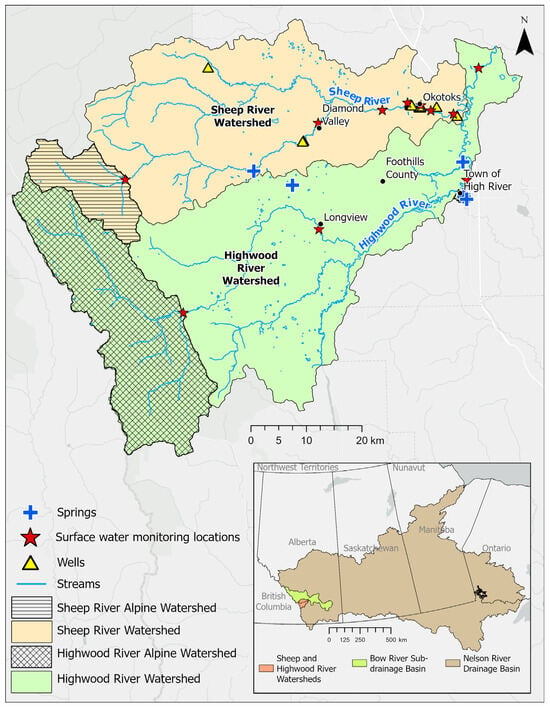
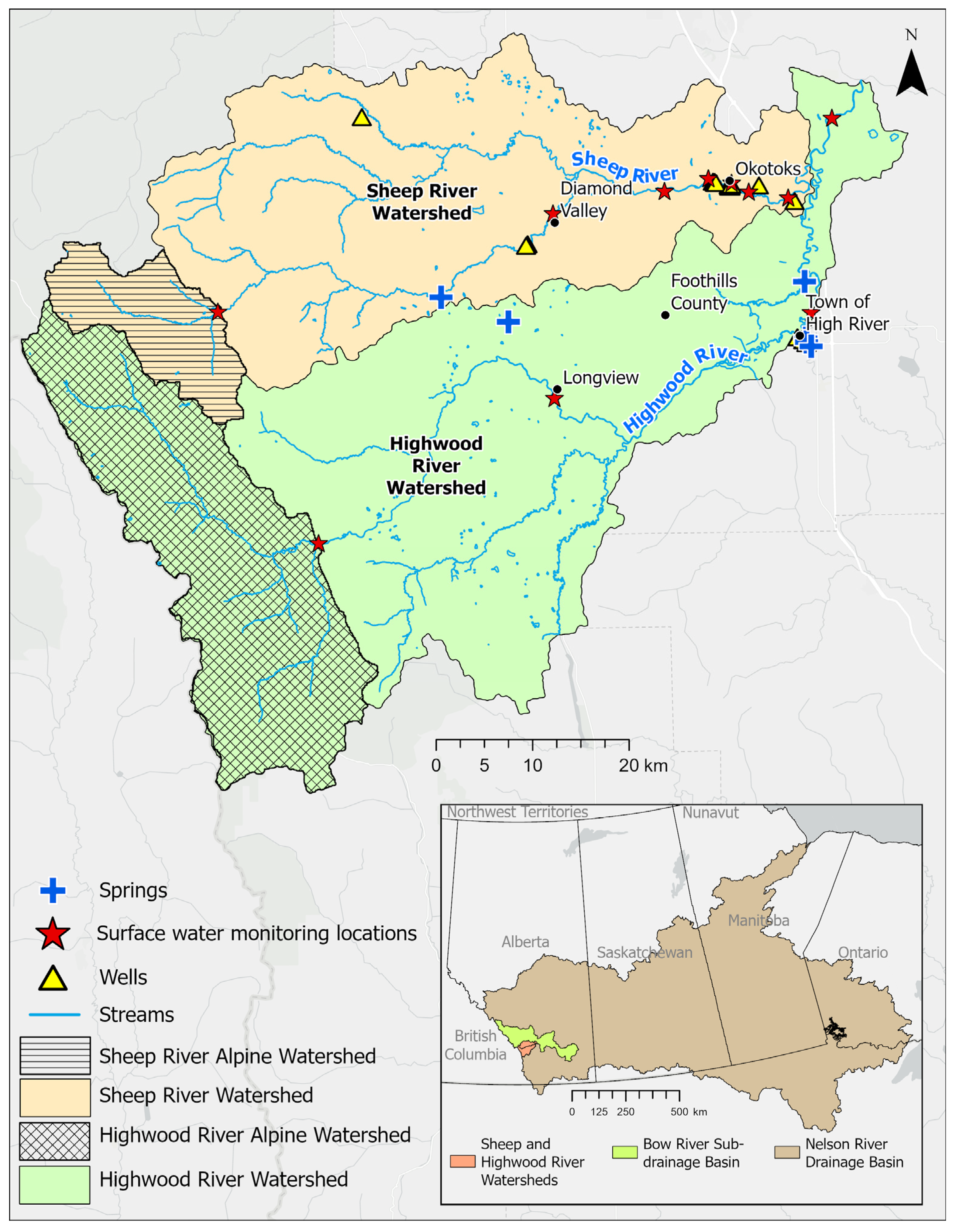
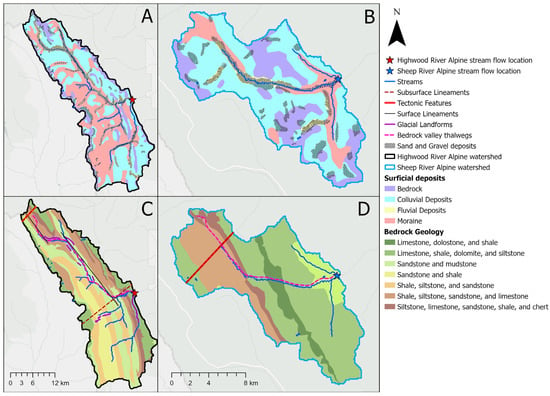
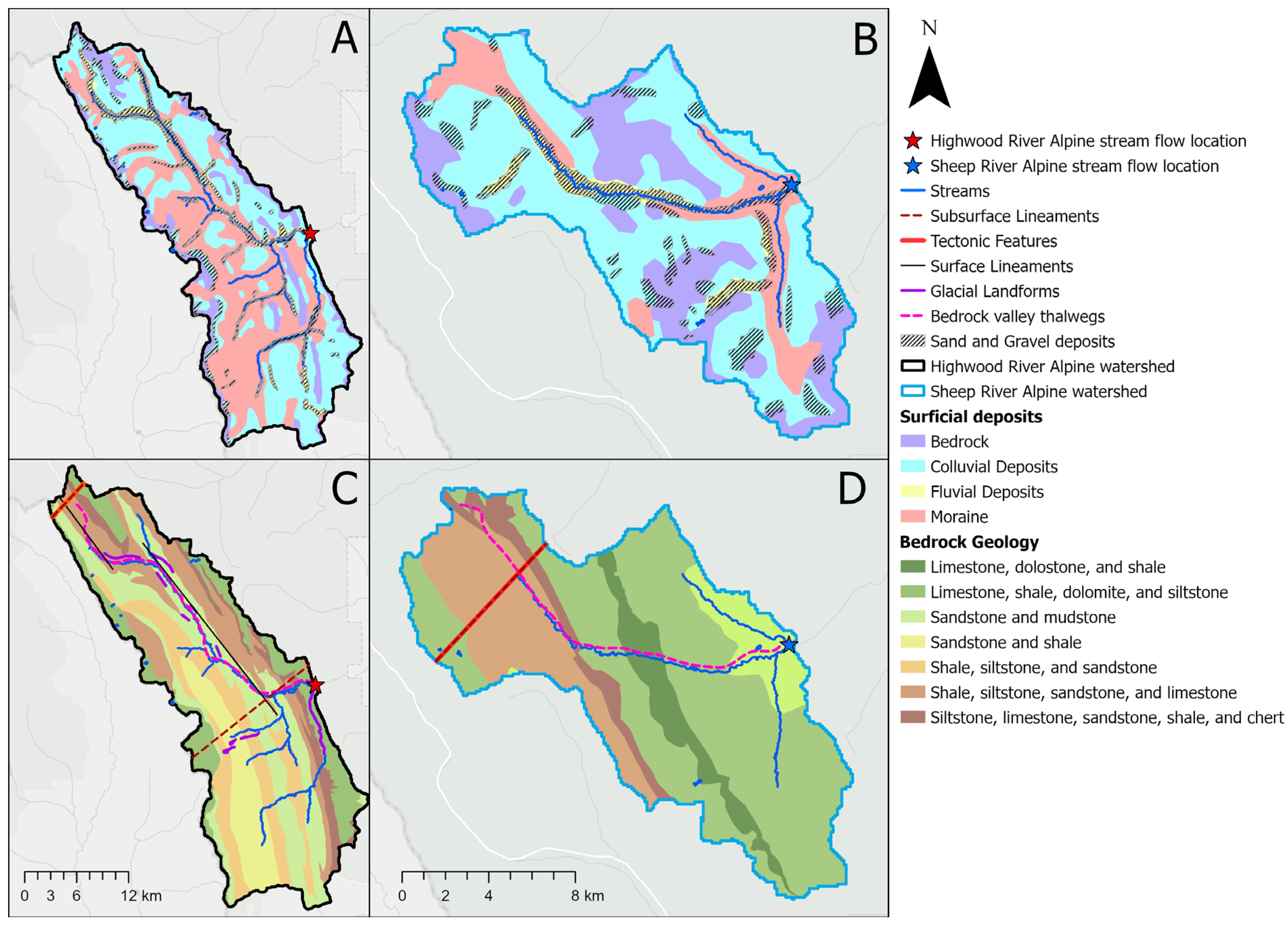
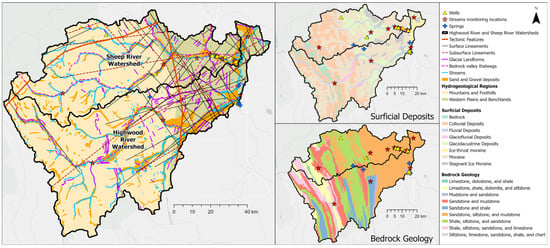
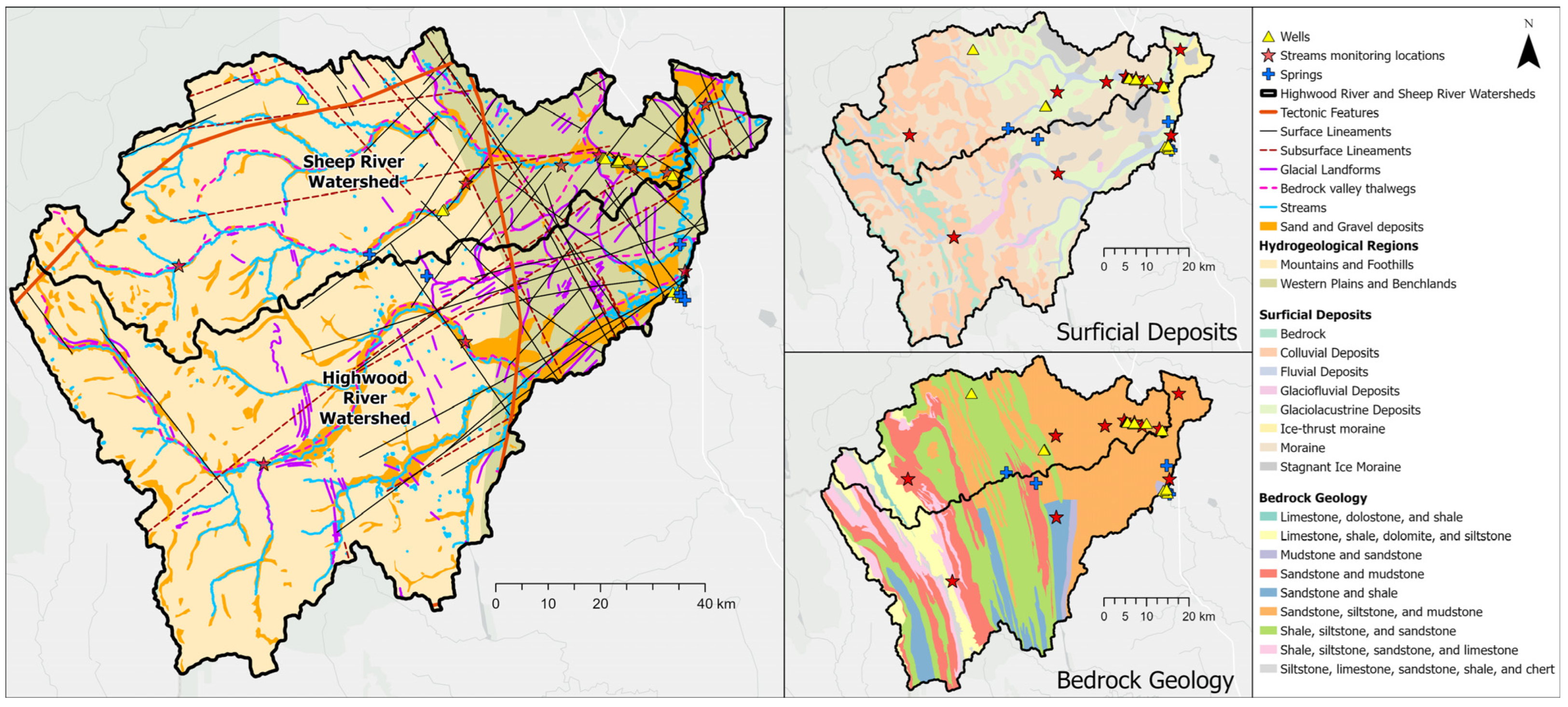
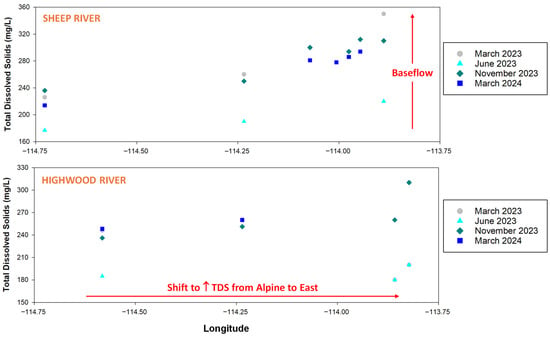
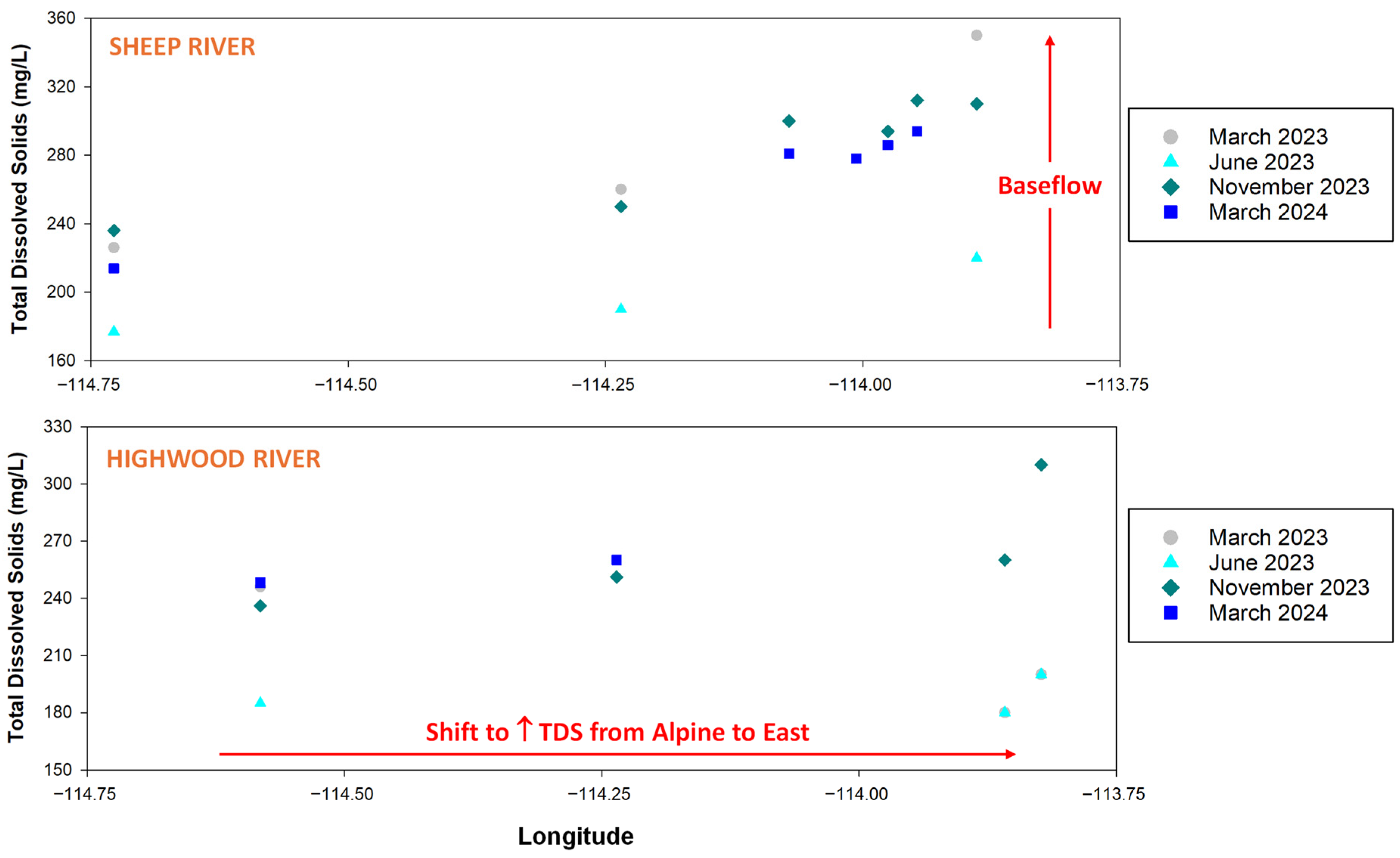
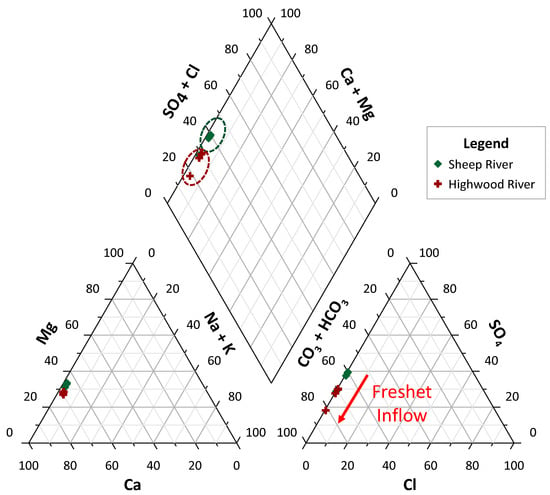
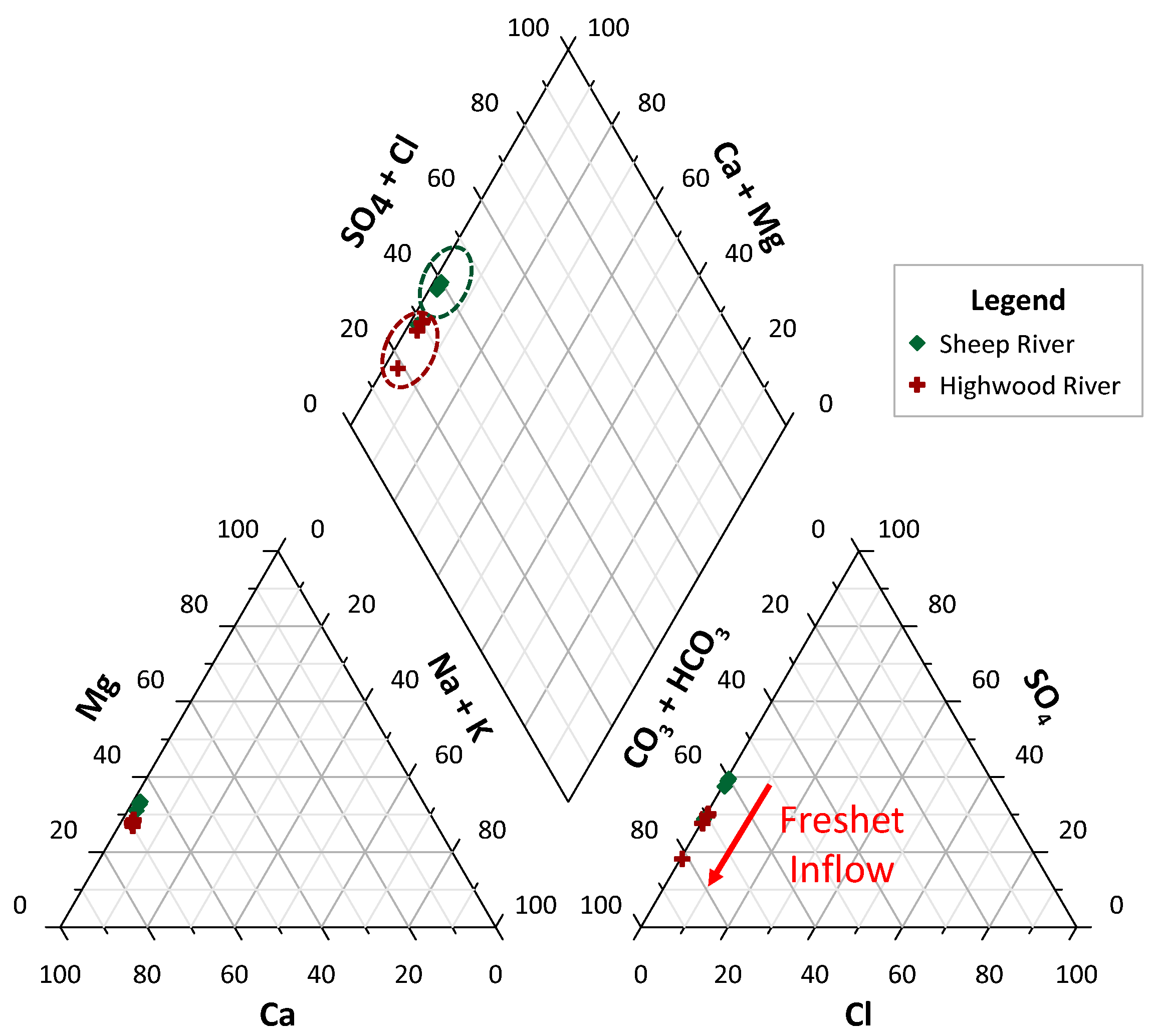
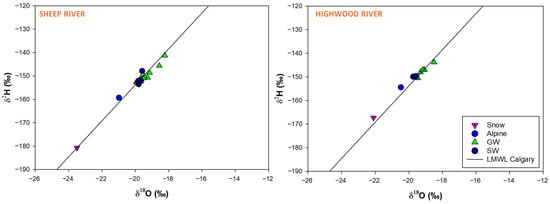
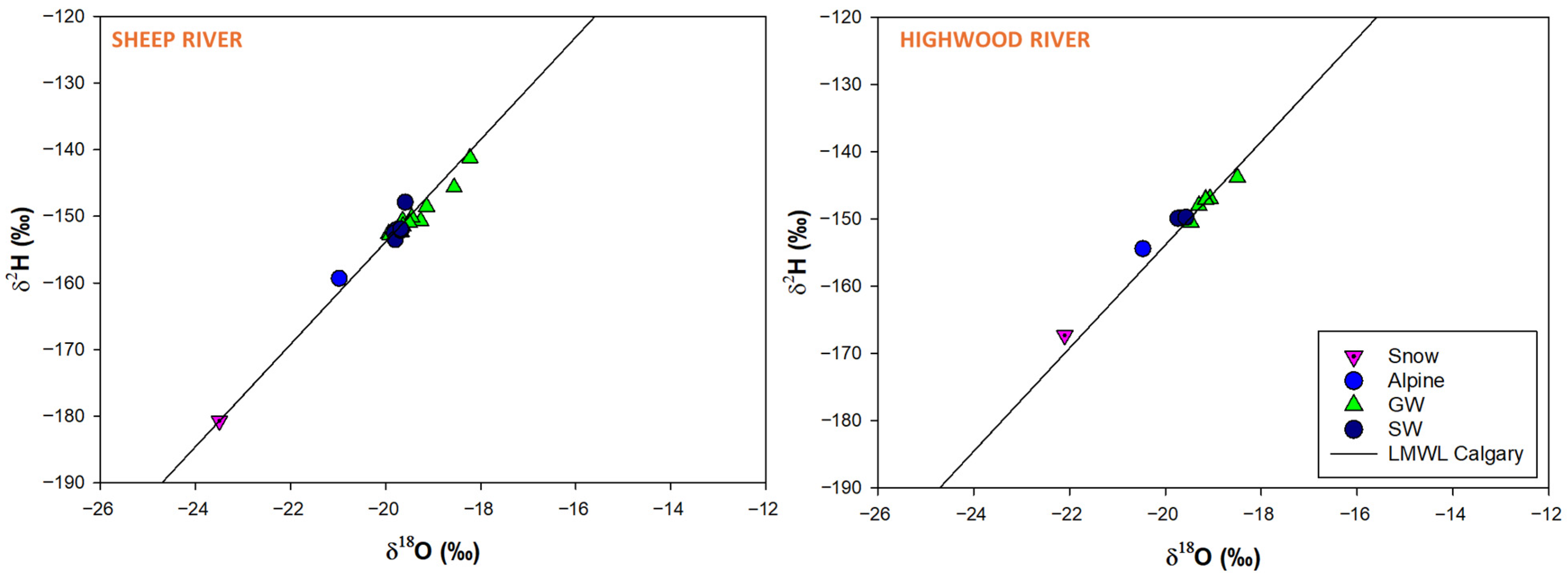
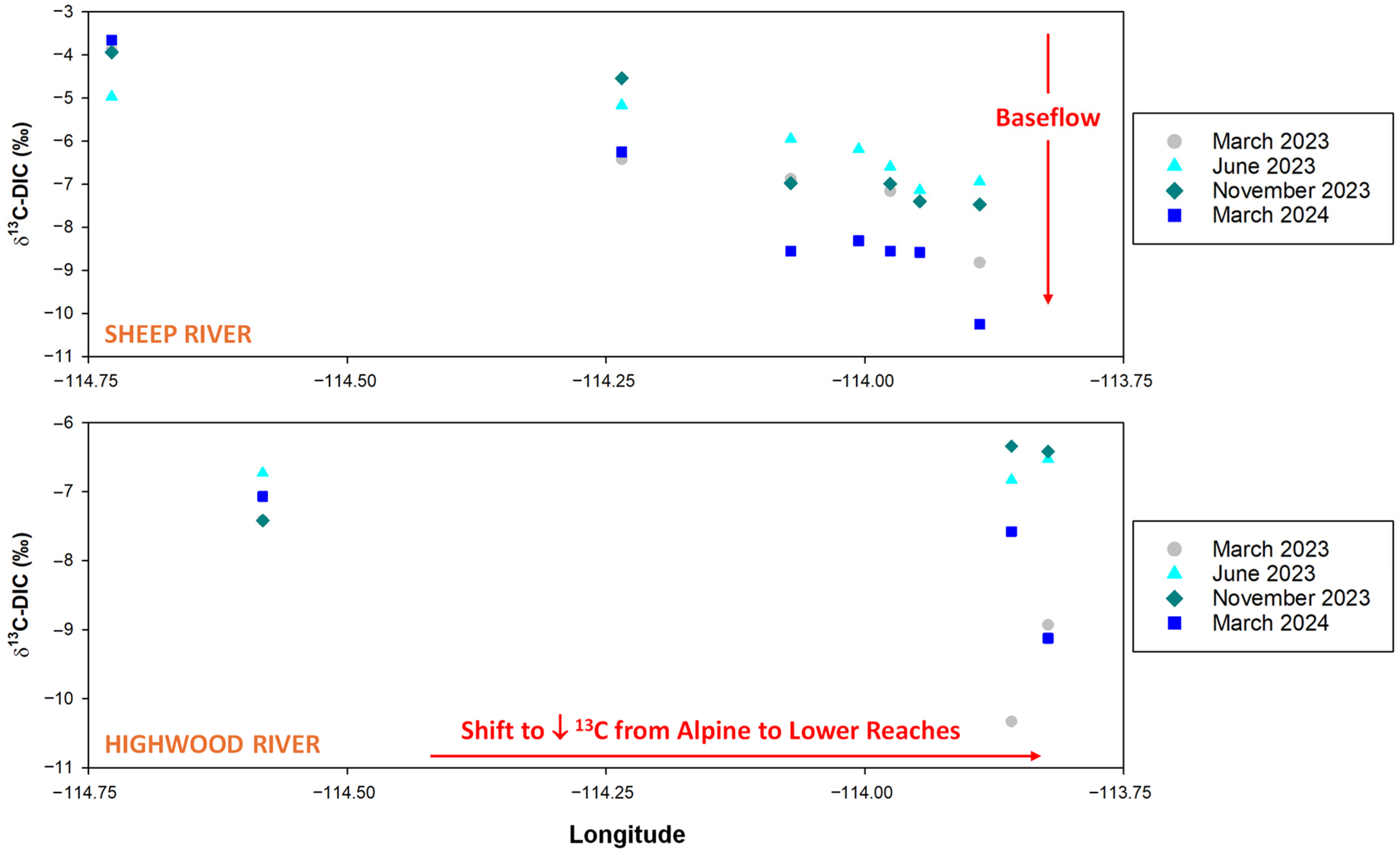
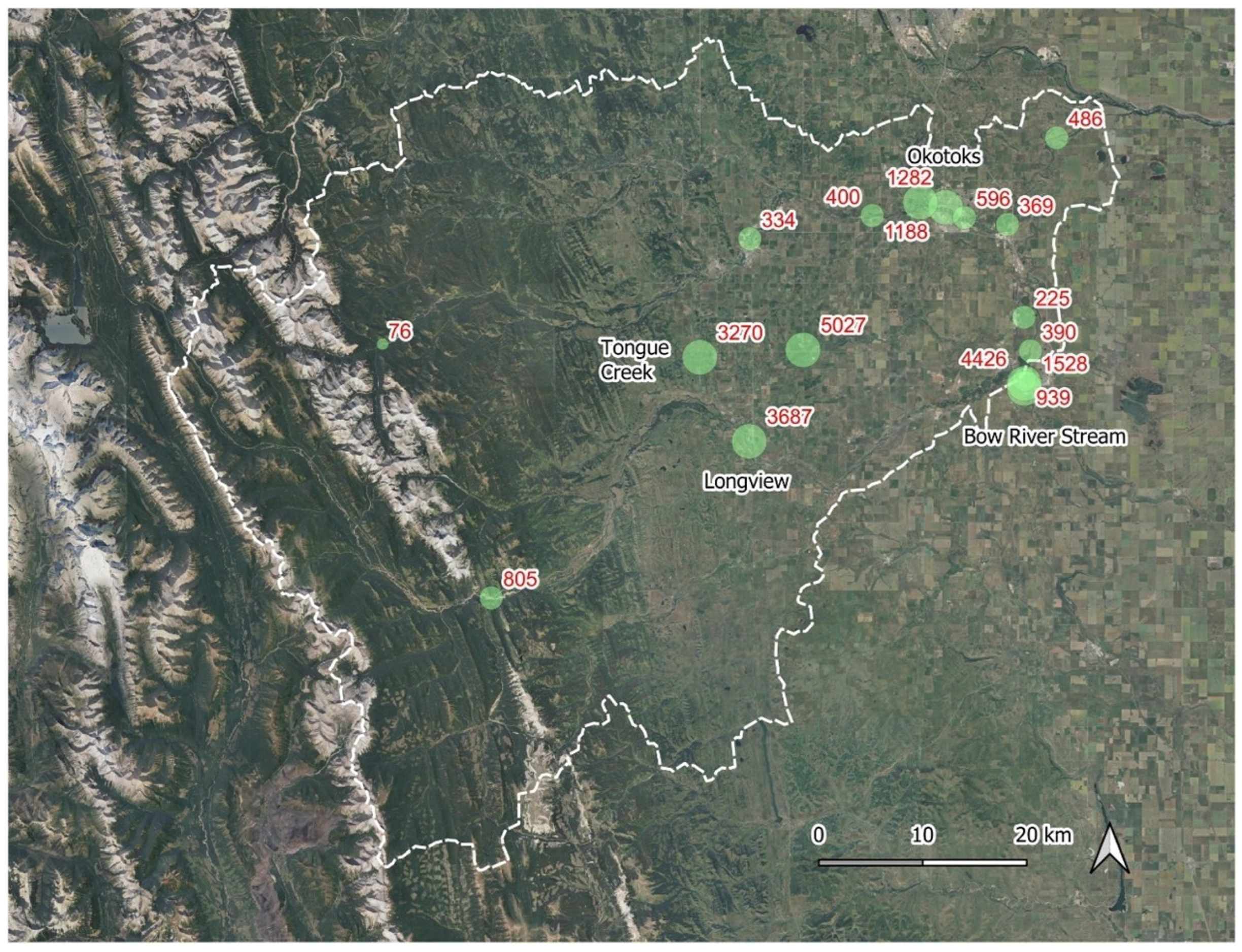
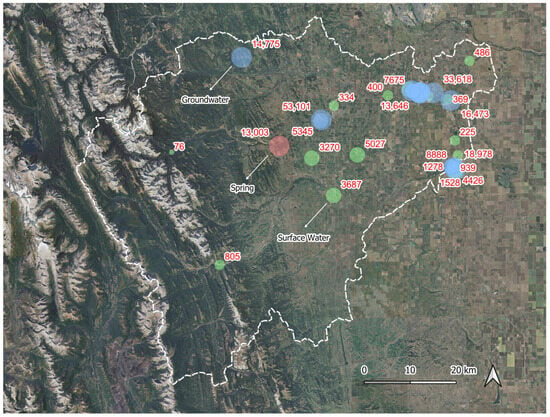
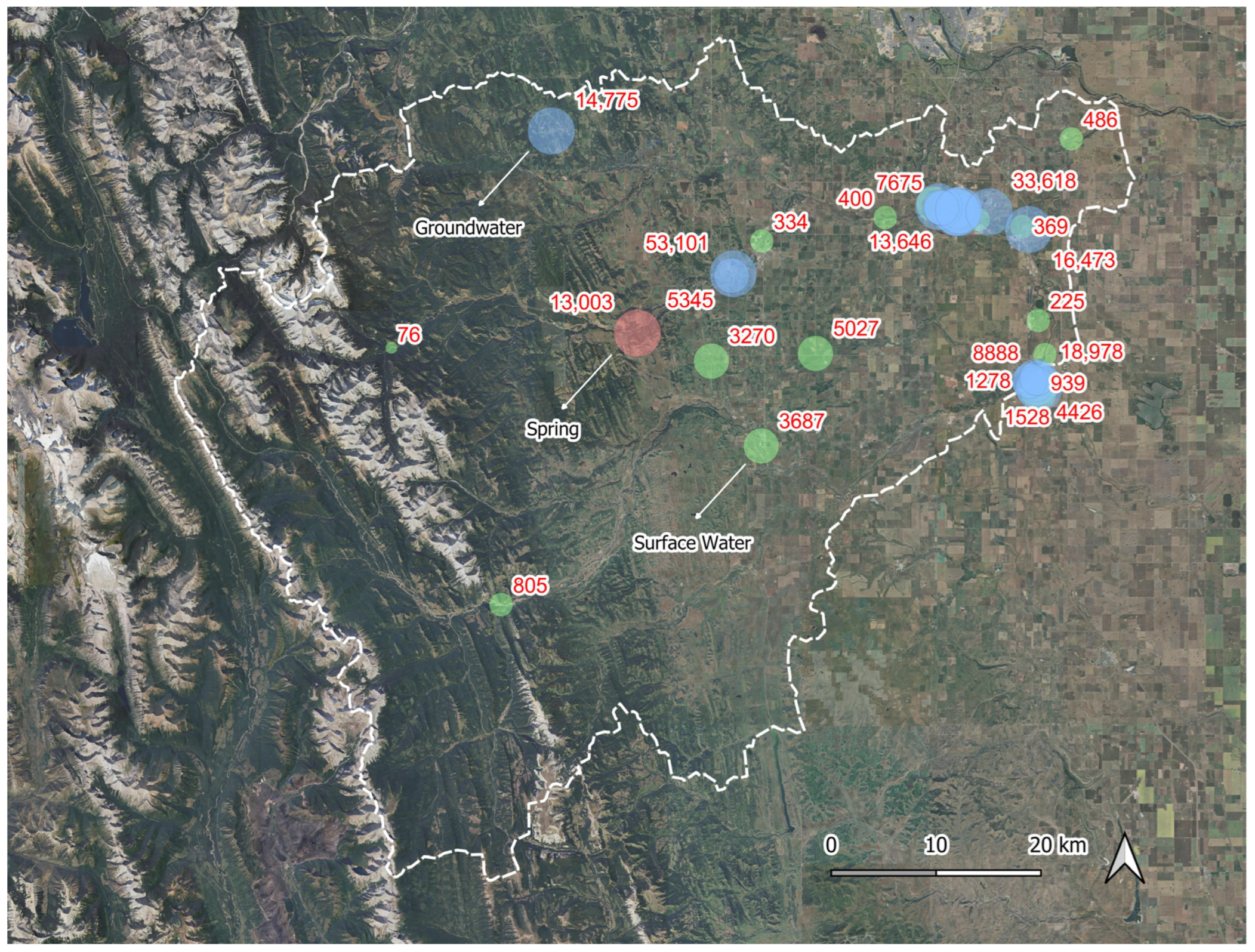
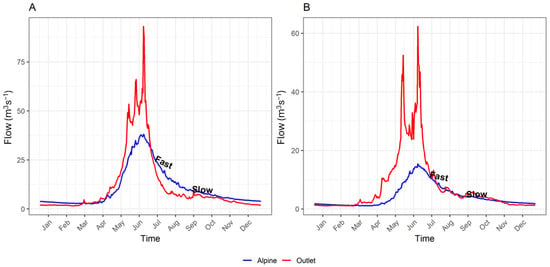
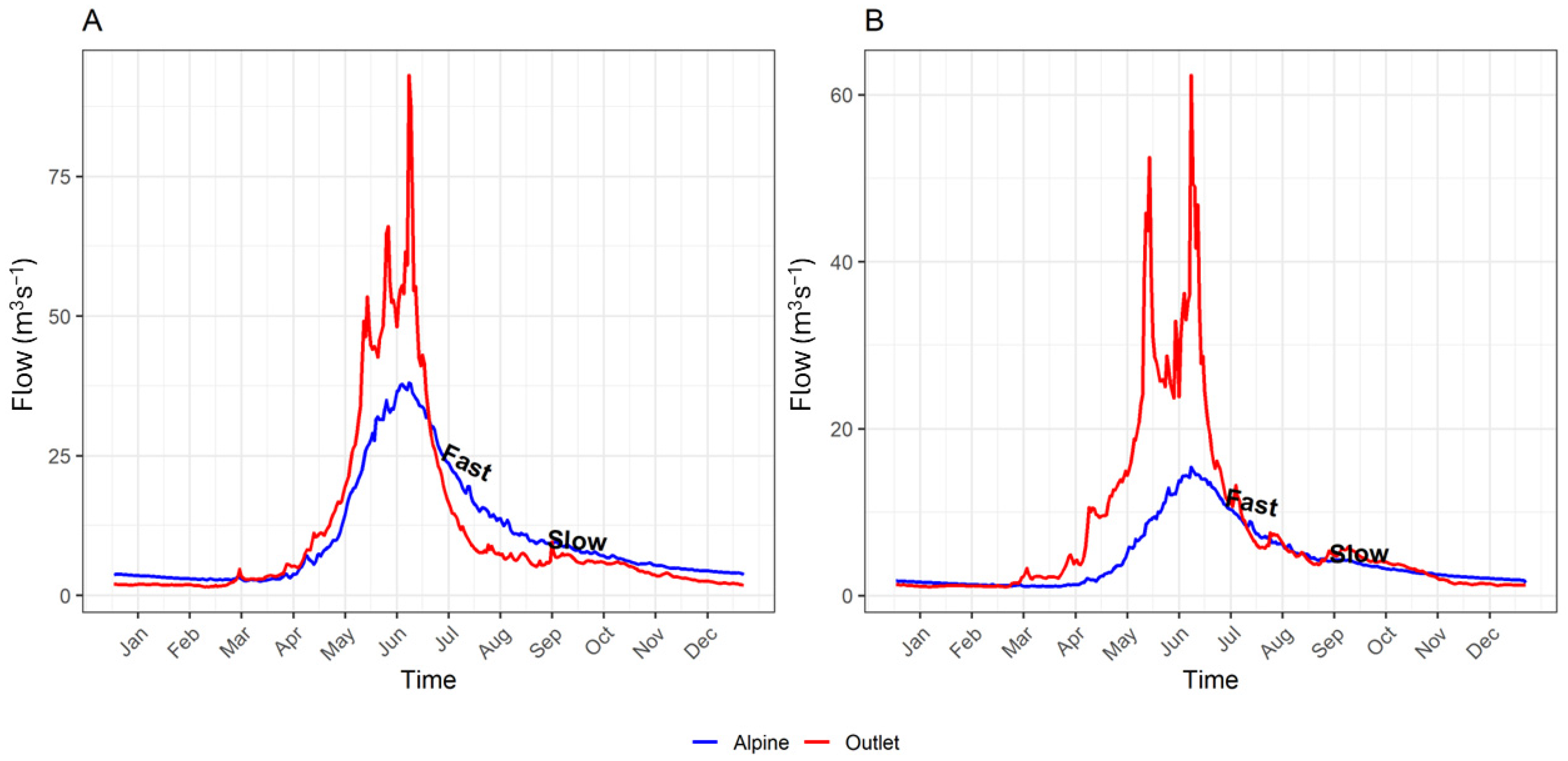
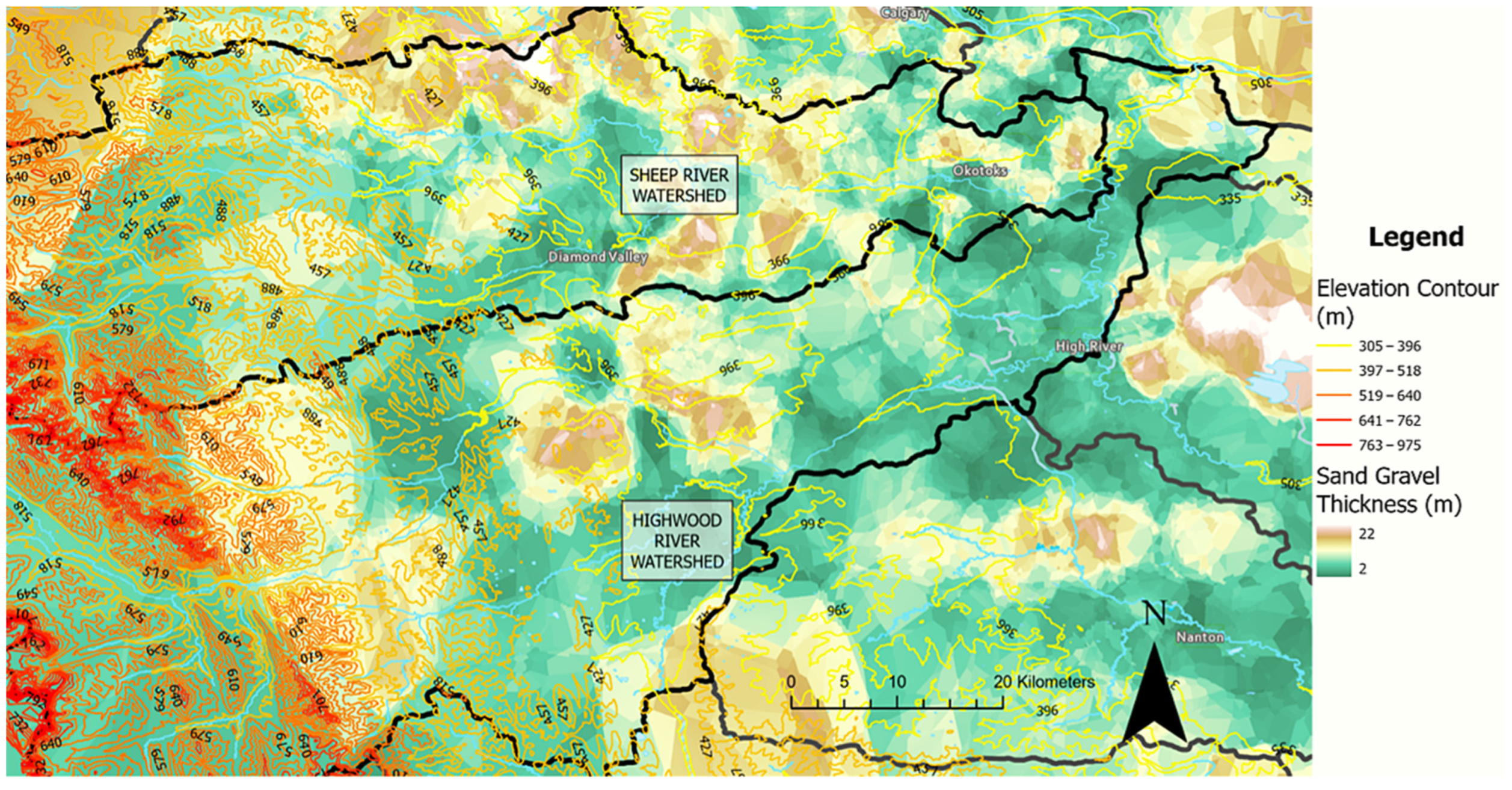
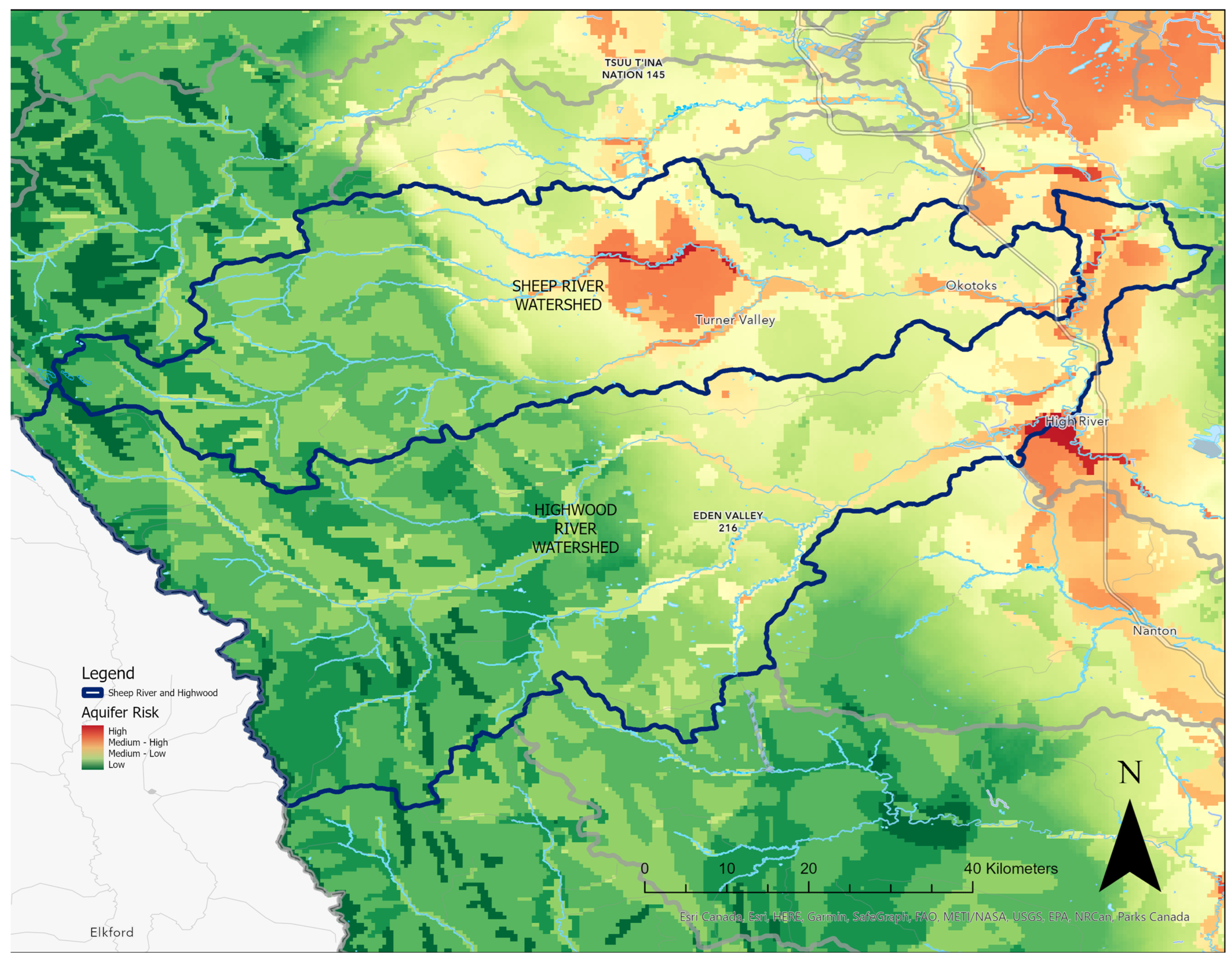

Disclaimer/Publisher’s Note: The statements, opinions and data contained in all publications are solely those of the individual author(s) and contributor(s) and not of MDPI and/or the editor(s). MDPI and/or the editor(s) disclaim responsibility for any injury to people or property resulting from any ideas, methods, instructions or products referred to in the content. |
© 2026 by the authors. Licensee MDPI, Basel, Switzerland. This article is an open access article distributed under the terms and conditions of the Creative Commons Attribution (CC BY) license.