Article

Synergistic Effects of Rosemary and Carrot Extracts as Green Corrosion Inhibitors for Carbon Steel Protection in Acidizing Operations of Petroleum Industry


by
Sedigheh Ghanbari Daryaee
1,
Azizollah Khormali
1,*,
Akram Taleghani
2 and
Majid Mokaber-Esfahani
2
1
Department of Chemistry, Faculty of Basic Sciences and Engineering, Gonbad Kavous University, Gonbad Kavous 4971799151, Iran
2
Department of Chemistry, Faculty of Science, Gonbad Kavous University, Gonbad 4971799151, Iran
*
Author to whom correspondence should be addressed.
ChemEngineering 2025, 9(6), 142; https://doi.org/10.3390/chemengineering9060142
Submission received: 4 October 2025 / Revised: 2 December 2025 / Accepted: 8 December 2025 / Published: 10 December 2025

Abstract

Corrosion of carbon steel in acidic media remains a critical challenge during acidizing operations. This study evaluates carrot and rosemary extracts—individually and in combination—as green corrosion inhibitors for carbon steel in 1 M HCl. Inhibition performance was assessed using weight loss, potentiodynamic polarization (PDP), electrochemical impedance spectroscopy (EIS), SEM/EDS, and adsorption isotherms. Weight-loss measurements showed inhibition efficiencies of 59.5% (carrot) and 85.7% (rosemary) at 800 ppm, while their 30/70 mixture achieved a markedly higher efficiency of 99.6%. PDP results confirmed this trend, with corrosion current density decreasing from 892 μA/cm2 (blank) to 13.4 μA/cm2 for the mixture, corresponding to 98.5% efficiency. In addition, EIS analysis revealed a substantial increase in charge-transfer resistance from 41.1 ohm·cm2 (blank) to 174.9 ohm·cm2 (carrot), 266.9 ohm·cm2 (rosemary), and 1868.1 ohm·cm2 for the 30/70 mixture, confirming superior barrier formation. Moreover, temperature-dependent tests showed only a 5% efficiency loss for the mixture and an average 6% decrease for the single extracts between 25–45 °C, indicating good thermal stability. Also, SEM images demonstrated severe surface damage in the blank sample, while carrot-, rosemary-, and mixture-treated surfaces showed progressively smoother morphologies. EDS analysis confirmed this trend, with Fe content increasing from 65.78% (blank) to 90.16% (carrot), 91.88% (rosemary), and 94.59% for the mixture. Furthermore, FTIR and GC–MS identified oxygenated functional groups and major phytochemicals responsible for adsorption. Adsorption data followed the Langmuir model, and Gibbs free energy values from −25 to −31 KJ/mol indicated spontaneous mixed physisorption–chemisorption. Overall, the 30/70 carrot–rosemary mixture consistently achieved the highest corrosion protection across all tests, confirming strong synergistic adsorption and demonstrating its potential as a high-performance, eco-friendly inhibitor for acidic environments.

1. Introduction

Acidizing is a widely employed stimulation technique in the petroleum industry to enhance the productivity of oil and gas wells by dissolving formation damage and improving permeability [1,2,3,4]. Hydrochloric and organic acids are commonly injected to remove scale, debris, and carbonate deposits; however, their highly aggressive nature poses a serious risk of corrosion to steel tubulars, casings, and downhole equipment [5,6]. Uncontrolled corrosion not only leads to material degradation and premature failure of well components but also causes leakage, loss of structural integrity, and high maintenance costs, thereby jeopardizing the economic and operational viability of oil wells [7,8]. Furthermore, excessive corrosion can lead to the release of corrosion by-products that adversely affect the reservoir and fluid flow. Therefore, corrosion control during acidizing is crucial to maintaining wellbore integrity, minimizing operational risks, and extending the service life of critical infrastructure [9,10]. Effective corrosion management strategies ensure that the benefits of acidizing—enhanced well productivity and hydrocarbon recovery—are achieved without compromising safety or increasing environmental and financial burdens [11,12].
To mitigate corrosion in industrial and oilfield environments, a wide variety of protection strategies have been developed, including cathodic and anodic protection, protective coatings, alloying, and the application of corrosion inhibitors [13,14]. Among these, corrosion inhibitors are particularly attractive because they can effectively suppress metal degradation even when added in small concentrations to corrosive media [12]. Synthetic inhibitors such as chromates, phosphates, and nitrites have long been used due to their high efficiency; however, their toxicity, poor biodegradability, and adverse effects on human health and the environment have raised significant concerns [15,16]. As a result, the pursuit of sustainable solutions has intensified interest in green corrosion inhibitors, particularly those obtained from plant sources. These natural extracts are abundant in secondary metabolites—such as alkaloids, tannins, flavonoids, and polyphenols—that possess heteroatoms (N, O, S) and functional groups. Such compounds readily adsorb onto metal surfaces, creating protective films that block active corrosion sites [17,18,19]. Their biodegradable and eco-friendly nature makes them particularly suitable for environmentally sensitive applications such as oil well acidizing, where highly aggressive acids are used to enhance formation permeability but simultaneously pose a severe corrosion risk to downhole equipment. Recent studies demonstrate that green inhibitors not only provide significant inhibition efficiencies under acidic and high-temperature conditions but can also act synergistically with other additives to optimize performance and reduce chemical consumption [20,21,22,23]. Adoption of such natural, renewable compounds offers a sustainable, cost-effective, and safer approach to corrosion control, ensuring well integrity and extending equipment lifetime while complying with increasingly stringent environmental regulations [24].
Recent developments in corrosion-mitigation research increasingly emphasize the use of natural compounds and essential oils as sustainable alternatives to conventional chemical inhibitors. Essential oils contain diverse phytochemicals—such as phenolics, terpenoids, and flavonoids—that readily interact with metallic surfaces, enabling the formation of protective adsorption layers capable of suppressing both anodic and cathodic corrosion processes [25]. Parallel to their direct application as inhibitors, essential oils are also being incorporated into advanced functional coating systems, where they can act as active components that provide controlled release, enhanced barrier properties, and additional antibacterial or antifouling functionality [26]. Modern coating design strategies often combine natural extracts with polymeric, inorganic, or hybrid matrices to improve film stability, extend protection duration, and enhance compatibility with environmentally sensitive applications. These emerging approaches illustrate a broader shift toward eco-friendly, multifunctional corrosion-protection technologies that align with industrial sustainability goals while offering improved performance and reduced ecological impact [27,28].
Carrot is primarily recognized for its high concentration of carotenoids—particularly β-carotene and α-carotene—along with phenolic compounds and vitamins. These compounds contain multiple conjugated double bonds and hydroxyl groups, facilitating interaction with metal surfaces through adsorption [29,30]. While carrots are more commonly studied in food and health sciences, their potential application in corrosion inhibition remains largely unexplored. In addition, rosemary, a culinary and medicinal herb, is known to contain carnosol, rosmarinic acid, and essential oils, all of which exhibit antioxidant and metal-chelating properties [31]. Several preliminary studies have indicated rosemary’s ability to inhibit corrosion in carbon steel and aluminum through the formation of adherent surface films [32]. The terpenoid structure of its bioactives supports both physisorption and chemisorption mechanisms, making rosemary a promising candidate for acidic corrosion control. The following is the literature review about the application of carrot and rosemary as green corrosion inhibitor individually:
Mostafatabar et al. [33] analyzed carrot pomace extract in 1 M HCl, combining electrochemical tests with molecular dynamics simulations. The authors mentioned that at 400 ppm, the extract achieves 95% inhibition efficiency by impeding both anodic and cathodic reactions, with EIS measurements corroborating a 94% reduction in corrosion after 5 h immersion. Surface analysis using AFM shows a significant reduction in roughness from 127 nm to 72 nm and contact angle measurements indicate increased hydrophobicity upon treatment. In addition, the authors reported that the thermodynamic calculations reveal spontaneous adsorption, with rising activation energy and decreasing enthalpy/entropy values as inhibitor concentration increases, suggesting a combined mechanism of physisorption and chemisorption. In the work [34], the effectiveness of carrot root extract in 1 M HCl was studied. The authors observed that the extract significantly reduced the corrosion rate, with inhibition efficiency exceeding 90% at optimal concentrations. Electrochemical techniques showed that the extract acts as a mixed-type inhibitor. In addition, the authors mentioned that the thermodynamic analysis confirmed that the adsorption process is spontaneous and endothermic. The study concludes that carrot extract is an effective, eco-friendly, and sustainable corrosion inhibitor for use in acidic environments.
The authors [35] explored using rosemary extract as a natural, eco-friendly corrosion inhibitor for aluminum alloy immersed in a 3.5% sodium chloride solution. It was found that rosemary markedly lowers both anodic and cathodic corrosion currents, demonstrating a pronounced mixed-type inhibition effect. Surface characterization further verified the formation of a protective layer on the alloy in the presence of rosemary extract, which effectively minimizes active corrosion sites. Moreover, the computational modeling supported experimental findings by demonstrating favorable adsorption of key rosemary phytochemicals—such as phenolics and terpenoids—onto the alloy surface. The study [36] investigates the effectiveness of rosemary oil as a non-toxic, eco-friendly inhibitor for steel corrosion in phosphoric acid environments across a range of temperatures. The authors demonstrate that adding rosemary oil significantly reduces corrosion rates on steel surfaces. The authors reported that the inhibitory efficiency was observed to improve with increasing oil concentration, following trends typical of protective adsorption layers. The inhibition effect is ascribed to the adsorption of organic constituents from rosemary oil onto the metal surface, where they form a protective barrier that limits acid penetration. The study by Dehghani and Ramezanzadeh [37] reinforces the growing evidence that rosemary extract is a highly effective green corrosion inhibitor. Its dual adsorption mechanism, high inhibition efficiency, and environmentally friendly nature make it a compelling candidate for industrial metal protection in acidic environments. Through EIS tests, the rosemary extract achieved an impressive inhibition efficiency of 92% after 6 h exposure to 1 M HCl. The weight loss measurements confirmed similar results, indicating 87% corrosion inhibition at 800 ppm concentration.
Synergistic inhibition refers to the phenomenon where a mixture of inhibitors exhibits a greater effect than the sum of their individual actions [38,39]. This can occur due to complementary adsorption mechanisms, broader surface coverage, and enhanced film-forming ability. Several studies have reported enhanced inhibition efficiency when combining plant extracts [40,41,42,43,44]. The work [45] introduces a green and durable corrosion inhibitor for aluminum alloy based on the synergistic effect between rosemary extract (RSE) and zinc chloride (ZnCl2). Electrochemical and surface analyses revealed that the hybrid inhibitor achieved superior performance compared to single components, reaching 96.48% efficiency at 2000 ppm, versus 88.41% for RSE and 67.34% for ZnCl2. The synergism arises from the formation of RSE–Zn(II) complexes, enhancing surface coverage and binding strength, while promoting both adsorption film and Zn oxide/hydroxide protective layers. This cooperative interaction provides long-term corrosion resistance exceeding 30 days in the corrosive medium. Dazdari et al. [46] examined the synergistic inhibition of carbon steel corrosion in hydrochloric acid using a combined system of banana peel extract (BPE) and rice straw extract (RSE). Electrochemical measurements demonstrated that the combined extracts provided significantly higher inhibition efficiency than individual components. The synergy arises from the complementary phytochemicals in BPE and RSE, which enhance adsorption and form a more compact, protective film on the steel surface. The optimal blend yielded superior inhibition performance by suppressing both anodic and cathodic reactions. The authors highlighted the potential of agricultural waste-derived extract mixtures as eco-friendly, synergistic inhibitors for effective carbon steel protection. In the work [47], the synergistic corrosion inhibition effect of combining 2-mercaptobenzimidazole and 2-ethylbenzimidazole in 1 M HCl was analyzed. Individually, each inhibitor showed good performance, but their optimized mixture (75/25) achieved outstanding efficiency of about 94%, surpassing single components. The various tests consistently confirmed the synergy, with higher charge transfer resistance and larger Nyquist semicircles for the mixture. In addition, the authors reported that the cooperative interaction between inhibitors forms a stronger protective film, demonstrating superior synergistic corrosion control.
Previous studies have shown that the extraction protocol strongly influences the chemical composition and corrosion inhibition performance of plant-based extracts. For instance, Falcaria vulgaris leaves were extracted using an aqueous method by heating 15 g of dried leaf powder in 500 mL of deionized water at 70 °C for 12 h, followed by filtration, centrifugation, and drying at 45 °C [48]. Mustard seed extracts were prepared by refluxing 30 g of seed powder in distilled water at 70 °C for 3 h, filtering, centrifuging, and drying the filtrate for 24 h before use in 1 M HCl [49]. Similarly, carrot-based inhibitors were obtained by various aqueous or alcohol-assisted methods, such as drying and grinding carrot peels or pomace, stirring 5–30 g of powder in 100–800 mL of deionized water at 60–70 °C for 12–24 h, followed by filtration, centrifugation, and oven drying to yield carrot peel or pomace extracts [33,34]. Rosmarinus officinalis (rosemary) extracts have been produced by heating 25 g of powdered leaves in 500 mL of deionized water for 24 h, filtration, centrifugation, and drying at 40 °C [37]. These variations in solvent type (water, ethanol, or alcohol mixtures), temperature, and extraction duration significantly affect the yield and composition of active phytochemicals, which play a key role in corrosion inhibition. In the present study, both carrot and rosemary leaves were extracted using ethanol at room temperature for 48 h to ensure efficient extraction of bioactive constituents while minimizing thermal degradation. This standardized approach enables a more reproducible and consistent comparison with literature results.
Although plant-based corrosion inhibitors are gaining increasing attention, most published studies focus on single extracts, while limited research has explored the combined use of extracts to exploit potential synergistic effects. Moreover, the interaction of such mixtures with metal surfaces, particularly under harsh acidic conditions, remains insufficiently understood. This study aims to bridge this gap by investigating the individual and combined effects of carrot and rosemary extracts as eco-friendly corrosion inhibitors for carbon steel in hydrochloric acid, relevant to acidizing applications. The inhibition efficiency of different mixing ratios is systematically evaluated using weight loss and electrochemical impedance spectroscopy tests, while the effects of temperature, immersion time, and inhibitor concentration are also examined. In addition, Fourier-transform infrared spectroscopy is employed to identify functional groups responsible for adsorption, and scanning electron microscopy is used to confirm protective film formation. Finally, the adsorption mechanism is analyzed through the Langmuir isotherm and Gibbs free energy calculations. By emphasizing the synergistic action of mixed extracts, this work provides new insights into developing efficient, sustainable, and mechanism-based green inhibitors for industrial corrosion control.
Unlike typical plant-based inhibitor mixtures reported in the literature, which often combine botanicals with similar chemical profiles, the carrot–rosemary system integrates two phytochemical families with distinct structural compositions. Mechanistically, the complementary functional groups of these extracts enable cooperative multilayer adsorption on the metal surface, leading to unusually high synergistic performance. This cooperative adsorption and enhanced stability distinguish our formulation from existing plant-based mixtures, representing a novel combination with superior anticorrosion properties.

2. Material and Methods

2.1. Corrosive Medium and Metal Samples

The corrosive solution consisted of 1 M hydrochloric acid, prepared using analytical grade HCl and distilled water. This concentration was selected to simulate aggressive industrial environments such as descaling, acid pickling, and oil well acidizing. Carbon steel specimens were used as the substrate for corrosion studies. The chemical composition of the carbon steel specimens was as follows: 0.29% carbon, 0.49% sulfur, 0.81% manganese, 0.43% phosphorus, 0.007% aluminum, and the remainder iron, approximately 97.973%. The samples had a composition typical of industrial-grade carbon steel, primarily consisting of iron about 98%. The carbon steel specimens were commercial-grade samples, obtained from Iranian market. Moreover, the quality of the material was confirmed through supplier certification, and the specimens conformed to ASTM A29/A29M–20 (Standard Specification for General Requirements for Steel Bars, Carbon and Alloy, Hot-Wrought. ASTM International: West Conshohocken, PA, United States, 2020) for carbon steels. Each sample was cut into dimensions of 1 cm × 1 cm × 0.1 cm. The specimens were sequentially polished with emery papers of grades 400, 600, 800, 1000, and 1200, rinsed with distilled water, degreased with acetone, and dried in warm air prior to testing. The preparation procedure followed the guidelines of ASTM G1-03 (Standard Practice for Preparing, Cleaning, and Evaluating Corrosion Test Specimens. ASTM International: West Conshohocken, PA, United States, 2003).

2.2. Preparation of Plant Extracts

Carrot and rosemary leaves were obtained from local agricultural suppliers and confirmed for authenticity. The plant materials were washed, air-dried at 40 °C, and ground into fine powders using a laboratory blender. A solvent extraction method was employed as follows: 25 g of each powdered plant material was immersed in 250 mL of ethanol. The mixture was agitated using a shaker-incubator for 48 h at room temperature. The extracts were filtered and concentrated using a rotary evaporator under reduced pressure. The concentrated extracts were stored in amber bottles at 4 °C until use.
The extraction yield of green corrosion inhibitor extracts was obtained by dividing the mass of the dried extract by the mass of the initial plant material, and the result was expressed as a percentage. The extraction yields obtained in this study were 8.5% for carrot and 10.3% for rosemary samples.

2.3. Weight Loss Measurements

Weight loss tests were carried out by immersing pre-weighed carbon steel samples in 100 mL of 1 M HCl with and without inhibitor extracts at various concentrations (200–1600 ppm). The samples were retrieved after various times (6, 24, 48 h). Due to the strongly acidic environment, passive films do not form on the steel surface, and only loose corrosion products are expected. To remove these, the samples were carefully rinsed with distilled water, washed with acetone to remove residual surface deposits, dried, and then reweighed. Corrosion rate and inhibition efficiency were evaluated according to the subsequent equations [50]:
C R = 87.6 m ρ × S × t × 100
I E = C R 1 C R 2 C R 1 × 100
where CR represents the corrosion rate (mm/y); Δm is the mass loss of the metal samples due to corrosion during each test (mg); ρ denotes the density of the metal samples (g/cm3); S is the surface area of the immersed metal samples (mm2); t is the exposure time (h); IE is the inhibition efficiency of the extracts (%); and CR1 and CR2 are the corrosion rates in the absence and presence of the green inhibitors, respectively (mm/y).
Complementary surface analyses, including SEM and FTIR, further confirmed the absence of passive layers and the formation of protective inhibitor films. In the presence of extracts, these analyses showed a uniform adsorbed layer on the steel surface, whereas the uninhibited blank samples exhibited negligible surface deposition.

2.4. Calculation of Synergistic Inhibition Effect

The synergistic effect of the inhibitors was evaluated using the synergism parameter. The synergism index (SI) was calculated according to the method proposed by Aramaki and Hackermann, as follows [51]:
S I = 1 θ 1 + θ 2 ( θ 1 θ 2 ) 1 θ 1 + 2 × 100
where θ1 is the surface coverage of rosemary; θ2 is the surface coverage of carrot; θ1+2 is the surface coverage of the mixture of carrot and rosemary. SI values were evaluated at 25 °C for the mixture of 30/70% carrot to rosemary at concentrations of 800 and 1200 ppm using the data obtained in weight loss method. SI equals 1 when there is no interaction between the two inhibitors. A value of SI greater than 1 indicates a synergistic interaction, whereas SI less than 1 signifies a negative or antagonistic interaction between the inhibitors [52].

2.5. FTIR Spectroscopy

Fourier transform infrared spectroscopy was employed to identify the functional groups present in carrot and rosemary extracts. Spectra were recorded using a Bruker Tensor 27 FTIR spectrometer equipped with an attenuated total reflectance (ATR) accessory. The measurements were performed in the spectral range of 4000–400 cm−1 at a resolution of 4 cm−1, and 32 scans were accumulated for each spectrum to improve the signal-to-noise ratio. Prior to analysis, the ATR crystal was carefully cleaned with ethanol and dried to avoid contamination between samples. The spectra of both pure carrot and pure rosemary extracts were obtained, and the characteristic absorption bands corresponding to various functional groups were identified and compared. The FTIR results provided insight into the presence of hydroxyl, carbonyl, aromatic, and other phytochemical-related groups that are potentially responsible for corrosion inhibition.

2.6. Electrochemical Impedance Spectroscopy

The measurements were conducted to evaluate the corrosion inhibition performance of carrot and rosemary extracts, and their mixture in 1 M HCl solution. EIS measurements were performed using a CorrTest potentiostat with a three-electrode system: carbon steel as the working electrode, Ag/AgCl as the reference electrode, and platinum as the counter electrode. The working electrode surface was prepared by polishing with emery papers of successive grades, rinsing with deionized water, and degreasing with ethanol prior to each experiment. The impedance response of the steel surface, both in the absence and presence of extract, was recorded and analyzed using CS studio version 6 software for data acquisition and fitting. The extracts were examined individually at concentrations of 0, 200, 400, 800, 1200, and 1600 ppm for both carrot (100%) and rosemary (100%), as well as in mixed systems at carrot/rosemary ratios of 30/70, 50/50, and 70/30 at 0 and 800 ppm. Before EIS measurements, the electrode was immersed in the test solution for 30 min to stabilize the open circuit potential (OCP). Impedance spectra were recorded at OCP in the frequency range of 100 kHz to 0.01 Hz using a 10 mV sinusoidal AC perturbation. The Nyquist plots were analyzed using equivalent circuit fitting to determine charge transfer resistance and double-layer capacitance.
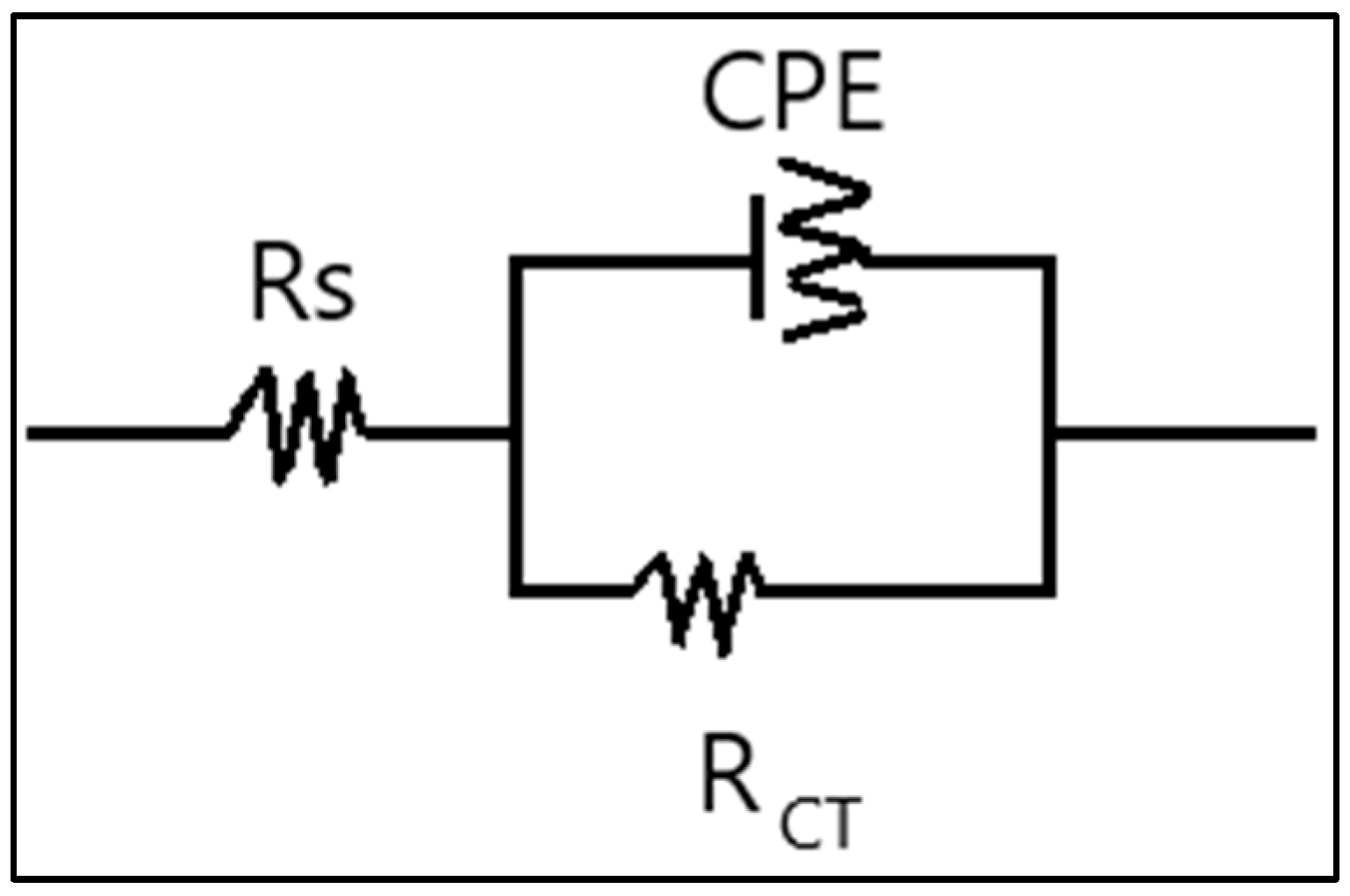
The impedance data were fitted to an equivalent circuit model (Figure 1) comprising the solution resistance (Rs), charge transfer resistance (Rct), and a constant phase element (CPE) to account for non-ideal capacitive behavior at the steel/solution interface. The CPE parameters reflect surface heterogeneity and adsorption effects of the inhibitors. This equivalent circuit was chosen following our previous study [46], as it effectively models the electrochemical behavior at the steel/solution interface under acidic conditions. The inhibition efficiency was calculated using the following equation:
I E = R c t f R c t i R c t f × 100
where Rctf and Rcti correspond to the charge-transfer resistance of the uninhibited solution and the inhibited solution, respectively (ohm·cm2).
Potentiodynamic polarization measurements were performed to determine the corrosion current density for carrot and rosemary extracts at various concentrations, as well as for their mixtures at different ratios. A blank test (without inhibitor) was also included for comparison. All experiments were conducted at 25 °C using carbon steel coupons with an exposed surface area of 1 cm2 after 30 min of immersion. Polarization curves were recorded at a constant scan rate of 0.1 mV/s, and the inhibition efficiency was calculated from the obtained corrosion current densities using the next equation:
I E = i c o r i i c o r f i c o r i × 100
where icori and icorf are corrosion current density in the absence and presence of green inhibitors (μA/cm2), respectively.

2.7. Scanning Electron Microscopy

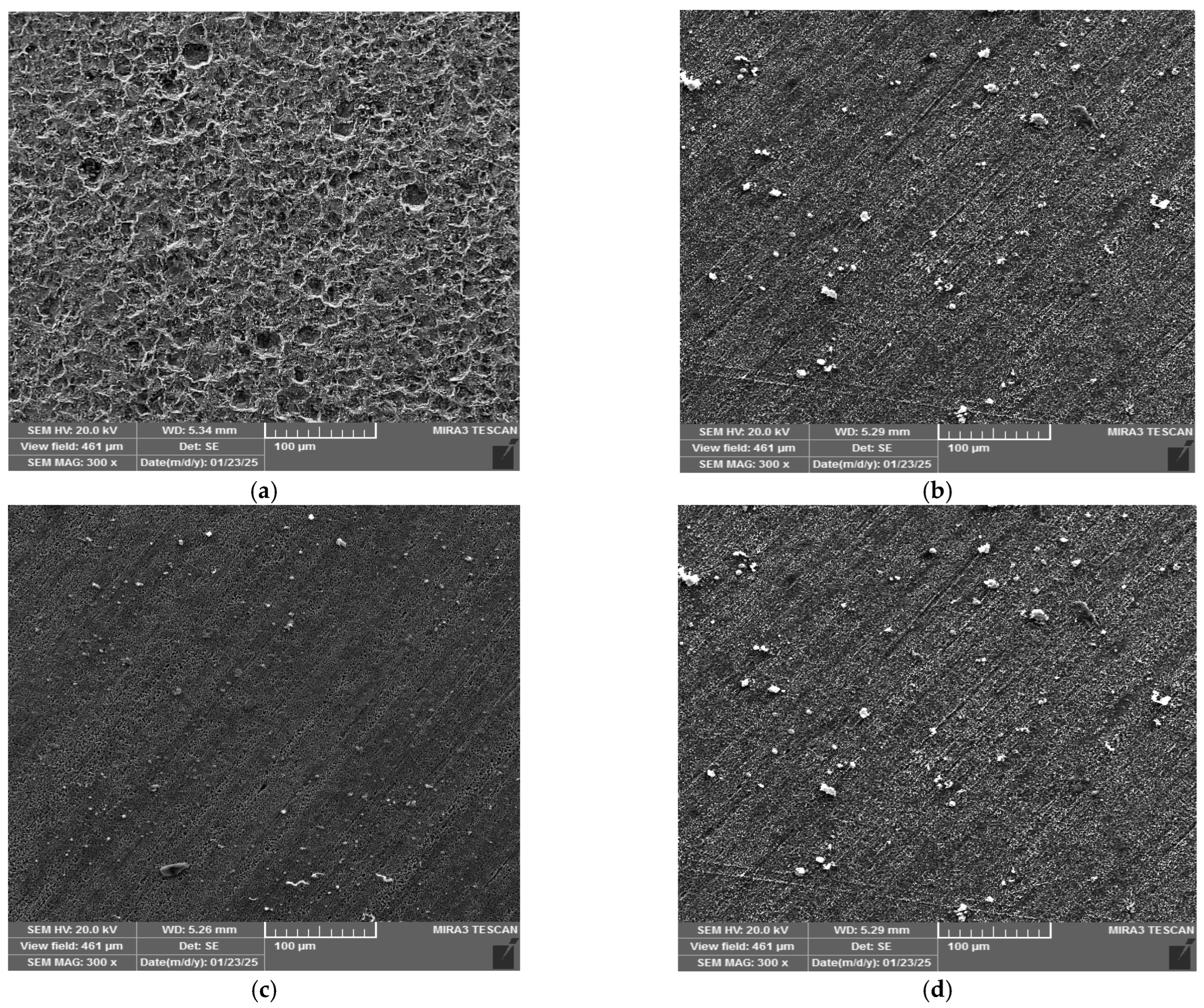
Scanning electron microscopy was employed to visualize corrosion-induced surface changes. The untreated steel surface exhibited deep pits, characteristic of aggressive chloride attack. Surface morphology of mild steel samples was observed via SEM analysis using a CamScan MV2300 device (Ottawa, ON, Canada). Specimens exposed to 1 M HCl—with and without inhibitors—were rinsed, dried, and coated with a thin layer of gold. The inhibitors were used at 800 ppm and 25 °C. The exposure time of the samples immersed in the acidic solution before SEM analysis was 24 h. SEM images were used to visualize the formation of protective films and the extent of surface degradation.

2.8. Analysis of Green Inhibitors Adsorption on the Metal Surface

Adsorption studies were performed to investigate the interaction of carrot extract, rosemary extract, and their 30/70 mixture on carbon steel surfaces in 1 M HCl. It should be noted that no additional adsorption experiments were conducted; the adsorption analysis was based solely on surface coverage (θ = IE/100) values calculated from the weight loss measurements. This approach is commonly used to evaluate adsorption behavior of corrosion inhibitors in acidic media.
The adsorption behavior was analyzed using various adsorption isotherm models, including Langmuir, Temkin, and Freundlich, with Langmuir providing the best correlation to the experimental data. For this purpose, plots of the ratio of inhibitor concentration to surface coverage (C/θ) versus concentration (C) were constructed at 25 °C after 48 h immersion for 100% carrot, 100% rosemary, and the 30/70 carrot/rosemary mixture. Additionally, the 30/70 mixture was examined at 25 °C for different immersion times (6, 24, and 48 h) and at 24 h immersion for various temperatures (25, 35, and 45 °C) to study the influence of time and temperature on adsorption. Linear fitting of the isotherm plots was used to determine the adsorption equilibrium constant (Kads), from which Gibbs energy (ΔG) was calculated using the following relationships [53]:
C θ = 1 K a d s + C
G = R T L n ( 55.5 K a d s )
where C is the extract concentration (ppm); θ is the surface coverage (dimensionless); Kads is the adsorption equilibrium constant (1/ppm); ΔG is the Gibbs free energy (KJ/mol); R is the universal gas constant (8.314 in SI units); T is the absolute temperature (K); and 55.5 is the molar concentration of water. These calculations provided thermodynamic insights into the spontaneity and nature of the inhibitor adsorption process.

2.9. Statistical Analysis

Experimental measurements (weight loss and EIS tests) were performed in triplicate to ensure reproducibility. The results presented in the next section reflect the average values of these three independent measurements, expressed as mean ± standard deviation. Moreover, error bars representing the standard deviation were added to the corresponding figures to illustrate data variability.

3. Results and Discussion

3.1. The Results of Weight Loss Method for Individual Extracts

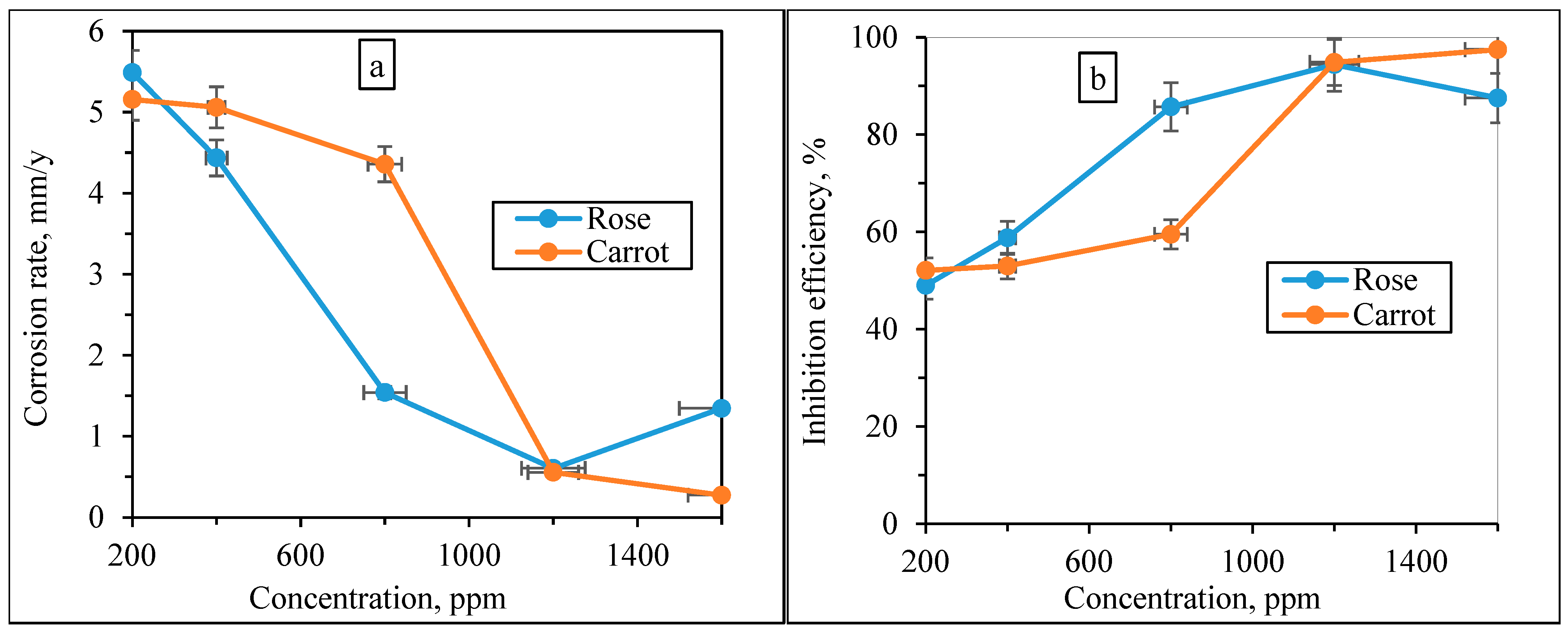
Figure 2 shows the changes in corrosion rate (a) and corrosion inhibition efficiency (b) of carrot and rosemary extracts by weight loss method individually at 25 °C after 48 h. The incorporation of the extracts led to a decrease in the corrosion rate. As shown, higher inhibitor concentrations corresponded to lower corrosion rates and enhanced inhibition efficiency. Thus, the inhibitor dose plays an important role in metal protection [54]. This means that the surface coverage values and corrosion efficiency increased significantly with increasing inhibitor concentration [55]. In this regard, according to Figure 2a, the corrosion rate in the presence of rosemary in the concentration range of 800–1200 ppm has performed better than that of carrots. After a concentration of 1200 ppm, an upward trend in the corrosion rate is observed for rosemary, which indicates that increasing the inhibitor concentration sometimes causes the opposite effect. As presented in Figure 2b, the corrosion inhibition efficiency of rosemary has a stronger effect than that of carrot (800–1200 ppm). However, according to Figure 2, the carrot extract shows a slight decrease in corrosion rate and a corresponding slight increase in inhibition efficiency at 1600 ppm. It is also necessary to state here that in the range of increasing concentration of rosemary above 1200 ppm, similar to the corrosion rate, the effectiveness of corrosion efficiency also decreases. The reduction in inhibition efficiency of rosemary at concentrations above 1200 ppm may be due to either the accelerated corrosion occurring on the limited exposed areas of the steel surface or the partial desorption of inhibitor molecules from the metal surface [56].

3.2. Inhibitory Efficacy Results for the Mixture of Carrot and Rosemary

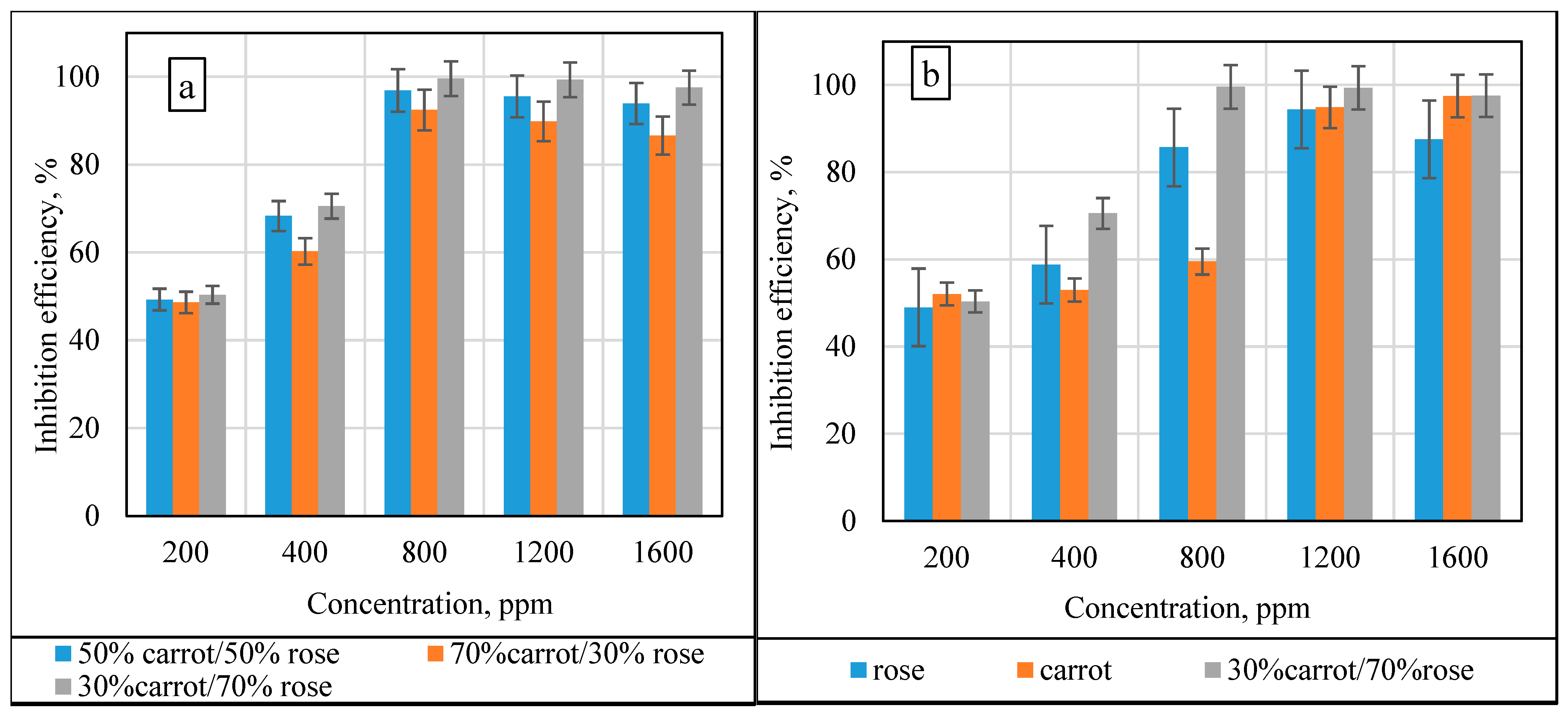
Carrot and rosemary extracts were combined in various mixing ratios to decrease the corrosion rate and enhance inhibition efficiency. The weight loss technique was employed at 25 °C to evaluate the inhibition performance over different exposure times. According to Figure 3, it can be seen that the ratio of 30/70% carrot to rosemary has the best result. At a concentration of 800 ppm, the efficiency of carrot, rosemary and the proposed mixture was 59.51%, 85.69% and 99.56%, respectively. This result clearly indicates a synergistic effect, where the mixed extract performs better than either extract alone.

3.3. The Effect of Time and Temperature on the Efficiency of 30/70% Carrot to Rosemary Mixture

Immersion time significantly influences both the corrosion rate and inhibition efficiency. As immersion time increases, the sample undergoes more corrosion due to prolonged exposure to the acidic medium [57]. However, in the calculation of corrosion rate, immersion time appears in the denominator of the formula, which also affects the final values [57]. Thus, the influence of immersion time on corrosion rate and inhibition efficiency varies depending on the type of inhibitor and the corrosive acid involved. In addition, temperature can affect the reaction rate. Corrosion reactions can proceed rapidly at higher temperatures by reducing the activation energy level [58]. Temperature can affect the corrosion process even in the presence of an inhibitor in the solution [59]. Therefore, the effect of temperature and time on the efficiency of the extract mixture (30% carrot/70% rosemary mixture) in 1 M hydrochloric acid solution was studied.
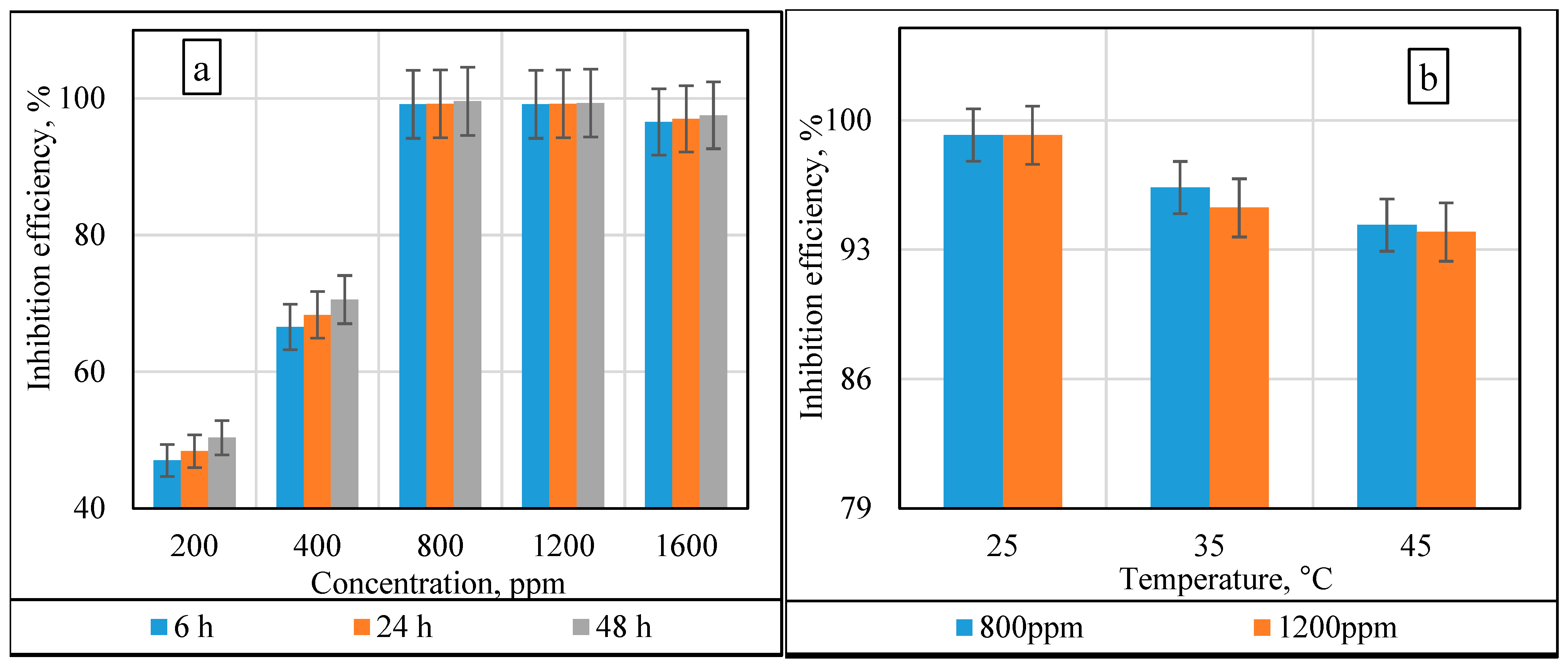
Figure 4a shows that extending the exposure time to 48 h provides the highest inhibition efficiencies, reaching 99.56% at 800 ppm and 99.32% at 1200 ppm. Furthermore, Figure 4b demonstrates that the inhibition performance of the mixture slightly declined with rising temperature, as higher temperatures accelerate electrochemical reactions [59]. However, this reduction was minor, as the inhibition efficiency decreased by only about 5% when the temperature increased from 25 to 45 °C, indicating that the mixture maintains good thermal stability within this temperature range. Figure 4b depicts that at 25 °C the highest inhibition efficiencies are achieved, reaching 99.19% at 800 ppm and 99.20% at 1200 ppm. A corrosion inhibition efficiency approaching 100% suggests that the carbon steel surface is almost entirely covered by adsorbed inhibitor molecules. In this state, the spacing between the adsorbed molecules becomes smaller than their molecular area, thereby enhancing protection [60].
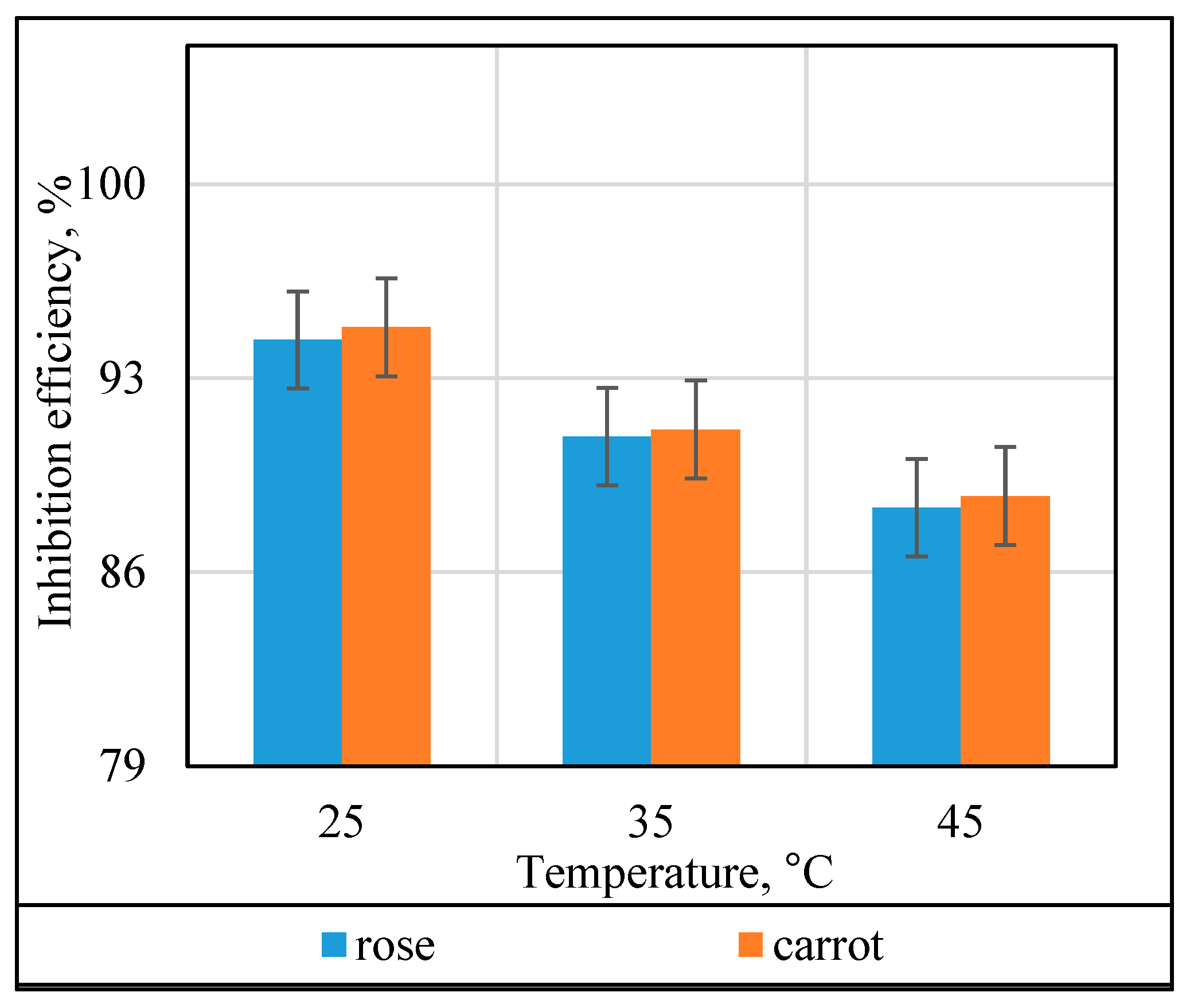
In addition, temperature-dependent corrosion tests were conducted for the individual carrot and rosemary extracts at a concentration of 1200 ppm, as illustrated in Figure 5. Both extracts exhibited a slight decline in inhibition efficiency with increasing temperature, consistent with the expected enhancement of electrochemical activity at elevated temperatures. The average decrease in efficiency from 25 to 45 °C was approximately 6% for both extracts, indicating that each extract shows acceptable thermal resistance.

3.4. Synergistic Effect for the Combination of Carrots and Rosemary

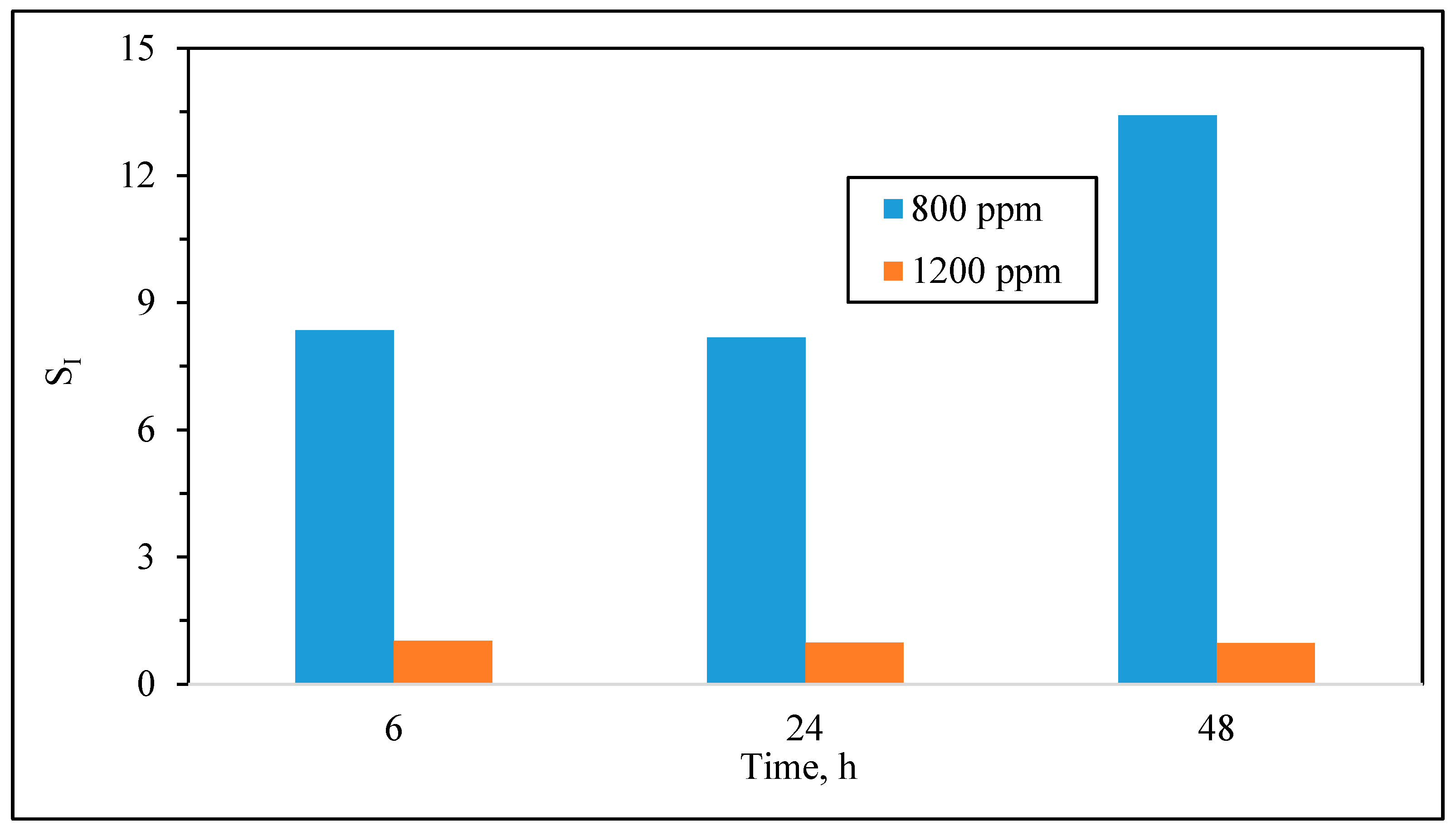
Figure 6 illustrates the synergistic effect of the 30/70% carrot-to-rosemary mixture at 25 °C for different immersion times and concentrations of 800 and 1200 ppm. At 800 ppm, the synergistic index is 8.3, 8.18, and 14.41 at 6, 24, and 48 h, respectively, indicating a strong positive synergistic effect that increases with time. In contrast, for 1200 ppm, the synergistic index values are 1.03, 0.98, and 0.97 at 6, 24, and 48 h, respectively. Since the SI values at 1200 ppm drop below 1 after 24 and 48 h, no positive synergistic effect is observed at this concentration. The high synergistic effect at 800 ppm is attributed to the formation of a compact adsorption layer on the carbon steel surface, where both components can effectively act together to inhibit corrosion [61].

3.5. FTIR Results

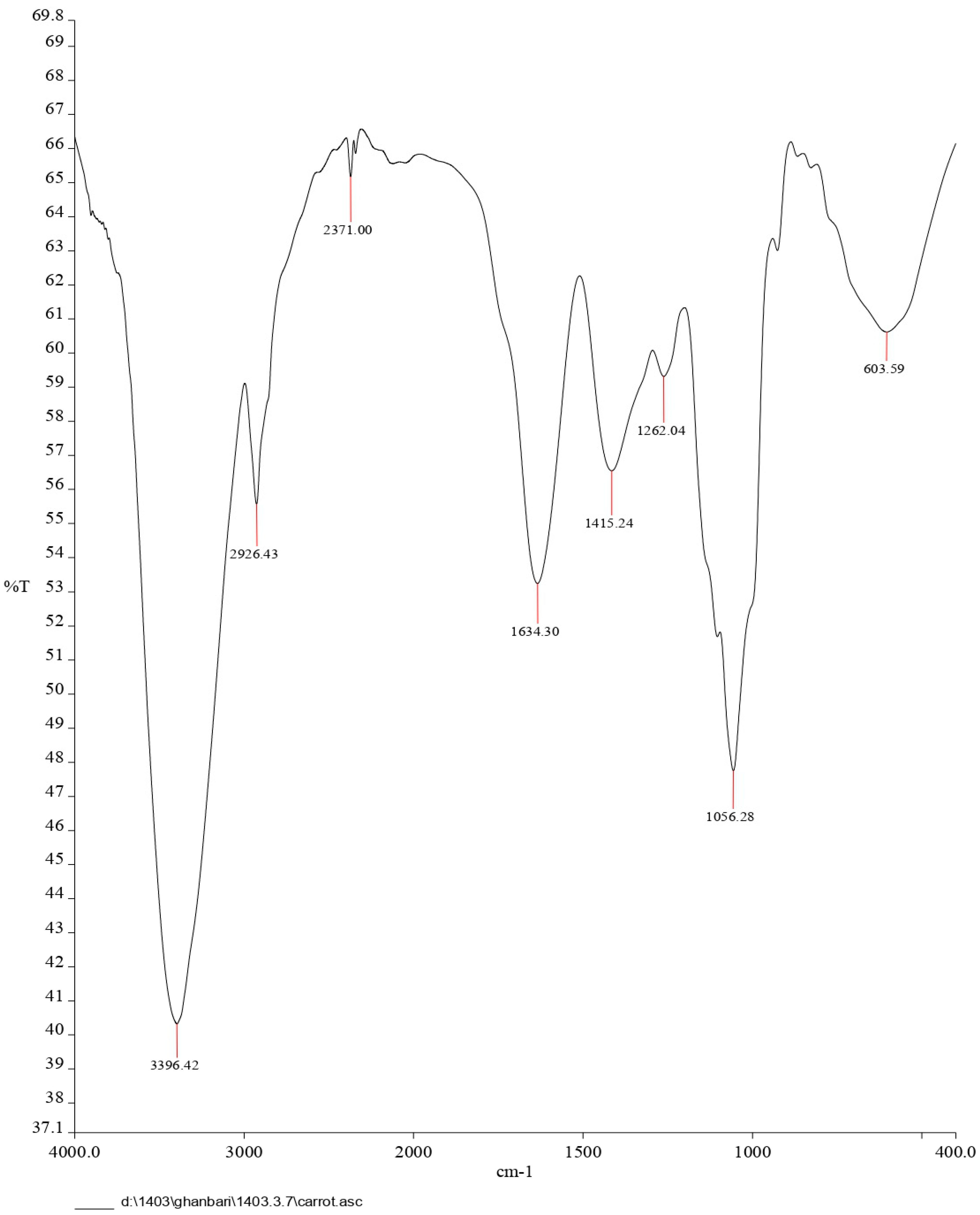
In order to identify the chemical compounds of carrot, the spectroscopic test (FTIR) was used, which is shown in Figure 7 and Table 1. As presented in the figure and table, carrot extract is rich in alcohols, phenols, alkanes, alkenes, carboxylic acids, ethers, and esters containing heteroatoms essential for corrosion protection. Characteristic peaks in the wavelength range of 1056–3396 cm−1 indicate the presence of active structures, including pectin, cellulose, and lignin molecules.
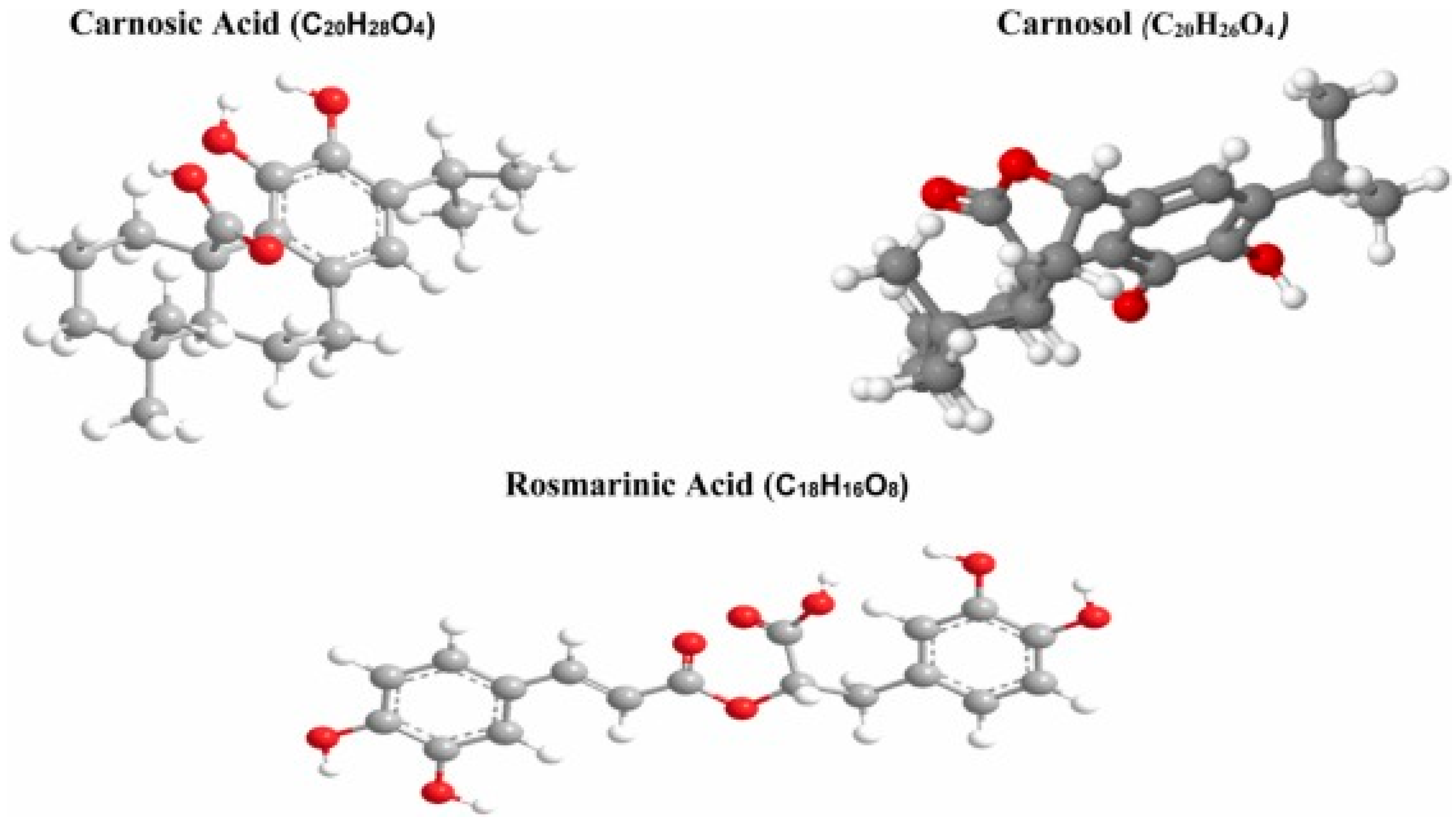
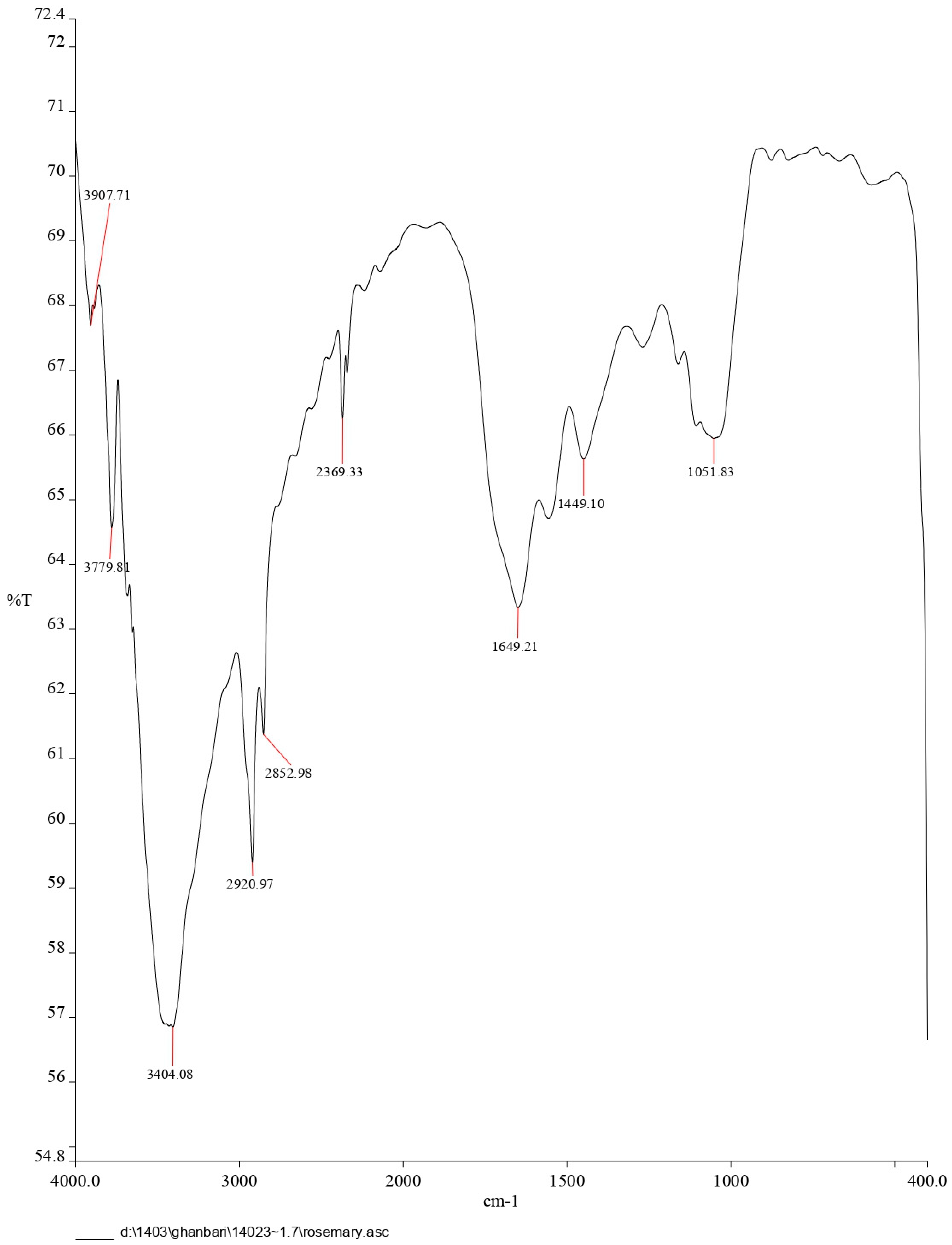
Figure 8 and Table 2 show the FTIR spectroscopy results of rosemary extract. The characteristic peaks in the wavelength range of 1051–3404 cm−1 were identified. The results present the presence of structures containing oxygen groups, benzene rings and heteroatoms. FTIR analysis illustrates that key functional groups, including C–O, C=C, and C–H, are prominent features of the essential constituents extracted from rosemary. It should be noted that the previous studies [35,62,63] have confirmed that compounds such as carnosic acid, rosmarinic acid, and carnosol are among its principal components. Their molecular structures are presented in Figure 9.
FTIR tests depicted the presence of various oxygen-containing functional groups in both extracts, essential for chemisorption onto the metal surface. Thus, the FTIR results jointly support the conclusion that both carrot and rosemary extracts contain bioactive compounds capable of forming protective films on metal surfaces in acidic environments.
FTIR analysis was also performed on the carbon steel surfaces after immersion in 1 M HCl, both in the absence and presence of carrot extract, rosemary extract, and their 30/70 mixture. The uninhibited sample showed no distinct FTIR absorption peaks and exhibited nearly constant transmittance across the spectrum. This behavior is typical of an acid-damaged surface with no protective organic layer. In contrast, the spectra of the steel samples treated with the extracts displayed characteristic absorption bands corresponding to the functional groups identified in the FTIR spectra of the pure plant extracts. This confirms that the phytochemical compounds present in carrot and rosemary were successfully adsorbed onto the metal surface. The presence of these functional groups only in the inhibited samples—and their absence in the blank—demonstrates the formation of a protective organic film that contributes to corrosion inhibition. Furthermore, the steel sample treated with the carrot–rosemary mixture exhibited a stronger and more defined set of adsorption-related bands compared to the individual extracts, indicating a denser and more stable surface film. This supports the synergistic interaction between the two extracts and explains the enhanced inhibition efficiency observed in the electrochemical and weight loss measurements.

3.6. EIS Results

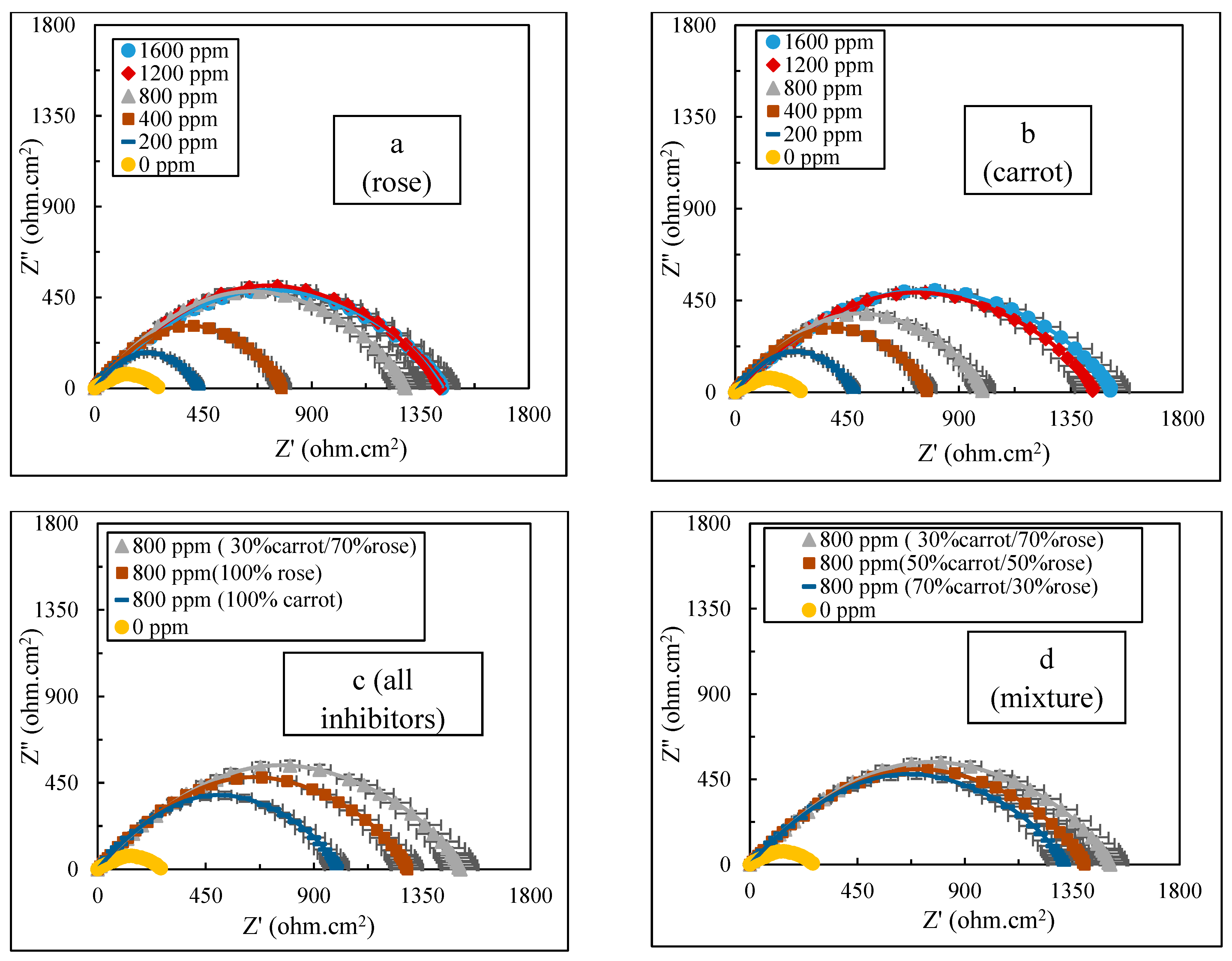
EIS measurements were performed in the absence and presence of the green inhibitors at room temperature. Notably, the inhibition system reached a stable condition after 30 min of immersion. The EIS spectra for both the blank solution and the inhibitor-containing solutions displayed a characteristic depressed semicircle, as depicted in Figure 10. This figure shows Nyquist plots results to examine the corrosion-protective behavior of rosemary and carrot extracts used individually and in combination. The addition of the inhibitor led to an increase in the diameter of the EIS semicircle, reflecting a higher charge-transfer resistance. This enhancement is attributed to the adsorption of inhibitor molecules onto the steel surface, which impedes the corrosive action of the solution and, as a result, decreases its conductivity.
Figure 10a,b demonstrate the effect of concentrations on inhibition performance of rosemary and carrot extracts, respectively. In both cases, the semicircle diameter increased with inhibitor concentration. A higher value of the diameter indicates a slower corrosion process due to reduced charge transfer across the steel–solution interface [64]. This behavior is attributed to the adsorption of phytochemical constituents. They contain heteroatoms and conjugated π-electrons that can interact with vacant d-orbitals of iron atoms, forming a protective film on the steel surface [65]. The progressive enlargement of the impedance arc with increasing concentration indicates that inhibitor molecules progressively cover more active sites on the steel surface. This surface coverage limits electron transfer and blocks aggressive chloride and hydrogen ions from attacking the metal [66]. Thus, EIS results confirm that both extracts are effective green inhibitors, with efficiency increasing at higher concentrations.
Moreover, Figure 10c compares the inhibition effect of individual extracts and their mixture at 800 ppm. The mixture of carrot and rosemary (30/70%) produces a larger semicircle than the single extracts, confirming a synergistic effect. This synergy arises because different phytochemical components adsorb simultaneously, leading to denser and more stable protective layers through cooperative interactions [67]. The combination of carrot and rosemary extracts provides multiple active functional groups, enhancing electron donation [68]. In addition, Figure 10d evaluates different carrot–rosemary mixing ratios (30/70, 50/50, and 70/30) at 800 ppm. Although all mixtures enhance corrosion resistance relative to the blank, the 30/70 mixture yields the greatest impedance response. This indicates that rosemary constituents are more dominant in film formation, while carrot extract provides supplementary adsorption, improving stability and compactness of the protective barrier.
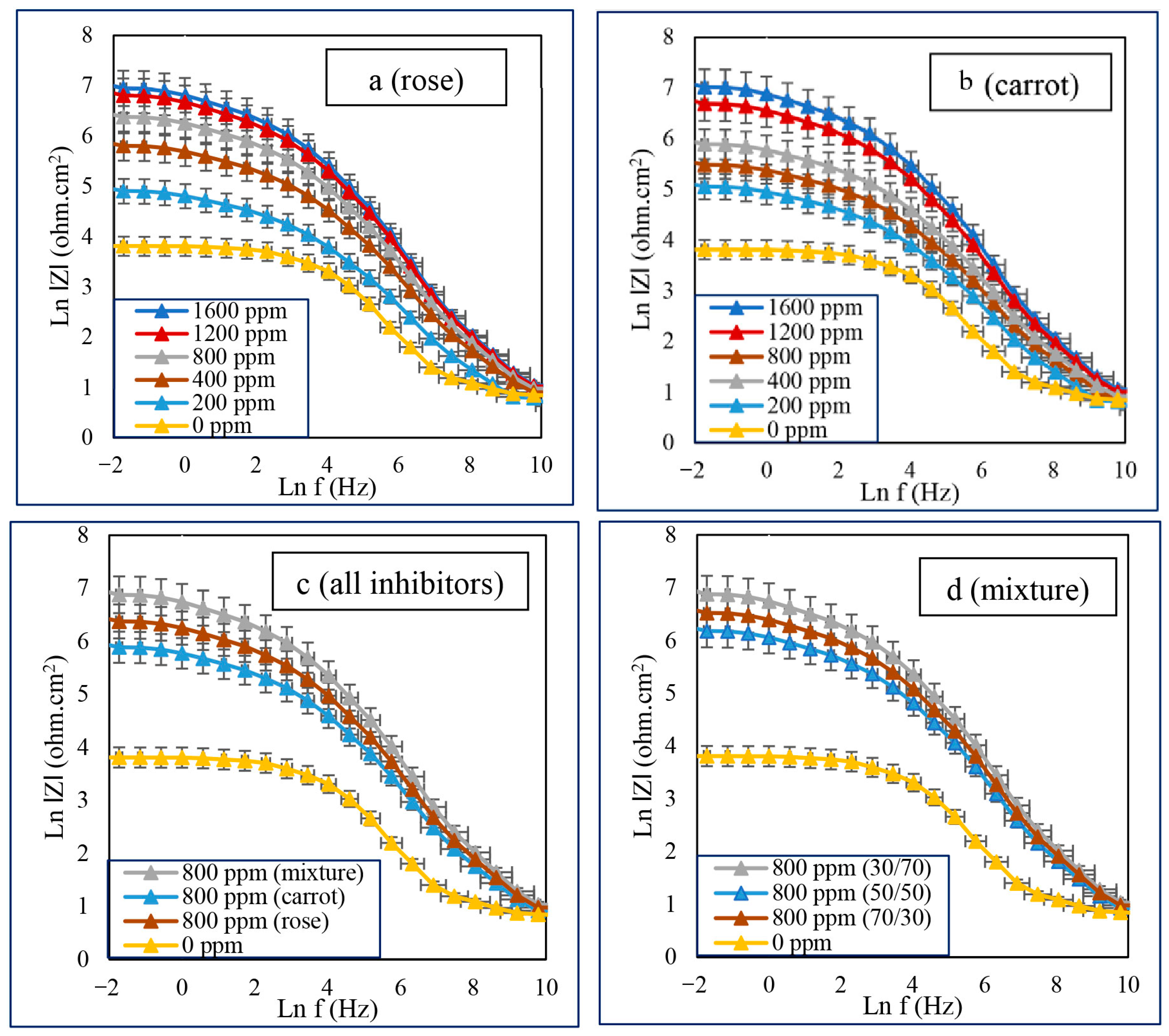
Figure 11 shows the Bod plots for carbon steel in 1 M HCl in the absence and presence of carrot extract, rosemary extract, and their mixtures at different concentrations. As depicted in the figure, the impedance values at low frequencies increase significantly when inhibitors are present, indicating enhanced resistance to charge transfer and improved surface protection. The increase in |Z| at low frequencies is most pronounced for the 30/70 carrot–rosemary mixture at 800 ppm, confirming superior inhibition performance. Thus, the Bode plots corroborate the Nyquist analysis by showing: (I) Increased impedance response in the presence of inhibitors; (II) Improved capacitive behavior due to surface film formation; (III) The strongest protective effect for the 30/70 carrot–rosemary mixture.
The fitted EIS parameters are summarized in Table 3. The uninhibited (blank) sample exhibited an Rct of 41.1 ohm·cm2, indicating low resistance to charge transfer and rapid corrosion. The presence of carrot extract (800 ppm) increased Rct to 174.9 ohm·cm2, and rosemary extract increased it further to 266.9 ohm·cm2. The mixture of carrot and rosemary (30/70%, 800 ppm) showed the highest Rct of 1868.1 ohm·cm2, confirming its superior inhibition performance. These findings are in agreement with the trends observed in the weight loss measurements. Moreover, the fitting errors were less than 4% for all samples. This indicates that the equivalent circuit model reliably represents the electrochemical behavior of the steel surface.
Table 4 presents the potentiodynamic polarization parameters and inhibition efficiencies for carrot, rosemary, and their mixtures. The corrosion current density decreases significantly upon inhibitor addition, demonstrating reduced corrosion rate. These results confirm that inhibitor concentration reduces anodic and cathodic reactions. Carrot extract shows moderate inhibition, reducing current density from 892 μA/cm2 (blank) to 245 μA/cm2 at 800 ppm. Also, rosemary extract performs better, reducing current density to 127 μA/cm2 at the same concentration. In addition, the mixed systems show strongly enhanced performance due to synergistic effects. The 30/70 carrot–rosemary mixture reduces current density to only 13.4 μA/cm2, corresponding to 98.5% inhibition efficiency, which far exceeds the values obtained for the individual extracts. The 50/50 and 70/30 mixtures also show high inhibition efficiencies above 97%.

3.7. Surface Morphology Analysis

Surface analysis techniques confirm that the corrosion inhibition occurs due to the adsorption of inhibitor molecules at the metal/solution interface [69]. Figure 12a shows that the metal sample immersed in 1 M hydrochloric acid solution in the absence of inhibitor is significantly degraded and the corrosion products completely cover the surface. The accumulation of products indicates the significant corrosion of the hydrochloric acid environment and the low performance of the metal sample surface against corrosion [70]. Figure 12b–d depict that after adding the extracts (rosemary, carrot, and their 30/70% mixture) to the acidic medium, the degradation of the metal sample decreased. A smoother surface is observed in all cases, with the effect most pronounced for the sample with a 30/70% carrot-to-rosemary ratio. These morphological differences clearly show the protective barrier effect offered by the plant extracts—especially in the mixed state. In other words, by absorbing the phytochemicals of carrot and rosemary, they control metal corrosion [71]. The superior morphology of the mixture-treated surface highlights the advantage of co-adsorption. The dual action of polar and aromatic groups provided better alignment and interaction with metal atoms, reducing micro-voids and forming an impermeable barrier. Thus, as a result, with a ratio of carrot and rosemary inhibitor extracts of 30/70%, a higher substrate coverage is confirmed.
Energy-dispersive X-ray spectroscopy (EDS) was carried out to determine the elemental composition of the carbon steel surface after immersion in 1 M HCl. The study was conducted in the absence and presence of carrots, rosemary, and their mixture (30/70% carrots and rosemary) at 800 ppm. The EDS results revealed a clear difference in the mass percentage of iron (the primary constituent of carbon steel) between the uninhibited and inhibited samples. The measured Fe contents for the blank, carrot, rosemary, and mixed-extract systems were 65.78%, 90.16%, 91.88%, and 94.59%, respectively. The significantly lower Fe percentage in the blank sample reflects severe metal dissolution due to corrosion. In contrast, the higher Fe percentages observed in the presence of the green inhibitors indicate reduced surface degradation. The mixed extract exhibited the highest Fe content, confirming its superior protective performance compared with the individual extracts.

3.8. Adsorption of Plant Extracts on the Carbon Steel Samples

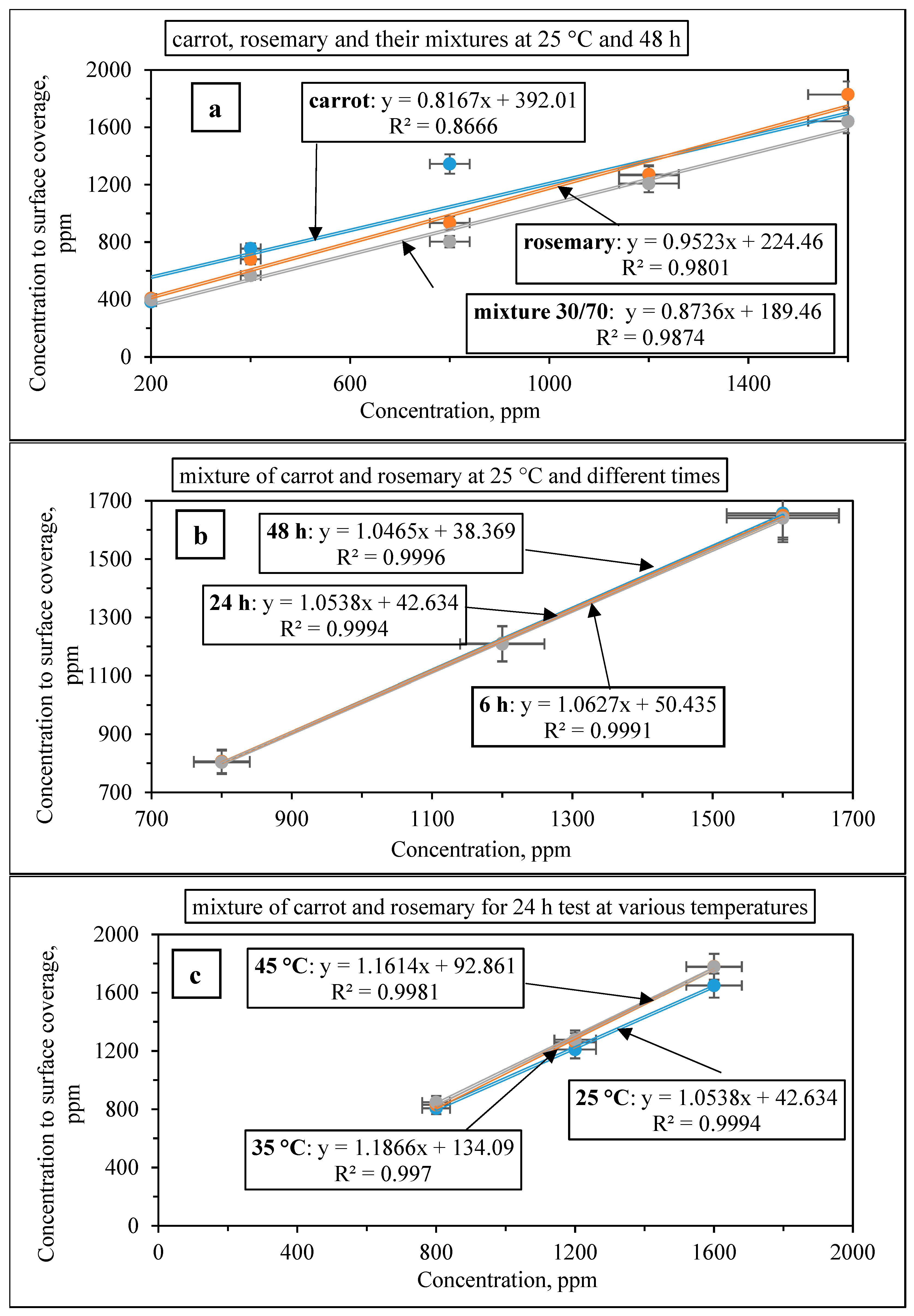
Using the results of earlier experiments, adsorption isotherm studies may provide further insight into the adsorption behavior of extracts and their inhibition mechanisms [72]. For this purpose, three models—Langmuir, Freundlich, and Temkin—were applied to analyze the adsorption process using weight loss method data. Among them, the Langmuir isotherm provided the best fit, as indicated by the highest coefficient of determination with the experimental adsorption data. The results are presented in Figure 13.
Figure 13a shows the adsorption performance of carrot, rosemary, and their mixture (30/70%) at 25 °C after 48 h of immersion. All systems follow a linear relationship between concentration and concentration-to-surface coverage (C/θ), confirming adherence to Langmuir isotherm principles [73]. The correlation coefficients (R2 values) indicate good linearity, with the rosemary extract exhibiting the highest fit (R2 = 0.9801). Compared to single extracts, the 30/70% blend provides improved surface coverage, implying synergistic interactions that enhance its adsorption behavior on steel. Moreover, Figure 13b illustrates the adsorption behavior of the carrot–rosemary mixture (30/70%) at 25 °C for different exposure times (6, 24, and 48 h). The linear plots with R2 values above 0.999 confirm that adsorption follows the Langmuir model consistently across different times. The slope and intercept values slightly vary, implying that adsorption efficiency improves with immersion time [74]. This suggests time-dependent surface interactions, where prolonged exposure enhances the stability and uniformity of the adsorbed inhibitor layer [75]. Furthermore, Figure 13c presents the effect of temperature (25, 35, and 45 °C) on adsorption of the carrot–rosemary mixture for 24 h. Linear fits with R2 values close to unity again confirm the Langmuir isotherm behavior. Increasing temperature generally increases the slope of the lines, indicating that adsorption capacity is enhanced at elevated temperatures. This behavior suggests endothermic adsorption, where higher thermal energy facilitates greater inhibitor interaction with the steel surface [76].
Table 5 presents the calculated Gibbs free energy values of carrot, rosemary, and carrot–rosemary blend extracts, based on the Langmuir adsorption isotherm. The adsorption parameters, including slope, correlation coefficient, and intercept, were derived from the linearized Langmuir plots at different temperatures and immersion times from Figure 13. As shown in this table, the calculated Gibbs free energy values range from approximately −25 to −31 KJ/mol. From a theoretical standpoint, values around −20 KJ/mol or less negative generally indicate physical adsorption (physisorption), driven by electrostatic interactions between charged inhibitor species and the charged metal surface [77]. In contrast, values around −40 KJ/mol or more negative are characteristic of chemical adsorption (chemisorption), entailing charge donation or transfer between inhibitor molecules and the metal surface [78]. In the present study, the obtained values fall in the intermediate range, suggesting that adsorption proceeds via a mixed mechanism: predominantly physisorption reinforced by chemisorption. Moreover, the negative value of Gibbs free energy confirms the spontaneity of the adsorption process, indicating that the carrot, rosemary, and carrot–rosemary extracts are thermodynamically favorable inhibitors [79]. Among the systems studied, the carrot–rosemary blends exhibited slightly more negative Gibbs free energy values compared with the individual extracts, pointing to a cooperative adsorption effect [80].
Table 6 provides a comparative summary of reported corrosion inhibition performances of different plant-based (green) inhibitors, including carrot, rosemary, and their mixtures, tested in various acidic and saline environments. The table includes details on the corrosive medium, testing temperature, inhibitor type and concentration, experimental method, inhibition efficiency, and corresponding Gibbs free energy values. The results clearly indicate that the combined carrot/rosemary system developed in this study exhibits superior inhibition efficiency (99.56%) and favorable adsorption energy, outperforming most previously reported natural inhibitors. This highlights the synergistic interaction between the two extracts and underscores the novelty and effectiveness of the proposed green inhibitor formulation.
GC–MS analysis of the carrot and rosemary extracts confirmed the presence of diverse bioactive compounds responsible for their corrosion inhibition behavior. Carrot extract contained carotenoids (β-carotene, α-carotene, lutein), phenolic acids (chlorogenic, caffeic, ferulic acids), flavonoids (quercetin, kaempferol, apigenin), and other antioxidants such as polyacetylenes and terpenoids. Rosemary extract was rich in phenolic diterpenes (carnosic acid, carnosol), phenolic acids (rosmarinic and caffeic acids), flavonoids (genkwanin, hesperidin, diosmin), and essential oil components including 1,8-cineole, α-pinene, camphor, and borneol. The functional groups present in these molecules enable strong adsorption onto the steel surface, forming a protective barrier that blocks active corrosion sites and reduces electron transfer. When used together, the complementary adsorption characteristics of constituents from both extracts create a synergistic effect, increasing surface coverage and enhancing inhibition efficiency compared to the individual extracts. This synergy is consistent with the experimentally observed superior performance of the 30/70% carrot-to-rosemary mixture.

4. Conclusions

This work comprehensively evaluated carrot and rosemary extracts—individually and in mixtures—as green corrosion inhibitors for carbon steel in 1 M HCl. The key findings and their implications are summarized below:
1. Weight loss and PDP results showed that both extracts reduced the corrosion rate, with inhibition efficiencies of 59.5% (carrot) and 85.7% (rosemary) at 800 ppm. Their 30/70 mixture achieved 99.6% (weight loss) and 98.5% (PDP) inhibition efficiency, demonstrating a pronounced synergistic effect.
2. Stability with time and temperature demonstrated that the 30/70 mixture retained high efficiency (>99%) across varying immersion times and maintained good performance up to 45 °C, supporting its practical applicability.
3. Electrochemical impedance spectroscopy confirmed this synergy, as the 30/70 mixture produced the highest charge-transfer resistance (Rct = 1868 ohm·cm2), substantially larger than for carrot or rosemary alone. The Nyquist and Bode plots demonstrated improved capacitive behavior and superior barrier formation.
4. Surface characterization by SEM/EDS revealed severe surface damage in the blank sample, whereas the mixture formed the smoothest, most uniform protective layer. The higher Fe content in the inhibited surfaces further confirmed reduced metal dissolution.
5. FTIR and GC–MS analyses identified the functional groups and phytochemical constituents responsible for adsorption, including carotenoids, phenolic acids, flavonoids, terpenoids (carrot), and phenolic diterpenes, flavonoids, and essential oils (rosemary). Co-adsorption of these chemically distinct molecules explains the enhanced film stability and synergistic performance.
6. Adsorption isotherm studies showed that the extracts followed the Langmuir model, with ΔG°ads values between −25 and −31 kJ/mol, indicating spontaneous mixed physisorption–chemisorption. The mixture showed slightly more negative values, reflecting stronger and more stable adsorption.
In conclusion, the 30/70 carrot–rosemary mixture provides near-complete corrosion protection and significantly outperforms the individual extracts. Its strong synergistic adsorption, demonstrated by multiple analytical techniques, underscores its potential as a cost-effective, environmentally friendly inhibitor for industrial acidic environments, particularly in acidizing operations.
In future studies, we plan to investigate the synergistic adsorption mechanisms of carrot and rosemary extracts on carbon steel at the molecular level. Computational approaches, including density functional theory (DFT), molecular dynamics (MD) simulations, and HOMO–LUMO analysis, will be employed to explore the interactions between inhibitor molecules and the metal surface. Additionally, modeling techniques such as response surface methodology (RSM) and machine learning algorithms will be applied to optimize inhibitor mixtures and predict corrosion inhibition performance under varying conditions. These investigations will provide deeper mechanistic insight and support the rational design of efficient, eco-friendly corrosion inhibitors.
Although this study demonstrates the strong synergistic inhibition behavior of carrot and rosemary extracts, particularly at the 30/70 ratio, it also has some limitations that should be acknowledged. Despite performing GC–MS analysis to identify the major phytochemical groups present in the extracts, the complex nature of plant-based inhibitors prevents precise identification of the individual compounds primarily responsible for corrosion protection. Future studies should therefore focus on isolating key constituents or testing their commercially available pure forms to establish clearer structure–activity relationships. In addition, the experiments were conducted at moderate temperatures (25–45 °C) and in 1 M HCl, whereas industrial applications such as acidizing often involve harsher environments, including high temperatures (70–120 °C), stronger acid concentrations, and CO2-rich conditions; thus, further evaluation under these conditions is essential. The present work also examined inhibition only for carbon steel, and additional testing on other alloys commonly used in industrial systems would help assess the broader applicability of the inhibitors. Finally, while adsorption studies indicated Langmuir-type behavior and mixed physisorption–chemisorption, deeper mechanistic insights require advanced tools such as density functional theory, molecular dynamics simulations, surface spectroscopy, and electrochemical quartz crystal microbalance to more precisely characterize molecule–surface interactions. Addressing these limitations in future research will enhance mechanistic understanding and support further optimization of the synergistic carrot–rosemary inhibitor system for realistic field applications.

Author Contributions

Methodology, A.K.; Validation, A.T. and M.M.-E.; Formal analysis, A.K., A.T. and M.M.-E.; Investigation, S.G.D.; Writing—original draft, A.K.; Writing—review & editing, S.G.D., A.K., A.T. and M.M.-E.; Supervision, A.K.; Project administration, A.K. All authors have read and agreed to the published version of the manuscript.

Funding

This work was supported by Gonbad Kavous University (master’s thesis of Sedigheh Ghanbari Daryaee).

Data Availability Statement

The original contributions presented in this study are included in the article. Further inquiries can be directed to the corresponding author.

Conflicts of Interest

The authors declare no conflict of interest.

References

  1. Alameedy, U.; Fatah, A.; Abbas, A.K.; Al-Yaseri, A. Matrix acidizing in carbonate rocks and the impact on geomechanical properties: A review. Fuel 2023, 349, 128586. [Google Scholar] [CrossRef]
  2. Qureshi, U.; Qureshi, H.A.; Bhatti, A.A.; Saeed, M.S.; Khalid, M.S. Investigating the effects of matrix acidizing and acid fracturing on the production optimization of a carbonate reservoir: A case study. Arab. J. Geosci. 2023, 16, 620. [Google Scholar] [CrossRef]
  3. Khormali, A.; Ahmadi, S.; Aleksandrov, A.N. Analysis of reservoir rock permeability changes due to solid precipitation during waterflooding using artificial neural network. J. Pet. Explor. Prod. Technol. 2025, 15, 17. [Google Scholar] [CrossRef]
  4. Ahmadi, S.; Khormali, A.; Kazemzadeh, Y. A Critical Review of the Phenomenon of Inhibiting Asphaltene Precipitation in the Petroleum Industry. Processes 2025, 13, 212. [Google Scholar] [CrossRef]
  5. Assad, H.; Lone, I.A.; Sharma, P.K.; Kumar, A. Corrosion in the Oil and Gas Industry. In Industrial Corrosion: Fundamentals, Failure, Analysis and Prevention; John Wiley & Sons: Hoboken, NJ, USA, 2025; pp. 39–63. [Google Scholar]
  6. Solovyeva, V.A.; Almuhammadi, K.H.; Badeghaish, W.O. Current downhole corrosion control solutions and trends in the oil and gas industry: A review. Materials 2023, 16, 1795. [Google Scholar] [CrossRef]
  7. Popoola, L.T.; Grema, A.S.; Latinwo, G.K.; Gutti, B.; Balogun, A.S. Corrosion problems during oil and gas production and its mitigation. Int. J. Ind. Chem. 2013, 4, 35. [Google Scholar] [CrossRef]
  8. Ahmadi, S.; Khormali, A. Development of an RSM-based predictive model for evaluation of corrosion efficiency of ATMP in one molar HCl for carbon steel samples. Pet. Sci. Technol. 2023, 42, 4537–4555. [Google Scholar] [CrossRef]
  9. Migahed, M.; Zaki, E.; Shaban, M. Corrosion control in the tubing steel of oil wells during matrix acidizing operations. RSC Adv. 2016, 6, 71384–71396. [Google Scholar] [CrossRef]
  10. Jasim, Z.I.; Rashid, K.H.; Khadom, A.A. Corrosion and corrosion control of the steel in acidizing oil wells processes: An overview of organic inhibitors. Russ. J. Appl. Chem. 2024, 97, 56–74. [Google Scholar] [CrossRef]
  11. Ansari, K.R.; Chauhan, D.S.; Singh, A.; Saji, V.S.; Quraishi, M.A. Corrosion inhibitors for acidizing process in oil and gas sectors. In Corrosion Inhibitors in the Oil and Gas Industry; Saji, V.S., Umoren, S.A., Eds.; Wiley-VCH Verlag GmbH & Co. KGaA: Weinheim, Germany, 2020; pp. 151–176. [Google Scholar]
  12. Folena, M.C.; de Beaumont, M.A.; Abdelmagid, A.; Su, E.T.; Farhat, H. Influence of Fe3C on corrosion inhibition efficiency of benzyldimethylhexadecylammonium chloride: Galvanic Corrosion interaction and adsorption behaviour. J. Pipeline Sci. Eng. 2025; in press. [Google Scholar] [CrossRef]
  13. Aljibori, H.; Al-Amiery, A.; Isahak, W.N.R. Advancements in corrosion prevention techniques. J. Bio-Tribo-Corros. 2024, 10, 78. [Google Scholar] [CrossRef]
  14. Khormali, A.; Ahmadi, S. Synergistic effect between oleic imidazoline and 2-mercaptobenzimidazole for increasing the corrosion inhibition performance in carbon steel samples. Iran. J. Chem. Chem. Eng. 2023, 42, 321–326. [Google Scholar]
  15. Zehra, S.; Mobin, M.; Aslam, J. Chromates as corrosion inhibitors. In Inorganic Anticorrosive Materials; Elsevier: Amsterdam, The Netherlands, 2022; pp. 251–268. [Google Scholar]
  16. Fouda, A.E.-A.S.; Molouk, A.F.; Atia, M.F.; El-Hossiany, A.; Almahdy, M.S. Verbena officinalis (VO) leaf extract as an anti-corrosion inhibitor for carbon steel in acidic environment. Sci. Rep. 2024, 14, 16112. [Google Scholar] [CrossRef]
  17. Bandeira, R.M.; Lima, F.P.; Nunes, M.S.; dos Santos, E.C.; dos Santos Júnior, J.R.; de Matos, J.M.E.; Feitosa, C.M.; Rai, M.; Bhattarai, S.; Das Mulmi, D. The green plant-based corrosion inhibitors—A sustainable strategy for corrosion protection. Surf. Sci. Technol. 2025, 3, 19. [Google Scholar] [CrossRef]
  18. Bhardwaj, N.; Sharma, P.; Kumar, V. Phytochemicals as steel corrosion inhibitor: An insight into mechanism. Corros. Rev. 2021, 39, 27–41. [Google Scholar] [CrossRef]
  19. Royani, A.; Hanafi, M.; Mubarak, N.M.; Priyotomo, G.; Aigbodion, V.S.; Musabikha, S.; Manaf, A. Unveiling green corrosion inhibitor of Aloe vera extracts for API 5L steel in seawater environment. Sci. Rep. 2024, 14, 14085. [Google Scholar] [CrossRef]
  20. Alao, A.O.; Popoola, A.P.; Dada, M.O.; Sanni, O. Utilization of green inhibitors as a sustainable corrosion control method for steel in petrochemical industries: A review. Front. Energy Res. 2023, 10, 1063315. [Google Scholar] [CrossRef]
  21. Verma, C.; Chauhan, D.S.; Aslam, R.; Banerjee, P.; Aslam, J.; Quadri, T.W.; Zehra, S.; Verma, D.K.; Quraishi, M.A.; Dubey, S. Principles and theories of green chemistry for corrosion science and engineering: Design and application. Green Chem. 2024, 26, 4270–4357. [Google Scholar] [CrossRef]
  22. Abdelshafeek, K.A.; Abdallah, W.E.; Elsayed, W.M.; Eladawy, H.A.; El-Shamy, A. Vicia faba peel extracts bearing fatty acids moieties as a cost-effective and green corrosion inhibitor for mild steel in marine water: Computational and electrochemical studies. Sci. Rep. 2022, 12, 20611. [Google Scholar] [CrossRef] [PubMed]
  23. Suliman, A.E.; Mangood, A.H.; Yehia, N.S.; Abdelraouf, M.; Batakoushy, H.A.; Abdou, M.M.; Zaki, E. Gallic acid based green corrosion inhibitor for mild steel in 1 M HCl electrochemical and microbial assessment with theoretical validation. Sci. Rep. 2025, 15, 15156. [Google Scholar] [CrossRef]
  24. Ramlan, D.G.; Juli, N.B.; Pojtanabuntoeng, T.; Yaakob, N. Benzylamine as Volatile Corrosion Inhibitor for Top-of-the-Line Corrosion in Water-Hydrocarbon Co-Condensation Environment. J. Pipeline Sci. Eng. 2024, 5, 100253. [Google Scholar] [CrossRef]
  25. Haddadou, I.; Ami, A.; Gagnon, J.; Ouellet-Plamondon, C.M. The antibacterial and anticorrosion activity of sodium alginate-chitosan cryogels and hydrogels loaded with Satureja montana essential oil and Monarda didyma hydrolate. Mater. Today Chem. 2025, 46, 102719. [Google Scholar] [CrossRef]
  26. Batah, A.; Al-Moubaraki, A.H.; Noor, E.A.; Al-Ahmari, J.M.; Al-Ghamdi, A.A.; Id El Mouden, O.; Salghi, R.; Chafiq, M.; Chaouiki, A.; Ko, Y.G. Environmentally benign grape seed oil for corrosion inhibition: Cutting-edge computational modeling techniques revealing the intermolecular and intramolecular synergistic inhibition action. Coatings 2024, 14, 77. [Google Scholar] [CrossRef]
  27. Chaouche, R.; Tiskar, M.; Amri, A.E.; Ihamdane, R.; Dagdag, O.; Kim, H.; Salghi, R.; Berdimurodov, E.; Berisha, A.; Chaouch, A. Green corrosion inhibition of mild steel in 1.0 M HCl using Myrtus communis essential oil: Experimental and theoretical investigations. Chem. 2024, 9, e202402610. [Google Scholar] [CrossRef]
  28. Olivieri, F.; Orlo, E.; Spinelli, E.; Castaldo, R.; Gentile, G.; Licoccia, S.; Lavorgna, M.; Lavorgna, M. Dual Biocide Behaviour of Quaternary Ammonium Functionalized Mesoporous Silica Nanoparticles Loaded with Thymus Essential Oil for Stone Conservation. Nanomaterials 2025, 15, 866. [Google Scholar] [CrossRef] [PubMed]
  29. Klein, C.S.; Rodriguez-Concepcion, M. Carotenoids in carrot. In Pigments in Fruits and Vegetables: Genomics and Dietetics; Springer: Berlin, Germany, 2015; pp. 217–228. [Google Scholar]
  30. Ikram, A.; Rasheed, A.; Ahmad Khan, A.; Khan, R.; Ahmad, M.; Bashir, R.; Hassan Mohamed, M. Exploring the health benefits and utility of carrots and carrot pomace: A systematic review. Int. J. Food Prop. 2024, 27, 180–193. [Google Scholar] [CrossRef]
  31. Jalali, J.; Ghasemzadeh Rahbardar, M. Rosemary: A Promising Therapeutic Agent in Alleviating Nephrotoxicity. J. Food Biochem. 2025, 2025, 5519628. [Google Scholar] [CrossRef]
  32. Lešnik, S.; Furlan, V.; Bren, U. Rosemary (Rosmarinus officinalis L.): Extraction techniques, analytical methods and health-promoting biological effects. Phytochem. Rev. 2021, 20, 1273–1328. [Google Scholar] [CrossRef]
  33. Mostafatabar, A.H.; Dehghani, A.; Ghahremani, P.; Bahlakeh, G.; Ramezanzadeh, B. Molecular-dynamic/DFT-electronic theoretical studies coupled with electrochemical investigations of the carrot pomace extract molecules inhibiting potency toward mild steel corrosion in 1 M HCl solution. J. Mol. Liq. 2022, 346, 118344. [Google Scholar] [CrossRef]
  34. Saeed, M.T.; Saleem, M.; Niyazi, A.H.; Al-Shamrani, F.A.; Jazzar, N.A.; Ali, M. Carrot (Daucus carota L.) peels extract as an herbal corrosion inhibitor for mild steel in 1M HCl solution. Mod. Appl. Sci. 2020, 14, 97–112. [Google Scholar] [CrossRef]
  35. Radi, M.; Melian, R.; Galai, M.; Dkhireche, N.; Dahmani, K.; Touhami, M.E.; Chafiq, M.; AlObaid, A.A.; Chaouiki, A. Rosmarinus officinalis L. (Rosemary) as an eco-friendly corrosion inhibitor for AA2024-T3 in 3.5% NaCl solution: An electrochemical, surface, and computational investigation. Colloids Surf. A Physicochem. Eng. Asp. 2025, 715, 136616. [Google Scholar] [CrossRef]
  36. Bendahou, M.; Benabdellah, M.; Hammouti, B. A study of rosemary oil as a green corrosion inhibitor for steel in 2 M H3PO4. Pigment. Resin Technol. 2006, 35, 95–100. [Google Scholar] [CrossRef]
  37. Dehghani, A.; Ramezanzadeh, B. Rosemary extract inhibitive behavior against mild steel corrosion in tempered 1 M HCl media. Ind. Crops Prod. 2023, 193, 116183. [Google Scholar] [CrossRef]
  38. Zhu, Y.; Sun, Q.; Wang, Y.; Tang, J.; Wang, Y.; Wang, H. Molecular dynamic simulation and experimental investigation on the synergistic mechanism and synergistic effect of oleic acid imidazoline and l-cysteine corrosion inhibitors. Corros. Sci. 2021, 185, 109414. [Google Scholar] [CrossRef]
  39. Zhang, Q.; Li, Y.; Lei, Y.; Wang, X.; Liu, H.; Zhang, G. Comparison of the synergistic inhibition mechanism of two eco-friendly amino acids combined corrosion inhibitors for carbon steel pipelines in oil and gas production. Appl. Surf. Sci. 2022, 583, 152559. [Google Scholar] [CrossRef]
  40. Obot, I.; Obi-Egbedi, N.; Umoren, S.; Ebenso, E. Synergistic and antagonistic effects of anions and Ipomoea invulcrata as green corrosion inhibitor for aluminium dissolution in acidic medium. Int. J. Electrochem. Sci. 2010, 5, 994–1007. [Google Scholar] [CrossRef]
  41. Tang, L.; Du, P.; Zhu, P.; Li, X.; Gao, Y.; Xu, J. Experimental and Computational Synergistic Analysis of Green Corrosion Inhibition Behavior of Agricultural Byproduct-Corn Distillers’ Grain Extract. J. Mol. Struct. 2025, 1349, 143631. [Google Scholar] [CrossRef]
  42. Eddy, N.O.; Odoemelam, S.A.; Odiongenyi, A.O. Inhibitive, adsorption and synergistic studies on ethanol extract of Gnetum africana as green corrosion inhibitor for mild steel in H2SO4. Green Chem. Lett. Rev. 2009, 2, 111–119. [Google Scholar] [CrossRef]
  43. Ramezanzadeh, M.; Bahlakeh, G.; Ramezanzadeh, B.; Sanaei, Z. Adsorption mechanism and synergistic corrosion-inhibiting effect between the green Nettle leaves extract and Zn2+ cations on carbon steel. J. Ind. Eng. Chem. 2019, 77, 323–343. [Google Scholar] [CrossRef]
  44. El-Sabbah, M.; Bedair, M.A.; Abbas, M.A.; Fahmy, A.; Hassaballa, S.; Moustafa, A.A. Synergistic effect between natural honey and 0.1 M KI as green corrosion inhibitor for steel in acid medium. Z. Für Phys. Chem. 2019, 233, 627–649. [Google Scholar] [CrossRef]
  45. Wang, J.; Zhao, J.; Tabish, M.; Peng, L.; Cheng, Q.; Shi, F. Long-term corrosion inhibition for AA5052 aluminum alloy by an eco-friendly hybrid inhibitor: Synergism inhibition between rosemary extract and zinc chloride in 0.05 M NaCl solution. J. Ind. Eng. Chem. 2023, 120, 302–315. [Google Scholar] [CrossRef]
  46. Dazdari, M.; Khormali, A.; Taleghani, A. Analysis of a Mixture of Banana Peel and Rice Straw Extracts for Inhibiting Corrosion of Carbon Steel in Hydrochloric Acid Solution. Appl. Sci. 2025, 15, 5026. [Google Scholar] [CrossRef]
  47. Khormali, A.; Ahmadi, S.; Kazemzadeh, Y.; Karami, A. Evaluating the Efficacy of Binary Benzimidazole Derivatives as Corrosion Inhibitors for Carbon Steel Using Multi-Modal Analysis and Optimization Techniques. Results Eng. 2025, 26, 104671. [Google Scholar] [CrossRef]
  48. Alimohammadi, M.; Ghaderi, M.; Ramazani SA, A.; Mahdavian, M. Falcaria vulgaris leaves extract as an eco-friendly corrosion inhibitor for mild steel in hydrochloric acid media. Sci. Rep. 2023, 13, 3737. [Google Scholar] [CrossRef]
  49. Bahlakeh, G.; Dehghani, A.; Ramezanzadeh, B.; Ramezanzadeh, M. Highly effective mild steel corrosion inhibition in 1 M HCl solution by novel green aqueous Mustard seed extract: Experimental, electronic-scale DFT and atomic-scale MC/MD explorations. J. Mol. Liq. 2019, 293, 111559. [Google Scholar] [CrossRef]
  50. Mei, D.; Li, Y.; Tian, Y.; Zhang, Q.; Liu, M.; Zhu, S.; Wang, L.; Guan, S. The effect of selected corrosion inhibitors on localized corrosion of magnesium alloy: The expanded understanding of “inhibition efficiency”. Corros. Sci. 2024, 226, 111650. [Google Scholar] [CrossRef]
  51. Aramaki, K.; Hackerman, N. Inhibition mechanism of medium-sized polymethyleneimine. J. Electrochem. Soc. 1969, 116, 568. [Google Scholar] [CrossRef]
  52. Joycee, S.; Raja, A.; Amalraj, A.; Rajendran, S. Inhibition of corrosion of mild steel in simulated oil well water by an aqueous extract of Daucus carota (Carrot). Int. J. Corros. Scale Inhib. 2025, 14, 269–287. [Google Scholar]
  53. Shathani, P.; Ogunmuyiwa, E.N.; Oladijo, O.P.; Obadele, B.A. Thermodynamics and adsorption behaviour of Sclerocarya birrea leaf extract as a potential green corrosion inhibitor for mild steel in a simulated seawater (3.5% NaCl) environment. Chem. Thermodyn. Therm. Anal. 2025, 19, 100197. [Google Scholar] [CrossRef]
  54. Desai, P.D.; Pawar, C.B.; Avhad, M.S.; More, A.P. Corrosion inhibitors for carbon steel: A review. Vietnam. J. Chem. 2023, 61, 15–42. [Google Scholar] [CrossRef]
  55. Zheng, H.; Zhang, B.; Wang, X.; Lu, Y.; Li, F.; Li, C. Improved corrosion resistance of carbon steel in soft water with dendritic-polymer corrosion inhibitors. Chem. Eng. J. 2023, 452, 139043. [Google Scholar] [CrossRef]
  56. Othman, K.A.; Hamad, W.M.; Omer, R.A. Theoretical and experimental exploration of organic molecules adsorption on iron surfaces for corrosion inhibition: A review. Corros. Rev. 2025, 43, 335–359. [Google Scholar] [CrossRef]
  57. Al-Amiery, A.A.; Shaker, L.M.; Kadhum, A.H.; Takriff, M.S. Exploration of furan derivative for application as corrosion inhibitor for mild steel in hydrochloric acid solution: Effect of immersion time and temperature on efficiency. Mater. Today Proc. 2021, 42, 2968–2973. [Google Scholar] [CrossRef]
  58. Konovalova, V. The effect of temperature on the corrosion rate of iron-carbon alloys. Mater. Today Proc. 2021, 38, 1326–1329. [Google Scholar] [CrossRef]
  59. Jafari, H.; Akbarzade, K. Effect of concentration and temperature on carbon steel corrosion inhibition. J. Bio-Tribo-Corros. 2017, 3, 8. [Google Scholar] [CrossRef]
  60. Oguzie, E.E.; Li, Y.; Wang, S.G.; Wang, F. Understanding corrosion inhibition mechanisms—Experimental and theoretical approach. RSC Adv. 2011, 1, 866–873. [Google Scholar] [CrossRef]
  61. Chen, L.; Lu, D.; Zhang, Y. Organic compounds as corrosion inhibitors for carbon steel in HCl solution: A comprehensive review. Materials 2022, 15, 2023. [Google Scholar] [CrossRef]
  62. Kuhlmann, A.; Röhl, C. Phenolic antioxidant compounds produced by in vitro. Cultures of Rosemary (Rosmarinus officinalis) and their anti-inflammatory effect on lipopolysaccharide-activated microglia. Pharm. Biol. 2006, 44, 401–410. [Google Scholar] [CrossRef]
  63. De Oliveira, J.R.; Camargo, S.E.A.; De Oliveira, L.D. Rosmarinus officinalis L. (Rosemary) as therapeutic and prophylactic agent. J. Biomed. Sci. 2019, 26, 5. [Google Scholar] [CrossRef]
  64. Zaidon, F.H.; Kassim, K.; Zaki, H.M.; Embong, Z.; Anouar, E.H.; Hashim, N.Z.N. Adsorption and corrosion inhibition accomplishment for thiosemicarbazone derivatives for mild steel in 1.0 M HCl medium: Electrochemical, XPS and DFT studies. J. Mol. Liq. 2021, 329, 115553. [Google Scholar] [CrossRef]
  65. Hamidi, H.; Shojaei, F.; Pourfath, M.; Vaez-Zadeh, M. Adsorption behavior of some green corrosion inhibitors on Fe (110) surface: The critical role of d-π interactions in binding strength. Appl. Surf. Sci. 2024, 655, 159425. [Google Scholar] [CrossRef]
  66. Ma, I.W.; Ammar, S.; Kumar, S.S.; Ramesh, K.; Ramesh, S. A concise review on corrosion inhibitors: Types, mechanisms and electrochemical evaluation studies. J. Coat. Technol. Res. 2022, 19, 241–268. [Google Scholar] [CrossRef]
  67. Zhang, Q.; Zhang, R.; Wu, R.; Luo, Y.; Guo, L.; He, Z. Green and high-efficiency corrosion inhibitors for metals: A review. J. Adhes. Sci. Technol. 2023, 37, 1501–1524. [Google Scholar] [CrossRef]
  68. Abdulazeez, I.; Khaled, M.; Al-Saadi, A.A. Impact of electron-withdrawing and electron-donating substituents on the corrosion inhibitive properties of benzimidazole derivatives: A quantum chemical study. J. Mol. Struct. 2019, 1196, 348–355. [Google Scholar] [CrossRef]
  69. Taghavikish, M.; Dutta, N.K.; Roy Choudhury, N. Emerging corrosion inhibitors for interfacial coating. Coatings 2017, 7, 217. [Google Scholar] [CrossRef]
  70. Ahmed, M.H.O.; Al-Amiery, A.A.; Al-Majedy, Y.K.; Kadhum, A.A.H.; Mohamad, A.B.; Gaaz, T.S. Synthesis and characterization of a novel organic corrosion inhibitor for mild steel in 1 M hydrochloric acid. Results Phys. 2018, 8, 728–733. [Google Scholar] [CrossRef]
  71. Mustapha, S.; Elabor, R.; Amigun, A.; Etsuyankpa, M.; Egbosiuba, T.; Shuaib, D.; Abubakar, H.; Abubakar, Y.; Muhammad, M.; Tijani, J. Phytochemicals/Plant Extracts as Corrosion Inhibitors for Zinc in Various Electrolytes. In Phytochemistry in Corrosion Science; CRC Press: Boca Raton, FL, USA, 2024; pp. 263–295. [Google Scholar]
  72. Mamudu, U.; Alnarabiji, M.S.; Lim, R.C. Adsorption isotherm and molecular modeling of phytoconstituents from Dillenia suffruticosa leaves for corrosion inhibition of mild steel in 1.0 M hydrochloric acid solution. Results Surf. Interfaces 2023, 13, 100145. [Google Scholar] [CrossRef]
  73. Sharma, S.K.; Mudhoo, A.; Khamis, E. Adsorption studies, modeling, and use of green inhibitors in corrosion inhibition: An overview of recent research. In Green Corrosion Chemistry and Engineering; Sharma, S.K., Ed.; Wiley-VCH Verlag GmbH & Co. KGaA: Weinheim, Germany, 2012. [Google Scholar]
  74. Hidalgo, J.; Hidalgo, L.; Serrano Aguiar, C.D.; García Madroñero, D.B.n.; Galambos, I.; Vilasó-Cadre, J.E.; Reyes-Domínguez, I.A.; Brânzanic, A.M.; Ignat, N.; Turdean, G.L. Study of Caesalpinia spinosa Extracts as Green Corrosion Inhibitor for Mild Steel. Langmuir 2025, 41, 9406–9421. [Google Scholar] [CrossRef]
  75. Alharbi, M.; Aslam, R.; Khan, A.; Alamry, K.A.; Al-Hadeethi, Y.; Bekyarova, E.; Alqahtani, S.; Hussein, M.A. Insight into the time-dependent corrosion protection of mild steel by green ionic liquids: A combined electrochemical, surface, and computational study. RSC Adv. 2025, 15, 8088–8101. [Google Scholar] [CrossRef]
  76. Ituen, E.; Akaranta, O.; James, A. Evaluation of performance of corrosion inhibitors using adsorption isotherm models: An overview. Chem. Sci. Int. J. 2017, 18, 1–34. [Google Scholar] [CrossRef]
  77. El-Aouni, N.; Dagdag, O.; Amri, A.E.; Kim, H.; Dkhireche, N.; Elbachiri, A.; Berdimurodov, E.; Berisha, A.; Rafik, M. Hybrid epoxy/Br inhibitor in corrosion protection of steel: Experimental and theoretical investigations. Environ. Sci. Pollut. Res. 2024, 31, 1033–1049. [Google Scholar] [CrossRef]
  78. Beniken, M.; Driouch, M.; Sfaira, M.; Hammouti, B.; Ebn Touhami, M.; Mohsin, M. Kinetic–thermodynamic properties of a polyacrylamide on corrosion inhibition for C-steel in 1.0 M HCl medium: Part 2. J. Bio-Tribo-Corros. 2018, 4, 34. [Google Scholar] [CrossRef]
  79. Akinbulumo, O.A.; Odejobi, O.J.; Odekanle, E.L. Thermodynamics and adsorption study of the corrosion inhibition of mild steel by Euphorbia heterophylla L. extract in 1.5 M HCl. Results Mater. 2020, 5, 100074. [Google Scholar] [CrossRef]
  80. Sanni, O.; Popoola, A.; Fayomi, O. Temperature effect, activation energies and adsorption studies of waste material as stainless steel corrosion inhibitor in sulphuric acid 0.5 M. J. Bio-Tribo-Corros. 2019, 5, 88. [Google Scholar] [CrossRef]
Figure 1. Equivalent circuit employed for fitting the EIS data [46].
Chemengineering 09 00142 g001
Figure 2. Corrosion rate (a) and corrosion efficiency (b) graphs at 25 °C after 48 h for carrot and rosemary corrosion inhibitors at different concentrations (error bars show standard deviations).
Chemengineering 09 00142 g002
Figure 3. Corrosion inhibition efficiency at 25 °C after 48 h for different ratios of carrot to rosemary inhibitors (a), and for rosemary, carrot, and a 30% carrot/70% rosemary mixture (b) (error bars show standard deviations).
Chemengineering 09 00142 g003
Figure 4. Effect of time for a 30/70% carrot to rosemary mixture at 25 °C (a) and effect of temperature for a 30/70% carrot to rosemary mixture after 24 h (b) (error bars show standard deviations).
Chemengineering 09 00142 g004
Figure 5. Effect of temperature on the inhibition efficiency of single extracts at a concentration of 1200 ppm after 24 h immersion (error bars show standard deviations).
Chemengineering 09 00142 g005
Figure 6. Synergistic effect at 25 °C for a mixture of 30/70% carrot to rosemary at concentrations of 800 and 1200 ppm.
Chemengineering 09 00142 g006
Figure 7. Results of FTIR analysis of carrot extract.
Chemengineering 09 00142 g007
Figure 8. Results of FTIR analysis of rosemary extract.
Chemengineering 09 00142 g008
Figure 9. Structure of carnosic acid, carnosol and rosmarinic acid in rosemary extract [35].
Chemengineering 09 00142 g009
Figure 10. Nyquist plots obtained from EIS analysis in the presence of green corrosion inhibitors: carrot at various concentrations (a), rosemary at various concentrations (b), all inhibitors (carrot, rosemary and their mixture-30/70%) at 800 ppm (c), the mixture of carrot and rosemary at various mixing ratios at 800 ppm (d) (error bars show standard deviations).
Chemengineering 09 00142 g010
Figure 11. Bode plots obtained from EIS analysis in the presence of green corrosion inhibitors: carrot at various concentrations (a), rosemary at various concentrations (b), all inhibitors (carrot, rosemary and their mixture-30/70%) at 800 ppm (c), the mixture of carrot and rosemary at various mixing ratios at 800 ppm (d) (error bars show standard deviations).
Chemengineering 09 00142 g011
Figure 12. SEM results comparing metal samples in acidic conditions with and without inhibitor treatment: blank case (a), carrot extract (b), rosemary extract (c), the mixture 30/70% carrot to rosemary (d).
Chemengineering 09 00142 g012
Figure 13. Inhibitor adsorption analysis on metal surface using Langmuir isotherm: carrot, rosemary and their mixtures at 25 °C and 48 h (a), mixture of carrot and rosemary (30/70%) at 25 °C and different times (b), mixture of carrot and rosemary for 24 h test at various temperatures (c) (error bars show standard deviations).
Chemengineering 09 00142 g013
Table 1. Various functional groups in carrot extract obtained by FTIR analysis.
Wave Number, cm−1BondsIntensityClassStructure
3396.42O–H40AlcoholsRCH2OH
R2CHOH
R3COH
ArO–H bonded40PhenolsArO–H bonded
2926.43dimer OH55Carboxylic acidRCO–OH
C=C–CO–OH
C–H55AlkanesRCH2CH3
1634.30Ar–CH=CHR53AlkenesAr–CH=CHR
C–O53Carboxylic acidRCO–OH
1415.24CH357AlkanesCH3
C–O57Carboxylic acidRCO–O–
1262.04C–O59EstersRCOOR
C–O59EthersR–O–R
1056.28C–O48Carboxylic acidRCO–OH
O–H48AlcoholsRCH2OH
Table 2. Various functional groups in rosemary extract obtained by FTIR analysis.
Wave Number, cm−1BondsIntensityClassStructure
3404.08C–O57Carboxylic acidRCO–OH
2920.97CH359AlkanesCH3
1649.21C=O63KetonesR–C=O–R
1440.10CH=CHR65AlkenesCH=CHR
C–H65AlkanesRCH2CH3
1051.83C–O66EstersRCOOR
C–O66Carboxylic acidRCO–OH
Table 3. Charge-transfer resistance and inhibition-efficiency values obtained from fitting the EIS data using the equivalent circuit.
SampleConcentration, ppmRct, ohm·cm2IE, %
Blank-41.1 ± 0.8-
Carrot extract20082.5 ± 1.450.2 ± 0.4
40090.5 ± 1.554.6 ± 0.4
800174.9 ± 2.876.5 ± 0.6
1200570.8 ± 4.992.8 ± 0.8
1600520.2 ± 4.292.1 ± 0.8
Rosemary extract20086.9 ± 1.552.7 ± 0.5
400103.8 ± 1.660.4 ± 0.5
800266.9 ± 3.284.6 ± 0.8
1200548.1 ± 4.792.5 ± 1.0
1600526.9 ± 4.592.2 ± 1.1
Carrot/Rosemary30/708001868.1 ± 14.297.8 ± 1.0
50/508001284.3 ± 10.196.8 ± 1.01
70/308001027.5 ± 9.796.0 ± 0.9
Table 4. Potentiodynamic polarization results and inhibition efficiencies for tested inhibitors.
SampleConcentration, ppmicor, μA/cm2IE, %
Blank-892.0 ±7.3-
Carrot extract200449.6 ± 4.249.6 ± 0.3
400390.1 ± 4.056.3 ± 0.4
800245.3 ± 2.172.5 ± 0.6
120077.6 ± 0.691.3 ± 0.8
160076.7 ± 0.691.4 ± 0.8
Rosemary extract200434.4 ± 4.151.3 ± 0.5
400366.6 ± 3.458.9 ± 0.6
800127.6 ± 1.285.7 ± 0.8
120067.8 ± 0.792.4 ± 0.9
160068.7 ± 0.692.3 ± 0.9
Carrot/Rosemary30/7080013.4 ± 0.198.5 ± 1.0
50/5080021.4 ± 0.297.6 ± 0.9
70/3080026.8 ± 0.297.0 ± 0.8
Table 5. Gibbs energy values determined based on the Langmuir isotherm adsorption model.
FigureInhibitorT, °CTime, hSlopeR2InterceptionΔG, KJ/mol
Figure 13acarrot25240.81670.8666392.01−25.5130
Figure 13arosemary25240.95230.9801224.46−26.9419
Figure 13a30/70% carrot to rosemary 25240.87360.9874189.46−27.3755
Figure 13b30/70% carrot to rosemary 2561.06270.999150.435−30.7646
Figure 13b30/70% carrot to rosemary 25241.05380.999442.634−31.1949
Figure 13b30/70% carrot to rosemary 25481.04650.999638.369−31.4648
Figure 13c30/70% carrot to rosemary 25241.05380.999442.634−31.1949
Figure 13c30/70% carrot to rosemary 35241.18660.9970134.09−29.2015
Figure 13c30/70% carrot to rosemary 45241.16140.998192.681−28.2607
Table 6. Comparison of inhibition efficiencies and Gibbs free energy values of various green corrosion inhibitors reported in the literature and in the present study.
Study (Ref.)MediumTemperature, °CInhibitorConcentration, ppmMethodEfficiency,
%
ΔG, KJ/mol
[33]1 M HCl55Carrot400Weight loss64−35.74
[35]3.5% NaCl25Rosemary1000EIS97.4Not reported
[37]1 M HCl25Rosemary800Weight loss87−30.9
[16]0.5 M H2SO425Verbena officinalis leaf1000Weight loss90.1−38.1
[45]0.05 M HCl30Rosemary and ZnCl22000EIS96.48Not
[46]1 M HCl35Mixture banana and rice straw750Weight loss96.36−36.65
This work1 M HCl25Carrot800Weight loss59.51−25.5
This work1 M HCl25Rosemary800Weight loss85.69−26.9
This work1 M HCl2530/70% carrot to rosemary800Weight loss99.56−31.5
Disclaimer/Publisher’s Note: The statements, opinions and data contained in all publications are solely those of the individual author(s) and contributor(s) and not of MDPI and/or the editor(s). MDPI and/or the editor(s) disclaim responsibility for any injury to people or property resulting from any ideas, methods, instructions or products referred to in the content.