Article

Hydrothermal-Assisted Sulfuric Acid Activation of Date Seed-Derived Carbon for High-Performance Supercapacitor Electrodes and Hydrogel Electrolytes


1
Department of Physics, College of Science, University of Hafr Al-Batin, Hafer Al-Batin 39921, Saudi Arabia
2
Biological Science Department, College of Science, King Faisal University, Hofuf 36362, Saudi Arabia
*
Authors to whom correspondence should be addressed.
ChemEngineering 2026, 10(6), 68; https://doi.org/10.3390/chemengineering10060068 (registering DOI)

Submission received: 28 March 2026 / Revised: 9 May 2026 / Accepted: 13 May 2026 / Published: 25 May 2026

Abstract

This study aims to develop a sustainable, low-cost, and high-performance supercapacitor electrode by valorizing waste date seeds (Phoenix dactylifera) into activated carbon and integrating it with a polymer-based hydrogel electrolyte. Waste date seeds were successfully converted into high-performance activated carbon through hydrothermal carbonization followed by sulfuric acid (H2SO4) chemical activation. The obtained date seed activated carbon (DSAC) was applied as an electrode material and incorporated into a hydrogel electrolyte for supercapacitor applications. Structural, thermal, and morphological analyses using SEM, FTIR, XRD, and TGA confirmed the formation of a predominantly microporous carbon framework enriched with oxygen-containing functional groups, indicating effective carbonization and activation. The porous structure and surface chemistry contributed to enhanced electrochemical behavior. The electrochemical behavior of the prepared DSAC electrode was investigated through cyclic voltammetry (CV) and galvanostatic charge–discharge (GCD) analyses. The material exhibited a highest specific capacitance of 179 F g−1 at a scan rate of 5 mV s−1 and 159 F g−1 at a current density of 0.2 A g−1, demonstrating reliable and stable capacitive characteristics suitable for biomass-derived carbon-based supercapacitor applications. The device also exhibited excellent cycling stability over 5500 cycles, confirming long-term durability. The results demonstrate a promising and environmentally friendly strategy for advanced energy storage systems. Furthermore, the sustainability and cost-effectiveness of the proposed approach are attributed to the utilization of abundant date seed biomass and the simplicity of the hydrothermal–chemical activation process. The enhanced electrochemical performance is primarily associated with the hierarchical porous structure of the activated carbon and the improved ion transport facilitated by the hydrogel electrolyte, which collectively contribute to stable capacitive behavior and long-term cycling durability.

1. Introduction

Energy storage technologies, particularly supercapacitors (SCs), have gained significant attention in recent years due to their potential to address the growing global demand for efficient and sustainable energy systems. Owing to their high power density, rapid charge–discharge capability, and excellent cycling stability, supercapacitors are considered promising candidates for advanced energy storage applications [1,2,3]. However, their relatively low energy density remains a critical limitation for broader industrial deployment. According to the relationship E = 1/2 CV2, the stored energy (E) is directly proportional to the specific capacitance (C) and the square of the operating voltage window (V). These electrochemical properties are strongly influenced by the electrode’s specific surface area, pore size distribution, surface functionality, and heteroatom doping [4,5]. Therefore, rational design of electrode materials aimed at enhancing the capacitance and expanding the working potential window is essential to simultaneously improve both energy and power densities without compromising device stability.
Activated carbon (AC) is a widely utilized carbonaceous material characterized by its highly developed porous structure and exceptionally large specific surface area. Traditionally employed as an adsorbent for removing organic and inorganic contaminants, its performance is governed by surface chemistry and pore architecture [5]. The presence of abundant surface functional groups, high porosity, and a hierarchical pore structure comprising micro-, meso-, and macropores makes AC a versatile material suitable for applications in water purification, air filtration, catalysis, and energy storage [6].
A typical supercapacitor consists of two electrodes (positive and negative) immersed in an aqueous or organic electrolyte and separated by an ion-permeable separator that prevents electrical short circuits while enabling ion transport [7]. Based on the charge storage mechanism, SCs are generally classified into two main categories: (i) pseudocapacitors, where capacitance arises from fast and reversible Faradaic redox reactions, and (ii) electrical double-layer capacitors (EDLCs), where energy storage occurs via electrostatic ion adsorption at the electrode–electrolyte interface without charge transfer [8,9]. Although EDLCs exhibit excellent power density and cycling stability, their energy density is inherently limited, due to the non-Faradaic charge storage mechanism [10,11].
Electrochemical capacitors can employ either liquid or solid electrolytes. Solid-state systems, particularly those based on polymer electrolytes, offer advantages such as compactness, mechanical stability, leakage prevention, and wider operational voltage windows [12]. Among these, hydrogel electrolytes have emerged as promising candidates for flexible and wearable electronics because of their three-dimensional porous networks, mechanical flexibility, and tunable physicochemical properties. Their structural and morphological characteristics can be investigated using FTIR-ATR, X-ray diffraction, and scanning electron microscopy (SEM), while their electrochemical performance is typically evaluated via cyclic voltammetry (CV) and galvanostatic charge–discharge (GCD) measurements.
The electrochemical behavior of the prepared DSAC electrode was investigated through cyclic voltammetry (CV) and galvanostatic charge–discharge (GCD) analyses. The material exhibited a highest specific capacitance of 179 F g−1 at a scan rate of 5 mV s−1 and 159 F g−1 at a current density of 0.2 A g−1 [10,11], demonstrating reliable and stable capacitive characteristics suitable for biomass-derived carbon-based supercapacitor applications [12,13]. Surface modification techniques can further enhance the selectivity and adsorption efficiency in the presence of competing ions [14,15]. These findings highlight the potential of green adsorbents as low-cost and environmentally friendly functional materials.
Among various biomass-derived materials, the date palm (Phoenix dactylifera) has attracted considerable attention due to its economic and agricultural importance. Classified under the Arecaceae family, date palm is recognized as one of the major fruit-producing crops cultivated extensively around the world [16]. Date seeds (DS), constituting approximately 10–15% of the total fruit mass, represent a major agro-industrial waste. Date seeds are chemically rich in lignocellulosic constituents, consisting of approximately 1.1 ± 0.1% ash, 23 ± 3.1% lignin, 75 ± 1.5% holocellulose, 20 ± 1.8% α-cellulose, and 55 ± 1.5% hemicellulose. Moreover, they exhibit notable elemental compositions, including 48.77% carbon and 7.32% hydrogen, which support their suitability as precursors for carbon-based materials [17,18]. This composition confirms their richness in hydroxyl-containing biopolymers, making them excellent candidates for carbon precursor development and chemical modification processes such as oxypropylation [19,20]. The oxypropylation of natural polymers enhances hydroxyl group accessibility by shifting them toward chain ends, increasing reactivity and functionalization potential [21]. For hydrothermal pretreatment, the powdered date seed precursor was dispersed in deionized water and transferred into a Teflon-lined stainless-steel autoclave.
Recently, date seeds have been explored as carbon precursors for producing porous activated carbon via hydrothermal carbonization followed by chemical activation. Sulfuric acid (H2SO4) has been effectively employed as an activating agent to develop porosity and introduce oxygen- and sulfur-containing surface functionalities, which may contribute to pseudocapacitive behavior. In addition to electrode optimization, integrating hydrogel electrolytes further enhances ion transport and electrode–electrolyte compatibility, particularly in solid-state configurations suitable for flexible devices.
Although biomass-derived activated carbons and hydrogel-based electrolytes have been widely investigated for supercapacitor applications, the present study focuses on the specific combination of hydrothermal pretreatment and sulfuric acid activation of date seed biomass, followed by its integration with a hydrogel electrolyte in a solid-state configuration. The significance of this work lies not in the absolute novelty of each individual component but in the synergistic design strategy and its applicability to sustainable and low-cost electrochemical energy storage.
This study presents a sustainable and low-cost strategy for converting waste date seeds into high-performance activated carbon through a combined hydrothermal treatment and sulfuric acid activation process. The resulting material exhibits a well-developed porous structure enriched with oxygen-containing functional groups, which are beneficial for electrochemical energy storage. In addition, the integration of a hydrogel electrolyte enhances ion transport and electrode–electrolyte interaction, leading to improved capacitive performance and cycling stability. This synergistic design provides a promising pathway for the development of environmentally friendly and efficient supercapacitor systems.

2. Materials and Methods

2.1. Materials

Date seeds (DS, Ekhlas type) were obtained from a local market in Saudi Arabia. Sulfuric acid (H2SO4, 95–98%) was purchased from Sigma-Aldrich (St. Louis, MO, USA). Sodium alginate (SA, CAS No. 9005-38-3) and starch (linear formula: (C6H10O5)n, CAS No. 9005-25-8) were also obtained from Sigma-Aldrich. Deionized (DI) water was used throughout all experiments.

2.2. Experimental Section

In this work, “DSAC” refers to the activated carbon material obtained from date seeds; “electrode” refers to the coated working electrode fabricated using DSAC and binder; and “device” refers to the assembled supercapacitor cell incorporating the hydrogel electrolyte.

2.2.1. Preparation of Date Seed Activated Carbon (DSAC)

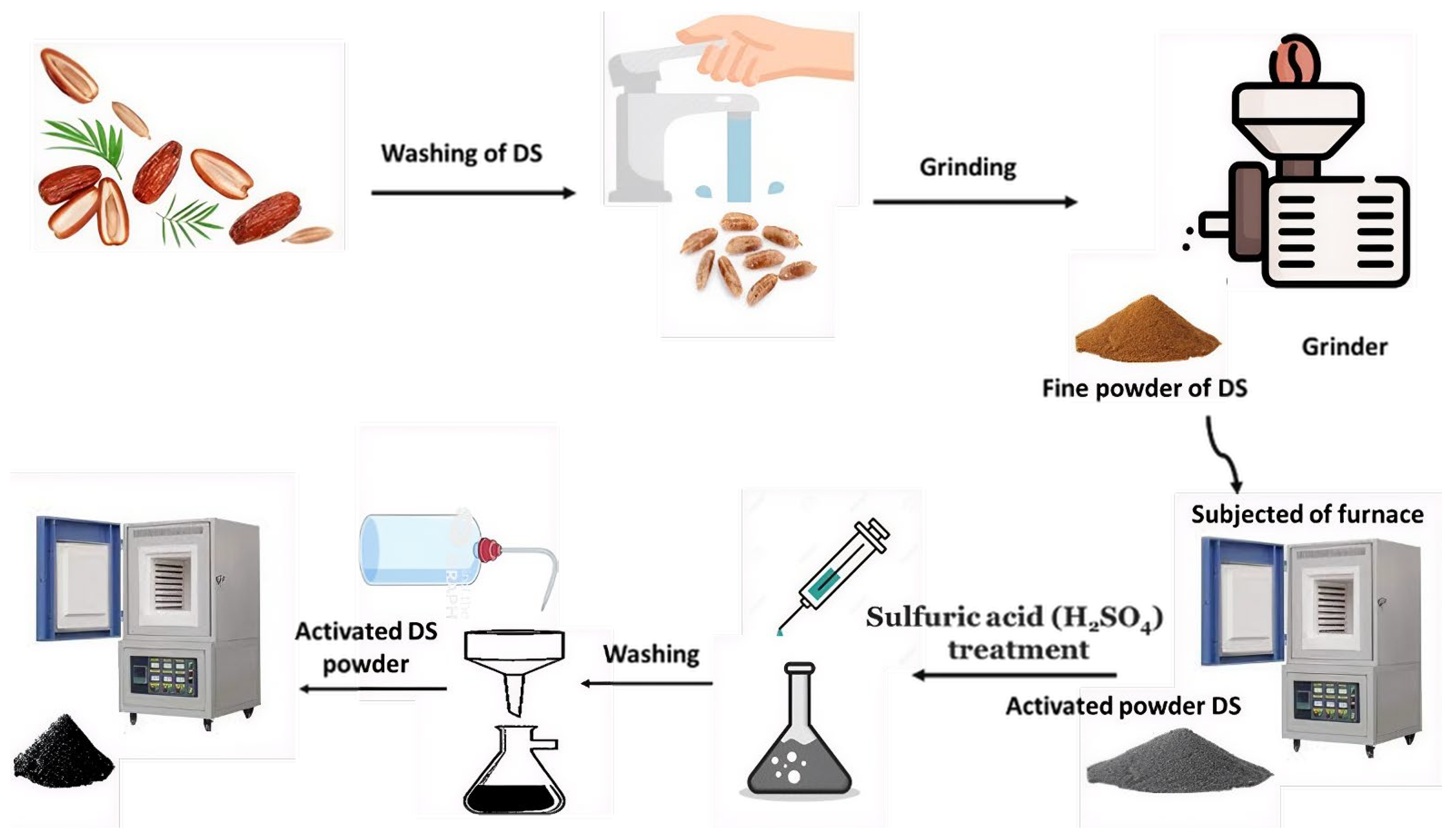
Date seeds (DS) obtained from locally sourced Phoenix dactylifera palms were initially cleaned using distilled water to eliminate surface contaminants and dust. The cleaned seeds were subsequently oven-dried at 60 °C for 24 h, mechanically crushed, and milled into a fine powder form.
For the hydrothermal pretreatment process, the prepared powder was mixed with deionized water and sealed in a 100 mL Teflon-lined stainless-steel autoclave. The hydrothermal reaction was carried out at 180 °C for 12 h. After the system cooled naturally to ambient temperature, the produced hydrochar was recovered, repeatedly rinsed with deionized water to remove remaining impurities, and finally dried at 70 °C.
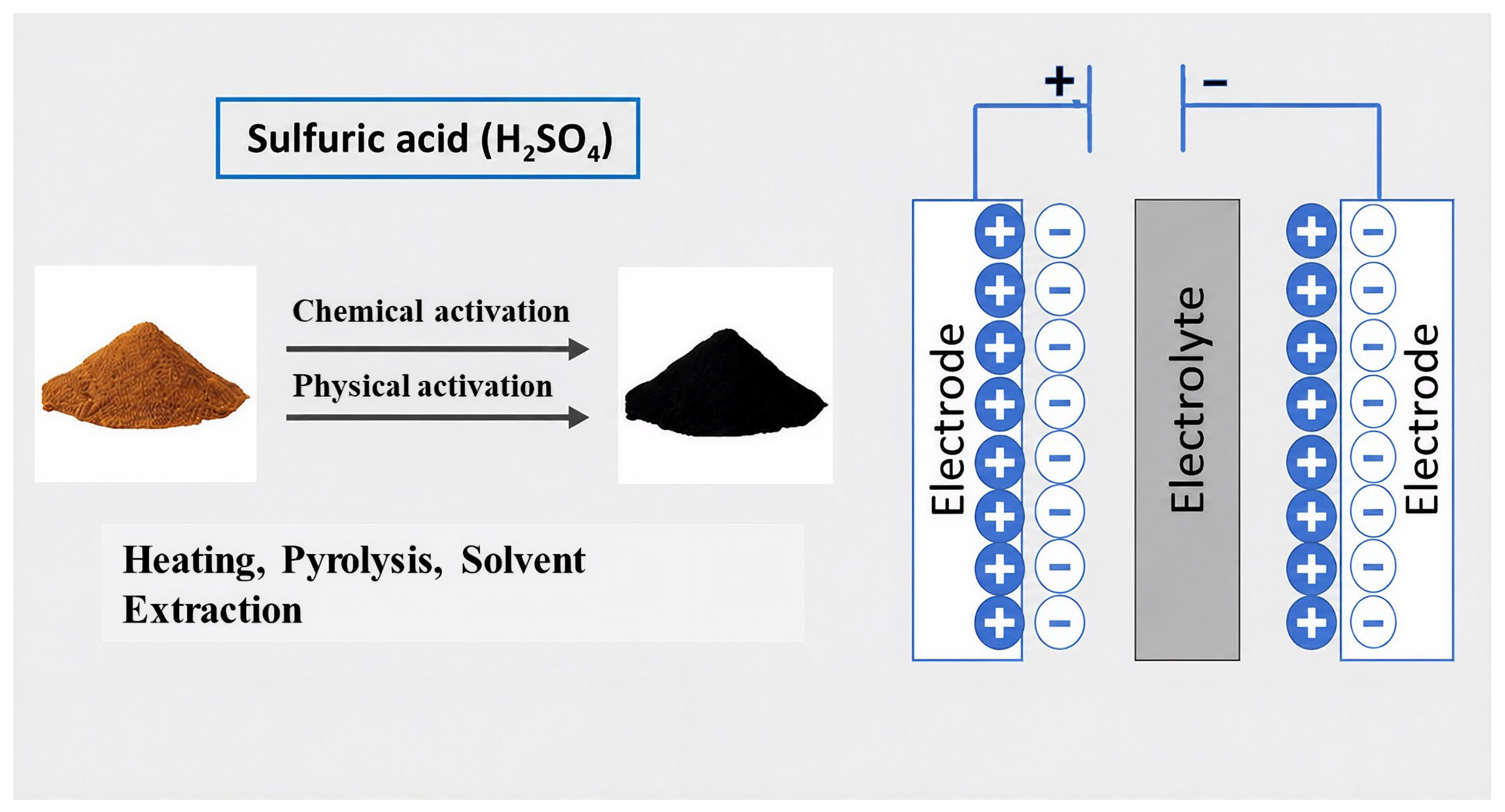
The dried hydrochar was subsequently subjected to chemical activation using sulfuric acid (H2SO4) (Figure 1). The material was impregnated with concentrated H2SO4 under continuous stirring to ensure uniform penetration of the activating agent [21,22,23]. The mixture was then thermally treated to promote dehydration, pore development, and surface functionalization.
After activation, the product was thoroughly washed with diluted acid solution followed by using deionized water until neutral pH conditions were attained. Subsequently, the activated product was oven-dried at 70 °C for 12 h to yield the final date seed-derived activated carbon (DSAC).The combined hydrothermal pretreatment and chemical activation process enhances the structural transformation of biomass, promotes the formation of a porous carbon framework, and introduces oxygen-containing functional groups, which are beneficial for electrochemical energy storage applications.

2.2.2. Acid Treatment and Dispersion of Date Seed Activated Carbon (DSAC)

Activated carbon was not synthesized via a sol–gel route. Instead, the prepared DSAC powder was dispersed in distilled water and subjected to acid-assisted mixing and post-treatment to improve homogeneity before device fabrication. Briefly, 5 g of date seed activated carbon powder was dispersed in 100 mL of distilled water in a 250 mL beaker and stirred continuously for 1 h to obtain a homogeneous suspension. The pH of the mixture was then adjusted by adding 0.5 mL of sulfuric acid (H2SO4) under continuous stirring for an additional 1 h.
To enhance particle distribution and ensure better homogeneity, the prepared suspension was ultrasonically treated for 30 min. The mixture was then centrifuged at 4000 rpm for 15 min to separate the solid phase. Afterwards, the collected material was repeatedly cleaned with distilled water to eliminate remaining impurities and residual reactants. The resulting AC/DS black powder was finally dried in an oven at 100 °C. Biomass by sulfuric acid is generally understood as a combination of dehydration, partial oxidation, cleavage of volatile components, and promotion of pore formation during thermal treatment. Sulfuric acid acts as a strong dehydrating agent and may also introduce oxygen-containing surface functionalities, which can contribute to wettability and electrochemical activity. Because the activation process involves complex parallel reactions rather than a single stoichiometric pathway, the mechanism is better described qualitatively in agreement with previous reports (Figure 2).
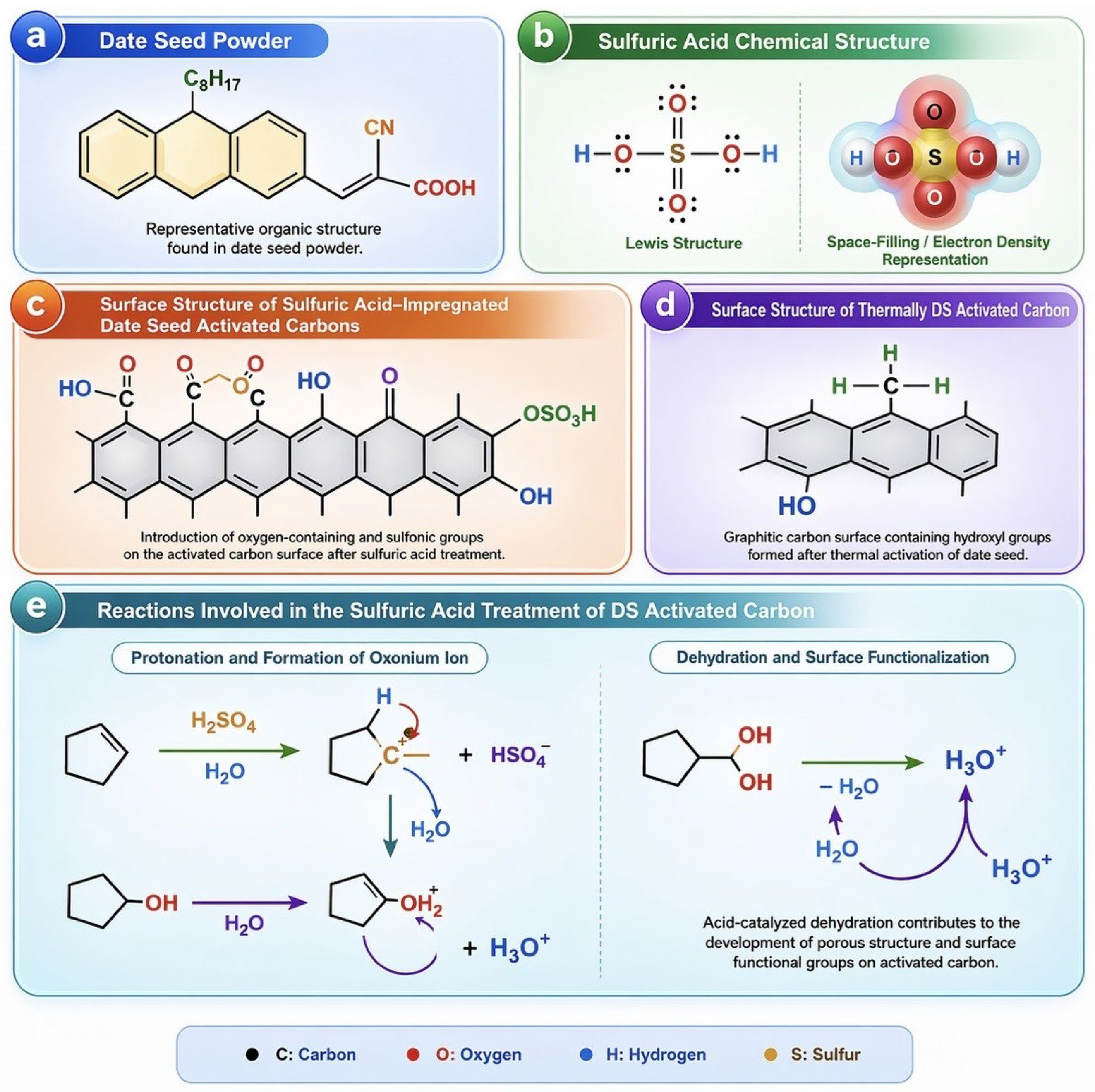
Based on Figure 2, the mechanism of chemical activation of date seeds (DS) using sulfuric acid (H2SO4) for the formation of oxygen-containing functional groups can be represented as follows:
[Cn Hx Oy] + H2SO4 → H2O + S (elemental) + [Cn Hx Oy+3]
At higher activation temperatures, elemental sulfur may vaporize and no longer block the pore entrances. Water vapor generated from the dehydration of sulfuric acid can partially gasify the carbon precursor, leading to the formation of internal porosity. The proposed gasification reaction is
H2O + [Cn Hx Oy] → H2 + CO + [Cn−1 Hx Oy]
In addition, sulfuric acid reacts with water according to
H2SO4 + H2O → H3O+ + HSO4−
As shown in Figure 2e, sulfuric acid reacts with water to form hydronium ions (H3O+) and bisulfate ions (HSO4). This protonation reaction occurs when sulfuric acid donates a proton (H+) to a water molecule. H2SO4 can strongly interact with water molecules within polymer networks of hydrogels, influencing their physicochemical properties. The interaction between H2SO4 and H2O also affects the thermal behavior of the binary H2SO4–H2O system.

2.2.3. Preparation of Date Seed Hydrogel Electrolyte

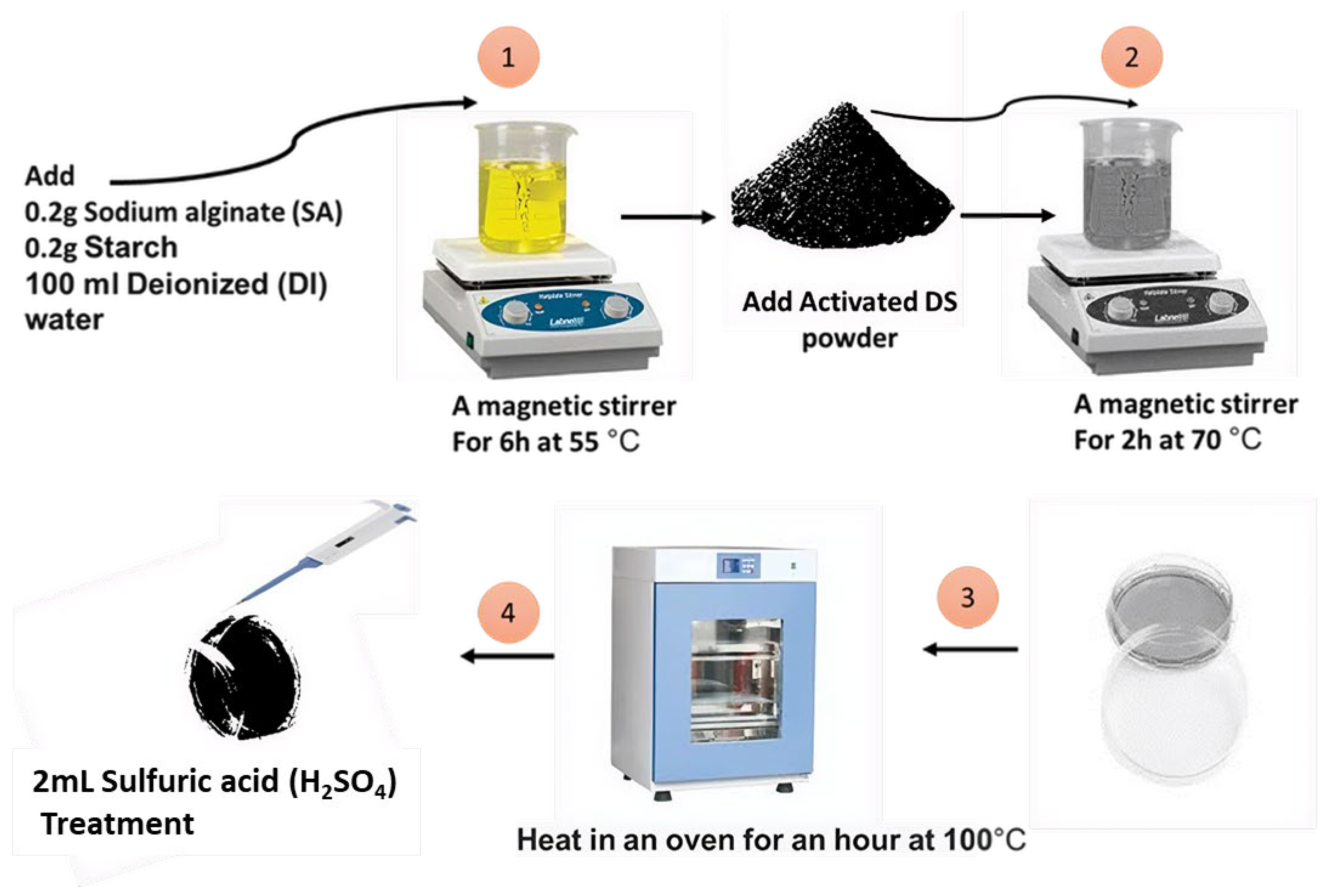
The polymer hydrogel electrolyte was prepared using DSAC as a functional component. The polymer matrix can be incorporated into DSAC through conventional hydrogel composite fabrication methods (Figure 3). However, weak interfacial interactions between the DS surface and polymer chains may result in limited structural stability of the hydrogel.
To enhance mechanical strength and stability, reinforcement strategies were employed. Organic materials, such as sodium alginate, were introduced as cross-linking agents. These agents can form covalent bonds with polymer chains, increasing the cross-linking density and improving the structural integrity of the hydrogel network. Adjusting the concentration of the cross-linking agent allows control over the stability and mechanical performance of the hydrogel.
Inorganic materials, particularly activated carbon, can also participate in cross-linked network formation through interactions with functional groups present on the DS surface, thereby enhancing the strength and stability of the hydrogel structure [24]. Cellulose and polymer chains contain abundant hydroxyl and carboxyl groups, which can coordinate with metal ions through reversible interactions, further strengthening the network [25]. Due to its high compatibility with cellulose-based systems, activated carbon plays a crucial role in the development of high-performance DS-based hydrogel electrolytes.

2.2.4. Properties of DS Hydrogels

The organized structure of cellulose microfibrils within date seeds (DS) plays an important role in the anisotropic characteristics observed in DS-derived hydrogels. Incorporating polymeric matrices along with organic or inorganic functional additives can further improve and tailor the performance of these hydrogels. Factors including the cellulose content, alignment of microfibrils, and intermolecular interactions between functional additives and the cell wall network strongly affect the hydrogel behavior at both microscopic and molecular scales.
In general, the characteristics of DS-based hydrogels can be classified into three major categories: mechanical behavior, optical performance, and electrical properties [26].
In addition to chemical cross-linking, physical cross-linking represents another effective method for hydrogel synthesis. In this approach, randomly distributed macromolecular chains are interconnected through physical interactions such as ionic cross-linking, van der Waals forces, and hydrogen bonding [27]. The cross-linking process typically involves physical phenomena including association, aggregation, entanglement, crystallization, and hydrogen bond formation. As a result, physically cross-linked networks are generally reversible. However, the temporary nature of physical junctions often leads to hydrogels with relatively weak mechanical strength [28].
Figure 4 illustrates the schematic preparation of the hydrogel network. Free radical polymerization is commonly used because of its low production cost and ease of handling. Nevertheless, chemically cross-linked networks formed through this method are often difficult to control precisely, and the resulting hydrogels may exhibit structural inhomogeneity, which reduces their water uptake capacity. Therefore, it is essential to develop an optimized and controllable strategy for fabricating high-performance supercapacitor systems [28].
FTIR spectra were recorded using a Fourier transform infrared spectrometer in transmission mode over the range of 4000–400 cm−1 with a resolution of 4 cm−1. XRD measurements were carried out using Cu Kα radiation (λ = 1.5406 Å) in scanning mode over a 2θ range of 10–80°. SEM images were obtained using a scanning electron microscope operated under high-vacuum mode. Electrochemical measurements were performed using a potentiostat/galvanostat system in three-electrode configuration. To ensure clarity and consistency throughout the manuscript, a nomenclature table is provided to define all abbreviations and terms used in this study. This avoids ambiguity, particularly in distinguishing between raw materials, activated carbon, hydrogel electrolytes, and device configurations.

3. Results and Discussion

3.1. Characteristics of DS and DSAC

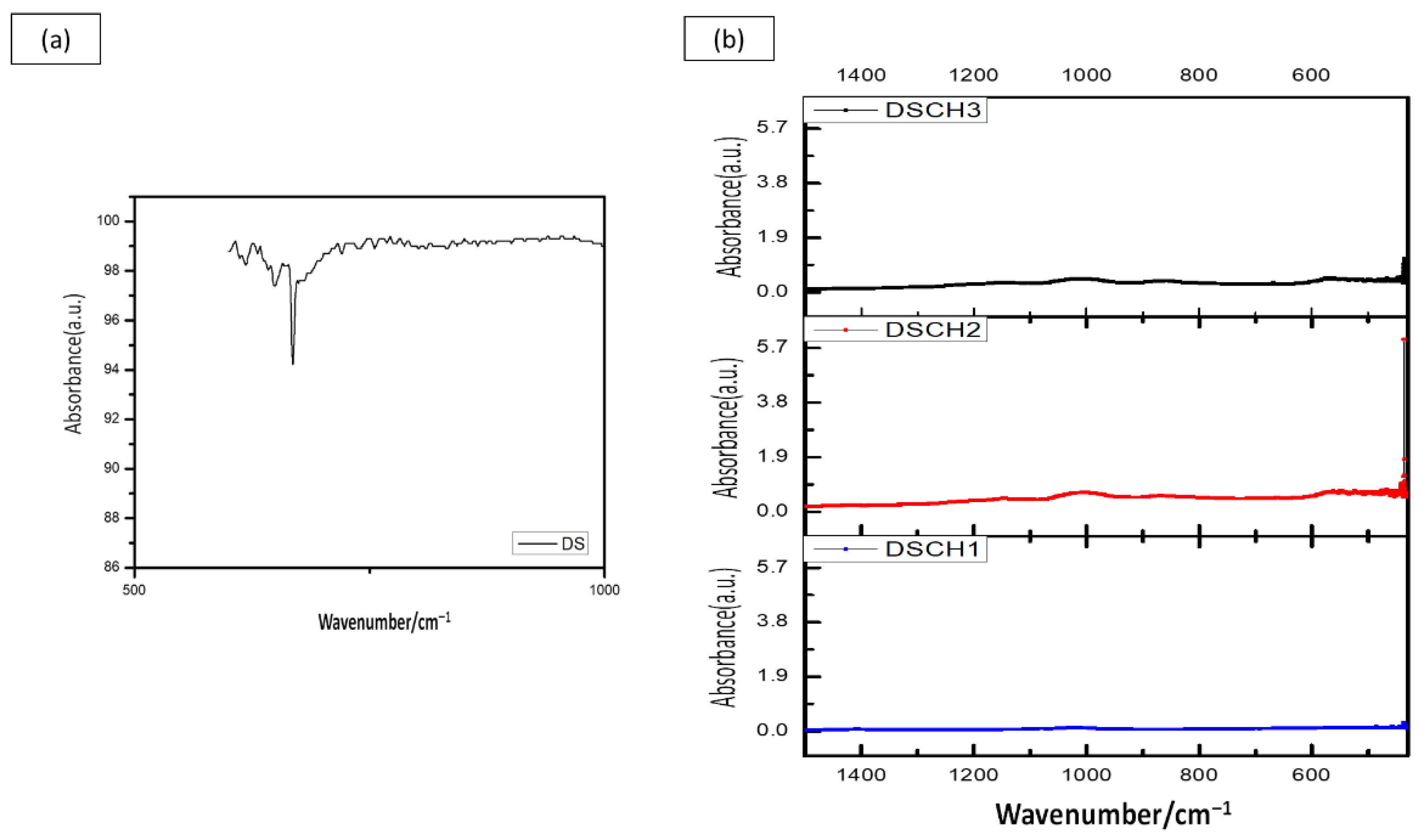
FTIR spectra were collected within the wavenumber range of 4000–400 cm−1 at a spectral resolution of 4 cm−1. XRD measurements were performed using Cu Kα radiation (λ = 1.5406 Å) across a 2θ range of 10–80° with a scanning speed of 2° min−1. FTIR analysis was applied to identify the surface functional groups present in the DSAC sample, since the electrochemical behavior of activated carbon is strongly influenced by its surface chemistry and functional moieties.
The FTIR spectrum of DSAC, shown in Figure 5, exhibits a broad absorption band near 3670 cm−1, corresponding to O–H stretching vibrations of hydroxyl groups. Peaks located between 2800 and 3000 cm−1 are related to symmetric and asymmetric C–H stretching modes. A distinct band around 1140 cm−1 is attributed to C–O–C stretching vibrations, reflecting the presence of ether-type linkages and carbon-rich structures. Moreover, the signal detected near 1070 cm−1 is associated with C–O stretching vibrations. Additional bands observed at 817 and 597 cm−1 are linked to C–O–O vibrational modes, indicating the successful incorporation of DS-derived structures within the activated carbon matrix [29].
Moreover, the FTIR spectra confirm the presence of HSO4 and SO42− ions in the samples, indicating the successful incorporation or interaction of sulfur-containing functional groups during the sulfuric acid activation process.
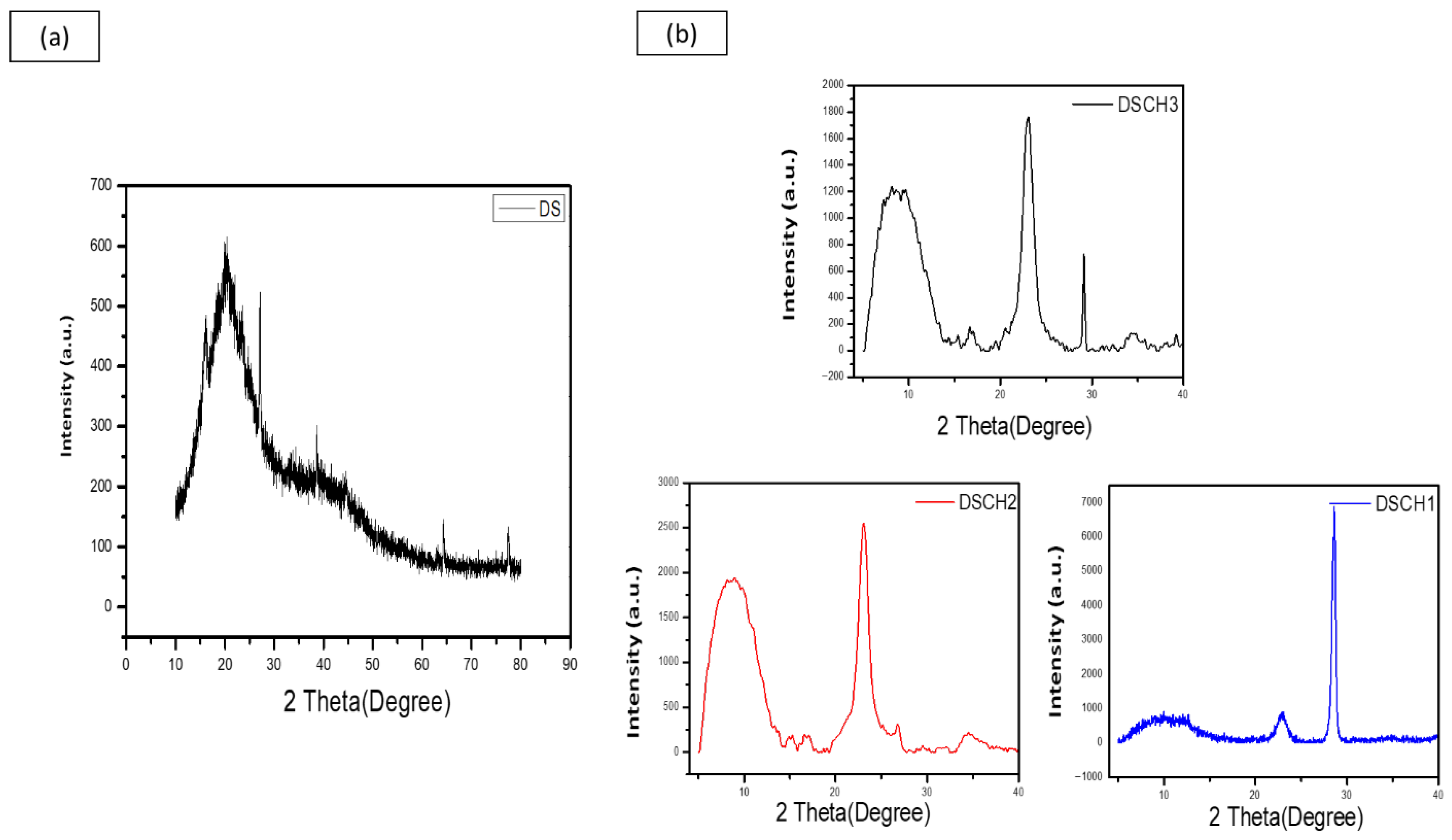
The XRD profile of the DSAC sample exhibited characteristic diffraction peaks at 2θ values of 25.34°, 37.73°, 47.90°, 53.82°, 54.89°, and 62.58°, as illustrated in Figure 6a [30]. These reflections can be indexed to the (101), (004), (200), (105), (211), (204), (116), (220), and (215) lattice planes associated with the anatase crystalline phase possessing a tetragonal structure. Additional characteristic reflections reported near 68.71°, 70.21°, and 75.07° further support the presence of the anatase phase [31]. Furthermore, the absence of diffraction peaks related to rutile or brookite structures indicates the high phase purity of the synthesized material [32]. In contrast, the XRD pattern of the AC/DS nanocomposite (Figure 6b) exhibits diffraction peaks at approximately 27 degrees, 33 degrees, 35 degrees, 41 degrees, 51 degrees, 62 degrees, and 64 degrees, indicating the formation of a composite crystalline structure.
The XRD pattern of the ACDS sample (Figure 6) further reveals a broad diffraction peak centered at 2 theta = 24 degrees, along with sharper peaks at 2 theta values of 44 degrees, 64.4 degrees, and 77.4 degrees. The appearance of these distinct peaks suggests that activation with H2SO4 enhances the structural ordering and crystallinity of the activated carbon. The increased crystallinity of ACDS is confirmed by the presence of relatively sharp and narrow diffraction peaks in the XRD pattern [33].
The XRD pattern of DSAC exhibits broad diffraction peaks centered around approximately 24° and 43°, which are characteristic of amorphous carbon structures. No crystalline phases such as TiO2 are present. The broad nature of the peaks indicates a low degree of graphitization and a predominantly disordered carbon framework.
The previously reported crystallite size values were re-examined, and the corresponding calculations have been corrected. The revised values are now presented using appropriate peak selection and Scherrer analysis parameters. In addition, the discussion has been moderated to avoid overinterpretation of the XRD data for partially amorphous activated carbon materials [34,35].
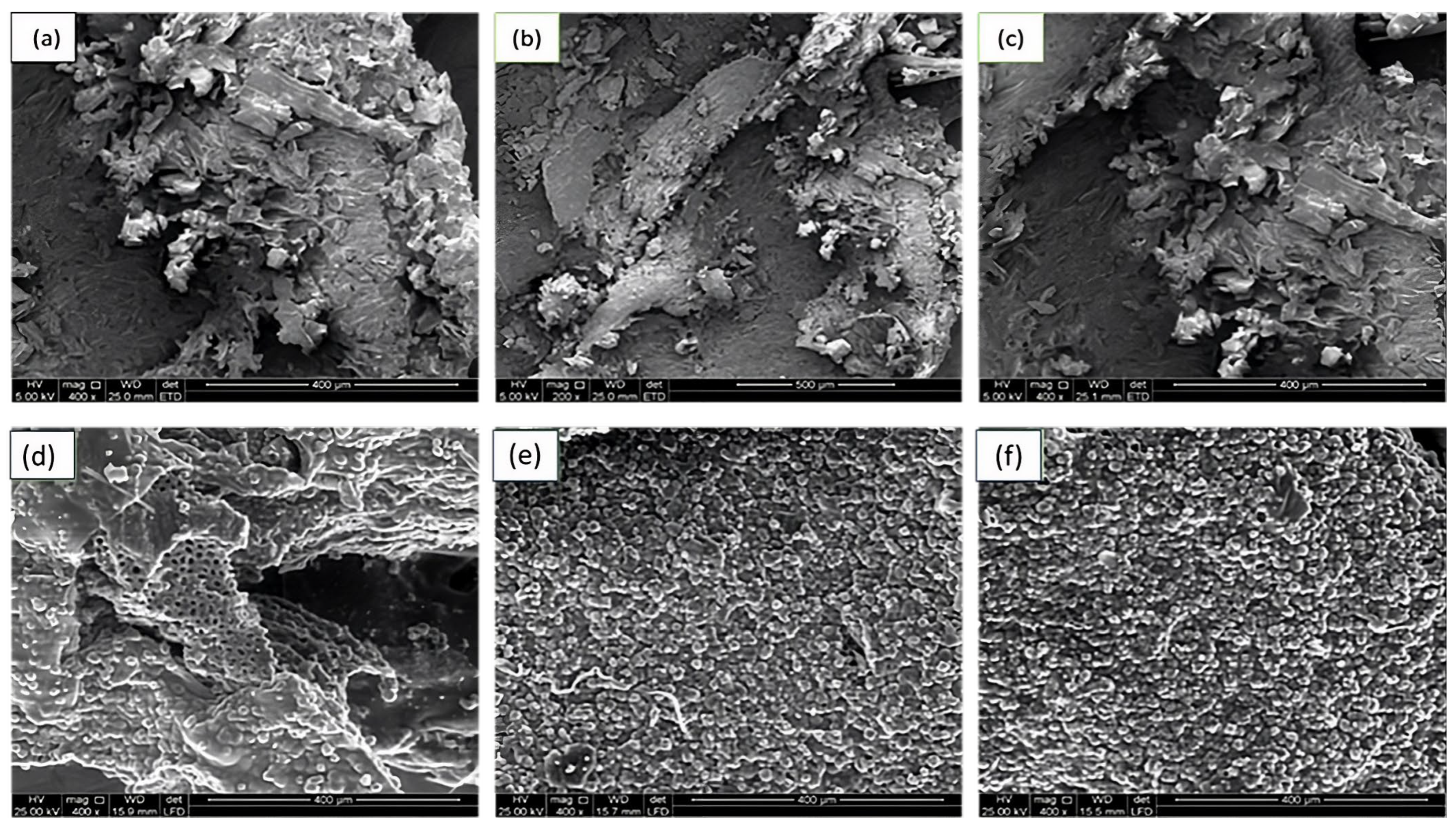
According to the SEM micrographs, the rough and porous surface of activated carbon (AC) results from the growth of DS on its surface. Most of the DS in the AC/DS composite was completely filled into the interstitial pores of the activated carbon particles (Figure 7a,b). AC possesses a highly porous microstructure in the mesoporous region, with irregularly sized and randomly distributed pores [36,37].
When activated carbon was incorporated into the hydrogel, the surface of the DS hydrogel (DSCH) exhibited a more uniform distribution and a well-defined spherical morphology. The surface roughness and morphological changes caused by the addition of carbon particles to the hydrogel demonstrate a distinctive structure, as revealed by the SEM images (Figure 7a–f).
With a further increase in the hydrogel concentration, agglomeration became clearly visible. In Figure 7c, the SEM image of AC/DS shows that the DSCH surface consists of spherical DS particles of varying sizes that are irregularly agglomerated on the AC surface.
SEM analysis of the electrode highlights the role of the binder, particularly its visibility and influence on the overall structure, morphology, and homogeneity of the DSACa composite. Figure 7a shows DSAC without the incorporation of any binder [38,39]. Figure 4 illustrates the surface morphology of the carbonized carbon sample. In Figure 7b,d, it is observed that both binders were homogeneously dispersed within the electrolyte material. The SEM image of DS reveals a network-like structure formed on the electrolyte surface.
The SEM micrographs reveal the significant formation of micro- and mesoporous structures, which are expected to contribute to the enlarged surface area of the material [40,41]. In addition, the observed rough and porous surface morphology indicates favorable textural characteristics for electrochemical applications. However, accurate determination of the specific surface area and pore-size distribution would require BET characterization, which was not included in this study.
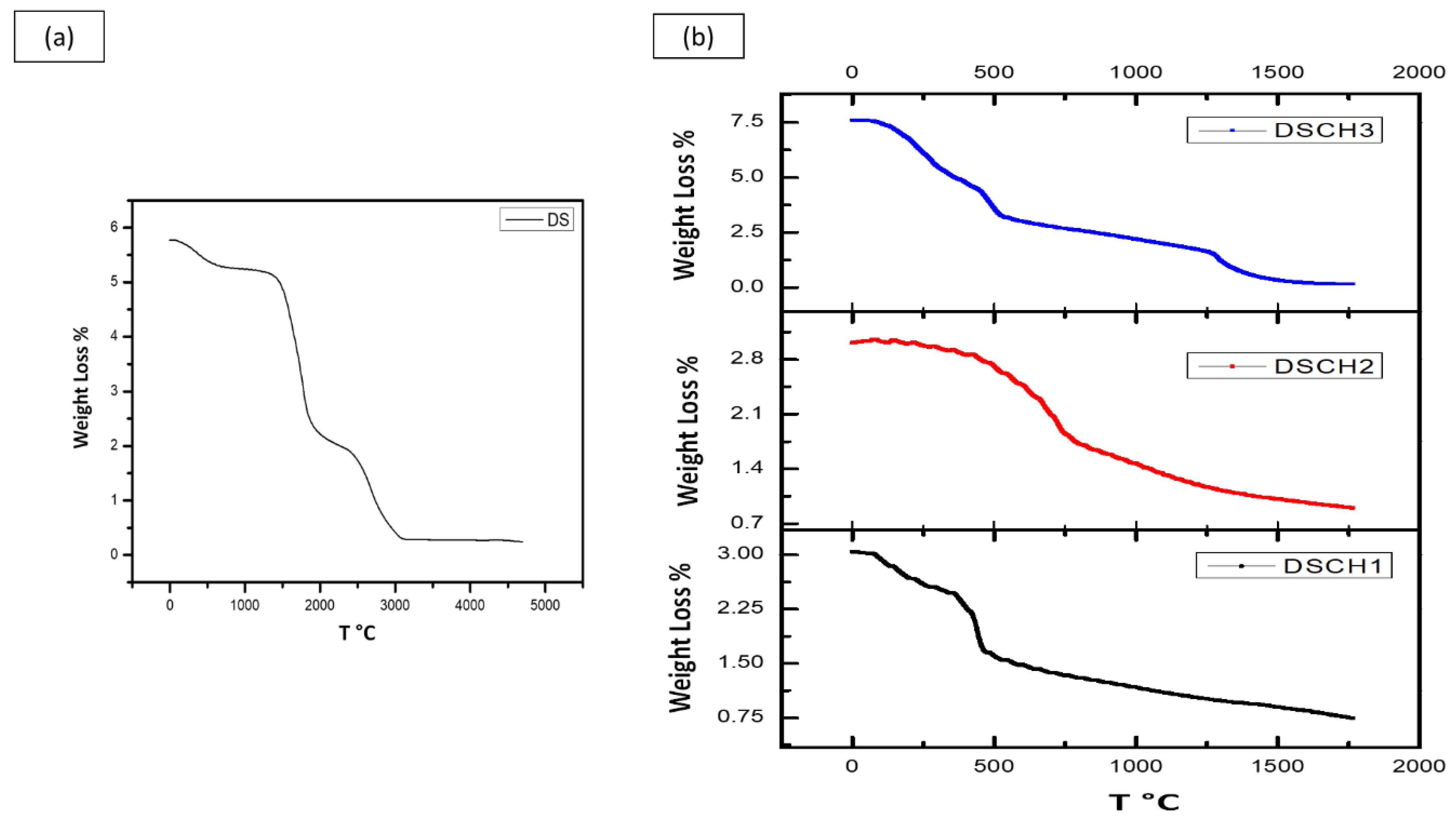
Thermogravimetric analysis (TGA) was performed to evaluate the thermal stability and decomposition behavior of the raw date seeds (DS), and the results are presented in Figure 8a. The TGA curve shows an initial weight loss below approximately 220 °C, which is mainly due to the removal of physically adsorbed water, moisture, and low-molecular-weight volatile components.
A more pronounced weight loss is observed at higher temperatures, corresponding to the thermal decomposition of lignocellulosic constituents such as hemicellulose and cellulose, followed by gradual carbonization [42,43,44]. A residual yield of approximately 27.5% at intermediate temperatures indicates the formation of a stable carbonaceous structure.
To further understand the thermal degradation behavior, the derivative thermogravimetric (DTG) curve was analyzed, as shown in Figure 8b. The DTG profile exhibits distinct peaks corresponding to different decomposition stages. The initial peak is associated with moisture evaporation and the release of light volatile compounds. A major peak in the intermediate temperature region corresponds to the decomposition of hemicellulose and cellulose, while a broader peak at higher temperatures is due to the gradual degradation of lignin and the formation of a carbon-rich residue [45,46,47].
The presence of multiple DTG peaks confirms the multi-step decomposition behavior of the biomass precursor and supports the formation of a thermally stable carbon framework suitable for subsequent activation and energy storage applications.
Upon carbonization, most functional groups disappeared or were markedly diminished as a result of the thermal decomposition of the existing chemical species. For example, the FTIR spectra revealed the complete elimination of polar functional groups such as –OH and –C=O, confirming the successful conversion into carbonaceous materials [48]. In addition, the –CH and benzene ring peaks remained detectable, although with lower intensity [49,50].

3.2. Electrodes Performance

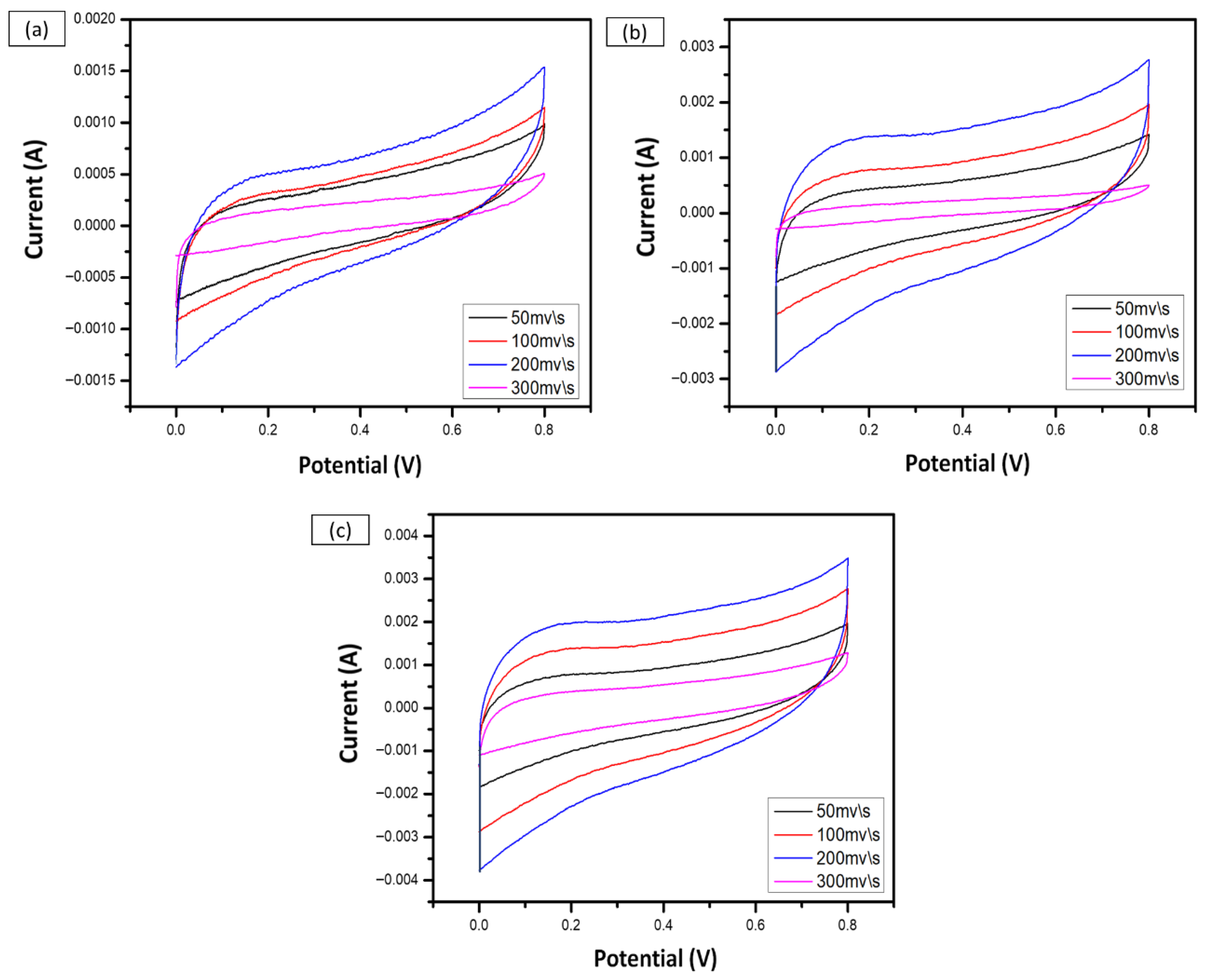
The charge-storage characteristics of the H2SO4-activated date-seed carbon electrode and the prepared electrolyte system were analyzed through cyclic voltammetry (CV) measurements, as presented in Figure 9. The CV profiles obtained at different scan rates displayed quasi-rectangular shapes, which are characteristic of electric double-layer capacitance (EDLC) behavior. As the scan rate increased from 50 to 300 mV s−1, the corresponding current response also increased, indicating efficient ion diffusion and rapid charge-transfer kinetics at higher scanning conditions.
CV investigations were further carried out using several polymer hydrogel electrolytes in a two-electrode configuration, and the obtained results were compared with those of the aqueous H2SO4 electrolyte. The recorded CV curves within a voltage window of approximately 0.8 V maintained their nearly rectangular geometry, confirming good capacitive behavior and fast electrochemical response. A noticeable enhancement in current response was observed after replacing the aqueous electrolyte with hydrogel-based systems. Among the investigated electrolytes, the DSCH3-based device exhibited the most stable and well-defined rectangular CV profile, suggesting dominant EDLC characteristics and improved electrochemical stability [51,52,53,54].
The energy density (E) and power density (P) were estimated according to the following equations:
E = 1\2 Cs (ΔV)2/3.6
P = {E × 3600}\{Δt}
where E represents the energy density (Wh kg−1), P denotes the power density (W kg−1), C_s is the specific capacitance (F g−1), ΔV corresponds to the operating voltage window (V), and Δt refers to the discharge time (s).
Although the specific capacitance reached 179 F g−1, the short charge–discharge duration observed in the GCD curves indicates that the device performance should be interpreted in relation to the applied current density and active material loading. Therefore, the present system is more appropriately described as exhibiting moderate capacitance with good stability, rather than exceptionally high capacitive performance.
The enhanced electrochemical performance is likely associated with the synergistic interaction between the porous activated carbon structure and the hydrogel electrolyte system. The high surface area and interconnected pore architecture promote efficient ion transport and enhanced charge storage at the electrode–electrolyte interface. Meanwhile, the hydrogel electrolyte provides a continuous ionic conduction pathway, improving ion mobility and reducing internal resistance. This combination leads to enhanced capacitive behavior and stable cycling performance.
Galvanostatic charge–discharge (GCD) measurements were also performed to evaluate the electrochemical performance of activated carbon in a symmetric capacitor configuration using different hydrogel polymer electrolytes [55,56,57,58].
The specific capacitance from galvanostatic charge–discharge curves was calculated using the following equation:
Cs = {I Δt}\{m ΔV}
Here, Cs represents the specific capacitance (F g−1), I denotes the discharge current (A), Δt is the discharge duration (s), m corresponds to the mass of the electroactive material in a single electrode or the total active mass depending on the device configuration, and ΔV refers to the effective potential window after excluding the IR drop.
The obtained charge–discharge curves exhibited nearly symmetric quasi-triangular profiles with slight voltage plateaus, confirming the proposed charge-storage mechanism. At lower current densities, the charging and discharging processes occurred more gradually than at higher current densities. Increasing the applied current density promoted rapid charge accumulation at the electrode/electrolyte interface, facilitating electrostatic adsorption of oppositely charged ions and formation of the electric double layer before faradaic reactions were fully completed [59,60,61]. Conversely, lower current densities provide longer interaction times, allowing electrochemical reactions to contribute more effectively to the overall charge-storage process.
At a current density of 1 A g−1, the fabricated devices exhibited highly symmetric triangular GCD profiles, indicative of ideal capacitive behavior and good electrochemical reversibility [62,63] (Figure 10a). The DSAC electrode showed reduced discharge times with increasing current density, demonstrating acceptable rate capability (Figure 10b), while maintaining high capacitance retention during cycling, confirming excellent electrochemical stability and durability (Figure 10c). These favorable electrochemical characteristics contribute to enhanced energy storage performance, including improved energy and power density of the supercapacitor system [64,65].
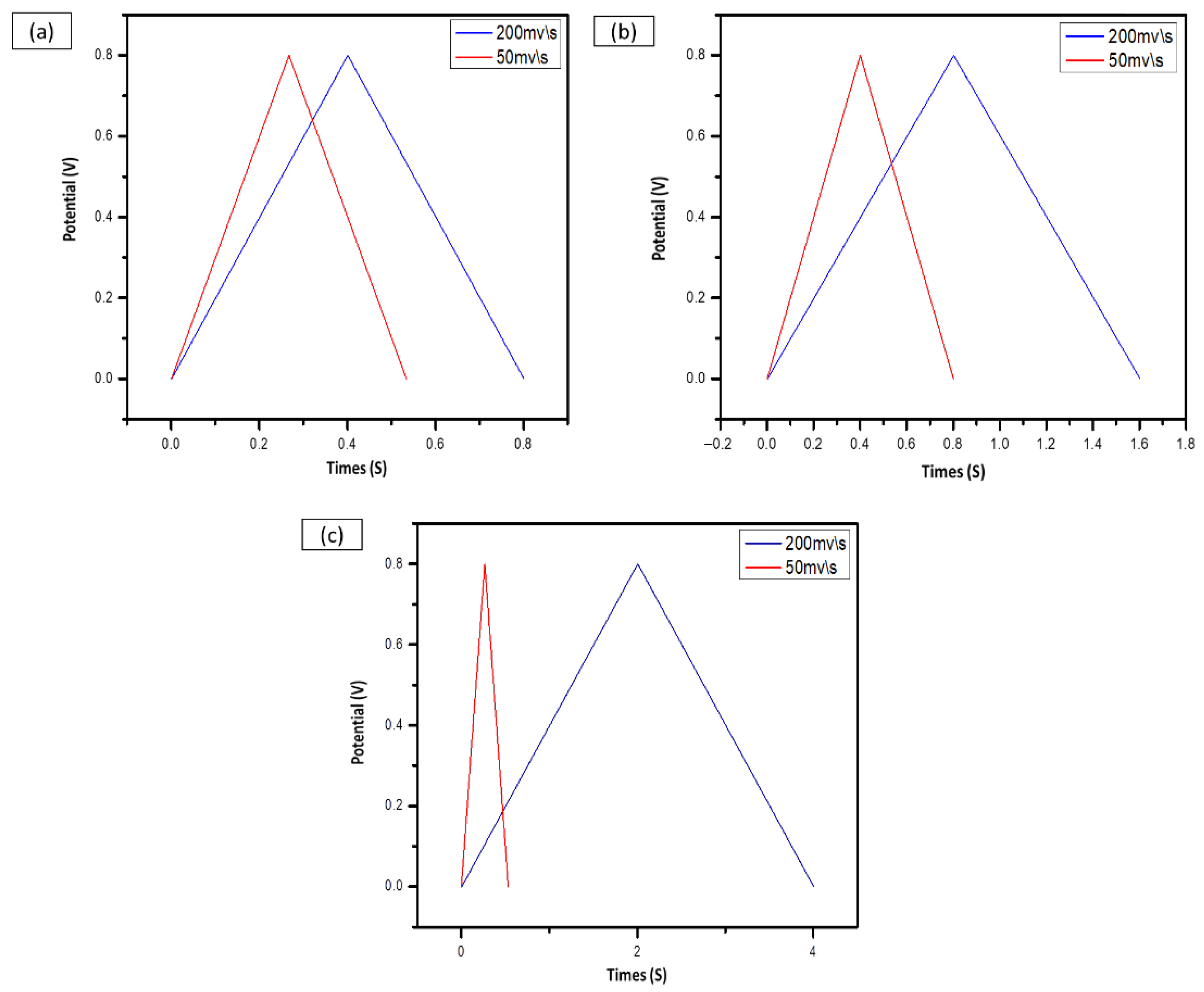
Galvanostatic charge–discharge (GCD) measurements were performed to evaluate the electrochemical performance of the activated carbon in a symmetric supercapacitor configuration employing different hydrogel polymer electrolytes., as shown in Figure 11.
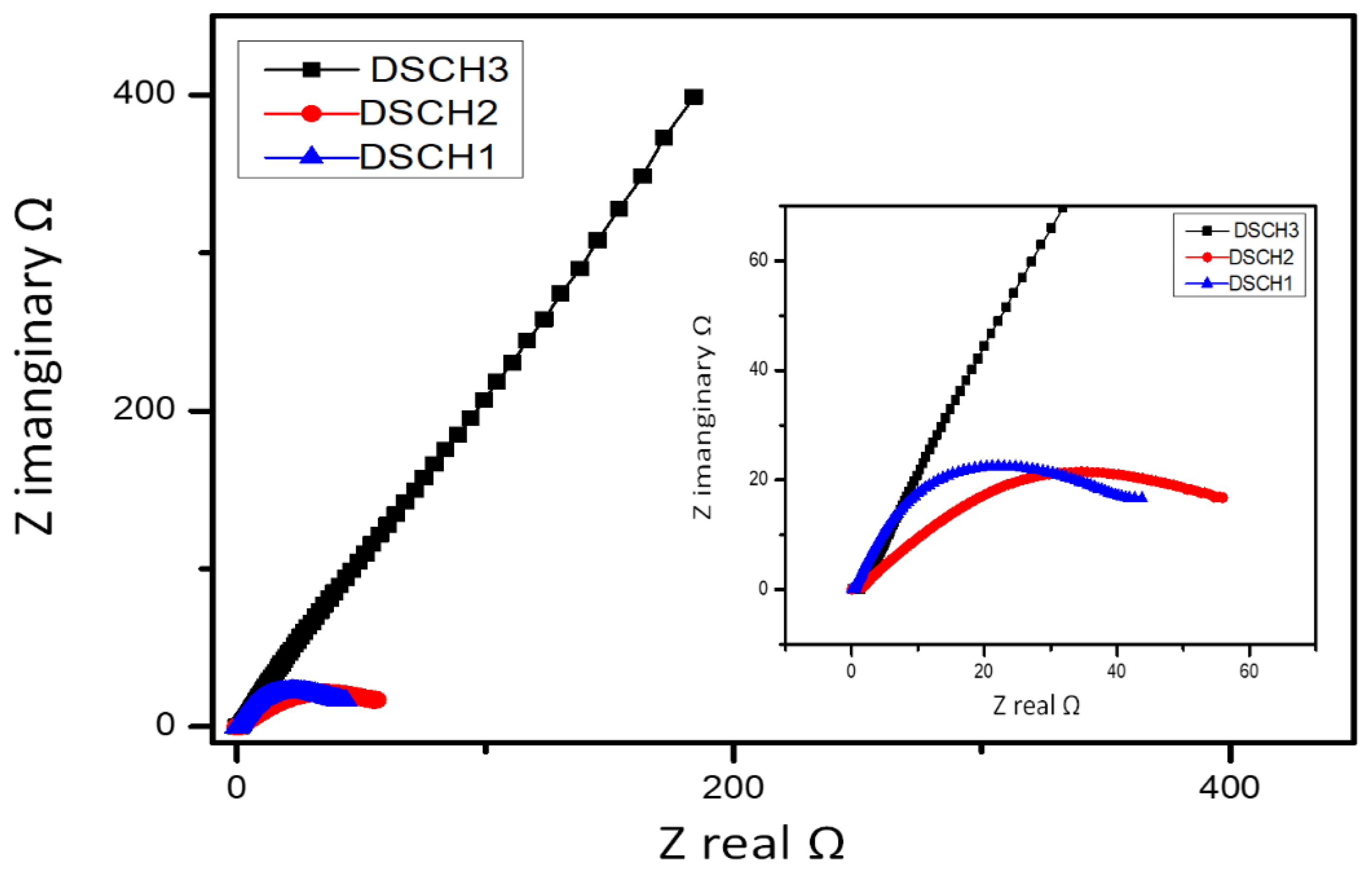
To further evaluate the impedance behavior, the Nyquist plots were fitted using an equivalent circuit model comprising solution resistance (Rs), charge-transfer resistance (Rct), constant phase element (CPE), and Warburg diffusion element (W) (Figure 12). The fitted parameters provided additional insight into ion transport dynamics and interfacial charge-transfer processes within the investigated systems. The impedance spectra of the as-synthesized hydrogel polymer electrolytes are presented in Figure 13. The typical Nyquist plot consists of a small semicircle at high frequencies, which corresponds to ionic transport and charge-transfer resistance, and a linear region at low frequencies, which is associated with the interface between the electrolyte and the electrode.
The ionic conductivity (σ) of the electrolytes at different temperatures can be calculated using the following equation [66]:
σ = d/(A × Rb)
where A is the surface area of the electrodes, d is the distance between the positive and negative electrodes, and Rb is the bulk resistance of the electrolyte.
The DSCH3 electrolyte exhibited a more vertical line in comparison with DSCH1 and DSCH2, as shown in the figure. This behavior is attributed to its higher ionic conductivity, thereby demonstrating improved electrochemical diffusion characteristics [67].
At high-frequency regions, the intercept observed on the real axis (Z′) of the Nyquist plot corresponds to the ohmic resistance (R_s), commonly referred to as the equivalent series resistance (ESR) of the supercapacitor device [68]. This resistance arises from the combined contributions of the electrode material, substrate, electrolyte, and the interfacial contact resistance between the electrodes and the external circuit [69].
The electrochemical impedance spectroscopy (EIS) results were interpreted using an equivalent circuit consisting of R_s, R_{ct}, CPE, and Warburg (W) components. The R_s parameter reflects the total series resistance associated with the electrolyte, electrode material, current collector, and contact interfaces. Meanwhile, R_{ct} represents the charge-transfer resistance occurring at the electrode/electrolyte boundary. A constant phase element (CPE) was employed instead of an ideal capacitor to describe the non-ideal capacitive response resulting from surface irregularities, pore-size variation, and structural heterogeneity within the activated carbon electrode. The Warburg element accounts for ion diffusion through the porous electrode framework. The comparatively low R_s value measured for the DSCH3 based device suggests enhanced ionic transport and lower internal resistance, indicating improved ion mobility across the hydrogel electrolyte and electrode interface.
The energy density and power density were calculated using the following equations:
E = 1/2 Cs(ΔV)2/3.6
P = E × 3600/Δt
where E is the energy density in Wh kg−1, P is the power density in W kg−1, Cs is the specific capacitance in F g−1, ΔV is the operating voltage window after excluding the IR drop, and Δt is the discharge time in seconds. These parameters indicate that the energy density mainly depends on the specific capacitance and voltage window, whereas the power density is strongly influenced by the discharge time. Therefore, although the DSAC-based device shows promising capacitive behavior and good cycling stability, the short discharge duration observed in the GCD curves suggests that the device performance should be interpreted as moderate but stable for a biomass-derived carbon/hydrogel supercapacitor system.
From the Nyquist plot, the device with the DSCH3 electrolyte exhibited an Rs value of 0.26 Ω. This low resistance value confirms that charge carriers can efficiently diffuse through the electrode–electrolyte interface, due to the high mobility of SO42− ions [70]. The devices fabricated with DSCH1 and DSCH2 hydrogel electrolytes showed higher Rs values of 0.59 Ω and 0.74 Ω, respectively. Among them, the DSCH1-based device exhibited a relatively lower resistance compared to the other two gel electrolytes (Figure 12) [71].
The highest capacitance observed for the supercapacitor using the hydrogel polymer electrolyte containing 2 wt.% H2SO4 corresponds to the lowest ohmic resistance of the electrolyte. As discussed earlier, this low resistance is attributed to the enhanced ionic transport facilitated by the abundant –OH groups along the H2SO4-based hydrogel network, which promotes rapid ion mobility throughout the electrolyte matrix.
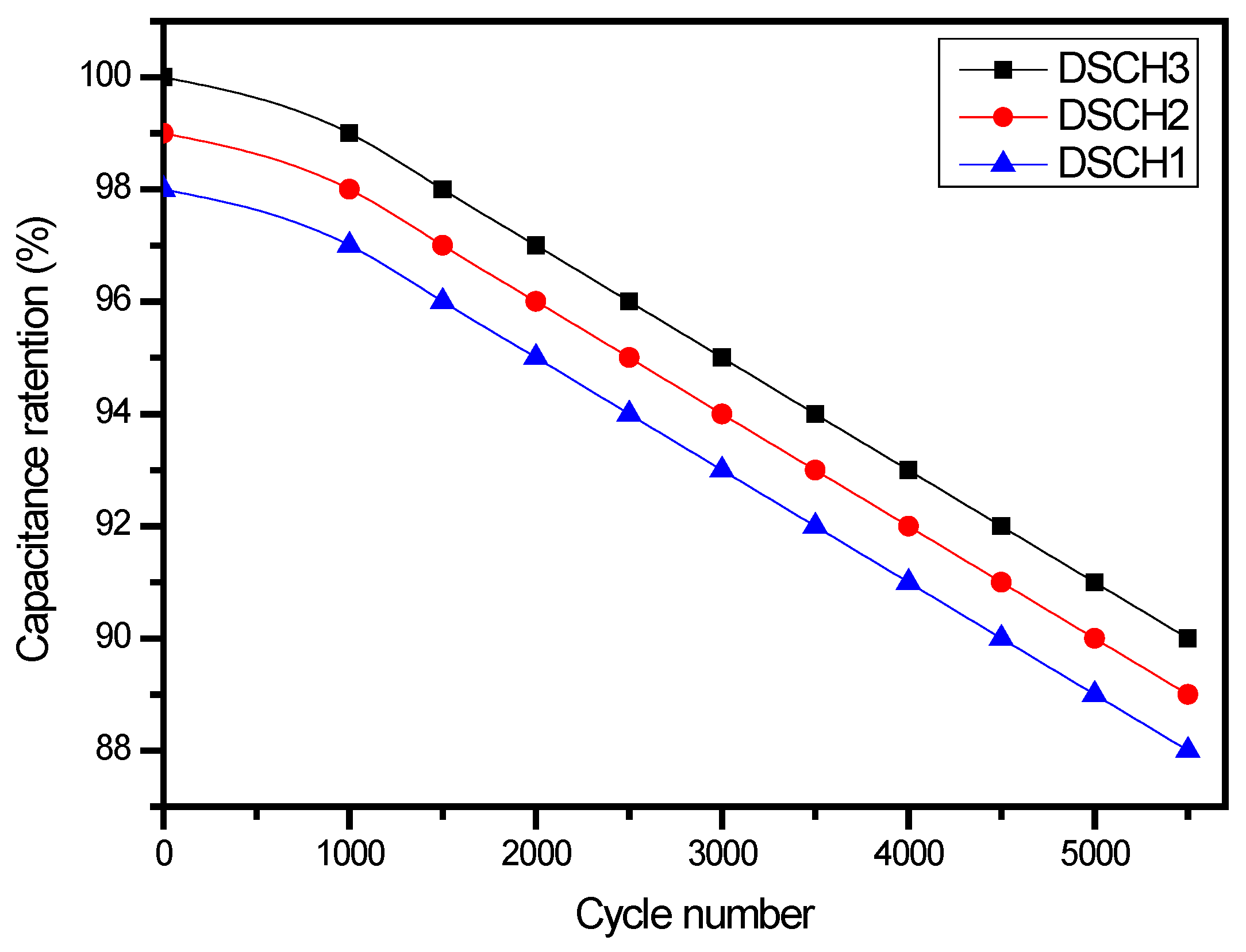
As shown in Figure 13, the cycling stability of the DSCH-based supercapacitors (DSCH1, DSCH2, and DSCH3) was evaluated over 5500 charge–discharge cycles. All samples decrease gradually in capacitance retention with the increasing cycle number. Among them, DSCH3 shows the highest stability, retaining approximately ~90% of its initial capacitance after 5500 cycles, followed by DSCH2 and DSCH1. The enhanced cycling performance of DSCH3 can be explained by its enhanced structural integrity and more efficient ion transport within the electrode–electrolyte system.
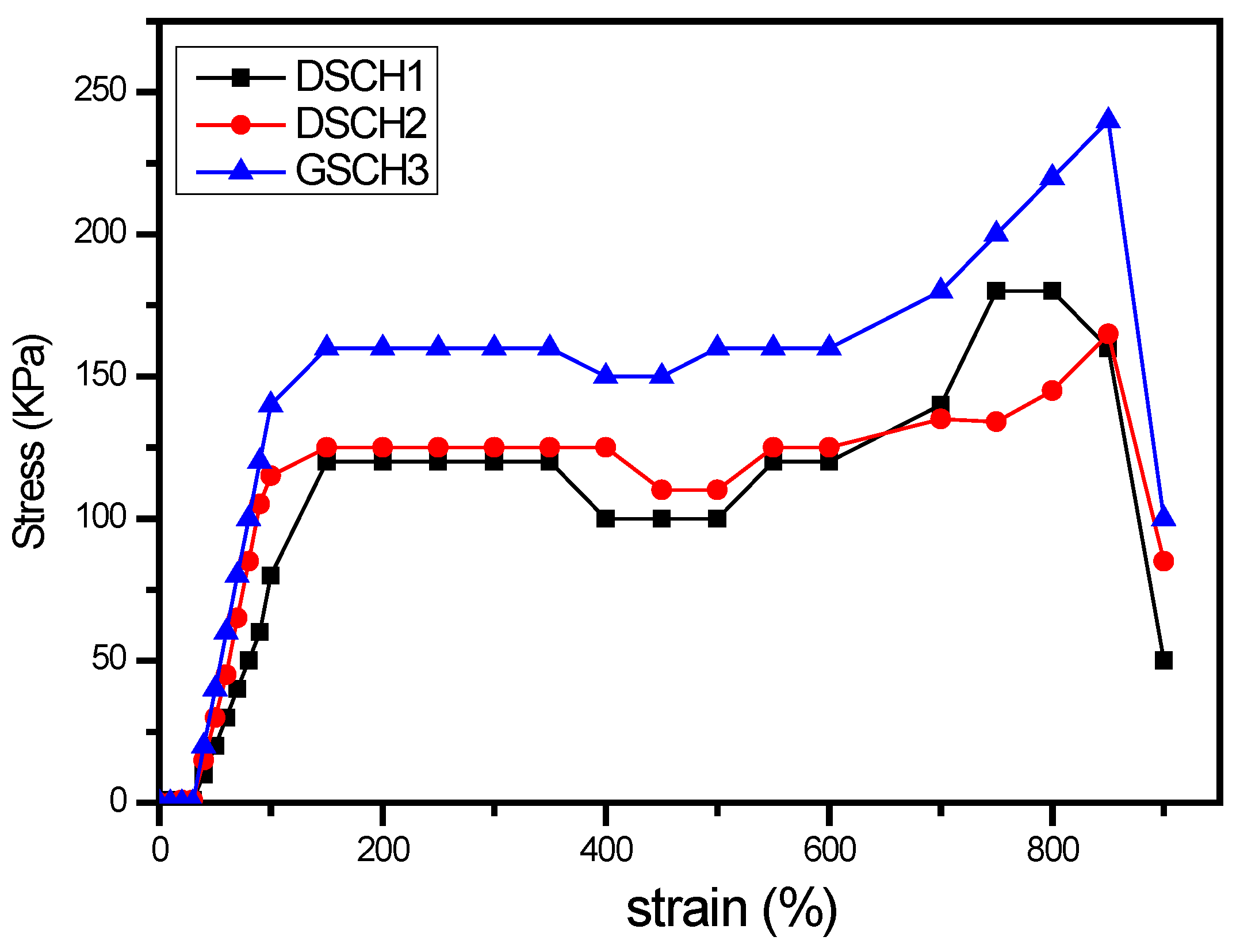
Tensile tests were performed on DSCH1, DSCH2, and DSCH3 to evaluate their mechanical properties, as shown in Figure 14. The results indicate that DSCH3 achieved a maximum strain of 884% at a stress of 254.23 kPa. In comparison, the DSCH1 electrolyte exhibited a strain of 861.8% at a stress of 224 kPa. The tensile test results demonstrate that DSCH3 possesses superior mechanical performance.
Moreover, the tensile strength of DSCH2 was higher than that of the DSCH1 electrolyte, which can be attributed to the enhanced physical cross-linking within the H2SO4 hydrogel membrane [72,73]. The high strain capacity of DSCH3 under elevated stress is mainly due to the excellent elongation of the polyacrylic acid polymer chains, as well as the formation of a three-dimensional network structure after cross-linking with H2SO4. This structure effectively improves the tensile strength of the hydrogel polymer DS [74,75,76].
During the tensile test, both ends of the hydrogel electrolyte were fixed to the clamps of an electronic tensile testing machine. The stress–strain curves of the hydrogel electrolyte were recorded, and the mechanical efficiency (η, %) was determined using the following equation [72]:
η = Th\T0 × 100%
where T0 and Th are the tensile strength of the DSCH1, DSCH2, DSCH3, respectively.
To better position the electrochemical performance of the present system, a comparison with recently reported biomass-derived carbon-based supercapacitors has been included. While the specific capacitance obtained in this work is moderate compared with some highly engineered carbon systems, the present material offers advantages in terms of low-cost precursor availability, a simple processing route, and environmentally friendly hydrogel-based electrolyte integration.

4. Conclusions

This work presents an economical and straightforward approach for synthesizing highly porous activated carbon from waste date seeds as a sustainable biomass precursor. The produced activated carbon obtained from date palm seeds was successfully utilized as an electrode material for supercapacitor applications. A low-temperature hydrothermal activation strategy combined with chemical treatment was employed to prepare the carbon material, leading to the development of an amorphous carbon structure with relatively uniform surface characteristics. SEM observations confirmed that the activated DS material possessed a compact yet highly porous morphology generated through the activation process. Among the hydrogel electrolyte-based devices, the system incorporating DSACS demonstrated the best performance. This enhancement is likely associated with the addition of activated carbon, which enhances the conductivity of the DSCH electrolyte, therefore enhancing its capacitance value. The lower specific capacitance values observed when using the DSCH3 electrolyte compared to the aqueous electrolyte may be due to the increased viscosity of the gel electrolyte. Higher viscosity reduces ion mobility and conductivity, thereby limiting the ability of ions to penetrate and occupy the micropore volume of the electrodes. Overall, the results indicate moderate capacitance and promising cycling stability, supporting the feasibility of the proposed biomass-derived carbon/hydrogel system for sustainable supercapacitor applications.
Although electrical conductivity measurements were not conducted in this study, activated carbon is considered a more conductive additive than DSCH1 and DSCH2, which were used as additives in the DS electrolyte, as evidenced by the low equivalent series resistance (RS). The introduction of H2SO4 solution into the activated carbon pores led to a significant reduction in surface area and microporosity. It also influenced the pore-size distribution within the mesoporous and macroporous regions. Overall, the results indicate that porous carbon composites derived from biomass are cost-effective, technologically promising, and environmentally friendly materials for supercapacitor applications.

Author Contributions

N.B.: Conceptualization, methodology, software, formal analysis, investigation, data curation, visualization, writing—original draft preparation. A.K.: writing—review and editing, supervision, project administration, funding acquisition All authors have read and agreed to the published version of the manuscript.

Funding

This work was supported by the Deanship of Scientific Research, Vice Presidency for Graduate Studies and Scientific Research, King Faisal University, Saudi Arabia [Grant No. KFU262589].

Informed Consent Statement

Not applicable.

Data Availability Statement

The original contributions presented in this study are included in the article. Further inquiries can be directed to the corresponding authors.

Acknowledgments

This work was supported by the Deanship of Scientific Research, Vice Presidency for Graduate Studies and Scientific Research, King Faisal University, Saudi Arabia [Grant No. KFU262589].

Conflicts of Interest

The authors declare no conflicts of interest.

Abbreviations

AbbreviationDefinition
DSRaw date seed
DSACDate seed activated carbon
DSCHDate seed-based hydrogel electrolyte
AC/DSActivated carbon/date seed composite electrode
HydrocharHydrothermally treated date seed precursor
ElectrodeFabricated working electrode using DSAC
DeviceAssembled supercapacitor system

References

  1. Said, B.; Bacha, O.; Rahmani, Y.; Harfouche, N.; Kheniche, H.; Zerrouki, D.; Belkhalfa, H.; Henni, A. Activated carbon prepared by hydrothermal pretreatment-assisted chemical activation of date seeds for supercapacitor application. Inorg. Chem. Commun. 2023, 155, 111012. [Google Scholar] [CrossRef]
  2. Dubey, P.; Maheshwari, P.H.; Mansi; Shrivastav, V.; Sundriyal, S. Effect of nitrogen and sulphur co-doping on the surface and diffusion characteristics of date seed-derived porous carbon for asymmetric supercapacitors. J. Energy Storage 2023, 58, 106441. [Google Scholar] [CrossRef]
  3. Ennabely, M.; Lghazi, Y.; Ouedrhiri, A.; El Adnani, R.; Aynaou, A.; Youbi, B.; Bimaghra, I. High-performance supercapacitor electrodes using activated carbons from argan husks, date seeds and olive stones. J. Electrochem. Sci. Eng. 2024, 14, 535–546. [Google Scholar] [CrossRef]
  4. Alazmi, A.; Nicolae, S.A.; Modugno, P.; Hasanov, B.E.; Titirici, M.M.; Costa, P.M.F.J. Activated carbon from palm date seeds for CO2 capture. Int. J. Environ. Res. Public Health 2021, 18, 12142. [Google Scholar] [CrossRef]
  5. Alhebshi, N.A.; Salah, N.; Hussain, H.; Salah, Y.N.; Yin, J. Structural and electrochemical properties of activated carbon nanoparticles for supercapacitors. Nanomaterials 2021, 12, 122. [Google Scholar] [CrossRef] [PubMed]
  6. Alazmi, A. Synergistic effect of hydrothermal and physical activation approaches to fabricate activated carbon for energy storage applications. Ceram. Int. 2022, 48, 22131–22140. [Google Scholar] [CrossRef]
  7. Akhter, P.; Idrees, M.; Chaudry, H.A.; Tahir, M.; Hussain, M. Date seed-derived activated carbon functionalized with TiO2 nanocomposite for visible light-driven degradation of rhodamine B. J. Mol. Struct. 2025, 1319, 139604. [Google Scholar] [CrossRef]
  8. El-Aryan, Y.F.; Melhi, S.; Ahmed, I.M.; El-Ossaily, Y.A.; Ali, H.M.; El-Gammal, B.; Bedair, M.A. Adsorption of lanthanum(III), samarium(III), and cerium(III) using activated carbon derived from date seeds. Inorg. Chem. Commun. 2024, 163, 112331. [Google Scholar] [CrossRef]
  9. Singh, P.; Singh, R.; Borthakur, A.; Srivastava, P.; Srivastava, N.; Tiwary, D.; Mishra, P.K. Effect of nanoscale TiO2–activated carbon composite on seed germination. Energy Ecol. Environ. 2016, 1, 131–140. [Google Scholar] [CrossRef]
  10. Liu, M.; Wang, Y.; Wang, H.; Qi, L.; Shang, Y.; Song, J.; Feng, X.; Chen, Y.; Memon, W.A.; Shen, Y.; et al. Electret-inspired charge-injected hydrogel for burn healing. Adv. Sci. 2025, 12, 2411889. [Google Scholar] [CrossRef]
  11. Echegaray, N.; Gullón, B.; Pateiro, M.; Amarowicz, R.; Misihairabgwi, J.M.; Lorenzo, J.M. Date fruit and by-products as bioactive sources: A review. Food Rev. Int. 2023, 39, 1411–1432. [Google Scholar] [CrossRef]
  12. Zhao, J.; Gong, J.; Wang, G.; Zhu, K.; Ye, K.; Yan, J.; Cao, D. Self-healing hydrogel electrolyte for flexible supercapacitors. Chem. Eng. J. 2020, 401, 125456. [Google Scholar] [CrossRef]
  13. Elnajjar, E.; Al-Zuhair, S.; Hasan, S.; Almardeai, S.; Al Omari, S.A.B.; Hilal-Alnaqbi, A. Morphology and composition of UAE date seeds. Energy 2020, 213, 118810. [Google Scholar] [CrossRef]
  14. Bin Sharfan, I.I.; Norrman, K.; Abdulhamid, M.A. Thermal transformation of date seeds to porous materials. J. Anal. Appl. Pyrolysis 2024, 177, 106353. [Google Scholar] [CrossRef]
  15. Nwachukwu, S.C.; Edo, G.I.; Samuel, P.O.; Jikah, A.N.; Oloni, G.O.; Ezekiel, G.O.; Agbo, J.J. Botanical and industrial applications of date seed. Phytochem. Rev. 2024, 24, 927–951. [Google Scholar] [CrossRef]
  16. Hai, A.; Bharath, G.; Babu, K.R.; Taher, H.; Naushad, M.; Banat, F. Date seed biomass-derived activated carbon for NaCl removal. Process Saf. Environ. Prot. 2019, 129, 103–111. [Google Scholar] [CrossRef]
  17. Lin, C.H.; Wang, P.H.; Lee, W.N.; Li, W.C.; Wen, T.C. Chitosan hydrogel electrolyte for supercapacitors. J. Power Sources 2021, 494, 229736. [Google Scholar] [CrossRef]
  18. Liu, T.-C.; Sutarsis, S.; Zhong, X.-Y.; Lin, W.-C.; Chou, S.-H.; Kirana, N.; Huang, P.-Y.; Lo, Y.-C.; Chang, J.-K.; Wu, P.-W.; et al. Interfacial wetting hydrogel electrolyte for flexible supercapacitors. Energy Storage Mater. 2021, 38, 489–498. [Google Scholar] [CrossRef]
  19. Ayinla, R.T.; Elsayed, I.; Hassan, E.B. Wood-based electrode and electrolyte for solid-state supercapacitor. J. Energy Storage 2025, 108, 115025. [Google Scholar] [CrossRef]
  20. Barzegar, F.; Dangbegnon, J.K.; Bello, A.; Momodu, D.Y.; Johnson, A.T.C.; Manyala, N. Effect of conductive additives to gel electrolytes on activated carbon-based supercapacitors. AIP Adv. 2015, 5, 097171. [Google Scholar] [CrossRef]
  21. Sánchez-Valdez, A.G.; de la Parra-Arciniega, S.M.; Sánchez-Cervantes, E.M.; Torres-González, L.C. Neutral pH Na2SO4/glycerol/PVA polymer hydrogel electrolyte prepared at room temperature for activated carbon supercapacitors. J. Solid State Electrochem. 2023, 27, 2917–2925. [Google Scholar] [CrossRef]
  22. Peng, C.; Huang, X.; Zhao, M.; Li, S.; Liao, S.; Yu, S. Redox-active hydrogel electrolytes for carbon-based flexible supercapacitors over a wide temperature range. Carbon 2024, 229, 119497. [Google Scholar] [CrossRef]
  23. Wang, Z.; Zhang, X.F.; Kong, X.; Yao, J. Top-down fabrication of wood hydrogels: From preparation to application. Chem. Eng. J. 2024, 490, 151518. [Google Scholar] [CrossRef]
  24. Shen, X.; Nie, K.; Zheng, L.; Wang, Z.; Wang, Z.; Li, S.; Jin, C.; Sun, Q. Muscle-inspired capacitive tactile sensors with superior sensitivity in an ultra-wide stress range. J. Mater. Chem. C 2020, 8, 5913–5922. [Google Scholar] [CrossRef]
  25. Liu, Y.; Wang, J.; Chen, H.; Cheng, D. Environmentally friendly hydrogel: A review of classification, preparation and application in agriculture. Sci. Total Environ. 2022, 846, 157303. [Google Scholar] [CrossRef]
  26. Sharma, J.; Sukriti Kaith, B.S.; Bhatti, M.S. Fabrication of biodegradable superabsorbent using RSM design for controlled release of KNO3. J. Polym. Environ. 2018, 26, 518–531. [Google Scholar] [CrossRef]
  27. Thakur, S.; Sharma, B.; Verma, A.; Chaudhary, J.; Tamulevicius, S.; Kumar Thakur, V. Recent progress in sodium alginate-based sustainable hydrogels for environmental applications. J. Clean. Prod. 2018, 198, 143–159. [Google Scholar] [CrossRef]
  28. Prathibha, C.P.; Srinivas, M.; Kumar, S.G. Review on Ti3C2 MXene-based binary and ternary composites for photocatalytic applications. Inorg. Chem. Front. 2025, 12, 2138–2181. [Google Scholar] [CrossRef]
  29. Khanna, S.; Dubey, P.; Sharda, S.S.; Maheshwari, P.H. Graphite/MWCNT nanocomposite: A novel paint electrode for energy storage devices. Energy Fuels 2024, 38, 17003–17016. [Google Scholar] [CrossRef]
  30. Veeramani, V.; Madhu, R.; Chen, S.M.; Lou, B.S.; Palanisamy, J.; Vasantha, V.S. Biomass-derived functional porous carbons as novel electrode material for the practical detection of biomolecules in human serum and snail hemolymph. Sci. Rep. 2015, 5, 10141. [Google Scholar] [CrossRef] [PubMed]
  31. Park, H.Y.; Huang, M.; Yoon, T.H.; Song, K.H. Electrochemical properties of kenaf-based activated carbon monolith for supercapacitor electrode applications. RSC Adv. 2021, 11, 38515–38522. [Google Scholar] [CrossRef]
  32. Ghosh, S.; Barg, S.; Jeong, S.M.; Ostrikov, K. Heteroatom-doped and oxygen-functionalized nanocarbons for high-performance supercapacitors. Adv. Energy Mater. 2020, 10, 2001239. [Google Scholar] [CrossRef]
  33. Fakhfakh, J.; Ben-Youssef, S.; Naushad, M.; Allouche, N. Different extraction methods, physical properties and chemical composition of date seed oil. In Sustainable Agriculture Reviews 34: Date Palm for Food, Medicine and the Environment; Springer: Cham, Switzerland, 2019; pp. 125–153. [Google Scholar] [CrossRef]
  34. Bentrad, N.; Gaceb-Terrak, R.; Benmalek, Y.; Rahmania, F. Studies on chemical composition and antimicrobial activities of bioactive molecules from date palm (Phoenix dactylifera L.) pollens and seeds. Afr. J. Tradit. Complement. Altern. Med. 2017, 14, 242–256. [Google Scholar] [CrossRef]
  35. Kiesler, R.; Franke, H.; Lachenmeier, D.W. A comprehensive review of the nutritional composition and toxicological profile of date seed coffee (Phoenix dactylifera). Appl. Sci. 2024, 14, 2346. [Google Scholar] [CrossRef]
  36. Gerçel, Ö.; Özcan, A.; Özcan, A.S.; Gerçel, H.F. Preparation of activated carbon from a renewable bio-plant of Euphorbia rigida by H2SO4 activation and its adsorption behavior in aqueous solutions. Appl. Surf. Sci. 2007, 253, 4843–4852. [Google Scholar] [CrossRef]
  37. Zhang, W.; Liu, D.; Lin, H.; Lu, H.; Xu, J.; Liu, D. On the cycling stability of the supercapacitive performance of activated carbon in KOH and H2SO4 electrolytes. Colloids Surf. A Physicochem. Eng. Asp. 2016, 511, 294–302. [Google Scholar] [CrossRef]
  38. Gómez-Serrano, V.; Acedo-Ramos, M.; López-Peinado, A.J.; Valenzuela-Calahorro, C. Oxidation of activated carbon by hydrogen peroxide. Study of surface functional groups by FT-i.r. Fuel 1994, 73, 387–395. [Google Scholar] [CrossRef]
  39. Jawad, A.H.; Rashid, R.A.; Ishak, M.A.M.; Wilson, L.D. Adsorption of methylene blue onto activated carbon developed from biomass waste by H2SO4 activation: Kinetic, equilibrium and thermodynamic studies. Desalin. Water Treat. 2016, 57, 25194–25206. [Google Scholar] [CrossRef]
  40. Guo, J.; Xu, W.S.; Chen, Y.L.; Lua, A.C. Adsorption of NH3 onto activated carbon prepared from palm shells impregnated with H2SO4. J. Colloid Interface Sci. 2005, 281, 285–290. [Google Scholar] [CrossRef]
  41. Olivares-Marín, M.; Fernández-González, C.; MacÍas-García, A.; Gómez-Serrano, V. Preparation of activated carbon from cherry stones by physical activation in air. Influence of the chemical carbonisation with H2SO4. J. Anal. Appl. Pyrolysis 2012, 94, 131–137. [Google Scholar] [CrossRef]
  42. Kiełbasa, K.; Bayar, Ş.; Varol, E.A.; Sreńscek-Nazzal, J.; Bosacka, M.; Miądlicki, P.; Serafin, J.; Wróbel, R.J.; Michalkiewicz, B. Carbon dioxide adsorption over activated carbons produced from molasses using H2SO4, H3PO4, HCl, NaOH, and KOH as activating agents. Molecules 2022, 27, 7467. [Google Scholar] [CrossRef]
  43. Seçkin, İ.Y. Effects of various chemical activation agents on the properties of activated carbon derived from waste olive stones. Res. Sq. 2025. preprint. [Google Scholar] [CrossRef]
  44. Sekar, S.; Shanmugam, A.; Senthilkumar, G.; Thangasami, K.; Jung, H.; Lee, Y.; Lee, S. Enhanced hydrogen evolution reaction using biomass-activated carbon nanosheets derived from Eucalyptus leaves. Materials 2025, 18, 670. [Google Scholar] [CrossRef]
  45. Rupnar, D.V.; Yadav, H.M.; Sai Bharadwaj, A.V.S.L.; Sarawade, P.B.; Ramgir, N.S.; Ghodake, G.S.; Pawar, B.G. Fabrication and evaluation of carbon black of waste tyre-derived activated carbon electrodes for enhanced supercapacitor performance. Carbon Trends 2025, 19, 100489. [Google Scholar] [CrossRef]
  46. Shewatatek, S.; Gonfa, G.; Mekuria Hailegiorgis, S.; Tessema, B. Response surface optimization of lead adsorption onto teff straw-derived activated carbon. Results Surf. Interfaces 2025, 18, 100378. [Google Scholar] [CrossRef]
  47. Ahmed, M.A.; Mohamed, A.A. A systematic review of layered double hydroxide-based materials for environmental remediation of heavy metals and dye pollutants. Inorg. Chem. Commun. 2023, 148, 110325. [Google Scholar] [CrossRef]
  48. Azimi-Juybari, H.; Mohagheghi, M.M.B. The significance of the synthesis method for graphite-like carbon: Effects of acidifying agents on properties and carbon monoxide sensitivity. J. Mater. Sci. Mater. Electron. 2025, 36, 319. [Google Scholar] [CrossRef]
  49. Liu, Y.-H.; Pourzolfaghar, H.; Le, T.; Srithongpusakul, A.; Pomoung, G.; Kittipoomwong, A.; Liao, J.-Q.; Hsieh, A.-Y.; Li, Y.-Y. Hierarchical micro/mesopore-enriched, extra-high surface area activated carbon from coffee grounds for enhanced performance in electrical double layer capacitors. Biomass Bioenergy 2025, 201, 108062. [Google Scholar] [CrossRef]
  50. Siregar, R.Y.M.; Sembiring, T.; Rianna, M.; Sianturi, H.A.; Pasaribu, E.A.; Siburian, R.A.F. Manufacture of bagasse activated carbon using H2SO4 activator. J. Phys. Conf. Ser. 2024, 2733, 012023. [Google Scholar] [CrossRef]
  51. Maduka, C.S.; Offurum, J.C.; Egieya, J.M.; Chukwu, M.M. Chemical analysis of pretreated coal effluent with hydrochloric and tetraoxosulphate (VI) acids activated carbon: A comparative study. Int. J. Adv. Sci. Eng. Res. 2024, 10, 3482–3488. [Google Scholar] [CrossRef]
  52. Alabi-Babalola, O.; Aransiola, E.; Asuquo, E.; Garforth, A.; D’Agostino, C. Production of highly efficient activated carbons for wastewater treatment from post-consumer PET plastic bottle waste. ChemPlusChem 2024, 89, e202300484. [Google Scholar] [CrossRef]
  53. Joseph, A.; Mathew, A.; Thomas, T. Trichosanthes cucumerina derived activated carbon: The potential electrode material for high energy symmetric supercapacitor. ChemNanoMat 2024, 10, e202400112. [Google Scholar] [CrossRef]
  54. Sarmah, S.; Kakati, B.K.; Kucernak, A.R.J.; Deka, D. Fabrication of hierarchically structured supercapacitor using N and S co-doped activated carbons derived from Samanea saman biomass. Energy Storage 2024, 6, e616. [Google Scholar] [CrossRef]
  55. Yuningsih, N.E.; Ariani, L.; Suprapto, S.; Ulfin, I.; Harmami, H.; Juwono, H.; Ni’mah, Y.L. Adsorption of malachite green using activated carbon from mangosteen peel: Optimization using Box-Behnken design. J. Renew. Mater. 2024, 12, 981. [Google Scholar] [CrossRef]
  56. Patil, S.B.; Nikam, R.P.; Lokhande, V.C.; Lokhande, C.D.; Patil, R.S. Tungsten oxide/reduced graphene oxide composite electrodes for solid-state asymmetric supercapacitor application. Adv. Compos. Hybrid Mater. 2025, 8, 175. [Google Scholar] [CrossRef]
  57. Sangeetha Gopan, G.S.; Abraham, N.; Rani, S.; Kurian, D.; Alana, K.M. Curcuma longa derived heteroatom-self-doped porous carbon for cost-effective solid-state supercapacitors. ChemNanoMat 2025, 11, e202400505. [Google Scholar] [CrossRef]
  58. Noor, N.; Rego, A.; Plavniece, A.; Kaare, K.; Schouten, A.; Espinoza, A.I.; Volperts, A.; Kruusenburg, I.; Higgins, D. Influence of nitrogen doping and pre-carbonization on the performance of lignin-derived activated carbon for supercapacitor applications. ChemistrySelect 2025, 10, e202404561. [Google Scholar] [CrossRef]
  59. Xie, Y.; Lu, L. Electrochemical properties of KI-modified and H2SO4-protonated polyvinyl alcohol gel polymer electrolyte applied for activated carbon paper electrode. J. Sol-Gel Sci. Technol. 2024, 110, 594–605. [Google Scholar] [CrossRef]
  60. Landi, G.; La Notte, L.; Palma, A.L.; Puglisi, G. Electrochemical performance of biopolymer-based hydrogel electrolyte for supercapacitors with eco-friendly binders. Polymers 2022, 14, 4445. [Google Scholar] [CrossRef]
  61. Badawi, N.M.; Bhatia, M.; Ramesh, S.; Ramesh, K.; Kuniyil, M.; Shaik, M.R.; Khan, M.; Shaik, B.; Adil, S.F. Self-Healing, Flexible and Smart 3D Hydrogel Electrolytes Based on Alginate/PEDOT:PSS for Supercapacitor Applications. Polymers 2023, 15, 571. [Google Scholar] [CrossRef]
  62. Nujud Badawi, M.; Batoo, K.; Ramesh, S.; Ramesh, K.; Imran, A. SWCNTs/PEDOT: PSS Coated Cotton for Wearable Clothes and Supercapacitor Applications. Sustainability 2023, 15, 889. [Google Scholar] [CrossRef]
  63. Kumar, S.S.A.; Mohammed, N.B.; Alduhaish, O.; Ramesh, K.; Ramesh, S.; Khan, M.; Shaik, B.; Adil, S.F. Anticorrosion, Thermal Degradation, and Hydrophobic Performances of Graphene/TiO2 Nanocomposite Coatings. Polymers 2023, 15, 2428. [Google Scholar] [CrossRef] [PubMed]
  64. Alhashmi Alamer, F.; Badawi, N.M. Manufacturing Organic Environmentally Friendly Electrical Circuits Using the Composites’ Single-Walled Carbon Nanotubes and PEDOT:PSS. Energy Technol. 2022, 10, 2100830. [Google Scholar] [CrossRef]
  65. Ayyakannu Sundaram, G.; EL-Mahdy, A.F.; Pham, P.V.; Kunjiappan, S.; Kumar, A.S.K. Synergistic innovations: Organometallic frameworks on graphene oxide for sustainable eco-energy solutions. ChemEngineering 2024, 8, 61. [Google Scholar] [CrossRef]
  66. Khan, M.; Assal, M.E.; Tahir, M.N.; Khan, M.; Ashraf, M.; Hatshan, M.R.; Khan, M.; Varala, R.; Badawi, N.M.; Adil, S.F. Graphene/inorganic nanocomposites: Evolving photocatalysts for solar energy conversion for environmental remediation. J. Saudi Chem. Soc. 2022, 26, 101544. [Google Scholar] [CrossRef]
  67. Majekodunmi, J.T.; Alsultan, T.Y.T.; Anwar, K.; Badawi, M.N.; Jain, D.; Kumar, R.; Bhuyan, M. The α-particle clustering and half-lives of the newly discovered 207,208Th decay chains within relativistic-Hartree-Bogoliubov approach. Nucl. Phys. A 2023, 1034, 122652. [Google Scholar] [CrossRef]
  68. Kumar, S.S.A.; Badawi, M.N.; Batoo, K.M.; Ma, I.A.W.; Ramesh, K.; Ramesh, S.; Shah, M.A. Fabrication and characterization of graphene oxide based polymer nanocomposite coatings, improved stability and hydrophobicity. Sci. Rep. 2023, 13, 8946. [Google Scholar] [CrossRef]
  69. Badawi, M.N.; Batoo, K.M. Hybrid conductive cotton coated with SWCNTs/PEDOT:PSS for smart clothes and supercapacitor applications. J. Mater. Sci. Mater. Electron. 2023, 34, 416, Correction in J. Mater. Sci. Mater. Electron. 2023, 34, 635. [Google Scholar] [CrossRef]
  70. Nujud Badawi, M.; Bhatia, M.; Ramesh, S.; Ramesh, K.; Khan, M.; Adil, S.F. Enhancement of the Performance Properties of Pure Cotton Fabric by Incorporating Conducting Polymer (PEDOT:PSS) for Flexible and Foldable Electrochemical Applications. J. Electron. Mater. 2023, 52, 2201–2215. [Google Scholar] [CrossRef]
  71. Yan, Y.; Sun, W.; Wei, Y.; Liu, K.; Ma, J.; Hu, G. Review of Biomass-Derived Carbon Nanomaterials—From 0D to 3D—For Supercapacitor Applications. Nanomaterials 2025, 15, 315. [Google Scholar] [CrossRef]
  72. Li, A.; Xu, J.; Cheng, J. Recent Progress of Biomass-Derived Carbon for Supercapacitors: A Review. Batter. Supercaps 2026, 12, 18. [Google Scholar] [CrossRef]
  73. Khandaker, T.; Islam, T.; Nandi, A.; Anik, M.A.A.M.; Hossain, M.S.; Hasan, M.K. Biomass-Derived Carbon Materials for Sustainable Energy Applications: A Comprehensive Review. Sustain. Energy Fuels 2025, 9, 693–723. [Google Scholar] [CrossRef]
  74. Bi, Z.; Kong, Q.; Cao, Y.; Sun, G.; Su, F.; Wei, X.; Li, X.; Chen, C.M. Biomass-Derived Porous Carbon Materials with Different Dimensions for Supercapacitor Electrodes: A Review. J. Mater. Chem. A 2019, 7, 16028–16045. [Google Scholar] [CrossRef]
  75. Liu, C.; Fan, S.; Li, G.; Sun, X.; Wang, H. Bio-Based Carbon Materials for High-Performance Electrochemical Energy Storage: A Review. Adv. Mater. 2025, 37, 2104325. [Google Scholar] [CrossRef]
  76. Zhang, H.; Wu, Z.; Yu, X.; Li, J.; Chen, X.; Wang, D. Recent Progress in Functional Biomass-Derived Carbon Materials for Supercapacitor and Battery Applications. Carbon 2025, 204, 565–583. [Google Scholar] [CrossRef]
Figure 1. Schematic illustration of the synthesis pathway for date seed-derived activated carbon (DSAC), including hydrothermal carbonization followed by sulfuric acid (H2SO4) activation.
Chemengineering 10 00068 g001
Figure 2. (a) Chemical structure of date seed (DS); (b) chemical structure of sulfuric acid (H2SO4); (c) surface structure of H2SO4-impregnated DS activated carbon; (d) surface structure of thermally activated DS carbon; (e) reaction between H2SO4 and H2O.
Chemengineering 10 00068 g002
Figure 3. Schematic representation of the integration of DSAC into a polymer-based hydrogel electrolyte, highlighting the structural configuration and ion transport pathways within the composite system.
Chemengineering 10 00068 g003
Figure 4. Proposed mechanism for the formation of the solid-state hydrogel electrolyte, illustrating polymer network formation, crosslinking interactions, and electrolyte incorporation for supercapacitor applications.
Chemengineering 10 00068 g004
Figure 5. (a) FTIR spectrum of date seed activated carbon (DSAC); (b) corresponding FTIR peak intensity profile. The FTIR analysis verified the incorporation of oxygenated surface functionalities after the activation process.
Chemengineering 10 00068 g005
Figure 6. X-ray diffraction (XRD) patterns of activated carbon derived from date seeds (DSAC), indicating the structural characteristics (a) and degree of graphitization (b). XRD analysis of AC/DS.
Chemengineering 10 00068 g006
Figure 7. Scanning electron microscopy (SEM) images of DSAC: (ac) surface morphology at increasing magnifications, demonstrating the development of a porous structure; (df) detailed microstructural features after chemical activation, highlighting pore distribution and surface texture.
Chemengineering 10 00068 g007
Figure 8. Thermogravimetric analysis of raw date seeds: (a) TGA curve showing weight loss as a function of temperature; (b) derivative thermogravimetric (DTG) curve indicating distinct thermal decomposition stages.
Chemengineering 10 00068 g008
Figure 9. Cyclic voltammetry (CV) curves of the supercapacitor recorded at different scan rates (50, 100, 200, and 300 mV s−1). (a) CV curves of the DS electrode; (b) CV curves of the DSAC electrode; (c) CV curves of the DS hydrogel-based supercapacitor. The curves demonstrate typical EDLC behavior with a quasi-rectangular shape. The current response increases with increasing scan rate, confirming improved ion transport and fast charge–discharge characteristics. The scan rate labels have been corrected to accurately reflect the corresponding CV curves.
Chemengineering 10 00068 g009
Figure 10. Electrochemical performance of the DSAC electrode: (a) galvanostatic charge–discharge (GCD) curves recorded at different current densities; (b) comparison of discharge times illustrating rate capability; (c) capacitance retention as a function of cycling, demonstrating the stability of the electrode.
Chemengineering 10 00068 g010
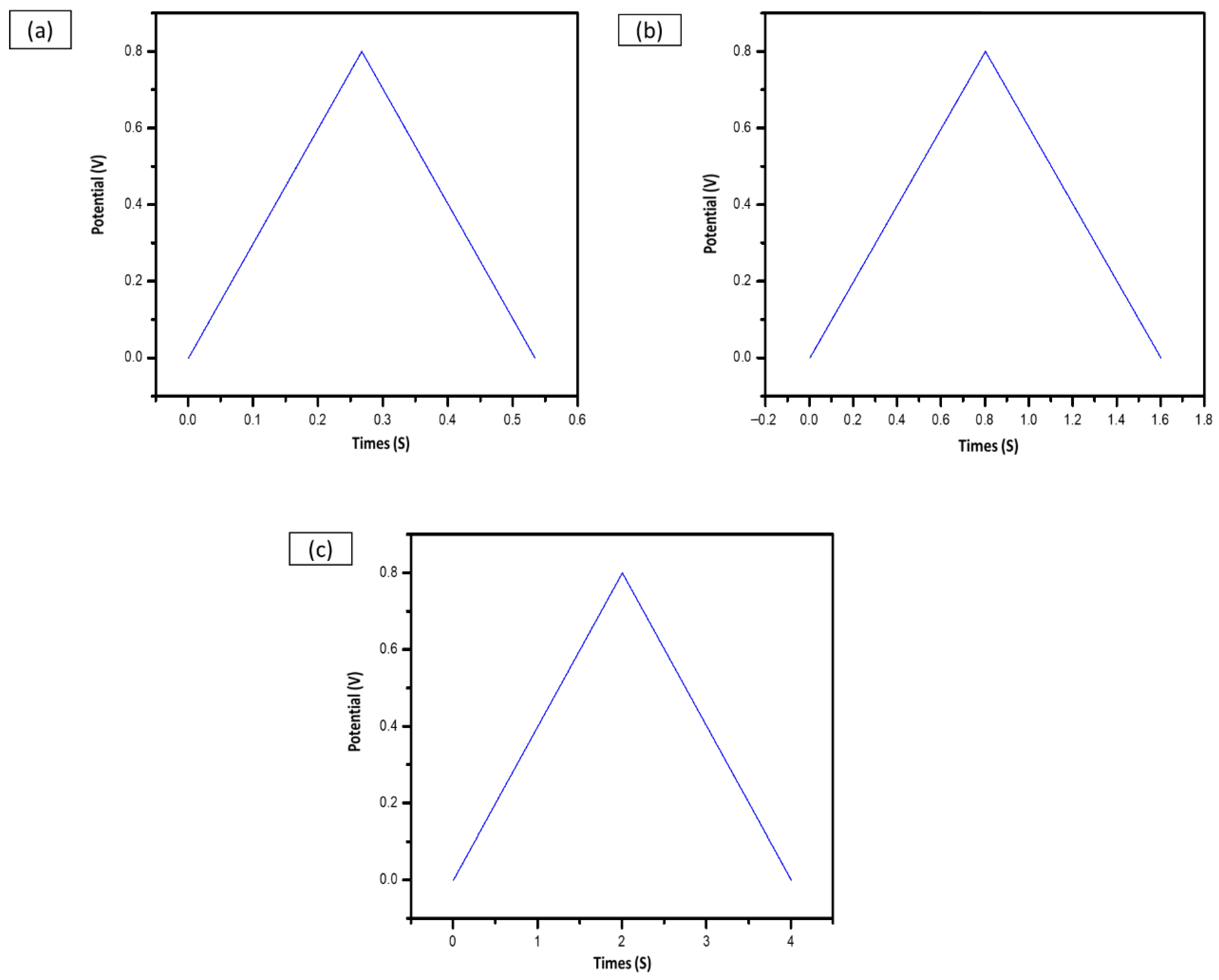
Figure 11. Charge–discharge performance at different scan rates showing the effect of scan rate on electrochemical behavior. (a) Charge–discharge curves of the DS electrode at 50 and 200 mV s−1; (b) charge–discharge curves of the DSAC electrode at 50 and 200 mV s−1; (c) charge–discharge curves of the DS hydrogel-based supercapacitor at 50 and 200 mV s−1. The curves demonstrate the influence of scan rate on charge–discharge time and capacitive performance.
Chemengineering 10 00068 g011
Figure 12. Electrochemical impedance spectroscopy (EIS) Nyquist plots of activated carbon (AC) in different electrolyte systems, highlighting variations in charge transfer resistance and ion diffusion behavior.
Chemengineering 10 00068 g012
Figure 13. Cycling stability of DSCH-based supercapacitors (DSCH1, DSCH2, and DSCH3) over 5500 charge–discharge cycles, showing capacitance retention as a function of cycle number.
Chemengineering 10 00068 g013
Figure 14. Stress–strain curve (Inset: photographs of DSCH1, DSCH2, and DSCH3 hydrogel electrolytes).
Chemengineering 10 00068 g014
Disclaimer/Publisher’s Note: The statements, opinions and data contained in all publications are solely those of the individual author(s) and contributor(s) and not of MDPI and/or the editor(s). MDPI and/or the editor(s) disclaim responsibility for any injury to people or property resulting from any ideas, methods, instructions or products referred to in the content.