Skip to Content
ChemEngineeringChemEngineering
  • Article
  • Open Access

3 February 2026

Kinetics of Decomposition in Alkaline Media NaOH and Ca(OH)2 of Thallium Jarosite

,
,
,
,
,
,
,
and
1
Ingeniería en Energía, Universidad Politécnica Metropolitana de Hidalgo, Hidalgo 43860, Mexico
2
Área de Electromecánica Industrial, Universidad Tecnológica de Tulancingo, Hidalgo 43642, Mexico
3
Instituto de Metalurgia, Universidad Autónoma de San Luis Potosí, San Luis Potosí 78210, Mexico
4
Secretaría de Ciencia, Humanidades, Tecnología e Innovación (SECIHTI), Ciudad de Mexico 03940, Mexico

Abstract

Thallium is one of the most toxic elements on the planet, and one alternative method for its precipitation is through jarosite-type compounds. Therefore, in this work, the kinetics of thallium jarosite were evaluated in an alkaline medium (NaOH and Ca(OH)2). Experiments were conducted to assess the effect of medium concentration from 0.03 M to 5.5 × 10⁻⁴ M and the effect of temperature from 20 °C to 60 °C. The sigmoidal curves showed an induction period, during which there was no release of sulfur or thallium ions into the solution, nor the formation of solid byproducts, according to the X ray diffraction (XRD) results. Similarly, a progressive conversion period was observed, evidenced by the release of sulfur and thallium ions into the solution and the formation of amorphous solids. Finally, a stability zone is reached, indicating that the decomposition reaction has ended, as there are no changes in the concentration of sulfur and thallium ions in the solution. The reaction was monitored by determining S using Inductively Coupled Plasma (ICP). The experimental results for the progressive conversion period show a better fit to the chemically controlled shrinking core kinetic model. The reaction order for the kinetics in NaOH medium is 1.09 for the induction period and 0.89 for the progressive conversion period, while for Ca(OH)2 medium it is 0.78 for the induction period and 0.47 for the progressive conversion period. The activation energies for the progressive conversion period in the two proposed media are 91.87 kJ mol−1 in NaOH and 71.14 kJ mol−1 in Ca(OH)2, indicating that the controlling mechanism in both systems is the chemical reaction. For the induction period, the activation energies are 101.52 kJ mol−1 and 79.45 kJ mol−1, respectively, indicating that the chemical reaction also controls the initiation of the reactions. The high activation energy in both reaction media suggests that high concentrations of OH and high temperatures are required to initiate the decomposition reaction. Thallium jarosite precipitates a large amount of thallium and requires high energy to decompose, so it could be a viable alternative in thallium retention.

1. Introduction

Thallium (Tl) is found in the Earth’s crust at average concentrations of approximately 0.1 to 1.7 mg/kg of material [1,2,3]. This metal is found mainly in zinc, copper, and lead sulfide minerals, and also in coal [1,3,4,5,6]. Thallium is considered the most toxic metal to humans compared to mercury (Hg), cadmium (Cd), copper (Cu), nickel (Ni), manganese (Mn), tin (Sn), arsenic (As) and lead (Pb) [1,7,8]. The solubility of thallium compounds is relatively high, so monovalent thallium is easily transported to the environment via aqueous routes [4,9,10,11]. Tl can be easily transferred to soils and accumulate in crops [8,9,12]. The main anthropogenic sources of thallium are emissions and solid waste from coal combustion, blast furnaces, and the smelting of non-ferrous metals such as zinc [1,3,8,10].
Thallium is found mostly in industrial wastewater and acid mine drainage, so information regarding the concentration of thallium in these types of effluents is difficult to find, due to restrictions imposed by the mining industry on publishing such concentrations [1,6,13,14]. Thallium is a dangerous environmental pollutant; for example, in rivers where drainage from mining areas flows, the concentration of thallium can range from 1 to 88 ppm [1,3]. Recently in 2010, a thallium contamination incident (0.18–1.03 µg L−1) was reported in the northern part of the Pearl River in southern China, in wastewater from a lead/zinc smelting plant, with the maximum contaminant level in drinking water being 0.1 µg L−1 [1,6,15,16]. Taking the above into consideration, therefore, the Environmental Protection Agency (EPA) has established a maximum contaminant level for thallium (Tl) in drinking water of 0.002 mg/L (or 2 parts per billion, ppb) and 0.14 mg/L in wastewater [11,17,18,19].
The widespread use of thallium in the past as a rodenticide and pesticide has led to poisoning following accidental food contamination. In an outbreak involving barley contaminated with 1% thallium sulfate, 27 cases of poisoning were reported, resulting in seven deaths. Poisoning occurs primarily through skin contact, as thallium salts are readily absorbed through the skin and mucous membranes, distributing widely throughout the body and accumulating in bones, renal medulla, and eventually the central nervous system [1,5,20]. Cases of thallium poisoning have been reported, especially in occupational contexts such as Guizhou province in southwest China, where symptoms related to thallium poisoning were detected in 200 to 400 people during the 1960s and 1970s [3,5,16,21,22,23]. The main clinical manifestations of acute thallium poisoning include dermatological features such as alopecia, hyperkeratosis, and the presence of white lines (Mee lines) on the nails. Neurological symptoms include dysesthesia, neuropathic pain, muscle weakness, cranial nerve palsies, tremor, seizures, coma, and death [3,5,24,25]. There are several methods for removing thallium from aqueous solutions, such as the iron powder method, activated alumina and ion exchange, manganese dioxide, ferrihydrite adsorption, silica gel, polyurethane foam, and activated carbon, among others [4,19,26,27]. Currently, research is being conducted on the use of nanomaterials to remove thallium from aqueous solutions, such as nano-Al2O3 (adsorbent), since these nanometric materials can be functional because the atoms on the surface of the nanoparticles are unsaturated and can easily bond with other atoms (high adsorption capacity) [26]. One method for removing thallium from industrial water is through the precipitation of thallium sulfide. However, its effective precipitation requires a combination of electrochemical potential and pH control.
The formation of jarosite-like compounds is a standardized method for iron removal that allows the co-precipitation of critical impurities. In environments with high thallium (Tl) concentrations, Tl-jarosite synthesis is an essential process for the adsorption and mitigation of this heavy metal, thus limiting its dispersion in the ecosystem [28,29,30]. Thallium jarosite is a compound that has been scarcely synthesized and studied; it was recently discovered, and its formula shows thallium in the cationic site of the compound (Tl0.8K0.2Fe3(SO4)2(OH)6) [31,32]. The first reports are from Allchar in the Republic of North Macedonia, which contains a thallium sulfide-rich mineral which was named Dorallcharite [33]. Therefore, the present work aims to determine the alkaline decomposition kinetics of thallium jarosite, in order to determine the reaction order and activation energy in both NaOH and Ca(OH)2 media and thus determine the stability of the compound. It aims to propose this type of compound for the mitigation of this toxic element since it is found in acid mine drainage, groundwater, bodies of water and in hydrometallurgical circuits [34,35,36,37,38,39].

2. Experimental Methodology

2.1. Experiments on the Kinetics of Decomposition in Alkaline Medium

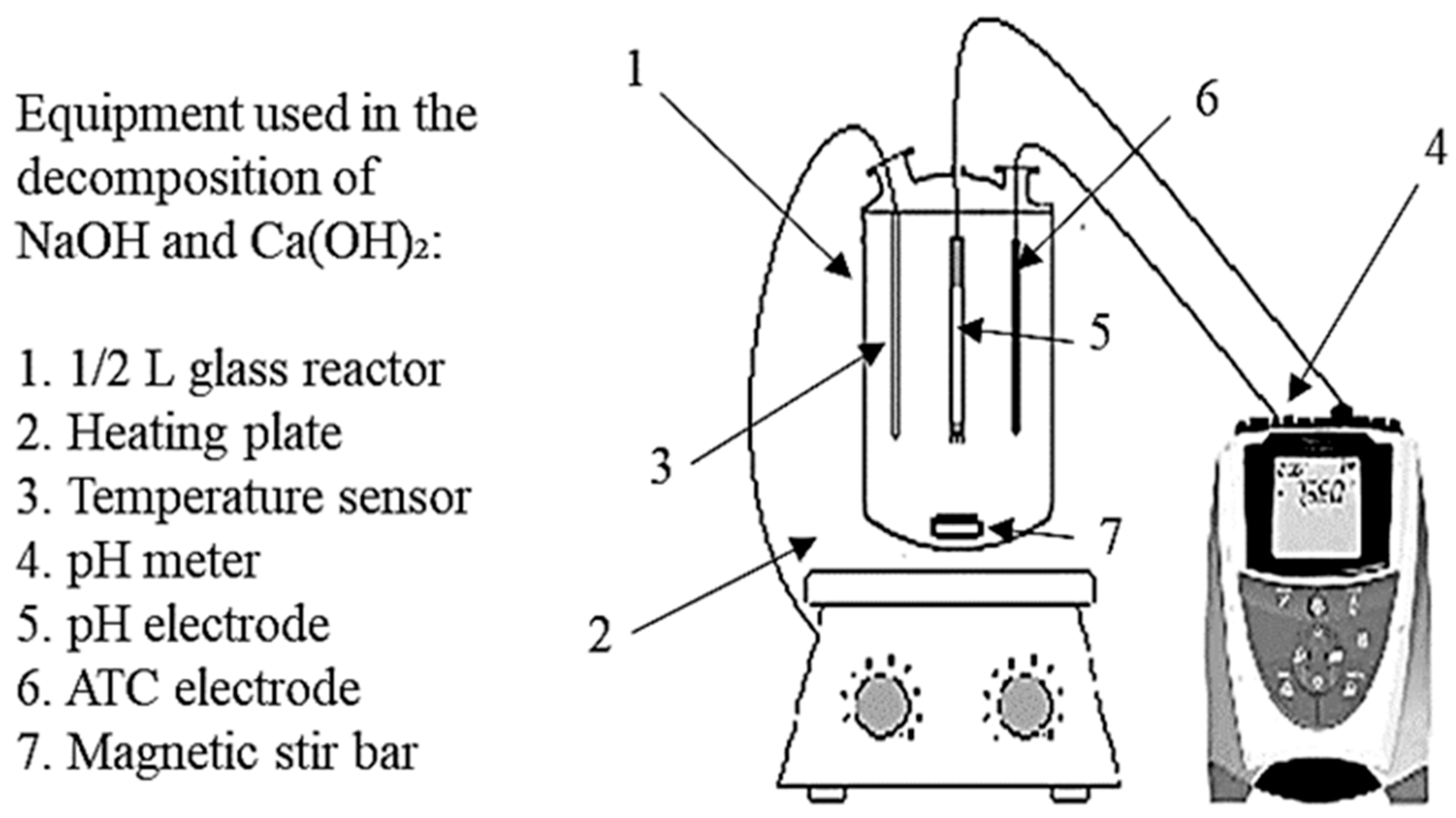
The thallium jarosite used to carry out the present work was previously synthesized and characterized, and this information is in a previous work reported by Islas and collaborators [39]. The experiments for the alkaline decomposition and kinetic studies of synthetic jarosite in NaOH and Ca(OH)2 media were carried out at atmospheric pressure in a half-liter glass reactor placed on a heating rack. The assembly includes a temperature controller for process thermoregulation and a magnetic stirring system. A continuous pH measurement system (Orion 3 Star pH meter (MA, USA)) equipped with a Thermo Ross Ultra Sure Flow pH electrode (MA, USA) and Automatic Temperature Compensation electrode (ATC) (MA, USA) was also used, as shown in Figure 1.
Figure 1. Representation of the equipment used in the kinetic study of alkaline decomposition in NaOH and Ca(OH)2 media.
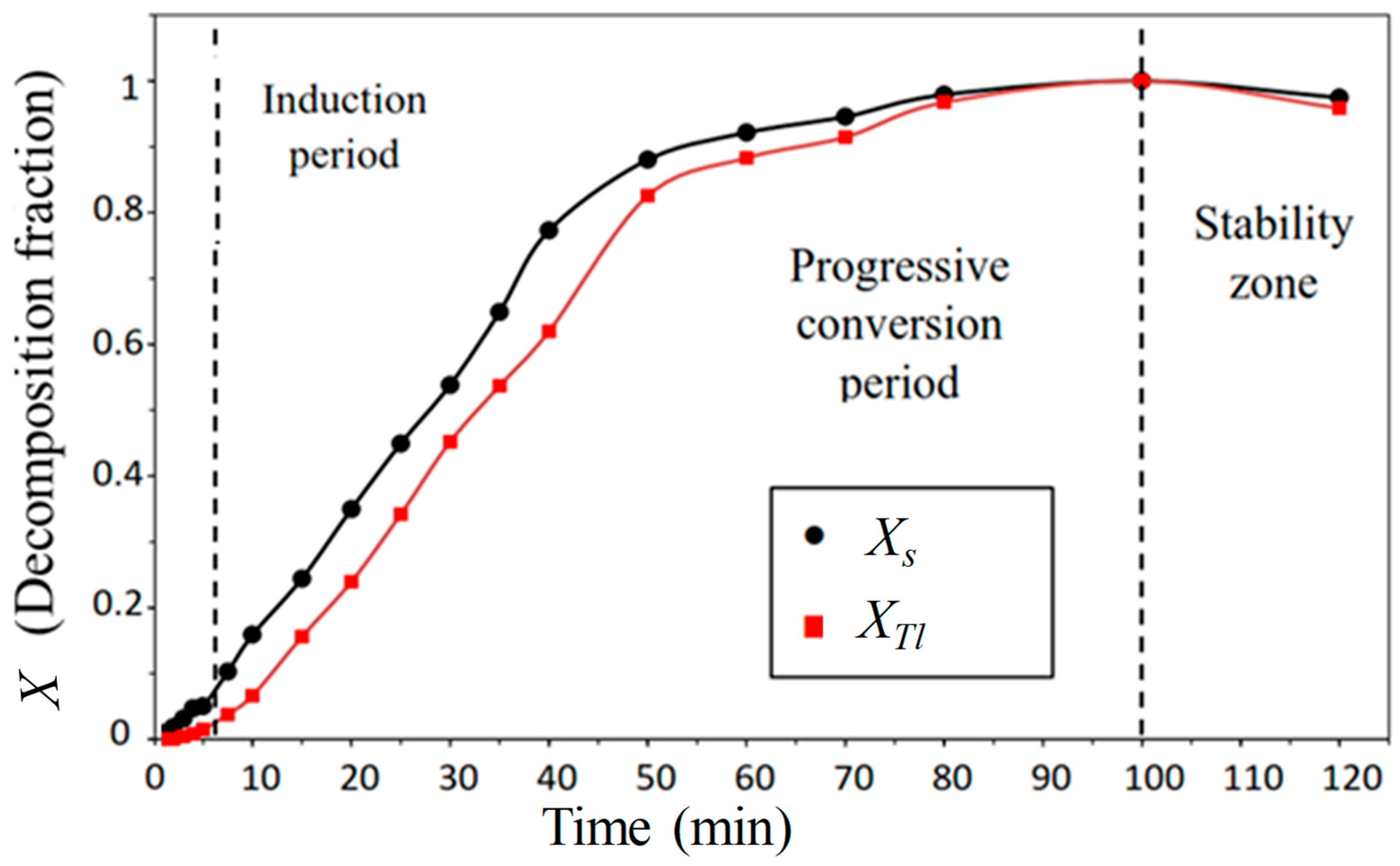
For the kinetic study, 0.2 g samples of thallium jarosite with a constant particle size of 38 µm were used, since this type of size is what is obtained in the precipitation of industrial jarosite. These samples were used in each experiment with constant stirring for 650 min−1, except where the effect of particle size was evaluated. To determine the influence of temperature, the concentrations of NaOH and Ca(OH)2 (0.01 mol L−1 and 0.175 mol L−1, respectively), particle size, and stirring were kept constant, with only the temperature being varied in each experiment. For the OH concentration effect, this parameter was varied in each experiment according to the decomposition medium, while maintaining a constant temperature of 30 °C, as were the other parameters (particle size and stirring). Finally, for the particle size effect, the concentration (0.01 mol L−1 for NaOH and 0.175 mol L−1 for Ca(OH)2) and the temperature were kept constant at 30 °C, with the particle size varying in each experiment. In all experiments the pH was kept constant by monitoring with a sureflow electrode (MA, USA) and a Thermo brand pH meter (MA, USA), so when the pH dropped a concentrated solution of NaOH (4 M) and Ca(OH)2 (2 M) was added until it was adjusted to the initial pH. It should be noted that all experiments were performed in duplicate and the averages for each one are shown. Chemical analyses were performed by determining the sulfur concentration in the solution, and for preliminary studies the dissolved thallium content was analyzed, so 5 mL liquid samples were taken at different reaction times to be analyzed by inductively coupled plasma spectroscopy (ICP; Perkin Elmer Optima 5300DV, Waltham, MA, USA). In both decomposition media, this amount of liquid is sufficient to determine the amount of sulfur dissolved in the solution. The initial volume of solvent for all experiments was 0.5 L, considering that the nominal volume of the reaction vessel is slightly higher than 0.5 L. The total reaction time varies according to the reaction conditions tested to ensure the experiments reach steady state. Similarly, the sampling time varies according to the selected total reaction time to ensure sufficient data points (approximately 15 samples per experiment) are obtained to construct the decomposition curves (see Figure 2 for an example). Concentration alterations determined by ICP due to sampling and reagent addition were corrected by a mass balance in each experiment. The jarosite fraction reacted was calculated considering the water added or removed at every instant during the experiment.
Figure 2. Decomposition curve in Ca(OH)2 medium 0.178 mol L−1, 30 °C, 38 µm size and 650 min−1, monitored by ICP.

2.2. Characterization of the Decomposition of Thallium Jarosite

The solid and liquid products from the total and partial decomposition reactions of NaOH and Ca(OH)2 media containing thallium jarosite were characterized using techniques such as inductively coupled plasma spectroscopy. Partially and fully reacted solids were also characterized using X-ray diffraction (Bruker D8, Billerica, MA, USA, powder diffractometer, with Ni filtered radiation from a Cu anode; kα1 = 1.5406 Å; 40 kV and 35 mA; a recorded angular range of 2θ of 5–90°; step size = 0.01°; and step time = 3 s XRD) and scanning electron microscopy (SEM-EDS-JEOL JSM-6610LV instrument (JEOL, Tokyo, Japan) operated at 20 kV) in conjunction with energy-dispersive X-ray spectroscopy (EDS) microanalysis to determine the kinetic model and the evolution of the reaction products. For the kinetic study of decomposition (effects of temperature, concentration, and particle size), ICP was used to evaluate these effects by analyzing the sulfur ion in solution at different decomposition times.
In the XRD study, 1 g of synthetic thallium jarosite with a constant particle size of 38 µm was used, since this type of size is what is obtained in the precipitation of industrial jarosite. The decomposition conditions were as follows: 0.178 mol L−1 Ca(OH)2 at a pH of 12.25 at 30 degrees Celsius and a magnetic stirring speed of 650 min−1. The reactions were stopped by adding 20 percent HCl at different times, with the aim of obtaining representative samples of the induction period, the progressive conversion and the stabilization zone. Solids were obtained after 40 min of reaction to obtain samples of partially decomposed particles. These were prepared in epoxy resin for subsequent grinding, polishing, and analysis by SEM.

3. Results and Discussion

3.1. Controlling Stage

To determine the decomposition reactions and determine the rate-controlling step, quantitative analysis of sulfur (S) and thallium (Tl) ions was performed using ICP, determining their presence in solution at different reaction times. In the Ca(OH)2 decomposition experiments, 0.2 g of thallium jarosite with an average particle size of 38 µm was used.
The resulting data for the conversion fraction X (reacting fraction of S) vs. reaction time for the Ca(OH)2 medium are presented in Table 1. This shows that the fraction of sulfur and thallium in this medium increases as the decomposition reaction progresses, suggesting that these elements diffuse from the decomposing solid into the liquid, until the completion of the decomposition reaction of thallium jarosite. Equation (1) was used to determine the reacted mass fraction of sulfur.
X = A t A τ
where X is the fraction of the thallium jarosite that has reacted; At is the amount of S or Tl that was released into the solution; and Aτ is the amount of S or Tl at the end of the reaction.
Table 1. Data on the decomposition fraction and concentration (ICP) of sulfur ion and thallium ion at different reaction times, decomposition medium Ca(OH)2.
The behavior of the decomposition reaction in this medium was observed graphically, yielding an S-shaped curve (Figure 2). This behavior is characteristic of this type of decomposition reaction; the experiment demonstrated a brief induction period, during which the solids remained unchanged in color and morphology, with only traces of thallium and sulfate ions present in the solution [34,37,40]. During the induction period, a series of intermolecular collisions take place, forming active sites that initiate the reaction where sulfur and thallium ions diffuse from the particle into the solution, while iron ions remain throughout the particle. This is followed by a period of progressive conversion, beginning with a physical change in color (from yellow to orange) of the particles and a gradual increase in the concentrations of Tl and S. Finally, the stability zone (steady state) is reached at approximately 100 min in Ca(OH)2 medium, where the particles are completely dark and the ion concentrations remain constant, indicating the end of the decomposition process.
The analysis of non-catalytic solid/fluid systems is based on two ideal kinetic models: the volumetric interaction model (progressive conversion), where the fluid reactant saturates and transforms the particle uniformly, and the moving reaction front model (shrinking nucleus), where the reaction zone moves towards the center of the solid, where the reaction is considered to begin from the outside of the particle and then move towards its interior [40]. Generally, in heterogeneous reactions, the resistances of the different stages vary considerably, and it is well known that the process-controlling stage is the one that offers the greatest resistance. In the present kinetic study, the quantification of dissolved sulfur in the solution was followed, since it has the same behavior as thallium, so the activation energy and reaction order will be the same.
Assuming that diffusion in the liquid film is the controlling step, the kinetic expression that will describe the process is as shown in Equation (2):
t τ = ( r c r ) 3 = X B
where τ is the time required for a complete reaction, t is a specific time, XB is the fraction of jarosite decomposed, rc is the fraction of the total radius that remains unreacted, and r is the radius of the particle.
However, if the reaction rate is controlled by diffusion through the ash layer, the kinetic equation is modified as follows (Equation (3)):
t τ = 1 3 1 X B 2 3 + 2 1 X B = k e x p t
If the ash layer does not limit the progress of the process, the chemical reaction becomes the limiting step. In this case, (kexp) is proportional to the available surface area of the unreacted core, according to Equation (4).
t τ = 1 1 X B 1 3 = k e x p t
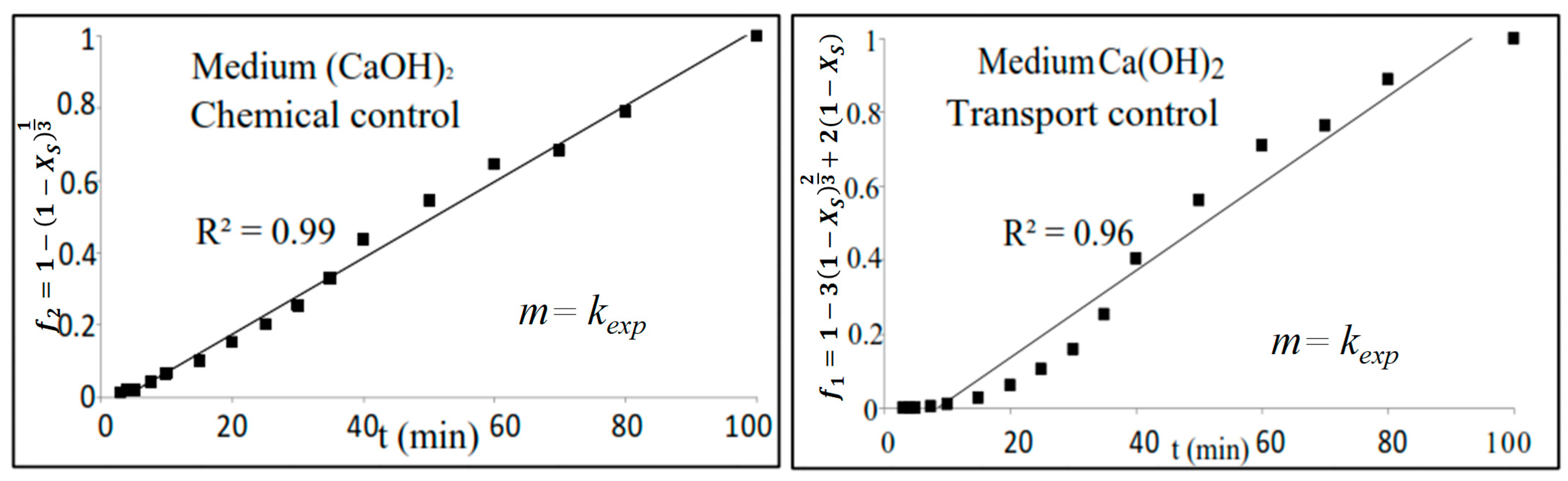
With the experimental data obtained from the decomposition in alkaline medium Ca(OH)2, the models of Equations (3) and (4) are represented in Figure 3.
Figure 3. Application of the models: chemical control and transport control for the decomposition of thallium jarosite, in Ca(OH)2 medium 0.178 mol L−1, 30 °C, 38 µm size and 650 min−1.
The experimental data have been determined to best fit the 1/3 model, as demonstrated by the linear correlation coefficient R2 = 0.99; therefore, this model is the one that best describes the decomposition process. These correlation coefficient values indicate that the reaction rate after the induction period is chemically controlled.
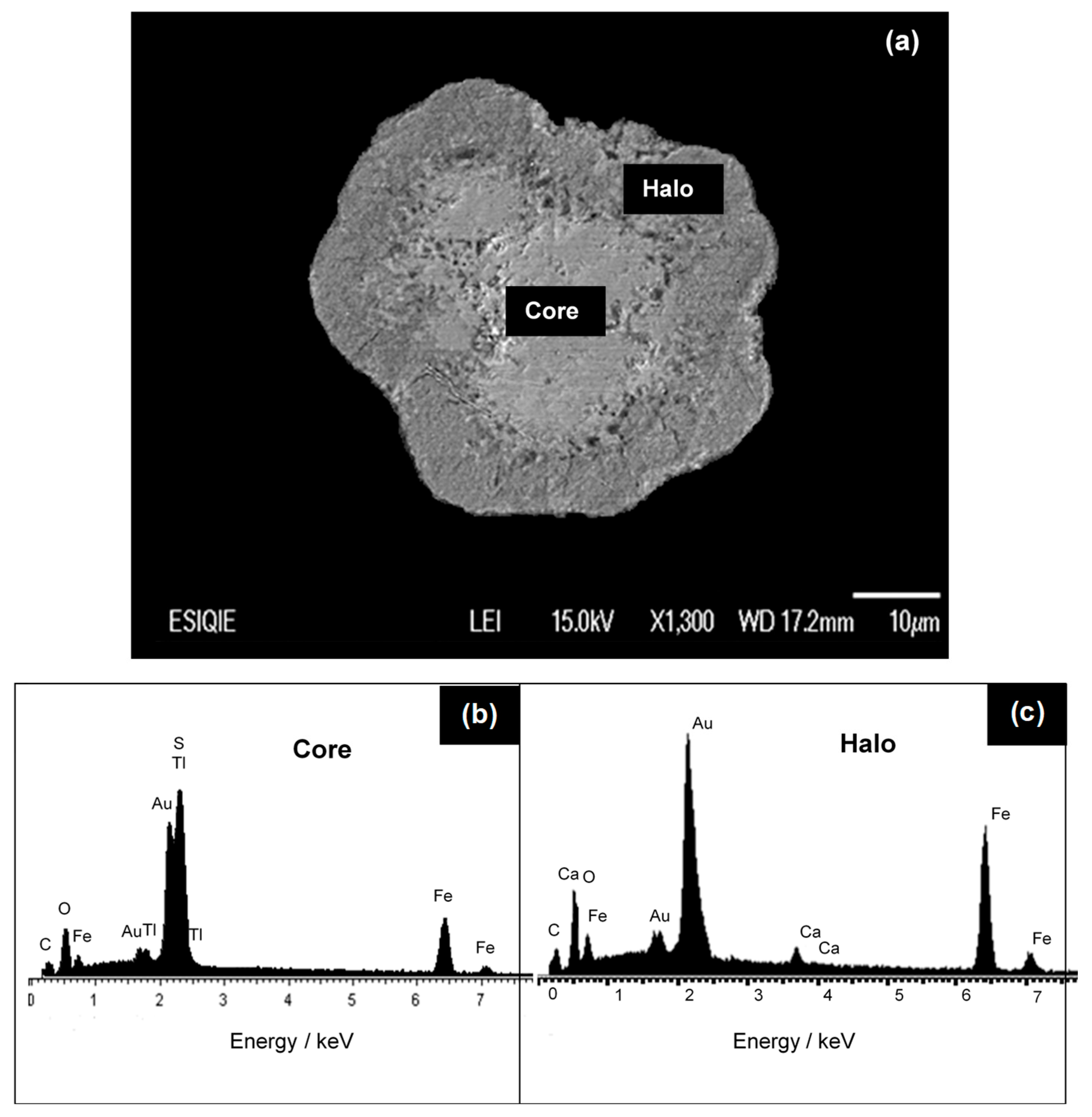
Figure 4a shows the particle’s reaction profile, revealing an unreacted nucleus, a reaction front, and an ash halo through which Tl and S ions diffuse into the solution. This diffusion is confirmed by EDS spot analyses of the ash halo and the unreacted nucleus (Figure 4b,c), where these species can be seen diffusing from the unreacted nucleus into the solution. Based on the results obtained from the decomposition reaction behavior of thallium jarosite, the diminishing unreacted nucleus model best describes the alkaline decomposition process.
Figure 4. (a) Micrograph of a partially decomposed thallium jarosite particle in Ca(OH)2 medium 0.178 mol L, pH 12.25, 30 °C, 38 μm and EDS spectra corresponding to the nucleus (b) and halo (c), after 40 min of reaction.
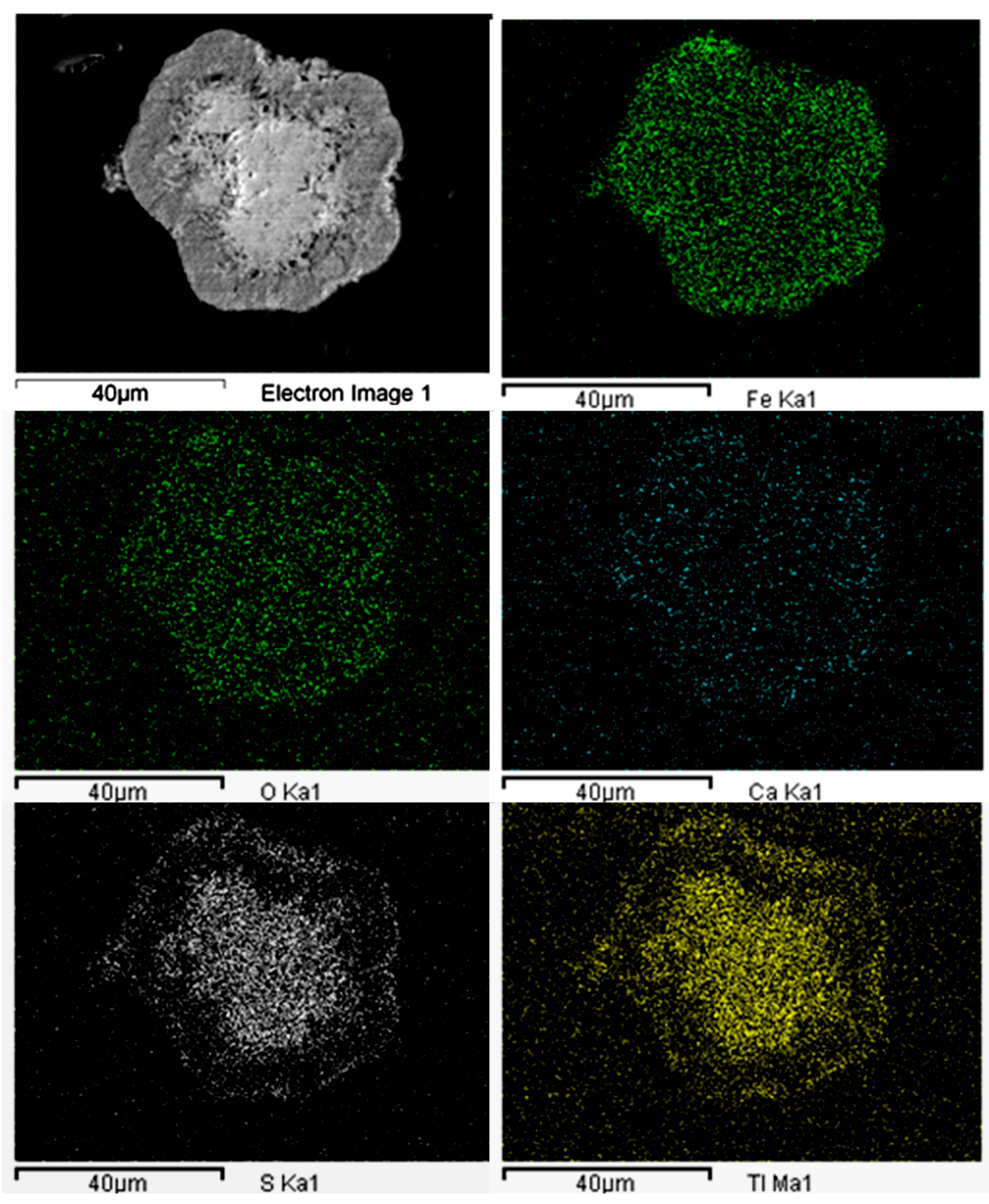
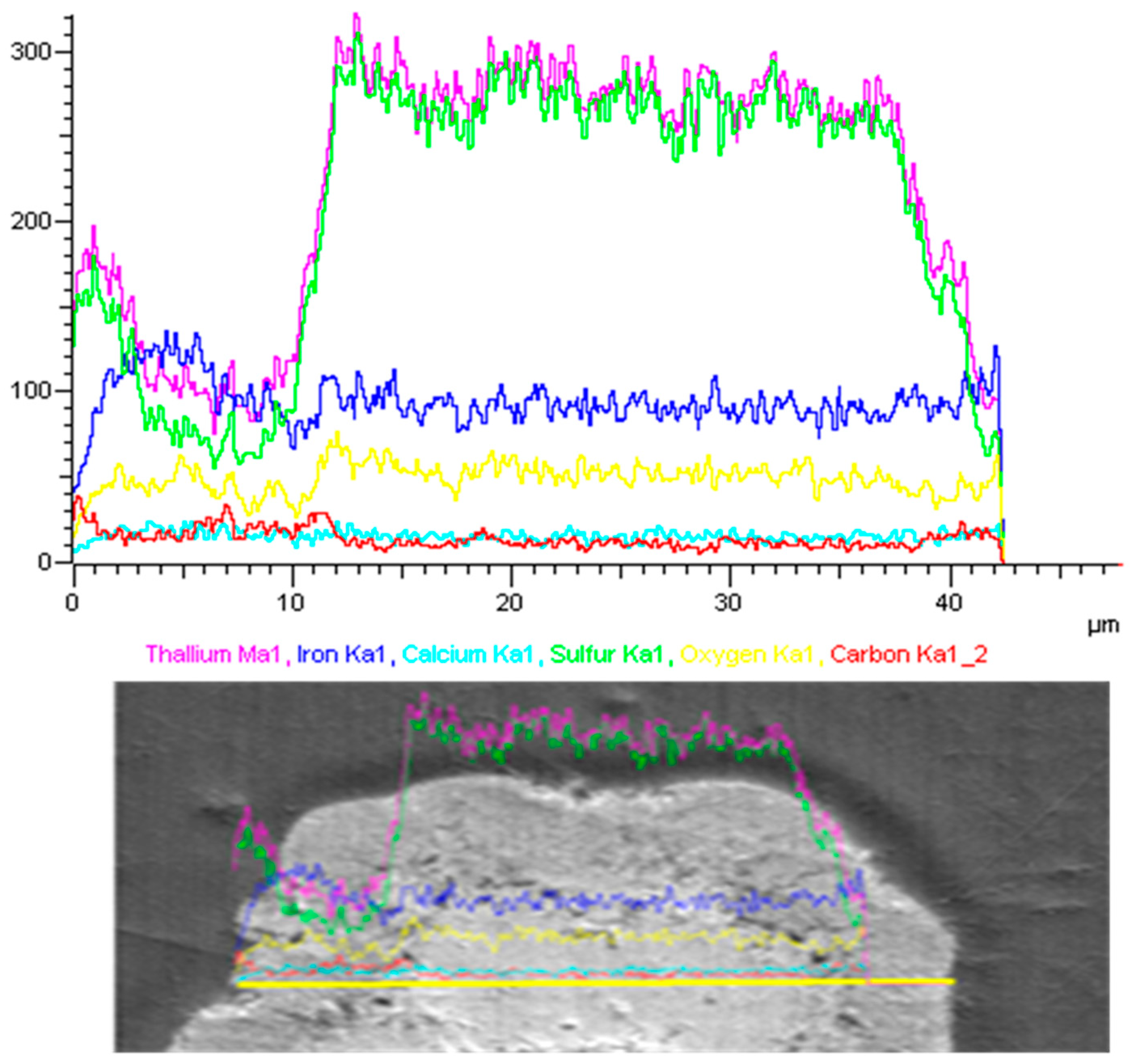
The diffusion of Tl and S ions in the decomposition reaction can also be visualized through mapping the elements that make up the partially decomposed thallium jarosite particle. Figure 5 shows that Fe and O are distributed throughout the particle; however, Tl and S are only found in the core, corroborating the EDS results. This behavior of the elements that make up the partially reacted particle can be observed through the linear scan in Figure 6. The presence of calcium originates from the decomposition solution of this medium.
Figure 5. Mappings of the different elements that make up the partially decomposed thallium jarosite particle Ca(OH)2 0.178 mol L−1, pH = 12.25, 30 °C, 38 μm and 40 min reaction time.
Figure 6. Linear EDS scan of a partially decomposed particle, Ca(OH)2 medium 0.178 mol L−1, pH 12.25, 30 °C, 38 μm, 40 min.
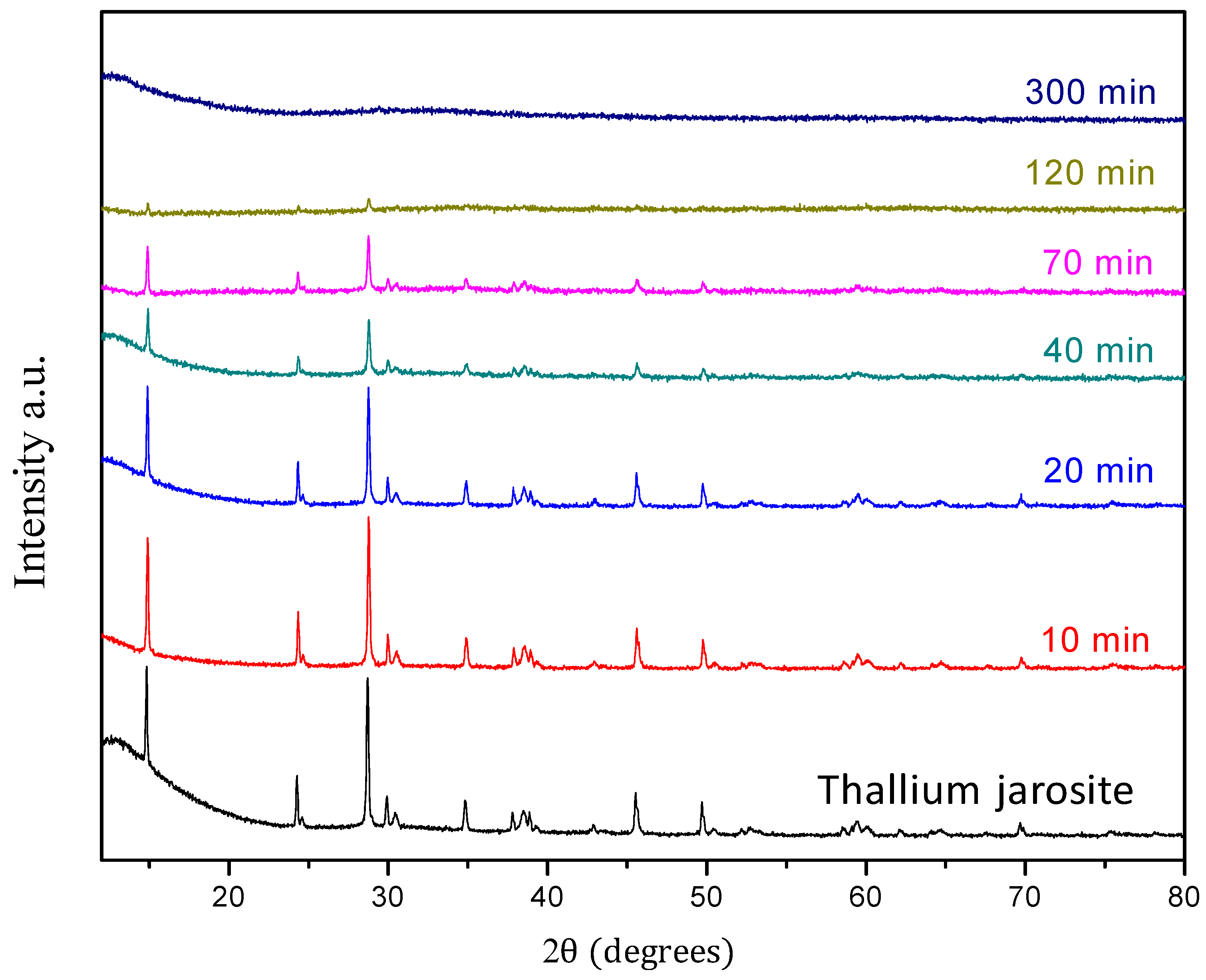
The XRD results shown in Figure 7 present the spectra obtained from the recovered solids at different decomposition times (0 to 300 min). The compound used was previously characterized and compared with the Difract Plus XRD Commander Diffractometer (Prague, Czech Republic) database which includes the ICDD (International Center for Diffraction Data) database, which indexes appropriately with the record (00-0047-1768) of the thallium jarosite crystal structure. These spectra show that the reflection intensities of the thallium jarosite crystallographic planes decrease as the reaction time increases until they disappear, indicating that complete decomposition occurred, resulting in the formation of an amorphous solid likely composed of iron hydroxide. These solids do not evolve into new crystalline phases even after reaction times exceeding completion.
Figure 7. Diffractograms of synthetic thallium jarosite at different decomposition reaction times in 0.178 mol L−1 Ca(OH)2 medium.
The chemical reaction (Equation (5)) that occurs during the decomposition of thallium jarosite is shown below. In this reaction, sulfur and thallium ions are observed to dissolve in the liquid, as confirmed by SEM-EDS and X-ray diffraction analyses. Iron remains in the precipitate as a hydroxide, an amorphous compound, as confirmed by X-ray diffraction.
T l 0.86 H 3 O 0.14 F e 3.11 S O 4 2.11 O H 6.11 ( H 2 O ) 0.44 + n O H a q 0.86 T l ( a q ) + + 2.11 S O 4 ( a q ) 2 + 3.11 F e ( O H ) 3 s o l + n H 2 O

3.2. Kinetics in Alkaline Medium

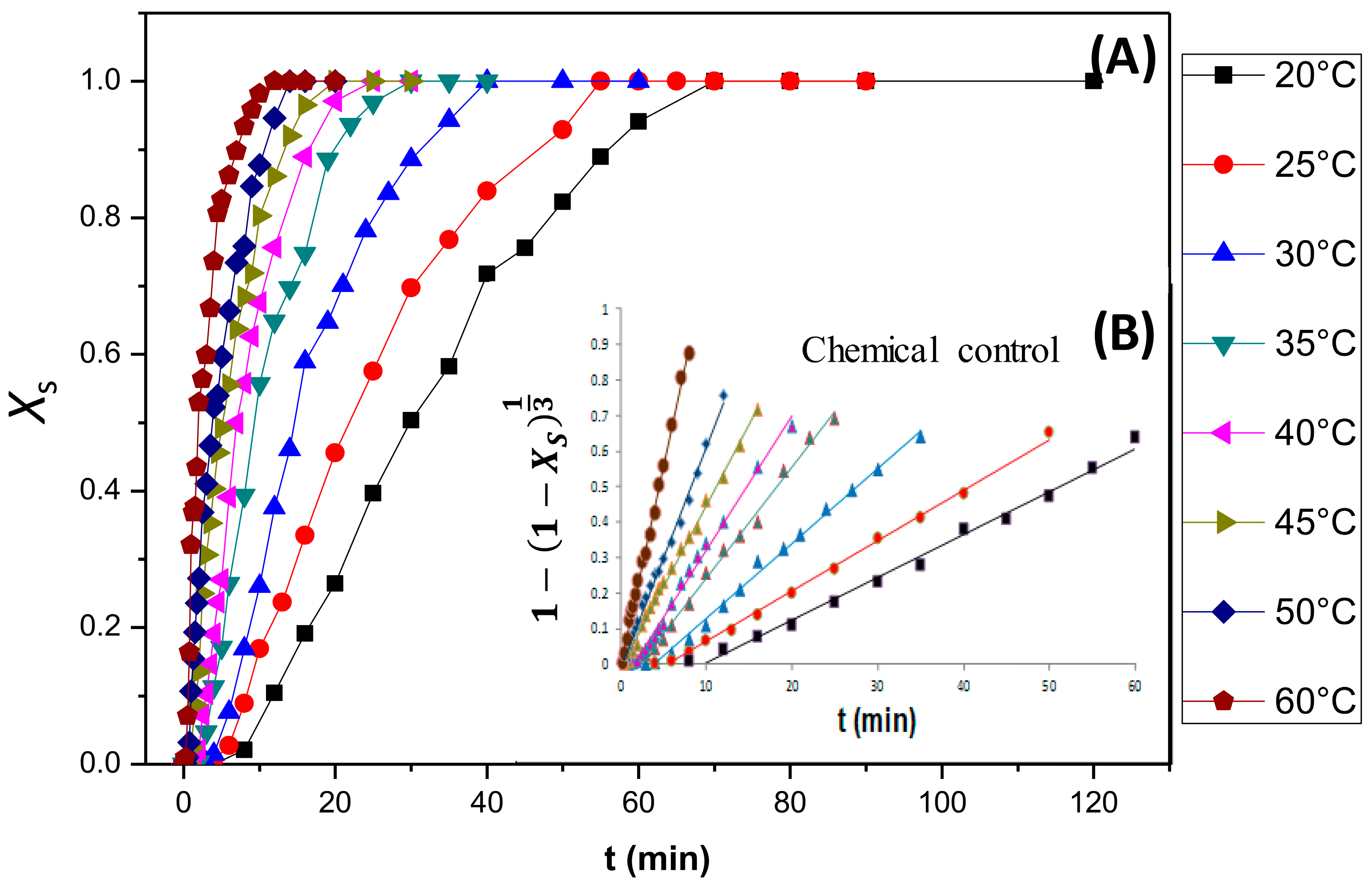
The kinetics of the thallium jarosite decomposition reaction were monitored by measuring the amount of sulfur that passed into the solution using ICP. The results in NaOH are presented as sigmoidal (S) curves that show the evaluation of different factors, including the effect of temperature (Figure 8), concentration (Figure 9), and the dependence of the reaction rate on particle size (Figure 10). These figures also contrast the experimental data with the predictions of the chemically controlled shrinking core model, clearly demonstrating the stages of sulfur induction, progressive conversion, and stabilization.
Figure 8. (A) Analysis curves in NaOH medium, temperature effect; (B) shrinking core model with chemical control, 1 − (1 − XS)1/3.
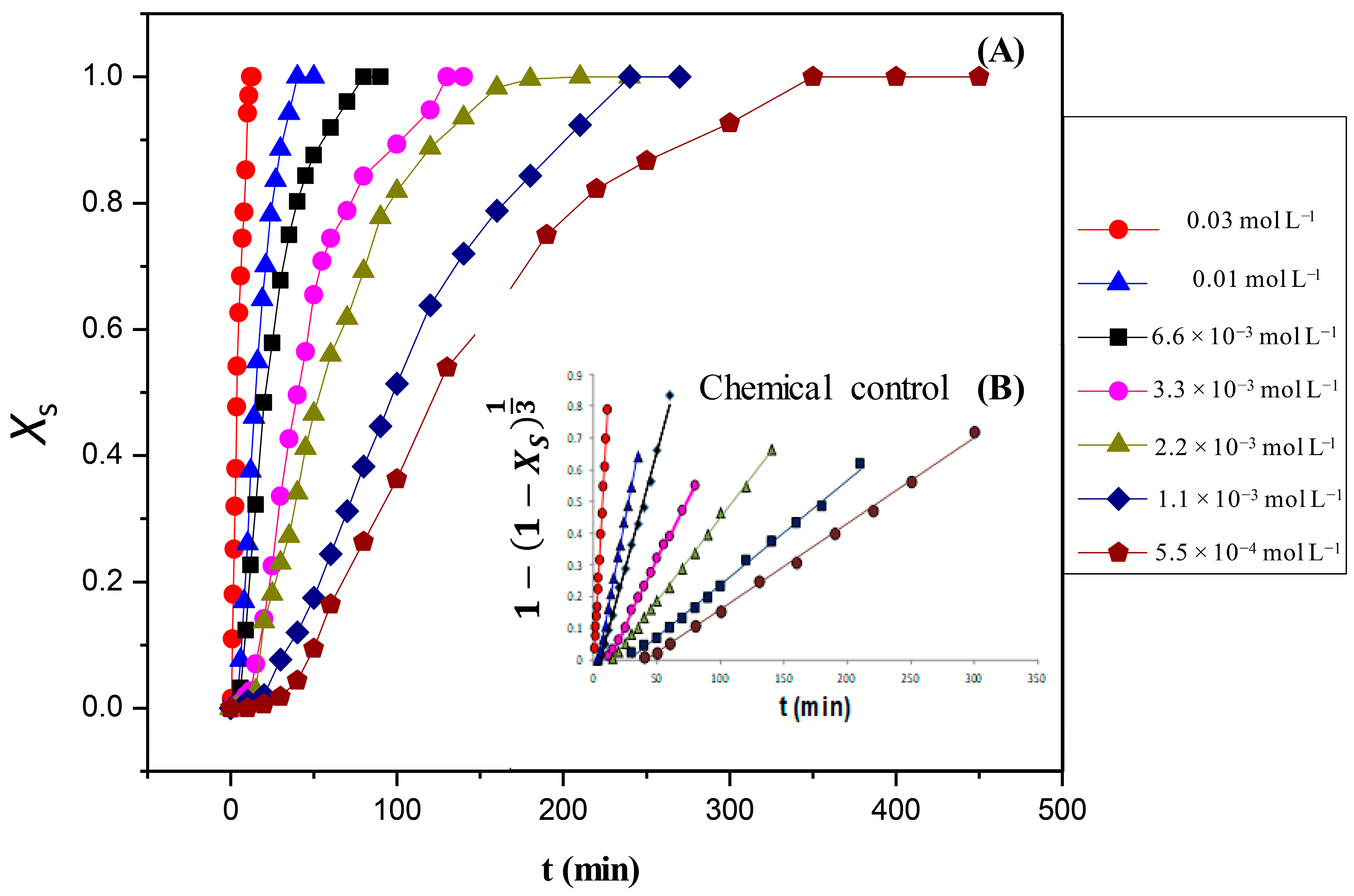
Figure 9. (A) Decomposition curves in NaOH medium, concentration effect; (B) shrinking core model with chemical control, 1 − (1 − XS)1/3.
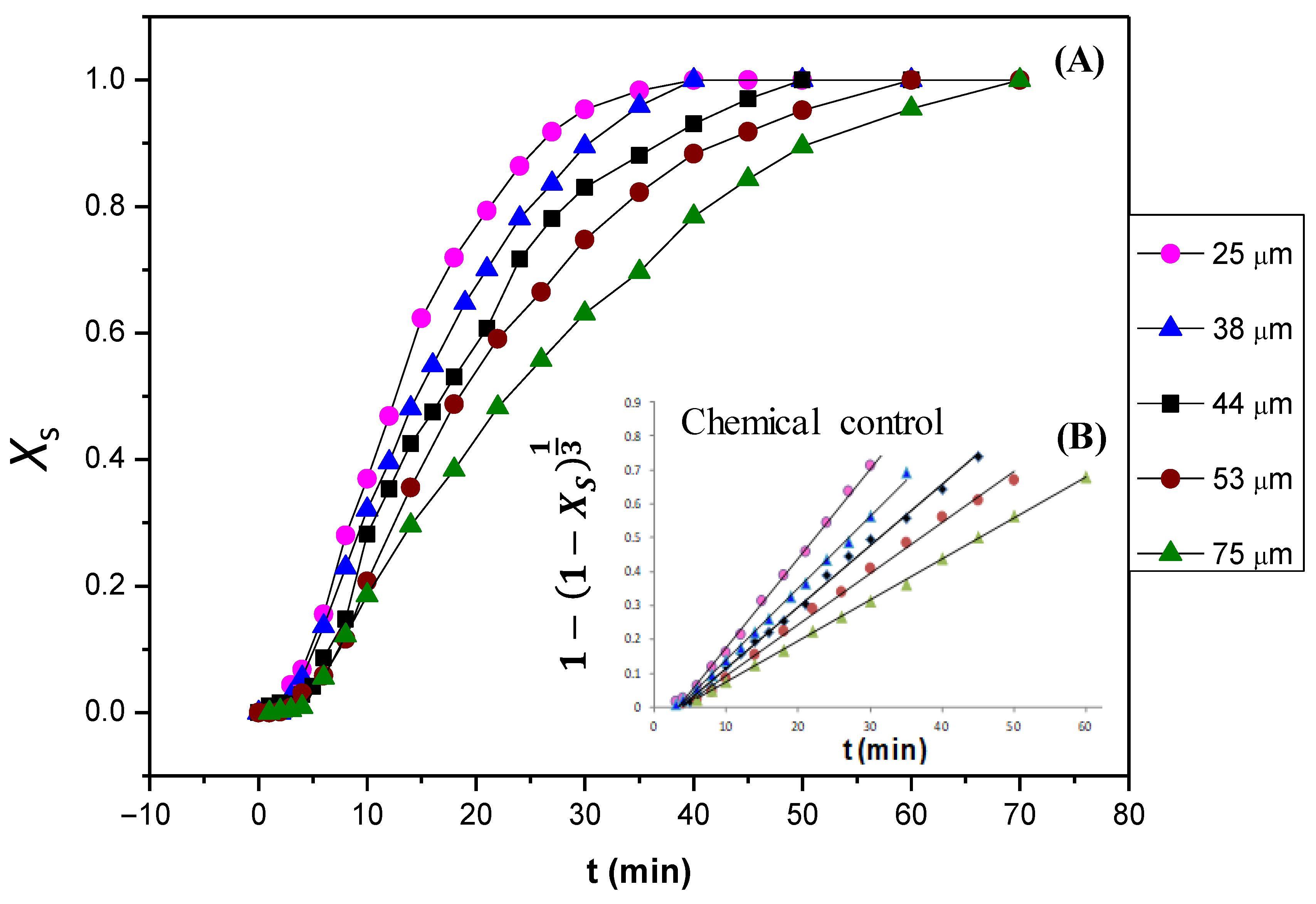
Figure 10. (A) Decomposition curves in NaOH medium, particle size effect; (B) shrinking nucleus model with chemical control, 1 − (1 − XS)1/3.
In Figure 8A, a decrease in the induction period was observed with increasing temperature, indicating that the reaction is faster at higher temperatures. Following the induction period, experimental data on the decomposition of thallium jarosite showed a correlation with the chemical control model; consequently, the slopes in Figure 8B increase with increasing temperature until they become almost perpendicular, thus also increasing the value of kexp.
The S-shaped curves in Figure 9A demonstrate the effect of NaOH concentration on reaction kinetics. An increase in OH concentration results in a higher reaction rate and a decrease in the induction period, as shown in the figure. Figure 9B shows the slopes of the application of the 1/3 effect model of the concentration of the reaction medium. In this figure, it can be seen how the value of the slope increases as the concentration of the medium increases, so it is considered that there is a strong dependence on the reaction medium.
Unlike the previous effects (temperature and concentration), the induction time is almost the same in the decomposition curves corresponding to the particle size effect, as shown in Figure 10A. Similarly, the slopes resulting from the application of the shrinking core model with chemical control (Figure 10B) indicate that kexp increases slightly as the particle size decreases, without showing such pronounced changes in the slope of these curves.

3.3. Induction Period

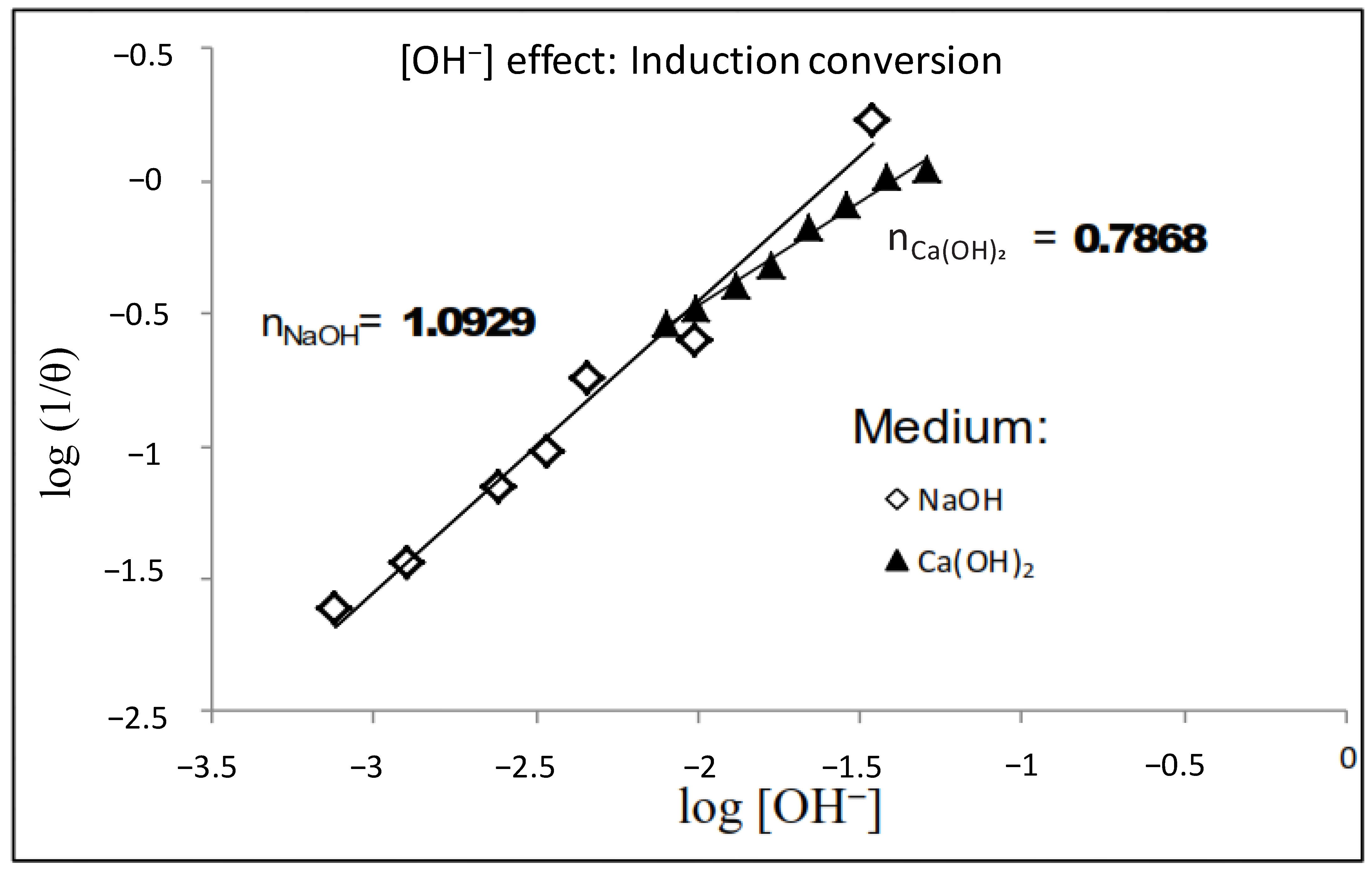
To obtain the reaction order during the induction period, concentration effect data are used. The Greek letter θ represents the induction period. In these experiments, temperature and particle diameter are the kexp constant, and conversion/time data are determined. It is important to mention that the induction period is the time it takes for the active points to be created so that the decomposition reaction begins and is calculated from the intersection with the X-axis (time) of the slope of the kinetic model used. By plotting the logarithm of 1/θ against the logarithm of [OH], as shown in Figure 11, the reaction orders (n) for both media are obtained. In the NaOH medium, n = 1.09, and in the Ca(OH)2 medium, n = 0.79. The reaction orders during the induction period in NaOH and Ca(OH)2 media are similar to those of lead, arsenic, potassium, and ammonium jarosite, so the effect of thallium on reagent dependence during decomposition is not noticeable; this could be attributed to the low amount of substitution at the cationic site.
Figure 11. Decomposition of thallium jarosite in NaOH and Ca(OH)2 media. Dependence of the induction period on [OH]; 1/θ ≈ [OH]1.09 in NaOH medium, [OH]; 1/θ ≈ [OH] in Ca(OH)2 medium.
To determine the activation energy, information obtained from the effect of temperature is used. The experiments were performed with constant particle size and OH concentration. The rate constant is represented by the Arrhenius equation (Equation (6)).
k = k 0 e E a R T
where k0 refers to the pre-exponential factor or frequency factor, Ea is the activation energy of the reaction, R is the ideal gas constant (8.314 J mol−1 K−1) and T is the temperature in kelvin.
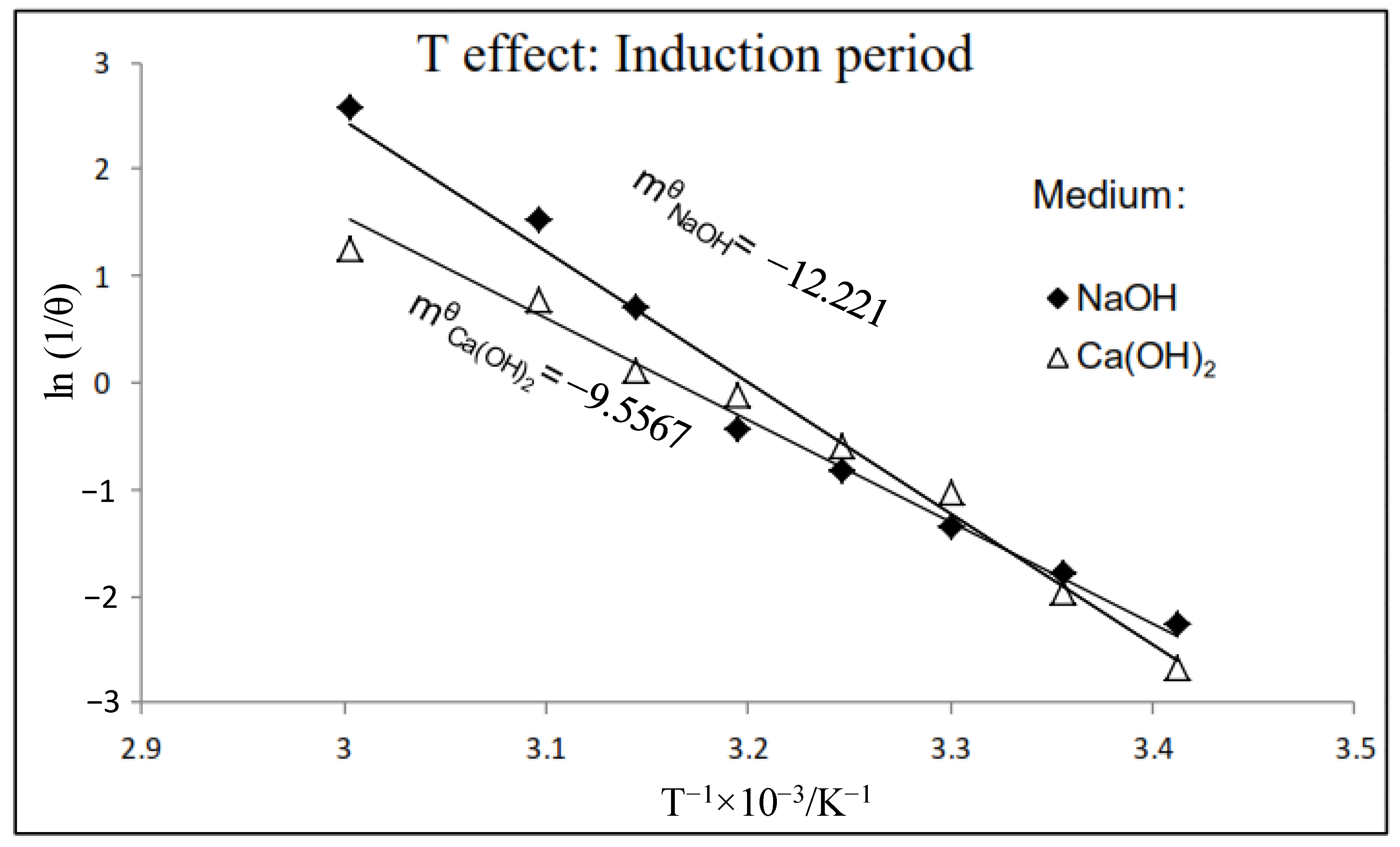
Figure 12 shows the dependence of the induction period on temperature, that is, ln (1/θ) vs. 1/T. A value of Ea = 101.5 kJ mol−1 and k0 = 9.908 × 10¹⁶ of the Arrhenius constant is obtained in NaOH medium and a value of Ea = 79.4 kJ mol−1 and k0 = 1.356 × 10¹³ of the Arrhenius constant for Ca(OH)2 medium. According to the values presented with respect to the activation energy, it is demonstrated that the energy dependence is greater for the decomposition of thallium jarosite in NaOH medium than in Ca(OH)2 medium. The activation energy for the induction period for both NaOH and Ca(OH)2 media is similar to that of potassium/arsenic jarosite; however, it is much higher than that reported for lead, potassium, and ammonium jarosite, so thallium jarosite could be considered more stable under alkaline conditions.
Figure 12. Dependence of the induction time θ on temperature, Ea = 101.5223 kJ mol−1, in NaOH medium and Ea = 79.4544 kJ mol−1 in Ca(OH)2 medium.

3.4. Progressive Conversion Period

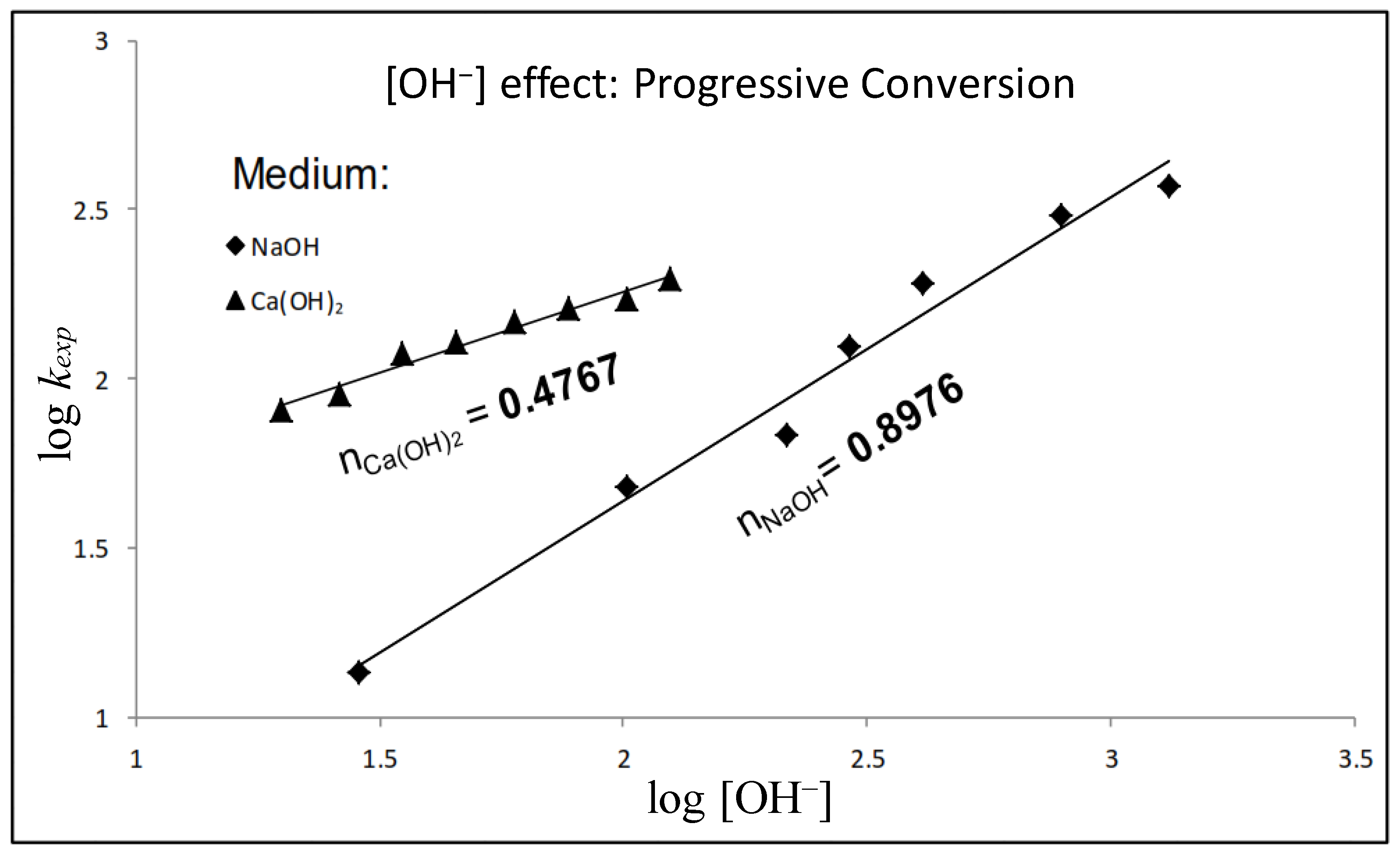
Based on the experimental results of kexp and pH corresponding to the concentration effect in NaOH and Ca(OH)2 media, the graph in Figure 13 was created for the progressive conversion period. The slope corresponding to the NaOH medium shows a reaction order of n = 0.89, under these conditions, the reaction rate exhibits a marked sensitivity to variations in the concentration of NaOH. In contrast, for the Ca(OH)2 medium, the resulting reaction order of the slope is 0.47, indicating a lower dependence on the Ca(OH)2 concentration. The reaction orders for the progressive conversion period in NaOH and Ca(OH)2 media are less than 1, indicating little dependence on the reaction medium, similar to those reported for Cr jarosite, which, like thallium, occupies the cationic site of this type of compound. The reaction orders in this work are lower than those reported for other types of jarosite, suggesting that thallium contributes to the chemical stability of this compound.
Figure 13. Dependence of kexp on the concentration of OH for the decomposition of thallium jarosite in NaOH and Ca(OH)2 media.
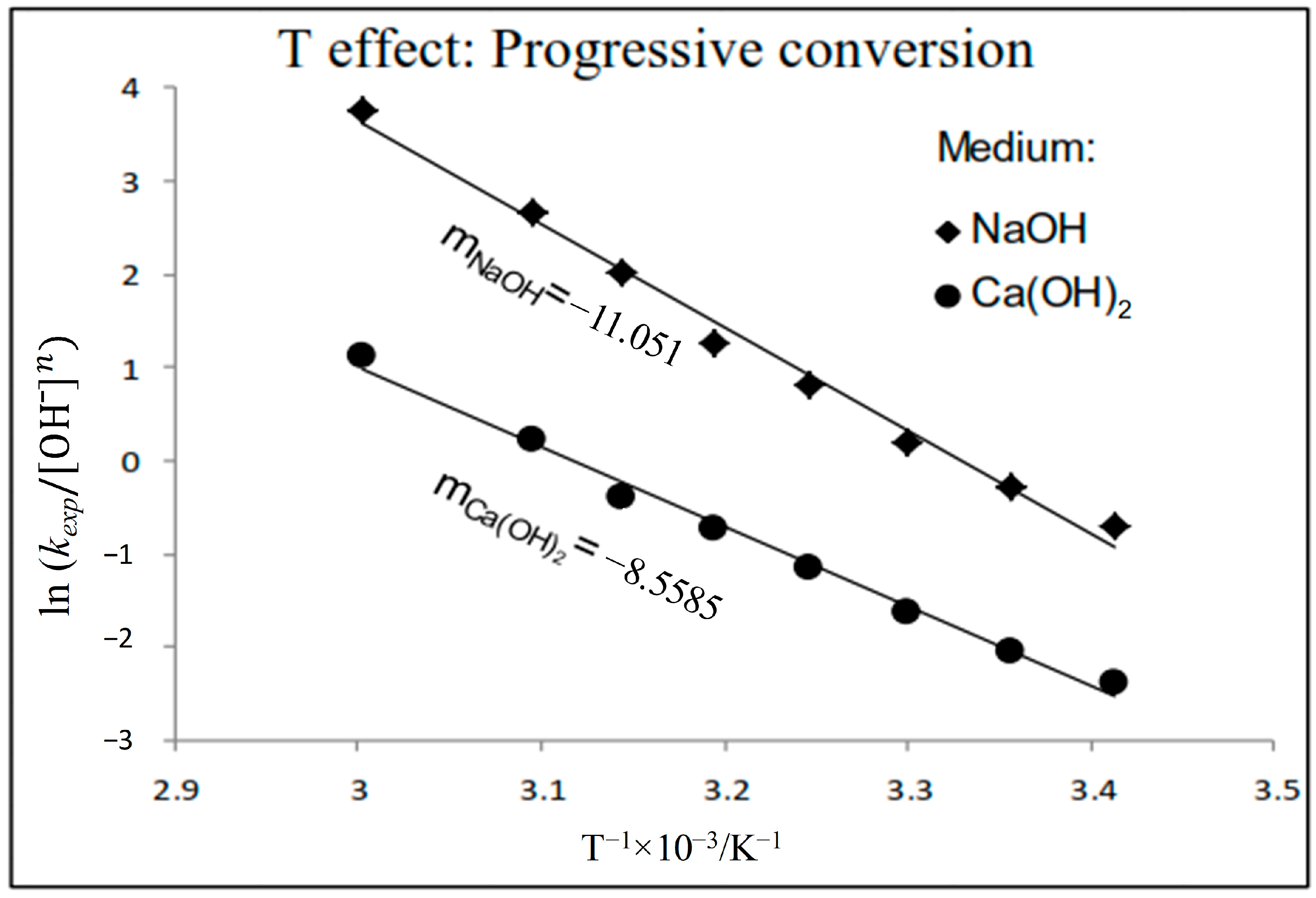
The data resulting from the experiments corresponding to the temperature effect (kexp) and the calculations to determine the activation energy of each medium, NaOH and Ca(OH)2, were used to create the Arrhenius plots for each medium shown in Figure 14. These plots yielded a slope of −11.05 for NaOH and −8.55 for Ca(OH)2, which corresponds to −Ea/R. Since the value of R = 0.008314 kJ mol−1, the activation energy values are therefore Ea = 91.9 kJ mol−1 for NaOH and Ea = 71.1 kJ mol−1 for Ca(OH)2, indicating that the decomposition process of thallium jarosite in both media is controlled by the chemical reaction. The activation energies for the progressive conversion period in NaOH and Ca(OH)2 media are lower than those of mercury and arsenic jarosite, so these compounds are not as stable as thallium jarosite; on the contrary, lead jarosite and chromium jarosite have higher activation energies, so these compounds are more stable in alkaline media.
Figure 14. Dependence of kexp on temperature Ea = 91.878 kJ mol−1 in NaOH medium and Ea = 71.145 kJ mol−1 in Ca(OH)2 medium.
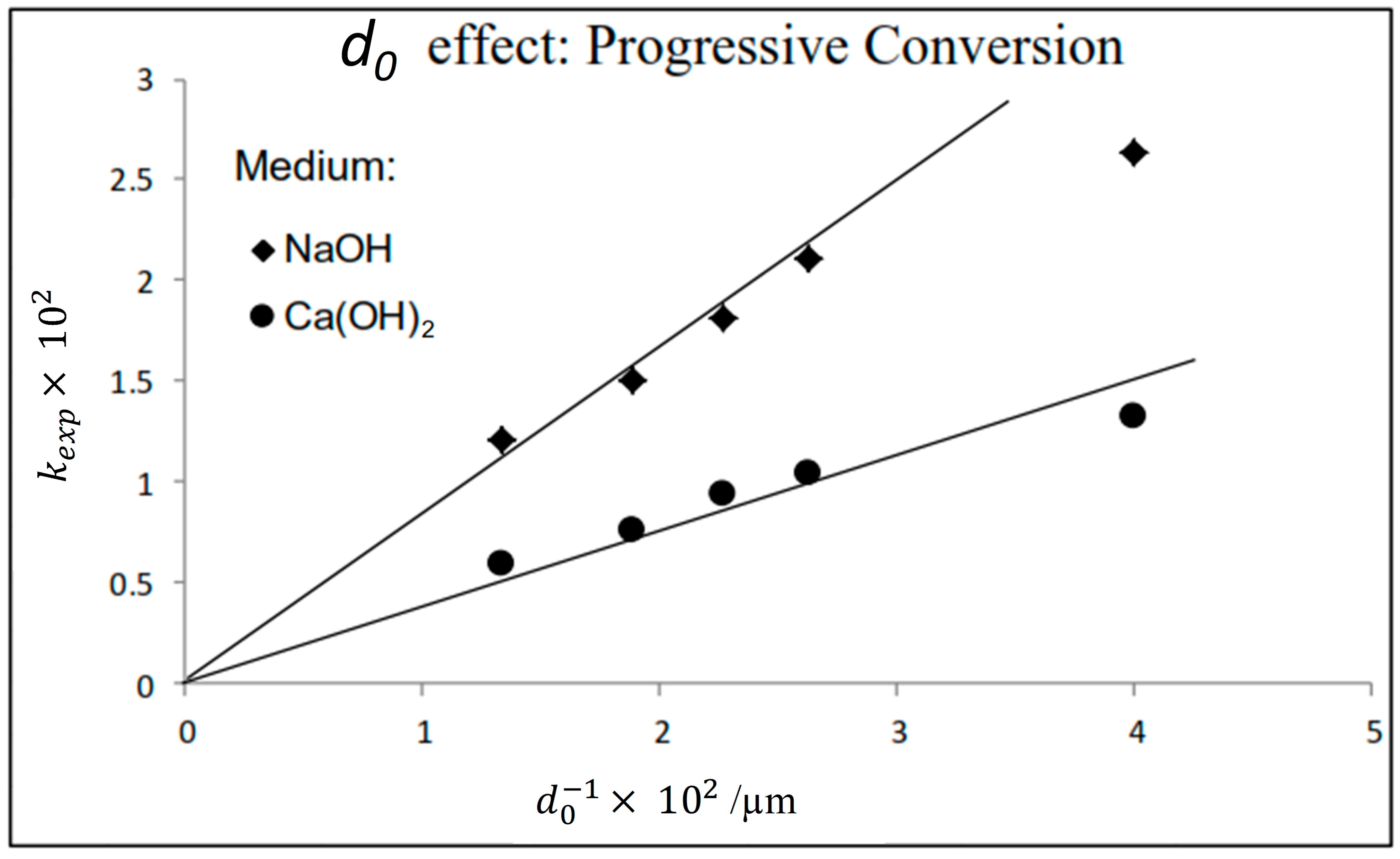
The model verification can be carried out according to Equation (7). Under conditions of constant concentration CA and temperature T, the experimental kinetic constant kexp exhibits an inverse proportionality relationship with respect to the particle radius.
k e x p = b k q C A n ρ B   r 0
where ρ B is the molar density, kq is the chemical reaction rate constant, CA is the reactant concentration, n is the reaction order, and r0 is the initial particle radius.
Figure 15 shows the dependence of kexp on the initial particle diameter d0, from which the experimental constant is derived that is inversely proportional to the particle diameter (kexp α 1/d0), indicating that the decomposition of thallium jarosite in NaOH medium is suitable for the chemically controlled decreasing core model.
Figure 15. Dependence of kexp on particle size (kexp vs. 1/d0).
Table 2 and Table 3 simplify the kinetic parameters determined in the decomposition reactions of thallium jarosite in NaOH and Ca(OH)2 media. The tables show that both the reaction order and activation energy are higher for NaOH than for Ca(OH)2. This indicates a greater dependence on sodium hydroxide and suggests that a more stable compound is obtained when it decomposes with this reagent, since 20 kJ more energy is required to decompose thallium jarosite. This can be attributed to the possibility that sodium hydroxide could cause an alternative reaction forming a thallium compound, whereas calcium hydroxide does not interfere with the reaction, thus requiring less energy to decompose the jarosite. Differences in reaction orders can be related to the solubility of the NaOH and Ca(OH)2 compounds. Ca(OH)2 is less soluble than NaOH. Therefore, fewer OH ions are present in reactions with Ca(OH)2, resulting in lower dependence on the jarosite decomposition reaction than in experiments with NaOH, where there is total solubility and more OH ions are available for the decomposition reaction (Equation (5)). Additionally, the difference in activation energy values is related to the presence of CaCO3 in addition to Fe(OH)3 in the solid residue layer in reactions with Ca(OH)2 (see Figure 4c), which increases the diffusive effect of reagents to the unreacted core of the particles. According to Levenspiel (2013), the physical stages of a heterogeneous reaction, such as mass transport, are less affected by temperature than the chemical stages [40].
Table 2. Kinetic parameters calculated in the decomposition of thallium jarosite in NaOH medium.
Table 3. Kinetic parameters calculated in the decomposition of thallium jarosite in Ca(OH)2 medium.

4. Conclusions

According to the results obtained from the alkaline decomposition in NaOH and Ca(OH)2 media, thallium jarosite exhibits an induction period, a progressive conversion period, and a stability zone in both media. Regarding the results of the thallium jarosite decomposition study under different concentrations, the reaction order during the progressive conversion period was n = 0.89 for NaOH and n = 0.48 for Ca(OH)2. During the induction period, the reaction order increased in both cases (nNaOH = 1.0929 and nCa(OH)2 = 0.7868), indicating a greater dependence on the concentration, which is significantly higher with NaOH, even at very low concentrations. The activation energy values calculated for both reaction media are 91.87 kJ mol−1 for NaOH and 71.14 kJ mol−1 for Ca(OH)2 for the progressive conversion period, and 101.5 kJ mol−1 for NaOH and 79.4 kJ mol−1 for Ca(OH)2 for the induction period. The high dependence on the reaction medium and the high activation energy in both the induction and progressive conversion periods in both reaction media indicate that high concentrations of OH and high temperatures are necessary to initiate the decomposition reaction. Conversely, if these parameters are low, the reaction proceeds more slowly with very long induction times. Based on the resulting data regarding reaction order, activation energy, and the minimal dependence on particle size, the kinetic expressions for each stage of the decomposition process were determined for each reaction medium. Jarosite is considered to be able to retain thallium under moderate or neutral alkalinity conditions, since the activation energy for the studied media is high, so a lot of energy is required to decompose it and release the thallium. Under conditions of high alkalinity and high temperature, these types of compounds do not remain stable, so thallium could be released into the environment, and this is demonstrated by the strong dependence on the reaction medium.

Author Contributions

Formal analysis, H.I., J.E.M. and M.U.F.; Investigation, I.A.R., F.P. and S.O., Methodology, M.R., P.B.B. and M.E.; Supervision, H.I. All authors have read and agreed to the published version of the manuscript.

Funding

This research received no external funding.

Data Availability Statement

The original contributions presented in this study are included in the article. Further inquiries can be directed to the corresponding authors.

Acknowledgments

The authors are grateful for the availability provided by the use of the chemistry laboratory of the Technological University of Tulancingo for experimental development, and for the unconditional access of the Autonomous University of the State of Hidalgo in the area of Materials Science for the realization of ICP-AES studies, as well as the collaboration with the National Polytechnic Institute for the analysis of XRD, with special thanks to the National Council of Humanities, Science and Technology for granting the postdoctoral stay scholarship and to the Council of Science, Technology and Innovation of Hidalgo (CITNOVA).

Conflicts of Interest

The authors declare no conflict of interest.

References

  1. John, P.A.; Viraraghavan, T. Thallium: A review of public health and environmental concerns. Environ. Int. 2005, 31, 493–501. [Google Scholar] [CrossRef] [PubMed]
  2. Yang, C.; Chen, Y.; Peng, P.; Li, C.; Chang, X.; Xie, C. Distribution of natural and anthropogenic thallium in the soils in an industrial pyrite slag disposing area. Sci. Total Environ. 2005, 341, 159–172. [Google Scholar] [CrossRef]
  3. Kazantzis, G. Thallium in the environment and health effects. Environ. Geochem. Health 2000, 22, 275–280. [Google Scholar] [CrossRef]
  4. Twindwell, L.G.; Beam, C.W. Potential technologies for removing thallium from mine and process wastewater: An abbreviated annotation of the literature. Eur. J. Miner. Process. Environ. Prot. 2002, 2, 1–10. [Google Scholar]
  5. Galván, S.; Santamaría, A. Thallium toxicity. Toxicol. Lett. 1998, 99, 1–13. [Google Scholar] [CrossRef]
  6. Chen, Y.H.; Wang, C.L.; Liu, J.; Wang, J.; Qi, J.Y.; Wu, Y.J. Environmental exposure and flux of thallium by industrial activities utilizing-bearing pyrite. Sci. China Earth Sci. 2013, 56, 1502–1509. [Google Scholar] [CrossRef]
  7. Cheam, V. Thallium contamination of water in Canada. Water Qual. Res. J. Can. 2001, 36, 851–877. [Google Scholar] [CrossRef]
  8. Madejón, P.; Murillo, J.M.; Marañon, T.; Lepp, N.W. Factors affecting accumulation of thallium and other trace elements in two wild Brassicaceae spontaneously growing on soils contaminated by tailings dam waste. Chemosfhere 2007, 67, 20–28. [Google Scholar] [CrossRef] [PubMed]
  9. Yarto, M. Los Efectos de la Contaminación: El Caso de Las Sustancias Tóxicas Persistentes; Instituto Nacional de Ecología: Mexico City, Mexico, 2004. [Google Scholar]
  10. Xiong, Y. Hydrothermal thallium mineralization up to 300 °C: A thermodynamic approach. Ore Geol. Rev. 2007, 32, 291–313. [Google Scholar] [CrossRef]
  11. Liu, J.; Lippold, H.; Wang, J.; Lippmann, J.; Chen, Y. Sorption of thallium(I) onto geological materials: Influence of pH and Humic matter. Chemosfhere 2011, 82, 866–871. [Google Scholar] [CrossRef]
  12. Vanek, A.; Chrastny, V.; Komárek, M.; Panízek, V.; Teper, L.; Cabala, J.; Drábek, O. Geochemical position of thallium in soils from a smelter-impacted area. J. Geochem. Explor. 2013, 124, 176–182. [Google Scholar] [CrossRef]
  13. Xiao, T.; Guha, J.; Boyle, D.; Liu, C.Q.; Chen, J. Environmental concerns related to high thallium levels in soils and thallium uptake by plants in southwest Guizhou, China. Sci. Total Environ. 2004, 318, 223–244. [Google Scholar] [CrossRef] [PubMed]
  14. Duan, L.; Song, J.; Li, X.; Yuan, H.; Li, N.; Xu, Y. Thallium concentrations and sources in the surface sediments of Bohai Bay. Mar. Environ. Res. 2012, 73, 25–31. [Google Scholar] [CrossRef] [PubMed]
  15. Xiao, T.; Yang, F.; Li, S.; Zheng, B.; Ning, Z. Thallium pollution in China: A geo-environmental perspective. Sci. Total Environ. 2012, 421–422, 51–58. [Google Scholar] [CrossRef]
  16. Xiao, T.; Guha, J.; Boyle, D.; Liu, C.Q.; Zheng, B.; Wilson, G.C.; Rouleau, A.; Chen, J. Naturally occurring thallium: A hidden geoenvironmental health hazard? Environ. Int. 2004, 30, 501–507. [Google Scholar] [CrossRef]
  17. Sangvanich, T.; Sukwarotwat, V.; Wiacek, R.J.; Grudzien, R.M.; Fryxell, G.; Addleman, R.S.; Timchalk, C.; Yantasee, W. Selective capture of cesium and thallium from natural waters and simulated wastes with copper ferrocyanide functionalized mesoporous silica. J. Hazard. Mater. 2010, 182, 225–231. [Google Scholar] [CrossRef]
  18. López, M.A.; Spears, D.A.; Díaz, M.; Martínez, M.R. Thallium in coal: Analysis and environmental implications. Fuel 2013, 105, 13–18. [Google Scholar] [CrossRef]
  19. John, A.L.; Viraraghavan, T. Removal of thallium from aqueous solutions by modified Aspergillus niger biomass. Bioresour. Technol. 2008, 99, 618–625. [Google Scholar] [CrossRef]
  20. Kikuchi, E.; Itoh, K.; Fujishima, A.; Yonezawa, T.; Kimura, T. Removal of thallium from waste water by using the iron metal and hydrogen peroxide. Chemistry 1990, 2, 253–254. [Google Scholar] [CrossRef]
  21. Vale, M.G.R.; Welz, B. Spectral and non-spectral interferences in the determination of thallium in environmental materials using electrothermal atomization and vaporization technique—A case study. Spectrochim. Acta Part B 2002, 57, 1821–1834. [Google Scholar] [CrossRef]
  22. Li, S.; Xiao, T.; Zheng, B. Medical geology of arsenic, selenium and thallium in China. Sci. Total Environ. 2012, 421–422, 31–40. [Google Scholar] [CrossRef] [PubMed]
  23. Zhang, Z.; Zhang, B.; Long, J.; Zhang, X.; Chen, G. Thallium pollution associated with mining of thallium deposits. Sci. China Ser. D 1998, 41, 75–81. [Google Scholar] [CrossRef]
  24. ATSDR (Agency for Toxic Substances and Disease Registry). Thallium, cas# 7440-28-0, September 1995. Available online: http://www.atsdr.cdc.gov/es/ (accessed on 5 May 2015).
  25. Wierzbicka, M.; Srarek, G.; Grodzinska, K. Highly toxic thallium in plants from the vicinity of Olkusz (Poland). Ecotoxicol. Environ. Saf. 2004, 59, 84–88. [Google Scholar] [CrossRef] [PubMed]
  26. Zhang, L.; Huang, T.; Zhang, M.; Guo, X.; Yuan, Z. Studies on the capability and behavior of adsorption of thallium on nano-Al2O3. J. Hazard. Mater. 2008, 157, 352–357. [Google Scholar] [CrossRef] [PubMed]
  27. Memon, S.Q.; Memon, N.; Solangi, A.R.; Memon, J.R. Sawdust: A green and economical sorbent for thallium removal. Chem. Eng. J. 2008, 140, 235–240. [Google Scholar] [CrossRef]
  28. Dutrizac, J.E. The behaviour of thallium during jarosite precipitation. Metall. Mater. Trans. B 1997, 28, 765–776. [Google Scholar] [CrossRef]
  29. Aguilar-Carrillo, J.; Herrera-García, L.; Reyes-Domínguez, I.A.; Gutiérrez, E.J. Thallium (I) sequestration by jarosite and birnessite: Structural incorporation vs sur face adsorption. Environ. Pollut. 2020, 257, 113492. [Google Scholar] [CrossRef]
  30. Rose, J.; Chaurand, P.; Dentant, C.; Angeletti, B.; Borschneck, D.; Kieffer, I.; Proux, O.; Bonet, R.; Auffan, M.; Levard, C.; et al. Thallium Long-Term Fate from Rock-Deposit to Soil: The Jas Roux Sulfosalt Natural Analogue. ACS Earth Space Chem. 2023, 7, 1848–1857. [Google Scholar] [CrossRef]
  31. Dutrizac, J.E.; Kaiman, S. Rubidium jarosite and thallium jarosite-new synthetic jarosite-type compounds and their strutures. Hidrometallurgy 1975, 1, 51–59. [Google Scholar] [CrossRef]
  32. Dutrizac, J.; Chen, S.; Beauchemin, S. The behaviour of thallium(III) during jarosite precipitation. Hydrometallurgy 2005, 79, 138–153. [Google Scholar] [CrossRef]
  33. Balic, T.Z.; Moëlo, Y.; Longar, Z.; Micheelsen, H. Dorallcharite, Tl0.8K0.2Fe3(SO4)2(OH)6, a new member of the jarosite-alunite family. Eur. J. Miner. 1994, 6, 255–263. [Google Scholar]
  34. Reyes, I.A.; Patiño, F.; Rivera, I.; Flores, M.U.; Reyes, M.; Hernández, J. Alkaline Reactivity of Arsenical Natrojarosite. J. Braz. Chem. Soc. 2011, 22, 2260–2267. [Google Scholar] [CrossRef]
  35. Lunar, R.; Martínez, J. La jarosita, una andaluza universal. Miner. Nuestro Siglo 1993, 60–61. [Google Scholar]
  36. Patiño, F.; Salinas, E.; Cruells, M.; Roca, A. Alkaline decomposition-cyanidation kinetics of argentian natrojarosite. Hydrometallurgy 1998, 49, 323–336. [Google Scholar] [CrossRef]
  37. Flores, M.U.; Patiño, F.; Reyes, I.A.; Rivera, I.; Reyes, M.; Juárez, J.C. Kinetic modeling of the alkaline decomposition of potassium arsenojarosite. J. Braz. Chem. Soc. 2012, 23, 1018–1023. [Google Scholar] [CrossRef]
  38. Ordoñes, S.; Patiño, F.; Reyes, I.A.; Flores, M.U.; Flores, V.H.; Palacios, E.G.; Reyes, M. Synthesis and topology of the reaction of mercury jarosite in NaOH medium. In Proceedings of the European Metallurgical Conference, Duesseldorf, Germany, 14–17 June 2015; Volume 1, pp. 537–552. [Google Scholar]
  39. Islas, H.; Patiño, F.; Roca, A.; Reyes, I.A.; Flores, M.U.; Palacios, E.G.; Reyes, M. Síntesis, caracterización y naturaleza de la reacción alcalina de jarosita de talio. Lat. J. Metall. Mater. 2017, 37, 228–236. [Google Scholar]
  40. Levenspiel, O. Ingeniería de Las Reacciones Químicas, 3rd ed.; Limusa Wiley: Mexico City, Mexico, 2013; pp. 566–588. [Google Scholar]
Disclaimer/Publisher’s Note: The statements, opinions and data contained in all publications are solely those of the individual author(s) and contributor(s) and not of MDPI and/or the editor(s). MDPI and/or the editor(s) disclaim responsibility for any injury to people or property resulting from any ideas, methods, instructions or products referred to in the content.

Article Metrics

Citations

Article Access Statistics

Multiple requests from the same IP address are counted as one view.