Review

Catalytic Oxidation of Alkanes and Cycloalkanes: Overview

by
Aygun Zabit Aliyeva
1,
Ulviyya Aliman Karimova
1,
Sahib Gadji Yunusov
1,
Michael Vigdorowitsch
2,3,* and
Sevinj Abdulhamid Mammadkhanova
4
1
Institute of Petrochemical Processes Named after Acad. Y.H. Mammadaliyev of MSE, Baku AZ1025, Azerbaijan
2
Mousson GmbH, 60594 Frankfurt, Germany
3
Engineering Institute, Michurinsk State Agrarian University, 393760 Michurinsk, Russia
4
Faculty for Chemical Technologies, Azerbaijan State Oil and Industry University, Baku AZ1010, Azerbaijan
*
Author to whom correspondence should be addressed.
ChemEngineering 2026, 10(2), 25; https://doi.org/10.3390/chemengineering10020025
Submission received: 12 December 2025 / Revised: 19 January 2026 / Accepted: 27 January 2026 / Published: 3 February 2026

Abstract

Selective functionalisation of inert C(sp3)–H bonds in alkanes and cycloalkanes remains one of the main challenges in the field of environmentally sustainable chemistry. This review provides a critical assessment of current catalytic strategies, in particular addressing the persistent problem of overoxidation and low selectivity. Going beyond traditional compartmentalised summaries, this work identifies a significant trend towards the integration of non-traditional activation methods, including ultrasonic cavitation, photocatalysis, and nanosecond pulse discharges, in both homogeneous and heterogeneous systems. Key contributions include a comparative analysis of radical control strategies, in particular highlighting how intermediate hydroperoxides can be used to shift reaction pathways towards selectivity of over 97% for alcohols and ketones. In addition, we discuss the emerging role of carbon nanomaterials (e.g., fullerenes and brominated nanotubes) as active electron-rich carriers and catalysts that lower the energy barriers for C–H activation under mild, ‘green’ conditions. The review concludes that the future of scalable hydrocarbon oxidation lies in ‘hybrid’ approaches such as stabilising active metal centres in protective matrices (zeolites, polymers) while using physical stimuli (ultrasound) to overcome diffusion limitations. This unique perspective highlights the transition from purely chemical catalyst design to integrated process intensification, offering a roadmap for energy-efficient and environmentally friendly industrial technologies.

1. Introduction

Alkanes are one of the most inert groups of organic compounds, which makes their direct conversion into valuable oxygen-containing products one of the key scientific and technological challenges in modern chemistry [1]. The oxidation of alkanes is one of the most difficult and, at the same time, most pressing challenges in modern organic and catalytic chemistry. The high strength of the C–H bond due to both its covalence and the proximity of the elements in the electronegativity series (the energy of dissociation of the C-H bond constitutes 310–430 kJ/mol), and the chemical inertness of alkanes necessitate the development of effective catalysts and mild reaction conditions that allow the selective production of alcohols, ketones, acids, and other oxygen-containing products. Selective oxidation of alkanes is not only of fundamental importance but also has significant industrial prospects, as it underlies the processes of obtaining oxygen-containing compounds, raw materials for fuel additives. Despite significant achievements, problems of low selectivity, catalyst degradation, and difficulties in scaling laboratory methods to an industrial level remain unresolved. Thus, the selective oxidation of alkanes and cycloalkanes represents one of the central challenges in contemporary catalysis and petrochemistry. From an industrial standpoint, alkane oxidation underlies the production of alcohols, ketones, carboxylic acids, and intermediates for polymers, solvents, and fuel additives. Processes such as cyclohexane oxidation to cyclohexanol/cyclohexanone or partial oxidation of light alkanes remain economically significant, yet energetically demanding and limited by selectivity. From the academic point of view, alkane oxidation serves as a benchmark problem for understanding C(sp3)–H bond activation, radical vs. non-radical pathways, and structure–activity relationships in catalysts. The major challenges associated with alkane oxidation include (i) the high bond dissociation energy and low polarity of C–H bonds; (ii) poor selectivity caused by consecutive oxidation of primary products (alcohol → ketone → acid → CO2), commonly referred to as hyperoxidation; and (iii) limited catalyst stability under oxidative conditions, particularly for homogeneous systems. Additional difficulties arise from catalyst deactivation, leaching, and the complexity of scaling laboratory systems to industrial reactors.
The aim of this review is to summarise and critically evaluate modern catalytic systems for alkane and cycloalkane oxidation, highlighting mechanism insights and practical limitations. The review is structured as follows: Section 2 outlines general trends in alkane oxidation chemistry with the focus on the catalysis products; Section 3 and Section 4 discuss homogeneous and heterogeneous catalysis, respectively, with emphasis on their mechanisms; Section 5 overviews special methods for C–H bond activation; and Section 6 provides conclusions and future outlook.

2. Products of Oxidation of Alkanes and Cycloalkanes

The oxidation of hydrocarbons remains one of the key processes in organic synthesis and petrochemistry, aimed at obtaining valuable oxygen-containing products. In past decades, considerable attention has been paid to the development of highly active and selective catalysts [2], as well as to the study of the mechanisms of oxidative processes [3,4].
In [5], the authors studied the effect of fullerene C60/C70 on the oxidation process of n-decane in the liquid phase and found that fullerene exhibits its catalytic properties only in soluble amounts. In [6], the author presents a chromato-mass-spectral analysis of the synthesised products from the oxidation of n-undecane in the presence of fullerene C60/C70 and metal-containing carbon nanotubes, which revealed the formation of naphthenic and fatty acids, alcohols, ester acids, anhydrides, lactones, and unreacted hydrocarbons. The use of such an active transporter of nucleophilic particles as fullerene C60/C70 and metal-containing carbon nanostructures in the oxidation of petroleum hydrocarbons leads to the production of a variety of oxygen-containing products (Table 1).
The mechanism of the corresponding process is described in [7,8]. The data presented in Table 1 show that the oxidation process leads to the formation of a wide range of oxygen-containing compounds with different structures. This means that the oxidation of an individual hydrocarbon does not produce products corresponding to the initial hydrocarbon in terms of functional group type, which is what the authors of [9] fixed while studying the oxidation of n-C5-C8 hydrocarbons, cyclohexane, and mixtures, and succeeded in specific obtaining the target product of the same functional group type as the origin. In particular, cyclohexane oxidation yielded predominantly cyclohexanol and cyclohexanone rather than a complex mixture of unrelated oxygenated products. Oxidation was carried out by exciting a discharge at atmospheric pressure to rapidly remove the target product from the reactor zone, thereby suppressing secondary oxidation reactions. The experimental data presented show that under these conditions, it is possible to synthesise cyclohexanol (52.12% by mass) and cyclohexanone (47.88% by mass) from cyclohexane. When oxidising a mixture of hydrocarbons, it is also possible to obtain identical products from the oxidation of homonymous hydrocarbons.
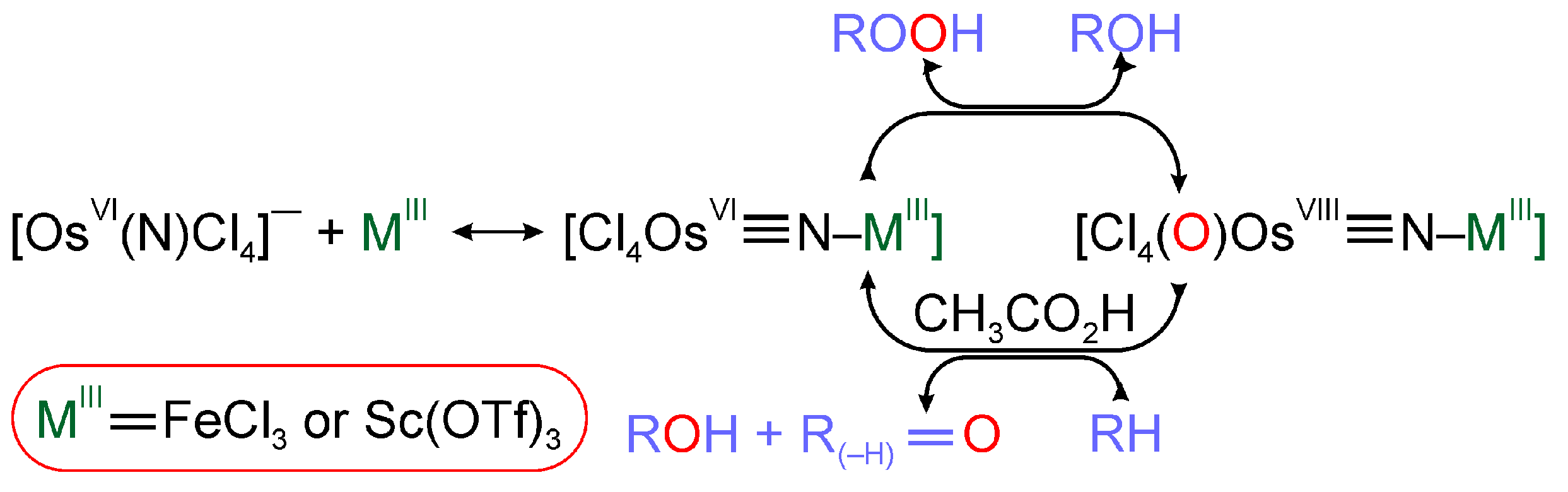
It was shown in [10] that the oxidation of alkanes by various peroxides (tBuOOH, H2O2, PhCH2C(CH3)2OOH) is effectively catalysed by the [OsVI(N)Cl4] system in the presence of Lewis acids (FeCl3 or scandium(III) trifluoromethanesulfonate) in a mixture of CH2Cl2/CH3CO2H solvents. The process proceeds rapidly at room temperature, providing high yields of alcohols and ketones. PhCH2C(CH3)2OOH peroxide is particularly effective, yielding >70% cyclohexanol and cyclohexanone. Experimental data confirm the non-radical (heterolytic) pathway of peroxide activation and the absence of free alkyl radicals. The proposed mechanism involves the transfer of an oxygen atom from ROOH to an osmium complex, followed by the activation of the alkane through the removal of a hydrogen atom by an active metal-oxide centre (Figure 1).
In [11], alkanes and secondary alcohols were oxidised to synthesise ketones in the presence of a water-soluble ruthenium complex catalyst [C6H5CH2N(CH3)2H]2[Ru(dipic)Cl3] (dipic = 2,6-pyridinedicarboxylate). The catalytic system was found to be capable of oxidising substrates to the corresponding reaction products with high yields. Due to the water solubility of the catalyst, the target product appeared to be easily separated.
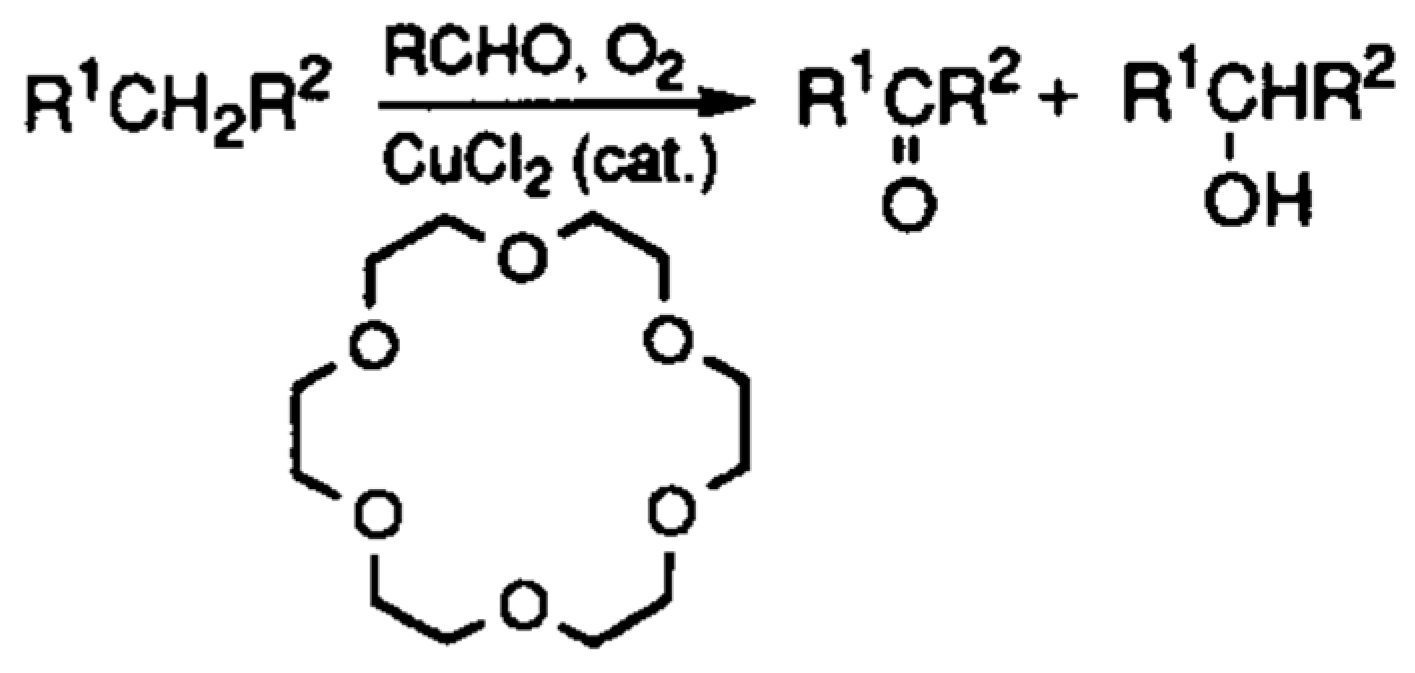
In [12], the oxidation reactions of alkanes to corresponding alcohols and ketones were investigated. Extremely high conversion rates were obtained when cyclohexane was oxidised using a combination of copper (II) chloride and crown ether as a catalyst. Alkanes, as saturated hydrocarbons, are known to have low reactivity, and the authors of [13] investigated the oxidation reactions of higher hydrocarbons in the presence of activated carbon and silica gel to enhance the oxidative ozonation of higher aliphatic hydrocarbons, n-hexadecane, n-tetradecane, and n-dodecane. Effective oxidative ozonation was observed at room temperature (20 ± 1 °C) and normal pressure. The main reaction products were 4-, 3-, and 2-hexadecanones. The catalytic activity of activated carbon and silica gel was compared with non-catalysed reactions.
Osmium-based complexes, such as Os3(CO)10(µ-H)2, catalyse the oxidation of cyclooctane with hydrogen peroxide to form hydroperoxides, alcohols, and ketones. The reactions proceed via a radical mechanism involving hydroxyl radicals, as confirmed by kinetic studies [14].
In [15], the authors investigated the oxidation reaction of cycloalkanes with molecular oxygen at temperatures of 120 °C and below in the presence of isoamyl nitrite under mild conditions. The substrate was found to be easily oxidised by molecular oxygen to the corresponding cycloalkanols, cycloalkanones, and adipic acid. The introduction of soluble Co and Mn ions into the system accelerated the process.
Work Ref. [16] shows that the use of cycloalkyl hydroperoxides which are natural intermediate oxidation products, as additional oxidants, significantly increases the efficiency and selectivity of the catalytic oxidation of cycloalkanes with molecular oxygen in the presence of Co(II)/Cu(II) porphyrin complexes. This approach prevents unwanted auto-oxidation, ensures more rational use of intermediate hydroperoxides, and allows for simultaneous increases in conversion and selectivity (e.g., for cyclohexane, selectivity increases from 88.6% to 97.2%). The method is universal for different cycloalkanes and demonstrates the potential for widespread use of metalloporphyrins in catalysis.
From an industrial point of view, the oxidation of paraffin fractions (mixed substrates) Ref. [17] remains an important area of research. Liquid-phase oxidation of petroleum fractions (naphthenic-paraffinic) is also being actively studied. For example, Zeynalov et al. demonstrated the effectiveness of using the multilayer metal-containing carbon nanotubes as a catalyst for the aerobic oxidation of petroleum hydrocarbons [18]. The conditions for the oxidation of naphthenic-paraffinic hydrocarbons using Cr and Mn acetylacetonates were optimised, thereby uncovering the influence of catalyst concentration on the yield of acidic products [19].
Brominated single-walled carbon nanotubes ((Br)n-SWCNT) obtained by a plasma chemical method were involved in the liquid-phase process of aerobic oxidation of aliphatic hydrocarbons. A significant catalytic effect of (Br)n-SWCNT was first revealed in a model oxidation initiated by cumene, and then in experiments on deep aerobic oxidation of the naphthenic fraction of oil containing paraffin hydrocarbons obtained from a diesel fuel mixture of Azerbaijani oils. The ability of (Br)n-SWCNT to accelerate the oxidation of hydrocarbons was discovered for the first time. This phenomenon originates obviously from peculiarities in the electronic configuration of carbon nanotubes. The probable mechanism of the catalytic action of (Br)n-SWCNT is prone to the formation of active oxygen species [20].
In [21], liquid-phase oxidation of naphthenic-paraffin concentrate obtained from a mixture of Azerbaijani oils was studied in the presence of a Mn-containing catalyst synthesised on the basis of natural petroleum acids. It was determined that the catalytic system is a dispersion medium containing catalyst particles with a hydrodynamic diameter of 0.5–1.3 μm and a high ability to catalyse oxidation processes.
In [22], the authors investigated the liquid-phase oxidation of aliphatic hydrocarbons and their mixtures in a system containing complexes of metals of variable valence with polyethylene polyamine. It was established that under such conditions, the process proceeded selectively with the predominant formation of hydroperoxides, and the nature and dynamics of oxidation were largely determined by the properties of metals fixed on the polymer matrix.
Current research in the field of hydrocarbon oxidation covers a wide range of catalysts, from single atoms to oxide and carbon nanostructures. Both the fundamental aspects of the mechanism and the applied possibilities for obtaining valuable products are being actively studied, which emphasises the high potential of this area.

3. Homogeneous Catalysis in the Oxidation of [cyclo-]alkanes

Generally accepted principles of homogeneous catalysis of alkanes are as follows:
  • The catalyst and substrate are in the same phase, most often in solution;
  • The catalyst is a complex of transition metals and ligands;
  • The reaction involves several molecular stages, each of which controls the selectivity of the process.
It is particularly emphasised that alkanes are difficult to chemically transform due to the following:
  • Their C–H bonds have high breaking energy;
  • Their molecules do not contain reaction centres;
  • They are chemically and thermodynamically stable.
In this regard, the key task is to find catalytic systems that are capable of selectively activating C–H bonds without causing a deep oxidation of hydrocarbons to CO2.
Problems and limitations of the processes under consideration are as follows:
  • Low stability of catalysts in an oxidative environment;
  • Side processes leading to the formation of acidic and carbon dioxide products;
  • Difficulty in controlling selectivity; i.e., many reactions occur in parallel;
  • High cost of transition metals;
  • Difficulty in transferring laboratory conditions to an industrial scale.
These factors significantly hinder industrial mastering such processes.
The use of homogeneous transition metal complexes is one of the most actively explored areas in the field of aliphatic hydrocarbon oxidation. Such systems allow high activity and selectivity to be achieved, as well as provide an opportunity to study reaction mechanisms at the molecular level.
Homogeneous catalysts for the oxidation of alkanes are soluble metal complexes, such as osmium carbonyl complexes (Os3(CO)11 (p-alkenes)) [14], Lewis acids (AlCl3, BF3), and a combination of simple Fe salts with N-methyl bis(picolylamine) (Me-bpa) [23]. Strong protonic acids (H2SO4, HF) capable of generating carbocations involved in oxidation or acting as catalysts for the formation of reactive intermediate compounds are also used in homogeneous catalysis for the oxidation of alkanes [24,25]. Chepaikin considers in [24] oxidation of alkanes in protonic media, paying particular attention to the mechanism of the catalytic process: analysing the molecular mechanisms of catalysis, how the catalyst interacts with alkanes, how electrons and protons are transferred, and how intermediate compounds are formed. Various catalysts are considered, including metals (e.g., palladium, etc.) and ligand systems that provide the desired activity and selectivity, as well as the influence of the reaction environment on product formation. Spectroscopic methods and other experimental techniques are used to study the structure of key intermediate compounds (metal complexes) and reaction pathways. The relevance of this work follows the importance of selective hydrocarbon oxidation processes for petrochemistry, organic synthesis, and catalysis, as well as originates from the commitment to develop energy-efficient and environmentally friendly methods for processing organic raw materials. Ref. [24] provides an in-depth review of the mechanisms and patterns of homogeneous catalysis in the oxidative functionalisation of alkanes. It is of high theoretical value, summarises a comprehensive research array and highlights the prospects for further development of effective catalytic systems. Understanding the molecular mechanisms described is the key to creating new methods for the selective oxidation of hydrocarbons, which is a critical task for the modern organic and petrochemical industries.
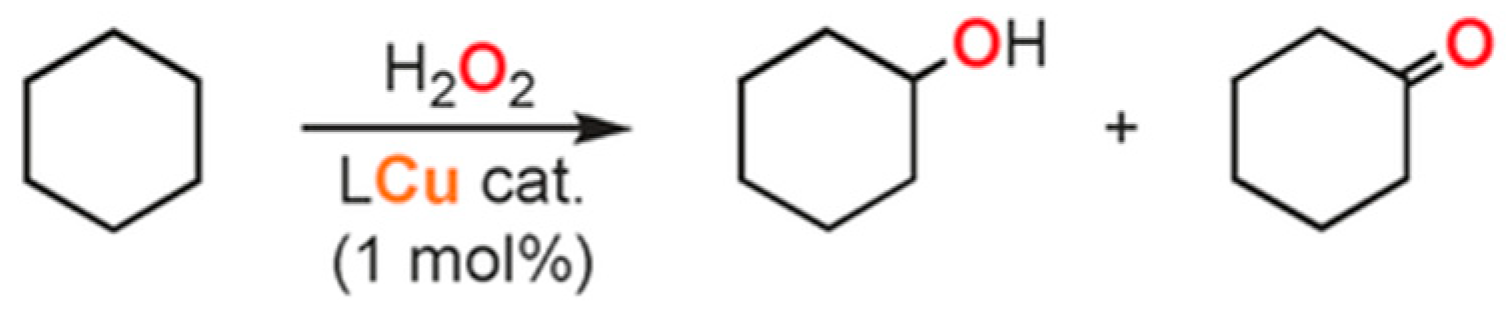
Copper complexes with tetra-dentate ligands and phenanthroline derivatives catalyse the oxidation of cycloalkanes and linear alkanes using H2O2 as an oxidant. The main reaction products are alkyl hydroperoxides, which can decompose to form alcohols and ketones. Mechanism studies indicate the involvement of C- and O-centred radicals is similar to Fenton reactions (Figure 2).
In addition, catalytic systems based on copper salts and crown ethers let aerobic oxidation of alkanes take place in the presence of aldehyde. Such systems demonstrate selective formation of alcohols and ketones [26,27] (Figure 3).
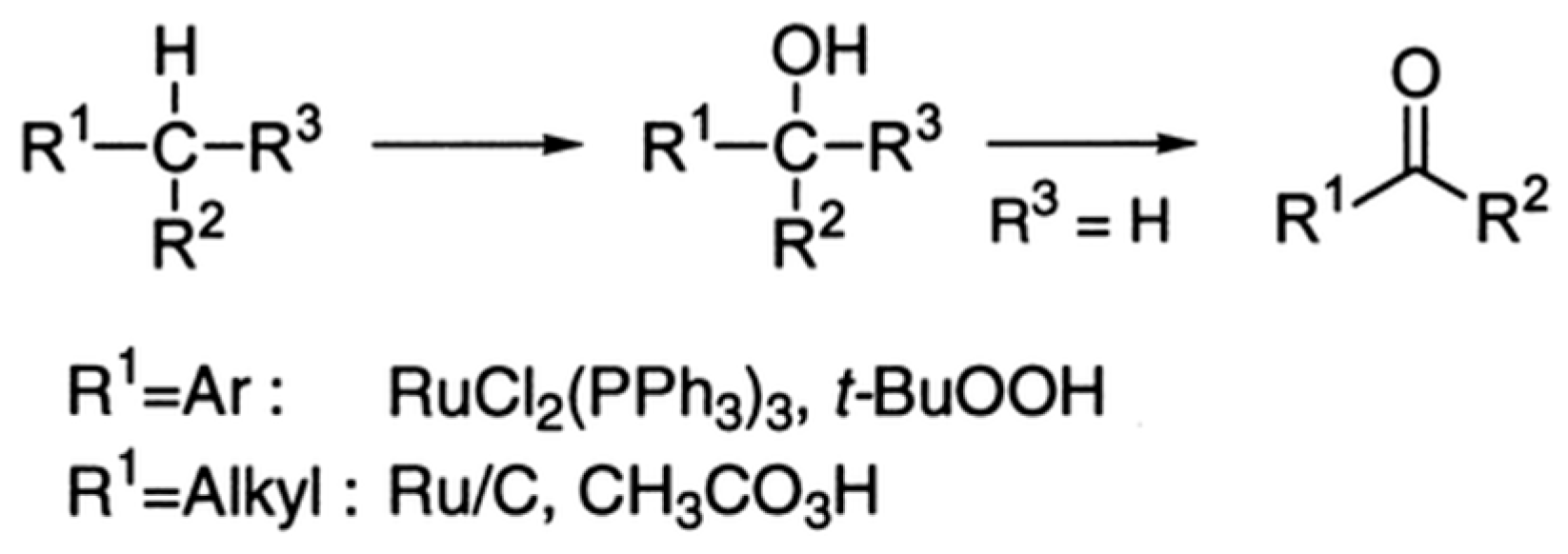
Similar results were obtained for ruthenium-based systems: RuCl2(PPh3)3 and Ru/C complexes catalyse the oxidation of alkanes with tert-butyl hydroperoxide and peracetic acid, ensuring the selective formation of alcohols and ketones at room temperature. The RuCl2(PPh3)3-t-BuOOH catalytic system for the oxidation of alkylated arenes produces aryl ketones. The Ru/C-CH3CO3H system is suitable for the synthesis of ketones and alcohols from alkanes. High-valent oxo-ruthenium species play a key role in that mechanism [28] (Figure 4).
Vanadium-containing catalysts have also proven effective in the oxidation of alkanes. In the presence of pyridinecarboxylic acid and H2O2, vanadate anions catalyse oxidation to form hydroperoxides, ketones, and alcohols via radical pathways, where the limiting step is the decomposition of the vanadium peroxocomplex [29]. Manganese (III) porphyrin complexes also exhibit high activity, which, in combination with iodobenzene diacetate in ionic liquid, provides effective oxidation of alkanes at room temperature [30].

4. Heterogeneous Catalysis in the Oxidation of [cyclo-]alkanes

Heterogeneous catalysis is widely applied to the oxidation of alkanes because of the catalysts’ stability, reusability, and simpler methods of separating them from the product. Their activity and selectivity largely depend on the nature of the metal, the carrier, and the surface structure. They possess oxygen mobility and can operate according to the Mars–van Krevelen mechanism, which is a cycle of redox reactions in which oxygen for the reaction is taken from the structure of the oxide catalyst itself rather than from an external source. The kinetic features of catalytic oxidation proceeding via the redox mechanism are considered. The applicability of the Mars–van Krevelen model to real systems—catalysts for the partial oxidation of light alkanes, including the oxidative condensation of methane, C2+ dehydrogenation, and C3+ hydrocarbon cracking—is analysed. It is noted that the composition and operating conditions of such catalysts require clarification of the concepts of molecular oxygen activation and its participation in the catalytic cycle. Key aspects are highlighted: thermodynamics and kinetics of redox reactions (thermochemistry of oxide systems, lifetime of bound oxygen), implementation of the oxidation-reduction reaction (ORR) mechanisms in the presence of oxides missing ions with variable degrees of oxidation, phase, and chemical transformations in the cycle, as well as the influence of radical stages on interpretation of kinetic data in mixed heterogeneous–homogeneous systems [31].
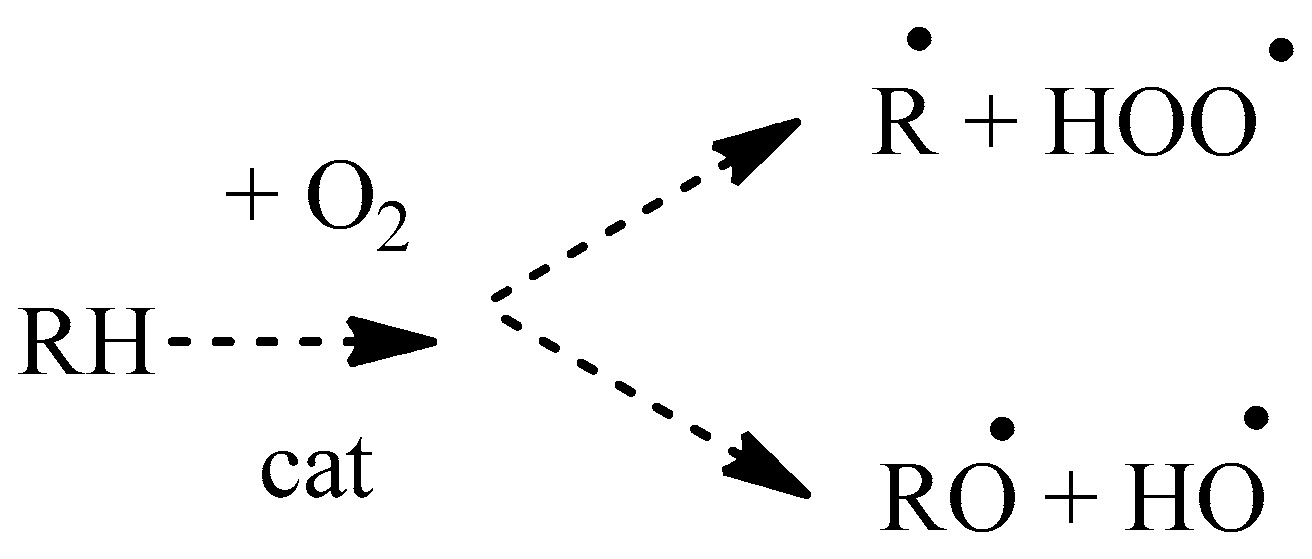
For the oxidation reactions at high temperatures, the radical-chain mechanism is also relevant [31]. The mechanism of alkane oxidation is presented as follows in [21,32]. (Figure 5). In phase 1, the source alkane RH undergoes C–H bond activation in the presence of molecular oxygen O2 and a catalyst (cat) (Figure 5). Under the action of the catalyst, homolytic bond cleavage occurs, leading to the formation of radical particles.
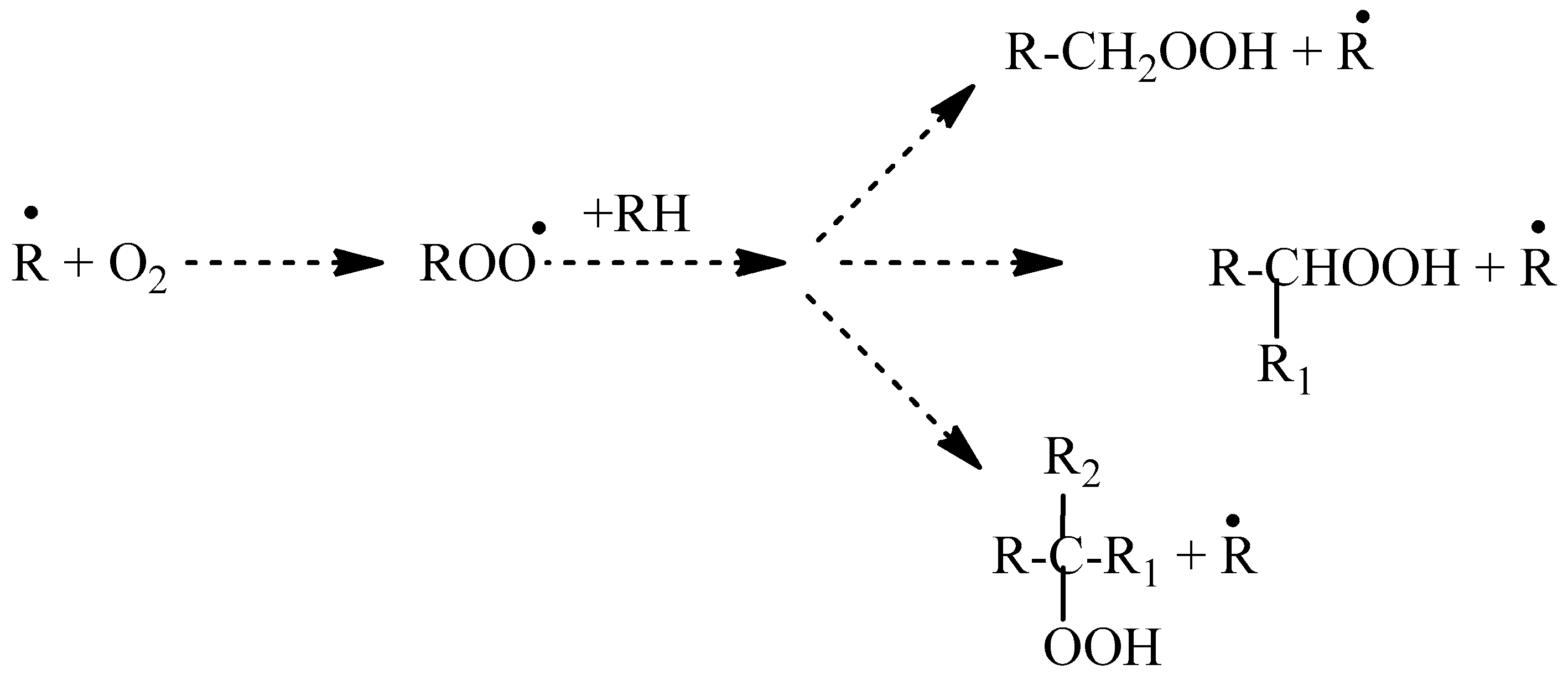
Phase 2 (Figure 6) is the continuation (development) of the chain, where the initial raw material is consumed en masse, and reaction products are obtained. R ˙ is a radical obtained in the first stage that instantly combines with oxygen to form a peroxide radical ROO. Next, the peroxide radical pulls a hydrogen atom from a new alkane molecule, forming a stable hydroperoxide product, and a new radical R ˙ is born, which returns to the beginning of the cycle. Three paths of process selectivity are shown here: it is assumed that oxidation is easiest along the tertiary carbon atom (lower arrow), more difficult along the secondary atom, and most difficult along the primary atom (upper arrow). The role of the catalyst in this chain is that of a ‘smart mediator’ capable of creating primary radicals (1) and, in the next stage (2), often accelerating the decomposition of the resulting hydroperoxides, preparing them for the next stage of conversion into target products: alcohols, ketones, or acids.
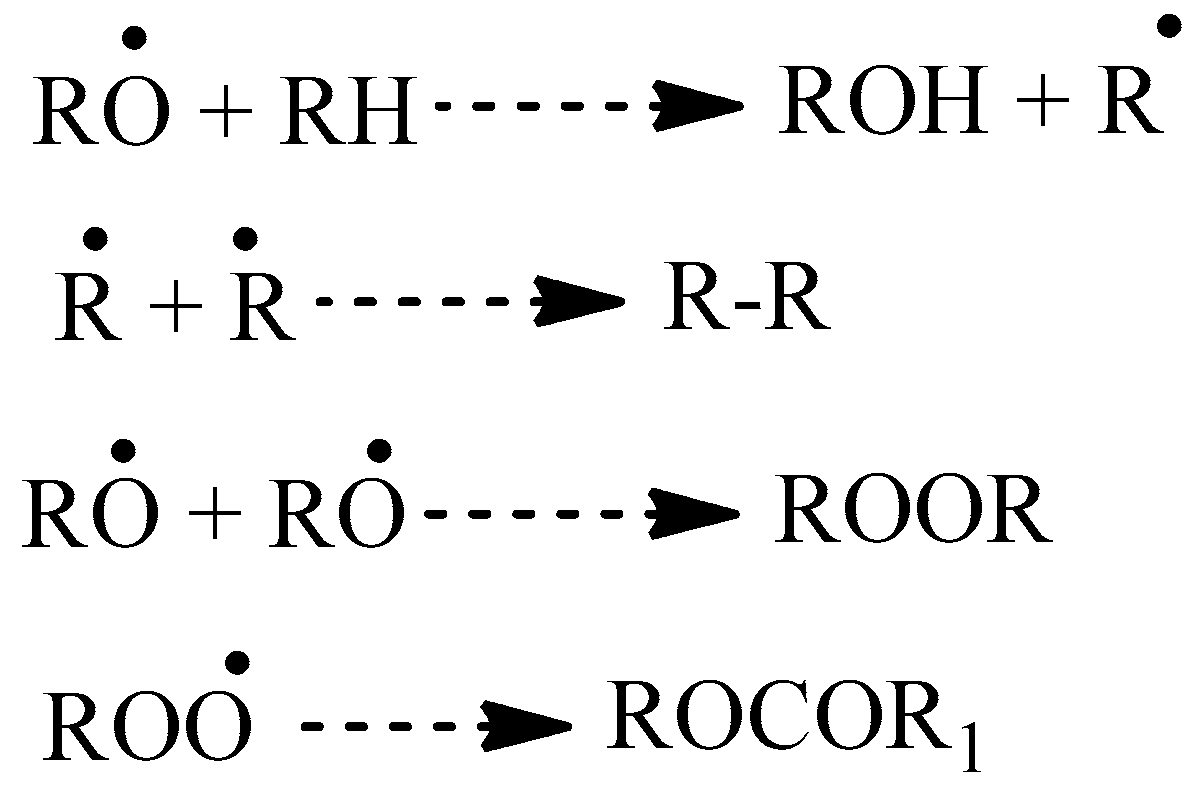
At phase (3), a radical chain process occurs, i.e., chain termination, characterised by a sharp decrease in the concentration of free radicals in the system, as the active particles already collide with each other, forming stable molecules (Figure 7).
Phase 4 is the stage of deep conversion of intermediate products (hydroperoxides) into stable final oxygen-containing compounds, where the primary oxidation products (hydroperoxides) are converted into aldehydes and carboxylic acids (Figure 8). The primary hydroperoxide RCH2OOH decomposes with the release of water and the formation of an aldehyde. In the second stage of this phase, the aldehyde is oxidised to carboxylic acid; i.e., the hydroperoxide reacts with the already formed aldehyde. In industrial paraffin oxidation processes, this stage is key to obtaining synthetic fatty acids. By regulating the temperature and type of catalyst at this stage, it is possible to ensure that the alkane does not burn completely, but is converted into valuable acids that are used in the production of detergents, lubricants, and varnishes.
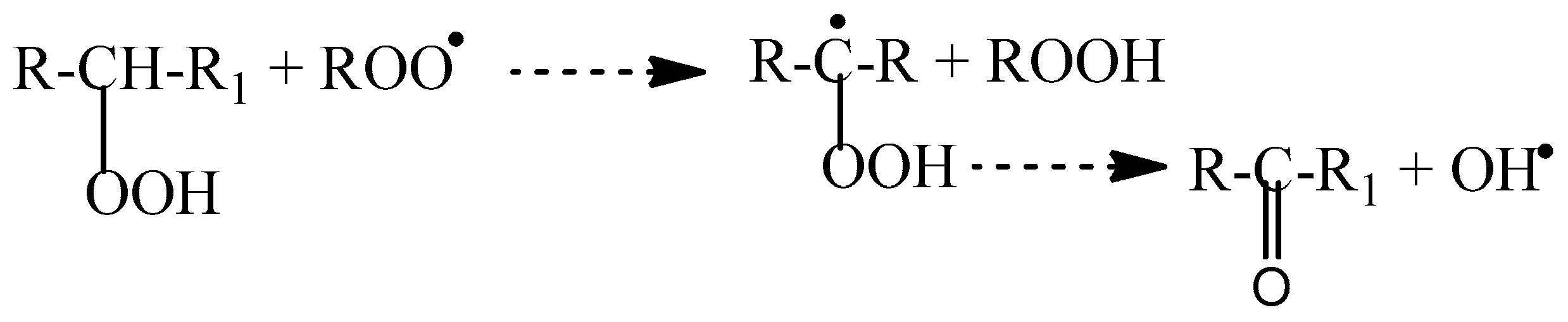
Next comes the phase of ketone formation as a result of the decomposition of secondary hydroperoxides (Figure 9). This phase logically continues the chain of transformations, focusing on what happens to the hydroperoxide formed from the secondary carbon atom, i.e., the attack of the peroxide radical ROO on the secondary hydroperoxide molecule. It removes a hydrogen atom from the carbon atom that already has an -OOH group. A specific hydroperoxide radical R C ˙ O O H R and a new hydroperoxide molecule ROOH are formed. Then, the radical breaks down to form a stable ketone with the release of a highly active hydroxyl radical OH, which can continue the chain reaction.
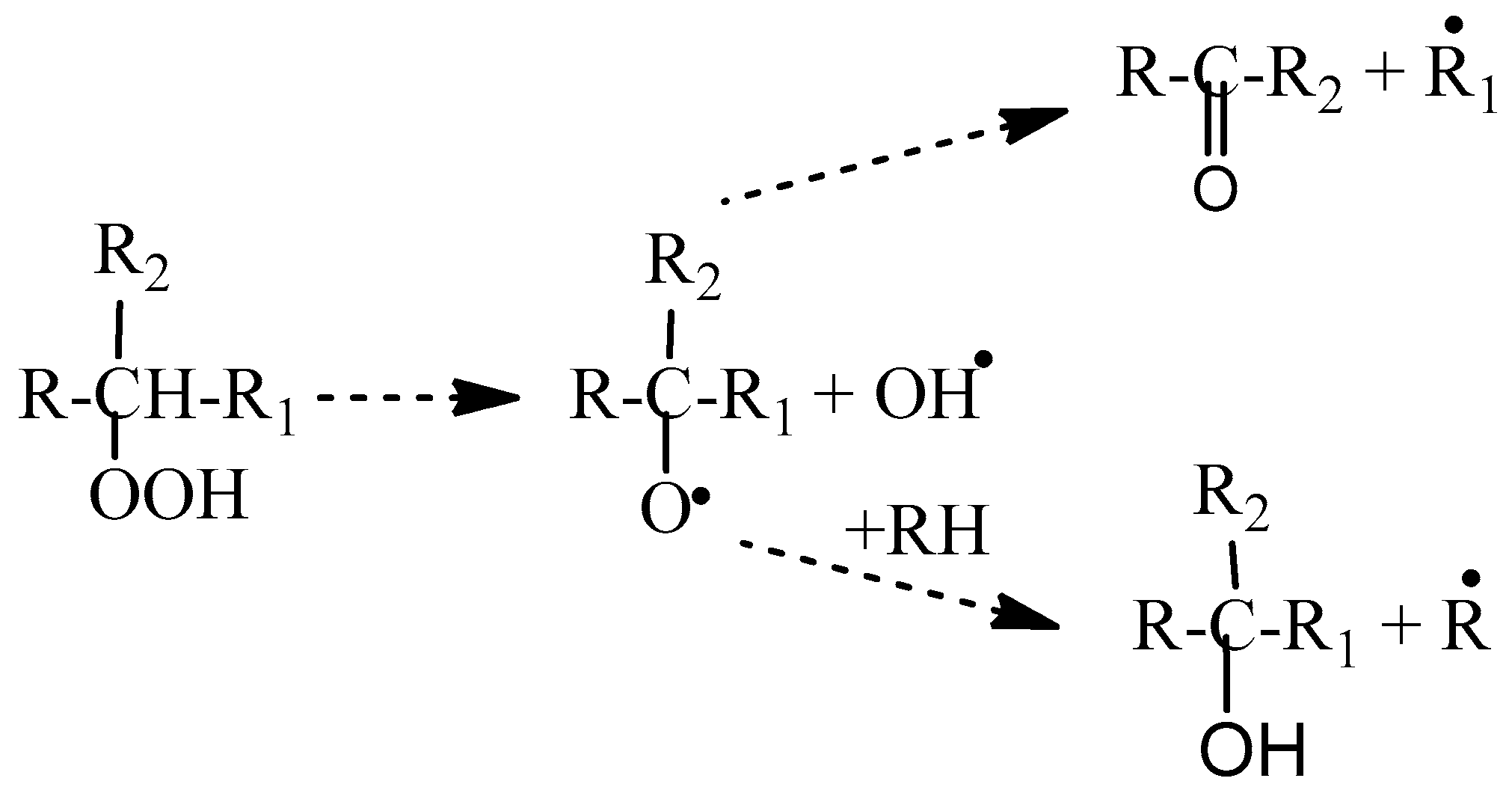
While the previous phases were devoted to the formation of aldehydes, acids, and ketones, phase 6 describes the specific transformations of the most stable (tertiary) hydroperoxides (Figure 10). The stable hydroperoxide may decompose now into two new active radicals.
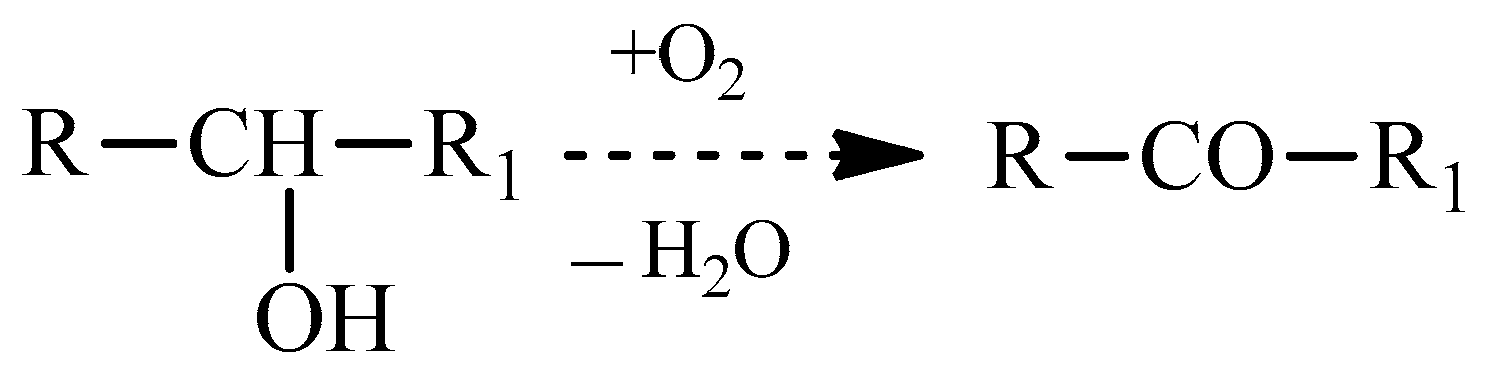
Phase 6 describes the conversion of primary alcohols formed in previous stages (e.g., as a result of chain termination or hydroperoxide decomposition) into more oxidised forms, namely, aldehydes and carboxylic acids (Figure 11). That is, the primary alcohol interacts with oxygen, dehydration occurs (the splitting off of hydrogen, which forms water with oxygen), and an aldehyde is formed as a result. This is an intermediate stage of oxidation. Aldehyde is extremely easily oxidised further into carboxylic acid.
Phase 8 completes the transformation logic for secondary carbon atoms (Figure 12). If primary alcohols within phase 7 were oxidised to acids, secondary alcohols stop at the stage of forming stable ketones and water. Secondary alcohols are oxidised to ketones more easily than primary alcohols are to acids, but ketones are much more resistant to further oxidation. Therefore, a mixture of acids and ketones will always be present in the reaction products, as shown above in Table 1.
Phase (9) is final in chemical transformations, at which the carbon–carbon bond breaks, leading to the formation of the final products—carboxylic acids (Figure 13). The process occurs with the formation of an intermediate hydroperoxide ketone. The molecule is extremely unstable and can break down in two ways: the upper arrow indicates the formation of the ester ROCOR1 and water, while the lower arrow indicates deep oxidation with the formation of the diketone R-CO-CO-R1 and water. Then, under the action of oxygen, the bond between the two carbonyl groups breaks, resulting in a mixture of two carboxylic acids: RCOOH + R1COOH.
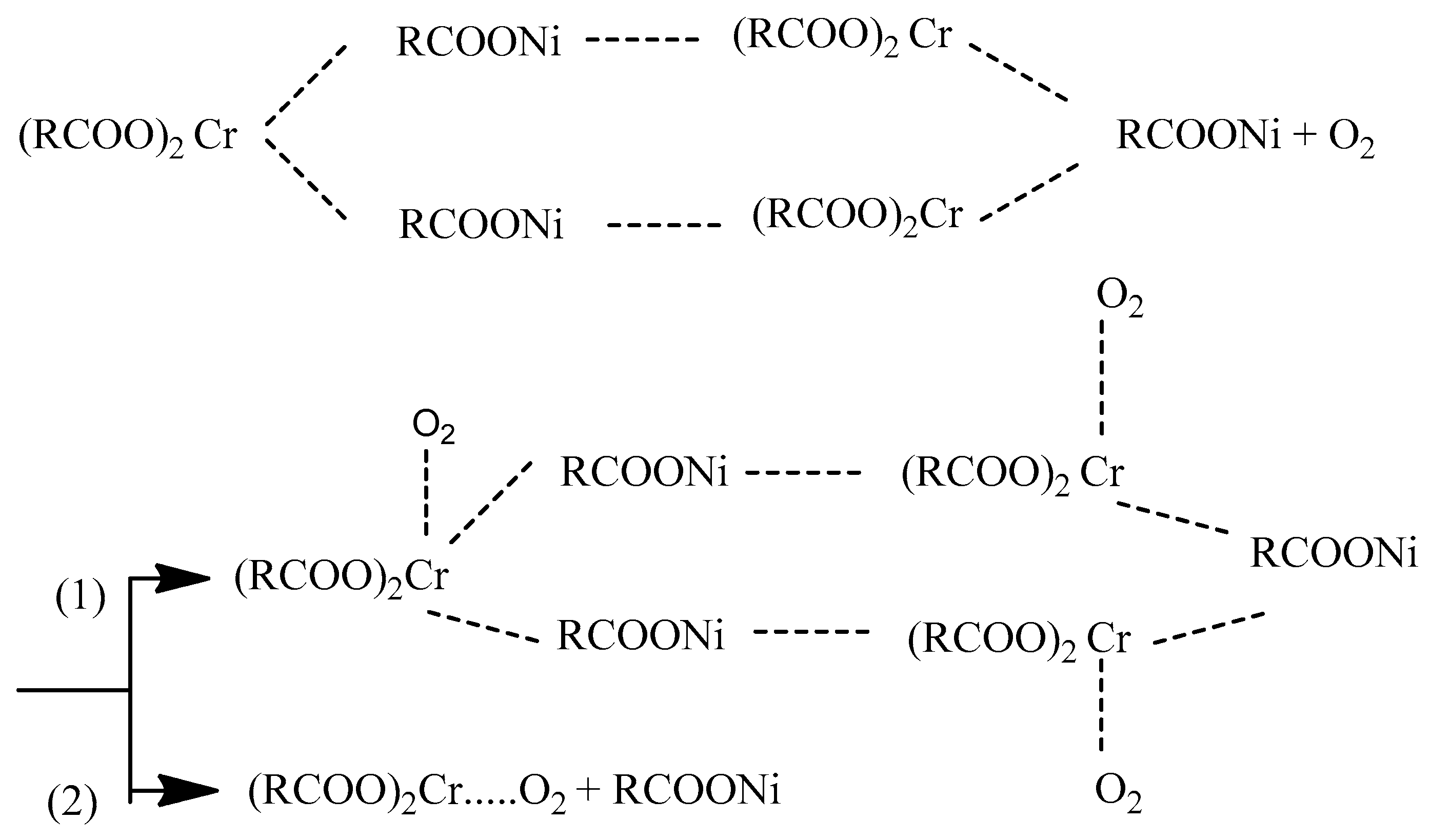
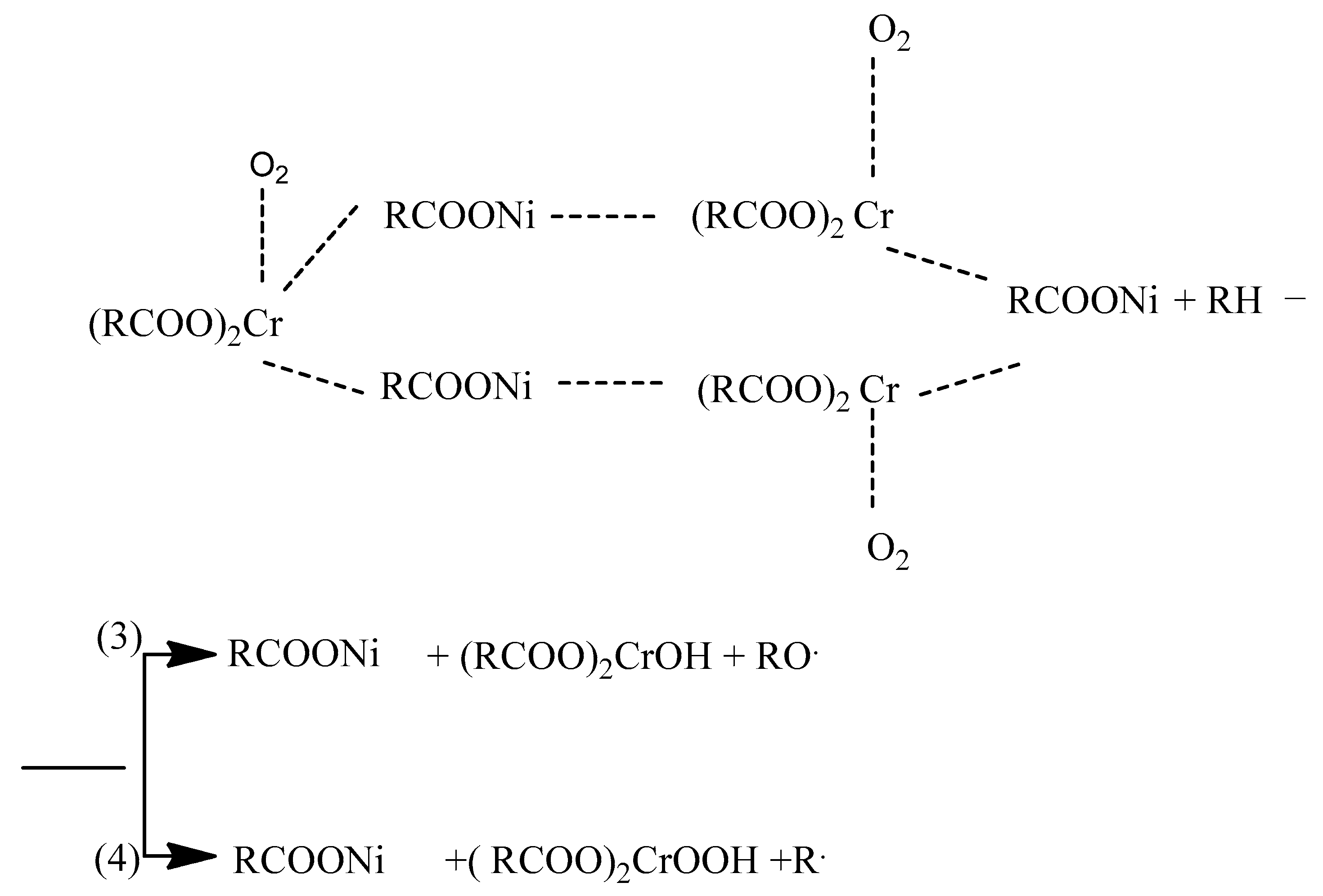
Many types of catalysts are known to influence the reactions of liquid-phase oxidation with atmospheric oxygen. Among those are potassium permanganate, naphthenates of metals with variable valence [32,33,34], carbon nanostructures [35] (fullerenes, metal-containing carbon nanotubes, nanofibers), bromofunctionalised nanotubes [20], etc. An increase in the initiating abilities of metals with variable valence in hydrocarbon oxidation reactions occurs, where the initiation of chains in the process is possible as promoted by intermediate work of complexes of naphthenates of metals with variable valence in an individual order, which can be represented as follows. Under conditions of catalytic hydrocarbon oxidation at temperatures of 135–140 °C, oxygen is activated. This either causes oxygen to enter the chromium coordination sphere, thereby forming an additional complex with various ligands, or displaces nickel naphthenate out of the coordination sphere, letting oxygen enter into a coordination bond with chromium naphthenate. This is schematically depicted in Figure 14 [32,34]:
Complementary pathways (1) and (2) (as well as (3) and (4) below) arise from the fact that Cr and Ni are capable of forming complex compounds with coordination numbers +4 and +6 (and sometimes +8 for Cr), but the ratio of such compounds depends on the nature of the ligand and the degree of oxidation. Cr is a more active oxidising agent (especially in an oxidation state of +6, as in CrO3 and chromates/dichromates) than Ni, revealing its reducing ability, as a rule, in an oxidation state of +2 and, less frequently, +3. Although coordination numbers vary, oxidising ability appears to be the decisive factor that gives Cr the advantage. In the case of the reaction according to scheme (1) here, the complex with various ligands exhibits the cationic properties of chromium and, in a hydrocarbon medium, removes a hydrogen atom from the molecules of oxidised hydrocarbon. In this case, the complex appears to be destroyed, and chromium transforms from a divalent state to a trivalent one. The resulting free radicals RO and R ((3) and (4) in Figure 15) are capable of continuing the chain reaction.
Next, the trivalent chromium compound reacts with a new hydrocarbon molecule, forming additional radicals, and the chromium returns to its original state (Figure 16).
The transition from trivalent to divalent state of chromium is similar to schemes (5) and (6) in Figure 16. If the reaction proceeds according to scheme (2) in Figure 14, chain development takes place according to a generally accepted scheme in Figure 17.
It has been experimentally established that the (RCOO)2Cr complexes formed in the reaction medium as a result of destruction of the intermediate complex do not form a new complex compound, since such complexes cannot exist in an environment of oxygen-containing compounds, in particular, acids.
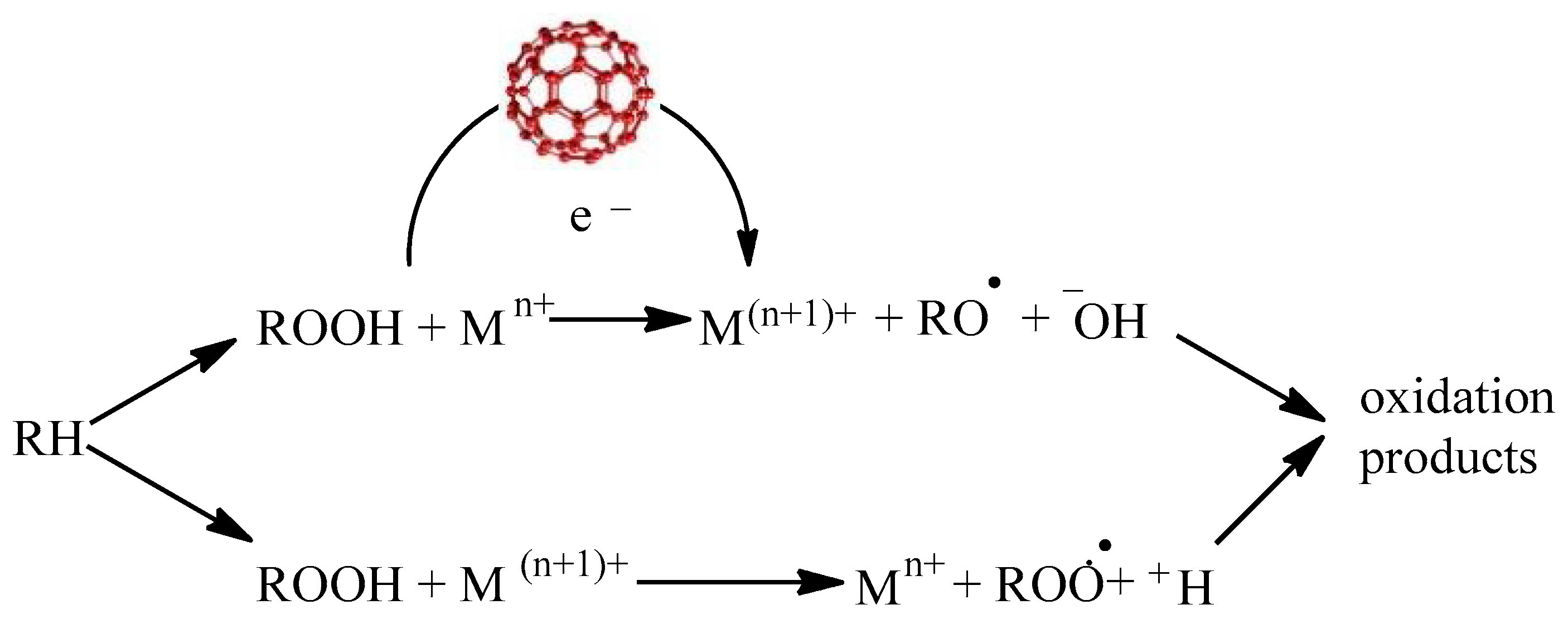
In the case of using metal-containing carbon nanostructures, and fullerene as a catalyst for the oxidation process of hydrocarbons [9], oxidation occurs according to the following Haber–Weiss scheme [32,34,36] (Figure 18).
New insights into the mechanism of alkane oxidation are discussed in [37], where modern ideas are presented about the mechanisms of oxidation of C–H compounds (alkanes, aromatic hydrocarbons, and alcohols) by peroxide agents—mainly H2O2 and tert-butyl hydroperoxide—in the presence of transition and non-transition metal complexes. The role of the ligand is central: ligands allow the degree of metal oxidation to be determined unambiguously, whereas redox-active ligands can themselves participate in electron transfer and make formal charge calculations difficult. It should be emphasised that molecular oxygen and peroxides often act as redox-active (‘non-innocent’) oxidants.
In many of the systems described, the key intermediate oxidation agent is hydroxyl radicals •OH [38], which are being formed when the O–O bond in peroxides is broken under the action of metal ions (Fe, Cu, V, Re, as well as Al, Ga, Bi). It has been shown that the participation of a second peroxide molecule accelerates and facilitates the formation of radicals. These radicals initiate a chain reaction of alkane oxidation with the formation of unstable alkyl hydroperoxides.
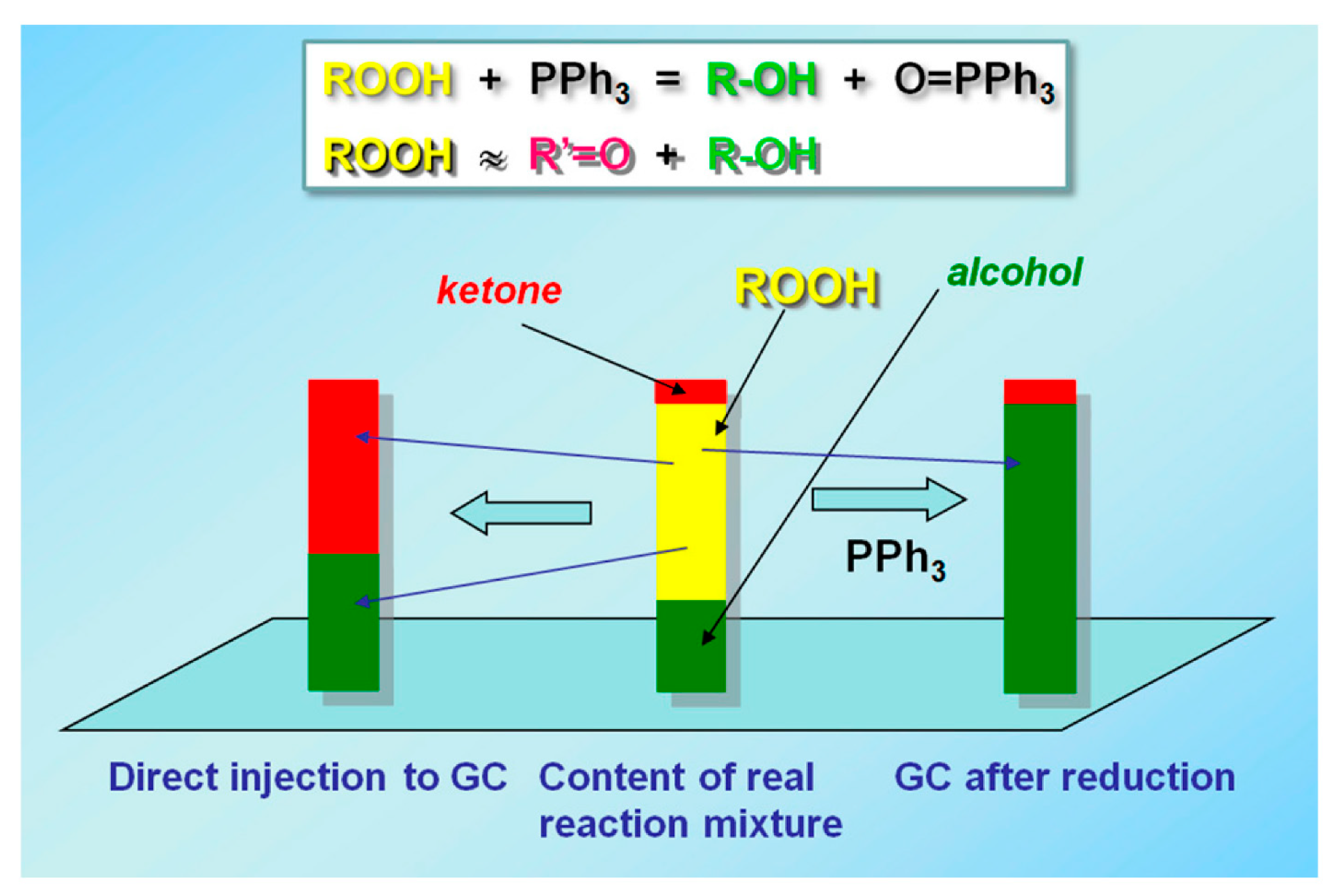
Thus, the interrelationship between the nature of the ligand, the mechanisms of radical generation, the structure of the catalyst, and the path of C–H bond oxidation is emphasised [39,40], including the contribution of the authors’ works on this topic. In this case, a new method proposed by Shul’pin (Figure 19) is suggested to identify alkyl hydroperoxides obtained by the oxidation of alkanes with peroxide using chromatography. The method consists of performing chromatographic analysis twice, before and after the addition of PPh3 [37].
Review Ref. [41] highlights the main strategy of ‘green’ catalytic oxidation [42] of alkanes using transition metal complexes (Cu, Fe, Co, Ni). The main focus is on how specially designed ligands regulate the activity and selectivity of catalytic systems operating under mild conditions and with environmentally friendly oxidants (H2O2, O2). Such metal–radical and metal–oxo-intermediate mechanisms allow for the effective conversion of inert C(sp3)–H bonds and are used in the sustainable processing of hydrocarbon raw materials. The prospects for this research are linked to catalyst stability and recyclability improvements.
Classic studies have shown that Pt, Pd, and Rh effectively catalyse the complete oxidation of linear alkanes (from C1 to C7) at temperatures of 200–500 °C [43]. The reactions proceed according to complex kinetics: for Pt, the reaction order for alkanes varies from 0.6 to 3 depending on the chain length, and for oxygen, from ~1 to ~3. This indicates competitive adsorption of hydrocarbon and O2 on the metal surface. Metal dispersion and the presence of oxide additives (e.g., CeO2) have a significant effect on the activity and stability of catalysts. One should also take into account the probable effective reduction of the process orders, compared to those stoichiometric, because of the surface-specific influence [44].
Gold applied to active oxide materials (CoOx, MnOx, CuO, CeO2, TiO2) demonstrated a significant increase in activity in the oxidation of methane, ethane, and propane. The Au/CoOx catalyst proved to be particularly effective, exhibiting high stability and activity during prolonged testing [45]. It is important to note that the mechanisms of alkane oxidation on gold differ from those of CO oxidation, indicating different active centres and O2 activation pathways.
TS-1 (titanium-containing zeolite ZSM-5) and amorphous TiO2-SiO2 composites exhibit activity in the selective oxidation of alkanes with H2O2 at low temperatures [46]. The hydrophobicity of TS-1 provides resistance to water, which allows the use of an aqueous solution of H2O2. Alkyl hydroperoxides formed on the surface of TiO2-SiO2 are active in the epoxidation of alkenes, but such mechanisms are less effective for alkanes. The peculiarities of the mechanism are associated with the existence of short-lived radicals unable to quickly rearrange.
In another study, titanium silicate (TS-1) is effectively used for the oxidation of alkanes, alkylbenzenes, 1-chlorohexane, and methyl heptanoate with hydrogen peroxide under mild conditions, which is the key advantage of this material. The reactions proceed at temperatures below 55 °C and in various solvents such as water, acetonitrile, methanol, and tert-butyl alcohol, with a significant acceleration of the process observed in the last two media. The oxidation products are alcohols and ketones, mainly formed in the secondary and tertiary centres of the hydrocarbon chain. The yields depend significantly on the nature of the substrate and the reaction conditions; for example, the oxidation of n-hexane achieves more than 90% selectivity for hydrogen peroxide. The reaction rate is sensitive to the presence of acids and bases, which indicates the important role of the acid–base environment in the formation of active particles. The paper also discusses individual elements of the oxidation mechanism and the properties of the centres responsible for catalytic activity [47].
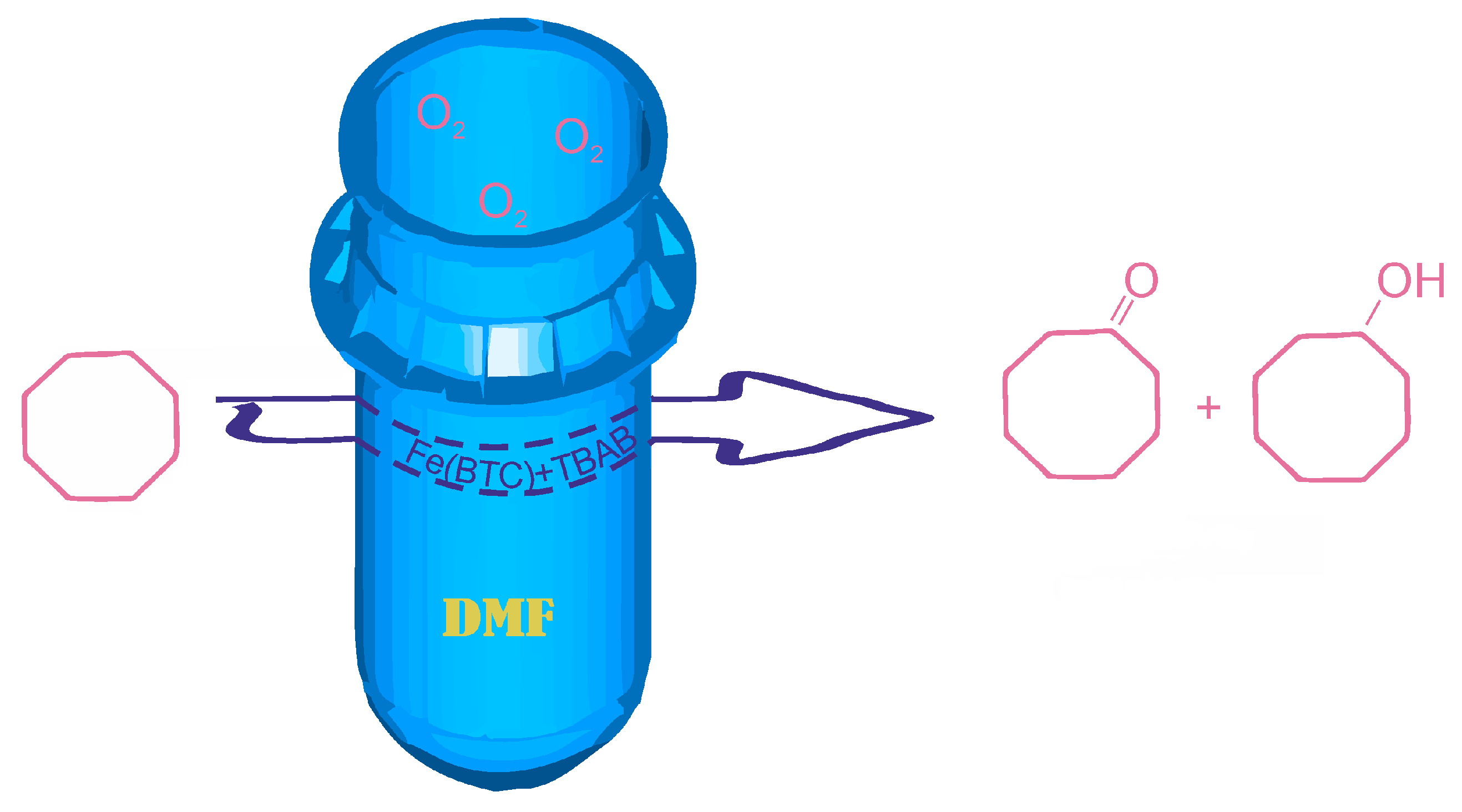
The aim of the study [48] is to demonstrate the high efficiency and selectivity of a new catalytic system based on Fe(BTC) (BTC: 1,3,5-benzenetricarboxylate) in the presence of tetrabutylammonium bromide for the aerobic oxidation of cyclooctane without the use of radical initiators, as well as to confirm its potential as that of a stable and universal catalyst for the controlled production of an alcohol–ketone mixture from hydrocarbons. The versatility of the catalytic system lies in its successful application not only to cyclooctane, but also to linear hydrocarbons, providing 88–97% selectivity of the corresponding alcohols and ketones, which expands its practical application. They are stable to leaching and can be used repeatedly (Figure 20).
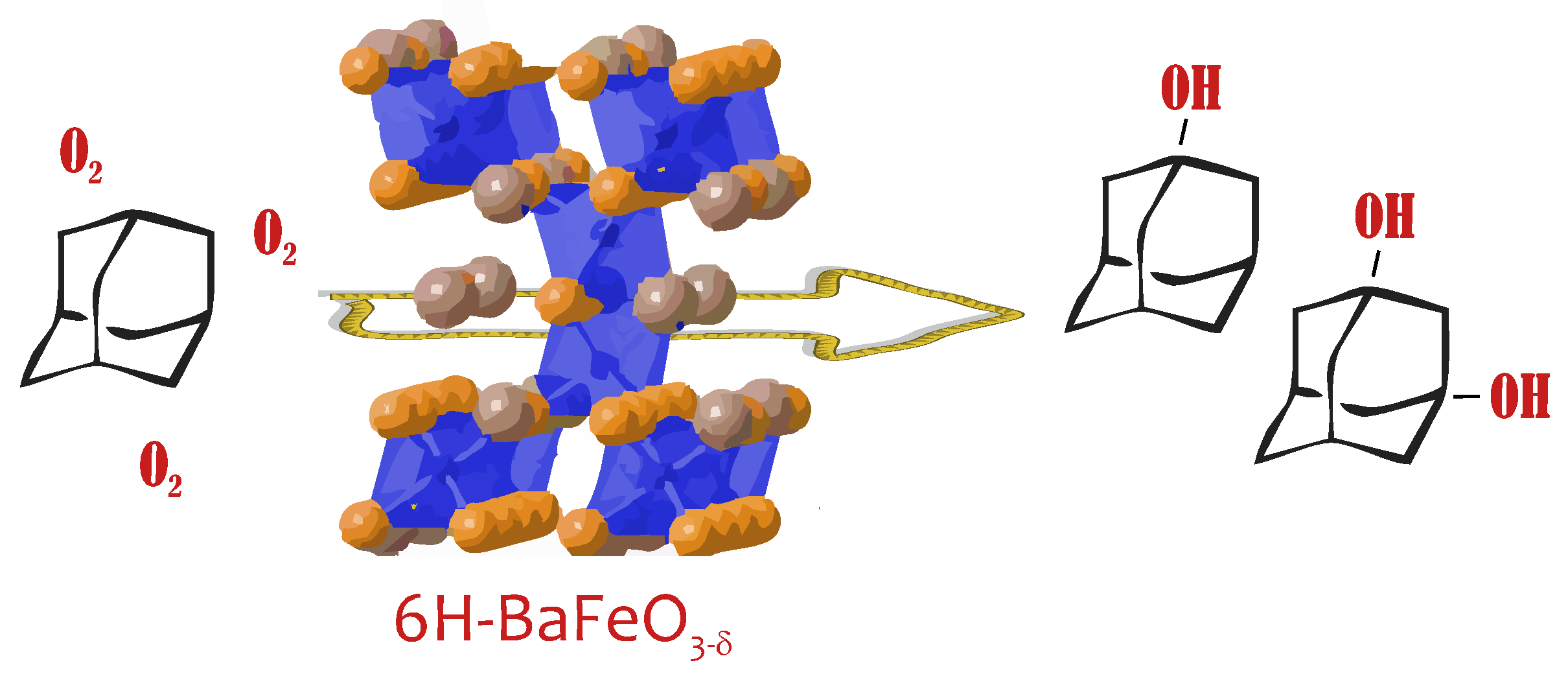
Hexagonal BaFeO3-δ containing high-valent iron particles acted as an effective heterogeneous catalyst for the aerobic oxidation of cycloalkanes without the need for additives. The activity of BaFeO3-δ was much higher than that of typical iron oxide-based catalysts containing Fe3+/Fe2+, and the reduced catalyst could be reused without significant loss of catalytic performance [49] (Figure 21).
Of particular interest are catalysts based on Ru incorporated into polywolframates, which allow a wide range of alkanes and alcohols to be oxidised with molecular oxygen [50]. Mesoporous silicates modified with transition metals are also being actively studied, as they combine a high surface area with the possibility of using environmentally friendly oxidants such as O2 and H2O2 [51].
Work [52] presents the kinetics of liquid-phase oxidation of n-alkanes C10–C13 using a heterogeneous catalyst DP-1 (silicalite titanium), with an aqueous solution of hydrogen peroxide in methanol at a temperature of 40–60 °C, carried out on a continuous laboratory setup. It was determined that the rate of oxidation of n-alkanes to alcohols and ketones increases with increasing reaction temperature and initial concentration of n-alkane and H2O2. The authors of [52] propose the results of their research for the design of semi-industrial installations for the production of higher fatty alcohols of the C10–C13 fraction.
Advantages of heterogeneous catalysis of alkanes are as follows:
  • High thermal and chemical stability of catalysts—Cr2O3, V2O5, MnO2 oxides, etc., withstand 300–600 °C and aggressive environments.
  • Ease of separating the catalyst from the products, as the catalyst is in the solid phase. Hence, it is easy to separate, wash and regenerate.
  • Reusability, as solid-phase oxides can operate for many cycles without significant loss of activity.
  • Convenience for continuous industrial processes—fixed beds, fluidised beds, tubular reactors—technological simplicity.
  • Possibility of fine-tuning surface properties by doping (Cr–Fe, V–Mo–W systems), changing morphology (nanoparticles, porous structures), and choosing a carrier (Al2O3, SiO2, zeolites).
  • No need to use solvents (in the gas phase), i.e., environmental friendliness and cost-effectiveness.
  • Ability to operate at high pressures and in the presence of oxygen because of the high mechanical strength of oxides.
The disadvantages of heterogeneous catalysis of alkanes are the complexity of selective oxidation due to easy transitions alcohol → ketone → acid → CO2.
It is difficult to stop the reaction at the desired stage, especially at the high temperatures, 300–600 °C, required to break strong C–H bonds, which leads to the following: increases in energy consumption; deactivation of catalysts (surface coking, oxide reduction, particle agglomeration, and poisoning by sulphur and nitrogen-containing compounds); limited accessibility of active sites when internal pores may be inaccessible to large alkanes, i.e., diffusion limitations exist; lower selectivity in the liquid phase compared to homogeneous catalysts (e.g., Co/Mn in the liquid phase)—solid-phase oxides yield fewer target alcohols and ketones; oxygen can be activated too strongly, i.e., surface ‘hard’ oxygen of Cr, V, and Mn leads to deep oxidation (CO2); and complexity of the reaction mechanism interpretation, i.e., surface centres are nonuniform and the mechanism is often mixed (radical + Mars − van Krevelen), which makes its optimisation difficult.

5. Special Methods for Activating C–H Bonds in Alkanes

The main focus is on activating alkanes using oxidative processes. That is, it is about converting ‘inactive’ alkanes into more functionalised molecules using oxygen or oxidants, as well as catalysts. The selective functionalisation of the inert C–H bonds offers many opportunities for chemical synthesis and the transition from petrochemical feedstocks to readily available alkanes [53]. Significant progress has been made in transition-metal-mediated C–H activation under mild conditions. Although large-scale commercial implementation is still expected, a profound understanding of reaction mechanisms and the emergence of novel catalytic systems establish a foundation for the efficient and environmentally friendly processing of hydrocarbon resources. In addition to traditional catalysts, new approaches have been actively developed in the past decades to increase the selectivity and efficiency of alkane oxidation through special methods of C–H bond activation [54].
Work [55] considers the post-functionalisation of polyolefin elastomers (POE) through direct activation of C–H bonds using a new catalytic cobalt complex. Cumene hydroperoxide was selected as the optimal oxidant for cyclohexane. The cobalt catalyst demonstrated high activity in the oxidation of octadecane, providing a 42% yield with a minimum amount of catalyst. The approach was successfully extended to the oxidation of POE along the C–H bond, allowing the introduction of functional groups in solvents such as 1,2-Cl2C6H4 and 1,2,4-Cl3C6H3. Overall, the results obtained demonstrate a simple and environmentally friendly method for the post-functionalisation of POE, which is versatile and has prospects for broader application in polymer chemistry.
Alkanes constitute the main components of natural gas and crude oil, which serve as key feedstocks for the chemical industry. The selective and efficient activation of C–H bonds, see Ref. [56], promotes the transformation of these abundant and inexpensive hydrocarbons into high-value chemicals. With the growing worldwide demand for light olefins and their corresponding polymers, as well as for synthesis gas and hydrogen, the activation of C–H bonds in light alkanes has received considerable attention. Theoretical investigations based on density functional theory (DFT) combined with microkinetic modelling provide a powerful approach for understanding these processes and for the development of rational strategies to design more effective catalysts for light alkane conversion. This review summarises recent advances in computational catalysis related to the activation of C–H bonds in light alkanes. It begins with a discussion of direct and oxidative activation of methane, focusing on the mechanism and kinetic insights due to DFT-assisted microkinetic studies of steam reforming, dry reforming, and partial oxidation reactions, as well as on the influence of metal/oxide surfaces and nanoparticle size. Subsequently, the direct and oxidative C–H bond activation of ethane and propane over various metal and oxide catalysts is examined, including identification of active sites, analysis of reaction mechanisms, microkinetic modelling, and electronic-structure effects, with particular attention to suppression of side reactions and coke formation. The primary aim of this review is to provide fundamental insight into the C–H bond activation of light alkanes, thereby offering useful guidance for the future optimisation of catalytic systems [1].

5.1. Microseconds Catalysed Oxidation

This innovative method is based on the use of platinum–rhodium meshes, which ensure partial oxidation of alkanes (ethane, propane, butane) under conditions of extremely short contact time (~10 microseconds). Rapid heating and cooling prevent secondary decomposition reactions of the products, ensuring high selectivity towards olefins and oxygen-containing compounds [57].
Work [58] is devoted to the study of slow oxidation processes of n-butane and n-decane initiated by nanosecond pulse discharge. The main idea is that short high-voltage discharges (22 kV) at low pressure create active particles and radicals that trigger oxidative reactions even in low-oxygen systems. The research concept is to identify the effect of nanosecond pulse discharge on the kinetics and mechanisms of the initial stages of oxidation of light and heavy alkanes at low pressures, determining the energy input and excitation conditions.

5.2. Photocatalysis

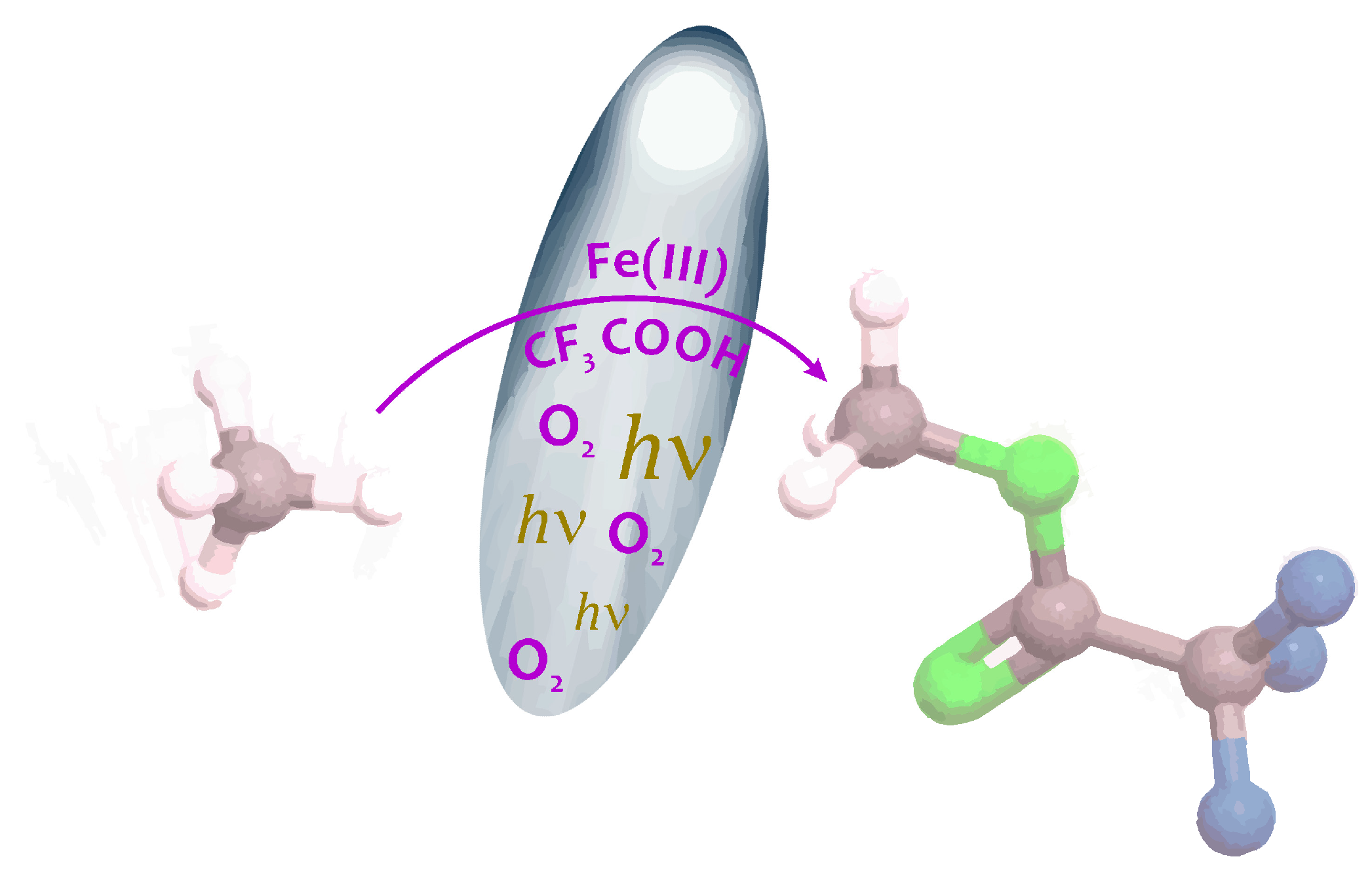
Photoinduced processes open up the possibility of mild oxidation of alkanes at room temperature (Figure 22).
The use of Fe(III) and Cu(II) salts under visible light has been reported, which initiates the formation of radicals and ensures the formation of alcohols and ketones [28]. More recent studies have demonstrated the possibility of photo-oxidation of methane to methyl trifluoroacetate using Fe catalysts and O2, confirming the potential of photocatalysis for the direct oxidation of lower alkanes [59]. Effective photocatalytic oxidation of alkanes in the presence of CuCl2 and FeCl3 under visible light has also been reported, opening up prospects for the use of photoactivation under mild conditions [28].

5.3. Ultrasonic Cavitation

Ultrasonic cavitation not only enhances mass transfer but also generates transient high-temperature microzones that facilitate radical initiation. Mechanistically, cavitation leads to homolytic cleavage of O–O bonds in peroxides and promotes the formation of alkyl radicals, thereby shortening induction periods and increasing catalyst utilisation efficiency.
The use of powerful ultrasound causes the formation of cavitation bubbles, the collapse of which is accompanied by local extreme temperatures and pressures. These processes can initiate radical oxidation reactions of alkanes and enhance the performance of solid catalysts by improving mass transfer and creating active centres in situ [60].
Various arylalkanes were oxidised to the corresponding arylcarboxylic acids using an aqueous solution of potassium permanganate in a heterogeneous system under the influence of ultrasound. The toluene/water system was studied in the most detail. Key process parameters were optimised: the effect of stirring, the amount of potassium permanganate, and the reaction time. It was found that at room temperature, the reaction rate increases significantly [61].
Review [62] provides a brief overview of current research on the use of ultrasound in the synthesis, modification, and processing of catalysts. It shows that ultrasonic processing is an effective tool for controlling the textural, structural, and functional properties of catalysts. By changing the parameters of ultrasonic exposure (time, power, amplitude), it is possible to improve dispersion, increase specific surface area, and enhance the catalytic activity of materials. It is noted that optimisation of ultrasonic processing leads to an increase in reagent conversion and target product selectivity, making the method promising for various chemical reactions, including heterogeneous catalysis processes in alkane oxidation. The importance of using ultrasound in organic synthesis is emphasised, especially in the context of green chemistry, because of its ability to reduce reaction times and increase product yields, compared to traditional methods. The authors of [62] conclude that the introduction of ultrasonic technologies into industrial chemistry contributes to the improvement of technological processes and represents an important direction for innovative development.
Work [63] presents data on the aerobic liquid-phase oxidation of tetradecane and undecane using chromium (III) and nickel (II) salts synthesised from natural petroleum acids and subjected to preliminary ultrasonic treatment. It has been established that the induction period of n-alkane oxidation is significantly reduced when using catalysts activated by ultrasound. The most pronounced effect is observed for chromium (III) compounds: preliminary ultrasonic treatment leads to a twofold reduction in the process time and a significant increase in the yield of target products. The results obtained demonstrate that ultrasonic activation of catalysts has high potential for increasing their activity and can be effectively used in industrially significant processes of organic oxidation. Analysis using 1H NMR (proton nuclear magnetic resonance) spectroscopy revealed the formation of olefins and naphthenic rings during the oxidation of undecane and tetradecane.

5.4. Biocatalysis and Anaerobic Microbial Oxidation

Marine microorganisms (e.g., representatives of Desulfosarcina/Desulfococcus and Candidatus Syntrophoarchaeum) are capable of anaerobic oxidation of ethane, propane, and butane. These processes are key to the global carbon cycle and reduce emissions of hydrocarbons with high global warming potential [64]. Although the use of biocatalysis on an industrial scale is still limited, these studies open up prospects for the creation of new biotechnological methods for activating C–H bonds.
There are studies describing a biomimetic approach to the creation of catalysts for methane oxidation based on the work of methanotrophic bacteria, which efficiently convert CH4 into methanol under mild conditions. A comparison is given for the efficiency of bacterial catalysts with heterogeneous Cu- and Fe-containing zeolites that activate methane at ~200 °C. Additionally, the development of a unique catalytic system capable of fully utilising both oxygen atoms of the O2 molecule to oxidise toluene to benzaldehyde at room temperature is highlighted [65].

5.5. Alkane Activation at Ambient Temperatures

The oxidative activation of light alkanes (C1–C3) at atmospheric pressure and near-ambient temperature in a cold-plasma microreactor generated by a di-electric barrier discharge is studied in [66]. The non-thermal plasma is shown to effectively initiate the C–H and C–C bond cleavage with the formation of radical intermediates without significant heating of the gas phase, as confirmed by optical emission spectroscopy. In contrast to conventional high-temperature processes, which are dominated by cracking and non-selective oxidation, the cold-plasma conditions exhibit a pronounced tendency toward the C–C coupling (homologation) reactions, leading to the formation of hydrocarbons with a carbon number higher than that of the feed, i.e., C4 and higher. For propane, ethane, and methane, significant selectivity toward radical coupling products is observed at moderate conversion levels with minimal coke formation. The results demonstrate a high potential of the plasma microreactor approach to the direct low-temperature upgrade of inexpensive light alkanes to more valuable hydrocarbon fractions.

6. Conclusions

Current research in the field of hydrocarbon oxidation covers a wide range of catalysts, from single atoms to oxide and carbon nanostructures. It has been shown that activity and selectivity depend on the nature of the active centres, the conditions of catalyst synthesis, and the choice of oxidant. Optimisation of the conditions for liquid-phase oxidation of petroleum fractions is also important, opening up opportunities for their industrial application [67].
Promising areas include the development of catalysts modified with metal carbon nanomaterials [6,7,19], the use of single-atom catalysts in oxidation [68], of multifunctional ligands that ensure high yields of target products [69], and of ultrasound to activate the catalyst in the oxidation of alkanes [31,62]. Table 2 summarises the features, opportunities and adversities the catalysts typically bring and potentially give rise to. Numerous studies have been devoted to the oxidation of cyclic hydrocarbons in the presence of nanocomposites, zeolites, nitrogen-doped carbon nanotubes [70], and generally stable catalytic systems [35,71,72,73,74,75,76].
The field of selective hydrocarbon oxidation continues to develop actively, combining fundamental research of the mechanisms of C–H bond activation [77] with practical tasks of creating new technologies for processing hydrocarbon raw materials.
Despite the shortcomings of the hydrocarbon oxidation process, with the complexity of the selectivity of the oxygen-containing products formed, there are studies that address one of these issues with the oxidation of an individual hydrocarbon to a product corresponding to the starting product in terms of functional group type [8], i.e., with the possibility of stopping the reaction at a certain point in the formation of the target product.
The issue of neutralising unwanted oxidation products (acidic and carbon dioxide products) is solved by removing the formed by-products into a container with alkali [63].
First, agglomerated catalyst particles can be deagglomerated by ultrasonic cavitation; i.e., this method can be used to activate the catalyst’s active centres [31,63]. The length of the hydrocarbon chain [3,4,50], i.e., the molecular weight of the alkane [78], the temperature, and the amount of oxygen supplied [79] play an important role in the oxidation of hydrocarbons.
We hope this review makes a significant contribution to the broad understanding of the catalytic oxidation of alkanes and cycloalkanes, which is important for the development of new catalytic systems. It demonstrates that progress in alkane and cycloalkane oxidation is driven by advances in catalyst design, mechanism understanding, and activation strategies. Homogeneous systems offer high selectivity under mild conditions, whereas catalysts in those heterogeneous systems provide robustness and industrial feasibility. Special activation methods such as photocatalysis and ultrasonic cavitation bridge these approaches by letting milder reaction conditions take place, with enhanced control over radical pathways. Future research would rather focus on improving catalyst stability, suppressing hyperoxidation, and integrating mechanism insights with reactor design. The development of hybrid catalytic systems and environmentally benign oxidants represents a promising direction for sustainable hydrocarbon utilisation. Keeping this in mind, we believe that future catalytic systems can be applied in the chemical industry to the synthesis of more complex organic compounds from simple hydrocarbons, which is promising from the point of view of ‘green chemistry’ and increasing the efficiency of synthesis.
It is also important to emphasise the need for further research, especially in the areas of catalyst stability and target product selectivity, as well as reaction condition optimisation.

Author Contributions

Conceptualisation, A.Z.A.; methodology, A.Z.A. and U.A.K.; validation, A.Z.A. and S.A.M.; formal analysis, A.Z.A. and S.A.M.; resources, U.A.K. and M.V.; writing—original draft preparation, A.Z.A., U.A.K. and M.V.; writing—review and editing, A.Z.A., U.A.K. and M.V.; supervision, S.G.Y.; project administration, A.Z.A. and S.G.Y. All authors have read and agreed to the published version of the manuscript.

Funding

This research received no external funding.

Data Availability Statement

No new data were created or analysed in this study.

Conflicts of Interest

All authors declare that the research was conducted in the absence of any commercial or financial relationships that could be construed as a potential conflict of interest.

Abbreviations

The following abbreviations are used in this manuscript:
CNTCarbon nanotube
DFTDensity functional theory
ORROxidation–reduction reaction
POEPolyolefin elastomers
SWCNTSingle-walled carbon nanotube
1H NMRProton nuclear magnetic resonance

References

  1. Wang, Y.; Hu, P.; Yang, J.; Zhu, Y.-A.; Chen, D. C–H bond activation in light alkanes: A theoretical perspective. Chem. Soc. Rev. 2021, 50, 4299–4358. [Google Scholar] [CrossRef]
  2. Shul’pin, G.B.; Shul’pina, L.S. Oxidation of Organic Compounds with Peroxides Catalyzed by Polynuclear Metal Compounds. Catalysts 2021, 11, 186. [Google Scholar] [CrossRef]
  3. Calvert, J.; Derwent, R.; Orlando, J.; Tyndall, G.; Wallington, T. Mechanisms of Atmospheric Oxidation of the Alkanes, 2nd ed.; Oxford University Press: Oxford, UK, 2023. [Google Scholar] [CrossRef]
  4. Ryabov, A.Y.; Kudryashov, S.V.; Ocheredko, A.N. Combined Oxidation of Gaseous and Liquid Alkanes in the Barrier Discharge Plasma. Chem. Sustain. Dev. 2024, 32, 190–195. [Google Scholar] [CrossRef]
  5. Aliyeva, A.Z.; Nuriev, L.G.; Zeynalov, E.B. Fullerene C60/C70 in the catalysis of liquid-phase oxidation of n-decane. Oil Refin. Petrochem. 2010, 11, 16–20. [Google Scholar]
  6. Aliyeva, A.Z. Identification of petroleum hydrocarbon oxidation products obtained in the presence of fullerene C60/C70 and metal-containing carbon nanotubes. Oil Refin. Petrochem. 2015, 2, 23–26. [Google Scholar]
  7. Aliyeva, A.Z.; Nuriyev, L.H.; Kuliyev, A.D.; Zeynalov, E.B. Oxidation of n-decane at the joint presence of fullerenes and manganese naphthenate. Process. Petrochem. Oil Refin. 2008, 1, 15–18. [Google Scholar]
  8. Zeynalov, E.B.; Aliyeva, A.Z.; Friedrich, J.F. Factors Affecting the Intrinsic Anti-Oxidative Activity of Carbon Nanofibers—Metallic Impurities. Mater. Test. 2009, 51, 209–214. [Google Scholar] [CrossRef]
  9. Kudryashov, S.V.; Ryabov, A.Y.; Shchegoleva, G.S.; Sirotkina, E.E.; Suslov, A.I. Oxidation of n-C5-C8 hydrocarbons and cyclohexane in a barrier discharge reactor. Part I. Experimental investigation results. Proc. Tomsk. Polytech. Univ. 2006, 309, 92–96. [Google Scholar]
  10. Yiu, S.-M.; Man, W.-L.; Lau, T.-C. Efficient Catalytic Oxidation of Alkanes by Lewis Acid/[OsVI(N)Cl4]−Using Peroxides as Terminal Oxidants Evidence for a Metal-Based Active Intermediate. J. Am. Chem. Soc. 2008, 130, 10821–10827. [Google Scholar] [CrossRef]
  11. Zhang, Y.; Zhao, L.; Zhang, H.; Huang, R.; Zhao, J. Oxidation of alkanes and secondary alcohols to ketones with tert-butyl hydroperoxide catalyzed by a water-soluble ruthenium complex under solvent-free conditions. Appl. Organometal. Chem. 2017, 31, e3709. [Google Scholar] [CrossRef]
  12. Komiya, N.; Naota, T.; Oda, Y.; Murahashi, S.-I. Aerobic oxidation of alkanes and alkenes in the presence of aldehydes catalyzed by copper salts and copper-crown ether. J. Mol. Catal. A Chem. 1997, 117, 21–37. [Google Scholar] [CrossRef]
  13. Pullabhotla, R.V.S.R.; Southway, C.; Jonnalagadda, S.B. Ozone initiated oxidation of long chained n-alkanes in the presence of activated charcoal or silica gel. React. Kinet. Catal. Lett. 2008, 94, 289–299. [Google Scholar] [CrossRef]
  14. Shul’pin, G.B.; Kozlov, Y.N.; Shul’pina, L.S.; Petrovskiy, P.V. Oxidation of alkanes and alcohols with hydrogen peroxide catalyzed by complex Os3(CO)10(µ-H)2. Appl. Organomet. Chem. 2010, 24, 464–472. [Google Scholar] [CrossRef]
  15. Suzuki, Y.; Harada, E.; Nakamaru, K.; Takeda, Y.; Sano, M.; Hashimoto, K.; Miyake, T. Direct oxidation of cycloalkanes with molecular oxygen to dicarboxylic acids using isoamyl nitrite. J. Mol. Catal. A Chem. 2007, 276, 1–7. [Google Scholar] [CrossRef]
  16. Shen, H.M.; Wang, X.; Guo, A.B.; Zhang, L.; She, Y.B. Catalytic oxidation of cycloalkanes by porphyrin cobalt(II) through efficient utilization of oxidation intermediates. J. Porphyr. Phthalocyanines. 2020, 24, 1166–1173. [Google Scholar] [CrossRef]
  17. Liu, J.; Su, P.; Dai, B.; Zhou, D.; Wang, C. Anomaly Detection Algorithm for Searching Selective Catalyst Differentiating Linear and Cyclic Alkanes in Oxidation. Chin. J. Chem. 2025, 43, 1685–1690. [Google Scholar] [CrossRef]
  18. Aliyeva, A.Z.; Nuriyev, L.H.; Zeynalov, E.B. Use of multi-walled metal-containing carbon nanotubes as catalyst for oil hydrocarbons aerobic oxidation. In International Conference ‘Functional Materials and Nanotechnologies’; Institute of Solid State Physics, University of Latvia: Riga, Latvia, 2011; p. 273. [Google Scholar]
  19. Aliyeva, L.I.; Efendiyeva, L.M.; Abbasov, V.M.; Veliyeva, F.M.; Babany, N.N.; Musaly, V.K.H.; Seidahmedova, F.N. Optimisation of deep aerobic oxidation of petroleum naphthenic-paraffin fraction. Oil Refin. Petrochem. 2018, 7, 41–46. [Google Scholar]
  20. Zeynalov, E.; Friedrich, J.; Meyer-Plath, A.; Hidde, G.; Nuriyev, L.; Aliyeva, A.; Cherepnova, Y. Plasma-chemically brominated single-walled carbon nanotubes as novel catalysts for oil hydrocarbons aerobic oxidation. Appl. Catal. A Gen. 2013, 454, 115–118. [Google Scholar] [CrossRef]
  21. Aliyeva, A.Z.; Abbasov, V.M.; Ibragimov, K.D.; Ismailov, E.G.; Nuriev, L.G.; Nasibova, G.G.; Suleimanova, S.A.; Musaeva, A.P. Liquid-Phase Oxidation of Oil Hydrocarbons in the Presence of Nanostructured Mn-Containing Catalyst. Pet. Chem. 2018, 58, 573–576. [Google Scholar] [CrossRef]
  22. Suleymanova, R.H.; Zeynalov, N.A.; Badalova, O.T.; Qulubayova, L.N.; Sharifzade, N.F.; Quliyeva, A.R. Liquid-phase oxidation of aliphatic hydrocarbons in a presence of metal-polymer complexes. Azərbaycan Kim. Jurnali 2016, 4, 80–84. [Google Scholar]
  23. Mao, S.; Verspeek, D.; Wen, X.-D.; Yang, Y.; Li, Y.-W.; Junge, K.; Beller, M. Homogeneous Iron-Catalysed Oxidation of Non-Activated Alkanes with Hydrogen Peroxide. ChemCatChem 2023, 15, e202300735. [Google Scholar] [CrossRef]
  24. Chepaikin, E.G. Homogeneous catalysis in the oxidative functionalization of alkanes in protic media. Russ. Chem. Rev. 2011, 80, 384–416. [Google Scholar] [CrossRef]
  25. Chen, M.; Pan, Y.; Kwong, H.-K.; Zeng, R.J.; Lau, K.-C.; Lau, T.-C. Catalytic oxidation of alkanes by a (salen)osmium(VI) nitrido complex using H2O2 as the terminal oxidant. Chem. Commun. 2015, 51, 13686–13689. [Google Scholar] [CrossRef]
  26. Garcia-Bosch, I.; Siegler, M.A. Copper-Catalyzed Oxidation of Alkanes with H2O2 under a Fenton-like Regime. Angew. Chem. 2016, 55, 12873–12876. [Google Scholar] [CrossRef]
  27. Komiya, N.; Naota, T.; Murahashi, S.-I. Aerobic oxidation of alkanes in the presence of acetaldehyde catalysed by copper-crown ether. Tetrahedron Lett. 1996, 37, 1633–1636. [Google Scholar] [CrossRef]
  28. Takaki, K.; Yamamoto, J.; Matsushita, Y.; Morii, H.; Shishido, T.; Takehira, K. Oxidation of Alkanes with Dioxygen Induced by Visible Light and Cu(II) and Fe(III) Chlorides. Bull. Chem. Soc. Jpn. 2003, 76, 393–398. [Google Scholar] [CrossRef]
  29. Kozlov, Y.N.; Nizova, G.V.; Shul’pin, G.B. The mechanism of hydrogen peroxide-induced aerobic oxidation of alkanes in catalysis by a vanadium complex and pyrazine-2-carboxylic acid. Russ. J. Phys. Chem. 2001, 75, 770–774. [Google Scholar]
  30. Li, Z.; Xia, C.-G.; Xu, C.-Z. Oxidation of alkanes catalyzed by manganese(III) porphyrin in an ionic liquid at room temperature. Tetrahedron Lett. 2003, 44, 9229–9232. [Google Scholar] [CrossRef]
  31. Sinev, M.Y. Oxygen activation and pathways in high-temperature reactions of light alkane oxidation: A seeming simplicity of kinetic description. Kinet. Catal. 2019, 60, 420–431. [Google Scholar] [CrossRef]
  32. Kerimova, U.A. Reaction mechanism of liquid-phase aerobic oxidation of hydrocarbons in the presence of metal-containing catalysts. Oil Gas Technol. 2023, 145, 18–21. [Google Scholar] [CrossRef]
  33. Zeynalov, E. Academician Bahadur Zeynalov. His Life Journey as a Constant Exploration and Advancement Towards the Pinnacles of Science; Muallim: Baku, Azərbaycan, 2017. [Google Scholar]
  34. Zeynalov, E.B.; Abbasov, V.M.; Efendiyeva, L.M.; Nuriyev, L.H.; Agamaliyev, Z.Z.; Aliyeva, L.I.; Nasibova, G.Q. Catalytic activity of naphthenates of the transition metals in reaction aerobic oxidation of an oil fraction. World Pet. Prod. Newsl. Oil Co. 2012, 2, 23–26. [Google Scholar]
  35. Su, Y.; Li, Y.; Chen, Z.; Huang, J.; Wang, H.; Yu, H.; Cao, Y.; Peng, F. New Understanding of Selective Aerobic Oxidation of Ethylbenzene Catalyzed by Nitrogen-doped Carbon Nanotubes. ChemCatChem 2021, 13, 646–655. [Google Scholar] [CrossRef]
  36. Aliyeva, A.Z.; Karimova, U.A.; Yunusov, S.H.; Kayahan, E.; Agayev, U.I.; Zamanova, L.S. Liquid-phase oxidation of paraffin concentrate of the boiling fraction at 135–360 °C using ultrasonically treated fullerene soot. SOCAR Proc. 2025, 4, 240–246. [Google Scholar]
  37. Shul’pin, G.B.; Kozlov, Y.N.; Shul’pina, L.S. Metal Complexes Containing Redox-Active Ligands in Oxidation of Hydrocarbons and Alcohols: A Review. Catalysts 2019, 9, 1046. [Google Scholar] [CrossRef]
  38. Levitsky, M.M.; Bilyachenko, A.N.; Shul’pin, G.B. Oxidation of C-H compounds with peroxides catalyzed by polynuclear transition metal complexes in Si-or Ge-sesquioxane frameworks: A review. J. Organomet. Chem. 2017, 849–850, 201–218. [Google Scholar] [CrossRef]
  39. Kulakova, A.N.; Khrustalev, V.N.; Zubavichus, Y.V.; Shul’pina, L.S.; Shubina, E.S.; Levitsky, M.M.; Ikonnikov, N.S.; Bilyachenko, A.N.; Kozlov, Y.N.; Shul’pin, G.B. Palanquin-Like Cu4Na4 Silsesquioxane Synthesis (via Oxidation of 1,1-bis(Diphenylphosphino)methane), Structure and Catalytic Activity in Alkane or Alcohol Oxidation with Peroxides. Catalysts 2019, 9, 154. [Google Scholar] [CrossRef]
  40. Buvaylo, E.A.; Kokozay, V.N.; Vassilyeva, O.Y.; Skelton, B.W.; Nesterova, O.V.; Pombeiro, A.J.L. Copper(II) complex of the 2-pyridinecarbaldehyde aminoguanidine Schiff base: Crystal structure and catalytic behaviour in mild oxidation of alkanes. Inorg. Chem. Commun. 2017, 78, 85–90. [Google Scholar] [CrossRef]
  41. Li, C.; Zhang, X. Advances in Metal Complex-Catalyzed Oxidation of Alkanes. Sci. J. Technol. 2025, 7, 206–213. [Google Scholar] [CrossRef]
  42. Zheng, R.; Liu, Z.; Wang, Y.; Xie, Z. Industrial catalysis: Strategies to enhance selectivity. Chin. J. Catal. 2020, 41, 1032–1038. [Google Scholar] [CrossRef]
  43. Yao, Y.-F.Y. Oxidation of Alkanes over Noble Metal Catalysts. Ind. Eng. Chem. Prod. Res. Dev. 1980, 19, 293–298. [Google Scholar] [CrossRef]
  44. Vigdorowitsch, M. A surface-induced modification of the reaction order on a reactant. Colloids Surf. A Physicochem. Eng. Asp. 2025, 718, 136878. [Google Scholar] [CrossRef]
  45. Solsona, B.E.; Garcia, T.; Jones, C.; Taylor, S.H.; Carley, A.F.; Hutchings, G.J. Supported gold catalysts for the total oxidation of alkanes and carbon monoxide. Appl. Catal. A Gen. 2006, 312, 67–76. [Google Scholar] [CrossRef]
  46. Khouw, C.B.; Dartt, C.B.; Labinger, J.A.; Davis, M.E. Studies on the Catalytic-Oxidation of Alkanes and Alkenes by Titanium Silicates. J. Catal. 1994, 149, 195–205. [Google Scholar] [CrossRef]
  47. Clerici, M.G. Oxidation of saturated hydrocarbons with hydrogen peroxide, catalysed by titanium silicalite. Appl. Catal. 1991, 68, 249–261. [Google Scholar] [CrossRef]
  48. Nagarjun, N.; Dhakshinamoorthy, A. Liquid phase aerobic oxidation of cyclic and linear hydrocarbons using iron metal organic frameworks as solid heterogeneous catalyst. Mol. Catal. 2019, 463, 54–60. [Google Scholar] [CrossRef]
  49. Shibata, S.; Sugahara, K.; Kamata, K.; Hara, M. Liquid-phase oxidation of alkanes with molecular oxygen catalyzed by high valent iron-based perovskite. Chem. Commun. 2018, 54, 6772–6775. [Google Scholar] [CrossRef]
  50. Yamaguchia, K.; Mizuno, N. Heterogeneously catalyzed liquid-phase oxidation of alkanes and alcohols with molecular oxygen. New J. Chem. 2002, 26, 972–974. [Google Scholar] [CrossRef]
  51. Kholdeeva, O.A. Recent developments in liquid-phase selective oxidation using environmentally benign oxidants and mesoporous metal silicates. Catal. Sci. Technol. 2014, 4, 1869–1889. [Google Scholar] [CrossRef]
  52. Lunin, A.V.; Danov, S.М.; Fedosov, А.Е.; Fedosova, М.Е. Kinetics of liquid-phase oxidation of n-alkanes by hydrogen peroxide on the heterogeneous catalyst DP-1. Fine Chem. Technol. 2014, 9, 59–63. [Google Scholar]
  53. Labinger, J.A.; Bercaw, J.E. Understanding and exploiting C–H bond activation. Nature 2002, 417, 507–514. [Google Scholar] [CrossRef]
  54. Chen, L.; Su, X.-J.; Jurss, J.W. Selective Alkane C–H Bond Oxidation Catalyzed by a Non-Heme Iron Complex Featuring a Robust Tetradentate Ligand. Organometallics 2018, 37, 4535–4539. [Google Scholar] [CrossRef]
  55. Hong, C.E.; Oh, M.S.; An, S.; Song, K.H.; Lee, S. Cobalt-Catalyzed C-H Oxidation of Alkanes and Postfunctionalization of Polyolefin Elastomers. Chem. Eur. J. 2025, 31, e202500510. [Google Scholar] [CrossRef]
  56. Rogge, T.; Kaplaneris, N.; Chatani, N.; Kim, J.; Chang, S.; Punji, B.; Schafer, L.L.; Musaev, D.G.; Wencel-Delord, J.; Roberts, C.A.; et al. C–H activation. Nat. Rev. Methods Primers 2021, 1, 43. [Google Scholar] [CrossRef]
  57. Goetsch, D.A.; Schmidt, L.D. Microsecond Catalytic Partial Oxidation of Alkanes. Science 1996, 271, 1560–1562. [Google Scholar] [CrossRef]
  58. Anikin, N.B.; Starikovskaia, S.M.; Starikovskii, A.Y. Oxidation of saturated hydrocarbons under the effect of nanosecond pulsed space discharge. J. Phys. D Appl. Phys. 2006, 39, 3244–3258. [Google Scholar] [CrossRef]
  59. Coutard, N.; Goldberg, J.M.; Valle, H.U.; Cao, Y.; Jia, X.; Jeffrey, P.D.; Gunnoe, T.B.; Groves, J.T. Aerobic Partial Oxidation of Alkanes Using Photodriven Iron Catalysis. Inorg. Chem. 2022, 61, 759–766. [Google Scholar] [CrossRef] [PubMed]
  60. Amaniampong, P.N.; Jérôme, F. Catalysis under ultrasonic irradiation: A sound synergy. Curr. Opin. Green Sustain. Chem. 2020, 22, 7–12. [Google Scholar] [CrossRef]
  61. Soudagar, S.R.; Samant, S.D. Investigation of ultrasound catalyzed oxidation of arylalkanes using aqueous potassium permanganate. Ultrason. Sonochem. 1995, 2, S15–S18. [Google Scholar] [CrossRef]
  62. Aliyeva, A.Z.; Kerimova, U.A.; Yunusov, S.G.; Aliyeva, A.A.; Aleskerova, S.M.; Tagiyev, F.F. Ultrasound in Catalysis. Chem. Sustain. Dev. 2024, 32, 258–263. [Google Scholar] [CrossRef]
  63. Abbasov, V.M.; Aliyeva, A.Z.; Kerimova, U.A.; Kayahan, E.; Yunusov, S.G.; Mamedov, A.M.; Zamanova, L.S. Use of ultrasonic pretreatment in the reaction of liquid aerobic oxidation of C11, C14 paraffin hydrocarbons in the presence of (RCOO)3CR and (RCOO)2NI catalysts. Iran. J. Chem. Chem. Eng. 2024, 43, 707–713. [Google Scholar] [CrossRef]
  64. Singh, R.; Guzman, M.S.; Bose, A. Anaerobic Oxidation of Ethane, Propane, and Butane by Marine Microbes: A Mini Review. Front. Microbiol. 2017, 8, 2056. [Google Scholar] [CrossRef] [PubMed]
  65. Chan, S.I.; Yu, S.S.-F.; Liu, C.-C.; Mou, C.-Y. Selective oxidation of light alkanes under mild conditions. Curr. Opin. Green Sustain. Chem. 2020, 22, 39–46. [Google Scholar] [CrossRef]
  66. Trionfetti, C.; Ağiral, A.; Gardeniers, H.J.G.E.; Lefferts, L.; Seshan, K. Alkane activation at ambient temperatures: Unusual selectivities, C-C, C-H bond scission versus C-C bond coupling. ChemPhysChem 2008, 9, 533–537. [Google Scholar] [CrossRef] [PubMed]
  67. Abbasov, V.M.; Ibragimov, K.D.; Dzhafarov, R.P.; Kerimova, U.A.; Alieva, A.Z. Mathematical description of the aerobic oxidation process of n-undcan un the presence of chromium salt treated with ultrasound. Oil Refin. Petrochem. 2020, 9, 19–23. Available online: https://www.elibrary.ru/item.asp?id=44400164 (accessed on 26 January 2026).
  68. Büker, J.; Huang, X.; Bitzer, J.; Kleist, W.; Muhler, M.; Peng, B. Synthesis of Cu Single Atoms Supported on Mesoporous Graphitic Carbon Nitride and Their Application in Liquid-Phase Aerobic Oxidation of Cyclohexene. ACS Catal. 2021, 11, 7863–7875. [Google Scholar] [CrossRef]
  69. Sutradhar, M.; Alegria, E.C.B.A.; Guedes da Silva, M.F.C.; Liu, C.-M.; Pombeiro, A.J.L. Peroxidative Oxidation of Alkanes and Alcohols under Mild Conditions by Di- and Tetranuclear Copper (II) Complexes of Bis (2-Hydroxybenzylidene) Isophthalohydrazide. Molecules 2018, 23, 2699. [Google Scholar] [CrossRef] [PubMed]
  70. Cai, Z.; Liu, D.; Huang, J.; Feng, J.; Wang, H.; Yang, G.; Peng, F.; Cao, Y.; Yu, H. Solvent-free production of ε-caprolactone from oxidation of cyclohexanone catalyzed by nitrogen-doped carbon nanotubes. Ind. Eng. Chem. Res. 2022, 61, 2037–2044. [Google Scholar] [CrossRef]
  71. Kunene, A.; Leteba, G.; van Steen, E. Liquid Phase Oxidation of Benzyl Alcohol over Pt and Pt–Ni Alloy Supported on TiO2: Using O2 or H2O2 as Oxidant? Catal. Lett. 2022, 152, 1760–1768. [Google Scholar] [CrossRef]
  72. Chen, L.; Zhang, X.; Zhang, S.; Xu, L.; Yuan, Y.; Xu, L. A highly efficient Fe/Beta catalyst for the liquid-phase oxidation of naphthalene: The influence of Fe species and zeolite acidity. Mol. Catal. 2021, 514, 111646. [Google Scholar] [CrossRef]
  73. Mishra, S.; Sangma, S.W.; Bal, R.; Dey, R.K. Preparation and characterization of a copper oxide nanoparticle-supported red-mud catalyst for liquid phase oxidation of ethyl benzene to acetophenone. New J. Chem. 2021, 45, 13070–13079. [Google Scholar] [CrossRef]
  74. Zeynalov, E.B.; Huseynov, E.R.; Salmanova, N.I.; Abdurahmanova, N.A. Nano-grade titanium dioxide on the nanocarbon carrier as catalyst in aerobic oxidation of alkyl aromatic hydrocarbons. Chem. Probl. 2020, 18, 351–360. [Google Scholar] [CrossRef]
  75. Shul’pina, L.S.; Vinogradov, M.M.; Kozlov, Y.N.; Nelyubina, Y.V.; Ikonnikov, N.S.; Shul’pin, G.B. Copper complexes with 1,10-phenanthrolines as efficient catalysts for oxidation of alkanes by hydrogen peroxide. Inorg. Chim. Acta 2020, 512, 119889. [Google Scholar] [CrossRef]
  76. Cousin, T.; Chatel, G.; Kardos, N.; Andrioletti, B.; Draye, M. Recent trends in the development of sustainable catalytic systems for the oxidative cleavage of cycloalkenes by hydrogen peroxide. Catal. Sci. Technol. 2019, 9, 5256–5278. [Google Scholar] [CrossRef]
  77. Ma, Z.; Gurbanov, A.V.; Maharramov, A.M.; Guseinov, F.I.; Kopylovich, M.N.; Zubkov, F.I.; Mahmudov, K.T.; Pombeiro, A.J.L. Copper(II) arylhydrazone complexes as catalysts for CH activation in the Henry reaction in water. J. Mol. Catal. A Chem. 2017, 426, 526–533. [Google Scholar] [CrossRef]
  78. Ryabov, A.Y.; Kudryashov, S.V. Oxidation of gaseous alkanes into hydroxyl and carbonyl compounds. ChemChemTech 2025, 68, 84–91. [Google Scholar] [CrossRef]
  79. Isazade, A.F.; Mammadova, U.A.; Asadov, M.M.; Mammadova, S.A.; Zeynalov, N.A.; Tagiyev, D.B. Description of initial reactions in kinetic modeling of low-temperature oxidation of n-alkanes. Azerbaijan Chem. J. 2025, 3, 71–80. [Google Scholar] [CrossRef]
Figure 1. Heterolytic pathway of peroxide activation: transfer of an oxygen atom and successive removal of the hydrogen atom.
Chemengineering 10 00025 g001
Figure 2. Involvement of C- and O-centred radicals at catalytic oxidation of cycloalkanes and linear alkanes.
Chemengineering 10 00025 g002
Figure 3. Selective formation of alcohols and ketones at catalytic aerobic oxidation of alkanes.
Chemengineering 10 00025 g003
Figure 4. Involvement of high-valent oxo-ruthenium species in the synthesis of ketones and alcohols.
Chemengineering 10 00025 g004
Figure 5. Chain initiation (phase 1).
Chemengineering 10 00025 g005
Figure 6. Chain growth (phase 2).
Chemengineering 10 00025 g006
Figure 7. Chain termination (phase 3).
Chemengineering 10 00025 g007
Figure 8. Production (phase 4).
Chemengineering 10 00025 g008
Figure 9. Further oxidation chain growth (phase 5).
Chemengineering 10 00025 g009
Figure 10. Decomposition of tertiary hydroperoxides (phase 6).
Chemengineering 10 00025 g010
Figure 11. Deep oxidation of primary alcohol through aldehyde (phase 7).
Chemengineering 10 00025 g011
Figure 12. Post-sequential oxidation (phase 8).
Chemengineering 10 00025 g012
Figure 13. Destructive oxidation of ketones (phase 9).
Chemengineering 10 00025 g013
Figure 14. Combined catalytic oxidation of hydrocarbons.
Chemengineering 10 00025 g014
Figure 15. Continuation of the combined catalytic oxidation of hydrocarbons.
Chemengineering 10 00025 g015
Figure 16. Continuation of the chain reaction of catalytic oxidation.
Chemengineering 10 00025 g016
Figure 17. Development of the oxidation chain.
Chemengineering 10 00025 g017
Figure 18. The Haber–Weiss scheme of oxidation of hydrocarbons in the presence of fullerene.
Chemengineering 10 00025 g018
Figure 19. A schematic of the method of determination of the real concentrations of products in alkane RH oxidation with peroxides to afford ROOH [37].
Chemengineering 10 00025 g019
Figure 20. New catalytic system based on Fe(BTC) in the presence of tetrabutylammonium bromide (TBAB) for the aerobic oxidation of cyclooctane.
Chemengineering 10 00025 g020
Figure 21. Hexagonal heterogeneous catalyst BaFeO3-δ for the aerobic oxidation of cycloalkanes (here, adamantane with oxygen at 0.1 MPa on the left and products 1-adamantanol and 1,3-adamantanediol on the right). Atomic spheres: blue Fe, grey Ba, orange O.
Chemengineering 10 00025 g021
Figure 22. Photoinduced processes of mild oxidation of alkanes at room temperature.
Chemengineering 10 00025 g022
Table 1. Products of liquid-phase oxidation of n-undecane in the presence of fullerene C60/C70.
5-ethyl dihydro 2(3H)-furanone (C6H10O2):
            C 2 H 5 C 4 H 5 O 2
C 4 H 5 O 2 :
Chemengineering 10 00025 i001
5-propyl dihydro 2(3H)-furanone (C7H12O2)
            C 3 H 7 C 4 H 5 O 2
5-pentyl-2(3H)-furanone (C9H16O2)
            C 5 H 11 C 4 H 5 O 2
5-hexyl-2(3H)-furanone (C10H18O2)
            C 6 H 13 C 4 H 5 O 2
4-hexadecyl ester of hexanoic acid (C22H44O2)
Chemengineering 10 00025 i002
Caprylic anhydride (C16H30O3)
Chemengineering 10 00025 i003
5-undecanol (C11H24O)
Chemengineering 10 00025 i004
1-octanol, 2-butyl (C12H26O)
Chemengineering 10 00025 i005
2-tridecyl ester of octanoic acid (C21H42O2)

Chemengineering 10 00025 i006
C 3 H 4 O 2 :
Chemengineering 10 00025 i007
2-tridecyl ester of valeric acid (C18H36O2)
Chemengineering 10 00025 i008
nonane, 5-methyl, 5-propyl (C13H28)
Chemengineering 10 00025 i009
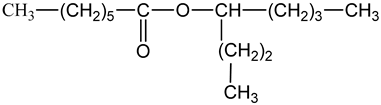
4-octyl ester of heptanoic acid (C15 H30O2)
Chemengineering 10 00025 i010
3,6-nonadecadione (C19H36O2)
Chemengineering 10 00025 i011
Nonenoic acid
Chemengineering 10 00025 i012
Dodecane (C12H26)
Chemengineering 10 00025 i013
Heptanoic acid (C7H14O2)
Chemengineering 10 00025 i014
2-undecanol (C11H24O):
Chemengineering 10 00025 i015
C 9 H 19 :
Chemengineering 10 00025 i016
2-undecanone (C11H22O):
Chemengineering 10 00025 i017
5-undecanone, 2-methyl (C12H24O):
Chemengineering 10 00025 i018
C 7 H 13 O :
Chemengineering 10 00025 i019
7-tridecanone (C13H26O):
Chemengineering 10 00025 i020
3-undecanol (C11H24O):
Chemengineering 10 00025 i021
C 8 H 17 :
Chemengineering 10 00025 i022
3-undecanone (C11H22O):
Chemengineering 10 00025 i023
1,1-dimethoxy octadecan (C20H42O2)
Chemengineering 10 00025 i024
2,3-ethyl, 5-butyl octadecan (C26H54)
Chemengineering 10 00025 i025
2,3-heptadecadione (C17H32O)
Chemengineering 10 00025 i026
8-pentadecanone (C15H30O)
Chemengineering 10 00025 i027
Table 2. Features, opportunities, and adversities related to particular catalyst types.
Catalyst TypeTypical
Active Species
Main
Mechanism
AdvantagesDisadvantages
Metal
complexes
Fe, Cu, Ru, Os,
Mn complexes
Radical or
metal–oxo pathways
High activity,
tunable selectivity,
mechanistic insight
Low stability,
difficult separation,
high cost
MetalloporphyrinsCo, Mn
porphyrins
Controlled radical
oxidation
High selectivity,
biomimetic
Limited lifetime,
oxidative degradation
Metal
oxides
V2O5, Cr2O3, MnO2,
Fe-based catalysts
Mars–
van Krevelen
Thermal stability,
industrial applicability
Tendency to
deep oxidation
Zeolites (TS-1)Ti–O sitesPeroxide
activation
Mild conditions,
H2O2 compatibility
Diffusion
limitations
Carbon
nanomaterials
CNTs,
fullerenes
Radical initiation,
O2 activation
Enhanced mass
transfer, stability
Mechanism
complexity
Disclaimer/Publisher’s Note: The statements, opinions and data contained in all publications are solely those of the individual author(s) and contributor(s) and not of MDPI and/or the editor(s). MDPI and/or the editor(s) disclaim responsibility for any injury to people or property resulting from any ideas, methods, instructions or products referred to in the content.