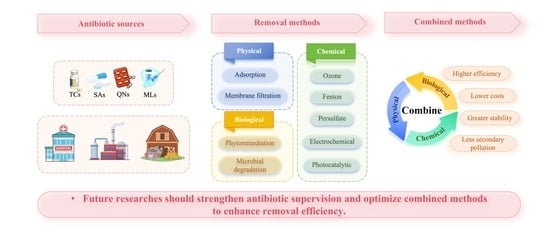
Antibiotics in the Environment: Occurrence, Enhanced Removal Strategies and Future Prospects


Highlights
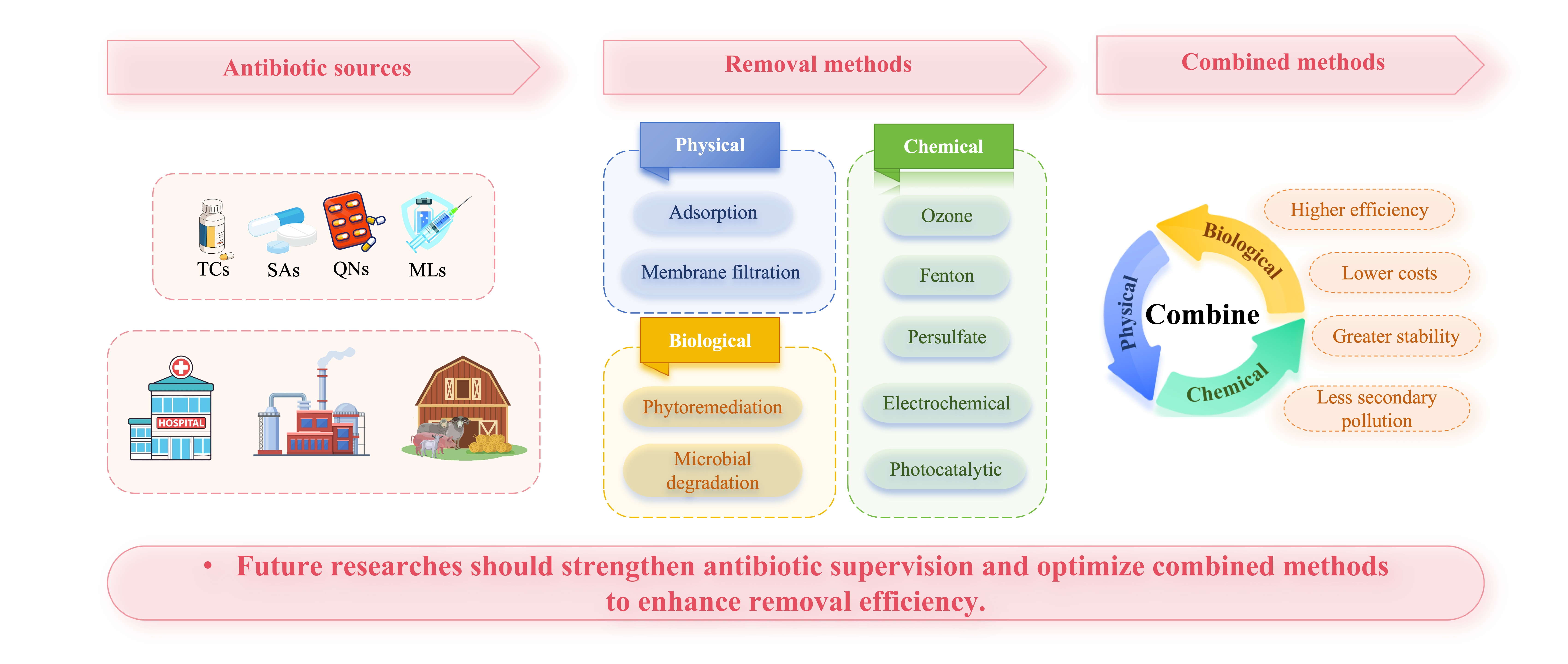
- Physical, chemical and biological removal methods are critically compared.
- Combined methods demonstrate significant potential for improving antibiotic removal efficiency in complex environments.
- Future research should focus on optimizing degradation methods and creating efficient, sustainable, multi-technology systems.
- Antibiotic supervision and legislation should be strengthened to restrict antibiotic abuse, thereby mitigating antibiotic pollution.
- Coupling conventional methods offers a feasible strategy for efficient and sustainable antibiotic remediation.
Abstract
1. Introduction
2. Antibiotic Residues in the Environment
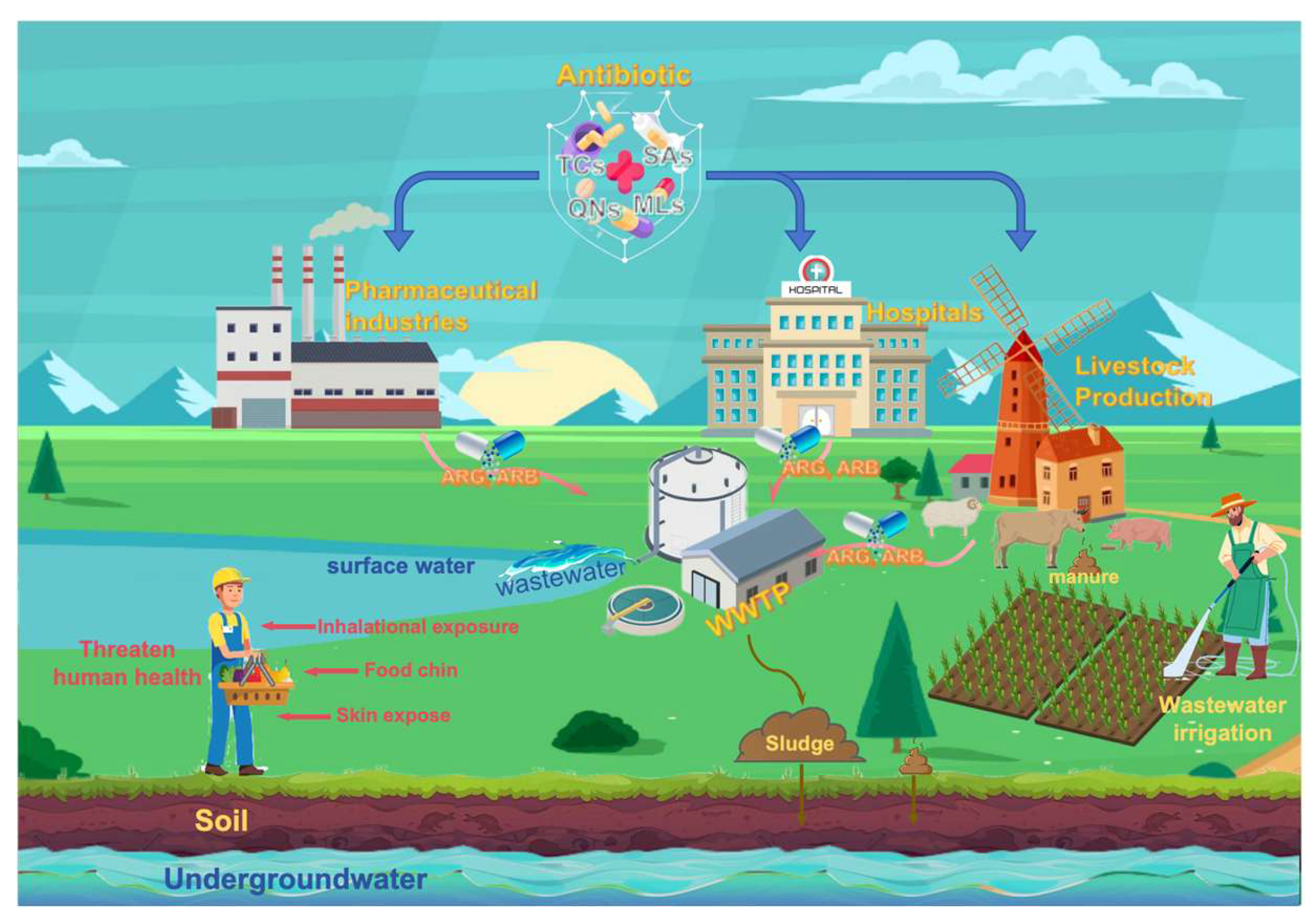
2.1. Origins of Antibiotics in the Environment
2.2. Current Situation of Antibiotic Residues in the Environment
2.2.1. Water Environment
2.2.2. Solid Wastes and Soil
3. Antibiotic Pollution Control and Reduction in the Environment
3.1. Physical Methods
3.1.1. Adsorption
3.1.2. Membrane Filtration
3.2. Chemical Methods
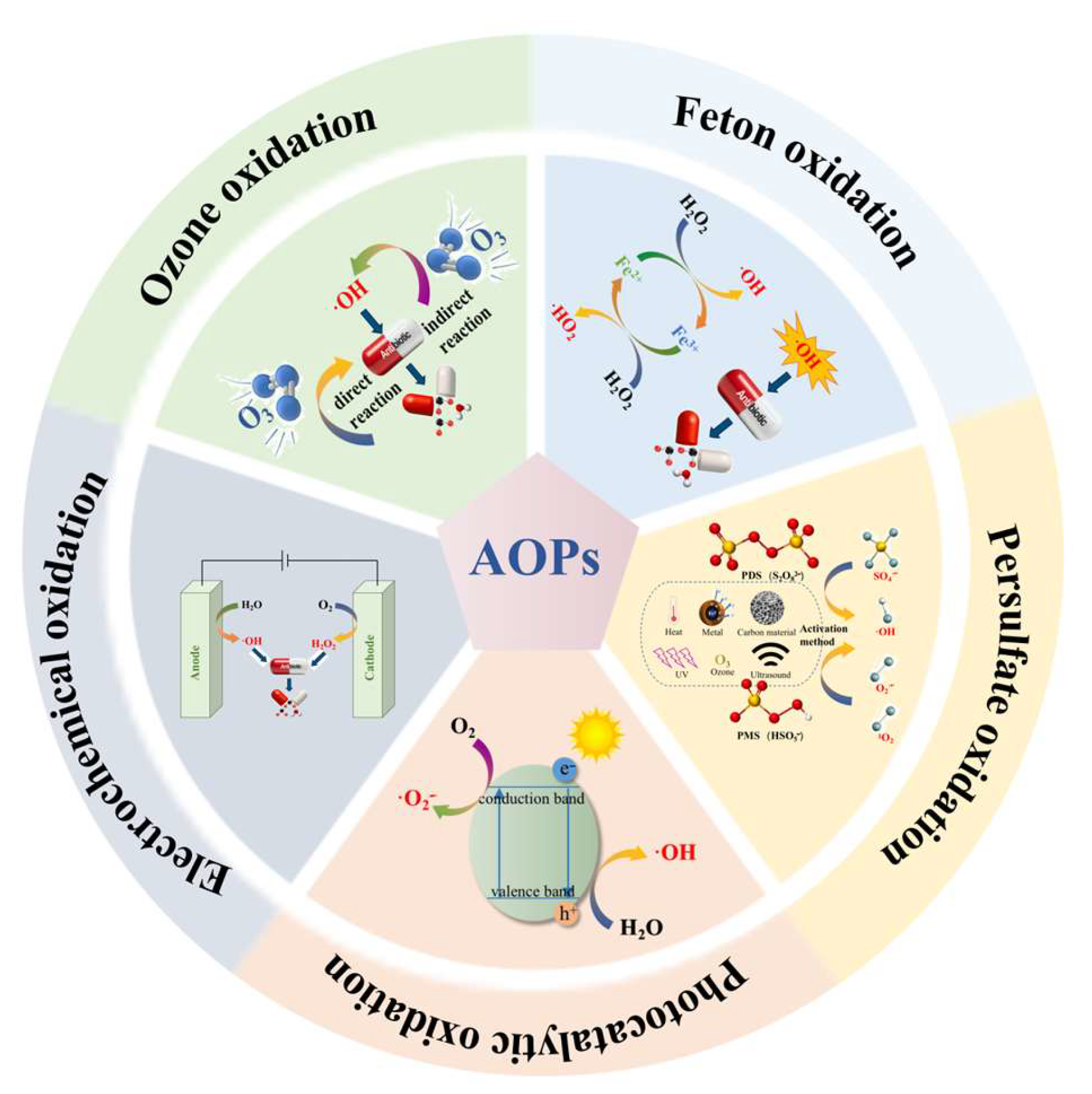
3.2.1. Advanced Oxidation
- Ozone Oxidation
- 2.
- Fenton Oxidation
- 3.
- Persulfate Oxidation
- 4.
- Electrochemical Oxidation
- 5.
- Photocatalytic Oxidation
3.2.2. Coupled AOP Systems
- Electro-Fenton (EF) technology
- 2.
- Photo-Fenton (PF) Technology
- 3.
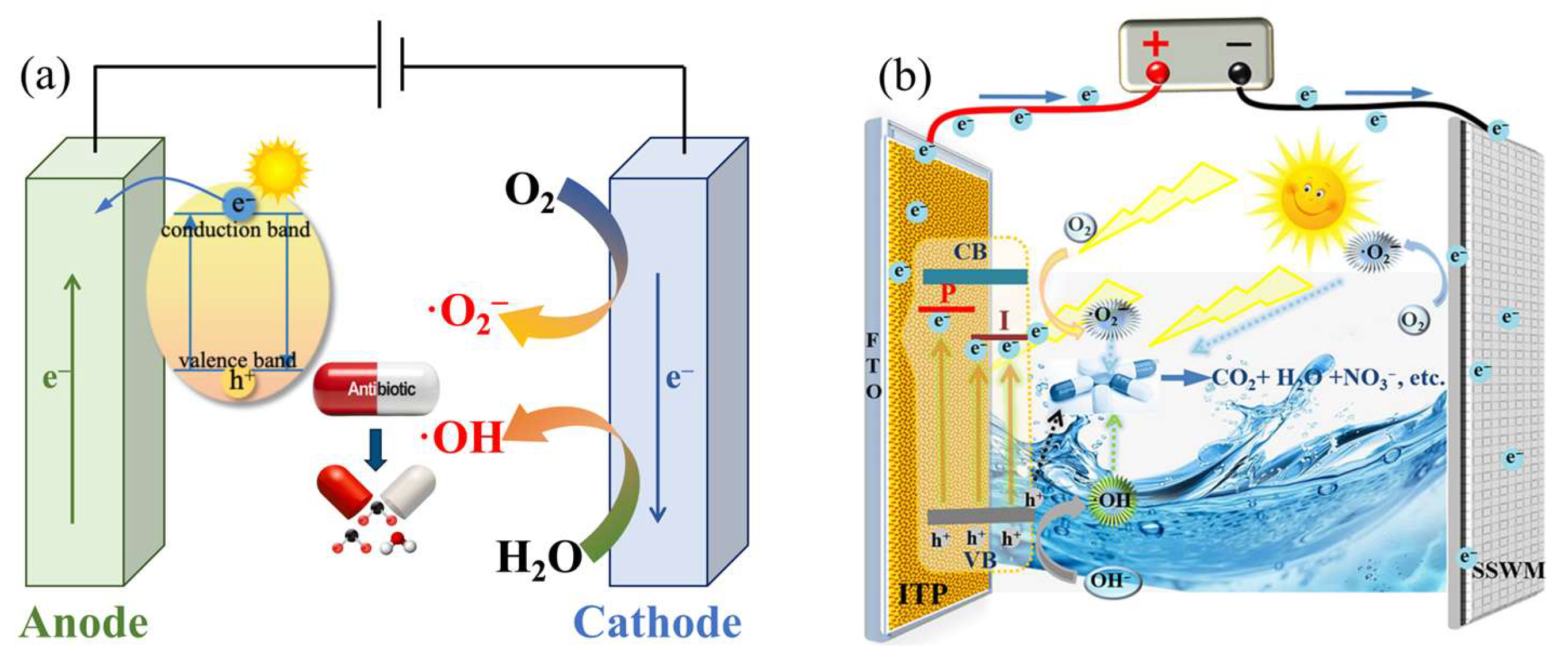
- Photoelectrocatalysis (PEC)
3.3. Biological Methods
3.3.1. Phytoremediation
3.3.2. Microbial Degradation

| Antibiotics | Strain | Origin | Experimental Condition | Degradation Rate | Reference | |
|---|---|---|---|---|---|---|
| Bacterial | ||||||
| TCs | OTC | Arthrobacter nicotianae OTC-16 | activated sludge | pH 7.0; 30 °C; 10% inoculum level; 100 mg L−1 OTC | 98.5% within 8 d | [100] |
| CTC | Pseudmonas sp. A12 | activated sludge | pH 7.0; 30 °C; 5% inoculum level; 2 mg L−1 CTC | 69.4% within 8 d | [101] | |
| Pseudmonas sp. SF1 | 81.6% within 8 d | |||||
| SAs | SMX | Pseudomonas silesiensis F6a | wetlands | pH 7.0; 30 °C; 5% inoculum level; 10 mg L−1 SMX | 76.95% within 144 h | [102] |
| Pseudmonas sp. A12 | activated sludge | pH 7.0; 30 °C; 5% inoculum level; 2 mg L−1 SMX | 89.6% within 8 d | [101] | ||
| Pseudmonas sp. SF1 | 95.9% within 8 d | |||||
| SMZ | Bacillus cereus H38 | farmland soil | pH 7.0; 25 °C; 5% inoculum level; 5 mg L−1 SMZ | 100% within 3 d | [103] | |
| QNs | CIP | Thermus thermophilus C419 | sludge | pH 6.5; 70 °C; 3% inoculum level; 5 mg L−1 CIP | 57% within 5 d | [104] |
| Ochrobactrum sp. YJ17 | animal manure | pH 7; 30 °C; 2% inoculum level; 5 mg L−1 CIP | 63.4% within 14 d | [105] | ||
| OFL | Thermus thermophilus C419 | sludge | pH 6.5; 70 °C; 3% inoculum level; 5 mg L−1 OFL | 70% within 72 h | [104] | |
| Fungi | ||||||
| QNs | CIP | Trichoderma asperellum | pure strains | pH 4.9; 25 °C; 200 μg L−1 CIP | 82% within 13 d | [106] |
| OFL | pH 4.9; 25 °C; 200 μg L−1 OFL | 44% within 13 d | ||||
| Trichoderma harzianum | 32% within 13 d | |||||
3.4. Critical Analysis of Conventional Removal Methods
4. Combined Methods
4.1. Physical Method-Combined AOPs
4.1.1. Adsorption-Combined AOP Systems
4.1.2. Membrane-Combined AOP Systems
4.2. Combined Chemical with Biological Methods
4.2.1. Microbial Fuel Cells
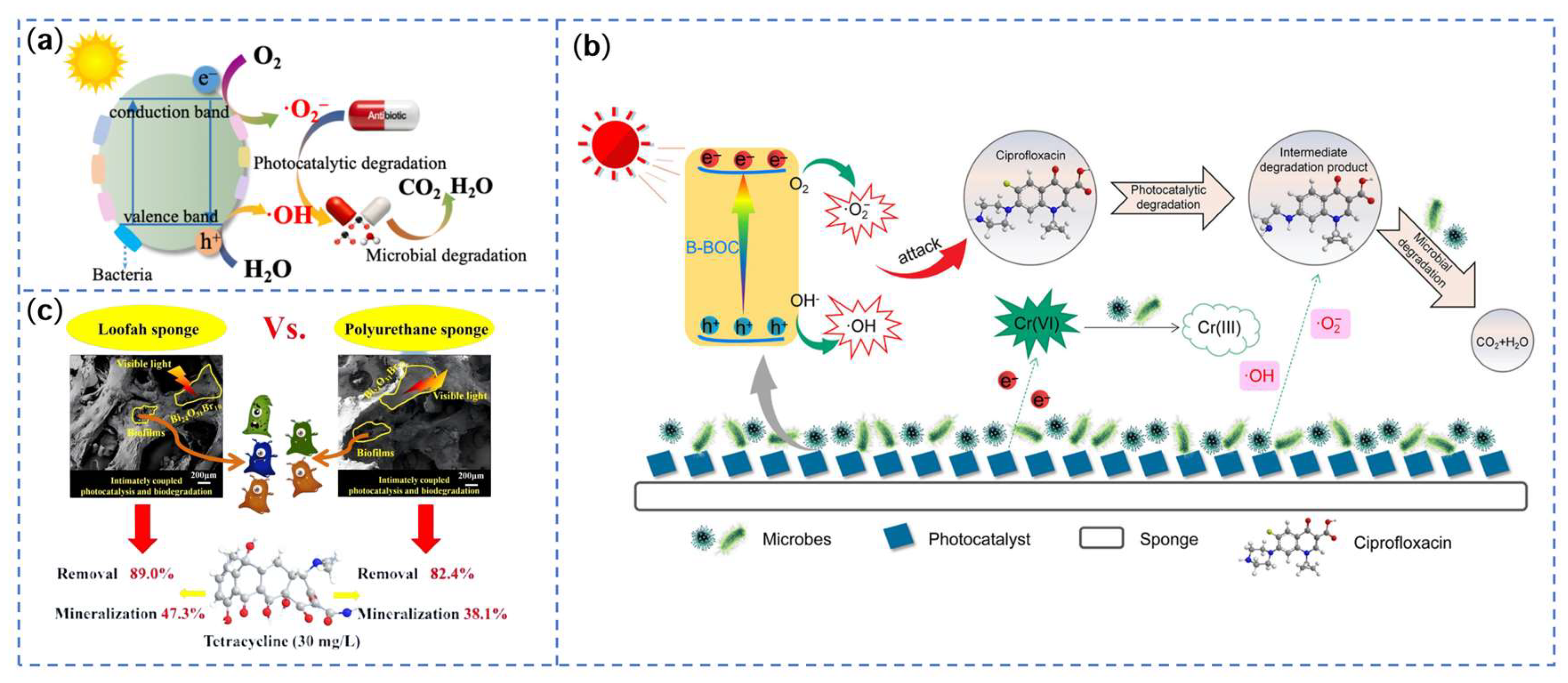
4.2.2. Combined Photocatalysis with Biodegradation
5. Conclusions and Future Research Prospects
- The lack of regulations governing the production, use, and disposal of antibiotics has contributed to rising environmental contamination. Therefore, it is essential to establish monitoring systems and strengthen relevant legislation. Emission standards should be formulated and enforced for key sources such as livestock farming and pharmaceutical wastewater to mitigate antibiotic accumulation in the environment.
- Physical treatments (e.g., adsorption, membrane separation) removes antibiotics from the environment via enrichment or interception. These methods are simple and low-cost but only concentrate the antibiotics, requiring further treatment for complete removal. The combination of physical methods with AOPs not only achieves the simultaneous enrichment and removal of antibiotics but also creates a synergistic effect that leverages the strengths of both approaches. Future research should focus on coupling physical methods with AOPs or other processes as a pretreatment technology or as a complementary strategy to achieve simultaneous enrichment and removal.
- Despite the significant advantages of AOPs in antibiotic degradation, challenges including high cost, substantial energy consumption, secondary pollution risks, and operational sensitivity remain. Therefore, developing coupled treatment technologies that combine AOPs with physical or biological methods is crucial to improve removal efficiency and minimize energy consumption. Additionally, AOPs may pose certain negative impacts on the safe utilization of solid waste and soil remediation. Excessive residual oxidants can lead to the loss of organic matter in solid waste, disrupt soil physicochemical properties and alter microbial community structure. Therefore, future AOP applications should optimize oxidant dosage, activation methods, and reaction conditions to balance efficient antibiotic removal with the safe utilization of solid waste and soil ecological security.
- The biological method is environmentally friendly and cost-effective; nevertheless, it takes a long time to degrade antibiotics and treatment efficiency is highly dependent on environmental conditions. In addition, ARGs and antibiotic-resistant bacteria (ARB) can emerge during the treatment process, which has potential risks to biological safety to a certain extent. Therefore, future research should develop innovative approaches to enhance antibiotic biodegradation, such as construction of microbial consortia and genetically engineered microorganism. Furthermore, it is crucial to strengthen the monitoring of ARGs and ARB during treatment and to adjust the treatment strategy in time, which can reduce the spread of drug resistance.
- The application of physical, chemical and biological methods has different advantages and disadvantages, while combining methods could compensate for the shortcomings of a single technology. Integrating physical methods with AOPs offers a promising strategy to enhance removal efficiency and reduce costs by leveraging mechanisms such as contaminant preconcentration and matrix optimization. Future work should focus on designing tailored, stable materials and optimizing reactor configurations through modeling to maximize synergy and operational stability. Furthermore, AOPs coupled with biodegradation have also shown considerable promise, as their synergy between catalytic oxidation and microbial metabolism enables efficient antibiotic degradation and enhanced mineralization. Future research should focus on optimizing AOP reactor design, to prevent excessive oxidation of organic matter and enhance subsequent biological degradability, thereby achieving an effective AOP–biodegradation balance. Additionally, novel oxidants should be introduced to overcome the limitations of traditional processes through enhanced selectivity and biodegradability.
Author Contributions
Funding
Institutional Review Board Statement
Informed Consent Statement
Data Availability Statement
Acknowledgments
Conflicts of Interest
Abbreviations
| AMX | Amoxicillin |
| AZM | Azithromycin |
| CAM | Carrimycin |
| CIP | Ciprofloxacin |
| CLA | Clarithromycin |
| CTC | Chlortetracycline |
| DOX | Doxorubicin |
| ETM | Erythromycin |
| LEV | Levofloxacin |
| ENR | Enrofloxacin |
| NOR | Norfloxacin |
| OFL | Ofloxacin |
| OTC | Oxytetracycline |
| STZ | Streptozotocin |
| SDZ | Sulfadiazine |
| SMT | sulfamethazine |
| SMX | Sulfamethoxazole |
| SMZ | Sulfamerazine |
| TC | Tetracycline |
| TCH | Tetracycline hydrochloride |
| TYL | Tylosin |
References
- Pham, M.N.; Nishimura, F.; Lan, J.C.W.; Khoo, K.S. Recent advancement of eliminating antibiotic resistance bacteria and antibiotic resistance genes in livestock waste: A review. Environ. Technol. Innov. 2024, 36, 103751. [Google Scholar] [CrossRef] [Scilit]
- Zhang, Y.; Cheng, D.; Xie, J.; Zhang, Y.; Wan, Y.; Zhang, Y.; Shi, X. Impacts of farmland application of antibiotic-contaminated manures on the occurrence of antibiotic residues and antibiotic resistance genes in soil: A meta-analysis study. Chemosphere 2022, 300, 134529. [Google Scholar] [CrossRef] [Scilit] [PubMed]
- Murray, A.K.; Stanton, I.; Gaze, W.H.; Snape, J. Dawning of a new ERA: Environmental Risk Assessment of antibiotics and their potential to select for antimicrobial resistance. Water Res. 2021, 200, 117233. [Google Scholar] [CrossRef] [Scilit] [PubMed]
- Zhang, Q.; Zheng, D.; Bai, B.; Ma, Z.; Zong, S. Insight into antibiotic removal by advanced oxidation processes (AOPs): Performance, mechanism, degradation pathways, and ecotoxicity assessment. Chem. Eng. J. 2024, 500, 157134. [Google Scholar] [CrossRef] [Scilit]
- Mei, Y.; Zhuang, S.; Wang, J. Biochar: A potential and green adsorbent for antibiotics removal from aqueous solution. Rev. Environ. Sci. Bio/Technol. 2024, 23, 1065–1103. [Google Scholar] [CrossRef] [Scilit]
- Zhao, X.; Xie, E.; Xie, H. Biological treatment strategies for antibiotic contamination: Mechanisms, applications, and future perspectives. RSC Adv. 2026, 16, 25787–25805. [Google Scholar] [CrossRef] [Scilit] [PubMed]
- Pan, W.; Li, P.; Song, N.; Cui, Y.; Zheng, Y. Advanced oxidation coupled biodegradation for antibiotic treatment: A review of interaction mechanisms, latest developments and potential challenges. Chem. Eng. J. 2026, 527, 172002. [Google Scholar] [CrossRef] [Scilit]
- Nas, B.; Dolu, T.; Koyuncu, S. Behavior and Removal of Ciprofloxacin and Sulfamethoxazole Antibiotics in Three Different Types of Full-Scale Wastewater Treatment Plants: A Comparative Study. Water Air Soil Pollut. 2021, 232, 127. [Google Scholar] [CrossRef] [Scilit]
- Pan, T.; Zhou, Y.-Y.; Xiang, Q.; An, X.-L.; Pu, Q.; Su, J.-Q. Efficient elimination of antibiotics and antibiotic resistance genes in hyperthermophilic sludge composting. J. Hazard. Mater. 2024, 479, 135525. [Google Scholar] [CrossRef] [Scilit] [PubMed]
- Kairigo, P.; Ngumba, E.; Sundberg, L.-R.; Gachanja, A.; Tuhkanen, T. Occurrence of antibiotics and risk of antibiotic resistance evolution in selected Kenyan wastewaters, surface waters and sediments. Sci. Total Environ. 2020, 720, 137580. [Google Scholar] [CrossRef] [Scilit] [PubMed]
- Al-Maadheed, S.; Goktepe, I.; Latiff, A.B.A.; Shomar, B. Antibiotics in hospital effluent and domestic wastewater treatment plants in Doha, Qatar. J. Water Process Eng. 2019, 28, 60–68. [Google Scholar] [CrossRef] [Scilit]
- Spataro, F.; Ademollo, N.; Pescatore, T.; Rauseo, J.; Patrolecco, L. Antibiotic residues and endocrine disrupting compounds in municipal wastewater treatment plants in Rome, Italy. Microchem. J. 2019, 148, 634–642. [Google Scholar] [CrossRef] [Scilit]
- Yang, X.; Flowers, R.C.; Weinberg, H.S.; Singer, P.C. Occurrence and removal of pharmaceuticals and personal care products (PPCPs) in an advanced wastewater reclamation plant. Water Res. 2011, 45, 5218–5228. [Google Scholar] [CrossRef] [Scilit] [PubMed]
- Ngumba, E.; Kosunen, P.; Gachanja, A.; Tuhkanen, T. A multiresidue analytical method for trace level determination of antibiotics and antiretroviral drugs in wastewater and surface water using SPE-LC-MS/MS and matrix-matched standards. Anal. Methods 2016, 8, 6720–6729. [Google Scholar] [CrossRef] [Scilit]
- Papageorgiou, M.; Kosma, C.; Lambropoulou, D. Seasonal occurrence, removal, mass loading and environmental risk assessment of 55 pharmaceuticals and personal care products in a municipal wastewater treatment plant in Central Greece. Sci. Total Environ. 2016, 543, 547–569. [Google Scholar] [CrossRef] [Scilit] [PubMed]
- Zhang, L.; Zhu, Z.; Zhao, M.; He, J.; Zhang, X.; Hao, F.; Du, P. Occurrence, removal, emission and environment risk of 32 antibiotics and metabolites in wastewater treatment plants in Wuhu, China. Sci. Total Environ. 2023, 899, 165681. [Google Scholar] [CrossRef] [Scilit] [PubMed]
- Tran, N.H.; Reinhard, M.; Gin, K.Y.-H. Occurrence and fate of emerging contaminants in municipal wastewater treatment plants from different geographical regions-a review. Water Res. 2018, 133, 182–207. [Google Scholar] [CrossRef] [Scilit] [PubMed]
- Kortesmäki, E.; Östman, J.R.; Meierjohann, A.; Brozinski, J.-M.; Eklund, P.; Kronberg, L. Occurrence of Antibiotics in Influent and Effluent from 3 Major Wastewater-Treatment Plants in Finland. Environ. Toxicol. Chem. 2020, 39, 1774–1789. [Google Scholar] [CrossRef] [Scilit] [PubMed]
- Yin, Z. Distribution and ecological risk assessment of typical antibiotics in the surface waters of seven major rivers, China. Environ. Sci. Process. Impacts 2021, 23, 1088–1100. [Google Scholar] [CrossRef] [Scilit] [PubMed]
- Addis, T.Z.; Adu, J.T.; Kumarasamy, M.; Demlie, M. Occurrence of Trace-Level Antibiotics in the Msunduzi River: An Investigation into South African Environmental Pollution. Antibiotics 2024, 13, 174. [Google Scholar] [CrossRef] [Scilit] [PubMed]
- Hu, Y.; Jin, L.; Zhao, Y.; Jiang, L.; Yao, S.; Zhou, W.; Lin, K.; Cui, C. Annual trends and health risks of antibiotics and antibiotic resistance genes in a drinking water source in East China. Sci. Total Environ. 2021, 791, 148152. [Google Scholar] [CrossRef] [Scilit] [PubMed]
- Matongo, S.; Birungi, G.; Moodley, B.; Ndungu, P. Occurrence of selected pharmaceuticals in water and sediment of Umgeni River, KwaZulu-Natal, South Africa. Environ. Sci. Pollut. Res. 2015, 22, 10298–10308. [Google Scholar] [CrossRef] [Scilit] [PubMed]
- Gray, A.D.; Todd, D.; Hershey, A.E. The seasonal distribution and concentration of antibiotics in rural streams and drinking wells in the piedmont of North Carolina. Sci. Total Environ. 2020, 710, 136286. [Google Scholar] [CrossRef] [Scilit] [PubMed]
- Burke, V.; Richter, D.; Greskowiak, J.; Mehrtens, A.; Schulz, L.; Massmann, G. Occurrence of Antibiotics in Surface and Groundwater of a Drinking Water Catchment Area in Germany. Water Environ. Res. 2016, 88, 652–659. [Google Scholar] [CrossRef] [Scilit] [PubMed]
- White, D.; Lapworth, D.J.; Civil, W.; Williams, P. Tracking changes in the occurrence and source of pharmaceuticals within the River Thames, UK; from source to sea. Environ. Pollut. 2019, 249, 257–266. [Google Scholar] [CrossRef] [Scilit]
- Cheng, J.; Jiang, L.; Sun, T.; Tang, Y.; Du, Z.; Lee, L.; Zhao, Q. Occurrence, Seasonal Variation and Risk Assessment of Antibiotics in the Surface Water of North China. Arch. Environ. Contam. Toxicol. 2019, 77, 88–97. [Google Scholar] [CrossRef] [Scilit] [PubMed]
- Rodrigues, D.A.d.S.; Starling, M.C.V.M.; de Barros, A.L.C.; Santos, M.C.; da Silva, E.S.; Viana, G.C.C.; Ribeiro, L.F.d.S.; Simcik, M.F.; Amorim, C.C. Occurrence of antibiotics, hormones and PFAs in surface water from a Nile tilapia aquaculture facility in a Brazilian hydroelectric reservoir. Chemosphere 2024, 352, 141444. [Google Scholar] [CrossRef] [Scilit] [PubMed]
- Böger, B.; Surek, M.; de O Vilhena, R.; Fachi, M.M.; Junkert, A.M.; Santos, J.M.M.F.; Domingos, E.L.; Cobre, A.d.F.; Momade, D.R.; Pontarolo, R. Occurrence of antibiotics and antibiotic resistant bacteria in subtropical urban rivers in Brazil. J. Hazard. Mater. 2021, 402, 123448. [Google Scholar] [CrossRef] [Scilit] [PubMed]
- Im, J.K.; Kim, S.H.; Noh, H.R.; Yu, S.J. Temporal-spatial variation and environmental risk assessment of pharmaceuticals in tributaries of the Han River watershed, South Korea. Sci. Total Environ. 2020, 741, 140486. [Google Scholar] [CrossRef] [Scilit] [PubMed]
- Huang, F.; An, Z.; Moran, M.J.; Liu, F. Recognition of typical antibiotic residues in environmental media related to groundwater in China (2009–2019). J. Hazard. Mater. 2020, 399, 122813. [Google Scholar] [CrossRef] [Scilit] [PubMed]
- Gros, M.; Catalán, N.; Mas-Pla, J.; Čelić, M.; Petrović, M.; Farré, M.J. Groundwater antibiotic pollution and its relationship with dissolved organic matter: Identification and environmental implications. Environ. Pollut. 2021, 289, 117927. [Google Scholar] [CrossRef] [Scilit] [PubMed]
- Ma, Y.; Li, M.; Wu, M.; Li, Z.; Liu, X. Occurrences and regional distributions of 20 antibiotics in water bodies during groundwater recharge. Sci. Total Environ. 2015, 518–519, 498–506. [Google Scholar] [CrossRef] [Scilit] [PubMed]
- Liu, K.; Gan, C.; Peng, Y.; Gan, Y.; He, J.; Du, Y.; Tong, L.; Shi, J.; Wang, Y. Occurrence and source identification of antibiotics and antibiotic resistance genes in groundwater surrounding urban hospitals. J. Hazard. Mater. 2024, 465, 133368. [Google Scholar] [CrossRef] [Scilit] [PubMed]
- Wu, D.; Bai, H.; He, L.-Y.; He, L.-X.; Gao, F.-Z.; Liu, C.-X.; Van den Brink, P.J.; Smidt, H.; Ying, G.-G. From river to groundwater: Antibiotics pollution, resistance prevalence, and source tracking. Environ. Int. 2025, 196, 109305. [Google Scholar] [CrossRef] [Scilit] [PubMed]
- Wang, H.; Chu, Y.; Fang, C. Occurrence of Veterinary Antibiotics in Swine Manure from Large-scale Feedlots in Zhejiang Province, China. Bull. Environ. Contam. Toxicol. 2017, 98, 472–477. [Google Scholar] [CrossRef] [Scilit] [PubMed]
- Singh, S.; Kumar, V.; Anil, A.G.; Kapoor, D.; Khasnabis, S.; Shekar, S.; Pavithra, N.; Samuel, J.; Subramanian, S.; Singh, J.; et al. Adsorption and detoxification of pharmaceutical compounds from wastewater using nanomaterials: A review on mechanism, kinetics, valorization and circular economy. J. Environ. Manag. 2021, 300, 113569. [Google Scholar] [CrossRef] [Scilit] [PubMed]
- Zhang, H.; Zhou, Y.; Huang, Y.; Wu, L.; Liu, X.; Luo, Y. Residues and risks of veterinary antibiotics in protected vegetable soils following application of different manures. Chemosphere 2016, 152, 229–237. [Google Scholar] [CrossRef] [Scilit] [PubMed]
- Ajibola, A.S.; Zwiener, C. Occurrence and Risk Assessment of Antibiotic Residues in Sewage Sludge of Two Nigerian Hospital Wastewater Treatment Plants. Water Air Soil Pollut. 2022, 233, 405. [Google Scholar] [CrossRef] [Scilit]
- Bisognin, R.P.; Wolff, D.B.; Carissimi, E.; Prestes, O.D.; Zanella, R. Occurrence and fate of pharmaceuticals in effluent and sludge from a wastewater treatment plant in Brazil. Environ. Technol. 2021, 42, 2292–2303. [Google Scholar] [CrossRef] [Scilit] [PubMed]
- Li, W.; Shi, Y.; Gao, L.; Liu, J.; Cai, Y. Occurrence, distribution and potential affecting factors of antibiotics in sewage sludge of wastewater treatment plants in China. Sci. Total Environ. 2013, 445–446, 306–313. [Google Scholar] [CrossRef] [Scilit] [PubMed]
- Guerra, P.; Kim, M.; Shah, A.; Alaee, M.; Smyth, S.A. Occurrence and fate of antibiotic, analgesic/anti-inflammatory, and antifungal compounds in five wastewater treatment processes. Sci. Total Environ. 2014, 473–474, 235–243. [Google Scholar] [CrossRef] [Scilit] [PubMed]
- Östman, M.; Lindberg, R.H.; Fick, J.; Björn, E.; Tysklind, M. Screening of biocides, metals and antibiotics in Swedish sewage sludge and wastewater. Water Res. 2017, 115, 318–328. [Google Scholar] [CrossRef] [Scilit] [PubMed]
- Li, C.; Chen, J.; Wang, J.; Ma, Z.; Han, P.; Luan, Y.; Lu, A. Occurrence of antibiotics in soils and manures from greenhouse vegetable production bases of Beijing, China and an associated risk assessment. Sci. Total Environ. 2015, 521–522, 101–107. [Google Scholar] [CrossRef] [Scilit] [PubMed]
- Wallace, J.S.; Garner, E.; Pruden, A.; Aga, D.S. Occurrence and transformation of veterinary antibiotics and antibiotic resistance genes in dairy manure treated by advanced anaerobic digestion and conventional treatment methods. Environ. Pollut. 2018, 236, 764–772. [Google Scholar] [CrossRef] [Scilit] [PubMed]
- Gros, M.; Mas-Pla, J.; Boy-Roura, M.; Geli, I.; Domingo, F.; Petrović, M. Veterinary pharmaceuticals and antibiotics in manure and slurry and their fate in amended agricultural soils: Findings from an experimental field site (Baix Empordà, NE Catalonia). Sci. Total Environ. 2019, 654, 1337–1349. [Google Scholar] [CrossRef] [Scilit] [PubMed]
- Berendsen, B.J.A.; Wegh, R.S.; Memelink, J.; Zuidema, T.; Stolker, L.A.M. The analysis of animal faeces as a tool to monitor antibiotic usage. Talanta 2015, 132, 258–268. [Google Scholar] [CrossRef] [Scilit] [PubMed]
- Rasschaert, G.; Van Elst, D.; Colson, L.; Herman, L.; de Carvalho Ferreira, H.C.; Dewulf, J.; Decrop, J.; Meirlaen, J.; Heyndrickx, M.; Daeseleire, E. Antibiotic Residues and Antibiotic-Resistant Bacteria in Pig Slurry Used to Fertilize Agricultural Fields. Antibiotics 2020, 9, 34. [Google Scholar] [CrossRef] [Scilit] [PubMed]
- Rashid, A.; Muhammad, J.; Khan, S.; Kanwal, A.; Sun, Q. Poultry manure gleaned antibiotic residues in soil environment: A perspective of spatial variability and influencing factors. Chemosphere 2023, 317, 137907. [Google Scholar] [CrossRef] [Scilit] [PubMed]
- Hang, L.; Zhao, Y.; Liu, C.; Yu, Y.; He, Y.; Xu, J.; Lu, Z. Determine Multiple Classes of Veterinary Antibiotics in Soil: Comparing Dispersive and Solid-Phase Extraction for Sample Cleanup. Chromatographia 2021, 84, 833–844. [Google Scholar] [CrossRef] [Scilit]
- An, J.; Chen, H.; Wei, S.; Gu, J. Antibiotic contamination in animal manure, soil, and sewage sludge in Shenyang, northeast China. Environ. Earth Sci. 2015, 74, 5077–5086. [Google Scholar] [CrossRef] [Scilit]
- Ho, Y.B.; Zakaria, M.P.; Latif, P.A.; Saari, N. Occurrence of veterinary antibiotics and progesterone in broiler manure and agricultural soil in Malaysia. Sci. Total Environ. 2014, 488–489, 261–267. [Google Scholar] [CrossRef] [Scilit] [PubMed]
- Chen, G.; Li, M.; Liu, X. Fluoroquinolone Antibacterial Agent Contaminants in Soil/Groundwater: A Literature Review of Sources, Fate, and Occurrence. Water Air Soil Pollut. 2015, 226, 418. [Google Scholar] [CrossRef] [Scilit]
- Chu, K.H.; Hashim, M.A.; Basirun, A.A. Removal of antibiotic contaminants from water via adsorption: Analysis of equilibrium isotherms. Environ. Pollut. Manag. 2025, 2, 142–149. [Google Scholar] [CrossRef] [Scilit]
- Jha, S.; Gaur, R.; Shahabuddin, S.; Tyagi, I. Biochar as Sustainable Alternative and Green Adsorbent for the Remediation of Noxious Pollutants: A Comprehensive Review. Toxics 2023, 11, 117. [Google Scholar] [CrossRef] [Scilit] [PubMed]
- Du, L.; Ahmad, S.; Liu, L.; Wang, L.; Tang, J. A review of antibiotics and antibiotic resistance genes (ARGs) adsorption by biochar and modified biochar in water. Sci. Total Environ. 2023, 858, 159815. [Google Scholar] [CrossRef] [Scilit] [PubMed]
- Xie, Y.; Wang, L.; Li, H.; Westholm, L.J.; Carvalho, L.; Thorin, E.; Yu, Z.; Yu, X.; Skreiberg, Ø. A critical review on production, modification and utilization of biochar. J. Anal. Appl. Pyrolysis 2022, 161, 105405. [Google Scholar] [CrossRef] [Scilit]
- Cheng, D.; Ngo, H.H.; Guo, W.; Chang, S.W.; Nguyen, D.D.; Zhang, X.; Varjani, S.; Liu, Y. Feasibility study on a new pomelo peel derived biochar for tetracycline antibiotics removal in swine wastewater. Sci. Total Environ. 2020, 720, 137662. [Google Scholar] [CrossRef] [Scilit] [PubMed]
- Zheng, S.; Li, G.; Ni, R.; Wang, J.; Wu, S.; Li, B. Ag/FeMgOx composite-modified granular activated carbon for efficient norfloxacin removal and antibiotic resistance gene suppression. Sep. Purif. Technol. 2025, 374, 133685. [Google Scholar] [CrossRef] [Scilit]
- Zhang, S.; Zhang, X.; Shen, X.; Lu, X.; Guo, Y.; Li, Y.; Han, X.; Liu, R.; Chen, F.; Sun, C. Research status of membrane separation technology in the treatment of antibiotic wastewater. Environ. Sci. Water Res. Technol. 2025, 11, 1386–1400. [Google Scholar] [CrossRef] [Scilit]
- Yang, L.; Xia, C.; Jiang, J.; Chen, X.; Zhou, Y.; Yuan, C.; Bai, L.; Meng, S.; Cao, G. Removal of antibiotics and estrogens by nanofiltration and reverse osmosis membranes. J. Hazard. Mater. 2024, 461, 132628. [Google Scholar] [CrossRef] [Scilit] [PubMed]
- Alonso, J.J.S.; El Kori, N.; Melián-Martel, N.; Del Río-Gamero, B. Removal of ciprofloxacin from seawater by reverse osmosis. J. Environ. Manag. 2018, 217, 337–345. [Google Scholar] [CrossRef] [Scilit] [PubMed]
- Anike, O.; Cuhorka, J.; Ezeogu, N.; Mikulášek, P. Separation of Antibiotics Using Two Commercial Nanofiltration Membranes—Experimental Study and Modelling. Membranes 2024, 14, 248. [Google Scholar] [CrossRef] [Scilit] [PubMed]
- Lu, Z.; Yang, Y.; Liu, Z.; Wen, H.; Xu, J.; Chen, J.P. Boehmite nanoparticles and poly(vinyl alcohol) modified nanofiltration membrane for efficient treatment of antibiotics and salt containing aqueous solutions: Design and evaluation. Sep. Purif. Technol. 2025, 362, 131921. [Google Scholar] [CrossRef] [Scilit]
- Lim, S.; Shi, J.L.; von Gunten, U.; McCurry, D.L. Ozonation of organic compounds in water and wastewater: A critical review. Water Res. 2022, 213, 118053. [Google Scholar] [CrossRef] [Scilit] [PubMed]
- Anjali, R.; Shanthakumar, S. Simultaneous degradation of amoxicillin, ciprofloxacin and acetaminophen in a mixture by ozonation: Kinetics and mechanisms pathway. J. Clean. Prod. 2022, 378, 134509. [Google Scholar] [CrossRef] [Scilit]
- Niu, J.; Yuan, R.; Chen, H.; Zhou, B.; Luo, S. Heterogeneous catalytic ozonation for the removal of antibiotics in water: A review. Environ. Res. 2024, 262, 119889. [Google Scholar] [CrossRef] [Scilit] [PubMed]
- Zhao, K.; Wang, P.; Zhao, Z.; Meng, F.; Pan, T.; Wang, Y.; Wen, G.; Zhang, X.; Wang, Y. MnOx/activated carbon heterogeneous catalysis for enhanced ozonation of tetracycline hydrochloride: The role of oxygen vacancies and Lewis acidic sites. Surf. Interfaces 2025, 75, 107827. [Google Scholar] [CrossRef] [Scilit]
- Nemati Sani, O.; Navaei Fezabady, A.A.; Yazdani, M.; Taghavi, M. Catalytic ozonation of ciprofloxacin using γ-Al2O3 nanoparticles in synthetic and real wastewaters. J. Water Process Eng. 2019, 32, 100894. [Google Scholar] [CrossRef] [Scilit]
- Ghasemi, H.; Mozaffari, S.; Mousavi, S.H.; Aghabarari, B.; Abu-Zahra, N. Decolorization of wastewater by heterogeneous Fenton reaction using MnO2-Fe3O4/CuO hybrid catalysts. J. Environ. Chem. Eng. 2021, 9, 105091. [Google Scholar] [CrossRef] [Scilit]
- Yang, J.; Wang, S.; Luo, X.; Yu, Z.; Zhou, Y. Fenton-like process in antibiotic-containing wastewater treatment: Applications and toxicity evaluation. Chin. Chem. Lett. 2025, 36, 110996. [Google Scholar] [CrossRef] [Scilit]
- Wang, X.; Jin, H.; Wu, D.; Nie, Y.; Tian, X.; Yang, C.; Zhou, Z.; Li, Y. Fe3O4@S-doped ZnO: A magnetic, recoverable, and reusable Fenton-like catalyst for efficient degradation of ofloxacin under alkaline conditions. Environ. Res. 2020, 186, 109626. [Google Scholar] [CrossRef] [Scilit] [PubMed]
- Wang, N.; Yang, Y.; Gong, C.; Liu, X.; Wang, K.; He, W.; Li, C.; Li, Z.; Li, L. Study of Fe/Cu composite Fenton-like catalyst in the treatment of antibiotic wastewater: Preparation, application, degradation pathways and working mechanism. J. Environ. Chem. Eng. 2025, 13, 115926. [Google Scholar] [CrossRef] [Scilit]
- Liang, C.; Yin, S.; Huang, P.; Yang, S.; Wang, Z.; Zheng, S.; Li, C.; Sun, Z. The critical role of minerals in persulfate-based advanced oxidation process: Catalytic properties, mechanism, and prospects. Chem. Eng. J. 2024, 482, 148969. [Google Scholar] [CrossRef] [Scilit]
- Honarmandrad, Z.; Sun, X.; Wang, Z.; Naushad, M.; Boczkaj, G. Activated persulfate and peroxymonosulfate based advanced oxidation processes (AOPs) for antibiotics degradation—A review. Water Resour. Ind. 2023, 29, 100194. [Google Scholar] [CrossRef] [Scilit]
- Dong, F.-X.; Yan, L.; Huang, S.-T.; Liang, J.-Y.; Zhang, W.-X.; Yao, X.-W.; Chen, X.; Qian, W.; Guo, P.-R.; Kong, L.-J.; et al. Removal of antibiotics sulfadiazine by a biochar based material activated persulfate oxidation system: Performance, products and mechanism. Process Saf. Environ. Prot. 2022, 157, 411–419. [Google Scholar] [CrossRef] [Scilit]
- Zhou, T.; Du, J.; Wang, Z.; Xiao, G.; Luo, L.; Faheem, M.; Ling, H.; Bao, J. Degradation of sulfamethoxazole by MnO2/heat-activated persulfate: Kinetics, synergistic effect and reaction mechanism. Chem. Eng. J. Adv. 2022, 9, 100200. [Google Scholar] [CrossRef] [Scilit]
- Priyadarshini, M.; Ahmad, A.; Das, S.; Ghangrekar, M.M. Application of innovative electrochemical and microbial electrochemical technologies for the efficacious removal of emerging contaminants from wastewater: A review. J. Environ. Chem. Eng. 2022, 10, 108230. [Google Scholar] [CrossRef] [Scilit]
- Gu, H.; Xie, W.; Du, A.; Pan, D.; Guo, Z. Overview of electrocatalytic treatment of antibiotic pollutants in wastewater. Catal. Rev. 2023, 65, 569–619. [Google Scholar] [CrossRef] [Scilit]
- Chen, J.; Xia, Y.; Dai, Q. Electrochemical degradation of chloramphenicol with a novel Al doped PbO2 electrode: Performance, kinetics and degradation mechanism. Electrochim. Acta 2015, 165, 277–287. [Google Scholar] [CrossRef] [Scilit]
- Wang, C.; Yin, L.; Xu, Z.; Niu, J.; Hou, L.-A. Electrochemical degradation of enrofloxacin by lead dioxide anode: Kinetics, mechanism and toxicity evaluation. Chem. Eng. J. 2017, 326, 911–920. [Google Scholar] [CrossRef] [Scilit]
- Silerio-Vázquez, F.d.J.; González-Burciaga, L.A.; Antileo, C.; Núñez-Núñez, C.M.; Proal-Nájera, J.B. Photocatalytic degradation of antibiotics in water via TiO2−x: Research needs for technological advancements. J. Hazard. Mater. Adv. 2024, 16, 100506. [Google Scholar] [CrossRef] [Scilit]
- Quyen, V.T.; Kim, J.; Park, P.-M.; Huong, P.T.; Viet, N.M.; Thang, P.Q. Enhanced the visible light photocatalytic decomposition of antibiotic pollutant in wastewater by using Cu doped WO3. J. Environ. Chem. Eng. 2021, 9, 104737. [Google Scholar] [CrossRef] [Scilit]
- Gupta, A.; Kumar, D.; Shukla, S.; Lee, Y.; Lee, S.; Sharma, S.K. Photocatalytic degradation of antibiotic ciprofloxacin using TiO2:Ag nanograins. Ceram. Int. 2025, 51, 38763–38773. [Google Scholar] [CrossRef] [Scilit]
- Guo, J.; Chen, Y.; Li, Z.; Shi, Y.; Li, X.; Xiong, W. Accelerated H2O2 generation and chloride utilization in heterogeneous electro-Fenton process for mariculture wastewater treatment. Sep. Purif. Technol. 2025, 366, 132754. [Google Scholar] [CrossRef] [Scilit]
- Du, X.; Fu, W.; Su, P.; Cai, J.; Zhou, M. Internal-micro-electrolysis-enhanced heterogeneous electro-Fenton process catalyzed by Fe/Fe3C@PC core–shell hybrid for sulfamethazine degradation. Chem. Eng. J. 2020, 398, 125681. [Google Scholar] [CrossRef] [Scilit]
- Javed, M.S.; Nazir, M.A.; Shafiq, Z.; Ullah, S.; Najam, T.; Iqbal, R.; Ismail, M.A.; Tamang, T.L.; Shah, S.S.A. Advanced materials for photocatalytic removal of antibiotics from wastewater. J. Alloys Compd. 2025, 1010, 177926. [Google Scholar] [CrossRef] [Scilit]
- Cao, Z.; Zhao, Y.; Zhou, Z.; Wang, Q.; Mei, Q.; Cheng, H. Efficiency LaFeO3 and BiOI heterojunction for the enhanced photo-Fenton degradation of tetracycline hydrochloride. Appl. Surf. Sci. 2022, 590, 153081. [Google Scholar] [CrossRef] [Scilit]
- Reis, R.Y.N.; Goulart, L.A.; Mascaro, L.H.; Alves, S.A. A critical view of the contributions of photoelectrochemical technology to pharmaceutical degradation. J. Environ. Chem. Eng. 2022, 10, 107859. [Google Scholar] [CrossRef] [Scilit]
- Cao, D.; Wang, Y.; Qiao, M.; Zhao, X. Enhanced photoelectrocatalytic degradation of norfloxacin by an Ag3PO4/BiVO4 electrode with low bias. J. Catal. 2018, 360, 240–249. [Google Scholar] [CrossRef] [Scilit]
- Liu, D.; Li, H.; Gao, R.; Zhao, Q.; Yang, Z.; Gao, X.; Wang, Z.; Zhang, F.; Wu, W. Enhanced visible light photoelectrocatalytic degradation of tetracycline hydrochloride by I and P co-doped TiO2 photoelectrode. J. Hazard. Mater. 2021, 406, 124309. [Google Scholar] [CrossRef] [Scilit] [PubMed]
- Cusumano, G.; Angeles Flores, G.; Venanzoni, R.; Angelini, P.; Zengin, G. Green Solutions to a Growing Problem: Harnessing Plants for Antibiotic Removal from the Environment. Antibiotics 2025, 14, 1031. [Google Scholar] [CrossRef] [Scilit] [PubMed]
- Feng, X.; Liu, G.; Wang, X.; An, K.; Guo, Y.; Liu, Y.; Dong, J. Uptake, Translocation, and Subcellular Distribution of Oxathiapiprolin and Famoxadone in Tomato Plants (Lycopersicon esculentum Miller). J. Agric. Food Chem. 2022, 70, 12310–12319. [Google Scholar] [CrossRef] [Scilit] [PubMed]
- Siddiqui, A.; Pandey, V.; Ahsan, M.; Singh, M.; Mishra, D.; Khare, P. Mechanistic aspect of uptake, translocation and subcellular distribution of tetracycline in Pelargonium graveolens L. Ind. Crops Prod. 2024, 219, 119132. [Google Scholar] [CrossRef] [Scilit]
- Wei, H.; Zhang, L.; Mao, Y.; Cheng, Y.; Wang, C.; Wang, Z. Phytoremediation of antibiotics and antibiotic resistance genes by Hydrilla verticillata: Synergistic removal and mechanistic insights. Bioresour. Technol. 2026, 441, 133518. [Google Scholar] [CrossRef] [Scilit] [PubMed]
- Yu, L.; Wang, Y.; Shan, X.; Ma, F.; Guo, H. Harnessing Paenarthrobacter ureafaciens YL1 and Pseudomonas koreensis YL2 Interactions to Improve Degradation of Sulfamethoxazole. Microorganisms 2022, 10, 648. [Google Scholar] [CrossRef] [Scilit] [PubMed]
- Wu, X.; Gu, Y.; Wu, X.; Zhou, X.; Zhou, H.; Amanze, C.; Shen, L.; Zeng, W. Construction of a Tetracycline Degrading Bacterial Consortium and Its Application Evaluation in Laboratory-Scale Soil Remediation. Microorganisms 2020, 8, 292. [Google Scholar] [CrossRef] [Scilit] [PubMed]
- Strotmann, U.; Heipieper, H.J.; Eberlein, C.; Mayer, P.; Birch, H.; Gartiser, S.; Pagga, U.; Daturpalli, S.; Battagliarin, G.; McDonough, K.; et al. Testing the biodegradability of difficult compounds: A future challenge for the OECD/ISO standardization. Appl. Microbiol. Biotechnol. 2026, 110, 122. [Google Scholar] [CrossRef] [Scilit] [PubMed]
- Kintzi, A.; Daturpalli, S.; Battagliarin, G.; Zumstein, M. Biodegradation of Water-Soluble Polymers by Wastewater Microorganisms: Challenging Laboratory Testing Protocols. Environ. Sci. Technol. 2024, 58, 15246–15256. [Google Scholar] [CrossRef] [Scilit] [PubMed]
- Çelik, G.; Stolte, S.; Müller, S.; Schattenberg, F.; Markiewicz, M. Environmental persistence assessment of heterocyclic polyaromatic hydrocarbons—Ultimate and primary biodegradability using adapted and non-adapted microbial communities. J. Hazard. Mater. 2023, 460, 132370. [Google Scholar] [CrossRef] [Scilit] [PubMed]
- Shi, Y.; Lin, H.; Ma, J.; Zhu, R.; Sun, W.; Lin, X.; Zhang, J.; Zheng, H.; Zhang, X. Degradation of tetracycline antibiotics by Arthrobacter nicotianae OTC-16. J. Hazard. Mater. 2021, 403, 123996. [Google Scholar] [CrossRef] [Scilit] [PubMed]
- Yang, C.-W.; Liu, C.; Chang, B.-V. Biodegradation of Amoxicillin, Tetracyclines and Sulfonamides in Wastewater Sludge. Water 2020, 12, 2147. [Google Scholar] [CrossRef] [Scilit]
- Liu, X.; Chen, J.; Liu, Y.; Wan, Z.; Guo, X.; Lu, S.; Qiu, D. Sulfamethoxazole degradation by Pseudomonas silesiensis F6a isolated from bioelectrochemical technology-integrated constructed wetlands. Ecotoxicol. Environ. Saf. 2022, 240, 113698. [Google Scholar] [CrossRef] [Scilit] [PubMed]
- Dong, Z.; Yan, X.; Wang, J.; Zhu, L.; Wang, J.; Li, C.; Zhang, W.; Wen, S.; Kim, Y.M. Mechanism for biodegradation of sulfamethazine by Bacillus cereus H38. Sci. Total Environ. 2022, 809, 152237. [Google Scholar] [CrossRef] [Scilit] [PubMed]
- Pan, L.-j.; Li, J.; Li, C.-x.; Tang, X.-d.; Yu, G.-w.; Wang, Y. Study of ciprofloxacin biodegradation by a Thermus sp. isolated from pharmaceutical sludge. J. Hazard. Mater. 2018, 343, 59–67. [Google Scholar] [CrossRef] [Scilit] [PubMed]
- Feng, N.-X.; Yu, J.; Xiang, L.; Yu, L.-Y.; Zhao, H.-M.; Mo, C.-H.; Li, Y.-W.; Cai, Q.-Y.; Wong, M.-H.; Li, Q.X. Co-metabolic degradation of the antibiotic ciprofloxacin by the enriched bacterial consortium XG and its bacterial community composition. Sci. Total Environ. 2019, 665, 41–51. [Google Scholar] [CrossRef] [Scilit] [PubMed]
- Manasfi, R.; Chiron, S.; Montemurro, N.; Perez, S.; Brienza, M. Biodegradation of fluoroquinolone antibiotics and the climbazole fungicide by Trichoderma species. Environ. Sci. Pollut. Res. 2020, 27, 23331–23341. [Google Scholar] [CrossRef] [Scilit] [PubMed]
- Nugraha, M.W.; Kim, S.; Roddick, F.; Xie, Z.; Fan, L. A review of the recent advancements in adsorption technology for removing antibiotics from hospital wastewater. J. Water Process Eng. 2025, 70, 106960. [Google Scholar] [CrossRef] [Scilit]
- Fu, L.; Chen, X.; Xiang, Y.; Zeng, G. Integrated catalytic membranes for advanced antibiotic wastewater treatment: Synergistic separation-degradation mechanisms and next-generation design. Sep. Purif. Technol. 2025, 372, 133440. [Google Scholar] [CrossRef] [Scilit]
- Borah, P.; Roy, S.; Ahmaruzzaman, M. Environmental fate of complex antibiotics in aquatic systems and its degradation by electrochemical advanced oxidation process: A holistic review of process variables, mechanistic insights, and implications. J. Environ. Chem. Eng. 2025, 13, 120267. [Google Scholar] [CrossRef] [Scilit]
- Lei, A.; Wang, M.; Pei, Y.; Cheng, Q.; Ni, H.; Yang, S.; Lin, H.; Liu, X.; Chen, H. Biodegradation of tetracycline antibiotics: Advances and insights into microbial resources, enzymatic mechanisms, and remediation potential. J. Hazard. Mater. 2026, 508, 141931. [Google Scholar] [CrossRef] [Scilit] [PubMed]
- Tahmasebi, A.; Ghaffari, S.-B.; Sarrafzadeh, M.-H. Techno-economic comparison of two hydroxyl and sulfate radicals based advanced oxidation process for enhancing biodegradability of pulp and paper mill wastewater. Chem. Eng. Sci. 2024, 293, 120095. [Google Scholar] [CrossRef] [Scilit]
- Ahmed, M.B.; Zhou, J.L.; Ngo, H.H.; Guo, W. Adsorptive removal of antibiotics from water and wastewater: Progress and challenges. Sci. Total Environ. 2015, 532, 112–126. [Google Scholar] [CrossRef] [Scilit] [PubMed]
- Balarak, D.; Khatibi, A.D.; Chandrika, K. Antibiotics Removal from Aqueous Solution and Pharmaceutical Wastewater by Adsorption Process: A Review. Int. J. Pharm. Investig. 2020, 10, 106–111. [Google Scholar] [CrossRef] [Scilit]
- Feng, X.; Li, X.; Su, B. Photocatalytic degradation performance of antibiotics by peanut shell biochar anchored NiCr-LDH nanocomposites fabricated by one-pot hydrothermal protocol. Colloids Surf. A Physicochem. Eng. Asp. 2023, 666, 131337. [Google Scholar] [CrossRef] [Scilit]
- Ren, X.; Zhang, C.; Zhang, X.; Zhang, Y.; Zhou, M. MOF-derived Fe-Cu doped biochar composites for synchronous adsorption, electro-Fenton oxidation and in-situ regeneration for efficient antibiotic removal. Water Res. 2025, 287, 124408. [Google Scholar] [CrossRef] [Scilit] [PubMed]
- Lian, Z.; Wu, T.; Zhang, X.; Cai, S.; Xiong, Y.; Yang, R. Synergistic degradation of tetracycline from Mo2C/MoOx films mediated peroxymonosulfate activation and visible-light triggered photocatalysis. Chem. Eng. J. 2023, 469, 143774. [Google Scholar] [CrossRef] [Scilit]
- Bai, L.; Liu, Z.; Wang, H.; Li, G.; Liang, H. Fe(II)-activated peroxymonosulfate coupled with nanofiltration removes natural organic matter and sulfamethoxazole in natural surface water: Performance and mechanisms. Sep. Purif. Technol. 2021, 274, 119088. [Google Scholar] [CrossRef] [Scilit]
- Liu, H.; Zhang, H.; Dong, X.; Wu, C.; Lichtfouse, E. Removal of antibiotics from black water by a membrane filtration-visible light photocatalytic system. J. Water Process Eng. 2023, 53, 103605. [Google Scholar] [CrossRef] [Scilit]
- Dwivedi, K.A.; Huang, S.-J.; Wang, C.-T.; Kumar, S. Fundamental understanding of microbial fuel cell technology: Recent development and challenges. Chemosphere 2022, 288, 132446. [Google Scholar] [CrossRef] [Scilit] [PubMed]
- Xue, W.; Li, F.; Zhou, Q. Degradation mechanisms of sulfamethoxazole and its induction of bacterial community changes and antibiotic resistance genes in a microbial fuel cell. Bioresour. Technol. 2019, 289, 121632. [Google Scholar] [CrossRef] [Scilit] [PubMed]
- Li, S.; Hua, T.; Yuan, C.-S.; Li, B.; Zhu, X.; Li, F. Degradation pathways, microbial community and electricity properties analysis of antibiotic sulfamethoxazole by bio-electro-Fenton system. Bioresour. Technol. 2020, 298, 122501. [Google Scholar] [CrossRef] [Scilit] [PubMed]
- Li, C.; Jia, X.; Zhao, X.; Xu, M.; Cai, Y.; Wu, T.; Huang, J. The oxidation efficiency and the microbial community analysis of a novel bio-electro-Fenton system with Fe@Co/GF composite cathode. Sep. Purif. Technol. 2023, 323, 124362. [Google Scholar] [CrossRef] [Scilit]
- Dai, M.; Zhang, Y.; Wu, Y.; Sun, R.; Zong, W.; Kong, Q. Mechanism involved in the treatment of sulfamethoxazole in wastewater using a constructed wetland microbial fuel cell system. J. Environ. Chem. Eng. 2021, 9, 106193. [Google Scholar] [CrossRef] [Scilit]
- Li, J.; Ren, H.-Y.; Fu, Q.; Li, T.; Kong, F. A systematic review for degradation of tetracycline antibiotics by microbial fuel cells: Performance, mechanisms, microbial community and coupled system. Process Saf. Environ. Prot. 2025, 204, 108114. [Google Scholar] [CrossRef] [Scilit]
- Liu, Q.; Hou, J.; Wu, J.; Miao, L.; You, G.; Ao, Y. Intimately coupled photocatalysis and biodegradation for effective simultaneous removal of sulfamethoxazole and COD from synthetic domestic wastewater. J. Hazard. Mater. 2022, 423, 127063. [Google Scholar] [CrossRef] [Scilit] [PubMed]
- Cai, H.; Zhang, D.; Ma, X.; Ma, Z. A novel ZnO/biochar composite catalysts for visible light degradation of metronidazole. Sep. Purif. Technol. 2022, 288, 120633. [Google Scholar] [CrossRef] [Scilit]
- Dong, Y.; Wang, Q.; Zhu, J.; Liang, L.; Xu, D.; Mi, X.; Ren, Z.; Wang, P. A comprehensive study on the co-removal of Cr (VI) and ciprofloxacin via microbial-photocatalytic coupling: Mechanistic insights and performance evaluation. J. Environ. Manag. 2024, 352, 120044. [Google Scholar] [CrossRef] [Scilit] [PubMed]
- Zhang, H.; Yu, Y.; Li, Y.; Lin, L.; Zhang, C.; Zhang, W.; Wang, L.; Niu, L. A novel BC/g-C3N4 porous hydrogel carrier used in intimately coupled photocatalysis and biodegradation system for efficient removal of tetracycline hydrochloride in water. Chemosphere 2023, 317, 137888. [Google Scholar] [CrossRef] [Scilit] [PubMed]
- Li, F.; Lan, X.; Shi, J.; Wang, L. Loofah sponge as an environment-friendly biocarrier for intimately coupled photocatalysis and biodegradation (ICPB). J. Water Process Eng. 2021, 40, 101965. [Google Scholar] [CrossRef] [Scilit]





| Species | Country | Sampling Site | Influent Concentration (ng L−1) | Influent Concentration (ng L−1) | Reference | |
|---|---|---|---|---|---|---|
| TCs | TC | Qatar | Doha | 199~319 | 197~260 | [11] |
| CTC | Italy | Rome | 4487.18 | 898.72 | [12] | |
| DOX | Kenya | Machakos | 2500~2900 | 1100~1900 | [10] | |
| SAs | SMZ | USA | Gwinnett | 1200~3400 | 35~140 | [13] |
| Finland | Jyväskylä | 202 | 130 | [14] | ||
| SDZ | Greek | Volos | 846 | 194 | [15] | |
| QNs | OFL | China | Wuhu | 49.0~1124.8 | 231.5~683.5 | [16] |
| CIP | USA | Gwinnett | 430~1100 | 1~10 | [13] | |
| Qatar | Doha | 234~2543 | 238~1723 | [11] | ||
| Kenya | Machakos | 1200~2000 | 100~700 | [10] | ||
| MLs | CAM | China | South China | 26~1854 | 4.79~637.1 | [17] |
| Finland | Helsinki | 50~327 | 140~219 | [18] |
| Species | Country | Sampling Site | Concentration (ng L−1) | Reference | |
|---|---|---|---|---|---|
| surface water | |||||
| TCs | TCs | China | Yellow River | 8.25~131.59 | [19] |
| TC | South Africa | Msunduzi River | 158.42~1290.43 | [20] | |
| DOX | Kenya | Mitheu river | 600~800 | [10] | |
| SAs | SAs | China | East China | 3.63~203.65 | [21] |
| SMZ | South Africa | Umgeni Rive | 360~1100 | [22] | |
| USA | North Carolina | 5.97~14.54 | [23] | ||
| German | Thulsfelde | 147 | [24] | ||
| SMX | German | Thulsfelde | 114 | ||
| SDZ | China | Hai River | 54.6~505 | [19] | |
| UK | Thames river | 5.0~5.4 | [25] | ||
| QNs | NOR | Kenya | Mitheu river | 590~610 | [10] |
| CIP | China | North China | 62.04~641.3 | [26] | |
| Kenya | Mitheu river | 1200~1400 | [10] | ||
| Brazil | Três Marias reservoir | 3.3~17.7 | [27] | ||
| MLs | CAM | UK | Thames river | 5.7~500 | [25] |
| Brazil | Curitiba | 80~650 | [28] | ||
| CLA | South Korea | Han River | 79~223 | [29] | |
| Groundwater | |||||
| TCs | TC | China | North and South China | 10.3~207.1 | [30] |
| TC | Spain | Osona catchment | 40~140 | [31] | |
| OTC | China | North and South China | 13.1~517.6 | [30] | |
| CTC | Spain | Osona catchment | 64~365 | [31] | |
| DOX | Spain | Osona catchment | 21~2400 | ||
| SAs | SMZ | Germany | Baden-Württemberg | 410 | [32] |
| QNs | OFL | China | Wuhan | 4.0-215.4 | [33] |
| NOR | China | North and South China | 25.2~142.0 | [30] | |
| CIP | Spain | Barcelona | 443 | [34] | |
| MAs | ETM | China | North and South China | 13.0~377.8 | [30] |
| Romania | Cluj-Napoca | 258.3 | [34] | ||
| Species | Country | Sampling Site | Concentration (μg kg−1) | Reference | |
|---|---|---|---|---|---|
| Sewage sludge | |||||
| TCs | TC | Nigeria | Lagos | 179.58~310.2 | [38] |
| OTC | Nigeria | Ibadan | 364.81 | ||
| Brazil | Porto Alegre | 62~290 | [39] | ||
| SAs | SAs | China | Shandong | 0.14~29.6 | [40] |
| QNs | QNs | China | Beijing | 989~10,096 | |
| OFL | Canada | Ontario | 150~3200 | [41] | |
| CIP | Canada | Ontario | 1780~16,000 | ||
| Nigeria | Lagos | 112.03~674.0 | [38] | ||
| Swedish | Göteborg | 1600~11,000 | [42] | ||
| Animal manure | |||||
| TCs | TCs | China | Beijing | 531~28,317 | [43] |
| TC | USA | New York | 30~420 | [44] | |
| OTC | China | Zhejiang | 3160~5510 | [35] | |
| Spain | Baix Empordà | 20~6700 | [45] | ||
| CTC | USA | New York | 7~107 | [44] | |
| DOX | Netherlands | Wageningen | 324~4500 | [46] | |
| Belgium | Flanders | 17.9~13,632.1 | [47] | ||
| SAs | SDZ | China | Zhejiang | 3430~7620 | [35] |
| Netherlands | Wageningen | 80~216 | [46] | ||
| QNs | QNs | China | Beijing | 168~16,736 | [43] |
| CIP | Spain | Baix Empordà | 54~2900 | [45] | |
| MLs | TYL | Netherlands | Wageningen | 10~516 | [46] |
| Belgium | Flanders | 17.3~5599.0 | [47] | ||
| Soil | |||||
| TCs | TCs | China | Beijing | 53~430 | [43] |
| OTC | China | Tongshan | 397.6~8400 | [37] | |
| Pakistan | Kohat | 7.44~29.22 | [48] | ||
| CTC | China | Zhejiang | 1148.5 | [49] | |
| China | Shenyang | 8.29~1590.16 | [50] | ||
| DOX | Malaysia | Sendayan | 193~537 | [51] | |
| SAs | SDZ | China | Shenyang | 1.93~760.09 | [50] |
| QNs | QNs | China | Beijing | 51~649 | [43] |
| CIP | Switzerland | Zurich | 270~400 | [52] | |
| NOR | Switzerland | Zurich | 270~320 | [52] | |
| MLs | TYL | Malaysia | Linggi | 187~1171 | [51] |
| AOPs | Main Reactive Species | Advantages | Disadvantage |
|---|---|---|---|
| Ozone oxidation | O3, ·OH |
|
|
| Fenton oxidation | ·OH |
|
|
| Persulfate oxidation | , ·OH, , 1O2 |
|
|
| Electrochemical oxidation | ·OH |
|
|
| Photocatalytic oxidation | ·OH, h+, |
|
|
| Method | Treatment Efficiency | Advantages | Disadvantage | Reference |
|---|---|---|---|---|
| Physical | 50~99% |
|
| [107,108] |
| Chemical | 80~99% |
|
| [4,109] |
| Biological | 32%~100% |
|
| [103,106] |
Disclaimer/Publisher’s Note: The statements, opinions and data contained in all publications are solely those of the individual author(s) and contributor(s) and not of MDPI and/or the editor(s). MDPI and/or the editor(s) disclaim responsibility for any injury to people or property resulting from any ideas, methods, instructions or products referred to in the content. |
© 2026 by the authors. Licensee MDPI, Basel, Switzerland. This article is an open access article distributed under the terms and conditions of the Creative Commons Attribution (CC BY) license.
Share and Cite
Tao, Y.; Xie, W.; Xu, L.; Shi, C.; Wang, X.; Li, G.; Yu, C. Antibiotics in the Environment: Occurrence, Enhanced Removal Strategies and Future Prospects. Toxics 2026, 14, 637. https://doi.org/10.3390/toxics14070637
Tao Y, Xie W, Xu L, Shi C, Wang X, Li G, Yu C. Antibiotics in the Environment: Occurrence, Enhanced Removal Strategies and Future Prospects. Toxics. 2026; 14(7):637. https://doi.org/10.3390/toxics14070637
Chicago/Turabian StyleTao, Yinglu, Wenjun Xie, Lei Xu, Cailing Shi, Xiangrui Wang, Gaoqi Li, and Chufei Yu. 2026. "Antibiotics in the Environment: Occurrence, Enhanced Removal Strategies and Future Prospects" Toxics 14, no. 7: 637. https://doi.org/10.3390/toxics14070637
APA StyleTao, Y., Xie, W., Xu, L., Shi, C., Wang, X., Li, G., & Yu, C. (2026). Antibiotics in the Environment: Occurrence, Enhanced Removal Strategies and Future Prospects. Toxics, 14(7), 637. https://doi.org/10.3390/toxics14070637