
Antibiotics in the Environment: Occurrence, Enhanced Removal Strategies and Future Prospects


Highlights
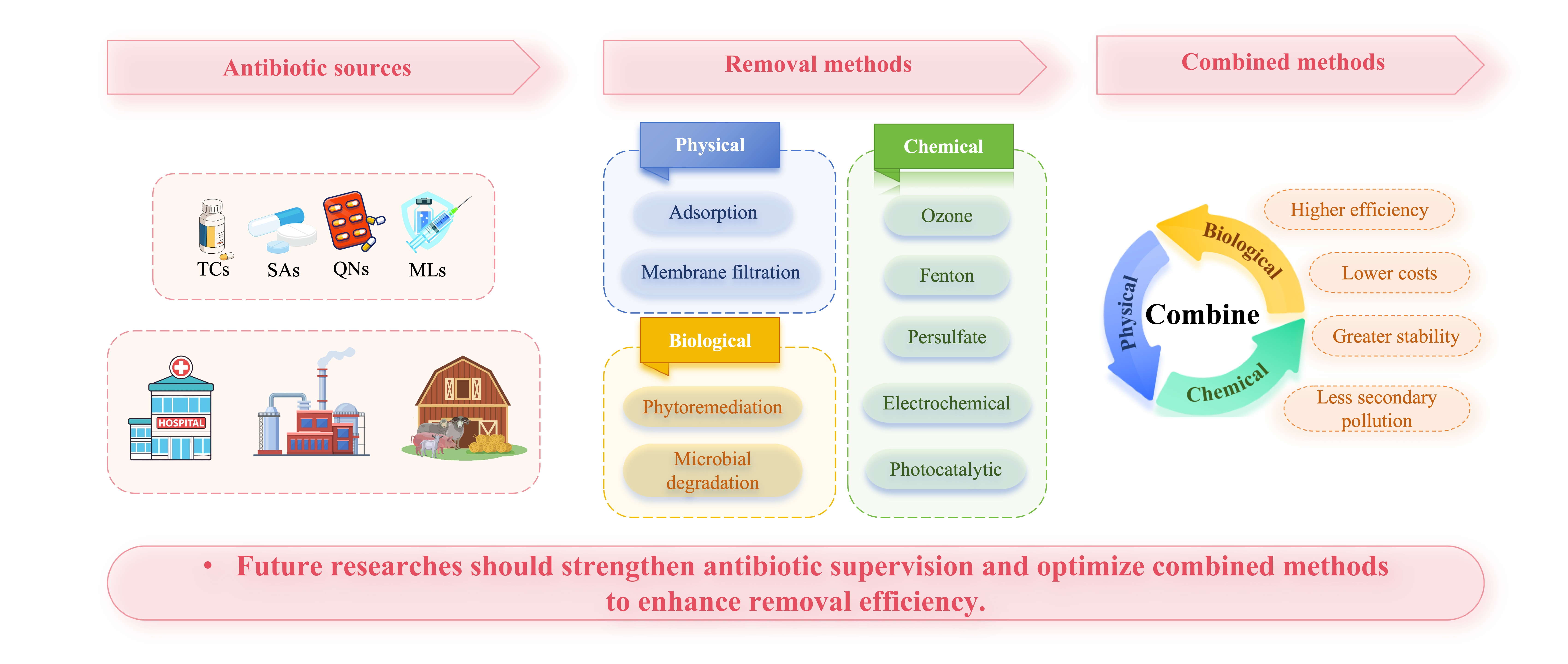
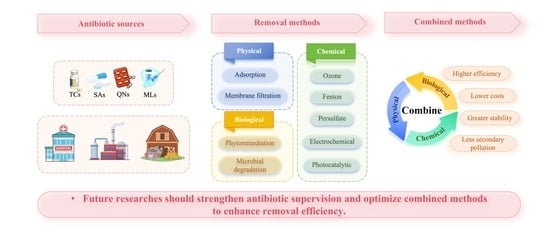
- Physical, chemical and biological removal methods are critically compared.
- Combined methods demonstrate significant potential for improving antibiotic removal efficiency in complex environments.
- Future research should focus on optimizing degradation methods and creating efficient, sustainable, multi-technology systems.
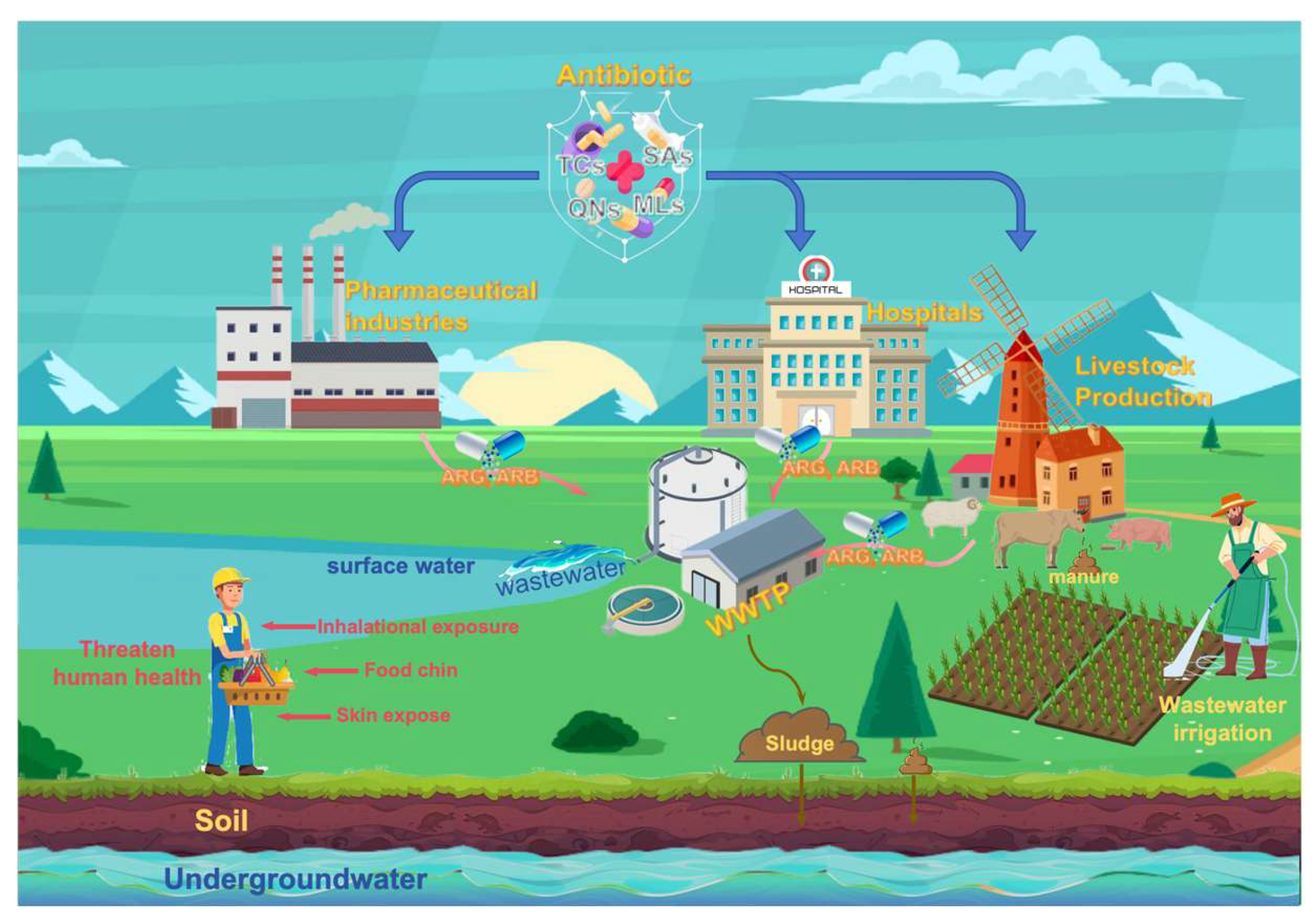
- Antibiotic supervision and legislation should be strengthened to restrict antibiotic abuse, thereby mitigating antibiotic pollution.
- Coupling conventional methods offers a feasible strategy for efficient and sustainable antibiotic remediation.
Abstract
Share and Cite
Tao, Y.; Xie, W.; Xu, L.; Shi, C.; Wang, X.; Li, G.; Yu, C. Antibiotics in the Environment: Occurrence, Enhanced Removal Strategies and Future Prospects. Toxics 2026, 14, 637. https://doi.org/10.3390/toxics14070637
Tao Y, Xie W, Xu L, Shi C, Wang X, Li G, Yu C. Antibiotics in the Environment: Occurrence, Enhanced Removal Strategies and Future Prospects. Toxics. 2026; 14(7):637. https://doi.org/10.3390/toxics14070637
Chicago/Turabian StyleTao, Yinglu, Wenjun Xie, Lei Xu, Cailing Shi, Xiangrui Wang, Gaoqi Li, and Chufei Yu. 2026. "Antibiotics in the Environment: Occurrence, Enhanced Removal Strategies and Future Prospects" Toxics 14, no. 7: 637. https://doi.org/10.3390/toxics14070637
APA StyleTao, Y., Xie, W., Xu, L., Shi, C., Wang, X., Li, G., & Yu, C. (2026). Antibiotics in the Environment: Occurrence, Enhanced Removal Strategies and Future Prospects. Toxics, 14(7), 637. https://doi.org/10.3390/toxics14070637