
Article

Common and Unique Respiratory Health Risk Induced by Urban-Rural PM2.5 in the Chengdu-Chongqing Economic Circle

1
Institute of Basic Medicine, North Sichuan Medical College, Nanchong 637000, China
2
School of Public Health, North Sichuan Medical College, Nanchong 637000, China
3
Key Laboratory of Three Gorges Reservoir Region’s Eco-Environment, Ministry of Education, Chongqing University, Chongqing 400045, China
4
Department of Traditional Chinese Medicine and Rehabilitation, People’s Hospital of Chongqing Liang Jiang New Area, Chongqing 401121, China
5
Research Center for Atmospheric Environment, Chongqing Institute of Green and Intelligent Technology, Chinese Academy of Sciences, Chongqing 400714, China
*
Authors to whom correspondence should be addressed.
Toxics 2026, 14(6), 531; https://doi.org/10.3390/toxics14060531 (registering DOI)
Submission received: 11 May 2026 / Revised: 17 June 2026 / Accepted: 18 June 2026 / Published: 20 June 2026

Abstract

Fine particulate matter with a diameter ≤2.5 μm (PM2.5) pollution poses a global public health crisis, demonstrating significant threats to human health. This study focused on the strategically important Chengdu-Chongqing Economic Circle in western China, systematically comparing the toxic effects of urban and rural PM2.5 across five levels. PMF and regression analysis were used to identify source contributions, dual-omics to pinpoint key molecules, and epidemiological data with a GAM model to assess health risks. Findings demonstrate that rural PM2.5 possesses greater biotoxicity than its urban counterpart. Cytotoxicity in urban and rural PM2.5 originated from road dust/vehicle emissions and biomass burning, respectively. Subsequently, integrated omics and molecular biology analyses identify kinesin family member 20A (KIF20A) as a shared key target, which mediates toxicity induced by both urban and rural PM2.5. Finally, epidemiological analysis reveals that females and ≥65 years old exhibit relatively high sensitivity to urban PM2.5 exposure trends, with rhinitis showing a comparatively higher impact among various related diseases. The novelty of this work lies in its pioneering application of a multi-tiered investigative approach. This approach spans “environmental samples-cellular mechanisms-population health” within the Chengdu-Chongqing economic circle context, systematically elucidating common and distinct respiratory health risk of urban and rural PM2.5. This work offers a vital scientific foundation for advancing region-specific, precise air pollution prevention and control measures.

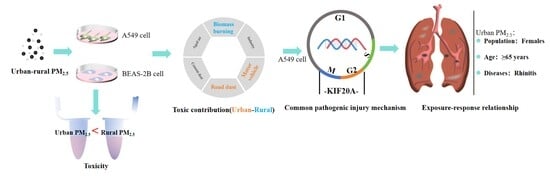
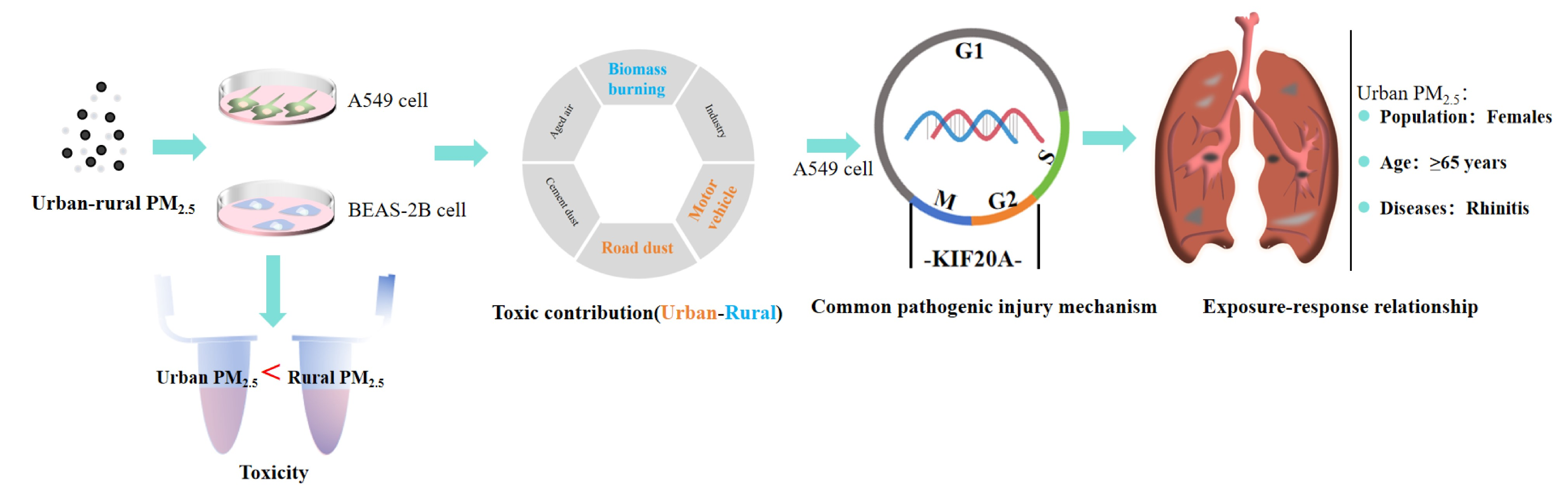
Graphical Abstract

1. Introduction

Fine particulate matter (PM2.5), a critical global health risk, induces severe multiorgan toxicity. The 2023 Lancet Countdown on Health and Climate Change attributed approximately 100 deaths per 780,000 population to PM2.5 exposure [1]. The respiratory system serves as the primary target organ. It develops oxidative stress, inflammation, and immune dysregulation upon exposure. These effects exacerbate asthma and chronic obstructive pulmonary disease (COPD) and increase lung cancer risk [2,3,4]. Thus, PM2.5-related respiratory diseases represent a substantial public health burden.
Epidemiological studies have conclusively demonstrated the adverse respiratory health effects of urban PM2.5 at a global scale [5]. Specifically, each 10 µg/m3 increase in urban PM2.5 concentration is associated with significant health impacts. These include 2.07%, 0.58%, and 8.00% increases in disease prevalence, mortality, and hospitalization rates, respectively [6,7,8]. In contrast, research on PM2.5-related health impacts in rural areas remains notably scarce and fragmented worldwide. Limited available evidence indicates a stronger association between 7-day cumulative PM2.5 exposure and COPD mortality in rural versus urban settings [9]. This pattern not only suggests potential urban-rural differences in PM2.5 toxicity but also highlights significant disparities in respiratory disease risk distribution.
PM2.5 sources show clear geographic differences [10]. Urban PM2.5 mainly originates from heavy traffic and industry, while rural PM2.5 is more influenced by farming and biomass burning. Its chemical composition is diverse, containing water-soluble ions, carbon compounds, and metals, etc. These differences lead to varying health impacts across regions [11]. Research has begun to uncover how urban and rural PM2.5 cause harm. However, knowledge gaps remain. Urban PM2.5’s effects are better understood, with several disease-related pathways identified (NOX4/Nrf2, TLR2/TLR4/MyD88, IL-13/IL-17A) [12,13,14]. Rural PM2.5 research is less advanced, with only one pathway (RRM2/CCND1) found to affect cell growth and death [15].
Under the combined influence of complex basin topography, high population density, and growing energy consumption, the Chengdu-Chongqing economic circle—a national-level development zone—faces a dual atmospheric pollution challenge characterized by the coexistence of photochemical smog and PM2.5. As the economic engine of Southwest China, this region boasts the densest population, the most robust industrial base, and the highest degree of openness, centered around the Chengdu-Chongqing megacity cluster [16]. Though previous studies have preliminarily elucidated the compositional characteristics, source apportionment, and pollution patterns of PM2.5 in this area [17,18], the differences in PM2.5-related health risks between urban and rural areas within the economic circle remain poorly understood.
Current research lacks systematic investigations into the urban-rural disparities of PM2.5 spanning source, toxicological effects, pathogenic mechanisms and epidemiology. Therefore, this study employs an interdisciplinary approach to systematically compare the health risks of urban- and rural-PM2.5, with a focus on the Chengdu-Chongqing economic circle. Through multi-scale and multi-level analyses, we aim to elucidate the intrinsic causes of urban and rural-PM2.5 health risk disparities and their differential pathogenic mechanisms, thereby providing scientific evidence for region-specific health risk assessment and precision prevention strategies.

2. Materials and Methods

2.1. Collection and Extraction of PM2.5

Urban and rural PM2.5 sampling sites in Shuitu Subdistrict, Liangjiang New Area, Chongqing (106.54° E, 29.81° N) and Guihong Village, Guanghan City, Sichuan Province (104°21′ E, 30°99′ N). The urban sampling site was situated in a residential zone with no proximate heavy industrial activities, whereas the rural site was surrounded by rice paddies and exhibited no high-rise structures or industrial enterprises within a 5 km radius. The two sampling locations were geographically separated by 260 km. Sampling was conducted from October 2019 to February 2022 during winter period using a high-volume air sampler (Thermo Fisher Scientific, Waltham, MA, USA) to capture atmospheric PM,, onto quartz fiber filters (Hangzhou Whatman Filtration Paper Co., Ltd., Hangzhou, China, 18 cm × 23 cm). The sampling flow rate was maintained at 1.05 m3/min with a daily collection period of 23 h.
A 3 cm2 section of each filter was ultrasonically extracted with methanol, dried by nitrogen gas, and reconstituted in DMSO to prepare for a 200 mg/mL stock solution, which was stored at −20 °C. Finally, the stock solution was serially diluted to gradient concentrations for toxicological assessments.

2.2. Source Analysis of PM2.5

Organic carbon (OC) and elemental carbon (EC) were quantified using a DRI Model 2015 carbon analyzer (Magee Scientific, Berkeley, CA, USA). OC was measured under oxygen-free conditions (580 °C), while EC was determined through MnO2-catalyzed oxidation in 2% O2 (840 °C), with both converted to CO2 and detected by NDIR. Water-soluble ions (Na+, NH4+, K+, Mg2+, Ca2+, F, Cl, SO42−, NO3) were analyzed by ion chromatography (Thermo Fisher, USA) after column separation and blank correction [19]. The metal composition of PM2.5 was determined using energy-dispersive X-ray fluorescence spectroscopy (Epsilon4, Almelo, The Netherlands). Quality control was ensured using NIST SRM 2783 standard reference material [20]. The PMF 5.0 model developed by the U.S. EPA was employed to analyze the chemical composition data of PM2.5 samples [21]. Input parameters included concentration datasets with corresponding uncertainties for all chemical components. Through iterative computation, the optimal solution was obtained to derive source contribution profiles.

2.3. CCK-8

Using the CCK-8 assay, we evaluated the cell viability of two immortalized cell lines (A549, type II alveolar epithelial cells, and BEAS-2B, bronchial epithelial cells). Both were obtained from Wuhan Procell Life Science & Technology Co., Ltd. (Wuhan, China). Adults inhale approximately 10 to 11.5 cubic meters of air per day; under physical activity or stress, the respiratory rate can increase to 20 cubic meters. The average liquid volume of the human airways and lungs is 12.4 milliliters. To simulate real-world exposure scenarios under extreme pollution conditions, and based on data from the National Environmental Monitoring Center (where the maximum PM2.5 concentrations in Chongqing and North China can reach 350 and 450 μg/m3, respectively), the maximum daily exposure concentration for adults can reach 550 and 725 μg/mL, respectively (calculated as 350 × 20/12.4 and 450 × 20/12.4) [22]. Therefore, this study set the maximum exposure concentration of PM2.5 to 700 μg/mL.
Both cell lines were seeded in 96-well plates and cultured at 37 °C with 5% CO2 for 12 h. The cells were then treated with urban and rural PM2.5 at concentrations of 0, 100, 300, 500, and 700 μg/mL for 24 and 48 h. Subsequently, 10 μL of CCK-8 reagent (Coolaber Technology, Beijing, China) was added to each well and incubated at 37 °C for 1 h. The absorbance was measured at 450 nm using a multifunctional microplate reader (Thermo Fisher). Cell viability was calculated as: [A(PM2.5) − A(blank)]/[A(control) − A(blank)] × 100%. A(blank): CCK-8 + medium; A(control): CCK-8 + medium + cells; A(PM2.5): CCK-8 + PM2.5 + medium + cells.

2.4. Contribution Analysis of Urban and Rural PM2.5 Sources and Their Toxic Effects

Multiple linear regression analysis was performed separately for urban and rural samples (N = 10 per group), with cell viability (CCK-8 assay) as the dependent variable and the pollution sources identified by PMF as independent variables. A stepwise backward elimination method was employed for variable selection. The adjusted R2 values of all final models exceeded 0.8, and the variance inflation factor (VIF) for all independent variables was below 5, indicating no serious multicollinearity. The contribution of each statistically significant pollution source (p < 0.05) was determined by normalizing the product of the absolute value of the standardized partial regression coefficient (β) and the standard deviation of the corresponding independent variable.

2.5. LDH

Cell culture conditions, PM2.5 exposure gradients, and durations were consistent with the CCK-8 assay. The procedure followed the LDH assay kit instructions (Nanjing Jiancheng Bioengineering Institute, Nanjing, China). Sodium pyruvate standard solution, test samples, substrate buffer, 2,4-dinitrophenylhydrazine, and NaOH were sequentially added. Absorbance at 440 nm (A) was measured using a microplate reader (Synergy Biotechnology, Shanghai, China). LDH activity (U/L) = [A(test) − A(control)]/[A(standard) − A(blank)] × C(standard) × N × 1000, where N represents the dilution factor.

2.6. Transmission Electron Microscopy (TEM)

Following 24 h exposure to urban (600 μg/mL) or rural (500 μg/mL) PM2.5 (IC50 concentrations), A549 and BEAS-2B cells were processed for TEM analysis. The samples underwent glutaraldehyde fixation, ethanol dehydration, epoxy resin embedding, thermal polymerization, ultrathin sectioning (70 nm), and uranyl acetate/lead citrate staining. Ultrastructural examination was conducted using a JEOL TEM (Tokyo, Japan) operating at 80 kV, with systematic image acquisition.

2.7. Fourier Transform Infrared Spectroscopy (FTIR)

Cell culture and PM2.5 exposure conditions matched the TEM experiment. After 24 h exposure, cells were fixed with 75% ethanol (1 mL) for ≥30 min, centrifuged at 1500 for 5 min and resuspended in 20 μL ethanol. A 10 μL aliquot was dried on an FTIR window (Thermo Fisher, USA). Spectra were acquired after background subtraction. Data were smoothed and normalized using OMNIC 9.7 and Origin 2021 software.

2.8. Apoptosis

Apoptosis was analyzed by flow cytometry. Cells were seeded in 6-well plates for 12 h. Subsequently, they were exposed to urban (600 μg/mL) or rural (500 μg/mL) PM2.5 (IC50) for 24 h. Cells were then digested with EDTA-free trypsin, centrifuged at 1500× g for 5 min, and washed twice with cold PBS (4 °C). Following the apoptosis kit protocol (Elabscience, Wuhan, China), samples were analyzed using a flow cytometer (Agilent, Santa Clara, CA, USA). Data were processed by FlowJo 10.8.1 software.

2.9. Cell Cycle

Pretreatment conditions were identical to those in the apoptosis experiment. After exposure, cells were collected and resuspended in PBS (Phosphate-Buffered Saline) to adjust the cell concentration to 1 × 10⁶ cells/mL. Cells were then centrifugated at 1500× g for 5 min. The supernatant was discarded, and 500 μL of pre-cooled 70% ethanol was added. Cells were fixed overnight at 4 °C and subsequently washed with PBS. According to the cell cycle detection kit instructions (Solarbio, Beijing, China), RNase A solution and PI staining solution were sequentially added. Finally, cells were detected using a flow cytometer (Agilent Flow Cytometer, Santa Clara, CA, USA), and the cell cycle distribution was analyzed using ModFit LT 5.0 software.

2.10. Transcriptome and Proteome Sequencing

A549 cells were seeded in 6 cm dishes and cultured for 12 h. Cells were then exposed to urban PM2.5 at 600 μg/mL and rural PM2.5 at 500 μg/mL (IC50) for 24 h. Total RNA was extracted using the TRIzol method and sent to Novogene Bioinformatics Technology Co., Ltd. (Beijing, China). for transcriptome sequencing. For each sample, 0.2 μg of RNA was used to construct sequencing libraries with the NEBNext® Ultra™ RNA Library Prep Kit for Illumina® (NEB, Ipswich, MA, USA). Cluster generation was performed on the cBot cluster generation system using the TruSeq PE Cluster Kit v3-cBot-HS (Illumina, San Diego, CA, USA). Sequencing was ultimately conducted on the Illumina NovaSeq platform [15,23].
Preliminary processing for proteomics sequencing followed the same protocol as transcriptomics. Cell samples were flash-frozen in liquid nitrogen and subsequently sent to Jingjie Biotechnology for proteomic sequencing. Separation was performed using a NanoElute ultra-high performance liquid chromatography system, followed by ionization via a capillary ion source. Raw data were acquired on a timsTOF Pro 2 mass spectrometer. The resulting mass spectrometry data were analyzed with MaxQuant v.1.6.15.0. [15,23]. RNA-seq data are accessible at the GEO database under accession number GSE246730. Proteomics data are available via the ProteomeXchange database with accession number PXD047163.

2.11. Analysis of Key Molecules (Genes/Proteins), GO Terms, KEGG Pathways, and Disease Associations

Differentially expressed genes (DEGs) were identified using the criteria of adjusted p-value (Padj) < 0.05 and |log2FC| > 1.0. Differentially expressed proteins (DEPs) were selected with p-value < 0.05 and expression ratio >1.5 or <1/1.5. Subsequently, a protein–protein interaction (PPI) network was constructed using the STRING database (http://string-db.org) with a confidence score threshold of ≥0.7. Based on the PPI network, the top 50 DEGs/DEPs from each algorithm in CytoHubba were identified. Their intersection from 12 algorithms was determined. The top 50 molecules ranked by intersection frequency were finally defined as the key molecular set.
For transcriptomics and proteomics, Gene Ontology (GO) terms and Kyoto Encyclopedia of Genes and Genomes (KEGG) pathway enrichment (p < 0.05) of the key molecular set were performed on the Novogene Cloud (clusterProfiler v3.0.3) and PTM BioLab Cloud, respectively. KEGG analysis filtered out non-mechanistic pathways, including those for human diseases and organ systems. Respiratory disease-associated molecules (genes/proteins) were identified via MalaCards (ranked by Search Score). GO terms and KEGG pathways linked to respiratory diseases were analyzed using CTDbase (ranked by Inference Score).

2.12. Western Blot and Transfection Experiments

Exposure conditions matched omics experiments. Primary antibodies included KIF20A (66590-1-Ig, Proteintech, Wuhan, China) and β-actin (AB0035, Abways Shanghai, China). Secondary antibodies included goat anti-mouse (SA00001-1, Proteintech) and goat anti-rabbit (TA373083, Origene, Beijing, China). KIF20A overexpression lentivirus and control virus were provided by VectorBuilder (Guangzhou, China). Procedures followed references [15,23].

2.13. Sources of Air Quality, Meteorological, and Respiratory Outpatient Data

Ambient air pollutant data were collected from the Lijia national monitoring station in Chongqing (29.6453° N, 106.5616° E), spanning from 1 January 2021, to 31 December 2024. This station conducted hourly continuous sampling of various pollutants, with PM2.5 primarily measured using the beta attenuation method. All air quality data were obtained from the National Urban Air Quality Real-Time Release Platform of the China National Environmental Monitoring Center https://air.cnemc.cn:18007/ (accessed on 5 April 2025). Meteorological data for the same period, including daily average temperature, relative humidity (RH), atmospheric pressure, and wind speed, were sourced from the national centers for environmental information (https://www.ncei.noaa.gov/). All data underwent rigorous quality control procedures.
Respiratory disease outpatient data were collected from the Chongqing Liangjiang New Area People’s Hospital from 2021 to 2024. The raw data were standardized and quality-controlled in accordance with national guidelines and classified according to the International Classification of Diseases, Tenth Revision (ICD-10). The following respiratory diseases were selected as health effect endpoints: COPD (J42–J44), asthma (J45), rhinitis (J30–J31), acute bronchitis (J20), acute upper respiratory infections (J06), and pneumonia (J18). During data processing, non-resident patients of Chongqing were first excluded. Additionally, abnormal fluctuations in respiratory outpatient volumes occurred between December 2022 and March 2023 due to adjustments in domestic COVID-19 prevention policies. Data from this period were omitted from statistical analyses. Finally, the processed data were grouped by sex (male/female), age (<65 years and ≥65 years), and the six categories of respiratory diseases for analysis. Meanwhile, this study protocol has been approved by the Ethics Committee of Chongqing Liangjiang New Area People’s Hospital Approval No. (2026) 02.

2.14. Exposure-Lag-Response Relationship

The collated air quality, meteorological, and respiratory outpatient data were used to establish a Generalized Additive Model (GAM) based on Poisson regression using R software (version 4.4.2). Nonlinear confounders were adjusted, including long-term trends, day-of-week, and holidays:
log [ E ( Y ) ]   =   a   +   β ( P M t , l )   +   s ( temp , k )   +   s ( RH , k )   +   s ( P , k )   +   ns ( time , df )   +   as . factor ( DOW )   +   as . factor ( holiday )
Here, log[E(Yt)] is the link function, α the intercept, and β the regression coefficient for PM2.5 (PMt,l: lag l days). Smoothing functions-controlled temperature, humidity, and pressure (optimized via QAIC). Time trends were modeled using natural cubic splines (df determined by PACF). Day-of-week (DOW) and holidays were included as dummy variables.
Relative risks (RR) quantified the effect of a 10 μg/m3 PM2.5 increase on outpatient visits. The maximum lag was set to 7 days. Single-day (lag 0–7) and cumulative (lag 01–07) effects were evaluated.

2.15. Statistical Analysis

Experimental measurement data are expressed as mean ± standard error of the mean (Mean ± SEM). All experiments were performed with three biological replicates. Statistical analyses were conducted using SPSS 20 and GraphPad Prism 8 software. Intergroup comparisons were performed using independent-sample t-tests. Differences among multiple groups were analyzed by one-way analysis of variance, with the significance level α set at 0.05.

3. Results and Discussion

3.1. Toxic Effects

This study first evaluated the similarities and differences in the toxic effects of extract of urban and rural PM2.5 on respiratory damage. Five aspects were comprehensively assessed: cytotoxicity, ultrastructure, apoptosis, cell cycle, and biomacromolecules.

3.1.1. Cytotoxicity

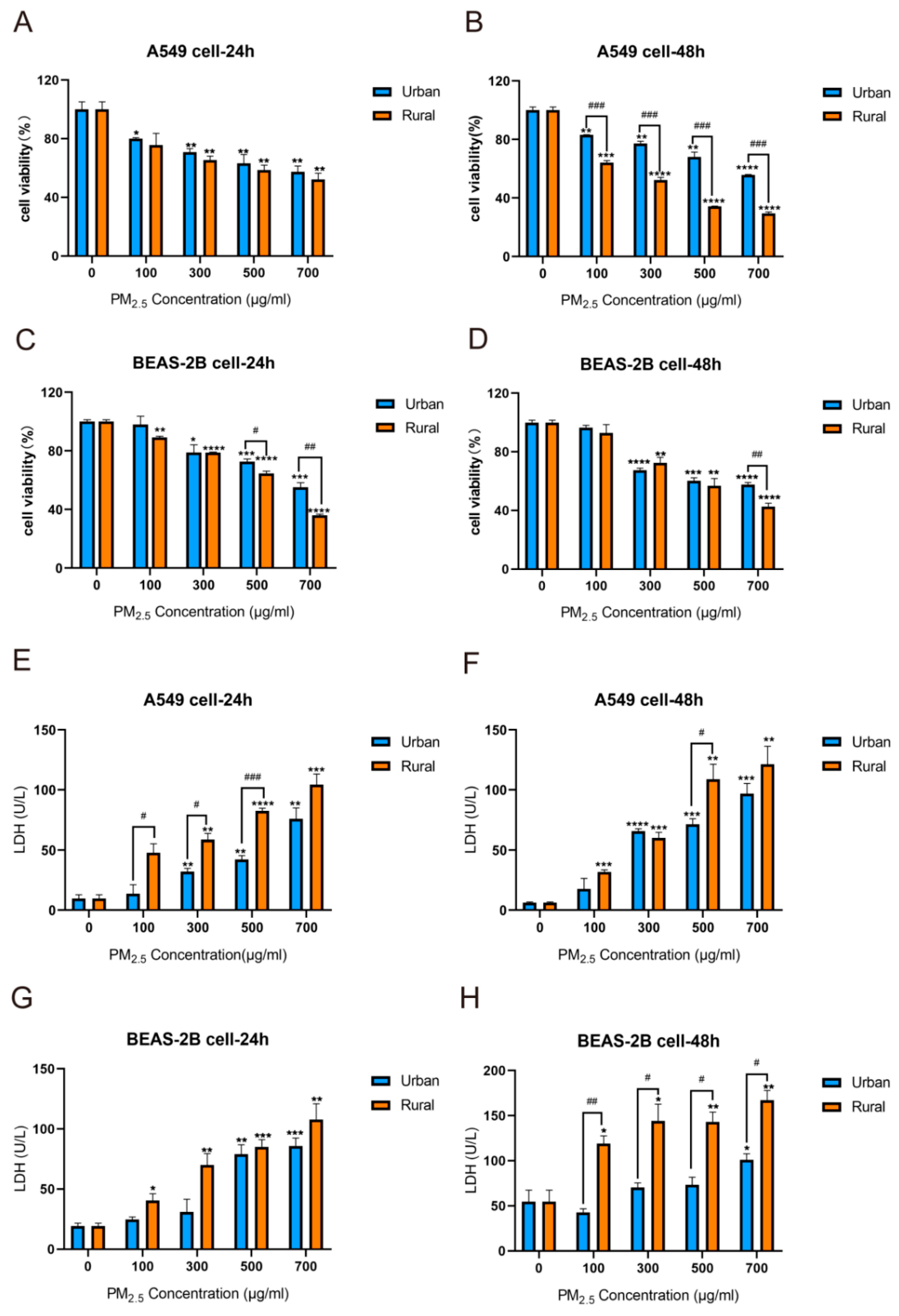
CCK8 and LDH assays revealed that both urban and rural PM2.5 suppressed the viability and induced cell membrane damage of two lung cell lines (A549 and BEAS-2B) in a concentration- and time-dependent manner (Figure 1). Furthermore, rural PM2.5 demonstrated stronger inhibitory effects on viability and greater membrane damage compared to urban PM2.5 under the following conditions: for CCK8: A549 (48 h, 100–700 μg/mL), BEAS-2B (24 h, 500–700 μg/mL; 48 h, 700 μg/mL) (Figure 1A–D); for LDH: A549 (24 h, 100–500 μg/mL), A549 (48 h, 500 μg/mL) BEAS-2B (48 h, 100–700 μg/mL) (Figure 1E–H).
Rural PM2.5 mainly originates from the incomplete combustion of biomass and coal. Its high content of organic components such as polycyclic aromatic hydrocarbons and quinones results in a significantly higher biotoxicity per unit mass compared to urban PM2.5 [24,25]. Furthermore, most people spend the majority of their time indoors, making indoor air quality more critical to human health. Due to the widespread use of solid fuels as the primary energy source in rural areas, indoor PM2.5 exposure concentrations are considerably higher in rural than in urban settings [26]. This leads to a potentially greater PM2.5 exposure risk for rural populations, which was consistent with our in vitro experiments that rural PM2.5 can induce more significant cellular damage than urban PM2.5.

3.1.2. Ultrastructure

Having established the cytotoxicity of both urban and rural PM2.5, we further investigated their impact on the ultrastructure of A549 and BEAS-2B cells. Findings revealed significant subcellular structural damage from both sources.
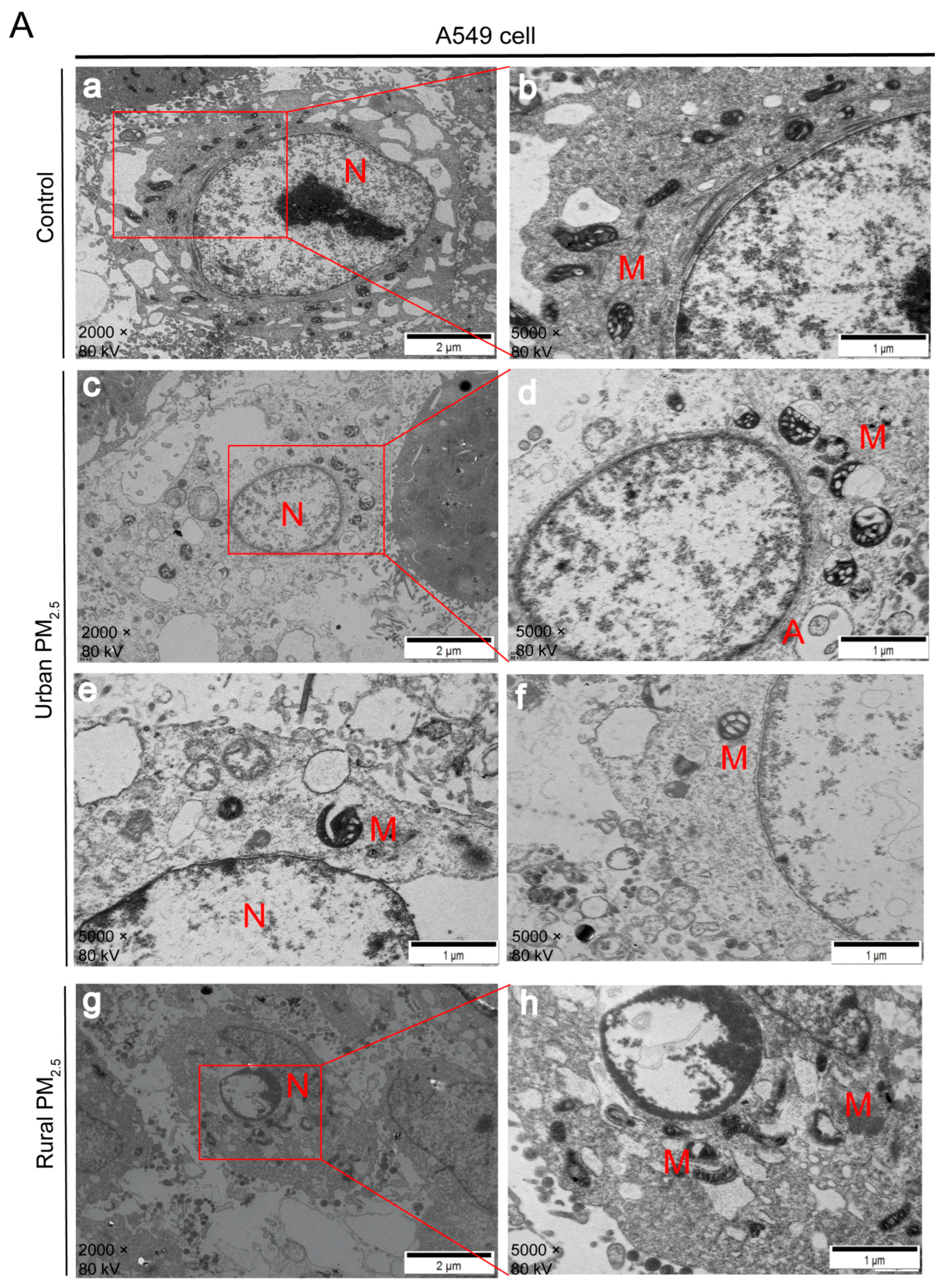
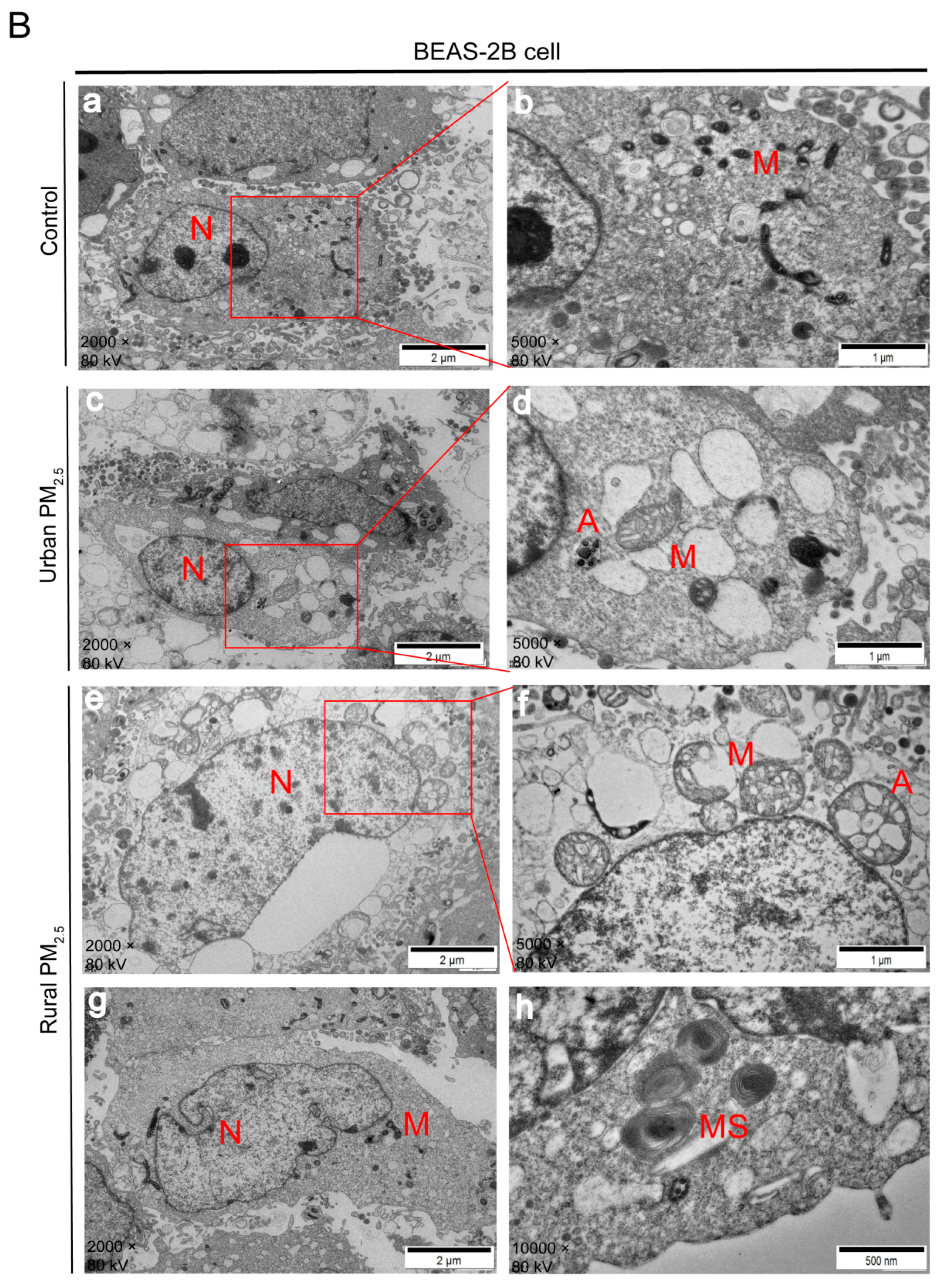
For A549 cells, urban PM2.5 caused chromatin depletion, decreased mitochondrial count, swelling/rupture, cristae reduction, and autophagosomes formation. In contrast, rural PM2.5 led to nuclear pyknosis, crescent-shaped chromatin marginalization, and mitochondrial loss with cristae absence (Figure 2A). These results highlight mitochondrial dysfunction from both PM2.5 types but distinct nuclear responses. Rural PM2.5 induced nuclear pyknosis, while urban PM2.5 disrupted chromatin relaxation.
In BEAS-2B cells, urban PM2.5 primarily reduced mitochondrial numbers, induced swelling, and generated autophagosomes. However, rural PM2.5 caused mitochondrial reduction/swelling, cristae loss, autophagosome formation, invaginated nuclear membranes, and myelin-like structures (Figure 2B). Both PM2.5 types impaired mitochondria and activated autophagy in BEAS-2B cells. However, rural PM2.5 additionally provoked complex ultrastructural anomalies, such as nuclear invagination and myelin-like structures.

3.1.3. Cell Apoptosis

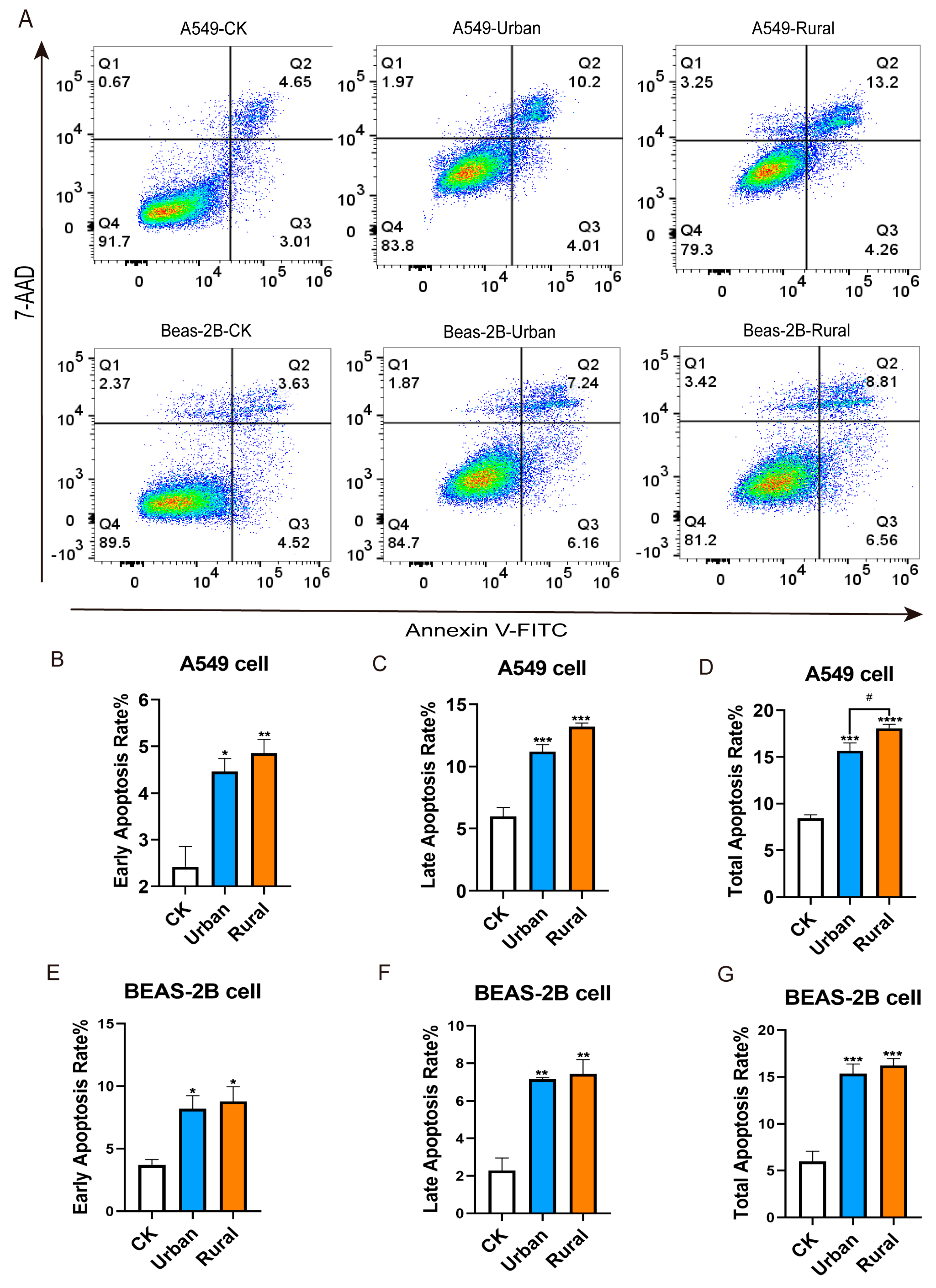
Flow cytometry detection revealed that PM2.5 from both urban and rural sources significantly increased the rates of early, late, and total apoptosis in A549 and BEAS-2B cells (Figure 3A–G). This finding is consistent with the documented pro-apoptotic effects of PM2.5 [27,28]. Importantly, despite significant apoptosis induction in both cell types, the response profiles differed. For A549 cells, exposure to rural PM2.5 resulted in a significantly higher total apoptosis rate compared to urban PM2.5 (Figure 3D). However, in BEAS-2B cells, the apoptosis rates at each stage showed no significant difference between urban and rural PM2.5 exposure (Figure 3A,E–G). Collectively, these results demonstrate that rural PM2.5 exerts a stronger pro-apoptotic effect specifically on A549 cells.

3.1.4. Cell Cycle

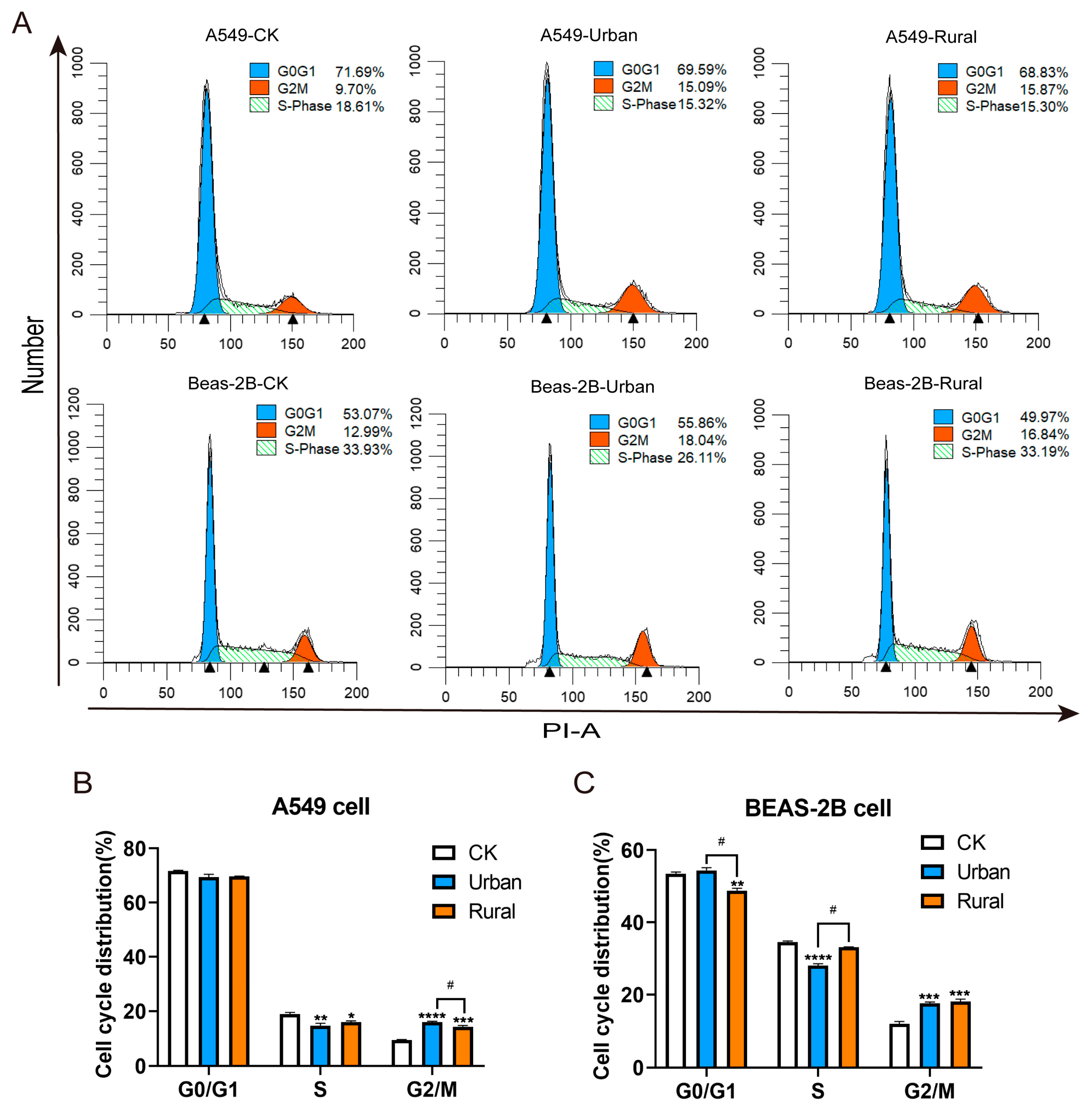
Both urban and rural PM2.5 exposures decreased the proportion of A549 cells in S phase while increasing the proportion in G2/M phase (Figure 4A,B). This finding is consistent with the known ability of PM2.5 to induce G2/M phase arrest in A549 cells [29]. This result indicates potential interference with DNA synthesis (S phase) and DNA damage repair (G2/M phase) as mechanisms disrupting cell cycle progression. Notably, the G2/M phase increase was greater following urban PM2.5 exposure compared to rural PM2.5, suggesting a stronger disruptive effect on the cell cycle.
In BEAS-2B cells, urban PM2.5 similarly caused S phase decrease and G2/M phase increase, aligning with previous reports [30]. However, rural PM2.5 exposure in BEAS-2B cells resulted in a decreased in G0/G1 phase proportion and an increased in G2/M phase proportion, leaving S phase unaffected, which was not reported in previous studies. Furthermore, comparing the effects of urban versus rural PM2.5 on BEAS-2B cells revealed that urban exposure led to a higher proportion of cells in G0/G1 phase and a lower proportion in S phase (Figure 4A,C). This suggests urban PM2.5 is more potent at activating the G0/G1 checkpoint and strongly inhibiting DNA synthesis in BEAS-2B cells.
Consequently, while both urban and rural PM2.5 significantly interfere with lung cell cycle progression, their specific modes of action differ depending on cell type and the PM2.5 source. These differential cell cycle interference effects may underlie how PM2.5 from various sources contributes to respiratory diseases.

3.1.5. Biological Macromolecules

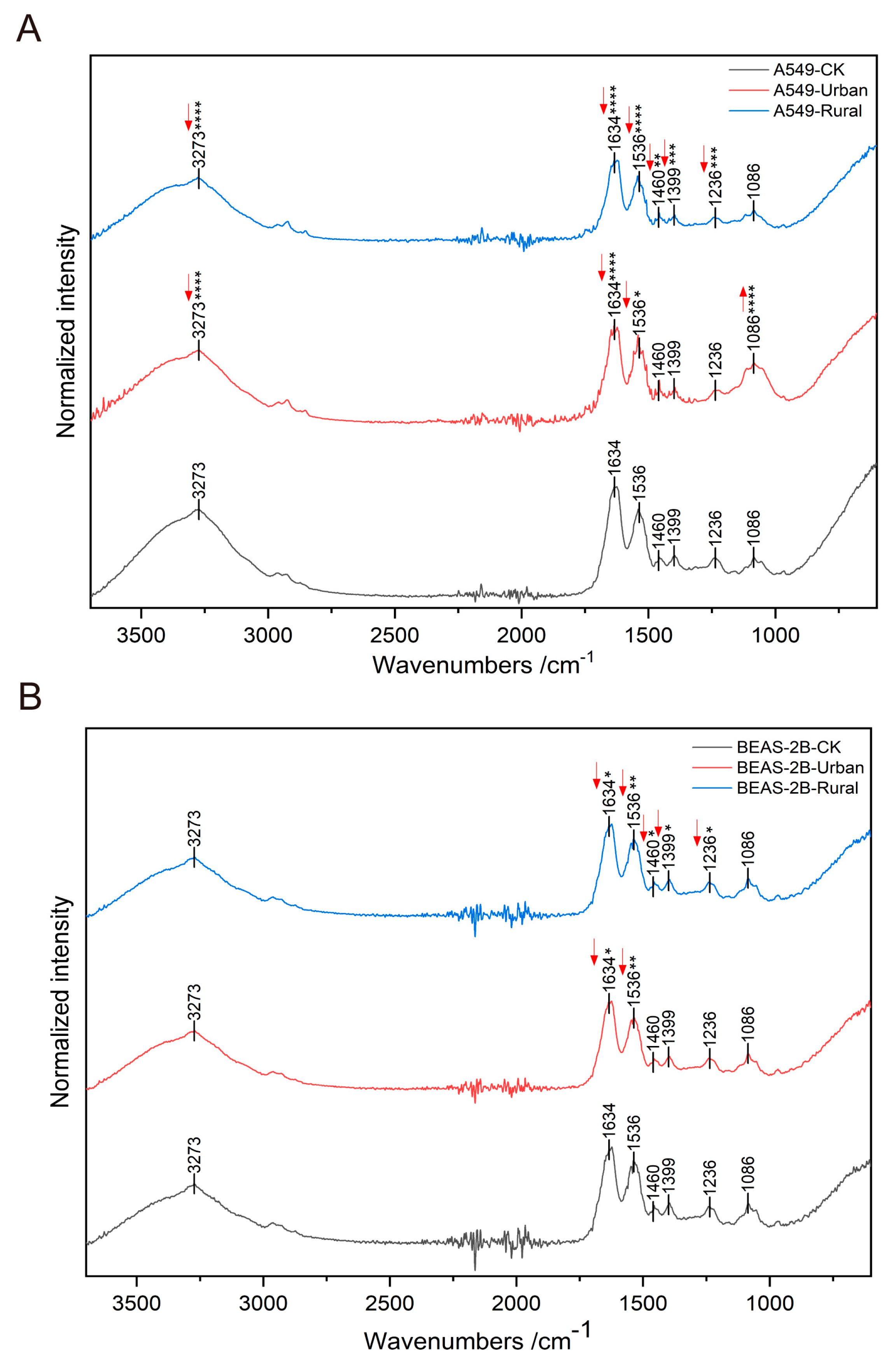
Fourier-transform infrared (FTIR) spectroscopy enables tracking of dynamic changes in biomacromolecules during apoptosis [31]. We further investigated the disruptive effects of urban and rural PM2.5 on these biomacromolecules. Figure 5A and Table 1 showed that both PM2.5 types induced damage to protein secondary structure in A549 cells. This was evidenced by reduced peaks for Amide A band (3273 cm−1), Amide I band (1634 cm−1), and Amide II band (1536 cm−1). Urban PM2.5 specifically intensified the symmetric vibration of phosphate groups (1086 cm−1), indicating mild membrane damage through specific disruption of lipid molecular arrangement and interactions. Conversely, rural PM2.5 uniquely caused abnormal methyl group vibrations (1460 cm−1 and 1399 cm−1) and weakened asymmetric phosphate group vibration (1236 cm−1), suggesting comprehensive disruption of the phospholipid bilayer and severe membrane damage.
In BEAS-2B cells, urban PM2.5 exposure significantly reduced only the peaks at 1634 cm−1 and 1536 cm−1, signifying interference with protein secondary structure. However, rural PM2.5 exposure reduced not only above-mentioned peaks but also those at 1460 cm−1, 1399 cm−1, and 1236 cm−1 (Figure 5B, Table 1), indicating concurrent effects on amide group vibrations, methyl group vibrations, and asymmetric phosphate stretching vibrations. Thus, urban PM2.5 primarily impaired protein secondary structure, whereas rural PM2.5 additionally compromised the stability of methylation modifications and phosphate groups, inflicting broader structural damage.
In summary, exposure to both urban and rural PM2.5 significantly disrupted biomacromolecules in lung cells, with cell-type specific differences. Especially, rural PM2.5 induced more extensive biomacromolecular damage across different cell types. Although FTIR is widely used in biology for cellular component analysis [32], its application in PM2.5 biotoxicity research remains uncommon. Hence, this study offers a novel methodological approach for investigating PM2.5 toxicity.
Table 1. Peak band assignment in the FTIR spectrum.
Wavenumbers/(cm−1)Vibration ModeMajor Contributory Ingredients
1086 [33]νsPO2DNA, RNA, phospholipids
1236 [34,35]νasPO2DNA, RNA, phospholipids
1399 [36]δsCH3Proteins, DNA, RNA
1460 [37]δasCH3Proteins, lipids
1536 [38]νC-N and δN-H of amide IIProteins
1634 [36]νC=O of amide IProteins
3273 [39]νN-H of amide AProteins
ν: Stretching vibration; νs: Symmetric stretching motion; νas: Asymmetric stretching motion; δ: Bending vibration; δs: Symmetric bending vibration; δas: Asymmetric bending vibration.

3.2. Source Apportionment and Contribution to Toxic Injury from PM2.5

We further conducted source apportionment of urban and rural PM2.5, aiming to clarify the association between source contributions and toxic injury, thereby enabling a more comprehensive assessment of the health risks posed by PM2.5 exposure in both areas.
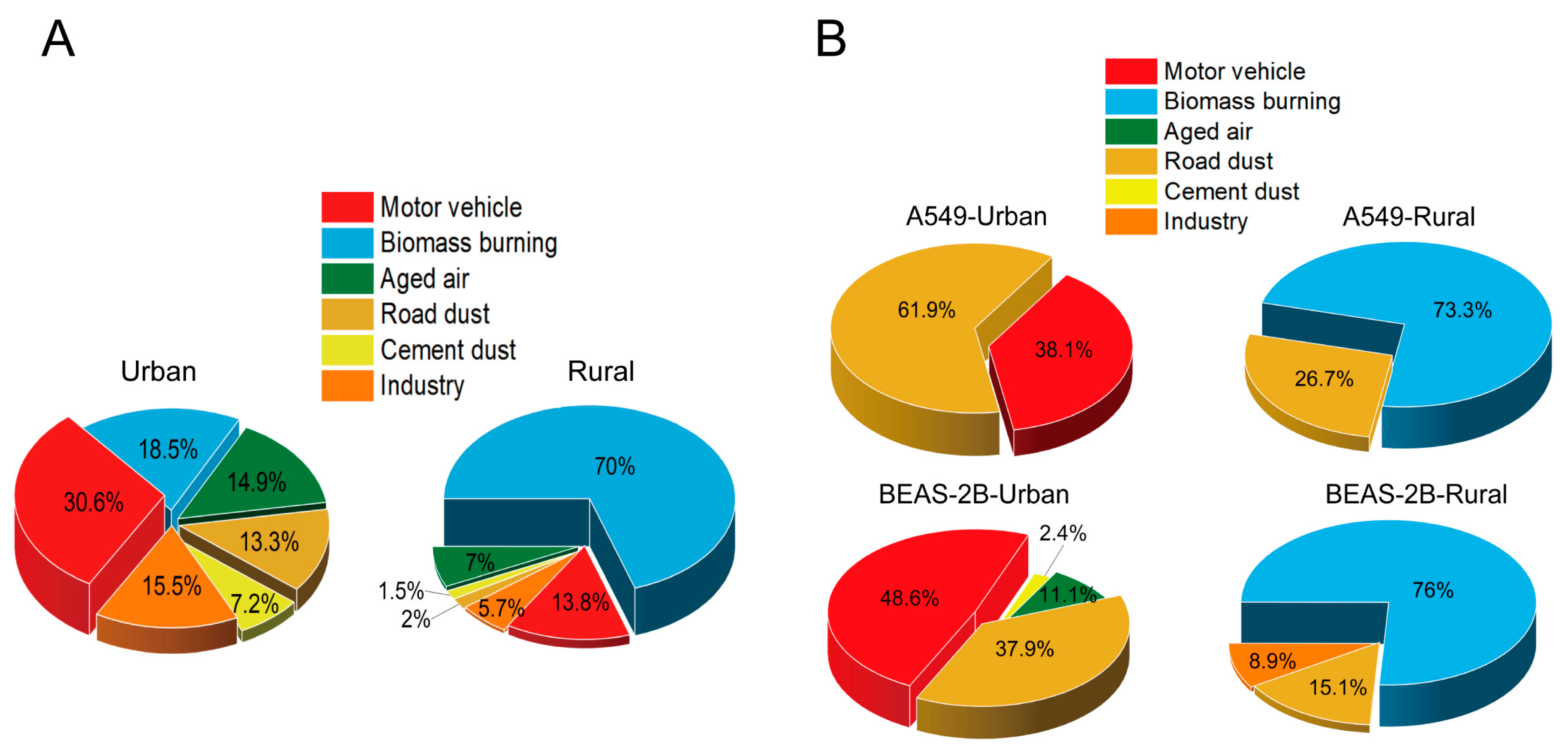
Significant differences were observed in pollution source profiles between urban and rural PM2.5 (Figure 6A). Urban PM2.5 exhibited a mixed pollution pattern, with contributions from motor vehicles (30.6%), biomass burning (18.5%), and industrial emissions (15.5%). Conversely, rural PM2.5 was dominated by a single source: biomass burning (70%). Furthermore, multiple linear regression analysis revealed distinct urban-rural differences in the sources responsible for PM2.5-induced cytotoxicity (Figure 6B). In urban settings, road dust and motor vehicle emissions emerged as the top contributors to cytotoxicity in both A549 and BEAS-2B cell lines. In rural areas, biomass burning was the dominant cytotoxic source. Notably, road dust was identified as a key contributor to lung cell toxicity induced by PM2.5 in both environments.

3.3. Mechanistic Insights into PM2.5-Induced Toxic Damage from Dual-Omics Analysis

We subsequently conducted transcriptomic and proteomic sequencing to systematically reveal the common and distinct molecular regulatory mechanisms underlying lung cell damage induced by urban and rural PM2.5.

3.3.1. Dual-Omics: Key Molecules

The differentially expressed genes (DEGs) and proteins (DEPs) induced by urban and rural PM2.5 are presented in Table S1A–H. Subsequently, the STRING database and CytoHubba 3.8.2software were employed to identify both shared and unique key molecular targets of urban and rural PM2.5 (Table S2A–E).
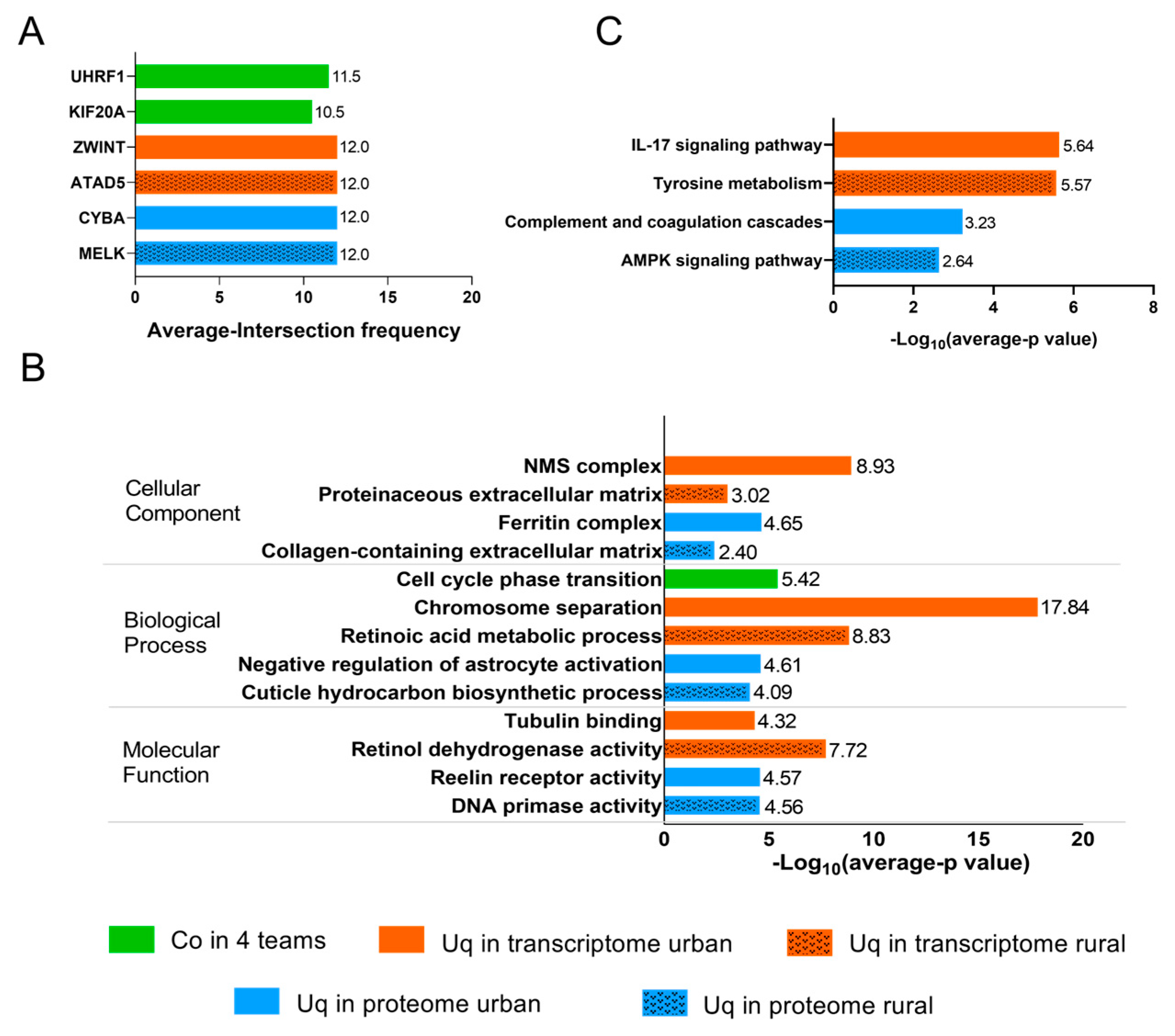
Joint analysis revealed that urban and rural PM2.5 simultaneously target UHRF1 and KIF20A at both mRNA and protein levels (Figure 7A). Notably, KIF20A, a member of the kinesin family, plays a critical role in the G2/M phase of the cell cycle, thereby regulating cell division [40,41]. It is closely associated with respiratory diseases. However, its link to PM2.5-induced respiratory damage has not been established. Flow cytometry results in this study showed that both urban and rural PM2.5 exposure induce G2/M phase arrest, which was highly consistent with the known functions of KIF20A, suggesting its potential pivotal role in PM2.5-induced lung cell damage. Therefore, subsequent mechanistic studies will focus on elucidating the role of KIF20A in this process.
Analysis of specific molecular targets indicated that urban and rural PM2.5 predominantly disrupted ZWINT and ATAD5 only at the mRNA level, respectively. ZWINT is a core mitotic regulator essential for centromere formation and spindle checkpoint activity [42]. It is linked to lung cancer and pulmonary fibrosis [43,44]. ATAD5 participates in PCNA (proliferating cell nuclear antigen) deubiquitylation, thereby interfering with DNA damage repair. It may contribute to respiratory diseases (e.g., lung adenocarcinoma and pulmonary valve stenosis) by inducing DNA mutations [45,46].
At the protein level only, the primary specific targets were CYBA (urban) and MELK (rural). CYBA is involved in oxidative stress [47] and associated with lung abscess, asthma, and pneumoconiosis [48,49,50], while MELK regulates cell cycle progression [51,52] and is implicated in lung tumors, nasopharyngeal carcinoma, and pulmonary fibrosis [53,54,55].
These specific targets (ZWINT, ATAD5, CYBA and MELK) have not been previously reported in PM2.5-related studies. Therefore, this study is the first to reveal their potential specific roles in health risks associated with urban and rural PM2.5 exposure.

3.3.2. Dual-Omics: Key GO Terms

The biological functions regulated by urban and rural PM2.5 at the mRNA and protein levels are shown in Table S3A–E. Subsequently, the top-ranked shared and unique biological functions were analyzed from three levels: cellular component (CC), biological process (BP), and molecular function (MF) (Figure 7B).
In CC, no shared targets were identified between urban and rural PM2.5. At the mRNA level, the most specific CCs regulated by urban and rural PM2.5 were the NMS complex and proteinaceous extracellular matrix, respectively. The former primarily participates in ribosomal RNA processing and protein synthesis, contributing to lung tumorigenesis [56]. The latter maintains cellular structural stability and is associated with asthma and COPD [57]. At the protein level, the most prominent urban-specific CC was the ferritin complex. Its dysfunction induces oxidative stress [58] and promotes pulmonary fibrosis [59]. In contrast, rural PM2.5 specifically targeted the collagen-containing extracellular matrix, whose abnormal deposition and remodeling are key drivers of fibrosis [60], closely linked to lung tumors and COPD [61,62]. Thus, dual-omics analysis further highlights the stark differences in CCs regulated by urban and rural PM2.5 at either the mRNA or protein level.
In BP, cell cycle phase transition was the most prominent process co-regulated by urban and rural PM2.5 at both mRNA and protein levels. As a core regulatory mechanism of the mitotic cell cycle, it governs phase transitions to ensure proper mitosis [63]. It is implicated in acute lung injury [64]. This suggests that urban and rural PM2.5 may disrupt the cell cycle at both mRNA and protein levels for triggering respiratory diseases, which was consistent with flow cytometry results in toxicity experiment. At the transcriptomic level, the most significant urban and rural-specific processes were chromosome segregation and retinoic acid metabolic process, respectively. Chromosome segregation, a pivotal step in cell division, is linked to lung tumorigenesis [65,66], while retinoic acid metabolic process regulates retinoic acid synthesis, which is critical for bronchial and lung development [67,68]. At the proteomic level, the most prominent urban-specific process was negative regulation of astrocyte process. This process induces cellular inflammation by modulating central nervous system activation and plays a key role in lung tumorigenesis [69]. Rural PM2.5 uniquely regulated cuticular hydrocarbon biosynthetic process. This process primarily involved in arthropod cuticle formation but has reported potential roles in lung tumorigenesis [60,70,71]. These findings underscore the highly specific BPs through which urban and rural PM2.5 drive respiratory diseases.
In MF, no shared targets were identified between urban and rural PM2.5 in dual-omics analysis. At the transcriptomic level, urban PM2.5 predominantly regulated tubulin binding. This function participates in cell division and chromosome segregation, potentially contributing to lung tumorigenesis [72,73]. Rural PM2.5 specifically targeted retinol dehydrogenase activity, which modulates retinoic acid biosynthesis and is associated with asthma and COPD [74,75,76]. At the proteomic level, urban PM2.5 uniquely regulated reelin receptor activity, though no direct link to respiratory diseases has been established. Rural PM2.5 uniquely influenced DNA primase activity, a critical step in DNA replication implicated in COPD [70]. Collectively, these MFs delineate the divergent mechanisms by which urban and rural PM2.5 promote respiratory diseases.

3.3.3. Dual-Omics: Key Signaling Pathways

The key signaling pathways regulated by urban and rural PM2.5 at the mRNA and protein levels are shown in Table S4A–D. No shared pathways were identified between urban and rural PM2.5 (Figure 7C).
At the mRNA level, the most significantly specific pathways for urban and rural PM2.5 were interleukin-17 (IL-17) signaling and tyrosine metabolism, respectively. Studies have confirmed that IL-17 is involved in the regulation of asthma and COPD [77]. Tyrosine metabolism participates in the pathogenesis of lung cancer, pulmonary fibrosis, and asthma [78,79]. Therefore, at the mRNA level, urban and rural PM2.5 may contribute to respiratory diseases development through IL-17-mediated immune dysregulation and abnormal tyrosine metabolism, respectively.
At the protein level, urban PM2.5 primarily and specially affected the complement and coagulation cascades. Interfering with complement activation can destroy the viral clearance function of immune cells, increasing the risk of upper respiratory tract infections [80]. Rural PM2.5 specially targeted the AMPK signaling pathway, disrupting cellular energy metabolism [81], thereby exacerbating pulmonary fibrosis and lung injury [82]. Consequently, at the protein level, urban PM2.5 specially disrupts cellular immunity via inflammatory pathways, whereas rural PM2.5 impairs energy metabolism by inhibiting the AMPK pathway, leading to respiratory diseases.
Therefore, urban and rural PM2.5 drive respiratory diseases through the regulation of specific rather than shared signaling pathways.

3.4. Functional Validation of KIF20A in PM2.5-Induced Toxicity Damage

The dual-omics analysis results indicated that KIF20A is a common key molecule in lung cell damage induced by both urban and rural PM2.5. Therefore, this study further validated the function of KIF20A.

3.4.1. PM2.5 Exposure Inhibits KIF20A Protein Expression

Dual-omics data revealed that both urban and rural PM2.5 significantly reduced the mRNA and protein expression levels of KIF20A. Western blot confirmed that exposure to urban and rural PM2.5 significantly suppressed KIF20A protein expression, validating the dual-omics results (Figure S1A,C). Subsequently, a KIF20A overexpression vector was constructed and verified by Western blot (Figure S1B,D).

3.4.2. Effect of KIF20A Overexpression on PM2.5-Induced Toxic Damage

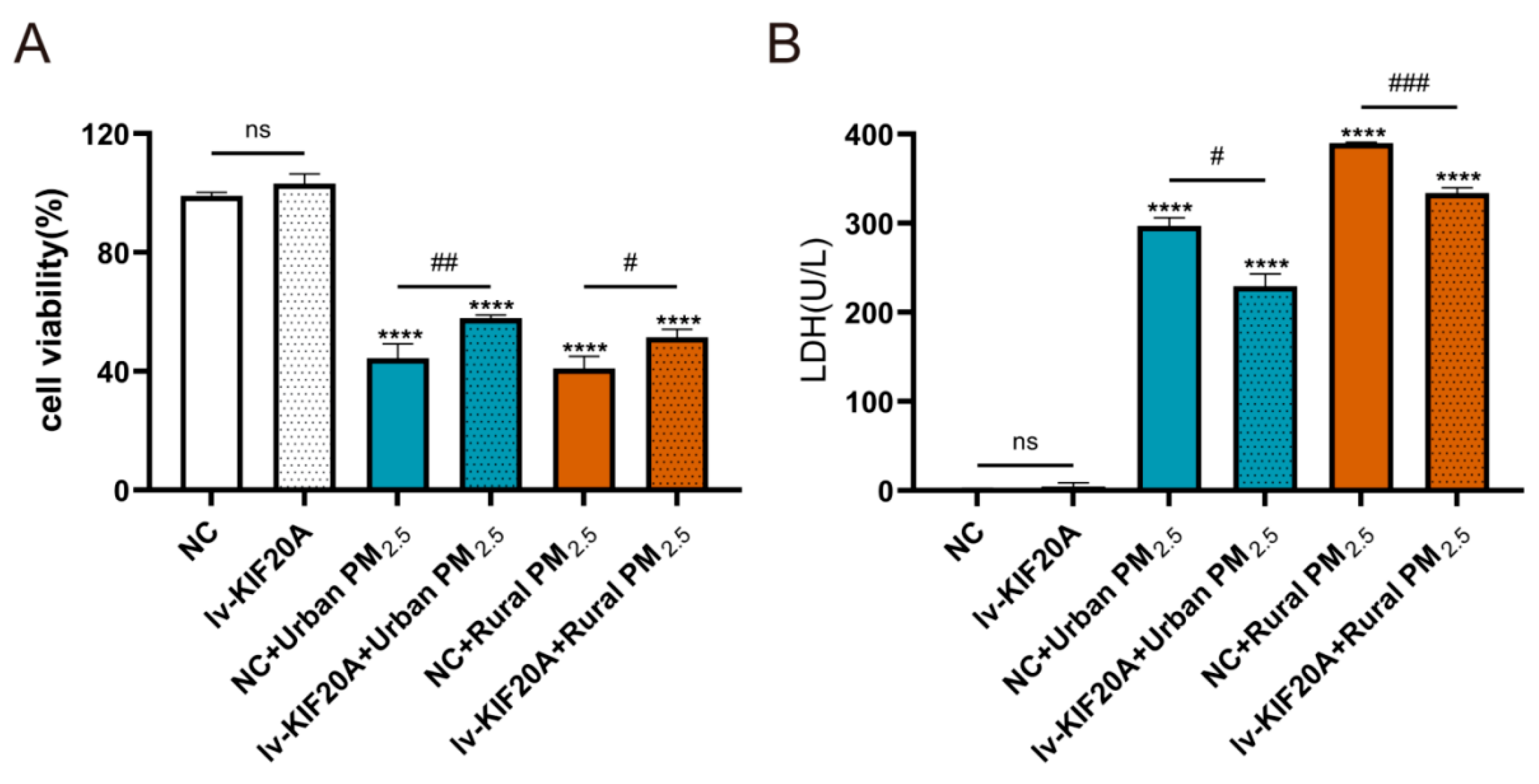
Rescue experiments demonstrated that KIF20A overexpression alleviated the reduction in cell viability and the elevation in LDH release induced by urban and rural PM2.5 (Figure 8A,B). However, FTIR spectroscopy analysis indicated that KIF20A overexpression did not ameliorate the molecular structural disturbances caused by urban and rural PM2.5 (Figure S2).
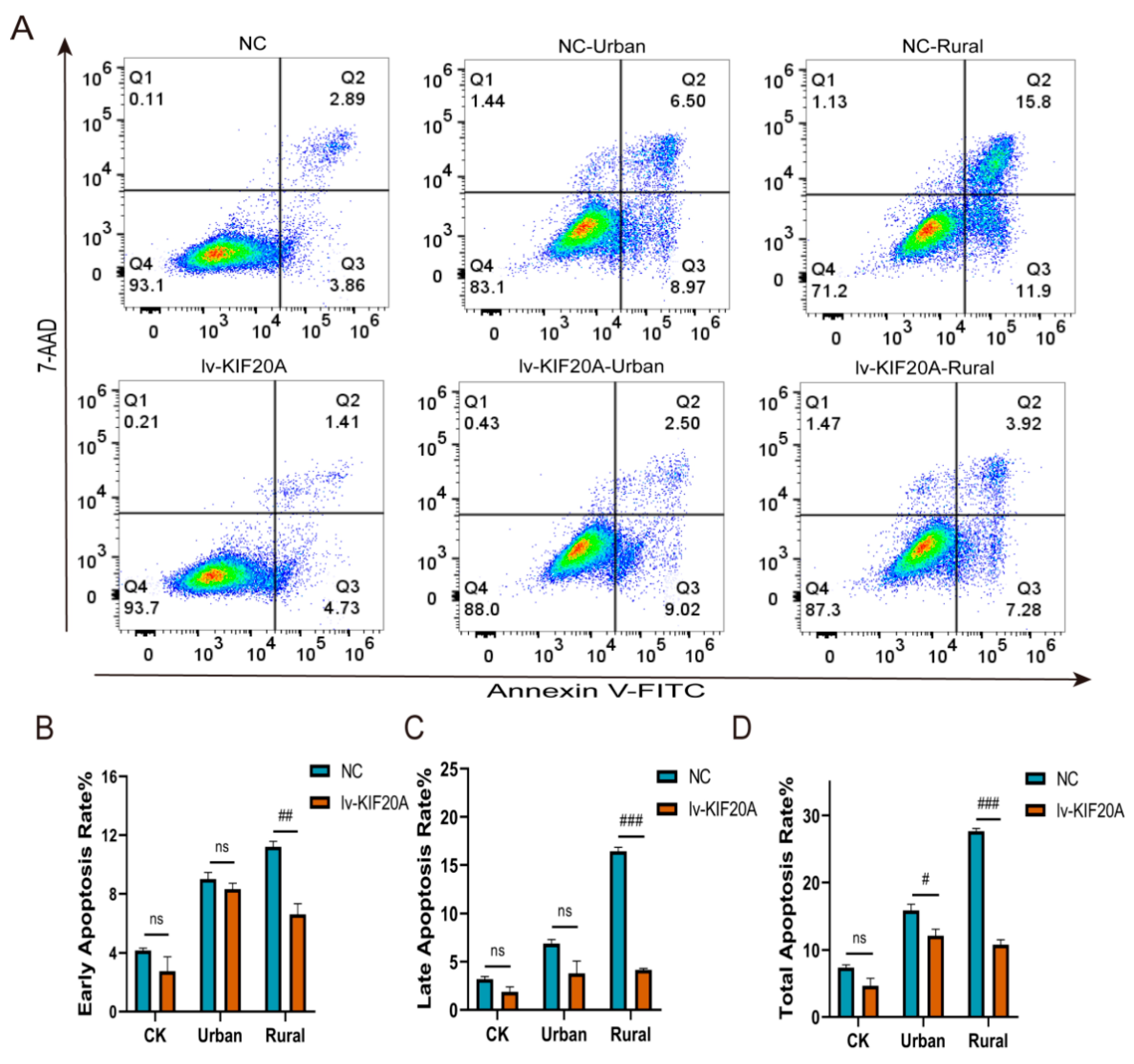
As a critical motor protein essential for chromosomal segregation and cytokinesis during mitosis, KIF20A primarily functions in the G2/M phase [41]. Consequently, KIF20A likely participates in PM2.5-induced apoptotic responses and cell cycle perturbations in both urban and rural samples. Rescue assays demonstrated that upregulating KIF20A markedly reduced the total apoptosis rate triggered by urban PM2.5. Furthermore, it decreased the early, late, and total apoptosis rates caused by rural PM2.5 (Figure 9A–D).
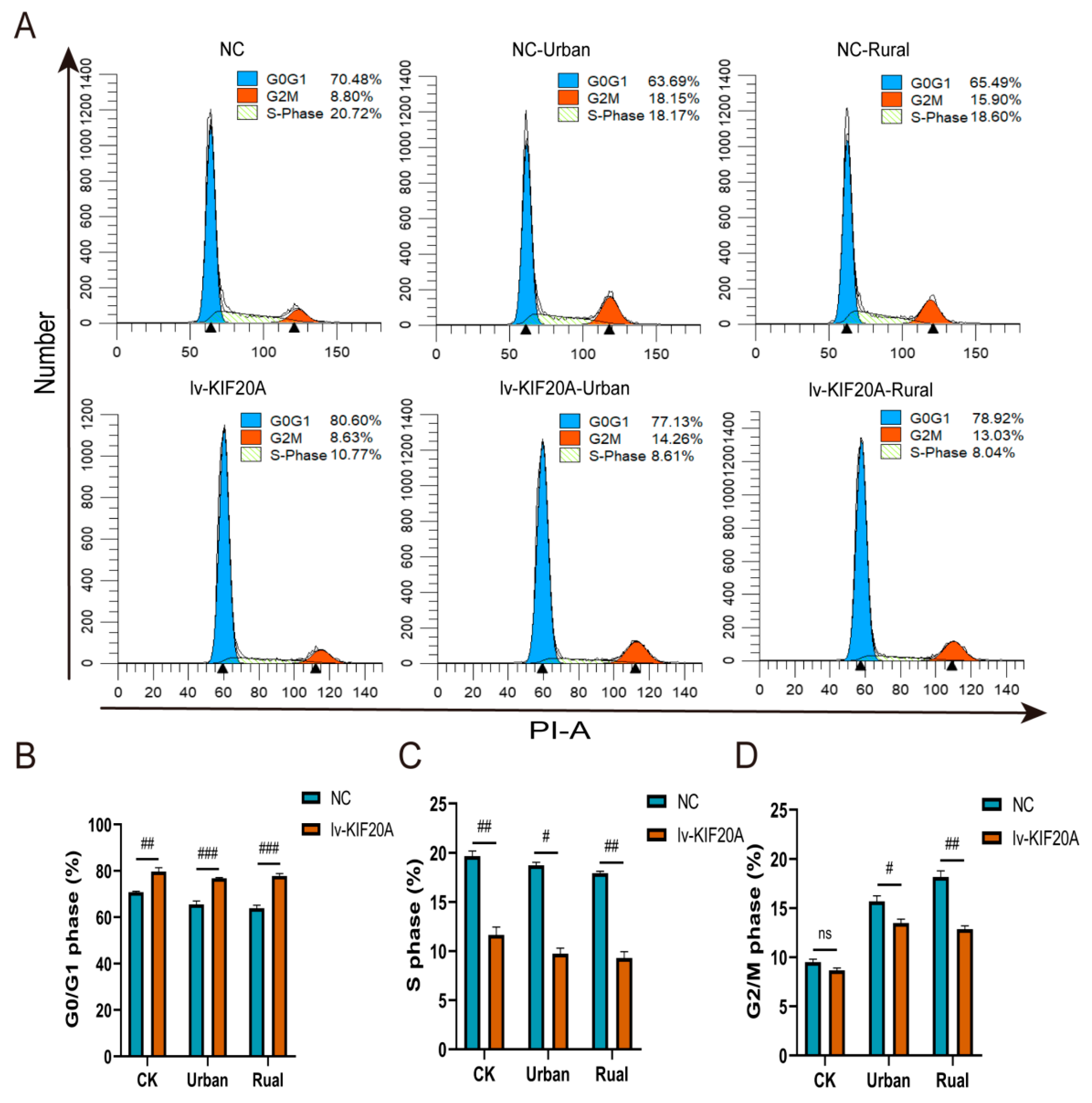
In cell cycle rescue experiments (Figure 10A–D), KIF20A + PM2.5 exposure resulted in a higher percentage of cells in G0/G1 phase. Concurrently, a decline in S phase and G2/M phase populations was observed compared to the PM2.5 group. These findings suggest that while KIF20A overexpression counteracts PM2.5-induced G2/M phase arrest, it does not prevent the reduction in S phase cells, which aligns with prior reports on KIF20A’s primary role in G2/M regulation [41]. The concomitant rise in G0/G1 phase cells implies that KIF20A may promote M phase completion, enabling more cells to progress into G0/G1.
In conclusion, KIF20A overexpression mitigates apoptotic effects and alleviates G2/M phase arrest associated with urban and rural PM2.5 exposure.

3.5. Lagged Exposure-Response Relationship Between Urban PM2.5 and Respiratory Outpatient Visits

After clarifying the common and specific effects of urban and rural PM2.5 on lung cells, this study aims to explore the correlation between PM2.5 exposure and respiratory diseases in both settings using epidemiological data. However, rural areas face challenges including underdeveloped monitoring systems, scattered data sources, and limited availability of respiratory outpatient record. Systematic data collection from rural sampling sites remains difficult. Therefore, considering data reliability and continuity, respiratory outpatient data from a class A tertiary hospital near the urban PM2.5 sampling site (2021–2024) were selected for the urban PM2.5 exposure group analysis. This dataset possesses relatively complete time-series characteristics, providing a reliable basis for analyzing the association between urban PM2.5 exposure and respiratory diseases, thereby validating toxicological experimental findings.

3.5.1. Descriptive Statistics of Urban Respiratory Outpatient Visits

From 2021 to 2024, a total of 83,181 respiratory outpatient visits were recorded in the hospital, demonstrating a consistent annual increase (2021 < 2022 < 2023 < 2024). Females accounted for 44,602 visits and males for 38,579 visits. The majority of visits (61,367) were from individuals under 65 years of age, whereas those aged 65 years and older contributed 21,814 visits. These findings indicate that females outnumbered males in outpatient visits, with young and middle-aged adults being the predominant demographic, and the elderly constituting a relatively smaller proportion.
With respect to disease distribution, the most frequent diagnoses, in descending order of total visits, were acute bronchitis (26,449), upper respiratory tract infection (18,531), asthma (9353), rhinitis (3731), pneumonia (3698), and chronic obstructive pulmonary disease (1749). Acute bronchitis and upper respiratory tract infection together represented 70.82% of the total visits for these six conditions, with maximum daily visits of 97 and 99, respectively—markedly higher than the other diseases—suggesting that these two conditions impose the major disease burden on respiratory outpatient clinics in this hospital. Details of respiratory outpatient data are presented in Table S5.

3.5.2. Population

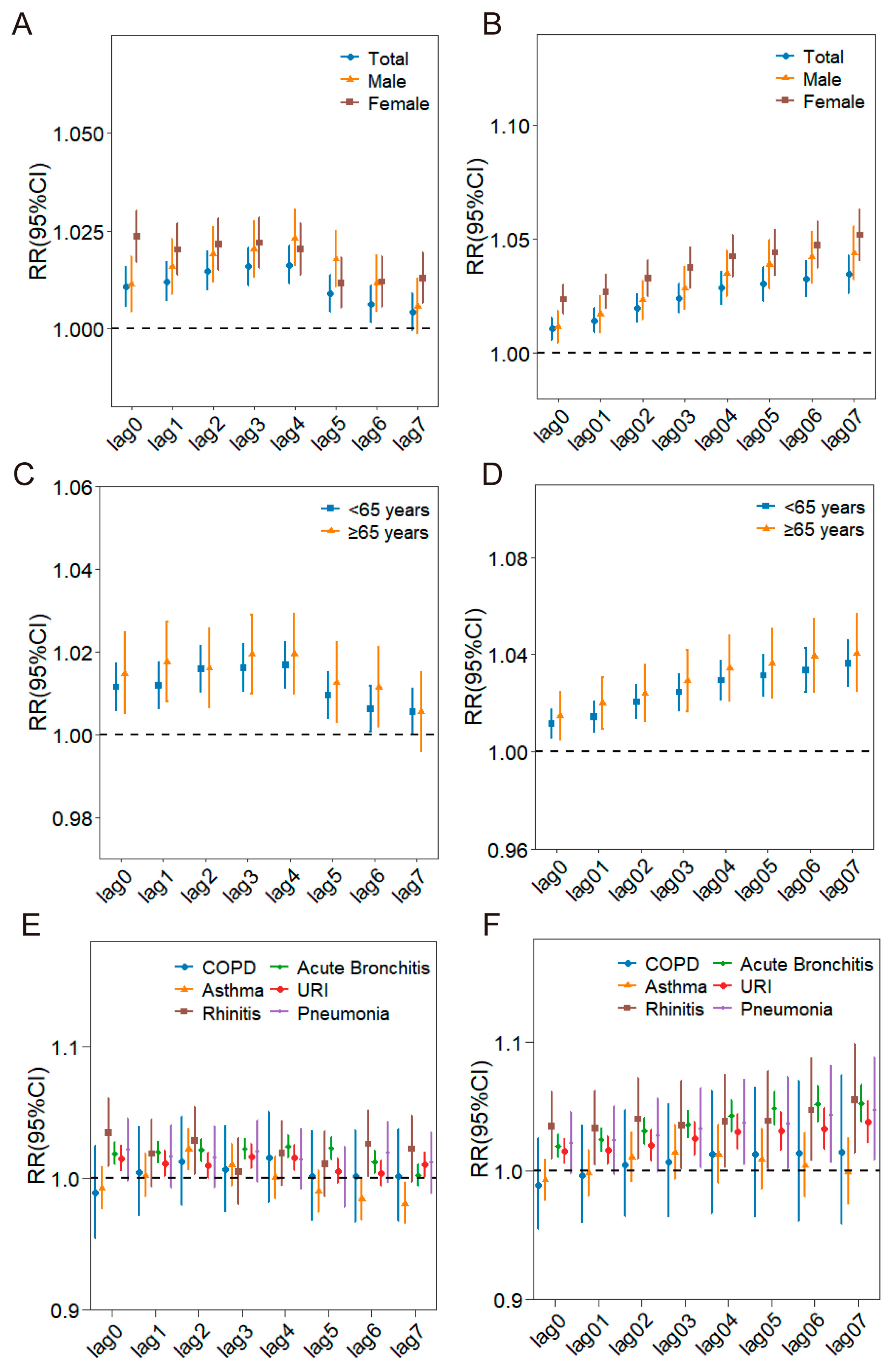
Research demonstrates significant lagged impacts of PM2.5 concentration increases (per 10 μg/m3) on respiratory outpatient visits (Figure 11A). Single-day exposure effects for the total population show that risk rises immediately on the exposure day (lag 0, RR = 1.012), peaks at lag 4 (RR = 1.016), and becomes non-significant at lag 7. Gender differences are notable: females exhibit greater and more immediate sensitivity, reaching peak risk on the exposure day lag 0 (RR = 1.024). In contrast, males show a delayed response, with risk peaking at lag 4 (RR = 1.023). Although no significant difference was observed between genders (p > 0.05), the values for males were generally lower than those for females in most lag periods. This suggests females experience more acute reactions versus delayed responses in males.
Regarding cumulative exposure effects, the relative risk (RR) increases lag duration for all groups, reaching maximum at lag 07 (Figure 11B). The relative risk (RR) was 1.052 for females and 1.044 for males. Although the difference between the sexes did not reach statistical significance, the data still indicated a trend of higher cumulative health risks associated with PM2.5 exposure among females.
The findings indicate that females exhibit a more rapid outpatient response to single-day PM2.5 exposure, whereas males show a relatively delayed response pattern. Although there are gender differences in the timing of response, the ultimate effect intensity between males and females is not significantly different. The results of this study was consistent with the observations in short-term exposure studies that females may face higher risks [83,84]. This discrepancy may stem from differences in exposure patterns or population characteristics examined in this study, which prevented observation of a significant trend and led only to the conclusion that females are more sensitive to health risks than males.

3.5.3. Age

Single-day lag effects of PM2.5 across age groups are shown in Figure 11C. Although the difference between age groups was not statistically significant (p > 0.05), during lag 0–lag 6, RR values for individuals aged ≥ 65 years consistently exceeded those of the <65 group, with both groups reaching peak risk at lag 4. This suggests that older adults may face higher acute health risks from PM2.5 exposure.
Regarding cumulative lag effects (Figure 11D), the cumulative risk for the ≥65 group also showed a consistently higher trend compared to the <65 group. The RR values for both groups increased with longer lag periods, peaking at lag 07 (younger group RR = 1.036; older group RR = 1.041). Thus, older adults may bear a greater cumulative health burdens from PM2.5.
The study showed that although individuals aged ≥ 65 years exhibited a more pronounced trend in health risks compared to younger adults, the differences between groups were not significant. Be consistent with previous studies [85], an age trend was present despite the lack of statistical significance under PM2.5 exposure. These findings may be related to factors such as the exposure levels or sample size of the study population. Future studies should further explore potential differences between age groups under a wider range of exposure conditions.

3.5.4. Diseases

Single-day lag effect analysis revealed differential risks of PM2.5 exposure on various respiratory diseases (Figure 11E). Specifically, acute bronchitis showed sustained risks from lag 0 to lag 6, peaking at lag 4 (RR = 1.024). Upper respiratory infections demonstrated risks during lag 0–lag 4 and lag 7, peaking at lag 3 (RR = 1.017). Rhinitis exhibited risks at lag 0, 2, and 6, with maximum effect at lag 0 (RR = 1.034). Asthma displayed transient risk elevation only at lag 2 (RR = 1.002), while pneumonia and COPD showed no significant risks. Despite the lack of statistical significance between diseases (p > 0.05), ordering them by the highest single-day RR showed that: rhinitis (lag 0, RR = 1.034) > acute bronchitis (lag 4, RR = 1.024) > upper respiratory infection (lag 3, RR = 1.017) > asthma (lag 2, RR = 1.002). These findings indicate that PM2.5 may exerts the most prominent acute effect on rhinitis with immediate peak risk upon exposure. The risks of acute bronchitis and upper respiratory infections peaked several days after exposure, while asthma manifested only transient risk.
In cumulative exposure analysis (Figure 11F), RR values for acute bronchitis, upper respiratory infections, and rhinitis progressively increased from lag 0 onward. Pneumonia demonstrated delayed cumulative risk starting from lag 03, whereas COPD and asthma showed no significant cumulative effects. By lag 07, the RR trend is as follows: rhinitis (1.055) > acute bronchitis (1.052) > pneumonia (1.047) > upper respiratory infection (1.037), suggesting prolonged PM2.5 exposure significantly increases cumulative risks for these diseases, with rhinitis being most prominent.
These results reveal disease-specific variations in urban PM2.5 health effects. Rhinitis, acute bronchitis, and upper respiratory infections exhibited both acute and cumulative risks, whereas pneumonia manifested only delayed cumulative effects. PM2.5 may increase rhinitis risk by disrupting nasal epithelial cell metabolism, impairing epithelial barrier integrity, and altering mucociliary clearance [86]. Simultaneously, PM2.5-bound metallic components could act as inflammatory triggers for pneumonia and upper respiratory infections [87]. In this study, we did not observe significant differences among the various diseases, which may be attributed to the lack of clear distinction between warm and cold seasons, as well as interference from other pollutants.

3.6. The Association Among Toxicity, Pathogenesis and Epidemiology

We confirmed that both urban and rural PM2.5 can induce cellular damage, mitochondrial damage, cellular apoptosis, and G2/M phase arrest; these are foundational events in the pathogenesis of respiratory diseases. Studies demonstrate that, PM2.5 can directly compromise the integrity of airway epithelial cell membranes through physical damage mechanisms, causing conformational disorganization and functional impairment of phospholipid bilayer structures [88]. The resultant breach in the airway epithelial barrier creates pathways for pathogen invasion, thereby predisposing to upper respiratory tract disorders such as rhinitis [89,90]. Concurrently, the disruption of epithelial barrier architecture further enhances permeability in alveolar and bronchial epithelial cells, facilitating massive inflammatory cell infiltration. This process ultimately establishes a pro-pathological microenvironment conducive to the development of acute bronchitis and pneumonia [91,92].
PM2.5 initiates mitochondrial injury, which can trigger deficits in ATP production and aberrant cellular energy metabolism, ultimately manifesting as weakened airway clearance mechanisms, heightened risk of pneumonia [93]. Apoptosis of airway epithelial cells contributes to airway hyperresponsiveness by impairing barrier function and exposing nerve endings, a process widely recognized as a key pathological basis for asthma pathogenesis [94,95]. Notably, PM2.5 caused cell cycle arrest (e.g., G2/M phase). This process not only impairs epithelial repair capacity but also promotes cellular senescence-associated secretory phenotype, which establish a chronic inflammatory microenvironment of asthma [89,96]. Therefore, toxicological phenotypes confirmed in this study establish pathological foundations for respiratory diseases involved in epidemiological associations.
We also identified KIF20A as a target of both PM2.5. According to the Comparative Toxicogenomic Database, this gene is associated with multiple respiratory diseases, such as asthma, pneumonia, respiratory tract infections, and rhinitis. These findings are consistent with epidemiological evidence linking urban PM2.5 exposure to the aforementioned diseases, thereby strengthening the evidence for a critical role of KIF20A in PM2.5-induced respiratory disorders.

4. Limitations

The limitations of this study include the following. First, the study relied on cellular models without in vivo animal validation. Second, PM2.5 samples were collected only during the winter months. Third, the study was based on urban outpatient data without parallel rural population data, and did not rigorously distinguish between warm and cold seasons. Furthermore, the use of broad respiratory disease categories may have masked the specific exposure-response dynamics for conditions such as allergic rhinitis or chronic bronchitis.

5. Conclusions

This study systematically compared the health risks associated with PM2.5 exposure in urban and rural areas of the Chengdu-Chongqing economic circle, revealing significant urban-rural differences. The results indicated that PM2.5 from both areas significantly induced cytotoxic damage, with rural PM2.5 exhibiting stronger toxic effects. Source apportionment of toxicity showed that the cytotoxicity of urban PM2.5 primarily originated from road dust and vehicle emissions, while biomass burning was the dominant source of toxicity for rural PM2.5. At the molecular level, KIF20A was identified for the first time as a common key mediator of lung cell damage induced by PM2.5 from both areas. Epidemiological analysis revealed that females and ≥65 years old exhibit relatively high sensitivity to urban PM2.5 exposure trends. Among various diseases, the exposure trend of rhinitis is the most pronounced. This study clarifies the common and unique geographic patterns of PM2.5-induced respiratory risk in urban and rural settings by delineating toxic effects, source risk, molecular pathways, population susceptibility, and disease vulnerabilities, thereby offering a scientific foundation for tailored air quality management strategies.

Supplementary Materials

The following supporting information can be downloaded at: https://www.mdpi.com/article/10.3390/toxics14060531/s1, KIF20A protein expression in A549 cells (Figure S1); KIF20A mediates urban and rural PM2.5-induced disruption of biomolecular structures (Figure S2); DEGs and DEPs (Table S1), key molecules (Table S2), GO terms (Table S3), KEGG pathways (Table S4), Daily Outpatient Visits Distribution of Urban Respiratory Diseases (Table S5).

Author Contributions

Conceptualization and validation, Z.W.; data curation and visualization, Y.F. and J.Q.; formal analysis, X.L.; funding acquisition, S.Z. and Y.C.; investigation and methodology, Y.Y. and M.T.; project administration and resources, Y.C.; software and supervision, S.S., and Y.C.; writing—original draft, X.L. and S.Z.; writing—review and editing, X.L., S.Z. and Y.Y. All authors have read and agreed to the published version of the manuscript.

Funding

This work was supported by the National Natural Science Foundation of China (No. 42477472, 32500738, 32500655), Sichuan Provincial Natural Science Foundation (No. 26NSFSC0039), Natural Science Foundation of Chongqing (CSTB2024NSCQ-MSX0960). Chongqing Science and Technology Development Fund (zhongyaoke25-004), and North Sichuan Medical College Innovation Team (Natural Science: CBYTD-2025A04).

Institutional Review Board Statement

The study was conducted in accordance with the Declaration of Helsinki, and approved by the Ethics Committee of Chongqing Liangjiang New Area People’s Hospital Approval No. (2026) 02. All research procedures strictly comply with relevant laws, regulations, and institutional ethical requirements.

Informed Consent Statement

In accordance with national guidelines and ethical review determinations, this study has been granted a waiver of written informed consent from participants or their legal guardians/next of kin.

Data Availability Statement

The original contributions presented in this study are included in the article/Supplementary Materials. Further inquiries can be directed to the corresponding authors.

Conflicts of Interest

The authors declare no conflict of interest.

References

  1. Romanello, M.; Napoli, C.D.; Green, C.; Kennard, H.; Lampard, P.; Scamman, D.; Walawender, M.; Ali, Z.; Ameli, N.; Ayeb-Karlsson, S.; et al. The 2023 report of the Lancet Countdown on health and climate change: The imperative for a health-centred response in a world facing irreversible harms. Lancet 2023, 402, 2346–2394. [Google Scholar] [CrossRef] [PubMed]
  2. Liu, K.; Hua, S.; Song, L. PM2.5 Exposure and Asthma Development: The Key Role of Oxidative Stress. Oxid. Med. Cell. Longev. 2022, 2022, 3618806. [Google Scholar] [CrossRef] [PubMed]
  3. Wang, Q.; Liu, S. The Effects and Pathogenesis of PM2.5 and Its Components on Chronic Obstructive Pulmonary Disease. Int. J. Chron. Obstruct. Pulmon. Dis. 2023, 18, 493–506. [Google Scholar] [CrossRef] [PubMed]
  4. Chen, C.Y.; Huang, K.Y.; Chen, C.C.; Chang, Y.H.; Li, H.J.; Wang, T.H.; Yang, P.C. The role of PM2.5 exposure in lung cancer: Mechanisms, genetic factors, and clinical implications. EMBO Mol. Med. 2025, 17, 31–40. [Google Scholar] [CrossRef] [PubMed]
  5. Penttinen, P.; Timonen, K.L.; Tiittanen, P.; Mirme, A.; Ruuskanen, J.; Pekkanen, J. Ultrafine particles in urban air and respiratory health among adult asthmatics. Eur. Respir. J. 2001, 17, 428–435. [Google Scholar] [CrossRef] [PubMed]
  6. Analitis, A.; Katsouyanni, K.; Dimakopoulou, K.; Samoli, E.; Nikoloulopoulos, A.K.; Petasakis, Y.; Touloumi, G.; Schwartz, J.; Anderson, H.R.; Cambra, K.; et al. Short-term effects of ambient particles on cardiovascular and respiratory mortality. Epidemiology 2006, 17, 230–233. [Google Scholar] [CrossRef] [PubMed]
  7. Zanobetti, A.; Franklin, M.; Koutrakis, P.; Schwartz, J. Fine particulate air pollution and its components in association with cause-specific emergency admissions. Environ. Health 2009, 8, 58. [Google Scholar] [CrossRef] [PubMed]
  8. Dominici, F.; Peng, R.D.; Bell, M.L.; Pham, L.; McDermott, A.; Zeger, S.L.; Samet, J.M. Fine particulate air pollution and hospital admission for cardiovascular and respiratory diseases. JAMA 2006, 295, 1127–1134. [Google Scholar] [CrossRef] [PubMed]
  9. Gou, A.; Tan, G.; Ding, X.; Wang, J.; Lv, X.; Gou, C.; Tan, Q. Urban-rural difference in the lagged effects of PM2.5 and PM10 on COPD mortality in Chongqing, China. BMC Public Health 2023, 23, 1270. [Google Scholar] [CrossRef] [PubMed]
  10. Wang, W.; Jariyasopit, N.; Schrlau, J.; Jia, Y.; Tao, S.; Yu, T.W.; Dashwood, R.H.; Zhang, W.; Wang, X.; Simonich, S.L. Concentration and photochemistry of PAHs, NPAHs, and OPAHs and toxicity of PM2.5 during the Beijing Olympic Games. Environ. Sci. Technol. 2011, 45, 6887–6895. [Google Scholar] [CrossRef] [PubMed]
  11. Perrone, M.G.; Gualtieri, M.; Consonni, V.; Ferrero, L.; Sangiorgi, G.; Longhin, E.; Ballabio, D.; Bolzacchini, E.; Camatini, M. Particle size, chemical composition, seasons of the year and urban, rural or remote site origins as determinants of biological effects of particulate matter on pulmonary cells. Environ. Pollut. 2013, 176, 215–227. [Google Scholar] [CrossRef] [PubMed]
  12. Fan, X.; Dong, T.; Yan, K.; Ci, X.; Peng, L. PM2.5 increases susceptibility to acute exacerbation of COPD via NOX4/Nrf2 redox imbalance-mediated mitophagy. Redox. Biol. 2023, 59, 102587. [Google Scholar] [CrossRef] [PubMed]
  13. He, M.; Ichinose, T.; Yoshida, Y.; Arashidani, K.; Yoshida, S.; Takano, H.; Sun, G.; Shibamoto, T. Urban PM2.5 exacerbates allergic inflammation in the murine lung via a TLR2/TLR4/MyD88-signaling pathway. Sci. Rep. 2017, 7, 11027. [Google Scholar] [CrossRef] [PubMed]
  14. Rumelhard, M.; Ramgolam, K.; Hamel, R.; Marano, F.; Baeza-Squiban, A. Expression and role of EGFR ligands induced in airway cells by PM2.5 and its components. Eur. Respir. J. 2007, 30, 1064–1073. [Google Scholar] [CrossRef] [PubMed]
  15. Zhang, R.; Li, X.; Li, X.; Zhang, Q.; Tang, J.; Liu, Z.; Song, G.; Jiang, L.; Yang, F.; Zhou, J.; et al. Characterization of risks and pathogenesis of respiratory diseases caused by rural atmospheric PM(2.5). Sci. Total Environ. 2024, 914, 169878. [Google Scholar] [CrossRef] [PubMed]
  16. Chen, Y.; Wenger, J.C.; Yang, F.; Cao, J.; Huang, R.; Shi, G.; Zhang, S.; Tian, M.; Wang, H. Source characterization of urban particles from meat smoking activities in Chongqing, China using single particle aerosol mass spectrometry. Environ. Pollut. 2017, 228, 92–101. [Google Scholar] [CrossRef] [PubMed]
  17. Tian, Y.Z.; Wu, J.H.; Shi, G.L.; Wu, J.Y.; Zhang, Y.F.; Zhou, L.D.; Zhang, P.; Feng, Y.C. Long-term variation of the levels, compositions and sources of size-resolved particulate matter in a megacity in China. Sci. Total Environ. 2013, 463-464, 462–468. [Google Scholar] [CrossRef] [PubMed]
  18. Zhang, S.; Zhang, R.; Guo, D.; Han, Y.; Song, G.; Yang, F.; Chen, Y. Molecular mechanism of Pulmonary diseases caused by exposure to urban PM(2.5) in Chengdu-Chongqing Economic Circle, China. Environ. Int. 2022, 165, 107292. [Google Scholar] [CrossRef] [PubMed]
  19. Wang, H.B.; Tian, M.; Chen, Y.; Shi, G.M.; Liu, Y.; Yang, F.M.; Zhang, L.M.; Deng, L.Q.; Yu, J.; Peng, C.; et al. Seasonal characteristics, formation mechanisms and source origins of PM2.5 in two megacities in Sichuan Basin, China. Atmos. Chem. Phys. 2018, 18, 865–881. [Google Scholar] [CrossRef]
  20. Abiye, O.E.; Matthew, O.J.; Rabiu, A.B.; Ezeh, G.C.; Akinola, O.E.; Gerelmaa, G.; Ugwumadu, C.E.; Latif, M.B. Chemical footprints of harmattan dust and traffic corridor particulates monitored at two environmentally distinct geopolitical zones in Nigeria. Environ. Sci. Pollut. Res. Int. 2020, 27, 39317–39329. [Google Scholar] [CrossRef] [PubMed]
  21. Reff, A.; Eberly, S.I.; Bhave, P.V. Receptor modeling of ambient particulate matter data using positive matrix factorization: Review of existing methods. J. Air Waste Manag. Assoc. 2007, 57, 146–154. [Google Scholar] [CrossRef] [PubMed]
  22. Sun, G.; Crissman, K.; Norwood, J.; Richards, J.; Slade, R.; Hatch, G.E. Oxidative interactions of synthetic lung epithelial lining fluid with metal-containing particulate matter. Am. J. Physiol. Lung Cell. Mol. Physiol. 2001, 281, L807-815. [Google Scholar] [CrossRef] [PubMed]
  23. Zhang, Q.; Li, X.; Li, X.M.; Zhang, R.H.; Ren, B.; Che, H.X.; Qi, X.; Zhou, J.W.; Tang, J.C.; Prevot, A.S.H.; et al. Lung cell injury risks of PM2.5 exposure in the high humidity and low solar radiation environment of southwestern China. Atmos. Environ. 2024, 338, 15. [Google Scholar] [CrossRef]
  24. Secrest, M.H.; Schauer, J.J.; Carter, E.M.; Lai, A.M.; Wang, Y.; Shan, M.; Yang, X.; Zhang, Y.; Baumgartner, J. The oxidative potential of PM2.5 exposures from indoor and outdoor sources in rural China. Sci. Total Environ. 2016, 571, 1477–1489. [Google Scholar] [CrossRef] [PubMed]
  25. Louie, P.K.; Chow, J.C.; Chen, L.W.; Watson, J.G.; Leung, G.; Sin, D.W. PM2.5 chemical composition in Hong Kong: Urban and regional variations. Sci. Total Environ. 2005, 338, 267–281. [Google Scholar] [CrossRef] [PubMed]
  26. Song, C.; Lim, C.C.; Gurmu, B.L.; Kim, M.; Lee, S.; Park, J.; Kim, S. Comparison of Personal or Indoor PM(2.5) Exposure Level to That of Outdoor: Over Four Seasons in Selected Urban, Industrial, and Rural Areas of South Korea: (K-IOP Study). Int. J. Environ. Res. Public Health 2023, 20, 6684. [Google Scholar] [CrossRef] [PubMed]
  27. Xia, R.; Fang, N.; Yang, Y.; Xu, F.; Zhang, L.; Ji, S. PM2.5 promotes apoptosis of alveolar epithelial cells via targeting ROS/p38 signaling pathway and thus leads to emphysema in mice. Minerva Med. 2023, 114, 652–657. [Google Scholar] [CrossRef] [PubMed]
  28. Shan, H.; Li, X.; Ouyang, C.; Ke, H.; Yu, X.; Tan, J.; Chen, J.; Wang, C.; Zhang, L.; Tang, Y.; et al. Salidroside prevents PM2.5-induced BEAS-2B cell apoptosis via SIRT1-dependent regulation of ROS and mitochondrial function. Ecotoxicol. Environ. Saf. 2022, 231, 113170. [Google Scholar] [CrossRef] [PubMed]
  29. Yang, J.; Huo, T.; Zhang, X.; Ma, J.; Wang, Y.; Dong, F.; Deng, J. Oxidative stress and cell cycle arrest induced by short-term exposure to dustfall PM(2.5) in A549 cells. Environ. Sci. Pollut. Res. Int. 2018, 25, 22408–22419. [Google Scholar] [CrossRef] [PubMed]
  30. Longhin, E.; Holme, J.A.; Gutzkow, K.B.; Arlt, V.M.; Kucab, J.E.; Camatini, M.; Gualtieri, M. Cell cycle alterations induced by urban PM2.5 in bronchial epithelial cells: Characterization of the process and possible mechanisms involved. Part. Fibre Toxicol. 2013, 10, 63. [Google Scholar] [CrossRef] [PubMed]
  31. Poonprasartporn, A.; Chan, K.L.A. Live-cell ATR-FTIR spectroscopy as a novel bioanalytical tool for cell glucose metabolism research. Biochim. Biophys. Acta Mol. Cell Res. 2021, 1868, 119024. [Google Scholar] [CrossRef] [PubMed]
  32. Maphanao, P.; Thanan, R.; Loilome, W.; Chio-Srichan, S.; Wongwattanakul, M.; Sakonsinsiri, C. Synchrotron FTIR microspectroscopy revealed apoptosis-induced biomolecular changes of cholangiocarcinoma cells treated with ursolic acid. Biochim. Biophys. Acta Gen. Subj. 2020, 1864, 129708. [Google Scholar] [CrossRef] [PubMed]
  33. Srisongkram, T.; Weerapreeyakul, N.; Thumanu, K. Evaluation of Melanoma (SK-MEL-2) Cell Growth between Three-Dimensional (3D) and Two-Dimensional (2D) Cell Cultures with Fourier Transform Infrared (FTIR) Microspectroscopy. Int. J. Mol. Sci. 2020, 21, 4141. [Google Scholar] [CrossRef] [PubMed]
  34. Mantsch, H.H.; McElhaney, R.N. Phospholipid phase transitions in model and biological membranes as studied by infrared spectroscopy. Chem. Phys. Lipids 1991, 57, 213–226. [Google Scholar] [CrossRef] [PubMed]
  35. Liang, X.; Wang, G.; Li, Z.; Chen, R.; Wu, H.; Li, H.; Shen, C.; Deng, M.; Hao, Z.; Wu, S.; et al. Accurate identification of traumatic lung injury (TLI) by ATR-FTIR spectroscopy combined with chemometrics. Spectrochim. Acta A Mol. Biomol. Spectrosc. 2023, 288, 122186. [Google Scholar] [CrossRef] [PubMed]
  36. Wehbe, K.; Vezzalini, M.; Cinque, G. Detection of mycoplasma in contaminated mammalian cell culture using FTIR microspectroscopy. Anal. Bioanal. Chem. 2018, 410, 3003–3016. [Google Scholar] [CrossRef] [PubMed]
  37. Praja, R.K.; Wongwattanakul, M.; Tippayawat, P.; Phoksawat, W.; Jumnainsong, A.; Sornkayasit, K.; Leelayuwat, C. Attenuated Total Reflectance-Fourier Transform Infrared (ATR-FTIR) Spectroscopy Discriminates the Elderly with a Low and High Percentage of Pathogenic CD4+ T Cells. Cells 2022, 11, 458. [Google Scholar] [CrossRef] [PubMed]
  38. Brun, B.F.; Nascimento, M.H.C.; Dias, P.A.C.; Marcarini, W.D.; Singh, M.N.; Filgueiras, P.R.; Vassallo, P.F.; Romão, W.; Mill, J.G.; Martin, F.L.; et al. Fast screening using attenuated total reflectance- fourier transform infrared (ATR-FTIR) spectroscopy of patients based on D-dimer threshold value. Talanta 2024, 269, 125482. [Google Scholar] [CrossRef] [PubMed]
  39. Wu, X.; Shuai, W.; Chen, C.; Chen, X.; Luo, C.; Chen, Y.; Shi, Y.; Li, Z.; Lv, X.; Chen, C.; et al. Rapid screening for autoimmune diseases using Fourier transform infrared spectroscopy and deep learning algorithms. Front. Immunol. 2023, 14, 1328228. [Google Scholar] [CrossRef] [PubMed]
  40. Jin, Z.; Peng, F.; Zhang, C.; Tao, S.; Xu, D.; Zhu, Z. Expression, regulating mechanism and therapeutic target of KIF20A in multiple cancer. Heliyon 2023, 9, e13195. [Google Scholar] [CrossRef] [PubMed]
  41. Wei, J.; Chen, X.; Li, Y.; Li, R.; Bao, K.; Liao, L.; Xie, Y.; Yang, T.; Zhu, J.; Mao, F.; et al. Cucurbitacin B-induced G2/M cell cycle arrest of conjunctival melanoma cells mediated by GRP78-FOXM1-KIF20A pathway. Acta Pharm. Sin. B 2022, 12, 3861–3876. [Google Scholar] [CrossRef] [PubMed]
  42. Ying, H.; Xu, Z.; Chen, M.; Zhou, S.; Liang, X.; Cai, X. Overexpression of Zwint predicts poor prognosis and promotes the proliferation of hepatocellular carcinoma by regulating cell-cycle-related proteins. Onco Targets Ther. 2018, 11, 689–702. [Google Scholar] [CrossRef] [PubMed]
  43. Xu, W.; Cui, J.; Busayli, A.M.; Zhang, T.; Chen, G. Arsenic up-regulates PD-L1 and enhances lung tumorigenesis through activation of STAT3 in alveolar epithelial type 2 cells. Toxicol. Appl. Pharmacol. 2024, 482, 116787. [Google Scholar] [CrossRef] [PubMed]
  44. Sun, Y.; Yuan, Z.; Li, W.; Lin, X.; Yang, C.; Yang, Y.; Miao, H.; Wang, S.; Cui, Z.; Bao, Z.; et al. Activation of the cGAS-STING pathway in monocytes exacerbates pulmonary fibrosis induced by paraquat poisoning. Toxicol. Appl. Pharmacol. 2025, 504, 117502. [Google Scholar] [CrossRef] [PubMed]
  45. Zhao, M.; Li, M.; Chen, Z.; Bian, Y.; Zheng, Y.; Hu, Z.; Liang, J.; Huang, Y.; Yin, J.; Zhan, C.; et al. Identification of immune-related gene signature predicting survival in the tumor microenvironment of lung adenocarcinoma. Immunogenetics 2020, 72, 455–465. [Google Scholar] [CrossRef] [PubMed]
  46. Serra, G.; Antona, V.; Corsello, G.; Zara, F.; Piro, E.; Falsaperla, R. NF1 microdeletion syndrome: Case report of two new patients. Ital. J. Pediatr. 2019, 45, 138. [Google Scholar] [CrossRef] [PubMed]
  47. San José, G.; Fortuño, A.; Beloqui, O.; Díez, J.; Zalba, G. NADPH oxidase CYBA polymorphisms, oxidative stress and cardiovascular diseases. Clin. Sci. (Lond.) 2008, 114, 173–182. [Google Scholar] [CrossRef] [PubMed]
  48. Rawat, A.; Vignesh, P.; Sudhakar, M.; Sharma, M.; Suri, D.; Jindal, A.; Gupta, A.; Shandilya, J.K.; Loganathan, S.K.; Kaur, G.; et al. Clinical, Immunological, and Molecular Profile of Chronic Granulomatous Disease: A Multi-Centric Study of 236 Patients From India. Front. Immunol. 2021, 12, 625320. [Google Scholar] [CrossRef] [PubMed]
  49. Nagaraj, C.; Haitchi, H.M.; Heinemann, A.; Howarth, P.H.; Olschewski, A.; Marsh, L.M. Increased Expression of p22phox Mediates Airway Hyperresponsiveness in an Experimental Model of Asthma. Antioxid. Redox. Signal. 2017, 27, 1460–1472. [Google Scholar] [CrossRef] [PubMed]
  50. Yuan, B.; Yuan, W.; Wen, X.; Li, C.; Gao, L.; Li, B.; Wang, D.; Cui, L.; Li, Y. Association of single nucleotide polymorphisms in the CYBA gene with coal workers’ pneumoconiosis in the Han Chinese population. Inhal. Toxicol. 2018, 30, 492–497. [Google Scholar] [CrossRef] [PubMed]
  51. Li, Z.; Zhou, H.; Zhai, X.; Gao, L.; Yang, M.; An, B.; Xia, T.; Du, G.; Li, X.; Wang, W.; et al. MELK promotes HCC carcinogenesis through modulating cuproptosis-related gene DLAT-mediated mitochondrial function. Cell Death Dis. 2023, 14, 733. [Google Scholar] [CrossRef] [PubMed]
  52. Tang, Q.; Li, W.; Zheng, X.; Ren, L.; Liu, J.; Li, S.; Wang, J.; Du, G. Correction: MELK is an oncogenic kinase essential for metastasis, mitotic progression, and programmed death in lung carcinoma. Signal Transduct. Target. Ther. 2024, 9, 186. [Google Scholar] [CrossRef] [PubMed]
  53. Shi, J.; Yang, C.; An, J.; Hao, D.; Liu, C.; Liu, J.; Sun, J.; Jiang, J. KLF5-induced BBOX1-AS1 contributes to cell malignant phenotypes in non-small cell lung cancer via sponging miR-27a-5p to up-regulate MELK and activate FAK signaling pathway. J. Exp. Clin. Cancer Res. 2021, 40, 148. [Google Scholar] [CrossRef] [PubMed]
  54. Wang, Q.; Yu, Q.; Liu, Y. E2F1-EP300 co-activator complex potentiates immune escape in nasopharyngeal carcinoma through the mediation of MELK. Histol. Histopathol. 2024, 39, 511–523. [Google Scholar] [CrossRef] [PubMed]
  55. Kong, J.; Chen, L. Gene expression profile analysis of severe influenza-based modulation of idiopathic pulmonary fibrosis. Eur. J. Med. Res. 2024, 29, 501. [Google Scholar] [CrossRef] [PubMed]
  56. Chen, C.; Fu, X.; Zhang, D.; Li, Y.; Xie, Y.; Li, Y.; Huang, Y. Varied pathways of stage IA lung adenocarcinomas discovered by integrated gene expression analysis. Int. J. Biol. Sci. 2011, 7, 551–566. [Google Scholar] [CrossRef] [PubMed][Green Version]
  57. Ito, J.T.; Lourenço, J.D.; Righetti, R.F.; Tibério, I.; Prado, C.M.; Lopes, F. Extracellular Matrix Component Remodeling in Respiratory Diseases: What Has Been Found in Clinical and Experimental Studies? Cells 2019, 8, 342. [Google Scholar] [CrossRef] [PubMed]
  58. Ni, S.; Yuan, Y.; Qian, Z.; Zhong, Z.; Lv, T.; Kuang, Y.; Yu, B. Hypoxia inhibits RANKL-induced ferritinophagy and protects osteoclasts from ferroptosis. Free Radic. Biol. Med. 2021, 169, 271–282. [Google Scholar] [CrossRef] [PubMed]
  59. Butt, A.T.; Thomas, M.S. Iron Acquisition Mechanisms and Their Role in the Virulence of Burkholderia Species. Front. Cell. Infect. Microbiol. 2017, 7, 460. [Google Scholar] [CrossRef] [PubMed]
  60. Feng, S.; Zhang, X.; Gu, X.; Zhou, M.; Chen, Y.; Wang, C. Identification of Six Novel Prognostic Gene Signatures as Potential Biomarkers in Small Cell Lung Cancer. Comb. Chem. High Throughput. Screen. 2023, 26, 938–949. [Google Scholar] [CrossRef] [PubMed]
  61. Huang, S.; Hu, S.; Jiang, J. Identification of Characteristic Genes and Immune Cell Infiltration Signatures in Chronic Obstructive Pulmonary Disease. Altern. Ther. Health Med. 2023, 29, 582–587. [Google Scholar] [PubMed]
  62. Huang, Y.; Guo, D.M.; Bu, S.; Xu, W.; Cai, Q.C.; Xu, J.; Jiang, Y.Q.; Teng, F. Systematic Analysis of the Prognostic Significance and Roles of the Integrin Alpha Family in Non-Small Cell Lung Cancers. Adv. Ther. 2023, 40, 2186–2204. [Google Scholar] [CrossRef] [PubMed]
  63. Shahid, A.; Ali, R.; Ali, N.; Kazim Hasan, S.; Barnwal, P.; Mohammad Afzal, S.; Vafa, A.; Sultana, S. Methanolic bark extract of Acacia catechu ameliorates benzo(a)pyrene induced lung toxicity by abrogation of oxidative stress, inflammation, and apoptosis in mice. Environ. Toxicol. 2017, 32, 1566–1577. [Google Scholar] [CrossRef] [PubMed]
  64. Takashima, K.; Matsushima, M.; Hashimoto, K.; Nose, H.; Sato, M.; Hashimoto, N.; Hasegawa, Y.; Kawabe, T. Protective effects of intratracheally administered quercetin on lipopolysaccharide-induced acute lung injury. Respir. Res. 2014, 15, 150. [Google Scholar] [CrossRef] [PubMed]
  65. Chen, W.; Fu, W.; Deng, Q.; Li, Y.; Wang, K.; Bai, Y.; Wu, X.; Li, G.; Wang, G.; Huang, J.; et al. Multiple metals exposure and chromosome damage: Exploring the mediation effects of microRNAs and their potentials in lung carcinogenesis. Environ. Int. 2019, 122, 291–300. [Google Scholar] [CrossRef] [PubMed]
  66. O’Briant, K.C.; Bepler, G. Delineation of the centromeric and telomeric chromosome segment 11p15.5 lung cancer suppressor regions LOH11A and LOH11B. Genes Chromosom. Cancer 1997, 18, 111–114. [Google Scholar] [CrossRef]
  67. Marquez, H.A.; Chen, F. Retinoic Acid Signaling and Development of the Respiratory System. Subcell. Biochem. 2020, 95, 151–174. [Google Scholar] [CrossRef] [PubMed]
  68. Fernandes-Silva, H.; Araújo-Silva, H.; Correia-Pinto, J.; Moura, R.S. Retinoic Acid: A Key Regulator of Lung Development. Biomolecules 2020, 10, 152. [Google Scholar] [CrossRef] [PubMed]
  69. Shen, Q.Y.; Wang, D.; Xu, H.Y.; Wei, C.S.; Xiao, X.Y.; Liu, J.; Shen, Y.J.; Fang, L.; Feng, L.J.; Shen, Y.X. Mesencephalic astrocyte-derived neurotrophic factor attenuates acute lung injury via inhibiting macrophages’ activation. Biomed. Pharmacother. 2022, 150, 112943. [Google Scholar] [CrossRef] [PubMed]
  70. Xue, T.; Zheng, L.; Dong, F.; Zhou, G.; Zhong, X. [Single-cell RNA sequencing combined experimental verifies the core genes of dendritic cells in chronic obstructive pulmonary disease]. Xi Bao Yu Fen Zi Mian Yi Xue Za Zhi 2024, 40, 97–105. [Google Scholar] [PubMed]
  71. Machour, F.E.; R. Abu-Zhayia, E.; Kamar, J.; Barisaac, A.S.; Simon, I.; Ayoub, N. Harnessing DNA replication stress to target RBM10 deficiency in lung adenocarcinoma. Nat. Commun. 2024, 15, 6417. [Google Scholar] [CrossRef] [PubMed]
  72. Wang, J.; Liu, P.; Zhang, R.; Xing, B.; Chen, G.; Han, L.; Yu, J. VASH2 enhances KIF3C-mediated EGFR-endosomal recycling to promote aggression and chemoresistance of lung squamous cell carcinoma by increasing tubulin detyrosination. Cell Death Dis. 2024, 15, 772. [Google Scholar] [CrossRef] [PubMed]
  73. Tamura, D.; Arao, T.; Nagai, T.; Kaneda, H.; Aomatsu, K.; Fujita, Y.; Matsumoto, K.; De Velasco, M.A.; Kato, H.; Hayashi, H.; et al. Slug increases sensitivity to tubulin-binding agents via the downregulation of βIII and βIVa-tubulin in lung cancer cells. Cancer Med. 2013, 2, 144–154. [Google Scholar] [CrossRef] [PubMed]
  74. Lotfi, R. Retinoic Acid (RA): A Critical Immunoregulatory Molecule in Asthma and Allergies. Immun. Inflamm. Dis. 2024, 12, e70051. [Google Scholar] [CrossRef] [PubMed]
  75. Kalitin, N.N.; Karamysheva, A.F. RARα mediates all-trans-retinoic acid-induced VEGF-C, VEGF-D, and VEGFR3 expression in lung cancer cells. Cell Biol. Int. 2016, 40, 456–464. [Google Scholar] [CrossRef] [PubMed]
  76. Muindi, J.R.; Roth, M.D.; Wise, R.A.; Connett, J.E.; O’Connor, G.T.; Ramsdell, J.W.; Schluger, N.W.; Romkes, M.; Branch, R.A.; Sciurba, F.C. Pharmacokinetics and metabolism of all-trans- and 13-cis-retinoic acid in pulmonary emphysema patients. J. Clin. Pharmacol. 2008, 48, 96–107. [Google Scholar] [CrossRef] [PubMed]
  77. Camargo, L.D.N.; Righetti, R.F.; de Almeida, F.M.; Dos Santos, T.M.; Fukuzaki, S.; Martins, N.A.B.; Barbeiro, M.C.; Saraiva-Romanholo, B.M.; Lopes, F.; Leick, E.A.; et al. Modulating asthma-COPD overlap responses with IL-17 inhibition. Front. Immunol. 2023, 14, 1271342. [Google Scholar] [CrossRef] [PubMed]
  78. Rikova, K.; Guo, A.; Zeng, Q.; Possemato, A.; Yu, J.; Haack, H.; Nardone, J.; Lee, K.; Reeves, C.; Li, Y.; et al. Global survey of phosphotyrosine signaling identifies oncogenic kinases in lung cancer. Cell 2007, 131, 1190–1203. [Google Scholar] [CrossRef] [PubMed]
  79. Chang, C.J.; Lin, C.F.; Chen, B.C.; Lin, P.Y.; Chen, C.L. SHP2: The protein tyrosine phosphatase involved in chronic pulmonary inflammation and fibrosis. IUBMB Life 2022, 74, 131–142. [Google Scholar] [CrossRef] [PubMed]
  80. Hendaus, M.A.; Jomha, F.A. From COVID-19 to clot: The involvement of the complement system. J. Biomol. Struct. Dyn. 2022, 40, 1909–1914. [Google Scholar] [CrossRef] [PubMed]
  81. Guo, H.; Ding, H.; Tang, X.; Liang, M.; Li, S.; Zhang, J.; Cao, J. Quercetin induces pro-apoptotic autophagy via SIRT1/AMPK signaling pathway in human lung cancer cell lines A549 and H1299 in vitro. Thorac. Cancer 2021, 12, 1415–1422. [Google Scholar] [CrossRef] [PubMed]
  82. Cheng, D.; Xu, Q.; Wang, Y.; Li, G.; Sun, W.; Ma, D.; Zhou, S.; Liu, Y.; Han, L.; Ni, C. Metformin attenuates silica-induced pulmonary fibrosis via AMPK signaling. J. Transl. Med. 2021, 19, 349. [Google Scholar] [CrossRef] [PubMed]
  83. Reid, C.E.; Jerrett, M.; Tager, I.B.; Petersen, M.L.; Mann, J.K.; Balmes, J.R. Differential respiratory health effects from the 2008 northern California wildfires: A spatiotemporal approach. Environ. Res. 2016, 150, 227–235. [Google Scholar] [CrossRef] [PubMed]
  84. Bell, M.L.; Son, J.Y.; Peng, R.D.; Wang, Y.; Dominici, F. Ambient PM2.5 and Risk of Hospital Admissions: Do Risks Differ for Men and Women? Epidemiology 2015, 26, 575–579. [Google Scholar] [CrossRef] [PubMed]
  85. Mukherjee, A.; Agrawal, M. A Global Perspective of Fine Particulate Matter Pollution and Its Health Effects. Rev. Environ. Contam. Toxicol. 2018, 244, 5–51. [Google Scholar] [CrossRef] [PubMed]
  86. Zaręba, Ł.; Piszczatowska, K.; Dżaman, K.; Soroczynska, K.; Motamedi, P.; Szczepański, M.J.; Ludwig, N. The Relationship between Fine Particle Matter (PM2.5) Exposure and Upper Respiratory Tract Diseases. J. Pers. Med. 2024, 14, 98. [Google Scholar] [CrossRef] [PubMed]
  87. Hou, W.; Xu, X.; Lei, Y.; Cao, J.; Zhang, Y.; Chen, L.; Huo, X. The role of the PM2.5-associated metals in pathogenesis of child Mycoplasma Pneumoniae infections: A systematic review. Environ. Sci. Pollut. Res. Int. 2016, 23, 10604–10614. [Google Scholar] [CrossRef] [PubMed]
  88. Zhou, Q.; Wang, L.; Cao, Z.; Zhou, X.; Yang, F.; Fu, P.; Wang, Z.; Hu, J.; Ding, L.; Jiang, W. Dispersion of atmospheric fine particulate matters in simulated lung fluid and their effects on model cell membranes. Sci. Total Environ. 2016, 542, 36–43. [Google Scholar] [CrossRef] [PubMed]
  89. Jiang, Y.; Nguyen, T.V.; Jin, J.; Yu, Z.N.; Song, C.H.; Chai, O.H. Bergapten ameliorates combined allergic rhinitis and asthma syndrome after PM2.5 exposure by balancing Treg/Th17 expression and suppressing STAT3 and MAPK activation in a mouse model. Biomed. Pharmacother. 2023, 164, 114959. [Google Scholar] [CrossRef] [PubMed]
  90. Piao, C.H.; Fan, Y.; Nguyen, T.V.; Song, C.H.; Kim, H.T.; Chai, O.H. PM2.5 exposure regulates Th1/Th2/Th17 cytokine production through NF-κB signaling in combined allergic rhinitis and asthma syndrome. Int. Immunopharmacol. 2023, 119, 110254. [Google Scholar] [CrossRef] [PubMed]
  91. Choi, J.H.; Kim, J.S.; Kim, Y.C.; Kim, Y.S.; Chung, N.H.; Cho, M.H. Comparative study of PM2.5-and PM10-induced oxidative stress in rat lung epithelial cells. J. Vet. Sci. 2004, 5, 11–18. [Google Scholar] [CrossRef]
  92. Yuan, G.; Liu, Y.; Wang, Z.; Wang, X.; Han, Z.; Yan, X.; Meng, A. PM2.5 activated NLRP3 inflammasome and IL-1β release in MH-S cells by facilitating autophagy via activating Wnt5a. Int. J. Immunopathol. Pharmacol. 2022, 36, 3946320221137464. [Google Scholar] [CrossRef] [PubMed]
  93. Lin, C.M.; Huang, T.H.; Chi, M.C.; Guo, S.E.; Lee, C.W.; Hwang, S.L.; Shi, C.S. N-acetylcysteine alleviates fine particulate matter (PM2.5)-induced lung injury by attenuation of ROS-mediated recruitment of neutrophils and Ly6C(high) monocytes and lung inflammation. Ecotoxicol. Environ. Saf. 2022, 239, 113632. [Google Scholar] [CrossRef] [PubMed]
  94. Lu, X.; Li, R.; Yan, X. Airway hyperresponsiveness development and the toxicity of PM2.5. Environ. Sci. Pollut. Res. Int. 2021, 28, 6374–6391. [Google Scholar] [CrossRef]
  95. He, X.; Zhang, L.; Hu, L.; Liu, S.; Xiong, A.; Wang, J.; Xiong, Y.; Li, G. PM2.5 Aggravated OVA-Induced Epithelial Tight Junction Disruption Through Fas Associated via Death Domain-Dependent Apoptosis in Asthmatic Mice. J. Asthma Allergy 2021, 14, 1411–1423. [Google Scholar] [CrossRef]
  96. Cheng, P.P.; Yu, F.; Chen, S.J.; Feng, X.; Jia, Z.H.; Hu, S.H.; Cui, X.L.; Zhou, Y.Y.; Niu, Q.; Liang, L.M.; et al. PM2.5 exposure-induced senescence-associated secretory phenotype in airway smooth muscle cells contributes to airway remodeling. Environ. Pollut. 2024, 347, 123674. [Google Scholar] [CrossRef] [PubMed]
Figure 1. Effects of PM2.5 on cell viability inhibition and membrane damage (AD): Cell viability; (EH): LDH release. (* p < 0.05, ** p < 0.01, *** p < 0.001, **** p < 0.0001 vs. control; # p < 0.05, ## p < 0.01, ### p < 0.001 for urban vs. rural PM2.5).
Toxics 14 00531 g001
Figure 2. PM2.5-induced damage to submicroscopic structures in lung cells (A): A549, a, c, g: 2000×, b, d, e, f, h: 5000×; (B): BEAS-2B, a, c, e, g: 2000×, b, d, f, h: 5000×; N: Cell nucleus, M: Mitochondria, A: Autophagosome, MS: Myeloid structure.
Toxics 14 00531 g002aToxics 14 00531 g002b
Figure 3. Cells apoptosis induced by PM2.5 (A) Apoptosis analysis by flow cytometry (B,E) Early apoptosis rates. (C,F) Late apoptosis rates. (D,G) Total apoptosis rates. (* p < 0.05, ** p < 0.01, *** p < 0.001, **** p < 0.0001 vs. control; # p < 0.05 for urban vs. rural PM2.5).
Toxics 14 00531 g003
Figure 4. Interference effects of PM2.5 on cell cycle (A) Cell cycle analysis by flow cytometry (B) A549 and (C) BEAS-2B. (* p < 0.05, ** p < 0.01, *** p < 0.001, **** p < 0.0001 vs. control; # p < 0.05 for urban vs. rural PM2.5).
Toxics 14 00531 g004
Figure 5. Alterations in biological macromolecules induced by PM2.5. (A) A549 and (B) BEAS-2B cells. * p < 0.05, ** p < 0.01, *** p < 0.001, **** p < 0.0001 vs. control. Arrows indicate peak intensity changes (↑ increase; ↓ decrease).
Toxics 14 00531 g005
Figure 6. Sources of PM2.5 and their toxicological effects (A): PM2.5 sources; (B): contribution of PM2.5 Sources and Their Toxic Effects (Note: All data was within the criteria of R squared > 0.8 and p-value < 0.05).
Toxics 14 00531 g006
Figure 7. Key molecules, GO terms, and pathways regulated by PM2.5 (top 1) (A) key molecules; (B) key GO terms; (C) key KEGG pathways.
Toxics 14 00531 g007
Figure 8. Role of KIF20A in cytotoxicity induced by urban and rural PM2.5 (A) Cell viability and (B) LDH release. (**** p < 0.0001 vs. control; ns p > 0.05, # p < 0.05, ## p < 0.01, ### p < 0.001 for KIF20A overexpression groups).
Toxics 14 00531 g008
Figure 9. Role of KIF20A in PM2.5-induced cell apoptosis (A) apoptosis analysis, (B) early apoptosis rates, (C) late apoptosis rates, (D) total apoptosis rates. (ns p > 0.05, # p < 0.05, ## p < 0.01, ### p < 0.001 for KIF20A overexpression groups).
Toxics 14 00531 g009
Figure 10. Role of KIF20A in cell cycle dysregulation induced by PM2.5 (A) Cell cycle analysis. (B) G0/G1, (C) S, and (D) G2/M phase distributions. (ns p > 0.05, # p < 0.05, ## p < 0.01, ### p < 0.001 for KIF20A overexpression groups).
Toxics 14 00531 g010
Figure 11. Single-day and cumulative lag risk of PM2.5 on urban respiratory diseases outpatient visits (A,C,E): Single-day lag effects (lag 0–7); (B,D,F): Cumulative lag effects (lag 0–07).
Toxics 14 00531 g011
Disclaimer/Publisher’s Note: The statements, opinions and data contained in all publications are solely those of the individual author(s) and contributor(s) and not of MDPI and/or the editor(s). MDPI and/or the editor(s) disclaim responsibility for any injury to people or property resulting from any ideas, methods, instructions or products referred to in the content.