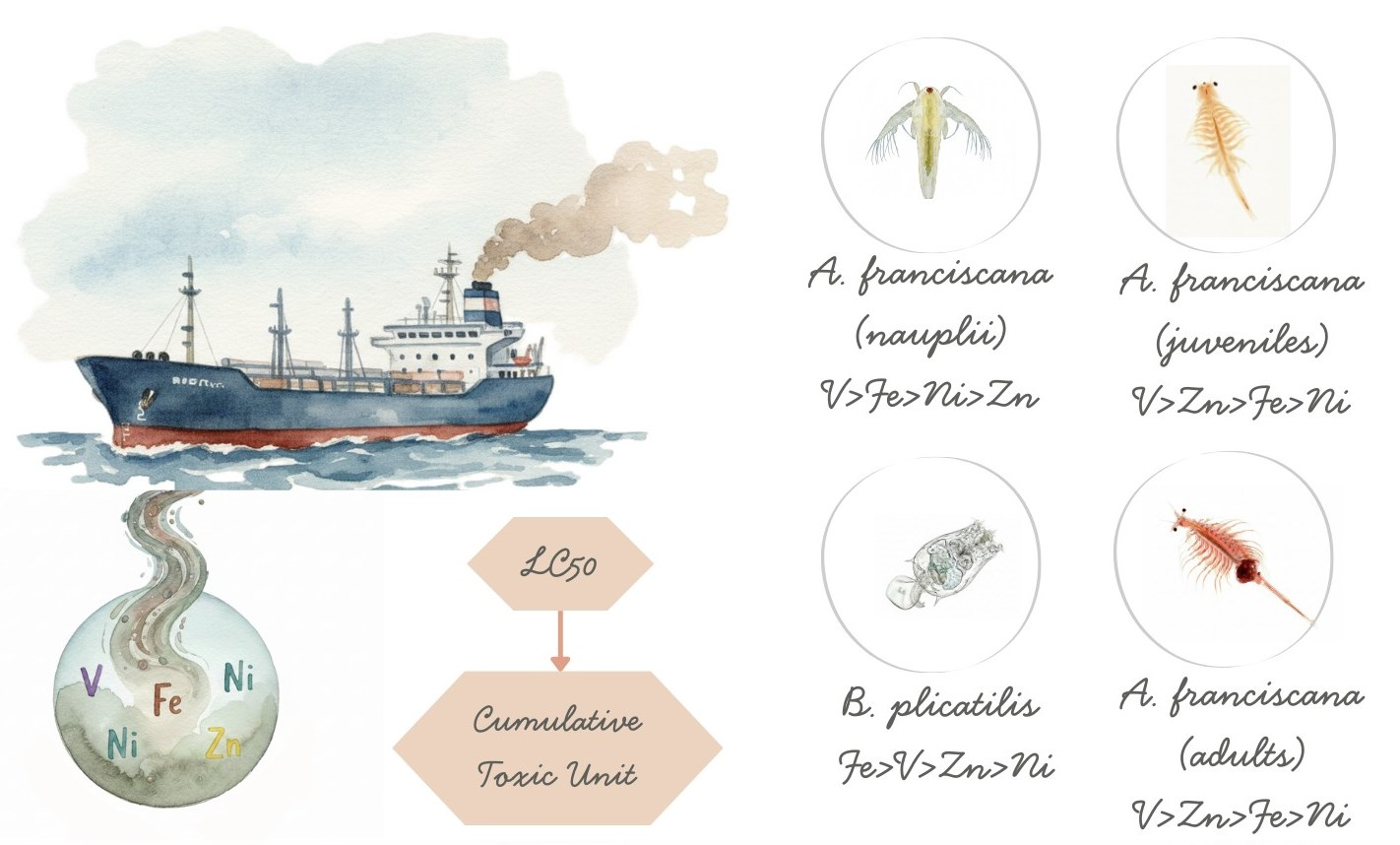
Life Stage-Dependent Toxicity and Interactions of Scrubber-Related Metal Mixtures in Marine Zooplankton

 , ,
, , 
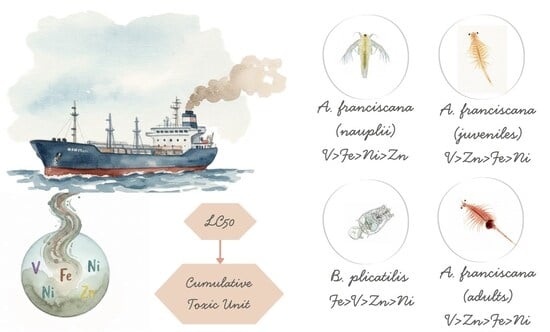
Abstract
1. Introduction
2. Materials and Methods
2.1. Reagents and Metal Stock Solutions
2.2. Toxicity Tests
2.3. Data Processing and Statistical Analysis
3. Results
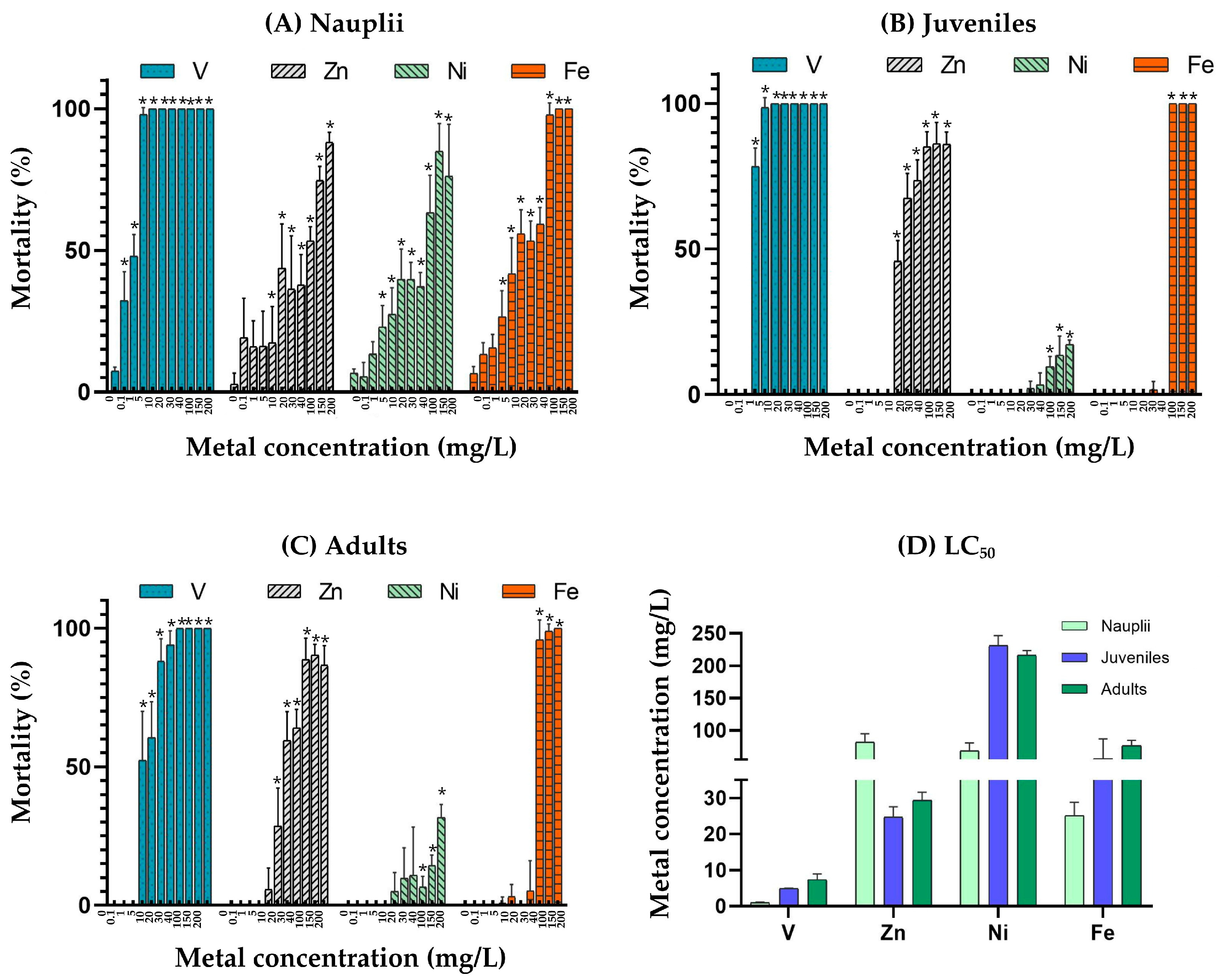
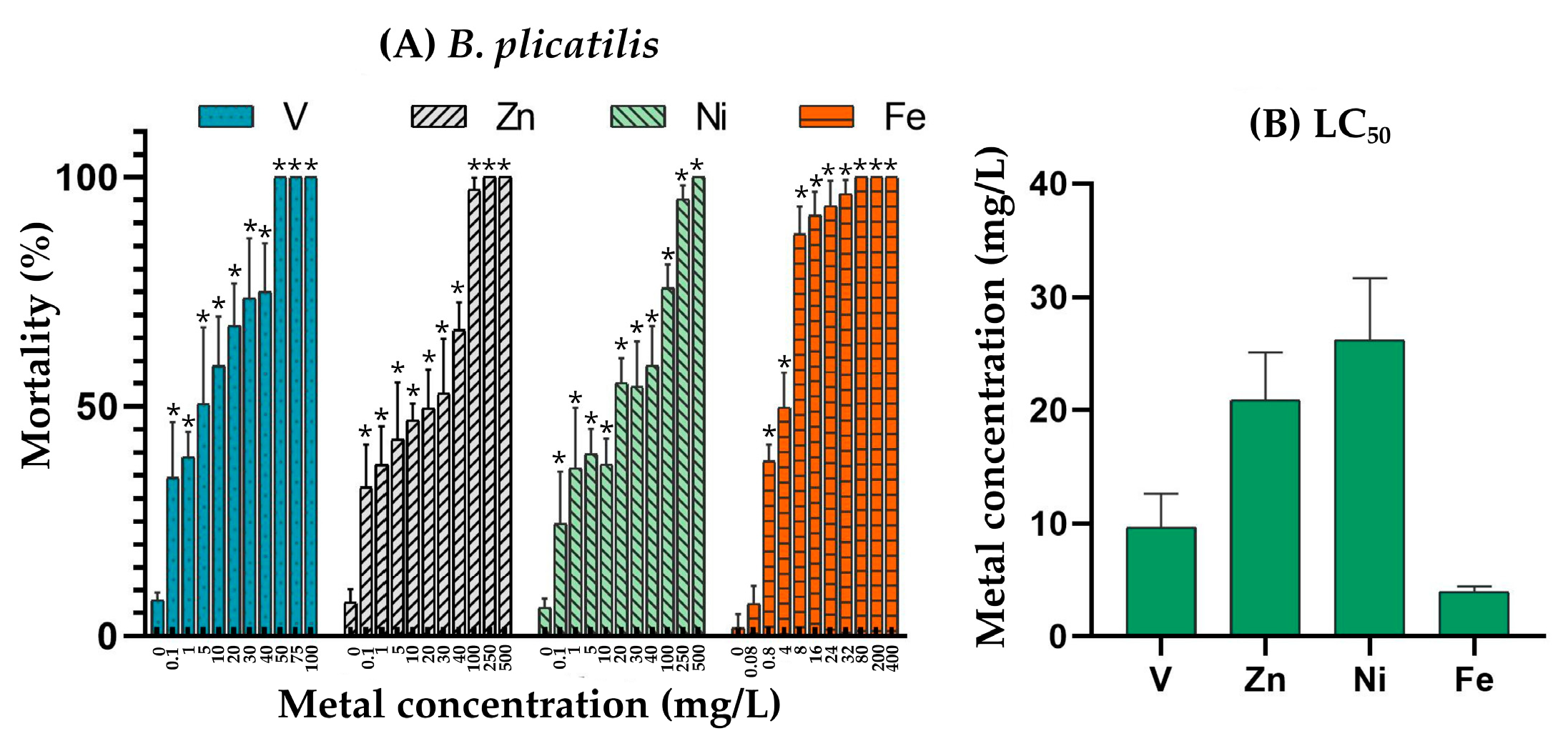
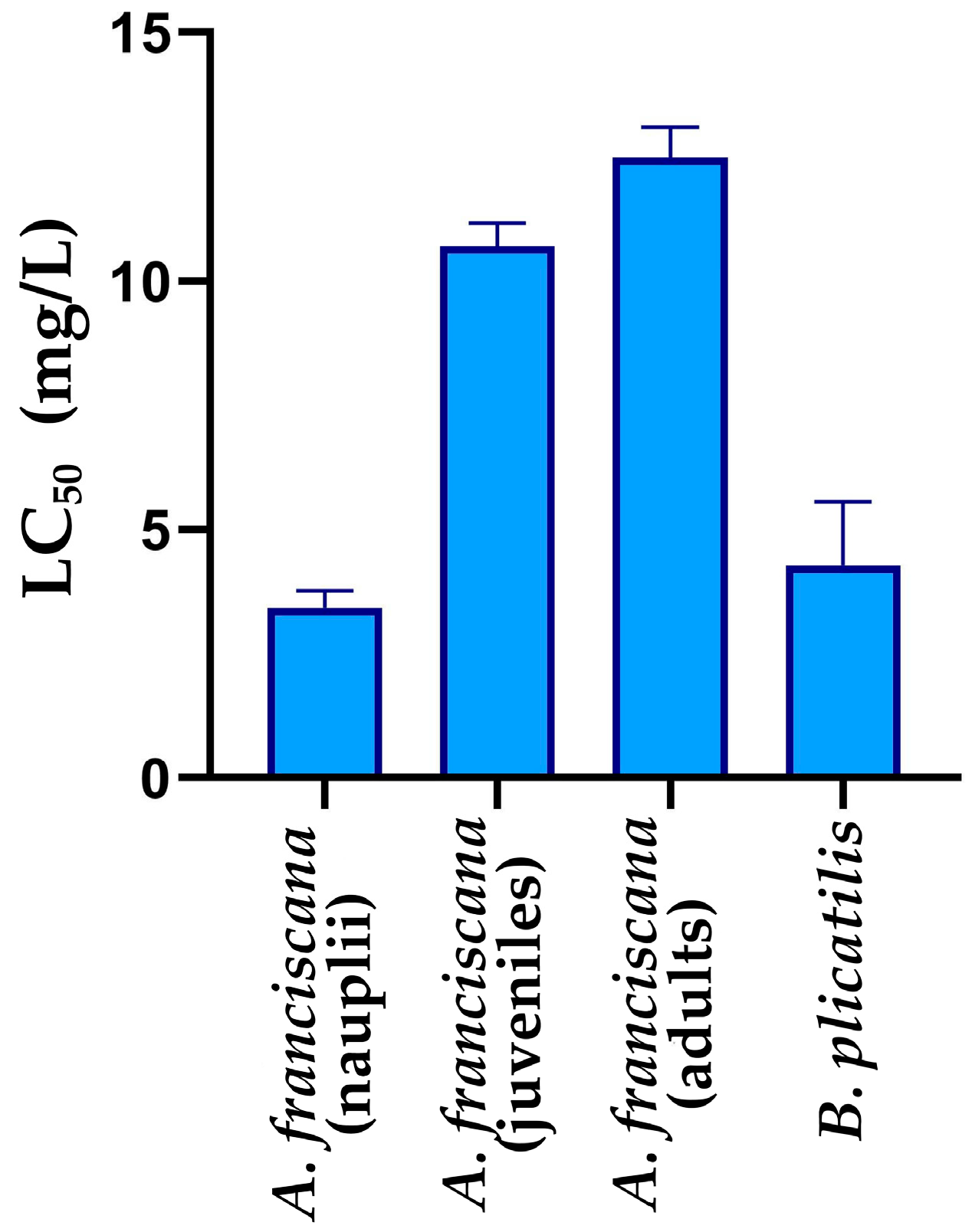
3.1. Mortality Rate and LC50 Evaluation
3.1.1. Artemia franciscana
3.1.2. Brachionus plicatilis
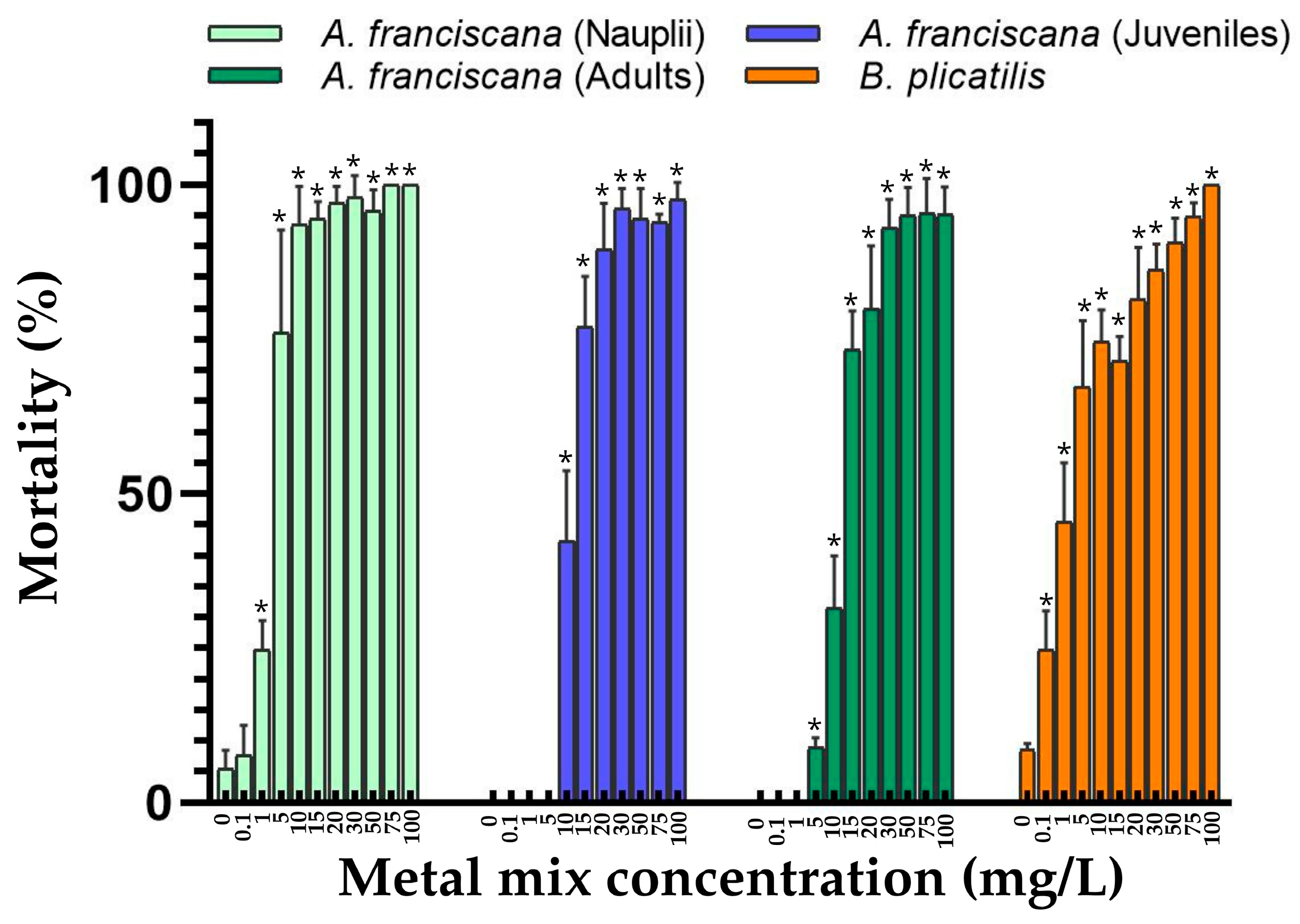
3.2. Metal Mixture: Mortality, LC50, and Cumulative Toxic Unit
4. Discussion
4.1. Toxicity of Individual Metals in Marine Zooplankton
4.2. Toxicity and Interactions of Metal Mixtures
4.3. Environmental Implications of Metal-Laden Scrubber Washwater Discharges
5. Conclusions
Supplementary Materials
Author Contributions
Funding
Institutional Review Board Statement
Informed Consent Statement
Data Availability Statement
Conflicts of Interest
References
- United Nations Conference on Trade and Development (UNCTAD). Review of Maritime Transport 2025; Report No. UNCTAD/RMT/2025; United Nations: Geneva, Switzerland, 2025; Available online: https://unctad.org/system/files/official-document/rmt2025_en.pdf (accessed on 9 January 2026).
- International Maritime Organization (IMO). International Convention for the Prevention of Pollution from Ships (MARPOL); IMO: London, UK, 1978. [Google Scholar]
- Viana, M.; Hammingh, P.; Colette, A.; Querol, X.; Degraeuwe, B.; de Vlieger, I.; van Aardenne, J. Impact of maritime transport emissions on coastal air quality in Europe. Atmos. Environ. 2014, 90, 96–105. [Google Scholar] [CrossRef]
- International Maritime Organization (IMO). Resolution MEPC.320(74): 2019 Guidelines for Consistent Implementation of the 0.50% Sulphur Limit Under MARPOL Annex VI; IMO: London, UK, 2019; Available online: https://www.imo.org/es/mediacentre/hottopics/pages/sulphur-2020.aspx (accessed on 15 December 2025).
- EEA-EMSA European Environment Agency & European Maritime Safety Agency. European Maritime Transport Environmental Report 2025; Joint Report No. 15/2024; Publications Office of the European Union: Luxembourg, 2025. [Google Scholar]
- IMO International Maritime Organization. Resolution MEPC.259(68): 2015 Guidelines for Exhaust Gas Cleaning Systems; IMO International Maritime Organization: London, UK, 2015. [Google Scholar]
- Hermansson, A.L.; Hassellöv, I.M.; Moldanova, J.; Ytreberg, E. Comparing emissions of polyaromatic hydrocarbons and metals from marine fuels and scrubbers. Transp. Res. Part D Transp. Environ. 2021, 97, 102912. [Google Scholar] [CrossRef]
- Turner, D.R.; Hassellöv, I.-M.; Ytreberg, E.; Rutgersson, A. Shipping and the environment: Smokestack emissions, scrubbers and unregulated oceanic consequences. Elem. Sci. Anthr. 2017, 5, 45. [Google Scholar] [CrossRef]
- Hermansson, A.L.; Hassellöv, I.-M.; Grönholm, T.; Jalkanen, J.-P.; Fridell, E.; Parsmo, R.; Hassellöv, J.; Ytreberg, E. Strong economic incentives of ship scrubbers promoting pollution. Nat. Sustain. 2024, 7, 812–822. [Google Scholar] [CrossRef]
- Koski, M.; Stedmon, C.; Trapp, S. Ecological effects of scrubber water discharge on coastal plankton: Potential synergistic effects of contaminants reduce survival and feeding of the copepod Acartia tonsa. Mar. Environ. Res. 2017, 129, 374–385. [Google Scholar] [CrossRef] [PubMed]
- Jönander, C.; Egardt, J.; Hassellöv, I.M.; Tiselius, P.; Rasmussen, M.; Dahllöf, I. Exposure to closed-loop scrubber washwater alters biodiversity, reproduction, and grazing of marine zooplankton. Front. Mar. Sci. 2023, 10, 1249964. [Google Scholar] [CrossRef]
- Ytreberg, E.; Hassellöv, I.M.; Nylund, A.T.; Hedblom, M.; Al-Handal, A.Y.; Wulff, A. Effects of scrubber washwater discharge on microplankton in the Baltic Sea. Mar. Pollut. Bull. 2019, 145, 316–324. [Google Scholar] [CrossRef] [PubMed]
- Genitsaris, S.; Kourkoutmani, P.; Stefanidou, N.; Michaloudi, E.; Gros, M.; García-Gómez, E.; Petrović, M.; Ntziachristos, L.; Moustaka-Gouni, M. Effects from maritime scrubber effluent on phytoplankton and bacterioplankton communities of a coastal area, Eastern Mediterranean Sea. Ecol. Inform. 2023, 77, 102154. [Google Scholar] [CrossRef]
- Endres, S.; Maes, F.; Hopkins, F.; Houghton, K.; Mårtensson, E.M.; Oeffner, J.; Quack, B.; Singh, P.; Turner, D. A new perspective at the ship-air-sea-interface: The environmental impacts of exhaust gas scrubber discharge. Front. Mar. Sci. 2018, 5, 139. [Google Scholar] [CrossRef]
- Kourkoutmani, P.; Genitsaris, S.; Demertzioglou, M.; Stefanidou, N.; Voutsa, D.; Ntziachristos, L.; Moustaka-Gouni, M.; Michaloudi, E. Effects from maritime scrubber effluent on coastal metazooplankton. Mar. Biol. 2024, 172, 2. [Google Scholar] [CrossRef]
- Zapata-Restrepo, L.M.; Williams, I.D.; Hudson, M.; Freeman, G.; Lee, B.; Prieul, C. Ecotoxicological assessment of waste scrubber water in unicellular algae (Tetraselmis suecica) and Blue Mussel (Mytilus edulis) larvae. Detritus 2024, 29, 150. [Google Scholar] [CrossRef]
- El-Sharkawy, M.; Alotaibi, M.O.; Li, J.; Du, D.; Mahmoud, E. Heavy Metal Pollution in Coastal Environments: Ecological Implications and Management Strategies: A Review. Sustainability 2025, 17, 701. [Google Scholar] [CrossRef]
- Väänänen, K.; Leppänen, M.T.; Chen, X.; Akkanen, J. Metal bioavailability in ecological risk assessment of freshwater ecosystems: From science to environmental management. Ecotoxicol. Environ. Saf. 2018, 147, 430–446. [Google Scholar] [CrossRef] [PubMed]
- Nys, C.; Versieren, L.; Cordery, K.I.; Blust, R.; Smolders, E.; De Schamphelaere, K.A. Systematic evaluation of chronic metal-mixture toxicity to three species and implications for risk assessment. Environ. Sci. Technol. 2017, 51, 4615–4623. [Google Scholar] [CrossRef] [PubMed]
- Gleyzes, C.; Tellier, S.; Astruc, M. Fractionation studies of trace elements in contaminated soils and sediments: A review of sequential extraction procedures. TrAC Trends Anal. Chem. 2002, 21, 451–467. [Google Scholar] [CrossRef]
- Sarkar, S.K.; Favas, P.J.; Rakshit, D.; Satpathy, K.K. Geochemical speciation and risk assessment of heavy metals in soils and sediments. In Environmental Risk Assessment of Soil Contamination; Intech: Rijeka, Croatia, 2014. [Google Scholar] [CrossRef]
- Teuchies, J.; Cox, T.J.S.; Van Itterbeeck, K.; Meysman, F.J.R.; Blust, R. The impact of scrubber discharge on the water quality in estuaries and ports. Environ. Sci. Eur. 2020, 32, 103. [Google Scholar] [CrossRef]
- Norwood, W.P.; Borgmann, U.; Dixon, D.G.; Wallace, A. Effects of Metal Mixtures on Aquatic Biota: A Review of Observations and Methods. Hum. Ecol. Risk Assess. Int. J. 2003, 9, 795–811. [Google Scholar] [CrossRef]
- Rainbow, P.S. Trace metal bioaccumulation: Models, metabolic availability and toxicity. Environ. Int. 2007, 33, 576–582. [Google Scholar] [CrossRef] [PubMed]
- Kukavica, B.; Davidović-Plavšić, B.; Savić, A.; Dmitrović, D.; Šukalo, G.; Đurić-Savić, S.; Vučić, G. Oxidative stress and neurotoxicity of cadmium and zinc on Artemia franciscana. Biol. Trace Elem. Res. 2023, 201, 2636–2649. [Google Scholar] [PubMed]
- Enserink, E.L.; Mass-Diepeveen, J.L.; van Leeuwen, C.J. Combined effects of metals: An ecotoxicological evaluation. Water Res. 1991, 25, 679–687. [Google Scholar] [CrossRef]
- Knežević, L.; Omanović, D.; Bačić, N.; Mandić, J.; Bura-Nakić, E. Redox Speciation of Vanadium in Estuarine Waters Using Improved Methodology Based on Anion Exchange Chromatography Coupled to HR ICP-MS System. Molecules 2021, 26, 2436. [Google Scholar] [CrossRef] [PubMed]
- Kremling, K.; Andreae, M.O.; Brügmann, L.; van den Berg, C.M.G.; Prange, A.; Schirmacher, M.; Koroleff, E.; Kus, J. Determination of trace elements. In Methods of Seawater Analysis; Grasshoff, K., Kremling, K., Ehrhardt, M., Eds.; Wiley-VCH: Weinheim, Germany, 1999; pp. 253–364. [Google Scholar] [CrossRef]
- Kjølholt, J.; Aakre, S.; Jürgensen, C.; Lauridsen, J. Assessment of Possible Impacts of Scrubber Water Discharges on the Marine Environment; Report of the Danish Environmental Protection Agency; Danish Environmental Protection Agency: Odense, Denmark, 2012. [Google Scholar]
- Libralato, G.; Prato, E.; Migliore, L.; Cicero, A.M.; Manfra, L. A review of toxicity testing protocols and endpoints with Artemia spp. Ecol. Indic. 2016, 69, 35–49. [Google Scholar] [CrossRef]
- Li, X.D.; Wang, X.Y.; Xu, M.E.; Jiang, Y.; Yan, T.; Wang, X.C. Progress on the usage of the rotifer Brachionus plicatilis in marine ecotoxicology: A review. Aquat. Toxicol. 2020, 229, 105678. [Google Scholar] [CrossRef] [PubMed]
- Van Steertegem, M.; Persoone, G. Cyst-based toxicity tests V: Development and critical evaluation of standardized toxicity tests with the brine shrimp Artemia (anostraca, Crustacea). In Progress in Standardization of Aquatic Toxicity Tests; Soares, A.M.V.M., Calow, P., Eds.; Lewis Publishers: Boca Raton, FL, USA, 1993; pp. 81–97. ISBN 0-87371-845-3. [Google Scholar]
- Snell, T.W.; Janssen, C.R. Rotifers in ecotoxicology: A review. Hydrobiologia 1995, 313, 231–247. [Google Scholar] [CrossRef]
- Serra, M.; Carmona, M.J.; Miracle, M.R. Survival analysis of three clones of Brachionus plicatilis (Rotifera). Hydrobiologia 1994, 277, 97–105. [Google Scholar] [CrossRef]
- Yin, X.W.; Zhao, W. Studies on life history characteristics of Brachionus plicatilis OF Müller (Rotifera) in relation to temperature, salinity and food algae. Aquat. Ecol. 2008, 42, 165–176. [Google Scholar] [CrossRef]
- Hampel, M.; Moreno-Garrido, I.; Sobrino, C.; Lubián, L.M.; Blasco, J. Acute Toxicity of LAS Homologues in Marine Microalgae: Esterase Activity and Inhibition Growth as Endpoints of Toxicity. Ecotoxicol. Environ. Saf. 2001, 48, 287–292. [Google Scholar] [CrossRef] [PubMed]
- Altenburger, R.; Nendza, M.; Schüürmann, G. Mixture toxicity and its modeling by quantitative structure-activity relationships. Environ. Toxicol. Chem. 2003, 22, 1900–1915. [Google Scholar] [CrossRef] [PubMed]
- Backhaus, T.; Faust, M. Predictive environmental risk assessment of chemical mixtures: A conceptual framework. Environ. Sci. Technol. 2012, 46, 2564–2573. [Google Scholar] [CrossRef] [PubMed]
- Sprague, J.B. Measurement of pollutant toxicity to fish. II. Utilizing and applying bioassay results. Water Res. 1970, 4, 3–32. [Google Scholar] [CrossRef]
- Xu, Y.; Shi, D.; Aristilde, L.; Morel, F.M. The effect of pH on the uptake of zinc and cadmium in marine phytoplankton: Possible role of weak complexes. Limnol. Oceanogr. 2012, 57, 293–304. [Google Scholar] [CrossRef]
- Martin, O.; Scholze, M.; Ermler, S.; McPhie, J.; Bopp, S.K.; Kienzler, A.; Parissis, N.; Kortenkamp, A. Ten years of research on synergisms and antagonisms in chemical mixtures: A systematic review and quantitative reappraisal of mixture studies. Environ. Int. 2021, 146, 106206. [Google Scholar] [CrossRef] [PubMed]
- Kumar, P.; Sivaperumal, P.; Manigandan, V.; Rajaram, R.; Hussain, M. Assessment of potential human health risk due to heavy metal contamination in edible finfish and shellfish collected around Ennore coast, India. Environ. Sci. Pollut. Res. 2021, 28, 8151–8167. [Google Scholar] [CrossRef]
- Gauthier, P.T.; Norwood, W.P.; Prepas, E.E.; Pyle, G.G. Metal–PAH mixtures in the aquatic environment: A review of co-toxic mechanisms leading to more-than-additive outcomes. Aquat. Toxicol. 2014, 154, 253–269. [Google Scholar] [CrossRef] [PubMed]
- Valko, M.M.H.C.M.; Morris, H.; Cronin, M.T.D. Metals, toxicity and oxidative stress. Curr. Med. Chem. 2005, 12, 1161–1208. [Google Scholar] [CrossRef] [PubMed]
- Meina, E.G.; Niyogi, S.; Liber, K. Investigating the mechanism of vanadium toxicity in freshwater organisms. Aquat. Toxicol. 2020, 229, 105648. [Google Scholar] [CrossRef] [PubMed]
- Fichet, D.; Miramand, P. Vanadium toxicity to three marine invertebrates larvae: Crassostrea gigas, Paracentrotus lividus and Artemia salina. Chemosphere 1998, 37, 1363–1368. [Google Scholar] [CrossRef]
- Tambat, V.S.; Patel, A.K.; Singhania, R.R.; Chen, C.-W.; Dong, C.-D. Marine vanadium pollution: Sources, ecological impacts and cutting-edge mitigation strategies. Mar. Pollut. Bull. 2024, 209, 117199. [Google Scholar] [CrossRef] [PubMed]
- Chiarelli, R.; Martino, C.; Roccheri, M.C.; Geraci, F. Vanadium Toxicity Monitored by Fertilization Outcomes and Metal-Related Proteolytic Activities in Paracentrotus lividus Embryos. Toxics 2022, 10, 83. [Google Scholar] [CrossRef] [PubMed]
- Hobbs, A.S.; Froehlich, J.P.; Albers, R.W. Inhibition by vanadate of the reactions catalyzed by the (Na++ K+)-stimulated ATPase. A transient state kinetic characterization. J. Biol. Chem. 1980, 255, 5724–5727. [Google Scholar] [CrossRef]
- Bell, M.V.; Sargent, J.R. The partial purification of sodium-plus-potassium ion-dependent adenosine triphosphatase from the gills of Anguilla anguilla and its inhibition by orthovanadate. Biochem. J. 1979, 179, 431–438. [Google Scholar] [CrossRef] [PubMed]
- Ringelband, U. Salinity dependence of vanadium toxicity against the brackish water hydroid Cordylophora caspia. Ecotoxicol. Environ. Saf. 2001, 48, 18–26. [Google Scholar] [CrossRef] [PubMed]
- Sellami, I.; Charmantier, G.; Naceur, H.B.; Kacem, A.; Lorin-Nebel, C. Osmoregulatory performance and immunolocalization of Na+/K+-ATPase in the branchiopod Artemia salina from the Sebkha of Sidi El Hani (Tunisia). Tissue Cell 2020, 63, 101340. [Google Scholar] [CrossRef] [PubMed]
- El-Agawany, N.I.; Kaamoush, M.I. Role of zinc as an essential microelement for algal growth and concerns about its potential environmental risks. Environ. Sci. Pollut. Res. 2023, 30, 71900–71911. [Google Scholar] [CrossRef]
- Fisher, N.S.; Hook, S.E. Toxicology tests with aquatic animals need to consider the trophic transfer of metals. Toxicology 2002, 181, 531–536. [Google Scholar] [CrossRef] [PubMed]
- Hazeem, L. Single and combined toxicity effects of zinc oxide nanoparticles: Uptake and accumulation in marine microalgae, toxicity mechanisms, and their fate in the marine environment. Water 2022, 14, 2669. [Google Scholar] [CrossRef]
- Marisa, I.; Matozzo, V.; Munari, M.; Binelli, A.; Parolini, M.; Martucci, A.; Franceschinis, E.; Brianese, N.; Marin, M.G. In vivo exposure of the marine clam Ruditapes philippinarum to zinc oxide nanoparticles: Responses in gills, digestive gland and haemolymph. Environ. Sci. Pollut. Res. 2016, 23, 15275–15293. [Google Scholar] [CrossRef] [PubMed]
- Muyssen, B.T.; De Schamphelaere, K.A.; Janssen, C.R. Mechanisms of chronic waterborne Zn toxicity in Daphnia magna. Aquat. Toxicol. 2006, 77, 393–401. [Google Scholar] [CrossRef] [PubMed]
- Wang, W.X.; Ke, C. Dominance of dietary intake of cadmium and zinc by two marine predatory gastropods. Aquat. Toxicol. 2002, 56, 153–165. [Google Scholar] [CrossRef] [PubMed]
- Anu, P.R.; Nandan, S.B.; Jayachandran, P.R.; Xavier, N.D.; Midhun, A.M.; Mohan, D. Toxicity effects of zinc on two marine diatoms, under varying macronutrient environment. Mar. Environ. Res. 2018, 142, 275–285. [Google Scholar] [CrossRef] [PubMed]
- Mohammadi, S.; Ahmadifard, N.; Atashbar, B.; Nikoo, A.; Manaffar, R. Long-term effect of zinc oxide nanoparticles on population growth, reproductive characteristics and zinc accumulation of marine rotifer, Brachionus plicatilis. Int. J. Aquat. Biol. 2021, 9, 5. [Google Scholar] [CrossRef] [PubMed]
- Blewett, T.A.; Leonard, E.M. Mechanisms of nickel toxicity to fish and invertebrates in marine and estuarine waters. Environ. Pollut. 2017, 223, 311–322. [Google Scholar] [CrossRef] [PubMed]
- Brix, K.V.; Schlekat, C.E.; Garman, E.R. The mechanisms of nickel toxicity in aquatic environments: An adverse outcome pathway analysis. Environ. Toxicol. Chem. 2017, 36, 1128–1137. [Google Scholar] [CrossRef] [PubMed]
- Magyarosy, A.; Laidlaw, R.; Kilaas, R.; Echer, C.; Clark, D.; Keasling, J. Nickel accumulation and nickel oxalate precipitation by Aspergillus niger. Appl. Microbiol. Biotechnol. 2002, 59, 382–388. [Google Scholar] [CrossRef] [PubMed]
- Binet, M.T.; Adams, M.S.; Gissi, F.; Golding, L.A.; Schlekat, C.E.; Garman, E.R.; Merrington, G.; Stauber, J.L. Toxicity of nickel to tropical freshwater and sediment biota: A critical literature review and gap analysis. Environ. Toxicol. Chem. 2018, 37, 293–317. [Google Scholar] [CrossRef] [PubMed]
- Deruytter, D.; Baert, J.M.; Nevejan, N.; De Schamphelaere, K.A.; Janssen, C.R. Mixture toxicity in the marine environment: Model development and evidence for synergism at environmental concentrations. Environ. Toxicol. Chem. 2017, 36, 3471–3479. [Google Scholar] [CrossRef] [PubMed]
- Martin, M.; Osborn, K.E.; Billig, P.; Glickstein, N. Toxicities of ten metals to Crassostrea gigas and Mytilus edulis embryos and Cancer magister larvae. Mar. Pollut. Bull. 1981, 12, 305–308. [Google Scholar] [CrossRef]
- Rebolledo, U.A.; Páez-Osuna, F.; Fernández, R. Single and mixture toxicity of As, Cd, Cr, Cu, Fe, Hg, Ni, Pb, and Zn to the rotifer Proales similis under different salinities. Environ. Pollut. 2021, 271, 116357. [Google Scholar] [CrossRef] [PubMed]
- Migliore, L.; de Nicola Giudici, M. Toxicity of heavy metals to Asellus aquaticus (L.) (Crustacea, Isopoda). Hydrobiologia 1990, 203, 155–164. [Google Scholar] [CrossRef]
- Langston, W.J. Toxic Effects of Heavy Metals and the Incidence of Metal Pollution in Marine Ecosystems. In Heavy Metals in the Marine Environment; Furness, R.W., Rainbow, P.S., Eds.; CRC Press: Boca Raton, FL, USA, 1990; pp. 101–122. [Google Scholar] [CrossRef]
- Nakamura, T.; Naguro, I.; Ichijo, H. Iron homeostasis and iron-regulated ROS in cell death, senescence and human diseases. Biochim. Biophys. Acta 2019, 1863, 1398–1409. [Google Scholar] [CrossRef] [PubMed]
- Wang, H.; Tang, X.; Sha, J.; Chen, H.; Sun, T.; Wang, Y. The reproductive toxicity on the rotifer Brachionus plicatilis induced by BDE-47 and studies on the effective mechanism based on antioxidant defense system changes. Chemosphere 2015, 135, 129–137. [Google Scholar] [CrossRef] [PubMed]
- Han, C.; Kim, H.-J.; Lee, J.-S.; Sakakura, Y.; Hagiwara, A. Iron reproductive toxicity of marine rotifer sibling species: Adaptation to temperate and tropical habitats. Aquat. Toxicol. 2022, 246, 106135. [Google Scholar] [CrossRef] [PubMed]
- Couillard, Y.; Ross, P.; Pinel-Alloul, B. Acute toxicity of six metals to the Rotifer Brachionus calyciflorus, with comparisons to other freshwater organisms. Toxic. Assess. 1989, 4, 451–462. [Google Scholar] [CrossRef]
- Jansen, M.; Groman, D. The Effect of High Concentrations of Iron on Impounded American Lobsters: A Case Study. J. Aquat. Anim. Health 1993, 5, 155–156. [Google Scholar] [CrossRef]
- MacRae, T.H.; Pandey, A.S. Effects of metals on early life stages of the brine shrimp, Artemia: A developmental toxicity assay. Arch. Environ. Contam. Toxicol. 1991, 20, 247–252. [Google Scholar] [CrossRef] [PubMed]
- Gora, A.H.; Sreeram, M.P.; Rehman, S.; Ain, Q.U.; Chakraborty, K.; Prema, D.; Lavanya, R.; Siriyappagouder, P.; Asha, P.S. A review on metallothionein research in marine and estuarine realms: Past paradigms and future vistas. Front. Mar. Sci. 2025, 12, 1636760. [Google Scholar] [CrossRef]
- Manzo, S.; Buono, S.; Cremisini, C. Cadmium, lead and their mixtures with copper: Paracentrotus lividus embryotoxicity assessment, prediction, and offspring quality evaluation. Ecotoxicology 2010, 19, 1209–1223. [Google Scholar] [CrossRef] [PubMed]
- Koppel, D.J.; Adams, M.S.; King, C.K.; Jolley, D.F. Chronic toxicity of an environmentally relevant and equitoxic ratio of five metals to two Antarctic marine microalgae shows complex mixture interactivity. Environ. Pollut. 2018, 242, 1319–1330. [Google Scholar] [CrossRef] [PubMed]
- Crowther, C.; Turner, A.; Moore, M.N.; Jha, A.N. Assessing the effects of single and binary exposures of copper and lead on Mytilus galloprovincialis: Physiological and genotoxic approaches. Aquat. Toxicol. 2023, 265, 106741. [Google Scholar] [CrossRef] [PubMed]
- Liu, F.; Wang, W.X. Differential influences of Cu and Zn chronic exposure on Cd and Hg bioaccumulation in an estuarine oyster. Aquat. Toxicol. 2014, 148, 204–210. [Google Scholar] [CrossRef] [PubMed]
- Xu, X.; Li, Y.; Wang, Y.; Wang, Y. Assessment of toxic interactions of heavy metals in multi-component mixtures using sea urchin embryo-larval bioassay. Toxicol. Vitr. 2011, 25, 294–300. [Google Scholar] [CrossRef] [PubMed]
- Amachree, D.; Moody, A.J.; Handy, R.D. Bioaccumulation and sub-lethal physiological effects of metal mixtures on mussel, Mytilus edulis: Continuous exposure to a binary mixture of mercury and cadmium. Aquat. Toxicol. 2024, 273, 106987. [Google Scholar] [CrossRef] [PubMed]
- Di Toro, D.M.; Allen, H.E.; Bergman, H.L.; Meyer, J.S.; Paquin, P.R.; Santore, R.C. Biotic Ligand Model of the acute toxicity of metals. 1. Technical basis. Environ. Toxicol. Chem. 2001, 20, 2383–2396. [Google Scholar] [CrossRef]
- Niyogi, S.; Wood, C.M. Biotic ligand model, a flexible tool for developing site-specific water quality guidelines for metals. Environ. Sci. Technol. 2004, 38, 6177–6192. [Google Scholar] [CrossRef] [PubMed]
- Sun, D.Y.; Guo, J.Z.; Hartmann, H.A.; Uno, H.I.D.E.O.; Hokin, L.E. Na, K-ATPase expression in the developing brine shrimp Artemia. Immunochemical localization of the alpha-and beta-subunits. J. Histochem. Cytochem. 1991, 39, 1455–1460. [Google Scholar] [CrossRef] [PubMed]
- Griffith, M.B. Toxicological perspective on the osmoregulation and ionoregulation physiology of major ions by freshwater animals: Teleost fish, crustacea, aquatic insects, and Mollusca. Environ. Toxicol. Chem. 2017, 36, 576–600. [Google Scholar] [CrossRef] [PubMed]
- Peace, A.; Poteat, M.D.; Wang, H. Somatic growth dilution of a toxicant in a predator–prey model under stoichiometric constraints. J. Theor. Biol. 2016, 407, 198–211. [Google Scholar] [CrossRef] [PubMed]
- Amiard, J.-C.; Amiard-Triquet, C.; Barka, S.; Pellerin, J.; Rainbow, P.S. Metallothioneins in aquatic invertebrates: Their role in metal detoxification and their use as biomarkers. Aquat. Toxicol. 2006, 76, 160–202. [Google Scholar] [CrossRef] [PubMed]
- Ivanina, A.V.; Cherkasov, A.S.; Sokolova, I.M. Effects of cadmium on cellular protein and glutathione synthesis and expression of stress proteins in eastern oysters, Crassostrea virginica Gmelin. J. Exp. Biol. 2008, 211, 577–586. [Google Scholar] [CrossRef] [PubMed]
- Gambardella, C.; Mesarič, T.; Milivojević, T.; Sepčić, K.; Gallus, L.; Carbone, S.; Ferrando, S.; Faimali, M. Effects of selected metal oxide nanoparticles on Artemia salina larvae: Evaluation of mortality and behavioural and biochemical responses. Environ. Monit. Assess. 2014, 186, 4249–4259. [Google Scholar] [CrossRef] [PubMed]
- Li, Y.; Chai, X.; Wu, H.; Jing, W.; Wang, L. The response of metallothionein and malondialdehyde after exclusive and combined Cd/Zn exposure in the crab Sinopotamon henanense. PLoS ONE 2013, 8, e80475. [Google Scholar] [CrossRef] [PubMed]
- Rico-Martínez, R.; Arzate-Cárdenas, M.A.; Robles-Vargas, D.; Pérez-Legaspi, I.A.; Alvarado-Flores, J.; Santos-Medrano, G.E. Rotifers as Models in Toxicity Screening of Chemicals and Environmental Samples. In Invertebrates Experimental Models in Toxicity Screening; InTech: Rijeka, Croatia, 2016. [Google Scholar] [CrossRef] [PubMed]
- Santhosh, K.; Kamala, K.; Ramasamy, P.; Musthafa, M.S.; Almujri, S.S.; Asdaq, S.M.B.; Sivaperumal, P. Unveiling the silent threat: Heavy metal toxicity devastating impact on aquatic organisms and DNA damage. Mar. Pollut. Bull. 2024, 200, 116139. [Google Scholar] [CrossRef] [PubMed]
- Gondikas, A.; Mattsson, K.; Hassellöv, M. A new form of hazardous microparticulate contamination to the marine environment from ships using heavy fuel oil with exhaust gas scrubbers—Characterization and implications for fate, transport and ecotoxicity. Sci. Total Environ. 2025, 959, 178263. [Google Scholar] [CrossRef] [PubMed]
- Doig, L.E.; Liber, K. Influence of dissolved organic matter on nickel bioavailability and toxicity to Hyalella azteca in water-only exposures. Aquat. Toxicol. 2006, 76, 203–216. [Google Scholar] [CrossRef] [PubMed]
- Thor, P.; Granberg, M.E.; Winnes, H.; Magnusson, K. Severe toxic effects on pelagic copepods from maritime exhaust gas scrubber effluents. Environ. Sci. Technol. 2021, 55, 5826–5835. [Google Scholar] [CrossRef] [PubMed]
- Zapata-Restrepo, L.M.; Williams, I.D. Mytilus edulis and Psammechinus miliaris as bioindicators of ecotoxicological risk by maritime exhaust gas scrubber water. Mar. Environ. Res. 2025, 209, 107157. [Google Scholar] [CrossRef] [PubMed]
- Picone, M.; Russo, M.; Distefano, G.G.; Baccichet, M.; Marchetto, D.; Volpi Ghirardini, A.; Lunde Hermansson, A.; Petrovic, M.; Gros, M.; Garcia, E.; et al. Impacts of exhaust gas cleaning systems (EGCS) discharge waters on planktonic biological indicators. Mar. Pollut. Bull. 2023, 190, 114846. [Google Scholar] [CrossRef] [PubMed]
- Byrne, R.H. Inorganic speciation of dissolved elements in seawater: The influence of pH on concentration ratios. Geochem. Trans. 2003, 3, 11–16. [Google Scholar]
- Millero, F. Speciation of metals in natural waters. Geochem. Trans. 2001, 2, 57. [Google Scholar] [CrossRef]
- Cardwell, A.S.; Rodriguez, P.H.; Stubblefield, W.A.; DeForest, D.K.; Adams, W.J. Chronic toxicity of iron to aquatic organisms under variable pH, hardness, and dissolved organic carbon conditions. Environ. Toxicol. Chem. 2023, 42, 1371–1385. [Google Scholar] [CrossRef] [PubMed]
- Teien, H.C.; Garmo, A.C.; Atland, A.; Salbu, B. Transformation of iron species in mixing zones and accumulation on fish gills. Environ. Sci. Technol. 2008, 42, 1780–1786. [Google Scholar] [CrossRef] [PubMed]
- Stockdale, A.; Tipping, E.; Lofts, S.; Mortimer, R.J.G. The effect of ocean acidification on organic and inorganic speciation of trace metals. Environ. Sci. Technol. 2016, 50, 1906–1913. [Google Scholar] [CrossRef] [PubMed]
- De Orte, M.R.; Lombardi, A.T.; Sarmiento, A.M.; Basallote, M.D.; Rodríguez-Romero, A.; Riba, I.; Del Valls, A. Metal mobility and toxicity to microalgae associated with acidification of sediments: CO2 and acid comparison. Mar. Environ. Res. 2014, 96, 136–144. [Google Scholar] [CrossRef] [PubMed]
- Shah, S.B. Heavy Metals in the Marine Environment—An Overview. In Heavy Metals in Scleractinian Corals; SpringerBriefs in Earth Sciences; Springer: Cham, Switzerland, 2021; ISBN 978-3-030-73613-2. [Google Scholar] [CrossRef]



| V (µg/L) | Zn (µg/L) | Ni (µg/L) | Fe (µg/L) | Total Metal Concentration * (µg/L) | Authors |
|---|---|---|---|---|---|
| 9100 | 370 | 2700 | 490 | 14,470.32 | [7] |
| 24,000 | 610 | 5700 | No data | 30,570.00 | [22] (EGCSA dataset) |
| 25,000 | 590 | 6600 | No data | 32,432.96 | |
| 14,000 | 420 | 3100 | No data | 18,397.40 | |
| 6100 | 160 | 3100 | No data | 7950.00 | [29] |
| 5641 | 377 | 1943 | 6620 | 15,573.30 | This study |
| Tested Organism | CTUobserved | CTUpredicted | TR (CTUobserved/CTUpredicted) | Interpretation |
|---|---|---|---|---|
| A. franciscana (nauplii) | 4.37 | 5.75 | 0.76 | Antagonism |
| A. franciscana (juveniles) | 1.40 | 1.27 | 1.11 | Synergism |
| A. franciscana (adults) | 1.20 | 0.86 | 1.39 | Synergism |
| B. plicatilis | 3.50 | 2.06 | 1.70 | Synergism |
Disclaimer/Publisher’s Note: The statements, opinions and data contained in all publications are solely those of the individual author(s) and contributor(s) and not of MDPI and/or the editor(s). MDPI and/or the editor(s) disclaim responsibility for any injury to people or property resulting from any ideas, methods, instructions or products referred to in the content. |
© 2026 by the authors. Licensee MDPI, Basel, Switzerland. This article is an open access article distributed under the terms and conditions of the Creative Commons Attribution (CC BY) license.
Share and Cite
Bautista-Chamizo, E.; Cabrera-Bayarri, M.; Nebot, E.; Moreno-Andrés, J. Life Stage-Dependent Toxicity and Interactions of Scrubber-Related Metal Mixtures in Marine Zooplankton. Toxics 2026, 14, 530. https://doi.org/10.3390/toxics14060530
Bautista-Chamizo E, Cabrera-Bayarri M, Nebot E, Moreno-Andrés J. Life Stage-Dependent Toxicity and Interactions of Scrubber-Related Metal Mixtures in Marine Zooplankton. Toxics. 2026; 14(6):530. https://doi.org/10.3390/toxics14060530
Chicago/Turabian StyleBautista-Chamizo, Esther, María Cabrera-Bayarri, Enrique Nebot, and Javier Moreno-Andrés. 2026. "Life Stage-Dependent Toxicity and Interactions of Scrubber-Related Metal Mixtures in Marine Zooplankton" Toxics 14, no. 6: 530. https://doi.org/10.3390/toxics14060530
APA StyleBautista-Chamizo, E., Cabrera-Bayarri, M., Nebot, E., & Moreno-Andrés, J. (2026). Life Stage-Dependent Toxicity and Interactions of Scrubber-Related Metal Mixtures in Marine Zooplankton. Toxics, 14(6), 530. https://doi.org/10.3390/toxics14060530