Review

Microplastics in Foods Intended for Health Purposes: From Dietary Supplements to Clinical Nutrition Products


by
Kornelia Kadac-Czapska
,
Justyna Ośko
,
Katarzyna Jażdżewska
and
Małgorzata Grembecka
*
Department of Bromatology, Faculty of Pharmacy, Medical University of Gdańsk, 80-416 Gdansk, Poland
*
Author to whom correspondence should be addressed.
Toxics 2026, 14(6), 514; https://doi.org/10.3390/toxics14060514
Submission received: 11 May 2026 / Revised: 7 June 2026 / Accepted: 10 June 2026 / Published: 12 June 2026
(This article belongs to the Section Emerging Contaminants)

Abstract

Microplastics (MPs) are pervasive contaminants that have been detected throughout the food chain. Their presence raises concerns in foods intended for health-related purposes, as these products are often consumed by vulnerable populations such as infants, older adults, and patients requiring clinical nutrition support. These groups may be more susceptible to contaminant exposure and may rely heavily on specialized foods. Therefore, understanding the occurrence and potential risks of MPs in such products is important. This review summarizes the current state of knowledge regarding the presence, sources, and health implications of plastic particles in several categories of health-oriented foods, including dietary supplements, medicinal herbs, plant-based beverages, honey, infant formulas, and clinical nutrition products, including enteral and parenteral formulations. Microplastics have been reported across these matrices. Fibers and fragments dominate, and common polymers include polyamide, polyethylene, polypropylene, and poly(ethylene terephthalate). These particles can originate from polluted water, soil, and air, as well as from production processes, packaging wear, and clinical delivery systems. Current evidence suggests that improving methodological consistency and expanding targeted toxicological research relevant to vulnerable populations will be crucial for strengthening risk assessment.

Graphical Abstract

1. Introduction

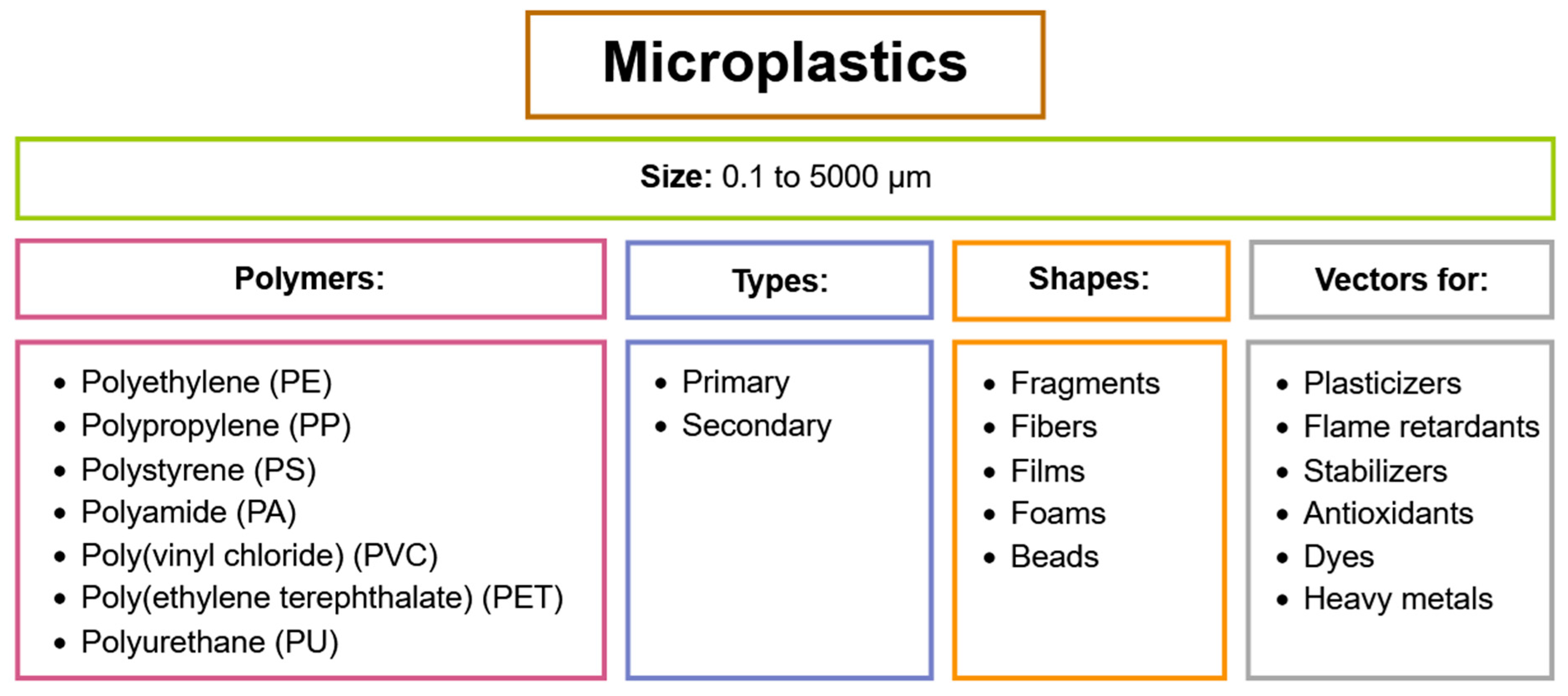
Microplastics (MPs) are defined as plastic particles with a size range of 0.1 to 5000 µm [1,2]. They are divided into two categories: primary and secondary [3]. Primary MPs are particles manufactured at microscopic sizes or intentionally added to commercial products, such as personal care items. However, primary MPs generally account for a smaller fraction of environmental MPs than secondary MPs, and regulatory measures have increasingly targeted their intentional use. For example, the European Union has restricted the placing on the market of intentionally added synthetic polymer microparticles, including their use in certain personal care products, with transition periods depending on product type [4]. Secondary MPs are formed by the fragmentation of larger plastic materials under the influence of UV radiation, temperature, and mechanical abrasion [5]. These particles have become pervasive contaminants in food and the environment [6]. Microplastics vary widely in terms of their shape, color, size, and chemical composition (Figure 1) [7,8].
It has been hypothesized that small, fiber-shaped particles may have greater biological effects than regularly shaped particles, such as spheres [9]. Irregular particles may cause greater mechanical damage to tissues and cells under certain exposure conditions [10]. Additionally, MPs can function as vectors for various chemical substances (e.g., dyes, plasticizers, heavy metals) and microorganisms [11]. To date, MPs have been detected in various foods, including water, beverages, fruit, vegetables, dairy products, meat, fish, and edible oils [12,13,14,15,16]. MPs can enter the human body mainly through ingestion and inhalation, with dermal contact considered a possible but less established route. The primary route of exposure to MPs is ingestion [17].
Foods intended for health purposes include products used to supplement the diet or support specific nutritional needs, such as dietary supplements and clinical nutrition products. These products are available in a variety of forms and packaging types [18]. Contamination with MPs may occur during manufacturing, packaging, and transportation [19]. Their use by susceptible populations, such as infants and individuals with compromised health, is of particular concern because these groups may have developing or impaired physiological functions. Depending on their intended use, these products may supplement the diet with essential nutrients, such as vitamins and mineral components, or provide partial or complete nutritional support [20]. Infant formula and clinical nutrition products can serve as primary sources of nutrition and may therefore represent important sources of dietary exposure to MPs. Furthermore, dietary exposure to MPs may increase when plastic packaging, such as bottles, or other plastic components, such as tubing, are used [21].
The analysis of MPs in foods intended for health purposes is a relatively new and still underexplored area of research. Currently, there are no legal requirements for monitoring MPs in such foods [22,23]. Furthermore, few studies have analyzed the presence of MPs in these products [24,25,26,27]. Additionally, evaluating human exposure to MPs from food poses considerable challenges. This is due to the lack of standardized and universally validated methods for detecting and quantifying MPs [28].
The objective of this review is to summarize recent research findings on the occurrence of MPs in food products intended for health purposes. In addition, the review outlines potential pathways by which MPs may contaminate these products and discusses possible exposure scenarios based on selected examples, including dietary supplements, herbs, plant-based beverages, honey, infant formula, and clinical nutrition products.

2. Materials and Methods

This narrative review was based on publications indexed in PubMed, ScienceDirect, and Scopus. The search primarily covered studies published between 2021 and 2026; however, earlier papers were also considered when they provided substantial background or key evidence relevant to the topic. The search strategy included the following terms intitles, keywords, and abstracts: “microplastics” AND (“contamination sources” OR “water” OR “soil” OR “processing” OR “packaging” OR “bottle” OR “infusion bag” OR “dietary supplement” OR “herb” OR “plant” OR “tea” OR “honey” OR “infant formula” OR “enteral nutrition formula” OR “parenteral nutrition” OR “exposure assessment”).
Both original research articles and relevant review papers addressing exposure to MPs were eligible for inclusion. Review articles were used primarily to provide background information, identify broader research gaps, and support the interpretation of the evidence. Original studies were prioritized when reporting data on the occurrence of MPs and related exposure. The inclusion criteria comprised English-language publications, including studies focused on foods intended for health-related purposes. The exclusion criteria were non-English publications and sources for which full-text access was unavailable, including abstract-only records. After duplicate records identified across databases were removed, 129 scientific publications were included in the final analysis.

3. Contamination Sources

The production of health-oriented foods involves advanced technologies and strict hygiene standards. As a result, the risk of plastic contamination may be lower than in many conventional food products, although it cannot be completely eliminated [24].
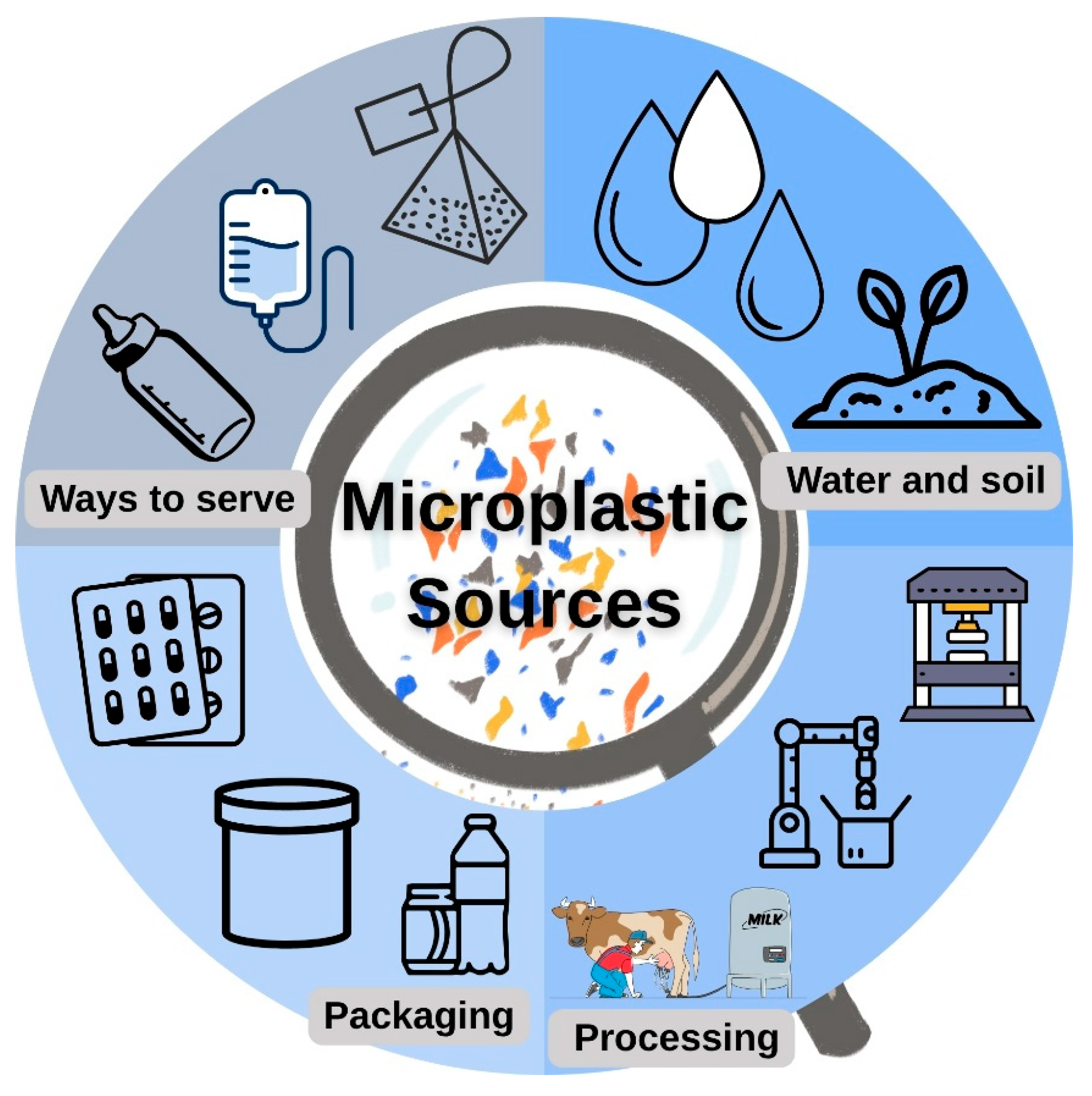
The sources of MPs in health-oriented foods are diverse. They may include contaminated raw materials, particularly those exposed to polluted soil or water, as well as processing and packaging stages [29]. Product use and administration practices may also contribute to contamination (Figure 2). Therefore, caution is required at each stage to minimize the risk of cross-contamination with MPs [24].

3.1. Water and Soil

Microplastics contaminating plant-based raw materials originate mainly from water and soil [27]. These particles can enter aquatic environments through multiple pathways, largely associated with human activity. Therefore, water used as a raw material or during production and cleaning may represent an important source of plastic contamination. The type of water source, such as surface water or groundwater, is also important [27]. The literature reports concentrations of MPs in surface waters reaching up to 809,000 particles/m3 [30]. Such contamination is linked to intensive human activity, including agricultural runoff, industrial emissions, wastewater discharge, and the fragmentation of plastic waste. Atmospheric transport may also play an important role. Microplastics can be carried by wind and enter water bodies along with precipitation.
For a long time, groundwater was considered less vulnerable to this type of pollution. However, the presence of plastic particles in these resources has also been confirmed. Contamination may occur when particles are washed out of soil and migrate deeper layers of the soil profile. In Europe, concentrations of 0.034–0.06 MPs/L have been reported, whereas higher values have often been observed in Asia, Australia, and South America [31,32,33,34]. Due to the long residence time of groundwater, MPs may persist in this environment for many years. This poses a long-term risk to groundwater quality. These pathways are particularly relevant for plant-derived ingredients and selected natural products used in health-oriented foods, including medicinal herbs, herbal teas, spirulina-based supplements, plant-based beverages, botanical ingredients used in dietary supplements, and honey, because their raw materials or biological sources may be exposed to contaminated soil, water, and atmospheric deposition.
Water distribution networks may also contribute to contamination with MPs. Plastic particles can be released into flowing water as a result of wear of infrastructure components made of poly(vinyl chloride) (PVC), polyethylene (PE), or polypropylene (PP). This process may be promoted by material aging, hydraulic pressure, and chemical reactions, for example with chlorine used for disinfection. Studies on drinking water quality show that MPs may still be present after treatment. Although municipal water treatment plants reduce the number of such particles, they may not remove them completely. Conventional treatment systems have been estimated to eliminate approximately 83% of this contamination [35]. Water-related contamination is more directly relevant to products that contain water or require reconstitution, such as plant-based beverages, herbal distillates, infant formulas, and enteral nutrition formulas prepared or processed with drinking water.
With the intensification of agricultural practices, the use of plastics has increased, contributing to higher levels of environmental pollution [36]. Consequently, MPs may enter health-oriented foods through contaminated soil, including contamination related to the use of agricultural films, such as mulch films and greenhouse films, as well as the application of sewage sludge and fertilizers containing processed waste [37,38,39]. The intensity of agricultural activities and the mechanization of cultivation and harvesting are also significant factors [40]. Agricultural sources are most relevant for crop-derived health-oriented ingredients produced in intensively cultivated systems. These include medicinal herbs, spices, botanical extracts, and plant-based supplement ingredients, for which plastic mulching, greenhouse production, irrigation, fertilization, and mechanical harvesting may contribute to contamination.
Water and soil pollution may lead to the contamination of plant-based raw materials. Cross-contamination with MPs can occur during cultivation, harvesting, or post-harvest processing [24]. For example, commercial cultivation of spirulina often takes place in transparent plastic tubes or shallow synthetic ponds, which may also act sources of MPs [35].
Harvesting methods for plant raw materials often involve simple systems based on sieving through nylon meshes. As a result, polyamide (PA) particles may contaminate the harvested products [41]. In addition, some producers sun-dry raw materials on synthetic fabrics, which may also introduce MPs into the product. This process may be further intensified by airborne plastic particles [25,35]. Post-harvest handling may be particularly important for medicinal herbs, herbal teas, spices, and botanical ingredients used in dietary supplements. These raw materials are often harvested, dried, sieved, and stored using materials that may release fibers or fragments before final processing.
Furthermore, animals such as bees may act as vectors for MPs [42,43]. During flight, the surface of a bee’s body can become positively charged with static electricity, causing microparticles from the environment to adhere to its hairs and wings. The accumulation of airborne plastic particles on flowers may also contribute to this process [26]. Microplastics may also originate from plastic bags used by beekeepers to feed bees powdered sugar during periods of low external food availability, such as winter or early spring [44]. In addition, densely populated areas with high levels of human activity may contribute to plastic pollution reaching beehives.

3.2. Processing

Microplastics may be introduced into health-oriented foods during manufacturing. Key risk points include the transport and storage of raw materials, processing, and packaging. Some of these stages require the use of specialized equipment, such as mixers, capsule filling machines, tablet presses, and packaging lines. Such equipment may release MPs during processing [24].
Before processing, raw materials may also become contaminated during handling, transport, and storage. Conveyance systems that use plastic pipelines, tubing, and filters may pose a particularly high risk because surface abrasion can release contaminants into raw materials [27]. Deposition of airborne particles may also contribute to contamination with MPs [45,46,47,48,49,50,51]. Numerous studies indicate that the dominant airborne MPs are fibers, primarily originating from synthetic textiles [52,53,54]. The type of production process is also important. Water used for washing in production facilities, including bottle cleaning, may introduce MPs into the process [29]. Furthermore, inadequately cleaned bottles may contaminate the final product with MPs [46,47,48,49,50,55,56].
In the case of honey, equipment, such as PE suction pumps, and containers may serve as sources of MPs. Beekeeping suits may also contribute to contamination. The material from which beehives are made may also be important [57].
Plastic contamination can also occur during the production of herbal distillates. The distillation process, which involves heating and condensing plant material, may inadvertently introduce contaminants into the final product [29].
Plastic particle contamination depends on the cleanliness of the production process, including the encapsulation stage [24,58]. Furthermore, mechanical operations used in processing, such as milling, mixing, and cutting, may abrade the surfaces of plastic machinery and equipment. During the production of enteral nutrition formulas, plastic filters and tubing made from various polymers may also serve as important sources of contamination with MPs [24]. Elevated temperatures may also contribute to contamination by increasing plastic degradation.

3.3. Packaging

Packaging may also serve as a source of MPs [57]. Potential sources of MPs can be grouped into primary packaging, secondary packaging, plastic storage containers used for raw and auxiliary materials, consumer handling, and, where relevant, clinical delivery systems. Primary packaging is in direct contact with the product and may include bottles, caps, blister cavities, sachets, and similar components. Secondary packaging, such as cartons and overwraps, is generally not in direct contact with the product but may still act as an indirect source during storage and handling. Common packaging materials, such as PE, PP, PVC, poly(ethylene terephthalate) (PET), and poly(lactic acid) (PLA), can release particles through friction and mechanical stress. MPs may be released into the product during opening, closing, squeezing, or other repeated contact with packaging, both during production and use [59,60]. Plastic containers used to store raw and auxiliary materials may also contribute to contamination with MPs [27]. Moreover, storage conditions (high temperatures and intense agitation) can accelerate plastic degradation and particle release. The type of primary packaging is also important; for example, products stored in push-through blister packs have been reported to contain lower plastic particle counts than products stored in PET bottles [51,61].
For products intended for clinical use, delivery systems should be considered separately. Feeding bottles, syringes, tubing, and infusion bags may introduce additional plastic particles during administration. The physical form of the product may also matter. Some studies suggest that powders may contain more MPs than capsules and tablets [35] However, liquid products may also be susceptible to this type of contamination [29]. In addition, temperature, packaging processes, and mechanical stress generated during transport and use may contribute to the migration of MPs into bottle contents [59,62,63,64].

3.4. Modes of Administration

Food-based administration routes may provide a direct pathway for the transfer of MPs into the body (Table 1) [65,66,67]. For example, some commercially available herbal tea bags contain plastic polymers or plastic-based sealing materials and therefore may represent a potential source of MPs [68]. However, the extent of particle release depends, among other factors, on brewing time [51].
The widespread use of plastics in healthcare also raises concerns about MP generation. Infusion sets, syringes, dosing lines, filters, and other components of intravenous systems are commonly made from plastics, including PVC, PE, and polyurethane (PU). During use, these materials may undergo gradual abrasion and degradation. Fluid flow through these components generates friction, and higher flow rates and longer infusion times may increase the number of particles released. In addition, prolonged storage and agitation can accelerate material aging, for example in infusion bags [69,70]. Particles collected from intravenous admixtures near their expiration dates have been shown to exhibit greater surface roughness. This suggests more advanced aging than in particles retrieved from admixtures that were not close to their expiration [71]. The composition of the infusion fluid also appears to play an important role in these described processes. Depending on the fluid type, different reactive oxygen species (ROS) may be formed. This may lead to varying degrees of material aging and particle release [70]. These findings highlight the need to monitor the cleanliness of medical equipment. The migration of such contaminants from medical devices into patients’ bloodstream may pose health risks. In this context, the release of MPs from intravenous lines used in neonates is of particular concern [72].
Table 1. Microplastics derived from medical devices.
Medical DeviceProduct MaterialTest FluidAmount ReleasedParticle SizeStudy ConditionsBlank CorrectionDetection MethodReferences
Infusion bagsPPSC, GS, GSC, MH, ES, and SBR522–5455 MPs/L>0.2 μm4 °C or room temperature/kept stationary or agitated at 60 rpmNOµ-Raman, flow cytometry[70]
BottlesPPSCapprox. 7500 MPs/L1–62 μmclinical settingsYESRaman, optical microscopy[73]
Intravenous infusion productsPVCSC, GlS0.36–0.72 µg>20 nmsimulation of an actual intravenous infusionYESRaman, Py-GC-MS, SEM/EDX[67]
Infusion tubesPVCSC, GlS, SBSo, HSSC1003.6–3494.6 MPs
(0.042–0.087 µg)
0.22–30 μm25 °C or 37 °CYESRaman, TEM[74]
MPs—microplastics; PP—polypropylene; PVC—poly(vinyl chloride); SC—sodium chloride; GS—grape sugar; GSC—glucose and sodium chloride; MH—moxifloxacin hydrochloride; ES—etimicin sulfate; SBR—sodium bicarbonate ringer; GlS—glucose solution; SBSo—sodium bicarbonate solution; HSSC—hydroxyethyl starch with sodium chloride; µ-Raman—micro-Raman spectroscopy; Raman—Raman spectroscopy; Py-GC-MS—pyrolysis-gas chromatography-mass spectrometry; SEM/EDX—scanning electron microscopy with energy-dispersive X-ray spectroscopy; TEM—transmission electron microscopy.

3.5. Practical Recommendations

To reduce the risk of secondary contamination with MPs during processing and packaging, regular environmental monitoring should be conducted. This monitoring should include the assessment of airborne MPs and settleable dust in production and packaging areas. It should be performed using standardized sampling procedures, appropriate field and procedural blanks, systematic recording of results, and predefined corrective actions when elevated contamination levels are detected.
Production areas should be cleaned regularly using methods that minimize particle resuspension. Ventilation and filtration systems should be inspected, serviced, and replaced promptly when they no longer meet performance standards. Potential sources of MPs from auxiliary materials, packaging components, equipment, and work clothing, particularly plastic materials and synthetic textiles, should be identified and controlled.
In addition, controlled-environment areas, such as cleanrooms or clean zones, may further reduce contamination. Strict personnel hygiene and gowning procedures should also be implemented to reduce particle shedding.

4. Occurrence of Microplastics in Different Product Categories

Microplastics have been identified in an increasing number of food products intended for health-related purposes [27,75,76,77]. Their occurrence in these product categories reflects the combined influence of environmental contamination, processing conditions, packaging, and administration routes.

4.1. Dietary Supplements

The modern market for “health-promoting” products is dominated by dietary supplements, which are defined as products containing concentrated sources of vitamins, mineral components, amino acids, fatty acids, fiber, and other ingredients intended to supplement the normal diet [24,78,79]. Although their physical forms, such as tablets, capsules, gummies, or liquids, may resemble those of medicinal products, dietary supplements are regulated as a food category in many legal systems, including those of the United States and the European Union. Consequently, they are not generally subject to the same rigorous premarket testing required for drugs [24,79,80]. Despite their widespread use, the mass production of dietary supplements poses significant challenges related to their purity and safety. In recent years, several studies have investigated the presence of MPs in different categories of dietary supplements, including spirulina products, omega-3 supplements, and fiber preparations [24,35,58,61]. Studies by Choi et al. [61], Kim et al. [58], Panneerselvan et al. [24], and Tutaroğlu et al. [35] reported the presence of MPs in all analyzed fiber and omega-3 products and in most analyzed spirulina products. Fibers were the dominant particle shape, whereas PA, PP, and PET were among the most frequently identified polymers.
A study of nine popular brands of fiber supplements purchased in Australia, including powders and gummies, detected MPs in all samples. The average intake associated with consumption of the analyzed dietary supplements was estimated at 5.89 ± 2.89 MPs/day [24]. Among the detected MPs, fibers predominated (83.4%), followed by fragments (16.6%) [24]. Because of their elongated shape, fibers may interact with biological barriers differently from fragments; however, their ability to penetrate tissues and blood–tissue barriers more deeply requires cautious interpretation [81]. Fiber sizes ranged from 120 μm to 2 mm, whereas fragment sizes ranged from 610 μm to 3 mm. The most frequently detected polymer was PA (38%). Other identified polymers included poly(diallyl phthalate) (PDAP, 21%), polyethylene–propylene diene (PEPPd, 19%), PU and PET (7% each), and PE and ethylene–acrylic acid copolymer (EAAC, 4% each). In fiber-containing supplements, black was the most common color and was detected in seven of the nine analyzed samples. All black particles were identified as PA. Among microplastic fibers, which were the dominant form of contamination in dietary fiber supplements, the most frequently observed colors after black were blue, red, white, and green, in that order (Table 2). Green particles (in the form of fragments) were rare and were recorded in only two samples. The authors also noted a possible effect of packaging, indicating that colored containers, such as red, blue, and green containers, may release more microplastic particles into the product than black, white, or silver containers [24]. The analysis also suggested a correlation between particle color and chemical composition. Black particles were identified as PA, blue particles as PET or PEPPd, red particles as PDAP, green particles as PE, and white particles as EAAC or PU [24].
In a study by Choi et al. [61] of 88 omega-3-containing products from South Korea, MPs were detected in all samples of both of animal and plant origin. The average number of particles was 16.3 ± 8.1 MPs per serving. Poly(ethylene terephthalate) (43.8%) and PP (25.2%) were the main polymers identified. Importantly, capsule oil contained three to five times more MPs than the corresponding raw oil before encapsulation, suggesting that the production process may be a major source of contamination. In another study, Kim et al. [58] found that PET and PP were the dominant polymers and together accounted for 83–95% of all identified particles. The average size of the detected MPs was 143.1 ± 193.1 μm. Particles in the 20–100 μm range were the most frequently detected, accounting for 58.5% of all particles. In the study by Choi et al. [61], fragments and fibers were the main particle shapes observed. By contrast, in the study by Kim et al. [58], the dominant size range of MPs in the analyzed omega-3 dietary supplements was 5–10 μm, accounting for 33–40% of all particles. Particles in the 5–20 μm range accounted for 60–73% of all detected MPs [58,61] (Table 2). The presence of PP and PET particles, which are commonly associated with plastic packaging components such as bottles and caps, suggests that factory infrastructure, packaging, and plastic components of production lines may be important sources of MPs in omega-3 supplements [61].
In a study of spirulina-containing supplements, 29 products were analyzed. MPs were detected in 26 products (89.6%) [35]. The average content was 13.77 ± 2.45 MPs/100 g dw. Spirulina powder tended to be more contaminated (17.34 ± 4.22 MPs/100 g) than capsules or tablets (10.43 ± 2.45 MPs/100 g). The most frequently identified polymer was PP (31.6%) [35]. Other commonly detected polymers included polystyrene (PS; 8.3%) and PE (8.3%), polyester (PES; 6.25–7.8%), and poly(vinylidene chloride) (PVDC; 6.25%) [35]. In total, ten types of synthetic polymers and cellulose were identified in the analyzed spirulina samples. Materials such as nylon-6, PU, acrylonitrile-butadiene-styrene (ABS) copolymer, and styrene-acrylonitrile copolymer were also detected in smaller amounts, each accounting for approximately 2.08%. The predominance of PP may be related to its widespread use in packaging, including large woven bags used to transport bulk food products, such as spirulina. In turn, the presence of PE may be linked to its broad use in food packaging [90]. Fibers were the predominant MP shape (61.7%), whereas fragments accounted for the remaining 38.3%. Fragments ranged in size from 0.07 to 2.15 mm, whereas fibers ranged from 0.19 to 5.69 mm [35]. The most common color of MPs in the analyzed spirulina-containing dietary supplements was blue, accounting for more than half of all identified particles (52.8%). The remaining colors were black (25.4%), white (10.9%), and other colors (10.9%), including red, purple, gray, green, brown, yellow, and transparent particles (Table 2). The variation in color and polymer composition suggests that the sources of contamination are diverse and may include the water used in production [91], processing equipment, and final packaging [92].

4.2. Herbs and Plant-Based Beverages

Plant-based products, such as loose spices, fresh leafy vegetables and herbal infusions, form complex food matrices that, because of their structure and processing, may be particularly susceptible to the accumulation of MPs [25,51,82]. Studies on common loose spices, including turmeric, black pepper, and chilli, have confirmed the presence of MPs in all analyzed samples, with concentrations ranging from 500 to 1100 MPs/kg. Spices sold in bulk consistently showed higher contamination levels than products in sealed packaging [25]. A similar pattern has been observed in herbal infusions and distillates [51,93].
Polyethylene and PP predominated in loose spices, most likely due to the use of plastic bags and handling equipment in retail settings. Fibers were the dominant morphological form, accounting for 60–70% of the identified particles. Their prevalence suggests possible contamination via atmospheric deposition, for example from textiles [94]. The study also identified fragments, which accounted for approximately 25–35.6% of the particles (Table 2). Their presence is usually associated with mechanical abrasion of plastic surfaces, machinery, or packaging [95]. Films and granules occurred less frequently and complemented the morphological profile, particularly in samples sold in bulk [25]. Most MPs in spices were very small, with more than 90% of particles smaller than 100 µm. In terms of color, white and black predominated, possible contributions from typical packaging materials, such as transparent bags or black caps. However, a greater variety of colors, including blue, red, and yellow, was observed in factory-packaged products, which may reflect more complex industrial processes [25]. The main sources of MPs in loose spices may vary depending on the form in which they are sold, that is, in bulk or packaged. Spices sold in bulk consistently showed higher contamination with MPs than factory-packaged products. This suggests that exposure to airborne dust in open markets and frequent product handling may be important routes of contamination [25,94]. Analysis of polymer composition confirmed that PE and PP predominated in loose spices, which may be linked to the use of plastic bags and utensils [25], whereas PET and nylon were more commonly found in packaged spices and may be associated with production lines and sealed packaging [95].
Contamination of leafy vegetables, such as lettuce, chives, and cilantro, with MPs has been reported in studies conducted in the Brazilian Amazon [82]. Because of their surface structure and cultivation conditions, these products may accumulate polymer particles. In the study Staffen et al. [82], MPs were detected in all examined vegetable species. The frequency of contamination was highest for lettuce and chives (90% of samples), whereas for cilantro it was 76.6%. The size of MPs in leafy vegetables varied widely; the smallest particles identified were 67 μm, and the largest reached 4.865 mm, with both extreme values recorded in lettuce samples. Fibers were the dominant form, accounting 95.1% of all identified particles. Fragments constituted only a small proportion of the contaminants (4.9%). The most frequently recorded color was blue (83.8%), followed by red (Table 2). White, purple, gray, green, and transparent particles were less common. However, the study did not identify the polymer types.
The presence of MPs in bottled herbal distillates, also known as hydrosols or herbal waters, has been reported in studies of popular retail brands [29,93]. Pirsaheb et al. [29] showed that 92% of the analyzed herbal distillate samples were contaminated with MPs. The average concentration of MPs in these products was 7.32 ± 9.24 MPs/L. Contamination levels varied considerably depending on the brand; some products contained an average of 26.4 MPs/L, whereas others contained only 2.8 MPs/L (Table 2). The authors suggested that PET bottles may be an important source of PET MPs in these products. Fourier-transform infrared spectroscopy (FTIR) analysis also identified PA. The main forms of MPs were fibers (62.30%) and fragments (37.70%). Fibers may originate from water used in the production process or from synthetic textiles, whereas fragments may result from the degradation of plastic packaging. Small MPs predominated. More than half of the particles (56.56%) were smaller than 500 μm. As particle size increased, their frequency of occurrence decreased—particles measuring 4000–5000 μm accounted for only 3.55% of the contamination. The most common particles were transparent (29.23%), white (23.50%), and black (16.12%). This color distribution may correspond to the colors of the bottles and caps used in the herbal distillate industry [29].
Contamination of herbal teas with MPs may represent a food safety concern because these products are widely consumed for their perceived health-promoting properties [51,68]. Studies of popular packaged teas, such as linden, sage, chamomile, and green tea, revealed the presence of synthetic particles in all but one of the analyzed brands. The average concentration of MPs in the infusions was 4 ± 1.01 MPs/mL, with the highest amount recorded in linden tea [51]. The analysis identified three main types of plastic: PET, which accounted for 60% of the contaminants; ethylene-vinyl acetate copolymer (EVA), which accounted for 35%; and polyacrylonitrile (PAN), which accounted for 5%. Poly(ethylene terephthalate) is particularly common because it is frequently used in plastic tea bags and outer packaging. Morphologically, all identified particles in herbal teas were fibers [53,96]. The prevalence of this form suggests possible atmospheric deposition, for example from synthetic textiles, during production, as well as abrasion of packaging materials [53,54]. Most of the detected fibers were small. The average size was approximately 191.82 μm, and 95% of all particles were shorter than 500 μm. The most common length range was 0–100 μm. The color profile was dominated by dark blue (65%) and red (35%) fibers (Table 2). The main mechanism by which MPs enter the infusions appears to be the migration of particles from synthetic tea bag materials directly into water during brewing [51,97].

4.3. Honey

Honey, traditionally regarded as a product of high purity with valued health-promoting properties, has unexpectedly been identified as a reservoir of plastic pollutants [83,86,98,99]. The presence of MPs in honey is of particular concern from a food safety perspective because honey is typically consumed raw, without any prior processing that could remove contaminants [86,100].
Studies conducted in various parts of the world have shown that honey can be contaminated with MPs, although contamination levels vary considerably depending on the region, degree of urbanization, and bee species [26,57,86,87,101]. An analysis of available sources indicates that the regions with particularly high levels of honey contamination are Malaysia, Indonesia, Brazil, and Turkey. Because studies report the abundance of MPs using both mass-based and volume-based units, direct comparisons are difficult. However, when mass-based and volume-based data are considered separately, regions with relatively high numbers of MPs in honey can be identified.
Malaysia showed some of the highest levels, particularly in honey from stingless bees (Heterotrigona itama), in which the average microplastic content was 8.18 ± 2.57 MPs/g, equivalent to more than 8000 MPs/kg [57]. By comparison, honey from the European honeybee (Apis mellifera) in the same country showed lower values, averaging 5.52 ± 1.13 MPs/g [57]. In the study by Basaran et al. [85] the average concentration of MPs in honey from Turkey was 314 ± 353 MPs/kg. However, samples from heavily industrialized and densely populated regions, such as Tekirdağ, contained up to 1280 MPs/kg. Compared with Malaysia or Turkey, honey samples from Western Europe, including Germany, France, Italy, and Spain, and from Kosovo showed lower or moderate levels of contamination with MPs. Studies published by Liebezeit and Liebezeit [44] reported an average microplastic content of approximately 166–175 MPs/kg in honey from Western Europe. A lower number of MPs (124 ± 68.3 MPs/kg, with a maximum of 360 MPs/kg) was recorded in honey from regions with intensive industrial development, such as Gjilan and Vitia (Kosovo) [26].
In Indonesia, in the Meratus Geopark region, analyses of bee products revealed high levels of contamination, ranging from 3090 to 3180 MPs/L in urban areas, whereas a value of 3620 MPs/L was recorded at one rural location, Kelulut Dua Puteri [87]. Compared with honey from Brazil, produced by Melipona quadrifasciata bees in the São Paulo area, Indonesian honey showed higher levels of contamination with MPs (Table 2). Brazilian honey samples contained an average of 1450 MPs/L, with the most contaminated samples reaching up to 2600 MPs/L [83]. By contrast, lower contamination levels were found in honey from Ecuador. The product showed relatively low contamination levels, averaging 54–67 MPs/L [84].
The prevalence of these polymers in honey suggests that this product may serve as a useful indicator of land-based plastic pollution. The presence of specific polymer types in honey may be associated with local plastic production, packaging practices, and the equipment used in apiaries [26]. The most commonly detected polymers include PE, PP, PET, EVA, and PA. Polyethylene is one of the most common contaminants found in honey from Kosovo, Turkey, Ecuador, Brazil, and Malaysia [26,57,83,84,85]. In the study by Başaran et al. [85], PE accounted for up to 62% of all identified MPs, and its presence may be linked to honey extraction methods and packaging. Polypropylene is frequently found alongside PE and is regularly identified in bee products. In honey from Brazilian stingless bees (Melipona quadrifasciata), PP was the dominant polymer, accounting for 52.9% of the identified particles [83]. PET is commonly found in both artisanal and industrial honey, and plastic packaging and synthetic fabrics have been suggested as possible sources [86,98]. PET is commonly found in both artisanal and industrial honey, and plastic packaging and synthetic fabrics have been suggested as possible sources [86,98]. In studies conducted in Kosovo [26] and Turkey [86], EVA was often the most common polymer. This polymer is widely used in beekeeping pipes and packaging [102]. Nylon-6, a commonly detected polymer in honey, is often attributed to beekeepers’ protective clothing and specialized mesh used in hives [85]. Because of their shape, fibers were the predominant form of particulate matter in most studies, often accounting for more than 90% of all particles, for example in Kosovo and Malaysia [26,57]. However, in some regions, such as Turkey, fragments predominated, accounting for up to 95%, which may be linked to the degradation of plastic beekeeping equipment [85,103]. Films, foams, and granules were less common. The analyzed particles typically ranged from 20 µm to 5 mm in size [26,57,83]. Exceptions to this size range were reported for honeys from Ecuador, Brazil, and Western Europe [43,44,84,85]. The color spectrum was highly diverse. The most frequently identified particles were black, blue, and transparent/colorless (Table 2). Red, green, brown, yellow, and purple particles were also detected.

4.4. Infant Formulas

Infant formulas constitute complex food matrices designed as substitutes for breast milk. They are aqueous-emulsion matrices containing fats, proteins, carbohydrates, vitamins and mineral components. In products intended for infants with digestive issues, functional additives, such as thickeners, may also be used. This multicomponent nature is analytically important because it complicates matrix digestion and increases the risk of signal interference during plastic identification. From the perspective of biological interactions, the potential formation of a “protein corona” on the surface of plastic particles should also be considered.
Studies indicate the widespread presence of MPs in infant formulas [75,76,77,88]. Kadac-Czapska et al. [76] demonstrated the presence of such contaminants in all tested starter infant formulas sold in Poland, with an average concentration of 42 ± 27 MPs/100 g of product. The detected particles ranged in size from 6 µm to 4.4 mm. Most identified particles were fibers, fragments, and films, with black, blue, and white being the dominant colors. The most common polymers were PA, PE, PP, and PET. Across product types, the highest average concentration was recorded for standard formulas (55 ± 26 MPs/100 g), followed by anti-reflux formulas (41 ± 30 MPs/100 g), hypoallergenic formulas (23 ± 19 MPs/100 g), and “comfort” formulas (22 ± 11 MPs/100 g) [76]. Data for follow-on formulas (6–12 months) show a similar pattern of widespread contamination, with an average concentration of 55 ± 19 MPs/100 g [77]. In these formulas, particle lengths ranged from 30 µm to 4.5 mm, and widths ranged from 6 to 268 µm were reported. Compared with starter infant formulas, a similar set of polymers was observed, but with greater morphological diversity, including fibers, fragments, films, and foams. Black, blue, and red particles were the most prevalent [77]. In a cross-sectional study from Turkey, MPs were also detected in 100% of samples, with an average concentration of 31.3 MPs/100 g. In that study, fibers predominated, followed by fragments and films. In a similar study conducted in China, Zhang et al. [88] found an average of 5 ± 3 MPs/100 g, although products in cartons exhibited significantly higher values (7 ± 3 MPs/100 g) than those in cans (4 ± 3 MPs/100 g). The main polymers identified were PE, PET, PP, PA, and PVC. This study indicated that packaging type may influence the polymer profile. Fragments and fibers predominated in the samples, and most particles were <50 µm in size [75].
A compilation of the results suggests that differences between markets may relate to both particle counts and size distributions and may also reflect different limits of detection and analytical protocols. Comparisons between the presented findings therefore require caution. Variations in the counts of MPs may result not only from actual contamination levels but also from methodological differences, including the pore size of filters used for isolation, particle counting methods, and polymer identification techniques, such as µ-Raman or µ-FTIR.
The potential health effects associated with infant exposure to MPs are not yet fully understood, but these particles may act as carriers of contaminants or trigger an inflammatory response. Therefore, practical recommendations include reducing MPs at the production stage, for example by using filters to remove MPs from raw milk, minimizing the use of plastic components during processing, and exercising caution when preparing formula for consumption. Manufacturers are also advised to monitor plastic particles in ambient dust, as airborne particles may constitute an important source of contamination during production. Regulatory and inspection authorities should consider introducing guidelines for monitoring MPs in infant products and conducting toxicological studies to assess their potential risks.

4.5. Clinical Nutrition Products

Clinical nutrition products are characterized by highly specific compositions. This group includes enteral and parenteral nutrition formulas.
Enteral nutrition formulas are specialized products designed to provide nutrients, such as proteins, carbohydrates, fats, vitamins, and mineral components, to patients who are unable to consume adequate meals [104,105]. They are primarily sold in liquid form [106,107]. The use of enteral nutrition formulas is determined based on the patient’s health status and nutritional needs, and their administration occurs under specialist supervision and according to specialist recommendations [108].
Başaran et al. [27] demonstrated that enteral formulas may be contaminated with MPs; the average particle concentration was 45 ± 63 MPs/L of prepared solution. Fibers predominated over fragments, and the most common color was black, followed by blue and orange. The particle size range was 10 µm–2.1 mm, with an average size of 548 ± 526 µm. The authors estimated patients’ intake of these particles at approximately 30–76 MPs/day.
Parenteral nutrition solutions, in turn, are macronutrient preparations containing glucose, amino acids, and lipid emulsions. They also contain electrolytes and vitamins [72]. However, intravenous therapy has been identified as a potential route by which MPs may enter the bloodstream [89].
A study by Vercauteren et al. [72] analyzed the migration of MPs in a model of intravenous infusion in neonates. The authors examined a lipid emulsion and a crystalloid solution used in neonatal intensive care. In the lipid emulsion, 0.8 MPs/mL were detected, whereas lower concentrations were found in the crystalloid solution. The results indicated that PP, likely originating from the equipment used, was the most frequently detected polymer in the lipid emulsion, whereas PET predominated in the crystalloid solution. Most particles ranged in size from 25 to 175 µm.
The high fat and protein content of clinical nutrition products may contribute to the deposition or adsorption of MPs onto food matrix components. Furthermore, high concentrations of these components increase the viscosity of the aqueous phase, thereby complicating filtration. The presence of salts and amino acids may also promote aggregation of MPs, limiting their transport through filters. Consequently, isolation requires robust matrix digestion methods. The complexity of the matrix may also generate a substantial organic background, which can hinder analysis using spectroscopic techniques. Despite these analytical challenges, clinical nutrition products should be subject to rigorous quality control with regard to plastic particle content. The introduction of standardized analytical methods is recommended, including minimum detection limits, matrix digestion procedures, and mandatory procedural blanks. Furthermore, toxicological studies focused on the exposure of adults and children, especially neonates, to MPs during clinical nutrition are necessary to evaluate the potential health effects associated with these contaminants.

5. Exposure Assessment

Published studies offer various methods for assessing human exposure to MPs in food products. These metrics include the “Predicted Daily MPs Exposure” (PDME), which estimates daily exposure per suggested serving [24]. Other indices include “MPs Contamination Factors” (MCF/MPCF), the “MPs Pollution Load Index” (MPLi), and the “MPs Polymer Risk Index”—also referred to as the “Polymeric Hazard Index” (PHI) [24,51]. Because researchers report these metrics in various forms, such as numerical values (1–10,000), verbal ratings (low, moderate, significant, very high), or categorical levels (I–V), direct comparisons across studies remain challenging [24,26,27,51]. Furthermore, many studies have not yet incorporated these metrics into their MP exposure assessments [61,72,76]. It is important to distinguish between occurrence, exposure, hazard, and risk. Occurrence refers to the presence and abundance of MPs in a given product or matrix. Exposure describes the amount of MPs that may be ingested over a defined period, for example, as estimated by EDI or EAI. Hazard refers to the potential of MPs to cause adverse effects, which may depend on particle size, shape, polymer type, chemical additives, and other associated contaminants. Risk, in contrast, requires the integration of exposure and hazard information [24,26,27,51]. PHI, or Polymer Hazard Index, is an indicator that incorporates polymer-specific hazard scores to provide a relative estimate of the potential hazard associated with detected MPs. However, PHI should not be interpreted as a direct measure of human health risk because it does not fully account for particle size, morphology, dose, route of exposure, additives, or biological persistence [27]. Some indicators describe occurrence or contamination levels, while others estimate intake. Therefore, this review focuses mainly on estimated daily intake (EDI) and estimated annual intake (EAI), which describe the number of MPs ingested from food over defined timeframes. For human health risk assessment, exposure estimates would need to be compared with health-based guidance values or acceptable exposure thresholds for MPs; however, such values have not yet been globally established. Table 3 presents a comparison of exposure to MPs from different food products intended for health-related purposes.

5.1. Exposure Scenarios for MPs

Dietary supplements are widely used by both healthy individuals and people with health conditions across different age groups. To date, only a limited number of studies have investigated the presence of MPs in dietary supplements. The available data suggest that exposure to MPs from fiber supplements and omega-3 products (Table 3) [24,61] is lower than exposure from staple foods. For example, Samandra et al. [109] estimated that the Australian population is exposed to approximately 400 MPs per year through bottled water consumption [109]. Moreover, because supplements are often consumed with water, beverages, or food, their use may contribute to cumulative exposure to MPs [24].
Herbs and spices are generally consumed infrequently and in small quantities. Gökkaya et al. [51] reported that, due to their comparatively lower body weight, women may have higher exposure to MPs from tea than men. The authors also observed that individuals aged over 65 years consumed more herbal tea than other age groups, which may lead to increased exposure to MPs. Jahedi et al. [25] stated that their scenario-based estimate of exposure to MPs from spices (188–613 MPs/person/year) was intended to provide contextual information on potential exposure rather than a direct assessment of health risk. Therefore, determining the health implications of MPs ingestion from these products remains challenging.
Honey is an example of a food product whose consumption depends on culture, geography, and individual dietary habits [26]. Infants younger than 12 months are not included in assessments of exposure to MPs from honey, as its consumption is not recommended for this age group because of the risk of botulism [110]. In contrast, older children are believed to consume more honey relative to body weight than adults, which may result in higher exposure to MPs [86]. It should also be emphasized that honey may be added to other food products and dietary supplements, making assessments of exposure to MPs more complex [111]. Importantly, Bilecen and Altunışık [86] observed higher exposure to MPs from artisanal honey than from industrial honey, which may result from differences in processing, storage, or packaging.
Infant formula is another category of foods intended for health purposes. Infants are particularly vulnerable to exposure to MPs from food because of their higher intake per kilogram of body weight and their developing metabolic and physiological systems [77]. International health guidelines recommend exclusive breastfeeding for the first six months of life [112]. When breastfeeding is not possible, infant formula is used as the primary source of nutrients. Therefore, contamination of infant formula with MPs may represent a potential exposure concern for infants. However, infants may also be exposed to MPs from several other sources during feeding. For example, water used to prepare formula may contain plastic particles. Microplastics may also be released from plastic containers, including feeding bottles [76]. Another challenge is the lack of comparisons between exposure to MPs in infants younger than 6 months and in older children with more diverse diets. Older children may have higher exposure to MPs from a broader range of foods, but they also have a more developed immune system. In addition, the digestive systems of infants and older children differ substantially, including in gastric pH, stomach capacity, gut microbiota composition, and intestinal permeability [113].
Clinical nutrition is a specialized form of nutrition used when patients cannot meet their nutritional requirements through a regular diet. Vercauteren et al. [72] observed that exposure to MPs may vary depending on the type of nutrition, as lipid preparations may promote the release of MPs from plastic medical materials. Another issue is that patients receiving clinical nutrition may have dysfunction in specific sections of the gastrointestinal tract. Further research is needed to compare the effects of exposure to MPs delivered to the stomach with those of exposure delivered directly to the small intestine. Moreover, Chen et al. [114] suggested that MPs may enter the bloodstream through infusion tubes and blood collection needles. Overall, evaluating exposure to MPs during clinical nutrition is complex because nutrition formulas may become contaminated during manufacturing and MPs may also be released from plastic medical devices. The duration of clinical nutrition should also be taken into account.
For foods intended for health purposes, exposure should not be considered only for individual products. In practice, individuals may use several of these products at the same time, for example, dietary supplements together with herbal products or fortified foods, whereas infants or patients may be exposed through infant formula or clinical nutrition products [24,51,61,76,77]. This means that MPs from different sources may contribute to the same overall dietary exposure. A similar idea is used in combined exposure scenarios in other areas of risk assessment, including plant protection products [115]. This issue may be especially important for groups that use certain products repeatedly or over long periods. Infants may consume infant formula as their main or only source of nutrition [76,77]. Patients may depend on clinical nutrition products for weeks or months, and older adults may take several dietary supplements or other health-oriented products at the same time [24,61]. Therefore, future exposure assessments should look beyond plastic concentrations in single products. Serving size, frequency of use, duration of exposure, and the possible combined use of several product categories should also be taken into account [24,51,116,117,118].

5.2. Health Implications

The main toxic effects associated with exposure to MPs include inflammation, oxidative stress, endoplasmic reticulum stress, apoptosis, and alterations in autophagy [119]. The gastrointestinal system is likely to be the primary site of exposure to MPs when foods intended for health purposes are consumed [120]. The health implications of MPs depend on the characteristics of the plastic particles, including their morphology, size, and chemical composition. Further research is needed to establish reference doses that would support human health risk characterization for MPs. Particle size should be considered when deriving such doses, together with morphology, polymer type, exposure level, and route of exposure [121]. The lack of such size-informed reference doses remains a major gap in exposure and risk assessment. Smaller MPs are often expected to cause stronger biological responses than larger particles, partly because they may be more readily taken up by cells, cross biological barriers, and reach different tissues [122]. According to the World Health Organization (WHO), particles larger than 150 µm are less likely to be absorbed after ingestion [123].
High exposure to MPs has been suggested to be associated with gut-related disturbances, particularly in children. Ke et al. [124] reported that the abundance of bacteria from the genus Alistipes in the gut microbiota was higher in children with low levels of MPs. Baek et al. [125] suggested that Korean red ginseng extract may reduce intestinal accumulation of MPs by protecting the intestinal epithelial mucosal barrier. This finding suggests a potential protective effect against intestinal MPs accumulation, although further studies are needed to confirm its relevance in humans. Wu et al. [126] also proposed a possible link between MPs and thrombosis, which may be relevant for patients receiving parenteral nutrition.
A major challenge in assessing the health implications of MPs is that the available evidence comes from different types of studies. These include in vitro tests, animal studies, human biomonitoring, and small-scale epidemiological research. The studies also differ in the particle sizes and polymer types examined, experimental model, dose, and route of exposure. For this reason, effects such as inflammation, oxidative stress, endoplasmic reticulum stress, changes in autophagy, cell death, microbiota disruption, bloodstream transport, and tissue distribution should not be interpreted as equally well established for dietary exposure in humans.

6. Sample Preparation, Analytical Methods, and Standardization

It is important to distinguish between MPs that may enter products during production, processing, contact with equipment, transport, or packaging and particles introduced during sample handling and laboratory analysis. When evaluating plastic particles in products with potential health relevance, it is necessary to consider the sample preparation procedure, contamination control strategy, particle size cut-off, and analytical technique used. This distinction is especially important for complex matrices such as infant formula and clinical nutrition products, where sample composition can interfere with particle isolation and identification. These matrices often contain high levels of lipids, proteins, carbohydrates, and mineral components, which can make digestion and filtration more difficult, increase the organic background, promote particle loss or agglomeration, and reduce the reliability of spectroscopic identification. Laboratory contamination is a major concern in MPs analysis. Airborne fibers, laboratory clothing, reagents, water, consumables, glassware, and analytical equipment can all introduce particles into a sample and may lead to overestimation. Therefore, quality assurance and quality control measures should be applied to each analytical batch. These measures include procedural blanks, field, or laboratory blanks when appropriate, filtered reagents, covered glassware, clean-air conditions, limited use of plastic materials, and low-shedding laboratory clothing, such as cotton lab coats. Restricting access to the analytical area and clearly documenting contamination control procedures can further improve data reliability.
Effective digestion, density separation, filtration, and isolation procedures, along with recovery experiments using representative polymer types, particle sizes, and shapes, are crucial for assessing method performance. Visual inspection and optical microscopy alone are not sufficient for reliable polymer identification because they cannot confirm the chemical composition of suspected particles. Therefore, these methods should be combined with spectroscopic techniques, especially FTIR/µ-FTIR or Raman/µ-Raman spectroscopy [2,5,121]. Raman/µ-Raman spectroscopy can provide excellent spatial resolution and may enable the detection of microparticles that are difficult to analyze using conventional FTIR-based techniques. However, its performance may be limited by fluorescence, pigments, additives, and matrix residues. FTIR and µ-FTIR are widely used for polymer identification and are considered reliable for particles of sufficient size [2,5]. Their application to very small particles, however, remains challenging and depends on several factors, including instrumental configuration, measurement mode, substrate, and spectral quality. Therefore, direct comparisons between studies and product categories require appropriate sample preparation, validated recovery, clearly defined lower size limits, consistent particle counting rules, and transparent reporting of analytical parameters.
In this context, current and emerging International Organization for Standardization (ISO) standards may help improve the comparability of microplastic analyses, although food matrices still require more specific guidance. ISO 24187:2023 provides general principles for the analysis of MPs in environmental matrices, including sampling, sample preparation, and the determination of representative sample quantities [127]. The working draft ISO/WD 25654 addresses reference materials for the validation of microplastic detection methods and specifies top-down procedures for producing irregularly shaped thermoplastic polymer powders with the longest particle dimension between 10 µm and 1000 µm [128]. Moreover, ISO 16094-2:2025 outlines principles for the analysis of MPs in drinking water and waters with low suspended-solids content using microscopy coupled with vibrational spectroscopy [129]. However, similar standardized and matrix-specific procedures are still needed for food and health-related nutritional products, including guidance on sampling equipment, sample mass, digestion and isolation conditions, contamination control, recovery assessment, polymer identification, and reporting criteria.

7. Conclusions

Scientific studies have demonstrated that MPs can contaminate foods intended for health purposes. The detected MPs vary in their physical and chemical characteristics, suggesting that they may enter food through different pathways. Infant formula and clinical nutrition products require particular attention because they are intended for vulnerable populations. Available experimental evidence suggests that MPs may adversely affect biological systems; however, major uncertainties remain regarding dose metrics, human exposure, and clinically relevant health outcomes. Assessing human exposure to MPs from food is complex and requires consideration of several factors, including age, health status, food type, frequency of consumption, packaging, and the use of feeding aids.
To date, most studies have estimated human exposure to MPs based on the number of particles detected in food. However, exposure estimates remain uncertain because MPs contamination in food products is not constant and may be influenced by several factors, including production, packaging, transport, food preparation, heat treatment, and serving method. Therefore, accurately determining human exposure to MPs from food consumption remains challenging. Further toxicological studies are needed to establish health-based guidance values for human exposure to MPs below which adverse health effects are not expected. Products intended for vulnerable groups also require more detailed investigation. In the future, routine monitoring and clear regulatory guidance for these products could help improve consumer protection.
This review has several limitations. Available studies differ in sample preparation, analytical methods, size thresholds, contamination control, and reporting units, making direct comparisons difficult. Another important limitation is the lack of standardized procedures for the analysis of MPs in food products. In addition, some product categories, especially those intended for vulnerable groups, are still represented by a limited number of studies. Together, these limitations make it difficult to estimate human exposure to MPs from health-oriented foods and prevent a full risk characterization. Further research and routine monitoring could help improve data comparability and support consumer protection.

Author Contributions

Conceptualization, K.K.-C. and M.G.; methodology, K.K.-C.; software, M.G.; formal analysis, K.K.-C.; investigation, K.K.-C.; resources, M.G.; data curation, K.K.-C., J.O., K.J. and M.G.; writing—original draft preparation, K.K.-C., J.O., K.J. and M.G.; writing—review and editing, K.K.-C., J.O., K.J. and M.G.; visualization, K.K.-C., J.O. and K.J.; supervision, M.G.; project administration, K.K.-C. and M.G. All authors have read and agreed to the published version of the manuscript.

Funding

This research received no external funding.

Institutional Review Board Statement

Not applicable.

Informed Consent Statement

Not applicable.

Data Availability Statement

No new data were created or analyzed in this study. Data sharing is not applicable to this article.

Conflicts of Interest

The authors declare no conflicts of interest.

Abbreviations

The following abbreviations are used in this manuscript:
ABSPoly(acrylonitrile-co-butadiene-co-styrene)
ATR-FTIRAttenuated total reflectance–Fourier transform infrared spectroscopy
bwBody weight
dwDry weight
EAACEthylene-acrylic acid copolymer
EAIEstimated Annual Intake
EDIEstimated Daily Intake
EPDMEthylene propylene diene monomer
ESEtimicin sulfate
EVAEthylene-vinyl acetate
FTIRFourier transform infrared spectroscopy
GlSGlucose solution
GSGrape sugar
GSCGlucose and sodium chloride
HFFRHalogen-free flame retardants
HSSCHydroxyethyl starch with sodium chloride
ISOInternational Organization for Standardization
LDPELow-density polyethylene
MCFMPs Contamination Factor
MHMoxifloxacin hydrochloride
MPCFMPs Contamination Factor
MPLiMPs Pollution Load Index
MPsMicroplastics
PAPolyamide
PAAPoly(acrylic acid)
PANPolyacrylonitrile
PCPolycarbonate
PDAPPoly(diallyl phthalate)
PDMEPredicted MPs daily exposure
PEPolyethylene
PE-co-PPPoly(ethylene-co-propylene)
PEPPdPolyethylene-polypropylene diene
PESPolyester
PETPoly(ethylene terephthalate)
PEVAPoly(ethylene-co-vinyl acetate)
PHIPolymeric Hazard Index
PLAPoly(lactic acid)
PMMAPoly(methyl methacrylate)
POMPolyoxymethylene
PPPolypropylene
PSPolystyrene
PTFEPoly(tetrafluoroethylene)
PUPolyurethane
PVAcPoly(vinyl acetate)
PVCPoly(vinyl chloride)
PVDCPoly(vinylidene chloride)
PVFPoly(vinyl fluoride)
PVPPolyvinylpyrrolidone
PVSPoly(vinyl sulfonate)
Py-GC-MSPyrolysis-gas chromatography-mass spectrometry
RamanRaman spectroscopy
ROSReactive oxygen species
SACPoly(styrene-co-acrylonitrile)
SBRSodium bicarbonate ringer
SBSStyrene-butadiene copolymer
SBSoSodium bicarbonate solution
SCSodium chloride
SEMScanning electron microscopy
SEM/EDXScanning electron microscopy with energy-dispersive X-ray spectroscopy
TEMTransmission electron microscopy
UVUltraviolet
WHOWorld Health Organization
µ-FTIRMicro-Fourier transform infrared spectroscopy
µ-RamanMicro-Raman spectroscopy

References

  1. EFSA Panel on Contaminants in the Food Chain. Presence of Microplastics and Nanoplastics in Food, with Particular Focus on Seafood. EFSA J. 2016, 14, e4501. [CrossRef]
  2. Kadac-Czapska, K.; Jutrzenka Trzebiatowska, P.; Knez, E.; Zaleska-Medynska, A.; Grembecka, M. Microplastics in Food—A Critical Approach to Definition, Sample Preparation, and Characterisation. Food Chem. 2023, 418, 135985. [Google Scholar] [CrossRef]
  3. Kadac-Czapska, K.; Knez, E.; Grembecka, M. Food and Human Safety: The Impact of Microplastics. Crit. Rev. Food Sci. Nutr. 2024, 64, 3502–3521. [Google Scholar] [CrossRef]
  4. European Commission. Commission Regulation (EU) 2023/2055 of 25 September 2023 Amending Annex XVII to Regulation (EC) No 1907/2006 of the European Parliament and of the Council Concerning the Registration, Evaluation, Authorisation and Restriction of Chemicals (REACH) as Regards Synthetic Polymer Microparticles. Off. J. Eur. Union 2023, L238, 67–88. [Google Scholar]
  5. Kadac-Czapska, K.; Knez, E.; Gierszewska, M.; Olewnik-Kruszkowska, E.; Grembecka, M. Microplastics Derived from Food Packaging Waste—Their Origin and Health Risks. Materials 2023, 16, 674. [Google Scholar] [CrossRef] [PubMed]
  6. Rubio-Armendáriz, C.; Alejandro-Vega, S.; Paz-Montelongo, S.; Gutiérrez-Fernández, Á.J.; Carrascosa-Iruzubieta, C.J.; Hardisson-de la Torre, A. Microplastics as Emerging Food Contaminants: A Challenge for Food Safety. Int. J. Environ. Res. Public Health 2022, 19, 1174. [Google Scholar] [CrossRef] [PubMed]
  7. Samaei, S.H.-A.; Mojahednia, P.; Chen, J.; Li, Z.; Jaszczyszyn, K.; Kiedrzyńska, E.; Xue, J. What Does the “Trojan Horse” Carry? The Pollutants Associated with Microplastics/Nanoplastics in Water Environments. ACS ES&T Water 2025, 5, 1530–1545. [Google Scholar] [CrossRef]
  8. Ivleva, N.P. Chemical Analysis of Microplastics and Nanoplastics: Challenges, Advanced Methods, and Perspectives. Chem. Rev. 2021, 121, 11886–11936. [Google Scholar] [CrossRef]
  9. Matavos-Aramyan, S. Addressing the Microplastic Crisis: A Multifaceted Approach to Removal and Regulation. Environ. Adv. 2024, 17, 100579. [Google Scholar] [CrossRef]
  10. Militký, J.; Novotná, J.; Wiener, J.; Křemenáková, D.; Venkataraman, M. Microplastics and Fibrous Fragments Generated during the Production and Maintenance of Textiles. Fibers 2024, 12, 51. [Google Scholar] [CrossRef]
  11. Udovicki, B.; Andjelkovic, M.; Cirkovic-Velickovic, T.; Rajkovic, A. Microplastics in Food: Scoping Review on Health Effects, Occurrence, and Human Exposure. Int. J. Food Contam. 2022, 9, 7. [Google Scholar] [CrossRef]
  12. Al-Mansoori, M.; Stephenson, M.; Harrad, S.; Abdallah, M.A.E. Synthetic Microplastics in UK Tap and Bottled Water; Implications for Human Exposure. Emerg. Contam. 2025, 11, 100417. [Google Scholar] [CrossRef]
  13. Hoseinzadeh, E.; Hossini, H.; Makhdoumi, P.; Taha, P.; Parsa, S.; Massahi, T. Microplastics Contamination in Popular Soft Drinks and Non-Alcoholic Beverages Marketed in Iran: Quantity and Characteristics. Results Eng. 2024, 24, 103158. [Google Scholar] [CrossRef]
  14. Oliveri Conti, G.; Ferrante, M.; Banni, M.; Favara, C.; Nicolosi, I.; Cristaldi, A.; Fiore, M.; Zuccarello, P. Micro- and Nano-Plastics in Edible Fruit and Vegetables. The First Diet Risks Assessment for the General Population. Environ. Res. 2020, 187, 109677. [Google Scholar] [CrossRef]
  15. Jeffries, C.; Rauert, C.; Thomas, K.V. Quantifying Nanoplastics and Microplastics in Food and Beverages Using Pyrolysis-Gas Chromatography–Mass Spectrometry: Challenges and Implications. ACS Food Sci. Technol. 2025, 5, 1536–1545. [Google Scholar] [CrossRef]
  16. Battaglini, E.; Miralles, P.; Lotti, N.; Soccio, M.; Fiorini, M.; Coscollà, C. Analysis of Microplastics in Commercial Vegetable Edible Oils from Italy and Spain. Food Chem. 2024, 443, 138567. [Google Scholar] [CrossRef]
  17. Nouri, M.; Massahi, T.; Hossini, H. Microplastics in Human Body: A Narrative on Routes of Exposure to Contamination and Potential Health Effects. Environ. Pollut. Bioavailab. 2025, 37, 2538535. [Google Scholar] [CrossRef]
  18. Verma, M.K.; Shakya, S.; Kumar, P.; Madhavi, J.; Murugaiyan, J.; Rao, M.V.R. Trends in Packaging Material for Food Products: Historical Background, Current Scenario, and Future Prospects. J. Food Sci. Technol. 2021, 58, 4069–4082. [Google Scholar] [CrossRef]
  19. Canga, E.M.; Gowen, A.; Xu, J. Assessing the Inconsistency of Microplastic Measurements in Foods and Beverages. Compr. Rev. Food Sci. Food Saf. 2024, 23, e13315. [Google Scholar] [CrossRef] [PubMed]
  20. Binns, C.W.; Lee, M.K.; Lee, A.H. Problems and Prospects: Public Health Regulation of Dietary Supplements. Annu. Rev. Public Health 2018, 39, 403–420. [Google Scholar] [CrossRef] [PubMed]
  21. Zhao, L.; Gu, Y.; Cai, H.; Xu, X.; Yu, J.; Li, J.; Shen, Y.; Zhu, L.; Jin, Y.; Zhang, M.; et al. Microplastics Release from Infant Feeding Bottles and Milk Storage Bags. Food Control 2025, 168, 110921. [Google Scholar] [CrossRef]
  22. De-la-Torre, G.E. Microplastics: An Emerging Threat to Food Security and Human Health. J. Food Sci. Technol. 2020, 57, 1601–1608. [Google Scholar] [CrossRef]
  23. Ruggieri, F.; Battistini, B.; Sorbo, A.; Senofonte, M.; Leso, V.; Iavicoli, I.; Bocca, B. From Food-to-Human Microplastics and Nanoplastics Exposure and Health Effects: A Review on Food, Animal and Human Monitoring Data. Food Chem. Toxicol. 2025, 196, 115209. [Google Scholar] [CrossRef]
  24. Panneerselvan, L.; Raghuraman Rengarajan, H.J.; Kandaiah, R.; Bhagwat-Russell, G.; Palanisami, T. Fibrous Foes: First Report on Insidious Microplastic Contamination in Dietary Fiber Supplements. Environ. Pollut. 2024, 363, 125248. [Google Scholar] [CrossRef]
  25. Jahedi, F.; Turner, A.; Jaafarzadeh Haghighi Fard, N. Spices under the Microscope: First Detection and Characterization of Microplastics in Turmeric, Black Pepper, and Chili. Case Stud. Chem. Environ. Eng. 2026, 13, 101334. [Google Scholar] [CrossRef]
  26. Özçifçi, Z.; Dizman, S.; Basaran, B.; Aliu, H.; Akçay, H.T. Occurrence and Evaluation of Microplastics in Honeys: Dietary Intake and Risk Assessment. J. Food Compos. Anal. 2025, 145, 107831. [Google Scholar] [CrossRef]
  27. Basaran, B.; Aytan, Ü.; Şentürk, Y. First Occurrence and Risk Assessment of Microplastics in Enteral Nutrition Formulas. Food Chem. Toxicol. 2024, 191, 114879. [Google Scholar] [CrossRef] [PubMed]
  28. Kutralam-Muniasamy, G.; Pérez-Guevara, F.; Martínez, I.E.; Shruti, V.C. Overview of Microplastics Pollution with Heavy Metals: Analytical Methods, Occurrence, Transfer Risks and Call for Standardization. J. Hazard. Mater. 2021, 415, 125755. [Google Scholar] [CrossRef] [PubMed]
  29. Pirsaheb, M.; Makhdoumi, P.; Hossini, H.; Massahi, T.; Parnoon, K.; Naseri, S.; Nouri, M. First Evidence of Microplastic Contamination in Bottled Herbal Distillates: A Quantitative and Qualitative Assessment of Iranian Brands. J. Hazard. Mater. Adv. 2025, 19, 100852. [Google Scholar] [CrossRef]
  30. Nunes, B.Z.; Huang, Y.; Ribeiro, V.V.; Wu, S.; Holbech, H.; Moreira, L.B.; Xu, E.G.; Castro, I.B. Microplastic Contamination in Seawater across Global Marine Protected Areas Boundaries. Environ. Pollut. 2023, 316, 120692. [Google Scholar] [CrossRef]
  31. Alvarado-Zambrano, D.; Rivera-Hernández, J.R.; Green-Ruiz, C. First Insight into Microplastic Groundwater Pollution in Latin America: The Case of a Coastal Aquifer in Northwest Mexico. Environ. Sci. Pollut. Res. 2023, 30, 73600–73611. [Google Scholar] [CrossRef]
  32. Nesterovschi, I.; Marica, I.; Andrea Levei, E.; Bogdan Angyus, S.; Kenesz, M.; Teodora Moldovan, O.; Cîntă Pînzaru, S. Subterranean Transport of Microplastics as Evidenced in Karst Springs and Their Characterization Using Raman Spectroscopy. Spectrochim. Acta A Mol. Biomol. Spectrosc. 2023, 298, 122811. [Google Scholar] [CrossRef] [PubMed]
  33. Samandra, S.; Johnston, J.M.; Jaeger, J.E.; Symons, B.; Xie, S.; Currell, M.; Ellis, A.V.; Clarke, B.O. Microplastic Contamination of an Unconfined Groundwater Aquifer in Victoria, Australia. Sci. Total Environ. 2022, 802, 149727. [Google Scholar] [CrossRef]
  34. Shi, J.; Dong, Y.; Shi, Y.; Yin, T.; He, W.; An, T.; Tang, Y.; Hou, X.; Chong, S.; Chen, D.; et al. Groundwater Antibiotics and Microplastics in a Drinking-Water Source Area, Northern China: Occurrence, Spatial Distribution, Risk Assessment, and Correlation. Environ. Res. 2022, 210, 112855. [Google Scholar] [CrossRef]
  35. Tutaroğlu, S.; Uslu, L.; Gündoğdu, S. Microplastic Contamination of Packaged Spirulina Products. Environ. Sci. Pollut. Res. 2023, 31, 1114–1126. [Google Scholar] [CrossRef]
  36. Beriot, N.; Peek, J.; Zornoza, R.; Geissen, V.; Huerta Lwanga, E. Low Density-Microplastics Detected in Sheep Faeces and Soil: A Case Study from the Intensive Vegetable Farming in Southeast Spain. Sci. Total Environ. 2021, 755, 142653. [Google Scholar] [CrossRef]
  37. Wang, K.; Chen, W.; Tian, J.; Niu, F.; Xing, Y.; Wu, Y.; Zhang, R.; Zheng, J.; Xu, L. Accumulation of Microplastics in Greenhouse Soil after Long-Term Plastic Film Mulching in Beijing, China. Sci. Total Environ. 2022, 828, 154544. [Google Scholar] [CrossRef] [PubMed]
  38. Guo, S.; Zhang, J.; Liu, J.; Guo, N.; Zhang, L.; Wang, S.; Wang, X.; Zhao, M.; Zhang, B.; Chen, Y. Organic Fertilizer and Irrigation Water Are the Primary Sources of Microplastics in the Facility Soil, Beijing. Sci. Total Environ. 2023, 895, 165005. [Google Scholar] [CrossRef]
  39. Sa’adu, I.; Farsang, A. Plastic Contamination in Agricultural Soils: A Review. Environ. Sci. Eur. 2023, 35, 13. [Google Scholar] [CrossRef]
  40. Chen, X.; Lu, Z.; Heng, L.; Chappell, A.; Oshunsanya, S.O.; Adu-Gyamfi, J.; Liu, W.; Yu, H. The Spatio-Temporal Variability of Soil Microplastic Distribution and Erosion-Induced Microplastic Export under Extreme Rainfall Event Using Sediment Fingerprinting and 7Be in Intensive Agricultural Catchment. J. Hazard. Mater. 2025, 488, 137378. [Google Scholar] [CrossRef]
  41. Chen, G.; Li, Y.; Wang, J. Occurrence and Ecological Impact of Microplastics in Aquaculture Ecosystems. Chemosphere 2021, 274, 129989. [Google Scholar] [CrossRef] [PubMed]
  42. Shavali Gilani, P.; Moradian, M.; Tajdar-oranj, B.; Basaran, B.; Peivasteh-roudsari, L.; Javanmardi, F.; Khodaei, S.M.; Mirza Alizadeh, A. Microplastics Comprehensive Review: Impact on Honey Bee, Occurrence in Honey and Health Risk Evaluation. J. Appl. Ecol. 2025, 62, 1772–1794. [Google Scholar] [CrossRef]
  43. Liebezeit, G.; Liebezeit, E. Origin of Synthetic Particles in Honeys. Pol. J. Food Nutr. Sci. 2015, 65, 143–147. [Google Scholar] [CrossRef]
  44. Liebezeit, G.; Liebezeit, E. Non-Pollen Particulates in Honey and Sugar. Food Addit. Contam. Part A Chem. Anal. Control Expo. Risk Assess. 2013, 30, 2136–2140. [Google Scholar] [CrossRef] [PubMed]
  45. Dagdelen, U.; Turkyilmaz, D.; Esenbuga, N. Describing the Accumulation, Concentration, and Amplification Effects of MPs Through the Food Chain. Curr. Nutr. Food Sci. 2025, 21, 430–440. [Google Scholar] [CrossRef]
  46. Jin, M.; Wang, X.; Ren, T.; Wang, J.; Shan, J. Microplastics Contamination in Food and Beverages: Direct Exposure to Humans. J. Food Sci. 2021, 86, 2816–2837. [Google Scholar] [CrossRef] [PubMed]
  47. Kutralam-Muniasamy, G.; Pérez-Guevara, F.; Elizalde-Martínez, I.; Shruti, V.C. Branded Milks—Are They Immune from Microplastics Contamination? Sci. Total Environ. 2020, 714, 136823. [Google Scholar] [CrossRef]
  48. Schymanski, D.; Goldbeck, C.; Humpf, H.U.; Fürst, P. Analysis of Microplastics in Water by Micro-Raman Spectroscopy: Release of Plastic Particles from Different Packaging into Mineral Water. Water Res. 2018, 129, 154–162. [Google Scholar] [CrossRef]
  49. Shruti, V.C.; Pérez-Guevara, F.; Elizalde-Martínez, I.; Kutralam-Muniasamy, G. First Study of Its Kind on the Microplastic Contamination of Soft Drinks, Cold Tea and Energy Drinks-Future Research and Environmental Considerations. Sci. Total Environ. 2020, 726, 138580. [Google Scholar] [CrossRef]
  50. Sobhani, Z.; Lei, Y.; Tang, Y.; Wu, L.; Zhang, X.; Naidu, R.; Megharaj, M.; Fang, C. Microplastics Generated When Opening Plastic Packaging. Sci. Rep. 2020, 10, 4841. [Google Scholar] [CrossRef]
  51. Gökkaya, A.; Güzel İzmirli, Ş. Microplastic Contamination in Some Herbal Teas and Human Risk Assessment: Türkiye. Food Chem. Toxicol. 2025, 205, 115718. [Google Scholar] [CrossRef]
  52. Liu, K.; Wang, X.; Fang, T.; Xu, P.; Zhu, L.; Li, D. Source and Potential Risk Assessment of Suspended Atmospheric Microplastics in Shanghai. Sci. Total Environ. 2019, 675, 462–471. [Google Scholar] [CrossRef] [PubMed]
  53. Akhbarizadeh, R.; Dobaradaran, S.; Nabipour, I.; Tajbakhsh, S.; Darabi, A.H.; Spitz, J. Abundance, Composition, and Potential Intake of Microplastics in Canned Fish. Mar. Pollut. Bull. 2020, 160, 111633. [Google Scholar] [CrossRef] [PubMed]
  54. Wright, S.L.; Ulke, J.; Font, A.; Chan, K.L.A.; Kelly, F.J. Atmospheric Microplastic Deposition in an Urban Environment and an Evaluation of Transport. Environ. Int. 2020, 136, 105411. [Google Scholar] [CrossRef]
  55. Basaran, B.; Özçifçi, Z.; Akcay, H.T.; Aytan, Ü. Microplastics in Branded Milk: Dietary Exposure and Risk Assessment. J. Food Compos. Anal. 2023, 123, 105611. [Google Scholar] [CrossRef]
  56. Kadac-Czapska, K.; Bukowska, B.; Sicińska, P.; Grembecka, M. Hidden Threats in Infant Diets and Environment - Risks of Microplastics and Nanoplastics in Food. Rev. Environ. Contam. Toxicol. 2025, 263, 24. [Google Scholar] [CrossRef]
  57. Ibrahim, Y.S.; Rosazan, M.N.; Mamat, M.I.I.; Anuar, S.T.A.; Azmin, W.A. Detection of Microplastics in Honey of Stingless Bee (Heterotrigona Itama) and Honey Bee (Apis Mellifera) from Malaysia. Biodiversitas 2025, 26, 1271–1278. [Google Scholar] [CrossRef]
  58. Kim, M.; Kim, J.; Park, S.; Kim, D.; Jung, J.; Cho, D. Determination of Microplastics in Omega-3 Oil Supplements. Foods 2024, 13, 1434. [Google Scholar] [CrossRef]
  59. Makhdoumi, P.; Amin, A.A.; Karimi, H.; Pirsaheb, M.; Kim, H.; Hossini, H. Occurrence of Microplastic Particles in the Most Popular Iranian Bottled Mineral Water Brands and an Assessment of Human Exposure. J. Water Process Eng. 2021, 39, 101708. [Google Scholar] [CrossRef]
  60. Lin, Q.; Zhao, S.; Pang, L.; Sun, C.; Chen, L.; Li, F. Potential Risk of Microplastics in Processed Foods: Preliminary Risk Assessment Concerning Polymer Types, Abundance, and Human Exposure of Microplastics. Ecotoxicol. Environ. Saf. 2022, 247, 114260. [Google Scholar] [CrossRef]
  61. Choi, J.H.; Kang, H.-S.; Kim, K.W.; Kwon, J.H.; Yu, Y.C.; Lee, H.; Kim, H.; Kim, H.; Baik, M.-Y.; Chang, M. Identification and Quantification of Microplastics in Omega-3 Products Using Micro Fourier Transform Infrared Spectroscopy. Food Control 2025, 167, 110828. [Google Scholar] [CrossRef]
  62. Jadhav, E.B.; Sankhla, M.S.; Bhat, R.A.; Bhagat, D.S. Microplastics from Food Packaging: An Overview of Human Consumption, Health Threats, and Alternative Solutions. Environ. Nanotechnol. Monit. Manag. 2021, 16, 100608. [Google Scholar] [CrossRef]
  63. Kwon, J.H.; Kim, J.W.; Pham, T.D.; Tarafdar, A.; Hong, S.; Chun, S.H.; Lee, S.H.; Kang, D.Y.; Kim, J.Y.; Kim, S.B.; et al. Microplastics in Food: A Review on Analytical Methods and Challenges. Int. J. Environ. Res. Public Health 2020, 17, 6710. [Google Scholar] [CrossRef] [PubMed]
  64. Makhdoumi, P.; Hossini, H.; Nazmara, Z.; Mansouri, K.; Pirsaheb, M. Occurrence and Exposure Analysis of Microplastic in the Gut and Muscle Tissue of Riverine Fish in Kermanshah Province of Iran. Mar. Pollut. Bull. 2021, 173, 112915. [Google Scholar] [CrossRef] [PubMed]
  65. Çağlayan, U.; Gündoğdu, S.; Ramos, T.M.; Syberg, K. Intravenous Hypertonic Fluids as a Source of Human Microplastic Exposure. Environ. Toxicol. Pharmacol. 2024, 107, 104411. [Google Scholar] [CrossRef]
  66. Zhu, L.; Ma, M.; Sun, X.; Wu, Z.; Yu, Y.; Kang, Y.; Liu, Z.; Xu, Q.; An, L. Microplastics Entry into the Blood by Infusion Therapy: Few but a Direct Pathway. Environ. Sci. Technol. Lett. 2024, 11, 67–72. [Google Scholar] [CrossRef]
  67. Li, P.; Li, Q.; Lai, Y.; Yang, S.; Yu, S.; Liu, R.; Jiang, G.; Liu, J. Direct Entry of Micro(Nano)Plastics into Human Blood Circulatory System by Intravenous Infusion. iScience 2023, 26, 108454. [Google Scholar] [CrossRef]
  68. Sewwandi, M.; Wijesekara, H.; Rajapaksha, A.U.; Soysa, S.; Vithanage, M. Microplastics and Plastics-Associated Contaminants in Food and Beverages; Global Trends, Concentrations, and Human Exposure. Environ. Pollut. 2023, 317, 120747. [Google Scholar] [CrossRef]
  69. Casella, C.; Cornelli, U.; Zanoni, G.; Moncayo, P.; Ramos-Guerrero, L. Health Risks from Microplastics in Intravenous Infusions: Evidence from Italy, Spain, and Ecuador. Toxics 2025, 13, 597. [Google Scholar] [CrossRef]
  70. Zhang, X.; Li, N.; Li, X.; Liu, C.; Wang, M.; Zhang, S.; Dong, Z.; Ma, J.; Liu, S. Reactive Oxygen Species Drive Aging-Associated Microplastic Release in Diverse Infusion Ingredients. J. Hazard. Mater. 2025, 490, 137728. [Google Scholar] [CrossRef]
  71. Pal, A.; Chakraborty, S. Hidden Hazards: Microplastics in Intravenous Admixtures and Their Path into the Body. Environ. Monit. Assess. 2025, 197, 400. [Google Scholar] [CrossRef] [PubMed]
  72. Vercauteren, M.; Panneel, L.; Jorens, P.G.; Covaci, A.; Cleys, P.; Mulder, A.; Janssen, C.R.; Asselman, J. An Ex Vivo Study Examining Migration of Microplastics from an Infused Neonatal Parenteral Nutrition Circuit. Environ. Health Perspect. 2024, 132, 037703. [Google Scholar] [CrossRef]
  73. Huang, T.; Liu, Y.; Wang, L.; Ruan, X.; Ge, Q.; Ma, M.; Wang, W.; You, W.; Zhang, L.; Valev, V.K.; et al. MPs Entering Human Circulation through Infusions: A Significant Pathway and Health Concern. Environ. Health 2025, 3, 551–559. [Google Scholar] [CrossRef]
  74. Zheng, X.; Feng, Q.; Guo, L. Quantitative Analysis of Microplastics and Nanoplastics Released from Disposable PVC Infusion Tubes. J. Hazard. Mater. 2024, 465, 133246. [Google Scholar] [CrossRef] [PubMed]
  75. Şirin, M.; Mutlu, T.; Eryaşar, A.R.; Gedik, K. Assessing Microplastic Contamination and Health Risks in Infant Formula: A Case Study from Turkey. Food Control 2026, 182, 111872. [Google Scholar] [CrossRef]
  76. Kadac-Czapska, K.; Jutrzenka Trzebiatowska, P.; Mazurkiewicz, M.; Kowalczyk, P.; Knez, E.; Behrendt, M.; Mahlik, S.; Zaleska-Medynska, A.; Grembecka, M. Isolation and Identification of Microplastics in Infant Formulas—A Potential Health Risk for Children. Food Chem. 2024, 440, 138246. [Google Scholar] [CrossRef]
  77. Kadac-Czapska, K.; Sobczak, M.; Behrendt, M.; Mahlik, S.; Grembecka, M. Unmasking the Hidden Dangers: Microplastics Contamination Analysis of Follow-on Formulas. J. Food Compos. Anal. 2025, 144, 107707. [Google Scholar] [CrossRef]
  78. Ośko, J.; Szewczyk, A.; Berk, P.; Prokopowicz, M.; Grembecka, M. Assessment of the Mineral Composition and the Selected Physicochemical Parameters of Dietary Supplements Containing Green Tea Extracts. Foods 2022, 11, 3580. [Google Scholar] [CrossRef]
  79. Dwyer, J.T.; Saldanha, L.G.; Bailen, R. Dietary Supplement Databases: Public Health Tools. J. Food Compos. Anal. 2022, 105, 104244. [Google Scholar] [CrossRef]
  80. European Parliament; Council of the European Union. Directive 2002/46/EC of the European Parliament and of the Council of 10 June 2002 on the Approximation of the Laws of the Member States Relating to Food Supplements. Off. J. Eur. Communities 2002, L183, 51–57. [Google Scholar]
  81. Campanale, C.; Massarelli, C.; Savino, I.; Locaputo, V.; Uricchio, V.F. A Detailed Review Study on Potential Effects of Microplastics and Additives of Concern on Human Health. Int. J. Environ. Res. Public Health 2020, 17, 1212. [Google Scholar] [CrossRef]
  82. Staffen, H.C.S.; Guimarães, G.d.A.; Hattori, G.Y.; Sant’Anna, B.S. Microplastics in Plant-Based Foods in the City of Itacoatiara (AM), Brazil. Rev. Bras. Cienc. Ambient. 2025, 60, e2244. [Google Scholar] [CrossRef]
  83. Rani-Borges, B.; Arena, M.V.N.; Gomes, I.N.; Lins, L.H.F.d.C.; Cestaro, L.d.S.C.; Pompêo, M.; Ando, R.A.; Alves-dos-Santos, I.; Toppa, R.H.; Martines, M.R.; et al. More than Just Sweet: Current Insights into Microplastics in Honey Products and a Case Study of Melipona Quadrifasciata Honey. Environ. Sci. Process. Impacts 2024, 26, 2132–2144. [Google Scholar] [CrossRef]
  84. Diaz-Basantes, M.F.; Conesa, J.A.; Fullana, A. Microplastics in Honey, Beer, Milk and Refreshments in Ecuador as Emerging Contaminants. Sustainability 2020, 12, 5514. [Google Scholar] [CrossRef]
  85. Basaran, B.; Özçifçi, Z.; Kanbur, E.D.; Akçay, H.T.; Gül, S.; Bektaş, Y.; Aytan, Ü. Microplastics in Honey from Türkiye: Occurrence, Characteristic, Human Exposure, and Risk Assessment. J. Food Compos. Anal. 2024, 135, 106646. [Google Scholar] [CrossRef]
  86. Bilecen, S.; Altunışık, A. Honey as a Bioindicator of Microplastic Pollution: Insights from Industrial and Special Honey Types. npj Sci. Food 2026, 10, 70. [Google Scholar] [CrossRef]
  87. Kadarsah, A.; Putra, A.P.; Nurliani, A.; Suhartono, E. Microplastic Contamination in Heterotrigona Itama Bee Products (Honey, Pollen, Propolis) from Meratus Geopark, South Kalimantan. Biol. Environ. Pollut. 2025, 5, 47–57. [Google Scholar] [CrossRef]
  88. Zhang, Q.; Liu, L.; Jiang, Y.; Zhang, Y.; Fan, Y.; Rao, W.; Qian, X. Microplastics in Infant Milk Powder. Environ. Pollut. 2023, 323, 121225. [Google Scholar] [CrossRef]
  89. Cui, T.; Liu, K.; Zhu, L.; Wang, X.; Dong, X.; Jabeen, K.; Zong, C.; Wang, X.; Wei, N.; He, Y.; et al. Is Intravenous Infusion an Unrecognized Route for Internal Microplastic Human Exposure? A General Assessment. J. Hazard. Mater. 2024, 480, 135769. [Google Scholar] [CrossRef]
  90. Muhib, M.I.; Uddin, M.K.; Rahman, M.M.; Malafaia, G. Occurrence of Microplastics in Tap and Bottled Water, and Food Packaging: A Narrative Review on Current Knowledge. Sci. Total Environ. 2023, 865, 161274. [Google Scholar] [CrossRef]
  91. Kosuth, M.; Mason, S.A.; Wattenberg, E.V. Anthropogenic Contamination of Tap Water, Beer, and Sea Salt. PLoS ONE 2018, 13, e0194970. [Google Scholar] [CrossRef]
  92. Gershwin, M.E.; Belay, A. (Eds.) Spirulina in Human Nutrition and Health; CRC Press: Boca Raton, FL, USA, 2007. [Google Scholar]
  93. Moore, F.; Akhbarizadeh, R.; Keshavarzi, B.; Tavakoli, F. Potential Health Risk of Herbal Distillates and Decoctions Consumption in Shiraz, Iran. Biol. Trace Elem. Res. 2015, 167, 326–337. [Google Scholar] [CrossRef] [PubMed]
  94. Jahedi, F.; Takdastan, A.; Ahmadi, M.; Haddadzadeh Shoushtari, M.; Dehbandi, R.; Jaafarzadeh Haghighi Fard, N.; Turner, A. Exploring the Presence of Microplastics in Lung Lavage of Respiratory Patients and Correlation with Airborne Microplastics. Atmos. Environ. 2025, 362, 121560. [Google Scholar] [CrossRef]
  95. Chinglenthoiba, C.; Lani, M.N.; Anuar, S.T.; Amesho, K.T.T.; K L, P.; Santos, J.H. Microplastics in Food Packaging: Analytical Methods, Health Risks, and Sustainable Alternatives. J. Hazard. Mater. Adv. 2025, 18, 100746. [Google Scholar] [CrossRef]
  96. Crosta, A.; Parolini, M.; De Felice, B. Microplastics Contamination in Nonalcoholic Beverages from the Italian Market. Int. J. Environ. Res. Public Health 2023, 20, 4122. [Google Scholar] [CrossRef] [PubMed]
  97. Güzel İzmirli, Ş.; Gökkaya, A. Microplastic Pollution and Risk Assessment in Packaged Teas in Türkiye. Water Air Soil Pollut. 2024, 235, 438. [Google Scholar] [CrossRef]
  98. Katsara, K.; Viskadourakis, Z.; Alissandrakis, E.; Kountourakis, N.; Kenanakis, G.; Papadakis, V.M. Microplastics’ Detection in Honey: Development of Protocols in a Simulation. Appl. Sci. 2024, 14, 4720. [Google Scholar] [CrossRef]
  99. Katsara, K.; Viskadourakis, Z.; Alissandrakis, E.; Kenanakis, G.; Papadakis, V.M. Microplastic Migration from Plastic Packaging into Honey. Microplastics 2025, 4, 90. [Google Scholar] [CrossRef]
  100. Dizman, S.; Hodolli, G.; Kadiri, S.; Aliu, H.; Makolli, S. Radioactivity in Kosovo Honey Samples. Pol. J. Environ. Stud. 2020, 29, 1119–1127. [Google Scholar] [CrossRef]
  101. Zhu, L.; Wang, K.; Wu, X.; Zheng, H.; Liao, X. Association of Specific Gut Microbiota with Polyethylene Microplastics Caused Gut Dysbiosis and Increased Susceptibility to Opportunistic Pathogens in Honeybees. Sci. Total Environ. 2024, 918, 170642. [Google Scholar] [CrossRef]
  102. Turan, D.; Gunes, G. Assessment of Overall Migration and Specific Migration of 1,4-butanediol from a Thermoplastic Polyurethane Film Developed for Fresh Produce Packaging. J. Appl. Polym. Sci. 2020, 137, 48638. [Google Scholar] [CrossRef]
  103. Schiano, M.E.; D’Auria, L.J.; D’Auria, R.; Seccia, S.; Rofrano, G.; Signorelli, D.; Sansone, D.; Caprio, E.; Albrizio, S.; Cocca, M. Microplastic Contamination in the Agri-Food Chain: The Case of Honeybees and Beehive Products. Sci. Total Environ. 2024, 948, 174698. [Google Scholar] [CrossRef] [PubMed]
  104. Cámara-Martos, F.; Iturbide-Casas, M. Enteral Nutrition Formulas: Current Evidence and Nutritional Composition. In Nutrients in Beverages; Elsevier: Amsterdam, The Netherlands, 2019; pp. 467–508. [Google Scholar] [CrossRef]
  105. Sharma, K.; Mendelsohn, R. Enteral Nutrition. In Nutrition, Weight, and Digestive Health; Springer International Publishing: Cham, Switzerland, 2022; pp. 285–299. [Google Scholar] [CrossRef]
  106. Doley, J. Enteral Nutrition Overview. Nutrients 2022, 14, 2180. [Google Scholar] [CrossRef]
  107. Ojo, O.; Adegboye, A.R.A.; Ojo, O.O.; Wang, X.; Brooke, J. An Evaluation of the Nutritional Value and Physical Properties of Blenderised Enteral Nutrition Formula: A Systematic Review and Meta-Analysis. Nutrients 2020, 12, 1840. [Google Scholar] [CrossRef]
  108. Church, A.; Zoeller, S. Enteral Nutrition Product Formulations: A Review of Available Products and Indications for Use. Nutr. Clin. Pract. 2023, 38, 277–300. [Google Scholar] [CrossRef]
  109. Samandra, S.; Mescall, O.J.; Plaisted, K.; Symons, B.; Xie, S.; Ellis, A.V.; Clarke, B.O. Assessing Exposure of the Australian Population to Microplastics through Bottled Water Consumption. Sci. Total Environ. 2022, 837, 155329. [Google Scholar] [CrossRef]
  110. Tanzi, M.G.; Gabay, M.P. Association Between Honey Consumption and Infant Botulism. Pharmacotherapy 2002, 22, 1479–1483. [Google Scholar] [CrossRef]
  111. Babbar, N.; Bansal, P.; Aggarwal, P.; Singh, K.; Kaur, S. Utilisation of Honey in Processed Food Products. In Honey-Composition and Properties; IntechOpen: London, UK, 2023. [Google Scholar] [CrossRef]
  112. Penugonda, A.J.; Rajan, R.J.; Lionel, A.P.; Kompithra, R.Z.; Jeyaseelan, L.; Mathew, L.G. Impact of Exclusive Breast Feeding until Six Months of Age on Common Illnesses: A Prospective Observational Study. J. Fam. Med. Prim. Care 2022, 11, 1482–1488. [Google Scholar] [CrossRef] [PubMed]
  113. Alimova, N. Digestive System In Children. Sci. Collect. «InterConf» 2023, 184, 280–283. [Google Scholar]
  114. Chen, C.; Du, S.; Liu, Z.; Li, W.; Tao, F.; Qie, X. Systematic Characterisation of Microplastics Released from Disposable Medical Devices Using Laser Direct Infrared Spectroscopy. Anal. Chim. Acta 2025, 1355, 343982. [Google Scholar] [CrossRef] [PubMed]
  115. European Commission. Commission Regulation (EU) No 284/2013 of 1 March 2013 Setting out the Data Requirements for Plant Protection Products, in Accordance with Regulation (EC) No 1107/2009 of the European Parliament and of the Council Concerning the Placing of Plant Protection Products on the Market. Off. J. Eur. Union 2013, L93, 85–152. [Google Scholar]
  116. Sharma, P. Microplastic Contamination in Food Processing: Role of Packaging Materials. Food Sci. Eng. 2024, 5, 271–287. [Google Scholar] [CrossRef]
  117. Čurlej, J.; Zajác, P.; Čapla, J.; Hleba, L. Safety Issues of Microplastics Released from Food Contact Materials. J. Microbiol. Biotechnol. Food Sci. 2023, 13, e10317. [Google Scholar] [CrossRef]
  118. Čapla, J.; Zajác, P.; Fikselová, M.; Tulipánová, A.; Imreová, Z. Potential Contribution of Surface-Degraded Plastic Cutting Boards to Microplastic Contamination in Meat Processing. Food Control 2026, 189, 112306. [Google Scholar] [CrossRef]
  119. Kadac-Czapska, K.; Ośko, J.; Nowak, N.; Jażdżewska, K.; Kowalczyk, P.; Grembecka, M. Unseen Hazards—Toxicological Effects and Human Health Impacts of Nanoplastics and Microplastics. Appl. Sci. 2025, 15, 10146. [Google Scholar] [CrossRef]
  120. Jones, L.R.; Wright, S.J.; Gant, T.W. A Critical Review of Microplastics Toxicity and Potential Adverse Outcome Pathway in Human Gastrointestinal Tract Following Oral Exposure. Toxicol. Lett. 2023, 385, 51–60. [Google Scholar] [CrossRef] [PubMed]
  121. Morgan, S.E.; Romanick, S.S.; DeLouise, L.; McGrath, J.; Elder, A. Understanding Human Health Impacts Following Microplastic Exposure Necessitates Standardized Protocols. Curr. Protoc. 2024, 4, e1104. [Google Scholar] [CrossRef] [PubMed]
  122. Zhou, G.; Li, J.; Chen, Y.; Cui, Y.; Wang, Y.; Zheng, L.; Zhang, D.; Luo, T. Size-Dependent Toxicological Effects of Microplastics: A Review. Ecotoxicol. Environ. Saf. 2026, 311, 119831. [Google Scholar] [CrossRef] [PubMed]
  123. WHO Team. Dietary and Inhalation Exposure to Nano- and Microplastic Particles and Potential Implications for Human Health; World Health Organization: Geneva, Switzerland, 2022. [Google Scholar]
  124. Ke, D.; Zheng, J.; Liu, X.; Xu, X.; Zhao, L.; Gu, Y.; Yang, R.; Liu, S.; Yang, S.; Du, J.; et al. Occurrence of Microplastics and Disturbance of Gut Microbiota: A Pilot Study of Preschool Children in Xiamen, China. eBioMedicine 2023, 97, 104828. [Google Scholar] [CrossRef]
  125. Baek, S.-M.; Lee, Y.-J.; Yim, J.-H.; Kim, T.-U.; Kim, W.J.; Lee, S.-W.; Kim, H.-Y.; Kang, K.-K.; Lee, K.-M.; Choi, S.-K.; et al. Korean Red Ginseng Extract Inhibits Microplastic Translocation via the Gut−liver Axis by Ameliorating Alcohol-Induced Intestinal Disruption. J. Ginseng Res. 2026, 50, 100922. [Google Scholar] [CrossRef]
  126. Wu, D.; Feng, Y.; Wang, R.; Jiang, J.; Guan, Q.; Yang, X.; Wei, H.; Xia, Y.; Luo, Y. Pigment Microparticles and Microplastics Found in Human Thrombi Based on Raman Spectral Evidence. J. Adv. Res. 2023, 49, 141–150. [Google Scholar] [CrossRef] [PubMed]
  127. ISO 24187:2023; Principles for the Analysis of Microplastics Present in the Environment. ISO: Geneva, Switzerland, 2023.
  128. ISO/WD 25654; Plastics—Reference Materials for the Validation of Microplastic Detection Methods. ISO: Geneva, Switzerland, 2024.
  129. ISO 16094-2:2025; Water Quality—Analysis of Microplastic in Water—Part 2: Vibrational Spectroscopy Methods for Waters with Low Content of Suspended Solids Including Drinking Water. ISO: Geneva, Switzerland, 2025.
Figure 1. Physicochemical properties of MPs. Created by the authors using Canva Pro, https://www.canva.com/ (accessed on 11 May 2026).
Toxics 14 00514 g001
Figure 2. Potential sources of MPs in foods intended for health-related purposes. Created by the authors using Canva Pro, https://www.canva.com/ (accessed on 11 May 2026).
Toxics 14 00514 g002
Table 2. Detected microplastics in food products intended for health-related purposes.
ProductPolymerQuantity/ConcentrationParticle SizeShapeColorDetection MethodReferences
Dietary fiber supplementsPA, PDAP, PEPPd, PU, PET, PE, EAAC5.89 ± 2.89 MPs/day120 µm–3 mmfibers and fragmentsblack, blue, red, green, and whiteµ-FTIR; SEM/EDX[24]
Omega-3 oil supplementsPP and PETraw oil: <2.2 ± 1.7 MPs/g; capsule oil: <10.6 ± 8.9 MPs/g>5 µm--µ-Raman;
µ-FTIR
[58]
Omega-3 productsPET, PP, PE, PMMA, nylon, and PU9.5 ± 5.3 MPs/g;
16.3 ± 8.1 MPs/serving
>20 µmfibers and fragments-µ-FTIR[61]
Packaged spirulina productsPP, PS, PE, PES and 10 synthetic polymers + cellulose13.77 ± 2.45 MPs/100 g dw70 µm–5.7 mmfibers and fragmentsblue, black, white, and othersmicroscopy; µ-Raman[35]
Spices (turmeric, red pepper/chili, black pepper)PE, PP, PET, and nylonturmeric bulk 880 ± 130 MPs/kg;
turmeric packaged 800 ± 250 MPs/kg; red pepper bulk 860 ± 80 MPs/kg; red pepper packaged 760 ± 160 MPs/kg; black pepper bulk 520 ± 40 MPs/kg; black pepper packaged 620 ± 70 MPs/kg
<100 µmfiber, granules, and filmswhite, black, blue, red, and yellowstereomicroscopy; Raman; SEM[25]
Bottled herbal distillatesPET and nylon7.32 ± 9.24 MPs/L<500 µmfibers and fragmentstransparent, white, black and otherstereomicroscope; fluorescence microscopy; SEM; FTIR[29]
Packaged herbal teasPET, EVA, and PAN0–12 MPs/mL35.67–604.87 µmfibersdark, blue, and redstereomicroscopy; ATR-FTIR[51]
Plant-based foods (lettuce, chives, cilantro)-247 MPs67 µm–4.9 mmfibers and fragmentsblue, white, purple, grey, green, and transparentmicroscopy[82]
HoneyEVA, PE, nylon-6, PET, and PP124 ± 68.3 MPs/kg20–541 µmfibers and fragmentsblack, blue, transparent, green, red, brown, and purplestereomicroscope; ATR-FTIR[26]
Honey (stingless bee, Heterotrigona itama and honeybee, Apis mellifera)LDPE8.18 ± 2.57 MPs/g (stingless bee, Heterotrigona itama); 5.52 ± 1.13 MPs/g (honeybee, Apis mellifera)700 µm–5.0 mmfibers and fragmentsblack, red, blue, purple, brown, and yellowstereomicroscope; SEM imaging; FTIR[57]
HoneyPP, PET, PE, and PS0.1–2.6 MPs/mL ≥50 µmfibers and othertransparentstereomicroscopy; µ-Raman[83]
HoneyPE, PP and PAAindustrial honey: 54 MPs/L; craft honey: 67 MPs/L2.48 µm–6.7 mmfibers and fragments-FTIR[84]
HoneyPE, PP, EVA, and nylon-6314 ± 353 MPs/kg133 µm–20 mmfibers and fragmentsblack, brown, green, red, yellow, and transparentmicroscopy; FTIR[85]
Honey (industrial vs. artisanal)EVA, PET, PE, PA, and HFFR79.3 ± 13 MPs/kg;85 µm–1.2 mmfibers and fragmentsblue, black, red, and greenstereomicroscopy; ATR-FTIR[86]
Honey-166 ± 147 MPs/kg~10 µm–~9 mmfibers and fragmentstransparentdissection microscopy[44]
Honey, pollen, propolis-60 MPs/100 mL (rural-yard honey); 37 MPs/100 mL (urban-yard pollen); 49 MPs/100 mL (rural-yard propolis)~25.8–154.1 µmfibers, fragments, filaments, and foams-stereomicroscopy[87]
Honey-2–336 MPs/kg>40 µmfibers and fragments-dissection microscopy[43]
Infant formulaPE, PET, PP, PA, PVF, PVAc, PVC, PVS, and SAC31.3 MPs/100 g95 µm–4.8 mmfragments, fibers, and filmsblack, blue, red, white, yellow, transparent, and graystereoscopic microscopy; µ-Raman[75]
Infant formulaPE, PET, PP, PA, and PVC5 MPs/100 gmostly <50 µmfragments, fibers, and films-FTIR[88]
First infant formulaPA, PE, PP, PET, PAA, PAN, PC, and SBS42 MPs/100 g6 μm–4.4 mmfibers, fragments, and filmsblack, blue, white, brown, transparent, red, yellow, and greenoptical microscopy; µ-Raman[76]
Follow-on infant formulaPA, PE, PP, PET, PAA, PS, PAN,
and PC
55 MPs/100 g6 μm–4.5 mmfibers, fragments, films, and foamsblack, blue, red, brown, green, yellow, and transparentoptical microscopy; µ-Raman[77]
Enteral nutrition formulasPMMA, PET, PEVA, PA, and PU45 MPs/L10 μm–2.1 mmfibers, and fragmentsblack, blue, orange, green, red, grey, and multicolorstereoscopic microscopy; µ-Raman[27]
Crystalloid solutionsPET˂0.8 MPs/mL25–175 μm--FTIR[72]
Lipid emulsionPE0.8 MPs/mL25–175 μm--FTIR[72]
Intravenous admixturesPE-co-PP, PP, PVP, and PU49–750 MPs/L˂100 µmfibers and fragments-stereoscopic microscopy; µ-FTIR[71]
Sodium chloride injectionsPE, PP, PE-co-PP, PET, ABS, and EPDM2.91 MPs/L15.61 µm–1.2 mmfibers and fragments-µ-FTIR[89]
Hypertonic fluidPE, PET, PA, PS, PVC, POM, PP, PVDC, PMMA, PU, PVAc, and rubber62.82 MPs/L40 µm–2.4 mmfibers and fragmentstransparent, blue, gray, red, and blackstereoscopic microscopy; µ-Raman[65]
Sodium chloride solutionPE, PA, PC, and PS0–2 MPs/L4–148 µmfragmentstransparentoptical microscopy; µ-Raman[66]
Intravenous InfusionsPP, PE, PA, PU, PET, SBR, PEVA, and PTFE9–299 MPs/L˂100 µmfibers and fragments-stereoscopic microscopy; µ-FTIR[69]
MPs—microplastics; PA—polyamide; PDAP—poly(diallyl phthalate); PEPPd—polyethylene-polypropylene diene; PU—polyurethane; PET—poly(ethylene terephthalate); PE—polyethylene; EAAC—ethylene-acrylic acid copolymer; PP—polypropylene; PMMA—poly(methyl methacrylate); PS—polystyrene; PES—polyester; EVA—ethylene-vinyl acetate; PAN—polyacrylonitrile; SBS—styrene-butadiene copolymer; LDPE—low-density polyethylene; PAA—poly(acrylic acid); HFFR—halogen-free flame retardants; PVF—poly(vinyl fluoride); PVAc—poly(vinyl acetate); PVC—poly(vinyl chloride); PVS—poly(vinyl sulfonate); SAC—poly(styrene-co-acrylonitrile); PC—polycarbonate; PEVA—poly(ethylene-co-vinyl acetate); PE-co-PP—poly(ethylene-co-propylene); PVP—polyvinylpyrrolidone; ABS—poly(acrylonitrile-co-butadiene-co-styrene); EPDM—ethylene propylene diene monomer; POM—polyoxymethylene; PVDC—poly(vinylidene chloride); PTFE—poly(tetrafluoroethylene); µ-FTIR—micro-Fourier transform infrared spectroscopy; SEM/EDX—scanning electron microscopy with energy-dispersive X-ray spectroscopy; µ-Raman—micro-Raman spectroscopy; Raman—Raman spectroscopy; SEM—scanning electron microscopy; FTIR—Fourier transform infrared spectroscopy; ATR-FTIR—attenuated total reflectance–Fourier transform infrared spectroscopy; dw—dry weight.
Table 3. Comparison of exposure assessments for MPs in health-related food products.
Product CategoriesType of ProductCountryEstimated Daily Intake (EDI) *Estimated Annual Intake (EAI) *Other Exposure Assessment Indices *Reference
Dietary supplementsFiber supplementsAustraliachildren: 0.1–0.48 MPs/day
adults: 0.18–4.08 MPs/day
--[24]
Omega-3 productsRepublic of Koreaconsumers: 16.3 ± 8.1 MPs/day--[61]
Herbs and plant-based beveragesTurmericIran-613 MPs/person/year-[25]
Red PepperIran-544 MPs/person/year-[25]
Black PepperIran-188 MPs/person/year-[25]
TeaTurkeysage tea:
0.25 MPs/mL/day
chamomile tea: 0.34 MPs/mL/day
linden tea:
0.34 MPs/mL/day
green tea:
0.76 MPs/mL/day
--[51]
Honey Kosovo0.37 ± 0.20 MPs/day136 ± 75 MPs/person/year-[26]
 Turkeyindustrial honey: 0.16 MPs/day
artisanal honey: 0.38 MPs/day
industrial honey: 59.6 MPs/person/year
artisanal honey: 138.6 MPs/person/year
-[86]
 Turkey1.05 MPs/day382 MPs/person/year-[85]
Infant formulas Poland49 ± 32 MPs/day--[76]
 Poland58 MPs/day- [77]
 Turkey5.64 MPs/kg bw/day--[75]
Clinical nutrition productsEnteral nutrition formulasTurkeywomen: 24–61 MPs/day
men: 30–76 MPs/day
--[27]
Parenteral nutrition
formulas
Belgium--lipid emulsion for neonates: 8–115 MPs/72 h
crystalloid solution for neonates:
1–52 MPs/72 h
[72]
* Units vary depending on study design; bw—body weight.
Disclaimer/Publisher’s Note: The statements, opinions and data contained in all publications are solely those of the individual author(s) and contributor(s) and not of MDPI and/or the editor(s). MDPI and/or the editor(s) disclaim responsibility for any injury to people or property resulting from any ideas, methods, instructions or products referred to in the content.