
Toxic Substances in Plastics, Micro- and Nanoplastics: Utilizing ATSDR’s Plastics-Related Toxicological Profile Tool and Mixtures Framework for Human Health Risk Assessment

 , , , , , , and
 Highlights
- The proposed Plastics-Related Toxicological Profiles Tool gathered and visualized the toxicity information of plastic polymer components available in the ATSDR toxicological profile database.
- The calculated hazard quotients (HQs), key components and hazard index (HI) of the PVC pipe complex mixture provided the foundation for estimating the human health risks from micro- and nanoplastic (MNPs) mixture exposures.
- This study identified key constituents—monomers, additives, and adsorbed pollutants—that contribute to the health risks of exposure to MNPs leached from PVC drinking water pipes, as an example.
- Further research is needed to incorporate additional factors such as particle size, shape, surface area, particle charge, and solubility in the RA framework to support more robust public health actions.
Abstract
1. Introduction
- Plasticizers like di-n-butyl phthalate or di(2-ethylhexyl) phthalate (DEHP) for flexibility and longevity.
- Carbon black for strength and UV protection.
- Kaolin, silica (SiO2), and alumina (Al2O3) for strengthening.
- Titanium dioxide pigments for white coloration during compounding.
- Triarylmethane dye and coal black for ink labeling, produced from incomplete petroleum combustion, and others.
2. Materials and Methods
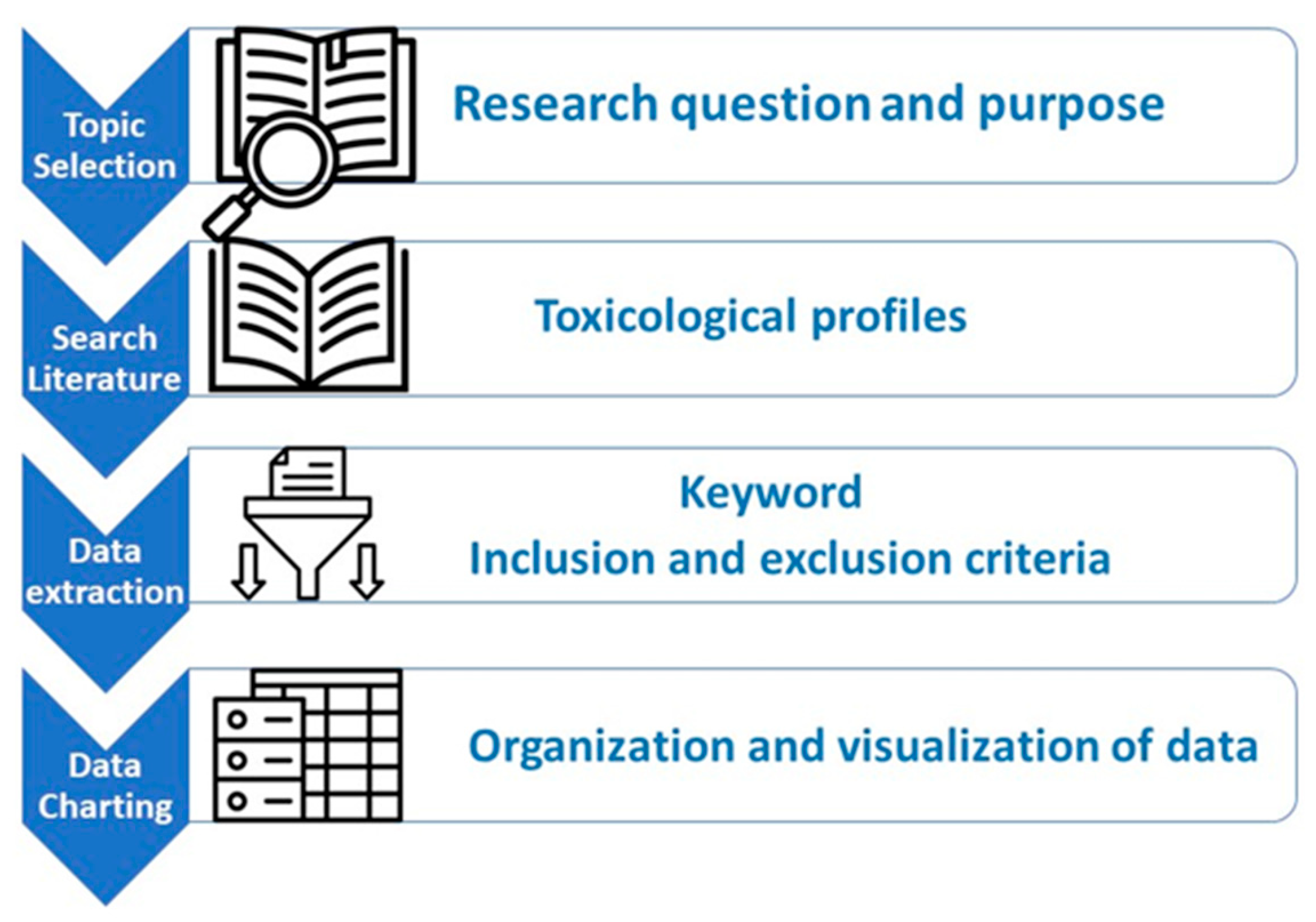
2.1. Data Selection
2.1.1. Toxicological Profile Query
2.1.2. Substance Category Abstraction
- Substance-specific queries were performed based on the UNEP SBRSC (2023), a technical report on chemicals in plastics [13], and were compared to all the chemicals represented in ATSDR’s Tox Profile database to identify relevant profiles.
- Chemicals from relevant profiles were reviewed and used to group the profiles into the following categories: a. monomers, b. metals and metalloid additives, c. non-metal additives and stabilizers, and d. chemical intermediates and precursors.
2.1.3. Health Outcome Category Abstraction
2.2. Plastics-Related Toxicological Profiles Tool
- The plastic substance categories cited above in the inclusion/exclusion criteria (e.g., monomers).
- The health outcome categories explained above (e.g., body weight, respiratory effects).
How to Use the Plastics-Related Toxicological Profiles Tool
- Production process: identifying potential exposures to workers involved in the production of plastics.
- Industrial releases: identifying potential uncontrolled and controlled environmental releases during the production process.
- Product use by retailers and consumers: identifying potential exposures to chemicals in finished plastic products through usage.
- Waste management (recycling, landfilling, and incineration) and micro- and nanoplastic (MNP) exposures: identifying potential chemical components from eroded plastic products or environmental breakdown products.
2.3. Assessing Health Impacts of Multiple Chemical Components of Plastic Products
2.4. PVC Chemical Components of Health Concern as an Example
3. Results and Discussion
3.1. Plastics’ Components Within ATSDR Toxicological Profiles
3.2. Summary of Health Outcome Categories Reported in Plastics-Related Toxicological Profiles [1,2,13]
3.3. Estimating Human Health Risks from Exposure to Plastic Polymer Components and Residues
3.3.1. Potential Human Exposure Scenarios of Drinking Water, PVC Pipe Components, and Residues Case Example
- -
- The leaching of PVC additives and residues is the main process for contaminating drinking water from the use of PVC pipes. Groundwater accounts for about 25% of drinking water worldwide—MPs can enter groundwater through leaching from heavy rains and irrigation, vertical flow via soil biological activity (e.g., burrows, adherence to organisms), seawater intrusion, and other routes, including the exchange of surface and groundwater near and downstream from rivers and streams. Also, leachates from PVC pipes disposed of in landfills can eventually contaminate soil and enter surface water and groundwater. Microplastics and nanoplastics often absorb other harmful chemical components during the seepage into groundwater. Different chemicals can be released into groundwater, which can freely enter and leave aquifers, thereby posing a chronic public health risk [15,16,17,18].
- -
- PVC pipes can contaminate drinking water by a second process called permeation, which occurs when underground pollutants, such as gasoline leaking from a storage tank, seep through the pipe walls. In general, PVC pipes are less susceptible to permeation than other plastic pipes except at very high levels of contamination (i.e., as in a petroleum or chemical spill). Also, the oxidative properties of chlorine dioxide, a commonly used chemical in water treatment, can react with polymeric materials, potentially causing degradation and the formation of MNPs [15].
- -
- Last, PVC and CPVC pipes may release toxic chemicals into drinking water after exposure to high heat, such as during wildfires or structure fires [above 140 °F (60 °C) for PVC and above 200 °F (93 °C) for CPVC]. Additives in plastics, including plasticizers, antioxidants, and dyes, are used to improve physico-chemical properties. Because these additives do not strongly bind to monomers, they can be easily detached, released, and discharged into the environment. MNPs leaching from aging PVC pipes used in drinking water distribution systems pose potential health risks, including the possibility of physico-chemical particle toxicity and chemical toxicity [15]. Released contaminants from thermally damaged PVC pipes include carcinogens such as the mixture of benzene, toluene, ethylbenzene, and xylenes (BTEXs), known to be associated with increased overall cancer risk and chemicals that cause long-term water quality issues [19].
3.3.2. Physico-Chemical Properties and Processes Relevant for Generating MNPs from PVC Pipes
3.3.3. The Aspect of Shape and Size of Microplastics
3.4. Health Hazard Identification of MNPs from Drinking Water PVC Pipes
3.5. Estimating Human Health Risks from PVC Pipe Chemical Components
3.6. Testing PVC Pipes for Substances Associated with PVC Toxicity
3.7. Additional ATSDR Resources to Assist with Communicating Health Risks
3.8. Limitations
4. Conclusions
- Plastics Industry: The chemical toxicity of many plastic components is well-understood. The tables and tools provided in this manuscript support evaluations of workers and community exposures related to production and environmental waste releases from industrial activities.
- Weathering Plastics: While toxicity studies of cured polymers are less abundant than those of their components, leaching studies show that the chemicals released during polymer weathering are generally less toxic than the original components. Phthalates dominate the chemical toxicity of many MNPs like PVC, while lead, which has no identifiable blood lead level considered safe, drives the toxicity of leaded paint MNPs.
- Physical Characteristics: A significant data gap remains regarding the role of size and shape in MNP toxicity. The breakdown of polymers and plastics may still present health risks due to the physical properties of the particles, independent of their chemical composition.
- Human Health Risks: Current studies predominantly focus on commercially available primary MPNs such as PS, PE, PVC, acrylic, and aramid. The tables and tools described in this manuscript provide a foundation for prioritizing toxicity research on MNPs, and as an example, we demonstrate how to assess and prioritize risks associated with PVC MNPs. The tool and estimations of HQs and HI of key chemical components leached from PVC pipes are critical for developing human health risk assessment frameworks for MNPs as emerging environmental hazards.
- Mitigation strategies: Mitigation strategies—including policies for sustainably using plastics and reducing environmental pollution, standardized sampling and analytical methods, and robust long-term animal laboratory toxicological and human epidemiological studies—are warranted.
5. Future Research Considerations
Author Contributions
Funding
Institutional Review Board Statement
Informed Consent Statement
Data Availability Statement
Acknowledgments
Conflicts of Interest
References
- Agency for Toxic Substances and Disease Registry (ATSDR). Toxicological Profiles. 2026. Available online: https://www.atsdr.cdc.gov/toxicological-profiles/about/index.html (accessed on 20 February 2026).
- Stallins, K. Plastics Related Toxicology Profiles. Tableau Public. 2025. Available online: https://public.tableau.com/app/profile/katie.stallings/viz/PlasticsRelatedToxicologyProfiles/AllPlasticsRelatedToxicologyProfiles (accessed on 20 February 2026).
- Zarus, G.; Muianga, C.; Hunter, C.; Pappas, R. A Review of Data for Quantifying Human Exposures to Micro and Nanoplastics and Potential Health Risks. Sci. Total Environ. 2021, 756, 144010. [Google Scholar] [CrossRef] [Scilit] [PubMed]
- Bakan, B.; Kalcec, N.; Liu, S.; Illic, K.; Qi, Y.; Capjak, I. Science-based evidence on pathways and effects of human exposure to micro- and nanoplastics. Arch. Ind. Hyg. Toxicol. 2024, 75, 1–14. [Google Scholar] [CrossRef] [Scilit] [PubMed]
- Muianga, C.; Casillas, G.; Zarus, G.; Fegurson, M. Micro- and Nanoplastics Exposures: Review of Human Biomonitoring Data Gaps and Needs to Estimate Human Body Burden and Potential Health Risks. In Proceedings of the AHMP Annual Conference, Omaha, NE, USA, 27–30 August 2023; Available online: https://www.researchgate.net/publication/383526711_Title_Micro-and_Nanoplastics_Exposures_Review_of_Human_Biomonitoring_Data_Gaps_and_Needs_to_Estimate_Human_Body_Burden_and_Potential_Health_Risks (accessed on 20 February 2026).
- Ren, W.; Duan, L.; Zhu, Z.; Du, W.; An, Z.; Xu, L.; Zhang, C.; Zhuo, Y.; Chen, C. Mercury transformation and distribution across a polyvinyl chloride (PVC) production line in China. Environ. Sci. Technol. 2014, 48, 2321–2327. [Google Scholar] [CrossRef] [Scilit]
- Zarus, G.M.; Muianga, C.; Brenner, S.; Stallings, K.; Casillas, G.; Pohl, H.R.; Mumtaz, M.M.; Gehle, K. Worker studies suggest unique liver carcinogenicity potential of polyvinyl chloride microplastics. Am. J. Ind. Med. 2023, 66, 1033–1047. [Google Scholar] [CrossRef] [Scilit]
- Kudzin, M.H.; Piwowarska, D.; Festinger, N.; Chruściel, J.J. Risks Associated with the Presence of Polyvinyl Chloride in the Environment and Methods for Its Disposal and Utilization. Materials 2024, 17, 173. [Google Scholar] [CrossRef] [Scilit]
- Mumtaz, M.M.; Hansen, H.; Pohl, H.R. Chapter 3: Mixtures and Their Risk Assessment in Toxicology. In Metals Ions in Life Sciences; Sigel, A., Sigel, H., Sigel, R., Eds.; Royal Society of Chemistry: London, UK, 2011; Volume 8, Available online: https://books.rsc.org/books/edited-volume/1352/Metal-Ions-in-Toxicology (accessed on 20 February 2026).
- Massardo, S.; Verzola, D.; Alberti, S.; Caboni, C.; Santostefano, M.; Verrina, E.E.; Angeletti, A.; Lugani, F.; Ghiggeri, G.M.; Bruschi, M.; et al. MicroRaman spectroscopy detects the presence of microplastics in humans’ urine and kidney tissue. Environ. Int. 2024, 184, 108444. [Google Scholar] [CrossRef] [Scilit]
- United States Environmental Protection Agency (US EPA). Superfund. 2024. Available online: https://www.epa.gov/superfund (accessed on 20 February 2026).
- Agency for Toxic Substances and Disease Registry (ATSDR). Substance Priority List. 2024. Available online: https://www.atsdr.cdc.gov/programs/substance-priority-list.html (accessed on 20 February 2026).
- United Nations Environment Programme and Secretariate of the Basel, Rotterdam and Stockholm Conventions (UNEP SBRSC). Chemicals in Plastics—A Technical Report. 2023. Available online: https://www.unep.org/resources/report/chemicals-plastics-technical-report (accessed on 11 February 2026).
- Agency for Toxic Substances and Disease Registry (ATSDR). Framework for Assessing Health Impacts of Multiple Chemicals and Other Stressors (Update). 2018. Available online: https://www.atsdr.cdc.gov/interaction-profiles/media/pdfs/ipga-p.pdf (accessed on 20 February 2026).
- Beyond Plastics. The Perils of PVC Plastic Pipes. 2023. Available online: https://static1.squarespace.com/static/5eda91260bbb7e7a4bf528d8/t/6491ce414930f2385aedb80c/1687277125680/The_Perils_of_PVC_Plastic_Pipes-April_2023_Digital.pdf (accessed on 20 February 2026).
- Symeonides, C.; Aromataris, E.; Mulders, Y.; Dizon, J.; Stern, C.; Barker, T.H.; Whitehorn, A.; Pollock, D.; Marin, T.; Dunlop, S. An Umbrella Review of Meta-Analyses Evaluating Associations between Human Health and Exposure to Major Classes of Plastic-Associated Chemicals. Ann. Glob. Health 2024, 90, 52. [Google Scholar] [CrossRef] [Scilit]
- Li, Y.; Ling, W.; Yang, J.; Xing, Y. Risk Assessment of Microplastics in Humans: Distribution, Exposure, and Toxicological Effects. Polymers 2025, 17, 1699. [Google Scholar] [CrossRef] [Scilit]
- Switlik, J.; Magnucka, M. Aging of drinking water transmision pipes during long-term operation as a potential source of nano- and microplastics. Int. J. Hyg. Environ. Health 2025, 263, 114467. [Google Scholar] [CrossRef] [Scilit]
- Stefan, D.; Bosomoiu, M.; Teodorescu, G. The behavior of polymeric pipes in drinking water distribution system-comparison with other pipe materials. Polymers 2023, 15, 3872. [Google Scholar] [CrossRef] [Scilit]
- Campisi, L.; La Motta, C.; Napierska, D. Polyvinyl chloride, its additives, microplastic and human health: Unresolved and emerging issues. Sci. Total Environment. 2025, 960, 178276. [Google Scholar] [CrossRef] [Scilit]
- Goodman, K.; Sang, A.; Lenhert, S.; Yang, W.; Zhu, L. Cytotoxic Effects of Microplastics on Human Cells. Ph.D. Thesis, Department of Chemistry and Biochemistry, College of Arts and Sciences, Florida State University, Tallahassee, FL, USA, 2021. Available online: https://repository.lib.fsu.edu/islandora/object/fsu:803320 (accessed on 20 February 2026).
- Khan, A.; Jia, Z. Recent insights into uptake, toxicity, and molecular targets of microplastics and nanoplastics relevant to human health impacts. iScience 2023, 26, 106061. [Google Scholar] [CrossRef] [Scilit] [PubMed]
- Veiseh, O.; Doloff, J.C.; Ma, M.; Vegas, A.J.; Tam, H.H.; Bader, A.R.; Li, J.; Langan, E.; Wyckoff, J.; Loo, W.S.; et al. Size- and shape-dependent foreign body immune response to materials implanted in rodents and non-human primates. Nature Mater. 2015, 14, 643–651. [Google Scholar] [CrossRef] [Scilit] [PubMed]
- Brown, D.M.; Wilson, M.R.; MacNee, W.; Stone, V.; Donaldson, K. Size-dependent proinflammatory effects of ultrafine polystyrene particles: A role for surface area and oxidative stress in the enhanced activity of ultrafines. Toxicol. Appl. Pharmacol. 2001, 175, 191–199. [Google Scholar] [CrossRef] [Scilit]
- Saha, S.C.; Saha, G. Effect of microplastics deposition on human lung airways: A review with computational benefits and challenges. Heliyon 2024, 10, e24355. [Google Scholar] [CrossRef] [Scilit] [PubMed] [PubMed Central]
- Henkel, C.; Huffer, T.; Hofmann, T. Polyvinyl chloride microplastics leach phthalates into the aquatic environment over decades. Environ. Sci. Technol. 2022, 56, 14507−14516. [Google Scholar] [CrossRef] [Scilit]
- Chia, R.; Atem, N.; Lee, J.; Cha, J. Microplastics and human health with focus on pediatric well-being: A comprehensive review and call for future studies. Clin. Exp. Pediatr. 2025, 68, 1–15. [Google Scholar] [CrossRef] [Scilit]
- Turner, A.; Filella, M. Hazardous metal additives in plastics and their environmental impacts. Environ. Int. 2021, 156, 106622. [Google Scholar] [CrossRef] [Scilit]
- O’Connor, D.; Hou, D.; Ye, J.; Zhang, Y.; Ok, Y.S.; Song, Y.; Coulon, F.; Peng, T.; Tian, L. Lead-based paint remains a major public health concern: A critical review of global production, trade, use, exposure, health risk, and implications. Environ. Int. 2018, 121, 85–101. [Google Scholar] [CrossRef] [Scilit]
- Zhang, Y.; Lin, Y. Leaching of lead from new unplasticized polyvinyl chloride (uPVC) pipes into drinking water. Environ. Sci. Pollut. Res. 2015, 22, 8405–8411. [Google Scholar] [CrossRef] [Scilit]
- Turner, A.; Fiella, M. Polyvinyl chloride in consumer and environmental plastics, with a particular focus on metal-based additives. Environ. Sci. Process Impacts 2021, 23, 1376. [Google Scholar] [CrossRef] [Scilit]
- Song, K.; Yoon, S.; Lee, J.; An, J. Significance of morphology in characterizing human health risk from di(2-ethyl) phthalate in polyvinyl chloride microplastics in groundwater. Toxics 2025, 13, 105. [Google Scholar] [CrossRef] [Scilit]
- EPA. Integrated Risk Information System. 2026. Available online: https://www.epa.gov/iris (accessed on 20 February 2026).
- Nyambego, H.; Key, T.A.; Serrano, K.A.; Maberti, S.; Maurer, L.L.; Davis, C.W. A data synthesis framework and case study supporting risk-based prioritization of additives and polymer-associated chemistries. Integr. Environ. Assess. Manag. 2026, vjaf198. [Google Scholar] [CrossRef] [Scilit]
- Dunnick, J.; Schmitt, C.; Dixon, D. A Review of the most frequent compounds, metals, and compound and metal mixtures found at U.S. Superfund Sites and their carcinogenic potential. Chem. Res. Toxicol. 2025, 38, 963–974. [Google Scholar] [CrossRef] [Scilit]
- Behl, M.; Elmore, S.A.; Malarkey, D.E.; Hejtmancik, M.R.; Gerken, D.K.; Chhabra, R.S. Perinatal toxicity and carcinogenicity studies of styrene-acrylonitrile trimer, a ground water contaminant. Toxicology 2013, 314, 84–94. [Google Scholar] [CrossRef] [Scilit]
- Kirman, C.; Gargas, M.; Collins, J.; Rowlands, J. Screening-level risk assessment for styrene-acrylonitrile (SAN) Trimer detected in soil and ground water. J. Toxicol. Environ. Health Part A 2012, 75, 1280–2012. [Google Scholar] [CrossRef] [Scilit]


| Monomers | Metal and Metalloid Additives | Non-Metal Additives and Stabilizers | Chemical Intermediates and Precursors |
|---|---|---|---|
| 11 | 25 | 40 | 22 |
| Acrylamide (1) Acrylonitrile (1) 1,3-Butadiene (1) 1,1-Dichloroethene (1) Ethylene Glycol (1) Hexamethylene Diisocyanate (HDI)—(1) 4,4′-Methylenedianiline (1) Styrene (1) Toluene Diisocyanate and Methylene Diisocyanate (5) Vinyl Acetate (1) Vinyl Chloride (1) | Aluminum and Compounds (12) Antimony and Compounds (5) Arsenic (10) Asbestos (5) Barium (8) Beryllium (2) Boron (8) Cadmium (10) Chromium (19) Cobalt (11) Copper (3) Lead (12) Manganese (7) Mercury (6) Molybdenum (6) Nickel (4) Selenium (2) Silica (11) Silver (3) Strontium (5) Tin and Compounds (19) Titanium Tetrachloride (1) Tungsten (3) Vanadium (2) Zinc (8) | Aldrin and Dieldrin (2) Ammonia (2) Atrazine (1) Bis(chloromethyl) ether (BCME)—(1) Chlorinated Dibenzo-p-dioxins (2) Chloroethane (1) Chloroform (1) Chlorophenol (5) Creosote (2) Cyanide (2) 1,2-Dichloroethene (3) 1,2-Dichloropropane (1) 1,2-Diphenylhydrazine (1) 3,3′-Dichlorobenzidine (2) 2,4-Dichlorophenoxyacetic Acid (2,4-D)—(1) DDT, DDE, and DDD (6) DEHP—(1) Di-n-butyl Phthalate (1) Di-n-octylphthalate (DNOP)—(1) Dinitrocresols (1) Endrin (3) 2-Hexanone (1) Hexachlorobutadiene (1) Hexachlorocyclohexane (HCH)—(4) n-Hexane (1) Isophorone (1) Methyl-tert-butyl Ether (MTBE)—(1) Mirex and Chlordecone (1) n-Nitrosodi-n-propylamine (1) N-Nitrosodimethylamine (NDMA)—(1) N-Nitrosodiphenylamine (1) Naphthalene, 1-Methylnaphthalene, and 2-Methylnaphthalene (3) Nitrobenzene (1) Pentachlorophenol (2) Perfluoroalkyls (PFAS)—(9) Polybrominated Biphenyls (PBBs)—(3) Polybrominated Diphenyl Ethers (PBDEs)—(13) Polychlorinated Biphenyls (PCBs)—(142) Polycyclic Aromatic Hydrocarbons (PAH)—(22) 1,1,1-Trichloroethane (1) | Acetone (1) Acrolein (1) 2-Butanone (1) Benzene (1) Bis(2-chloroethyl) ether (BCEE)—(1) Carbon Disulfide (1) Chlorine (1) Chlorobenzene (1) Chloromethane (1) Cresols (4) ** 1,2-Dibromoethane (1) 1,2-Dichloroethane (1) Ethylbenzene (1) Ethylene Oxide (1) Formaldehyde (1) 4,4′-Methylenebis(2-chloroaniline) (MBOCA)—(1) Methylene Chloride (1) Phenol (1) 1,1,2-Trichloroethane (1)1,2,3-Trichloropropane (1) Toluene Xylenes |
| Hierarchy of Health Outcome Categories Containing Data Related to Plastics Exposure | Number of Tox Profiles Containing Data per Health Outcome Category |
|---|---|
| Respiratory | 56 |
| Neurological | 53 |
| Developmental | 53 |
| Hepatic | 53 |
| Cancer | 39 |
| Renal | 38 |
| Reproductive | 35 |
| Immune | 32 |
| Gastrointestinal | 26 |
| Hematological | 23 |
| Dermal | 18 |
| Endocrine | 17 |
| Body Weight | 17 |
| Cardiovascular | 15 |
| Ocular | 14 |
| Musculoskeletal | 6 |
| PVC Component | Repro. | Resp. | Develop. | Neuro | Renal | Hepatic | Immuno. | Gastro. | Hemato | Dermal |
|---|---|---|---|---|---|---|---|---|---|---|
| Vinyl chloride | ||||||||||
| Chlorine | ||||||||||
| Di-n-butyl phthalate | ||||||||||
| Diethyl phthalate | ||||||||||
| Aluminum | ||||||||||
| Cadmium | ||||||||||
| Cobalt | ||||||||||
| Lead | ||||||||||
| Mercury | ||||||||||
| Silicates | ||||||||||
| Tin | ||||||||||
| Titanium | ||||||||||
| Carbon Black * | ||||||||||
| Triarylmethane * |
| Oral Route of Exposure MRL (mg/kg/Day) † | |||
|---|---|---|---|
| Selected PVC Product Components | Acute Duration (mg/kg/Day) † | Intermediate Duration | Chronic Duration |
| Di-n-butyl phthalate * | 0.5 | - | - |
| DEHP * | 0.003 | 0.0001 | - |
| Diethyl phthalate * | 7 | 6 | - |
| Vinyl chloride | - | - | 0.003 |
| Mercury | - | - | 0.0001 # |
| Cadmium | - | 0.0005 | 0.0001 |
| Tin | - | 0.3 | - |
| Lead ** | - | - | - |
| Aluminum | - | 1 | 1 |
| Cobalt | 0.03 | 0.03 | - |
| Substance | Percentage in PVC (%) | Child’s Body Weight (kg) | Calculated Dose (µg/kg) | MRL (µg/kg/Day) | Hazard Quotient |
|---|---|---|---|---|---|
| DEHP | 35 | 10 | 0.1 | 0.1 | 1.0 |
| Vinyl chloride (15%) | 15 | 10 | 0.0045 | 3.0 | 1.5 × 10⁻³ |
| Vinyl chloride (0.3 ppb) | 3 × 10⁻⁸ | 10 | 9 × 10⁻⁹ | 3.0 | 3 × 10⁻⁹ |
| Cadmium | 0.001 | 10 | 3 × 10⁻⁶ | 0.1 | 3 × 10⁻⁷ |
| Aluminum (20%) | 20 | 10 | 0.06 | 1000 | 0.00006 |
| Aluminum (60%) | 60 | 10 | 0.18 | 1000 | 0.00018 |
| Hazard Index | The hazard index (HI) is the sum of the hazard quotients (HQ) | >1 | |||
Disclaimer/Publisher’s Note: The statements, opinions and data contained in all publications are solely those of the individual author(s) and contributor(s) and not of MDPI and/or the editor(s). MDPI and/or the editor(s) disclaim responsibility for any injury to people or property resulting from any ideas, methods, instructions or products referred to in the content. |
© 2026 by the authors. Licensee MDPI, Basel, Switzerland. This article is an open access article distributed under the terms and conditions of the Creative Commons Attribution (CC BY) license.
Share and Cite
Muianga, C.V.; Zarus, G.M.; Stallings, K.; Casillas, G.; Shoeb, M.; Gehle, K.; Mumtaz, M.M.; Reh, C.M. Toxic Substances in Plastics, Micro- and Nanoplastics: Utilizing ATSDR’s Plastics-Related Toxicological Profile Tool and Mixtures Framework for Human Health Risk Assessment. Toxics 2026, 14, 429. https://doi.org/10.3390/toxics14050429
Muianga CV, Zarus GM, Stallings K, Casillas G, Shoeb M, Gehle K, Mumtaz MM, Reh CM. Toxic Substances in Plastics, Micro- and Nanoplastics: Utilizing ATSDR’s Plastics-Related Toxicological Profile Tool and Mixtures Framework for Human Health Risk Assessment. Toxics. 2026; 14(5):429. https://doi.org/10.3390/toxics14050429
Chicago/Turabian StyleMuianga, Custodio V., Gregory M. Zarus, Katie Stallings, Gaston Casillas, Mohammad Shoeb, Kimberly Gehle, Mohammad Moiz Mumtaz, and Christopher M. Reh. 2026. "Toxic Substances in Plastics, Micro- and Nanoplastics: Utilizing ATSDR’s Plastics-Related Toxicological Profile Tool and Mixtures Framework for Human Health Risk Assessment" Toxics 14, no. 5: 429. https://doi.org/10.3390/toxics14050429
APA StyleMuianga, C. V., Zarus, G. M., Stallings, K., Casillas, G., Shoeb, M., Gehle, K., Mumtaz, M. M., & Reh, C. M. (2026). Toxic Substances in Plastics, Micro- and Nanoplastics: Utilizing ATSDR’s Plastics-Related Toxicological Profile Tool and Mixtures Framework for Human Health Risk Assessment. Toxics, 14(5), 429. https://doi.org/10.3390/toxics14050429