Article

Safety Assessment of Sophora flavescens Root Extract for Cosmetic Use: An Integrated Approach Using In Vitro, In Silico MoS, TTC, and History of Safe Use


1
College of Pharmacy and Graduate School of Pharmaceutical Sciences, Ewha Womans University, Seoul 03760, Republic of Korea
2
Transdisciplinary Major in Learning Health Systems, Department of Health and Safety Convergence Science, Korea University, Seoul 02481, Republic of Korea
3
Graduate Program in Innovative Biomaterials Convergence, Ewha Womans University, Seoul 03760, Republic of Korea
*
Authors to whom correspondence should be addressed.
These authors contributed equally to this work.
Toxics 2026, 14(5), 398; https://doi.org/10.3390/toxics14050398
Submission received: 9 April 2026 / Revised: 29 April 2026 / Accepted: 29 April 2026 / Published: 6 May 2026
(This article belongs to the Special Issue New Approach Methodologies for Agrochemicals and Food Toxicology)

Highlights

What are the main findings?
  • SFRE was non-irritant and showed no biologically relevant genotoxic concern under the proposed cosmetic use conditions.
  • TTC alone was of limited applicability to SFRE, whereas MoS and history of safe use supported its safety at the estimated cosmetic exposure level.
What is the implication of the main finding?
  • Integrated use of MoS, TTC, and history of safe use is appropriate for the safety assessment of complex botanical cosmetic ingredients.

Abstract

Evaluating the safety of botanical extracts for cosmetics has become mandatory, but it is often challenging because of their phytochemical complexity and limited toxicological data. In this study, the safety of aqueous Sophora flavescens root extract (SFRE), widely used in cosmetics, was assessed using an integrated approach combining in vitro, in silico, margin of safety (MoS), threshold of toxicological concern (TTC), and history of safe use (HSU). Chemical characterization was performed by literature review and LC–MS/MS analysis. SFRE was classified as non-irritant in in vitro skin and eye irritation tests conducted according to OECD TG439 and 492. Whole-extract and constituent-level in silico analysis and literature evaluation were conducted to assess genotoxicity and skin sensitization potential. For systemic toxicity, a 13-week oral repeat dose no-observed-adverse-effect level (NOAEL) of 10 mg/kg bw/day for a decocted Sophorae radix extract was employed without compositional adjustment to calculate the acceptable systemic exposure dose of 0.10 mg/kg bw/day, which was slightly lower than the current usage of SFRE in cosmetics (up to 0.13 mg/kg/day). The TTC approach revealed that many bioactive constituents fell outside the applicability domain due to steroid moieties. HSU data from dietary supplements (32–64.67 mg/kg/day) could support the safety of the current use of SFRE in cosmetics. The findings highlight that a combined, case-by-case application of MoS, TTC, and HSU is essential for the robust safety assessment of complex botanical ingredients.

1. Introduction

Sophorae flavescentis radix is the dried root of Sophora flavescens Aiton (Fabaceae) and has long been used in East Asian traditional medicine. It has been described for the treatment of gastrointestinal, dermatological, and inflammatory conditions, and its major bioactive constituents include quinolizidine alkaloids and prenylated flavonoids. In particular, matrine- and oxymatrine-type alkaloids are regarded as characteristic constituents of this medicinal plant [1].
The pharmacological and medicinal relevance of Sophora flavescens has been recognized in official monographs in several countries. In China, it is listed in the Pharmacopoeia of the People’s Republic of China, and in Korea, it is included in the Korean Herbal Pharmacopoeia [2].
In recent years, S. flavescens-derived materials have also attracted attention as cosmetic ingredients. According to the European Commission CosIng database, Sophora flavescens root extract is defined as the extract of the roots of Sophora flavescens and is used as a skin-conditioning ingredient. In addition, use entries for Sophora flavescens-derived ingredients are available in cosmetic ingredient inventories such as ChinaCosIng [3].
The diverse biological activities of S. flavescens are attributed to the abundance of secondary metabolites present in its root. Liu et al. [4] reported that S. flavescens contains abundant quinolizidine alkaloids, including matrine, oxymatrine, and sophocarpine, and these constituents are considered major contributors to its biological activity. In addition, flavonoid compounds such as kurarinone, kuraridin, and kushenol D have been identified and are known to exert potent antioxidant and anti-allergic effects.
Although S. flavescens has a long history of use as a food and medicinal material with well-documented efficacy, a safety assessment that can clear potential toxicological concerns associated with dermal exposure from the use of cosmetics remains unconducted. This study aimed to conduct a safety assessment for aqueous Sophora flavescens root extract (SFRE) as a cosmetic ingredient, applying three approaches. Margin of safety (MoS)-based estimation was used to calculate acceptable exposure levels using existing toxicological literature data from comparable botanical materials. The threshold of toxicological concern (TTC) approach was used to derive systemic exposure thresholds based on the identified chemical constituents and their respective Cramer classifications [5,6], and the history of safe use (HSU) approach was used to calculate the safe daily exposure level from dietary use. In addition, evaluations of local and pivotal toxicological endpoints, including skin irritation, eye irritation, skin sensitization and genotoxicity, were conducted in vitro or in silico to ensure overall safety. By integrating these methodologies, this study presents a case study to apply non-animal test-based safety assessment methodologies applicable to botanical ingredients.

2. Materials and Methods

2.1. Preparation of Sophora flavescens Root Extract

The Sophora flavescens root extract (SFRE) used in this study was manufactured and supplied by The Garden of Natural Solution Co., Ltd. (Osan-si, Republic of Korea). The extract was produced according to a conventional cosmetic raw material manufacturing process, and a literature review was conducted to determine appropriate pretreatment conditions.
Briefly, 10 kg of dried S. flavescens root was extracted with 100 L of distilled water at 80 °C. To enhance extraction efficiency, ultrasonic extraction was performed for 30 min, followed by an additional 30 min of shaking extraction. The extract was then concentrated using a rotary vacuum evaporator, followed by freeze-drying and pulverization to obtain a powdered extract. The final extraction yield (plant-to-extract ratio) was approximately 22.15%.
The quality specifications of the extract were verified based on appearance (brown powder), odor (characteristic odor), heavy metal content [lead (≤10 ppm) and arsenic (not detected)], and microbiological limits (not detected).

2.2. Experimental Characterization of SFRE Constituents (Chromatography-Based Analysis)

The chemical composition of SFRE was characterized through literature review and experimental analysis. For the literature survey, publicly accessible databases, including the United States Department of Agriculture (USDA) database, PubMed, and SciFinder, were utilized. Experimental analyses of SFRE were conducted using standard food composition analysis methods and LC–MS/MS.
Analyses of nutritional components, including moisture, fat, protein, carbohydrates, and trace components, were performed by the Korea Food Research Institute (KFRI) in accordance with official analytical methods specified in the Korean Food Standards Code [7].

LC-MS/MS Analytical Conditions

The reference compounds, Matrine, Oxymatrine, and Sophoridine, were purchased from TCI Korea (Seoul, Republic of Korea). Kurarinone, Formononetin, and Sophocarpine were purchased from Merck (Darmstadt, Germany). Daidzein, Genistein, and Cytisine were purchased from Thermo Fisher Scientific Korea Ltd. (Seoul, Republic of Korea).
The liquid chromatographic–mass spectrometric analysis was performed using the following instrumental parameters (Table 1)and multiple reaction monitoring conditions to detect each reference compound are as shown in Table 2.

2.3. Cramer Classification and TTC Grouping

The chemical constituents identified through LC–MS/MS analysis and literature review were classified into Cramer Classes I–III using Toxtree® v3.1.0 (Joint Research Centre, European Commission). The SMILES structural representations of each compound were obtained from PubChem and entered into the Decision Tree for Cramer Classification module.
As a result, genistein and daidzein were classified as Cramer Class III following a conservative approach.

In Silico Genotoxicity Prediction of Bacterial Reverse Mutagenicity for the Chemical Constituents Contained in SFRE

The constituents identified in SFRE and the chemical structures of each compound were entered into ChemTunes® in SMILES format [8]. Predictions of potential mutagenicity were primarily based on existing data from bacterial reverse mutation tests (Ames tests). In cases where such data were unavailable, results from in vitro chromosome aberration tests or in vivo micronucleus assays were used to infer mutagenic potential. For constituents lacking all relevant experimental data, mutagenicity was predicted using in silico methods implemented in ChemTunes®.

2.4. Calculation of Systemic Exposure Dose (SED)

To estimate consumer exposure, a leave-on cosmetic product containing 2.126% SFRE, corresponding to the maximum use concentration listed in China COSING [3], was assumed. The systemic exposure doses (SEDs) for individual constituents were estimated according to the SCCS Notes of Guidance for the Testing of Cosmetic Ingredients and Their Safety Evaluation, 12th revision [9]. For aggregate exposure assessment, a conservative default cosmetic exposure of 269 mg/kg bw/day was applied [9]. In the absence of SFRE-specific dermal absorption data, a default dermal absorption value of 100% was applied in accordance with SCCS guidance [9]. This value was used as a conservative screening assumption for the estimation of systemic exposure.
For constituent-level exposure estimation, concentrations of individual constituents were derived from the experimentally measured composition of the present SFRE whenever quantitative analytical data were available. Specifically, oxymatrine, matrine, sophoridine, kurarinone, sophocarpine, and cytisine were quantified in the present extract and used directly for SED estimation. For identified constituents lacking quantitative analytical data, a conservative default concentration of 1 ppm in the finished product was assumed for screening-level exposure estimation to avoid underestimation of potential exposure.
The resulting SED values were then compared with relevant TTC thresholds, taking into account each constituent’s Cramer classification and genotoxicity alert status, where applicable.

2.5. In Silico Assessment of Skin Sensitization Using Derek Nexus

Each dataset was processed in Derek Nexus v.6.5.1 using Derek Knowledge Base (KB) 2025 1.0. If a skin sensitization alert was activated with a reasoning level of certain/probable/plausible/equivocal, the chemical was considered to be a sensitizer. Chemicals activating an alert with a reasoning level of doubted/improbable, or chemicals not activating any alerts, were considered to be non-sensitizers.
The interpretation of Derek Nexus reasoning levels followed the convention that alerts with certain, probable, plausible, or equivocal confidence were treated as positive alerts, whereas doubted or improbable alerts and no-alert outputs were treated as negative for screening purposes [10].

2.6. In Vitro Skin Irritation Test with a 3D Reconstructed Human Epidermis Model

In this study, the reconstructed human epidermis model KeraSkin™, developed using a “me-too” approach based on OECD Test Guideline 439, was employed [11]. KeraSkin™ was supplied by Biosolution Co., Ltd. (Seoul, Republic of Korea), and the DMEM-based culture medium was also provided by the same supplier. KeraSkin™ tissues were placed in 6-well plates containing 0.9 mL of culture medium per well and pre-incubated at 37 °C under 5% CO2 for 22 ± 2 h. After pre-incubation, 40 μL of the test substance was applied directly onto the tissue surface. The insert was gently tilted using sterile forceps to ensure even distribution of the test substance across the tissue surface.
Dulbecco’s phosphate-buffered saline (DPBS) was used as the negative control, while 5% sodium dodecyl sulfate (SDS) dissolved in DPBS was used as the positive control. The SFRE sample was prepared as a 50% (w/v) solution in DPBS. Following application, the plates were incubated at 37 °C under 5% CO. After 30 min of exposure, the tissues were rinsed with DPBS and subsequently subjected to a post-incubation period of 42 ± 2 h, after which the culture medium was completely removed.

2.7. In Vitro Eye Irritation Test with 3D Reconstructed Human Corneal Epithelium Model

An in vitro eye irritation test was conducted using the MCTT HCE™ model, a multilayered reconstructed human corneal epithelium composed of basal, wing, and squamous cells, developed in accordance with OECD Test Guideline 492 and supplied by Biosolution Co., Ltd. [12]. For three-dimensional reconstruction, the cells were cultured on 12 mm diameter Millicell® inserts (Millipore, Burlington, MA, USA) under air–liquid interface conditions for 7 days to regenerate a 3D human corneal epithelium.
The models were shipped to the test facility under refrigerated conditions in a 24-well plate format, placed on agarose gel. The culture medium was pre-warmed at 37 °C for 30 min prior to use. For pre-incubation, 900 μL of the pre-warmed medium was added to each well of a 6-well plate, and the HCE model inserts were carefully transferred into the wells. The tissues were then pre-incubated at 37 °C under 5% CO2 for 22 ± 2 h. To perform the test, 40 μL of the test solution was topically applied to the apical epithelial surface (0.6 cm2) of each model insert following pre-incubation. The tissues were exposed to the test substance for 10 ± 1 min at 37 °C under 5% CO2. After exposure, the tissues were rinsed to remove residual test substance and further incubated for an additional 16 ± 1 h.
DPBS was used as the negative control, and methyl acetate was used as the positive control. The SFRE sample was prepared as a 20% (w/v) solution in DPBS. Tissue viability was assessed using the WST-1 assay [Water-Soluble Tetrazolium Salt-1; 2-(4-iodophenyl)-3-(4-nitrophenyl)-5-(2,4-disulfophenyl)-2H-tetrazolium sodium salt; CAS RN 150849-52-8].

2.8. Estimation for History of Safe Use

To provide contextual information on prior human exposure relevant to history of safe use (HSU), food consumption data and marketed dietary supplement information were collected from publicly available sources. Food consumption information relevant to exposure assessment was obtained from the EFSA Comprehensive European Food Consumption Database, which provides detailed consumption data across European populations and is widely used in dietary exposure assessment. In parallel, dietary supplements containing Sophora flavescens were identified using the Dietary Supplement Label Database (DSLD; https://dsld.od.nih.gov), developed by the Office of Dietary Supplements of the U.S. National Institutes of Health (NIH), which compiles label information for dietary supplement products marketed in the United States [13,14,15].
Representative products containing Sophora flavescens (Ku Shen; Non-Alcohol, label ID 238120) were identified in the DSLD, and the labeled serving size, recommended daily intake frequency, and dosage form were recorded. Where available, product label information on extract type, extract amount, or formulation characteristics was also noted. However, when the extraction solvent, extraction ratio, or constituent standardization was not clearly specified on the product label, no further quantitative back-calculation of extract-equivalent intake was performed. In such cases, the product information was used only as supportive contextual evidence of prior marketed human exposure and not as a basis for precise exposure estimation.

3. Results

3.1. Comprehensive Chemical Profiling of Sophora flavescens Root Extract

The chemical composition of Sophora flavescens Root Extract (SFRE) as a cosmetics ingredient was systematically investigated and identified. Through an extensive review of the Duke Phytochemical and Ethnobotanical Database of the United States Department of Agriculture (USDA) and relevant scientific literature, a total of 60 chemical constituents present in S. flavescens extract were identified.
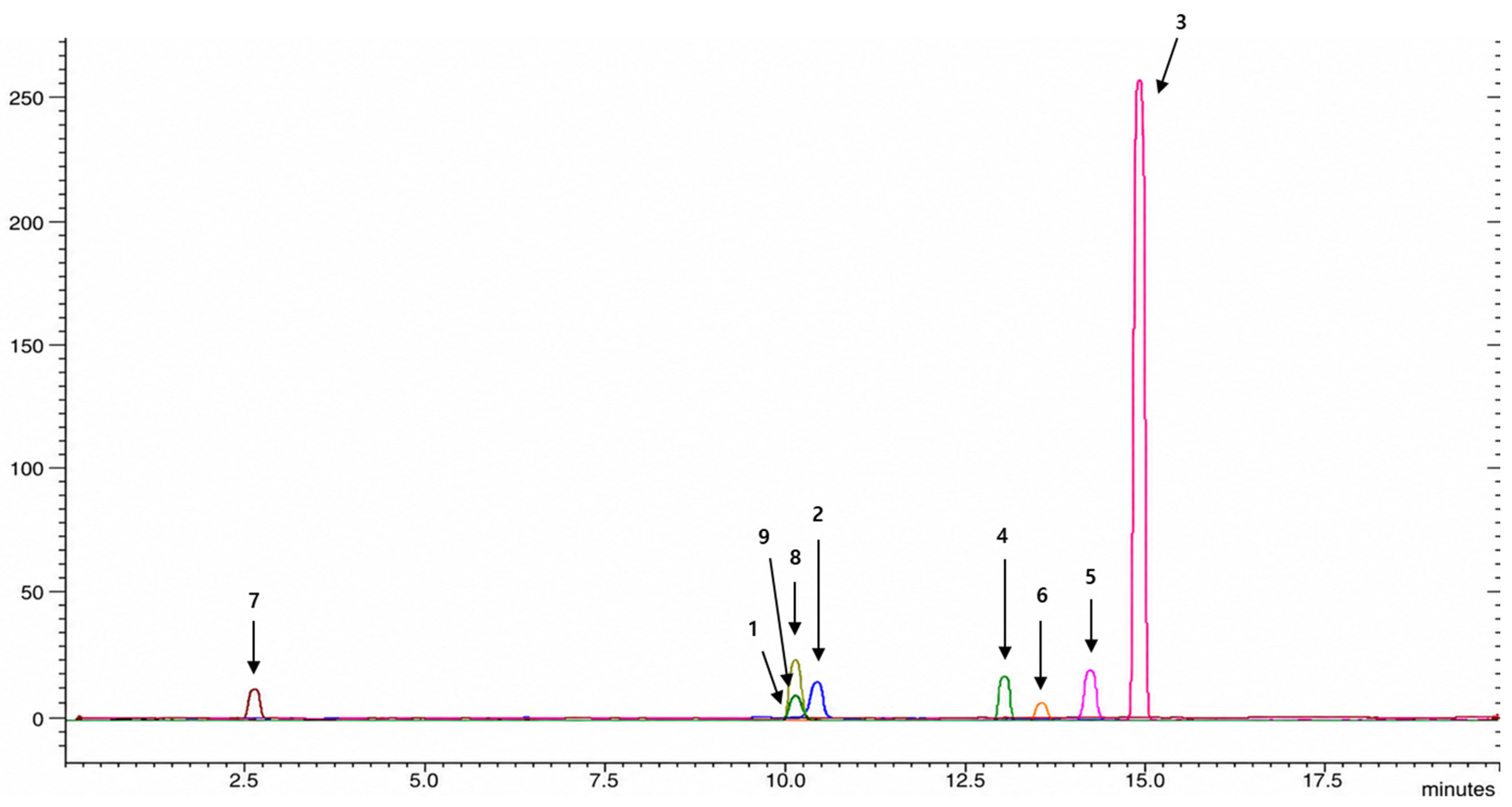
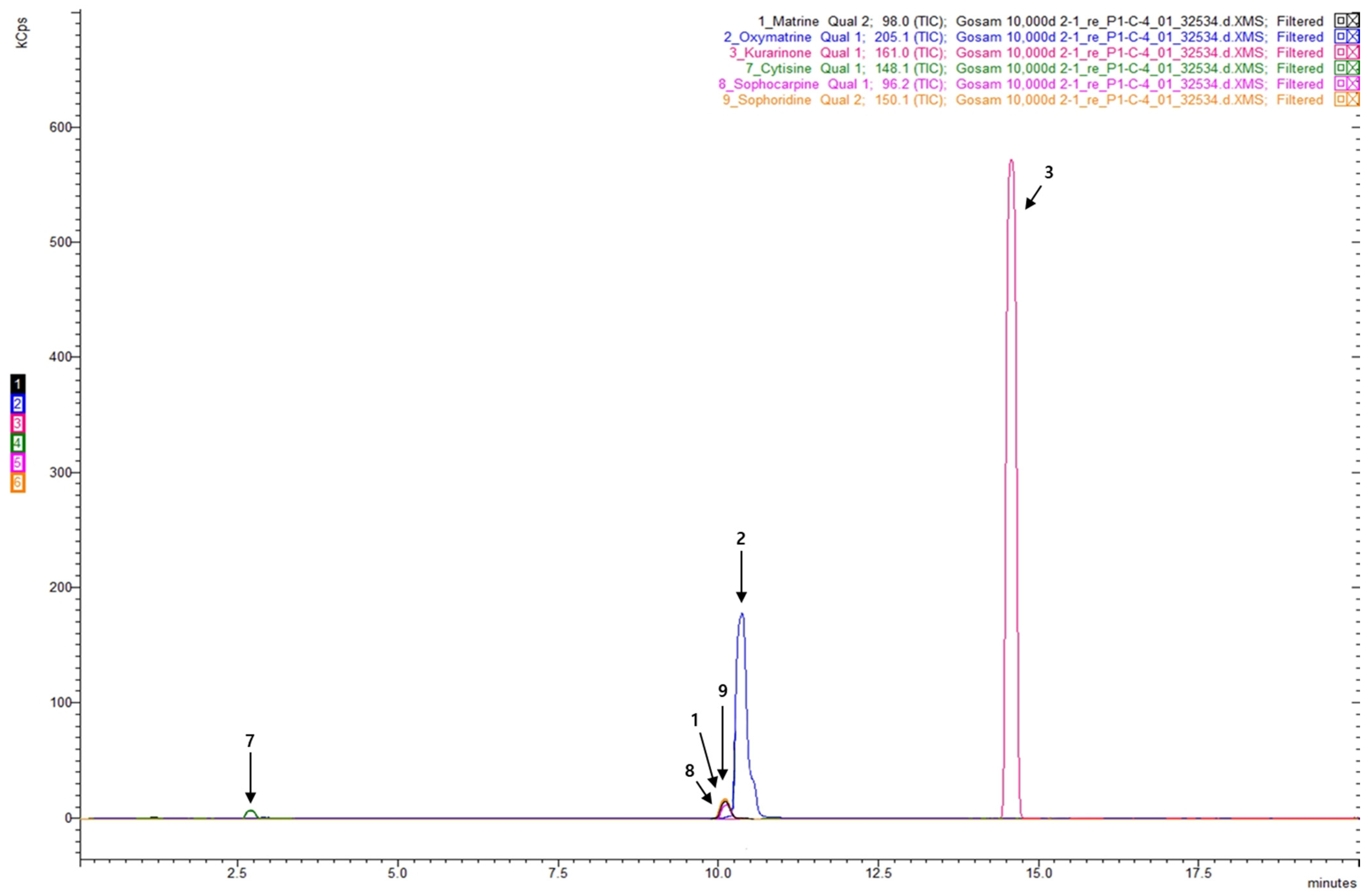
Quantitative analysis of the chemical constituents of SFRE was performed from two perspectives: nutritional components and other bioactive constituents. Results from macro- and micronutrient and mineral analyses conducted by the Korea Food Research Institute indicated that 15 nutritional components accounted for more than 96% of the extract composition, with carbohydrates representing the largest fraction (68.9%). In addition, analysis of nine bioactive compounds for which reference standards were available identified oxymatrine, matrine, sophoridine, and kurarinone as major constituents of SFRE according to LC-MS/MS analysis (Figure 1 and Figure 2, see Section 2 for details).
More specifically, the nutritional analysis showed that SFRE was mainly composed of carbohydrates (68.9%), protein (17.7%), fat (2.2%), and water (4.7%), together with minor mineral constituents including potassium (1.372%), calcium (0.562%), magnesium (0.498%), phosphorus (0.421%), and sodium (0.074%). LC–MS/MS quantification further showed that oxymatrine (24.510 mg/g, 2.451%), matrine (3.331 mg/g, 0.333%), sophoridine (3.273 mg/g, 0.327%), kurarinone (2.139 mg/g, 0.214%), sophocarpine (1.163 mg/g, 0.116%), and cytisine (0.721 mg/g, 0.072%) were detected, whereas daidzein, formononetin, and genistein were not detected under the applied analytical conditions.
Overall, experimental analyses accounted for 99.97% of the total composition of SFRE, and detailed results are presented in Table 3. Experimental data were applied for realistic exposure scenarios, whereas maximum concentration values from the literature or experimental data were used for worst-case exposure scenarios to ensure a conservative safety evaluation.

3.2. Evaluation of Skin and Eye Irritation Potentials of Sophora flavescens Root Extract

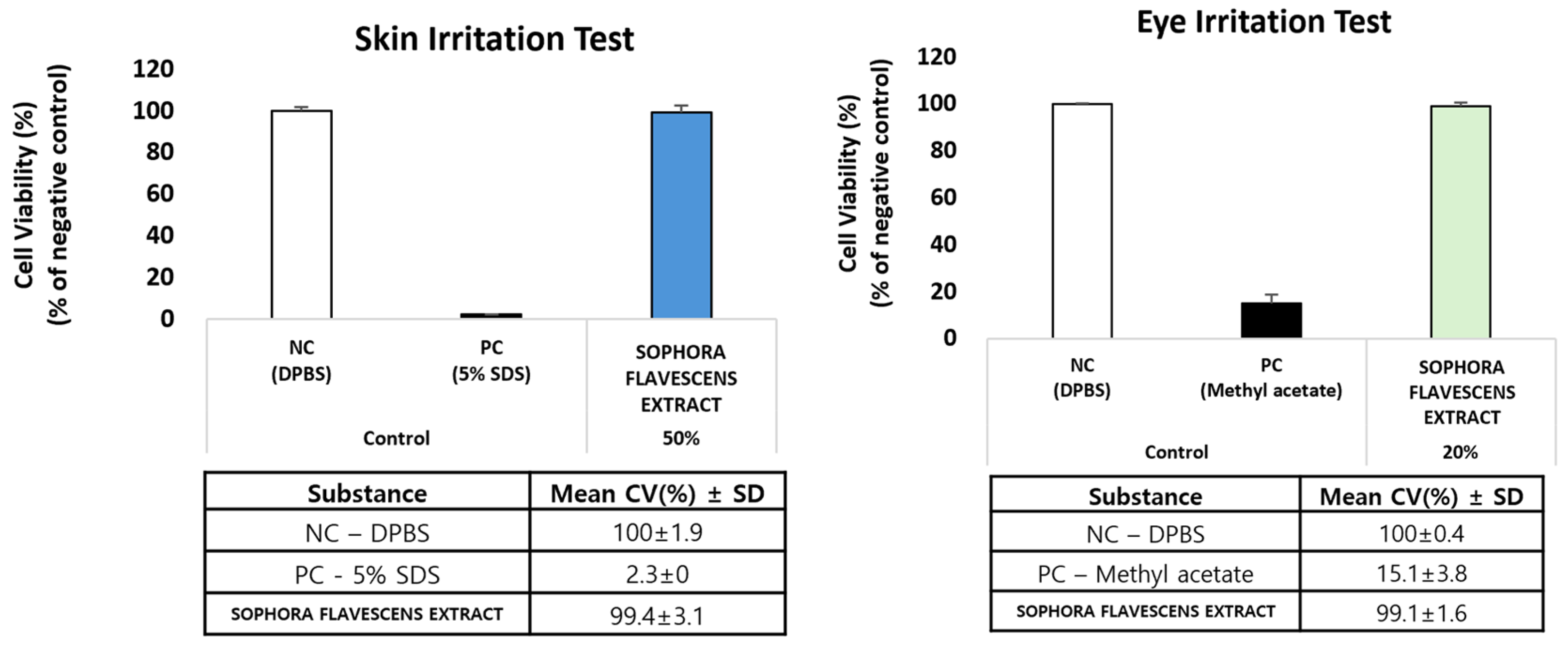
The in vitro skin and eye irritation tests demonstrated that SFRE did not induce significant irritation in either the reconstructed skin epidermis or cornea models when tested at concentrations of 50% (w/v) and 20% (w/v), respectively. In both the reconstructed human epidermis model (KeraSkin™, a me-too test method of OECD TG439 [17]) and the reconstructed human corneal epithelium model (MCTT HCE™, a me-too test method of OECD TG492 [18]) (see Figure 3), SFRE was classified as non-irritant. In both assays, tissue viability values were well above the established threshold criteria for irritation classification. These findings indicate that topical application of SFRE is safe with respect to skin and eye irritation potential.

3.3. Genotoxicity Assessment

The genotoxic potential of Sophora flavescens root extract was previously evaluated by Che et al. [16] using a bacterial reverse mutation assay, an in vitro chromosome aberration assay, and an in vivo micronucleus assay. In that study, the bacterial reverse mutation assay was negative with and without metabolic activation, whereas the chromosome aberration assay suggested weak clastogenic activity under the test conditions. However, no significant micronucleus induction was observed in vivo. These findings provide informative extract-level evidence, but the available data remain limited and should be interpreted cautiously rather than as definitive evidence of the absence of genotoxic risk.
Importantly, the material used by Che et al. [19] was a decocted Sophorae radix extract, and compositional equivalence to the SFRE characterized in the present study has not been demonstrated. Therefore, the transferability of the published genotoxicity findings to the present extract remains uncertain and should be regarded as supportive rather than conclusive.
To strengthen the assessment, constituent-level information was additionally reviewed using in silico tools and the available literature. Fischer et al. [20] reported that neither matrine nor oxymatrine induced a significant increase in revertants in an OECD TG 471 bacterial reverse mutation assay [21], indicating that these two major quinolizidine alkaloids are unlikely to have gene mutation potential. However, direct experimental genotoxicity data for several other SFRE constituents remain limited, and positive or alerting in silico outputs for some flavonoid-related constituents could not be fully resolved.
Taken together, the currently available evidence does not allow a conclusion of a significant genotoxic concern under the proposed cosmetic use conditions. However, the database remains limited, and the absence of conclusive evidence should not be interpreted as proof of no risk.

3.4. In Silico Prediction of Skin Sensitization Potential of SFRE

The skin sensitization potential of 45 bioactive constituents identified in SFRE was evaluated using the Derek Nexus expert system used in OECD defined approach for skin sensitization [18]. Of the compounds assessed, 16 were predicted to be non-sensitizers. In contrast, 29 compounds triggered structural alerts, with 6 and 23 constituents classified as “equivocal” and “plausible” sensitizers, respectively. Potency estimations categorized the predicted sensitizers as follows: 10 weak, 3 moderate, 15 strong, and 1 extreme sensitizer.
A subset of 15 compounds was flagged as strong sensitizers based on the presence of substituted phenol analogs. However, a meticulous review of the underlying historical data revealed that this alert was triggered by inconsistent in vivo outcomes across various assays, including the local lymph node assay (LLNA) and the human repeat insult patch test (HRIPT). Notably, o-hydroxybenzoates (salicylates) and p-hydroxybenzoates (parabens)—despite their structural alerts—show a very low incidence of clinical sensitization in humans, even with widespread exposure in cosmetics [22,23]. The experimental data for these classes remain conflicting, often failing to demonstrate sensitization in standard animal models except under conditions of compromised skin barrier function [24].
Especially, sophocarpine was uniquely classified as an extreme sensitizer due to its α,β-unsaturated amide moiety. Theoretically, this structure allows for the formation of hapten–protein complexes via Michael addition at the β-carbon [25]. Nevertheless, the weight of evidence suggests that the electrophilic reactivity of such amides is significantly attenuated by resonance stabilization [26]. Representative analogs, such as acrylamide, are typically documented as weak or non-sensitizers in clinical and experimental settings [27]. Furthermore, many structurally related conjugated systems show no detectable sensitizing activity, indicating that the theoretical Michael addition potential does not necessarily translate to a high clinical risk [28].
Although in silico modeling identified several constituents of S. flavescens root extract as potential sensitizers, these compounds occur only at trace levels within the botanical matrix. Sophocarpine was detected at 0.116% of SFRE. When applying the most stringent dermal sensitization threshold (DST), 1.5 mg/cm2, for highly potent chemicals [29,30], (whole-body surface area is assumed as 17,500 cm2), this level fell well below this DST.

3.5. Estimation of Safe Usage Level of Aqueous Sophora flavescens Root Extract Based on Margin of Safety Approach

A margin of safety (MoS)-based assessment of systemic toxicity for SFRE was conducted based on repeated-dose oral toxicity data. Che et al. [19] and Kim [31] performed a 13-week repeated-dose oral toxicity study in rats with a decocted Sophorae radix extract and identified a no-observed-adverse-effect level (NOAEL) of 10 mg/kg bw/day.
For cosmetic safety assessment, a default uncertainty factor of 100 was applied to account for interspecies and interindividual variability. Accordingly, the acceptable systemic exposure dosage level derived from the published NOAEL was estimated to be 0.10 mg/kg bw/day.
Incidentally, the decocted Sophorae radix extract used in the subchronic toxicity study by Che [19] showed the total content of oxymatrine and matrine, representative quinolizidine alkaloids considered as the active component of S. flavescens extract [32], was 6.09%, which is about 2.19 fold higher than SFRE we are investigating (2.78%). This compositional difference between the decocted Sophorae radix extract and the SFRE used in the current study may be considered in correcting the NOAEL of SFRE; however, no toxicokinetic or dose–response data were available to justify a quantitative adjustment of the NOAEL. Therefore, the original published NOAEL was conservatively retained without correction.

3.6. Evaluation of TTC Applicability to the Chemical Constituents of SFRE

The constituents identified in SFRE were classified into Cramer Classes using Toxtree® v3.1.0. In accordance with SCCS guidance and previous studies, TTC thresholds of 46 μg/kg body weight/day for Cramer Class I and 2.3 μg/kg body weight/day for Cramer Classes II and III were applied [8,33]. The classification results are summarized in Table 4.
Subsequent evaluation of TTC applicability indicated that TTC was not fully suitable for SFRE. Current TTC guidance states that substances with known endocrine-active effects should not be assessed using TTC, and that substances with suspected endocrine activity should also be considered on a case-by-case basis for applicability [8,34]. In addition, the Chinese TTC framework recommends that botanical mixtures should first be evaluated for TTC applicability, and that alternative safety assessment approaches should be used when constituents outside the applicability domain are present [35].
Based on these criteria, 24 flavonoid-related constituents in SFRE were conservatively considered to be outside the applicability domain of TTC. These 24 constituents consisted of three phytoestrogenic isoflavonoids (genistein, daidzein, and formononetin) and 21 prenylated or structurally related flavonoids. This distribution indicates that most of the constituents excluded from TTC applicability were flavonoid-related compounds with structural features potentially associated with endocrine-related activity. In particular, genistein, daidzein, and formononetin are well recognized as representative phytoestrogenic isoflavonoids [36], and this property may serve as a basis for limiting TTC applicability [37]. These isoflavonoids also exhibit significant hormonal and anticancer activities, representing a level of biological activity that is not well captured by the generic TTC framework originally developed for low-risk synthetic chemicals.
Meanwhile, among the remaining 21 non-food constituents, 17 were alkaloids, including matrine, oxymatrine, sophocarpine, sophoridine, cytisine, and structurally related quinolizidine alkaloids. Because these alkaloids constitute the major bioactive components of SFRE, they could formally remain within the TTC screening framework. However, this does not mean that they are low-concern substances [33]. Rather, Cramer Class III generally refers to compounds possessing structural features associated with relatively greater toxicological concern, and therefore does not fit well with the original purpose of TTC as a screening tool for low-risk chemicals.
Taken together, these findings indicate that TTC has only limited applicability for SFRE and is not suitable as the primary basis for deriving an acceptable use level. Therefore, in the present study, systemic safety was interpreted by integrating repeated-dose toxicity data, conservative point-of-departure (PoD) analysis, and history of safe human consumption.

3.7. History of Safe Use Approach

Sophora flavescens root extract has a long history of dietary consumption, and such extensive dietary exposure provides important evidence supporting its safety. In the present study, the safety of SFRE was further evaluated by investigating its regulatory status and dietary exposure levels in domestic and international contexts. In Korea, S. flavescens root is currently not listed as an edible ingredient in the “Food Standards and Specifications” administered by the Ministry of Food and Drug Safety [38,39]. However, international cases indicate that, in the United States, various dietary supplements containing S. flavescens root extract are commercially marketed and widely consumed.
NIH DSLD Ku Shen Non-Alcohol (ID: 238120): water-based maceration extraction (yield 0.34, 330 mg dried root → 970 mg liquid extract). NIH DSLD capsule products: hydroalcoholic extraction (1:4 ratio, 1.92 g dried root → 480 mg extract).
According to the NIH Dietary Supplement Label Database, products containing SFRE are commercially available in both liquid and capsule formulations. As shown in Table 5, liquid extract products are formulated to provide approximately 1320 mg/day of dried plant material, which corresponds to an intake of approximately 3880 mg/day of liquid extract. In addition, capsule-type dietary supplements typically contain 480 mg of SFRE per capsule and are recommended to be taken as two capsules twice daily, resulting in a total daily intake of approximately 1920 mg.
When dietary intake was converted to body weight-normalized exposure, the estimated acceptable exposure was approximately 64.67 mg/kg body weight/day for liquid formulations and 32 mg/kg body weight/day for capsule formulations, which was significantly higher than 0.10 mg/kg/day estimated with the MoS approach. Nevertheless, as oral ingestion and dermal application represent different exposure routes, potential differences in systemic absorption and toxicokinetic behavior should be considered as part of the overall safety assessment.

3.8. Exposure Level of Sophora flavescens Root Extract from Cosmetics

To estimate the systemic exposure dose (SED) of cosmetic ingredients, consumer exposure estimates by product category, as provided in the SCCS Guidance for the Testing of Cosmetic Ingredients and their Safety Evaluation [8], were applied. According to the guideline, the daily exposure from skincare products is approximately 180.04 mg/kg body weight/day, while leave-on skincare and haircare products correspond to approximately 225.82 mg/kg body weight/day. For the aggregated exposure scenario encompassing all cosmetic product types, a value of 269 mg/kg body weight/day has been proposed. In the present study, the most conservative exposure value of 269 mg/kg body weight/day was applied to estimate systemic exposure doses (SEDs).
According to the Inventory of Existing Cosmetic Ingredients in China [3] listed in ChinaCosIng, the maximum historical use level of Sophora flavescens root extract in leave-on cosmetic products was reported to be 2.126%, while use levels up to 8.3333% have been reported for rinse-off products. In this study, given the higher potential for systemic exposure associated with leave-on products, the more conservative use level of 2.126% for SFRE was selected as representative of the worst-case exposure scenario [3].
SED = Daily use amount (mg/kg) × Cproduct/100 × Extraction yield/100 ÷ Plant: Extracting Solvent ratio × Skin absorption (%)/100
Cproduct = 2.126%, Extraction yield = 22.15%, Plant: Extracting Solvent ratio = 10, Skin absorption 100%
According to this equation, the systemic exposure of SFRE from cosmetics is about 0.13 mg/kg/day, which is slightly above the acceptable dose suggested by MoS (0.10 mg/kg/day) but within that derived from the history of safe use approach. This SED can be recalculated into exposure dose on the body surface area of 0.0074 mg/cm2/day (whole-body surface area is assumed as 17,500 cm2), which is far less than 1.5 mg/cm2, the most conservative dermal sensitization threshold for highly potent chemicals [30,40].

4. Discussion

Safety evaluation of botanical ingredients for cosmetic use should address local toxicity, genotoxicity, and systemic toxicity in accordance with international regulatory standards [8,41], using a case-by-case and weight-of-evidence approach, particularly when the test material is a chemically complex botanical extract with limited constituent-specific toxicological data. International regulatory frameworks likewise emphasize that botanical ingredients require structured safety assessment under intended use conditions and that the applicability of generic screening approaches should be considered carefully for complex mixtures.
In the present study, SFRE was experimentally confirmed to be non-irritant in both in vitro skin and eye irritation assays using validated reconstructed human tissue models, indicating a low potential for acute local irritation under the proposed conditions of use. In addition, skin sensitization concern was explored as supportive information at the constituent level using computational toxicology-based screening, although such outputs were interpreted conservatively and not used as stand-alone evidence. Taken together, the available local toxicity data support a low likelihood of acute topical irritation, while acknowledging that local tolerance assessment for botanical extracts should remain context-dependent.
With respect to genotoxicity, the present evaluation should be integrated as a weight-of-evidence assessment with important limitations. The published extract-level study by Che et al. [19] did not show significant micronucleus induction in vivo, but weak clastogenicity was observed in the in vitro chromosome aberration assay. Moreover, the tested material in that study was a decocted Sophorae radix extract, and compositional equivalence to the SFRE characterized in the present study has not been demonstrated. Therefore, the transferability of the published genotoxicity findings to the present extract remains uncertain and should be regarded as supportive rather than conclusive. To supplement the extract-level evidence, constituent-level information was additionally reviewed using in silico tools and the available literature. Fischer et al. [20] reported negative results for matrine and oxymatrine in a bacterial reverse mutation assay, suggesting that these two major quinolizidine alkaloids are unlikely to have gene mutation potential.
However, direct experimental genotoxicity data remain limited for several other SFRE constituents, and positive or alerting in silico outputs for some flavonoid-related constituents could not be fully resolved. For some flavonoid-related constituents, including genistein, the literature does not provide consistent evidence of mutagenicity and instead describes antioxidant and protective biological activities against genetic damage [36,42]. These literature findings are supportive, but they do not replace direct constituent-specific genotoxicity testing. Accordingly, the currently available evidence does not allow a conclusion of a significant genotoxic concern under the proposed cosmetic use conditions, but the database remains limited, and the absence of conclusive evidence should not be interpreted as proof of no risk.
Systemic toxicity interpretation also warrants caution. The original NOAEL of 10 mg/kg bw/day reported by Che et al. [19] was retained, and the corresponding acceptable systemic exposure was estimated as 0.10 mg/kg bw/day after application of the default uncertainty factor of 100. However, the adjustment of the NOAEL based on differences in marker constituents may be considered with further evidence, justifying a direct linear relationship between marker constituent concentration and systemic toxicity. Without this information, such an adjustment should be avoided [8] and the original NOAEL shall be taken conservatively.
The TTC-based constituent-level assessment also showed important limitations in the case of SFRE. A substantial number of flavonoid-related constituents, including isoflavonoid- or phytoestrogen-related compounds, were considered outside the applicability domain of TTC because of potential endocrine-related biological activity or structural characteristics that limit the use of generic TTC assumptions [34,35]. In particular, genistein, daidzein, and formononetin are well-recognized phytoestrogen-related isoflavonoids with biologically meaningful interactions in hormone-related pathways [36]. In addition, many of the remaining non-food-related constituents were assigned to Cramer Class III. These findings do not by themselves demonstrate risk, but they do indicate that TTC has only limited utility for a complex botanical mixture such as SFRE and should be interpreted as a screening-level tool rather than a definitive basis for safety conclusion.
Under the highly conservative aggregate exposure scenario applied in the present study, the estimated exposure to SFRE from cosmetics was slightly above the acceptable systemic exposure derived from the original NOAEL according to the conventional MoS-based approaches [43,44]. Therefore, the MoS-based interpretation alone provides limited assurance of the current usage of SFRE under worst-case assumptions. In this context, the history of safe human use and the absence of local toxicity may provide stronger supportive information, but they do not eliminate the uncertainty associated with limited extract-specific systemic toxicity or route-to-route difference in toxicity. The dietary history of Sophora flavescens may still be considered relevant as contextual evidence of prior human exposure, but it should not be interpreted as a full substitute for extract-specific toxicological evaluation for cosmetic use.
Overall, the present study supports a case-by-case, multi-evidence safety assessment strategy for SFRE rather than reliance on any single approach. The available data indicate low concern for acute local irritation toxicity, skin sensitization and systemic safety issues regarding the use of SFRE in cosmetics based on a history of safe use approach, but the potential genotoxicity and systemic toxicity issues could not be fully excluded because of limitations of information regarding extract compatibility and constituent-level data availability and the restricted applicability of TTC to this type of botanical mixture.

5. Conclusions

Aqueous Sophora flavescens root extract was confirmed to be non-irritant in the in vitro skin and eye irritation models used in the present study, and its dermal exposure is below the dermal sensitization threshold level. The overall safety assessment of SFRE was conducted using a multi-evidence approach integrating local toxicity data, in silico skin sensitization and genotoxicity assessment, genotoxicity literature data, constituent-level TTC screening, repeated-dose toxicity literature data, and dietary consumption history. Based on the totality of available evidence, SFRE is not considered to pose a significant safety concern under the proposed conditions of use, although some uncertainty remains.
At the same time, the present assessment indicates that the TTC framework has only limited applicability to complex botanical extracts such as SFRE. Several constituents were considered to fall outside the TTC applicability domain because of possible endocrine activity, while many other constituents were assigned to Cramer Class III on the basis of structural complexity. Accordingly, TTC alone does not provide a sufficient basis for the safety evaluation of SFRE.
For complex botanical ingredients such as SFRE, well-characterized extract-level toxicological data, particularly repeated-dose toxicity data, may provide a more scientifically appropriate basis for safety assessment when available. In the absence of such information, the history of safe human use through dietary intake may serve as supportive evidence in the overall interpretation of systemic safety. Further studies are nevertheless warranted to better characterize extraction-dependent differences in constituent composition, including marker constituent recovery, relative enrichment of major bioactive constituents, and compositional differences across extraction methods. Such data would further strengthen the scientific basis for the safety assessment of SFRE and other complex botanical ingredients intended for cosmetic use.

Author Contributions

S.G.: Writing—original draft, Methodology, and Investigation. H.L., S.H.L. and S.A.S.: Methodology and Investigation; D.W.C.: Curation of Materials and Supervision; K.-M.L.: Supervision, Writing—review and editing, Conceptualization, and Resources. All authors have read and agreed to the published version of the manuscript.

Funding

This study was supported by the Cosmetic Safety Evaluation Project of the Korea Cosmetic Industry Institute (KCII), funded by the Ministry of Health and Welfare of Korea, and by a grant (No. 26202MFDS013) from the Ministry of Food and Drug Safety of Korea in 2026.

Institutional Review Board Statement

Not applicable.

Informed Consent Statement

Not applicable.

Data Availability Statement

The original contributions presented in this study are included in the article. Further inquiries can be directed to the corresponding authors.

Acknowledgments

The authors would like to thank the Korea Cosmetic Industry Institute (KCII) for administrative and technical support related to this study.

Conflicts of Interest

The authors declare no conflicts of interest.

Abbreviations

The following abbreviations are used in this manuscript:
TTCThreshold of Toxicological Concern
SFRESophora flavescens Root Extract
MoSMargin of Safety
HSUHistory of Safe Use
NOAELNo-Observed-Adverse-Effect Level
PoDPoint of Departure
SEDSystemic Exposure Dose
SCCSScientific Committee on Consumer Safety
USDAUnited States Department of Agriculture
OADOutside Applicability Domain
OECDOrganisation for Economic Co-operation and Development
DSLDDietary Supplement Label Database
NIHNational Institutes of Health
EFSAEuropean Food Safety Authority
KFRIKorea Food Research Institute
DPBSDulbecco’s Phosphate-Buffered Saline
SDSSodium Dodecyl Sulfate
LLNALocal Lymph Node Assay
HRIPTHuman Repeat Insult Patch Test
DSTDermal Sensitization Threshold

References

  1. He, X.; Fang, J.; Huang, L.; Wang, J.; Huang, X. Sophora flavescens Ait.: Traditional usage, phytochemistry and pharmacology of an important traditional Chinese medicine. J. Ethnopharmacol. 2015, 172, 10–29. [Google Scholar] [CrossRef] [PubMed]
  2. Ministry of Food and Drug Safety. The Korean Herbal Pharmacopoeia. Osong, Republic of Korea, 2023. Available online: https://www.mfds.go.kr/eng/brd/m_18/view.do?seq=71538 (accessed on 8 April 2026).
  3. CIRS. ChinaCosIng Database (Sophora flavescens ROOT EXTRACT). Available online: https://www.chinacosing.com/cosmetic-ingredient-report/63e0ae6c83f9bdb57625d274/SOPHORA%20FLAVESCENS%20ROOT%20EXTRACT/ (accessed on 8 April 2026).
  4. Liu, G.; Dong, J.; Wang, H.; Hashi, Y.; Chen, S. Characterization of alkaloids in Sophora flavescens Ait. by high-performance liquid chromatography–electrospray ionization tandem mass spectrometry. J. Pharm. Biomed. Anal. 2011, 54, 1065–1072. [Google Scholar] [CrossRef]
  5. Cho, H.; Koo, Y.J.; Lee, S.H.; Bae, S.; Choi, J.; Lim, K.M. Safe usage levels of aqueous Hippophae rhamnoides fruit extract in cosmetics estimated by threshold of toxicological concern, point of departure, and history of safe consumption. Regul. Toxicol. Pharmacol. 2026, 164, 105961. [Google Scholar] [CrossRef]
  6. Gil, S.; Lim, K.-M. Assessment of Systemic Safety of Althaea rosea Flower Extract for Use in Cosmetics: Threshold of Toxicological Concern and History of Safe Consumption Approaches. Cosmetics 2025, 12, 133. [Google Scholar] [CrossRef]
  7. Ministry of Food and Drug Safety. Korea Food Code Chapter 7-2. In Food Component Test Methods (Notification Number No. 2023-72); Ministry of Food and Drug Safety: Seoul, Republic of Korea, 2023. [Google Scholar]
  8. Jeon, S.; Lee, E.-Y.; Nam, S.-J.; Lim, K.-M. Safety assessment of Paeonia lactiflora root extract for a cosmetic ingredient employing the threshold of toxicological concern (TTC) approach. Regul. Toxicol. Pharmacol. 2024, 149, 105620. [Google Scholar] [CrossRef]
  9. SCCS (European Commission). The SCCS Notes of Guidance for the Testing of Cosmetic Ingredients and Their Safety Evaluation, 12th Revision; SCCS/1647/22; European Commission: Brussels, Belgium, 2023. [Google Scholar]
  10. Fitzpatrick, J.M.; Roberts, D.W.; Patlewicz, G. An evaluation of selected (Q) SARs/expert systems for predicting skin sensitisation potential. SAR QSAR Environ. Res. 2018, 29, 439–468. [Google Scholar] [CrossRef] [PubMed]
  11. Hwang, J.-H.; Jeong, H.; Jung, Y.-O.; Nam, K.T.; Lim, K.-M. Skin irritation and inhalation toxicity of biocides evaluated with reconstructed human epidermis and airway models. Food Chem. Toxicol. 2021, 150, 112064. [Google Scholar] [CrossRef]
  12. Lim, S.-E.; Ha, S.J.; Jang, W.-H.; Jung, K.-M.; Jung, M.-S.; Yeo, K.-W.; Kim, J.-S.; Jeong, T.-C.; Kang, M.-J.; Kim, S.Y. Me-too validation study for in vitro eye irritation test with 3D-reconstructed human cornea epithelium, MCTT HCE™. Toxicol. In Vitro 2019, 55, 173–184. [Google Scholar] [CrossRef] [PubMed]
  13. Office of Dietary Supplements, National Institutes of Health. Dietary Supplement Label Database (DSLD). Available online: https://dsld.od.nih.gov/ (accessed on 8 April 2026).
  14. European Food Safety Authority (EFSA). EFSA Comprehensive European Food Consumption Database. Available online: https://www.efsa.europa.eu/en/data-report/food-consumption (accessed on 24 April 2026).
  15. Dwyer, J.T.; Saldanha, L.G.; Bailen, R.A.; Bailey, R.L.; Costello, R.B.; Betz, J.M.; Chang, F.F.; Goshorn, J.; Andrews, K.W.; Pehrsson, P.R. A free new dietary supplement label database for dietitians. J. Acad. Nutr. Diet. 2014, 114, 1512. [Google Scholar] [CrossRef]
  16. Li, J.-J.; Zhang, X.; Shen, X.-C.; Long, Q.-D.; Xu, C.-Y.; Tan, C.-J.; Lin, Y. Phytochemistry and biological properties of isoprenoid flavonoids from Sophora flavescens Ait. Fitoterapia 2020, 143, 104556. [Google Scholar] [CrossRef]
  17. OECD. Test No. 439 In Vitro Skin Irritation: Reconstructed Human Epidermis Test Methods; OECD Publishing: Paris, France, 2021. [Google Scholar]
  18. OECD. Test No. 492: Reconstructed Human Cornea-like Epithelium (RhCE) Test Method for Identifying Chemicals Not Requiring Classification and Labelling for Eye Irritation or Serious Eye Damage; OECD Publishing: Paris, France, 2025. [Google Scholar]
  19. Che, J.-H.; Yun, J.-W.; Kim, Y.-S.; Kim, S.-H.; You, J.-R.; Jang, J.-J.; Kim, H.C.; Kim, H.H.; Kang, B.-C. Genotoxicity and subchronic toxicity of Sophorae radix in rats: Hepatotoxic and genotoxic potential. Regul. Toxicol. Pharmacol. 2015, 71, 379–387. [Google Scholar] [CrossRef]
  20. Fischer, B.C.; Musengi, Y.; König, J.; Sachse, B.; Hessel-Pras, S.; Schäfer, B.; Kneuer, C.; Herrmann, K. Matrine and Oxymatrine: Evaluating the gene mutation potential using in silico tools and the bacterial reverse mutation assay (Ames test). Mutagenesis 2024, 39, 32–42. [Google Scholar] [CrossRef]
  21. OECD. Test No. 471: Bacterial Reverse Mutation Test; OECD Publishing: Paris, France, 2020. [Google Scholar]
  22. Kim, H.; Park, K. Case study on the evaluation of skin sensitization for 23 selected fragrance ingredients using a defined approach based on OECD Guideline 497. Toxicol. Res. 2025, 41, 601–610. [Google Scholar] [CrossRef]
  23. Bernauer, U.; Bodin, L.; Chaudhry, Q.; Coenraads, P.; Dusinska, M.; Ezendam, J.; Gaffet, E.; Galli, C.; Granum, B.; Panteri, E. SCCS OPINION on Benzyl Salicylate (CAS No. 118-58-1, EC No. 204-262-9)-SCCS/1656/23–Final Opinion; European Commission: Brussels, Belgium, 2023. [Google Scholar]
  24. Fransway, A.F.; Fransway, P.J.; Belsito, D.V.; Yiannias, J.A. Paraben toxicology. Dermatitis 2019, 30, 32–45. [Google Scholar] [CrossRef]
  25. Cashman, A.L.; Warshaw, E.M. Parabens: A review of epidemiology, structure, allergenicity, and hormonal properties. Dermatitis 2005, 16, 57–66. [Google Scholar] [PubMed]
  26. Roberts, D.W.; Aptula, A.O.; Patlewicz, G. Electrophilic chemistry related to skin sensitization. Reaction mechanistic applicability domain classification for a published data set of 106 chemicals tested in the mouse local lymph node assay. Chem. Res. Toxicol. 2007, 20, 44–60. [Google Scholar] [CrossRef] [PubMed]
  27. Aptula, A.O.; Patlewicz, G.; Roberts, D.W. Skin sensitization: Reaction mechanistic applicability domains for structure—Activity relationships. Chem. Res. Toxicol. 2005, 18, 1420–1426. [Google Scholar] [CrossRef] [PubMed]
  28. Schwöbel, J.; Madden, J.; Cronin, M. Examination of Michael addition reactivity towards glutathione by transition-state calculations. SAR QSAR Environ. Res. 2010, 21, 693–710. [Google Scholar] [CrossRef]
  29. Bialas, I.; Zelent-Kraciuk, S.; Jurowski, K. The Skin Sensitisation of Cosmetic Ingredients: Review of Actual Regulatory Status. Toxics 2023, 11, 392. [Google Scholar] [CrossRef]
  30. Nishijo, T.; Api, A.M.; Gerberick, G.F.; Miyazawa, M.; Roberts, D.W.; Safford, R.J.; Sakaguchi, H. Application of the dermal sensitization threshold concept to chemicals classified as high potency category for skin sensitization assessment of ingredients for consumer products. Regul. Toxicol. Pharmacol. 2020, 117, 104732. [Google Scholar] [CrossRef]
  31. Kim, H.-H. 90-Day Repeated-Dose Toxicity Study and Genotoxicity Assessment of Sophora flavescens Root Extract; Seoul National University Hospital: Seoul, Republic of Korea, 2006. [Google Scholar]
  32. Lim, S.J.; Jeong, D.Y.; Choi, G.H.; Park, B.J.; Kim, J.H. Quantitative analysis of matrine and oxymatrine in Sophora flavescens extract and its biopesticides by UPLC. J. Agric. Chem. Environ. 2014, 3, 64–73. [Google Scholar] [CrossRef][Green Version]
  33. Yang, C.; Barlow, S.M.; Jacobs, K.L.M.; Vitcheva, V.; Boobis, A.R.; Felter, S.P.; Arvidson, K.B.; Keller, D.; Cronin, M.T.; Enoch, S.; et al. Thresholds of Toxicological Concern for cosmetics-related substances: New database, thresholds, and enrichment of chemical space. Food Chem. Toxicol. 2017, 109, 170–193. [Google Scholar] [CrossRef] [PubMed]
  34. EFSA. Guidance on the use of the Threshold of Toxicological Concern approach in food safety assessment. EFSA J. 2019, 17, e05708. [Google Scholar] [CrossRef] [PubMed]
  35. NIFDC. Technical Guidelines for Application of Threshold of Toxicological Concern (TTC) Method (Draft); NIFDC: Beijing, China, 2024. [Google Scholar]
  36. Manayi, A. Soybeans and phytoestrogen rich foods (Genistein, Daidzein) against cancer. In Nutraceuticals and Cancer Signaling: Clinical Aspects and Mode of Action; Springer: Cham, Switzerland, 2021; pp. 419–449. [Google Scholar]
  37. Kroes, R.; Galli, C.; Munro, I.; Schilter, B.; Tran, L.-A.; Walker, R.; Würtzen, G. Threshold of toxicological concern for chemical substances present in the diet: A practical tool for assessing the need for toxicity testing. Food Chem. Toxicol. 2000, 38, 255–312. [Google Scholar] [CrossRef] [PubMed]
  38. MFDS. Annex 1. The List of Raw Materials; MFDS: Cheongju-si, Republic of Korea, 2024.
  39. MFDS. Food Code (Standards and Specifications for Foods), Notification No. 2026-21. Available online: https://www.mfds.go.kr/brd/m_211/list.do (accessed on 8 April 2026).
  40. Antignac, E.; Nohynek, G.J.; Re, T.; Clouzeau, J.; Toutain, H. Safety of botanical ingredients in personal care products/cosmetics. Food Chem. Toxicol. 2011, 49, 324–341. [Google Scholar] [CrossRef]
  41. NIFDC. Guideline for Submission of Cosmetic Safety Assessment Data; NIFDC: Beijing, China, 2024. [Google Scholar]
  42. Ganai, A.A.; Farooqi, H. Bioactivity of genistein: A review of in vitro and in vivo studies. Biomed. Pharmacother. 2015, 76, 30–38. [Google Scholar] [CrossRef]
  43. Ko, Y.; Lim, D.; Choi, H.; Choi, S.; Choi, S.; Hong, J.; Yoon, Y.A.; Chung, H.; Lim, K.M.; Kim, K.B.; et al. Risk assessment of cyclohexasiloxane D6 in cosmetic products. Toxicol. Res. 2024, 40, 421–429. [Google Scholar] [CrossRef]
  44. Kim, D.; Seok, J.K.; Kim, M.; Choi, S.; Hong, J.; Yoon, Y.A.; Chung, H.; Bae, O.N.; Kwack, S.J.; Kim, K.B.; et al. Safety assessment of cocamidopropyl betaine, a cosmetic ingredient. Toxicol. Res. 2024, 40, 361–375. [Google Scholar] [CrossRef]
Figure 1. LC-MS/MS chromatogram of the authentic standards of major bioactives of SFRE: 1. Matrine, 2. Oxymatrine, 3. Kurarinone, 4. Daidzein, 5. Formononetin, 6. Genistein, 7. Cytisine, 8. Sophocarpine, 9. Sophoridine.
Toxics 14 00398 g001
Figure 2. Chromatographic profiles of individual components in SFRE: 1. Matrine, 2. Oxymatrine, 3. Kurarinone, 7. Cytisine, 8. Sophocarpine, 9. Sophoridine.
Toxics 14 00398 g002
Figure 3. Evaluation of the skin and eye irritation potential of SFRE in reconstructed human epidermis (KeraSkin™) and reconstructed human corneal epithelium (MCTT HCE™) models. Classification was performed according to the decision criteria of OECD TG 439 and OECD TG 492. Data are presented as mean ± SD (n = 3).
Toxics 14 00398 g003
Table 1. Test group composition and administration.
Parameters for liquid chromatographyAnalysis methodLC-MS/MS
ColumnAQUASIL C18 (150 mm × 3.0 mm, 3 μm)
Injection volume1 μL
Mobile phaseA: 0.1% Formic acid in water
B: MeOH
Flow rate0.3 mL/min
GradientTimeA (%)B (%)
0955
1955
39010
54060
74060
81090
171090
18955
20955
Parameters for mass spectrometryIonizationESI (+/−)
Capillary voltage4.0 kV (+), 4.5 kV (−)
Cone temperature350 °C
Table 2. Multiple reaction monitoring conditions for 9 kinds of target active constituents in SFRE.
No.ChemicalsCas No.PolarityPrecursor IonProduct Ion 1Product Ion 2
1Matrine519-02-8positive249148.1098.00
2Oxymatrine16837-52-8positive265205.10247.10
3Kurarinone34981-26-5negative437161.00275.10
4Daidzein486-66-8negative253208.00132.10
5Formononetin485-72-3positive 269253.00197.00
6Genistein446-72-0positive 271153.0091.20
7Cytisine485-35-8positive191148.1044.40
8Sophocarpine6483-15-4positive24796.20179.00
9Sophoridine6882-68-4positive24984.20150.10
Table 3. Constituents of Sophora flavescens extract and their contents.
NoChemicalsChemical ClassContentsReference
USDA (%)Literature Value (%)Experimental Value (%)
1WaterInorganic 4.7
2CarbohydratesMacronutrient 68.9
3FatMacronutrient 2.2
4ProteinMacronutrient 17.7
5Vitamin CMicronutrient 0
6Vitamin EMicronutrient 0
7CaInorganic 0.562
8NaInorganic 0.074
9KInorganic 1.372
10MgInorganic 0.498
11PInorganic 0.421
12ZnInorganic 0.002
13FeInorganic 0.025
14CuInorganic 0.001
15MnInorganic 0.002
161-MaakiainFlavonoids- USDA
172′-MethoxykurarinoneFlavonoids-- USDA
[16]
185,7,4′-Trihydroxy-8-lavanduly-2′-methoxyflavanoneFlavonoids - [16]
198-LavandulykaempferolFlavonoids - [16]
208-PrenylkaempferolFlavonoids - [16]
21CitrusinolFlavonoids - [16]
22CyclokuraridinFlavonoids - [16]
23DaidzeinFlavonoids ND
24DemethylkuraridinFlavonoids - [16]
25DemethylxanthohumolFlavonoids - [16]
26FlavenochromaneFlavonoids - [16]
27FormononetinFlavonoids- NDUSDA
28GenisteinFlavonoids ND
29IsoanhydroicaritinFlavonoids - [16]
30IsokuraridinFlavonoids - [16]
31IsoxanthohumolFlavonoids - [16]
32KosamolFlavonoids - [16]
33KuraridineFlavonoids - [16]
34KuraridinolFlavonoids - [16]
35KurarinolFlavonoids - [16]
36KurarinoneFlavonoids- 0.214USDA
37KushenolFlavonoids - [16]
38LeachianoneFlavonoids-- USDA
[16]
39NoranhydroicaritinFlavonoids - [16]
40NorkurarinolFlavonoids - [16]
41SophoflavescenolFlavonoids - [16]
42SophoraflavanoneFlavonoids-- USDA
[16]
43XanthohumolFlavonoids - [16]
447,11-DehydromatrinAlkaloids - [4]
457a-HydroxysophoramineAlkaloids - [4]
469a-HydroxymatrineAlkaloids - [4]
479a-HydroxysophoramineAlkaloids - [4]
48AnagyrineAlkaloids - [4]
49BaptifolineAlkaloids - [4]
50CytisineAlkaloids -0.072[4]
51KuraramineAlkaloids - [4]
52LamprolobineAlkaloids - [4]
53Leontalbinine N-oxideAlkaloids - [4]
54LupanineAlkaloids - [4]
55MamanineAlkaloids - [4]
56MatrineAlkaloids -0.333[4]
57OxymatrineAlkaloids -2.451[4]
58SophocarpineAlkaloids -0.116[4]
59SophoranolAlkaloids - [4]
60SophoridineAlkaloids -0.327[4]
Total (%) --99.97
ND, not detected.
Table 4. In silico safety assessment of identified constituents in Sophora flavescens root extract.
NoCramer ClassChemicalClassificationGenotoxicitySkin Sensitization
(Reasoning Level,
EC3 Prediction)
TTC Threshold
(μg/kg bw/d)
Leave-On
Skin & Hair
(SCCS)
269 mg/kg
Realistic
SED
(μg/kg bw/d)
Worst-Case
SED
(μg/kg bw/d)
1noneWaterInorganic 268.7902268.7902
2noneCarbohydratesMacronutrient 3940.34973940.3497
3noneFatMacronutrient 125.8167125.8167
4noneProteinMacronutrient 1012.25241012.2524
5noneVitamin CMicronutrient 0.00000.0000
6noneVitamin EMicronutrient 0.00000.0000
7noneCaInorganic 32.140432.1404
8noneNaInorganic 4.2320 4.2320
9noneKInorganic 78.4639 78.4639
10noneMgInorganic 28.4803 28.4803
11nonePInorganic 24.0767 24.0767
12noneZnInorganic 0.1144 0.1144
13noneFeInorganic 1.4297 1.4297
14noneCuInorganic 0.0572 0.0572
15noneMnInorganic 0.1144 0.1144
16IIIMaackiainFlavonoids- (in silico)Plausible
(47%, weak)
2.30.0057 0.0057
17OAD2′-MethoxykurarinoneFlavonoids Plausible
(66%, weak)
2.30.0057 0.0057
18OAD5,7,4′-Trihydroxy-8-lavanduly-2′-methoxyflavanoneFlavonoids Plausible
(64%, weak)
2.30.0057 0.0057
19OADIII8-LavandulykaempferolFlavonoids Plausible
(0.34%, strong)
2.30.0057 0.0057
20OAD8-PrenylkaempferolFlavonoids Plausible
(0.28%, strong)
2.30.0057 0.0057
21IIICitrusinolFlavonoids Plausible
(0.26%, strong)
2.30.0057 0.0057
22OADCyclokuraridinFlavonoids Plausible
(10%, weak)
2.30.0057 0.0057
23OADDaidzeinFlavonoids- (Ames)
+ (in silico)
Equivocal
(0.23%, strong)
2.30.0057 0.0057
24OADDemethylkuraridinFlavonoids Plausible
(8.7%, moderate)
2.30.0057 0.0057
25OADDemethylxanthohumolFlavonoids Plausible
(0.35%, strong)
2.30.0057 0.0057
26IIIFlavenochromane BFlavonoids Plausible
(0.32%, strong)
2.30.0057 0.0057
27OADFormononetinFlavonoids+ (in silico)Plausible
(0.25%, strong)
2.30.0057 0.0057
28OADGenisteinFlavonoids+ (Ames)
+ (in silico)
Plausible
(0.25%, strong)
2.30.0057 0.0057
29OADIsoanhydroicaritinFlavonoids Plausible
(0.29%, strong)
2.30.0057 0.0057
30OADIsokuraridinFlavonoids Plausible
(9.1%, moderate)
2.30.0057 0.0057
31OADIsoxanthohumolFlavonoids Equivocal
(0.31%, strong)
2.30.0057 0.0057
32IIIKosamolFlavonoids Plausible
(71%, weak)
2.30.0057 0.0057
33OADKuraridineFlavonoids Plausible
(9.1%, moderate)
2.30.0057 0.0057
34OADKuraridinolFlavonoids Plausible
(10%, weak)
2.30.0057 0.0057
35OADKurarinolFlavonoids Plausible
(75%, weak)
2.30.0057 0.0057
36OADKurarinoneFlavonoids Plausible
(63%, weak)
2.312.2385 12.2385
37OADKushenolFlavonoids Equivocal
(0.36%, strong)
2.30.0057 0.0057
38OADLeachianoneFlavonoids Plausible
(58%, weak)
2.30.0057 0.0057
39OADNoranhydroicaritinFlavonoids Plausible
(0.28%, strong)
2.30.0057 0.0057
40OADNorkurarinolFlavonoids Plausible
(72%, weak)
2.30.0057 0.0057
41OADSophoflavescenolFlavonoids Plausible
(0.29%, strong)
2.30.0057 0.0057
42OADSophoraflavanoneFlavonoids Equivocal
(0.34%, strong)
2.30.0057 0.0057
43OADXanthohumolFlavonoids- (in silico)Plausible
(0.37%, strong)
2.30.0057 0.0057
44III7,11-DehydromatrinAlkaloids Non-sensitizer2.30.0057 0.0057
45III7a-HydroxysophoramineAlkaloids Non-sensitizer2.30.0057 0.0057
46III9a-HydroxymatrineAlkaloids Non-sensitizer2.30.0057 0.0057
47III9a-HydroxysophoramineAlkaloids Non-sensitizer2.30.0057 0.0057
48IIIAnagyrineAlkaloids- (in silico)Non-sensitizer2.30.0057 0.0057
49IIIBaptifolineAlkaloids- (in silico)Non-sensitizer2.30.0057 0.0057
50IIICytisineAlkaloids- (in silico)Non-sensitizer2.34.1176 4.1176
51IIIKuraramineAlkaloids Non-sensitizer2.30.0057 0.0057
52IIILamprolobineAlkaloids Non-sensitizer2.30.0057 0.0057
53IIILeontalbinine N-oxideAlkaloids Non-sensitizer2.30.0057 0.0057
54IIILupanineAlkaloids- (in silico)Non-sensitizer2.30.0057 0.0057
55IIIMamanineAlkaloids Non-sensitizer2.30.0057 0.0057
56IIIMatrineAlkaloids- (in silico)Non-sensitizer2.319.0441 19.0441
57IIIOxymatrineAlkaloids- (in silico)Non-sensitizer2.3140.1712 140.1712
58IIISophocarpineAlkaloids- (in silico)Equivocal
(0.01%, extreme)
2.36.6340 6.6340
59IIISophoranolAlkaloids- (in silico)Non-sensitizer2.30.0057 0.0057
60IIISophoridineAlkaloids- (in silico)Non-sensitizer2.318.7009 18.7009
OAD, Out of Applicability Domain of TTC.
Table 5. Dietary intake level of S. flavescens root extract.
CountryFood TypeProcessingServing Size or CompositionConsumption
(Day)
Conversion to Extract
Consumption
(mg/kg/Day)
Republic of Korea-----
USALiquidExtract (equivalent to 0.34 of dried plant material)970 mg
(equiv. 330 mg d.m.)
3880 mg
(equiv. 1320 mg d.m.)
64.67
USACapsuleExtract480 mg1920 mg32
Disclaimer/Publisher’s Note: The statements, opinions and data contained in all publications are solely those of the individual author(s) and contributor(s) and not of MDPI and/or the editor(s). MDPI and/or the editor(s) disclaim responsibility for any injury to people or property resulting from any ideas, methods, instructions or products referred to in the content.