Article

High-Resolution Mass Spectrometry Analysis of Legacy and Emerging PFAS in Oilfield Environments: Occurrence, Source, and Toxicity Assessment

State Key Laboratory of Chemical Safety, SINOPEC Research Institute of Safety Engineering Co., Ltd., Qingdao 266000, China
Toxics 2026, 14(2), 116; https://doi.org/10.3390/toxics14020116
Submission received: 4 December 2025 / Revised: 9 January 2026 / Accepted: 20 January 2026 / Published: 26 January 2026
(This article belongs to the Special Issue Environmental Transport, Transformation and Effect of Pollutants)

Abstract

Per- and polyfluoroalkyl substances (PFAS) are a large group of synthetic chemicals used in daily life and industrial production. Due to their widespread use, these compounds are frequently detected in environmental samples. Many studies have shown that PFAS pose a significant threat to both ecological environments and human health, leading to widespread public concern. This study developed and optimized an analytical method for the detection of 32 common PFAS compounds in chemical additives and environmental samples, including oil displacement agents, groundwater and soil, utilizing High-Performance Liquid Chromatography–Quadrupole-Orbitrap High-Resolution Mass Spectrometry (HPLC–Q-Orbitrap HRMS) technology. Applications in an eastern Chinese oilfield revealed significant PFAS accumulation, with ∑PFAS concentrations in groundwater and soil at the well site ranging from 212.29 to 262.80 ng/L and from 23.70 to 71.65 ng/g, respectively, exceeding background levels by 10-fold. The oil displacement agents used in oilfields are one of the important sources of PFAS, particularly p-perfluorous nonenoxybenzenesulfonate (OBS), a perfluorooctanesulfonic acid (PFOS) substitute. Soil analysis indicated greater mobility of short-chain PFAS, while long-chain compounds adsorbed more readily to surface layers. Molecular docking and quantitative structure–property relationship (QSPR) modeling suggest that the bioaccumulation potential of OBS is high and comparable to that of PFOS. Zebrafish embryo assays demonstrated that OBS induced significant concentration-dependent cardiac developmental toxicity, including pericardial edema and apoptosis, showing 1.5–2.4 times greater toxicity than PFOS across multiple endpoints. These findings reveal OBS as a pervasive contaminant with elevated environmental and health risks, necessitating urgent re-evaluation of its use as a PFOS substitute.

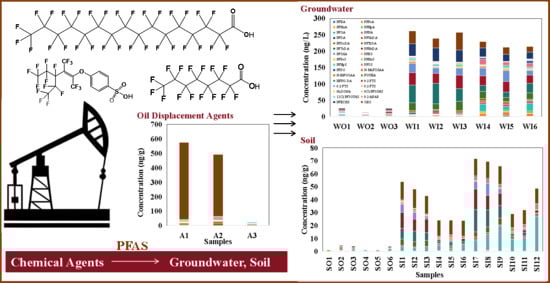
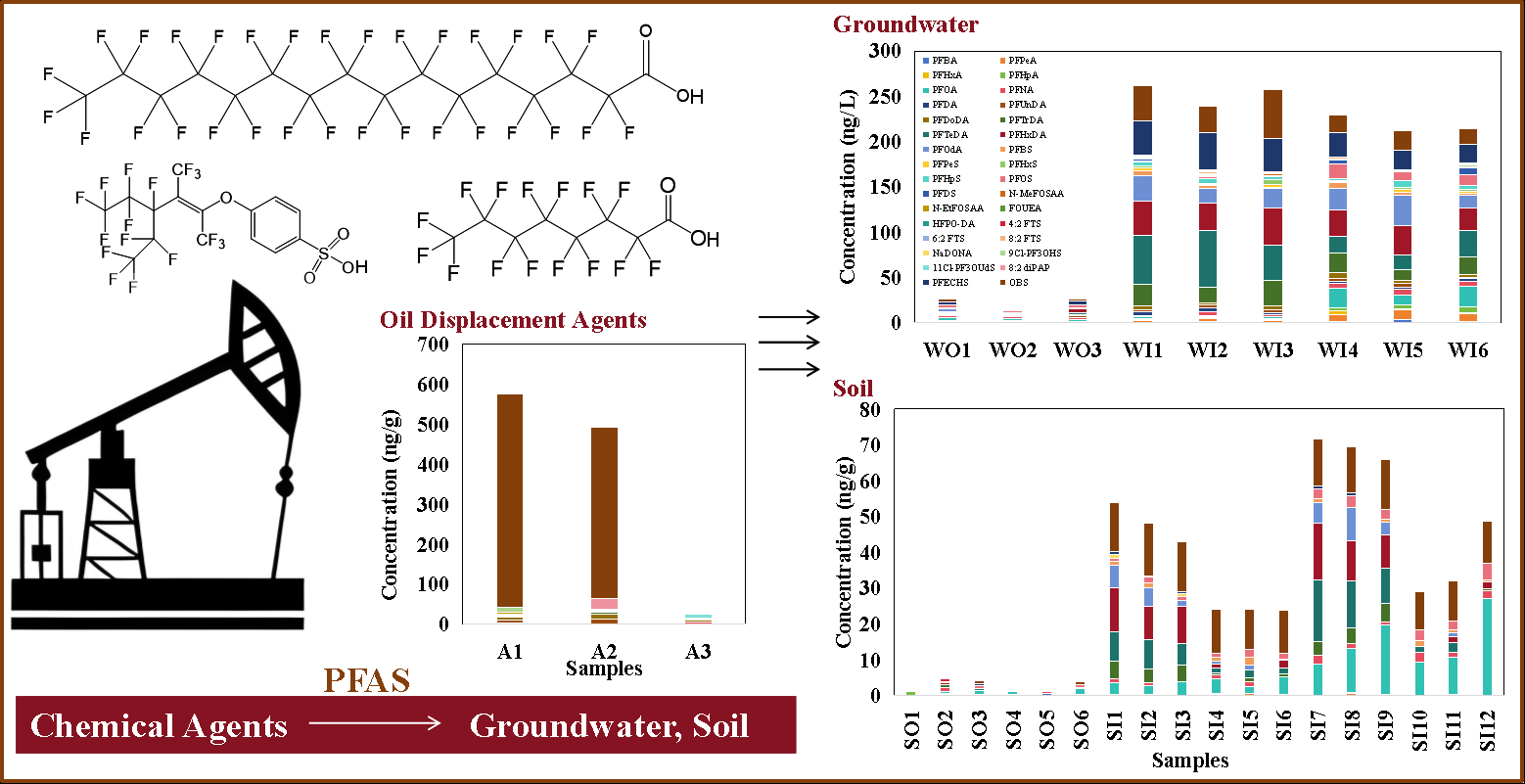
Graphical Abstract

1. Introduction

Per- and polyfluoroalkyl substances (PFAS) are a class of synthetic organic fluorinated compounds in which some or all of the hydrogen atoms on the carbon chain are replaced by fluorine atoms [1]. PFAS exhibit outstanding surface activity, chemical stability, and thermal resistance, making them extensively utilized in diverse industrial sectors and everyday applications, including textiles, paper production, packaging, pesticides, fluorinated polymer additives, lubricants, oil recovery, carpets, leather goods, floor maintenance products, shampoos and firefighting foams [2,3,4,5]. The widespread use of PFAS leads to their environmental presence, such as atmospheric particulate matter [6,7], soil, river, groundwater, drinking water [8,9,10,11], and sediment [12,13]. Up to now, around 5000 types of PFAS have been registered and identified in the environment. Various types of PFAS are detected in the environment, including perfluorinated carboxylic acids (PFCA), perfluorinated sulfonic acids (PFSA), perfluorinated sulfonamides (FOSA), fluorotelomer alcohols (FTOH), perfluorophosphonic acid (phosphonic acid), and their esters [14]. Two of the most commonly detected PFAS in the environment are PFOS and perfluorooctanoic acid (PFOA), also are the key end-products resulting from the transformation of various PFAS compounds [15].
The presence of high-energy C-F covalent bonds in PFAS molecules renders them resistant to photolysis, hydrolysis, and biodegradation [11,16]. The general population is mainly exposed to PFAS through food, drinking water, consumer products, indoor air, and dust [17,18,19,20]. These compounds have been extensively identified in environmental matrices, fauna, flora, and human organisms, emerging as globally significant persistent organic pollutants [21]. Studies in toxicology have revealed diverse toxic effects attributed to PFAS, encompassing notable hepatotoxicity, embryotoxicity, reproductive toxicity, neurotoxicity, and carcinogenicity, leading to endocrine disruption, behavioral alterations in animals, and potential developmental neurotoxic impacts in humans, particularly among infants [9,20,22,23]. Exposure of expectant mothers to PFAS also entails potential hazards to the physiological and psychological maturation of neonates and infants [24,25,26,27]. Therefore, PFAS has attracted widespread attention from governments, organizations, and researchers around the world due to its harmful effects on human health and the environment. For example, PFOA was officially listed in Annex A of the Stockholm Convention in 2019 [28]. In 2024, the US EPA plans to establish national primary drinking water regulations for PFAS, setting the maximum contamination limits for PFOS and PFOA at 4.0 ng/L [29]. Consequently, researchers from various countries are now focusing on the analysis methods and environmental occurrence of PFAS.
The petroleum industry is a strategically significant foundational industry for energy and chemical raw materials, holding an important position in the economies of major countries around the world. The application of certain PFAS, such as efficient oil recovery additives and fire extinguishing agents, has garnered significant attention in the petroleum industry, especially in the high-intensity tertiary oil recovery of older oilfields [30]. With the rapid economic development driving increasing oil demand and many of China’s oilfields entering the later stages of tertiary recovery, the industry’s demand for petroleum additives such as PFOS and other PFAS will continue to grow. Therefore, it is expected that activities related to oil extraction will inevitably result in the emission of PFAS, which will consequently lead to PFAS contamination in the surrounding environment [30,31,32]. For example, the concentration ranges of ΣPFASs in drill cuttings, slurry, and produced water from offshore oilfields in three major maritime regions of China were 1049–3473 ng/g and 81.9–2090 ng/L, respectively [30]. In addition, an increasing number of new PFAS have been introduced as substitutes under regulatory pressure, such as sodium OBS. This novel PFAS reached a maximum concentration of 3.2 × 10³ ng/L in groundwater near oil wells at the Daqing Oilfield [31].
Several studies have investigated the environmental presence of PFAS in the vicinity of oilfields [3,30]. However, there is currently no research on the environmental presence of PFAS within oilfields themselves or its occurrence in additives. Identifying the sources of PFAS in the oilfield environment, particularly the potential contribution from chemical additives, is essential for mitigating their usage. Therefore, this study aims to investigate the use and release of PFAS in the oilfield industry through the following objectives: (1) developing and optimizing HPLC–Orbitrap HRMS method for 32 PFAS; (2) characterizing PFAS occurrence in oilfield environments; (3) predicting bioaccumulation potential through molecular docking simulations; and (4) evaluating OBS cardiac developmental toxicity using zebrafish embryo assays with comparison to PFOS.

2. Materials and Methods

2.1. Standards and Reagents

Thirty-one native standards of target PFAS and nine masslabeled internal standards were purchased from Wellington Laboratories (Guelph, ON, Canada), which are listed in Supporting Information Table S1. OBS was purchased from Maclin (95%, Shanghai, China). HPLC-grade methanol and acetonitrile were purchased from Fisher Scientific (Pittsburgh, PA, USA). Ammonium acetate (NH4OAc, >97%) was purchased from Alfa Aesar (Ward Hill, MA, USA). Glass-fiber filter membranes (0.7 μm, 47 mm) were purchased from Sartorius Stedim Biotech (Gottingen, Germany). Oasis WAX solid-phase extraction cartridges (150 mg, 6 cc) were purchased from Waters Co. (Milford, MA, USA).

2.2. Samples Collection and Preparation

Samples were collected from an operational oilfield in eastern China (March–June 2023), which has a long development history and is in the tertiary oil recovery stage with oil displacement agents applied, being representative of mature oilfields in eastern China and consistent with the study focus. Three types of oil displacement agents (A1, A2, A3) were collected. Groundwater samples (n = 9) were collected from monitoring wells within the oilfield (WI1–WI6, n = 6) and reference wells outside the operational area (WO1 = WO3, n = 3). Soil samples (n = 18) were collected from old oilfield areas (>10 years operation, SI7–SI12, n = 6), new oilfield areas (<3 years operation, SI1–SI6, n = 6), and background areas (SO1–SO6, n= 6). Soil samples were collected at depths of 0.5 m and 2.0 m. The schematic diagram of the sampling layout is presented in SI Figure S1.
Groundwater Samples: Groundwater (1 L) was filtered through 0.7 µm glass fiber filters, spiked with 2 ng internal standards mixture, and extracted by WAX SPE. Cartridges were preconditioned with 4 mL methanol followed by 4 mL ultrapure water. Samples were loaded at approximately 10 mL/min. After washing with 4 mL of 25 mM ammonium acetate buffer and 4 mL methanol, analytes were eluted with 4 mL methanol and 4 mL 0.1% ammonia–methanol solution. This elution procedure was optimized based on the superior performance of alkaline methanol for eluting anionic PFAS from WAX columns [33,34,35].
Soil Samples: Soil samples (15 g) were freeze-dried and ground through 70-mesh sieve to eliminate coarse sand and debris, spiked with 2 ng internal standards, and extracted by pressurized fluid extraction (PFE) using ASE 350 system (Thermo Fisher Scientific, Waltham, MA, USA) with NaOH–methanol (5:95, w/v). The PFE extraction parameters: temperature 100 °C, pressure 1500 psi, static time 10 min, flush volume 60%, purge time 120 s, 3 static cycles. After extraction, the solvent was concentrated to dryness using a parallel concentrator. Afterwards, 50 mL of ultrapure water was added for dilution, and the aqueous solution was subjected to SPE as described above.
Oil Displacement Agents: Approximately 1 g was extracted with 20 mL acetonitrile (mechanical shaking 2 h at 200 rpm, ultrasonication 1 h at 40 °C), centrifuged at 6000 rpm for 10 min. The extraction was repeated once.

2.3. HPLC–Orbitrap-MS Analysis

To obtain the MS1 and MS2 spectrum of various PFAS, a HPLC (Vanquish, Thermo Fisher Scientific, Waltham, MA, USA) was used to separate the various PFAS in the solution. Subsequently, a high-resolution quadrupole orbitrap mass spectrometer (resolution of 70,000 FWHM and ∆M/M < 1 ppm) (Thermo Fisher Scientific, Waltham, MA, USA) was used to analyze the molecular mass and structure. The separation conditions of the HPLC and the operating parameters of the Orbitrap-MS are available in Supporting Information Text S1 and Table S2. The retention time and retention time reproducibility of PFAS are available in Supporting Information Table S3.

2.4. Quality Control and Quality Assurance

To reduce contamination, avoid the use of items and consumables containing PFAS during sampling and testing processes. Before experiments, tools, containers, and pipelines used need to be cleaned with methanol. Additionally, background blank analyses should be conducted for all consumables and solvents used in the entire process to ensure concentrations are below the instrument’s detection limit.
Quantification of target compound concentrations in samples is done using the internal standard method. The standard curve concentration gradient is 0.05, 0.10, 0.20, 0.50, 1.00, 2.00, 5.00, 10.00, 20.00, and 50.00 ng/mL. All PFAS standard curves have linear correlation coefficients greater than 0.99. To ensure the stability and reliability of quantitative results, blank and quality control samples are included in both pre-treatment and on-machine processes. The limit of detection is defined as the concentration corresponding to a signal-to-noise ratio (S/N) of 3. The matrix effect (ME) of PFAS in groundwater, soil, and oil displacement agents was assessed using nine isotopically labeled PFAS listed in Supporting Information Table S1. The calculation method for matrix effects (ME) is according to the Equation (1).
ME = K1/K2 − 1
K1 is the standard curve slope in different matrices, K2 is the standard curve slope in methanol.

2.5. Molecular Docking Simulations

Target proteins were selected based on their physiological relevance to PFAS toxicokinetics: human serum albumin (HSA, PDB: 1AO6) serves as the primary plasma transport protein responsible for PFAS distribution and systemic bioavailability [36,37] while liver fatty acid-binding protein (L-FABP, PDB: 3STM) mediates hepatic uptake and intracellular trafficking of PFAS [38,39]. Crystal structures were obtained from the Protein Data Bank (https://www.rcsb.org/, accessed on 11 March 2025) and prepared using AutoDockTools 1.5.7, including removal of crystallographic water molecules, addition of polar hydrogens, and assignment of Gasteiger charges [40].
PFAS structures were constructed using ChemDraw Professional 19.0 and energy-minimized using the MM2 force field with convergence criterion of 0.001 kcal/(mol·Å) [41]. Molecular descriptors including molecular weight, calculated octanol–water partition coefficient (log Kow), polar surface area (PSA), and number of rotatable bonds were computed using RDKit 2022.09.1 [42].
Docking simulations were performed using AutoDock Vina 1.2.037 with a grid box of 25 × 25 × 25 Å3 centered on the known ligandbinding sites (Sudlow Site I and II for HSA). For each PFAS–protein combination, 100 independent docking runs were executed with an exhaustiveness of 32. Docking scores (expressed in kcal/mol) were used as relative indicators of binding affinity, and the reported values represent the mean ± standard deviation from the top 10 lowest-energy conformations across all runs.
Predicted serum half-lives were estimated using quantitative structure–property relationship (QSPR) models based on molecular descriptors (chain length, molecular weight, log Kow) calculated by RDKit 2022.09.1, following the framework established by Ng and Hungerbühler [36,43].

2.6. Zebrafish Embryo Cardiac Toxicity Testing

The zebrafish embryo acute toxicity test was conducted in accordance with OECD Test Guideline 236 (Supporting Information Text S2). AB wild-type strain zebrafish were maintained at 28 ± 0.5 °C under 14:10 h light:dark photoperiod. Freshly fertilized eggs were collected within 2 h post-fertilization (hpf). Embryos (10/well in 24-well plates) were exposed to OBS at 0.1, 1, 10, 100 µg/L until 96 hpf. E3 embryo medium served as negative control. Exposure solutions were renewed daily. Each concentration was tested in three independent biological replicates using different batches of fertilized eggs (n = 30 embryos/concentration/replicate). The entire experiment was independently repeated three times.
Endpoints assessed: (1) Cumulative mortality and hatching success rates at 48, 72, 96 hpf; (2) Morphological abnormalities: pericardial edema (PE), spinal curvature (SC), yolk sac malformation (YSM); (3) Cardiac morphology: hearts photographed under stereomicroscope (scale bar: 100 µm); (4) Apoptosis: acridine orange staining at 48 hpf, apoptotic cells quantified using ImageJ 1.8.0 [44]; (5) Gene expression: qRT-PCR for bax, bcl-2, caspase-3, p53 (n = 3 biological replicates per group) using 2−∆∆CT method [45]. The statistical analysis methods are provided in the Supporting Information Text S3.
Comparative toxicity with PFOS: Parallel experiments were conducted with PFOS at identical concentrations as OBS (0.1, 1, 10, 100 µg/L) and experimental conditions. Median lethal concentration (LC50) and median effective concentration (EC50) values were calculated using probit analysis (SPSS 26.0). Dose–response curves were fitted using log-logistic model.

3. Results and Discussion

3.1. Establishment of a Highly Sensitive Analytical Method for Different Matrices

The results of method validation exhibit satisfactory performance across all tested matrices. For groundwater analysis, the recovery rates of PFAS were 81.2–119.1%, with relative standard deviations (RSDs) of 1.3–8.8%. The method detection limits (MDLs) and method quantification limits (MQLs) ranged from 0.01–0.36 ng/L and 0.05–0.53 ng/L, respectively. For soil samples, the recoveries varied from 89.6% to 119.8%, with RSDs between 4.7% and 9.1%, while the MDLs and MQLs ranged from 0.01 to 0.26 ng/g and 0.04 to 0.55 ng/g, respectively. For the oil displacement agents, recoveries were 90.3–112.6% with RSDs of 3.6–8.8%, and MDLs and MQLs were 0.02–0.31 ng/L and 0.05–0.68 ng/L, respectively (Supporting Information Table S4). And the results of the ME assessment showed that the MEs in groundwater, soil, and oil displacement agents were all relatively weak (<0.2) (Supporting Information Table S5). Retention time reproducibility was ≤0.1% RSD (n = 6), and inter-day precision of retention time was ≤0.5% RSD (n = 3 days). Besides, the stability of standard solutions and processed samples was evaluated under conditions that simulate routine analysis. The results confirmed that all working solutions remained stable for at least 72 h at 4 °C and for 24 h at room temperature. Stock and intermediate solutions exhibited no significant degradation when stored at −20 °C for over six months. Furthermore, processed samples maintained stability in the autosampler at 4 °C for up to 48 h, thereby ensuring data integrity throughout the analytical sequence. These results confirm that the optimized method is reliable and meets the analytical requirements for accurately quantifying the target PFAS in diverse environmental and industrial matrices, including water, soil, and chemical reagents.

3.2. Environmental Contamination Assessment

3.2.1. Groundwater Contamination

Among the 32 quantitatively targeted PFAS, 18 were detected in groundwater outside the well field, while 30 were detected in groundwater inside the well field. For the samples inside the well field, all of the PFCA (C4–C9) and PFSA (C5–C8) were detected (Supporting Information Table S6). In contrast to previous studies where short-chain PFAS typically dominate, this study found similarly high detection rates for both short- and long-chain homologues [46,47].
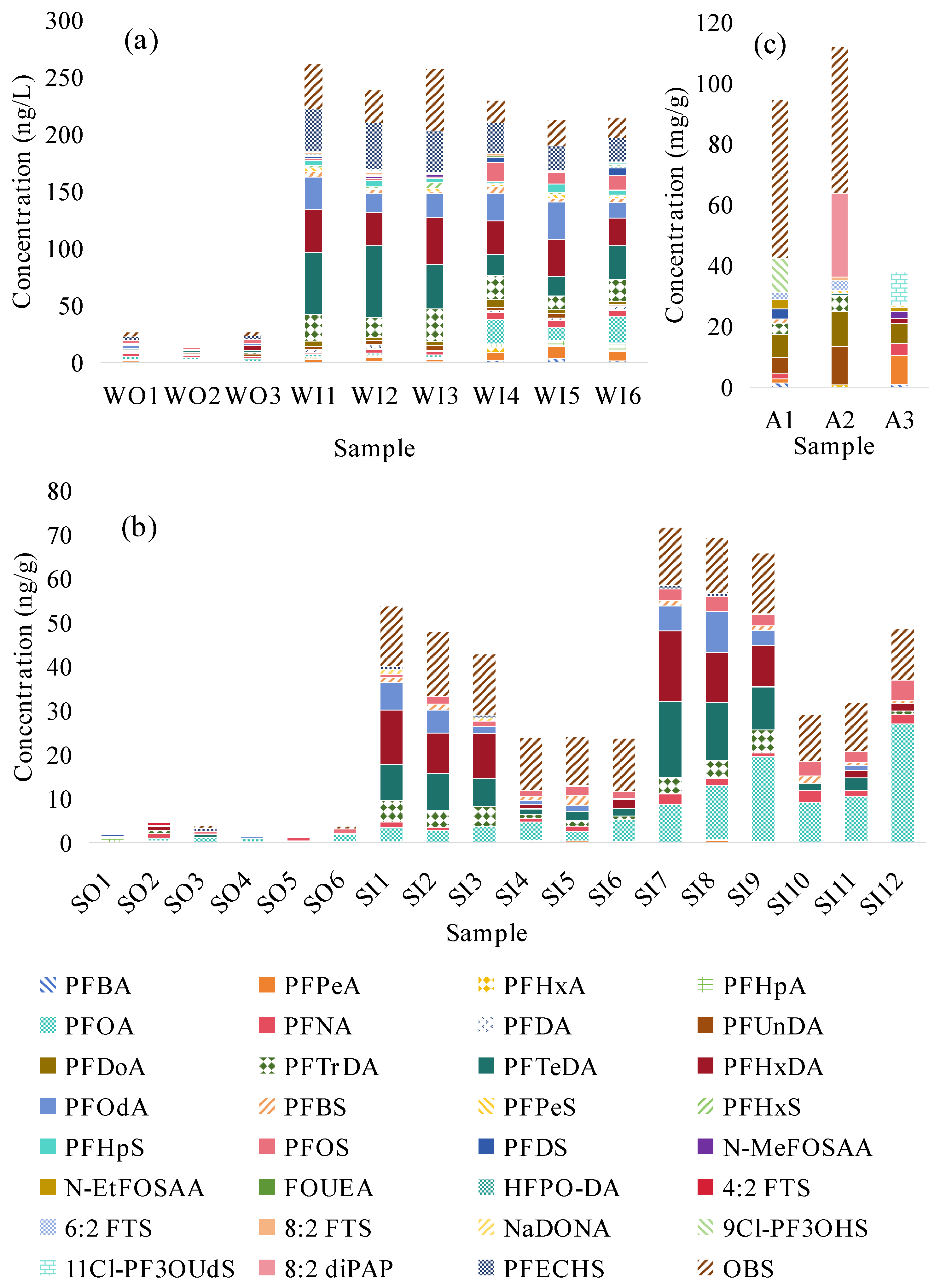
The concentration of ΣPFAS in samples WI1–6 ranged from 212.29 to 261.80 ng/L (average: 235.7 ng/L; median: 234.16 ng/L), which is higher than those in samples WO1–3 (13.17–26.48 ng/L, 22.02 ng/L, 26.41 ng/L) (Supporting Information Table S6). The concentrations of PFAS in both WI1–6 and WO1–3 are higher than those found in non-industrial areas of Jiangsu Province (2.69–556, 43.1 ng/L) [48] and the average concentration of PFAS in groundwater across four provinces in China (3.97 ng/L) [47]. The concentration of ∑PFAS (C ≥ 4) in our study is also higher than that observed in some certain surface waters, such as those influenced by urban wastewater [49,50] and in the surface waters surrounding Bohai Bay, China [51]. The possible reason may be that, compared with other studies, the groundwater sampling points in this study are closer to the PFAS emission sources. And the PFAS emissions from the petroleum extraction industry are much greater than those from residential sources. In the samples WI1–6, PFTeDA emerged as the predominant PFAS, exhibiting a concentration range of 16.82–62.79 ng/L and an average concentration of 36.64 ng/L, which constituted 15.6% of the total ΣPFAS (Figure 1). Following PFTeDA, PFHxDA (24.34–41.32 ng/L, average 32.46 ng/L), PFOA (21.32–41.29 ng/L, average 30.88 ng/L), OBS (17.21–53.9 ng/L, average 30.08 ng/L), PFOdA (13.82–32.89 ng/L, average 22.90 ng/L), and PFTrDA (11.63–28.66 ng/L, average 20.38 ng/L) accounted for 13.8%, 13.1%, 12.8%, 9.7%, and 8.6% of the total ΣPFAS, respectively (Figure 1). The remaining PFAS were detected at concentrations below 0.67 ng/L, contributing less than 5% each (Supporting Information Table S6). The presence of these persistent compounds in groundwater may pose a direct and long-term threat to the security of local water resources. Groundwater in this region serves as an irrigation source for agricultural lands. And bioaccumulative and non-degradable PFAS can enter the human body through food chains while also leaching into surface water, thereby contaminating broader aquatic ecosystems.

3.2.2. Soil Contamination

A total of 17 target PFAS were detected across the 18 soil samples, with higher detection rates observed for PFOA at 89%, PFOS at 83%, OBS at 78%, PFNA at 67%, PFBS at 67% and PFTeDA at 67%, indicating their widespread presence in the soil. As shown in Supporting Information Table S7, the total concentration of PFAS in the samples ranged from 1.01 to 71.65 ng/g, with an average concentration of 30.47 ng/g, which is much lower than that of soil impacted by fluorochemical factories, such as those near a fluorochemical factory in Huantai, Shandong (5.52–204, 39.2 ng/g) [52], a fluorochemical industrial park in Changshu, Jiangsu (5.93–123 ng/g) [53], and a fluorochemical park in Fuxing, Liaoning (2.4–240 ng/g) [54].
OBS emerged as a major contaminant, with concentrations ranging from ND to 13.91 ng/g (average: 8.48 ng/g), accounting for 27.8% of the ∑PFAS (Figure 1, Supporting Information Table S5). As an emerging PFAS widely used in oil extraction aids and firefighting foams [4], OBS has been frequently detected in the environments surrounding the Shengli Oilfield, Dagang Oilfield, and Daqing Oilfield [3,32,55]. In comparison to previous reports, the OBS concentration documented in this study is higher than that recorded in Dagang Oilfield soils (ND-2.58 ng/g, average 0.14 ng/g) and sediments (ND-19.3 ng/g, average 0.31 ng/g) [32], while being comparable to levels near OBS production plants (0.580–81.5 ng/g, average 4.00 ng/g) [56]. PFOA is the second most concentrated pollutant in the soil samples, following OBS. PFOA concentrations ranging from ND to 26.97 ng/g, with an average of 6.22 ng/g, representing 20.4% of the total pollutant content (Figure 1). This pollution level is much lower than that in soils impacted by point-source pollution, such as agricultural lands near fluoropolymer manufacturing facilities (35.8 ng/g) [52] and soils from firefighting training sites (76–1259, average 414 ng/g) [57]. In contrast, it exceeds the levels recorded in soils from the Tianjin Binhai area, characterized by heavy industry (0.4 ng/g) [58], and in soils from a fluorochemical industrial park in Jiangsu (2.24 ng/g) [59], indicating a relatively high level of pollution. PFOS concentrations range from ND to 4.66 ng/g, with an average of 1.63 ng/g, representing 5.3% of the total ΣPFAS content (Figure 1). The pollution level is significantly higher than that in typical agricultural soils, such as rice paddy soils in South Korea (0.0538 ng/g) [60].
Comparative analysis of the sampling locations indicated that ∑PFAS concentrations in samples SI7–12 (29.06–71.65 ng/g) from the older oilfield were significantly higher than those in samples SI1–6 (23.70–53.74 ng/g) from the recently developed area and background samples SO1–6 (1.01–4.62 ng/g) (Supporting Information Table S7), clearly implicating oil extraction activities as a major source. In addition, elevated concentrations of PFTrDA, PFTeDA, PFHxDA and PFOdA were detected in samples SI1–12, possibly due to the national regulations on PFOA and PFOS in China, leading to the gradual replacement of regulated PFAS with other PFAS.
The vertical distribution of PFAS also exhibited distinct patterns: short-chain compounds were more abundant at a depth of 2 m, while long-chain compounds predominated at 0.5 m, consistent with findings from previous studies [61,62,63,64]. The possible reasons may be as follows, firstly, the higher hydrophobicity of long-chain PFAS enhances their adsorption to surface soil organic matter, whereas the increased solubility and mobility of short-chain PFAS facilitate their leaching into deeper layers [63]. Secondly, short-chain PFAS like PFBS often exist in monomeric forms, accompanied by small aggregates, while long-chain PFAS tend to aggregate on soil hydroxyl surfaces [64], forming larger aggregates that restrict their kinetics relative to short-chain PFAS molecules [64]. Finally, long-chain PFAS may degrade and transform in soil environments, resulting in the formation of short-chain PFAS through biological processes and oxidation [65,66]. For example, some fluorinated gases and side-chain fluorinated polymers have been shown to degrade to PFAAs, such as highly persistent and mobile trifluoroacetic acid (TFA) [67,68,69].

3.3. PFAS Profile in Oil Displacement Agents

The use of oil displacement agents is a significant source of PFAS releases in oilfield environments. However, data on the presence of PFAS in these specific chemicals remain limited. This study quantified target PFAS in three commercially used oil displacement agents. A total of 19 PFAS were detected, with concentrations of ∑PFAS (C ≥ 4) measuring 574.49, 491.97, and 25.89 ng/g, respectively. OBS was the predominant compound, reaching a total concentration of 960.53 ng/g and was identified in two agents at concentrations of 574.49 and 491.97 ng/g. Additionally, elevated levels of PFTeDA and PFHxDA were detected, which is consistent with the patterns observed in groundwater and soil samples. As a contemporary substitute for PFOS, OBS serves as a highly effective surfactant. Its amphiphilic structure—comprising a hydrophobic fluorinated tail and a hydrophilic benzenesulfonate head—significantly reduces oil–water interfacial tension, a crucial factor for mobilizing residual oil. Likewise, the inclusion of long-chain perfluoroalkyl carboxylic acids (PFCAs) is purposeful: their remarkable thermal and chemical stability ensures optimal performance under demanding reservoir conditions [70,71]. Additionally, their hydrophobicity and surface activity facilitate modifications to rock wettability and the stabilization of emulsions, which in turn enhances displacement efficiency [72,73].
Notably, none of the three PFAS types (PFOA, PFOS, and PFHxS) currently regulated in China were detected. This absence likely reflects manufacturers’ shift toward alternative substances in response to national policies. The PFOA and PFOS identified in environmental samples may originate from historical usage. The concentrations of ∑PFAS in these agents significantly exceeded those found in groundwater and soil (Supporting Information Table S8), indicating that oil displacement agents and their transformation products are important sources of PFAS contamination in the local environment, in addition to background contamination.

3.4. Bioaccumulation Prediction Through Molecular Docking and QSPR Modeling

3.4.1. Chain Length–Binding Affinity Relationship

Molecular docking simulations were employed to predict PFAS bioaccumulation potential through quantitative assessment of protein–ligand binding interactions. Table S9 presents comprehensive molecular docking results demonstrating a strong positive correlation between perfluoroalkyl chain length and protein binding affinity. Linear regression analysis revealed r2 = 0.94 (p < 0.001, n = 7 representative PFAS compounds), indicating that chain length accounts for 94% of the variance in human serum albumin (HSA) binding affinity.
PFHxDA (C16) exhibited the strongest HSA binding affinity (−10.3 ± 0.5 kcal/mol), consistent with its ultra-long perfluoroalkyl chain providing extensive hydrophobic interactions within the HSA binding pocket. Conversely, PFBS (C4) demonstrated the weakest binding (−5.2 ± 0.3 kcal/mol) due to its shorter chain length and reduced van der Waals contact surface. The binding affinity increment per additional CF2 unit was approximately −0.4 kcal/mol, consistent with the additive nature of hydrophobic interactions [37].

3.4.2. OBS Binding Characteristics

OBS exhibited a unique binding profile (docking score = −7.9 ± 0.4 kcal/mol) that merits particular attention. Despite possessing a C9 perfluoroalkyl chain, OBS demonstrated binding affinity comparable to PFOS (C8, docking score = −8.1 ± 0.2 kcal/mol). Molecular visualization indicated that the binding of OBS is stabilized through three key interactions: hydrophobic interactions, π-π stacking interactions and electrostatic interactions. The perfluorononenoxy chain occupies the hydrophobic cavity of Sudlow Site II through extensive van der Waals contacts with residues Leu387, Ile388, Leu394, and Phe403 [37]. The benzene ring moiety forms parallel-displaced π-π stacking with aromatic amino acid residues Phe211 and Trp214, contributing approximately −1.2 kcal/mol to the total binding energy [74]. Additionally, the sulfonate group (-SO3) forms hydrogen bonds with Arg410 and Tyr411, providing additional binding stabilization [34].
The aromatic ring in OBS distinguishes it from conventional linear PFAS and may influence its toxicokinetic behavior through enhanced protein binding and potentially altered metabolic pathways [75].

3.4.3. QSPR-Based Serum Half-Life Prediction

Predicted serum half-lives were estimated using QSPR models based on the framework established by Ng and Hungerbühler [36] which correlates molecular descriptors with experimentally determined elimination half-lives in humans. The QSPR model employed the following equation:
log(t1/2) = a0 + a1 · nC + a2 · log Kow + a3 · PSA
where t1/2 is the predicted serum half-life (years), nC is the number of perfluorinated carbons, log Kow is the calculated octanol–water partition coefficient, and PSA is the polar surface area. The model coefficients (a0 through a3) were derived from training data consisting of 15 PFAS with experimentally determined human half-lives [36,76].
The predicted serum half-lives ranged from approximately 2 years for PFBS (C4) to >8 years for PFHxDA (C16). OBS was estimated to have a half-life of approximately 6 years based on QSPR modelling, which exceeds that of PFOS (~5 years) despite their similar HSA binding affinities. This difference may be attributable to the aromatic ring structure reducing renal clearance efficiency [77]. It should be emphasized that these computational predictions serve as screening level estimates and should not be interpreted as definitive toxicokinetic parameters. The QSPR model was trained predominantly on linear perfluoroalkyl acids, and its predictive accuracy for structurally divergent compounds such as OBS (containing aromatic ring and ether linkage) remains uncertain. Furthermore, the model does not account for potential metabolic transformation, enterohepatic recirculation, or individual variability in elimination kinetics [78]. Direct pharmacokinetic measurements in mammalian models are urgently needed to validate these predictions and establish the actual human elimination half-life of OBS.
Molecular docking and QSPR studies indicated that OBS and long-chain PFAS exhibited high toxicity and bioaccumulation potential. And the high detection concentrations of these PFAS alternatives in environmental and oil displacement agents samples suggest potential environmental risks associated with PFAS substitutes.

3.5. Zebrafish Embryo Cardiac Developmental Toxicity

3.5.1. Cardiac Morphological Changes

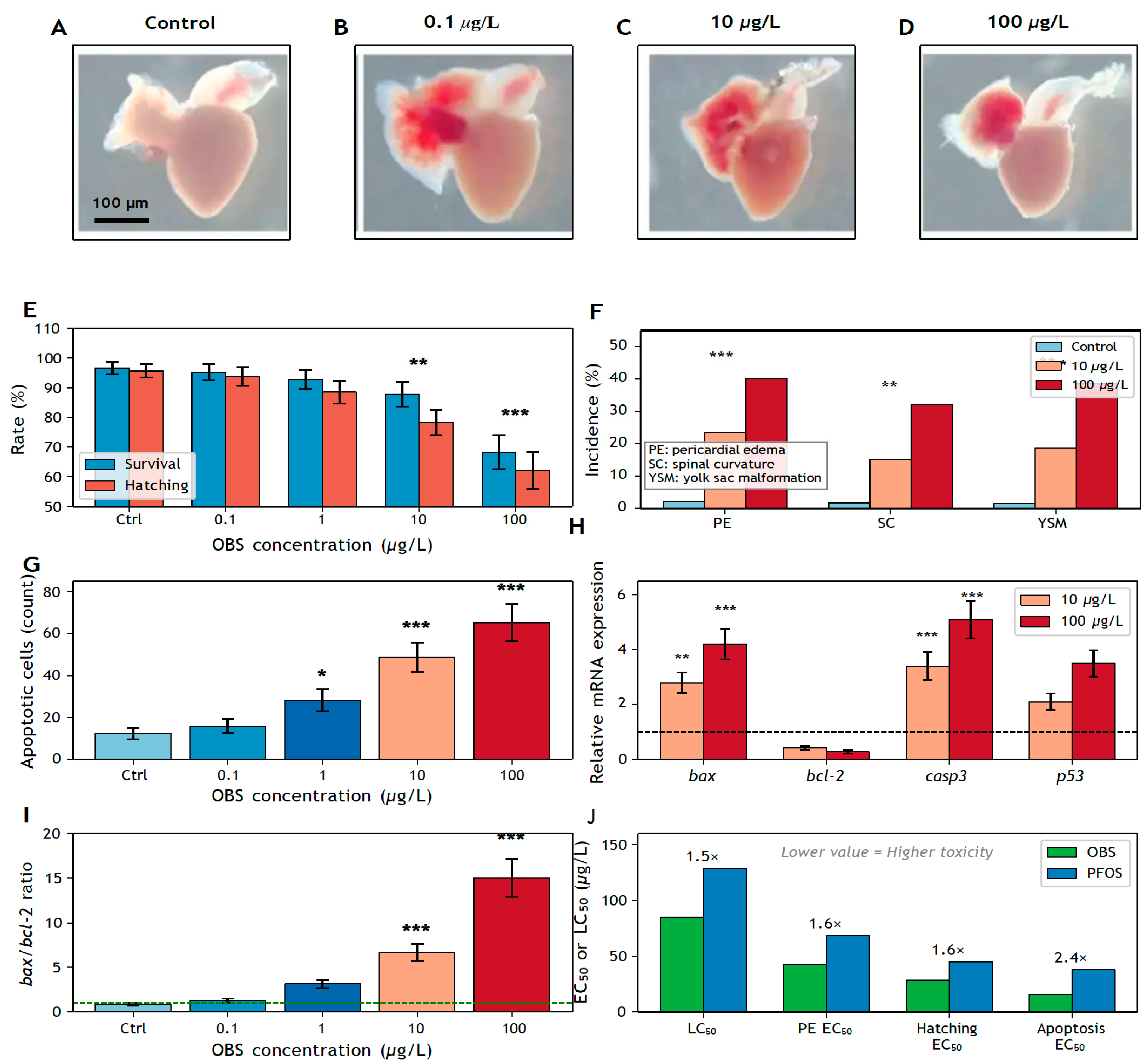
Figure 2 presents comprehensive cardiac developmental toxicity results. Microscopic examination of hearts at 72 hpf revealed dose-dependent morphological alterations. Control hearts exhibited normal compact morphology, with a distinct demarcation between the atrium and ventricle, absence of pericardial effusion, and a well-defined cardiac silhouette (Figure 2A). Conversely, embryos exposed to 0.1 μg/L OBS displayed cardiac morphology comparable to that of the control group, showing no detectable pericardial edema and maintaining structural integrity at the atrioventricular junction (Figure 2B). Exposure to 10 μg/L OBS resulted in mild pericardial edema, characterized by subtle pericardial effusion and slight expansion of the pericardial cavity compared to the control. This exposure was also associated with mild ventricular dilation without significant structural disarray (Figure 2C). At the highest concentration of 100 μg/L OBS, pronounced pericardial edema was observed, manifested as marked fluid accumulation that caused evident distension of the pericardial sac. Additionally, this exposure led to significant cardiac morphological abnormalities, including atrial and ventricular dilation, obscuration of the atrioventricular boundary, and reduced cardiac compactness (Figure 2D). Collectively, these morphological alterations confirm the concentration-dependent cardiac developmental toxicity induced by OBS.

3.5.2. Survival and Hatching Rates

OBS exposure caused concentration-dependent decreases (mean ± SD, n = 3 independent replicates). In the negative control group, zebrafish embryos maintained high viability and developmental competence, with a survival rate of 96 ± 2% and a hatching success rate of 95 ± 3% at 96 hpf, confirming the stability of the experimental system. At a concentration of 10 μg/L OBS, significant reductions in both endpoints were observed relative to the control: the survival rate decreased to 88 ± 4% (* p < 0.05), and the hatching rate declined to 80 ± 5% (** p < 0.01). These results indicate that 10 μg/L OBS exceeds the threshold for inducing mild developmental toxicity in zebrafish embryos. When the OBS concentration was further elevated to 100 μg/L, the toxic effects were substantially exacerbated. The cumulative survival rate dropped sharply to 68 ± 6% (*** p < 0.001), and the hatching success rate decreased to 62 ± 7% (*** p < 0.001) at 96 hpf. Notably, the magnitude of the reduction in survival and hatching rates was positively correlated with OBS concentration, reflecting a concentration-dependent enhancement of toxicological effects.

3.5.3. Morphological Abnormalities

To systematically evaluate the developmental toxicity of OBS, the incidence of three typical morphological abnormalities (PE, SC and YSM) was quantified in zebrafish embryos. In the control group, the background incidence of morphological abnormalities was extremely low, with PE at 3 ± 2%, SC at 2 ± 1%, and YSM at 2 ± 2%, confirming the absence of nonspecific developmental defects induced by the experimental system. At an OBS concentration of 10 μg/L, we observed a significant increase in the incidence of all tested abnormalities, with PE rising to 23 ± 5%, SC to 18 ± 4%, and YSM to 19 ± 5%. This clear upward trend relative to the control indicated the initiation of developmental toxicity at this sub-threshold concentration. When the OBS concentration was elevated to 100 μg/L, the incidence of morphological abnormalities significantly worsened, exhibiting statistically significant differences compared to the control group. Specifically, the incidence of PE increased to 41 ± 8% (*** p < 0.001), establishing it as the most prominent abnormality induced by high-concentration OBS exposure. The incidences of SC and YSM also rose to 32 ± 7% (** p < 0.01) and 35 ± 6% (* p < 0.05), respectively. These severe morphological defects—characterized by fluid accumulation in the pericardial cavity, structural distortion of the spinal column, and impaired yolk sac resorption—are indicative of disrupted embryonic development. Collectively, these results demonstrate a concentration-dependent increase in the incidence and severity of morphological abnormalities in zebrafish embryos exposed to OBS.

3.5.4. Gene Expression Analysis

As illustrated in Figure 2H, exposure to OBS elicited a significant perturbation in the apoptosis-related gene network. The pro-apoptotic gene bax exhibited a remarkable upregulation of 4.2 ± 0.7-fold compared to the control group (*** p < 0.001), while the anti-apoptotic gene bcl-2 was downregulated to 0.3 ± 0.08-fold of the control (*** p < 0.001). Consequently, the bax/bcl-2 ratio, a critical indicator of apoptotic propensity, increased by 15 ± 2.5-fold (Figure 2I), indicating a significant shift toward pro-apoptotic signaling. Moreover, the expression of caspase-3, a crucial downstream executor of the mitochondrial apoptotic pathway, was upregulated by 5.1 ± 0.9-fold (*** p < 0.001), and the tumor suppressor gene p53, an essential regulator of cell cycle arrest and apoptosis initiation, was elevated by 3.5 ± 0.6-fold (*** p < 0.001). Collectively, these gene expression patterns confirm that OBS activates the mitochondrial apoptotic pathway in the cardiac tissues of developing zebrafish. The coordinated upregulation of pro-apoptotic genes (bax, caspase-3, p53) along with the downregulation of the anti-apoptotic gene bcl-2 contributes to excessive apoptosis, consistent with the observed morphological abnormalities and impaired survival/hatching rates. This molecular evidence further substantiates the concentration-dependent cardiac developmental toxicity of OBS, linking phenotypic alterations to the dysregulation of underlying apoptotic signaling.

3.5.5. Comparative Toxicity: OBS vs. PFOS

Direct comparison with PFOS (conducted under identical experimental conditions) revealed OBS exhibits higher developmental toxicity:
  • LC50: OBS 85 ± 12 µg/L vs. PFOS 128 ± 18 µg/L (1.5×)
  • PE EC50: OBS 45 ± 8 µg/L vs. PFOS 72 ± 11 µg/L (1.6×)
  • Hatching EC50: OBS 38 ± 6 µg/L vs. PFOS 61 ± 9 µg/L (1.6×)
  • Apoptosis EC50: OBS 15 ± 3 µg/L vs. PFOS 36 ± 6 µg/L (2.4×)
These results suggest that OBS may exhibit 1.5–2.4 times higher developmental toxicity than PFOS based on acute developmental toxicity experiments in a zebrafish embryo model. However, it is important to note that extrapolation to chronic human exposure risks requires caution due to: (1) species-specific toxicokinetic differences, (2) potential metabolic transformation pathways unique to mammals, and (3) long-term low-dose exposure effects not captured in 96 hpf acute assays. Further chronic toxicity studies in mammalian models and human epidemiological investigations are warranted to fully characterize the health risks of OBS.

3.6. Implications for Advancing PFAS Toxicity Research

This study addresses a significant gap in PFAS toxicology and provides actionable insights for optimizing research paradigms. Our findings highlight the urgent need to expand mechanistic research to structurally modified substitutes such as OBS. The presence of the aromatic ring and ether linkage in OBS enhances its binding affinity for serum albumin and increases cardiac developmental toxicity through mitochondrial apoptotic pathways, revealing a structure–activity relationship (SAR) that is largely overlooked by current in silico prediction models. Furthermore, our zebrafish embryo assay confirms that organ-specific and molecular endpoints (e.g., pericardial edema, bax/bcl-2 ratio) demonstrate greater sensitivity to emerging PFAS compared to general survival metrics, thereby providing a basis for updating standard toxicity testing batteries. Most importantly, the finding that OBS exhibits 1.5–2.4 times greater toxicity than PFOS challenges the prevailing “safer substitute” paradigm, underscoring the necessity for pre-market comparative toxicity evaluations of novel PFAS. These findings significantly advance PFAS toxicology by incorporating structural diversity, mechanistic specificity, and rigorous risk assessment into research frameworks.

4. Conclusions

This study established a sensitive analytical framework utilizing LC–HRMS for the simultaneous determination of 32 PFAS in environmental and industrial samples. The optimized method was successfully applied to investigate the distribution, sources, migration behavior, and associated toxicity assessment of PFAS in oilfield-related matrices. A robust HPLC–Q-Orbitrap HRMS method has been successfully established, demonstrating high sensitivity, low detection limits, and satisfactory recoveries for complex environmental monitoring. Various PFAS were detected in groundwater and soil samples from oilfield regions, with particularly high detection rates observed for substances such as OBS, PFOA, PFOS, PFTeDA and PFHxDA. Oilfield activities significantly elevated PFAS concentrations in these matrices compared to surrounding areas. Oil displacement agents were identified as major emission sources, with much higher PFAS levels than environmental samples. Vertical soil distribution showed short-chain PFAS tend to migrate to deeper layers due to their greater solubility and mobility, while long-chain PFAS preferentially adsorb to surface soils owing to their strong hydrophobicity. Molecular docking demonstrated chain length–binding affinity correlation (r2 = 0.94, n = 7), with OBS showing relatively high bioaccumulation potential (docking score = −7.9 ± 0.4 kcal/mol, predicted serum half-life of ~6 years based on QSPR modelling). Zebrafish embryo toxicity tests showed OBS-induced concentration-dependent cardiac toxicity, 1.5–2.4 times more potent than PFOS (LC50: 85 vs. 128 µg/L; apoptosis EC50: 15 vs. 36 µg/L). These findings suggest that OBS warrants careful evaluation regarding its safety as a PFOS alternative, and further long-term mammalian and epidemiological studies are needed to comprehensively assess human health risks. This integrated analytical–computational–experimental framework provides a methodological approach for PFAS risk assessment in industrial environments, with implications for environmental monitoring and regulatory evaluation of emerging fluorinated contaminants.

Supplementary Materials

The following supporting information can be downloaded at: https://www.mdpi.com/article/10.3390/toxics14020116/s1, Figure S1: Sampling sites in the Oilfield; Figure S2: qRT-PCR analysis at 100 µg/L OBS; Text S1. The operating parameters of the HRMS; Text S2: The reason for using zebrafish for toxicity assessment; Text S3: The statistical analysis methods of the toxicity test; Table S1. The information of PFAS native standards and masslabeled internal standards; Table S2: The gradient elution conditions for HPLC; Table S3: The retention time of PFAS; Table S4: The whole method performance for PFAS in groundwater soil and oil displacement agents, including recovery, MLD, MLQ and RSD; Table S5: The matrix effect of PFAS; Table S6: The occurrence of target PFAS in the groundwater samples (unit: ng/L); Table S7: The occurrence of target PFAS in the soil samples (unit: ng/g); Table S8: The occurrence of target PFAS in the oil displacement agents samples (unit: ng/g); Table S9. Molecular docking results for PFAS.

Funding

This research was funded by the technology projects of China Petrochemical Corporation [grant number H24010].

Institutional Review Board Statement

All animal procedures were approved by the Institutional Animal Care and Use Committee of SINOPEC Research Institute of Safety Engineering Co., Ltd. (No. RISE-2024-04, 2024-03-12).

Informed Consent Statement

Not applicable.

Data Availability Statement

The original contributions presented in this study are included in the article/Supplementary Materials. Further inquiries can be directed to the corresponding author.

Acknowledgments

During the preparation of this manuscript, the author used Hiplot (https://hiplot.com.cn/cloud-tool/drawing-tool/list, accessed on 15 August 2025) for the purposes of polishing. The author has reviewed and edited the output and takes full responsibility for the content of this publication.

Conflicts of Interest

Author Xuefeng Sun was employed by the company SINOPEC Research Institute of Safety Engineering Co., Ltd. The research was conducted in the absence of any commercial or financial relationships that could be construed as a potential conflict of interest.

References

  1. Zarębska, M.; Bajkacz, S. Poly- and perfluoroalkyl substances (PFAS)—Recent advances in the aquatic environment analysis. TrAC Trends Anal. Chem. 2023, 163, 117062. [Google Scholar] [CrossRef]
  2. Moody, C.A.; Field, J.A. Perfluorinated surfactants and the environmental implications of their use in fire-fighting foams. Environ. Sci. Technol. 2000, 34, 3864–3870. [Google Scholar] [CrossRef]
  3. Xu, L.; Shi, Y.L.; Li, C.X.; Song, X.W.; Qin, Z.F.; Cao, D.; Cai, Y.Q. Discovery of a novel polyfluoroalkyl benzenesulfonic acid around oilfields in Northern China. Environ. Sci. Technol. 2017, 51, 14173–14181. [Google Scholar] [CrossRef]
  4. Bao, Y.X.; Qu, Y.X.; Huang, J.; Cagnetta, G.; Yu, G.; Weber, R. First assessment on degradability of sodium p-perfluorous nonenoxybenzene sulfonate (OBS), a high volume alternative to perfluorooctane sulfonate in fire-fighting foams and oil production agents in China. RSC Adv. 2017, 7, 46948–46957. [Google Scholar] [CrossRef]
  5. Gaines, L.G.T. Historical and current usage of per- and polyfluoroalkyl substances (PFAS): A literature review. Am. J. Ind. Med. 2023, 66, 353–378. [Google Scholar] [CrossRef]
  6. Yu, N.Y.; Guo, H.W.; Yang, J.P.; Jin, L.; Wang, X.B.; Shi, W.; Zhang, X.W.; Si, H.X. Non-target and suspect screening of per- and polyfluoroalkyl substances in airborne particulate matter in China. Environ. Sci. Technol. 2018, 52, 8205–8214. [Google Scholar] [CrossRef]
  7. Yu, N.Y.; Wen, H.Z.; Wang, X.B.; Yamazaki, E.; Taniyasu, S.; Yamashita, N.; Yu, H.X.; Wei, S. Nontarget discovery of per- and polyfluoroalkyl substances in atmospheric particulate matter and gaseous phase using cryogenic air sampler. Environ. Sci. Technol. 2020, 54, 3103–3113. [Google Scholar] [CrossRef] [PubMed]
  8. Dhore, R.; Murthy, G.S. Per/polyfluoroalkyl substances production, applications and environmental impacts. Bioresour. Technol. 2021, 341, 125808. [Google Scholar] [CrossRef]
  9. Sunderland, E.M.; Hu, X.C.; Dassuncao, C.; Tokranov, A.K.; Wagner, C.C.; Allen, J.G. A review of the pathways of human exposure to poly- and perfluoroalkyl substances (PFASs) and present understanding of health effects. J. Expo. Sci. Environ. Epidemiol. 2019, 29, 131–147. [Google Scholar] [CrossRef] [PubMed]
  10. Ahmed, M.B.; Johir, M.A.H.; McLaughlan, R.; Nguyen, L.N.; Xu, B.; Nghiem, L.D.; Ahmed, M.B.; Johir, M.A.H.; McLaughlan, R.; Nguyen, L.N.; et al. Per- and polyfluoroalkyl substances in soil and sediments: Occurrence, fate, remediation and future outlook. Sci. Total Environ. 2020, 748, 141251. [Google Scholar] [CrossRef] [PubMed]
  11. Sapozhnikova, Y.; Stroski, K.M.; Haddad, S.P. Per- and polyfluoroalkyl substances (PFAS) accumulation in fish occupying different trophic positions from East Canyon Creek, a seasonally effluent-dominated river, Utah, USA. Environ. Res. 2025, 266, 120480. [Google Scholar] [CrossRef] [PubMed]
  12. Lin, Y.; Ruan, T.; Liu, A.F.; Jiang, G.B. Identification of novel hydrogen-substituted polyfluoroalkyl ether sulfonates in environmental matrices near metal-plating facilities. Environ. Sci. Technol. 2017, 51, 11588–11596. [Google Scholar] [CrossRef]
  13. Li, Q.; Liu, C.; Wang, S.Q.; Liu, Y.W.; Ma, X.X.; Li, Y.Y.; Li, W.L.; Wang, X.H. Decade-long historical shifts in legacy and emerging per- and polyfluoroalkyl substances (PFAS) in surface sediments of China’s marginal seas: Ongoing production and ecological risks. Environ. Res. 2024, 263, 119978. [Google Scholar] [CrossRef]
  14. Wang, Z.; Dewitt, J.C.; Higgins, C.P.; Cousins, I.T. A never-ending story of per- and polyfluoroalkyl substances (PFASs)? Environ. Sci. Technol. 2017, 51, 2508–2518. [Google Scholar] [CrossRef]
  15. Meng, J.; Wang, T.Y.; Wang, P.; Zhang, Y.Q.; Li, Q.F.; Lu, Y.L.; Giesy, J.P. Are levels of perfluoroalkyl substances in soil related to urbanization in rapidly developing coastal areas in North China? Environ. Pollut. 2015, 199, 102–109. [Google Scholar] [CrossRef]
  16. Buck, R.C.; Franklin, J.; Berger, U.; Conde, J.M.; Cousins, I.T.; de Voogt, P.; Jensen, A.A.; Kannan, K.; Mabury, S.A.; van Leeuwen, S.P.J. Perfluoroalkyl and polyfluoroalkyl substances in the environment: Terminology, classification, and origins. Integr. Environ. Assess. Manag. 2011, 7, 513–541. [Google Scholar] [CrossRef]
  17. D’Hollander, W.; de Voogt, P.; De Coen, W. Perfluorinated substances in human food and other sources of human exposure. Rev. Environ. Contam. Toxicol. 2010, 208, 179–215. [Google Scholar]
  18. Haug, L.S.; Huber, S.; Becher, G.; Thomsen, C. Characterisation of human exposure pathways to perfluorinated compounds: Comparing exposure estimates with biomarkers of exposure. Environ. Int. 2011, 37, 687–693. [Google Scholar] [CrossRef]
  19. Abunada, Z.; Alazaiza, M.Y.D.; Bashir, M.J.K. An overview of per- and polyfluoroalkyl substances (PFAS) in the environment: Source, fate, risk and regulations. Water 2020, 12, 3590. [Google Scholar] [CrossRef]
  20. Panieri, E.; Baralic, K.; Djukic-Cosic, D.; Djordjevic, A.B.; Saso, L. PFAS molecules: A major concern for the human health and the environment. Toxics 2022, 10, 44. [Google Scholar] [CrossRef] [PubMed]
  21. Parsons, J.R.; Saez, M.; Dolfing, J.; Voogt, P.D. Biodegradation of perfluorinated compounds. Rev. Environ. Contam. Toxicol. 2008, 196, 53–71. [Google Scholar]
  22. Schillemans, T.; Bergdahl, I.A.; Hanhineva, K.; Sawamura, M.; Sasaki, Y.; Iwazaki, E.; Mori, N.; Yamamoto, I.; Arai, T. Associations of PFAS-related plasma metabolites with cholesterol and triglyceride concentrations. Environ. Res. 2023, 216, 114570. [Google Scholar] [CrossRef] [PubMed]
  23. Zahm, S.; Bonde, J.P.; Chiu, W.A.; Hoppin, J.; Kanno, J.; Abdallah, M.; Blystone, C.R.; Calkins, M.M.; Dong, G.H.; Dorman, D.C. Carcinogenicity of perfluorooctanoic acid and perfluorooctanesulfonic acid. Lancet Oncol. 2024, 25, 16–17. [Google Scholar] [CrossRef]
  24. Lau, C.; Anitole, K.; Hodes, C.; Lai, D.; Pfahles-Hutchens, A.; Seed, J. Perfluoroalkyl acids: A review of monitoring and toxicological findings. Toxicol. Sci. 2007, 99, 366–394. [Google Scholar] [CrossRef]
  25. Zheng, F.; Sheng, N.; Zhang, H.X.; Yan, S.M.; Zhang, J.H.; Wang, J.S. Perfluorooctanoic acid exposure disturbs glucose metabolism in mouse liver. Toxicol. Appl. Pharmacol. 2017, 335, 41–48. [Google Scholar] [CrossRef]
  26. Liu, M.; Zhang, G.X.; Meng, L.L.; Han, X.; Li, Y.M.; Shi, Y.L.; Li, A.; Turyk, M.E.; Zhang, Q.H.; Jiang, G.B. Associations between novel and legacy per- and polyfluoroalkyl substances in human serum and thyroid cancer: A case and healthy population in Shandong Province, East China. Environ. Sci. Technol. 2022, 56, 6144–6151. [Google Scholar] [CrossRef] [PubMed]
  27. Xia, X.W.; Zheng, Y.X.; Tang, X.W.; Zhao, N.; Wang, B.; Lin, H.; Lin, Y.F. Nontarget identification of novel per- and polyfluoroalkyl substances in cord blood samples. Environ. Sci. Technol. 2022, 56, 17061–17069. [Google Scholar] [CrossRef]
  28. United Nations Environment Programme (UNEP). Listing of perfluorooctanoic acid (PFOA), its salts and PFOA-related compounds (UNEP/POPS/COP.9/SC-9/12). In Proceedings of the Ninth Meeting of the Conference of the Parties to the Stockholm Convention on Persistent Organic Pollutants, Geneva, Switzerland, 29 April–10 May 2019. [Google Scholar]
  29. United States Environmental Protection Agency (US EPA). Per- and Polyfluoroalkyl Substances (PFAS) Final PFAS National Primary Drinking Water Regulation; United States Environmental Protection Agency (US EPA): Washington, DC, USA, 2024. [Google Scholar]
  30. Wang, Y.M.; Chen, H.; Xing, Q.H.; Xu, X.M. Emerging and legacy per- and polyfluoroalkyl substances from offshore oilfields and receiving water in China. Environ. Res. 2025, 280, 121865. [Google Scholar] [CrossRef]
  31. Siegel, H.G.; Nason, S.L.; Warren, J.L.; Pruna, O.; Deziel, N.C.; Saiers, J.E. Investigation of sources of fluorinated compounds in private water supplies in an oil and gas-producing region of Northern West Virginia. Environ. Sci. Technol. 2023, 57, 17452–17464. [Google Scholar] [CrossRef] [PubMed]
  32. Meng, Y.; Yao, Y.; Chen, H. Legacy and emerging per- and polyfluoroalkyl substances (PFASs) in Dagang Oilfield: Multimedia distribution and contributions of unknown precursors. J. Hazard. Mater. 2021, 412, 125177. [Google Scholar] [CrossRef]
  33. Taniyasu, S.; Kannan, K.; Man, K.S.; Gulkowska, A.; Sinclair, E.; Okazawa, T.; Yamashita, N. Analysis of fluorotelomer alcohols fluorotelomer acids, and shortand long-chain perfluorinated acids in water and biota. J. Chromatogr. A 2005, 1093, 89–97. [Google Scholar] [CrossRef]
  34. Zhou, Z.; Liang, Y.; Shi, Y.L.; Xu, L.; Cai, Y.Q. Occurrence and transport of perfluoroalkyl acids (PFAAs), including short-chain PFAAs in Tangxun Lake, China. Environ. Sci. Technol. 2013, 47, 9249–9257. [Google Scholar] [CrossRef]
  35. Lin, Y.F.; Liu, R.Z.; Hu, F.B.; Liu, R.R.; Ruan, T.; Jiang, G.B. Simultaneous qualitative and quantitative analysis of fluoroalkyl sulfonates in riverine water by liquid chromatography coupled with Orbitrap high resolution mass spectrometry. J. Chromatogr. A 2016, 1435, 66–74. [Google Scholar] [CrossRef]
  36. Ng, C.A.; Hungerbühler, K. Bioaccumulation of perfluorinated alkyl acids: Observations and models. Environ. Sci. Technol. 2014, 48, 4637–4648. [Google Scholar] [CrossRef] [PubMed]
  37. Ng, C.A.; Hungerbühler, K. Exploring the use of molecular docking to identify bioaccumulative perfluorinated alkyl acids (PFAAs). Environ. Sci. Technol. 2015, 49, 12306–12314. [Google Scholar] [CrossRef]
  38. Velkov, T.; Chuang, S.; Wielens, J.; Sakellaris, H.; Charman, W.N.; Porter, C.J.H.; Scanlon, M.J. The interaction of lipophilic drugs with intestinal fatty acid-binding protein. J. Biol. Chem. 2005, 280, 17769–17776. [Google Scholar] [CrossRef] [PubMed]
  39. Zhang, L.; Ren, X.M.; Guo, L.H. Structure-based investigation on the interaction of perfluorinated compounds with human liver fatty acid binding protein. Environ. Sci. Technol. 2013, 47, 11293–11301. [Google Scholar] [CrossRef]
  40. Morris, G.M.; Huey, R.; Lindstrom, W.; Sanner, M.F.; Belew, R.K.; Goodsell, D.S.; Olson, A.J. AutoDock4 and AutoDockTools4: Automated docking with selective receptor flexibility. J. Comput. Chem. 2009, 30, 2785–2791. [Google Scholar] [CrossRef]
  41. Allinger, N.L. Conformational analysis. 130. MM2. A hydrocarbon force field utilizing V1 and V2 torsional terms. J. Am. Chem. Soc. 1977, 99, 8127–8134. [Google Scholar] [CrossRef]
  42. Landrum, G. RDKit: Open-Source Cheminformatics Software; The RDKit Community: Online, 2024. [Google Scholar]
  43. Zhang, Y.; Beesoon, S.; Zhu, L.; Martin, J.W. Biomonitoring of perfluoroalkyl acids in human urine and estimates of biological half-life. Environ. Sci. Technol. 2013, 47, 10619–10627. [Google Scholar] [CrossRef]
  44. Zha, W.W.; Wang, M.L.; Meng, Y.L.; Liu, K.Y.; Huang, L.R.; Li, H.N.; Yin, N.; Xie, Y.H.; Du, J.Y.; Song, M.X.; et al. Potential effects of bexarotene on neural development and function in zebrafish embryos. Biomed. Pharmacother. 2026, 195, 119050. [Google Scholar] [CrossRef]
  45. Livak, K.J.; Schmittgen, T.D. Analysis of relative gene expression data using real-time quantitative PCR and the 2−ΔΔCT method. Methods 2001, 25, 402–408. [Google Scholar] [CrossRef]
  46. Li, B.B.; Hu, L.X.; Yang, Y.Y.; Wang, T.T.; Liu, C.X.; Ying, G.G. Contamination profiles and health risks of PFASs in groundwater of the Maozhou River basin. Environ. Pollut. 2020, 260, 113996. [Google Scholar] [CrossRef]
  47. Qiao, X.C.; Jiao, L.X.; Zhang, X.X.; Li, X.; Hao, S.R.; Kong, M.H.; Liu, Y. Contamination profiles and risk assessment of per- and polyfluoroalkyl substances in groundwater in China. Environ. Monit. Assess. 2020, 192, 76. [Google Scholar] [CrossRef] [PubMed]
  48. Wei, C.L.; Wang, Q.; Song, X.; Chen, X.; Fan, R.J.; Ding, D.; Liu, Y. Distribution, source identification and health risk assessment of PFASs and two PFOS alternatives in groundwater from non-industrial areas. Ecotoxicol. Environ. Saf. 2018, 152, 141–150. [Google Scholar] [CrossRef]
  49. D’Agostino, L.A.; Mabury, S.A. Certain perfluoroalkyl and polyfluoroalkyl substances associated with aqueous film forming foam are widespread in Canadian surface waters. Environ. Sci. Technol. 2017, 51, 13603–13613. [Google Scholar] [CrossRef] [PubMed]
  50. Arvaniti, O.S.; Stasinakis, A.S. Review on the occurrence, fate and removal of perfluorinated compounds during wastewater treatment. Sci. Total Environ. 2015, 524, 81–92. [Google Scholar] [CrossRef] [PubMed]
  51. Chen, H.; Munoz, G.; Duy, S.V.; Zhang, L.; Yao, Y.M.; Zhao, Z.; Yi, L.X.; Liu, M.; Sun, H.W.; Liu, J.X.; et al. Occurrence and distribution of per- and polyfluoroalkyl substances in Tianjin, China: The contribution of emerging and unknown analogues. Environ. Sci. Technol. 2020, 54, 14254–14264. [Google Scholar] [CrossRef]
  52. Xie, L.N.; Wang, X.C.; Dong, X.J.; Su, L.Q.; Zhu, H.J.; Wang, C.; Zhang, D.P.; Liu, F.Y.; Hou, S.S.; Dong, B.; et al. Concentration, spatial distribution, and health risk assessment of PFASs in serum of teenagers, tap water and soil near a Chinese fluorochemical industrial plant. Environ. Int. 2021, 146, 106166. [Google Scholar] [CrossRef]
  53. Liu, Z.; Xu, C.; Johnson, A.C.; Sun, X.Y.; Ding, X.Y.; Ding, D.; Liu, S.T.; Liang, X.Y. Source apportionment and crop bioaccumulation of perfluoroalkyl acids and novel alternatives in an industrial-intensive region with fluorochemical production, China: Health implications for human exposure. J. Hazard. Mater. 2022, 423, 127019. [Google Scholar] [CrossRef]
  54. Chen, H.; Yao, Y.M.; Zhao, Z.; Wang, Y.; Wang, Q.; Ren, C.; Wang, B.; Sun, H.W.; Alder, A.C.; Kannan, K. Multimedia distribution and transfer of per- and polyfluoroalkyl substances (PFASs) surrounding two fluorochemical manufacturing facilities in Fuxin, China. Environ. Sci. Technol. 2018, 52, 8263–8271. [Google Scholar] [CrossRef]
  55. Shi, Y.L.; Song, X.W.; Jin, Q.; Li, W.H.; He, S.S.; Cai, Y.Q. Tissue distribution and bioaccumulation of a novel polyfluoroalkyl benzenesulfonate in crucian carp. Environ. Int. 2020, 135, 105418. [Google Scholar] [CrossRef]
  56. Hou, M.; Jin, Q.; Na, G.; Cai, Y.Q.; Shi, Y.L. Emissions, Isomer-Specific Environmental Behavior, and Transformation of OBS from One Major Fluorochemical Manufacturing Facility in China. Environ. Sci. Technol. 2022, 56, 8103–8113. [Google Scholar] [CrossRef] [PubMed]
  57. Baduel, C.; Paxman, C.J.; Mueller, J.F. Perfluoroalkyl substances in a firefighting training ground (FTG), distribution and potential future release. J. Hazard. Mater. 2015, 296, 46–53. [Google Scholar] [CrossRef]
  58. Meng, J.; Wang, T.Y.; Song, S.; Wang, P.; Li, Q.F.; Zhou, Y.Q.; Lu, Y.L. Tracing perfluoroalkyl substances (PFASs) in soils along the urbanizing coastal area of Bohai and Yellow Seas, China. Environ. Pollut. 2018, 238, 404–412. [Google Scholar] [CrossRef]
  59. Shan, G.Q.; Wei, M.C.; Zhu, L.Y.; Liu, Z.T.; Zhang, Y.H. Concentration profiles and spatial distribution of perfluoroalkyl substances in an industrial center with condensed fluorochemical facilities. Sci. Total Environ. 2014, 490, 351–359. [Google Scholar] [CrossRef]
  60. Kim, H.; Ekpe, O.D.; Lee, J.H.; Kim, D.H.; Oh, J.E. Field-scale evaluation of the uptake of perfluoroalkyl substances from soil by rice in paddy fields in South Korea. Sci. Total Environ. 2019, 671, 714–721. [Google Scholar] [CrossRef] [PubMed]
  61. Gellrich, V.; Stahl, T.; Knepper, T.P. Behavior of perfluorinated compounds in soils during leaching experiments. Chemosphere 2012, 87, 1052–1056. [Google Scholar] [CrossRef]
  62. Braunig, J.; Baduel, C.; Barnes, C.M.; Mueller, J.F. Leaching and bioavailability of selected perfluoroalkyl acids (PFAAs) from soil contaminated by firefighting activities. Sci. Total Environ. 2019, 646, 471–479. [Google Scholar] [CrossRef]
  63. Wei, C.L.; Song, X.; Wang, Q.; Hu, Z.H. Sorption kinetics, isotherms and mechanisms of PFOS on soils with different physicochemical properties. Ecotoxicol. Environ. Saf. 2017, 142, 40–50. [Google Scholar] [CrossRef] [PubMed]
  64. Loganathan, N.; Wilson, A.K. Adsorption, structure, and dynamics of short- and long-chain PFAS molecules in kaolinite: Molecular-level insights. Environ. Sci. Technol. 2022, 56, 8043–8052. [Google Scholar] [CrossRef]
  65. Ling, A.L. Estimated scale of costs to remove PFAS from the environment at current emission rates. Sci. Total Environ. 2024, 918, 170647. [Google Scholar] [CrossRef] [PubMed]
  66. Bhattacharya, A.; Fathima, J.; Varghese, S.; Chatterjee, P.; Gadhamshetty, V. Advances in bioremediation strategies for PFAS-contaminated water and soil. Soil Environ. Health 2025, 3, 100126. [Google Scholar] [CrossRef]
  67. Brunn, H.; Arnold, G.; Körner, W.; Rippen, G.; Steinhuser, K.G.; Valentin, I. PFAS: Forever chemicals---persistent, bioaccumulative and mobile. Reviewing the status and the need for their phase out and remediation of contaminated sites. Environ. Sci. Eur. 2023, 35, 20. [Google Scholar] [CrossRef]
  68. Freeling, F.; Björnsdotter, M.K. Assessing the environmental occurrence of the anthropogenic contaminant trifluoroacetic acid (TFA). Curr. Opin. Green Sustain. Chem. 2023, 41, 100807. [Google Scholar] [CrossRef]
  69. Sun, M.; Cui, J.N.; Guo, J.Y. Fluorochemicals biodegradation as a potential source of trifluoroacetic acid (TFA) to the environment. Chemosphere 2020, 254, 126894. [Google Scholar] [CrossRef]
  70. Prasetya, K.D.; You, S.J.; Ni’am, A.C.; Wang, Y.F. Water-based matrices thermal treatment for per- and polyfluoroalkyl substances (PFAS): A critical review on transformation mechanisms, role of radicals, and perspective towards. J. Hazard. Mater. 2025, 495, 138969. [Google Scholar] [CrossRef]
  71. Hana, G.A.; Sun, Y.L.; Guelfo, J.; Zhou, C.; Khatib, S.; Shen, Y.X. Lab-scale thermal treatment of per- and polyfluoroalkyl substances (PFAS): A perspective from reaction engineering. Chem. Eng. J. 2025, 528, 172342. [Google Scholar] [CrossRef]
  72. Peng, M.Y.; Zhu, H.C.; Sha, M.; Ding, Z.; Jiang, B. Surface activity, wettability and foam properties of quaternary ammonium surfactants with C-F/Si-H double hydrophobic backbone. Chem. Eng. Sci. 2024, 300, 120608. [Google Scholar] [CrossRef]
  73. Gagliano, E.; Sgroi, M.; Falciglia, P.P.; Vagliasindi, F.G.A.; Roccaro, P. Removal of poly- and perfluoroalkyl substances (PFAS) from water by adsorption: Role of PFAS chain length, effect of organic matter and challenges in adsorbent regeneration. Water Res. 2020, 171, 115381. [Google Scholar] [CrossRef]
  74. McGaughey, G.B.; Gagné, M.; Rappé, A.K. π-Stacking interactions: Alive and well in proteins. J. Biol. Chem. 1998, 273, 15458–15463. [Google Scholar] [CrossRef] [PubMed]
  75. Shi, Y.L.; Vestergren, R.; Zhou, Z.; Song, X.W.; Xu, L.; Liang, Y.; Cai, Y.Q. Tissue distribution and whole body burden of the chlorinated polyfluoroalkyl ether sulfonic acid F-53B in crucian carp (Carassius carassius): Evidence for a highly bioaccumulative contaminant of emerging concern. Environ. Sci. Technol. 2015, 49, 14156–14165. [Google Scholar] [CrossRef]
  76. Olsen, G.W.; Burris, J.M.; Ehresman, D.J.; Froehlich, J.W.; Seacat, A.M.; Butenhoff, J.L.; Zobel, L.R. Half-life of serum elimination of perfluorooctanesulfonate, perfluorohexanesulfonate, and perfluorooctanoate in retired fluorochemical production workers. Environ. Health Perspect. 2007, 115, 1298–1305. [Google Scholar] [CrossRef]
  77. Russell, M.H.; Nilsson, H.; Buck, R.C. Elimination kinetics of perfluorohexanoic acid in humans and comparison with mouse, rat and monkey. Chemosphere 2013, 93, 2419–2425. [Google Scholar] [CrossRef] [PubMed]
  78. Pizzurro, D.M.; Seeley, M.; Kerber, L.E.; Beck, B.D. Interspecies differences in perfluoroalkyl substances (PFAS) toxicokinetics and application to health-based criteria. Regul. Toxicol. Pharmacol. 2019, 106, 239–250. [Google Scholar] [CrossRef] [PubMed]
Figure 1. The distribution of PFAS in groundwater (a), soil (b), and oil displacement agents (c).
Toxics 14 00116 g001
Figure 2. Zebrafish embryo cardiac toxicity of OBS. (AD) Cardiac morphology at 0, 1, 10, 100 µg/L (scale: 100 µm). (E) Survival/hatching. (F) Abnormalities (PE, SC, YSM). (G) Apoptosis. (H) Gene expression. (I) bax/bcl-2 ratio. (J) OBS vs. PFOS toxicity. Mean ± SD, n = 3. * p < 0.05, ** p < 0.01, *** p < 0.001.
Toxics 14 00116 g002
Disclaimer/Publisher’s Note: The statements, opinions and data contained in all publications are solely those of the individual author(s) and contributor(s) and not of MDPI and/or the editor(s). MDPI and/or the editor(s) disclaim responsibility for any injury to people or property resulting from any ideas, methods, instructions or products referred to in the content.