Review

Treating Diphenhydramine Overdose: A Literature Review of Currently Available Treatment Methods

by
Jayna Patel
1,* and
Joshua Edwards
2,*
1
Chicago College of Osteopathic Medicine, Midwestern University, 555 31st Street, Downers Grove, IL 60515, USA
2
College of Graduate Studies, Midwestern University, 555 31st Street, Downers Grove, IL 60515, USA
*
Authors to whom correspondence should be addressed.
Toxics 2024, 12(6), 376; https://doi.org/10.3390/toxics12060376

Submission received: 29 February 2024 / Revised: 13 May 2024 / Accepted: 16 May 2024 / Published: 21 May 2024
(This article belongs to the Section Drugs Toxicity)

Abstract

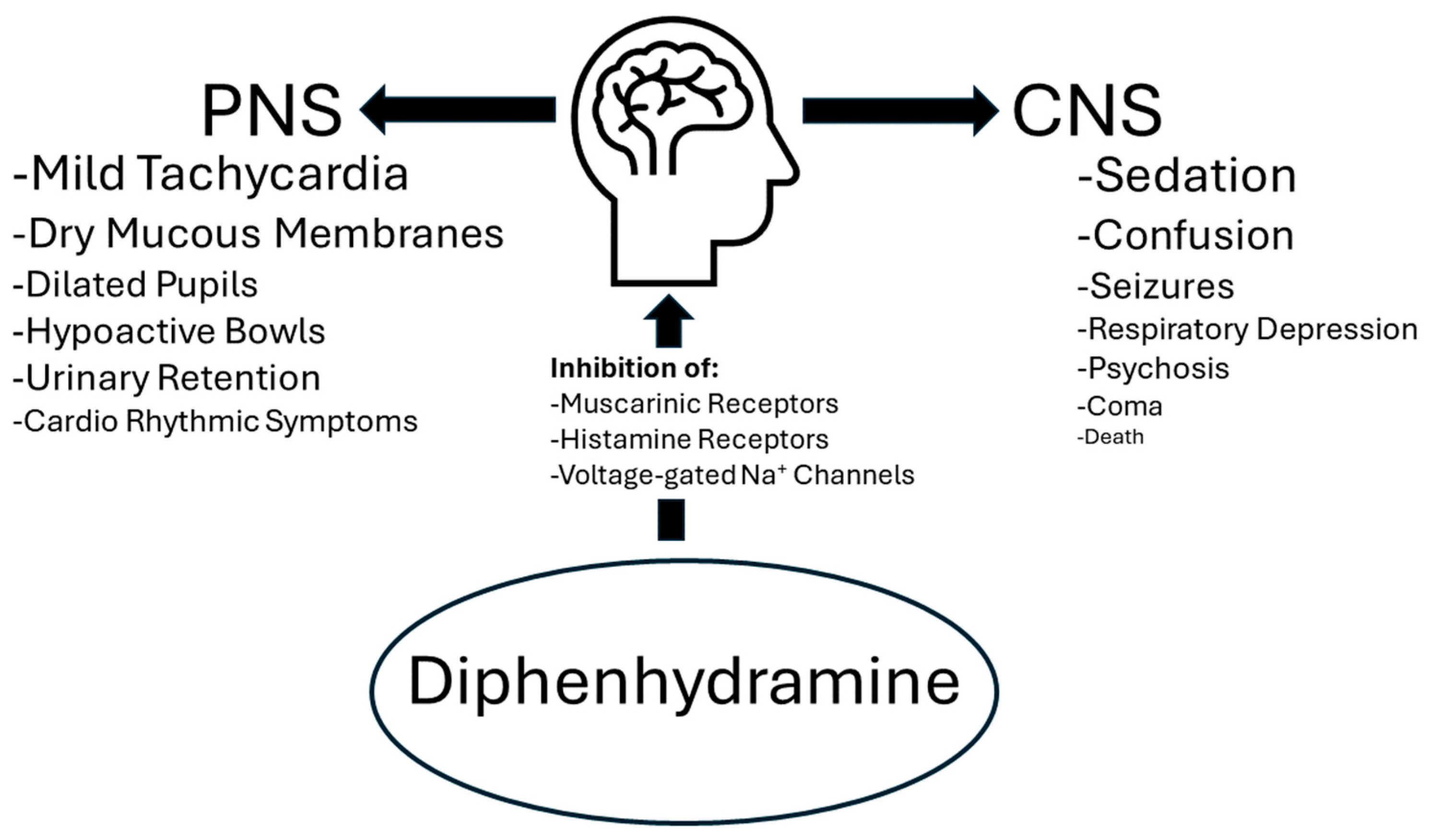
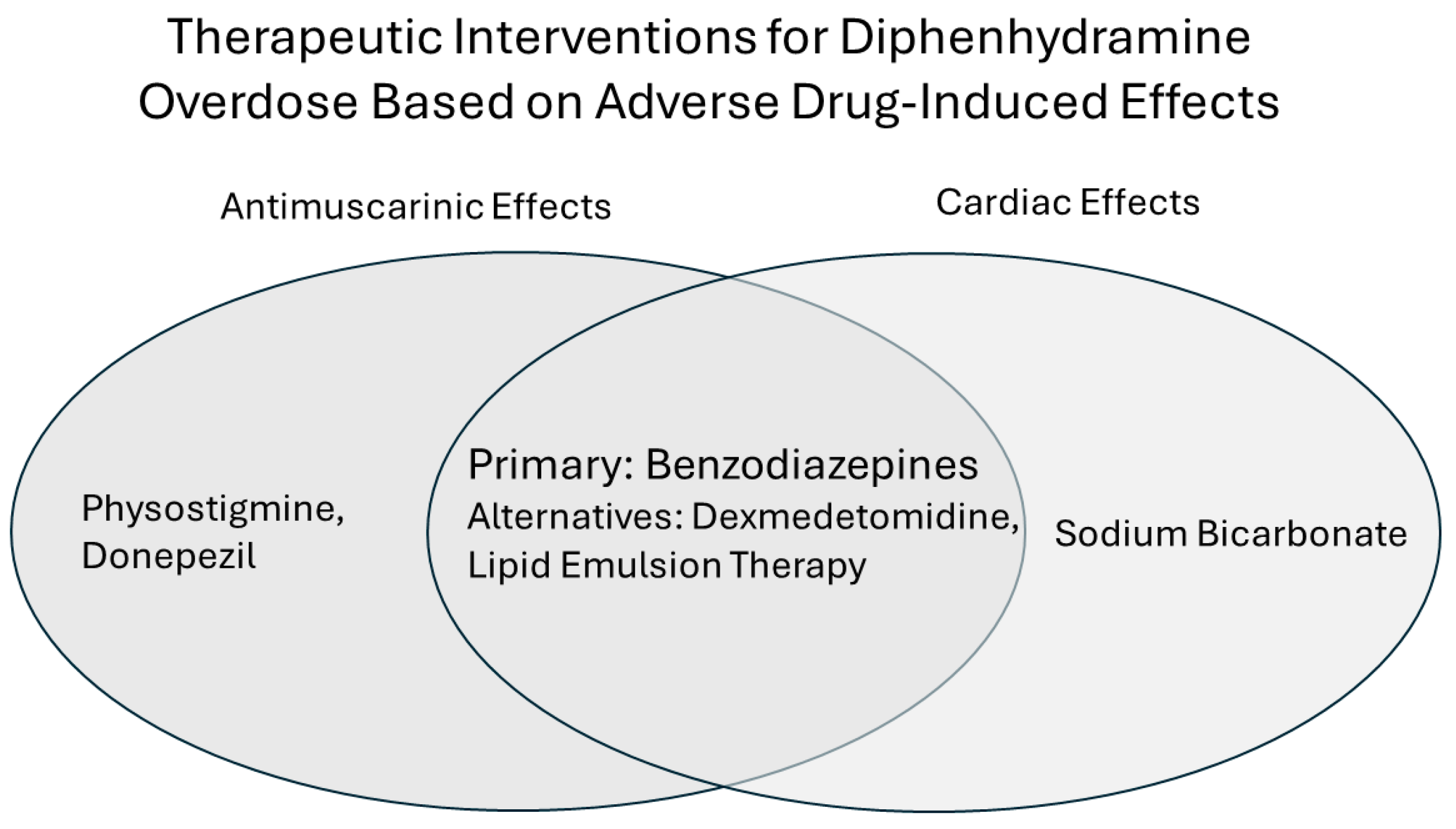
From 2019 to 2020, antihistamines were found in 15% of all US drug overdose deaths, often co-administered with fentanyl, with 3.6% of overdose deaths due to antihistamines alone. The most common antihistamine found in all these reported deaths is diphenhydramine, a ubiquitous, over-the-counter and clinically important medication. Currently, there is no antidote for diphenhydramine overdose. This review summarizes the adverse health effects and current emergency medicine treatments for diphenhydramine. Several emergency medicine case reports are reviewed, and the efficacy and outcomes of a variety of treatments are compared. The treatments reviewed include the more traditional antihistamine overdose therapeutics physostigmine and sodium bicarbonate, as well as newer ones such as donepezil, dexmedetomidine, and lipid emulsion therapy. We conclude that more study is needed to determine the ideal therapeutic approach to treating antihistamine overdoses.
Keywords: drug toxicity; antihistamine; physostigmine; sodium bicarbonate; donepezil; dexmedetomidine; lipid emulsion therapy drug toxicity; antihistamine; physostigmine; sodium bicarbonate; donepezil; dexmedetomidine; lipid emulsion therapy