Article

Trihalomethane Cancer Risk Assessment for Private and Shared Residences: Addressing the Differences in Inhalation Exposure


1
School of Environmental Science and Engineering, Indian Institute of Technology Kharagpur, Kharagpur 721302, West Bengal, India
2
Department of Civil Engineering, Indian Institute of Technology Kharagpur, Kharagpur 721302, West Bengal, India
*
Author to whom correspondence should be addressed.
Toxics 2023, 11(4), 295; https://doi.org/10.3390/toxics11040295

Submission received: 22 February 2023 / Revised: 15 March 2023 / Accepted: 20 March 2023 / Published: 23 March 2023
(This article belongs to the Section Exposome Analysis and Risk Assessment)

Abstract

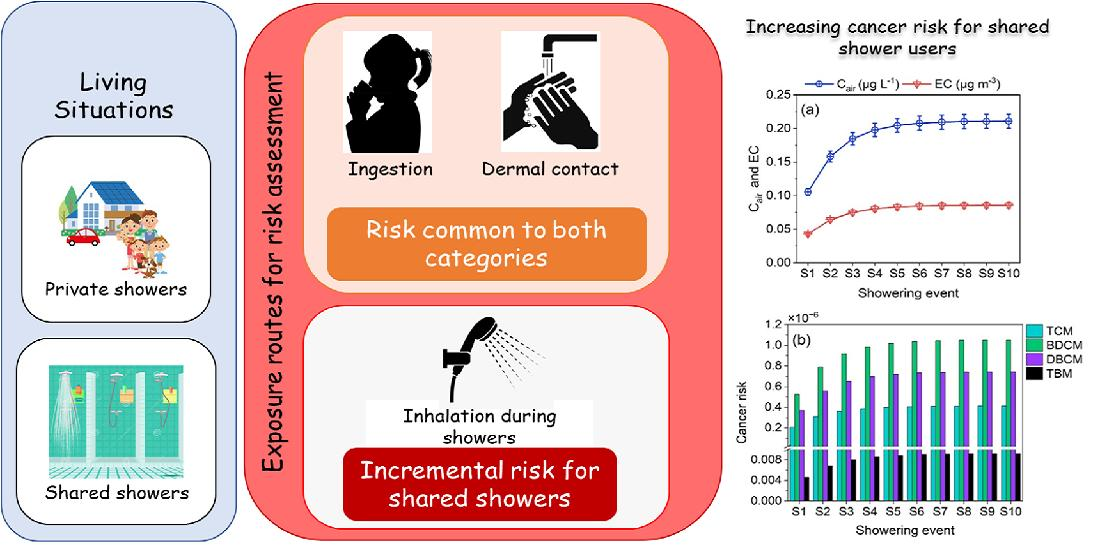
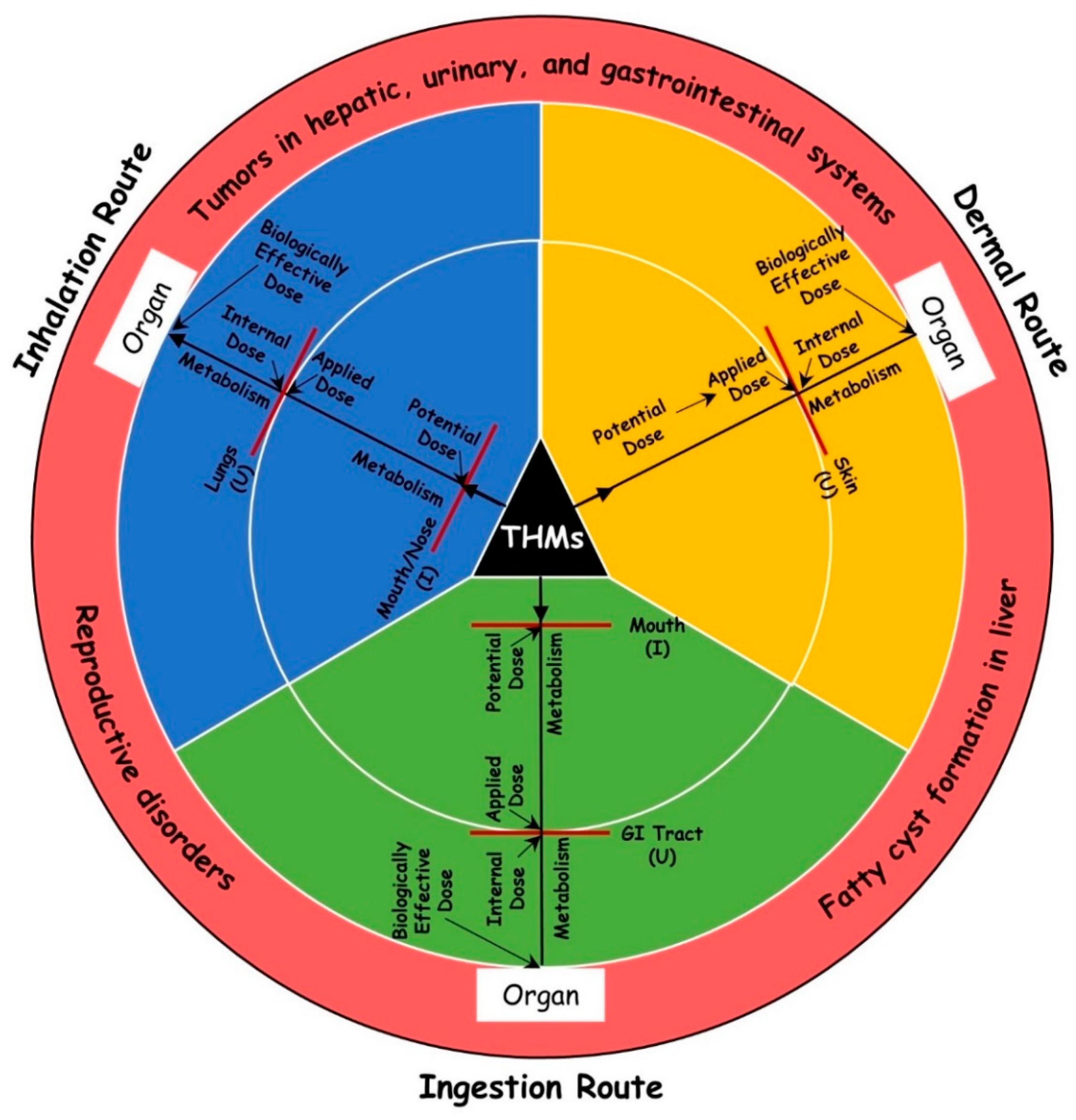
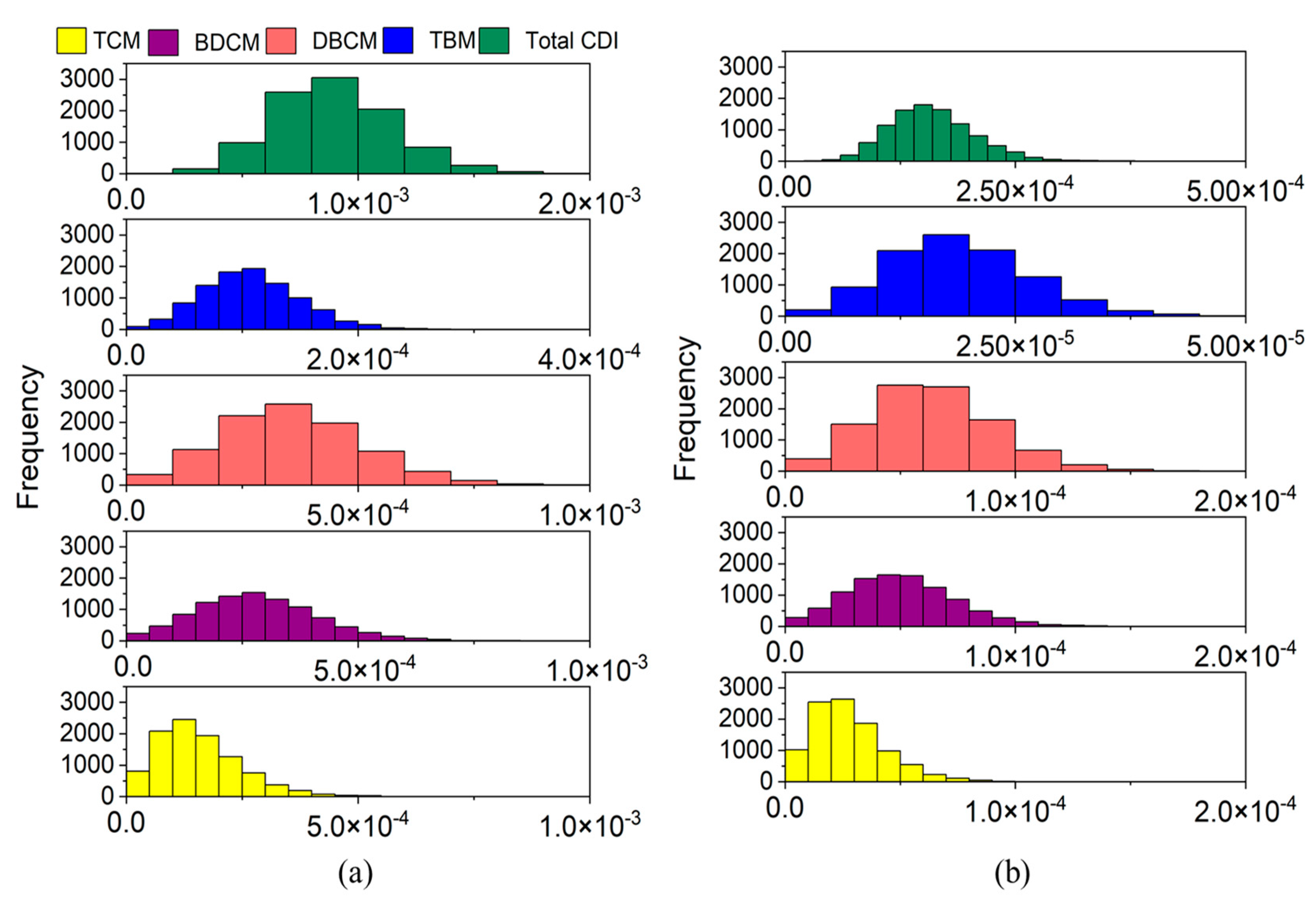
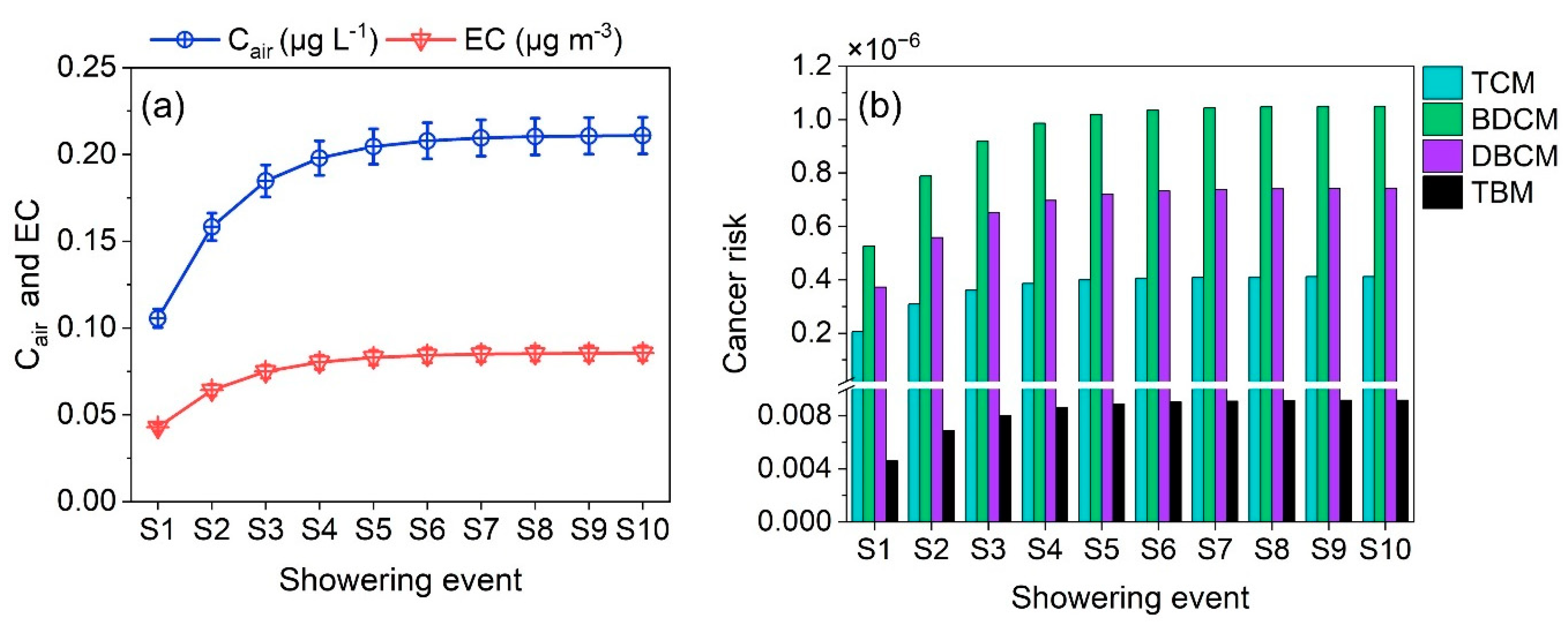
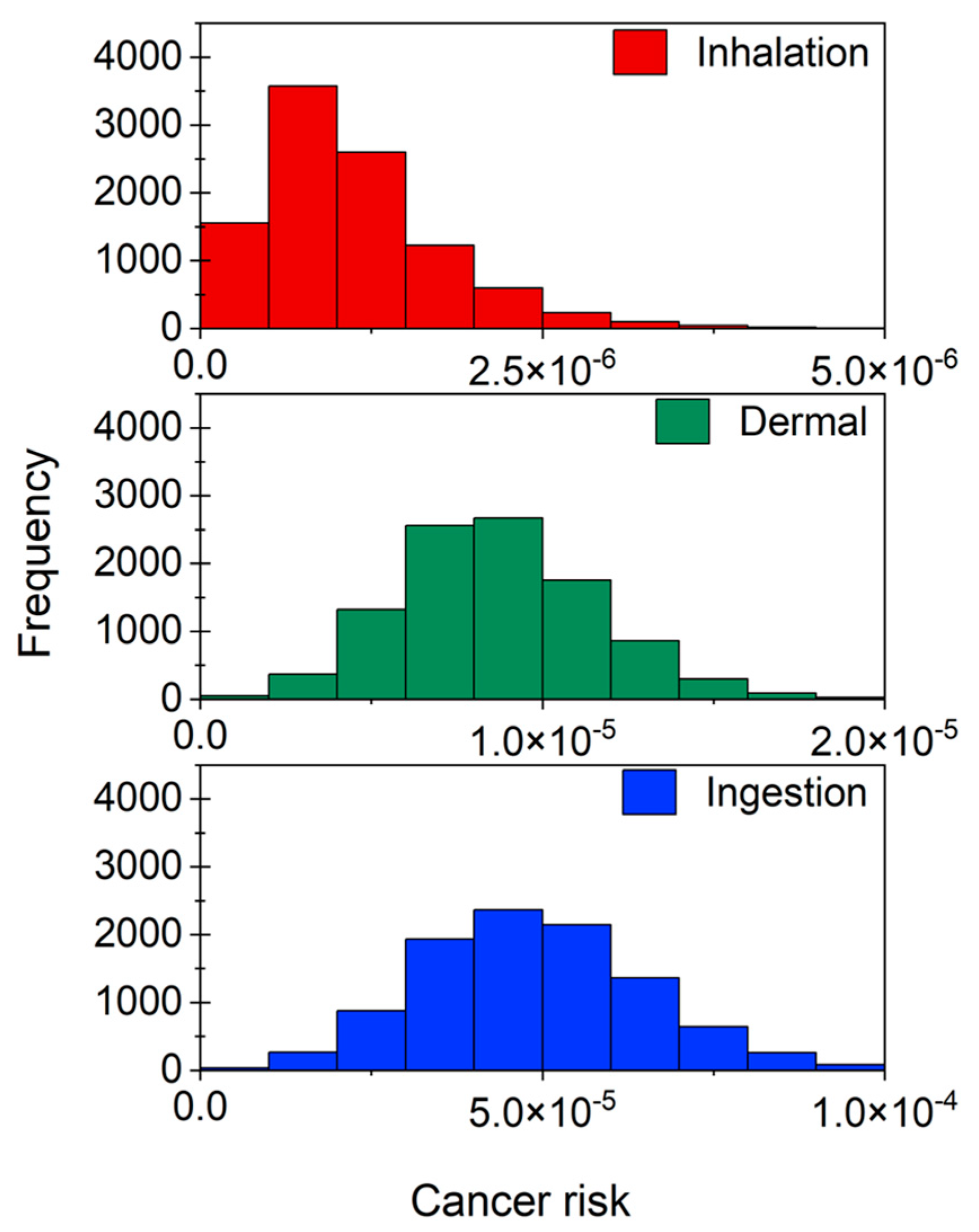
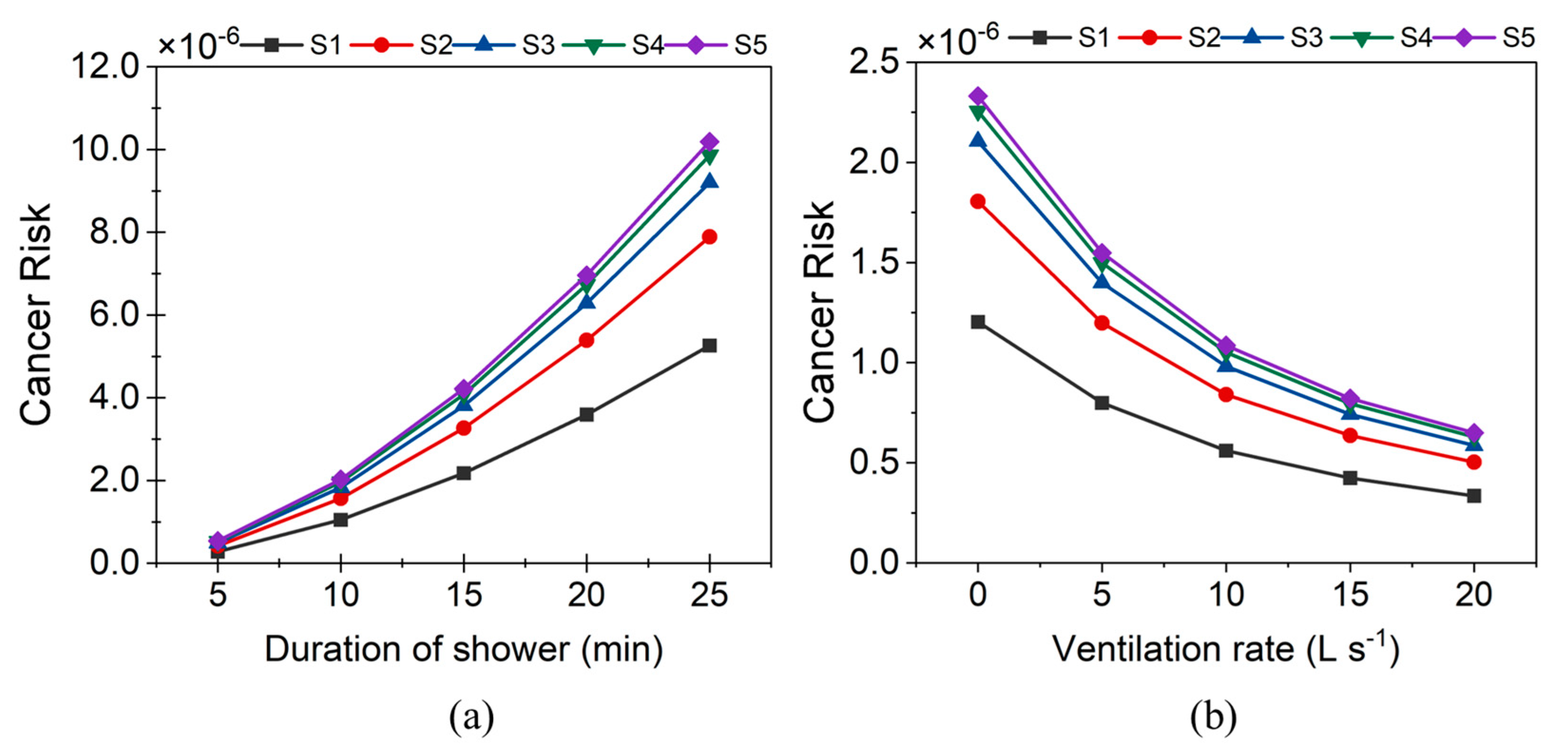
The multi-pathway cancer risk (CR) assessment of trihalomethanes (THM) involves considering exposure via ingestion, dermal contact, and inhalation. Inhalation occurs during showering due to the volatilization of THMs from chlorinated water to the air. When assessing inhalation risks, exposure models commonly assume that the initial THM concentration in the shower room is zero. However, this assumption is only valid in private shower rooms where single or infrequent showering events take place. It fails to account for continuous or successive showering events in shared showering facilities. To address this issue, we incorporated the accumulation of THM in the shower room air. We studied a community (population ≈ 20,000) comprising two types of residences with the same water supply: population A with private shower rooms, and population B with communal shower stalls. The total THM concentration in the water was 30.22 ± 14.45 µg L−1. For population A, the total CR was 58.5 × 10⁻⁶, including an inhalation risk of 1.11 × 10⁻⁶. However, for population B, the accumulation of THM in the shower stall air resulted in increased inhalation risk. By the tenth showering event, the inhalation risk was 2.2 × 10⁻⁶, and the equivalent total CR was 59.64 × 10⁻⁶. We found that the CR significantly increased with increasing shower duration. Nevertheless, introducing a ventilation rate of 5 L s−1 in the shower stall reduced the inhalation CR from 1.2 × 10⁻⁶ to 7.9 × 10⁻⁷.
Keywords: inhalation risk; dermal contact; health analysis; water quality; carcinogens; probabilistic model; Monte Carlo simulation; risk assessment inhalation risk; dermal contact; health analysis; water quality; carcinogens; probabilistic model; Monte Carlo simulation; risk assessment
Graphical Abstract